
Dalam bahasa sehari-hari "obat" Dan "obat" sering digunakan secara bergantian. Di industri farmasi, Namun, mereka biasanya menyiratkan tahapan berbeda dalam siklus hidup produk. A obat umumnya merupakan zat farmakologis aktif (API) yang memberikan efek terapeutik. A obat (kadang-kadang disebut a produk obat) adalah produk jadi – obat yang diformulasikan dan dikemas untuk digunakan pasien. Perbedaan ini mempengaruhi bagaimana produk dikembangkan, diproduksi, dan dikemas. Secara sederhana, setiap obat dimulai dengan obat (bahan aktif), namun tidak semua obat menjadi obat yang dapat dipasarkan. Perbedaan istilah-istilah tersebut dapat mempengaruhi bentuk sediaan desain, status peraturan, Dan pilihan mesin pengemasan.
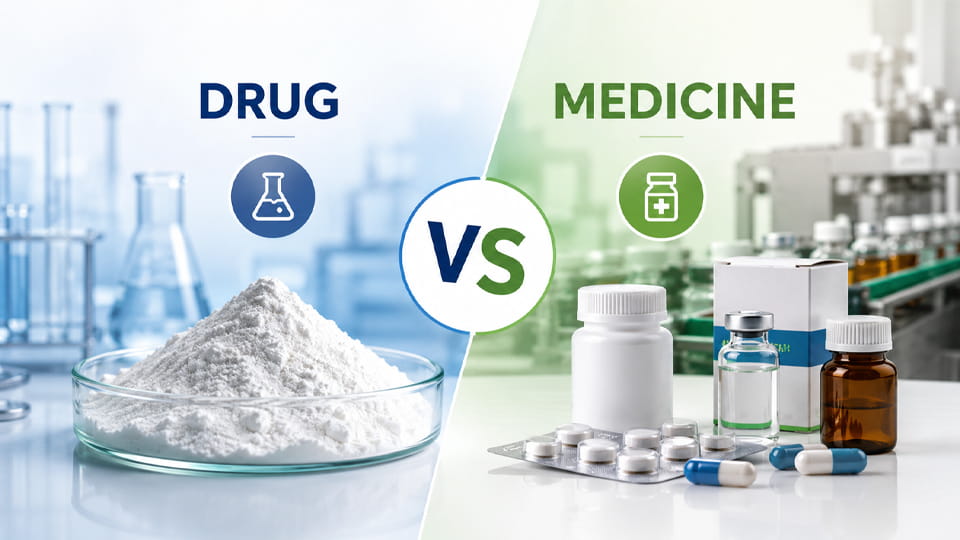
Dalam istilah farmasi, A obat adalah zat kimia atau biologis aktif yang digunakan untuk mendiagnosis, menyembuhkan, mengurangi, merawat, atau mencegah penyakit. FDA mendefinisikan obat secara luas sebagai “Suatu zat yang dimaksudkan untuk digunakan dalam diagnosis, menyembuhkan, mitigasi, perlakuan, atau pencegahan penyakit” pada manusia atau hewan. Dalam praktiknya, "obat" sering mengacu pada bahan aktif murni (API) diri. Misalnya, ibuprofen atau amoksisilin dalam bentuk bubuk akan disebut zat obat sebelum dibuat menjadi a tablet atau kapsul.
Poin-poin penting tentang narkoba dalam manufaktur farmasi:
Dalam ringkasan, A obat adalah zat terapeutik mentah atau API – “apa” yang memberikan efek pada suatu obat. Istilah ini lazim dalam pengembangan formulasi dan regulasi.
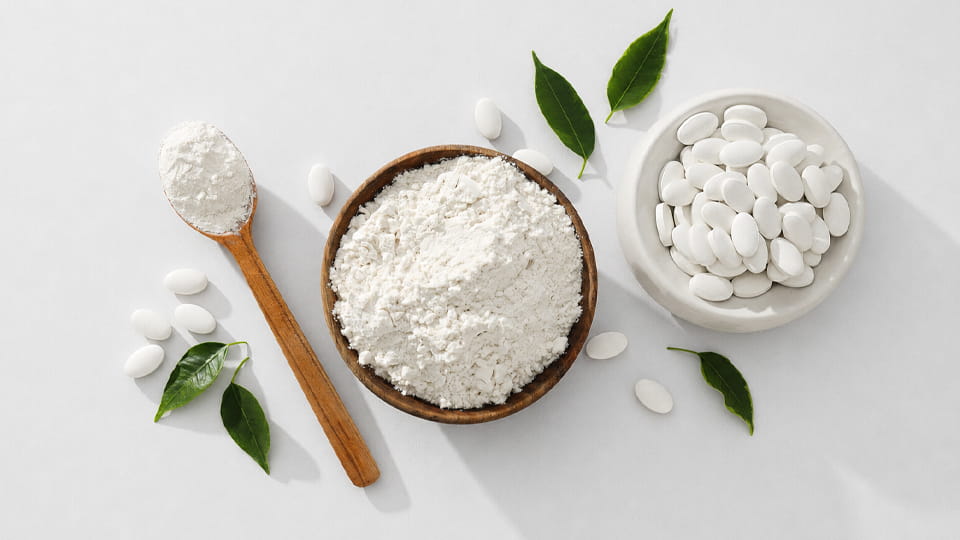
A obat (atau produk obat) adalah a produk farmasi jadi dimaksudkan untuk digunakan oleh pasien. Ini mengandung satu atau lebih obat (Lebah) ditambah komponen tidak aktif (eksipien) dan dikemas untuk pengeluaran dan penggunaan yang aman. Dengan kata lain, setelah suatu obat diformulasikan menjadi suatu bentuk sediaan (tablet, kapsul, cairan, dll.) dan diberi label pada suatu wadah, itu menjadi obat yang siap dijual.
Secara sederhana, A obat adalah yang dikemas, produk siap pasien yang digunakan untuk mendiagnosis atau mengobati suatu kondisi. Ini termasuk obat sebagai bahan utama, tetapi juga semua hal lainnya (eksipien, wadah, label).
Di bawah ini adalah ringkasannya perbedaan utama antara obat dan obat. Perbedaannya tidak kentara dalam bahasa yang sederhana namun penting dalam konteks manufaktur dan peraturan:
| Aspek | Obat | Obat (Produk Obat) |
| Arti dasar | Zat aktif (API) dengan efek terapeutik | Produk jadi yang mengandung obat, siap digunakan oleh pasien |
| Panggung | Sering merujuk pada bahan tahap awal atau senyawa penelitian | Mengacu pada bentuk sediaan akhir setelah diformulasikan dan dikemas |
| Komposisi | Bahan aktif murni (misalnya. bubuk aspirin) | Termasuk API + eksipien, wadah, label (misalnya. tablet aspirin dalam lepuh) |
| Gunakan konteks | Manufaktur, R&D, peraturan (proses persetujuan) | Penggunaan klinis, meresepkan, pengeluaran (dalam pengaturan layanan kesehatan) |
| Peraturan | Definisi luas “obat” FDA mencakup API | Produk jadi yang diatur secara ketat (Persetujuan FDA/EMA, GMP) |
| Contoh | API Ibuprofen, protein insulin (zat massal) | Tablet ibuprofen, suntikan insulin dalam botol |
Secara sederhana: A obat adalah zat kimia/biologi aktif yang mempunyai efek farmakologis. A obat apakah itu obat plus formulasi dan pengemasan, dimaksudkan untuk penggunaan yang aman oleh pasien. Seperti yang dikatakan salah satu sumber farmasi, “Setiap obat dimulai sebagai obat, tapi tidak semua obat menjadi obat”. Misalnya, morfin murni adalah zat obat; setelah diformulasikan ke dalam dosis suntik dengan garam dan disegel dalam botol, itu menjadi obat (produk pereda nyeri).
Poin krusialnya adalah itu obat menyiratkan diatur, produk habis pakai, sedangkan obat dapat berarti hanya zat aktif mentah atau golongan senyawa yang lebih luas. Tabel di atas menyoroti perbedaan-perbedaan ini.
Untuk memahami sepenuhnya “obat vs obat,” ini membantu memperjelas istilah terkait yang sering digunakan dalam farmasi:
Intinya: Di bidang manufaktur farmasi, “bahan obat” adalah APInya, “produk obat” adalah bentuk sediaan yang diformulasikan (tablet, kapsul, injeksi, dll.), Dan "obat" adalah apa yang Anda sebut sebagai produk obat setelah produk terapeutik tersebut siap dipasarkan. Misalnya, metformin adalah zat obat, tablet metformin 500mg adalah produk obatnya, dan tablet itu (dalam kemasannya) adalah obat yang diminum pasien.
Memahami istilah-istilah ini sangat penting: setelah kita mengetahui bentuk sediaan suatu produk obat, kita bisa memilih yang benar garis pengemasan untuk mengubahnya menjadi obat yang stabil.
Perumusan & Pengembangan Bentuk Dosis: Mentah zat obat dengan sendirinya belum siap untuk bersabar. Itu harus diformulasikan ke dalam bentuk sediaan yang sesuai (tablet, kapsul, sirup, injeksi, dll.) – ini adalah bagian utama dari pengembangan manufaktur. Setiap bentuk sediaan memerlukan eksipien dan pengolahan tertentu (percampuran, granulasi, sterilisasi) menjadi a produk obat. Misalnya, API sensitif untuk bahan biologis yang dapat disuntikkan memerlukan pemrosesan aseptik, sedangkan API yang stabil untuk pil melewati pengeringan dan kompresi tablet.
Persetujuan Peraturan: Badan-badan seperti FDA atau EMA meninjau data tentang bahan obat Dan produk obat/obatnya. Mereka menilai keamanan API dan kemanjuran formulasi akhir. Obat jadi harus memenuhi standar yang ketat (GMP, stabilitas, pelabelan). FDA CGMP peraturan secara eksplisit mencakup proses dan peralatan pengemasan – jadi bagaimana Anda mengemas obat (bahkan lebih dari sekedar obat mentah) sangat diatur.
Pengemasan dan Pelabelan: Perbedaannya menentukan kebutuhan pengemasan. Suatu zat obat biasanya memiliki kemasan minimal (drum, botol untuk penyimpanan). Sebuah obat, Namun, memerlukan kemasan primer yang melindungi dosis (misalnya. Paket blister, botol, botol) Dan kemasan sekunder (karton) untuk informasi dan ketertelusuran. Misalnya, tablet (produk jadi) membutuhkan kemasan melepuh atau sistem botol-dan-penutup yang tahan lembab untuk memastikan umur simpan. Obat suntik memerlukan botol atau ampul kaca steril yang dilengkapi segel anti rusak. Setiap kombinasi API dan bentuk sediaan mempunyai larutan kemasan yang sesuai.
Pemilihan peralatan: Jika Anda hanya memikirkan API, Anda mungkin mempertimbangkan reaktor atau mixer. Namun dulunya suatu zat merupakan produk obat yang memerlukan pengemasan, Anda memerlukan jalur pengemasan yang tepat. Mesin pengemas melepuh, Mesin pengisian kapsul, pengisi cair, jalur pengisian botol, mesin karton – semuanya menjadi relevan. Mengenali “obat” berarti produk kemasan mendorong pengadaan mesin-mesin ini.
Pendeknya, memahami “obat vs obat” membantu tim proyek mengetahuinya kapan dan bagaimana untuk mengintegrasikan pengemasan ke dalam alur kerja produksi. Ini memastikan bahwa produk obat tidak hanya diformulasikan, namun terlindungi dengan baik dan disajikan ke pasar.
Pengemasan adalah langkah penting terakhir yang mengubah obat yang diformulasikan menjadi obat yang dapat digunakan pasien dengan aman. Di dalam kemasan farmasi, kemasan primer bersentuhan langsung dengan dosisnya (produk obat tersebut) dan memberikan penghalang pertama terhadap degradasi. Misalnya, kapsul dan tablet gelatin keras sering digunakan aluminium-plastik Paket blister, sementara sirup cair masuk ke dalam plastik (PET/HDPE) botol. Obat suntik diisi botol atau ampul kaca steril. Setiap wadah utama dipilih karena sifat kelembaman dan penghalangnya.
Setelah kemasan utama disegel, kemasan sekunder (karton, label, selebaran) menyediakan informasi pasien dan data batch. Misalnya, kemasan atau vial melepuh dikelompokkan ke dalam karton karton bermerek dengan brosur instruksi, nomor batch, dan kode batang – penting untuk kepatuhan dan keselamatan pasien.
Di JinLuPacking, mesin kami mengotomatiskan langkah-langkah ini. Otomatis mesin pengepakan melepuh dapat menyegel ribuan tablet menjadi lepuh per jam; A Mesin pengisian kapsul dosis obat ke dalam kapsul; A garis pengisian dan pembatasan botol menghitung tablet atau mengisi sirup ke dalam botol; dan sebuah mesin karton membungkus dan mengemas produk jadi. Semua tahapan ini – pengisian, pembatasan, pembungkus – pastikan obat akhir diberi dosis yang akurat, aman, dan siap untuk didistribusikan.
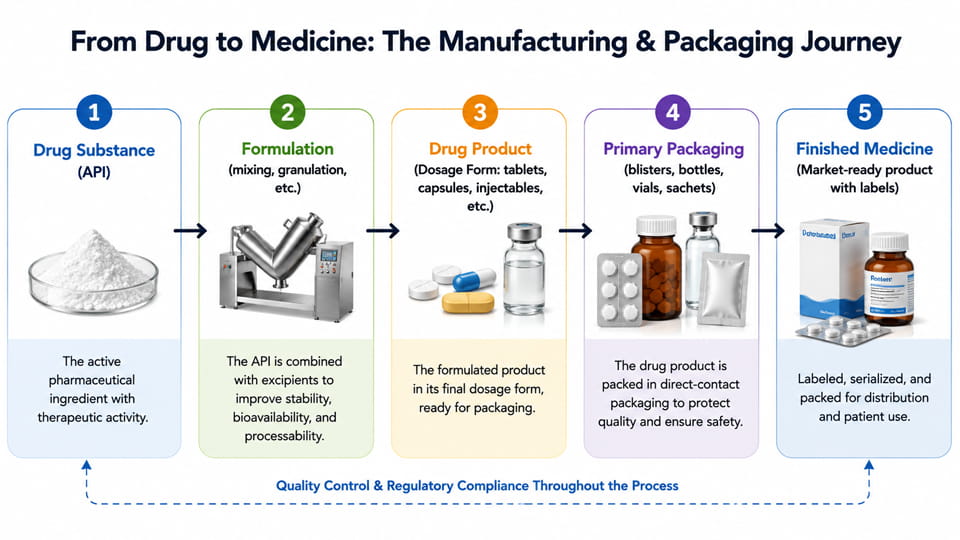
Angka: Diagram Alir Obat → Kedokteran: Yang aktif zat obat (API) dirumuskan menjadi a produk obat (bentuk sediaan tertentu). Kemudian berpindah ke kemasan primer (misalnya. kemasan melepuh untuk tablet, botol untuk sirup, botol kaca untuk suntikan). Akhirnya, itu menjadi a obat jadi dengan kemasan sekunder (karton/label) untuk penggunaan pasien.
Bentuk sediaan yang berbeda memerlukan solusi pengemasan yang berbeda. Tabel di bawah ini merangkum pasangan yang umum:
| Bentuk Dosis | Kemasan Primer Umum | Contoh Peralatan JinLu |
| Tablet (Lisan Padat) | Paket blister (Kertas timah PVC/PVDC), atau plastik botol dengan tutup sekrup | Mesin Pengepakan Blister; Penghitungan Tablet & Jalur Pembotolan |
| Kapsul (Lisan) | Paket blister, atau botol yang mirip dengan tablet | Mesin Pengisian Kapsul Otomatis; Mesin Melepuh |
| Cairan Lisan (sirup) | Plastik (PET/HDPE) botol dengan topi yang aman untuk anak | Sistem Pengisian dan Pembatasan Cairan; Botol Uncrambler |
| Bubuk / Sachet | Paket sachet dosis tunggal (kantong foil atau laminasi) | Mesin Pengemas Sachet/Stick Pack; Garis Kantong Premade |
| Suntikan (Steril) | Kaca botol, ampul, atau jarum suntik yang sudah diisi sebelumnya, ditambah segel foil | Pengisian Botol/Ampul & Garis Penghenti; Penyegel Induksi |
| Salep/Krim | Tabung laminasi (aluminium atau plastik) | Mesin Pengisian dan Penyegelan Tabung |
| Kapsul Softgel | Botol (PELIHARAAN) atau kemasan melepuh | Mesin Blister Kapsul Softgel; Garis Penghitungan |
Pilihannya tergantung pada faktor-faktor seperti stabilitas bentuk dosis, kemandulan, dan kenyamanan pasien. Misalnya, tablet dan kapsul sering digunakan mesin melepuh atau jalur pengisian botol, sementara cairan membutuhkan pembilas botol, isian, dan mesin penutup. Dapat disuntikkan obat memerlukan sistem pengisian yang steril dalam kondisi ruangan bersih. Setiap solusi didukung oleh mesin pengemasan khusus untuk memastikan produk obat menjadi terlindungi, diberi label obat yang bertemu standar GMP.
Untuk membuatnya konkrit, berikut adalah beberapa contoh yang menunjukkan bagaimana obat tertentu berubah menjadi obat:
Setiap contoh menunjukkan: Obat (API) → Perumusan (tablet, isian, dll.) → Kemasan (lepuh, botol, botol kecil, bungkusan) → Obat (produk akhir dengan label).
Belum tentu. Setiap obat dimulai dari obat, tetapi tidak semua obat menjadi obat. Banyak senyawa kimia atau biologis (narkoba) tidak pernah menjangkau pasien. Beberapa obat tetap berada di R&D atau hanya digunakan untuk penelitian, dan lainnya digunakan di luar lingkungan medis (misalnya. narkoba). Hanya ketika obat diformulasikan, diuji, dan disetujui apakah itu menjadi obat.
Sebagai salah satu catatan jawaban FAQ, “Aspirin adalah obat sekaligus obat. Ini adalah obat dalam bentuk kimianya (asam asetilsalisilat) dan menjadi obat bila diracik dan digunakan untuk mengobati demam, nyeri, atau peradangan”. Kuncinya adalah tujuan penggunaan dan penyajiannya: digunakan sebagai produk siap pasien menjadikannya obat.
Dalam ringkasan, hanya disetujui, produk yang ditujukan untuk pasien adalah obat-obatan. Memahami hal ini membantu produsen dan regulator membedakan antara bahan percobaan dan produk pasar nyata.
Dalam ringkasan, "obat" biasanya mengacu pada bahan aktif atau agen farmasi apa pun, ketika "obat" (produk obat) mengacu pada selesai, produk siap pasien yang mengandung obat itu. Perbedaan ini penting untuk manufaktur farmasi: itu memandu R&D, status peraturan, dan pilihan kemasan. Memahami istilah-istilah ini membantu memastikan kita memindahkan zat obat melalui formulasi dan kemasan dengan benar untuk menjadi stabil, obat yang sesuai.
Kapan mengembangkan bentuk sediaan baru, Ingat: jalur pengemasan yang tepat (pengepakan melepuh, pengisi kapsul, garis botol, pengisi botol, pembuat karton, dll.) sangat penting untuk melindungi obatnya dan bertemu GMP. Misalnya, diandalkan oleh produsen tablet Mesin kemasan blister Dan garis penghitungan/pengisian, sedangkan produk suntik memerlukannya mesin pengisian dan pembatasan botol/ampul dan mengamankan pengepakan sekunder. Pengepakan JinLu menawarkan berbagai macam mesin pengemasan farmasi disesuaikan dengan setiap bentuk sediaan – dari tablet & kapsul melepuh ke kemasan sachet Dan karton.
Siap mengubah obat Anda menjadi obat yang siap dipasarkan? Jelajahi solusi kami: tablet & mesin pengemas kapsul melepuh untuk dosis padat, mesin pengisian kapsul untuk bubuk/kapsul cair, bungkusan & mesin kantong siap pakai untuk bubuk, dan mesin karton untuk tinju akhir. Peralatan kami membantu melindungi kualitas produk, menjamin keselamatan pasien, dan sederhanakan lini produksi Anda dari obat hingga obat jadi.
Tidak tepat. Dalam percakapan biasa, mereka tumpang tindih, tetapi secara teknis obat sering kali berarti bahan aktif atau zat farmakologis apa pun, sedangkan obat adalah produk jadi yang diberikan kepada pasien. Dapat dikatakan bahwa “setiap obat mengandung obat, tetapi obat itu sendiri belum tentu menjadi obat sampai diformulasikan”.
Konsepnya pada dasarnya sama di sebagian besar konteks farmasi. Produk obat adalah bentuk sediaan yang telah lengkap (tablet, kapsul, injeksi) siap untuk dijual. Obat adalah sebutan untuk produk obat ketika dikemas untuk digunakan oleh pasien. Dalam praktiknya, produk obat yang disetujui (dengan pelabelan) adalah obat-obatan.
Suatu zat obat (atau API) adalah bahan aktif murni – bahan kimia atau biologis yang memiliki efek terapeutik. Produk obat adalah formulasi akhir yang mengandung zat tersebut, ditambah eksipien, dalam bentuk sediaan (pil, larutan, dll.). Bayangkan garam dan pengocok garam: garam (zat obat) adalah bahannya; garam dengan bahan anti-caking dalam botol (produk obat) adalah produk yang dapat digunakan.
Pengemasan sangat penting untuk mengubah obat menjadi obat. Seperti yang dicatat oleh sumber daya JinLuPacking, kemasan farmasi (Paket blister, botol, botol) melindungi stabilitas dan dosis produk obat, dan memastikan kepatuhan terhadap peraturan. Pengemasan dan pelabelan yang tepat mengubah zat obat yang lepas menjadi aman, obat yang ramah pengguna.
Ya. Senyawa seperti ibuprofen atau asetaminofen adalah zat obat. Ketika dibuat menjadi tablet OTC dengan instruksi, itu juga obat. Itu tergantung pada bentuk dan penggunaannya. Seperti disebutkan di atas, aspirin secara kimia adalah obat tetapi disebut obat jika ada dalam bentuk tablet untuk menghilangkan rasa sakit. Hal yang sama terjadi pada banyak obat pereda nyeri, antibiotik, dll..
Dokter sering kali menggunakan “obat” dalam arti netral seperti agen farmasi mana pun. Dalam jargon klinis dan hukum (seperti UU FDA), “Obat” adalah istilah resmi untuk zat terapeutik. Ini mencakup segalanya mulai dari sirup obat batuk hingga kemoterapi. Sementara itu, "obat" lebih ramah pasien. Jadi dokter mungkin meresepkan ibuprofen (obat) sebagai pereda nyeri (obat).
Referensi:
1.Daftar Istilah Obat@FDA -- KITA. Badan Pengawas Obat dan Makanan
2.Klasifikasi Produk sebagai Obat dan Alat serta Masalah Klasifikasi Produk Tambahan -- KITA. Badan Pengawas Obat dan Makanan
3.Glosarium (istilah P: produk farmasi, eksipien, bahan awal) -- SIAPA
4.Daftar Istilah Prakualifikasi -- SIAPA
5.Bentuk Dosis | FDA -- KITA. Badan Pengawas Obat dan Makanan
6.Q7A Panduan Cara Pembuatan yang Baik untuk Bahan Aktif Farmasi -- KITA. Badan Pengawas Obat dan Makanan
