
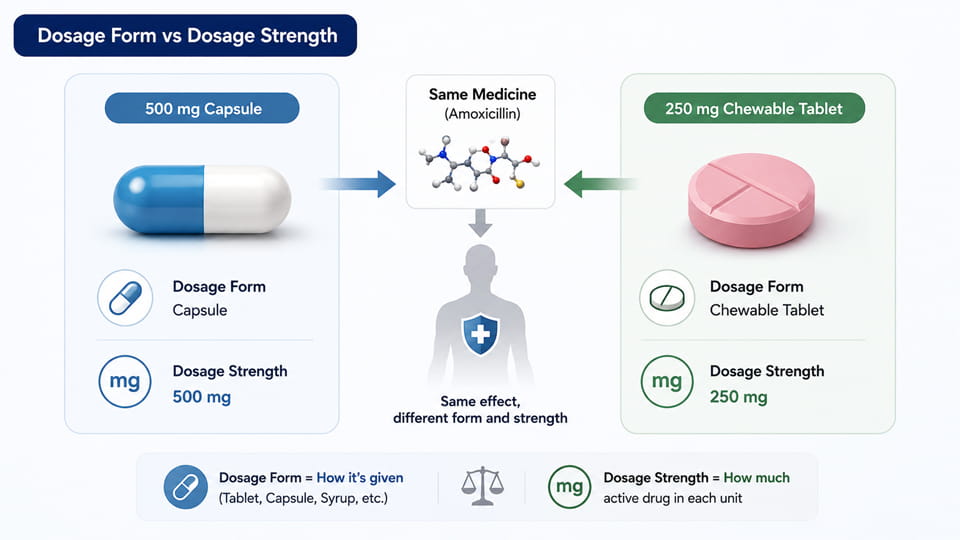
Obat tidak hanya datang dalam bentuk botol atau kotak – obat juga datang bentuk sediaan. A bentuk sediaan adalah fisik membentuk tempat obat disiapkan dan diberikan. Di apotek, ini berarti obatnya bahan aktif dipadukan dengan bahan lain (eksipien) dan dibentuk menjadi tablet, kapsul, cairan, krim, atau format lain. Secara sederhana, itu definisi bentuk sediaan adalah “bagaimana obat diformulasikan dan diberikan” sehingga dosis yang tepat sampai ke tubuh Anda dengan aman. Misalnya, satu obat umum mungkin dijual sebagai a 500 mg kapsul atau a 250 mg tablet kunyah – obat yang sama, berbeda bentuk sediaan.
Memahami bentuk sediaan adalah kunci bagi siapa pun di bidang manufaktur atau pengadaan farmasi. Pilihan bentuk mempengaruhi penggunaan pasien, stabilitas obat, dan metode produksi. Dalam panduan ini, kami akan mogok apa arti bentuk sediaan di apotek, mengapa itu penting, dan itu jenis bentuk sediaan Anda akan temui. Kami juga akan membahas bagaimana peralatan modern (seperti pengepres tablet dan pengisi kapsul) membuat produksi dan pengemasan formulir ini lebih mudah.
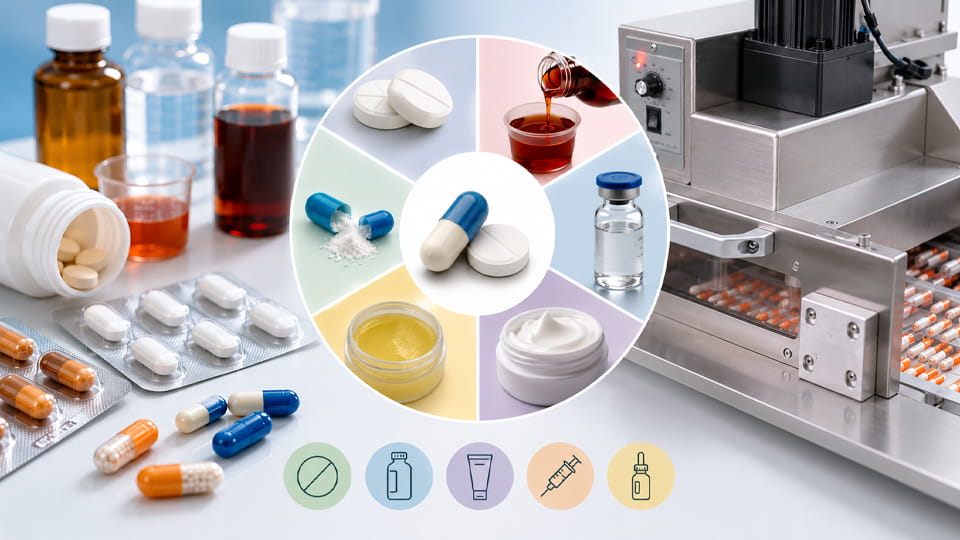
Menurut definisi, A bentuk sediaan adalah bentuk fisik suatu produk farmasi. Dengan kata lain, begitulah cara obat aktif dan bahan inert digabungkan dan disajikan untuk pemberian. Kilauan NIH mendefinisikannya secara sederhana sebagai “bentuk fisik dimana suatu obat diproduksi atau diberikan”. Sumber lain menjelaskan bahwa bentuk sediaan adalah produk obat “disajikan dalam bentuk tertentu untuk digunakan,” mengandung campuran komponen aktif dan tidak aktif, dikonfigurasikan ke dalam bentuk tertentu.
Bayangkan bentuk sediaan sebagai antarmuka antara obat dan pasien. Misalnya, parasetamol tersedia dalam bentuk tablet, sirup, dan bahkan supositoria; ini semua adalah bentuk sediaan berbeda dari bahan aktif yang sama. Masing-masing bentuk adalah a formulasi dosis – resep khusus obat aktif + eksipien dibentuk menjadi sesuatu yang nyaman. Seperti yang dikatakan oleh salah satu panduan JinLuPacking, membuat bentuk sediaan padat adalah tentang “mengubah molekul obat menjadi bentuk padat yang stabil” dengan mencampur bahan aktif dengan pengikat dan pengisi. Bentuk jadinya bisa berupa tablet bundar, cangkang kapsul, atau sebungkus bubuk – masing-masing dirancang agar obat dapat disalurkan secara efektif.
Dalam praktiknya, ketika apoteker atau produsen membicarakannya bentuk sediaan, mereka mempertimbangkan faktor-faktor seperti:
Misalnya, obat yang sama (mengatakan, amoksisilin) mungkin datang dalam "bentuk sediaan" seperti a 500 mg kapsul atau a 250 mg tablet kunyah”. Keduanya memberikan amoksisilin, tetapi bentuk dan dosisnya berbeda. Ini menyoroti perbedaan antara bentuk sediaan (Kapsul vs Tablet) Dan kekuatan dosis (500 mg vs 250 mg).
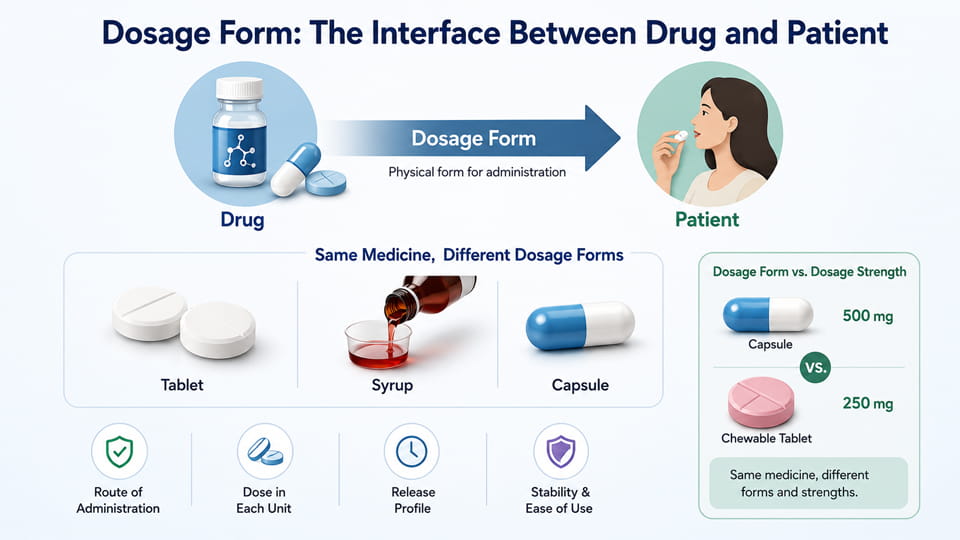
Memilih bentuk sediaan yang tepat sangat penting karena beberapa alasan:
Pendeknya, bentuk sediaan lebih dari sekedar “kemasan”. Mereka memainkan peran penting dalam seberapa baik suatu obat bekerja dan seberapa mudah obat tersebut dibuat dan digunakan dengan aman.
Obat dapat diformulasikan menjadi berbagai bentuk, masing-masing cocok untuk tujuan tertentu. Di bawah ini adalah kategori utama:
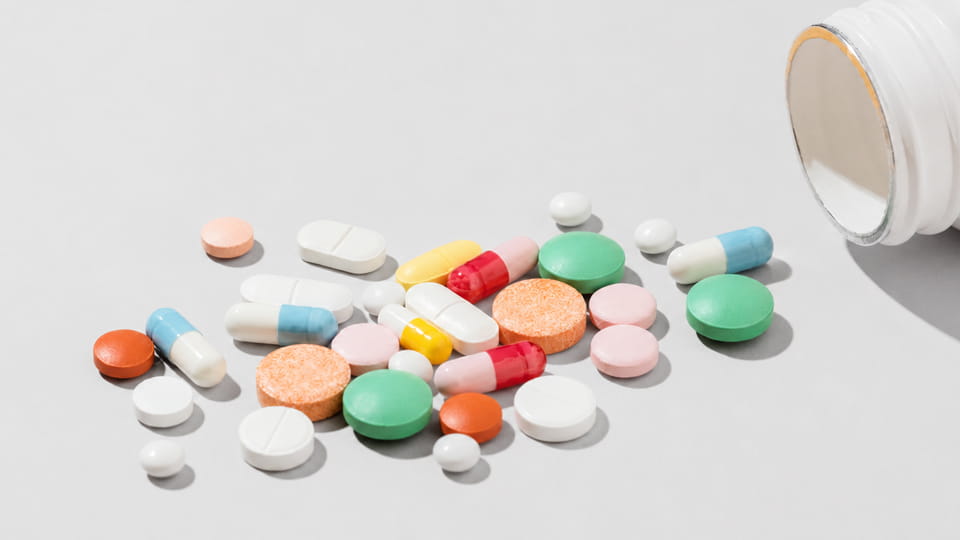
Angka: Kapsul dan tablet adalah contoh bentuk sediaan padat yang digunakan untuk pemberian oral.
Bentuk sediaan padat adalah paling umum di industri farmasi. Ini termasuk tablet (pil bubuk terkompresi), kapsul (agar-agar atau HPMC cangkang diisi dengan bubuk atau pelet), dan bubuk atau butiran curah. Tablet dapat dirancang dalam banyak variasi (misalnya. kunyah, berbusa, rilis diperpanjang) untuk mengontrol seberapa cepat obat dilepaskan ke dalam tubuh. Kapsul sering kali menggunakan cangkang larut yang terurai di perut untuk melepaskan obat.
Mengapa padatan? Mereka stabil dan nyaman. Pil padat umumnya bertahan lebih lama di rak dan tidak memerlukan lemari es. Setiap unit berisi dosis obat yang tepat, jadi dosisnya akurat. Untuk manufaktur, bentuk padat efisien: modern mesin tekan tablet Dan Mesin pengisian kapsul (seperti yang dibuat oleh JinLu) dapat menghasilkan ratusan ribu pil per jam. Mesin pengepakan melepuh dan jalur pengisian botol kemudian mengemas tablet atau kapsul ini menjadi produk akhir (kartu melepuh, botol, strip, dll.).
Contoh Bentuk Sediaan Padat:
Catatan Peralatan: Memproduksi bentuk padat memerlukan mesin khusus. Misalnya, mesin press tablet berputar (seperti Mesin Press Tablet JinLu) mengompres bubuk menjadi tablet. Mesin pengisian kapsul (manual atau otomatis) jatuhkan bubuk ke dalam cangkang kapsul. Setelah terbentuk, tablet/kapsul dapat melewati penyalutan, perhitungan, dan peralatan pengemasan.
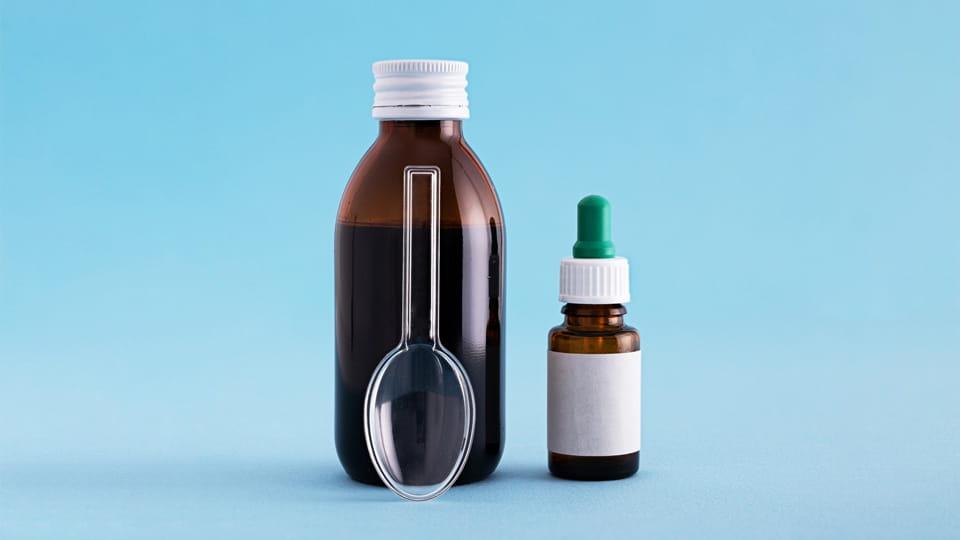
Angka: Sirup adalah bentuk sediaan cair yang umum, berguna untuk pasien yang kesulitan menelan makanan padat.
Bentuk sediaan cair meliputi solusi, suspensi, emulsi, dan sirup. Ini ideal ketika sulit menelan makanan padat (misalnya untuk anak-anak atau orang tua) atau ketika diperlukan serangan yang cepat. Contohnya adalah sirup obat batuk (dimaniskan untuk menutupi rasa obat), obat tetes mulut, dan solusi IV.
Mengapa cairan? Mereka mengizinkan dosis fleksibel (Anda bisa mengukur sesendok) dan bekerja dengan baik ketika penyerapan cepat diperlukan. Misalnya, obat dalam bentuk larutan memasuki aliran darah lebih cepat dibandingkan tablet. Cairan juga membantu memastikan lebih kecil pasien mendapatkan dosis yang lebih kecil dan akurat.
Catatan Peralatan: Bentuk cair sering kali memerlukan tong pencampur dan mesin pengisi. Setelah pencampuran (misalnya. dalam Granulator Mixer Berkecepatan Tinggi atau pengering unggun fluida), obat cair diisi oleh mesin pengisian botol atau dipompa ke dalam botol (seperti ampul). Misalnya, Penawaran JinLuPacking jalur pengisian botol yang bisa membilas, mengisi, dan menutup ratusan botol per menit untuk sirup atau larutan.
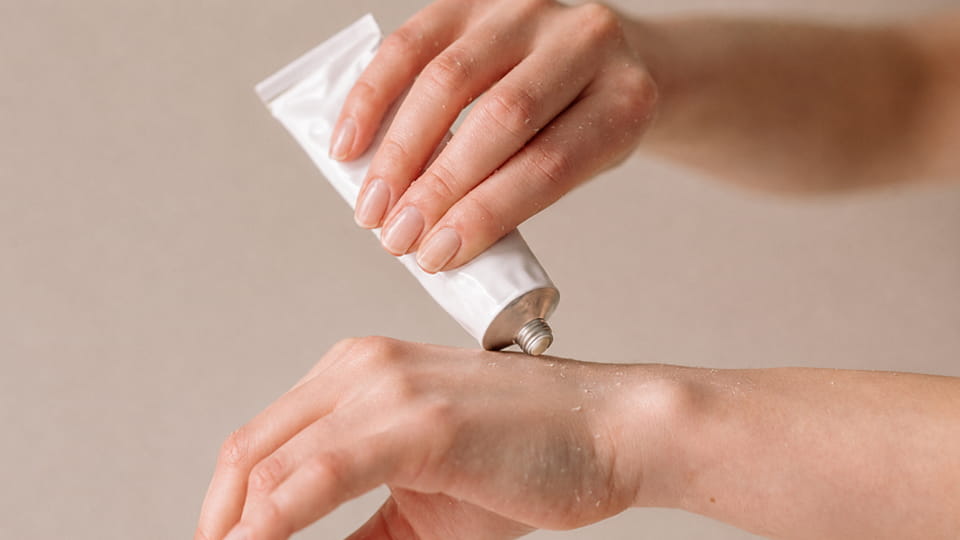
Angka: Krim dan salep adalah bentuk sediaan topikal semi padat yang dioleskan pada kulit.
Bentuk sediaan semi padat adalah sebagian besar untuk penggunaan topikal – yaitu, dioleskan pada kulit atau selaput lendir. Ini termasuk krim, salep, gel, losion, dan pasta. Misalnya, krim antijamur atau salep hidrokortison memungkinkan obat bekerja langsung pada masalah kulit. Banyak kosmetik (losion kulit) juga merupakan bentuk sediaan topikal untuk bahan aktif.
Mengapa setengah padat? Mereka mengantarkan obat-obatan secara lokal dengan efek sistemik minimal. Obat disalurkan ke daerah yang terkena tanpa menyebar ke seluruh tubuh, mengurangi efek samping. Misalnya, krim kulit sebagian besar menempel di kulit.
Formulasi dan Peralatan: Pembuatan krim dan losion memerlukan pencampuran fase minyak dan air dengan pengemulsi. milik JinLu pengaduk pengemulsi vakum dirancang untuk menggabungkan cairan yang tidak dapat bercampur ini menjadi krim atau losion yang stabil. Setelah pencampuran, A mesin pengisian tabung atau jalur pengisian toples mengemas produk ke dalam tabung, botol, atau toples. Seperti yang dijelaskan JinLu, pengemulsi vakum “menggabungkan cairan yang tidak dapat bercampur (minyak & air) menjadi emulsi yang stabil” di bawah vakum. Langkah ini penting untuk konsistensi krim dan gel.
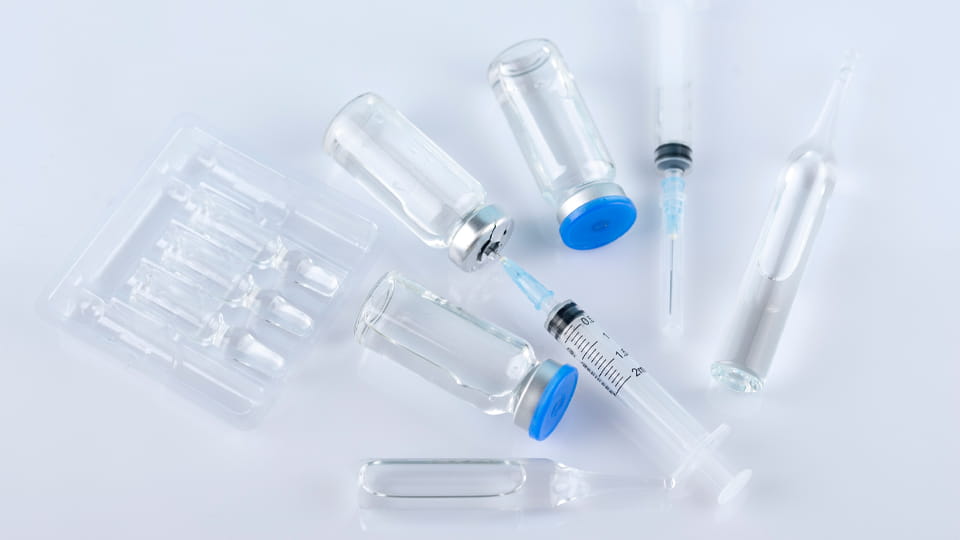
Angka: Suntikan disiapkan dalam botol atau ampul.
Selain oral dan topikal, parenteral (dapat disuntikkan) bentuk sangat penting. Termasuk suntik intravena (Iv), intramuskular (AKU), subkutan (SC) suntikan dan infus. Bentuk sediaan cair ini steril dan dirancang untuk melewati pencernaan agar dapat bekerja dengan cepat. Banyak obat yang menyelamatkan jiwa (misalnya. vaksin, insulin, antibiotik tertentu) menggunakan formulir suntik.
Masing-masing merupakan bentuk sediaan khusus yang dipilih untuk keuntungan spesifik (kecepatan, efek lokal, kenyamanan). Rancangan keseluruhan suatu bentuk sediaan merupakan bagian inti dari formulasi farmasi – insinyur dan apoteker akan menyesuaikan formulasinya (dosis dan bentuk) agar sesuai dengan kebutuhan pasien dan sifat obat.
Apoteker dan insinyur mempertimbangkan banyak faktor ketika memilih bentuk sediaan suatu obat:
Tak heran jika ada begitu banyak pilihan bentuk sediaan. Masing-masing menyeimbangkan kenyamanan, efektivitas, dan kelayakan. Formulasi farmasi yang baik menemukan “titik terbaik” antara kebutuhan pasien dan karakteristik obat.
Penting untuk tidak bingung bentuk sediaan dengan kekuatan dosis. Itu bentuk sediaan adalah seperti apa obatnya dan bagaimana cara meminumnya (tablet, sirup, dll.), sedangkan kekuatan dosis adalah berapa banyak obat aktif dalam setiap unit. Misalnya, dua versi antibiotik amoksisilin bisa jadi: 500 mg kapsul dan 250 mg tablet kunyah. Di Sini, kapsul/tablet adalah bentuk sediaannya, dan angka-angkanya (500 mg, 250 mg) adalah kekuatan dosisnya. Keduanya mengantarkan amoksisilin kepada pasien, namun dalam bentuk dan kekuatan yang berbeda.
Dalam praktiknya, produsen membuat berbagai kekuatan untuk setiap bentuk sehingga dokter dapat menyesuaikan dosis dengan mudah. Formulir (padat, cairan, dll.) terutama menjawab “bagaimana pemberiannya?" pertanyaan, sedangkan kekuatan menjawab “berapa banyak obat yang terkandung dalam setiap dosis.”
Bentuk sediaan adalah jembatan antara pengembangan obat dan penggunaan pasien. Di apotek, maksudnya yang spesifik formulasi – tablet, kapsul, sirup, krim, suntikan, dan banyak lagi – yang membawa bahan aktif ke tubuh. Memilih bentuk yang tepat sangatlah penting: itu mempengaruhi bagaimana obat diserap, betapa mudahnya bagi pasien, dan seberapa efisien produk tersebut dapat diproduksi dan dikemas.
Peralatan farmasi modern memungkinkan pembuatan bentuk sediaan apa pun dengan andal. Misalnya, JinLuPacking menawarkan solusi lengkap: pengepres tablet berkecepatan tinggi untuk makanan padat oral, mesin pengisian kapsul untuk butiran, jalur pengisian cairan untuk sirup dan suntikan, dan mesin pengemasan (pengepakan melepuh, penutup botol, mesin hitung) untuk menyelesaikan pekerjaan. Dengan keahlian dan mesin yang tepat, segala bentuk sediaan – baik tablet stabil atau krim kompleks – dapat diproduksi dengan kualitas tinggi.
Kesimpulannya, memahami definisi bentuk sediaan di apotek berarti mengakui hal itu bentuknya penting. Ini menentukan pengalaman pasien, tindakan obat, dan metode manufaktur. Dengan merancang dan memilih bentuk sediaan yang efektif, insinyur farmasi membantu memastikan obat-obatan aman dan nyaman bagi pengguna.
Siap mendiskusikan kebutuhan produksi farmasi Anda? Baik Anda membuat tablet, kapsul, krim, atau sirup, tim kami dapat membantu. Kontak Pengepakan JinLu untuk mengeksplorasi jalur produksi dan solusi pengemasan yang disesuaikan untuk segala bentuk sediaan. Kami menawarkan peralatan turnkey mulai dari mesin cetak tablet berkecepatan tinggi hingga pengepakan lepuh otomatis dan jalur pengisian botol – semuanya dirancang untuk memberikan hasil yang konsisten, bentuk sediaan berkualitas tinggi untuk produk Anda.
Bentuk sediaan adalah bentuk fisik dimana suatu obat diproduksi dan diberikan kepada pasien. Ini menggabungkan bahan aktif farmasi (API) dengan eksipien untuk membuat produk seperti tablet, kapsul, cairan, krim, suntikan, atau bubuk. Bentuk sediaan yang tepat membantu memastikan dosis yang akurat, stabilitas produk, dan pemberian obat yang efektif.
Banyak orang yang bingung membedakan kedua istilah ini.
• Bentuk sediaan mengacu pada bentuk fisik obat, seperti tablet, kapsul, sirup, atau krim.
• Kekuatan dosis mengacu pada jumlah bahan aktif yang terkandung dalam setiap unit, seperti 250 mg atau 500 mg.
Misalnya, A 500 mg tablet dan a 500 mg kapsul mempunyai kekuatan sediaan yang sama tetapi bentuk sediaannya berbeda.
Bentuk sediaan farmasi umumnya dibagi menjadi beberapa kategori:
• Bentuk sediaan padat (tablet, kapsul, bubuk)
• Bentuk sediaan cair (solusi, suspensi, sirup)
• Bentuk sediaan semi padat (krim, salep, gel)
• Bentuk sediaan suntik
• Bentuk sediaan inhalasi dan transdermal
Setiap jenis dirancang untuk memenuhi kebutuhan terapeutik dan pasien yang berbeda.
Bentuk sediaan yang benar secara langsung mempengaruhi:
• Penyerapan obat
• Kepatuhan pasien
• Keakuratan dosis
• Stabilitas produk
• Efisiensi manufaktur
Misalnya, anak-anak mungkin lebih menyukai bentuk sediaan cair, sedangkan orang dewasa sering memilih bentuk sediaan tablet atau kapsul untuk kenyamanan.
Contoh bentuk sediaan farmasi yang umum meliputi:
• Bentuk sediaan tablet
• Bentuk sediaan kapsul
• Solusi lisan
• Sirup
• Penangguhan
• Solusi suntik
• Krim
• Salep
• Gel
• Bubuk untuk rekonstitusi
Setiap formulasi farmasi dikembangkan berdasarkan sifat obat dan rute pemberian yang dimaksudkan.
Bentuk sediaan padat oral adalah bentuk sediaan farmasi yang paling banyak digunakan di seluruh dunia.
Bentuk sediaan tablet dan kapsul populer karena menawarkan:
• Efisiensi produksi yang tinggi
• Umur simpan yang lama
• Dosis yang akurat
• Transportasi yang mudah
• Manufaktur yang hemat biaya
Inilah sebabnya mengapa sebagian besar lini produksi farmasi dirancang untuk pembuatan dosis padat oral.
Lini produksi dosis padat oral yang khas mungkin termasuk:
• Peralatan pembuatan tablet
• Mesin pengisian kapsul
• Mixer geser tinggi
• Pengering unggun cair
• Mesin pelapis tablet
• Mesin penghitung tablet
• Mesin pengepakan melepuh
• Jalur pengisian botol
• Mesin karton
Lini produksi farmasi modern mengintegrasikan mesin ini untuk produksi otomatis dan sesuai GMP.
bentuk memenuhi kebutuhan yang berbeda. Misalnya, antibiotik mungkin tersedia dalam bentuk tablet (untuk orang dewasa), sebuah suspensi (untuk anak-anak), dan bentuk suntikan (untuk pasien rawat inap). Setiap bentuk mengoptimalkan stabilitas, kenyamanan, atau penyerapan untuk tujuan penggunaan.
dosis adalah jumlah obat yang diminum pada satu waktu (misalnya. 250 mg). Bentuk sediaan adalah bentuk fisik yang mengandung obat tersebut (misalnya. tablet 250mg atau kapsul 250mg). Dengan kata lain, dosis = jumlah obat; bentuk sediaan = tablet, cairan, dll..
seberapa cepat suatu obat larut. Tablet harus hancur sebelum obat diabsorpsi, sedangkan cairan bertindak lebih cepat. Tablet pelepasan terkontrol memperlambat pembubaran untuk memperluas efek. Topikal diserap melalui kulit, sementara suntikan sama sekali tidak ada hambatannya. Pilihan bentuk disesuaikan dengan sifat obat dan tujuan terapeutik.
Referensi:
1.Bentuk Dosis -- KITA. Badan Pengawas Obat dan Makanan
2.Bentuk Dosis dan Cara Pemberian -- KITA. Badan Pengawas Obat dan Makanan
3.Bentuk Sediaan Farmasi ——usp.org
4.Desain formulasi, tantangan, dan pertimbangan pengembangan untuk kombinasi dosis tetap (FDC) bentuk sediaan padat oral —— tandfonline.com
5.Bentuk Dosis ——Wikipedia
6.Bentuk sediaan orodispersibel: perbaikan biofarmasi dan persyaratan peraturan —— Sains Langsung