Apa Itu Checkweigher dan Bagaimana Cara Kerjanya? Panduan Lengkap untuk Jalur Pengemasan Farmasi
Apa Itu Checkweigher dan Bagaimana Cara Kerjanya? Panduan Lengkap untuk Jalur Pengemasan Farmasi
Juni 26, 2026
Tidak ada komentar
A timbangan checkweigher adalah perangkat penimbangan inline yang digunakan untuk memverifikasi bobot produk di lini produksi. Ini memastikan setiap paket memenuhi target beratnya, secara otomatis menolak di bawah- atau unit kelebihan berat badan. Hal ini penting dalam operasi farmasi dan pengemasan untuk keakuratan dosis, kepatuhan terhadap GMP, dan pengurangan limbah. Checkweigher terdiri dari konveyor, sel beban presisi tinggi, pengontrol/HMI, dan mekanisme penolakan. Di bidang farmasi jalur pembotolan, checkweigher biasanya diposisikan tepat setelah penghitung kapsul atau pengisi cairan dan sebelum mesin penutup, memungkinkan setiap botol yang diisi diverifikasi sebelum memasuki tahap pengemasan yang tersisa. Manfaat utama termasuk 100% pemeriksaan berat badan, pengurangan hadiah, dan kontrol kualitas otomatis. Dalam panduan ini, kami menjelaskan apa itu checkweigher, cara kerjanya, komponen-komponennya, jenis, manfaat, dan bagaimana memilih satu untuk saluran Anda.
Apa itu Checkweigher?
A timbangan checkweigher(atau mesin check-weigher) adalah sistem penimbangan otomatis yang ditempatkan pada lini produksi untuk menimbang setiap barang dan memastikan barang tersebut sesuai dengan target beratnya. Dalam praktiknya, 100% produk ditimbang “on the fly” saat melewati timbangan. Paket apa pun yang kekurangan atau kelebihan berat akan ditandai atau dihapus, memastikan hanya item yang diisi dengan benar yang dilanjutkan. Perangkat ini umum digunakan dalam pengemasan dan manufaktur: Misalnya, konveyor checkweigher banyak digunakan pada penghitungan kapsul, pembotolan, pengepakan melepuh dan jalur kartoning. Berbeda dengan timbangan manual atau bench, checkweigher beroperasi secara inline: produk tetap berada di konveyor dan ditimbang secara dinamis saat bergerak. Hal ini memungkinkan pemeriksaan yang sangat cepat (seringkali ratusan unit per menit) tanpa memperlambat garis.
Dalam ringkasan, checkweigher pada dasarnya adalah ban berjalan yang dilengkapi perangkat elektronik penimbangan internal dan penyortiran otomatis. Ini menyediakan pemeriksaan berat badan secara real-time dan secara otomatis membuang produk apa pun yang terlalu berat atau terlalu ringan, memastikan bahwa hanya paket yang diisi dengan benar yang akan dilanjutkan. Mekanisme ini sangat penting untuk melindungi konsistensi dan kepatuhan produk dalam industri seperti farmasi.
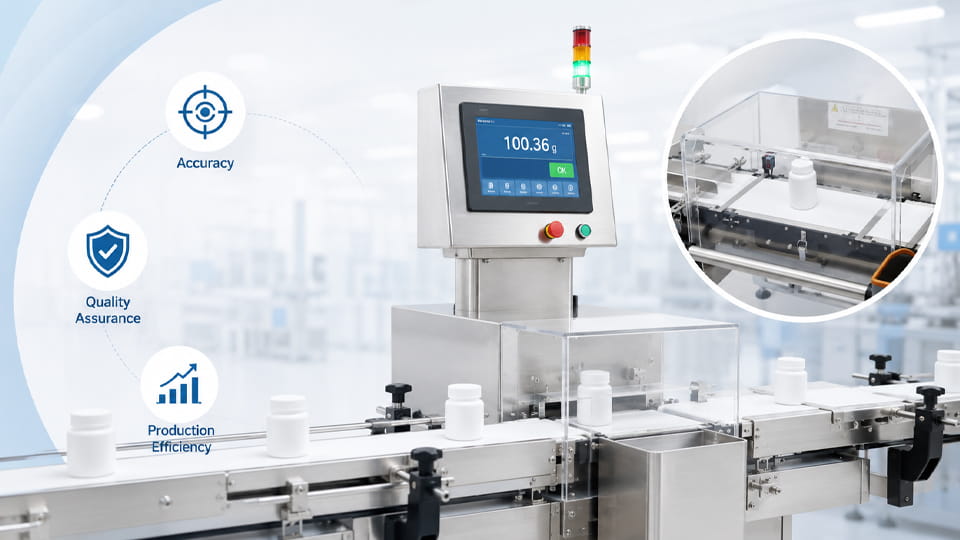
Mesin checkweigher presisi tinggi
Mengapa Checkweigher Penting dalam Manufaktur Farmasi?
Periksa timbangannya penting untuk farmasi karena mereka menangkap kesalahan pengisian dan memastikan keakuratan dosis, melindungi keselamatan pasien dan kepatuhan terhadap peraturan.
Dosis dan Keamanan yang Akurat: Dalam pembuatan obat, bahkan penyimpangan berat yang kecil pun dapat berarti dosis bahan aktif yang terlewat atau ekstra. Checkweigher memastikan setiap tablet, botol kapsul, botol atau paket berisi jumlah yang benar. Dalam praktiknya, ini berarti memastikan setiap unit berada dalam toleransi berat yang ketat. Misalnya, jika botol tablet terisi kurang, checkweigher menolaknya sebelum dikirim. Hal ini mencegah terjadinya insiden overdosis atau kekurangan dosis yang merugikan.
Kepatuhan Pengaturan (cGMP/FDA): Badan pengatur (FDA di AS, EMA/GMP di Eropa, MHRA di Inggris, dll.) mengamanatkan toleransi berat yang ketat pada kemasan farmasi. Checkweigher memberikan bukti terdokumentasi bahwa setiap unit telah ditimbang dan tidak ada bobot yang kurang (atau kelebihan berat badan) produk lolos. Checkweigher farmasi modern dirancang untuk memenuhi standar ini dengan konstruksi baja tahan karat yang higienis dan kemampuan penelusuran penuh. Misalnya, Jinlu Packing menyoroti bahwa checkweigher kami membantu perusahaan farmasi mencapai pengemasan “0 kesalahan” dan mematuhi persyaratan GMP/FDA saat ini.
Mencegah Penarikan dan Pemborosan: Mendeteksi kesalahan penimbangan sebaris secara dramatis mengurangi risiko penarikan batch. Checkweigher memastikan kepatuhan terhadap regulator (MHRA, FDA, Ema) dan “meminimalkan risiko yang terkait dengan overdosis, kesalahan dosis dan pengemasan. Mereka secara otomatis mengeluarkan unit yang tidak patuh, mencegahnya dikirim. Penolakan otomatis ini (melalui lengan pendorong, jet udara, dll.) menjaga kualitas tanpa memperlambat produksi. Pada gilirannya, lebih sedikit batch buruk dan lebih sedikit pemberian produk (menghindari pengisian berlebih) berarti penghematan biaya. Pendeknya, checkweigher melindungi reputasi merek dengan memastikan setiap kemasan memenuhi klaim label.
Pemantauan Kualitas Berkelanjutan: Karena setiap barang sudah diperiksa, produsen dapatkan 100% data berat badan. Kontrol kualitas tingkat tinggi ini (dibandingkan dengan pengambilan sampel berkala) berarti penyimpangan proses atau masalah peralatan terdeteksi segera. Fitur pencatatan data (21 Bagian CFR 11 kepatuhan, jalur audit) juga membantu memuaskan regulator selama audit.
Dalam ringkasan, sebuah farmasi timbangan checkweigher lebih dari sekedar skala: ini adalah titik kontrol kualitas penting yang memastikan keakuratan dosis, Kepatuhan Pengaturan, dan keselamatan pelanggan dalam produksi berkecepatan tinggi. Dengan menangkap kesalahan pengisian apa pun di telepon, itu mencegah di bawah- atau produk yang terlalu penuh meninggalkan pabrik.
Bagaimana Cara Kerja Checkweigher?
Checkweigher beroperasi terus-menerus pada konveyor. Berikut adalah alur kerja yang khas:
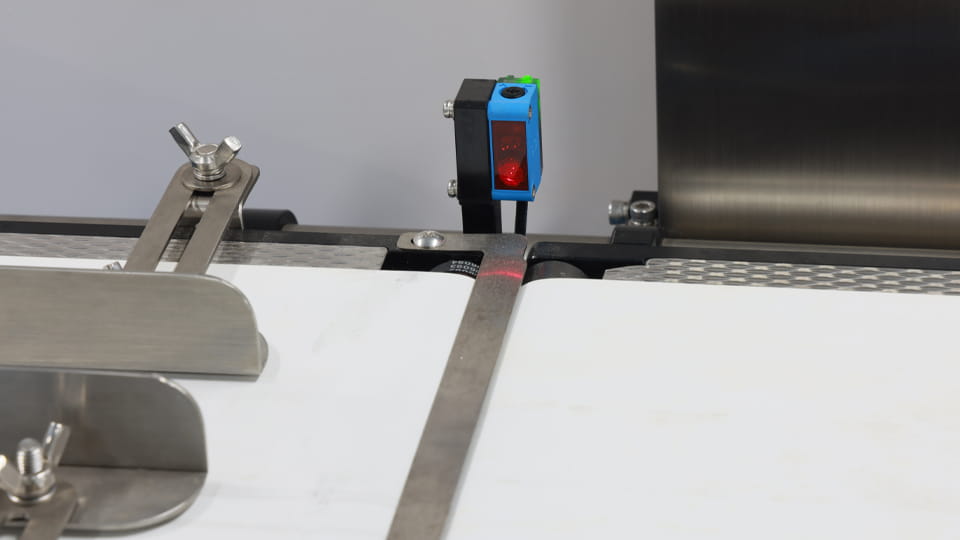
memberi makan & Deteksi Produk: Produk dimasukkan ke konveyor. Mata foto atau sensor mendeteksi keberadaan setiap item dan memberi sinyal pada modul timbang untuk bersiap.
Beratnya (Dinamis): Saat barang melewati bagian penimbangan, presisi tinggi sel beban (platform sensor) menangkap bobotnya secara real time. Sel beban ini mengubah berat produk menjadi sinyal elektronik. Kecepatan konveyor dan mekanisme stabilisasi memastikan barang stabil saat ditimbang.
Perbandingan dengan Target Berat: Unit kendali (Plc) langsung membandingkan berat yang diukur dengan batas yang telah ditentukan (nilai target plus/minus toleransi). Batasan ini biasanya diprogram melalui HMI layar sentuh. Misalnya, jika target botol tablet adalah 150,0g, sistem mungkin menandai apa pun di bawah 149.0g atau di atas 151.0g. Jika beratnya turun di dalam kisaran yang dapat diterima, produk berlanjut di telepon.
Penolakan Otomatis: Jika suatu item adalah di luar spesifikasi (terlalu ringan atau terlalu berat), sistem segera memicu mekanisme penolakan. Perangkat penolakan yang umum meliputi:
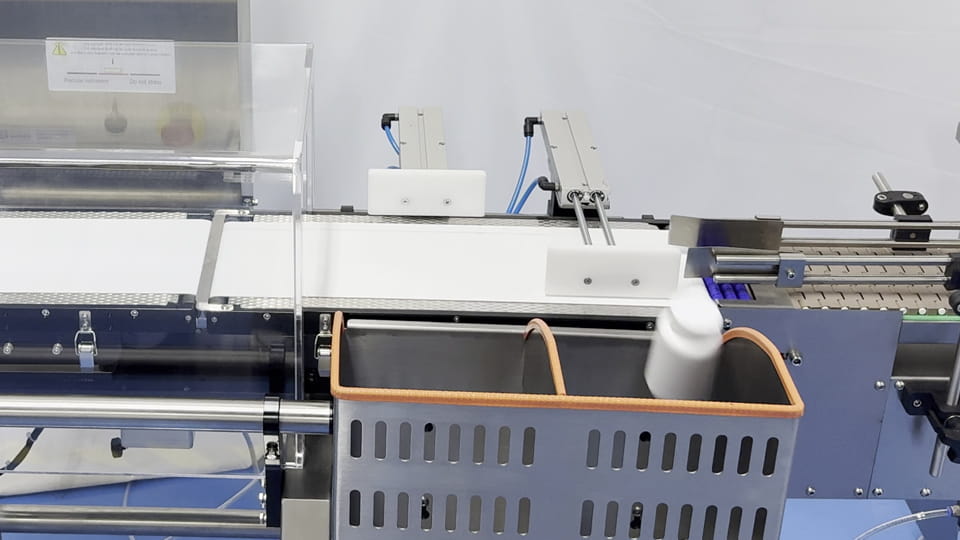
A lengan dorong yang berayun ke bawah untuk mengalihkan atau mengeluarkan botol atau karton.
Sebuah pancaran udara yang meniup benda ringan dari sabuk.
A jatuhkan fl ap (atau pelat fl ip) yang terbuka di bawah konveyor untuk menjatuhkan barang ke dalam wadah.
A konveyor pengalih yang memindahkan item buruk ke jalur terpisah.
Penolakan ini sepenuhnya otomatis dan disinkronkan dengan sinyal sensor, menghapus unit yang buruk tanpa menghentikan saluran.
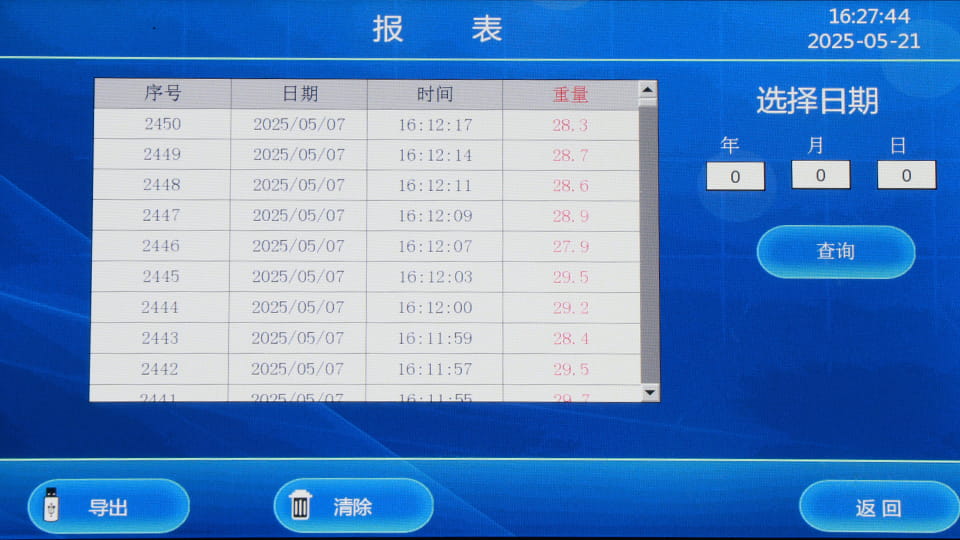
Pencatatan Data & Masukan: Setiap peristiwa penimbangan dan penolakan dicatat untuk catatan kualitas. Checkweigher juga dapat memberikan umpan balik secara real-time ke peralatan hulu. Misalnya, beberapa sistem dapat mengirimkan sinyal ke mesin pengisi untuk menyesuaikan apakah beban cenderung berat atau ringan.
Keseluruhan proses ini – mulai dari deteksi, penimbangan, hingga penolakan – terjadi dalam sepersekian detik untuk setiap item. Hasilnya adalah 100% pemeriksaan berat sebaris pada kecepatan produksi penuh. Periksa pengoperasian timbangan secara dinamis tanpa mengganggu produksi, memungkinkan produsen untuk “memantau berat produk tanpa mengganggu aliran produksi”.
Berikut ringkasan alur kerja checkweigher:
Sensor dan Infeed: Konveyor memberi makan produk; sensor memicu proses penimbangan.
Beratnya: Sel beban mengukur berat setiap benda yang bergerak.
Perbandingan: Unit kontrol membandingkan bobot dengan batas target yang telah ditetapkan.
Menolak: Produk yang tidak dapat ditoleransi akan dikeluarkan secara otomatis (melalui pendorong, pancaran udara, dll.).
Catatan: Data berat dan jumlah penolakan dicatat untuk pengendalian kualitas.
Siklus otomatis ini, diulang untuk setiap item, Inilah yang menjadikan checkweigher sangat diperlukan dalam lini produk farmasi modern.
Komponen Utama Checkweigher
Timbangan cek otomatis pada umumnya terdiri dari beberapa bagian penting, sering dibangun ke dalam bingkai modular (lihat contoh gambar Jinlu):
Sabuk Konveyor: Biasanya tiga bagian – infeed, zona penimbangan, dan debit. Model Jinlu menggunakan konveyor tiga bagian untuk memudahkan perawatan. Sabuk mengumpankan produk dengan lancar dan konsisten di bawah sel beban.
Memuat Sel (Sensor Penimbangan): Sensor presisi tinggi (pengukur regangan atau tipe EMFR) dipasang di bawah bagian timbang untuk mengukur berat. Setiap kali suatu produk lewat, sel beban mengubah beratnya menjadi sinyal listrik. Checkweigher Jinlu menggunakan sel beban berpresisi tinggi untuk mencapai akurasi ±0,1g. Angka: Sistem sabuk checkweigher modular Jinlu (bagian konveyor snap-on) menyederhanakan pemeliharaan. Sel beban dipasang di bawah sabuk, dan produk dipandu ke bagian penimbangan.
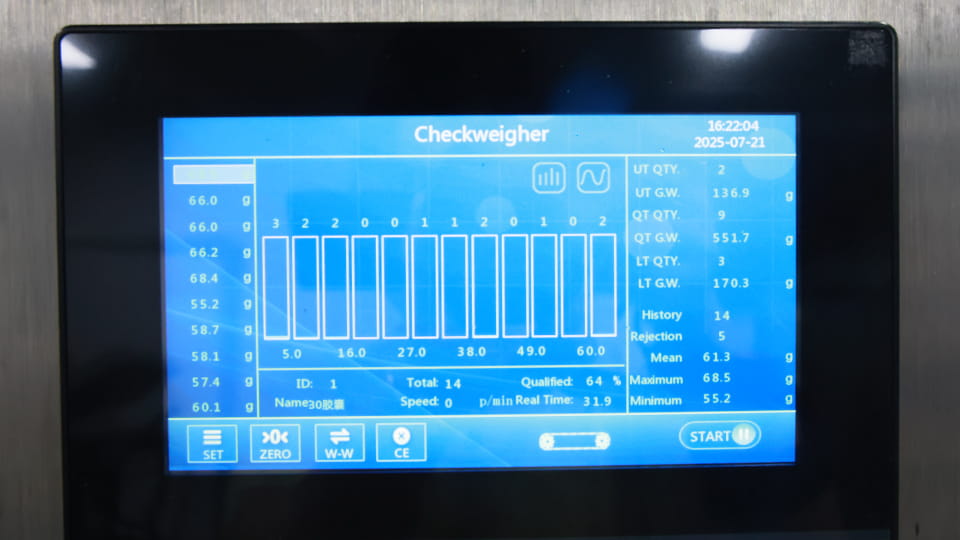
Unit Kontrol dan HMI: Sebuah PLC (pengontrol logika yang dapat diprogram) memproses data berat. Tampilan layar sentuh HMI memungkinkan operator menetapkan bobot target, melihat statistik, dan sesuaikan pengaturan. Checkweigher kecepatan tinggi Jinlu, Misalnya, menampilkan antarmuka layar sentuh 7 inci. Unit kontrol berisi firmware yang menerapkan filter digital dan kompensasi kecepatan untuk memastikan pembacaan berat badan yang akurat.
Mekanisme Penolakan: Aktuator otomatis menghilangkan produk buruk. Tergantung model dan produknya, ini mungkin batang dorong pneumatik, pancaran udara, drop fl ap atau sistem pengalih. Perangkat penyortir diposisikan tepat setelah bagian penimbangan.
Bingkai dan Penutup: Konstruksi baja tahan karat yang higienis (untuk cGMP) membentuk bingkai. Banyak checkweigher dilengkapi penutup transparan pada bagian timbangan untuk melindunginya dari aliran udara dan debu, menstabilkan pengukuran berat badan. Misalnya, Desain Jinlu menggunakan penutup kaca plexiglass “tahan angin dan tahan debu” di atas area sel beban untuk mencegah aliran udara menyimpang dari beban..
Sensor dan Panduan: Mata foto atau sensor laser mendeteksi keberadaan produk. Rel atau saluran pemandu menjaga agar botol atau karton tetap berada di tengah sabuk selama penimbangan.
Modul Data/Jaringan: Checkweigher modern dilengkapi port data dan jaringan untuk mengekspor log ke komputer atau sistem pabrik. Mereka sering kali mendukung perekaman atau konektivitas kartu USB/SD (Ethernet/PROFINET) untuk ketertelusuran data.
Setiap komponen bekerja sama untuk memastikan kecepatan, penimbangan yang tepat. Bagian sabuk modular (dengan desain snap-on) memungkinkan operator melepas dan membersihkan konveyor dengan cepat tanpa alat. Konstruksi baja tahan karat dan penutup tertutup membuat mesin mudah dicuci dan memenuhi persyaratan ruang bersih farmasi.
Jenis Checkweigher
Checkweigher hadir dalam berbagai konfigurasi untuk memenuhi berbagai kebutuhan produksi:
Dinamis (sebaris) timbangan periksa: Tipe yang paling umum, dipasang langsung pada konveyor produksi. Ini menimbang produk yang sedang bergerak dan mengeluarkan cacat tanpa menghentikan jalur. Ideal untuk pengemasan berkecepatan tinggi secara terus menerus (misalnya. cairan botolan, botol tablet). JL-CW Jinlu adalah contoh checkweigher inline untuk jalur penghitungan dan pengepakan.
Statis (Bangku) timbangan periksa: Versi manual atau benchtop yang digunakan untuk pengambilan sampel dan QC. Operator secara manual menempatkan paket individual pada skala. Ini lebih lambat dan tidak digunakan 100% inspeksi, tapi bagus untuk pemeriksaan laboratorium atau pemecahan masalah.
Checkweigher Multi Jalur Berkecepatan Tinggi: Dirancang untuk jalur yang sangat cepat, sering kali di mesin penghitung farmasi atau porsi makanan. Ini mungkin memiliki beberapa jalur paralel (trek) penimbangan konveyor untuk menangani ribuan item per menit. Misalnya, lini tablet dan kapsul mungkin memerlukan checkweigher multitrack yang mampu menimbang beberapa item secara bersamaan.
Checkweigher Kombinasi/Kombi: Ini mengintegrasikan checkweigher dengan perangkat inspeksi lainnya (misalnya. checkweigher detektor logam atau sinar-X) dalam satu stasiun. Ini menghemat ruang dan melakukan QC ganda dalam satu langkah.
Desain Khusus: Beberapa checkweigher disesuaikan untuk produk berbentuk aneh (jarum suntik, botol) atau untuk lingkungan yang mudah meledak. Checkweigher farmasi sering kali memiliki motor pencuci atau motor yang dikontrol VFD untuk rentang kecepatan yang luas.
Setiap jenis memiliki prinsip kerja dasar yang sama, tetapi Anda memilih berdasarkan kecepatan lini produksi dan jenis produk. Tablet dan kapsul (dosis oral padat) membutuhkan cepat, timbangan dinamis tahan getaran. Cairan atau bubuk mungkin memerlukan timbangan dengan umpan balik ke sistem pengisi.
Manfaat Menggunakan Checkweigher di Jalur Pengemasan
Penerapan checkweigher pada lini pengemasan menghasilkan banyak manfaat:
100% Kontrol kualitas: Setiap paket diperiksa keakuratan beratnya. Hal ini memastikan kualitas produk dan akurasi pelabelan yang konsisten. Sekalipun satu paket pil atau bedak hilang, itu akan ditangkap.
Kepatuhan Pengaturan: Dengan secara otomatis memverifikasi toleransi berat, checkweigher membantu produsen memenuhi persyaratan hukum (FDA, Ema, dll.). Mereka menyediakan catatan elektronik yang mudah diaudit untuk setiap penimbangan, penting untuk dokumentasi rilis batch.
Mengurangi Limbah dan Hadiah: Paket yang terlalu penuh akan menyia-nyiakan produk dan margin keuntungan. Paket yang kurang terisi berisiko ditarik kembali. Checkweigher meminimalkan keduanya dengan mengontrol berat secara ketat. Seperti yang dicatat oleh salah satu sumber, sistem ini “mencegah produk yang tidak akurat menjangkau konsumen, memastikan kepatuhan peraturan berat badan [Dan] pengurangan sampah”. Dalam praktiknya, ini berarti pemberian hadiah yang lebih sedikit (menghemat bahan baku) dan lebih sedikit bagian bawah yang dibuang.
Efisiensi yang lebih tinggi: Penimbangan otomatis lebih cepat dan andal dibandingkan pengambilan sampel manual. Hal ini membebaskan operator untuk mengelola pengecualian dibandingkan terus-menerus menimbang barang dengan tangan. Checkweigher mempertahankan kecepatan jalur dan bahkan dapat melakukan koreksi umpan balik (misalnya. sesuaikan pengaturan pengisi jika tren bobot menurun).
Peningkatan Kepuasan Pelanggan: Konsisten, pengemasan yang akurat berarti pelanggan dapat mempercayai produk tersebut. Dengan menghindari paket underweight (dan keluhan pelanggan berikutnya) sebuah perusahaan menjunjung tinggi reputasinya. Hal ini juga menghindari penarikan kembali yang mahal; menangkap kesalahan lebih awal mencegah seluruh batch menjadi buruk.
Wawasan Berdasarkan Data: Checkweigher modern mengumpulkan data berat dan produksi. Ini dapat dianalisis untuk mengoptimalkan proses, memantau tren, dan dengan cepat mengidentifikasi masalah. Misalnya, jika setiap botol ke 500 beratnya sedikit kurang, teknik dapat menyelidiki penyimpangan pengisian berkala. Log data ini mendukung perbaikan berkelanjutan.
Keseluruhan, sistem checkweigher berfungsi sebagai titik kontrol kualitas yang kuat. Ini meningkatkan hasil (dengan mengurangi limbah) dan menjaga kepatuhan. Secara kompetitif manufaktur farmasi, keunggulan ini diterjemahkan langsung ke penghematan biaya dan integritas merek.
Cara Memilih Checkweigher yang Tepat
Saat memilih checkweigher untuk lini produksi Anda, pertimbangkan faktor-faktor kunci berikut ini:
Jenis dan Ukuran Produk: Sesuaikan mesin dengan produk Anda. Tablet atau kapsul biasanya membutuhkan kecepatan tinggi, timbangan sensitif. Cairan atau bubuk mungkin memerlukan checkweigher yang dilengkapi sensor ketinggian. Botol padat vs. tas fleksibel vs. semua lepuh mempunyai kebutuhan penanganan yang berbeda-beda. Misalnya, Jinlu menyarankan untuk memilih sistem cocok dengan produknya (misalnya. multi-track untuk tablet vs. peredam getaran untuk bubuk).
Kisaran Berat dan Akurasi: Pastikan jangkauan dan resolusi checkweigher sesuai dengan aplikasi Anda. Model standar Jinlu mencakup 5–1000g dengan presisi 0,1g. Jika Anda mengemas barang yang sangat ringan (misalnya. <5 G), pilih skala yang lebih sensitif (sel beban elektromagnetik). Jika berat (beberapa kg), checkweigher tugas yang lebih berat diperlukan.
Kecepatan Produksi: Cocokkan throughput mesin dengan kecepatan saluran Anda. Model Jinlu mampu menangani hingga 100 pcs/mnt. Jika jalur Anda berjalan lebih cepat, pertimbangkan checkweigher berkecepatan tinggi atau multi-jalur. Untuk jalur yang lebih lambat, model kecepatan rendah sudah cukup.
Integrasi dan Jejak: Checkweigher harus terpasang dengan sempurna. Mereka harus sejajar dengan lebar dan tinggi konveyor yang ada. Banyak model (seperti milik Jinlu) bersifat modular agar dapat dipasang di antara mesin lain tanpa perubahan tata letak yang mahal. Pertimbangkan juga kebutuhan listrik dan udara (untuk pneumatik) kencan. Pastikan pemasangan memungkinkan akses mudah untuk pembersihan dan pemeliharaan.
Akurasi dan Resolusi: Aplikasi farmasi seringkali memerlukan toleransi yang sangat ketat. Pilih mesin dengan teknologi sel beban canggih (pengukur regangan atau EMFR) dan penyaringan digital. Model kelas atas dapat mencapai ±0,01g atau lebih baik pada bobot kecil.
Mekanisme Penolakan: Putuskan jenis penolakan mana yang terbaik untuk produk Anda. Botol atau karton dapat digunakan dengan baik dengan lengan dorong atau penutup; barang ringan (tablet, tas) sering menggunakan jet udara. Beberapa baris menggunakan keduanya. Pastikan penyortiran yang dipilih dapat mengeluarkan produk dengan andal tanpa menimbulkan kemacetan.
Kepatuhan terhadap GMP: Carilah konstruksi tingkat farmasi. Fiturnya meliputi baja tahan karat bingkai, desain higienis (tidak ada celah), dan kemudahan pembersihan. Pertimbangkan juga fitur perangkat lunak: Apakah sistem mendukung 21 Bagian CFR 11 (login pengguna, jalur audit)? Bisakah itu menghasilkan laporan CSV atau PDF untuk catatan batch?
Data dan Konektivitas: Jika Anda perlu mengintegrasikan data bobot ke MES/ERP, periksa apakah mesin mendukung Ethernet/IP, OPCUA, atau protokol industri lainnya. Kartu USB atau SD untuk cadangan data juga dapat berguna.
Dukungan Vendor: Pilih pemasok terkemuka yang dapat membantu Dokumentasi validasi IQ/OQ/PQ, kalibrasi, dan layanan. Pengepakan Jinlu, Misalnya, menawarkan dukungan IQ/OQ untuk checkweighernya, bersama dengan manual rinci dan garansi.
Dengan mempertimbangkan faktor-faktor ini – karakteristik produk, kecepatan, ketepatan, kebutuhan regulasi, dan kompatibilitas saluran – Anda dapat memilih checkweigher yang memaksimalkan kinerja untuk aplikasi spesifik Anda. Misalnya, Checkweigher JL-CW Jinlu dioptimalkan untuk lini botolan dan kemasan melepuh, dengan tapak kecil dan antarmuka layar sentuh.
Checkweigher dalam Integrasi Jalur Pengemasan
Checkweigher memberikan nilai terbaik bila dipasang pada titik yang tepat di jalur produksi. Dalam kemasan botol farmasi, posisi paling umum adalah tepat setelah meja tablet, penghitung kapsul, atau mesin pengisian cairan. Pada tahap ini, sistem dapat memverifikasi bahwa setiap botol berisi jumlah produk yang benar sebelum langkah pengemasan tambahan menambah biaya dan kerumitan. Botol yang berada di luar kisaran berat yang dapat diterima secara otomatis ditolak sebelum mencapai stasiun pembatasan. Hal ini membantu mencegah produk cacat berpindah ke produk lain dan mengurangi pemborosan yang tidak perlu.
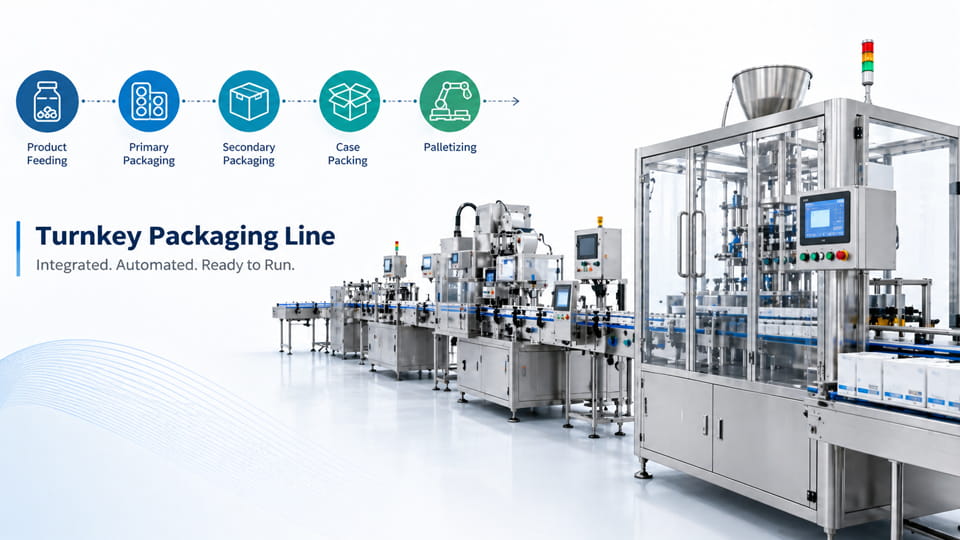
Jalur pembotolan farmasi pada umumnya mungkin mengikuti urutan ini: Botol Uncrambler → Penghitung Tablet/Kapsul (atau Pengisi Cairan) → Timbangan checkweigher → Mesin capping → Penyegel Induksi → Mesin Pelabelan → pembuat karton. Dalam beberapa aplikasi, produsen juga dapat menambahkan sistem penimbangan pemeriksaan kedua menjelang akhir proses pengemasan untuk memverifikasi kelengkapan karton jadi. Titik pemasangan yang ideal bergantung pada apa yang ingin diperiksa oleh produsen—keakuratan pengisian produk, kelengkapan botol, atau verifikasi paket akhir.
Kesimpulan
Checkweigher adalah komponen yang sangat diperlukan dalam lini pengemasan farmasi modern. Dengan secara otomatis memverifikasi berat setiap paket, ini memastikan keakuratan dosis, kepatuhan terhadap GMP, dan kualitas produk. Kami telah membahas cara kerja checkweigher, mengapa mereka penting dalam farmasi, bagian utama mereka, jenis, dan bagaimana memilih yang tepat. Kami juga membandingkan checkweigher dengan timbangan tradisional dan menyoroti manfaat utamanya: akurasi yang lebih baik, pengurangan limbah, throughput yang lebih cepat, dan ketertelusuran penuh.
Jika Anda ingin menambahkan checkweigher atau meningkatkan lini produk Anda, Pengepakan Jinlu menawarkan presisi tinggi, solusi yang sesuai dengan cGMP. Checkweigher JL-CW Jinlu, misalnya, menyediakan 0.1 G akurasi hingga 100 pcs/mnt dan banyak digunakan dalam botol, lepuh, dan tempelkan garis pengemasan. Terintegrasi dengan mesin Jinlu lainnya (pengurai, menangkal, capper, pemberi label, pembuat karton), itu dapat membentuk otomatis lengkap lini pengemasan farmasi. Dengan fitur seperti HMI 7 inci, rangka baja tahan karat, dan sistem penolakan yang terbukti, ini membantu mencapai pengemasan “tanpa kesalahan”..
Untuk rincian lebih lanjut atau untuk mendiskusikan kebutuhan spesifik Anda, kunjungi Jinlu Packing's Produk checkweigher halaman atau hubungi tim penjualan kami. Pakar kami dapat membantu merancang solusi (termasuk dukungan IQ/OQ) untuk lini produksi Anda, memastikan checkweighing yang patuh dan efisien.
FAQ tentang Checkweigher di Farmasi
Untuk apa Checkweigher digunakan?
Checkweigher digunakan untuk memverifikasi berat produk yang dipindahkan melalui jalur produksi secara otomatis. Ini membantu produsen mengidentifikasi kekurangan berat badan, kegemukan, atau produk yang tidak lengkap dan secara otomatis menghapusnya dari lini. Dalam kemasan farmasi, checkweigher dapat mendeteksi botol dalam hitungan pendek, wadah yang terlalu penuh, atau komponen yang hilang sebelum produk mencapai pasar.
Bagaimana cara kerja Checkweigher?
Checkweigher menggunakan sel beban dan konveyor penimbangan untuk mengukur berat produk saat produk bergerak. Sistem membandingkan berat yang diukur dengan batas atas dan bawah yang telah ditentukan sebelumnya. Jika beratnya berada di luar kisaran yang dapat diterima, mekanisme penolakan otomatis mengeluarkan produk dari jalur produksi.
Di mana Checkweigher sebaiknya dipasang di lini pengemasan farmasi?
Di sebagian besar lini pembotolan farmasi, checkweigher dipasang segera setelah penghitung tablet, penghitung kapsul, atau mesin pengisian cairan. Hal ini memungkinkan produsen untuk memverifikasi keakuratan pengisian sebelum botol melanjutkan ke pembatasan, penyegelan, pelabelan, dan proses kartoning. Deteksi dini membantu mengurangi biaya pemborosan dan pengerjaan ulang.
Dapatkah Checkweigher mendeteksi tablet atau kapsul yang hilang?
Ya. Jika tablet atau kapsul hilang menimbulkan perbedaan berat yang terukur, checkweigher dapat mengidentifikasi ketidaksesuaian dan menolak botol yang terpengaruh. Inilah salah satu alasan utama produsen farmasi menggunakan timbangan cek otomatis setelah proses penghitungan.
Industri apa yang biasa menggunakan Checkweigher?
Checkweigher banyak digunakan dalam bidang farmasi, makanan dan minuman, kosmetik, Nutraceutical, kimia, dan industri logistik. Industri mana pun yang memerlukan verifikasi berat produk dan kontrol kualitas yang akurat dapat memanfaatkan sistem checkweigher inline.
Apa saja komponen utama Checkweigher?
Checkweigher pada umumnya terdiri dari konveyor pengumpan, konveyor penimbangan, sel beban, sistem kendali, antarmuka operator, dan menolak perangkat. Bersama, komponen-komponen ini membentuk sistem konveyor checkweigher lengkap yang mampu memeriksa produk dengan kecepatan produksi tinggi.
Mengapa beberapa produk ditolak oleh Checkweigher?
Produk mungkin ditolak karena beratnya kurang, kegemukan, komponen yang hilang, atau di luar rentang toleransi yang telah ditentukan. Dalam beberapa kasus, jarak produk yang tidak tepat, getaran berlebihan, atau pengaturan mesin yang salah juga dapat menyebabkan kesalahan penyortiran, itulah sebabnya kalibrasi dan pengaturan yang tepat itu penting.
Bisakah Checkweigher diintegrasikan dengan mesin pengemasan lainnya?
Ya. Timbangan cek modern dapat diintegrasikan dengan penghitung tablet, pengisi cair, mesin penutup, sealer induksi, mesin pelabelan, kartoner, dan sistem serialisasi. Hal ini menciptakan jalur pengemasan yang sepenuhnya otomatis dengan kontrol kualitas dan pemantauan produksi secara real-time.
Apa keuntungan menggunakan Alat Timbang Otomatis?
Timbangan otomatis membantu meningkatkan kualitas produk, mengurangi pemberian produk, meminimalkan keluhan pelanggan, mendukung kepatuhan terhadap peraturan, dan meningkatkan efisiensi produksi. Ini juga menyediakan 100% pemeriksaan berat badan, memastikan bahwa setiap paket memenuhi standar kualitas sebelum pengiriman.
Bagaimana cara memilih Checkweigher yang tepat untuk lini produksi saya?
Saat memilih checkweigher, mempertimbangkan faktor-faktor seperti kisaran berat produk, ukuran paket, kecepatan produksi, akurasi yang diperlukan, tata letak konveyor, metode penolakan, dan persyaratan integrasi. Untuk aplikasi farmasi, perekaman data, dukungan validasi, dan kepatuhan GMP juga harus dievaluasi.
Fu Kecil, Pendiri Jinlupacking, membawa 20 keahlian bertahun-tahun di sektor mesin farmasi. Di bawah kepemimpinannya, Jinlu telah berkembang menjadi pemasok tepercaya yang mengintegrasikan desain, produksi, dan penjualan. Petty bersemangat berbagi pengetahuan industrinya yang mendalam untuk membantu klien menavigasi kompleksitas pengemasan farmasi, memastikan mereka menerima bukan hanya peralatan, namun merupakan kemitraan layanan terpadu yang disesuaikan dengan tujuan produksi mereka.


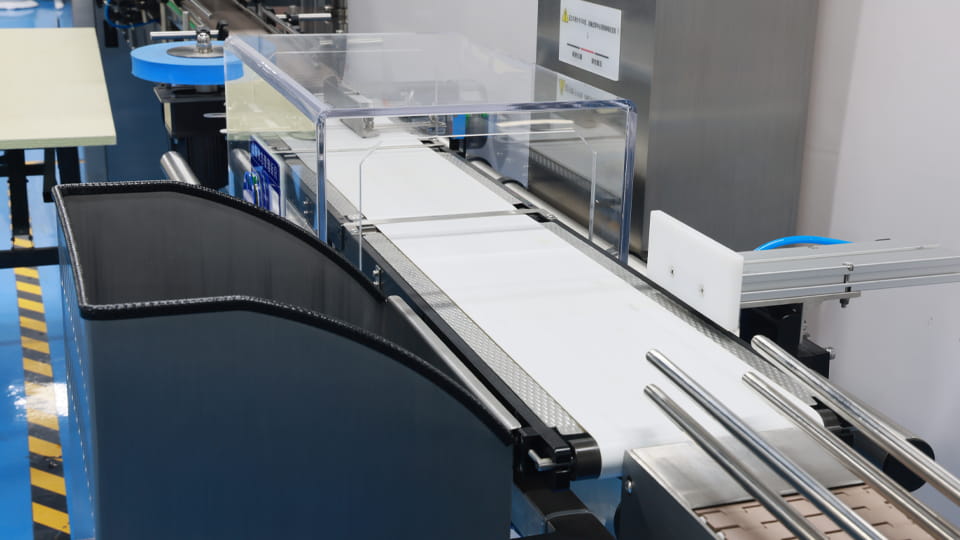
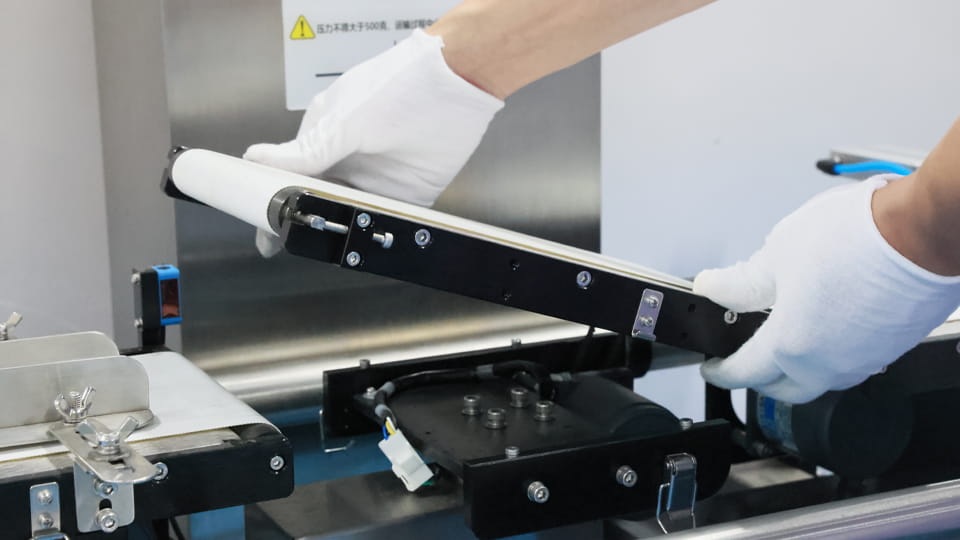 Angka: Sistem sabuk checkweigher modular Jinlu (bagian konveyor snap-on) menyederhanakan pemeliharaan. Sel beban dipasang di bawah sabuk, dan produk dipandu ke bagian penimbangan.