फार्मा में सस्टेनेबल पैकेजिंग क्यों मायने रखती है?
फार्मास्युटिकल उद्योग एकल-उपयोग प्लास्टिक और जटिल पैकेजिंग पर बहुत अधिक निर्भर करता है. इससे बड़े पैमाने पर बर्बादी होती है: एक विश्लेषण नोट “फार्मास्युटिकल उद्योग इसके लिए जिम्मेदार है 300 प्रति वर्ष मिलियन टन प्लास्टिक कचरा, जिनमें से आधा एकल-उपयोग प्लास्टिक है”. इसका अधिकांश भाग लैंडफिल या पर्यावरण में समाप्त हो जाता है. प्रदूषण से परे, नियामकों और ग्राहकों की ओर से दबाव बढ़ रहा है. दुनिया भर में सरकारें (यूरोपीय संघ, यूके, वगैरह।) नियम कड़े कर रहे हैं: उदाहरण के लिए, नया ईयू पैकेजिंग और पैकेजिंग अपशिष्ट विनियमन (पीपीडब्ल्यूआर) उच्च पुनर्चक्रण दरों और पुनर्चक्रण योग्य सामग्रियों को अनिवार्य करेगा 2030. विस्तारित निर्माता जिम्मेदारी (ईपीआर) ऐसे कानून आ रहे हैं जो फार्मा निर्माताओं को पैकेजिंग निपटान पर नज़र रखने और भुगतान करने के लिए मजबूर करेंगे. एक ही समय पर, ग्राहक - खुदरा विक्रेताओं से लेकर मरीज़ों तक - पर्यावरण के प्रति जागरूक प्रथाओं की अपेक्षा कर रहे हैं. संक्षेप में, टिकाऊ पैकेजिंग (पुनर्नवीनीकरण का उपयोग करना, पुनर्चक्रण, या बायोडिग्रेडेबल सामग्री और डिज़ाइन) अब वैकल्पिक नहीं है. यह एक ईएसजी प्राथमिकता है जो सामग्री लागत को भी कम करती है और ब्रांड प्रतिष्ठा को बढ़ाती है.
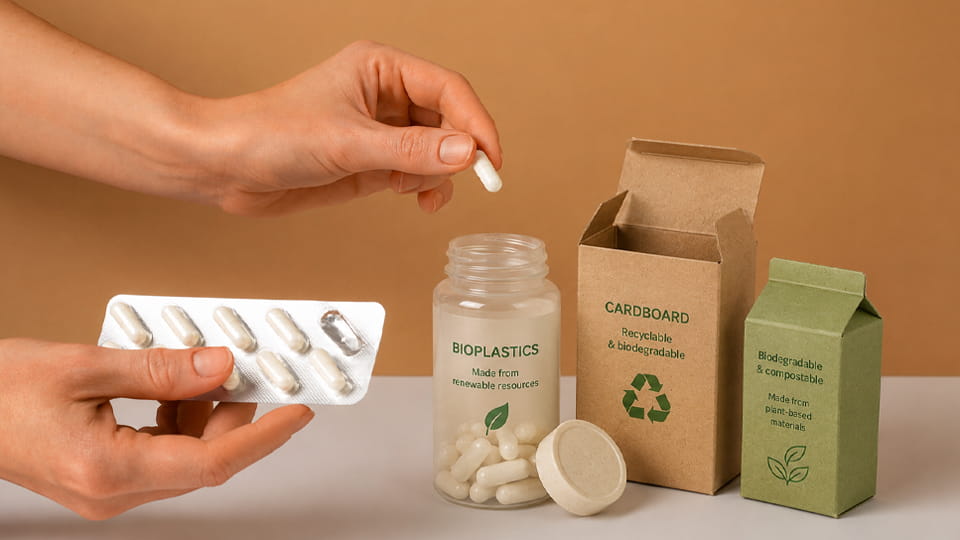
आकृति: हरी सामग्री का चयन (उदाहरण के लिए:. गत्ता, जैव प्लास्टिक) छाले के लिए, बोतल और कार्टन पैक उत्पादों की सुरक्षा करते हुए अपशिष्ट को कम कर सकते हैं.
सस्टेनेबल फार्मा पैकेजिंग क्या है??
"सतत पैकेजिंग" का अर्थ ऐसे डिज़ाइन और सामग्री से है जो उत्पादों को सुरक्षित और अनुपालन में रखते हुए पर्यावरणीय प्रभाव को कम करते हैं. व्यवहार में, इसमें अक्सर शामिल होता है:
- पुन: प्रयोज्य सामग्री (पीपी या पीईटी जैसे मोनो-मटेरियल प्लास्टिक, कागज और गत्ता, काँच, अल्युमीनियम)
- बायोडिग्रेडेबल/कंपोस्टेबल सामग्री (पीएलए जैसे बायोप्लास्टिक्स, मोल्ड करने योग्य लुगदी ट्रे, समुद्री शैवाल आधारित फिल्में)
- हल्कापन और अनुकूलन (अतिरिक्त पैकेजिंग को कम करना, सबसे छोटे सुरक्षित कंटेनर का उपयोग करना)
- पुन: प्रयोज्य डिजाइन (सीमित मामलों में, वापसी योग्य बोतलें या पुनः भरने योग्य किट)
फार्मा के लिए, सुरक्षा सर्वोपरि है, इतनी टिकाऊ पैकेजिंग अवश्य अभी भी मिलते हैं सीजीएमपी सुरक्षा मानक (बाल प्रतिरोध, बाधा गुण, बांझपन). दूसरे शब्दों में, पैकेजिंग को पहले दवा की सुरक्षा करनी चाहिए, जबकि पर्यावरण पहलू अंतर्निहित हैं. जब ठीक से किया जाए, हरित पैकेजिंग से कंपनी के पर्यावरण पदचिह्न में भी सुधार होता है, अनुपालन स्थिति, और ब्रांड छवि. उदाहरण के लिए, जीएसके और मर्क ने व्यापक कार्बन-तटस्थ लक्ष्य निर्धारित किए हैं (जीएसके का लक्ष्य कार्बन-न्यूट्रल है 2050) और आक्रामक तरीके से पैकेजिंग उत्सर्जन में कटौती कर रहे हैं.
प्रमुख उद्योग रुझान इस बदलाव को दर्शाते हैं: कंपनियां तेजी से लाइटर का उपयोग कर रही हैं, मोनो-मटेरियल संरचनाएं और पुनर्नवीनीकरण सामग्री. एक रिपोर्ट में कहा गया है कि 2025 फार्मा ब्रांड टिकाऊ पैकेजिंग को "व्यावसायिक रूप से आवश्यक" मानेंगे,हल्के डिज़ाइनों को प्राथमिकता देना, एकल-सामग्री पैक, और लक्ष्यों को पूरा करने के लिए पुनर्नवीनीकरण फाइबर. (एक बाजार के रूप में सतत पैकेजिंग के माध्यम से सालाना ~15% बढ़ने की उम्मीद है 2034.) तथापि, कुछ हरित विकल्प चुनौतीपूर्ण बने हुए हैं: वास्तव में बायोडिग्रेडेबल फार्मा पैक अभी भी विशिष्ट हैं, प्रदर्शन और रीसाइक्लिंग बुनियादी ढांचे में देरी के कारण. समग्र कदम एक की ओर है चक्रीय अर्थव्यवस्था दृष्टिकोण - पैकेजिंग को डिज़ाइन करना ताकि सामग्री आपूर्ति श्रृंखला में वापस प्रवाहित हो (पुनर्चक्रण या पुन: उपयोग) बर्बादी के रूप में समाप्त होने के बजाय.
पर्यावरण-अनुकूल पैकेजिंग सामग्री (तुलना तालिका)
सही सामग्री का चयन मूलभूत है. नीचे दी गई तालिका सामान्य विकल्पों की तुलना करती है:
| सामग्री / प्रकार |
उदाहरण उपयोग |
रीसायकल / बाइओडिग्रेड्डबल? |
नोट |
| कागज़ / गत्ता |
डिब्बों, शिपिंग बक्से, आईएफयू |
रीसायकल (व्यापक रूप से) और खाद बनाने योग्य |
अक्षय, लाइटवेट, द्वितीयक पैकेजिंग के लिए आदर्श. |
| काँच |
शीशियों, बोतलों (उदाहरण के लिए:. इंजेक्शन, टिंचर) |
रीसायकल (अनंत) |
निष्क्रिय और पुन: प्रयोज्य; भारी लेकिन बिना किसी गुणवत्ता हानि के अंतहीन पुनर्चक्रण योग्य. |
| अल्युमीनियम |
ब्लिस्टर फ़ॉइल परतें, ऐरोसोल के कनस्तर, इनहेलर |
रीसायकल (ऊँची दर) |
उत्कृष्ट बाधा; लाइटवेट; पुनर्चक्रित एल्युमीनियम ऊर्जा उपयोग को बहुत कम कर देता है. नया. |
| पालतू / एचडीपीई प्लास्टिक |
बोतलों, कैप्स, सिरप, जैल |
व्यापक रूप से पुनर्चक्रण योग्य (विशेषकर पीईटी); पीसीआर (उपभोक्ता के बाद) वेरिएंट उपलब्ध हैं |
टिकाऊ और हल्का; पुनर्नवीनीकरण सामग्री से आसानी से बनाया गया (उदाहरण के लिए:. पीसीआर पीईटी बोतलें). |
| पीपी / मोनो-मटेरियल फ़िल्में |
फफोले के पैक, प्लास्टिक ट्यूब |
यदि मोनो-मटेरियल हो तो पुन: प्रयोज्य (पीपी, पीई) |
ब्लिस्टर प्लास्टिक को पीवीसी/फ़ॉइल से पीपी या पीई फिल्म में बदलने से रीसाइक्लिंग आसान हो जाती है. |
| कठोर प्लास्टिक |
कैप्स, बंद, ट्रे |
विशिष्ट धाराओं में पुनर्चक्रण योग्य (यदि क्रमबद्ध हो) |
पुन: प्रयोज्य डिजाइन (उदाहरण के लिए:. पुनः भरने योग्य पंप की बोतलें) बर्बादी को और कम कर सकते हैं. |
| बायोडिग्रेडेबल बायोप्लास्टिक्स (प्ला) |
इको-आईएफयू ट्रे, पाउच |
खाद (औद्योगिक) |
मक्के के स्टार्च या गन्ने से बनाया जाता है; जीवाश्म ईंधन प्लास्टिक से परहेज करता है लेकिन उचित खाद सुविधाओं की आवश्यकता होती है. |
| ढाला हुआ फाइबर (गूदा) |
सुरक्षात्मक ट्रे, आवेषण |
खाद / पुनर्चक्रण (कागज़ का फ़ाइबर) |
पुनर्चक्रित कागज से बनाया गया; पूरी तरह से खाद बनाने योग्य और अक्सर विशेष ट्रे और खाद्य-सुरक्षित सामग्री के लिए उपयोग किया जाता है. |
| अलु-अलु बनाम. कागज़युक्त छाले |
ब्लिस्टर कार्ड |
अलु-अलू पुनर्चक्रण योग्य नहीं; कागज़ीकृत = पुनर्चक्रण योग्य/बायोडिग्रेडेबल |
कई फार्मा पैक फ़ॉइल-लेमिनेटेड थे. नए डिज़ाइन में पेपर ब्लिस्टर बैकिंग का उपयोग किया जाता है (या पुनर्नवीनीकरण योग्य पीपी-अल सिस्टम). |
इन सामग्रियों का बुद्धिमानी से उपयोग करने से अपशिष्ट में भारी कटौती हो सकती है. उदाहरण के लिए, की जगह पीवीसी ब्लिस्टर पैक मोनो-लेयर पीपी या यहां तक कि एल्यूमीनियम के साथ वजन बचाया जा सकता है और पूर्ण रीसाइक्लिंग की अनुमति मिल सकती है. कुछ कंपनियां सेकेंडरी रैपिंग के लिए समुद्री शैवाल या स्टार्च-आधारित फिल्मों के साथ प्रयोग कर रही हैं. कई फार्मा कंपनियां पहले से ही इसका इस्तेमाल कर रही हैं पुनर्चक्रित सामग्री - जैसे. बोतलों के लिए पीसीआर पीईटी या शिपिंग डिब्बों के लिए पुनर्नवीनीकरण कार्डबोर्ड - लूप को बंद करने के लिए.
यह बताने के लिए कि आज फार्मा पैकेजिंग किस प्रकार सामग्रियों को मिश्रित करती है, सामग्री के आधार पर अनुमानित वैश्विक विश्लेषण पर विचार करें:
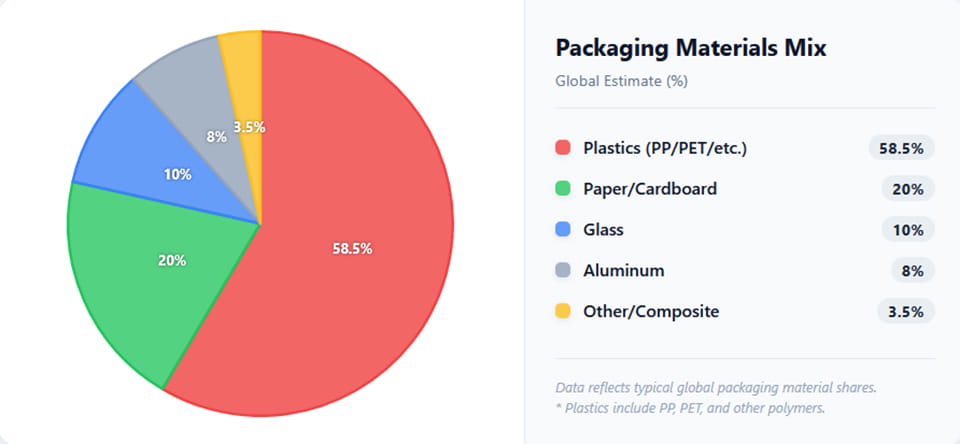
(आकृति: पैकेजिंग सामग्री का मोटा वैश्विक हिस्सा; प्लास्टिक हावी है (~60%), कागज ~20%. यह इस बात पर प्रकाश डालता है कि प्लास्टिक के एक अंश को भी पुन: प्रयोज्य/पुनर्नवीनीकरण सामग्री से बदलने से कितना बड़ा प्रभाव पड़ सकता है।)
सतत पैकेजिंग मशीनरी समाधान
सामग्री से परे, पैकेजिंग मशीनरी स्थिरता में महत्वपूर्ण भूमिका निभाता है. उन्नत मशीनें नई पर्यावरण-सामग्रियों को संभाल सकती हैं और परिशुद्धता के माध्यम से अपशिष्ट को कम कर सकती हैं. प्रमुख प्रकारों में शामिल हैं:
- ब्लिस्टर पैकिंग मशीनें: आधुनिक ब्लिस्टर मशीनें (जिनलू की तरह ब्लिस्टर पैकिंग मशीन) लाइटर का उपयोग करने के लिए डिज़ाइन किया गया है, मोनो-मटेरियल फिल्में. कुछ उपकरण इको-फिल्मों पर चल सकते हैं (पीवीसी मुक्त पीपी/पीई लैमिनेट्स) या यहां तक कि कागज-समर्थित छाले भी. उच्च दक्षता वाली मशीनें सटीक पंजीकरण द्वारा स्क्रैप को भी कम करती हैं. उदाहरण के लिए, मिश्रित पीवीसी-एल्यूमीनियम ब्लिस्टर से पीपी-ओनली ब्लिस्टर पर स्विच करने से न केवल पैक पुन: प्रयोज्य हो जाते हैं, लेकिन हमारी मशीनें ≤0.1% कचरे को गिन और सील कर सकती हैं.
- कार्टोनिंग मशीनें: कार्टनर उत्पादों को फोल्डिंग डिब्बों या बक्सों में पैक करते हैं. कॉम्पैक्ट का उपयोग करके, सही आकार के बक्से, कार्टनर अतिरिक्त नालीदार उपयोग को कम करते हैं. जिनलू का कार्टोनिंग मशीन पुनर्चक्रित कार्डबोर्ड को संभाल सकते हैं और हवा की जगह को कम करने के लिए टाइट-फिट कार्टन बना सकते हैं. स्वचालन यह सुनिश्चित करता है कि केवल सटीक मात्रा में सामग्री का उपयोग किया जाए (उदाहरण के लिए:. बस-बमुश्किल-बड़े-पर्याप्त कार्टन), शिपिंग मात्रा और लागत में कटौती.
- पाउच / स्टिक पैक मशीनें: सैशे या स्टिक-पैक मशीनें छोटे एकल-खुराक फ़ॉइल/पेपर पैकेट का उत्पादन करती हैं (उदाहरण के लिए:. पाउडर के लिए, ओटीसी मेड्स). इनमें अक्सर कागज़ या पतली-फिल्म लैमिनेट्स का उपयोग किया जाता है. पाउच के आकार को अनुकूलित करके और इको-फिल्मों का उपयोग करके (जैसे रिसाइक्लेबल पीई या बायोडिग्रेडेबल पीएलए), अपशिष्ट काटा जाता है. हमारा पाउच पैकिंग मशीन के लिए कागज-आधारित पाउच स्टॉक चला सकते हैं 100% biodegradability. सटीक खुराक ओवरफिलिंग को भी रोकती है, उत्पाद की बर्बादी को कम करना.
- कैप्सूल & टेबलेट गिनने/भरने की मशीनें: सटीक गिनती और भरने के उपकरण (देखना टेबलेट/कैप्सूल गिनने की मशीन और कैप्सूल भरने की मशीन) छलकना और अधिक भरना कम करें. कैप्सूल उत्पादों के लिए, हाई-स्पीड फिलर्स से 12,000 को 468,000 कैप्स/घंटा (जिनलु स्वचालित श्रृंखला) न्यूनतम अपशिष्ट के साथ सटीक विभाजन सुनिश्चित करें. कम अस्वीकरण का अर्थ है कम बर्बाद सामग्री और उत्पाद. एर्गोनोमिक डिज़ाइन भी बदलाव को गति देता है (फॉर्मूलेशन स्विच करते समय या पैकेज चलाते समय मशीनों को तुरंत साफ करने के लिए, डाउनटाइम में कटौती).
- बोतल भरना & कैपिंग: तरल या गोली की बोतलों के लिए, स्वचालित फिलिंग/कैपिंग लाइनें बहुत सटीक खुराक सुनिश्चित करती हैं. उदाहरण के लिए, वायुहीन ब्रेस्टमिल्क कंटेनर या उच्च-चिपचिपापन सिरप को वस्तुतः बिना किसी अतिप्रवाह के भरा जा सकता है, जो उत्पाद और प्लास्टिक बोतल सामग्री दोनों को बचाता है. जबकि सभी गोलियाँ बोतलों का उपयोग नहीं करतीं, सटीक गिनती भरने के लिए कैप्सूल गिनती मशीनें बोतल पैकर्स में बांधी जा सकती हैं, रिक्त स्थान को कम करना.
- पूर्वनिर्मित पाउच पैकिंग (वीएफएफएस/एचएफएफएस): पूर्व-निर्मित पाउच या स्टिक पैक के लिए (ज़िप-लॉक पाउच, doypacks), the पूर्वनिर्मित पाउच पैकिंग मशीन स्टैंड-अप पेपर संभालता है- या बायो-फिल्म बैग. ये मशीनें चुनती हैं, भरना, और सर्वो परिशुद्धता के साथ सील करें (±0.4% सटीकता), चुस्त सक्षम करना, पुनर्चक्रण योग्य पाउच फिल्मों पर रिसाव-मुक्त सील. एक संयोजन वेइगर प्लस पाउच फिलर बिना किसी अतिरिक्त मात्रा के बहु-घटक न्यूट्रास्यूटिकल्स या पाउडर को पैकेज कर सकता है.

आकृति: आधुनिक मशीनें गोलियाँ और पाउडर कुशलतापूर्वक पैक करती हैं. प्लास्टिक को कम करने के लिए कार्टनर या ब्लिस्टर लाइनें पुनर्नवीनीकरण कार्डबोर्ड और पीपी फिल्मों के साथ चल सकती हैं.
संक्षेप में, टिकाऊ पैकेजिंग अक्सर आधुनिक स्वचालन के साथ-साथ चलती है. कुशल मशीनें आपको पर्यावरण-सामग्री का उपयोग करने देती हैं (कागज़, मोनो-पॉलिमर, जैव प्लास्टिक) उत्पादन धीमा किये बिना. वे भी सक्षम बनाते हैं पैकेजिंग अनुकूलन - सॉफ्टवेयर-संचालित कार्टन निर्माण, शून्य भरण न्यूनतमकरण, ऑन-डिमांड बॉक्स निर्माण - जो सामग्री के उपयोग में कटौती करता है. (उदाहरण के लिए, सही आकार के बॉक्स सिस्टम नालीदार उपयोग को ~20% तक कम कर सकते हैं।) उपकरण विक्रेता अब खाद्य-ग्रेड पुनर्चक्रण योग्य स्याही और गोंद रहित सीलिंग जैसे "हरित" विकल्प प्रदान करते हैं. मशीनें खरीदते समय, सर्वो नियंत्रण जैसी सुविधाओं की तलाश करें, त्वरित उपकरण परिवर्तन, और अपशिष्ट-कटौती मोड. जिंलू पैकिंग पूरी लाइन (छाला, कार्टनिंग, पाउच, कैप्सूल, गिनती, वगैरह।) हाई-स्पीड के लिए इंजीनियर किया गया है, उच्च परिशुद्धता रन जो कम स्क्रैप और अधिक रीसाइक्लिंग-अनुकूल आउटपुट में तब्दील हो जाते हैं. उदाहरण के लिए, जिनलू के कैप्सूल फिलर्स धूल उड़ने या ओवरफिल को कम करने के लिए पेटेंट तंत्र का उपयोग करते हैं, पाउडर अपशिष्ट को कम करना.
नियामक & अनुपालन संबंधी विचार
फार्मा पैकेजिंग को स्थिरता को संतुलित करना चाहिए साथ सख्त नियम. प्रमुख बिंदु:
- सबसे पहले सुरक्षा: किसी भी सामग्री या डिज़ाइन परिवर्तन को अभी भी सीजीएमपी और फार्माकोपियल मानकों का पालन करना होगा. (उदाहरण के लिए, 21 सीएफआर भाग 211 यह आवश्यक है कि कंटेनर-क्लोजर सिस्टम दवा के साथ परस्पर क्रिया न करें।) नई सामग्रियों को उत्पाद अनुकूलता के लिए परीक्षण की आवश्यकता होती है, स्थिरता, और यदि आवश्यक हो तो बाल-प्रतिरोध. एफडीए या ईएमए जैसे नियामक निकायों ने विशिष्ट सामग्रियों पर सीधे तौर पर प्रतिबंध नहीं लगाया है, लेकिन उन्हें सुरक्षा के प्रमाण की आवश्यकता होती है. हमेशा दस्तावेज करें कि हरी सामग्री मूल की बाधा और सफाई से मेल खाती है.
- ईपीआर और पैकेजिंग अपशिष्ट कानून: कई क्षेत्र अब निर्माताओं से अपशिष्ट प्रबंधन के लिए भुगतान करा रहे हैं. ब्रिटेन में, अनिवार्य पैकेजिंग डेटा रिपोर्टिंग पहले से ही प्रभावी है, और ईपीआर शुल्क (प्रत्येक पैक के वजन और पुनर्चक्रण क्षमता के आधार पर) आ रहे हैं. यूरोपीय संघ में, नया पैकेजिंग और पैकेजिंग अपशिष्ट विनियमन (पीपीडब्ल्यूआर) सभी पैकेजिंग को कठिन पुनर्चक्रण और पुनर्नवीनीकरण-सामग्री लक्ष्यों को पूरा करने के लिए बाध्य करेगा. कंपनियों को हर घटक पर नज़र रखनी होगी (लेबल, फफोले, आवेषण) और गैर-पुनर्चक्रण योग्य बहुपरत लैमिनेट्स को क्रमिक रूप से मोनो-मटेरियल संरचनाओं में पुनः डिज़ाइन करें. इसका मतलब है कि फार्मा कंपनियों को पीवीसी/फ़ॉइल ब्लिस्टर से बचने के लिए प्रोत्साहित किया जाएगा, पानी आधारित स्याही का प्रयोग करें, और कार्टन लेबल पर स्पष्ट रीसाइक्लिंग निर्देश जोड़ें.
- परिपत्र अर्थव्यवस्था लक्ष्य: तेजी से, फार्मा ईएसजी रणनीतियाँ गोलाकार डिजाइन की मांग करती हैं. उदाहरण के लिए, स्पष्ट निर्देश (उदाहरण के लिए:. “टोपी हटाओ, खाली बोतल, कुल्ला & रीसायकल") जल्द ही ओटीसी पैकेजिंग पर इसकी आवश्यकता हो सकती है. कुछ देशों को दवा वापस लेने के कार्यक्रमों में भागीदारी की आवश्यकता हो सकती है (दवा के कचरे को लैंडफिल से दूर रखना) ईपीआर के भाग के रूप में. कंपनियों को यह सुनिश्चित करके तैयारी करनी चाहिए कि उनकी पैकेजिंग को उपभोक्ताओं और रिसाइक्लर्स द्वारा आसानी से छांटा जा सके.
- अंतर्राष्ट्रीय परिवर्तनशीलता: अलग-अलग बाज़ारों के अलग-अलग नियम हो सकते हैं (यहां तक कि यूरोपीय संघ के भीतर भी, प्रत्येक देश कचरे को अलग ढंग से संभालता है). बहुराष्ट्रीय निर्माताओं को सख्त क्षेत्रीय मानक को पूरा करने या उससे आगे निकलने का लक्ष्य रखना चाहिए. व्यवहार में, इसका मतलब है कि सभी नई पैकेजिंग को पूरी तरह से पुनर्चक्रण योग्य बनाना (या पुन: प्रयोज्य) दिन से 1.
अच्छी खबर यह है कि कई स्थिरता उपाय अनुपालन और उपभोक्ता सुरक्षा के अनुरूप भी हैं. उदाहरण के लिए, पुनर्नवीनीकरण योग्य सामग्रियों का उपयोग करने का मतलब अक्सर कम अज्ञात बहुलक योजक होता है, और मोनो-मटेरियल डिज़ाइन हानिकारक चिपकने वाले या लैमिनेट्स को ख़त्म कर देते हैं. फिर भी, किसी भी सामग्री स्विच को मान्य किया जाना चाहिए (अगला भाग देखें) यह सुनिश्चित करने के लिए कि उत्पाद की अखंडता से कभी समझौता न किया जाए.
फ़ायदे, गोइंग ग्रीन की लागत और आरओआई
टिकाऊ पैकेजिंग अपनाने से दोनों आते हैं पर्यावरण और व्यापार फ़ायदे:
- छोटे पर्यावरणीय पदचिह्न: पुनर्चक्रित या हल्की सामग्री का उपयोग करके, निर्माताओं ने ऊर्जा उपयोग और कच्चे संसाधन की खपत में कटौती की. बायोडिग्रेडेबल या कम्पोस्टेबल पैकेजिंग लैंडफिल द्रव्यमान को कम करती है. ये सभी कदम आपके कार्बन फ़ुटप्रिंट को कम करते हैं.
- कम दीर्घकालिक लागत: टिकाऊ डिज़ाइन में अक्सर कम सामग्री का उपयोग होता है (उदाहरण के लिए:. सही आकार के डिब्बों, पतली फिल्में) जिससे कच्चे माल की लागत बचती है. हल्के पैकेज शिपिंग खर्च और ईंधन उपयोग में कटौती करते हैं. कंपनियां अपशिष्ट निपटान शुल्क पर भी बचत करती हैं. अधिक समय तक, ये बचत नए उपकरणों या सामग्रियों में शुरुआती निवेश से अधिक हो सकती है. उदाहरण के लिए, सही आकार का पैकेजिंग सॉफ्टवेयर नालीदार और परिवहन लागत को ~20% तक कम कर सकता है. कम बर्बाद उत्पाद (सटीक फिलर्स/काउंटरों के लिए धन्यवाद) उपज में भी सुधार होता है.
- विनियामक और ब्रांड लाभ: नए नियमों को पूरा करने या उनका उल्लंघन करने पर जुर्माने और बाज़ार प्रतिबंधों से बचा जा सकता है. हरी पैकेजिंग भी एक विक्रय बिंदु हो सकती है: सर्वेक्षणों से पता चलता है कि कई ग्राहक पर्यावरण-अनुकूल पैकेजिंग वाले ब्रांडों को पसंद करते हैं (कुछ अध्ययनों से पता चलता है कि ~70% अधिक भुगतान करने को तैयार हैं) - उपभोक्ता स्वास्थ्य और ओटीसी क्षेत्रों में विशेष रूप से सच है. एक स्थायी दृष्टिकोण खुदरा विक्रेताओं और रोगियों के बीच समान रूप से विश्वास पैदा करता है.
- प्रतिस्पर्धी भेदभाव और नवाचार: हरित होने से अक्सर नवप्रवर्तन को बढ़ावा मिलता है. पैकेजिंग अनुकूलन (एलसीए सॉफ्टवेयर, स्मार्ट डिज़ाइन) और नई सामग्रियां मालिकाना समाधान बना सकती हैं. यह आपकी कंपनी को भविष्य के नियमों के लिए भी तैयार करता है (यूरोपीय संघ 2030 लक्ष्य, वगैरह।) प्रतिस्पर्धियों से आगे. प्लस, कई बड़ी फार्मा कंपनियां अपनी स्थिरता पहलों का प्रचार करती हैं - इसलिए पीछे रहने से प्रतिष्ठा को नुकसान पहुंच सकता है.
- ईएसजी अनुपालन: सार्वजनिक कंपनियों या बड़े स्वास्थ्य सेवा समूहों की आपूर्ति करने वालों के लिए, टिकाऊ पैकेजिंग एक प्रमुख ईएसजी मीट्रिक है. प्लास्टिक के कम उपयोग या बढ़ी हुई पुनर्चक्रण क्षमता को प्रदर्शित करने से ईएसजी स्कोर और निवेशकों का विश्वास बढ़ सकता है.
ठोस शब्दों में, टिकाऊ पैकेजिंग से ROI के कई उदाहरण हैं: फाइजर ने अपने सेंट्रम मल्टीविटामिन पैक को फिर से डिजाइन किया, पॉलीविनाइल क्लोराइड को खत्म करना (पीवीसी) और बॉक्स का आकार कम करना. इससे बच गया ~60 टन सामग्री पहले वर्ष में और परिवहन लागत में कटौती. ग्लैक्सोस्मिथक्लाइन (जीएसके) इनहेलर घटकों और ब्लिस्टर ट्रे पर समान परिवर्तन किए गए, बचत 305 टन सामग्री का और 1550 टन CO₂ प्रति वर्ष. ये बचत दर्शाती है कि अपेक्षाकृत सरल पैकेजिंग स्वैप से बड़ा लाभ मिल सकता है.
सस्टेनेबल पैकेजिंग कैसे लागू करें (क्रमशः)
फार्मा उत्पादन लाइन को टिकाऊ पैकेजिंग में परिवर्तित करना एक प्रक्रिया है. प्रमुख कदमों में शामिल हैं:
- वर्तमान पैकेजिंग का ऑडिट करें: प्रत्येक प्राथमिक और द्वितीयक पैक को सूचीबद्ध करें: सामग्री, तौल, संस्करणों, परतें. अपने वर्तमान अपशिष्ट को मापें (उदाहरण के लिए:. स्क्रैप दरें) और पैकेजिंग का कार्बन पदचिह्न. सबसे बुरे अपराधियों की पहचान करें (उदाहरण के लिए:. पीवीसी छाले, फोम आवेषण).
- स्पष्ट लक्ष्य निर्धारित करें: अपने स्थिरता लक्ष्यों को परिभाषित करें - उदा. "2028 तक 50% पैक पुनर्चक्रण योग्य", "पीवीसी ब्लिस्टर को पीपी फिल्म से बदलें", या “शामिल करें।” 25% प्लास्टिक में पीसीआर।” ये लक्ष्य विनियमों के अनुरूप होने चाहिए (ईपीआर, पीपीडब्ल्यूआर) और कॉर्पोरेट ईएसजी नीतियां.
- सामग्री के विकल्प तलाशें: ऑडिट के आधार पर, प्रत्येक पैक प्रकार के लिए पर्यावरण-सामग्री पर शोध करें. उदाहरण के लिए, डिब्बों के लिए पुनर्चक्रित कार्डबोर्ड का उपयोग करें, एल्यूमीनियम मुक्त छाले (मोनो-पीपी), पीएलए या लकड़ी-फाइबर ट्रे, हल्की कांच या एल्यूमीनियम की बोतलें, वगैरह. आपूर्तिकर्ता भागीदारी पर विचार करें (कुछ कंपनियाँ अब फार्मा-ग्रेड बायोप्लास्टिक्स या फ़ाइबर-आधारित ब्लिस्टर पेश करती हैं).
- डिज़ाइन और प्रोटोटाइपिंग: नई पैकेजिंग के मॉक-अप या प्रोटोटाइप बनाएं. बॉक्स के आयाम और सामग्री की मोटाई को अनुकूलित करने के लिए पैकेजिंग डिज़ाइन सॉफ़्टवेयर या "सही आकार" टूल का उपयोग करें. सत्यापित करें कि बाल-प्रतिरोधी और छेड़छाड़-स्पष्ट विशेषताएं अभी भी नई सामग्रियों के साथ काम करती हैं.
- परीक्षण करें और मान्य करें: नए पैक्स पर स्थिरता और परिवहन परीक्षण करें. अवरोधक गुण सुनिश्चित करें (नमी/ऑक्सीजन संरक्षण) फार्मा मानकों को पूरा करें. किसी भी आवश्यक नियामक परीक्षण को पूरा करें (उदाहरण के लिए:. यदि नई सामग्री का उपयोग किया जा रहा है तो निकालने योग्य या निक्षालित करने योग्य). भी, पुनर्चक्रण क्षमता का परीक्षण करें - कुछ कंपनियाँ पुनर्चक्रण प्रयोगशालाओं या एसपीसी के साथ साझेदारी करती हैं (सतत पैकेजिंग गठबंधन) पुनरावर्तनीयता प्रमाणित करने के लिए कार्यक्रम.
- यदि आवश्यक हो तो उपकरण अपग्रेड करें: जांचें कि क्या मौजूदा मशीनें नई सामग्रियों को संभाल सकती हैं. कठोर पीवीसी से लचीली पीएलए फिल्म पर स्विच करना, या मोटे कार्डबोर्ड से, सर्वो मोटर ट्यूनिंग या विभिन्न फ़ीड सिस्टम की आवश्यकता हो सकती है. आपको रेट्रोफ़िट अनुलग्नकों की आवश्यकता हो सकती है (उदाहरण के लिए:. भारी डिब्बों के लिए वैक्यूम कन्वेयर). जिनलू की मशीनें, उदाहरण के लिए, मॉड्यूलर हैं - कोई विभिन्न सामग्रियों या ब्लिस्टर आकारों के लिए टूलींग को समायोजित कर सकता है.
- पायलट दौड़ और प्रशिक्षण: नई पैकेजिंग के साथ छोटे पैमाने पर पायलट उत्पादन चलाएं. किसी भी परिवर्तित प्रक्रिया पर ऑपरेटरों को प्रशिक्षित करें (उदाहरण के लिए:. गोंद बनाम. डिब्बों पर हीट सील, चिपचिपे बायो-रेजिन के लिए सफाई आवश्यकताएँ). मशीन की गति को ठीक करने और रिजेक्ट को कम करने के लिए इस चरण का उपयोग करें.
- पूर्ण पैमाने पर रोलआउट: एक बार सत्यापित, उत्पादन लाइन स्विच करें. मानक संचालन प्रक्रियाओं को अद्यतन करें. परिवर्तन के बारे में अपस्ट्रीम में संचार करें (उदाहरण के लिए:. खरीद और रसद के लिए) ताकि पुनर्नवीनीकृत इनपुट सामग्री का ऑर्डर दिया जा सके और अपशिष्ट-हैंडलिंग प्रक्रियाएं लागू की जा सकें.
- निगरानी करें और सुधार करें: कार्यान्वयन के बाद, प्रति यूनिट पैकेजिंग लागत जैसे KPI को ट्रैक करें, बरबाद करना % उत्पादन में, और लौटाए गए उत्पादों की रीसाइक्लिंग दर. एलसीए या पैकेजिंग स्कोरकार्ड टूल का उपयोग करें (वॉलमार्ट स्कोरकार्ड, चक्र दर चक्र, वगैरह।) प्रभाव को मापने के लिए. डिज़ाइनों पर पुनरावृति - उदा. यदि कार्डबोर्ड का कम उपयोग किया गया है, आयामों को और अधिक ट्रिम करें.
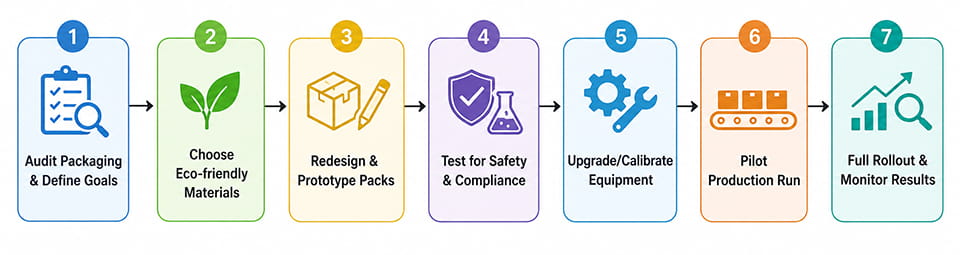
आकृति: टिकाऊ पैकेजिंग की ओर संक्रमण के कदम - ऑडिट से पूर्ण पैमाने पर उत्पादन तक.
इस पूरी प्रक्रिया के दौरान, कुंजी ध्यान रखें पैकेजिंग अनुकूलन रणनीतियाँ. उदाहरण के लिए, डिब्बों और ट्रे को सही आकार देने के लिए कंप्यूटर-सहायता प्राप्त डिज़ाइन का उपयोग करें, और उत्पाद के फैलाव को कम करने के लिए फिलर्स पर वैक्यूम कन्वेयर या समायोज्य गाइड का उपयोग करें. जीवन-चक्र मूल्यांकन (एलसीए) सॉफ़्टवेयर विकल्पों के कुल पर्यावरणीय प्रभाव की तुलना करने में मदद कर सकता है (उदाहरण के लिए, संतुलन सामग्री बनाम. recyclability). कई कंपनियाँ सबसे आसान जीत पर ध्यान केंद्रित करके शुरुआत करती हैं (पुनर्नवीनीकरण कार्डबोर्ड पर स्विच करना, हल्के लेबल) और फिर कठिन क्षेत्रों से निपटें (जटिल छाले या बहु-सामग्री किट).
फार्मा में सतत पैकेजिंग के उदाहरण
- फाइजर (केंद्र): पीवीसी को हटाकर और कार्टन का आकार कम करके, फाइजर ने एक साल में ~60 टन प्लास्टिक/पैकेजिंग खत्म कर दी. उन्होंने प्रति पैलेट अधिक इकाइयाँ भी भेजीं, परिवहन उत्सर्जन में कटौती.
- जीएसके (वेंटोलिन, निकोडर्म): जीएसके ने कई मल्टी-लेयर ट्रे और केस को बदल दिया (इनहेलर, पैच) पुनर्चक्रण योग्य डिब्बों और फूस के बक्सों के साथ. एक वेंटोलिन रीडिज़ाइन ने ~305 टन पैकेजिंग सामग्री बचाई और प्रति वर्ष ~1550 टन CO₂ उत्सर्जन में कटौती की.
- एस्टेलास (फफोले): एस्टेलस ने आंशिक रूप से गन्ने से प्राप्त पीपी से बने फफोले पेश किए, जीवाश्म इनपुट को कम करना (हालांकि पूरी तरह से बायोडिग्रेडिंग नहीं, यह नवीकरणीय है).
- अनुबंध पैकर्स: कुछ अनुबंध निर्माता अब "हरित पैकेजिंग रन" में विशेषज्ञ हैं - पर्यावरण-अनुकूल सामग्री का उपयोग करना और पीसीआर प्लास्टिक का दान करना. उनके मामले के अध्ययन के साथ आदेश दिखाते हैं 100% पुनर्चक्रित बोतलें या ट्रेलेस कार्टन जागरूक खरीदारों को अच्छी बिक्री करते हैं.
ये उदाहरण इस बात को रेखांकित करते हैं कि अत्यधिक विनियमित उद्योग में भी, लागत बचत के साथ टिकाऊ पैकेजिंग प्रभावी ढंग से की जा सकती है.

शुरू करना: जिनलू पैकिंग के साथ साझेदारी
टिकाऊ पैकेजिंग में परिवर्तन जटिल लग सकता है, लेकिन आपको इसे अकेले नहीं जाना है. जिन्लू पैकिंग फार्मा-ग्रेड पैकेजिंग मशीनरी का एक पूरा पोर्टफोलियो प्रदान करता है जो पर्यावरण-अनुकूल पहलों का समर्थन करता है:
- पर्यावरण-संगत मशीनें: कई जिनलू मॉडल गति या गुणवत्ता से समझौता किए बिना पुनर्नवीनीकरण या बायोडिग्रेडेबल सामग्रियों के साथ काम करने के लिए बनाए गए हैं. उदाहरण के लिए, हमारी ब्लिस्टर मशीनें मोनो-पीपी या पेपरब्लिस्टर स्टॉक को संभालती हैं, और कार्टनर पुनर्नवीनीकरण फ़ाइबरबोर्ड को समायोजित कर सकते हैं.
- अनुकूलित समाधान: अपनी लाइन को दोबारा दुरुस्त करने की जरूरत है? जिनलू प्रदान करता है अनुकूलन (वैक्यूम फीडर, सर्वो उन्नयन) सामग्री की बर्बादी को कम करने के लिए. हमारे इन-हाउस इंजीनियर यह सुनिश्चित करते हैं कि आपके उपकरण आपके हरित लक्ष्यों को पूरा करें.
- अनुपालन और समर्थन: जिनलू मशीनें अंतरराष्ट्रीय मानकों को पूरा करती हैं (सीजीएमपी, सीटी, एफडीए, ईएमए). हम प्रशिक्षण और बदलाव सहायता भी प्रदान करते हैं ताकि आपके नए टिकाऊ पैक सुचारू रूप से चल सकें.
- वन-स्टॉप पार्टनर: कैप्सूल फिलर्स से लेकर स्टिक-पैक इकाइयां और गिनती मशीनें तक, Jinlu एक आपूर्ति कर सकते हैं टर्नकी टिकाऊ पैकेजिंग लाइन. यह विक्रेता प्रबंधन को सरल बनाता है और सुनिश्चित करता है कि सभी घटक एक साथ अनुकूलित हों.
आपकी पैकेजिंग लाइन को हरा-भरा करने के लिए तैयार है? निःशुल्क परामर्श के लिए जिनलू के विशेषज्ञों से संपर्क करें. हम आपके उत्पाद की समीक्षा कर सकते हैं और मशीनरी अपग्रेड या नई लाइनों का सुझाव दे सकते हैं जो पुनर्चक्रण योग्य सामग्रियों का उपयोग करती हैं और अपशिष्ट को कम करती हैं. हमारी ब्लिस्टर पैकिंग मशीन पर जाएँ, कार्टोनिंग मशीन, पाउच पैकिंग मशीन, कैप्सूल भरने की मशीन, काउंटिंग मशीन और प्रीमेड पाउच पैकिंग मशीन पेज यह देखने के लिए कि प्रत्येक आपकी टिकाऊ पैकेजिंग रणनीति में कैसे फिट हो सकता है. एक साथ, हम आपके फार्मा उत्पादों को स्वास्थ्य की रक्षा करने में मदद कर सकते हैं और पर्यावरण.
फार्मा उद्योग में सतत पैकेजिंग पर अक्सर पूछे जाने वाले प्रश्न
फार्मास्युटिकल उद्योग में टिकाऊ पैकेजिंग क्या है??
फार्मास्युटिकल उद्योग में सतत पैकेजिंग से तात्पर्य दवाओं की सुरक्षा और सख्त नियामक आवश्यकताओं को पूरा करते हुए पर्यावरणीय प्रभाव को कम करने के लिए डिज़ाइन किए गए पैकेजिंग समाधानों से है. इसमें पुनर्चक्रण योग्य सामग्रियों का उपयोग शामिल है, पैकेजिंग अपशिष्ट को कम करना, कार्बन उत्सर्जन कम करना, और संपूर्ण आपूर्ति श्रृंखला में पैकेजिंग दक्षता में सुधार करना.
फार्मास्युटिकल कंपनियों के लिए टिकाऊ पैकेजिंग क्यों महत्वपूर्ण होती जा रही है??
दवा निर्माताओं को सरकारों के बढ़ते दबाव का सामना करना पड़ रहा है, स्वास्थ्य रक्षक सुविधाएं प्रदान करने वाले, और उपभोक्ताओं को पैकेजिंग अपशिष्ट को कम करने और ईएसजी प्रदर्शन में सुधार करने की आवश्यकता है. टिकाऊ पैकेजिंग कंपनियों को सामग्री के उपयोग को कम करने में भी मदद करती है, रसद दक्षता में सुधार, और भविष्य के पर्यावरण नियमों के लिए तैयारी करें.
टिकाऊ फार्मास्युटिकल पैकेजिंग में आमतौर पर किन सामग्रियों का उपयोग किया जाता है?
सामान्य टिकाऊ पैकेजिंग सामग्री में शामिल हैं:
• पीईटी जैसे पुनर्चक्रण योग्य प्लास्टिक, पीपी, और एचडीपीई
• पेपरबोर्ड और फाइबर आधारित पैकेजिंग
• जैव-आधारित या बायोडिग्रेडेबल सामग्री
• पुनर्नवीनीकरण एल्यूमीनियम और कांच
• मोनो-मटेरियल लचीली पैकेजिंग
सामग्री का चयन अभी भी काफी हद तक दवा की स्थिरता पर निर्भर करता है, बाधा संरक्षण, और अनुपालन आवश्यकताएँ.
क्या फार्मास्युटिकल पैकेजिंग टिकाऊ और जीएमपी अनुरूप दोनों हो सकती है??
हाँ. आधुनिक टिकाऊ फार्मास्युटिकल पैकेजिंग समाधान उत्पाद सुरक्षा बनाए रखने के लिए डिज़ाइन किए गए हैं, नमी संरक्षण, सबूत से छेड़छाड़, और पर्यावरणीय प्रभाव को कम करते हुए क्रमबद्धता अनुपालन. मुख्य बात नियामक और उत्पाद सुरक्षा आवश्यकताओं के साथ स्थिरता को संतुलित करना है.
टिकाऊ फार्मा पैकेजिंग की सबसे बड़ी चुनौतियाँ क्या हैं??
कुछ प्रमुख चुनौतियाँ शामिल हैं:
• सख्त फार्मास्युटिकल नियम
• बाधा सुरक्षा आवश्यकताएँ
• औषधि अनुकूलता परीक्षण
• उच्च प्रारंभिक सामग्री लागत
• सीमित रीसाइक्लिंग बुनियादी ढांचा
• बहु-परत सामग्री के पुनर्चक्रण में कठिनाई
कई कंपनियां अब इन समस्याओं को हल करने के लिए मोनो-मटेरियल डिज़ाइन और हल्के पैकेजिंग में निवेश कर रही हैं.
फार्मास्युटिकल कंपनियाँ पैकेजिंग अपशिष्ट को कैसे कम कर सकती हैं??
फार्मास्युटिकल निर्माता पैकेजिंग अपशिष्ट को कम कर सकते हैं:
• पैकेज आकार का अनुकूलन
• अनावश्यक द्वितीयक पैकेजिंग को कम करना
• हल्के पदार्थों का उपयोग करना
• पेपर इन्सर्ट को डिजिटल लीफलेट से बदलना
• पैकेजिंग लाइन दक्षता में सुधार
• ऊर्जा-कुशल पैकेजिंग मशीनरी का उन्नयन
ये रणनीतियाँ सामग्री की खपत और परिचालन लागत दोनों को कम करने में मदद करती हैं.
क्या बायोडिग्रेडेबल सामग्रियां फार्मास्युटिकल पैकेजिंग के लिए उपयुक्त हैं??
बायोडिग्रेडेबल सामग्री कुछ माध्यमिक और तृतीयक फार्मास्युटिकल पैकेजिंग अनुप्रयोगों के लिए अच्छा काम कर सकती है, जैसे डिब्बों, ट्रे, और सुरक्षात्मक परतें. तथापि, संवेदनशील दवाओं की सुरक्षा के लिए प्राथमिक पैकेजिंग को अभी भी मजबूत अवरोध प्रदर्शन और अनुकूलता परीक्षण की आवश्यकता होती है.
पैकेजिंग मशीनरी टिकाऊ पैकेजिंग लक्ष्यों का समर्थन कैसे करती है??
आधुनिक फार्मास्युटिकल पैकेजिंग मशीनें कचरे को कम करने में मदद करती हैं:
• सटीक सामग्री फीडिंग सिस्टम
• सर्वो-संचालित स्वचालन
• फिल्म की खपत में कमी
• ऊर्जा की बचत करने वाली प्रौद्योगिकियाँ
• तेजी से बदलाव का समय
• बेहतर उत्पादन क्षमता
उन्नत ब्लिस्टर पैकेजिंग मशीनें, कार्टनिंग मशीनें, और स्टिक पैक मशीनें फार्मास्युटिकल कारखानों में स्थिरता प्रदर्शन में काफी सुधार कर सकती हैं.
संदर्भ:
1.टिकाऊ पैकेजिंग ——विकिपीडिया
2.जीवन चक्र मूल्यांकन के आधार पर फार्मास्युटिकल पैकेजिंग के लिए इकोडिज़ाइन दृष्टिकोण —— साइंसडायरेक्ट
3.पैकेजिंग अपशिष्ट —— यूरोपीय आयोग
4.टीआरएस 902 – उपभवन 9: फार्मास्युटिकल उत्पादों के लिए पैकेजिंग पर दिशानिर्देश -- कौन
5.सतत फार्मास्युटिकल पैकेजिंग में वैश्विक नवाचार 25 साल: एक व्यापक समीक्षा —— एमडीपीआई


एक प्रतिक्रिया
यह एक महत्वपूर्ण मुद्दा है. फार्मास्युटिकल उद्योग बहुत अधिक मात्रा में प्लास्टिक कचरा पैदा करता है, इसलिए टिकाऊ पैकेजिंग की ओर बढ़ना एक स्मार्ट और जिम्मेदार कदम है. पुनर्चक्रण योग्य का उपयोग करना, पुनर्नवीनीकरण, या बायोडिग्रेडेबल सामग्री प्रदूषण को कम करने में मदद कर सकती है, नए नियमों को पूरा करें, और ग्राहकों को दिखाएं कि कंपनी को पर्यावरण की परवाह है.