एक नए फार्मास्युटिकल उत्पाद को बाजार में लाने में एक प्रभावी फॉर्मूलेशन विकसित करने से कहीं अधिक शामिल है. निर्माताओं द्वारा सामना किए जाने वाले सबसे महत्वपूर्ण निर्णयों में से एक सही पैकेजिंग का चयन करना है. किसी फार्मास्युटिकल उत्पाद के लिए चुनी गई पैकेजिंग सीधे उसकी स्थिरता को प्रभावित कर सकती है, शेल्फ जीवन, विनियामक अनुपालन, परिवहन सुरक्षा, और रोगी का अनुभव. एक पैकेज जो नमी से बचाने में विफल रहता है, ऑक्सीजन, रोशनी, या संदूषण अंतिम उपयोगकर्ता तक पहुंचने से बहुत पहले ही उत्पाद की गुणवत्ता से समझौता कर सकता है. इसलिए पैकेजिंग केवल एक कंटेनर नहीं है - यह उत्पाद सुरक्षा प्रणाली का एक अनिवार्य हिस्सा है.
दवा निर्माताओं के लिए, उत्पादन प्रबंधक, और खरीद टीमें, सही पैकेजिंग का चयन करने के लिए कई कारकों को संतुलित करने की आवश्यकता होती है, खुराक प्रपत्र सहित, सामग्री संगतता, बाधा प्रदर्शन, रोगी सुरक्षा, उत्पादन क्षमता, और भविष्य की स्केलेबिलिटी. क्या उत्पाद एक टैबलेट है, कैप्सूल, पाउडर, तरल, या इंजेक्शन योग्य, सही पैकेजिंग समाधान कुशल व्यावसायिक उत्पादन का समर्थन करते हुए उत्पाद की अखंडता सुनिश्चित करने में मदद कर सकता है. इस गाइड में, हम उन प्रमुख कारकों का पता लगाएंगे जिन पर प्रत्येक निर्माता को नए फार्मास्युटिकल उत्पाद के लिए पैकेजिंग चुनते समय विचार करना चाहिए.
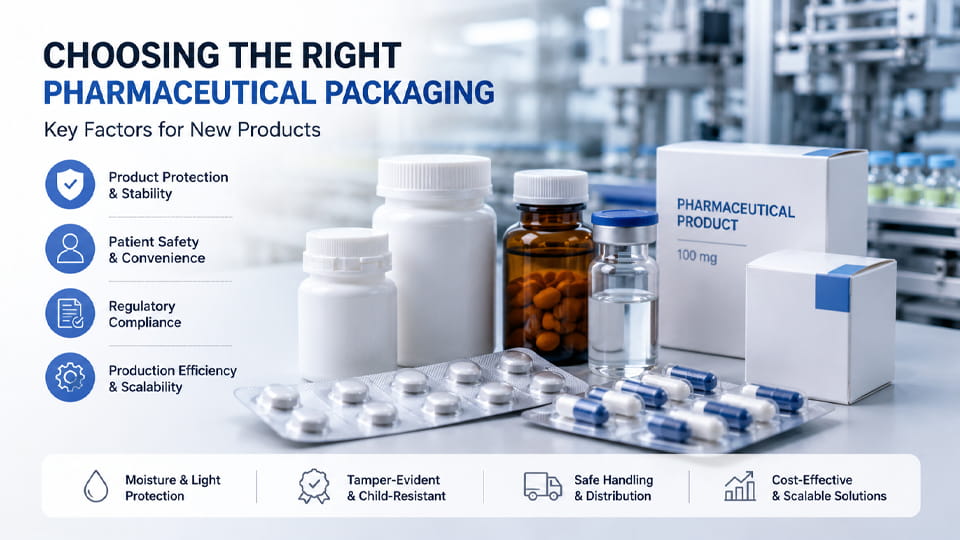
फार्मास्यूटिकल्स में पैकेजिंग चयन क्यों मायने रखता है?
फार्मास्युटिकल पैकेजिंग है अत्यावश्यक, वैकल्पिक नहीं. नियमित उपभोक्ता पैकेजिंग के विपरीत, फार्मा पैकेजिंग जरूरी है संपूर्ण शेल्फ जीवन के दौरान दवा की अखंडता की रक्षा करें. डब्ल्यूएचओ और नियामक दिशानिर्देश इस बात पर जोर देते हैं कि पैकेजिंग को दवाओं को इससे बचाना चाहिए नमी, रोशनी, ऑक्सीजन और अन्य बाहरी खतरे. दूसरे शब्दों में, यह "औषधीय उत्पादों की स्थिरता और गुणवत्ता को बरकरार रखता है" और ख़राब होने या छेड़छाड़ से बचाता है.
पैकेजिंग के प्रमुख कार्यों में शामिल हैं:
- उत्पाद संरक्षण: नमी को दूर रखें, ऑक्सीजन, रोशनी, गर्मी और प्रदूषक. उदाहरण के लिए, एक यूएसपी मार्गदर्शन यह नोट करता है ठोस गोलियों को "जलवाष्प से बचाने की आवश्यकता है" चूँकि नमी दवा की शक्ति या विघटन को बदल सकती है. उच्च-अवरोधक सामग्री (एल्यूमीनियम पन्नी, लेपित फिल्में, एम्बर ग्लास) इनका उपयोग अक्सर वहां किया जाता है जहां संवेदनशीलता अधिक होती है.
- विनियामक अनुपालन: पैकेजिंग को FDA के अनुरूप होना चाहिए, ईएमए और डब्ल्यूएचओ जीएमपी आवश्यकताएँ. इसमें उचित भी शामिल है कंटेनर बंद करने की अखंडता (सीसीआई), मान्य सामग्री, और जैसी सुविधाएँ स्पष्ट रूप से हस्तक्षेप करना सील. बाल-प्रतिरोधी पैकेजिंग आकस्मिक अंतर्ग्रहण को रोकने के लिए कई दवाओं के लिए इसकी आवश्यकता होती है. क्रमांकन और पता लगाने की क्षमता (प्रत्येक पैक पर अद्वितीय बारकोड) अब प्रमुख बाजारों में अनिवार्य हैं (एफडीए डीएससीएसए, ईयू एफएमडी).
- रोगी सुरक्षा और अनुपालन: पैकेज डिज़ाइन को खुराक संबंधी त्रुटियों और दुरुपयोग को रोकना चाहिए. छेड़छाड़-स्पष्ट लेबल और बाल-प्रूफ कैप "आकस्मिक विषाक्तता से बचाव करें". उपयोगकर्ता के अनुकूल सुविधाएँ (आसान खुला, खुराक सहायता, कैलेंडर छाले) रोगियों को दवाएँ सही ढंग से लेने में मदद करें.
- ब्रांड और संचार: द्वितीयक पैकेजिंग (डिब्बों, लेबल) निर्देश देता है, चेतावनियाँ, और ब्रांडिंग. विशेषज्ञों के अनुसार, मिश्रण-अप से बचने के लिए लेबल टिकाऊ और स्पष्ट होने चाहिए. वास्तव में, एक विश्लेषण में लगभग पाया गया 50% नशीली दवाओं की याद आती है पैकेजिंग/लेबलिंग समस्याओं से जुड़े हैं.
संक्षेप में, पैकेजिंग एक सक्रिय सुरक्षा उपाय है. सही पैकेज चुनने में विफल रहने से एपीआई ख़राब हो सकती है, रोगी को हानि, और नियामक सिरदर्द. सही पैकेजिंग “दवा की गुणवत्ता की रक्षा करता है” और इस प्रकार उत्पाद की प्रभावकारिता और प्रतिष्ठा को रेखांकित करता है.

कदम 1: अपने नए फार्मास्युटिकल उत्पाद की विशेषताओं को समझें
पहला कदम है ए संपूर्ण उत्पाद लेखापरीक्षा. पूछना: खुराक का रूप क्या है (गोली, कैप्सूल, पाउडर, तरल, इंजेक्शन, वगैरह।)? दवा में क्या संवेदनशीलता है (नमी, ऑक्सीजन, रोशनी, गर्मी)? क्या इसके लिए विशेष खुराक नियंत्रण की आवश्यकता है? (मीटर्ड-डोज़ इनहेलर, ड्रॉपर, प्रीलोडेड सिरिंज)?
- दवाई लेने का तरीका: गोलियाँ और कैप्सूल आम तौर पर होते हैं ठोस खुराक और अक्सर पैक किया जाता है ब्लिस्टर पैक या बोतलें. तरल पदार्थ/निलंबन में जाते हैं बोतलों या शीशियाँ. इंजेक्शन की आवश्यकता है बाँझ शीशियाँ, ampoules या पहले से भरी हुई सीरिंज. गैस/इनहेलर विशेष कनस्तरों का उपयोग करते हैं. पाउडर या कणिकाओं को पैक किया जा सकता है पाउच, स्टिक पैक या बोतलें.
- रासायनिक/भौतिक संवेदनशीलता: क्या दवा हीड्रोस्कोपिक या ऑक्सीकरण-प्रवण है? अत्यधिक नमी के प्रति संवेदनशील दवाएं (उदाहरण के लिए:. जल्दी घुलने वाली गोलियाँ) ज़रूरत उच्च-अवरोधक पैकेजिंग जैसे अलु-अलू ब्लिस्टर या डेसिकेंट-लाइन वाली बोतलें. प्रकाश-संवेदनशील यौगिकों की आवश्यकता है अपारदर्शी या रंगा हुआ कंटेनर. प्रतिक्रियाशील दवाओं के लिए अक्रिय पदार्थों की आवश्यकता होती है (उदाहरण के लिए:. काँच, कुछ पॉलिमर).
- शेल्फ-जीवन और स्थिरता: किसी भी आवश्यक तापमान नियंत्रण पर विचार करें (प्रशीतन) या निर्वात/बाँझ स्थितियाँ. कुछ टीकों या बायोलॉजिक्स को कोल्ड-चेन पैकेजिंग या विशेष शीशियों की आवश्यकता हो सकती है.
मुख्य बिंदु: प्राथमिक पैकेजिंग निष्क्रिय और सुरक्षात्मक होनी चाहिए. इसे दवा का रिसाव या अवशोषण नहीं करना चाहिए, और इसे एक सीलबंद वातावरण बनाए रखना चाहिए. उदाहरण के लिए, एफडीए नोट करता है कि ठोस मौखिक कंटेनरों में एक होना चाहिए “जलवाष्प प्रवेश की कम दर, और समापन प्रणाली को एक सील स्थापित करनी चाहिए". उम्मीदवार पैकेजिंग घटकों के साथ संगतता और निकालने योग्य परीक्षण करना महत्वपूर्ण है.
उत्पाद ऑडिट के लिए चेकलिस्ट:
- खुराक प्रपत्र/प्रकार (गोली, कैप्सूल, तरल, वगैरह।)
- भंडारण/स्थिरता की स्थिति (तापमान, नमी, रोशनी)
- खुराक/प्रशासन संबंधी आवश्यकताएँ (ड्रॉपर, पंप, इकाई खुराक)
- रोगी उपयोग संबंधी विचार (बच्चे बनाम वयस्क चिकित्सा, गतिशीलता, वरिष्ठ के अनुकूल)
- विनियामक बाधाएँ (उदाहरण के लिए:. रोगी सूचना प्राथमिक पैक का हिस्सा है?)
यह समझ प्राथमिक पैकेजिंग की आपकी पसंद को निर्धारित करेगी (दवा के साथ सीधे संपर्क में पैकेज). अगला, हम उन विकल्पों पर चर्चा करते हैं.
कदम 2: उपयुक्त प्राथमिक पैकेजिंग चुनें
प्राथमिक पैकेजिंग वह तत्काल कंटेनर है जिसमें दवा रखी जाती है. यह सीधे दवा को छूता है. सामान्य प्राथमिक पैकेजिंग प्रकारों में शामिल हैं फफोले के पैक, बोतलों (प्लास्टिक ग्लास), शीशियाँ/एम्पौल्स, पाउच, ट्यूबों, वगैरह. प्रत्येक के पक्ष/विपक्ष हैं:
- फफोले के पैक (अलु-अलू या अलु-पीवीसी): यूनिट-डोज़ ठोस रूपों के लिए आदर्श (गोलियाँ, कैप्सूल). वे सप्लाई करते हैं उत्कृष्ट नमी/प्रकाश अवरोधक, विशेष रूप से आलू-आलू (शीत-रूप पन्नी) प्रकार. फफोले यह सुनिश्चित करते हैं कि उपयोग होने तक प्रत्येक खुराक को सील कर दिया जाए, अनुपालन में सुधार और क्रॉस-संदूषण को कम करना. आधुनिक छालों को बाल प्रतिरोधी बनाया जा सकता है. उपकरण: उच्च गति फफोली पैकिंग मशीनें हैंडल बनाना, खिला, हीट-सीलिंग और कटिंग (उदाहरण के लिए:. जिनलूपैकिंग की अलु-अलू ब्लिस्टर मशीनें).
- बोतलों (प्लास्टिक या कांच): बहु-इकाई पैकेजिंग के लिए सामान्य (सिरप, कैप्सूल, गोलियाँ). बड़ी मात्रा के लिए बोतलें लागत प्रभावी होती हैं. कांच की बोतलें (टाइप I बोरोसिलिकेट) उत्कृष्ट रासायनिक निष्क्रियता प्रदान करते हैं और प्रकाश संरक्षण के लिए एम्बर रंग में रंगे जा सकते हैं. प्लास्टिक की बोतलें (एचडीपीई, पीपी) हल्के और टूटने-रोधी होते हैं लेकिन आमतौर पर इनमें नमी पारगम्यता अधिक होती है. बोतलें अक्सर उपयोग करते हैं बाल-प्रतिरोधी टोपियाँ. उपकरण: गिनती/भरने वाली मशीनें बोतलें भरती हैं और उन पर ढक्कन लगाती हैं, और कर सकते हैं जलशुष्कक डालें या फ़ॉइल सील (गिनती की पंक्तियों पर देखें). जिनलू की बोतल भरने की लाइनें और स्वचालित कैपिंग मशीनें इन चरणों को एकीकृत करती हैं.
- पाउच & छड़ी पैक: पाउडर के लिए उपयोग किया जाता है, granules, या एकल-खुराक तरल पदार्थ (उदाहरण के लिए:. एंटीबायोटिक दवाओं, अन्य बनाम). ये सभी तरफ से सील की गई लचीली फ़ॉइल या लैमिनेट पाउच हैं. पाउच उत्कृष्ट अवरोध प्रदान करते हैं (अक्सर एल्यूमीनियम पन्नी के साथ) और सुविधा. उपकरण: पाउच पैकिंग मशीनें बनती हैं, भरना, और इन पाउचों को एक ही बार में सील कर दें.
- शीशियों & Ampoules: बाँझ इंजेक्शनों के लिए मानक (समाधान, लियोफिलाइज्ड पाउडर). शीशियों (कांच या प्लास्टिक) रबर स्टॉपर्स के साथ बाँझपन बनाए रखें. Ampoules (काँच) उपयोग होने तक भली भांति बंद करके सील कर दिया जाता है. दोनों उच्च शुद्धता प्रदान करते हैं और सुई/सिरिंज के लिए उपयुक्त हैं. उपकरण: शीशी भरने की लाइनें, कैपिंग और क्रिम्पिंग मशीनों का उपयोग किया जाता है (बाँझपन के लिए अक्सर लामिना प्रवाह क्षेत्रों के साथ).
- अन्य: ट्यूबों (धातु या प्लास्टिक) मलहम/क्रीम के लिए आम हैं. पहले से भरी हुई सीरिंज या इन्हेलर (एमडीआई/डीपीआई) कस्टम डिवाइस पैकेजिंग शामिल करें. इन्हें अक्सर विशेष फिलिंग और असेंबली उपकरण की आवश्यकता होती है.
प्रत्येक विकल्प की उपयुक्तता आपके उत्पाद पर निर्भर करती है:
- लागत बनाम. सुरक्षा: नीचे दी गई तालिका प्राथमिक पैक प्रकारों की तुलना करती है:
| प्रकार |
के लिए सबसे अच्छा |
सुरक्षा स्तर |
लागत |
उपकरण |
| ब्लिस्टर पैक |
गोलियां, कैप्सूल |
बहुत ऊँचा (नमी/रोशनी) |
मध्यम |
ब्लिस्टर पैकिंग मशीन |
| बोतल |
गोलियां, सिरप, गोलियाँ |
मध्यम (आवेषण के साथ अच्छा) |
कम |
बोतल भरने/कैपिंग लाइन |
| पाउच/छड़ी |
पाउडर, granules |
उच्च (पन्नी बाधा) |
मध्यम |
पाउच पैकिंग मशीन |
| शीशी/एम्पौल |
इंजेक्शन, सीरम |
बहुत ऊँचा (बाँझ कांच) |
उच्च |
शीशी भरना & सीलिंग लाइन |
प्राथमिक पैक चुनें जो खुराक के रूप और बाधा आवश्यकताओं से मेल खाता हो. उदाहरण के लिए, नमी-संवेदनशील टैबलेट के लिए इसकी आवश्यकता हो सकती है अलु-अलू छाला या जलशुष्कक के साथ एम्बर कांच की बोतल. अधिक सामान्य ओटीसी गोलियाँ फ़ाइबरटाइट टोपी वाली प्लास्टिक की बोतल में जा सकती हैं (प्लस बाल-प्रतिरोधी सुविधा).
बख्शीश: यदि यूनिट-खुराक अनुपालन महत्वपूर्ण है (उदा।, अस्पताल वितरण या यात्रा पैक), ब्लिस्टर शीट या स्टिक पैक को अक्सर प्राथमिकता दी जाती है. लचीलेपन के लिए (खुराकें बदली जा सकती हैं), बोतलें बेहतर हैं.
कदम 3: स्थिरता और शेल्फ-लाइफ आवश्यकताओं पर विचार करें
पैकेजिंग निर्णय स्थिरता से अविभाज्य हैं. गलत कंटेनर गिरावट या लेबल विफलता का कारण बन सकता है. मुख्य विचार:
- बाधा गुण: ऐसी सामग्रियों का उपयोग करें जो महत्वपूर्ण कारकों को अवरुद्ध करती हैं. के लिए नमी के प्रति संवेदनशील दवाएं, उच्च-अवरोधक फ़ॉइल या ग्लास की आवश्यकता होती है. उदाहरण के लिए, ठंडे रूप वाले एल्यूमीनियम फफोले अनिवार्य रूप से शून्य नमी प्रवेश प्रदान करें. एफडीए/आईसीएच स्थिरता मार्गदर्शन नोट करता है कि उत्पाद वास्तव में अभेद्य कंटेनरों में हैं (उदा।, पन्नी के फफोले या सीलबंद गिलास) विशेष आर्द्रता अध्ययन के बिना सामान्य परिस्थितियों में परीक्षण किया जा सकता है. के साथ -साथ, अर्ध-पारगम्य पैकेज (कुछ प्लास्टिक की तरह) सावधानीपूर्वक आर्द्रता मूल्यांकन की आवश्यकता है.
- प्रकाश संरक्षण: प्रकाश-संवेदनशील एपीआई को अपारदर्शी या एम्बर पैकेजिंग की आवश्यकता होती है. उदाहरण के लिए, एम्बर कांच की बोतलें या धातुयुक्त पाउच यूवी ढाल. यदि आवश्यक हो तो पारदर्शी शीशियों को एल्युमीनियम ओवररैप में लपेटना एक आम प्रथा है.
- अनुकूलता: सुनिश्चित करें कि पैकेजिंग सामग्री दवा के साथ प्रतिक्रिया न करें. कांच निष्क्रिय है, लेकिन कुछ प्लास्टिक यौगिकों को लीच या अवशोषित कर सकते हैं. प्राथमिक घटकों पर एक्सट्रैक्टेबल्स/लीचेबल्स अध्ययन करें. विनियामक दिशानिर्देश (एफडीए, ईएमए) अपेक्षा करना कंटेनर बंद करने की अखंडता (सीसीआई) पूरे शेल्फ जीवन में परीक्षण.
- शेल्फ-जीवन निर्धारण: स्थिरता अध्ययन (मैं Q1A/R2) का उपयोग करना चाहिए प्रस्तावित कंटेनर क्लोजर सिस्टम. यदि शेल्फ-जीवन परीक्षणों में गिरावट दिखाई देती है, आपको पैकेजिंग समायोजित करने की आवश्यकता हो सकती है (उदाहरण के लिए:. बेहतर अवरोध पर स्विच करें) या लेबल हैंडलिंग/भंडारण निर्देश.
- उन्नत विशेषताएँ: कुछ पैकेजों में डेसिकैंट्स या ऑक्सीजन स्केवेंजर्स को एकीकृत किया जाता है. मल्टी-लेयर लैमिनेट्स (पीईटी/एल्यूमीनियम/पीई) अक्सर वैश्विक वितरण के लिए उपयोग किया जाता है. बहुत उच्च परिशुद्धता सुरक्षा के लिए, सक्रिय पैकेजिंग (एम्बेडेड नमी-अवशोषक) इस्तेमाल किया जा सकता है.
स्थिरता अनुकूलता के लिए चेकलिस्ट:
- यदि आवश्यक हो तो उच्च-अवरोधक प्राथमिक सामग्री चुनें (आलू-आलू, काँच, लेमिनेट्स).
- सीलिंग विधि सत्यापित करें (ताप सील, कैप्स) कम नमी वाष्प संचरण प्राप्त करता है (एमवीटीआर).
- त्वरित स्थिरता का संचालन करें (40डिग्री सेल्सियस/75% आरएच) आईसीएच के अनुसार यह सुनिश्चित करने के लिए कि नमी का प्रवेश या रासायनिक परिवर्तन न हो.
- कंटेनर बंद करने की अखंडता की योजना बनाएं (वैक्यूम या डाई प्रवेश परीक्षण) विशेष रूप से तरल/बाँझ उत्पादों के लिए.
- सुनिश्चित करें कि पैकेजिंग वितरण झटकों का सामना कर सके (द्वितीयक/तृतीयक पैकेजिंग के साथ ड्रॉप/कंपन परीक्षण).
ऐसी पैकेजिंग का चयन करके जो स्थिरता की आवश्यकताओं को पहले से ही पूरा करती हो, आप बाद में महँगे सुधार या पुन:पैकेजिंग से बचते हैं.
कदम 4: रोगी की सुविधा और अनुपालन का मूल्यांकन करें
सुरक्षा से परे, आधुनिक पैकेजिंग से मरीजों को अपनी दवा का सही ढंग से उपयोग करने में मदद मिलनी चाहिए. पैकेजिंग डिज़ाइन अनुपालन को सीधे प्रभावित करता है और सुरक्षा. विचार करना:
- खोलना/उपयोग में आसानी: बुजुर्ग मरीज़ों को टाइट कैप से परेशानी हो सकती है. प्रस्ताव वरिष्ठ-अनुकूल टोपियाँ या आसानी से छीलने वाली सीलें फायदेमंद हो सकती हैं. यूनिट-खुराक दवाओं के लिए, कैलेंडर छाले (दिन या समय लेबल किया गया) मरीजों को सही गोली लेने की याद दिला सकता है.
- खुराक सहायता: यदि लागू हो, तरल पदार्थों के लिए मापने वाले कप/चम्मच शामिल करें, नेत्र चिकित्सा के लिए ड्रॉपर, या मापी गई खुराक वाले पंप. कंटेनर पर स्पष्ट निशान (ग्रेजुएशन, रंग पट्टियाँ) सटीकता में सुधार करें.
- बंदरगाह: यदि मरीज़ यात्रा करते हैं या दवाएँ ले जाते हैं, कॉम्पैक्ट पाउच या छोटी बोतलें उपयोगी होती हैं. छेड़छाड़-स्पष्ट सुविधाएँ सुरक्षा का आश्वासन देती हैं.
- अनुपालन सुविधाएँ: कुछ प्राथमिक पैक अनुपालन के लिए डिज़ाइन किए गए हैं: उदा।, अंतर्निर्मित अलार्म के साथ गोली डिस्पेंसर, या स्मार्ट ब्लिस्टर कार्ड जो उपयोग को ट्रैक करते हैं. यदि उच्च अनुपालन महत्वपूर्ण है, ऐसे नवाचारों पर विचार करें.
- लेबल और आवेषण: स्पष्ट सुनिश्चित करें, कार्टन या पत्रक पर बहुभाषी निर्देश. अच्छी पैकेजिंग फार्मासिस्टों और मरीजों को सुपाठ्य लेबल के साथ मदद करती है, खुराक चार्ट, और भंडारण चिह्न.
अनिवार्य रूप से, पूछना: क्या मरीज़ को यह पैकेज उपयोग में आसान और सुरक्षित लगेगा?? यदि नहीं, वे उत्पाद का दुरुपयोग कर सकते हैं या छोड़ सकते हैं. जिसमें रोगी-केंद्रित विशेषताएं शामिल हैं (बच्चे के ताले, आसान खुला, स्पष्ट लेबलिंग) उन नियामकों को भी संतुष्ट करता है जो रोगी सुरक्षा पर जोर देते हैं.
कदम 5: विनियामक अनुपालन सुनिश्चित करें
फार्मा पैकेजिंग अत्यधिक विनियमित है. प्रमुख अनुपालन मुद्दे:
- बच्चा प्रतिरोधी (करोड़) आवश्यकताएं: अनेक देश (हम, यूरोपीय संघ, ए.यू.) उच्च जोखिम वाली मौखिक दवाओं के लिए सीआर पैकेजिंग अनिवार्य करें. WHO इसे नोट करता है "बाल-प्रतिरोधी क्लोजर विकसित किए गए हैं" बच्चों की सुरक्षा के लिए. सुनिश्चित करें कि मौखिक ठोस और तरल नुस्खे वाली दवाएं कानून द्वारा आवश्यक होने पर प्रमाणित सीआर कैप या पुश-टर्न तंत्र का उपयोग करती हैं. (उदाहरण के लिए:. हम 16 सीएफआर 1700 सोना ईयू मानक एन 14375).
- छेड़छाड़-स्पष्ट मुहरें: एफडीए और अन्य को इस बात का सबूत चाहिए कि कोई पैकेज खोला नहीं गया है. छेड़छाड़ बैंड, लपेटें सिकोड़ें, या टूटी हुई सील बोतलों पर आम बात है; जार पर फ़ॉइल सील आम हैं. यहां तक कि ब्लिस्टर पैक को भी स्पष्ट क्षति के बिना खोलना मुश्किल होना चाहिए.
- लेबलिंग: प्राथमिक और द्वितीयक पैकेज में सभी आवश्यक जानकारी होनी चाहिए (दवा का नाम, ताकत, दवाई लेने का तरीका, बैच/लॉट नंबर, समाप्ति, जमा करने की अवस्था, उत्पादक). फ़ॉन्ट सुपाठ्य और फार्माकोपियल दिशानिर्देशों के अनुरूप होने चाहिए. उदाहरण के लिए, एफडीए 21 सीएफआर 201.15 लेबल स्थायित्व को कवर करता है.
- क्रमांकन और पता लगाने की क्षमता: FDA के DSCSA जैसे विनियम (हम) और EU मिथ्या औषधि निर्देश के लिए अद्वितीय कोड की आवश्यकता होती है (उदाहरण के लिए:. 2डी बारकोड) प्रत्येक बिक्री योग्य इकाई पर. पैकेजिंग डिज़ाइन में ब्लिस्टर स्ट्रिप्स या बोतल लेबल पर सीरियल नंबर और डेटामैट्रिक्स कोड की छपाई या नक़्क़ाशी को समायोजित किया जाना चाहिए. आपकी पैकेजिंग लाइन को कोडिंग प्रिंटर और विज़न सिस्टम की आवश्यकता हो सकती है, और ट्रैक-एंड-ट्रेस डेटाबेस के साथ एकीकरण.
- अच्छी उत्पादन कार्यप्रणाली (जीएमपी): पैकेजिंग लाइनें जीएमपी से मिलना होगा (साफ़-सफ़ाई, सामग्री का पता लगाने की क्षमता, वगैरह।). उपयोग किए गए सभी प्राथमिक पैक जीएमपी-योग्य होने चाहिए (उदाहरण के लिए:. आईएसओ 15378 पैकेजिंग सामग्री के लिए). मशीनें होनी चाहिए आईआर/डब्ल्यूएच/पीक्यू योग्य. (जिनलू पैकिंग उपकरण के लिए नीचे देखें).
प्रमुख विनियामक युक्ति: अनुपालन को बाद की सोच के रूप में न लें. उदाहरण के लिए, छेड़छाड़-स्पष्ट सुविधा को शामिल करने में विफल रहने से उत्पाद पंजीकरण अवरुद्ध हो सकता है. देश-विशिष्ट नियमों की शीघ्र समीक्षा करें - उदा. खासियत <661> प्लास्टिक के कंटेनरों के लिए, सीएफआर 211 पैकेजिंग नियंत्रण के लिए. हमेशा सत्यापित करें कि चुनी गई पैकेजिंग और पैकेजिंग उपकरण इन मानकों को पूरा कर सकते हैं.
कदम 6: पैकेजिंग लागत और उत्पादन क्षमता को संतुलित करें
इस स्तर पर, मूल्यांकन करना मालिकाने की कुल कीमत (TCO) पैकेजिंग विकल्पों के लिए. विचार करना:
- सामग्री लागत: लचीले पाउच और फफोले की कीमत साधारण बोतलों की तुलना में प्रति यूनिट अधिक हो सकती है. अलु-अलू ब्लिस्टर फ़ॉइल पीवीसी फ़ॉइल की तुलना में अधिक महंगा है. कांच की बोतलों की कीमत प्लास्टिक से अधिक होती है.
- उपकरण थ्रूपुट: ब्लिस्टर जैसे उच्च-अवरोधक प्रारूप बोतल लाइनों की तुलना में धीमे चल सकते हैं, आवश्यक उपकरणों की संख्या पर असर पड़ रहा है. के साथ -साथ, बोतल भरने वाले बहुत तेज़ गति प्राप्त कर सकते हैं (कई हजार बोतलें/घंटा) लेकिन अनस्क्रेम्बलर्स की जरूरत है, कैप्स, और एक पंक्ति में लेबलर.
- रेखा जटिलता: अधिक जटिल पैकेजिंग (उदाहरण के लिए:. यूनिट-खुराक छाले) विशेष मशीनों की आवश्यकता है. जांचें कि पूंजी निवेश और रखरखाव आपके बजट में फिट हैं या नहीं.
- श्रम: पूरी तरह से स्वचालित लाइनें शारीरिक श्रम को कम करती हैं लेकिन पूंजी बढ़ाती हैं. सेमी-ऑटो मशीनों की लागत कम होती है लेकिन अधिक ऑपरेटरों की आवश्यकता होती है.
- रसद: द्वितीयक/तृतीयक पैकेजिंग की भी लागत होती है. बड़ी कांच की बोतलें भेजना भारी होता है. भारी डिब्बों से माल ढुलाई लागत बढ़ जाती है.
- बर्बादी और उपज: अधिक प्रसंस्करण (उदाहरण के लिए:. छाला मुक्का मारना) स्क्रैप उत्पन्न कर सकता है. बर्बाद हुई सामग्रियों का मूल्यांकन करें (फफोले से ट्रिम करें, टूटी बोतलें, वगैरह।).
रफ प्रदर्शन करें लागत तुलना: उदाहरण के लिए:. सामग्री और प्रसंस्करण सहित प्रति अंतिम पैक लागत. गति पर भी विचार करें (प्रति घंटा इकाइयाँ) और आवश्यक बैच आकार.
ए टीसीओ चेकलिस्ट:
- प्रति यूनिट पैकेजिंग सामग्री लागत की तुलना करें.
- आवश्यक मशीन थ्रूपुट बनाम मांग का मूल्यांकन करें.
- प्रत्येक पंक्ति के लिए श्रम और ऊर्जा लागत की गणना करें.
- अपशिष्ट निपटान/पुनर्चक्रण लागत शामिल करें.
- पुनः कार्य के जोखिम का कारक (उदाहरण के लिए:. यदि पैकेजिंग विफल हो जाती है, रीलेबल या रीपैक की लागत).
- भविष्य का स्केल-अप: यदि मात्रा दोगुनी हो जाए, क्या यह समाधान पैमाना है?
अक्सर सबसे कम लागत वाली सामग्री सर्वोत्तम नहीं है यदि यह वापस बुलाने या अस्वीकार करने की ओर ले जाता है. संतुलन बनाना महत्वपूर्ण है: कभी-कभी बेहतर अवरोध या स्वचालन के लिए अधिक भुगतान करने से उच्च उपज और अनुपालन में लाभ होता है.
कदम 7: सुनिश्चित करें कि पैकेजिंग भविष्य की मांग के अनुरूप हो सके
केवल तत्काल लॉन्च पर विचार न करें, लेकिन दीर्घकालिक जीवनचक्र उत्पाद का:
- पायलट बनाम. व्यावसायिक: प्रारंभिक नैदानिक या छोटे-बाज़ार बैचों के लिए, आप मैनुअल या सेमी-ऑटो लाइनों का उपयोग कर सकते हैं. बड़े पैमाने पर उत्पादन के लिए, एक पूर्णतः स्वचालित लाइन की आवश्यकता होगी. सुनिश्चित करें कि आपकी पसंद (या विक्रेता का प्रस्ताव) मॉड्यूलर उन्नयन की अनुमति देता है.
- उपकरण प्रतिरूपकता: क्या आप गति बढ़ाने के लिए लेन या इकाइयाँ जोड़ सकते हैं?? उदाहरण के लिए, कुछ ब्लिस्टर मशीनें अधिक रोटरी पॉकेट जोड़ सकती हैं. बॉटलिंग लाइनें समानांतर फिलर्स जोड़ सकती हैं.
- एकीकरण: अंत-से-अंत तक सोचें: गिनती/भरना → सीलिंग → कार्टनिंग → केस पैकिंग → पैलेटाइजिंग. यदि आप जिनलू पैकिंग या इसी तरह के किसी अन्य कंपनी के साथ साझेदारी करते हैं, वे एक डिजाइन कर सकते हैं टर्नकी पैकेजिंग लाइन जिसमें क्रमांकन शामिल है, कार्टनिंग, केस पैकिंग, वगैरह.
- विनियामक स्केलिंग: पैकेजिंग घटकों में कोई भी परिवर्तन (उदाहरण के लिए:. एक नई बोतल आपूर्तिकर्ता) यदि यह स्थिरता या अनुपालन को प्रभावित करता है तो नियामक पुनः अनुमोदन की आवश्यकता है. पैकेजिंग आपूर्तिकर्ता गुणवत्ता नियंत्रण और बैकअप विक्रेताओं की योजना बनाएं.
- भविष्य के उत्पाद: यदि आपकी कंपनी अन्य खुराक प्रपत्र तैयार कर सकती है (उदाहरण के लिए:. भविष्य में एक जेल), लचीले उपकरण चुनें. मॉड्यूलर कैप्सूल फिलर्स या ब्लिस्टर मशीनें जो विभिन्न प्रारूपों को संभाल सकती हैं, एक अच्छा निवेश हो सकती हैं.
पैकेजिंग इंजीनियरों या सलाहकार को जल्दी शामिल करने से बाद में आने वाली बाधाओं को रोका जा सकता है. जैसा कि एक उद्योग विशेषज्ञ नोट करता है, “पैकेजिंग को फॉर्मूलेशन विकास के समानांतर माना जाना चाहिए, बाद के विचार के रूप में नहीं। सही शुरुआती निर्णय स्केल-अप और लाइन विस्तार को आसान बना देंगे.
पैकेजिंग चयन में होने वाली सामान्य गलतियाँ जिनसे बचना चाहिए
- पैकेजिंग चयन को बहुत देर से छोड़ना: फॉर्मूलेशन लॉक होने के बाद ही पैकेजिंग का निर्णय न लें. प्रारंभिक स्थिरता अध्ययन में अंतिम पैकेजिंग का उपयोग किया जाना चाहिए, डमी जार नहीं.
- स्थिरता परीक्षण छोड़ना: यह कभी न मानें कि कोई कंटेनर काम करेगा; ICH शर्तों के तहत हमेशा अपनी दवा का परीक्षण वास्तविक कंटेनर/क्लोजर में करें. यदि पैकेजिंग खराब है तो अन्यथा स्थिर फॉर्मूला ख़राब हो सकता है.
- केवल लागत पर ध्यान केंद्रित करना: सस्ती सामग्री से पहले पैसे की बचत हो सकती है लेकिन वापस मंगाने या शेल्फ-लाइफ कम करने पर इसकी लागत अधिक होती है. सुरक्षा के साथ लागत को संतुलित करें.
- रोगी कारकों की अनदेखी: एक मानक बोतल लागत लक्ष्य में फिट हो सकती है, लेकिन अगर मरीज़ इसे खोल नहीं सकते या इसका पालन नहीं कर सकते, उत्पाद बाज़ार में ख़राब प्रदर्शन करेगा.
- विनियामक आवश्यकताओं को कम आंकना: आवश्यकता पड़ने पर छेड़छाड़-स्पष्ट सील या बाल-प्रतिरोधी क्लोजर शामिल करने में विफल रहने से अनुमोदन रुक सकता है. हमेशा दिशानिर्देशों से परामर्श लें.
- आपूर्ति शृंखला की उपेक्षा: पैकेजिंग आपूर्ति के लीड समय और शेल्फ जीवन पर विचार करें. कुछ विशेष सामग्री (ऑक्सीजन-सफाई लाइनर की तरह) इसमें लंबे समय तक लीड समय हो सकता है.
इन त्रुटियों और क्रॉस-फ़ंक्शनल समीक्षा से बचकर (आर&डी, क्यूए, उत्पादन, नियामक), आप सुनिश्चित करते हैं कि आपकी चुनी हुई पैकेजिंग व्यवहार्य है, अनुपालन, और प्रभावी.
नए फार्मास्युटिकल उत्पाद प्रकार द्वारा अनुशंसित पैकेजिंग
| उत्पाद का प्रकार |
अनुशंसित प्राथमिक पैकेजिंग |
| गोलियाँ/कैप्सूल |
इकाई खुराक फफोले के पैक (अलु-अलू या पीवीसी/अलू) या थोक बोतलों. बोतलों के लिए बाल प्रतिरोधी टोपियाँ. आदर्श उपकरण: ब्लिस्टर पैकिंग मशीन या टैबलेट/कैप्सूल गिनती & बोतलबंद लाइन. |
| मौखिक पाउडर/कणिकाएँ |
पाउच या छड़ी पैक (एकल खुराक के लिए); या बोतलों (थोक के लिए). यूनिट-खुराक के लिए पाउच पैकेजिंग मशीनें, बोतलों के लिए बरमा भराव. |
| तरल पदार्थ/सिरप |
प्लास्टिक या कांच की बोतलें स्क्रू कैप के साथ (अक्सर फ़ॉइल सील और बाल प्रतिरोधी टोपी के साथ). उच्च शुद्धता के लिए, टाइप I ग्लास. उपकरण: तरल भरने की लाइन (पंप, इन-लाइन कैपिंग). |
| इंजेक्शन |
कांच की शीशियाँ या शीशियाँ (बाँझ) या पहले से भरी हुई सीरिंज. सफ़ाई कक्ष में बाँझ शीशी भरने और क्रिम्पिंग मशीनों का उपयोग करें. |
| क्रीम/मलहम (अर्धठोस) |
ट्यूब या जार (एल्यूमीनियम/प्लास्टिक ट्यूब, कांच/प्लास्टिक के जार). छेड़छाड़-स्पष्ट सील वाली ट्यूब. अर्ध-ऑटो या ऑटो ट्यूब भरने वाली मशीनें. |
| जल्दी घुलने वाली गोलियाँ |
एल्युमीनियम ट्यूब या बोतलें (सूखा रखने के लिए); अक्सर शुष्कक के साथ. एल्युमिनियम फॉयल ब्लिस्टर पैक भी आम हैं. ट्यूबिंग मशीनें (गोलियों के लिए) या ब्लिस्टर मशीनें. |
| सपोजिटरी |
ब्लिस्टर ट्रे (आमतौर पर अलु/पीवीसी या अलु/अलू) या व्यक्तिगत रूप से लपेटी गई इकाइयों के बक्से. ब्लिस्टर पैकर्स या थर्मोफॉर्मर्स. |
| इन्हेलर/नाक स्प्रे |
एमडीआई डिब्बे या डीपीआई कारतूस (डिवाइस-विशिष्ट). उपकरण निर्माता के साथ समन्वय; कस्टम फिलिंग/कैन-फिलिंग उपकरण. |
यह मैपिंग यह सुनिश्चित करने में मदद करती है कि प्रत्येक दवा के रूप को उचित सुरक्षा मिले. उदाहरण के लिए, ठोस मौखिक खुराक के लिए ब्लिस्टर पैक उत्कृष्ट हैं, जबकि बाँझ इंजेक्शन के लिए कांच की शीशियाँ आवश्यक हैं. तालिका उपकरण का भी सुझाव देती है: उदाहरण के लिए:. फफोली पैकिंग मशीनें, बोतल भरने और कैपिंग लाइनें, पाउच पैकिंग मशीनें, शीशी भराव, और इसी तरह.
जिंलू पैकिंग फार्मास्युटिकल कंपनियों को कैसे मदद करती है
जिनलू पैकिंग अग्रणी है फार्मास्युटिकल पैकेजिंग मशीनरी निर्माता. हम नई दवा पैकेजिंग लाइनों के लिए टर्नकी समाधान प्रदान करते हैं. प्रमुख प्रसाद:
- ब्लिस्टर पैकेजिंग मशीनें: पीवीसी/अलू या आलू-अलू पैक के लिए हाई-स्पीड ब्लिस्टर मशीनें. आपके टैबलेट/कैप्सूल प्रारूप और गति आवश्यकताओं के अनुरूप कस्टम डिज़ाइन.
- बोतल भरना & कैपिंग लाइन्स: स्वचालित बोतल भरना, कैपिंग, और लेबलिंग सिस्टम. हमारी गिनती और भरने की लाइनें अनस्क्रैम्बलर्स को एकीकृत कर सकती हैं, शुष्कक डालने वाले, फ़ॉइल सीलर्स, और टैबलेट/गमी बोतलों के लिए कैपर.
- कार्टोनिंग मशीनें: फफोले के चारों ओर कार्टन खड़ा करने के लिए क्षैतिज और ऊर्ध्वाधर कार्टनर, बोतलों, या पाउच. जैसे फीचर्स 100% क्रमांकन और त्वरित बदलाव के लिए कोड स्कैनिंग.
- क्रमांकन/कोडिंग प्रणाली: हम बैच को प्रिंट करने और सत्यापित करने के लिए लाइनों को इंकजेट/लेजर कोडर और विज़न निरीक्षण से लैस कर सकते हैं, समाप्ति, और अद्वितीय कोड.
- पूर्ण पैकेजिंग लाइनें: उत्पाद फीडिंग से लेकर केस पैकिंग तक, हम सीजीएमपी और क्रमांकन आवश्यकताओं को पूरा करते हुए एक पूरी तरह से एकीकृत लाइन डिजाइन कर सकते हैं. हमारी मशीनें आसान सफाई के लिए बनाई गई हैं (SUS316L स्टेनलेस स्टील) और IQ/OQ दस्तावेज़ शामिल करें.
- सहायता & अनुपालन: हम मशीन योग्यता में सहायता करते हैं (आईआर/डब्ल्यूएच/पीक्यू) और दुनिया भर में ऑन-साइट इंस्टॉलेशन और प्रशिक्षण की पेशकश करता है.
हमारे साथ काम करके, आपको सिर्फ उपकरण नहीं मिलते, लेकिन पैकेजिंग विशेषज्ञता. हम आपकी चुनी हुई पैकेजिंग विधि सुनिश्चित करते हैं (ब्लिस्टर लाइन, बोतल लाइन, वगैरह।) आपके उत्पाद और नियामक आवश्यकताओं के लिए अनुकूलित है, आपके उत्पाद के लॉन्च को आसान बनाना.
निष्कर्ष
किसी नए फार्मास्युटिकल उत्पाद के लिए सही पैकेजिंग का चयन करना एक है बहुआयामी निर्णय. इसके लिए दवा स्थिरता को संतुलित करने की आवश्यकता है, रोगी सुरक्षा, अनुपालन, लागत, और स्केलेबिलिटी. याद करना: सबसे अच्छी पैकेजिंग वह है जो आपके उत्पाद को रोगी तक पहुंचने तक सुरक्षित और प्रभावी रखे. यह केवल आकर्षक या सस्ता होने के बारे में नहीं है - यह गुणवत्ता के बारे में है. उत्पाद गुणों का सावधानीपूर्वक विश्लेषण करके, पैकेजिंग विकल्पों का परीक्षण, और नियमों का पालन कर रहे हैं, निर्माता महँगे रिकॉल से बच सकते हैं और सुनिश्चित कर सकते हैं कि उनकी दवा गुणकारी बनी रहे, शुद्ध, और सुरक्षित. एक अच्छी तरह से चुनी गई पैकेजिंग रणनीति के साथ (और सही मशीनरी), आप अपने ग्राहकों और अपने ब्रांड की प्रतिष्ठा दोनों की रक्षा करते हैं.
नए फार्मास्युटिकल उत्पाद के लिए पैकेजिंग चुनने के बारे में अक्सर पूछे जाने वाले प्रश्न
किसी नए फार्मास्युटिकल उत्पाद के लिए पैकेजिंग क्यों महत्वपूर्ण है??
पैकेजिंग में दवा रखने से कहीं अधिक कुछ होता है. यह दवा उत्पाद को नमी से बचाता है, ऑक्सीजन, रोशनी, दूषण, और शारीरिक क्षति. उचित पैकेजिंग नियामक अनुपालन सुनिश्चित करने में भी मदद करती है, रोगी सुरक्षा, उत्पाद स्थिरता, और वितरण और भंडारण के दौरान शेल्फ जीवन.
फार्मास्युटिकल पैकेजिंग का चयन करते समय किन कारकों पर विचार किया जाना चाहिए?
निर्माताओं को कई कारकों का मूल्यांकन करना चाहिए, शामिल:
• दवाई लेने का तरीका (गोली, कैप्सूल, तरल, पाउडर, इंजेक्शन)
• नमी और ऑक्सीजन संवेदनशीलता
• प्रकाश सुरक्षा आवश्यकताएँ
• शेल्फ-लाइफ लक्ष्य
• विनियामक आवश्यकताएँ
• रोगी की सुविधा
• पैकेजिंग लागत
• उत्पादन क्षमता
• भविष्य की स्केलेबिलिटी
आदर्श पैकेजिंग समाधान को उत्पाद सुरक्षा को संतुलित करना चाहिए, अनुपालन, और परिचालन दक्षता.
टैबलेट और कैप्सूल के लिए सबसे अच्छी पैकेजिंग क्या है??
ब्लिस्टर पैक और बोतलें सबसे आम विकल्प हैं.
• ब्लिस्टर पैकेजिंग यूनिट-डोज़ सुविधा प्रदान करते हुए नमी और संदूषण के खिलाफ उत्कृष्ट सुरक्षा प्रदान करती है.
• बोतलें उच्च मात्रा में उत्पादन के लिए लागत प्रभावी होती हैं और आमतौर पर गोलियों के लिए उपयोग की जाती हैं, कैप्सूल, और आहार की खुराक.
सर्वोत्तम विकल्प उत्पाद की स्थिरता आवश्यकताओं और लक्ष्य बाजार पर निर्भर करता है.
पैकेजिंग दवा की स्थिरता को कैसे प्रभावित करती है??
पैकेजिंग सामग्री किसी दवा के नमी जैसे पर्यावरणीय कारकों के संपर्क को सीधे प्रभावित करती है, ऑक्सीजन, और प्रकाश. खराब पैकेजिंग गिरावट को तेज कर सकती है, शक्ति कम करें, और शेल्फ जीवन छोटा करें. इसीलिए स्थिरता परीक्षण आमतौर पर वाणिज्यिक वितरण के लिए अंतिम पैकेजिंग कॉन्फ़िगरेशन का उपयोग करके किया जाता है.
फार्मास्युटिकल कंपनियाँ पैकेजिंग अनुपालन कैसे सुनिश्चित कर सकती हैं??
निर्माताओं को पैकेजिंग सामग्री का सत्यापन करना चाहिए, लेबल, बंद, और पैकेजिंग उपकरण एफडीए जैसे लागू नियमों का अनुपालन करते हैं, ईयू जीएमपी, क्रमबद्धता, और बाल प्रतिरोधी पैकेजिंग आवश्यकताएँ. अनुभवी फार्मास्युटिकल पैकेजिंग उपकरण आपूर्तिकर्ताओं के साथ काम करने से सत्यापन और अनुपालन प्रक्रियाओं को सरल बनाने में मदद मिल सकती है.
फार्मास्युटिकल उत्पाद विकास के दौरान पैकेजिंग पर कब विचार किया जाना चाहिए??
उत्पाद विकास के दौरान पैकेजिंग का यथाशीघ्र मूल्यांकन किया जाना चाहिए. व्यावसायीकरण तक प्रतीक्षा करना स्थिरता संबंधी समस्याएं पैदा कर सकता है, विनियामक देरी, पैकेजिंग पुनः डिज़ाइन की लागत, और उत्पादन चुनौतियाँ. प्रारंभिक पैकेजिंग चयन निर्माताओं को सटीक स्थिरता अध्ययन करने और अधिक कुशल वाणिज्यिक पैकेजिंग रणनीति विकसित करने की अनुमति देता है.
मैं किसी नए उत्पाद के लिए सही फार्मास्युटिकल पैकेजिंग मशीनरी का चयन कैसे करूँ??
मूल्यांकन करके शुरुआत करें:
• उत्पाद प्रकार और खुराक स्वरूप
• पैकेजिंग प्रारूप (छाला, बोतल, पाउच, शीशी)
• आवश्यक उत्पादन क्षमता
• स्वचालन स्तर
• विनियामक आवश्यकताएँ
• भविष्य की विस्तार योजनाएँ
स्केलेबल फार्मास्युटिकल पैकेजिंग उपकरण चुनने से भविष्य की निवेश लागत को कम करने और दीर्घकालिक व्यापार वृद्धि का समर्थन करने में मदद मिल सकती है.
संदर्भ:
1.मानव औषधियों और बायोलॉजिक्स की पैकेजिंग के लिए कंटेनर क्लोजर सिस्टम -- हम. खाद्य एवं औषधि प्रशासन
2.ICH Q8 फार्मास्युटिकल विकास —— आईसीएच डेटाबेस
3.फार्मास्युटिकल उत्पादों के लिए अच्छी विनिर्माण पद्धतियाँ -- कौन
4.खासियत प्रश्न&ए: औषधि उत्पादों के लिए प्लास्टिक पैकेजिंग सिस्टम के लिए मानक —— usp.org
5.कंटेनर क्लोजर इंटीग्रिटी टेस्टिंग-फार्मास्युटिकल उद्योग में व्यावहारिक पहलू और दृष्टिकोण —— pda.org
