फार्मा कॉन्ट्रैक्ट मैन्युफैक्चरिंग क्या है?? सीडीएमओ के लिए एक संपूर्ण मार्गदर्शिका, सीएमओ, फ़ायदे & प्रक्रिया
फार्मा कॉन्ट्रैक्ट मैन्युफैक्चरिंग क्या है?? सीडीएमओ के लिए एक संपूर्ण मार्गदर्शिका, सीएमओ, फ़ायदे & प्रक्रिया
जुलाई 15, 2026
कोई टिप्पणी नहीं
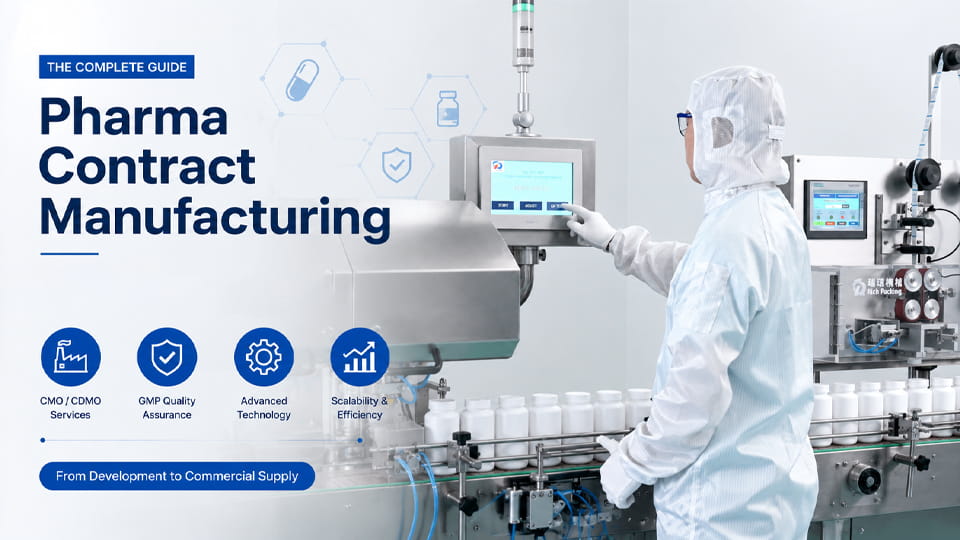
आज के फार्मास्युटिकल उद्योग में, कई कंपनियाँ दवा उत्पादन को विशेष अनुबंध निर्माताओं को आउटसोर्स कर रही हैं. फार्मा कॉन्ट्रैक्ट मैन्युफैक्चरिंग में सब कुछ शामिल है एपीआई उत्पादन और फॉर्मूलेशन विकास से लेकर अंतिम पैकेजिंग तक - अक्सर अनुबंध विकास और विनिर्माण संगठनों द्वारा प्रदान किया जाता है (सीडीएमओ) या अनुबंध विनिर्माण संगठन (सीएमओ). यह मार्गदर्शिका बताती है कि फार्मा अनुबंध विनिर्माण का क्या अर्थ है, सामान्य प्रक्रिया से चलता है (विकास से लेकर तैयार उत्पाद तक), सीएमओ और सीडीएमओ की तुलना करता है, और आउटसोर्सिंग के लाभों और चुनौतियों की रूपरेखा तैयार करता है. हम उन्नत पर भी प्रकाश डालते हैं उत्पादन और पैकेजिंग उपकरण (कैप्सूल भराव, टैबलेट प्रेस, छाले की मशीन, वगैरह।) जिसका उपयोग आधुनिक सीडीएमओ करते हैं.
फार्मा अनुबंध विनिर्माण (इसे फार्मास्युटिकल आउटसोर्सिंग भी कहा जाता है) यह तब होता है जब कोई दवा कंपनी अपने दवा उत्पाद बनाने के लिए किसी तीसरे पक्ष की कंपनी को काम पर रखती है. ये तृतीय पक्ष - के रूप में जाने जाते हैं अनुबंध निर्माण संगठन (सीएमओ) - केवल वाणिज्यिक दवा का उत्पादन कर सकता है या कभी-कभी विकास सहायता प्रदान कर सकता है. व्यवहार में, फार्मा कॉन्ट्रैक्ट मैन्युफैक्चरिंग को कवर किया जा सकता है:
शहद की मक्खी (सक्रिय औषधि सामग्री): सक्रिय औषधि यौगिक का संश्लेषण.
सूत्रीकरण & एफडीएफ (तैयार खुराक प्रपत्र): सामग्री को गोलियों में मिलाना, कैप्सूल, तरल पदार्थ, या इंजेक्शन.
पैकेजिंग & लेबलिंग: फफोली की पैकिंग, बोतल भरना, शुष्ककों का सम्मिलन, कार्टनिंग, क्रमबद्धता, वगैरह.
क्लिनिकल/वाणिज्यिक उत्पादन: परीक्षण के लिए छोटे बैचों से लेकर बड़े पैमाने पर व्यावसायिक संचालन तक.
महत्वपूर्ण बात, शब्द सीडीएमओ (अनुबंध विकास एवं विनिर्माण संगठन) अधिक सामान्य हो गया है. एक सीडीएमओ न केवल एक दवा बनाता है, बल्कि एक ही छत के नीचे विकास और स्केल-अप को भी संभालता है. दूसरे शब्दों में, सीएमओ = “सिर्फ विनिर्माण," जबकि सीडीएमओ = “विकास प्लस उत्पादन।" एक सीडीएमओ फॉर्मूलेशन डिजाइन में मदद कर सकता है, पायलट बैच, और नियामक फाइलिंग, और फिर प्रक्रिया को निर्बाध रूप से पूर्ण उत्पादन तक ले जाएं, हैंडऑफ़ और देरी को कम करना.
एक सीएमओ प्रायोजकों को उनके नवीन औषधि पदार्थों और औषधि उत्पादों के निर्माण में मदद करता है (विनिर्माण सुविधाएं और क्षमता प्रदान करना). के विपरीत, एक सीडीएमओ एकीकृत दवा विकास और विनिर्माण समाधान प्रदान करता है, आर का संयोजन&उत्पादन क्षमता के साथ डी विशेषज्ञता. व्यवहार में, कई फार्मा कंपनियां एंड-टू-एंड साझेदारी के लिए सीडीएमओ मॉडल को प्राथमिकता दे रही हैं - प्रारंभिक विकास से अंतिम क्रमबद्धता तक - संक्रमणों के बीच जोखिम को कम करने के लिए.
फार्मा अनुबंध विनिर्माण प्रक्रिया
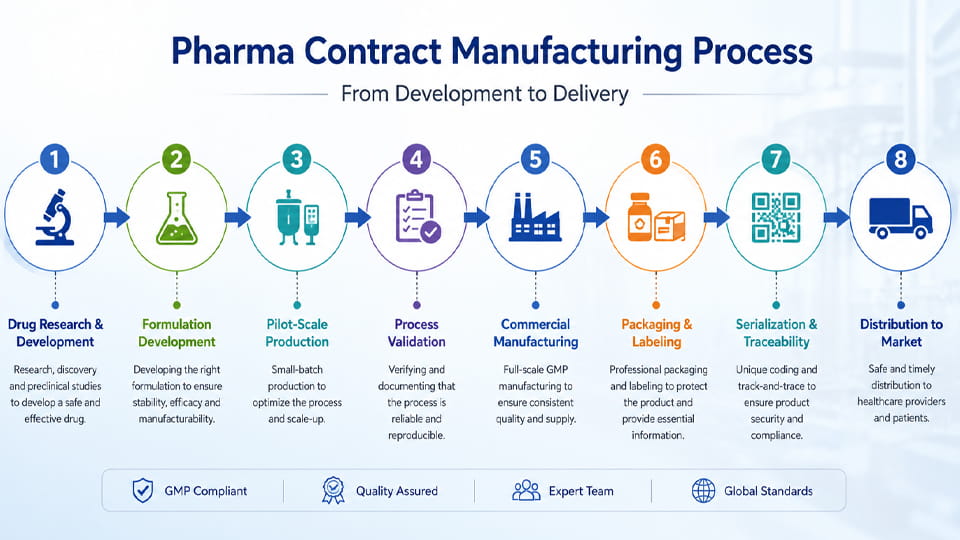
एक अनुबंध विनिर्माण कार्यक्रम आम तौर पर प्रयोगशाला से बाजार तक दवा विकास जीवनचक्र का पालन करता है. मुख्य चरण नीचे फ़्लोचार्ट में उल्लिखित हैं, और फिर संक्षेप में वर्णन किया:
औषधि अनुसंधान & विकास: आरंभ में आर&डी, वैज्ञानिक एक उम्मीदवार अणु की पहचान करते हैं. छोटी फर्मों या बायोटेक के लिए, एक सीडीएमओ फॉर्मूलेशन या प्रक्रिया डिजाइन में भी सहयोग कर सकता है (उदाहरण के लिए:. टैबलेट या कैप्सूल फॉर्मूलेशन को अनुकूलित करना).
सूत्रीकरण विकास: सीडीएमओ दवा के फॉर्मूलेशन को अंतिम रूप देने के लिए प्रायोजक के साथ काम करता है (गोली, कैप्सूल, पाउडर, तरल, वगैरह।) और विनिर्माण विधियां विकसित करें. इस चरण में खुराक के रूप की स्थिरता और प्रभावकारिता सुनिश्चित करने के लिए प्रयोगशाला कार्य और प्रीफ़ॉर्म्यूलेशन अध्ययन शामिल हैं.
पायलट-स्केल उत्पादन: एक बार फॉर्मूलेशन सेट हो जाए, सीडीएमओ छोटे पायलट बैच तैयार करता है (अक्सर 10^3-10^5 इकाइयाँ) जीएमपी शर्तों के तहत. इन बैचों का उपयोग नैदानिक परीक्षणों या नियामक प्रस्तुतियों के लिए किया जाता है. इस प्रक्रिया को चरणों में बढ़ाया जाता है.
प्रक्रिया की वैधता: पूर्ण व्यावसायीकरण से पहले, सीडीएमओ प्रक्रिया को मान्य करता है (यह साबित करते हुए कि दवा का लगातार गुणवत्ता मानकों के अनुरूप निर्माण किया जा सकता है). इसमें उपकरणों की पूरी योग्यता शामिल है, पैकेजिंग लाइनें, विश्लेषणात्मक परीक्षण, और प्रलेखन.
वाणिज्यिक विनिर्माण: सत्यापन पूर्ण होने के साथ, सीडीएमओ सीजीएमपी के तहत बड़े पैमाने पर विनिर्माण की ओर बढ़ता है. इसमें कई शिफ्ट चलाना शामिल हो सकता है, बैच रिकॉर्ड, और विनियामक निरीक्षणों को पूरा करना. सुविधा सहमत मात्रा में सक्रिय सामग्री और अंतिम खुराक रूपों का उत्पादन करती है.
पैकेजिंग & लेबलिंग: तैयार खुराक प्रपत्रों को फिर पैक किया जाता है - उदाहरण के लिए, गोलियाँ फफोले या बोतलों में जा सकती हैं, तरल पदार्थों को भरा जाता है और ढक दिया जाता है - और लेबल किया जाता है. आधुनिक सीडीएमओ पैकेजिंग लाइनों में अक्सर स्वचालित कैप्सूल फिलर्स शामिल होते हैं, टेबलेट काउंटर, बोतल भरने वाले/कैपर, प्रेरण सीलर्स, लेबल प्रिंटर, और कार्टोनर क्रम में काम कर रहे हैं.
क्रमबद्धता & पता लगाने की क्षमता: वैश्विक नियमों का अनुपालन करना, पैकेजिंग में क्रमांकन शामिल है (अद्वितीय बारकोड/क्यूआर कोड) और ट्रैक-एंड-ट्रेस सुविधाएँ. यह सुनिश्चित करता है कि उत्पादन से बिक्री तक प्रत्येक इकाई का पता लगाया जा सके.
वितरण: अंत में, पैक की गई दवाओं को गोदामों में रखा जाता है और दुनिया भर में ग्राहकों या वितरकों को भेज दिया जाता है. सीडीएमओ अनुबंध की शर्तों के अनुसार भंडारण और रसद को भी संभाल सकता है.
प्रत्येक चरण में, सीडीएमओ परियोजना प्रबंधन प्रदान करता है, गुणवत्ता निरीक्षण, और लक्ष्यों को पूरा करना सुनिश्चित करने के लिए विनियामक समर्थन. इन चरणों को आउटसोर्सिंग द्वारा, फार्मा प्रायोजक अनावश्यक आर के निर्माण से बचते हैं&डी और विनिर्माण बुनियादी ढांचा.
सीएमओ बनाम सीडीएमओ: क्या फर्क पड़ता है?
नीचे पारंपरिक सीएमओ की एक त्वरित तुलना दी गई है (अनुबंध निर्माण संगठन) और एक सीडीएमओ:
पहलू
सीएमओ (अनुबंध निर्माण संगठन)
सीडीएमओ (अनुबंध देव. & मनुफ. संगठन.)
सेवा का दायरा
विनिर्माण और कभी-कभी पैकेजिंग.
शुरू से अंत तक: आर&डी, सूत्रीकरण, और उत्पादन.
आर&डी भागीदारी
न्यूनतम; मान लिया गया है कि फॉर्मूलेशन प्रदान किए गए हैं.
सूत्रीकरण में सक्रिय, स्केल अप, और तकनीकी हस्तांतरण.
उत्पादन चरण
आमतौर पर वाणिज्यिक या नैदानिक उत्पादन.
प्रारंभिक नैदानिक से लेकर व्यावसायिक स्तर तक को कवर करता है.
विक्रेता हैंडऑफ़
अलग विकास भागीदार की आवश्यकता हो सकती है.
एक साझेदार हैंडऑफ़ और देरी को कम करता है.
विशिष्ट उपयोग-मामला
ज्ञात दवाओं के लिए अतिरिक्त क्षमता (जेनरिक).
नई दवाओं या जटिल परियोजनाओं का विकास.
मूल्यवर्धन
सुविधाएँ & स्केल अप, लागत बचत.
विनियामक समर्थन, विश्लेषणात्मक विकास, पूर्ण जीवनचक्र.
यह तालिका उस पर प्रकाश डालती है सीएमओ मुख्य रूप से विनिर्माण पर ध्यान केंद्रित करते हैं, जबकि सीडीएमओ एकीकृत विकास और विनिर्माण सेवाएं प्रदान करते हैं. दूसरे शब्दों में, यदि आपके पास पहले से ही एक अंतिम दवा फार्मूला है और केवल उत्पादन क्षमता की आवश्यकता है, एक सीएमओ पर्याप्त हो सकता है. लेकिन अगर आपको मदद की जरूरत है एक नई दवा फॉर्मूलेशन विकसित करना, स्केलिंग प्रक्रियाएं, और नेविगेशन नियम, एक सीडीएमओ पसंद का भागीदार है.
फार्मास्युटिकल उत्पादों के प्रकार जिनका विनिर्माण अनुबंध पर किया जा सकता है
आधुनिक सीडीएमओ वस्तुतः किसी भी प्रकार के दवा उत्पाद का उत्पादन कर सकते हैं. यहां सामान्य उदाहरण हैं, उपयोग किए गए प्रमुख उपकरणों के साथ:
गोलियां: ठोस मौखिक गोलियाँ पाउडर या कणिकाओं को संपीड़ित करके बनाई जाती हैं रोटरी टैबलेट प्रेस. हाई-स्पीड टैबलेट प्रेस मशीनें प्रति घंटे सैकड़ों हजारों टैबलेट को संपीड़ित कर सकती हैं. इलेक्ट्रॉनिक रोटरी प्रेस मानक और विशेष आकार की गोलियों को संभाल सकता है. इसके बाद आमतौर पर एक टैबलेट प्रेस आती है गीला या सूखा दाना सीडीएमओ में किया गया कदम. (फिर गोलियों को ब्लिस्टर या बोतलबंद किया जा सकता है।)
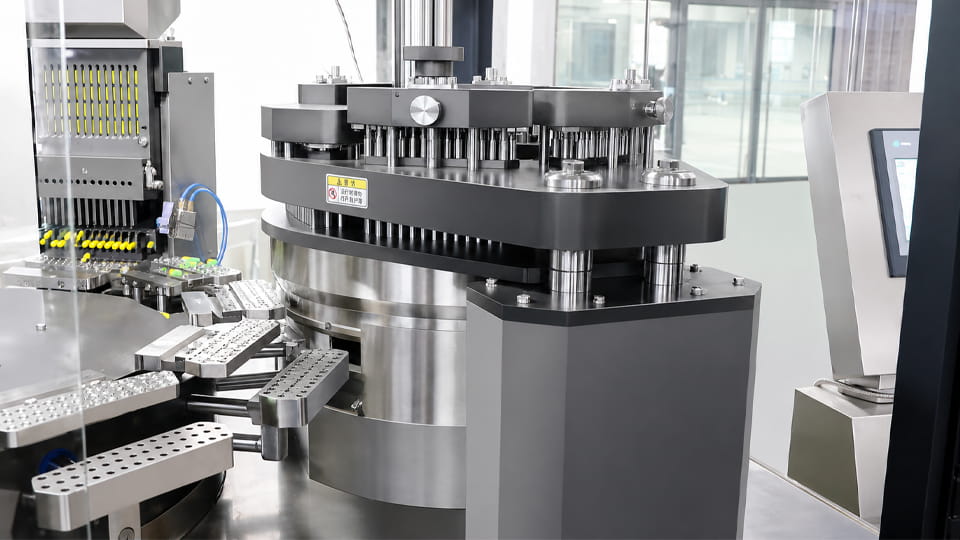
कैप्सूल: कठोर कैप्सूलों को पाउडर या छर्रों से भर दिया जाता है कैप्सूल भरने की मशीन. जिनलू की कैप्सूल फिलिंग मशीनों में सेमी-ऑटो फिलर्स शामिल हैं (छोटे बैचों के लिए) पूरी तरह से स्वचालित मल्टी-हज़ार-कैप्सूल/घंटा मशीनों के लिए. कैप्सूल भी हो सकते हैं softgels या तरल कैप्सूल. सप्लीमेंट्स और ओटीसी दवाओं में कैप्सूल का उत्पादन आम है.
आकृति: एक अनुबंध विनिर्माण सुविधा में स्वचालित कैप्सूल भरने वाली लाइनें. ये मशीनें पाउडर या छर्रों को हार्ड-शेल कैप्सूल में डालती हैं, प्रति घंटे हजारों कैप्सूल सक्षम करना.
पाउडर & granules: थोक पाउडर या कणिकाएँ (उदाहरण के लिए:. पाउच या थोक पैकेजिंग के लिए) वॉल्यूमेट्रिक या बरमा द्वारा नियंत्रित किया जा सकता है भरने वाली मशीनें, और बैग या बोतलों में पैक किया गया. सीडीएमओ अक्सर कंपन फीडर का उपयोग करते हैं, वजन कम करने वाली प्रणालियाँ, या सटीक खुराक के लिए विशेष पाउडर फिलर्स. (उदाहरण के लिए, स्टिक पैक मशीनें [नीचे देखें] अक्सर वॉल्यूमेट्रिक पाउडर फीडर को एकीकृत करते हैं।)
पाउच & छड़ी पैक: एकल-खुराक पाउच पाउडर या तरल फॉर्मूलेशन के लिए आम हैं (जैसे क्लिनिकल परीक्षण पाउडर या तरल पदार्थ). लंबवत प्रपत्र-भरण-मुहर (वीएफएफएस) पाउच पैकिंग मशीन जैसी मशीनें स्वचालित रूप से बनती हैं, भरना, और सील स्टिक पैक और छोटे पाउच. ये मशीनें पाउडर पैकेज कर सकती हैं, granules, सीलबंद पैकेट में तरल पदार्थ या जैल.
बोतलों (तरल पदार्थ, गोलियां): तरल सिरप या सस्पेंशन को उच्च गति का उपयोग करके बोतलों में भरा जाता है बोतल भरने की लाइनें, जिसमें धोना भी शामिल है, भरना, कैपिंग, और प्रेरण सीलिंग. टेबलेट और कैप्सूल को भी गिना जा सकता है और बोतलों में डाला जा सकता है. इन पंक्तियों में अक्सर स्वचालित शामिल होते हैं टैबलेट/कैप्सूल काउंटर बोतलें भरने के लिए. (जिनलू की कैप्सूल/टैबलेट गिनने वाली मशीनें 50-100 बीपीएम पर बोतलें भर सकती हैं।) एक बार भर कर ढक दिया गया, एक प्रेरण मुहर छेड़छाड़ के साक्ष्य के लिए टोपी के नीचे फ़ॉइल सील लगाती है.
फफोले के पैक: कई गोलियाँ और कैप्सूल ब्लिस्टर कार्ड में पैक किए जाते हैं (पीवीसी/अलु गुहाएँ). स्वचालित फफोली पैकिंग मशीनें (उदाहरण के लिए:. जेएल के ब्लिस्टर पैकर्स) ब्लिस्टर पॉकेट बनाएं, उन्हें खुराक इकाइयों से भरें, और फ़ॉइल या पीवीसी से हीट-सील करें. बड़ी मात्रा में उत्पादों के लिए ब्लिस्टर मशीनें प्रति घंटे 4,000-12,000 ब्लिस्टर चला सकती हैं.
डिब्बों: छाले पड़ने या बोतल भरने के बाद, उत्पादों को डिब्बों में डाल दिया जाता है. ए कार्टनिंग मशीन उत्पाद के चारों ओर पेपरबोर्ड डिब्बों को मोड़ना और चिपकाना (बोतलों, ब्लिस्टर कार्ड, पाउच). जिनलू की कार्टनिंग मशीनें ~15,600 बक्से/घंटा तक संभाल सकती हैं और डाउनस्ट्रीम लेबलिंग के साथ एकीकृत हो सकती हैं.
सीलबंद पाउच/जार: कुछ उत्पाद (क्रीम, जैल, निलंबन) ट्यूबों में जाओ, जार, या विशेष पाउच. ट्यूब और जार के लिए फिलिंग और कैपिंग लाइनें मौजूद हैं. (उदाहरण के लिए, इंडक्शन कैप सीलर्स या कैपिंग मशीनें।) जिनलू सप्लाई भी करता है पूर्वनिर्मित थैली पैकिंग लाइनें और स्वचालित कार्टनर मल्टी-पैक के लिए.
संक्षेप में, कोई भी अंतिम खुराक रूप - गोलियाँ, कैप्सूल, पाउडर, तरल पदार्थ, फफोले के पैक, बोतलें - एक सक्षम सीडीएमओ द्वारा उत्पादित की जा सकती हैं.
फार्मा अनुबंध विनिर्माण के लाभ और चुनौतियाँ
किसी भी व्यावसायिक निर्णय की तरह, फार्मा अनुबंध विनिर्माण स्पष्ट लाभ प्रदान करता है, लेकिन यह जिम्मेदारियों के साथ भी आता है. दोनों पक्षों को समझने से फार्मास्युटिकल कंपनियों को यह निर्णय लेने में मदद मिलती है कि आउटसोर्सिंग सही रणनीति है या नहीं.
फ़ायदे
कम निवेश लागत - जीएमपी फार्मास्युटिकल सुविधा के निर्माण और सत्यापन के लिए महत्वपूर्ण पूंजी की आवश्यकता होती है. कॉन्ट्रैक्ट मैन्युफैक्चरिंग कंपनियों को महंगे बुनियादी ढांचे में निवेश किए बिना उत्पादन शुरू करने की अनुमति देती है.
बाज़ार में आने का तेज़ समय - अनुभवी सीडीएमओ के पास पहले से ही योग्य सुविधाएं हैं, प्रशिक्षित कर्मचारी, और मान्य उत्पादन लाइनें, उत्पादों को विकास से व्यावसायीकरण की ओर तेजी से बढ़ने में मदद करना.
विशिष्ट विशेषज्ञता तक पहुंच - अनुबंध निर्माताओं के पास अक्सर अनुभवी फॉर्मूलेशन वैज्ञानिक होते हैं, गुणवत्ता टीमें, और विनियामक विशेषज्ञ जो एफडीए को समझते हैं, ईएमए, और जीएमपी आवश्यकताएँ.
लचीली उत्पादन क्षमता - चाहे पायलट बैच का उत्पादन हो या व्यावसायिक पैमाने पर वॉल्यूम का, आउटसोर्सिंग बाजार की मांग में बदलाव के अनुसार उत्पादन बढ़ाने या कम करने की लचीलापन प्रदान करती है.
उन्नत विनिर्माण उपकरण - आधुनिक सीडीएमओ हाई-स्पीड कैप्सूल भरने वाली मशीनों में निवेश करते हैं, टैबलेट प्रेस, ब्लिस्टर पैकेजिंग मशीनें, बोतल पैकेजिंग लाइनें, और स्वचालित निरीक्षण प्रणालियाँ जिन्हें कई छोटे निर्माता स्वयं खरीदने का औचित्य नहीं बता सकते.
चुनौतियां
जबकि आउटसोर्सिंग से कई लाभ मिलते हैं, कंपनियों को कई संभावित चुनौतियों से भी अवगत होना चाहिए:
विभिन्न स्तरों पर लगातार उत्पाद की गुणवत्ता बनाए रखना उत्पादन बैच.
गोपनीय फॉर्मूलेशन और बौद्धिक संपदा की रक्षा करना.
फार्मास्युटिकल कंपनी और विनिर्माण भागीदार के बीच संचार का समन्वय करना.
यह सुनिश्चित करना कि सीडीएमओ नियामक और जीएमपी आवश्यकताओं को पूरा करता रहे.
आपूर्ति श्रृंखला जोखिमों का प्रबंधन करना जो उत्पादन कार्यक्रम को प्रभावित कर सकते हैं.
सौभाग्य से, एक मजबूत गुणवत्ता प्रबंधन प्रणाली वाले अनुभवी फार्मास्युटिकल अनुबंध विनिर्माण भागीदार को चुनकर इनमें से अधिकांश चुनौतियों को कम किया जा सकता है, पारदर्शी संचार, और सिद्ध विनियामक अनुपालन. एक संपूर्ण आपूर्तिकर्ता योग्यता प्रक्रिया और नियमित ऑडिट एक सफल दीर्घकालिक साझेदारी बनाने में भी मदद करता है.
सही फार्मा कॉन्ट्रैक्ट मैन्युफैक्चरिंग पार्टनर कैसे चुनें
सीडीएमओ/सीएमओ चुनना एक महत्वपूर्ण निर्णय है. यहां प्रमुख मानदंड हैं, फार्मास्युटिकल उत्पाद आवश्यकताओं के लेंस के साथ सचित्र:
गुणवत्ता & विनियामक अनुपालन: पहला और महत्वपूर्ण, साझेदार के पास मजबूत गुणवत्ता प्रणाली और स्वच्छ नियामक रिकॉर्ड होना चाहिए. देखो के लिए एफडीए, ईएमए, या WHO GMP प्रमाणपत्र, आईएसओ गुणवत्ता प्रमाणपत्र, और ऑडिट पास करने का इतिहास. आप एफडीए निरीक्षण डेटाबेस की समीक्षा करके उनकी साइटों पर चेतावनी पत्र या जीएमपी 483 की जांच कर सकते हैं. कंपनी को अपनी गुणवत्ता नियंत्रण प्रयोगशालाओं और सत्यापन प्रक्रियाओं के बारे में पारदर्शी होना चाहिए.
प्रासंगिक अनुभव: सुनिश्चित करें कि सीडीएमओ को आपके प्रकार के उत्पाद का अनुभव है. उदाहरण के लिए, यदि आप गोलियाँ बनाते हैं, क्या उनके पास आधुनिक टैबलेट प्रेस लाइनें हैं?? यदि आपके पास बायोलॉजिक्स है, क्या उनके पास बाँझ या एकल-उपयोग सुविधाएं हैं? आपके चिकित्सीय क्षेत्र में अनुभवी एक भागीदार (एंटीबायोटिक्स बनाम. हार्मोन बनाम. बायोलॉजिक्स) चुनौतियों का बेहतर अनुमान लगाएंगे. ऐसे ही केस अध्ययनों या ग्राहकों से पूछें जिनके साथ उन्होंने काम किया है.
विनिर्माण क्षमताएँ & क्षमता: क्या उनके पास सही उपकरण और क्षमता का पैमाना है? नवीनतम मशीनरी की तलाश करें (उदाहरण के लिए:. स्वचालित कैप्सूल भराव, बहु-संपीड़न टैबलेट प्रेस, छाला और बोतल लाइनें) यह सुनिश्चित करने के लिए कि वे आपकी वॉल्यूम आवश्यकताओं को पूरा कर सकें. यह भी पुष्टि करें कि आपके प्रोजेक्ट के साथ बढ़ने के लिए उनके पास अतिरिक्त क्षमता या विस्तार योजनाएं हैं. हो सकता है कि खचाखच भरी सुविधा आपके प्रोजेक्ट को प्राथमिकता न दे.
तकनीकी समर्थन & विकास सेवाएँ: यदि आपको आर की आवश्यकता है&डी मदद, एक सीडीएमओ चुनें (सिर्फ एक सीएमओ नहीं) मजबूत फॉर्मूलेशन और विश्लेषणात्मक प्रयोगशालाओं के साथ. जांचें कि क्या वे व्यापक सेवाएं प्रदान करते हैं (विश्लेषणात्मक विधि विकास, स्थिरता परीक्षण, पैकेजिंग डिज़ाइन). इससे स्थानांतरण आसान हो जाता है और नियामक फाइलिंग में मदद मिलती है. एक भागीदार जो सह-विकास और समस्या निवारण के लिए इच्छुक है, वह कहीं अधिक मूल्यवान है.
संचार की गुणवत्ता & सेवा: अच्छा परियोजना प्रबंधन महत्वपूर्ण है. सीडीएमओ को एक समर्पित टीम नियुक्त करनी चाहिए, नियमित अपडेट प्रदान करें, और उत्तरदायी बनें. व्यक्तिगत रूप से या वस्तुतः मिलना आसान होना चाहिए - स्थान मायने रख सकता है. (जैसा कि एक उद्योग लेख नोट करता है, पास में एक साथी होने से यात्रा में देरी कम हो सकती है और समन्वय में सुधार हो सकता है. तथापि, कई वैश्विक सीडीएमओ अंतरराष्ट्रीय ग्राहकों को कुशलतापूर्वक सेवा प्रदान करते हैं।) सुनिश्चित करें कि सांस्कृतिक फिट और भाषा आपकी आवश्यकताओं से मेल खाते हों.
वित्तीय स्थिरता & प्रतिष्ठा: एक विश्वसनीय साझेदार को ठोस वित्त की आवश्यकता होती है. कंपनियां दीर्घकालिक संबंध चाहती हैं, इसलिए फर्म के आकार और स्थिरता की जांच करें. एक स्टार्टअप सीडीएमओ तब तक जोखिम भरा हो सकता है जब तक कि उसे पर्याप्त समर्थन न मिले. अन्य फार्मा ग्राहकों के संदर्भ भी देखें या उद्योग समीक्षाएँ देखें.
बौद्धिक संपदा संरक्षण: उनकी आईपी सुरक्षा नीतियों के बारे में पूछें. वे आपका डेटा कैसे संग्रहीत करते हैं, लैब नोटबुक संभालें, और कार्मिक पहुंच का प्रबंधन करें? एक भरोसेमंद सीडीएमओ के पास सख्त गोपनीयता समझौते होंगे.
मूल्य निर्धारण & करार: बिल्कुल, लागत मायने रखती है. पारदर्शी उद्धरण का अनुरोध करें. असामान्य रूप से कम बोलियों से सावधान रहें - वे कटौती कर सकती हैं. लीड समय पर भी चर्चा करें, ऑर्डर लचीलापन बदलें, और अनुबंधों में दंड. एक अच्छा साथी निष्पक्ष और स्पष्ट होगा.
सारांश: उनकी गुणवत्ता का ऑडिट करें, उनकी जानकारी का परीक्षण करें, और सुनिश्चित करें कि उनके पास आपके प्रोजेक्ट के लिए सही किट और क्षमता है. पारदर्शिता और विश्वास महत्वपूर्ण हैं. यदि संभव हो तो सुविधा का दौरा करें. जैसा कि एक उद्योग गाइड सुझाव देता है, सीएमओ के एफडीए जीएमपी रिकॉर्ड की समीक्षा करना एक स्मार्ट कदम है. इन मानदंडों पर कई विक्रेताओं की तुलना करके, आप एक ऐसा भागीदार चुन सकते हैं जो आपकी टीम का विस्तार बन जाए.
अनुबंध विनिर्माण में प्रयुक्त फार्मास्युटिकल उपकरण
उन्नत उपकरण किसी भी सीडीएमओ की उत्पादन लाइन की रीढ़ हैं. यहां कुछ मुख्य मशीनें हैं जो आपको आमतौर पर अनुबंध निर्माता की सुविधा में मिलेंगी:
कैप्सूल भरने की मशीनें: ये मशीनें खाली कैप्सूल के खोल को सटीकता से पाउडर से भर देती हैं, छर्रों, या कणिकाएँ. आधुनिक स्वचालित भराव (जिनलू वालों की तरह) एक साथ सैकड़ों लेन चला सकते हैं, प्रति घंटे हजारों कैप्सूल का उत्पादन. वे नाजुक समायोजन संभालते हैं (वजन भरें, कैप्सूल अभिविन्यास) और जीएमपी-ग्रेड की सुविधा है स्टेनलेस स्टील डिज़ाइन.
एनजेपी-1200सी कैप्सूल भरने की मशीन
टेबलेट प्रेस (रोटरी कंप्रेसर): उच्च गति रोटरी टैबलेट प्रेस पाउडर को गोलियों में संपीड़ित करें. ये मशीनें किसी भी आकार की गोलियां बनाने के लिए हजारों टन बल लगाती हैं. कई में स्वचालित फीडर हैं, वजन नियंत्रण, और सटीकता के लिए पीएलसी ऑपरेशन. टैबलेट प्रेस किसी भी ठोस-खुराक निर्माण के लिए महत्वपूर्ण हैं.
ब्लिस्टर पैकिंग लाइनें: टेबलेट/कैप्सूल तैयार होने के बाद, स्वचालित ब्लिस्टर पैकिंग मशीनें उन्हें प्लास्टिक/एल्यूमीनियम पैक में बनाकर सील कर दें. जिनलू के उपकरण पूरी ब्लिस्टर प्रक्रिया को कवर करते हैं (गुहिकाएँ बनाना, गोलियाँ खिलाना, मुद्रण, काटना). इन लाइनों में अक्सर एकीकृत फीडर शामिल होते हैं और प्रति घंटे कई हजार ब्लिस्टर पर काम कर सकते हैं.
कैप्सूल/टैबलेट गिनने और भरने की मशीनें: बोतल-पैक उत्पादों के लिए, समर्पित गिनती की मशीनें सही गोली संख्या के साथ बोतलें सही ढंग से भरें. ये मशीनें टैबलेट या कैप्सूल को गिनने और बिना ओवरलैप के कंटेनर में डालने के लिए कंपन या घूमने वाले ट्रैक और विज़न सेंसर का उपयोग करती हैं. उच्च परिशुद्धता गिनती (99.97%+) फोटोइलेक्ट्रिक सेंसर के साथ हासिल किया गया है.
JL-16H cGMP कैप्सूल टैबलेट बॉटलिंग मशीन
बोतल भरना & कैपिंग लाइन्स: तरल पदार्थों के लिए या यहां तक कि टैबलेट/कैप्सूल की बोतलों के लिए भी, स्वचालित लाइनों में एक बोतल अनस्क्रैम्बलर शामिल होता है, छड़, कैप्पेर, और कैप सॉर्टर. एक पूरी बोतल लाइन प्रति मिनट 50-100 बोतलें या उससे अधिक चल सकती है. कई पंक्तियाँ शामिल हैं फ़ॉइल इंडक्शन सीलर्स और कैपिंग के बाद जांच करने वाले/निरीक्षक.
लेबलिंग मशीनें: ये बोतलों पर मुद्रित लेबल लगाते हैं, बक्से, या पैकेट. आधुनिक लेबलिंग मशीनें अनुक्रमिक बारकोड/सीरियल प्रिंट और लागू कर सकते हैं (पता लगाने की क्षमता के लिए) और परिणाम का दृष्टि-निरीक्षण करें. जबकि जिनलू की साइट पर कोई लेबलर पृष्ठ सूचीबद्ध नहीं था, सीडीएमओ आमतौर पर पैकेजिंग लाइनों पर स्वचालित लेबलर का उपयोग करते हैं.
कार्टोनिंग मशीनें: जैसा कि ऊपर बताया गया है, कार्टनर उत्पादों को लपेटें (बोतलों, ब्लिस्टर कार्ड, पाउच) तेज़ गति से कार्डबोर्ड डिब्बों में. उन्हें एक निर्बाध लाइन के लिए फिलर्स या ब्लिस्टर के डाउनस्ट्रीम से जोड़ा जा सकता है.
JL-130W क्षैतिज कार्टोनिंग मशीन
सैशे/वीएफएफएस मशीनें: स्टिक पैक या तकिया पैक मशीनें (ऊर्ध्वाधर प्रपत्र-भरण-मुहर) एकल-खुराक पाउडर के लिए उपयोग किया जाता है, तरल पदार्थ, या जैल. जिनलू का पाउच पैकिंग मशीनें उच्च परिशुद्धता और गति के साथ पाउडर या तरल फॉर्मूलेशन के लिए मल्टी-लेन पैक भर सकते हैं.
स्वचालन & निरीक्षकों: इन सभी मशीनों में अक्सर एकीकृत पीएलसी नियंत्रण होते हैं (उदाहरण के लिए:. सीमेंस, पीएलसी), वायवीय एक्चुएटर्स, और परिशुद्धता के लिए सर्वो मोटर्स. कई पंक्तियाँ शामिल हैं निरीक्षण प्रणाली - पसंद जाँच करने वाले, मेटल डिटेक्टर, और विज़न स्कैनर - यह सुनिश्चित करने के लिए कि प्रत्येक इकाई विशिष्टताओं को पूरा करती है (उदाहरण के लिए:. वजन की जांच, गायब गोलियाँ, लेबल पर प्रिंट गुणवत्ता). अनुपालन के लिए ये स्वचालित जाँचें महत्वपूर्ण हैं.
इन मशीनों को कुशल ऑपरेटरों और एसओपी के साथ जोड़कर, सीडीएमओ जटिल मल्टी-स्टेज उत्पादन चला सकते हैं. उदाहरण के लिए, एक कैप्सूल उत्पाद श्रृंखला कैप्सूल फिलर से शुरू हो सकती है, एक कैप्सूल काउंटर पर जाएँ (बोतल भरने के लिए), फिर एक इंडक्शन सीलर, और एक लेबलर और कार्टनर के साथ समाप्त करें - सभी सिंक्रनाइज़ नियंत्रण के तहत काम कर रहे हैं. उसी प्रकार, टैबलेट लाइन प्रेस → ब्लिस्टर पैकर → लेबलर → कार्टनर से जा सकती है. उन्नत उपकरण थ्रूपुट को बढ़ाते हैं और लगातार गुणवत्ता बनाए रखते हैं.
व्यवहार में, अग्रणी सीडीएमओ निवेश करते हैं अत्याधुनिक उपकरण. उदाहरण के लिए, जिनलू पैकिंग एकीकृत समाधान प्रदान करती है: हाई-स्पीड कैप्सूल भरने वाली मशीनें और टैबलेट प्रेस के लिए डिज़ाइन की गई हैं सीजीएमपी अनुपालन. ब्लिस्टर पैकर्स में जैसी विशेषताएं शामिल हैं एल्यूमीनियम-एल्यूमीनियम (आलू-आलू) और पीवीसी लचीलेपन के लिए हीट सीलिंग. ऐसे स्वचालित पैकेजिंग और प्रसंस्करण उपकरणों में निवेश यह सुनिश्चित करता है कि एक सीडीएमओ विश्वसनीय रूप से बड़े ऑर्डर की आपूर्ति कर सकता है.
आधुनिक सीडीएमओ को उन्नत पैकेजिंग उपकरण की आवश्यकता क्यों है?
जैसे-जैसे अनुबंध निर्माता वैश्विक फार्मा बाजारों की सेवा के लिए आगे बढ़ रहे हैं, उन्नत स्वचालित पैकेजिंग उपकरण आवश्यक हो जाता है. उसकी वजह यहाँ है:
रफ़्तार & प्रवाह: उच्च गति वाले उपकरण (बहु-लेन भराव, रोटरी प्रेस, छाला रेखाएँ) प्रतिदिन हजारों से लाखों खुराकें चलाने में सक्षम बनाता है. सीडीएमओ के लिए, तेज़ मशीनरी का अर्थ है अधिक अनुबंधों और बड़ी मात्रा को संभालने की क्षमता. स्वचालित लाइनें चल सकती हैं 24/7 न्यूनतम डाउनटाइम के साथ.
स्थिरता & शुद्धता: स्वचालित मशीनें सुनिश्चित करती हैं कि प्रत्येक इकाई समान हो. उदाहरण के लिए, आधुनिक कैप्सूल फिलर्स में सटीक फिलिंग तंत्र होते हैं (जैसा कि जेएल के पेटेंट डिज़ाइन में दिखाया गया है) जो खुराक भिन्नता को कम रखता है. सटीक टैबलेट प्रेस और दृष्टि-निरीक्षण प्रणालियाँ लगातार खुराक वजन प्राप्त करने में मदद करती हैं, जो प्रभावकारिता और QC पास करने के लिए महत्वपूर्ण है.
विनियामक अनुपालन: जीएमपी विनियमों के लिए दस्तावेजी नियंत्रण और स्वच्छता की आवश्यकता होती है. नए उपकरण सैनिटरी डिज़ाइन के साथ बनाए गए हैं (पूर्णतः स्टेनलेस स्टील, साफ करने में आसान सतहें, संलग्न प्रक्रियाएँ). उदाहरण के लिए, संलग्न फिलिंग और कैपिंग वाली बोतल लाइनें सख्त स्वच्छता मानकों को पूरा करती हैं. उन्नत मशीनें क्रमांकन और स्वचालित डेटा लॉगिंग का भी समर्थन करती हैं, जो सीडीएमओ को ट्रैक-एंड-ट्रेस नियमों का अनुपालन करने में मदद करते हैं.
श्रम बचत: स्वचालित लाइनें मानवीय श्रम और मानवीय त्रुटि को काफी हद तक कम कर देती हैं. हाथ से भरने या मैन्युअल गिनती के बजाय, मशीनें खिलाती हैं, भरना, मुहर, और स्वचालित रूप से लेबल करें. इससे न केवल श्रम लागत में कटौती होती है बल्कि संदूषण जोखिम और एर्गोनॉमिक्स संबंधी समस्याएं भी कम होती हैं.
FLEXIBILITY & एकीकरण: आधुनिक सीडीएमओ लाइनें मॉड्यूलर हैं. उदाहरण के लिए, एक कैप्सूल फिलिंग स्टेशन को एक कैप्सूल काउंटर से और फिर उसी कन्वेयर पर एक बोतल फिलर से जोड़ा जा सकता है, एक सतत रेखा बनाना. यह एकीकृत दृष्टिकोण उत्पादों के बीच आसान बदलाव की अनुमति देता है. जिनलू पैकिंग जैसी कंपनियां टर्नकी समाधान पेश करती हैं (उदाहरण के लिए:. एक अंत से अंत तक बोतल पैकेजिंग लाइन अनस्क्रैम्बलर → फिलर → कैपर → सीलर → लेबलर → कार्टनर के साथ) इसलिए सीडीएमओ संपूर्ण वर्कफ़्लोज़ को अपग्रेड कर सकते हैं.
गुणवत्ता निगरानी: उन्नत उपकरणों में अक्सर इन-लाइन सेंसर और कैमरे शामिल होते हैं. उदाहरण के लिए, ब्लिस्टर पैक सील करने के बाद, एक ऑप्टिकल कैमरा गायब टैबलेट या छेद के लिए प्रत्येक गुहा का निरीक्षण कर सकता है. यदि कोई समस्या पाई जाती है, उस छाले को स्वचालित रूप से अस्वीकार किया जा सकता है. इस तरह के अंतर्निहित क्यूए से अंतिम उत्पाद सुरक्षा में काफी सुधार होता है.
संक्षेप में, अत्याधुनिक पैकेजिंग मशीनरी सीडीएमओ के लिए कोई विलासिता नहीं बल्कि एक आवश्यकता है. यह समग्र उपकरण प्रभावशीलता को बढ़ाता है (ओईई) और उच्च गति सुनिश्चित करता है, उच्च गुणवत्ता, और सख्त नियामक नियंत्रण आधुनिक दवा निर्माण की मांग है. जैसी मशीनों में निवेश करके स्वचालित कैप्सूल भराव, ब्लिस्टर पैकर्स, रोटरी टैबलेट प्रेस, और बोतल भरने की लाइनें, सीडीएमओ उत्पाद की गुणवत्ता और आपूर्ति की विश्वसनीयता की बेहतर गारंटी दे सकते हैं. यह जीएमपी-संगत आउटपुट और ट्रैसेबिलिटी प्रदान करके उनके फार्मास्युटिकल ग्राहकों को सीधे लाभ पहुंचाता है.
निष्कर्ष
फार्मा अनुबंध विनिर्माण (चाहे सीएमओ या सीडीएमओ के माध्यम से) उद्योग के लिए एक महत्वपूर्ण मॉडल बन गया है. दवा उत्पादन और पैकेजिंग को आउटसोर्स करने से कंपनियों को पूंजी बचाने में मदद मिलती है, विशिष्ट कौशल का लाभ उठाएं, और मरीजों को नई दवाएं तेजी से मिलेंगी. एक अच्छा सीडीएमओ भागीदार विकास और सत्यापन से लेकर उच्च मात्रा में विनिर्माण और पैकिंग तक सब कुछ संभालेगा, सभी सीजीएमपी शर्तों के तहत.
जबकि आउटसोर्सिंग चुनौतियाँ लाती है (जैसे निगरानी बनाए रखना और आईपी की सुरक्षा करना), लाभ - लागत बचत, रफ़्तार, और स्केलेबिलिटी - महत्वपूर्ण हैं. जैसे-जैसे बाज़ार बढ़ता है (सैकड़ों अरबों से अधिक होने की उम्मीद है 2030), अधिक फार्मा कंपनियां सीडीएमओ का चयन करेंगी. वे सी.डी.एम.ओ, के बदले में, पर भरोसा आधुनिक, स्वचालित उपकरण (कैप्सूल और टैबलेट मशीनरी, छाला और बोतल लाइनें, वगैरह।) मांग को पूरा करने के लिए.
अपने फार्मास्युटिकल उत्पादन को सुव्यवस्थित करने के लिए तैयार हैं?जिनलू पैकिंग से संपर्क करें परामर्श के लिए. हम पूरी तरह से एकीकृत पैकेजिंग समाधान प्रदान करते हैं - कैप्सूल भरने वाली मशीनों और हाई-स्पीड टैबलेट प्रेस से लेकर उन्नत ब्लिस्टर और बोतल पैकेजिंग लाइनों तक - जीएमपी-अनुरूप अनुबंध विनिर्माण के लिए डिज़ाइन किया गया. हमारी टीम आपकी दवा उत्पादन और पैकेजिंग प्रक्रियाओं को अनुकूलित करने के लिए सही उपकरण की सिफारिश करने में मदद कर सकती है. यह जानने के लिए आज ही संपर्क करें कि हम आपकी सीडीएमओ/सीडीओ आवश्यकताओं को कैसे पूरा कर सकते हैं!
फार्मा अनुबंध विनिर्माण पर अक्सर पूछे जाने वाले प्रश्न
फार्मा कॉन्ट्रैक्ट मैन्युफैक्चरिंग क्या है??
फार्मा कॉन्ट्रैक्ट मैन्युफैक्चरिंग तब होती है जब कोई फार्मास्युटिकल कंपनी अपने दवा उत्पादन को किसी तीसरे पक्ष के निर्माता को आउटसोर्स करती है (एक सीएमओ या सीडीएमओ). अनुबंध निर्माता एपीआई संश्लेषण जैसे कार्यों को संभालता है, सूत्रीकरण, टैबलेट/कैप्सूल उत्पादन, पैकेजिंग, और जीएमपी शर्तों के तहत लेबलिंग. इससे फार्मा कंपनियों को बाहरी विशेषज्ञता का लाभ उठाने और अपने स्वयं के संयंत्र बनाने से बचने की सुविधा मिलती है.
सीएमओ और सीडीएमओ में क्या अंतर है??
एक सीएमओ (अनुबंध निर्माण संगठन) मौजूदा फॉर्मूले के अनुसार दवाओं के निर्माण और पैकेजिंग पर ध्यान केंद्रित करता है. एक सीडीएमओ (अनुबंध विकास एवं विनिर्माण संगठन) विकास और विनिर्माण दोनों सेवाएँ प्रदान करता है. दूसरे शब्दों में, सीएमओ आमतौर पर फॉर्मूलेशन पूरा होने के बाद शुरू करते हैं, जबकि सीडीएमओ प्रारंभिक फॉर्मूलेशन विकास से लेकर व्यावसायिक उत्पादन तक काम कर सकते हैं.
फार्मास्युटिकल कंपनियाँ मैन्युफैक्चरिंग को आउटसोर्स क्यों करती हैं??
कंपनियां लागत और समय बचाने के लिए आउटसोर्स करती हैं. जीएमपी सुविधा बनाना बेहद महंगा है, इसलिए आउटसोर्सिंग उस पूंजीगत व्यय से बचाती है. सीडीएमओ के पास पहले से ही उपकरण और विशेषज्ञता है, जो उत्पाद लॉन्च को गति देता है. आउटसोर्सिंग मांग के अनुसार उत्पादन को ऊपर या नीचे करने में लचीलापन भी प्रदान करती है, और फॉर्मूलेशन जैसे क्षेत्रों में विशेष जानकारी तक पहुंच, एनालिटिक्स, और नियामक अनुपालन.
क्या अनुबंध विनिर्माण सेवाएँ जीएमपी के अनुरूप हैं?
हाँ. प्रतिष्ठित फार्मास्युटिकल अनुबंध निर्माता सीजीएमपी के तहत काम करते हैं (वर्तमान अच्छा विनिर्माण अभ्यास) FDA जैसे प्राधिकारियों द्वारा लागू मानक, ईएमए, या कौन. साझेदारी से पहले, आपको उनके प्रमाणपत्र और निरीक्षण इतिहास को सत्यापित करना चाहिए. एफडीए निरीक्षणों के साथ एक अच्छा रिकॉर्ड (कोई बड़ा उल्लंघन नहीं) बहुत जरूरी है. जीएमपी-प्रमाणित सीएमओ के साथ काम करना यह सुनिश्चित करता है कि आपका उत्पाद सख्त गुणवत्ता नियमों के अनुसार बनाया और पैक किया गया है.
फार्मा अनुबंध विनिर्माण में आमतौर पर कौन से उपकरण का उपयोग किया जाता है?
आधुनिक फार्मास्युटिकल विनिर्माण सुविधाएं आमतौर पर अत्यधिक स्वचालित उत्पादन उपकरण का उपयोग करती हैं, शामिल: • कैप्सूल भरने वाली मशीनें • रोटरी टैबलेट प्रेस • पाउडर मिश्रण प्रणाली • ब्लिस्टर पैकिंग मशीनें • बोतल भरना और गिनती की पंक्तियाँ • कार्टोनिंग मशीनें • दृष्टि निरीक्षण प्रणाली • क्रमबद्धता और पता लगाने योग्य उपकरण स्वचालन से उत्पादन क्षमता में सुधार होता है, उत्पाद की स्थिरता, और नियामक अनुपालन.
फार्मा अनुबंध निर्माण लागत कितनी है??
फार्मास्युटिकल अनुबंध निर्माण की लागत कई कारकों पर निर्भर करती है, उत्पाद निर्माण सहित, बैच का आकार, दवाई लेने का तरीका, पैकेजिंग आवश्यकताएँ, नियामक परीक्षण, मान्यकरण, और उत्पादन की मात्रा. बड़े वाणिज्यिक बैच आम तौर पर पैमाने की अर्थव्यवस्थाओं के कारण कम इकाई लागत प्राप्त करते हैं, जबकि छोटे पायलट बैचों में आमतौर पर प्रति-यूनिट विनिर्माण लागत अधिक होती है.
उन्नत फार्मास्युटिकल पैकेजिंग उपकरण अनुबंध निर्माताओं के लिए क्यों महत्वपूर्ण है??
स्वचालित पैकेजिंग उपकरण उत्पादकता में सुधार करते हैं, मानवीय त्रुटि को कम करता है, उत्पाद ट्रैसेबिलिटी का समर्थन करता है, और निर्माताओं को FDA का अनुपालन करने में मदद करता है, ईएमए, और जीएमपी आवश्यकताएँ. ब्लिस्टर पैकेजिंग मशीन जैसी प्रौद्योगिकियाँ, बोतल पैकेजिंग लाइनें, क्रमबद्धता प्रणाली, और स्वचालित निरीक्षण उपकरण भी समग्र उपकरण प्रभावशीलता में वृद्धि करते हैं (ओईई) और लगातार पैकेजिंग गुणवत्ता सुनिश्चित करें, उन्हें आधुनिक सीडीएमओ और सीएमओ के लिए आवश्यक निवेश बनाना.
अनुबंध विनिर्माण के माध्यम से कौन से फार्मास्युटिकल उत्पादों का निर्माण किया जा सकता है?
एक फार्मास्युटिकल अनुबंध निर्माता खुराक रूपों की एक विस्तृत श्रृंखला का उत्पादन कर सकता है, शामिल: • गोलियाँ • कठोर कैप्सूल • सॉफ़्टजैल • पाउडर और कणिकाएँ • तरल औषधियाँ • रोगाणुहीन इंजेक्शन • पाउच और स्टिक पैक • ब्लिस्टर पैक • बोतलबंद फार्मास्युटिकल और न्यूट्रास्युटिकल उत्पाद उपलब्ध उत्पाद पोर्टफोलियो निर्माता की सुविधाओं पर निर्भर करता है, प्रमाणपत्र, और उत्पादन क्षमताएं.
पेटी फू, जिनलुपैकिंग के संस्थापक, ऊपर लाता है 20 फार्मास्युटिकल मशीनरी क्षेत्र में वर्षों की विशेषज्ञता. उनके नेतृत्व में, जिंलू डिज़ाइन को एकीकृत करने वाला एक विश्वसनीय आपूर्तिकर्ता बन गया है, उत्पादन, और बिक्री. पेटी को ग्राहकों को फार्मा पैकेजिंग की जटिलताओं से निपटने में मदद करने के लिए अपने गहन उद्योग ज्ञान को साझा करने का शौक है, यह सुनिश्चित करना कि उन्हें न केवल उपकरण प्राप्त हों, बल्कि उनके उत्पादन लक्ष्यों के अनुरूप एक सच्ची वन-स्टॉप सेवा साझेदारी है.