
जीएमपी बनाम सीजीएमपी में सबसे आम प्रश्नों में से एक है दवा निर्माण-और अच्छे कारण के लिए. हालाँकि दोनों शब्द आपस में घनिष्ठ रूप से जुड़े हुए हैं, वे समान नहीं हैं. दवा निर्माताओं के लिए अंतर समझना आवश्यक है, उपकरण खरीदार, उत्पादन प्रबंधक, और गुणवत्ता टीमें क्योंकि ये मानक उत्पादन के हर चरण को प्रभावित करते हैं, सुविधा डिज़ाइन और प्रक्रिया सत्यापन से लेकर उपकरण चयन और उत्पाद की गुणवत्ता तक. विशेष रूप से, the “मौजूदा” में वर्तमान अच्छा विनिर्माण अभ्यास (सीजीएमपी) यह इस अपेक्षा को दर्शाता है कि निर्माता लगातार अद्यतन तकनीकों को अपनाते हैं, प्रणाली, और पुराने तरीकों पर भरोसा करने के बजाय गुणवत्तापूर्ण अभ्यास.
चाहे आप नई बोतल पैकेजिंग लाइन में निवेश कर रहे हों, मौजूदा उत्पादन लाइन का उन्नयन, या नियामक निरीक्षण की तैयारी कर रहा है, समझ जीएमपी बनाम सीजीएमपी आपको अधिक जानकारीपूर्ण निर्णय लेने में मदद मिल सकती है. इस गाइड में, हम GMP और cGMP के बीच मुख्य अंतर समझाएंगे, उनकी रूपरेखा तैयार करें अनुपालन आवश्यकताएं, और दिखाओ कितना आधुनिक फार्मास्युटिकल पैकेजिंग उपकरण सुरक्षित समर्थन करता है, अधिक कुशल, और पूरी तरह से अनुपालन विनिर्माण.
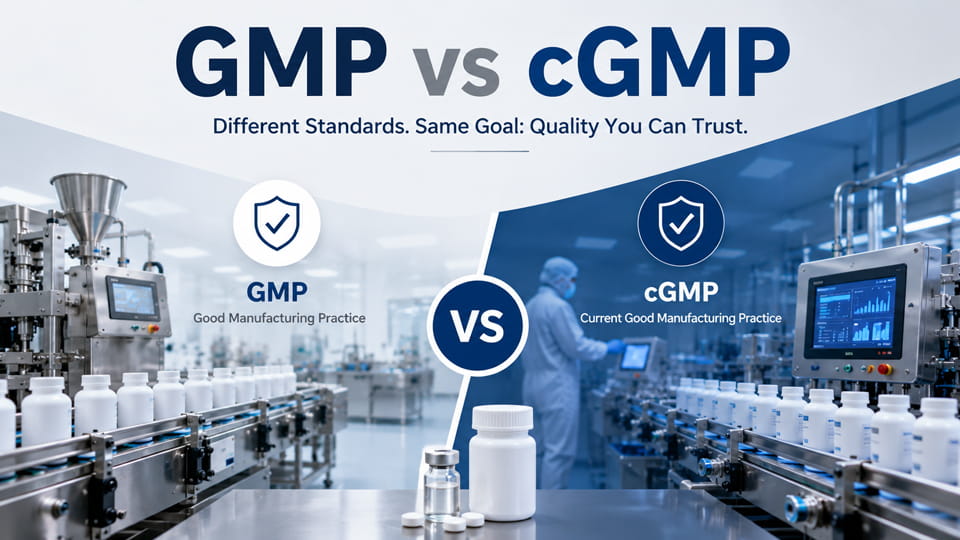
गुड मैनुफैक्चरिंग प्रैक्टिस (जीएमपी) फार्मास्युटिकल उद्योग के लिए एक वैश्विक गुणवत्ता आश्वासन ढांचा है. डब्ल्यूएचओ जीएमपी को गुणवत्ता आश्वासन के पहलू के रूप में परिभाषित करता है जो यह सुनिश्चित करता है कि उत्पाद लगातार उचित गुणवत्ता मानकों के अनुसार उत्पादित और नियंत्रित हों. उसी प्रकार, यूरोपीय औषधि एजेंसी (ईएमए) जीएमपी को इस प्रकार वर्णित करता है न्यूनतम मानक जो एक दवा निर्माता को उत्पादन में पूरा करना होगा. व्यवहार में, जीएमपी सुविधा डिज़ाइन को कवर करता है, उपकरण, कच्चे माल, कार्मिक प्रशिक्षण, लिखित प्रक्रियाएँ, और परीक्षण. लक्ष्य यह सुनिश्चित करना है कि प्रत्येक बैच उच्च गुणवत्ता वाला हो, अपने इच्छित उपयोग के लिए उपयुक्त, और इसके विनिर्देशों से मेल खाता है.
जबकि WHO, ईएमए और अन्य नियामक इसे "जीएमपी" कहते हैं,यह शब्द अनिवार्य रूप से अमेरिका के बाहर सीजीएमपी के साथ विनिमेय है. वास्तव में, डब्ल्यूएचओ के मार्गदर्शन में कहा गया है कि कुछ संदर्भों में जीएमपी को "सीजीएमपी' या 'वर्तमान' जीएमपी" भी कहा जाता है।. कई अंतरराष्ट्रीय निर्माताओं के लिए, जीएमपी दिशानिर्देशों को पूरा करने का मतलब वही गुणवत्ता वाले परिणाम प्राप्त करना है जिस पर एफडीए बाद में सीजीएमपी पर जोर देता है.
वर्तमान अच्छा विनिर्माण अभ्यास (सीजीएमपी) संयुक्त राज्य अमेरिका में इन विनियमों के लिए FDA का शब्द है. एफडीए सीजीएमपी को ऐसे सिस्टम के रूप में परिभाषित करता है जो उचित डिजाइन सुनिश्चित करता है, विनिर्माण प्रक्रियाओं और सुविधाओं की निगरानी और नियंत्रण. जीएमपी की तरह, सीजीएमपी का लक्ष्य यह सुनिश्चित करना है कि दवा उत्पादों की पहचान हो, ताकत, वे गुणवत्ता और शुद्धता का दावा करते हैं. वास्तव में, एफडीए के नियम स्पष्ट रूप से सुविधा की सफाई और उपकरण से लेकर कर्मियों की योग्यता और रिकॉर्ड-कीपिंग तक सब कुछ कवर करते हैं (21 सीएफआर पार्ट्स 210 और 211).
महत्वपूर्ण अंतर यह है कि सीजीएमपी में "सी" का अर्थ है मौजूदा. इसका मतलब है कि कंपनियों को नवीनतम तकनीकों का उपयोग करना चाहिए, उपकरण और प्रक्रियाएँ. जैसा कि एफडीए नोट करता है, सिस्टम और उपकरण जो "सर्वोत्तम" थे 10 या 20 वर्षों पहले अब सीजीएमपी के अंतर्गत कमी आ सकती है, क्योंकि गुणवत्ता मानक और प्रौद्योगिकी समय के साथ आगे बढ़ती हैं. संक्षेप में, सीजीएमपी जीएमपी के समान सभी गुणवत्ता आवश्यकताओं को पूरा करता है लेकिन निरंतर सुधार और आधुनिकीकरण पर जोर देता है. सीजीएमपी का अनुपालन एफडीए निरीक्षण के माध्यम से लागू किया जाता है, और इन मानकों को पूरा करने में विफलता कानूनी तौर पर एक दवा को "मिलावटी" बना देती है,भले ही यह प्रयोगशाला परीक्षण पास कर ले.
जबकि जीएमपी और सीजीएमपी का लक्ष्य समान परिणाम है (सुरक्षित, उच्च गुणवत्ता वाली दवाएं), अंतर जोर और उपयोग में है. नीचे दी गई तालिका मुख्य अंतरों का सारांश प्रस्तुत करती है:
| पहलू | जीएमपी (गुड मैनुफैक्चरिंग प्रैक्टिस) | सीजीएमपी (वर्तमान जीएमपी, एफडीए) |
| शब्दावली | "अच्छा विनिर्माण अभ्यास" - WHO द्वारा उपयोग किया जाता है, ईएमए, तस्वीर/एस, वगैरह. | "वर्तमान अच्छा विनिर्माण अभ्यास" - एफडीए का शब्द |
| नियामक संदर्भ | वैश्विक मानक कई देशों द्वारा लागू किया गया (कौन, तस्वीर/एस, ईयू जीएमपी) | अमेरिका-विशिष्ट नियम (21 सीएफआर 210-211) |
| केंद्र | लगातार स्थापित गुणवत्ता मानकों को पूरा करता है | मानकों को पूरा करता है और प्रौद्योगिकी/प्रक्रियाओं को अद्यतन रखता है |
| प्रौद्योगिकी की आवश्यकता | आम तौर पर स्थिर (आधारभूत मानकों को पूरा करता है) | नवीनतम मान्य उपकरणों और विधियों का उपयोग करना चाहिए |
| प्रलेखन | संपूर्ण एसओपी और रिकॉर्ड की आवश्यकता है | और भी अधिक कठोर दस्तावेज़ीकरण (ई-अभिलेख, ऑडिट ट्रैल्स) |
| मान्यकरण | प्रक्रिया और सफाई सत्यापन अपेक्षित | उपकरण योग्यता (आईआर/डब्ल्यूएच/पीक्यू) और प्रक्रिया सत्यापन अनिवार्य है |
| गुणवत्ता प्रणाली | मानक गुणवत्ता प्रबंधन प्रणाली | उन्नत जोखिम-आधारित क्यूएमएस; निरंतर सुधार चक्र |
| निरीक्षण & अपडेट | जीएमपी अनुपालन को सत्यापित करने के लिए समय-समय पर निरीक्षण | वही, लेकिन एफडीए को निरंतर अपडेट की उम्मीद है; जो अनुपालन योग्य था वह पुराना हो सकता है |
| नियामक दायरा | मैं/मैं: ईएमए द्वारा लागू अनुपालन & राष्ट्रीय एजेंसियाँ | हम: एफडीए द्वारा लागू अनुपालन; अनुपालन न करने पर कानूनी कार्रवाई की जाती है |
संक्षेप में, सीजीएमपी जीएमपी है प्लस आधुनिक सर्वोत्तम प्रथाओं के साथ तालमेल बनाए रखने की अपेक्षा. जैसा कि एक उद्योग विश्लेषण बताता है, सीजीएमपी "निरंतर सुधार पर ध्यान केंद्रित करता है और इसका मतलब है कि गुणवत्ता सुनिश्चित करने के लिए सबसे आधुनिक मानकों और प्रौद्योगिकियों को नियोजित किया जा रहा है, जबकि जीएमपी को सिद्धांतों का एक समूह माना जाता है". व्यवहारिक अर्थों में, सीजीएमपी सभी जीएमपी आवश्यकताओं को पूरा करता है, लेकिन अतिरिक्त जोर के साथ जो कंपनियों को करना ही चाहिए सक्रिय प्रक्रियाओं और दस्तावेज़ीकरण को अपग्रेड करें.
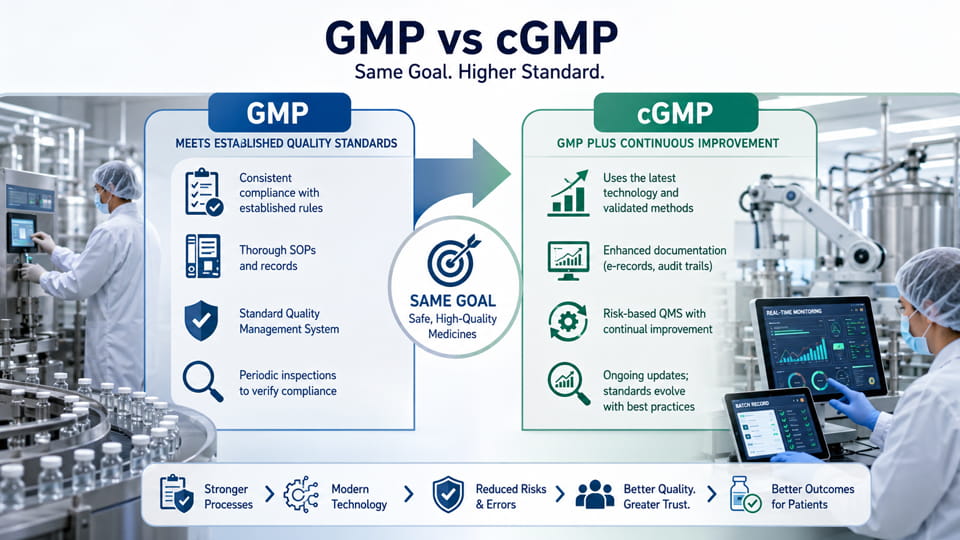
सीजीएमपी में "वर्तमान" केवल एक प्रचलित शब्द नहीं है: यह उस सुविधा का संकेत देता है, मशीनें और गुणवत्ता प्रणालियाँ कभी भी पुरानी नहीं होनी चाहिए. उदाहरण के लिए, यदि कोई पुरानी उत्पादन विधि या उपकरण का टुकड़ा घटिया पाया जाता है, सीजीएमपी मानकों का मतलब है कि कंपनी को नए समाधान लागू करने चाहिए. यह दृष्टिकोण नवप्रवर्तन को प्रेरित करता है: सीजीएमपी अपनाने वाली कंपनियां इलेक्ट्रॉनिक बैच रिकॉर्ड में निवेश करती हैं, स्वचालित निरीक्षण प्रणाली, वास्तविक समय डेटा निगरानी और अन्य प्रगति जो गुणवत्ता बढ़ाती है और त्रुटियों को कम करती है.
सीजीएमपी में "सी" अक्षर एक सरल लेकिन महत्वपूर्ण बिंदु को रेखांकित करता है: अनुपालन का अर्थ है उपयोग करना मौजूदा ज्ञान और प्रौद्योगिकी. यह मायने रखता है क्योंकि फार्मास्युटिकल विज्ञान और उपकरण तेजी से विकसित हो रहे हैं. सफाई का वैध तरीका क्या था? 20 वर्षों पहले का प्रदूषण अब आज के प्रदूषण मानकों को पूरा नहीं कर सकता है, और नए उपकरण (डिजिटल गुणवत्ता प्रबंधन प्रणाली की तरह) पेपर लॉग की तुलना में बेहतर ट्रैसेबिलिटी प्रदान करते हैं.
नियामक नियमित रूप से उम्मीद करते हैं कि निर्माता ऐसा करेंगे सक्रिय रूप से सुधार करें. उदाहरण के लिए, एफडीए मार्गदर्शन में कहा गया है कि सफाई को आसान बनाने और संदूषण को रोकने के लिए उपकरणों का निर्माण और अवस्थिति की जानी चाहिए - जिसका अर्थ यह है कि जब हम संदूषण नियंत्रण के बारे में अधिक सीखते हैं तो डिज़ाइन को अनुकूलित करना होगा. यदि बेहतर स्टरलाइजेशन या सामग्री उपलब्ध हो जाए, सीजीएमपी उन्हें शामिल करने का आह्वान करता है. जिनलुपैकिंग पर प्रकाश डाला गया: "सीजीएमपी में 'करंट' इस बात पर जोर देता है कि निर्माताओं को नवीनतम प्रौद्योगिकियों और प्रणालियों का उपयोग करना चाहिए," कौन निरंतर सुधार को बढ़ावा देता है विनिर्माण प्रक्रियाओं में.
व्यवहार में, इसका मतलब है कि सुविधाओं में एक गुणवत्ता प्रणाली होनी चाहिए जो नियमों या उद्योग मानकों के अद्यतन होने पर प्रक्रियाओं की समीक्षा और संशोधन करे. FDA का 21CFR भाग 11 (कम्प्यूटरीकृत सिस्टम के लिए) एक उदाहरण है: इसे इलेक्ट्रॉनिक रिकॉर्ड और हस्ताक्षर को संबोधित करने के लिए जोड़ा गया था. सीजीएमपी के तहत, फार्मास्युटिकल कंपनियों को अद्वितीय लॉगिन शामिल करना पड़ा, उनके कम्प्यूटरीकृत उपकरण और सॉफ्टवेयर में ऑडिट ट्रेल्स और सुरक्षा सुविधाएँ. यदि किसी कंपनी ने केवल पेपर लॉग का उपयोग जारी रखा होता, यह मौजूदा मानकों को पूरा नहीं करेगा.
एक अन्य प्रमुख क्षेत्र डेटा अखंडता है. नियामक अब इलेक्ट्रॉनिक बैच रिकॉर्ड की जांच करते हैं, यह आवश्यक है कि सभी परिवर्तन अधिकृत उपयोगकर्ताओं तक पहुंच योग्य हों. एक संदर्भित अनुपालन मार्गदर्शिका यह नोट करती है 21 सीएफआर भाग 11 “अनूठे उपयोगकर्ता लॉगिन को अनिवार्य करता है, डेटा अखंडता सुनिश्चित करने के लिए ऑडिट ट्रेल्स और इलेक्ट्रॉनिक हस्ताक्षर”. वह दशकों पहले जीएमपी का मूल हिस्सा नहीं था. इसलिए, आज सीजीएमपी का मतलब उपकरण और नियंत्रण को अपग्रेड करना है ताकि उत्पादन लाइन में हर कार्रवाई हो सके (मशीन सेटिंग बदल जाती है, गुणवत्ता चेतावनियाँ) दर्ज एवं संरक्षित किया जाता है.
सारांश, सीजीएमपी में "वर्तमान" का अर्थ है कभी भी पुरानी उपलब्धियों पर आराम न करना. यह कंपनियों को नए उपकरणों को नियमित रूप से सत्यापित करने के लिए प्रेरित करता है, बेहतर तरीकों पर कर्मचारियों को पुनः प्रशिक्षित करें, और नवीनतम गुणवत्ता प्रथाओं को अपनाएं. इसके परिणामस्वरूप उत्पाद सुरक्षा और अनुपालन में लगातार सुधार होता है. क्वालिटीज़ का कहना है कि सीजीएमपी के महत्वपूर्ण होने का एक प्रमुख कारण यह है "निरंतर सुधार को बढ़ावा देता है" - यह सुनिश्चित करना कि गुणवत्ता सुनिश्चित करने के लिए कंपनियां हमेशा नवीनतम तकनीक का उपयोग कर रही हैं.

चाहे जीएमपी कहा जाए या सीजीएमपी, फार्मास्युटिकल विनिर्माण और पैकेजिंग में कुछ मुख्य आवश्यकताएं सार्वभौमिक हैं. ये सामान्य तत्व एफडीए के तहत अनुपालन के लिए आवश्यक हैं, WHO या EMA नियम:
डब्ल्यूएचओ जैसे नियामकों का कहना है कि जीएमपी "दवाओं के उत्पादन और नियंत्रण दोनों के लिए गुणवत्ता उपायों और गतिविधियों को परिभाषित करता है।",और प्रक्रियाओं से सब कुछ सुनिश्चित करता है [प्राणी] स्पष्ट रूप से परिभाषित, कर्मियों और परिसरों को "उत्पादन के लिए उपयुक्त" होने के लिए मान्य और समीक्षा की गई. व्यवहार में, इसमें ऊपर सूचीबद्ध सभी चीजें शामिल हैं.
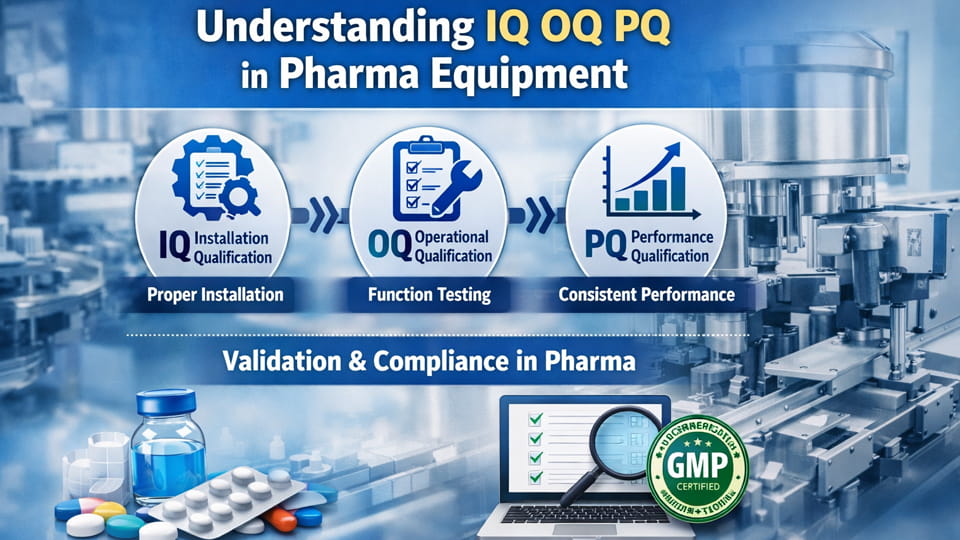
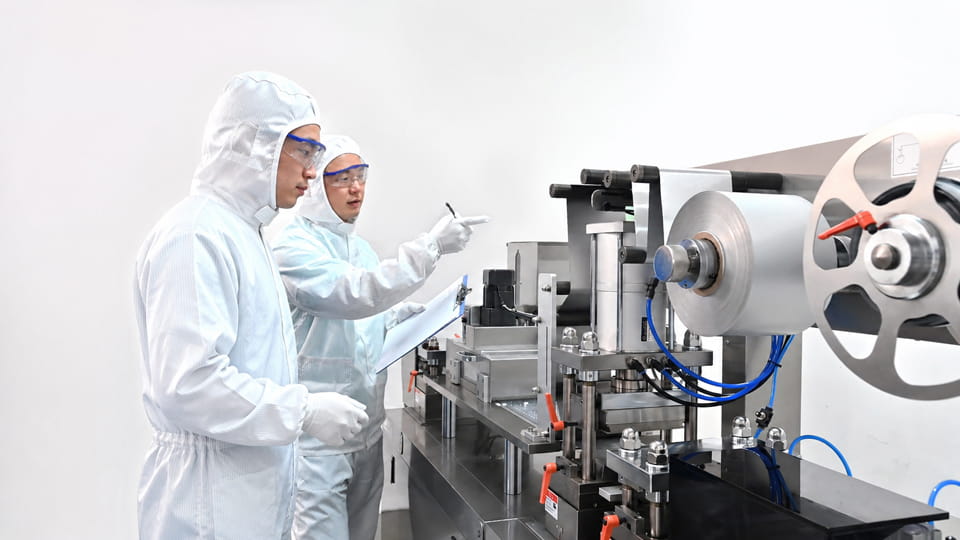
पैकेजिंग क्षेत्रों में, मानक अक्सर विशिष्ट डिज़ाइन नियमों में तब्दील हो जाते हैं (जैसा जिनलू के अनुपालन गाइड नोट्स). उदाहरण के लिए, जीएमपी लाइन में मशीनें होनी चाहिए आसानी से साफ करने योग्य (चिकना स्टेनलेस स्टील, कोई दरार या मृत पैर नहीं) और पूरी तरह से मान्य. स्थापना योग्यता जैसे दस्तावेज़ीकरण (आईक्यू), परिचालन योग्यता (OQ), और प्रदर्शन योग्यता (पीक्यू) उत्पादन से पहले और उत्पादन के दौरान आवश्यक है. इन नियंत्रणों के बिना, एक ऑडिट गैर-अनुपालन को चिह्नित करेगा.
आपको जो मानक पूरा करना होगा वह आपके बाज़ार पर निर्भर करता है:
उदाहरण के लिए, एफडीए स्पष्ट रूप से अनुशंसा करता है कि विश्व स्तर पर बेची जाने वाली सुविधाएं वर्तमान जीएमपी का अनुपालन करें. वैसे ही, ईएमए का कहना है कि "यूरोपीय संघ के बाजार के लिए बनाई गई दवाओं के किसी भी निर्माता को ईयू जीएमपी का अनुपालन करना होगा, चाहे वे कहीं भी स्थित हों।". व्यवहार में, शीर्ष फार्मा कंपनियां आधार रेखा के रूप में एफडीए सीजीएमपी को पूरा करने के लिए सुविधाओं का निर्माण करती हैं और फिर स्थानीय विविधताओं के लिए समायोजन करती हैं (जैसे लेबलिंग या दस्तावेज़ीकरण भाषा).
अंत में, विकल्प या तो/या नहीं है: आधुनिक फार्मास्यूटिकल्स से जीएमपी के अक्षरशः और भावना दोनों को पूरा करने की उम्मीद की जाती है. चाहे आप इसे जीएमपी कहें या सीजीएमपी, ज़मीनी अभ्यास - साफ़ कमरे, मान्य उपकरण, कठोर QC, और संपूर्ण रिकॉर्ड - सभी एक ही गुणवत्ता वाली संस्कृति का हिस्सा हैं.
कब फार्मास्युटिकल पैकेजिंग मशीनरी का चयन करना, खरीदारों को उन सुविधाओं की तलाश करनी चाहिए जो विशेष रूप से जीएमपी/सीजीएमपी सिद्धांतों का समर्थन करती हैं:
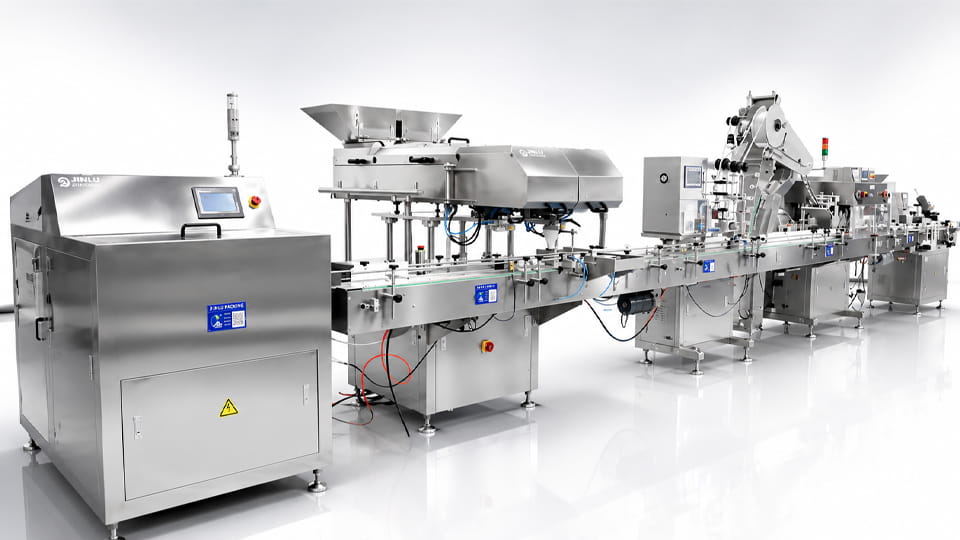
आकृति: एक आधुनिक फार्मास्युटिकल बोतल पैकेजिंग लाइन अनस्क्रेम्बलिंग को एकीकृत करती है, भरना, कैपिंग, अंतर्निहित निरीक्षण के साथ सीलिंग और लेबलिंग. ये मशीनें गुणवत्ता नियंत्रण के लिए सैनिटरी स्टेनलेस स्टील निर्माण और सेंसर का उपयोग करती हैं.
इन सुविधाओं को सुनिश्चित करके, खरीद प्रबंधकों को भरोसा हो सकता है कि उनकी पैकेजिंग लाइन अनुरूप उत्पादन का समर्थन करेगी. मूल जिनलू नोट्स, हमारी मशीनें CE और GMP मानकों के अनुसार सर्वोत्तम सामग्री और परिष्कृत निर्माण से तैयार की गई हैं, और हमारा पाउच पैकर cGMP की उत्पादन आवश्यकताओं को पूरा करता है.
जीएमपी और विशेष रूप से सीजीएमपी का अनुपालन महत्वपूर्ण लाभ लाता है:
सारांश, जीएमपी/सीजीएमपी अनुपालन केवल एक नियामक बोझ नहीं है - यह रोगियों की सुरक्षा करता है, विश्वास बनाता है, और एक विश्वसनीय व्यवसाय सुनिश्चित करता है. यह दक्षता में सुधार और वैश्विक वितरण को सक्षम करके कंपनियों को बढ़त भी देता है.

जीएमपी और सीजीएमपी फार्मास्युटिकल गुणवत्ता की आधारशिला हैं, यह सुनिश्चित करना कि प्रत्येक उत्पाद सुरक्षित और लगातार निर्मित हो. सारांश, जीएमपी स्वच्छता का आवश्यक ढाँचा प्रदान करता है, दस्तावेज़ीकरण और सत्यापन, जबकि सीजीएमपी निरंतर सुधार और आधुनिक प्रौद्योगिकी की आवश्यकता को जोड़ता है. पैकेजिंग उपकरण के लिए, इसका मतलब स्वचालित में निवेश करना है, स्वच्छता सामग्री से बनी मान्य मशीनें.
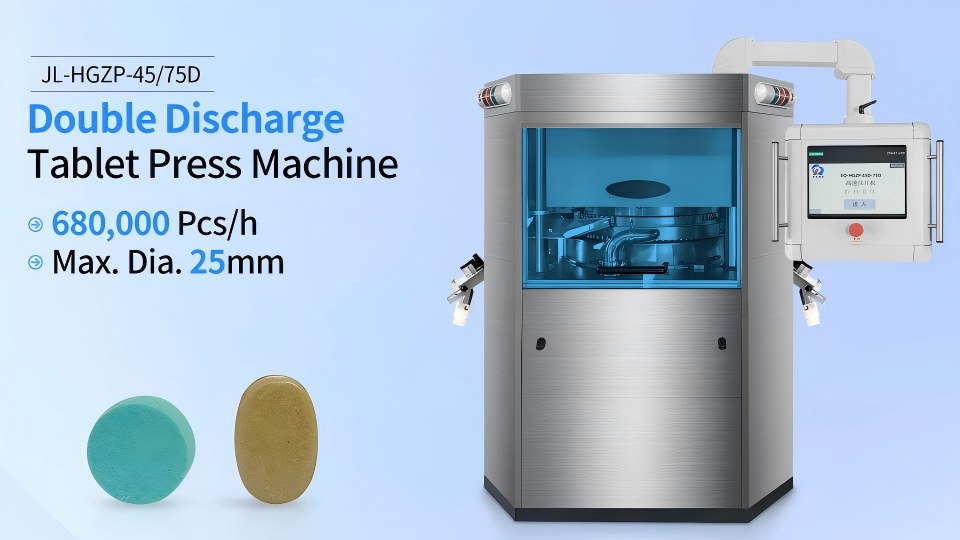
और jeinlu उठा, हम इन मानकों को ध्यान में रखकर अपनी मशीनरी बनाते हैं. जिनलू के सीजीएमपी-संगत उपकरण को चुनकर - हमारे जैसे स्वचालित कैप्सूल भरने मशीनें, टेबलेट प्रेस, ब्लिस्टर पैकेजर्स, कार्टोनिंग मशीनें और गिनती की मशीनें - आप पूरी तरह से मान्य निर्माण कर सकते हैं, ऑडिट-तैयार उत्पादन लाइन. प्रत्येक मशीन जीएमपी और एफडीए निरीक्षण के लिए आवश्यक दस्तावेज और स्वच्छ डिजाइन के साथ आती है.
यह सुनिश्चित करने के लिए तैयार हैं कि आपका उत्पादन पूरा हो (सी)जीएमपी मानक? आज ही जिनलू के विशेषज्ञों से संपर्क करें अपनी पैकेजिंग लाइन आवश्यकताओं पर चर्चा करने या कोटेशन का अनुरोध करने के लिए. हमारी टीम आपके उत्पादों को अनुरूप बनाए रखने के लिए सही उपकरण पैकेज तैयार करने में मदद करेगी, सुरक्षित और उच्च गुणवत्ता.
जीएमपी दवा उत्पादन के लिए आधारभूत "अच्छी विनिर्माण अभ्यास" आवश्यकताओं को संदर्भित करता है. cGMP का मतलब "वर्तमान GMP" है,“मतलब उन आवश्यकताओं के साथ-साथ निरंतर सुधार की अपेक्षा. सीजीएमपी में, निर्माताओं को नवीनतम उपकरणों का उपयोग करना चाहिए, तरीके और गुणवत्ता प्रणाली. दूसरे शब्दों में, सीजीएमपी का कहना है कि प्रक्रियाओं की नियमित रूप से समीक्षा की जाती है और उनका आधुनिकीकरण किया जाता है.
"सी" का अर्थ "वर्तमान" है,इस बात पर जोर देते हुए कि एक कंपनी को हमेशा नवीनतम नियमों और मानकों को पूरा करना चाहिए. यह सुनिश्चित करता है कि निर्माता पुरानी प्रथाओं पर भरोसा न करें. जैसा कि स्किलिफ़ बताते हैं, सीजीएमपी का अर्थ है आज की नियामक अपेक्षाओं को पूरा करने के लिए आधुनिक प्रणालियों और प्रौद्योगिकियों का उपयोग करना, पुराने तरीकों के बजाय जो अब पर्याप्त नहीं हो सकते हैं.
हाँ. अमेरिका. एफडीए नियम (21 सीएफआर पार्ट्स 210 और 211) सीजीएमपी के रूप में लिखे गए हैं. कायदे से, यू.एस. के लिए कोई फार्मास्युटिकल उत्पाद. बाजार को वर्तमान अच्छी विनिर्माण प्रथाओं के तहत उत्पादित किया जाना चाहिए. अनुपालन न करने पर चेतावनी पत्र या शटडाउन हो सकता है.
यदि केवल पुरानी जीएमपी प्रथाओं का उपयोग किया जाता है, कंपनी के निरीक्षण में असफल होने का जोखिम है. नियामक वर्तमान प्रौद्योगिकी और सत्यापन के साक्ष्य की अपेक्षा करते हैं. सीजीएमपी के तहत, केवल पुराने दिशानिर्देशों को पूरा करना ही पर्याप्त नहीं है. उदाहरण के लिए, मान्य इलेक्ट्रॉनिक रिकॉर्ड के बजाय पेपर लॉग के उपयोग का हवाला दिया जा सकता है. व्यवहार में, सीजीएमपी अनुपालन का मतलब है, भले ही किसी प्रक्रिया में जीएमपी इतिहास हो, आज के मानकों को ध्यान में रखते हुए इसकी समीक्षा की जानी चाहिए.
दुनिया भर के अधिकांश फार्मास्युटिकल बाजारों ने जीएमपी जैसी आवश्यकताओं को शामिल किया है. ऊपर 100 देशों ने WHO के GMP मानकों को राष्ट्रीय कानून में अपनाया है. शब्दावली भिन्न-भिन्न होती है (कुछ लोग जीएमपी कहते हैं, कुछ सीजीएमपी, कुछ बस "जीएमपी"), लेकिन वस्तुतः सभी प्रमुख नियामक (एफडीए, ईएमए, कौन) cGMP के समतुल्य गुणवत्ता प्रणाली की आवश्यकता है.
WHO आमतौर पर केवल "जीएमपी" को संदर्भित करता है,लेकिन इसे व्यापक रूप से परिभाषित करता है. WHO के दस्तावेज़ों में, “जीएमपी (इसे सीजीएमपी या 'वर्तमान जीएमपी' भी कहा जाता है)यह सुनिश्चित करने के लिए गुणवत्ता आश्वासन का वर्णन करता है कि उत्पादों का लगातार गुणवत्ता मानकों के अनुरूप उत्पादन किया जाए. इसलिए, WHO इन शब्दों का परस्पर उपयोग करता है. "वर्तमान" होने की अवधारणा सभी आधुनिक जीएमपी मार्गदर्शन में अंतर्निहित है, भले ही WHO हमेशा "सी" का उपयोग न करता हो।
बिल्कुल. जीएमपी को पूरा करने के लिए उपकरण डिजाइन महत्वपूर्ण है. उदाहरण के लिए, मशीनों को साफ करना आसान होना चाहिए (स्टेनलेस, कोई छिपी हुई दरारें नहीं) और स्वचालन और डेटा कैप्चर का समर्थन करना चाहिए. खराब डिज़ाइन वाले उपकरण संदूषण या मिश्रण-अप का कारण बन सकते हैं. के साथ -साथ, सही उपकरण (जिनलू की मशीनों की तरह) अनुपालन सुनिश्चित करने के लिए जीएमपी सुविधाओं के साथ बनाया गया है.
उपकरण सत्यापन यह दस्तावेजीकरण है कि मशीनें इच्छानुसार काम करती हैं. आईक्यू (स्थापना योग्यता) सत्यापित करता है कि मशीन डिज़ाइन के अनुसार सही ढंग से स्थापित की गई है. OQ (परिचालन योग्यता) परीक्षण करता है कि प्रत्येक फ़ंक्शन अलग-अलग परिस्थितियों में काम करता है. पीक्यू (प्रदर्शन योग्यता) यह साबित करता है कि उपकरण वास्तविक उत्पादन के दौरान लगातार आवश्यक आउटपुट प्राप्त करता है. उपकरण उपयोग के लिए उपयुक्त है यह दिखाने के लिए ये मानक जीएमपी आवश्यकताएं हैं.
आज्ञाकारी मशीनरी गुणवत्ता नियंत्रण को स्वचालित करती है और डेटा रिकॉर्ड करती है. उदाहरण के लिए, स्वचालित कैप्सूल फ़िलर सटीक रूप से खुराक का वजन करते हैं और ख़राब कैप्सूल को अस्वीकार कर देते हैं, मानवीय त्रुटि और संदूषण को दूर करना. एकीकृत डेटा सिस्टम स्वचालित रूप से ऑडिट ट्रेल्स के साथ बैच जानकारी लॉग करते हैं, संतोषजनक डेटा अखंडता नियम. इन विशेषताओं वाले उपकरणों का चयन करके, कंपनी सीजीएमपी अनुपालन को और अधिक प्राप्य बनाती है.
जिंलू की मशीनें जीएमपी जरूरतों को पूरा ध्यान में रखते हुए फार्मास्युटिकल उत्पादन के लिए डिज़ाइन की गई हैं. वे संपूर्ण IQ/OQ/PQ टेम्पलेट और समर्थन प्रदान करते हैं, उच्च गुणवत्ता वाले स्टेनलेस निर्माण, और उन्नत स्वचालन (जैसे एकीकृत दृष्टि प्रणाली और स्वच्छता डिजाइन) यह सुनिश्चित करने में सहायता के लिए कि आपकी लाइन अनुपालनशील बनी रहे. उनकी सेवा में आपकी योग्यता प्रक्रिया को कारगर बनाने के लिए ऑन-साइट FAT/SAT परीक्षण और दस्तावेज़ीकरण समर्थन शामिल है.
संदर्भ:
1.क्यू&सीजीएमपी आवश्यकताओं पर ए -- हम. खाद्य एवं औषधि प्रशासन
2.गुणवत्ता दिशानिर्देश: उत्पादन -- यूरोपीय दवाई एजेंसी
3.वर्तमान अच्छा विनिर्माण अभ्यास (सीजीएमपी) नियमों -- हम. खाद्य एवं औषधि प्रशासन
4.अच्छी उत्पादन कार्यप्रणाली -- कौन
5.टीआरएस 986 – उपभवन 2: फार्मास्युटिकल उत्पादों के लिए WHO की अच्छी विनिर्माण पद्धतियाँ: मुख्य सिद्धांत -- कौन
6.यूड्रालेक्स – आयतन 4 – गुड मैनुफैक्चरिंग प्रैक्टिस (जीएमपी) दिशा निर्देशों —— यूरोपीय आयोग
7.जीएमपी दिशानिर्देश —— ispe.org