
Équipement d'emballage pharmaceutique doit répondre à des normes strictes de qualité et de sécurité. La défaillance d’un fournisseur peut entraîner rappels de produits ou une mesure réglementaire. Qualification des fournisseurs est un processus de gestion des risques qui donne « l’assurance que les fournisseurs… peuvent fournir une qualité constante conformément aux exigences réglementaires ». En fait, Les directives BPF de l'UE stipulent explicitement que la sélection et le maintien des fournisseurs de matériaux d'emballage nécessitent une attention « similaire à celle accordée aux matières premières ».. La diligence raisonnable – et pas seulement la comparaison des coûts – est essentielle. La vérification préalable d'un fournisseur garantit que les machines répondent aux normes cGMP (qualité du matériau, propreté, aide à la validation) et que le fournisseur peut toujours soutenir votre projet.
Les facteurs clés incluent la conformité réglementaire (FDA, BPF de l'UE), qualité de conception et de construction (par exemple. 316Fabrication en acier inoxydable L), systèmes qualité des fournisseurs (ISO 9001/13485, Processus CAPA), documentation (protocoles de validation), capacité, service, et valeur à long terme. Ce guide détaille chaque étape:
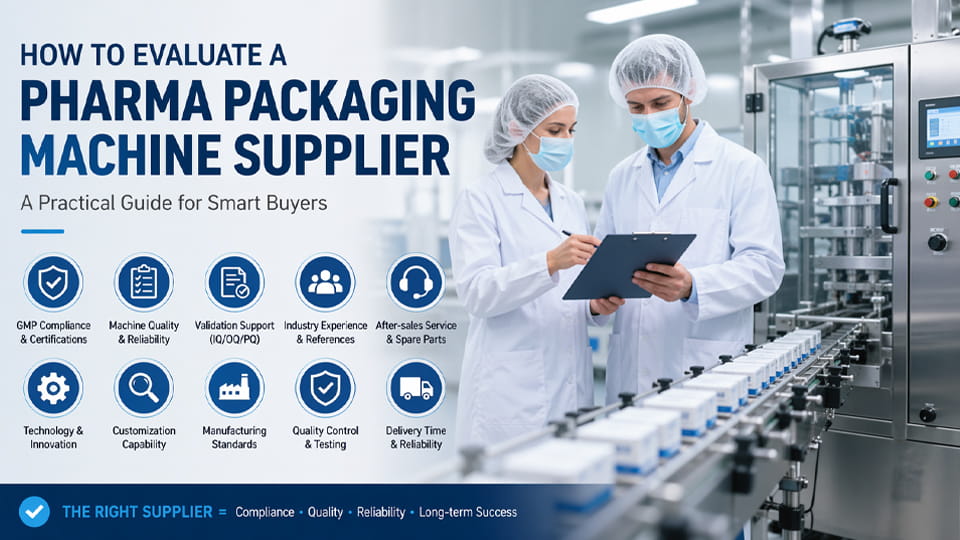
Pour sélectionner un fournisseur fiable fournisseur de machines d'emballage pharmaceutique, suivez ces étapes:
Décrivez clairement vos besoins en matière de processus (sortir, types d'emballage, formats) et critères de qualité (Hygiène BPF, compatibilité salle blanche). Identifiez les options spéciales (par exemple. conception aseptique, installation de salle blanche, matériaux de qualité pharmaceutique). Avoir des exigences précises vous permet de comparer les fournisseurs sur une base comparable. Tenir compte de la portée du projet: ligne complète ou machines individuelles, semi contre. entièrement automatique, matériaux spéciaux (316L acier inoxydable, Plastiques approuvés par la FDA), et toutes les spécifications de performances (vitesse, précision). Impliquez votre assurance qualité, équipes d’ingénierie et de production pour capturer tous les besoins en amont. Les fournisseurs demandent souvent les exigences des utilisateurs dans leurs propositions, une fiche technique écrite ou un dossier de demande de devis est donc essentiel.
La conformité réglementaire n’est pas négociable. S'assurer que l'équipement et la documentation du fournisseur sont conformes aux BPF (FDA) ou normes EU-GMP. Par exemple, Règlement sur le système qualité de la FDA (21 CFR 820) et ISO 11607 (pour emballage stérile) exiger que les processus d'emballage soient validés selon les protocoles IQ/OQ/PQ. Demandez des certificats de conformité (Marquage CE, FDA 510(k) si pertinent), et vérifiez si les processus du fournisseur sont conformes aux normes comme ISO 13485 ou ISO 9001. La certification BPF d'un fournisseur ou de solides antécédents dans le secteur pharmaceutique démontrent son engagement envers la conformité.. Vérifier que la conception de la machine suit les principes GMP (par exemple. pas d'espaces morts, surfaces faciles à nettoyer, finitions sanitaires). Selon les directives de l'industrie, machines pharmaceutiques doit utiliser de l’acier inoxydable 316L avec un polissage et une passivation appropriés pour résister à la corrosion et faciliter le nettoyage – un détail auquel les inspecteurs s’attendent. (Si le fournisseur utilise des matériaux moins chers, c'est un signal d'alarme.) Confirmer également les processus de traçabilité des matériaux et de documentation: toutes les pièces et soudures doivent être documentées conformément aux directives ASME BPE ou FDA.
Inspecter la construction de la machine en détail. Haute qualité équipement d'emballage pharmaceutique aura une conception solide, cadre robuste, gardes sanitaires, et composants modulaires. Recherchez des fonctionnalités telles que: actionneurs servocommandés (pour la précision), verrouillages de sécurité validés, et lubrifiants de qualité alimentaire/pharmaceutique (Approuvé par la NSF ou la FDA). Vérifiez que les pièces de contact sont de haute qualité (316L inox, électropoli ou passivé). Évaluer leur ingénierie: les soudures sont-elles lisses? Les coutures et les capteurs sont-ils alignés? Comparez les machines de plusieurs fournisseurs pour repérer les défauts évidents (composants lâches, convoyeurs mal alignés, taches de rouille). De nombreuses entreprises répertorient les fonctionnalités GMP dans leurs brochures; vérifiez-les physiquement si possible. Dans cette étape, une inspection par un tiers ou un essai en usine par un témoin (démo vidéo) peut aider à évaluer la qualité de la construction.
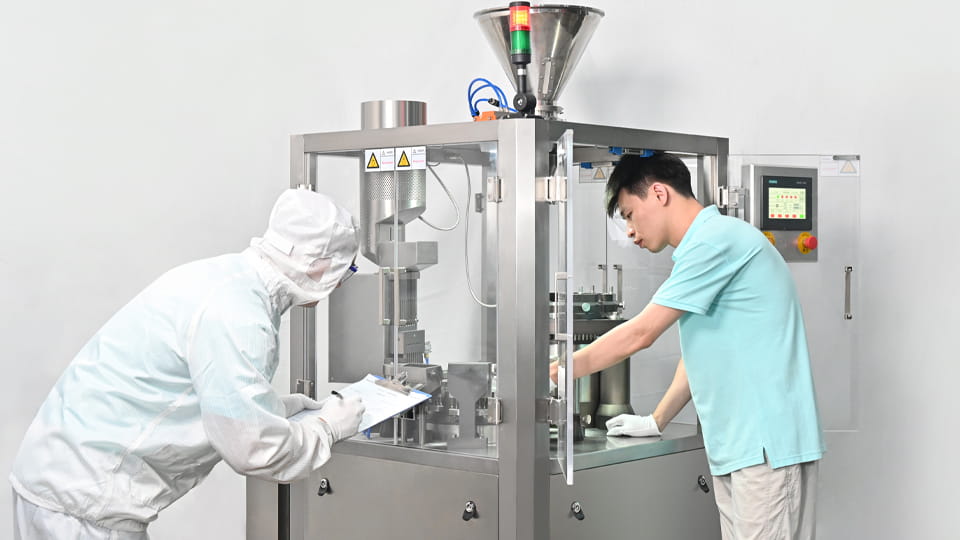
Image: Inspection de contrôle qualité sur une machine pharmaceutique.
Un fournisseur réputé aura un système de gestion de la qualité documenté (SGQ). Préférer les fournisseurs avec ISO 9001 attestation; s'ils servent le secteur médical/pharmaceutique, ISO 13485 est un bonus. Pour l'ISO 13485:2016, les fabricants doivent sélectionner et évaluer soigneusement leurs fournisseurs pour répondre à des normes réglementaires et de qualité strictes. Vérifiez si le fournisseur tient une « liste de fournisseurs qualifiés » et effectue des audits réguliers des fournisseurs.. Demandez à voir les manuels de qualité ou les descriptions de procédures. Le fournisseur doit avoir un CAPA robuste (Action corrective et préventive) processus. Par exemple, si un fournisseur enregistre des problèmes, étudie les causes profondes et met en œuvre des correctifs, cela indique un système de gestion de la qualité mature. Les directives de l'industrie indiquent que si des problèmes de performances surviennent, les fabricants sont « censés prendre les mesures correctives appropriées »,» au point même de remplacer un fournisseur. Demandez au fournisseur comment il gère les non-conformités ou les échecs sur le terrain: disposent-ils d'un contrôle interne des modifications et d'un registre CAPA? Les processus documentés pour le contrôle et la traçabilité des pièces de rechange sont également essentiels. Si un fournisseur n'a pas de système de gestion de la qualité formel ou évite les questions de qualité, considérez cela comme une préoccupation sérieuse.
Recherchez des fournisseurs ayant une expérience éprouvée en matière d’emballage pharmaceutique. Demandez depuis combien de temps ils fabriquent des machines pharmaceutiques et des exemples (sans violer la confidentialité). Des études de cas ou des listes de clients peuvent révéler une expertise (voir les logos « Nos clients » pour les sociétés pharmaceutiques connues). Évaluer leur gamme de produits: un fabricant axé sur la pharma (cloque, sachet, lignes de flacons) est plus susceptible de comprendre vos besoins qu’un fournisseur d’emballages génériques. Demander des références ou au moins des témoignages de clients récents, en particulier dans votre région ou votre secteur d'activité. Renseignez-vous sur les projets passés: Ont-ils répondu aux spécifications? Les documents de validation étaient-ils complets? À quelle vitesse les problèmes de dentition ont-ils été résolus? La volonté d’un fournisseur de partager ses réussites (et les leçons apprises) fait preuve de transparence.
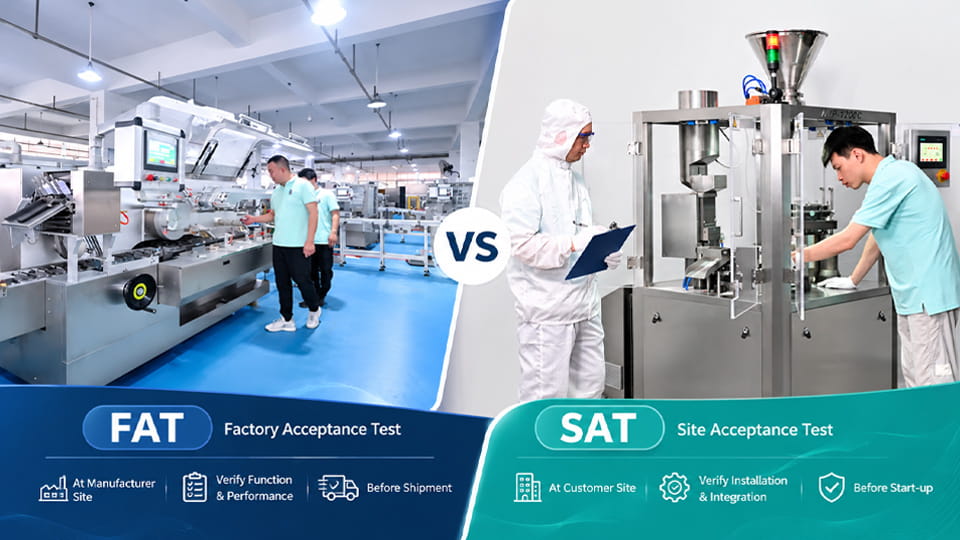
Tout équipement pharmaceutique doit être livré avec une documentation complète pour votre équipe de validation. Confirmez que le fournisseur fournit un Protocoles IQ/OQ/PQ, manuels d'utilisation, et certificats d'étalonnage. Qualification d'installation (QI) garantit que la machine a été construite et installée conformément aux spécifications; Qualification opérationnelle (QO) teste les paramètres fonctionnels; Qualification des performances (PQ) valide la qualité de sortie. Selon les directives de la FDA, « QI, QO, Les protocoles PQ sont des méthodes permettant de démontrer que l’équipement… offrira un haut degré d’assurance qualité ». Assurez-vous que le fournisseur prendra en charge ces étapes. Incluent-ils des modèles pour IQ/OQ/PQ? Seront-ils témoins des opérations de mise en service? Les bons fournisseurs aident souvent à la rédaction du protocole ou effectuent même les tests sur site. Vérifiez également la documentation comme la nomenclature (nomenclature), schémas de câblage, et certificats de matériel (pour l'acier inoxydable, lecteurs, etc.) sont fournis. Tous les documents doivent être traçables – idéalement sous format numérique – et tenus à jour (surtout si une conception a été révisée pendant la production). Sans documentation solide, votre équipe de validation ne peut pas approuver formellement la machine.
La capacité compte. Renseignez-vous sur les capacités de production du fournisseur et le carnet de commandes actuel. Peuvent-ils respecter votre calendrier sans rogner sur les raccourcis? Grand, les usines occupées peuvent avoir de longs délais de livraison ou des commandes urgentes. Un fournisseur fiable proposera un calendrier de livraison réaliste (prévoir du temps pour l'outillage, tests et expédition). Vérifiez leurs pratiques en matière de fonds de roulement ou de stocks en consignation: ont-ils des pièces critiques prêtes à raccourcir les délais d'exécution? Certains fournisseurs maintiennent un stock de modèles standards pour une livraison rapide. Compromis: un délai de livraison légèrement plus long pourrait être acceptable pour une meilleure qualité. Assurez-vous simplement de comprendre ce qui génère des coûts – par exemple, expédition à l'étranger vs. fret aérien accéléré. Confirmez également l'assurance expédition et le plan logistique: qui s'occupe des douanes, y a-t-il une inspection avant expédition?
Service peut faire ou défaire des opérations. Un bon fournisseur propose une formation, des pièces de rechange, et une assistance rapide après l'achat. Clarifier les conditions de garantie (durée, couverture) – JinLuPacking, Par exemple, offre une garantie de 3 ans sur encartonneuses. Demandez comment ils gèrent les pannes: Y a-t-il une assistance locale ou un service sur site? 24/7 ligne d'assistance? Les pièces de rechange sont-elles stockées au niveau régional? Envisagez un accord de niveau de service (ANS). Aussi, se renseigner sur les mises à jour du logiciel ou du système de contrôle: les nouvelles options ou améliorations seront-elles rétrocompatibles? Avoir une mise en service et une formation sur site incluses est un plus. Le réseau de service du vendeur (distributeurs ou bureaux) est important pour les clients internationaux. Finalement, choisissez un fournisseur qui reste engagé après la livraison – un fournisseur qui répondra rapidement aux problèmes sur le terrain et préviendra de manière proactive de futurs problèmes..
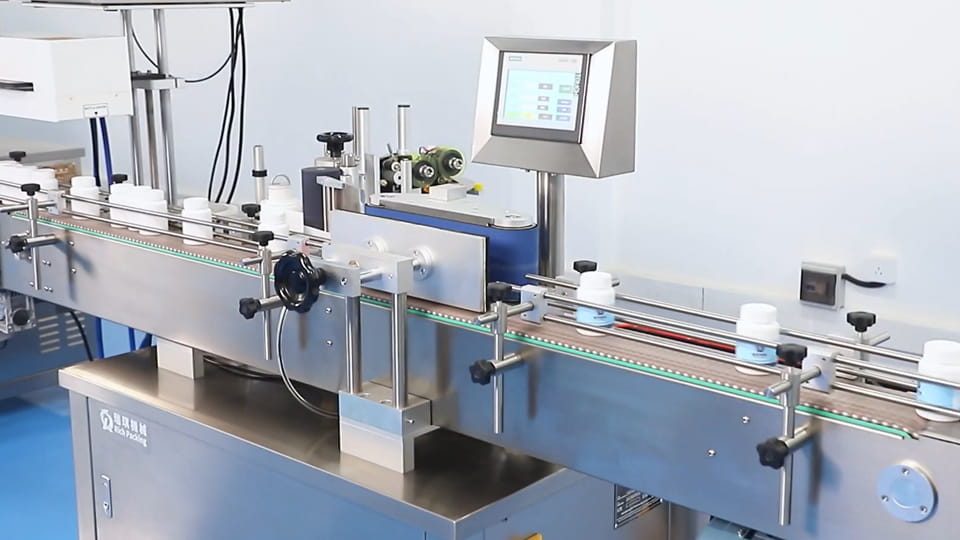
Image: Système de convoyeur dans une usine de fabrication propre.
Voir c'est croire. Auditer l’usine du fournisseur ou organiser une visite virtuelle. Points clés de l’audit: propreté (domaines particulièrement critiques), mise en page (flux logique, séparation fabrication/assemblage), et pratiques de documentation (les SOP sont-elles visibles?). Vérifiez si des laboratoires d'étalonnage et des bancs d'essai sont sur place. Évaluer le contrôle des stocks et les pratiques de santé/sécurité. Renseignez-vous sur la formation et le roulement des employés; un personnel expérimenté est un bon signe. Si possible, apporter une liste de contrôle et inspecter une de leurs machines sur la ligne. Ont-ils respecté leurs propres contrôles de qualité? Examinez également toutes les certifications (Certificats ISO, FDA 510(k), CE, etc.) exposé. Un audit renforce la confiance: un fournisseur qui accueille votre visite fait preuve de confiance dans ses processus. Pensez à préparer vos questions à l'avance et à prendre des notes ou des photos (avec autorisation). L'audit doit soit confirmer votre choix, soit révéler des problèmes qui nécessitent une correction avant de continuer..
Enfin, comparer les propositions de manière globale. L’offre la plus basse n’est pas toujours la meilleure : tenez compte des coûts et de la valeur à long terme. Calculer le coût total de possession (TCO): prix initial + installation + qualification + risque de temps d'arrêt + des pièces de rechange + efficacité énergétique + entretien + entraînement. Une machine offrant une meilleure précision et fiabilité peut réduire les rebuts et économiser de l'argent sur les reprises.. Tenez compte des avantages tels que les économies d’énergie grâce aux entraînements modernes ou des temps de cycle plus rapides. Pensez également au financement: certains fournisseurs proposent du financement ou du crédit-bail, ce qui pourrait faciliter les flux de trésorerie. Si vous avez plusieurs devis, peser systématiquement chaque aspect. Utilisez la liste de contrôle d'évaluation des fournisseurs (ci-dessous) comme guide. Alors prenez une décision éclairée.
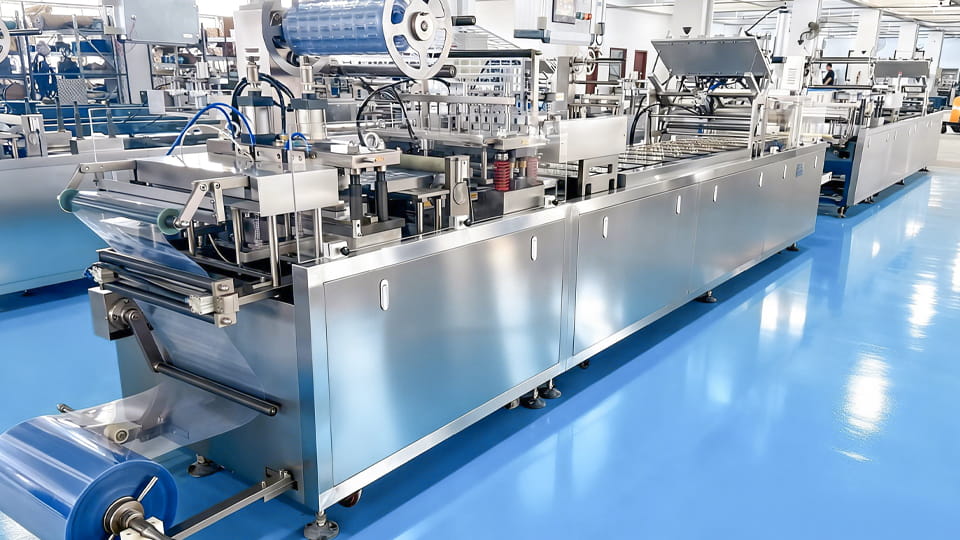
Image: Contrôle qualité final sur une ligne de conditionnement sous blister.
En évitant ces pièges et en suivant notre processus structuré, vous choisirez un fournisseur qui fournit un équipement fiable et une tranquillité d'esprit.
Utilisez cette liste de contrôle pour noter et comparer les fournisseurs potentiels. (▶️ Télécharger la liste de contrôle PDF pour une référence facile.)
| Critères d'évaluation | Questions clés |
| Réglementaire & Conformité aux BPF | Le fournisseur répond-il aux normes FDA/UE GMP? Les machines sont-elles construites en acier inoxydable 316L & revêtements requis (électropolissage/passivation)? Les certifications sont-elles pertinentes (CE, CE, FDA 510(k) etc.) en place? |
| Système de gestion de la qualité (SGQ) | Le fournisseur est-il certifié ISO 9001 (ou ISO 13485) attestation? Existe-t-il un processus CAPA et de gestion des risques documenté? Comment contrôlent-ils les non-conformités (par exemple. actions correctives)? |
| Expérience & Références | Combien d'années dans l'emballage pharmaceutique? Peuvent-ils partager des études de cas anonymisées ou des références clients? Ont-ils livré des lignes de conditionnement similaires (cloque, carton, etc.)? |
| Conception de machines & Qualité de construction | Les matériaux et les finitions sont-ils de qualité pharmaceutique? (par exemple. soudures lisses, conception sanitaire). Les tolérances et les performances sont-elles validées? Les systèmes de sécurité sont-ils (gardes, verrouillages) robuste? |
| Validation & Documentation | Le fournisseur fournira-t-il des protocoles IQ/OQ/PQ complets et un support de validation (conseils d'experts, essai)? Sont des manuels, certificats d'étalonnage, et dessins fournis? |
| Capacité d'usine & Délai de mise en œuvre | Peuvent-ils respecter votre emploi du temps? Ont-ils la capacité (personnel qualifié, ressources de fabrication)? Quel est le délai de livraison proposé et peut-il être garanti? Comment ont-ils défini le délai de livraison? |
| Support après-vente & Entraînement | Quelle garantie est offerte? L'assistance en matière de pièces de rechange est-elle disponible localement? Fournit-ils une assistance au démarrage et une formation des opérateurs? Le support technique est-il (ligne d'assistance, sur place) facilement disponible? |
| Coût total & Valeur | Au-delà du prix unitaire, quels sont les coûts à long terme? (consommation d'énergie, entretien, des pièces de rechange). La proposition comprend-elle tous les accessoires nécessaires? Envisager des améliorations en matière d’efficacité et de rendement. |
Choisir le bon fournisseur de machines d'emballage pharmaceutique concerne autant les personnes et les processus que le matériel.. Une évaluation approfondie – de la conformité réglementaire au service après-vente – garantit que vous vous associez à un fournisseur capable de croître avec votre entreprise.. Comme le notent les experts du secteur, « la qualification des fournisseurs… devrait identifier et atténuer les risques associés ». Suivez ce guide en 10 étapes et cette liste de contrôle pour réduire les risques de votre investissement.
Prêt à avancer? Demander un devis de notre équipe ou télécharger la liste de contrôle ci-dessus pour préparer votre évaluation. Nous sommes là pour vous aider à trouver le partenaire d’équipement idéal.
Un fournisseur de machines de conditionnement pharmaceutique est une entreprise qui conçoit, fabrique, et livre du matériel utilisé pour emballer des produits pharmaceutiques tels que des comprimés, gélules, liquides, ou des poudres. Un fournisseur fiable doit non seulement fournir des machines mais également garantir le respect des réglementations BPF, aide à la validation (IR/WH/PQ), et service technique à long terme.
L'évaluation des fournisseurs est essentielle car l'emballage a un impact direct sur la sécurité des produits, précision de l'étiquetage, et conformité réglementaire. Des études montrent que les problèmes liés aux fournisseurs contribuent à un pourcentage important des résultats des inspections BPF., faire de la qualification des fournisseurs un élément clé de l’assurance qualité.
Les facteurs clés incluent la certification GMP (FDA/UE), utilisation de matériaux de qualité pharmaceutique (par exemple. 316L en acier inoxydable), et une documentation solide. Recherchez la conformité aux normes comme ISO 9001/13485 et la FDA 21 Partie CFR 820. Vérifier que les machines ont des finitions lisses et que toutes les surfaces en contact avec le produit sont nettoyables et validées.
QI, OQ et PQ sont des étapes de validation qui prouvent qu'une machine est correctement installée, fonctionne comme prévu, et fonctionne de manière constante. Ils sont essentiels dans le secteur pharmaceutique pour garantir une production de qualité. En fait, Réglementations FDA et ISO 11607 faire de la validation des emballages via IQ/OQ/PQ une exigence.
Demandez des détails sur les conditions de garantie, délais de réponse, et réseau de services. Le fournisseur propose-t-il une mise en service et une formation sur site? Vérifiez si les pièces de rechange sont stockées localement. Examen en ligne ou commentaires des clients: les fournisseurs au service du secteur pharmaceutique soulignent souvent 24/7 centres de support et de service mondiaux (Par exemple, JinLuPacking annonce un service sur site et une assistance technique dans le monde entier).
Inspecter le flux de production, propreté, formation des employés, et documentation. Vérifier si les enregistrements de qualité et les journaux d'étalonnage sont conservés. Évaluer comment ils gèrent la sécurité et l’assainissement. Un bon audit vérifie également que ce qui a été promis (caractéristiques de conception, matériels) est en fait construit. Pour la maîtrise des risques, un audit régulier est recommandé par l'ISO 13485 et directives BPF.
Pas pour les projets pharmaceutiques. Une offre basse peut permettre d'économiser de l'argent au départ, mais risque de provoquer des problèmes de qualité et des temps d'arrêt plus tard.. Tenez compte du coût total de possession: efficacité des machines, fiabilité, des pièces de rechange, et la conformité réglementaire peuvent tous avoir des coûts cachés. Un prix légèrement plus élevé, un fournisseur éprouvé offre souvent une meilleure valeur à long terme. Utilisez la liste de contrôle ci-dessus pour équilibrer les coûts avec des facteurs critiques tels que la qualité et la conformité..
Références:
1.Q7A Guide des bonnes pratiques de fabrication pour les ingrédients pharmaceutiques actifs --NOUS. Administration des aliments et des médicaments
2.Qualification des fournisseurs en pharmacie: Un guide des audits axé sur les BPF, L'évaluation des risques, et approbation du fournisseur dans 2026 ——pharmuni.com
3.Exigences BPF pour la qualification des fournisseurs ——gmp-compliance.org
4.Aperçu de la validation des emballages pour les produits pharmaceutiques ——ispe.org