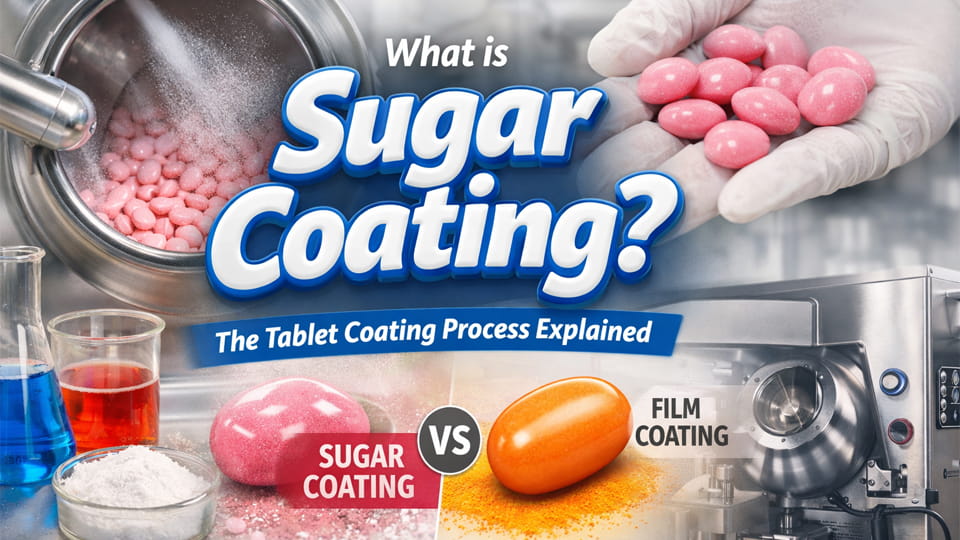
Formes posologiques en comprimés se déclinent en deux types de base: recouvert et non couché. Un comprimé non enrobé est une simple pilule compressée sans aucune coque supplémentaire – juste les ingrédients compressés (médicament actif plus excipients). UN comprimé enrobé, en revanche, a une fine couche externe ou coque appliquée après compression. Ce revêtement peut être un film polymère (pelliculé), coquille à base de sucre (enrobé de sucre), couche entérique, ou autre film fonctionnel. Le revêtement remplit des fonctions allant au-delà de l’apparence : il peut protéger le médicament, goût de masque, libération de contrôle, ou améliorer la déglutition.
Par exemple, Chiffre 1 montre comment une machine de pelliculage applique un film polymère uniforme sur des comprimés, créer en douceur, pilules brillantes. Cet enrobage peut faciliter la déglutition et protéger le noyau du comprimé de l'humidité et de l'air.. En revanche, les comprimés simples non enrobés sont mats, souvent crayeux, et plus vulnérables à l’environnement.
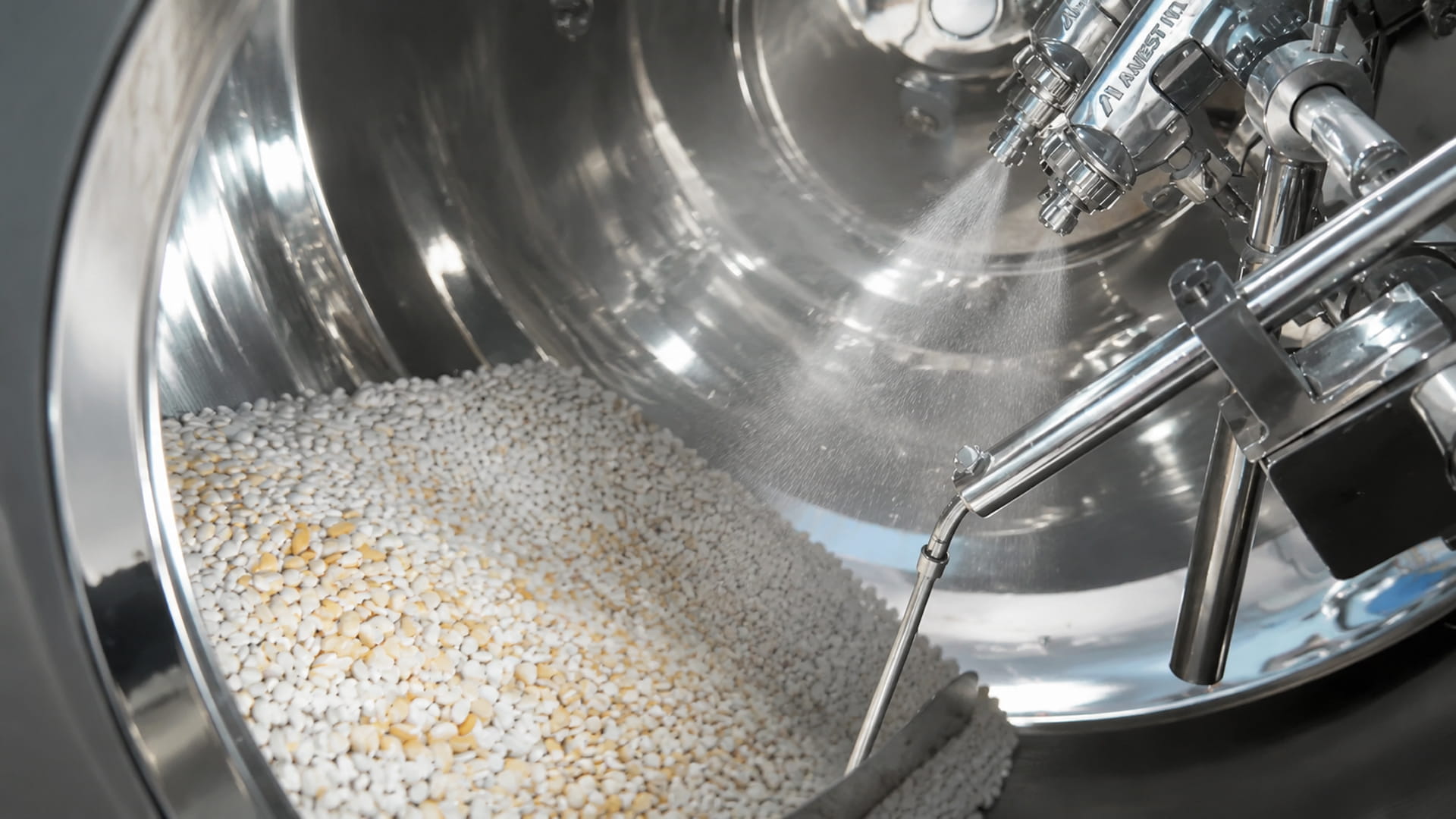
Chiffre 1. Machine d'enrobage de comprimés à grande vitesse appliquant un pelliculage. Le revêtement ajoute une protection, couche lisse sur chaque comprimé, amélioration de l'apparence et de la stabilité.
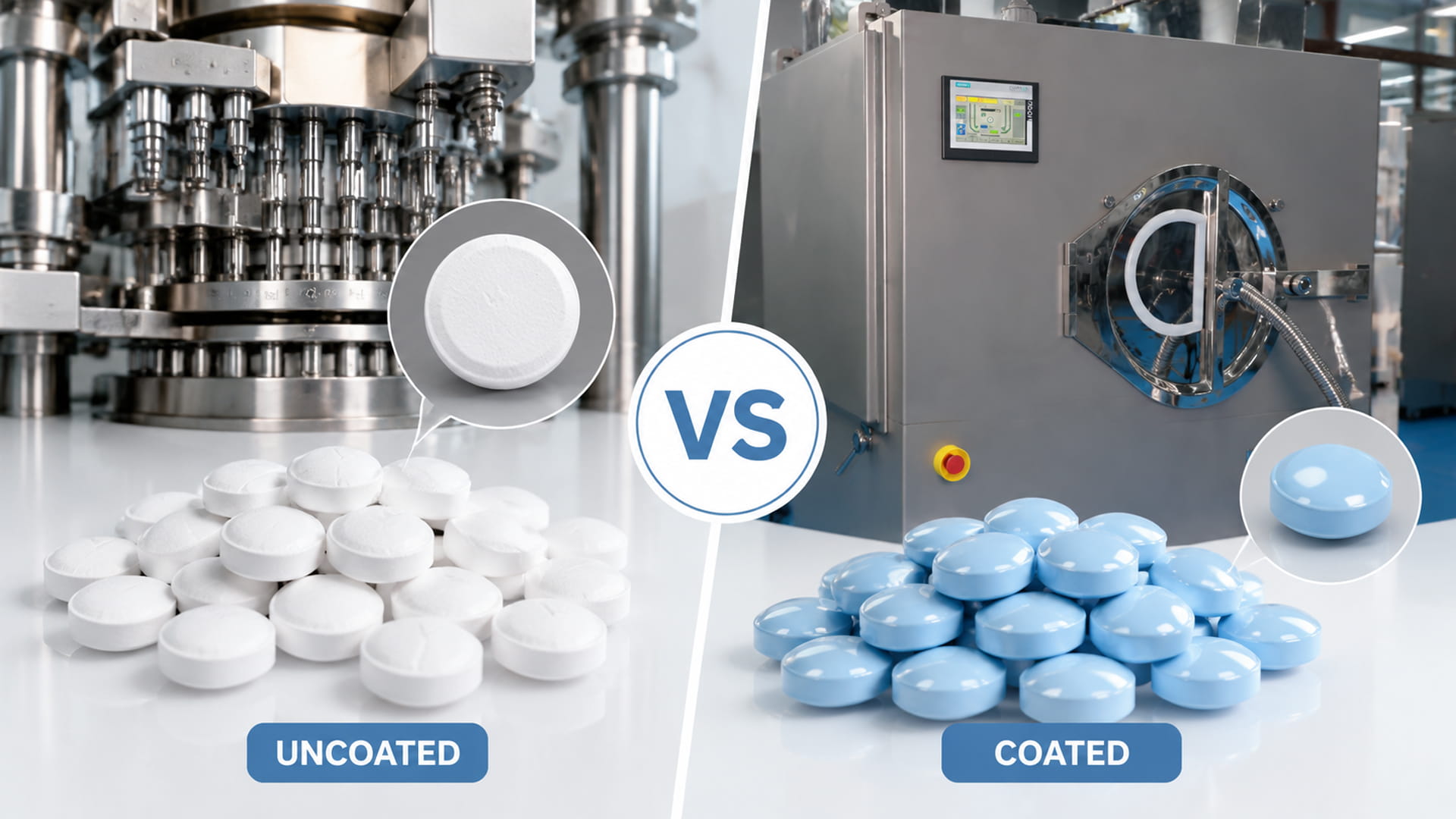
Par exemple, un comprimé pelliculé a un mince film polymère (généralement de l'hydroxypropylméthylcellulose ou similaire) ça ne gonfle pas la pilule. UN comprimé enrobé de sucre a une épaisseur, coque de sirop sucré – plus laborieuse à préparer et beaucoup plus lourde. Un comprimé entérosoluble utilise des polymères sensibles au pH pour qu'il traverse l'estomac et se dissolve dans l'intestin. Chaque type de revêtement a ses propres avantages et inconvénients (voir le tableau ci-dessous).
| Type de revêtement | Description | Utilisations principales |
| Non couché | Pas de revêtement; noyau de comprimé exposé | Libération rapide, sensible aux coûts, médicaments stables |
| Pellicule | Film polymère mince (par exemple. Hpmc) | Masquage du goût, protection contre l'humidité et la lumière, déglutition facile, marque |
| Manteau de sucre | Couches épaisses de sirop de sucre | Fort masquage du goût, finition lisse et brillante, souvent en pédiatrie |
| Enrobage entérique | Polymères sensibles au pH (Eudragit) | Protéger l'estomac ou le médicament; libération intestinale retardée |
| Autres | Spécialisé/à libération contrôlée | Libération prolongée, livraison ciblée, etc.. |
Tableau 1. Comparaison des comprimés non enrobés et enrobés et des types d'enrobage courants.
Le revêtement n’est pas seulement une question d’apparence – c’est un étape fonctionnelle dans la fabrication de comprimés. Les ingénieurs pharmaceutiques demandent, "La tablette peut-elle fonctionner sans revêtement?" Si oui, un comprimé non enrobé est plus simple et moins cher. Mais des revêtements sont ajoutés chaque fois qu’il y a un avantage technique. Les principales raisons d'enrober les comprimés comprennent:
En bref, le revêtement ajoute de la fonctionnalité. Cela ne se fait pas arbitrairement, mais à chaque fois que tu goûtes, stabilité, ou des questions de contrôle des versions. Comme le note un guide de l’industrie, « un revêtement n'est introduit que lorsqu'il apporte un avantage fonctionnel évident ».
Les comprimés enrobés allient durabilité et convivialité. Les avantages clés comprennent:
Chiffre 2 compare un comprimé non enrobé à un comprimé pelliculé. Le comprimé enrobé (droite) a clairement un lisse, extérieur brillant qui masque toute empreinte ou rugosité sur le noyau.
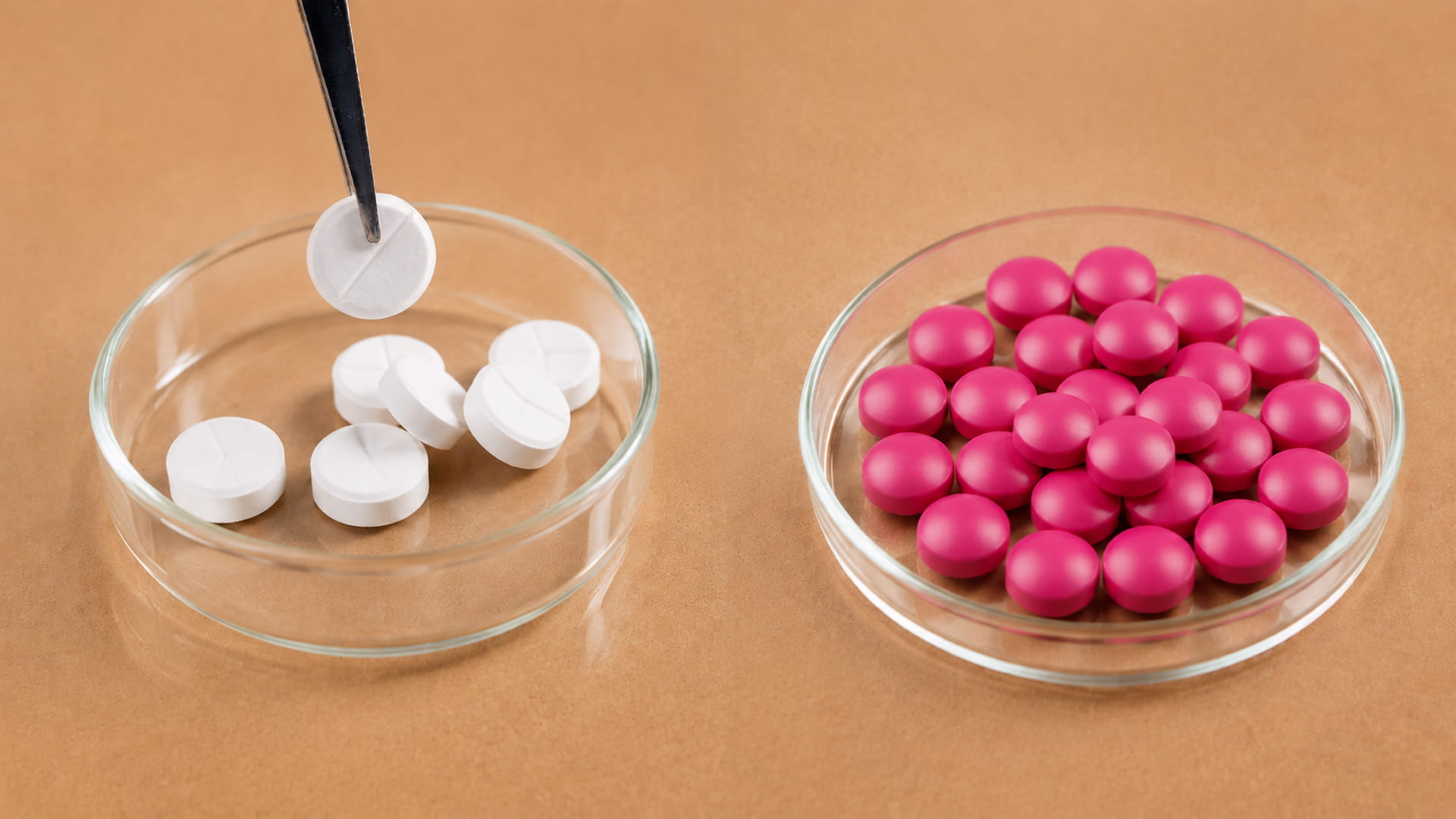
Chiffre 2. Non couché (gauche) vs pelliculé (droite) comprimés. Le comprimé pelliculé a une surface lisse, finition uniforme qui masque la couleur et la texture du noyau. Des revêtements comme celui-ci améliorent la déglutition et protègent le médicament à l’intérieur.
Les avantages des revêtements sont faciles à expliquer: les comprimés enrobés « ont souvent une meilleure apparence », durer plus longtemps, et descends plus facilement" que des pilules ordinaires. Ces avantages signifient que même si le revêtement ajoute des étapes et des coûts, cela peut réduire les problèmes plus tard (dommage, plaintes, expiration anticipée). Une société de gestion de compléments alimentaires note que même si « les comprimés enrobés impliquent des matériaux supplémentaires, travail et temps, le revêtement peut réduire les lots rejetés, plaintes des clients, et les problèmes de qualité après commercialisation ». À long terme, les comprimés enrobés permettent souvent d'économiser de l'argent tout au long du cycle de vie du produit.
Bien sûr, les comprimés simples ont toujours leur place. Les comprimés non enrobés offrent simplicité et rentabilité:
En termes simples, un comprimé non enrobé est « facile et pas cher à faire ». C’est un bon point de départ pour les études de faisabilité. Le blog du pharmacien note également que les comprimés non enrobés sont moins chers et prennent moins de temps à produire., et ils se dissolvent plus rapidement, libérant le médicament plus rapidement.
Cependant, ces gains s'accompagnent de compromis: un comprimé non enrobé « laisse le noyau du médicament vulnérable » aux dommages environnementaux, et peut être moins acceptable pour les patients. Les fabricants pèsent donc ces facteurs: si le revêtement n'est pas nécessaire, ils l'ignoreront probablement.
Les revêtements ne sont pas universels. L'industrie utilise plusieurs types de revêtements majeurs, chacun avec des spécificités utilisations et avantages:
Comprimés pelliculés ou dragéifiés: En bref, les revêtements de film sont minces, durable, et adapté à la production à grande vitesse. Ils ont largement remplacé les enrobages de sucre car ils ajoutent peu de volume et s'appliquent rapidement.. Cependant, les enrobages de sucre offrent toujours un masquage de goût supérieur et un aspect classique, ils apparaissent donc dans des produits comme les vitamines à croquer où le goût est crucial.
Comprimés pelliculés ou entérosolubles: La principale différence réside dans le lieu de sortie. Un film à libération immédiate se dissout dans l'estomac et améliore souvent simplement la déglutition ou la stabilité.. Un enrobage entérique retards dissolution jusqu'au pH intestinal. Par exemple, un médicament contre les brûlures d'estomac peut utiliser une couche entérique pour éviter l'estomac, alors qu'une vitamine quotidienne pourrait utiliser une pellicule ordinaire..
Comment les fabricants enrobent-ils réellement les comprimés? Il s’agit d’une opération de pulvérisation et de séchage soigneusement contrôlée. Les étapes de base sont:
La production moderne de comprimés utilise des équipements tels que presses à comprimés rotatives (pour former des noyaux) et machines de revêtement à grande vitesse (pour appliquer des films ou des coques en sucre). Une presse à comprimés peut produire des centaines de milliers de noyaux uniformes par heure. Ensuite, une machine d'enrobage spécialisée – essentiellement un tambour en acier inoxydable doté de buses de pulvérisation et d'un flux d'air précis – applique la solution d'enrobage sur les comprimés en mouvement..
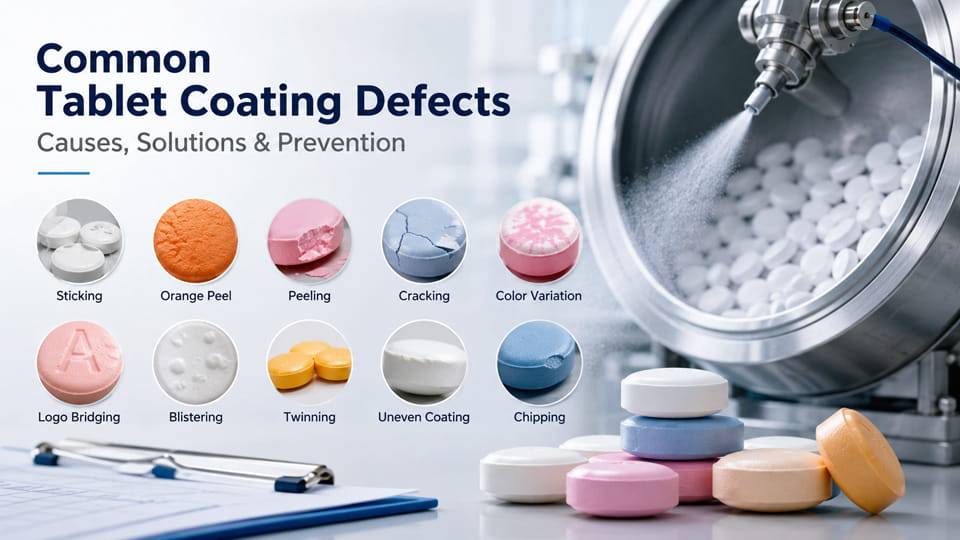
Chacune de ces étapes doit être étroitement contrôlée. Trop de pulvérisation ou d'air trop chaud peuvent provoquer défauts comme la texture « peau d’orange » ou le film qui pèle. C'est pourquoi les machines de revêtement avancées (comme ceux de JinluPacking) avoir des contrôles automatiques PLC, buses de pulvérisation précises, et même une surveillance en temps réel pour ajuster les paramètres. À la fin, la précision est la clé: chaque comprimé doit avoir la bonne épaisseur de revêtement pour des performances constantes.
[jl_youtube src= »https://www.youtube.com/embed/LFJJ-cEpfCk »]
Lors du passage du développement en laboratoire à la production commerciale de comprimés, Choisir la bonne machine d'enrobage de comprimés devient une décision cruciale. Les responsables de production évaluent généralement les équipements en fonction de l'uniformité du revêtement., capacité, niveau d'automatisation, exigences de nettoyage, et les frais d'entretien. L'équipement d'enrobage de comprimés le plus courant comprend:

Chiffre 3. Machine industrielle d'enrobage de comprimés à grande vitesse de Jinlu. Les comprimés tombent à l'intérieur pendant que la solution d'enrobage est pulvérisée et séchée. Des fonctionnalités telles que des agitateurs de type déflecteur et des systèmes de circulation des matériaux garantissent une couverture uniforme et un revêtement efficace..
Les principales caractéristiques à rechercher dans une coucheuse comprennent:
Investir dans du matériel de qualité est payant: une bonne coucheuse permet d'obtenir une uniformité de revêtement élevée, défauts minimes, et peut fonctionner à des vitesses plus élevées. Cela réduit le temps de production et la main d’œuvre. Comme le note un blog, Le pelliculage moderne « est plus rapide et plus homogène que jamais,« grâce à des contrôles automatisés et des machines améliorées.
Pour résumer, voici les principaux contrastes entre les comprimés enrobés et non enrobés:
Tableau 2 (ci-dessous) met en évidence ces différences. Notez que le revêtement n’est pas « meilleur » dans tous les domaines – c’est mieux quand un revêtement est nécessaire. Comme réponse à une FAQ: « Les comprimés enrobés sont-ils toujours meilleurs que les comprimés non enrobés ?? Non – les comprimés enrobés sont utilisés pour des raisons fonctionnelles, comme le masquage ou la protection du goût. Lorsqu'une formulation est stable et agréable au goût, les comprimés non enrobés sont souvent préférés pour leur simplicité et leur coût ».
| Fonctionnalité | Comprimés non enrobés | Comprimés en revêtement |
| Surface | Mat, poudre/granulés visibles | Lisse, film brillant ou coloré |
| Goût/Odeur | Un goût amer ou désagréable peut être perceptible | Le revêtement masque les goûts/odeurs désagréables |
| Facilité de déglutition | Souvent plus difficile, surtout les plus gros | Plus facile grâce à la surface lisse |
| Protection (Humidité/Lumière) | Nécessite un emballage solide | Le film ajoute une barrière, améliore la stabilité |
| Stabilité des médicaments | Plus vulnérable à l'humidité, chaleur | Meilleure stabilité et durée de conservation |
| Complexité du traitement | Processus plus simple, moins d'étapes | Étape de revêtement supplémentaire requise |
| Temps/Coût | Coût de fabrication inférieur | Coût initial plus élevé mais coût de cycle de vie potentiellement inférieur |
| CONTRÔLE DE LA LIBÉRATION | Libération immédiate uniquement | Peut permettre une libération retardée ou contrôlée (entérique, soutenu) |
| Image de marque/apparence | Limité (couleur unie) | Peut être coloré, imprimé pour la marque |
Tableau 2. Comprimés enrobés ou non enrobés: une comparaison des fonctionnalités clés.
En pratique, les formulateurs et les fabricants décident en fonction des besoins du produit. Quelques lignes directrices générales:
Parfois, la décision se résume à l'emballage: les comprimés enrobés se portent généralement mieux dans des bouteilles ou des pots car ils libèrent moins de poussière. Dans packs de cloques, l'une ou l'autre forme fonctionne, mais le revêtement pourrait permettre un emballage plus simple. Fabricants sous contrat (Directeurs marketing) demande souvent: "Pouvons-nous fabriquer ce comprimé sans revêtement?» et ajouter une étape d'enrobage seulement si nécessaire.
Une question courante est de savoir si un comprimé enrobé peut être cassé en deux ou broyé.. En général, Non: fendre ou écraser un comprimé enrobé va à l’encontre du but de la coque. Un revêtement polymère est destiné à contrôler la libération ou à protéger le médicament. L'écraser expose la drogue d'un seul coup, ce qui peut altérer l’absorption ou provoquer une irritation. Comprimés en revêtement (en particulier ceux entériques ou à libération prolongée) devrait rester intact. Si une dose plus faible est nécessaire, vérifiez si la tablette a une ligne de cassure (certains comprimés à libération immédiate le font) ou demandez à un pharmacien. Comme le dit une note d'expert: "Habituellement non, l'écrasement peut détruire la couche protectrice et modifier la libération du médicament.. Vérifiez toujours d’abord auprès d’un pharmacien. ».
À la fin, comprimés enrobés ou non enrobés est un compromis entre simplicité et fonctionnalité. Les comprimés non enrobés sont moins chers et plus rapides à fabriquer, mais laisse le noyau de la drogue exposé. Les comprimés enrobés ajoutent de la complexité et du coût, mais offrent des avantages évidents: meilleure stabilité, masquage du goût, déglutition, et différenciation des marques. Dans la production pharmaceutique moderne, la plupart des pilules à usage quotidien (vitamines, Médites de gré, produits nutraceutiques) sont pelliculés car ils offrent le juste équilibre entre protection et efficacité.
Cependant, chaque fois que la formulation le permet, les entreprises peuvent préférer les comprimés non enrobés pour des raisons de coût. La clé est de adapter le type de comprimé aux besoins du médicament. Si votre produit nécessite un masquage du goût ou une libération contrôlée, un enduit est souvent indispensable. Sinon, un simple comprimé peut suffire.
Pour toute question sur l’enrobage des comprimés ou pour explorer les options d’équipement, tendre la main! Notre équipe chez JinLuPacking est spécialisée dans les presses à comprimés, revêtements, et lignes complètes de production de comprimés. Que vous ayez besoin d'un système de revêtement à grande vitesse pour film, sucre, ou applications entériques, ou des conseils pour optimiser la formulation de vos comprimés, nous sommes là pour vous aider. Contactez-nous pour un devis ou plus d'informations, et veillons à ce que vos tablettes obtiennent la bonne finition et les bonnes performances.
Les comprimés enrobés ont une couche supplémentaire (film, sucre ou polymère fonctionnel) appliqué sur le noyau comprimé, alors que les comprimés non enrobés sont des pilules compressées simples sans aucune couche externe. Le revêtement sert à des fins fonctionnelles: ça peut masquer le goût, protéger l'API de l'humidité/de la lumière, et libération du contrôle. Les comprimés non enrobés se dissolvent immédiatement et sont moins chers à fabriquer, mais ils exposent le médicament à l'environnement et ont souvent un goût amer.
Les comprimés sont enrobés pour améliorer la stabilité, acceptabilité du patient, et performances. Un revêtement protège de l'humidité- ou API sensibles à la lumière, masque les saveurs désagréables, et rend le comprimé plus facile à avaler. Revêtements spécialisés (comme les films entériques) peut retarder la libération jusqu'à ce que l'intestin, prévenir les irritations de l'estomac. En bref, le revêtement améliore l’apparence et la durée de conservation du comprimé, et peut permettre une administration contrôlée des médicaments et une meilleure observance des patients.
Ni l’un ni l’autre n’est universellement « meilleur » – cela dépend de l’application. Les comprimés enrobés présentent l'avantage de la protection et de l'attrait pour les patients, mais ils coûtent plus cher et nécessitent un traitement supplémentaire. Les comprimés non enrobés sont plus simples, plus rapide, et moins cher à produire, et ils libèrent le médicament rapidement. Pour une écurie, médicament à libération immédiate où le coût est une priorité, non couché pourrait être idéal. Pour un médicament amer ou sensible à l’humidité où le masquage du goût et la stabilité sont des priorités, le revêtement est le meilleur choix.
Les trois principales méthodes d'enrobage des comprimés sont:
• Pelliculage: Fine couche polymère (généralement à base d'eau) appliqué par pulvérisation; le plus courant aujourd'hui. Offre une protection contre l'humidité et un marquage avec un gain de poids minimal.
• Enrobage de sucre: Coquille de sucre épaisse constituée de plusieurs couches de sirop; donne une finition brillante et les masques ont bon goût, mais ajoute du volume et nécessite un traitement long.
• Enrobage entérique: Un film sensible au pH qui résiste à l'acide gastrique et se dissout dans les intestins. Il s'agit techniquement d'un type de pelliculage avec des polymères spéciaux, utilisé pour les médicaments acido-labiles ou pour éviter une irritation gastrique.
Les comprimés pelliculés bénéficient de la plupart des principaux avantages de l'enrobage grâce à une coque plus fine.. Une bonne pellicule aqueuse protégera le médicament (barrière contre l'humidité et la lumière), masquer le goût et l'odeur, et améliorer l'esthétique sans augmenter significativement la taille de la tablette. Les revêtements de film sèchent rapidement dans les coucheuses modernes, donnant un débit élevé. Ils peuvent également être formulés pour des profils de version spécifiques (entérique ou soutenu) au choix du polymère.
En général, Oui. Les comprimés non enrobés se désintègrent généralement et se dissolvent plus rapidement car il n'y a pas de couche barrière. L'API est immédiatement exposé aux liquides gastriques, conduisant à une apparition plus rapide. En revanche, même une couche de film à libération immédiate ajoute un léger retard (car le pelage doit d'abord se dissoudre). Cependant, la différence peut être faible selon la composition et l’épaisseur du revêtement.
L'équipement de revêtement commun comprend:
• Revêtements de casseroles perforées (Coucheuses à grande vitesse): Machines conformes aux normes de l'industrie avec tambours perforés rotatifs. L'air chauffé circule à travers le tambour, permettant une efficacité de séchage élevée et un revêtement uniforme.
• Machines d'enduction à lit fluidisé: Les comprimés sont suspendus sur un courant d'air et pulvérisés par le bas ou par le haut.. Idéal pour les granulés ou les petits comprimés avec de fines couches très uniformes.
• Poêles à revêtement traditionnelles: Grandes casseroles ouvertes utilisées principalement pour l'enrobage du sucre (à forte intensité de main d'œuvre et pour la plupart obsolète dans l'industrie pharmaceutique moderne).
Chaque type de machine est choisi en fonction de la taille du lot, taille/forme du comprimé, et matériau de revêtement. Pour le pelliculage à grande échelle, casseroles perforées (comme la machine d'enrobage de comprimés de Jinlu) sont les plus courants.
L'enrobage peut retarder ou modifier la libération du médicament. Un enrobage entérique empêche la libération dans l'acide gastrique, le médicament n'est donc libéré que dans l'intestin. Autres revêtements spéciaux (films à diffusion prolongée) contiennent des polymères qui ralentissent la pénétration des fluides, étendre la sortie sur des heures. Même les couches de film non fonctionnelles (pour diffusion immédiate) peut ralentir légèrement la libération par rapport à un noyau non enrobé, parce que la barrière doit d'abord se dissoudre. Ainsi, les revêtements fournissent un outil pour régler avec précision où et à quelle vitesse l'API est livrée.
Les revêtements de film sont polyvalents et efficaces. Ils protègent le médicament et améliorent le goût/l’apparence avec un temps de traitement minimal. Les couches de film aqueux modernes sèchent rapidement, ce qui est essentiel pour la fabrication à haut débit. Ils permettent également l'ajout de couleurs et d'identifiants, aider à la différenciation de la marque. Parce qu'ils peuvent être conçus pour différents profils de version, les pelliculages sont un outil essentiel pour les sociétés pharmaceutiques qui souhaitent offrir à la fois qualité et performances à leurs comprimés..
Les entreprises évaluent plusieurs facteurs. Si le médicament est instable, amer, ou a besoin d'une protection de l'estomac (libération entérique), ils choisissent les comprimés enrobés. Si la formulation est déjà stable, le goût est acceptable, et minimiser les coûts est une priorité, ils vont avec non enduit. Comme le résume un guide de l’industrie: utilisez des comprimés enrobés si « vous avez besoin de masquer le goût »," " protection contre l'humidité, lumière ou oxydation,» ou « libération contrôlée/retardée »; choisissez non enrobé si votre formule est stable et qu'aucune protection supplémentaire n'est nécessaire. Essentiellement, la décision est motivée par les exigences du produit (Chimie des API, libération cible, besoins marketing) par rapport aux considérations de production (coût, disponibilité des équipements).
Références:
1.Application pharmaceutique du revêtement de film pour comprimés —— Bibliothèque nationale de médecine
2.Enrobage du comprimé —— Université de génie chimique du Michigan
3.Enrobage du comprimé: Ingénierie des systèmes de processus pour la fabrication pharmaceutique —— ScienceDirect
4.Le revêtement pharmaceutique et ses différentes approches, une revue —— Bibliothèque nationale de médecine
5.Une revue complète sur le pelliculage pharmaceutique: Passé, Présent, et avenir —— Bibliothèque nationale de médecine
6.Application pharmaceutique du revêtement de film pour comprimés —— MDPI
7.Progrès dans les technologies de fabrication de tablettes: Chapitre 10 – Technologies des comprimés enrobés —— ScienceDirect