Guide complet des options d'emballage des capsules: Espèces, Matériels, et machines pour l'emballage pharmaceutique
Guide complet des options d'emballage des capsules: Espèces, Matériels, et machines pour l'emballage pharmaceutique
avril 25, 2026
Sans commentaires
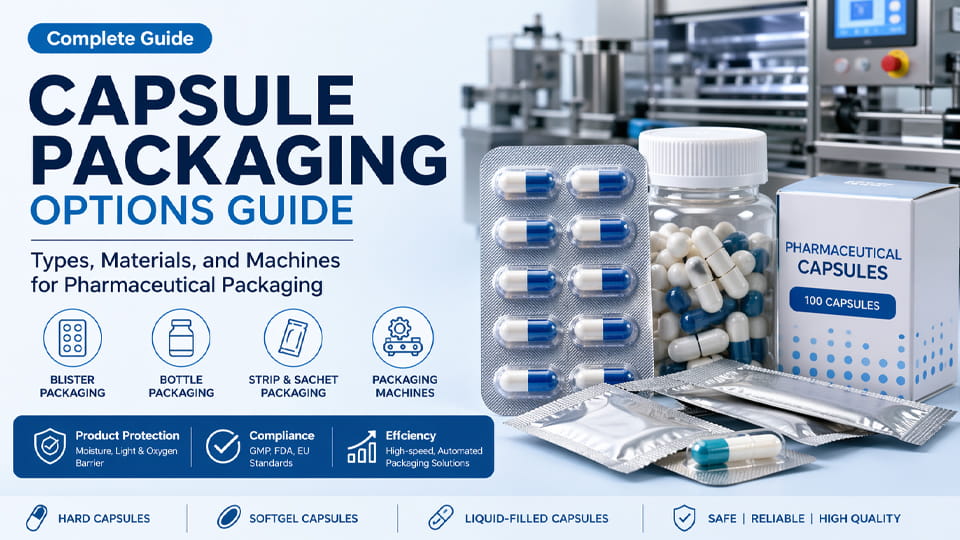
L'emballage des capsules fait référence à la façon dont les capsules pharmaceutiques (coque dure ou softgel) sont joints pour distribution et utilisation. Il comprend emballage primaire (le récipient immédiat en contact avec les gélules, par exemple. cavités ou bouteilles de blisters) et emballage secondaire (cartons extérieurs, boîtes, et des étiquettes qui protègent et identifient davantage le produit). Un bon emballage des capsules doit protéger le médicament de l’humidité, lumière, et contamination, assurer la stabilité tout au long de la durée de conservation, et répondre aux exigences réglementaires. Par exemple, L'OMS note que « les composants de l'emballage entourent le produit depuis la production jusqu'à son utilisation,» et doit remplir des fonctions comme la protection, stabilité, et identification. Réglementations BPF de la FDA (21 CFR 211) exiger des procédures écrites pour inspecter et tester les matériaux d’emballage dès leur réception, et exiger un étiquetage sécurisé et des contrôles d’inviolabilité. En pratique, nous devons faire correspondre le produit en capsules (forme posologique, sensibilité, dosage, etc.) au format et au matériau d'emballage appropriés.
L'emballage primaire des capsules pharmaceutiques est essentiel pour protection du produit, conformité, et la sécurité des patients: Il garde les capsules au sec, non contaminé, et clairement étiqueté. Par exemple, les plaquettes thermoformées et les flacons ambrés sont connus pour être idéaux pour les médicaments sensibles à l'humidité. Le bon emballage favorise également l’observance du patient (dosage sous blister en dose unitaire, bouteilles avec sécurité enfant, étiquetage clair) et les besoins de la chaîne d'approvisionnement (sérialisation, logistique). Ci-dessous, nous examinons chaque option en détail.
Types d'emballage de capsules
Emballage blister pour capsules
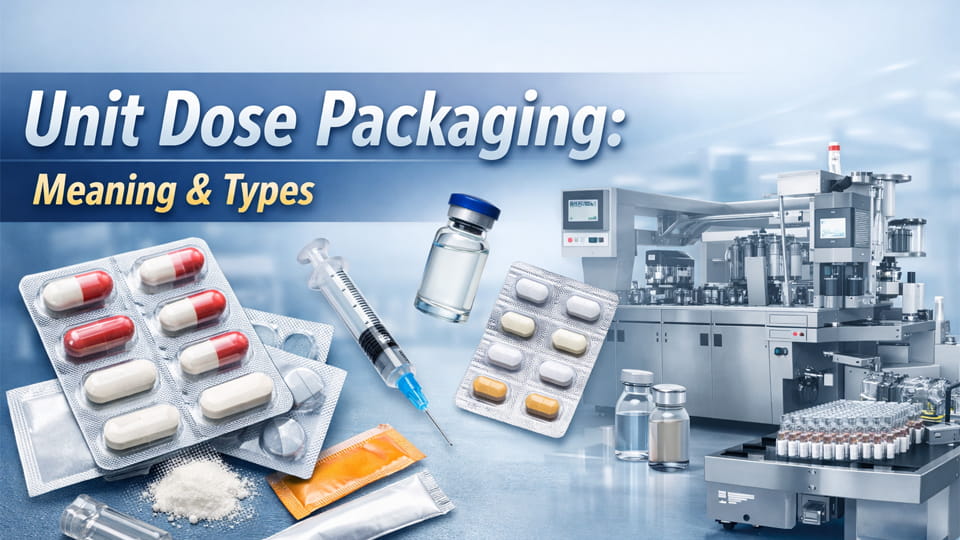
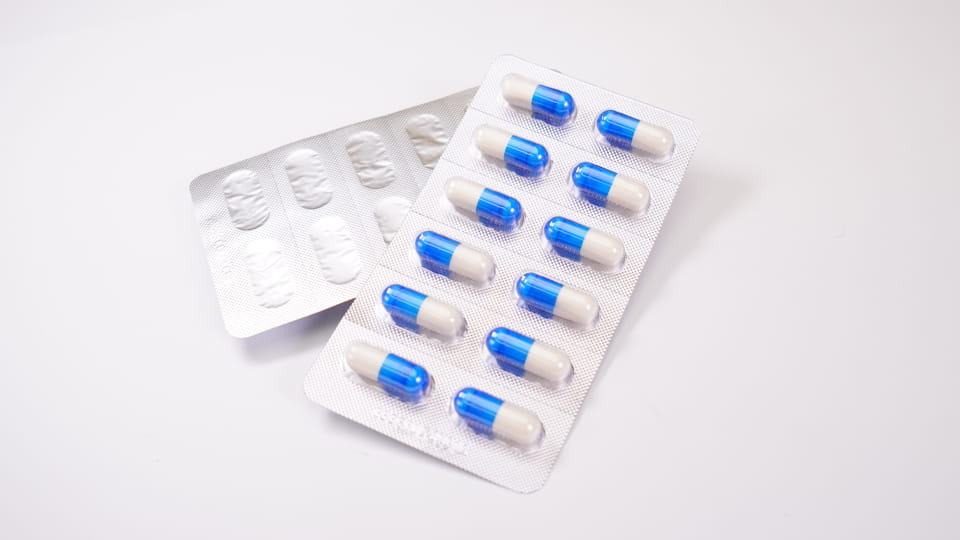
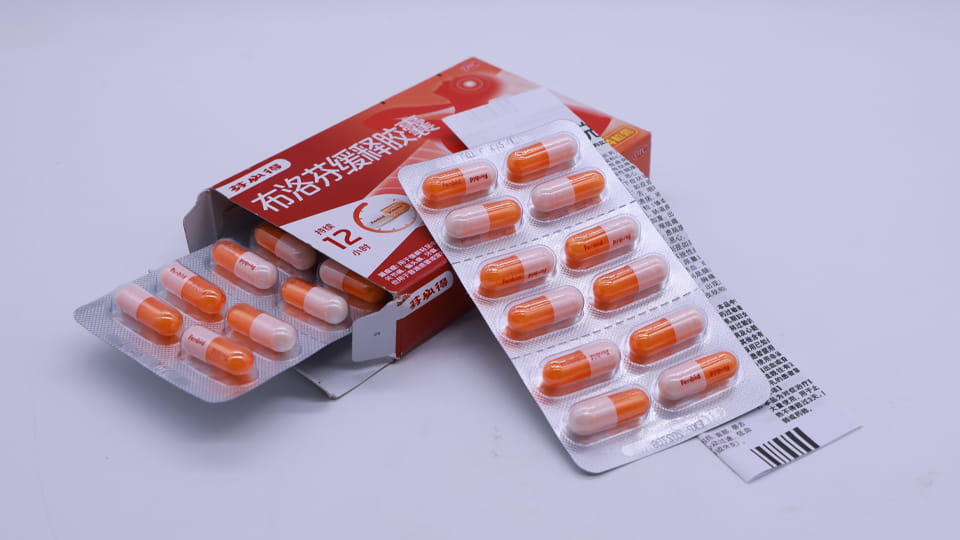
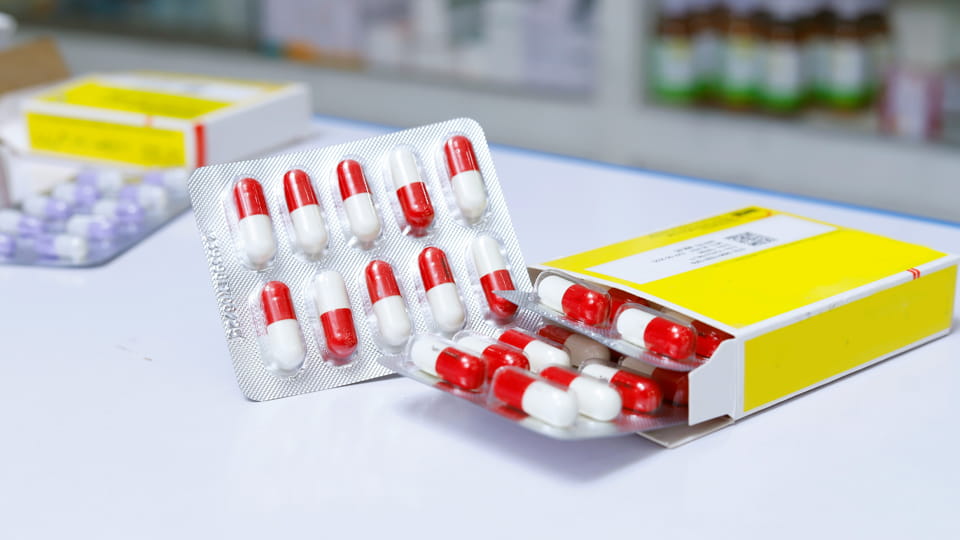
Packs de cloques constitué de cavités en plastique préformées (« ampoules ») qui contiennent des capsules individuelles, scellé avec un support (papier d'aluminium ou plastique). Ce emballage primaire offres protection en dose unitaire. Les blisters fournissent excellente barrière propriétés: ils peuvent être fabriqués avec matériaux comme le PVC/PVDC ou le film (Alu-PVC, De tout le temps) pour bloquer l'humidité, oxygène et lumière. Par exemple, La blistereuse DPP-180Pro de Jinlu peut former et sceller jusqu'à 4,800 blisters de capsules par heure en stratifiés Alu-PVC ou Alu-Alu. Les principales caractéristiques de l'emballage sous blister des capsules comprennent:
Protection: Chaque cavité est hermétiquement fermée, protéger la capsule de l'humidité, oxygène et lumière. Comme le note une étude, clochards « offrent une protection supérieure contre l’humidité et la lumière » (mieux que les bouteilles). Films haute barrière (par exemple. De tout le temps) prolonger la durée de conservation des capsules hygroscopiques ou sensibles à l'oxygène.
Preuve de falsification: Un blister indique clairement si une dose a été retirée ou si le sceau est brisé. Cela garantit l’intégrité du produit et la sécurité des patients.
Commodité: Les plaquettes thermoformées unitaires permettent aux patients de prendre une capsule à la fois, réduire les erreurs de dosage et le gaspillage. Ils sont particulièrement utiles pour les schémas posologiques courts ou les formulations pédiatriques..
Personnalisation: Les blisters peuvent être fabriqués dans différentes formes et tailles de cavités pour s'adapter à différentes dimensions de capsules. Machines modernes (comme les machines de thermoformage ou d'assistance au branchement) s'adapte facilement aux tailles de capsules.
Efficacité spatiale: Les blisters sont compacts et empilables. Ils minimisent l'espace vide par rapport aux bouteilles, économiser sur l'expédition et l'espace de stockage.
Chiffre:Machine d'emballage sous blister Jinlu JL-180Pro formant des ampoules de capsules (Alu-PVC), 4,800 cavités/heure.
Les blisters de Jinlu (par exemple. le DPP-180Pro) peut automatiquement former des cavités, capsules alimentaires, joint, plaques découpées, et même imprimer les codes de lot. Ils fonctionnent généralement à une vitesse moyenne-élevée (des milliers de cavités par heure), idéal pour la production de masse. Différents formats de blisters (Alu-PVC vs Alu-Alu) sont sélectionnés par produit: De tout le temps (feuille-feuille) offre la barrière la plus élevée (idéal pour les médicaments très sensibles à l'humidité), alors que le PVC/PVDC est courant pour les capsules standard. L'emballage blister simplifie également le comptage et l'inspection: la plupart des lignes intègrent facilement des machines d'inspection par caméra ou de comptage de comprimés pour vérifier le remplissage des capsules.
Bouteille (Pot de bouteille/capsule) Conditionnement
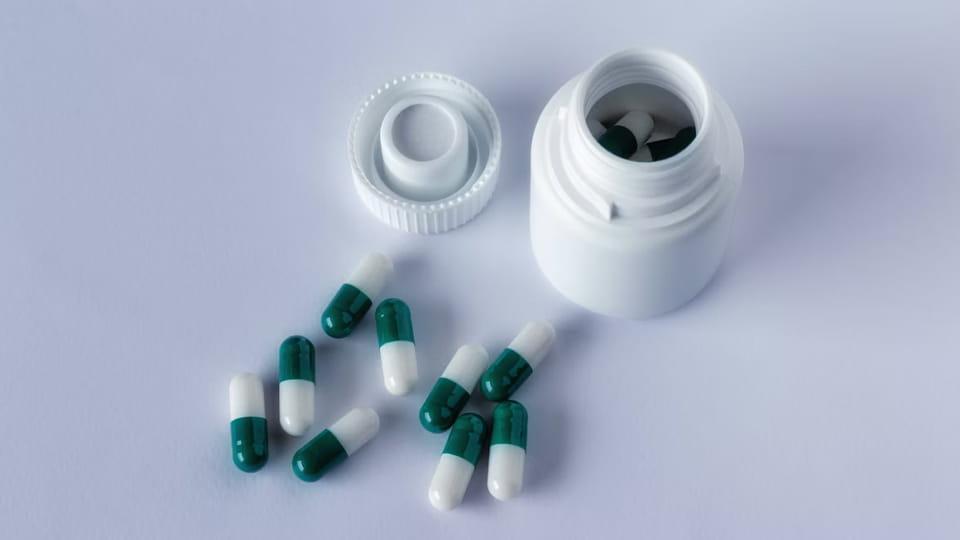
Les flacons sont le récipient multidose classique. Les capsules sont remplies dans des bouteilles (en plastique ou en verre) qui sont ensuite plafonnés. Ce format est bien connu pour les vitamines, suppléments, et de nombreuses pilules sur ordonnance. Principales caractéristiques:
Versatilité: Les bouteilles peuvent contenir de grandes quantités (50–1000+ gélules) et une variété de produits (comprimés, gélules, poudres, même les liquides). Ils sont généralement fabriqués à partir de plastique HDPE ou PET, ou du verre (pour une forte inertie chimique).
Emballage en vrac: Pour les gélules destinées à être prises de manière répétée (vitamines quotidiennes, thérapies à long terme), les bouteilles sont pratiques. Les patients peuvent distribuer plusieurs doses à la fois.
Rentabilité: Les lignes de remplissage de bouteilles sont relativement simples. Les machines comptent ou pèsent les doses plus rapidement (par exemple. Le JL-16H de Jinlu peut remplir jusqu'à 100 bouteilles / minute). Le coût unitaire du matériau est souvent inférieur à celui du blister, surtout à grande échelle.
Manipulation facile: Les consommateurs savent ouvrir les bouteilles. Il peut être plus facile pour les patients âgés d'ouvrir une bouteille (surtout avec des bouchons à ouverture facile ou avec sécurité enfants) que de décoller les ampoules.
Emballage secondaire: Les bouteilles permettent d'inclure des éléments auxiliaires comme sachets déshydratants (pour le contrôle de l'humidité) ou coton. Ils accueillent également des étiquettes complètes de produits autour du corps de la bouteille., et peut être emballé dans des cartons.
Chiffre: Ligne d'embouteillage de capsules/comprimés Jinlu JL-16H (100 bouteilles/min) avec décrypteur, filler, capsuleuse, et étiqueteuse.
Les lignes d'embouteillage de capsules intègrent plusieurs machines: un bouteille de bouteille (ou trémie d'alimentation), un machine de comptage-remplissage (qui dépose X capsules dans chaque bouteille), un machine de capsulage/scellage (appliquer et serrer les capuchons), et un étiqueteuse. Par exemple, La gamme JL-16H de Jinlu peut gérer des capsules de 3 à 40 mm, atteindre ~100 bouteilles/min avec >99.8% précision de comptage. Les bouteilles peuvent être remplies en vrac très rapidement. Pour respecter la réglementation, les lignes de bouteilles comprennent souvent une station pour l'insertion des dessicants (par exemple. packs de silice) et une station de sceau inviolable. Les bouchons de sécurité enfants sont une autre caractéristique courante des médicaments pédiatriques.
Dans le choix de l'emballage des bouteilles, tenir compte du volume et de la stabilité du produit: produits à grand volume (par exemple. vitamines quotidiennes) bouteilles de costume, alors que les capsules à faible volume ou très sensibles peuvent préférer les ampoules. Notez que les bouteilles offrent généralement moins de protection inhérente contre l’humidité et l’oxygène que les ampoules à haute barrière. Le verre ambré ou les récipients opaques peuvent ajouter une protection contre la lumière, et joints intérieurs (doublures en papier d'aluminium) peut améliorer la barrière.
Sachets & Packs de bâtons (Sachets unidose)
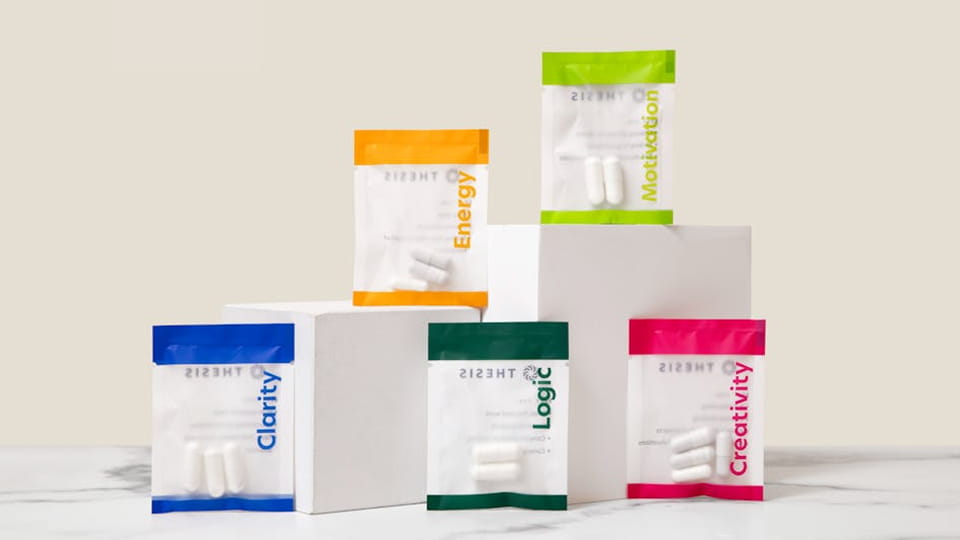
Sachets (et des packs de bâtons) sont paquets flexiblesqui contiennent une dose de poudre, granulés ou liquide. Bien que ce ne soit pas aussi courant pour les capsules, ils sont pertinents pour les formes posologiques apparentées (par exemple. capsules nutraceutiques réduites en poudre, ou du mastic en poudre lui-même). Néanmoins, sachets et stick packs méritent d'être mentionnés dans un guide d'emballage des capsules:
Sachets sont généralement des paquets plats ou en forme d'oreiller scellés dessus 3 ou 4 côtés. Ils sont souvent utilisés pour les poudres unidose (par exemple. granulés effervescents) ou de très petites capsules (certaines pharmacies distribuent des gélules en sachets pour un dosage pédiatrique). Les machines modernes de formage-remplissage-scellage peuvent remplir des sachets avec de petits volumes précis. Les avantages incluent la portabilité (tient dans la poche), commodité, et dosage précis (pas de gaspillage partiel). Les sachets assurent également une bonne étanchéité: le joint hermétique prolonge la durée de conservation et empêche la contamination. De nombreux produits pharmaceutiques (poudres, gels, ondage, pilules unidose) utiliser des sachets; Par exemple, solutions de réhydratation injectables d’urgence ou poudres antibiotiques à usage unique.
Packs de bâtons sont longs, sachets étroits (souvent scellé le long d'une longue couture et d'une couture d'extrémité). Ils sont populaires pour les suppléments en poudre (par exemple. mélanges pour boissons instantanées) et peut être utilisé pour les poudres de capsules. Les stick packs utilisent généralement moins de matériau que les sachets et le débit de la machine est plus élevé (30–50% plus rapide). Ils sont idéaux pour les poudres fluides grâce à leur ouverture fine..
Les sachets et les stick packs sont produits par formage-remplissage-scellement vertical (Vff) ou machines FFS horizontales. Série JL-VP de Jinlu, par exemple, est une machine FFS à bâtons/sachets multivoies (40 sacs / min / voie, Précision de ± 0,02 g) pour poudres, granulés, liquides ou gels. Si les gélules elles-mêmes devaient être conditionnées en sachets, on ouvrirait le sachet pour récupérer la dose – mais le plus souvent, les gélules sont conditionnées intactes dans un blister ou un flacon, tandis que les sachets/stick packs traitent le contenu en poudre.
Note réglementaire: les sachets et les stick packs sont autorisés pour les médicaments solides et semi-solides (selon les définitions de l'OMS). Ils sont considérés comme emballage primaire s’ils contiennent directement le produit. Comme des ampoules, les sachets peuvent être conçus avec une sécurité enfants ou avec des encoches de déchirure.
Emballage en bande
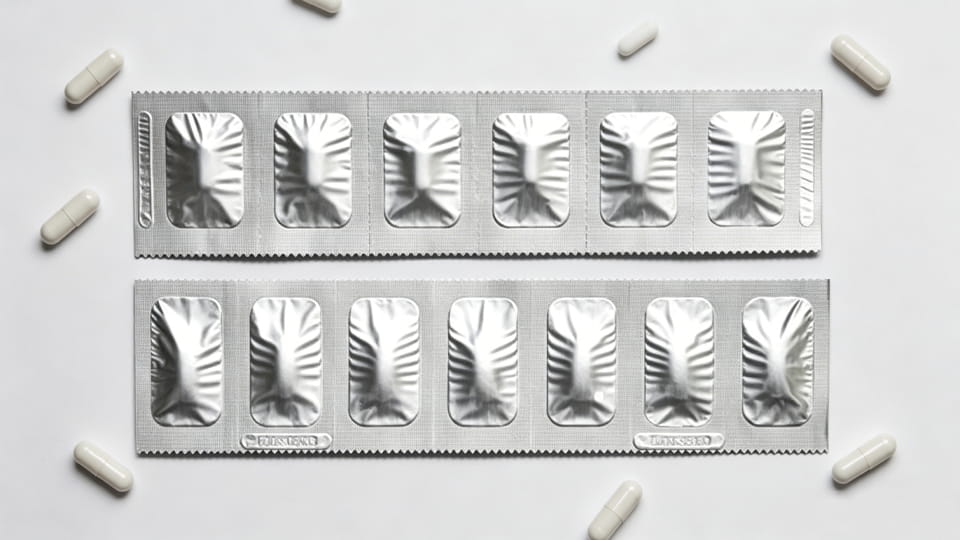
Paquets de bandes (également appelés bandes d'aluminium ou « bandes de dose ») sont une autre forme de conditionnement primaire en dose unitaire. Une bande est généralement une bande étroite de matériau (souvent en aluminium ou en stratifié multicouche) plié et scellé, avec perforations entre les doses. Contrairement aux ampoules, les paquets de bandes ne forment pas de cavités profondes, mais, la capsule est prise en sandwich entre deux couches de film. Les paquets de bandes sont largement utilisés en Asie et pour les produits où une protection élevée contre l'humidité est nécessaire mais où les blisters sont trop volumineux.. Points clés:
Excellente barrière: Les paquets de bandes utilisent souvent du papier d'aluminium imperméable à l'humidité et à l'oxygène.. Cela les rend idéaux pour les capsules sensibles à l'humidité ou les médicaments pédiatriques où une longue durée de conservation est nécessaire.. L'OMS définit même les plaquettes comme étant adaptées aux « doses uniques… de préparations solides ou semi-solides »..
Compact & Dose unitaire: Comme des ampoules, les paquets de bandelettes permettent une utilisation une dose à la fois. Ils sont plus légers et plus plats que les ampoules, gain de place.
Équipement: Les machines d'emballage en bandes forment et scellent le film autour de chaque capsule. Jinlu propose également des machines d'emballage en bandes. Par exemple, Les paquets de bandes Rich Packing Notes utilisent un laminage en aluminium ou en plastique et peuvent atteindre des longueurs de plusieurs doses..
Chiffre:Machine d'emballage à bande
Du point de vue de la sélection, les packs de bandes occupent un juste milieu entre les bouteilles (en gros) et une ampoule (rigidité). Ils sont souvent choisis lorsque très haute barrière contre l'humidité est nécessaire mais dans un cadre mince, forme légère. (Note: les paquets de bandes peuvent ne pas fournir de preuve d'inviolabilité aussi clairement que les blisters, à moins que des scellés supplémentaires ne soient utilisés.)
Emballage secondaire & Étiquetage
Après avoir choisi un pack principal, les capsules sont généralement placées dans emballage secondaire comme des boîtes en carton ou emballé sous film rétractable cas. Les cartons offrent une protection supplémentaire pendant l'expédition, permettre un étiquetage supplémentaire (informations sur les médicaments, marque, scellés inviolables), et aider à organiser des produits multi-pack. Considérations clés pour l’emballage secondaire:
Cartons & Insertions: Les cartons médicaux doivent inclure des notices de produits (Dépliants avec instructions de dosage, numéro de lot, expiration, informations sur le fabricant, etc.). Il s'agit souvent de dépliants papier insérés dans la boîte.
Sceaux inviolables: Les emballages secondaires sont généralement dotés de scellés inviolables (par exemple. bandes de sécurité, bandes rétractables) pour montrer si la boîte a été ouverte.
Sérialisation/Suivi & Tracer: Sur de nombreux marchés (DSCSA américaine, FMD de l'UE), les colis individuels doivent porter des codes de série uniques (codes-barres/QR) pour la lutte contre la contrefaçon. Une solution d'emballage robuste comprend des imprimantes d'étiquettes ou des codeurs à jet d'encre pour imprimer les numéros de lot et les codes 2D sur les cartons..
Fonctions de sécurité et de sécurité pour les enfants: Pour certains médicaments, règlements (par exemple. 21 CFR 211) exiger un emballage à l'épreuve des enfants. Cela peut inclure des films blister difficiles à ouvrir pour les enfants., ou bouchons spéciaux sur les bouteilles. Les boîtes secondaires peuvent également avoir des serrures ou nécessiter une ouverture en deux étapes si nécessaire.
Stabilité et conformité: Le système combiné primaire+secondaire doit maintenir le produit stable dans les conditions de stockage indiquées.. Par exemple, Les études de stabilité ICH nécessitent explicitement de tester la forme posologique finale emballée.
En résumé, l'emballage secondaire enveloppe le produit pour la distribution finale et garantit que toutes les caractéristiques d'étiquetage et de conformité sont en place. Un bon design améliore ici l’image de marque et le confort de l’utilisateur (cartons à ouverture facile, étiquetage clair).
Matériaux pour l'emballage des capsules
Choisir le bon matériau d'emballage est essentiel pour protéger les capsules. Les matériaux doivent être compatibles avec le médicament, répondre aux besoins barrières, et respecter la réglementation (ISO 15378 BPF pour les matériaux d'emballage, etc.). Les matériaux courants comprennent:
Films blister:
PVC (Chlorure de polyvinyle): Faible coût, plastique transparent souvent utilisé pour les ampoules. Le PVC est perméable à l'humidité (pas aussi protecteur) sauf enduit.
PVC/PVDC: PVC recouvert de PVDC (chlorure de polyvinylidène) réduit considérablement la pénétration de l'humidité (Le blister Alu-PVC courant utilise une barrière PVDC).
Alu-PVC ou Alu-Alu: Feuille d'aluminium laminée sur PVC ou PET. L'Alu-PVC offre une bonne barrière à l'humidité et à l'oxygène (commun), tandis qu'Alu-Alu (feuille-feuille) fournit le le plus élevé barrière (utilisé pour les capsules très hygroscopiques ou sensibles à la lumière).
Polypropylène (PP): Émerger comme une alternative durable. Ampoules PP (monomatériau) peut être entièrement recyclé, comme avec le revêtement PharmaGuard de Südpack, et toujours performant dans les lignes automatisées.
Matériaux de bouteille:
PEHD (Polyéthylène haute densité): Plastique commun pour les bouteilles pharmaceutiques; relativement inerte et rentable.
ANIMAL DE COMPAGNIE (Polyéthylène téréphtalate): Offre une meilleure clarté et rigidité; bonne barrière contre les gaz. Souvent utilisé pour les nutraceutiques/suppléments.
Verre (Borosilicate de type I): Utilisé pour les produits très sensibles à l'humidité ou parentéraux; le verre offre une excellente barrière contre l'humidité et l'inertie chimique. Le verre ambré bloque également la lumière UV.
Autres films: Pour sachets et stick packs, films laminés multicouches (par exemple. PET/Go/PE) sont utilisés pour contrôler l’humidité et l’étanchéité.
En général, choisissez la barrière la plus élevée qui convient à votre capsule. Par exemple, une capsule de gélatine sensible à l'humidité peut justifier un blister Alu-Alu ou une bouteille en verre ambré avec dessicant. En revanche, les capsules non sensibles peuvent utiliser un blister en PVC standard ou une bouteille en PEHD. Tenez également compte de la durée de conservation: les produits à plus long terme nécessitent une barrière plus robuste.
Notes de sécurité/recyclage: Les tendances durables privilégient les emballages mono-matériaux (par exemple. Ampoules PP, bouteilles PET recyclables). Matériaux de test pour les extractibles, compatibilité, et respect des limites FDA/UE (par exemple. USP <661> pour plastifiants) fait partie de la conformité des emballages.
Types de capsules et impact sur l'emballage
Les capsules sont disponibles en différents types et leur formulation dicte les besoins en matière d'emballage.:
Capsules de gélatine dure: Les coques en deux parties les plus courantes. Ils contiennent des poudres/granulés secs. Les coquilles de gélatine retiennent un peu d'humidité et deviennent cassantes si elles sont trop sèches, ou doux si trop humide. En général, capsules de gélatine dure exiger modéré contrôle de l'humidité. Une condition de stockage largement citée est 15–25 °C et 35 à 65 % d'humidité relative. L'emballage doit maintenir cet environnement: Par exemple, blisters avec doublures PVDC ou Alu-Alu, ou des bouteilles avec dessicants, aider à stabiliser les capsules.
Hpmc (Végétarien) Capsules: Fabriqué à partir de cellulose végétale, ces coquilles ont généralement une humidité inhérente inférieure à celle de la gélatine et tolèrent jusqu'à ~ 70 % d'humidité relative. Ils sont souvent utilisés pour les API sensibles à l'humidité. Cependant, même Capsules HPMC nécessitent un emballage barrière pour les remplissages très hygroscopiques ou sensibles à la lumière. En pratique, Capsules HPMC + Des ampoules en PVC suffisent souvent, mais une barrière élevée ajoute toujours de la sécurité.
Gélules molles (Rempli de liquide):Gélules avoir une gélatine (ou gélatine modifiée) coque remplie d'huile ou d'autres liquides. Ils contiennent beaucoup d'eau (souvent ~5 à 10 %) dans la coque et peut perdre de l'humidité ou s'oxyder. Les gélules sont très sensibles à l'humidité: ils nécessitent généralement des bouteilles en verre ambré (avec déshydratant) ou des plaquettes thermoformées à haute barrière pour éviter la perte d'eau et maintenir la puissance. Parce que les coquilles de softgel sont sensibles à la température/humidité pendant la fabrication, une chaîne du froid et des emballages spécialisés sont parfois nécessaires.
Capsules entériques/à libération modifiée: Ceux-ci ont des revêtements spéciaux pour retarder la libération dans le tractus gastro-intestinal. Le revêtement ajoute une autre couche de sensibilité (il peut être sensible au pH ou plus fragile). Ces capsules doivent toujours être conservées au sec et généralement emballées dans un blister ou un flacon comme toute autre capsule.. Le revêtement exige des conditions constantes; par conséquent, un emballage qui assure le contrôle de la température/HR pendant la distribution est important.
En bref, le matériau de la coque de la capsule et type de remplissage affectera le choix de l'emballage. Les formulations très sensibles à l'humidité privilégient toujours la barrière la plus étanche (Blister Alu-Alu, sachet en aluminium, ou flacon scellé avec déshydratant). Les formulations moins sensibles ont plus d'options. Testez toujours la stabilité du capsule emballée finale (ICH Q1A exige une stabilité dans le conteneur proposé).
Choisir le bon emballage (Organigramme de décision)
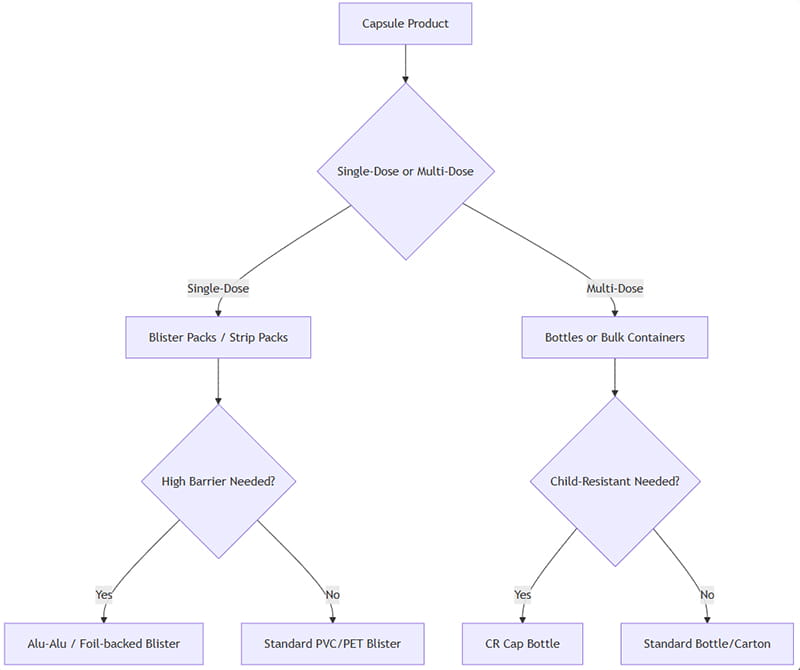
La sélection d'un emballage de capsule optimal implique l'évaluation de plusieurs facteurs: forme posologique, conformité des patients, sensibilité du produit, durée de conservation, exigences réglementaires, et le coût. Vous trouverez ci-dessous un cadre décisionnel simplifié:
Comment appliquer ceci: Si les capsules sont conçues comme des unités individuelles (par exemple. Dosage serré ou cartes blister de vente au détail), les ampoules/bandes sont préférables. Pour multidose (par exemple. suppléments ou médicaments à forte consommation), les bouteilles sont plus efficaces. Si la protection contre l’humidité et la lumière est essentielle, sélectionner des options à barrière élevée (De tout le temps, bouteille ambrée). Si la sécurité pédiatrique est nécessaire, utiliser des bouchons de bouteille avec sécurité enfants ou des blisters inviolables.
D'autres critères de l'industrie comprennent:
Forme posologique: Comprimés/gélules → plaquette thermoformée, bouteille, ou dépouiller; Poudres → sachet/stick pack.
Sensibilité du produit: Pour les médicaments sensibles à l'humidité, utiliser des blisters Alu-Alu ou des sachets en aluminium. Pour les personnes sensibles à la lumière, utiliser des bouteilles ambrées ou des films opaques.
Observance des patients: Formats unitaires (blister/bande) aide à l'observance. Les bouteilles à ouverture facile aident les personnes âgées.
Réglementaire: Inclure des preuves d'inviolabilité et se conformer aux directives d'emballage FDA/EMA.
Durée de conservation: Une durée de conservation plus longue nécessite des matériaux à barrière plus élevée (De tout le temps, films multicouches).
Échelle de production: Les machines à blister sont à grande vitesse (volume moyen), les lignes de bouteilles excellent dans les grands lots, les machines à sachets gèrent des tarifs de ligne flexibles.
Coût: Équilibrer les coûts des matériaux et des machines. Par exemple, les bouteilles peuvent nécessiter une main-d'œuvre par unité inférieure mais un coût de plastique plus élevé; les sticks utilisent très peu de film par dose.
Finalement, essai pilote (études de stabilité, études de consommation) et l'analyse du coût total guidera la décision finale. L'organigramme ci-dessus est un point de départ pour des scénarios typiques.
Équipement d'emballage de capsules
L'emballage des capsules nécessite des machines spécialisées. Une fois les capsules remplies (par des remplisseurs de capsules), ceux-ci sont transférés vers les lignes de conditionnement:
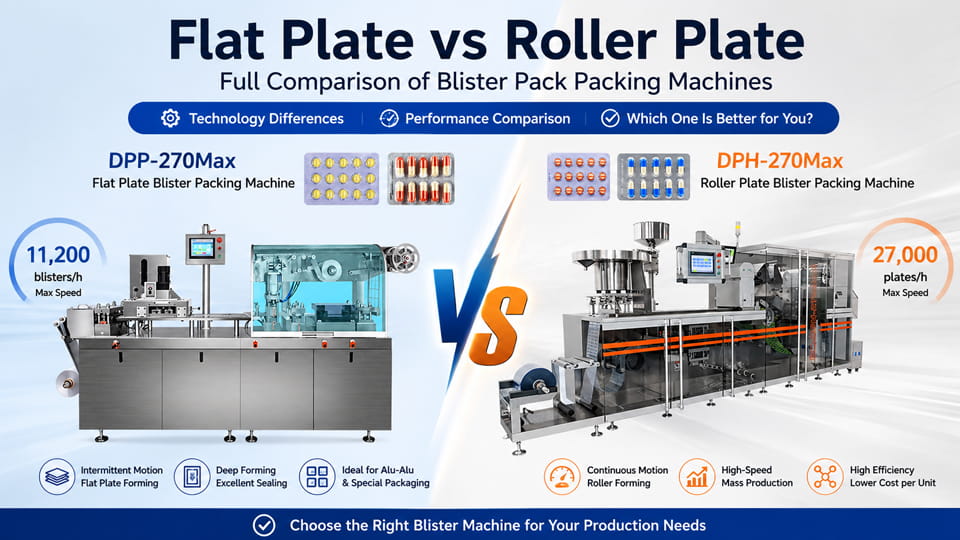
Machines à blisters: Nous avons déjà noté celui de Jinlu DPP-180Pro, une blistereuse de thermoformage à grande vitesse. Il forme des cavités (Film PVC ou PET), nourrit les capsules (ou des comprimés), et scelle avec du papier d'aluminium, tout automatiquement. Jinlu propose des machines (par exemple. DPP-180, DPP-270Max) jusqu'à 4 800 à 11 200 cavités/heure. Les machines à blister sont associées à des distributeurs de comptage pour déposer exactement une capsule par poche, et ont souvent des emporte-pièces pour séparer les ampoules en cartes. Modules supplémentaires (impression/inspection) assurez-vous que chaque blister est lisible et correct.
Compte & Lignes de remplissage (Lignes de bouteilles): Ceux-ci transforment les capsules en vrac en bouteilles. Une ligne typique a: un redresseur de bouteilles (organise les bouteilles vides), un compteur de comprimés/capsules (bol vibrant ou système optique qui compte et dépose un nombre défini dans chaque bouteille), une machine à boucher/sceller, et une station d'étiquetage. Jinlu JL-16H doubler, Par exemple, brouille les bouteilles, compte des capsules de 3 à 40 mm, applique des majuscules, et étiquettes jusqu'à 100 bouteilles/min avec 99.98% précision. Pour un volume élevé (emballage en vrac) opérations, les lignes modulaires avec plusieurs têtes de comptage ou remplisseuses à vis peuvent atteindre des vitesses plus élevées. Des scelleuses à induction ou rétractables peuvent également être ajoutées pour le recouvrement en aluminium..
Machines à sachets/stick-packs: Ce sont formulaire-remplir-sceller (FFS) machines. Jinlu JL-VP La série est un système VFFS multi-voies qui peut produire 30 à 40 sachets ou stick packs par minute et par voie. Il dose précisément la poudre ou le liquide (vis sans fin pour poudre, pompes pour liquide) et des phoques 3- ou sachets 4 faces ou packs sticks 3 faces. Les machines incluent des commandes PLC pour la longueur des sacs, servomoteurs pour la précision (±0,02g), et thermoscellage hermétique. De telles machines sont idéales pour les produits unidose, bien que les capsules elles-mêmes soient rarement « emballées en sachet » intactes.
Machines d'emballage en bandes: Les paquets de bandes sont fabriqués sur des machines spécialisées qui scellent à chaud des feuilles ou des films qui se chevauchent.. Celles-ci ressemblent souvent à des blisters mais utilisent un film plat. (Si Jinlu propose des emballeurs de bandes, intégration similaire à celle des machines à sachets.)
Machines d'emballage secondaire:Encartonneuses peut ériger des cartons, insérer des blisters ou des flacons et des dépliants, et fermer les cartons. Les emballeurs pharmaceutiques manipulent souvent des plaquettes thermoformées en aluminium ou des sacs de gélules.. Emballeurs de caisses (pour les caisses extérieures) et des palettiseurs complètent la ligne pour la production en série.
Conformité des équipements: Toutes les machines d'emballage pour produits pharmaceutiques doivent répondre à la conception GMP (acier inoxydable, surfaces nettoyables, performances validées). Les machines de Jinlu sont certifiées CE/cGMP, souvent avec des protections configurables et des systèmes de rejet pour les pilules non conformes aux spécifications. L'intégration est la clé: Par exemple, une machine à blister peut alimenter directement une encartonneuse qui érige les boîtes et emballe chaque carte blister. Systèmes complets (du remplissage à la boîte finale) permettre l'automatisation de bout en bout du conditionnement des capsules.
Considérations réglementaires et de conformité
L’emballage des capsules pour produits pharmaceutiques doit respecter des réglementations strictes. Les points clés comprennent:
Exigences BPF: FDA 21 CFR 211 La sous-partie G exige des procédures écrites pour la réception et le test des tous matériaux d'emballage avant utilisation. Cela signifie des ampoules, bouteilles, étiquettes, cartons, etc.. doit répondre à un cahier des charges (aucun défaut). Un stockage séparé des matériaux d'emballage par produit est obligatoire pour éviter les confusions.. Annexe BPF de l’OMS 9 détaille également les contrôles d'emballage. Les bonnes pratiques de fabrication exigent la traçabilité (numéros de lot sur l'emballage) et une manipulation propre.
Lignes directrices sur la stabilité et l’ICH: Je Q1A(R2) stipule que des études de stabilité doivent être réalisées sur le produit dans son état final système de fermeture de conteneur. En pratique, cela signifie que vous devez emballer les lots tests de capsules exactement comme prévu (même feuille de blister, même type de bouteille) et les exposer à des conditions de stabilité en temps réel. Tout changement d'emballage peut nécessiter de nouveaux tests de stabilité.
Sérialisation & Traçabilité: Sur de nombreux marchés, identifiants uniques (codes-barres/codes 2D) sur emballage secondaire (et parfois des cloques primaires) sont nécessaires pour suivre les médicaments tout au long de la chaîne d’approvisionnement. Les lignes doivent inclure des imprimantes ou des applicateurs pour ces codes. La conception des emballages inclut également souvent des preuves d'inviolabilité (selon la loi américaine/européenne).
Emballage résistant aux enfants et adapté aux personnes âgées: Les substances contrôlées ou certains médicaments nécessitent des fonctionnalités de sécurité enfants. Cela signifie souvent des bouchons spéciaux sur les bouteilles (par exemple. pousser et tourner) ou ampoules difficiles à peler. Cependant, l’accessibilité des patients doit également être prise en compte (ouverture facile pour les seniors). Consulter la Loi sur les emballages antipoison (NOUS) ou des règles régionales similaires sont nécessaires.
Normes ISO: Les fournisseurs d’emballages primaires doivent suivre l’ISO 15378 (BPF pour les matériaux d'emballage primaire) pour assurer la qualité. Bien que non directement cité ici, il s'agit d'une norme communément reconnue pour les fabricants d'emballages. Les machines elles-mêmes doivent être conformes aux normes des machines pharmaceutiques (CE, Ul, etc.) et 21 Partie CFR 11 s'il y a un enregistrement de données.
Règlement sur l'étiquetage: Les capsules doivent être étiquetées avec le nom du produit, dosage, date d'expiration, fabricant, etc.. Cela s'étend aux cartons et aux blisters (parfois, chaque segment de blister contient des informations imprimées). La FDA et l'EMA ont des exigences spécifiques quant aux informations qui doivent apparaître sur les étiquettes primaires et secondaires..
Dans l'ensemble, rencontrer la FDA, Les directives de l’EMA et de l’OMS sont essentielles. De nombreux emballeurs travaillent avec des fournisseurs réglementés (comme Jinlu) qui peut fournir des machines et de la documentation validées (IR/WH/PQ).
Conclusion
Choisir le bon emballage de gélules nécessite une protection équilibrée, convivialité, et le coût. Packs de cloques, bouteilles, sachets, et les bandes ont chacune leur place dans emballage pharmaceutique. Des facteurs tels que la sensibilité à l'humidité, forme posologique, et les besoins du patient guident la décision. Aux côtés, des exigences réglementaires et BPF strictes doivent être respectées.
À Emballage Jinlu, nous sommes spécialisés dans les solutions d'emballage pharmaceutique de bout en bout. Notre équipement – de blistereuses à grande vitesse à comptage entièrement automatisé & lignes d'embouteillage – vous aide à emballer les capsules de manière efficace et conforme. Nous soutenons également les choix durables (par exemple. machines qui utilisent de nouveaux films recyclables) et offrir un service à guichet unique (personnalisation, validation). Notre équipe peut vous aider à évaluer le meilleur système d'emballage de capsules pour votre produit.
Prêt à optimiser votre conditionnement de capsules?Contactez Jinlu Packing aujourd’hui pour des conseils d'experts et des devis. Nos solutions sont soutenues par des normes de qualité mondiales et plus 3,000 clients satisfaits dans le monde entier. Emballons vos capsules pour réussir!
FAQ sur l’emballage des capsules
Qu'est-ce que l'emballage des capsules?
L'emballage des capsules fait référence au processus consistant à enfermer les capsules pharmaceutiques dans des matériaux de protection pour maintenir leur stabilité., sécurité, et conformité. Les formats courants incluent les blisters, bouteilles, et emballage en bandes. En pratique pharmaceutique, l'emballage n'est pas seulement un confinement : il protège les capsules de l'humidité, oxygène, et contamination, ce qui affecte directement la qualité et la durée de conservation des médicaments.
Quel est le meilleur emballage pour les capsules pharmaceutiques?
Il n’existe pas de « meilleure » option : cela dépend de votre produit et de votre marché.. • Emballage blister → idéal pour les médicaments sensibles à l'humidité ou de grande valeur • Emballage en bouteille → idéal pour le stockage en vrac et les suppléments • Emballage en bandes → courant sur les marchés sensibles aux coûts L'emballage sous blister est souvent préféré car il offre une protection en dose unitaire et une meilleure isolation environnementale..
Quels matériaux dois-je utiliser pour protéger mon produit en capsule?
Utilisez des matériaux qui bloquent les principales menaces (humidité, oxygène, lumière). Par exemple, Les blisters en aluminium Alu-Alu ou les flacons en verre ambré offrent une excellente barrière pour les capsules sensibles à l'humidité.. Les blisters en PVC ou PET avec revêtement PVDC sont courants et moins chers pour les produits stables. Les bouteilles en PEHD sont standard mais peuvent nécessiter une pochette déshydratante si les capsules sont sensibles. Évaluer les taux de transmission de la vapeur d'eau (WVTR) de films. Dans une production soucieuse de la durabilité, envisager des monomatériaux recyclables (par exemple. Ampoules PP). Testez toujours la compatibilité des emballages via des études de stabilité.
Comment l’emballage des capsules protège-t-il la stabilité des médicaments?
Les capsules sont sensibles aux facteurs environnementaux tels que l'humidité, oxygène, et la lumière. Emballage approprié: • Empêche l'absorption de l'humidité • Réduit l'oxydation • Maintient la stabilité chimique Emballage, en particulier, crée des micro-environnements scellés pour chaque capsule, prolonge considérablement la durée de conservation.
De quelles machines d'emballage ai-je besoin pour les capsules?
Cela dépend du format. Pour les ampoules, vous avez besoin d'une machine de formage/scellage de blisters (avec des moules à cavités pour s'adapter à votre capsule) plus éventuellement une encartonneuse. Pour les bouteilles, vous avez besoin d'une ligne de remplissage/bouchage de bouteilles (redresseur, contre-remplisseur, capsuleuse, Étiquetage). Pour les packs de sticks, utiliser une machine à sachets verticale pour former, remplir et sceller. Jinlu propose tout cela: par exemple. nos blisters série DPP, Ligne de comptage JL-16H, et emballeuse de sachets JL-VP. Choisir la bonne machine implique de la capacité, taille des capsules, et intégrations requises (systèmes de vision, rejeter les stations, etc.).
Comment choisir entre des blisters et des flacons pour une capsule?
Tenez compte de facteurs tels que le dosage (célibataire contre. multiple), besoins de stabilité, et utilisation par les patients. Pour la commodité d’une dose unique et une protection élevée (spécialement pour les capsules sensibles à l'humidité et à la lumière), les ampoules sont souvent préférées. Pour des raisons de volume ou économiques, les bouteilles sont généralement choisies. Aussi, si des fonctionnalités de sécurité enfants ou adaptées aux personnes âgées sont nécessaires, les bouteilles peuvent offrir plus d'options. En règle générale, faites correspondre les propriétés de votre capsule à l’emballage: par exemple. gélules très hygroscopiques → blister Alu-Alu; suppléments très demandés → bouteilles.
Petit Fu, Fondateur de Jinlupacking, amène 20 années d'expertise dans le secteur des machines pharmaceutiques. Sous sa direction, Jinlu est devenu un fournisseur de confiance intégrant la conception, production, et ventes. Petty est passionné par le partage de ses connaissances approfondies de l'industrie pour aider ses clients à naviguer dans les complexités de l'emballage pharmaceutique., s'assurer qu'ils reçoivent non seulement du matériel, mais un véritable partenariat de services à guichet unique adapté à leurs objectifs de production.