
La demanda mundial de Suplemento de hierbas Los productos continúan creciendo a medida que más consumidores buscan formas naturales de apoyar su salud y bienestar.. Desde cápsulas y tabletas hasta polvos y gomitas, Los suplementos a base de hierbas ahora se encuentran en las farmacias., supermercados, y tiendas online de todo el mundo. A medida que el mercado se expande, Los fabricantes enfrentan expectativas cada vez mayores de calidad constante., producción eficiente, y embalaje confiable que protege los ingredientes botánicos sensibles. Las buenas prácticas de fabricación y los controles de embalaje adecuados también son esenciales para garantizar la calidad del producto y el cumplimiento durante todo el proceso de producción..
Ya sea que esté planeando una nueva línea de producción de suplementos a base de hierbas o actualizando el equipo existente, Comprender el proceso de fabricación es el primer paso para tomar mejores decisiones.. En esta guía, Analizaremos los tipos más comunes de suplementos a base de hierbas., cómo se producen, el equipo involucrado, y las soluciones de embalaje que ayudan a los fabricantes a mejorar la eficiencia, calidad del producto, y vida útil.
Suplementos herbarios (también llamado suplementos botánicos) son una categoría de suplementos dietéticos hecho de materiales vegetales (raíces, hojas, flores, semillas, o extractos) destinado a apoyar la salud. A diferencia de las vitaminas sintéticas., Los suplementos a base de hierbas se derivan de fuentes naturales.. A menudo aprovechan las medicinas tradicionales a base de hierbas. (p.ej. jengibre, gingko, equinácea) e incluir extractos concentrados o polvos. En términos regulatorios, Los suplementos a base de hierbas se clasifican como suplementos dietéticos, no drogas. Bajo EE.UU.. Por ley deben contener los ingredientes etiquetados y evitar contaminantes. (pesticidas, metales pesados). Las formas típicas incluyen cápsulas., tabletas, cápsulas blandas, polvos, líquidos (tinturas), tés y gomitas.
Los suplementos a base de hierbas tienen como objetivo “complementar la dieta” con nutrientes o activos de origen vegetal., a menudo para apoyo inmunológico, digestión, alivio del estrés, o energía. Por ejemplo, ingredientes como la baya del saúco, La equinácea y la vitamina C son populares para la inmunidad., mientras que la ashwagandha y el té verde se utilizan para aliviar el estrés y mejorar el metabolismo.. Los consumidores prefieren cada vez más los suplementos a base de hierbas por su origen natural y sus etiquetas limpias.. El mercado mundial de suplementos a base de hierbas era aproximadamente $45.9 mil millones en 2025 y se proyecta que crecerá ~8% anualmente a través de 2034, impulsado por la demanda de atención médica preventiva basada en plantas.

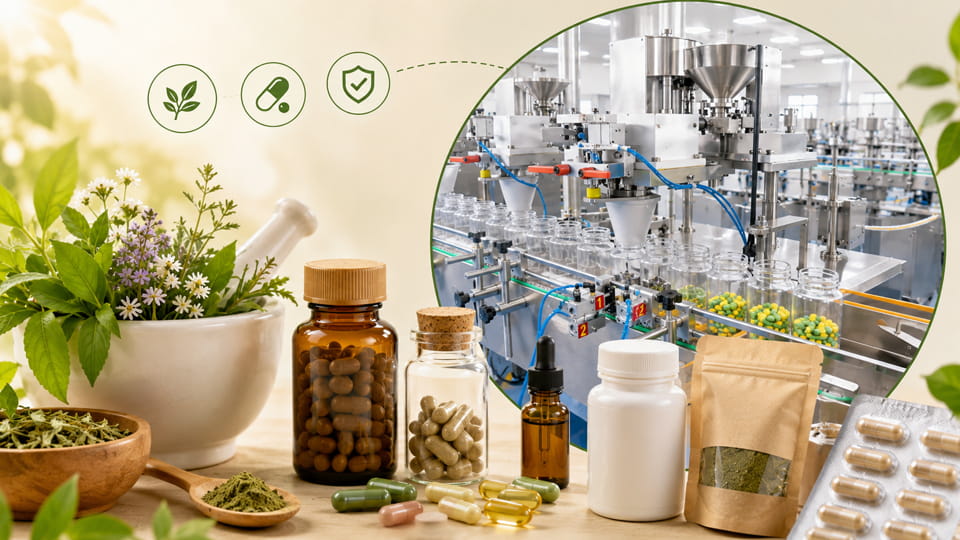
Los suplementos a base de hierbas se elaboran en muchas formas farmacéuticas.. Cada forma tiene ventajas., por lo que los fabricantes eligen en función del producto y mercado. Los formatos comunes incluyen:


Los suplementos a base de hierbas vienen en muchas formas.: cápsulas duras, cápsulas blandas, Las tabletas y los polvos utilizan ingredientes botánicos.. Elegir la forma correcta depende del extracto de hierbas., necesidades de dosificación, y preferencias del consumidor.
| Formulario de suplemento | Ingredientes herbarios típicos | Ventajas clave | Embalaje común | Equipo de fabricación recomendado |
|---|---|---|---|---|
| Cápsulas | ashwagandha, Cúrcuma, Ginseng | Fácil de tragar, dosificación precisa, protege los polvos sensibles | botellas, paquetes de ampollas | Máquina de llenado de cápsulas, Línea de llenado de botellas, Máquina de envases de ampollas |
| Tabletas | Espirulina, Ajo, cardo mariano | Rentable, Larga vida útil, adecuado para producción de gran volumen | botellas, paquetes de ampollas | Máquina de prensa de tabletas, Máquina de recubrimiento, Línea de envasado de botellas |
| Polvos | Matcha, Moringa, pasto de trigo | Tamaños de porciones flexibles, ideal para mezclas de bebidas y mezclas de proteínas | Bolsas de pie, paquetes de palos, paso | Mezclador de polvo, Máquina de llenado de barrena, Máquina empacadora de bolsas prefabricadas |
| Cápsulas blandas | aceite de ajo, Aceite de linaza, Aceite de onagra | Adecuado para extractos a base de aceite., fácil de consumir | botellas, paquetes de ampollas | Línea de producción de cápsulas blandas, Máquina de llenado de botellas |
| Gomitas | saúco, Vinagre de sidra de manzana, Cúrcuma | Sabor agradable, popular entre niños y adultos | botellas, bolsas | Máquina de conteo de gomitas, Línea de llenado de botellas, Máquina empacadora de bolsas prefabricadas |
| Extractos líquidos | Equinácea, gingko biloba, Raíz de valeriana | Absorción rápida, conveniente para dosificación personalizada | botellas de vidrio, frascos cuentagotas | Máquina de llenado de líquidos, Máquina para limitar, Máquina etiquetadora |
| Bolsitas de té de hierbas | Manzanilla, Menta, Hibisco | Método de consumo tradicional, preparación sencilla | Bolsitas, cajas de cartón | Máquina empacadora de bolsas de té, Máquina estuchadora |
Los fabricantes pueden optar por un formato específico por motivos de biodisponibilidad o atractivo para el consumidor.. Por ejemplo, Los suplementos herbarios a base de cápsulas representan una importante cuota de mercado. (alrededor 39%) porque protegen los principios activos y se disuelven rápidamente en el organismo. Polvos (en frascos o paquetes de barras) están ganando popularidad para las mezclas de proteínas o superalimentos verdes, mientras que las tabletas siguen siendo un alimento básico para las vitaminas y los extractos de hierbas estándar. Al final, el equipo de fabricación (rellenos de cápsula, prensas de tabletas, bolsas, etc.) debe coincidir con la forma elegida y el volumen de producción.
Los fabricantes se centran en hierbas con una fuerte demanda de los consumidores y respaldo científico.. Los ingredientes botánicos clave en los suplementos incluyen:
La siguiente comparación proporciona una descripción general rápida de algunos de los suplementos a base de hierbas más utilizados en la industria nutracéutica actual.:
| Suplemento de hierbas | Propósito de salud común* | Formas de dosificación comunes | Embalaje típico | Notas de fabricación |
|---|---|---|---|---|
| Cúrcuma (curcumina) | Apoyo articular e inflamatorio. | Cápsulas, tabletas, polvo | botellas de polietileno de alta densidad, paquetes de ampollas, bolsas de pie | A menudo, extracto de curcumina estandarizado con agentes de flujo. |
| ashwagandha | Apoyo al estrés y al sueño | Cápsulas, gomitas, polvo | botellas de plastico, paquetes de palos | Comúnmente producido como extracto de raíz estandarizado |
| Ginseng | Apoyo energético y cognitivo. | Cápsulas, cápsulas blandas, extractos líquidos | botellas de ámbar, paquetes de ampollas | El control de la humedad es importante durante el llenado. |
| Equinácea | Apoyo a la salud inmune | Tabletas, cápsulas, tinturas | botellas, frascos cuentagotas de vidrio | Frecuentemente fabricado como extracto seco o extracto líquido. |
| cardo mariano | Apoyo a la salud del hígado | Cápsulas, cápsulas blandas | botellas de polietileno de alta densidad, paquetes de ampollas | Generalmente se requiere un contenido estandarizado de silimarina. |
| Ajo | Apoyo a la salud del corazón | Cápsulas blandas, tabletas | Paquetes de ampollas, botellas | A menudo se consideran el control de olores y el recubrimiento. |
| Jengibre | Soporte digestivo | Cápsulas, polvos, bolsitas de té | Bolsitas, bolsas, botellas | La fluidez del polvo afecta la precisión del llenado |
| gingko biloba | Apoyo a la memoria y la circulación. | Tabletas, cápsulas | botellas, paquetes de ampollas | A menudo estandarizado al contenido de flavonoides. |
| Extracto de té verde | Soporte antioxidante | Cápsulas, tabletas | botellas, paquetes de ampollas | La protección contra el calor y la humedad mejora la estabilidad. |
| saúco | Apoyo inmunológico | Gomitas, jarabes, cápsulas | botellas de PET, botellas de vidrio | Las gomitas requieren equipos exclusivos de recuento y embotellado. |
Tendencias en 2025 resaltar los suplementos formulados para la salud inmunológica (saúco, equinácea, zinc), salud de la mujer, y bienestar cognitivo. Por ejemplo, Los consumidores del Reino Unido utilizan cada vez más la cúrcuma., ashwagandha, moringa y saúco para la inmunidad y el estrés. El abastecimiento y la formulación de ingredientes requieren control de calidad: Cada hierba debe ser analizada para determinar su potencia activa y la ausencia de contaminantes. (pesticidas, metales pesados) según los estándares GMP.

La fabricación de suplementos a base de hierbas sigue un proceso de varios pasos., combinando técnicas farmacéuticas estándar con cuidados específicos para los ingredientes botánicos. El flujo general es: abastecimiento de hierbas crudas → limpieza → secado/molienda → mezcla → formación de dosis (cápsulas/tabletas) → embalaje. Los pasos clave incluyen:
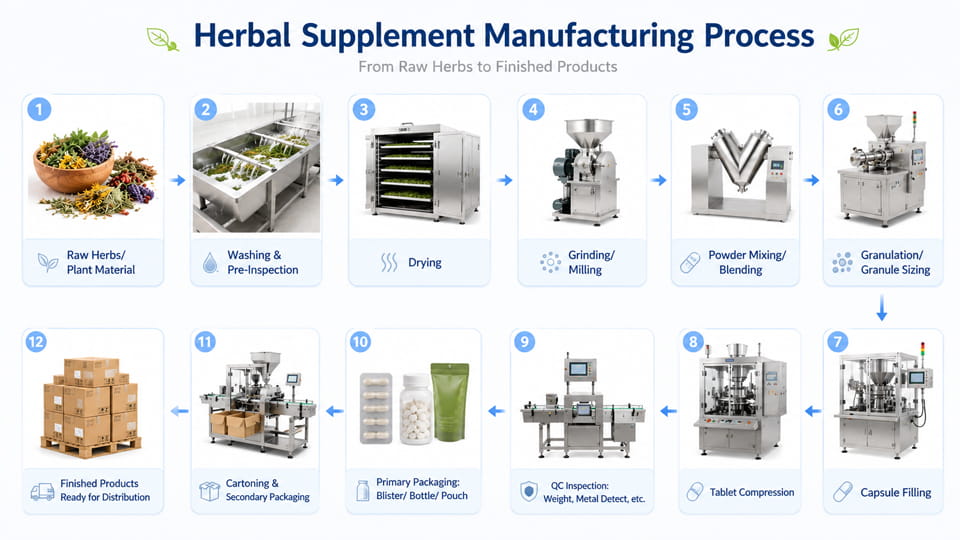
Durante toda la fabricación, condiciones (temperatura, humedad) están estrechamente controlados. Muchos productos botánicos son sensibles a la humedad., para que toda la línea pueda funcionar en una sala limpia con humedad controlada. Envases de alta barrera (ampollas de papel de aluminio, HDPE con desecante) se selecciona para preservar la vida útil.
La producción exitosa de suplementos depende de la confiabilidad máquinas de procesamiento y envasado. A continuación se ofrece una descripción general de los equipos clave, especialmente los que ofrece Jinlu, con sus funciones.:

Cifra: Máquina llenadora de cápsulas de alta velocidad de Jinlu (modelo NJP-1500D, 90K cps/h). Estas llenadoras automáticas orientan las cápsulas vacías., medidor de polvo de hierbas, apisonar el relleno, y ensamblar cada cápsula llena con una precisión de ±3%.
 Cifra: Máquina prensadora de tabletas rotativa HZP-26D-40D. Las prensas para tabletas comprimen los gránulos de hierbas en tabletas con un peso y dureza exactos.. Las prensas de Jinlu pueden producir más 260,000 comprimidos/hora garantizando uniformidad.
Cifra:Máquina envasadora de bolsas prefabricadas. tales maquinas (como la serie GD de Jinlu) puede abrir automáticamente, llenar, y sellar bolsas verticales o con cremallera con polvos, gránulos o tabletas, logrando pesos de relleno muy precisos.
Otro equipo esencial incluye lavadoras de botellas. (para iniciar botellas vacías), etiquetadoras, y detectores de metales. Las máquinas de Jinlu están diseñadas para cumplir con certificaciones globales (Ceñudo, CGMP, FDA) y se puede personalizar (p.ej. con dosificadores de vacío para polvos difíciles, pesadoras combinadas para mezclas).
Elegir el embalaje primario adecuado afecta a la estabilidad, experiencia de usuario, y cumplimiento. A continuación comparamos los formatos de empaque comunes para suplementos.:
| Formato | Mejor para | Ventajas | Desafíos/Consideraciones |
| botellas (PEAD, MASCOTA) | Cápsulas, Tabletas, Cápsulas blandas, Gomitas | Fuerte barrera contra la humedad y el oxígeno.; fácil de etiquetar; Cierres a prueba de niños disponibles.; formato familiar | Voluminoso para el envío; a menudo opaco (menos reciclable); requieren tapas CR con materiales mixtos |
| Paquetes de ampollas (Aluminio/PVC) | Tabletas, Cápsulas, Cápsulas | Protección en dosis unitarias (cada pastilla sellada); excelente barrera (frustrar); a prueba de manipulaciones; dosificación conveniente | Más caro por unidad; formas/tamaños limitados; El reciclaje de láminas/PVC es difícil |
| Paquetes de barras | Polvos (monodosis), Tés | Dosis portátil premedida; sobras mínimas; perfil delgado | Residuos de un solo uso; requieren laminados (retos de reciclaje); pequeño volumen por paquete |
| Bolsitas | Gránulos, Tabletas efervescentes, Polvos | Paquetes monodosis, a menudo soluble en agua; bajo costo | Barrera de humedad limitada; propenso a pincharse; residuos de un solo uso |
| Bolsas de pie (resellable) | Polvos, Gránulos, Gomitas, Paquetes múltiples | Ligero, ahorro de espacio; laminados de alta barrera; cremalleras resellables; formas personalizables | A menudo transparente (riesgo ligero); Necesita desecante para contenido sensible a la humedad.; la cremallera aumenta el costo |
| Paso / latas (Vidrio/Aluminio) | Gomitas, Polvos, Productos de primera calidad | Reciclabilidad superior (vidrio/aluminio); barrera alta; reutilizable; aspecto premium | mas pesado (costo de envío); quebradizo (vaso); no es resistente a los niños de forma predeterminada a menos que se agreguen mecanismos de tapa |
| Cajas secundarias | Cápsulas/Tabletas en frascos o blisters | Permite el embalaje a granel; agrega barrera para múltiples productos; proporciona espacio para etiquetar | Agrega costo y material; barrera de cartón inferior al plástico (puede necesitar revestimientos para la humedad) |
Para suplementos a base de hierbas, control de humedad y oxígeno son funciones críticas de embalaje. Por ejemplo, El blister de alta barrera o las bolsas multicapa pueden proteger las hierbas higroscópicas.. A prueba de niños (CR) los cierres a menudo son requeridos legalmente (especialmente para vitaminas). Opciones sostenibles (Plásticos PCR, materiales reciclables, bolsas compostables) son tendencias crecientes, pero aún debe cumplir con los requisitos de seguridad y vida útil.
Máquinas de embalaje (llenadores de botellas, líneas de ampolla, empacadores de bolsas) debe coincidir con el formato y la salida elegidos. Sistemas automatizados (como la empacadora de bolsas modelo GD de Jinlu o las máquinas blister de la serie PJ) manejar altas velocidades con un sellado consistente, que es esencial para la industria farmacéutica Cumplimiento de GMP.
Incluso con buen equipo, La producción de suplementos puede tener problemas. Aquí hay problemas frecuentes y soluciones.:
en todos los casos, El mantenimiento preventivo y los operadores experimentados son clave.. Recuperación de errores automatizada (estaciones de rechazo, alarmas) ayuda a detectar problemas temprano. Por ejemplo, Las máquinas de Jinlu cuentan con un "rechazo inteligente" para descartar bolsas mal llenas.
Seleccionar equipos de embalaje es una decisión estratégica. Los factores a considerar incluyen:
En resumen, Elija máquinas clasificadas para la producción deseada y los requisitos de cumplimiento.. El equipo adecuado asegura llenados/sellados consistentes, maximiza el rendimiento, y evita costosas retiradas del mercado.
El cambio global hacia la salud natural ha convertido a los suplementos a base de hierbas en una industria importante, pero también exige una fabricación rigurosa a nivel farmacéutico.. Desde pruebas cuidadosas de ingredientes botánicos crudos hasta llenado automatizado de cápsulas y empaques a prueba de manipulaciones, cada paso debe optimizarse para lograr coherencia, cumplimiento, y calidad. Avances en equipamiento (como llenadoras de cápsulas de alta velocidad, líneas de ampolla de precisión, y máquinas de bolsas flexibles) Permitir que las empresas nutracéuticas crezcan de manera eficiente manteniendo tolerancias estrictas..
En resumen, producción de suplementos a base de hierbas es una danza compleja de conocimientos botánicos tradicionales e ingeniería moderna.. Siguiendo las pautas GMP, utilizando la maquinaria adecuada, y mantenerse a la vanguardia de las tendencias (como embalaje sostenible y formulaciones personalizadas), Los fabricantes pueden ofrecer seguridad., productos eficaces a base de plantas. Para empresas que buscan ampliar o mejorar sus líneas, Embalaje de Jinlu ofrece una línea integrada de llenadoras de cápsulas, prensas de tabletas, máquinas de ampolla, empacadoras de bolsas y más, todas diseñadas para la producción de nutracéuticos. Contáctenos para saber cómo nuestro equipo puede ayudarle a llevar su suplemento a base de hierbas desde el jardín de hierbas a los estantes de las tiendas con calidad y eficiencia..
Un suplemento herbario es un suplemento dietético elaborado a base de hierbas., extractos botánicos, u otros ingredientes de origen vegetal. Estos productos están comúnmente disponibles en forma de cápsulas., tabletas, polvos, gomitas, tés, o extractos líquidos y están diseñados para complementar la dieta en lugar de reemplazar los alimentos convencionales. Dependiendo del mercado, Los suplementos a base de hierbas están regulados como suplementos dietéticos en lugar de medicamentos farmacéuticos..
En los EE.UU., suplementos dietéticos (incluyendo hierbas) caen bajo la ley DSHEA de la FDA. Los fabricantes deben seguir las reglas cGMP de la FDA (21 CFR 111) para asegurar la identidad, pureza, y para evitar la contaminación. Esto significa realizar pruebas exhaustivas de las hierbas crudas y controles durante el proceso.. En Europa y otros lugares, Buenos estándares de fabricación similares (BPF de la UE, Directrices de la OMS) aplicar a los nutracéuticos.
Vienen en muchas formas: cápsulas, tabletas, polvos, líquidos/tinturas, gomitas, paquetes de palos, tés, etc.. La elección depende de las propiedades botánicas y de las preferencias del consumidor.. Por ejemplo, pequeñas hierbas amargas pueden ir en cápsulas, mientras que un té relajante se vende en bolsitas de té.
El proceso de fabricación suele incluir varios pasos clave.:
• Selección de hierbas crudas
• Limpieza y secado
• Molienda o fresado
• Mezcla de polvo
• Granulación (si es necesario)
• Llenado de cápsulas o compresión de tabletas
• Inspección de calidad
• Embalaje primario
• Envasado y embalaje secundario
Los fabricantes modernos suelen automatizar estos procesos para mejorar la coherencia., productividad, y calidad del producto.
Como mínimo, Los fabricantes necesitan equipos de mezcla., una llenadora de cápsulas o una prensa de tabletas (dependiendo de la dosis), y una línea de envasado. Las máquinas clave incluyen: máquina de llenado de cápsulas, prensa rotatoria de tabletas, máquina de envases de ampollas, línea de conteo/llenado de botellas, máquina de bolsitas/paquetes en barra, y máquina empacadora de bolsas. Por ejemplo, Jinlu Packing ofrece llenadores de cápsulas y empacadores de bolsas diseñados específicamente para nutracéuticos.
La mayoría de los fabricantes utilizan materiales de embalaje resistentes a la humedad, como blísteres., Botellas de HDPE con sellos de inducción., laminados de papel de aluminio, o bolsas de alta barrera. Entornos de producción controlados, desecantes, sistemas de sellado adecuados, y las inspecciones de calidad de rutina también ayudan a proteger los suplementos a base de hierbas durante el almacenamiento y el transporte..
El mejor embalaje depende del tipo de producto y de su sensibilidad a la humedad., oxígeno, y luz.
Las opciones de embalaje comunes incluyen:
• Frascos para cápsulas y tabletas.
• Blísteres para protección en dosis unitarias
• Bolsas verticales para polvos
• Stick packs y sobres para porciones individuales
• Frascos de vidrio para extractos líquidos.
La elección de un embalaje de barrera adecuado ayuda a mantener la calidad del producto y prolongar la vida útil..
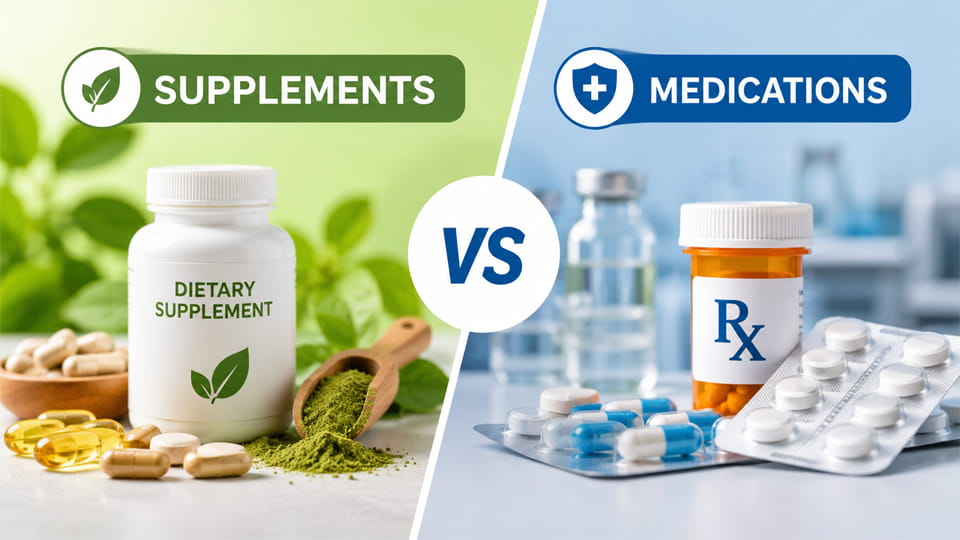
Los suplementos a base de hierbas se clasifican como suplementos dietéticos y pueden venderse sin receta., centrándose en el apoyo nutricional. Medicinas herbarias (como la medicina ayurvédica o tradicional china) A menudo están regulados como medicamentos o productos médicos., con afirmaciones de tratar dolencias. Los suplementos pueden promover el bienestar general (p.ej. “apoya la inmunidad”) pero no puede pretender curar enfermedades.
Referencias:
1.Documentos de orientación sobre suplementos dietéticos & Información regulatoria—— A NOSOTROS. Administración de Alimentos y Medicamentos
2.Suplementos dietéticos —— A NOSOTROS. Administración de Alimentos y Medicamentos
3.Suplementos herbarios —— A NOSOTROS. Ministerio de agricultura
4.Desarrollo de suplementos dietéticos botánicos seguros y eficaces —— Biblioteca Nacional de Medicina
5.Garantía de calidad y seguridad de los suplementos dietéticos a base de hierbas. —— Biblioteca Nacional de Medicina
6.Suplementos dietéticos y herbarios —— NCCIH