
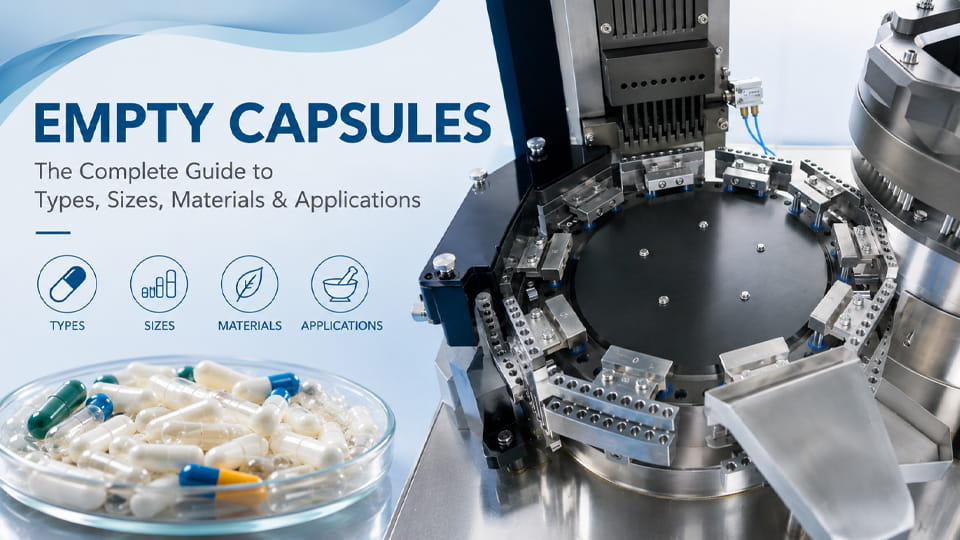
Antes de hablar sobre los materiales de las cápsulas, métodos de fabricación, o equipo de embalaje, es útil entender lo que cápsulas vacías realmente lo son y por qué son tan utilizados. Desde medicamentos recetados hasta nutracéuticos y suplementos a base de hierbas., Las cápsulas vacías proporcionan a los fabricantes farmacéuticos una opción flexible., preciso, y solución de dosificación eficiente. Su compatibilidad con el llenado automatizado de cápsulas y líneas de embalaje También los convierte en una parte esencial de la producción farmacéutica moderna.. Si elige cápsulas de gelatina vacías, evaluación de alternativas basadas en plantas, o planificar una nueva línea de envasado de cápsulas, Comprender los fundamentos le ayudará a tomar mejores decisiones de producción y compra..
En la fabricación farmacéutica, cápsulas vacías (también llamadas cápsulas en blanco o cápsulas de pastillas vacías) son las conchas huecas básicas que se utilizan para crear formas de dosificacion. Actúan como recipientes para polvos., gránulos o bolitas de medicamentos y suplementos. Una cápsula vacía normalmente consta de dos partes principales (la tapa y el cuerpo) que encajan y bloquear juntos para formar una concha cerrada. (La gorra es la mitad superior más corta., y el cuerpo es la mitad inferior más larga.) Los diseños de cápsulas modernos incluyen una mecanismo de bloqueo (como anillos elásticos o ranuras a juego en la tapa y el cuerpo) para garantizar que la cápsula permanezca bien cerrada después del llenado. Esto evita que la cápsula se abra accidentalmente durante el procesamiento., envío o manipulación.
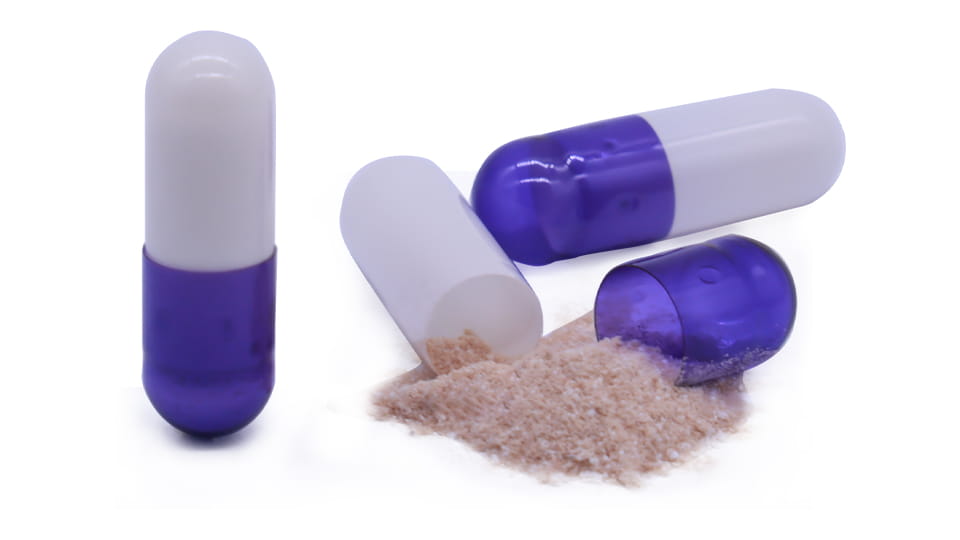
En la práctica, Las cápsulas vacías sirven como un práctico “recipiente vacío” para medicina. Generalmente están hechos de gelatina o materiales de origen vegetal., y están cargados de API o suplementos durante la producción. Después del llenado, la tapa y el cuerpo se unen para mantener el contenido seguro. Bajo un microscopio, puedes ver el tapa de la cápsula, cuerpo de la cápsula, y a menudo un anillo entrelazado o doble chasquido diseño en la unión (como se muestra a continuación):
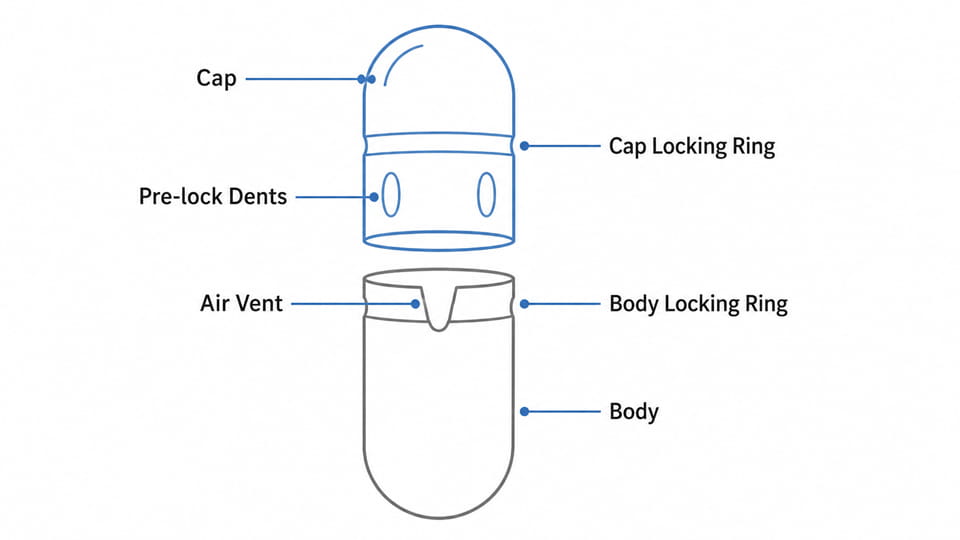
En resumen, una cápsula vacía es una cubierta lista para llenar que consta de una tapa y un cuerpo que hacen clic o se bloquean entre sí. Estas carcasas duras son lo suficientemente elásticas para ensamblarse pero lo suficientemente rígidas para sobrevivir a líneas de llenado y envasado de alta velocidad.. Vienen preensamblados o como tapas y cuerpos sueltos. (a menudo se suministra en bandejas a granel), y se llenan en etapas separadas en la planta.
Existen varios tipos de cápsulas vacías., distinguiéndose principalmente por su material de la cáscara. Los más comunes son:
La farmacéutica moderna se ha expandido más allá de la gelatina animal. “A medida que la ciencia y la tecnología han avanzado, Nuevos materiales y mejoras en los procesos han llevado al desarrollo de cápsulas vacías hechas de HPMC., almidón de hidroxipropilo, y pululano, además de gelatina”. En la práctica, cuando alguien pide “cápsulas de gelatina vacías”, Por lo general, se refieren a cápsulas duras de dos piezas del material común.. Pero hoy en día los proveedores de cápsulas ofrecen ambas cosas. gelatina y HPMC (vegetariano) cápsulas en una gama de colores y tamaños para satisfacer diferentes necesidades. (Al realizar el pedido, También puedes verlos llamados cápsulas de pastillas vacías, cápsulas de medicina vacías, o cáscaras de cápsulas vacías.)
Cada material tiene pros y contras.. La gelatina es tradicional., Bajo costo y se disuelve fácilmente., pero no apto para vegetarianos estrictos. HPMC y otras opciones veganas cuestan un poco más pero se adaptan a bases de consumidores más amplias. Pullulan tiene muy buena protección contra la humedad., que puede mejorar la vida útil de algunos medicamentos o suplementos.
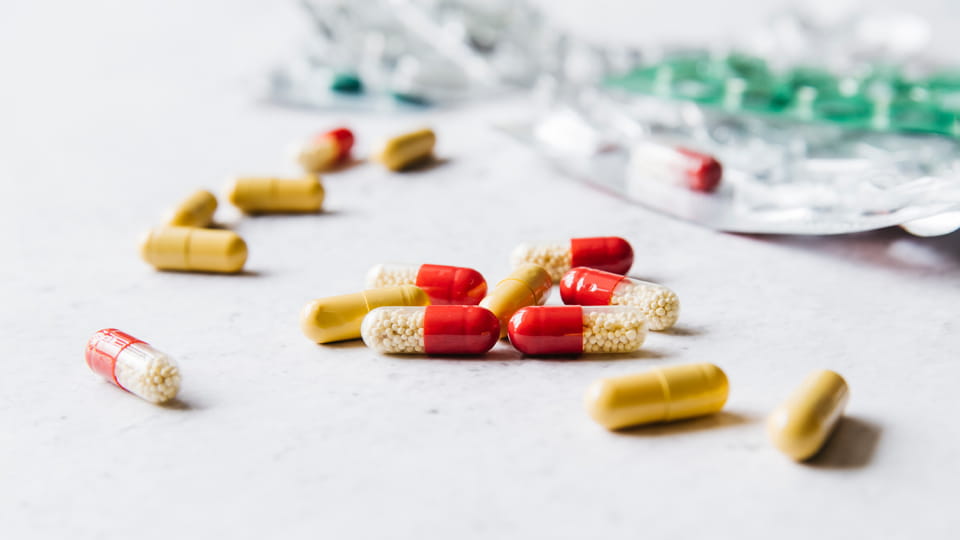
Las cápsulas vacías vienen en un gama de tamaños para adaptarse a diferentes volúmenes de dosis. Los tamaños estándar están numerados desde 000 (el más grande) hasta 5 (el mas pequeño). Tamaño 000 es muy grande – aproximadamente 1.37 mL de volumen interno – mientras que el tamaño 5 es pequeño (~0,21 ml). Elegir el derecho tamaño de la cápsula depende del peso de relleno y densidad del polvo o gránulos:
Mesa 1 Tamaños típicos de cápsulas de gelatina dura.
| Designación de tamaño | Llenar volumen (mililitros) | Llenar volumen (onz) | Altura de la cápsula cerrada (milímetros) | Diámetro exterior (milímetros) |
|---|---|---|---|---|
| 000 | 1.37 | 1/20 | 26.1 | 10.0 |
| 00 | 0.95 | 1/30 | 23.3 | 8.5 |
| 0 | 0.68 | 1/40 | 21.7 | 7.7 |
| 1 | 0.50 | 1/55 | 19.4 | 6.9 |
| 2 | 0.37 | 1/75 | 18.0 | 6.4 |
| 3 | 0.30 | 1/100 | 15.9 | 5.8 |
| 4 | 0.21 | 1/135 | 14.3 | 5.3 |
| 5 | 0.13 | 1/220 | 11.1 | 4.9 |
El volumen de llenado de cada tamaño normalmente lo proporciona el fabricante de la cápsula.. Por ejemplo, un gráfico estándar muestra volúmenes de cápsulas de 1.37 mililitros (tamaño 000) hasta 0.21 mililitros (tamaño 5). Este volumen corresponde a un peso determinado en función de la densidad del polvo.. De hecho, Mesa 2.1 en una referencia farmacéutica enumera los volúmenes y pesos aproximados para varios tamaños según las densidades típicas. Al formular, Los fabricantes calculan el tamaño de cápsula necesario según el peso de la dosis objetivo y la densidad del material. (densidad del grifo de polvo).
Aplicaciones por tamaño: nutracéuticos (como multivitaminas o suplementos a base de hierbas) A menudo utiliza cápsulas más grandes. (0 o 000) porque necesitan aportar grandes cantidades de hierbas o vitaminas. Muchas tabletas convertidas en cápsulas. (sobreencapsulación para ensayos clínicos) utilizar tamaños de cápsulas estándar 1 o 0. En cambio, cápsulas muy pequeñas (tallas 3–5) podría usarse para medicamentos de alta potencia, o para que los niños lo traguen fácilmente.
En resumen, Las cápsulas vacías están disponibles en tallas 000 a 5. Una pauta general es: cuanto menor sea el número, cuanto más grande es la cápsula (es decir. 000 es mas grande, 5 es el más pequeño). Los fabricantes y proveedores de cápsulas proporcionan tablas de tallas para que los formuladores puedan elegir una cápsula que cumpla con el requisito de volumen de la dosis prevista. La selección del tamaño adecuado garantiza que cada cápsula contenga la cantidad correcta de API para una dosificación consistente.
Cáscaras de cápsulas duras vacías (cuerpos y tapas de las cápsulas) son producidos por un proceso de recubrimiento por inmersión. Los pasos básicos son los siguientes. (consulte las referencias farmacéuticas clínicas para obtener más detalles.):
Todos estos pasos de fabricación están automatizados y controlados estrechamente para garantizar la calidad.. De hecho, una guía de fabricación de cápsulas publicada resume estas etapas: "Paso 1: preparación de solución de gelatina; Paso 2: recubrimiento por inmersión sobre pasadores de metal; Paso 3: rotación de los pasadores recubiertos; Paso 4: secado de los pines recubiertos; Paso 5: pelar y recortar; Paso 6: unión de la cubierta de la cápsula recortada; Paso 7: impresión". (Paso de impresión: Después del montaje, Las cápsulas suelen estar impresas con códigos o logotipos de productos., luego inspeccionado y empaquetado.)
A lo largo de este proceso, extenso control de calidad se realizan controles (fuerza de floración de gelatina, viscosidad, límites microbianos, etc.) para asegurar conchas uniformes. Las líneas de cápsulas modernas pueden producir millones de cápsulas por día., con peso y dimensiones muy consistentes.
Al seleccionar un tipo y tamaño de cápsula, Primero considere el ingrediente activo y la formulación., entonces el método de producción.
Elija por ingrediente/formulación:
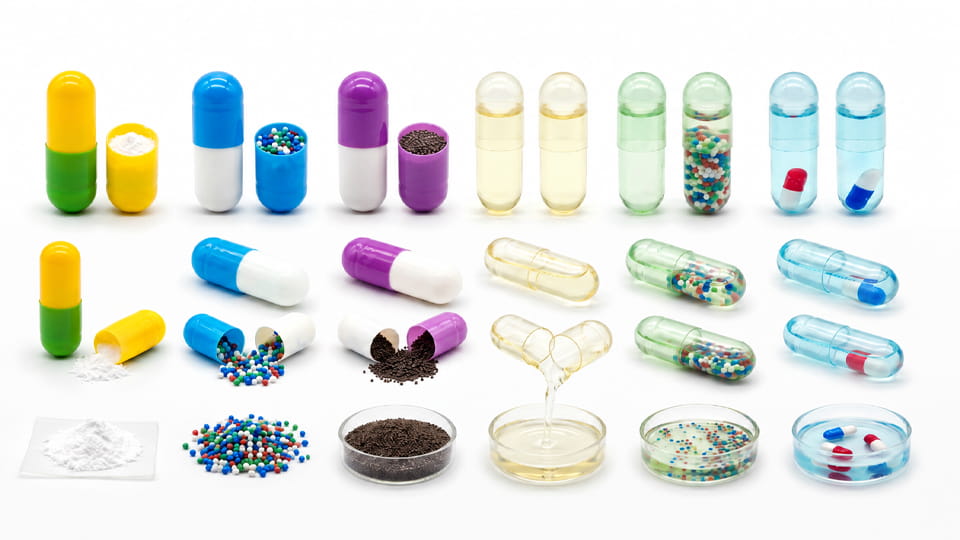
Elija por equipo y escala:
En resumen, elija el material de cápsula que se ajuste a su API (estabilidad, necesidades dietéticas) y luego elija el tamaño de cápsula para su dosis. Asegúrese también de la compatibilidad con su equipo de llenado (manual versus. automático). Llenadores de cápsulas modernos (como los de Jinlu) están diseñados para manejar todos los tipos de cápsulas estándar. Por ejemplo, Las configuraciones probadas muestran que la gelatina, Las carcasas de HPMC y pullulan funcionan sin problemas en las mismas máquinas de alta velocidad.
Las cápsulas vacías se utilizan en muchas industrias.. Las aplicaciones clave incluyen:

Estos ejemplos muestran la versatilidad de las cápsulas vacías.. Son una forma de dosificación universal para cualquier producto en polvo o granulado que deba tragarse en una dosis precisa..
El llenado de cápsulas vacías con producto se puede realizar de varias formas., dependiendo de la escala:


En todos los métodos de llenado, Se tiene especial cuidado con los polvos muy ligeros o pegajosos. (potenciadores de flujo, lubricación). Recolección de polvo y control electrostático. (ionizadores) son importantes para la seguridad del operador y la precisión del llenado. Para grandes operaciones, Las máquinas llenadoras de cápsulas son una parte clave de la cadena de proceso: convierten las “cápsulas vacías” en productos terminados a escala..
Una vez llenas las cápsulas, Las formas farmacéuticas deben envasarse de manera eficiente.. Hay algunos Soluciones de envasado comunes para cápsulas duras.:
En la práctica, una planta farmacéutica puede combinar estas soluciones. Por ejemplo, Una línea de producción de alta velocidad podría comenzar con una relleno de cápsula automática, luego enrute las cápsulas a una máquina de conteo y tapado, y finalmente enviar botellas a una estuchadora. Alternativamente, para dosis unitarias, Las cápsulas de la llenadora van a una máquina de blister en línea..
Punto clave: El equipo de envasado debe elegirse para que coincida con las cápsulas.. Las máquinas de blister deben adaptarse al tamaño y forma de las cápsulas. (para garantizar una alimentación fiable en las cavidades). Las máquinas contadoras deben ser compatibles con los requisitos de velocidad y fragilidad de las cápsulas.. Muchos proveedores de máquinas (como Jinlu) ofrecer personalización: por ejemplo, ajustar los alimentadores o las guías del conducto para adaptarse al tamaño y material de su cápsula. Como anuncia el fabricante., sus empacadoras de blíster están construidas según los estándares GMP y pueden envasar tabletas, cápsulas, y otras formas a alta velocidad.
Al final, líneas de embalaje integradas – combinación de relleno de cápsulas, cálculo, ampollas/tapado, y estuchado: proporcionan la solución más eficiente para la producción a gran escala. Automatizan el flujo desde la cápsula vacía hasta el producto envasado terminado.
Cápsulas vacías (las carcasas de dos piezas para pastillas y suplementos) Son un elemento fundamental en la producción farmacéutica.. Entendiendo sus materiales, tallas, y características de diseño (como mecanismos de bloqueo) le ayuda a elegir la carcasa adecuada para su producto. Igualmente importante es conocer el proceso de fabricación y llenado.: Las cápsulas se fabrican mediante recubrimiento por inmersión. (gelatina/HPMC) y luego se llena en máquinas automatizadas que separan, dosis, y cerrar cada cápsula. Finalmente, El embalaje adecuado (a través de máquinas de blíster o líneas de conteo) garantiza que las cápsulas llenas permanezcan intactas y cumplan con las normas durante toda la distribución..
Si es un fabricante farmacéutico o nutracéutico que busca equipos confiables, Considere un proveedor de soluciones integral que comprenda las cápsulas.. Empresas como Jinlu Packing ofrecen líneas integradas de llenado y envasado de cápsulas que cumplen con los estándares cGMP. Pueden ayudar a adaptar la línea a su tipo de cápsula y necesidades de producción específicas.. Póngase en contacto con un experto hoy para analizar cómo optimizar la producción y el envasado de sus cápsulas.
Las cápsulas vacías son cubiertas de cápsulas vacías que se utilizan para contener ingredientes farmacéuticos., polvos, gránulos, o suplementos nutricionales. Suelen consistir en una tapa de cápsula., cuerpo de la cápsula, y mecanismo de bloqueo, permitiendo a los fabricantes producir formas de dosificación orales precisas y convenientes.
Las cápsulas duras suelen estar hechas de gelatina. (de origen animal) o alternativas vegetarianas como HPMC (celulosa) y pululano (almidón de tapioca fermentado). En la práctica, "cápsula vacía" generalmente se refiere a una de estas carcasas de dos piezas listas para llenar.
Los principales tipos de cápsulas vacías incluyen las cápsulas de gelatina dura., Cápsulas de HPMC, y cápsulas de pululano. Las cápsulas de gelatina dura se utilizan comúnmente para medicamentos farmacéuticos., mientras que HPMC y las cápsulas de origen vegetal son populares para productos nutracéuticos y vegetarianos..
Los principales tipos de cápsulas vacías incluyen las cápsulas de gelatina dura., Cápsulas de HPMC, y cápsulas de pululano. Las cápsulas de gelatina dura se utilizan comúnmente para medicamentos farmacéuticos., mientras que HPMC y las cápsulas de origen vegetal son populares para productos nutracéuticos y vegetarianos..
Las cápsulas vacías están disponibles en diferentes tamaños., incluido 000, 00, 0, 1, 2, 3, 4, y 5. Tamaños más grandes como 000 y 00 se utilizan a menudo para suplementos, mientras que los tamaños más pequeños se utilizan comúnmente para medicamentos farmacéuticos con requisitos de dosificación más bajos..
Los tamaños de carcasa dura más comunes en productos farmacéuticos y suplementos son los tamaños 0 y 1. Estos ofrecen un buen equilibrio entre volumen de llenado y tragabilidad.. (Sin embargo, Se pueden utilizar fórmulas en dosis muy altas. 00 o 000, y las dosis pediátricas pueden usar el tamaño 3-5.)
Las cápsulas estándar de dos piezas están diseñadas para sólidos. (polvos, gránulos). Pueden tener fugas con rellenos de líquido.. Para aceites o líquidos, Por lo general, se utilizan cápsulas de gelatina blanda o cápsulas líquidas especializadas.. (Nota: Hay tecnología de cápsulas duras llenas de líquido., pero esos todavía usan una barrera de polvo en el interior.)
Las cápsulas almacenadas correctamente tienen una larga vida útil.. Tanto las cápsulas de gelatina como las de HPMC pueden durar varios años. (a menudo de 2 a 5 años) si se mantiene sellado en lugar fresco, condiciones secas. Con el tiempo, La pérdida o ganancia de humedad puede afectarlos., por lo que se deben seguir las recomendaciones de almacenamiento.
Las cápsulas vacías se fabrican mediante varios pasos., incluyendo la preparación de materia prima, formación de la cubierta de la cápsula, el secado, inspección de calidad, y embalaje. El proceso garantiza un tamaño de cápsula constante, fortaleza, y calidad para la producción farmacéutica.
Sí. Por las materias primas y el procesamiento., Las cápsulas de HPMC y pululano cuestan significativamente más de fabricar que las cápsulas de gelatina.. Esto se refleja en el precio de las cápsulas vegetales vacías..
Referencias:
1.Cápsulas de gelatina dura: Formulación & Fabricación —— estudiolib.net
2.Cápsula de gelatina dura con bloqueo —— Patentes de Google
3.Cápsulas de HPMC: situación actual y perspectivas de futuro —— Biblioteca Nacional de Medicina
4.Cápsulas de gelatina dura —— farmacia180.com
5.Una revisión completa sobre: Cápsula —— Revista Internacional de Ciencias Farmacéuticas (IJPS)