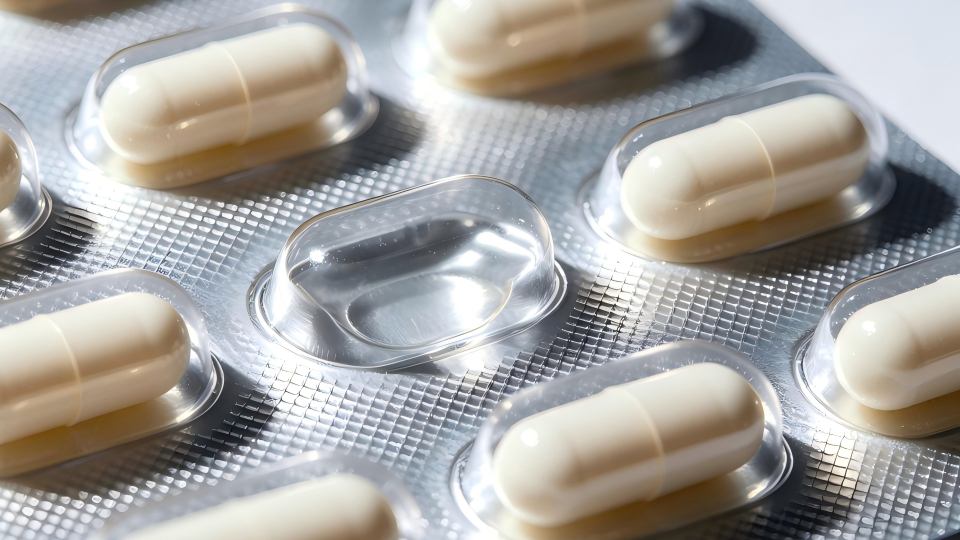
Conformado en frío versus termoformado: ¿Qué blister médico es el adecuado para la industria farmacéutica??
Conformado en frío versus termoformado: ¿Qué blister médico es el adecuado para la industria farmacéutica??
Agosto 26, 2026
No hay comentarios
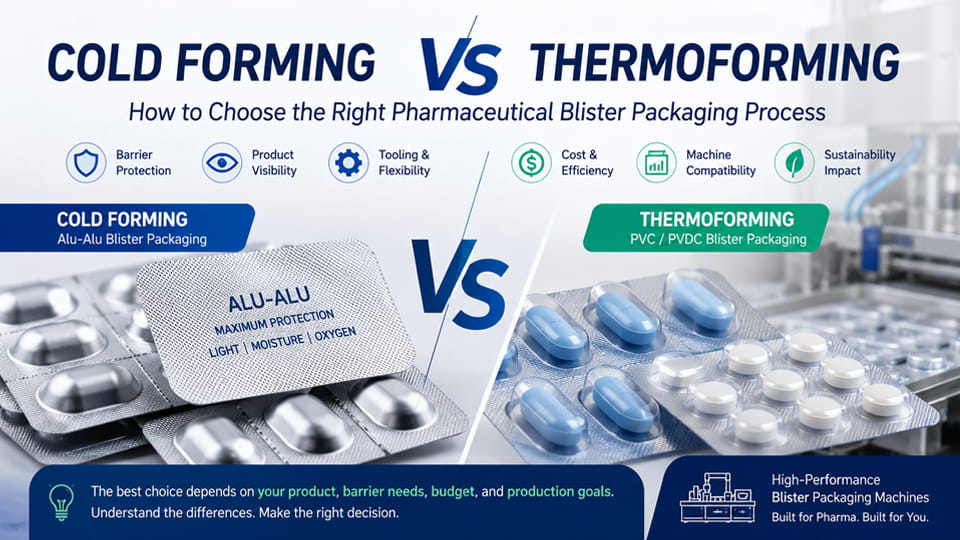
Los productos farmacéuticos suelen venir sellados en blisters. para protección de dosis unitarias y atractivo en el lineal. En blister, Los dos principales métodos de formación son. Termoformado y Formación fría. El termoformado calienta una red de plástico. (como PVC o PET) hasta que sea flexible y luego lo aspira o lo presiona en moldes. Formación fría, por el contrario, utiliza estampado de alta presión sobre un laminado multicapa a base de aluminio a temperatura ambiente. Cada método utiliza diferentes materiales y da resultados muy diferentes.: Las ampollas termoformadas son transparentes y de menor costo., mientras está conformado en frío (Alu-Alu) Las ampollas son opacas pero ofrecen una barrera de protección mucho mayor.. Esta guía desglosa cómo funcionan., diferencias clave (barrera, costo, velocidad, etc.), y cómo elegir el método y la máquina adecuados para su producto.
¿Qué es el termoformado??
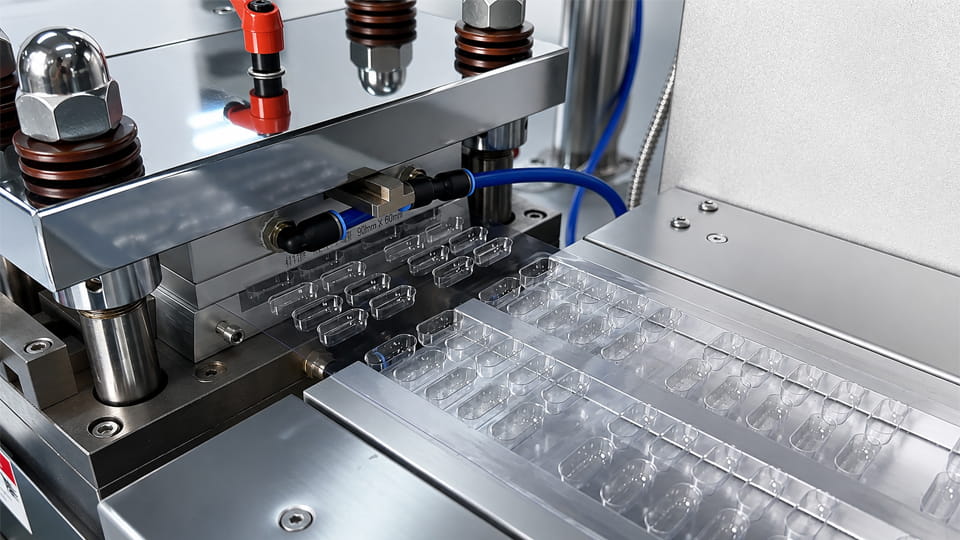
Termoformado El embalaje tipo blister calienta una lámina de plástico hasta que se ablanda y luego le da forma de cavidades mediante vacío o presión.. Una unidad con temperatura controlada (a menudo 150–180°C) calienta PVC u otra película termoplástica, que luego se moldea sobre un molde. Una vez que la película se enfríe, Las cavidades formadas se llenan con producto y se sellan con una lámina o tapa de papel..
Este proceso es altamente adaptable.: Las películas de formación comunes incluyen PVC., MASCOTA, PÁGINAS, o copolímeros, a veces con recubrimientos de barrera (PVDC, AOC, PCTFE, etc.). El termoformado ofrece una gran flexibilidad de diseño: las formas de las ampollas pueden ser profundas o complejas (usando ayudas de enchufe) sin cambiar los materiales base. También es rentable para tiradas grandes.: Las películas termoplásticas son económicas y las máquinas funcionan a altas velocidades.. La principal ventaja es la asequibilidad y el rendimiento, como señala una fuente., “las principales ventajas del PVC son el bajo coste y la facilidad de termoformado”.
Ventajas del termoformado
Menor costo de material: Películas plásticas (incluso con revestimientos de barrera) Son mucho más baratos que las láminas metálicas multicapa.. Esto hace que los costos unitarios sean más bajos para la gran producción..
Mayor velocidad: Las máquinas de termoformado suelen realizar ciclos más rápidos. Por ejemplo, una moderna línea de blister de termoformado puede funcionar 150 paquetes/min, velocidades más altas que las típicas de conformado en frío.
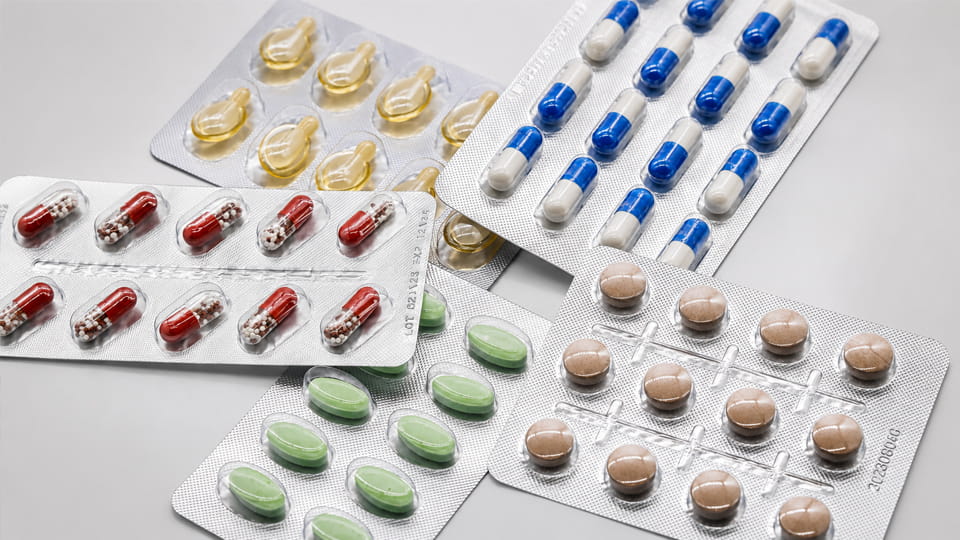
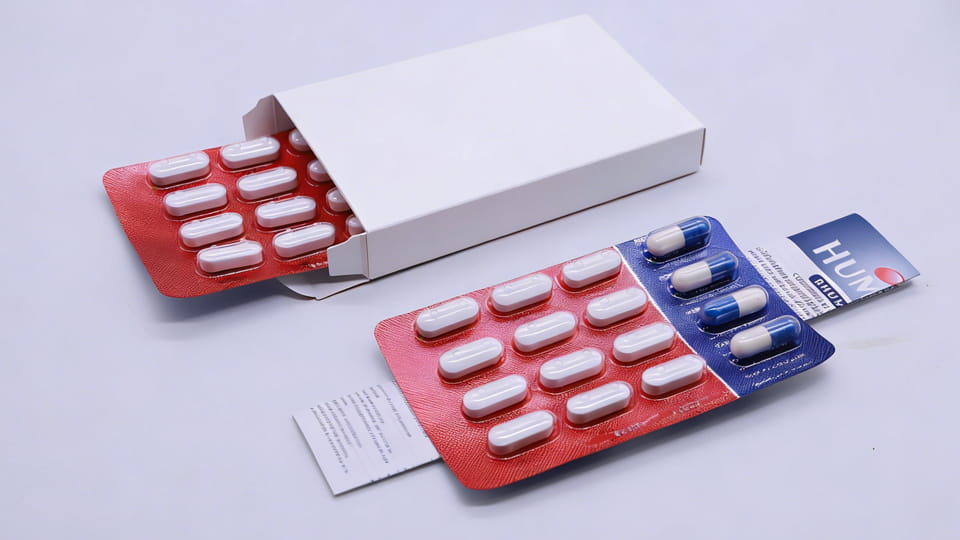
Visibilidad del producto: Los paquetes transparentes de PVC/PET permiten a los usuarios ver las pastillas o tabletas en su interior.. Esta transparencia es buena para el atractivo del consumidor. (p.ej. vitaminas al por menor) y para inspección visual.
Flexibilidad de diseño: Se pueden lograr formas de cavidades complejas o embuticiones profundas con película calentada (a menudo ayudado por vacío o ayuda de enchufe). También se integra fácilmente con procesos de llenado rápido y sellado de alta velocidad..
Limitaciones del termoformado
Protección de barrera: Una película de PVC simple ofrece sólo una moderado barrera contra la humedad y el oxígeno. El PVC sin recubrimiento tiene una alta tasa de transmisión de vapor de agua. (p.ej. ~3g/m²·día a 90%HR). Para mejorar la vida útil, Los termopacks deben utilizar costosas películas multicapa. (p.ej. PVC/PVDC o laminados de PVC/PCTFE) o películas más gruesas. Incluso entonces, la barrera generalmente permanece por debajo de lo que logra el papel de aluminio.
Sensibilidad a la luz: Las películas transparentes permiten el paso de la luz UV y visible.. Eso significa que los blisters termoformados son no Ideal para medicamentos sensibles a la luz: prácticamente no ofrecen protección UV a menos que se agreguen aditivos que bloqueen los rayos UV..
Vida útil limitada: Para API altamente sensibles a la humedad o reactivos, envases termoformados (incluso con revestimientos) a menudo dan una estabilidad más corta. notas de wikipedia: “las desventajas [de PVC] son una mala barrera contra la entrada de humedad y oxígeno”.
Costos de herramientas rígidos: Aunque las máquinas son generalmente más baratas, El termoformado por embutición profunda puede requerir moldes de precisión y troqueles asistidos por enchufe., añadiendo al gasto de herramientas.
¿Qué es el conformado en frío??
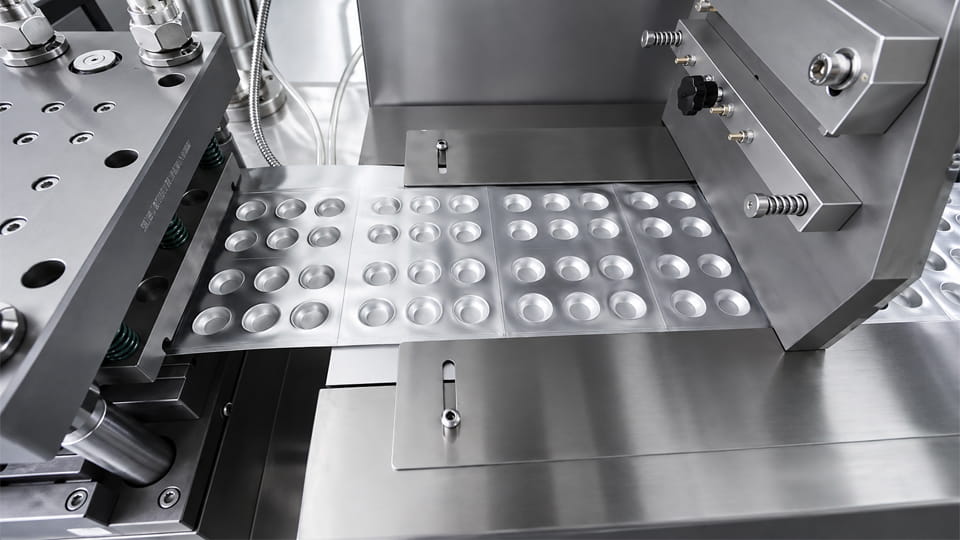
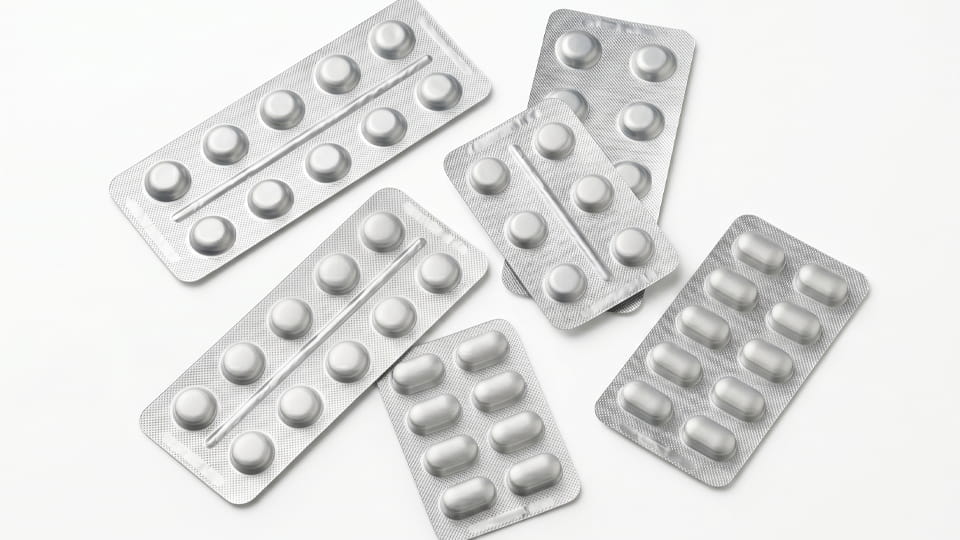
Formación fría (a menudo llamado Alu-Alu embalaje) utiliza una película multicapa a base de aluminio como red de formación. Un laminado típico conformado en frío es el PVC/Aluminio/Poliamida., con la capa de aluminio en el exterior. en este proceso, la película es no calentado. En cambio, un punzón robusto de alta presión estampa la lámina en las cavidades a temperatura ambiente. El aluminio se estira pero se deforma plásticamente., y mantiene la forma de la cavidad una vez que se retira el sello. Luego se sella cada cavidad llena. (a menudo con una tapa de papel con respaldo de aluminio o papel de aluminio).
Dado que el conformado en frío no calienta el material, evita cualquier estrés térmico en medicamentos sensibles. El resultado es una ampolla totalmente opaca. (no ver el contenido) pero proporciona un excelente barrera. El papel de aluminio detiene casi toda la humedad., oxígeno, y la luz llegue a la droga, lo que puede extender en gran medida la vida útil.
Ventajas del conformado en frío
Barrera superior: Las capas de aluminio hacen que la ampolla sea casi impermeable.. Como señala Wikipedia: “La principal ventaja de las ampollas de aluminio conformadas en frío es que el uso de aluminio ofrece una barrera casi completa al agua y al oxígeno., permitiendo una fecha de caducidad extendida del producto”. Por este motivo, las ampollas Alu-Alu se utilizan para higroscópicos., sensible al oxígeno, o productos farmacéuticos sensibles a la luz.
Protección contra la humedad y la luz.: Las ampollas formadas en frío mantienen la humedad., oxígeno y apagar las luces. Por ejemplo, Las láminas multicapa bloquean completamente la luz UV/visible y forman un sello hermético alrededor de cada dosis.. Esto fija la potencia de los medicamentos que se degradan rápidamente con aire húmedo o luz brillante..
Flexibilidad de materiales: La red en formación (PVC/Aluminio/PA) todavía tiene un lado de PVC, que mantiene la forma del bolsillo y proporciona cierta elasticidad, mientras que el aluminio proporciona protección. Esto hace que la cavidad sea fuerte y poco profunda., que suele ser suficiente para la mayoría de las tabletas y cápsulas.
Limitaciones del conformado en frío
Mayor costo de material: Los laminados de aluminio son mucho más caros que las películas de plástico.. La lámina tiene varias capas. (p.ej. 9–15μm Al más 80–100μm de otras capas) y composiciones especializadas, por lo que el costo de la materia prima por paquete es alto. Una fuente señala específicamente “El coste del conformado en frío de los blisters tiende a ser mayor que el del termoformado”.
Velocidad más lenta: Debido al proceso de estampado y a la necesidad de manipular papel de aluminio. (que no es estirable como el plástico), Las máquinas de conformado en frío funcionan a velocidades más bajas.. Como señala un resumen, Las ampollas de aluminio conformadas en frío sufren una “velocidad de producción más lenta en comparación con el termoformado”.
Sin visibilidad: Ambos lados del blister son de aluminio. (o la tapa es de aluminio), para que los usuarios no puedan ver el producto en absoluto. Esto limita el uso a productos que no requieren confirmación visual en el estante.. (También significa que los paquetes de cumplimiento deben tener un buen etiquetado impreso., ya que no puedes comprobar visualmente el contenido.)
Desgaste de la máquina: Las herramientas y troqueles de conformado en frío soportan cargas pesadas, entonces las máquinas deben ser muy robustas. El punzón y la contramatriz deben fabricarse con precisión y, a menudo, necesitan acero más grueso., agregando mantenimiento.
Tamaño de paquete más grande: Porque el aluminio no se puede estirar tanto como el plástico, Las cavidades formadas en frío suelen ser menos profundas o tienen bordes circundantes más grandes.. Wikipedia señala que un paquete Alu-Alu normalmente termina “mayor tamaño del blister” y paredes de bolsillo menos empinadas.
Conformado en frío versus termoformado: Diferencias clave
La siguiente tabla destaca las principales diferencias entre los envases blister termoformados y conformados en frío.:
Factor
Termoformado
Formación fría (Alu-Alu)
proceso de conformado
Calentar la película plástica hasta que esté suave., luego se forma con vacío/presión en cavidades.
Estampado a temperatura ambiente de laminado metálico..
Películas plásticas (CLORURO DE POLIVINILO, MASCOTA, PÁGINAS, a menudo con recubrimientos de barrera como PVDC).
Laminado de papel de aluminio multicapa (p.ej. Aluminio/PVC/PA).
Barrera (humedad/aire)
Moderado (El PVC por sí solo es permeable.; Las películas recubiertas de PVDC mejoran la barrera).
Excelente: el papel de aluminio es casi impermeable al agua y al oxígeno..
Protección de la luz
Limitado: el plástico transparente no ofrece barrera contra la luz y los rayos UV. (a menos que se agregue pigmento).
Completo: la lámina opaca bloquea toda la luz..
Visibilidad
Transparente: el cliente puede ver el producto..
Opaco: el producto está oculto en el interior..
Velocidad de producción
Generalmente más alto (líneas de alto rendimiento).
Generalmente más lento (El estampado mecánico limita la velocidad.).
Material & costo de la máquina
Más bajo: la película de plástico es más barata, las máquinas son más simples.
Más alto: los laminados de aluminio cuestan más, y las máquinas requieren prensas robustas.
Casos de uso típicos
Medicamentos de venta libre de gran volumen, vitaminas, tabletas estándar; cuando la visibilidad & el costo importa.
Humedad- o medicamentos sensibles a la luz (antibióticos, biológicos), se necesita una larga vida útil.
Cada factor anterior refleja las compensaciones entre los dos métodos.. El termoformado tiende a utilizar materiales más baratos y a funcionar más rápido., mientras que el conformado en frío utiliza costosas láminas metálicas para una protección de primer nivel..
Comparación detallada: 8 Factores clave
para resumir, Aquí hay ocho factores principales que diferencian al termoformado y al conformado en frío.:
Método de formación:
Termoformado: La lámina de plástico es calentado, luego se forma al vacío/presión sobre un molde.
Formación fría: El laminado metálico es estampado en frio con alta presión; el aluminio mantiene la forma.
Materiales:
Termoformado: Utiliza películas como CLORURO DE POLIVINILO, MASCOTA, PÁGINAS (a menudo con recubrimientos de barrera PVDC/COC/COP). Por ejemplo, Muchas líneas de blister utilizan PVC no plastificado. (RPVC) como la red de formación.
Formación fría: Utiliza un laminado a base de aluminio (típicamente PVC/aluminio/nylon). Esta “lámina de conformado en frío” está especialmente diseñada para el conformado de alta barrera..
Humedad & Barrera de gases:
Termoformado: Una película de PVC desnuda tiene una barrera deficiente (WVTR ~3g/m²·día, OTR ~20mL/m²·día). Películas de PVC multicapa (recubierto con PVDC o coextruido con PCTFE/COC) puede mejorar esto, pero nunca al nivel de la lámina metálica. Wikipedia señala que la desventaja del PVC es “mala barrera contra la humedad y el oxígeno”.
Formación fría:Excelente. El papel de aluminio crea una barrera casi impermeable.. Como se señaló, ampollas formadas en frío dan una “barrera casi completa para el agua y el oxígeno”, alargando mucho la caducidad.
Protección de la luz:
Termoformado: Las películas transparentes dejan pasar toda la luz. (a menos que use películas pigmentadas especiales o agregue agentes bloqueadores de rayos UV). Esta es la razón por la que las ampollas de PVC transparente son no Recomendado para medicamentos sensibles a la luz..
Formación fría: Completo. Bloques de láminas opacas 100% de luz, proteger las API fotosensibles.
Velocidad de producción:
Termoformado: Normalmente más alto. Porque las películas plásticas se alimentan rápidamente y los ciclos de formación son rápidos., Estas líneas suelen superar los 150-200 paquetes/min. (en máquinas rotativas de alta gama).
Formación fría: Generalmente más lento. El estampado y la manipulación de láminas limitan el rendimiento. Incluso las mejores máquinas de conformado en frío suelen estar bajo 100 paquetes/min para diseños profundos de Alu-Alu.
Costo (Material & Equipo):
Termoformado: Las películas plásticas en bruto cuestan mucho menos por metro lineal que las láminas de 3 capas. Las maquinarias son más simples (solo placas calefactoras y estaciones de vacío), por lo que el costo inicial de la máquina es generalmente menor. Una fuente resume, Las “principales ventajas” del PVC son su bajo coste y su fácil conformado.
Formación fría: Más alto. La lámina especial es cara., y las máquinas deben ser más robustas. nota de estudios “El equipo de envasado en blister en frío... es especialmente adecuado para productos sensibles a la humedad.," pero a un costo superior.
Visibilidad del producto:
Termoformado: Sí, el producto es visible a través del plástico transparente.. Bueno para exhibición en tiendas minoristas o para verificar fácilmente la dosis.
Formación fría: No – completamente opaco.
Aplicaciones típicas:
Termoformado: Tabletas/cápsulas estándar de venta libre y recetadas donde la barrera alta no es crítica (p.ej. analgésicos, vitaminas). Productos farmacéuticos a granel, suplementos, o cualquier producto que necesite una línea rápida de alta velocidad. También se utiliza para embalaje de ampolla médica de dispositivos no esterilizados.
Formación fría: Medicamentos premium o críticos (p.ej. antibióticos, API sensibles, enzimas envasadas al vacío) y cualquier producto que requiera máxima protección contra la humedad/luz y una larga vida útil. A menudo visto en PTP (empujar) paquetes para una dosificación muy estable, o para productos distribuidos globalmente con climas variables.
Estas diferencias muestran que Termoformado sobresale en velocidad, costo y visibilidad, mientras Formación fría sobresale en protección y estabilidad. En la práctica, Los diseñadores comparan estos factores con los requisitos del producto..
Elegir el método correcto: Orientación para compradores de maquinaria farmacéutica
Al seleccionar entre conformado en frío y termoformado (y el correspondiente máquina de envases de ampollas), preguntar:
Necesidades de estabilidad del producto: es tu API o formulación altamente sensible a la humedad, oxígeno o luz? Si Sí, formado en frío (Alu-Alu) Por lo general se requieren ampollas.. Si su producto es relativamente estable (p.ej. tableta estándar), el termoformado probablemente sea suficiente.
Vida útil deseada: ¿El producto necesita una caducidad extendida? (18+ meses)? Los envases moldeados en frío pueden prolongar significativamente la vida útil gracias a su barrera superior. Para una vida útil corta (<1 año) productos, Los envases de PVC suelen ser aceptables.
Volumen y velocidad de producción: ¿Necesita un rendimiento muy alto?? Las líneas de termoformado generalmente funcionan más rápido, por lo que se adaptan a la producción a gran escala. Para tiradas más pequeñas de medicamentos muy valiosos, el método de forma fría más lento puede ser aceptable.
Restricciones de costos: Si el presupuesto es ajustado y los requisitos de barrera moderados, El termoformado es más económico.. Por ejemplo, Jinlupacking señala que “el coste del conformado en frío de los blisters tiende a ser mayor que el del termoformado”. Considere el costo del material y del equipo en su análisis del TCO.
Regulador / Necesidades del mercado: Algunos mercados o formulaciones pueden requerir ciertos embalajes. Por ejemplo, una especificación regulatoria podría exigir la lámina Alu-Alu para un antibiótico en particular, o el marketing puede favorecer el envasado transparente de una vitamina de marca.
Compatibilidad de la máquina: Considere si desea una máquina para ambos métodos o líneas separadas. Algunas máquinas modernas (como el de Jinlu Máquina Blíster DPP-180PRO) Se puede configurar para termo- o conformado en frío, pero muchas empresas utilizan líneas dedicadas para optimizar cada proceso.
Máquina de ampolla DPP-180Pro para tableta cápsula
Una regla general rápida: Utilice el termoformado para medicamentos estándar donde la visibilidad del cliente y el costo son clave; use conformado en frío para necesidades de barrera alta donde la protección es primordial.
Cuándo elegir el termoformado
Su producto no es extremadamente humedad- o sensible a la luz (tabletas básicas de venta libre, vitaminas).
Alta velocidad de producción y bajo coste son prioridades.
Quieres un embalaje transparente para que se pueda ver el producto..
La vida útil esperada es relativamente corta o moderada..
Planea utilizar películas plásticas estándar (CLORURO DE POLIVINILO, Recubierto de PVDC/PVDC, AOC, etc.).
Su máquina empacadora de blister está configurada para estaciones de formación calentadas..
Cuándo elegir el conformado en frío
Su producto es muy sensibles a la humedad/oxígeno o sensibles a la luz (p.ej. tabletas higroscópicas, esteroles, ciertos productos biológicos).
Necesita la mejor barrera y la vida útil más larga..
Tienes una carrera más pequeña o estás dispuesto a cambiar la velocidad por protección..
Puedes aceptar envases opacos. (o utilizar etiquetas pesadas para diferenciar).
El presupuesto permite un mayor coste de material. (laminados de papel de aluminio).
Tu maquinaria (o proveedor) apoya el proceso de conformado en frío con troqueles metálicos resistentes.
Por ejemplo, Muchos blisters farmacéuticos moldeados en frío llevan la etiqueta "Alu-Alu"en el papel de aluminio. Estos se eligen precisamente cuando maximizar la estabilidad del fármaco es el objetivo.
Comparación de costos
El costo es una consideración importante. Costos de materiales: película de PVC (incluso con un revestimiento de PVDC) Es mucho más barato que un laminado de aluminio de 3 capas.. Por unidad, el material de un paquete termoformado puede costar sólo unos pocos centavos, mientras que un paquete de láminas Alu-Alu equivalente puede ser múltiplos de eso. Una fuente del sector confirma que “El coste del conformado en frío de los blisters tiende a ser mayor que el del termoformado”.
Costos de la máquina y OEE: Las máquinas de termoformado son generalmente más sencillas. (Unidades de calefacción y cámaras de vacío.) y a menudo más barato de mantener. Las máquinas de conformado en frío necesitan punzones pesados y, a veces, doble alimentación. (para láminas interiores y exteriores), que puede aumentar los costos de capital. Sin embargo, si el conformado en frío evita pérdidas de producto (p.ej. del deterioro), el mayor costo inicial podría estar justificado. Considere siempre costo total de propiedad, incluido el tiempo de inactividad, mantenimiento, y desperdicio de materiales, no solo velocidad de línea.
Líneas de selección y envasado de máquinas
Su elección también dicta la línea de envasado.. Máquinas de embalaje están diseñados para un proceso u otro. A máquina de blister termoformado Contará con estaciones de calefacción y vacío.; a máquina de blister de conformado en frío Tendrá una prensa grande y alimentadores de papel de aluminio.. Algunas máquinas híbridas (a menudo en investigación o uso a baja escala) puede cambiar de modo, pero una línea determinada generalmente está optimizada para un método.
Por ejemplo, el jinlu Máquina blisteradora de rodillos DPH-270Max es capaz de ambos métodos, pero la mayoría de las líneas de producción estarán dedicadas. Si eliges termoformado, asegura tu equipo de envasado en blister apoya la película elegida (Espesor del PVC, tipo de recubrimiento) y tiene suficiente control de temperatura. Si elige conformado en frío, asegúrese de que su máquina pueda manejar rollos de lámina Alu-Alu y tenga la fuerza de estampado requerida.
Al hablar con proveedores, mencione las necesidades de su producto: Indique si necesita “una máquina empacadora de blister para empaques blister Alu-Alu” o “una máquina empacadora de blister termoformado para películas de PVC/PVDC”.
Cómo decidir: Una lista de verificación rápida
Evaluar la sensibilidad del producto: Compruebe si su medicamento necesita protección contra la humedad., oxígeno, o luz. Si cualquier de estos son críticos, Es probable que se requiera conformado en frío..
Objetivos de vida útil: ¿Se necesita una caducidad extendida?? Para 2+ año de vida útil, la barrera Alu-Alu es la opción más segura.
Requisitos visuales: ¿Quieres que los clientes vean el producto?? En caso afirmativo, favorecer el termoformado (transparente).
Volumen de producción & Costo: Para volúmenes muy altos y sensibilidad de costos, El termoformado suele ganar. Si el volumen es menor y el costo del producto es alto, La velocidad más lenta del conformado en frío puede ser aceptable..
Capacidades de la máquina: Confirma que tu máquina de ampolla puede manejar el material elegido. Muchos fabricantes pueden proporcionar ambos tipos., pero necesita las herramientas y la configuración de línea correctas.
Si tienes dudas, consultar a un experto: Los ingenieros de envasado a menudo modelan la estabilidad del medicamento específico en diferentes materiales.. Pero una buena heurística es que Formación fría (bienvenido) ofrece la mejor protección a un mayor costo, y termoformado (plástico) ofrece la mejor visibilidad y rendimiento a menor costo.
Conclusión
El conformado en frío y el termoformado tienen claros pros y contras. Termoformado (a base de PVC) es rapido, transparente, y rentable, haciéndolo ideal para muchos productos farmacéuticos de rutina. Formación fría (bienvenido) es más lento y costoso, pero proporciona una humedad inmejorable, Protección contra el oxígeno y la luz para productos de alto valor., drogas sensibles. En la práctica, Los paquetes de termoformado se utilizan para tabletas estándar., vitaminas y productos de venta libre, mientras que los paquetes en frío se eligen para medicamentos sensibles a la humedad o de larga caducidad..
Al final, su decisión debe ser impulsada por requisitos del producto. Si la barrera definitiva es esencial, Probablemente opte por un blister de aluminio-alu en una máquina empacadora de blister de conformado en frío.. Si necesitas velocidad, visibilidad y ahorro de costes, un paquete termoformado de PVC en una máquina de blister termoformado probablemente sea suficiente.
Siéntete libre de contacta con nuestros especialistas en embalaje para ayuda. Podemos recomendar el derecho empaquetadora automática de blister y proceso para su producto, ya sea que necesite una línea de blister de termoformado de alta velocidad o una línea de conformado en frío. (bienvenido) máquina de ampolla.
Mantenga el cumplimiento normativo y sea rentable con la elección correcta de embalaje tipo blíster!
Preguntas frecuentes sobre los blisters de conformado en frío y termoformado
¿Cuál es la diferencia entre conformado en frío y termoformado??
El termoformado utiliza calor para dar forma a la película plástica en cavidades tipo blíster, mientras que el conformado en frío presiona mecánicamente un laminado a base de aluminio para darle forma sin calor. El termoformado suele ser más rápido y rentable, mientras que el conformado en frío proporciona una barrera de protección más fuerte.
¿Es mejor el conformado en frío que el termoformado??
No necesariamente. El conformado en frío es mejor para productos que requieren una fuerte protección contra la humedad., oxígeno, o luz, mientras que el termoformado a menudo se prefiere para productos estables donde el costo, velocidad, y la visibilidad del producto son prioridades.
cual es mas barato, conformado en frío o termoformado?
El termoformado es generalmente menos costoso. Los materiales de formación de plástico suelen costar menos que los laminados a base de aluminio utilizados para los envases tipo blister Alu-Alu conformados en frío., aunque el coste total también depende de la velocidad de la máquina, estampación, y requisitos de producción.
Lo que proporciona una mejor protección contra la humedad.?
El conformado en frío generalmente proporciona una mejor protección contra la humedad.. Su laminado a base de aluminio ofrece una barrera muy fuerte., haciéndolo adecuado para productos farmacéuticos sensibles a la humedad. El requisito real debe confirmarse mediante estudios de estabilidad del producto y de embalaje..
cual es mas rapido, conformado en frío o termoformado?
El termoformado es generalmente más rápido que el conformado en frío.. Su proceso de conformado se adapta bien a la producción de gran volumen., mientras que el conformado en frío generalmente se realiza a velocidades más bajas porque el laminado de aluminio requiere conformado mecánico.
¿Por qué se utiliza el blíster Alu-Alu para medicamentos sensibles??
El blíster de Alu-Alu proporciona una excelente protección contra la humedad., oxígeno, y luz. Por lo tanto, se considera comúnmente para productos farmacéuticos con alta sensibilidad a la exposición ambiental o requisitos exigentes de vida útil..
¿Es el termoformado adecuado para envases tipo blister farmacéuticos??
Sí. El termoformado se utiliza ampliamente para tabletas y cápsulas cuando el producto no requiere el nivel más alto de protección de barrera.. Materiales como PVC y PVC/PVDC pueden proporcionar diferentes niveles de protección contra la humedad según la formulación y las especificaciones del paquete..
¿Cuál es la diferencia entre un blister Alu-Alu y un blister termoformado??
Un blister Alu-Alu utiliza un laminado conformador a base de aluminio y es opaco., mientras que un blister termoformado suele utilizar una película plástica y puede ser transparente. Alu-Alu ofrece una barrera de protección más fuerte, mientras que el termoformado generalmente ofrece mejor visibilidad y menor costo.
¿Puede una máquina envasadora de blister manejar tanto el conformado en frío como el termoformado??
Generalmente no sin un diseño o configuración de máquina específica.. Los dos procesos requieren diferentes sistemas de conformado., estampación, y manipulación de materiales. Si se necesitan ambos formatos, El fabricante de la máquina debe confirmar la compatibilidad antes de la compra..
¿Cómo elijo entre una máquina de blister de conformado en frío y termoformado??
Comience con la sensibilidad del producto., vida útil requerida, material de embalaje, volumen de producción, y costo objetivo. Elija el conformado en frío cuando la protección de barrera alta sea crítica; elija termoformado cuando la velocidad, visibilidad, y la rentabilidad son más importantes.
Petty Fu, Fundador de Jinlupacking, trae 20 años de experiencia al sector de maquinaria farmacéutica. Bajo su liderazgo, Jinlu se ha convertido en un proveedor confiable que integra diseño, producción, y ventas. A Petty le apasiona compartir su profundo conocimiento de la industria para ayudar a los clientes a navegar las complejidades del empaque farmacéutico., garantizar que reciban no sólo equipos, sino una verdadera asociación de servicio integral adaptada a sus objetivos de producción..