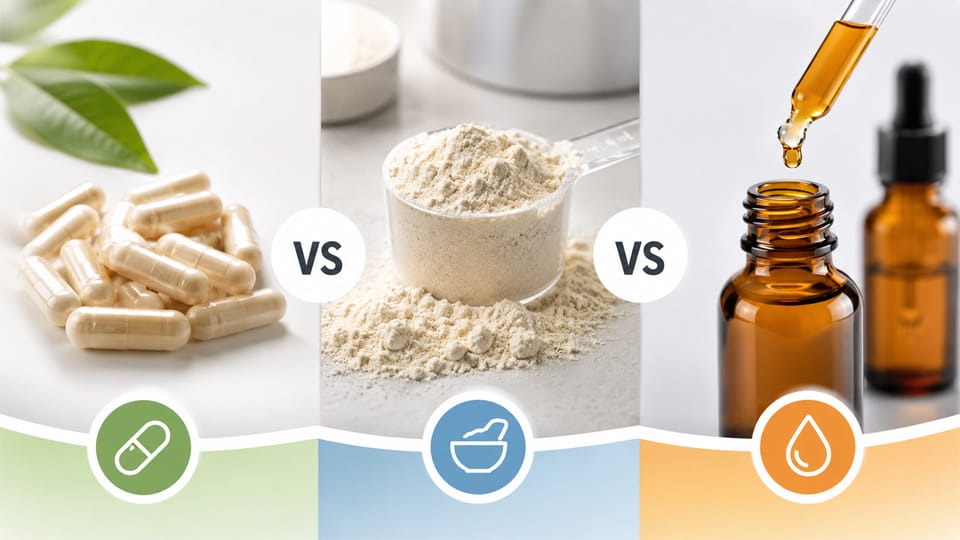

La formulación de cápsulas puede utilizar polvos., gránulos, pellets o minitabletas, cada uno con pros y contras únicos. Polvos son simples y comunes pero pueden tener polvo o fluir mal. Gránulos (polvos aglomerados) mejorar el flujo y reducir el polvo a costa de un procesamiento adicional. Pellets Son partículas de múltiples unidades aproximadamente esféricas con un flujo excelente y son ideales para formulaciones combinadas y de liberación controlada.. Mini tabletas (pequeñas tabletas llenas en una cápsula) permiten una dosificación precisa y múltiples API o perfiles de liberación en una cápsula. La elección del material de relleno afecta la uniformidad de la mezcla., flexibilidad y fluidez de la dosis, e influye en cuál máquina de llenado de cápsulas Se necesitan características.
Esta guía compara cada formulario., muestra cómo la elección de materiales es importante para la producción, e incluso proporciona un árbol de decisiones para ayudarle a elegir el mejor material de relleno de cápsulas para su producto. (y por tanto el equipamiento adecuado). También enumeramos los datos clave de formulación para compartir con los proveedores de máquinas de cápsulas al evaluar el alcance de su proyecto..

Las cápsulas duras se pueden llenar con una variedad de formas sólidas.. Aquí hay una comparación rápida de polvo, gránulos, bolitas y mini-tabletas en cápsulas:
| Material de relleno | Forma típica | Principales ventajas | Desafíos comunes |
| Polvo (partículas finas) | Mezcla seca de API + excipientes | Alta flexibilidad de dosificación; rápida disolución (liberación inmediata); formulación simple. | Problemas de flujo: tiende a agruparse, segregar o puentear; la uniformidad de la dosis puede verse afectada. Sensible a la humedad y la estática.. |
| Gránulos (polvo aglomerado) | Racimos más grandes provenientes de granulación húmeda/seca | Mejor fluidez y densidad aparente; polvo reducido; peso de relleno más uniforme. Permite una dosificación cohesiva. | Pasos adicionales del proceso: la granulación añade costo/tiempo. La variación del tamaño de las partículas afecta la uniformidad.; Aún es posible formar puentes si no se secan bien.. |
| Pellets (esferoides) | Microperlas redondeadas (a menudo recubierto) | Liberación controlada: Puede cubrir cada pastilla para una liberación programada.. Forma uniforme → muy buen flujo en tolvas. <hermano>Dosificación consistente: medido por volumen, no contar. | Producción compleja: requieren granulación/extrusión y recubrimiento. El equipo debe manejar cuentas pequeñas sin segregación.. |
| Mini-tabletas (microtabletas) | Pequeñas tabletas (2–4 mm de diámetro) | Dosificación flexible: mezcle varias minitabletas para múltiples API o lanzamiento escalonado. Fácil de manejar como tabletas pequeñas. | desafío de contar: Necesita un alimentador especial para contar y soltar.. Puede tener menor fluidez que las perlas sueltas.. Requiere herramientas precisas para prensar tabletas. |
Cada material puede ser el relleno primario o parte de una combinación. Las líneas de cápsulas modernas pueden incluso mezclar formas en una sola cápsula. (p.ej. bolitas + polvo) para lograr perfiles de lanzamiento complejos.

Las propiedades físicas de su material de relleno afectan directamente el rendimiento del llenado de cápsulas y la calidad del producto.. Fluidez, tamaño de partícula, La densidad y la humedad son factores clave.. Por ejemplo, Los polvos muy finos pueden ser cohesivos o polvorientos. (tiende a agruparse o colgarse en las superficies), mientras que las partículas más grandes o los gránulos fluyen más fácilmente. La elección también afecta la uniformidad de la mezcla: los polvos finos con tamaños de partículas mezclados pueden segregarse durante la manipulación., mientras que los gránulos uniformes o las minitabletas reducen ese riesgo.
El material de relleno también impulsa la precisión de la dosis y la flexibilidad de la formulación.. Pellets (a menudo llamados "multipartículas") permiten patrones de liberación complejos y la combinación de diferentes gránulos en una cápsula. Las minitabletas permiten múltiples API o recubrimientos por cápsula. En contraste, una mezcla de polvo simple generalmente ofrece un perfil de liberación. Muchas máquinas de cápsulas permiten mezclar diferentes formas., pero cada adición (p.ej. bolita + polvo) agrega complejidad y puede requerir alimentadores o estaciones separadas.
Finalmente, el material dicta qué mecanismo de dosificación en el llenador de cápsulas se utiliza. Los alimentadores de barrena o de disco y los pasadores apisonadores funcionan bien para polvos de flujo libre, mientras que las estaciones de pellets o tabletas manejan partículas rígidas. Cubrimos estas consideraciones de la máquina a continuación..
Polvo es el clásico relleno de cápsulas. Es simplemente una mezcla fluida de API y excipientes (diluyentes, danza deslizante, etc.). Los polvos brillan cuando los necesitas simple, fórmulas de liberación inmediata o dosis altamente personalizables. Porque los polvos tienen gran superficie, se disuelven rápidamente, ideales para un rápido inicio de acción. Y los polvos te permiten ajustar la dosis: para pediatría, fortalezas geriátricas o variables, puedes ajustar la mezcla fácilmente.

Sin embargo, Los polvos tienen desventajas.. Fluidez es a menudo pobre: Las partículas finas pueden formar puentes en las tolvas o adherirse a los alimentadores.. Incluso el polvo bien mezclado puede segregarse (las partículas más pesadas se depositan) si se sacude, causando variación del peso de relleno. La falta de una forma definida hace que la dosificación dependa de métodos volumétricos o de apisonamiento. (discos, vacío/aire) que exigen un comportamiento del polvo muy consistente. Como señala GMP Insiders, “Los polvos a menudo tienen poca fluidez, haciéndolos difíciles de manejar”, lo que puede provocar problemas de dosificación. Los polvos húmedos o propensos a la estática se acumulan, causando que algunas cápsulas se llenen demasiado y otras no se llenen lo suficiente. Finalmente, Los polvos pueden tener mal sabor o irritar., ya que se liberan al instante; La encapsulación o los recubrimientos pueden enmascarar el sabor., pero los polvos en sí ofrecen una protección limitada.
Cuando elegir polvo: Formulaciones que requieren liberación inmediata, API de dosis alta (peso fácil de llenar), o máxima flexibilidad. Para fármacos potentes en dosis bajas, los polvos pueden ser complicados sin granulación. Laboratorio y R&Las básculas D suelen utilizar polvos.. Por ejemplo, Llenadora de cápsulas NJP-400C de Jinlu (24k cápsulas/hora) está diseñado para polvos y gránulos, usando pasadores de apisonamiento o discos dosificadores para un peso de llenado preciso.
Consejos: Controlar el tamaño de las partículas y la humedad.. Utilice deslizantes (p.ej. estearato de magnesio) para mejorar el flujo. Mantenga la mezcla uniforme y realice estudios de flujo de polvo.. Las líneas de alta velocidad deberían seguir las tendencias del peso de llenado; Las causas comunes de variación incluyen cambios de humedad., Segregación y discos de dosificación desgastados..
Gránulos son simplemente partículas de polvo unidas en gránulos más grandes (granulación húmeda o seca). Haciendo que las partículas sean más grandes y más uniformes., granulación mejora dramáticamente el flujo y el manejo. La mayor masa del gránulo significa que vacía las tolvas de manera más consistente, y hay menos polvo. Esto conduce a un peso de llenado más estable y a un menor tiempo de inactividad de la máquina.. GMP Insiders confirma que "los gránulos ofrecen mejores propiedades de flujo y compresibilidad" que los polvos. Los gránulos también son excelentes intermediarios si eventualmente comprimes tabletas.: las cápsulas pueden ser una dosis rápida, mientras que los gránulos también son comprimibles.

Pellets (abajo) son esencialmente gránulos esféricos. Pero también las masas granuladas no recubiertas ayudan relleno uniforme. Para fabricantes, la granulación añade un paso adicional, pero a menudo vale la pena eliminando los puentes. Un granulador de lecho fluido o de alto cizallamiento puede producir gránulos que reducen drásticamente la segregación.. (Después de la granulación, puede seleccionar el tamaño adecuado para garantizar una alimentación uniforme en la tolva de llenado de cápsulas.)
Cuando elegir gránulos: Utilice gránulos cuando el polvo base esté pegajoso., cohesivo o tiene una amplia distribución de tamaño. La granulación garantiza pesos constantes de las cápsulas, especialmente en líneas de alta velocidad.. También se pueden incorporar gránulos carpetas o revestimientos. Para un control de liberación moderado, puedes recubrir los gránulos como minipellets.
Consejos: Optimizar el tamaño de los gránulos (normalmente unos cientos de micras) para la tolva de su llenadora. Asegúrese de que los gránulos estén completamente secos y fluyan libremente.. Los alimentadores vibratorios o sinfines suelen alimentar los gránulos de forma fiable., y llenadoras de cápsulas con dosificación volumétrica de gránulos (p.ej. tolvas segmentadas) manejarlos bien. Los rellenos de cápsulas de Jinlu contienen gránulos: el NJP-400C, por ejemplo, está clasificado para polvos y gránulos.
Pellets (o esferoides) son pequeños, partículas redondeadas - a menudo 0.5 a 2 mm de diámetro: generalmente producido mediante técnicas de extrusión-esferonización o estratificación. Cada gránulo se puede recubrir para controlar la liberación. (entérico, demorado, revisado, etc.), por lo que las cápsulas rellenas de pellets son ideales para multipartículas y de liberación modificada formulaciones. Notas originales de Jinlu, “Los pellets son pequeñas cuentas esféricas de múltiples unidades., a menudo recubierto para una liberación sostenida”. Cápsulas llenas únicamente de pellets. (también llamadas cápsulas multipartículas) puede dar precisión, lanzamiento predecible: algunos gránulos se disuelven inmediatamente, otros después. Este perfil de liberación multifase es difícil de lograr con polvos uniformes..

Los pellets fluyen muy bien debido a su forma.. Una rápida inclinación de la tolva y los pellets se vierten suavemente en un disco dosificador o alimentador de rueda de estrella giratoria.. Los rellenos modernos a menudo tienen discos de polvo segmentados para llenado volumétrico de pellets, o incluso enjuagar Tolvas que dosifican el pellet por volumen.. Porque los pellets son relativamente pesados y gruesos, hay muy poco polvo, y las máquinas funcionan rápido: hasta decenas de miles de cápsulas por hora.
Cuando elegir pellets: Cuando necesita una liberación controlada o desea minimizar la variación de dosis. Los pellets te permiten combinar inmediatamente- y gránulos de liberación prolongada en una cápsula para crear perfiles de liberación de fármacos diferentes o por etapas. Son excelentes para medicamentos en dosis altas que se benefician de la liberación sostenida.. También, si su fórmula puede soportar el procesamiento adicional (extrusión, capas, o revestimiento), Los gránulos pueden superar a los polvos en consistencia..
Consejos: Haga coincidir el tamaño del pellet con el relleno de la cápsula. Los gránulos grandes pueden reducir el recuento por cápsula; Demasiados pellets pequeños pueden causar segregación en la tolva.. Calibre el alimentador volumétrico, ya que los pellets se llenan por volumen en lugar de contarse, Los ajustes precisos de la rueda de estrella son clave. Comprobar que el pellet no sea friable (polvo). Especializado de Jinlu relleno multipartículas tecnología (disponible en máquinas como la NJP-1500D) maneja pellets de manera confiable y puede acomodar múltiples tamaños de pellets.
Mini tabletas (a veces llamadas microtabletas) son pequeñas tabletas comprimidas, típicamente de 2 a 4 mm de diámetro. Piense en poner uno o más de estos comprimidos muy pequeños dentro de una cápsula dura más grande.. Este enfoque combina los beneficios de las tabletas y las cápsulas.: cada minitableta puede contener una dosis precisa o un API diferente, y se puede recubrir para una liberación personalizada. Por ejemplo, una cápsula puede contener una minicomprimido de liberación inmediata del medicamento A y un minicomprimido de liberación sostenida del medicamento B. La guía de Jinlu explica que las minitabletas “permiten a los fabricantes combinar diferentes medicamentos, dosis, o liberar perfiles en una sola unidad”.

Las minitabletas tienen excelente flexibilidad de dosis. Porque son unidades comprimidas, puedes contarlos como tabletas: una cápsula = 5 tabletas o 10 tabletas, etc.. Esto facilita el ajuste de la dosis total.. También minimizan la segregación porque cada minitableta tiene una composición fija.. En comparación con los pellets, Las minitabletas suelen tener una porosidad más baja. (menos sensibilidad a la humedad) y peso constante de la tableta. Un estudio señala que las formas de unidades múltiples (gránulos, bolitas, mini-tabletas) “ofrecer un control eficiente de la liberación de fármacos” con “interrupciones más pequeñas- e intravariabilidad”.
Por otro lado, La alimentación con minitabletas requiere equipo especial.. Los rellenos de cápsulas necesitan un estación de dosificación de tabletas: normalmente un disco vibratorio o giratorio con bolsillos que cuentan y dejan caer cada minitableta en el cuerpo de la cápsula. Esto añade complejidad y costo.. También, porque las minitabletas son sólidas, Fluyen como gránulos pero pueden atascarse si no se manipulan con cuidado.. Sin embargo, rellenos de cápsulas modernos (incluyendo las máquinas de Jinlu) ofrecen alimentadores de minitabletas opcionales. En efecto, Jinlu especifica que el NJP-400C acepta rellenos de “microtableta”, lo que significa que puede alimentar minitabletas prefabricadas.
Cuándo elegir minitabletas: Cuando necesita combinaciones de dosis precisas o desea incluir múltiples API o tasas de liberación en una cápsula. Son populares para productos pediátricos o multimedicamentos., donde la titulación de dosis es clave. Utilice minitabletas si su formulación es apta para tabletas y puede permitirse una estación de llenado adicional. Brillan cuando uniformidad y dosificación fija son primordiales.
Consejos: Asegúrese de que todas las minitabletas sean consistentes en tamaño y dureza. Valide el alimentador de tabletas con su forma específica de minitableta. Si usa minicomprimidos recubiertos, manipularlos con cuidado para evitar que se astillen. Es posible combinar minitabletas con gránulos o polvo en una cápsula; solo programe la secuencia de llenado (soltar tabletas, luego agregue pellets, luego cubra con polvo, etc.) y Jinlu describe.
A veces la mejor solución utiliza más de un material. Los rellenos de componentes múltiples pueden brindar terapias de liberación dual o combinadas.. Ejemplos:
Estas estrategias combinadas explotan las fortalezas de cada forma.. Requiere una línea de llenado con múltiples estaciones., pero muchas máquinas de alta gama admiten esto. El beneficio es un verdadera forma de dosificación combinada: mejor control terapéutico y menos pastillas para el paciente. Por ejemplo, se podría administrar un antiinflamatorio como 2 minicomprimidos de liberación inmediata + 50 pellets retardados en una cápsula.
Elegir el relleno correcto depende de su requisitos clave: fluidez, flexibilidad de dosis, perfil de lanzamiento, manejo, y equipo. La siguiente tabla asigna estos factores a cada material.:
| Factores / Material | Polvo | Gránulos | Pellets | Mini-tabletas |
| Fluidez | Medio / Bajo (Los polvos finos pueden unir) | Bien (un tamaño más grande reduce los puentes) | Muy bien (esferas lisas) | Bien (en general bien, pero necesita un manejo suave) |
| Flexibilidad de dosis | Alto (las proporciones de mezcla se cambian fácilmente) | Alto (Igual que el polvo después de la granulación.) | Alto (mezclar diferentes tipos de pellets) | muy alto (contar tabletas para mayor precisión) |
| Versión modificada | Limitado (mezclar con excipientes) | Posible (gránulos recubiertos) | Excelente (cubrir cada bolita) | Excelente (recubra las tabletas o use tabletas diferentes) |
| Uniformidad de contenido | Moderado (riesgo de segregación) | Bien (la granulación promueve la uniformidad) | Muy bien (cada pastilla idéntica) | Muy bien (dosis contadas) |
| Costo de procesamiento | Bajo (mezcla simple) | Moderado (paso de granulación) | Alto (extrusión + revestimiento) | Alto (compresión de tabletas + revestimiento) |
| Facilidad de llenado de cápsulas | Simple (apisonamiento/disco estándar) | Más fácil (fluye suavemente) | Fácil (Los rellenos volumétricos funcionan bien.) | Complejo (necesita estación de conteo de tabletas) |
| Mejores casos de uso | Fórmulas simples o de liberación inmediata | Polvos puente/relleno con bajo contenido de polvo | Liberación controlada/multipartículas | Multi-API o dosificación precisa (p.ej. terapia combinada) |
Los factores anteriores guían la decisión.. Por ejemplo:
El material de relleno determina fundamentalmente la mecanismo de dosificación y configuración de la máquina:
en cada caso, considerar precisión de dosificación y consistencia del pienso: Los polvos densos pueden utilizar pasadores de apisonamiento.; los polvos esponjosos pueden necesitar aspiradora o barrenas; Los pellets se benefician de la precisión volumétrica.; Las minitabletas dependen de un buen diseño de bolsillo. Las piezas dosificadoras de la máquina deben elegirse para que coincidan con el tipo de llenado..
Por ejemplo, el Máquina llenadora automática de cápsulas NJP-400C está diseñado para manejar polvos, gránulos, pellets y minitabletas. Su sistema de alimentación ajustable (agitación neumática, manosear, etc.) permite cambiar entre estos materiales. Asimismo, el Llenadora de cápsulas NJP-1500D de alta velocidad cubre el mismo rango hasta 90,000 cps/hora.
Antes de elegir una llenadora de cápsulas (o ajustar uno existente), examinar estas propiedades materiales:
Ejemplo: Un fármaco potente en dosis bajas (<10 mg) con flujo de polvo deficiente es un caso clásico para granulación o minitabletas. una dosis alta, vitamina sensible a la humedad (300 mg) podría funcionar bien como gránulos recubiertos para evitar la higroscopicidad.
La clave es introducir estos datos en la elección de su equipo.. Jinlu recomienda dar a los proveedores la densidad aparente del producto, Índice de Carr, tamaño de partícula, contenido de humedad, y salida deseada. Esto garantiza el principio de dosificación correcto. (pasador de apisonamiento vs sinador) es seleccionado.
Ahora que las necesidades de formulación están claras, combinarlos con el equipo:
Ejemplo de diagrama de flujo de decisión:

Este simple flujo dice: identifica tu tipo de relleno, Luego elija el mecanismo de alimentación y la máquina correspondientes.. En el camino, tenga en cuenta las propiedades del material. Al final, seleccione el llenador de cápsulas que admita su material y rendimiento (Jinlu ofrece modelos semiautomáticos y totalmente automáticos que se adaptan tanto a R&D y producción a gran escala.).
Incluso con la máquina adecuada, cuidado con estos problemas comunes en el llenado de cápsulas, y como solucionarlos:
La mayoría de los problemas se remontan al comportamiento material vs.. configuración de la máquina. La clave es monitoreo en proceso. Como aconseja una guía de la industria, Esté atento a la desviación de peso., Comprobar el material en busca de señales de polvo o puentes., y ajustar un factor a la vez. Mantenga registros de lotes detallados: Las variaciones en el tamaño de las partículas o la humedad de las materias primas a menudo explican los problemas posteriores..
Al solicitar cotización de llenadora de cápsulas, Proporcionar al proveedor tantos datos de formulación como sea posible.. La información clave incluye:
| Datos a proporcionar | Por qué es importante |
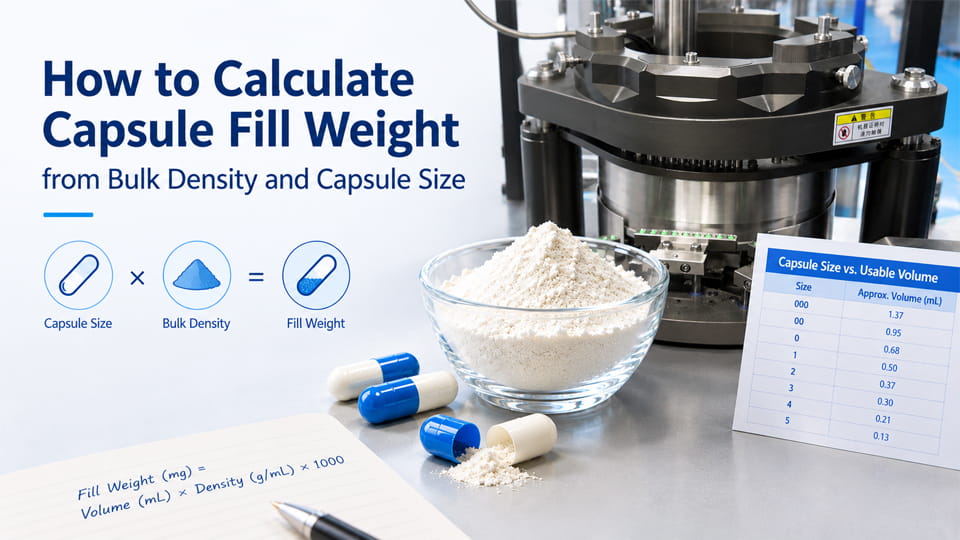
| Producto & Dosis: Peso de llenado objetivo, tamaño de la cápsula (000–5) | Determina el volumen de llenado requerido y la capacidad de la máquina.. |
| Densidad de formulación: Densidad aparente/explotada, Índice de Carr/Hausner | Indica flujo y compresibilidad.. Ayuda a elegir el paso del sinfín y predecir la uniformidad del llenado.. |
| Tamaño de partícula: Polvo D50 o rango de tamaño de gránulos | Afecta el comportamiento del flujo y el riesgo de segregación o puenteo.. |
| Flujo/Textura: Flujo libre vs cohesivo/pegajoso (y contenido de humedad) | Necesidad de señales para alimentadores especiales. (p.ej. vibración, fluidización del aire) y si la compresión se mantendrá. |
| Dosis unitaria: # de comprimidos o pellets por cápsula (si corresponde) | Asegura las estaciones de dosificación de la máquina. (rampa para tabletas, sinfín de pellets) están configurados para el recuento correcto. |
| Producción: Tasa de producción deseada (cápsulas/hora) | Coincide con la velocidad de llenado (semiautomático vs rotativo) a sus requisitos de rendimiento. |
Proporcionar estos detalles permite a los proveedores recomendar el modelo y la configuración correctos.. Por ejemplo, Jinlu recomienda incluir el índice de Carr y la información sobre la humedad para que los ingenieros puedan sugerir características para los polvos de flujo deficiente. La tabla de arriba (inspirado en las mejores prácticas de la industria) debe servir como lista de verificación al hablar con los proveedores. Pregúnteles cómo manejan los artículos de bandera. (p.ej. “mi polvo es muy higroscópico” o “necesito mezclar dos pellets diferentes”).
En resumen, el polvo no es automáticamente lo mejor para rellenos de cápsulas. Cada opción tiene compensaciones:
La elección correcta depende de las propiedades de su medicamento., perfil de lanzamiento objetivo, y necesidades de producción. Crucialmente, Haga coincidir su material de relleno con el equipo de llenado de cápsula. Una buena regla general: planifique su formulación primero, Luego elige la máquina, no al revés.
Buscando una solución de llenado de cápsulas? Las máquinas de Jinlu Packing cubren todos estos escenarios. Nuestro Serie NJP Las máquinas pueden manejar polvo., gránulos, pellets y minitabletas. Si necesita R a pequeña escala&Ejecuciones D o producción de alta velocidad, Podemos recomendar el modelo y las herramientas correctos.. Contacto Jinlu para analizar sus necesidades de formulación y maquinaria: nuestros expertos pueden guiarlo hacia el llenador de cápsulas ideal para su polvo., gránulo, formulación en pellets o minitabletas.
Las cápsulas duras pueden contener una amplia variedad de rellenos, no solo polvo. Pueden contener polvos secos., gránulos, bolitas/perlas pequeñas, o incluso mini-tabletas (más, con equipo especial, semisólidos o líquidos). En la práctica, A menudo se ven rellenos de múltiples partículas, como gránulos recubiertos o mezclas de comprimidos y gránulos.. Notas originales de Jinlu, las cáscaras duras vacías pueden contener polvos, gránulos, pellets o tabletas pequeñas, así como suspensiones o aceites. La clave es que su llenador de cápsulas debe estar configurado para el formulario específico..
La granulación resuelve muchos problemas del polvo. Aglomerando el polvo fino en partículas más grandes, la fluidez y la dosificación se vuelven mucho más confiables. Los gránulos se empaquetan más densamente y fluyen más suavemente., evitando puentes en la tolva y polvo. También reducen la segregación durante la alimentación., dando pesos de cápsula más uniformes. Entonces, si su mezcla en polvo es “pegajosa” o tiene partículas de gran tamaño, convirtiéndolo en gránulos (mojado o seco) suele ser la mejor solución. Utilice gránulos cuando necesite un rendimiento de llenado estable.
Pellets (cuentas pequeñas) desbloquear perfiles de lanzamiento avanzados. Cada gránulo puede recubrirse para una liberación retardada o prolongada.. Una cápsula llena de gránulos recubiertos puede ofrecer múltiples fases de liberación del fármaco (algunos gránulos se disuelven ahora, otros después). Los pellets también fluyen extremadamente bien y eliminan los problemas de mezcla. (cada cápsula obtiene un volumen constante de gránulos). En breve, Los gránulos son ideales para formulaciones de liberación controlada.. Requieren equipo especializado de alimentación de pellets., pero Jinlu y otros ofrecen rellenos optimizados para ellos..
Sí, esto se denomina enfoque de “tableta en cápsula”. Mini tabletas (p.ej. 2–4mm) se puede dejar caer en una cápsula usando un alimentador contador. Esto le permite poner precisión, dosis precomprimidas dentro de cada cápsula. Es posible que tenga una o más minitabletas en una cápsula., posiblemente combinado con otro relleno. Las ventajas incluyen dosificación combinada (diferentes medicamentos o formas de liberación en una pastilla) y baja variabilidad. La desventaja es que necesita una llenadora de cápsulas con una estación de dosificación de tabletas.. Las máquinas de Jinlu pueden manejar minitabletas (Incluyen "micro tableta" en sus especificaciones.).
Absolutamente. Muchas formulaciones utilizan combinaciones para lograr una liberación en varias fases o combinar API. Por ejemplo, un polvo para un efecto inmediato y gránulos recubiertos para un efecto sostenido. La cápsula pasa por dos pasos de llenado.: primeros pellets, luego polvo (o viceversa). La máquina de cápsulas solo tiene varias estaciones en serie.. Cada estación maneja un formulario. Los rellenos avanzados de Jinlu lo respaldan: puede “dejar caer minitabletas, luego agregue pellets, luego complete con polvo” en una cápsula. Solo tenga en cuenta cómo interactúan los materiales. (p.ej. El polvo puede depositarse en los huecos de los pellets., lo cual está bien si se pretende).
La variación de llenado generalmente proviene del mecanismo de dosificación o del material.. Culpables comunes:
• Powder flow changes: absorción de humedad, estático, o los finos pueden hacer que el polvo se empaquete de manera diferente.
• Dosing misalignment: Un disco desgastado o un pasador de apisonamiento administra dosis desiguales.
• Segregation: Mezclar los componentes que se asientan de manera diferente. (partículas pesadas versus ligeras).
• Equipment factors: La velocidad de la rueda de estrella no coincide con la del sinfín, o inanición de la tolva cuando se retrasa el llenado.
Las correcciones incluyen: Calibrar y alinear el disco dosificador o los tampers.; usando agitadores/vibradores en la tolva; manteniendo una alimentación constante (evitar que la tolva se vacíe); acondicionando el polvo (el secado, agregando deslizantes, o granular). También ejecute comprobaciones en proceso (p.ej. comprobar el peso de las cápsulas periódicamente durante una carrera) para captar la deriva temprano.
El flujo de polvo se puede mejorar de varias maneras:
• Add glidants/lubricants: un pequeño % de estearato de magnesio o sílice coloidal recubre las partículas y reduce la fricción entre partículas.
• Granulate or agglomerate: Como se discutió, la conversión de polvo en gránulos mejora drásticamente el flujo.
• Control humidity: Mantener la HR estable; Algunos polvos fluyen mejor cuando se humedecen ligeramente., otros cuando están secos.
• Particle size optimization: Un PSD estrecho (distribución del tamaño de partículas) evita multas extremas. A veces, fresar la API ayuda.
• Machine adjustments: Utilice asistencia de vacío o cambie la profundidad del apisonado. Asegúrese de que la tolva tenga la vibración adecuada o la mezcla de paletas..
Sí. La mayoría de los llenadores de cápsulas automáticos de alta gama tienen opciones para gránulos y minipastillas.. Para pellets, Las máquinas utilizan discos dosificadores especiales o tolvas segmentadas.. Jinlu enumera explícitamente las aplicaciones de pellets para sus modelos (p.ej. NJP-400C, NJP-1500D puede llenar material "pellets"). Para minitabletas, busque una máquina con alimentador de tabletas. La página del producto de Jinlu señala "micro tableta" como material aplicable, es decir, esos modelos tienen disponible la estación de dosificación de tabletas. En breve, Asegúrese de que la hoja de especificaciones o la hoja de datos del modelo elegido mencione la capacidad de pellets y minitabletas..
El tamaño de las partículas influye en el flujo y el volumen de llenado.. Polvos finos (300 µm) fluyen mejor pero se empaquetan menos densamente (por lo que se necesita más volumen para la misma dosis). La densidad aparente/explotada le indica cuántas cápsulas necesita para una dosis determinada. Por ejemplo, una densidad aparente muy baja significa que su 500 Es posible que la dosis de mg no se ajuste a un tamaño 3 cápsula. Los rellenos de cápsulas deben configurarse para el tamaño o densidad de partículas esperados.; de lo contrario, los cuerpos de las cápsulas podrían deslizarse, obstruir, o romper. Caracterice siempre la densidad y el tamaño de su mezcla (y Jinlu recomienda) antes de comprometerse con una máquina.
Una cápsula multipartículas es aquella que contiene muchas unidades pequeñas. (bolitas, rosario, mini-tabletas) en lugar de una sola masa de polvo. Estos sistemas son apreciados por su liberación controlada.. Cada unidad puede liberar fármaco de forma independiente., dando una cinética más suave. Por ejemplo, una cápsula multipartículas con gránulos recubiertos puede proporcionar una liberación prolongada con menos riesgo de vertido de dosis. El término también cubre combinaciones como pellets+pastillas en una cápsula.. Es esencialmente un término general para formas farmacéuticas de múltiples unidades en cápsulas..
Referencias:
1.Forma farmacéutica Fabricantes de medicamentos cGMP (10/93) —— A NOSOTROS. Administración de Alimentos y Medicamentos
2.Minicomprimidos versus gránulos como sistemas prometedores de administración de liberación modificada de múltiples partículas para fármacos altamente solubles —— PubMed
3.Una tecnología flexible para fármacos de liberación modificada: sistema de pellets de unidades múltiples (MUPS) —— PubMed
4.El llenado de polvos en cápsulas duras de dos piezas. —— Ciencia Directa
5.La influencia de la forma de los gránulos y el recubrimiento de la película en el llenado de gránulos en cápsulas de cáscara dura. —— Ciencia Directa
6.Papel del tamaño del pellet, Forma, y método de llenado para lograr la uniformidad del peso de llenado en sistemas granulados encapsulados: Una comparación entre experimento y simulación por computadora —— Ciencia Directa