
Εισαγωγή: Τα μασώμενα δισκία έχουν σχεδιαστεί για να είναι μασημένο αντί να καταπιεί ολόκληρο, καθιστώντας τα φιλικά προς τον χρήστη, ειδικά για παιδιά, ηλικιωμένους, και όποιος έχει δυσκολίες στην κατάποση. Με διάσπαση στο στόμα, μασώμενα προσφέρουν την ευκολία της δοσολογίας χωρίς νερό, ευχάριστη γεύση, και τη σταθερότητα ενός στερεού δισκίου. Χρησιμοποιούνται ευρέως για παιδιατρικά φάρμακα και συμπληρώματα διατροφής (σκεφτείτε αυτά τα μασώμενα χάπια βιταμίνης C ή πολυβιταμινών), ακόμη και σε κτηνιατρικά φάρμακα. Σύμφωνα με τις οδηγίες του FDA, οι κατασκευαστές πρέπει να δώσουν ιδιαίτερη προσοχή κρίσιμα χαρακτηριστικά ποιότητας (CQAs) κατά την ανάπτυξη μασώμενων δισκίων. Αυτά τα CQA περιλαμβάνουν παράγοντες όπως η σκληρότητα του tablet, κάλυψη γεύσης, και ομοιομορφία περιεχομένου για να διασφαλιστεί η ασφάλεια και η αποτελεσματικότητα. Εν συντομία, τα μασώμενα συνδυάζουν τα καλύτερα δισκία (ακρίβεια, σταθερότητα στο ράφι) με καλύτερα συμμόρφωση. Σε αυτόν τον οδηγό, θα δούμε τι είναι τα μασώμενα δισκία, τα οφέλη τους, πώς φτιάχνονται, και ποιες μηχανές συσκευασίας χρησιμοποιούνται για τον χειρισμό τους – όλα από ένα φιλικό, προοπτική της βιομηχανίας.
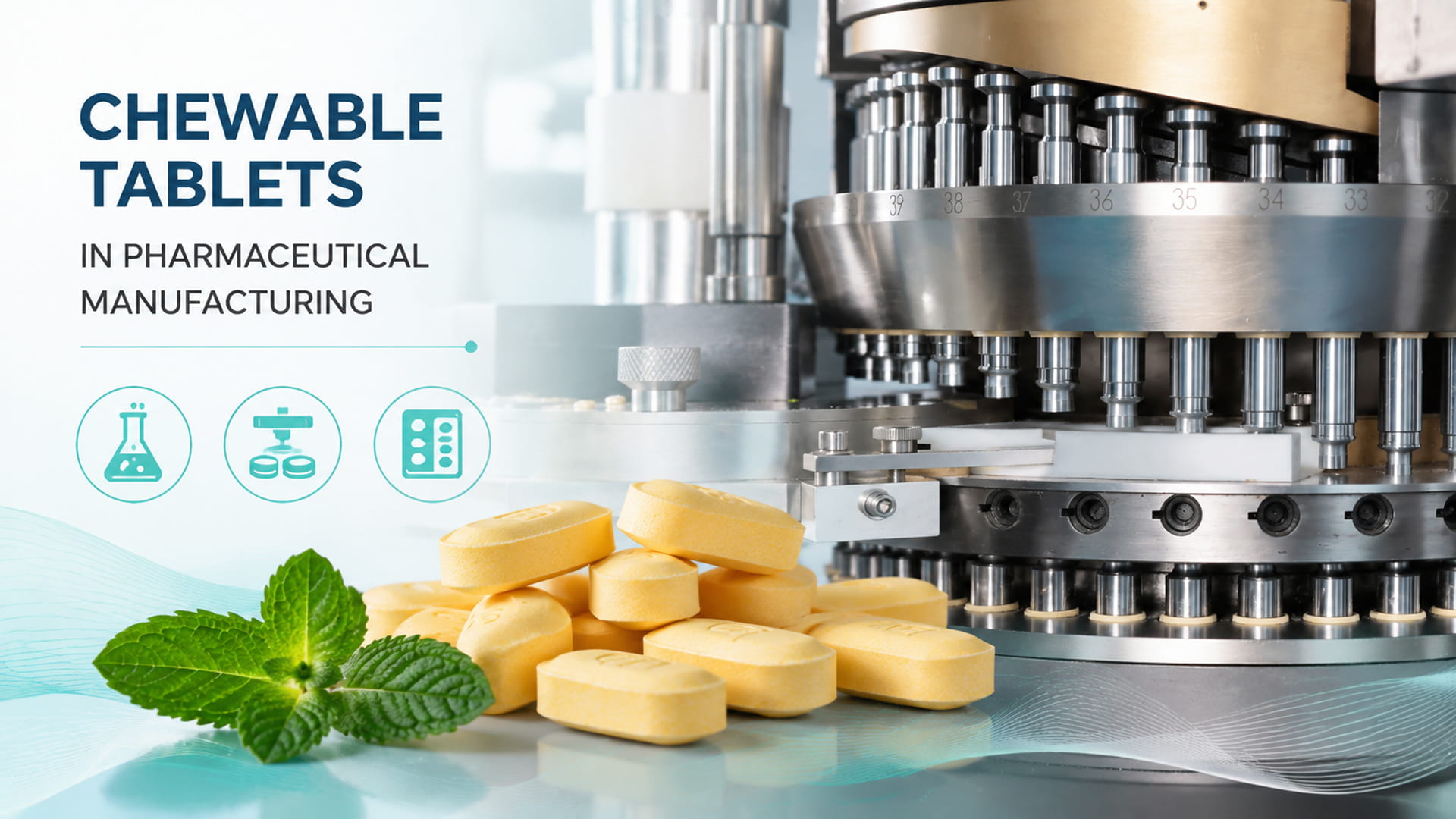
Τα μασώμενα δισκία είναι α τύπος από του στόματος στερεά δοσολογική μορφή σχεδιασμένο για μάσημα πριν από την κατάποση. Σε αντίθεση με τα συμβατικά tablet (που καταπίνεις ολόκληρο) ή δισκία που αποσυντίθενται από το στόμα (ODTs) που διαλύονται στη γλώσσα, μασώμενα είναι διασπάται στο στόμα με το μάσημα. Αυτό διευκολύνει τη δοσολογία για πολλούς ασθενείς.
Σύμφωνα με την Φαρμακευτική Τεχνολογία, Τα μασώμενα δισκία ορίζονται ως ταμπλέτες «σχεδιασμένα για επεξεργασία με μάσημα για να διευκολύνουν την απελευθέρωση του δραστικού συστατικού(μικρό)”. Στην πράξη, Αυτό σημαίνει ότι τα μασώμενα περιέχουν συχνά συστατικά όπως ζάχαρη-αλκοόλες (πολυόλες) που προσθέτουν γλυκύτητα και όγκο. Μπορούν επίσης να διαμορφωθούν σε διασκεδαστικά σχήματα (ζώα, καρδιές, και τα λοιπά.) να απευθύνεται σε παιδιά. Επειδή τα μασώμενα σπάνε σε σωματίδια στο στόμα, μπορούν να γίνουν μεγαλύτερο ή με διαφορετικό σχήμα παρά χάπια που θα καταπίνεις, παρόλα αυτά διαλύεται γρήγορα μετά το μάσημα.
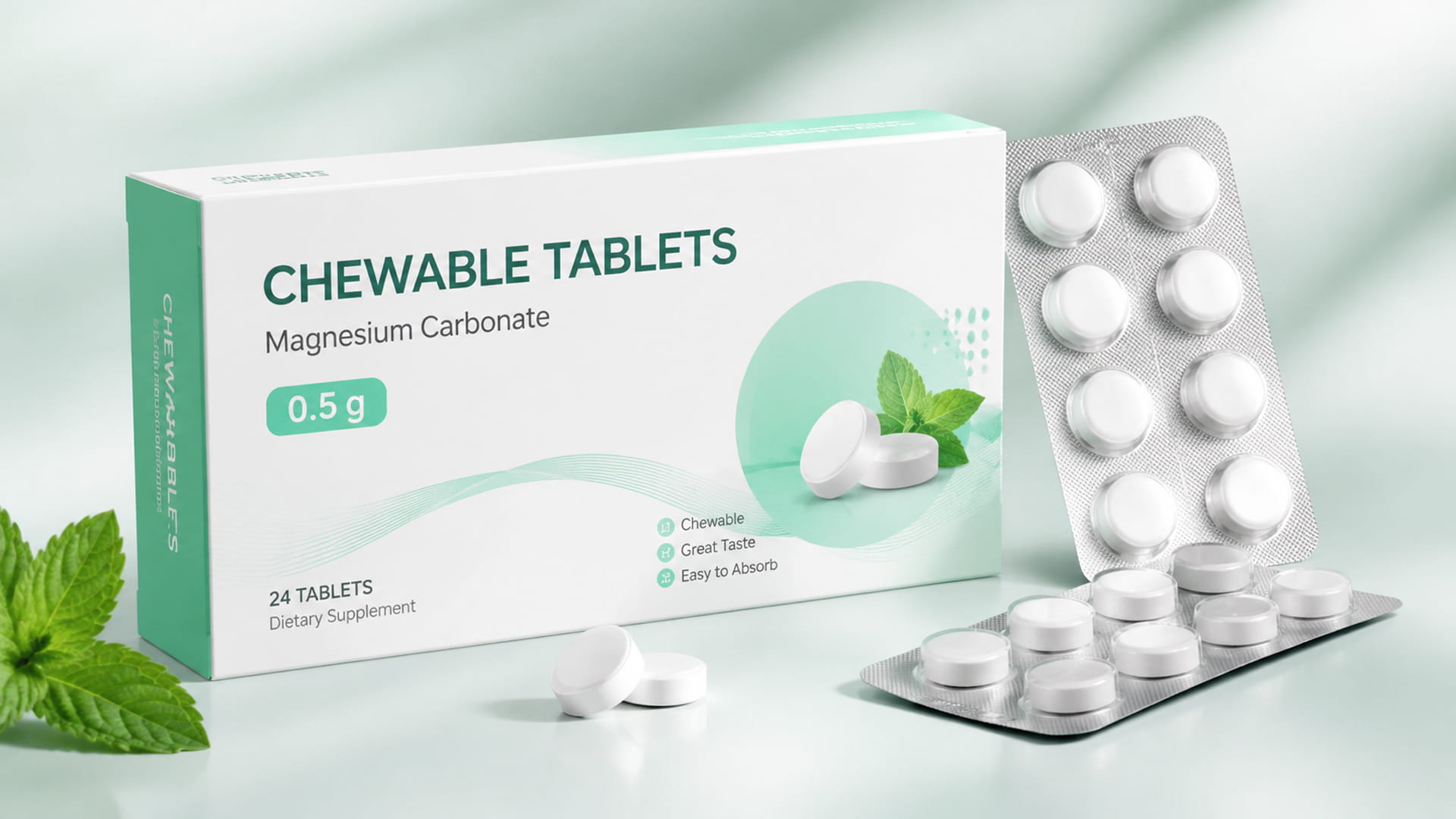
Τα μασώμενα δισκία είναι δημοφιλή σε πολλά τμήματα της αγοράς υγειονομικής περίθαλψης:
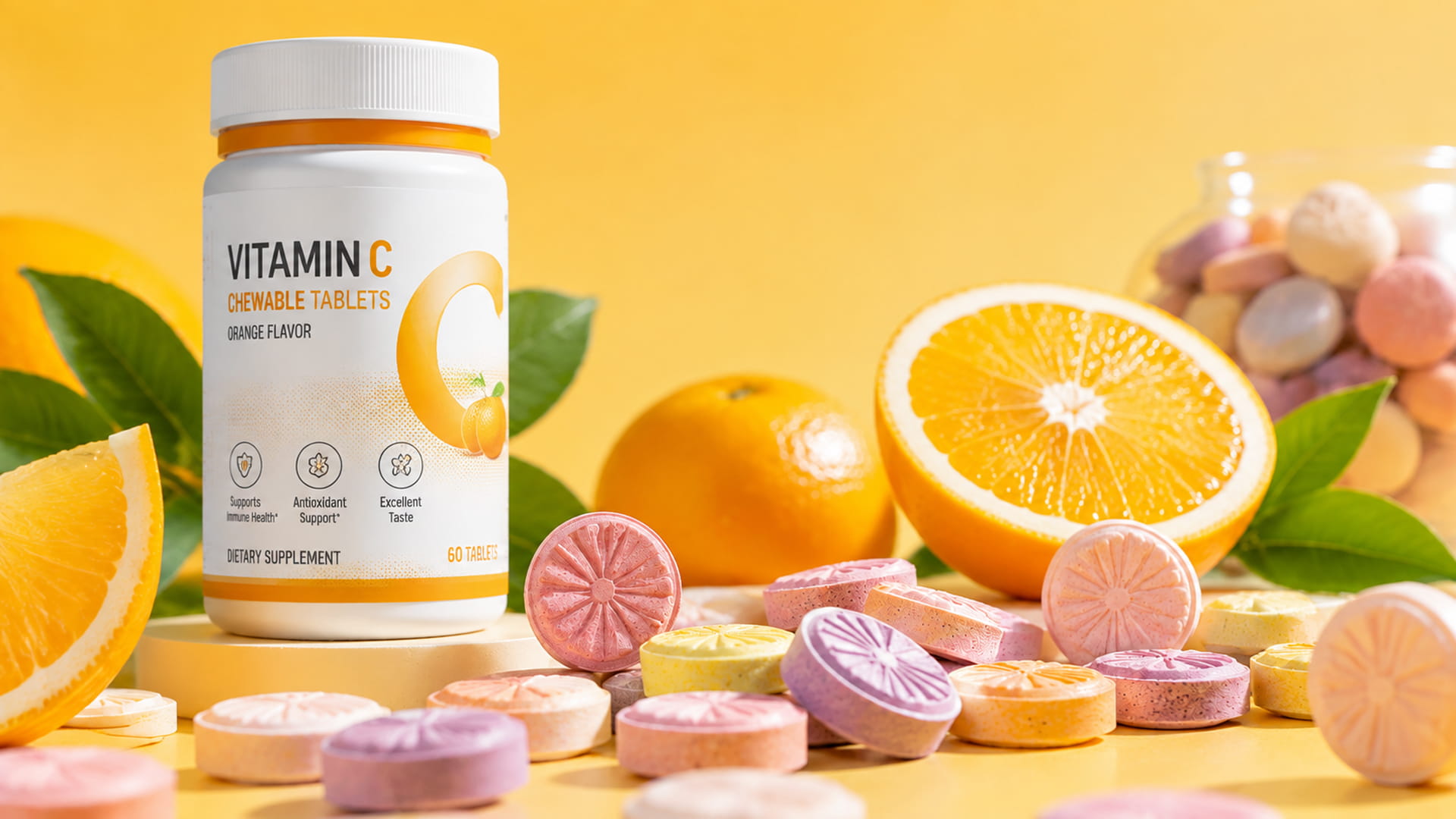
Αυτή η φωτογραφία δείχνει βιταμίνες και συμπληρώματα σε μορφή μασώμενης ταμπλέτας. Μασώμενη βιταμίνη C, πολυβιταμίνες, και τα δισκία ορυκτών συχνά μοιάζουν με καραμέλες με έντονα χρώματα. Ο παράγοντας μορφής και η γεύση τους τα καθιστούν μια φιλική επιλογή τόσο για τους καταναλωτές όσο και για τους ασθενείς που προσέχουν την υγεία τους.
Η σύνθεση ενός μασώμενου δισκίου είναι μια πράξη εξισορρόπησης. Το tablet πρέπει να είναι εύγευστο και εύκολο στο μάσημα, ακόμη δυνατός και σταθερός αρκετά για χειρισμό και αποθήκευση. Αυτό σημαίνει:
Κάλυψη γεύσης & Νοστιμάδα: Σε αντίθεση με τα κατάποση δισκία, τα μασώμενα κάθονται στο στόμα, έκθεση των ναρκωτικών σε γευστικούς κάλυκες. Πολλά δραστικά φάρμακα είναι πικρά, έτσι οι παρασκευαστές προσθέτουν γλυκαντικά (σάκχαρα ή αλκοόλες ζάχαρης) και αρωματικούς παράγοντες για να κάνουν το δισκίο ευχάριστο. Για πολύ πικρά API, μπορούν να χρησιμοποιηθούν λεπτές επικαλύψεις ή ειδικά έκδοχα που εμποδίζουν τη γεύση για να αποτρέψουν την κακή γεύση να φτάσει στη γλώσσα. Για παράδειγμα, Τα μασώμενα δισκία βιταμινών συχνά χρησιμοποιούν γεύσεις φρούτων και γλυκές βάσεις (όπως η σορβιτόλη ή η μαννιτόλη) για τη βελτίωση της γεύσης.
Υφή & Στοματική αίσθηση: Ένα καλό μασώμενο δισκίο πρέπει να είναι αρκετά μαλακό για να σπάσει ομαλά χωρίς να αισθάνεστε χοντροκομμένα ή πολύ κιμωλία. Το μέγεθος των σωματιδίων και η επιλογή εκδόχου έχουν σημασία: ψιλοαλεσμένα υλικά και «μαλακά» πληρωτικά (π.χ.. μαννιτόλη, ξυλιτόλη) βοηθήστε το δισκίο να θρυμματιστεί απαλά κατά τη μάσηση. Από την άλλη πλευρά, μασώμενα χρειάζονται ακόμα μερικοί σκληρότητα ώστε να μην διαλύονται στην αποθήκευση. Οι οδηγίες του κλάδου προτείνουν τη διατήρηση της σκληρότητας του tablet σχετικά χαμηλή (π.χ.. κάτω από ~ 12 κιλά) εκτός εάν το δισκίο αποσυντεθεί γρήγορα στο στόμα. Χρησιμοποιώντας εξαιρετικά συμπιεστά έκδοχα και συνδετικά (όπως η μικροκρυσταλλική κυτταρίνη ή ορισμένα πολυμερή) βοηθά να διατηρείται το δισκίο άθικτο κατά τη συσκευασία, αλλά μασώμενο στο στόμα.
Αποσύνθεση & Απελευθέρωση φαρμάκων: Τα μασώμενα πρέπει να διασπώνται και να απελευθερώνουν αποτελεσματικά το φάρμακο μόλις μασηθούν. Συνήθως ταξινομούνται ως δοσολογικές μορφές άμεσης αποδέσμευσης, Επομένως, πρέπει να πληρούν τα ίδια πρότυπα αποσύνθεσης και διάλυσης με άλλα δισκία άμεσης αποδέσμευσης. Στην πράξη, Αυτό σημαίνει δοκιμή των μασώμενων δισκίων για να διασφαλιστεί ότι θα διαλυθούν εντός του απαιτούμενου χρόνου (συχνά κάτω από λίγα λεπτά) μετά το μάσημα. Οι τυποποιητές συχνά περιλαμβάνουν αποσαθρωτικά (π.χ.. γλυκολικό άμυλο νατρίου) για να βοηθήσει την ταχεία διάσπαση και να εξασφαλίσει σταθερή βιοδιαθεσιμότητα.
Σταθερότητα: Όπως κάθε tablet, Τα μασώμενα μπορεί να είναι ευαίσθητα στην υγρασία και τη θερμοκρασία. Γιατί πολλά μασώμενα (π.χ.. βιταμίνες ή αναβράζοντα μασώμενα) χρησιμοποιήστε υγροσκοπικά πληρωτικά, η σύνθεση πρέπει να είναι σταθερή καθ' όλη τη διάρκεια ζωής του προϊόντος. Αυτό περιλαμβάνει τον κατάλληλο έλεγχο της υγρασίας κατά την κατασκευή και τη συσκευασία. Οντως, ρυθμιστικές κατευθυντήριες γραμμές (π.χ.. Οδηγίες σταθερότητας του FDA) απαιτούν την υποβολή δεδομένων σταθερότητας για να αποδειχθεί η ισχύς και η ασφάλεια με την πάροδο του χρόνου. Για μασώμενες βιταμίνες με υψηλά φορτία φαρμάκων, χρειάζεται πρόσθετη προσοχή για να εξισορροπηθεί η γεύση με τα ενεργά συστατικά διατηρώντας παράλληλα τη σταθερότητα.
Κοινά Έκδοχα: Τα βασικά συστατικά πέρα από το API περιλαμβάνουν πληρωτικά (αραιώ) για χύμα, συνδετικά για να κρατήσετε το tablet μαζί, λιπαντικά για αποφυγή κολλήματος, και, σημαντικά, αρτυματικά/γλυκαντικά για γεύση. Τυπικά πληρωτικά στα μασώμενα προϊόντα είναι οι αλκοόλες ζάχαρης όπως η μαννιτόλη ή η σορβιτόλη, ή γλυκαντικά όπως σακχαρόζη και λακτόζη. Μαννιτόλη, για παράδειγμα, είναι δημοφιλής επειδή αποδίδει δροσερό, γλυκιά αίσθηση στο στόμα και βοηθά τα δισκία να αποσυντίθενται γρήγορα. Αποσυνθετικά (μικροκρυσταλλική κυτταρίνη, γλυκολικό άμυλο νατρίου) χρησιμοποιούνται για την εξασφάλιση γρήγορης διάσπασης στο στόμα. Πρόσθετα γεύσης (γεύσεις φρούτων, μέντα, και τα λοιπά.) και οι χρωστικές ουσίες είναι επίσης κοινές για να κάνουν τα δισκία ελκυστικά στους καταναλωτές.
Εστιάζοντας σε αυτούς τους παράγοντες—απόκρυψη γεύσης, υφή, και αποσύνθεση—οι φαρμακευτικοί προγραμματιστές δημιουργούν μασώμενα δισκία που είναι αποτελεσματικά και φιλικά προς τον ασθενή. Η σωστή σύνθεση θέτει τις βάσεις για ομαλή παραγωγή και συσκευασία.
Η παραγωγή ενός καλού μασώμενου δισκίου σημαίνει εξισορρόπηση της φαρμακευτικής ποιότητας με την αποδοχή από τον ασθενή. Τα κρίσιμα χαρακτηριστικά ποιότητας περιλαμβάνουν:
Η ικανοποίηση αυτών των παραγόντων ποιότητας δεν είναι ασήμαντη, γι' αυτό ο FDA δημοσίευσε μια ειδική οδηγία για τα χαρακτηριστικά των μασώμενων δισκίων. Η καθοδήγηση δίνει έμφαση στην τεκμηρίωση όλων των βημάτων ανάπτυξης και των δοκιμών σε ρυθμιστικές αρχειοθετήσεις (NDAs/ANDAs). Το takeaway: ένα μασώμενο δισκίο εξακολουθεί να είναι φαρμακευτικό προϊόν και πρέπει να αντιμετωπίζεται με πλήρη αυστηρότητα ποιότητας, απλά με μια φιλική προς τον ασθενή συστροφή.
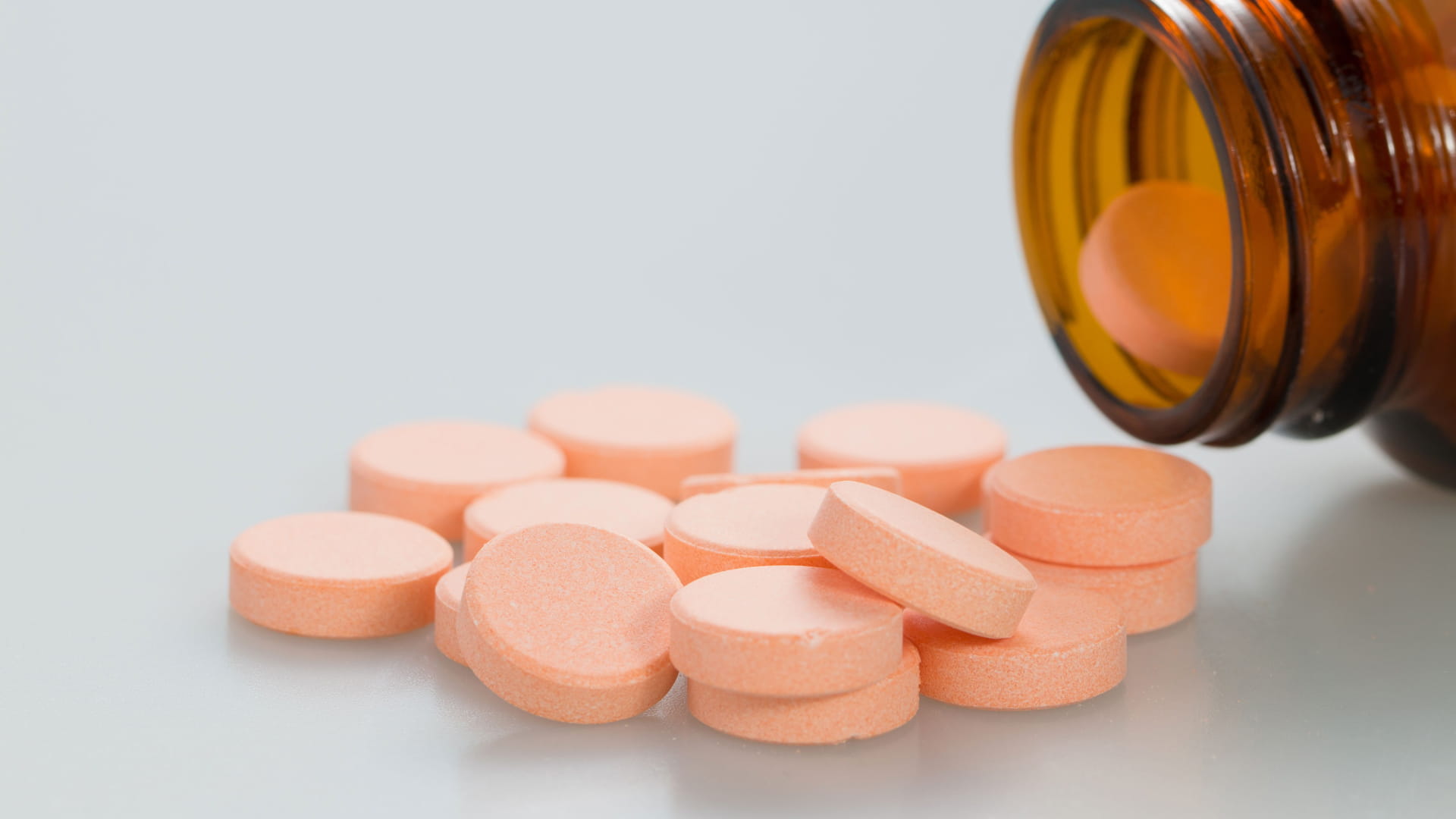
Η κατασκευή μασώμενων δισκίων ακολουθεί σε μεγάλο βαθμό την τυπική διαδικασία παραγωγής δισκίων, με κάποιες ειδικές τροποποιήσεις για μάσημα και γεύση. Παρακάτω είναι μια επισκόπηση των βασικών βημάτων για την παραγωγή μασώμενων προϊόντων:
Σε κάθε στάδιο, οι κατασκευαστές ακολουθούν τους κανονισμούς cGMP (π.χ.. FDA 21 Μέρος CFR 211 στις ΗΠΑ) για την εξασφάλιση της καθαριότητας, ακρίβεια, και ιχνηλασιμότητα. Οι σύγχρονες πρέσες tablet έχουν συχνά χειριστήρια PLC για τη ρύθμιση της πίεσης και της ταχύτητας, και χαρακτηριστικά όπως αισθητήρες δύναμης για διατήρηση σταθερής συμπίεσης. Για μασώμενα, ένα πλήκτρο είναι απλώς «απαλό αλλά ομοιόμορφο» πάτημα.
Μετά την παραγωγή, Τα μασώμενα δισκία χρειάζονται τη σωστή συσκευασία για να παραμείνουν φρέσκα και αποτελεσματικά. Ακολουθούν κοινές προσεγγίσεις συσκευασίας και χρησιμοποιούμενος εξοπλισμός:


Τα χαρτοκιβώτια ενδέχεται να είναι πλήρως αυτόματα (δεν χρειάζεται ανθρώπινο χειριστή) και περιλαμβάνουν αισθητήρες για να βεβαιωθείτε ότι κάθε κουτί έχει τα σωστά ένθετα και είναι σωστά σφραγισμένο. Τα οφέλη της αυτοματοποιημένης συσκευασίας σε χαρτοκιβώτια περιλαμβάνουν πολύ υψηλότερη ταχύτητα και συνέπεια σε σύγκριση με τη χειροκίνητη συσκευασία. Ως μηχανικός συσκευασίας κάποτε κορόιδευε, τα χαρτοκιβώτια δίνουν «Επαγγελματίας, χαρτοκιβώτια ανθεκτικά στην παραβίαση» με ελάχιστη εργασία.
Ακρο: Εάν τα μασώμενα δισκία σας μπαίνουν σε μπουκάλια (π.χ.. μπουκάλια βιταμινών), μπορεί να μην υπάρχει φουσκάλα, αλλά αυτά τα μπουκάλια μπαίνουν συχνά και σε χαρτοκιβώτια, ακολουθώντας την ίδια διαδικασία χαρτοκιβωτίου.
Αυτό πλήρως αυτοματοποιημένη γραμμή εμφιάλωσης είναι ιδανικό για μασώμενα προϊόντα όπως μασώμενα με βιταμίνη D ή μασώμενα δισκία ασβεστίου που πωλούνται σε μπουκάλια. Εξασφαλίζει ότι κάθε μπουκάλι έχει τη σωστή μέτρηση (σκεφτείτε ακριβώς 60 μασώμενα δισκία βιταμίνης C ανά βάζο) και επιταχύνει την παραγωγή.
Ποιότητα & Συμμόρφωση: Όλες αυτές οι μηχανές συσκευασίας πρέπει να πληρούν τα φαρμακευτικά πρότυπα. Για παράδειγμα, Οι γραμμές blister και χαρτοκιβωτίων είναι κατασκευασμένες σύμφωνα με τις προδιαγραφές cGMP (21 CFR 211 στις ΗΠΑ) με υγειονομικό σχεδιασμό, ιχνηλασιμότητα, και πρωτόκολλα επικύρωσης. Τα συστήματα ενσωματωμένης όρασης συχνά ελέγχουν τα επίπεδα πλήρωσης και σφράγισης, πρόληψη λαθών. Καλές σφραγίδες συσκευασίας στην ποιότητα του προϊόντος: μελέτες δείχνουν ότι η αφαίρεση ενός χαπιού από τη συσκευασία του επιταχύνει πρόωρα την αποικοδόμηση. Εν συντομία, επενδύοντας σε στιβαρές συσκευασίες (όπως κυψέλες υψηλού φραγμού και ακριβή χαρτόκουτα/πάγκους) είναι ζωτικής σημασίας για την ασφαλή διατήρηση των μασώμενων δισκίων από εργοστάσιο σε ασθενή.
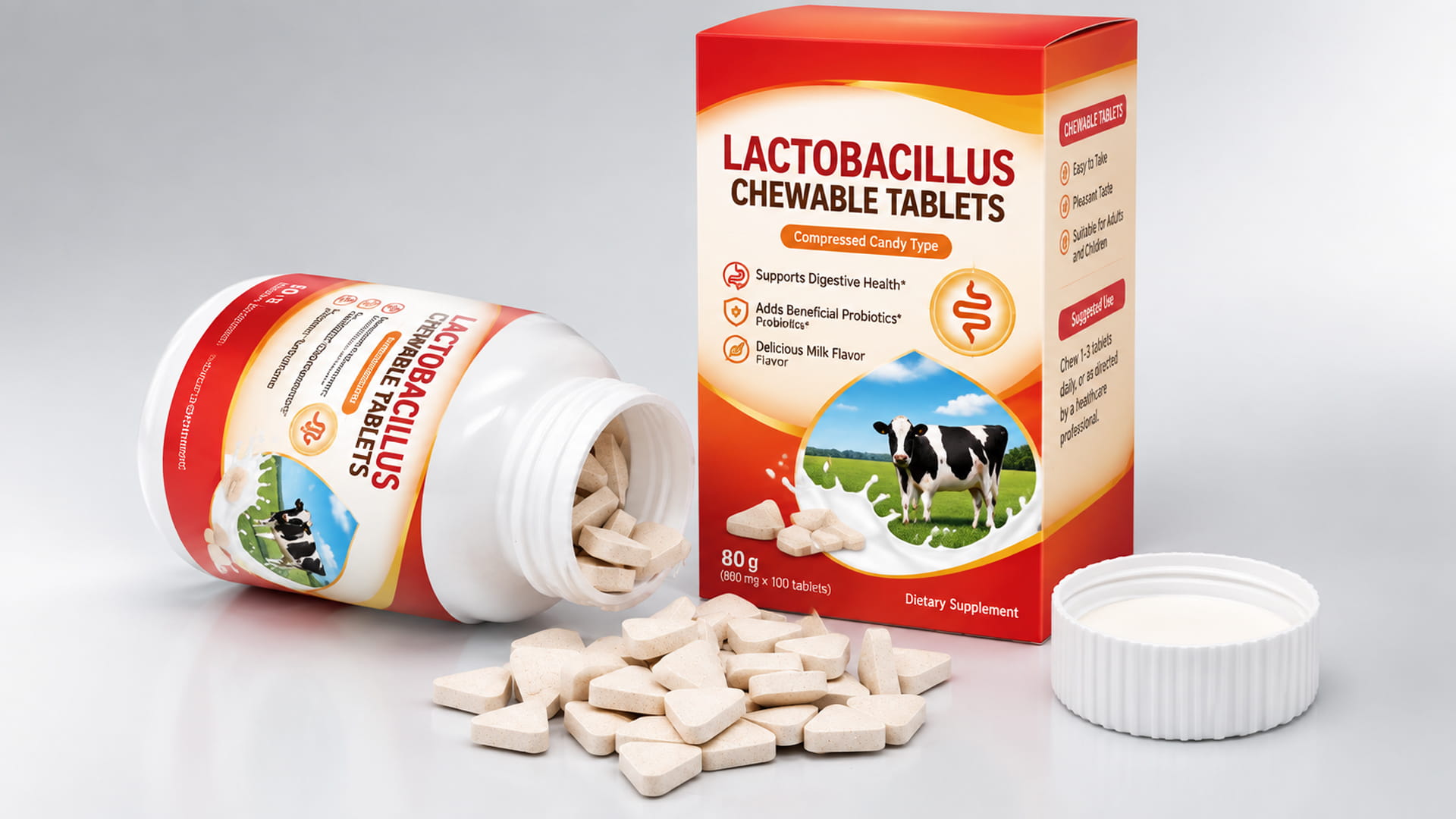
Συνοπτικά, τα μασώμενα δισκία είναι α φιλικό προς τον ασθενή και ευέλικτη μορφή δοσολογίας στη φαρμακευτική. Βελτιώνουν τη συμμόρφωση (δεν χρειάζεται νερό!), και με σύγχρονες τεχνικές σύνθεσης (γλυκαντικά, γεύσεις) μπορούν να έχουν πολύ ωραία γεύση. Η παραγωγή τους χρησιμοποιεί τυπικό εξοπλισμό δισκιοποίησης με μερικές τροποποιήσεις: συμπίεση χαμηλής πίεσης, ειδικές γροθιές, και προσεκτικός ποιοτικός έλεγχος. Η συσκευασία παίζει επίσης βασικό ρόλο – μηχανές blister, χαρτοκιβώτια, και οι γραμμές μέτρησης διασφαλίζουν ότι κάθε μασώμενο δισκίο παραμένει φρέσκο και σωστά δοσομετρημένο στην τελική συσκευασία.
Εάν ασχολείστε με την παρασκευή φαρμακευτικών ή θρεπτικών ειδών και εξερευνάτε την παραγωγή μασώμενων δισκίων, θυμάμαι: ο σωστός συνεργάτης εξοπλισμού μπορεί να κάνει μεγάλη διαφορά. Οι κατασκευαστές όπως Συσκευασία Jinlu προσφέρουν προσαρμοσμένες πρέσες tablet, blister packers, και χαρτοκιβώτια κατασκευασμένα για μασώμενα προϊόντα. Είτε χρειάζεστε ένα περιστροφική πρέσα ταμπλετών για χιλιάδες μασώμενα χάπια την ώρα ή α γραμμή blister υψηλής ταχύτητας για να σφραγίσετε τις καρτέλες βιταμινών σας, Ο ποιοτικός εξοπλισμός θα διατηρήσει την παραγωγή σας αποδοτική και τα tablet σας φιλικά προς τον ασθενή.
Έτοιμο να βελτιώσει τη σειρά μασώμενων δισκίων σας? Επικοινωνήστε με τους ειδικούς στο Jinlu Packing για εξατομικευμένες λύσεις παραγωγής και συσκευασίας φαρμακευτικών δισκίων
Ένα μασώμενο δισκίο είναι μια από του στόματος στερεή μορφή δοσολογίας που έχει σχεδιαστεί για μάσημα πριν από την κατάποση. Παρέχει ευκολότερη χορήγηση σε σύγκριση με τα παραδοσιακά δισκία και χρησιμοποιείται συνήθως για φαρμακευτικά προϊόντα, βιταμίνες, και συμπληρώματα διατροφής.
Τα μασώμενα δισκία κατασκευάζονται μέσω μιας διαδικασίας που περιλαμβάνει ανάμειξη υλικών, κοκκοποίηση ή άμεση συμπίεση, πιέζοντας tablet, δοκιμή ποιότητας, και τη συσκευασία. Μια περιστροφική μηχανή πρέσας δισκίων χρησιμοποιείται συνήθως για την παραγωγή σταθερού μεγέθους δισκίου, βάρος, και σκληρότητα.
Ο κύριος εξοπλισμός που χρησιμοποιείται για την παραγωγή μασώμενων δισκίων περιλαμβάνει μια μηχανή πρέσας ταμπλετών, μίξερ πούδρας, ξεσκονιστήριο δισκίων, ανιχνευτής μετάλλων, Μηχανή συσκευασίας φυσαλίδων, μετρητική μηχανή, και μηχάνημα χαρτοκιβωτίου. Η επιλογή του εξοπλισμού εξαρτάται από την παραγωγική ικανότητα και τις απαιτήσεις συσκευασίας.
Η κύρια διαφορά είναι πώς λαμβάνονται. Τα κανονικά δισκία καταπίνονται ολόκληρα, ενώ τα μασώμενα δισκία έχουν σχεδιαστεί για μάσηση πριν από την κατάποση. Τα μασώμενα δισκία συνήθως απαιτούν συγκεκριμένα σκευάσματα για να επιτύχουν καλύτερη γεύση, υφή, και απόδοση μάσησης.
Ναί. Μια περιστροφική πρέσα δισκίων μπορεί να παράγει μασώμενα δισκία ρυθμίζοντας τη δύναμη συμπίεσης, σχεδιασμός εργαλείων, και τις παραμέτρους παραγωγής. Οι σωστές ρυθμίσεις του μηχανήματος βοηθούν στην επίτευξη της απαιτούμενης ισορροπίας μεταξύ της αντοχής του δισκίου και της δυνατότητας μάσησης.
Συνηθισμένα παραδείγματα περιλαμβάνουν μασώμενα δισκία βιταμίνης C, μασώμενες πολυβιταμίνες, μασώμενα δισκία ασβεστίου, μασώμενα δισκία σιδήρου, και μασώμενα δισκία βιταμίνης D. Αυτά τα προϊόντα χρησιμοποιούνται ευρέως σε συμπληρώματα διατροφής και φαρμακευτικές εφαρμογές.
Όχι πάντα. Αν και η διαδικασία συμπίεσης είναι παρόμοια, Τα μασώμενα δισκία απαιτούν πρόσθετη προσοχή στη γεύση, αίσθηση στο στόμα, σκληρότητα, και σταθερότητα της σύνθεσης. Οι κατασκευαστές πρέπει να ελέγχουν προσεκτικά τόσο την ποιότητα του προϊόντος όσο και την εμπειρία του χρήστη.
Οι συνήθεις λύσεις συσκευασίας για μασώμενα δισκία περιλαμβάνουν τη συσκευασία με κυψέλες, συστήματα μέτρησης μπουκαλιών, και μηχανές χαρτοκιβωτίου. Ένα κατάλληλο μηχάνημα συσκευασίας φαρμακευτικών προϊόντων προστατεύει τα δισκία από την υγρασία και εξασφαλίζει ακρίβεια, αποδοτική παραγωγή.
Τα μασώμενα δισκία βιταμινών γίνονται δημοφιλή επειδή είναι βολικά, εύκολο να το πάρεις, και πιο αποδεκτό για παιδιά και ενήλικες που δυσκολεύονται να καταπιούν χάπια. Προϊόντα όπως η μασώμενη βιταμίνη C και οι μασώμενες πολυβιταμίνες χρησιμοποιούνται ευρέως στην αγορά συμπληρωμάτων.
Η επιλογή μιας γραμμής παραγωγής μασώμενων δισκίων εξαρτάται από παράγοντες όπως το μέγεθος του δισκίου, παραγωγική ικανότητα, επίπεδο αυτοματισμού, και μέθοδος συσκευασίας. Οι κατασκευαστές φαρμάκων θα πρέπει να λαμβάνουν υπόψη τόσο τον εξοπλισμό συμπίεσης δισκίων όσο και τις κατάντη λύσεις συσκευασίας κατά την επιλογή μηχανημάτων.
Αναφορές:
1.Οδηγίες για τη βιομηχανία —— ΜΑΣ. Υπηρεσία Τροφίμων και Φαρμάκων
2.Μασώμενα Δισκία: Μια ανασκόπηση των θεωρήσεων της σύνθεσης —— PharmTech
3.Μασώμενα Δισκία: Μια ολοκληρωμένη ανασκόπηση --- Asian Journal of Pharmaceutical Research and Development
4.Διατύπωση, Κατασκευή και αξιολόγηση μασώμενων δισκίων —— pharmapproach.com
5.Μαλακά μασώμενα δισκία παρακεταμόλης με τη μέθοδο κοκκοποίησης τήξης: Διατύπωση και Χαρακτηρισμός —— Εθνική Βιβλιοθήκη Ιατρικής