

In der pharmazeutischen Herstellung, Eine effektive Gerätereinigung ist unerlässlich, um die Produktqualität aufrechtzuerhalten und Kreuzkontaminationen zwischen Chargen zu verhindern. Ein gut gestaltetes Reinigungsvalidierung Der Prozess hilft Herstellern nachzuweisen, dass ihre Reinigungsverfahren Produktrückstände konsistent entfernen und die Anforderungen erfüllen können GMP-Anforderungen. Für Produktionsteams und Ausrüstungskäufer, wählen Pharmazeutische Maschinen mit leicht zu reinigenden Designs können auch die Validierung erleichtern, Ausfallzeiten reduzieren, und die Gesamteffizienz der Fertigung verbessern.
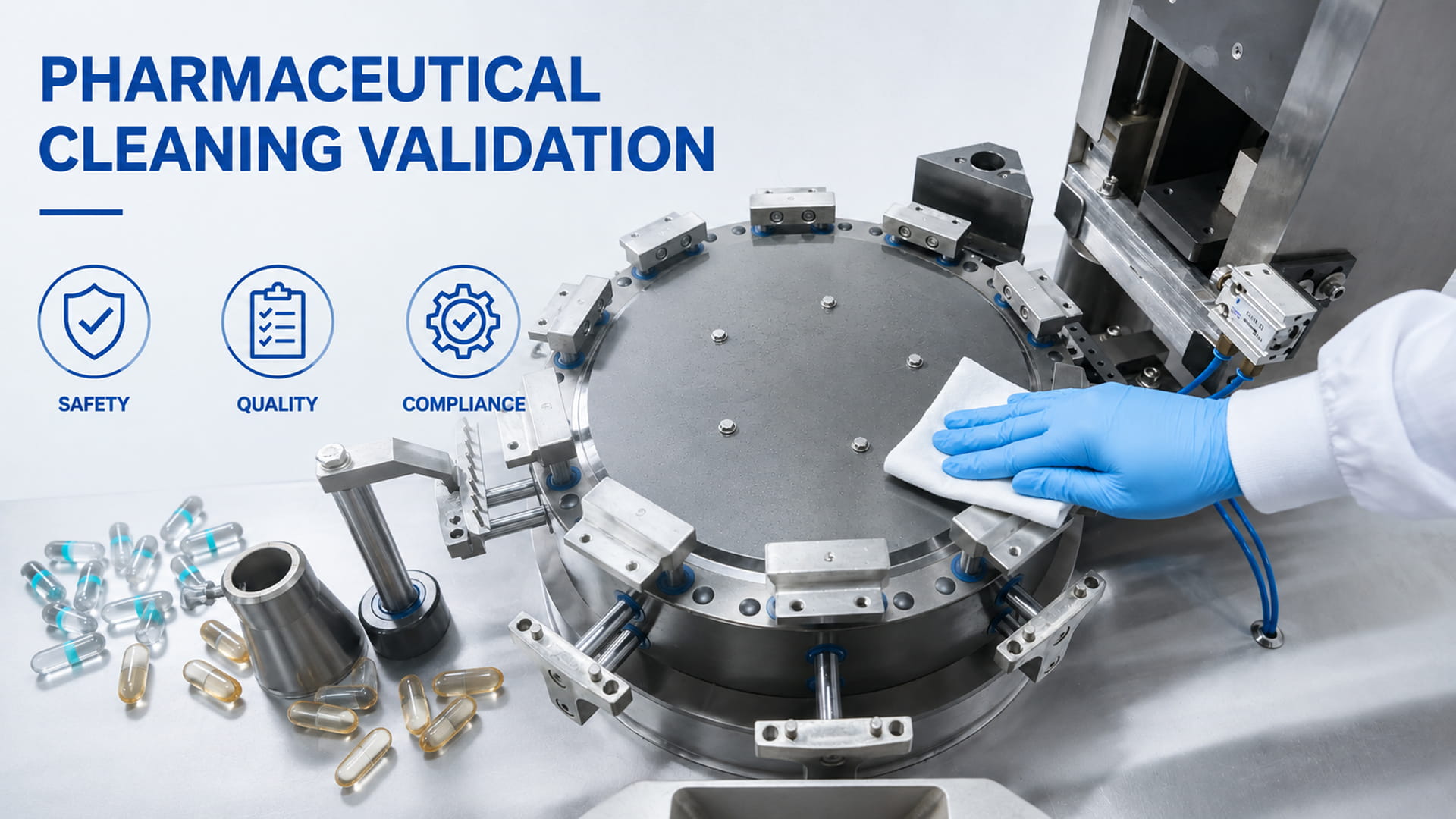
In einfachen Worten, Reinigungsvalidierung liefert objektive Beweise dafür, dass ein Reinigungsverfahren durchgängig vordefinierte Standards erfüllt. Wie eine Branchenquelle es ausdrückt, Reinigungsvalidierung ist ein „dokumentierte Garantie“ dass die Reinigung zuverlässig und wiederholt durchgeführt werden kann, um einen vorgegebenen Reinheitsgrad zu erreichen. In der Praxis, Das bedeutet, dass Reste von Vorgängerprodukten nachgewiesen werden müssen, Reinigungsmittel, und Mikroben werden auf allen produktberührenden Oberflächen bis zu einem akzeptablen Maß entfernt.
Die Aufsichtsbehörden sind sich einig. Zum Beispiel, FDAs 21 CFR 211.67(A) erfordert jedes Stück Ausrüstung (dediziert oder mehrfach verwendbar) zu sein „gereinigt … um … eine Kontamination zu verhindern, die die Sicherheit beeinträchtigen würde, Identität, Stärke, Qualität, oder Reinheit des Arzneimittels“. Die WHO erklärt in ähnlicher Weise, dass das Ziel der Reinigungsvalidierung darin besteht, nachzuweisen, dass die Ausrüstung konsistent von Produkten gereinigt wird, Waschmittel, und mikrobielle Rückstände auf ein akzeptables Maß zu reduzieren, um Kontaminationen und Kreuzkontaminationen zu verhindern. Mit anderen Worten, Bei der Reinigungsvalidierung geht es um die Patientensicherheit: Sicherstellen, dass eine Produktcharge nicht „übertragen“ und die nächste verunreinigen kann.
Ein gründliches Reinigungsvalidierungsprogramm gibt Herstellern Vertrauen (und die Sicherheit der Aufsichtsbehörden) Das Kreuzkontamination wird kontrolliert. Ohne es, Rückstände eines potenten API oder Allergene aus einer Charge könnten im nächsten Produkt landen, möglicherweise Patienten schädigen oder a verursachen abrufen. Die FDA weist ausdrücklich darauf hin, dass Unternehmen „Es muss bestätigt werden, dass die Reinigungsverfahren ausreichend sind, um sicherzustellen, dass keine Kreuzkontamination auftritt.“. Dies ist besonders kritisch Mehrproduktanlagen (häufig in CDMOs und Hersteller von Nahrungsergänzungsmitteln). Die Leitlinien der WHO betonen, dass die Reinigungsvalidierung in Mehrproduktanlagen besonders wichtig ist, und sollte auf alle Produktionsanlagen und Hygieneverfahren angewendet werden.
Jenseits von Kontamination, Bei der Reinigungsvalidierung geht es um die Sicherstellung Produktqualität. Wenn die Ausrüstung nicht ordnungsgemäß gereinigt wird, Rückstände von Chemikalien oder mikrobielles Wachstum könnten die Funktion beeinträchtigen Identität, Stärke, und Reinheit der nachfolgenden Chargen. Zusamenfassend, Die Reinigungsvalidierung sichert Produktqualität und Patientengesundheit. Es ist auch ein regulatorisches Muss. Ob Sie der Zuständigkeit der FDA unterliegen (21 CFR Teil 211) oder EU GMP (EMA/ICH), Behörden verlangen eine dokumentierte Reinigungsvalidierung als Teil eines vollständigen GMP-Programms. Wenn die Reinigung nicht validiert wird, kann dies zu Warnmeldungen führen, Produkt hält, und erinnert sich sogar.
Regulatorische Anforderungen: FDA, EMA, WER, PIC/S. Alle wichtigen Richtlinien verlangen eine Reinigungsvalidierung, aber mit etwas anderer Betonung. Im UNS, CGMP der FDA (Titel 21 CFR 211.67) legt die Grundvoraussetzung fest: Die Ausrüstung muss gereinigt werden, um eine Kreuzkontamination zu verhindern. Die Leitlinien der FDA empfehlen den Einsatz effektiver Probenahme- und Analysemethoden zum Nachweis der Sauberkeit. Vor allem, Die FDA stellt das klar „Spülungen allein … wären nicht akzeptabel“ zur Validierung; Unternehmen sollten Oberflächen, wenn möglich, direkt abwischen. In der Praxis bedeutet dies, dass Sie in der Regel Abstrich- und Spülproben kombinieren, um alle Bereiche abzudecken.
Im EU, die EMAs EU-GMP-Anhang 15 (2015) und EMA-Richtlinien erfordern eine Reinigungsvalidierung als Teil der Prozessvalidierung. Annektieren 15 ausdrücklich erklärt „Eine Reinigungsvalidierung sollte durchgeführt werden, um die Wirksamkeit eines Reinigungsverfahrens für alle Geräte, die mit dem Produkt in Berührung kommen, zu bestätigen.“. Außerdem heißt es, dass Verschleppungsgrenzen toxikologisch begründet werden müssen (gesundheitsorientiert) Auswertung. Mit anderen Worten, Definieren Sie Ihre Akzeptanzkriterien wissenschaftlich (siehe unten) und dokumentieren Sie die Begründung. Der EU-Ansatz betont a risikobasiert, gesundheitsorientiert Strategie: Berechnen Sie den maximal zulässigen Übertrag (Niedlich) oder zulässige tägliche Exposition (PDE) Werte für aktive Reste.
WHO und PIC/S bieten auch Orientierungshilfen an. Der WHO GMP TRS 1019 (2019) Annektieren on validation gibt die Reinigungsvalidierung an „liefert den dokumentierten Nachweis, dass ein genehmigtes Reinigungsverfahren saubere Geräte liefert.“, für den vorgesehenen Verwendungszweck geeignet“. Dieses WHO-Dokument (eine weltweit verbreitete Referenz) hebt hervor, dass für eine triviale Reinigung keine Reinigungsvalidierung erforderlich ist (Böden, Wände) Aber Ist Wird für kritische Geräte mit Produktkontakt in Mehrproduktanlagen benötigt. Das PIC/S-Komitee (ein Konsortium von Regulierungsbehörden) Unter Reinigungsvalidierung versteht man ebenfalls den Nachweis, dass Rückstände entfernt werden „unter dem wissenschaftlich festgelegten maximal zulässigen Verschleppungsniveau“.
Zusammen, Diese Quellen begründen die wesentliche Elemente: Definieren Sie akzeptable Rückstandsgrenzen, Entwickeln Sie robuste Reinigungsverfahren, Probe mit validierten Methoden, mit geeigneten Assays analysieren, und zeigen Sie, dass jedes Gerät konsistent bis zu diesen Grenzwerten gereinigt werden kann.
Die Reinigungsvalidierung ist im Wesentlichen ein Projekt. Hier finden Sie eine schrittweise Übersicht über den typischen Prozess:
Die Leitlinien der FDA machen das deutlich „Spülungen allein wären nicht akzeptabel“ als einzige Verifizierungsmethode. In der Praxis, Es wird eine Kombination aus Tupfer- und Spülproben verwendet. Wählen Sie für jedes Gerät repräsentative Probenahmestellen aus (normalerweise die am schwersten zu reinigenden Stellen). Vor dem Testen, Überprüfen Sie, ob Ihre Probenahmemethoden genügend Zielrückstände zurückgewinnen (sogenannte Erholungsstudien).
Die Reinigungsvalidierung stößt oft auf Hindernisse. Zu den wichtigsten Herausforderungen gehören::
Gesamt, Die beste Verteidigung ist a risikobasierter Ansatz (wie durch ICH Q9 und Branchenrichtlinien empfohlen). Konzentrieren Sie die Validierungsbemühungen auf Bereiche/Produkte mit hohem Risiko (leistungsstarke APIs, gemeinsam genutzte Ausrüstung) und dokumentieren Sie diesen Fokus.
Ein großer Faktor für eine erfolgreiche Reinigungsvalidierung ist Gerätedesign. Die FDA verlangt ausdrücklich, dass Geräte so konstruiert sein müssen, dass sie die Reinigung erleichtern. In der Praxis, suchen:
Durch die Angabe dieser Designmerkmale, Sie reduzieren die Reinigungszeit und den Validierungsaufwand drastisch. Zum Beispiel, Jinlus Kapselfüllmaschinen sind mit leicht abnehmbaren Trichtern ausgestattet, rostfreie Rutschen, und geschlossene Staubschutzvorrichtungen – alles um die Ansammlung von Rückständen zu minimieren. Ähnlich, Blase Und Beutelverpackungsmaschinen Mit werkzeuglosen Zugangsklappen können Bediener alle Oberflächen zur Reinigung erreichen. Die Auswahl der richtigen Ausrüstung im Vorfeld ist bei der Reinigungsvalidierung die halbe Miete.
Eine besondere Erwähnung verdienen Kapselfüller. Diese Maschinen verarbeiten Pulver und Kapseln, Daher ist eine gründliche Reinigung ein Muss. Zu den wichtigsten Punkten für die Reinigung einer Kapselfülllinie gehören::
Kapselmaschinen im GMP-Betrieb werden häufig in ausgeführt raue Umgebungen (staubiges Pulver). Die Kapselfüller von Jinlu begegnen diesem Problem, indem sie antistatische Beschichtungen und geschlossene Trichter verwenden, um das Austreten von Pulver zu begrenzen, Dadurch wird die Reinigung sicherer und die Validierung einfacher.
Um alles zusammenzubinden, Hier sind einige übergreifende Best Practices:
Bild: Eine saubere analytische Laborumgebung (Blisterverpackung oder QS-Labor). Eine gute Reinigungsvalidierung erfordert sowohl ordnungsgemäße Reinigungsverfahren als auch genaue Tests (z.B. HPLC, Inhaltsverzeichnis) um zu bestätigen, dass keine Rückstände vorhanden sind. Checkliste zur Reinigungsvalidierung: Eine kurze Übersichtstabelle der wichtigsten Elemente.
| Artikel | Erfordernis |
| Ausrüstung identifiziert | Listen Sie alle produktberührenden Maschinen auf |
| Reinigungsvorgang | Geschrieben, genehmigt, und folgte (SOP) |
| Probenahmeplan | Methoden (abtupfen/spülen), Standorte, Frequenz |
| Akzeptanzkriterien | Definiert (MACO/PDE-Grenzwerte) |
| Analytische Methoden | Validierte Tests (HPLC, Inhaltsverzeichnis, usw.) |
| Validierungsbericht | Protokoll abgeschlossen, Ergebnisse von der Qualitätssicherung genehmigt |
Eine ordnungsgemäße Reinigungsvalidierung ist für die GMP-Pharmaproduktion unerlässlich. Es schützt die Produktqualität und die Patientensicherheit, indem es Kreuzkontaminationen verhindert. Eine gut konzipierte Ausrüstung reduziert den Aufwand bei der Validierung erheblich: glatte Kontaktteile aus Edelstahl, minimale Totzonen, und die schnelle Demontage sorgen für eine schnellere und gleichmäßigere Reinigung. Bei Jinlu Packing, Wir entwerfen Kapselfüller, Blisterpacker, und Abfüllanlagen unter Berücksichtigung dieser Grundsätze zu entwickeln und Herstellern dabei zu helfen, globale GMP-Standards einzuhalten.
Zusammenfassend, Validierung der pharmazeutischen Reinigung geht es darum, zu beweisen "sauber" mit Daten und Dokumentation. Indem Sie einem strukturierten Prozess folgen und Worst-Case-Produkte auswählen, Grenzen setzen (wie MACO), Schreiben klarer Reinigungs-SOPs, Intelligentes Sampling, und Tests mit HPLC/TOC – Sie können die Einhaltung gegenüber Aufsichtsbehörden und Qualitätsteams gleichermaßen nachweisen. Erinnern: investieren GMP-freundliche Ausrüstung Jetzt (rostfrei, ergonomisches Design) um später bei der Validierung Zeit zu sparen. Wenn Sie nach Kapselfüll- oder Verpackungsmaschinen suchen, die auf einfache Reinigung und Compliance ausgelegt sind, Betrachten Sie die Aufstellung von Jinlu Packing Kapselfüllmaschinen, Blisterpacker, Und pharmazeutische Abfülllinien. Unsere Geräte sind für einen schnellen Wechsel und eine gründliche Reinigung ausgelegt, Wir sorgen dafür, dass Ihre Validierung reibungslos verläuft.
Bereit, Ihre Reinigungsvalidierung zu optimieren? Kontaktieren Sie Jinlu Packing Erfahren Sie, wie unsere GMP-konformen Kapselfüll- und Verpackungsmaschinen Ihre pharmazeutischen Produktionsanforderungen erfüllen können.
Bei der Reinigungsvalidierung handelt es sich um einen dokumentierten Prozess, mit dem nachgewiesen werden soll, dass durch Reinigungsverfahren für pharmazeutische Geräte Produktrückstände konsistent entfernt werden können, pharmazeutische Wirkstoffe (API), Reinigungsmittel, und potenzielle Verunreinigungen auf ein akzeptables Maß.
In der pharmazeutischen Herstellung, Die Reinigungsvalidierung liefert den Nachweis, dass die Ausrüstung für die Produktion der nächsten Charge geeignet ist, ohne dass es zu Kreuzkontaminationen kommt oder die Produktqualität beeinträchtigt wird.
Die Reinigungsvalidierung ist wichtig, da pharmazeutische Geräte häufig zur Herstellung verschiedener Produkte oder Chargen verwendet werden. Ohne wirksame Validierung, verbleibende Rückstände können das nächste Produkt verunreinigen und dessen Sicherheit beeinträchtigen, Identität, Stärke, oder Reinheit.
Ein ordnungsgemäß durchgeführter Reinigungsvalidierungsprozess hilft Herstellern:
• Vermeiden Sie Kreuzkontaminationen
• Erfüllen Sie die GMP-Compliance-Anforderungen
• Verbesserung der Produktionssicherheit
• Reduzieren Sie Qualitätsrisiken bei Produktwechseln
Der Reinigungsvalidierungsprozess umfasst in der Regel eine Gerätebewertung, Entwicklung von Reinigungsverfahren, Festlegung von Akzeptanzkriterien, Probenahme, analytische Prüfung, und Validierungsdokumentation.
Die Akzeptanzkriterien für die Reinigungsvalidierung definieren die maximal zulässigen Rückstandsmengen nach der Reinigung, einschließlich API-Rückstände, Reinigungsmittel, und potenzielle Verunreinigungen.
Die meisten pharmazeutischen Produktionsanlagen, die mit Produkten in Kontakt kommen, erfordern eine Reinigungsvalidierung, einschließlich Kapselfüllmaschinen, Tablettenpressen, Mixer, und Pulverhandhabungsausrüstung.
Die beiden gebräuchlichsten Probenahmemethoden sind die Abstrichprobenahme und die Spülprobenahme. Hersteller wählen Methoden häufig basierend auf dem Gerätedesign aus, Zugänglichkeit, und Rückstandseigenschaften.
Das Gerätedesign wirkt sich direkt auf die Reinigungseffizienz aus. Maschinen mit glatten Oberflächen, weniger tote Bereiche, und leicht zu entfernende Teile sind einfacher zu reinigen und zu validieren.
Die Häufigkeit der Reinigungsvalidierung hängt von der Gerätenutzung ab, Produktänderungen, Prozessrisiken, und regulatorische Anforderungen. Nach größeren Änderungen an der Ausrüstung oder den Reinigungsverfahren kann eine erneute Validierung erforderlich sein.
Die Reinigungsüberprüfung bestätigt, dass ein bestimmter Reinigungsvorgang den Anforderungen entspricht, während die Reinigungsvalidierung beweist, dass der Reinigungsprozess zuverlässig und über einen längeren Zeitraum wiederholbar ist.
Gerätehersteller können die Reinigungsvalidierung durch die Bereitstellung GMP-freundlicher Maschinenkonstruktionen unterstützen, leicht zu reinigende Strukturen, Materialspezifikationen, und Dokumentation, die für die Qualifizierung und Validierung erforderlich ist.
Referenzen:
1.Validierung von Reinigungsprozessen —— UNS. Lebensmittel- und Arzneimittelbehörde
2.Fragen und Antworten zu aktuellen Anforderungen der Guten Herstellungspraxis | Ausrüstung —— UNS. Lebensmittel- und Arzneimittelbehörde
3.Führung: Lebenszyklus der Reinigungsvalidierung – Anwendungen, Methoden, & Kontrollen —— ISPE
4.Leitfaden zur Reinigungsvalidierung (GUI-0028) —— Gesundheit Kanada
5.EudraLex – Volumen 4 – Gute Herstellungspraxis (GMP) Richtlinien —— Europäische Kommission
6.Reinigungsvalidierung: Vollständiger Leitfaden für Gesundheit – Basierender Ansatz in Chemical Cross – Bewertung des Kontaminationsrisikos —— PDA JPST