
Küresel talep Bitkisel Takviye Daha fazla tüketici sağlıklarını ve sağlıklı yaşamlarını desteklemenin doğal yollarını aradıkça ürünler büyümeye devam ediyor. Kapsüllerden tabletlere, tozlardan sakızlara kadar, bitkisel takviyeler artık eczanelerde bulunuyor, süpermarketler, ve dünya çapındaki çevrimiçi mağazalar. Pazar genişledikçe, üreticiler tutarlı kaliteye yönelik artan beklentilerle karşı karşıyadır, verimli üretim, ve hassas bitkisel içerikleri koruyan güvenilir ambalaj. Üretim süreci boyunca ürün kalitesini ve uyumluluğu sağlamak için iyi üretim uygulamaları ve uygun paketleme kontrolleri de önemlidir..
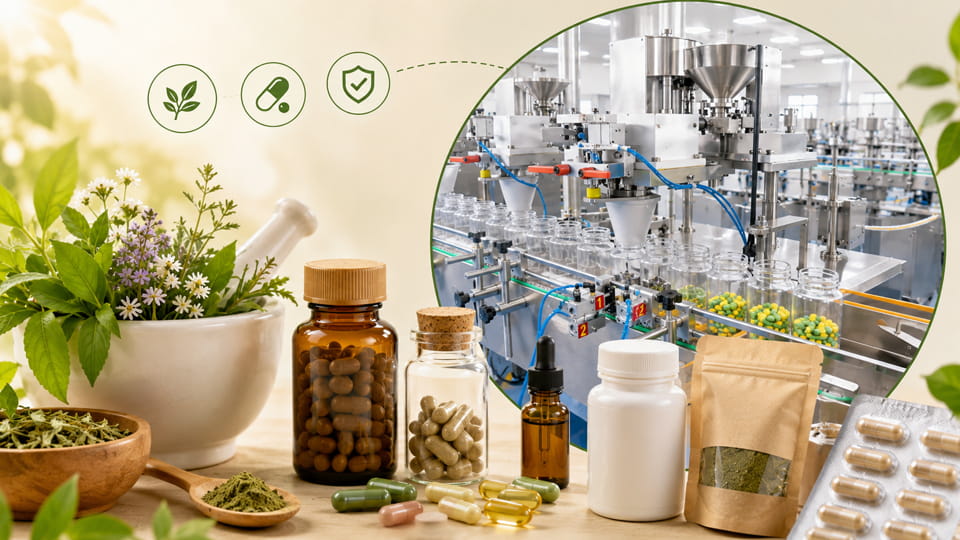
İster yeni bir bitkisel takviye üretim hattı planlıyor olun, ister mevcut ekipmanı yükseltiyor olun, Üretim sürecini anlamak, daha iyi kararlar almanın ilk adımıdır. Bu kılavuzda, En yaygın bitkisel takviye türlerini inceleyeceğiz, nasıl üretildikleri, ilgili ekipman, ve üreticilerin verimliliği artırmasına yardımcı olan paketleme çözümleri, ürün kalitesi, ve raf ömrü.
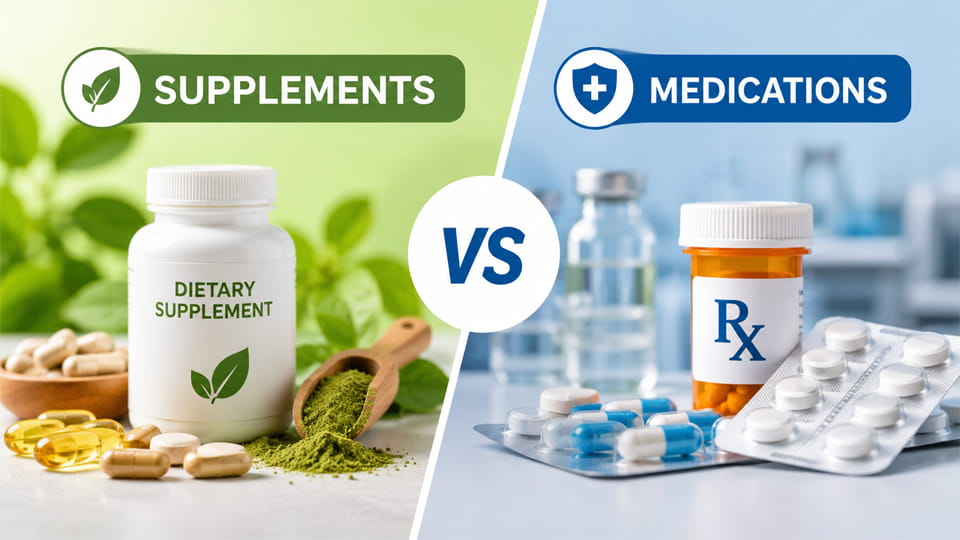
Bitkisel takviyeler (ayrıca denir botanik takviyeleri) bir kategoridir diyet takviyeleri bitki materyallerinden yapılmış (kökler, yapraklar, çiçekler, tohumlar, veya özler) sağlığı desteklemeyi amaçlayan. Sentetik vitaminlerden farklı olarak, bitkisel takviyeler doğal kaynaklardan elde edilir. Genellikle geleneksel bitkisel ilaçları kullanırlar (örneğin. zencefil, ginkgo, ekinezya) ve konsantre ekstraktları veya tozları içerir. Düzenleyici terimlerle, Bitkisel takviyeler şu şekilde sınıflandırılır: diyet takviyeleri, uyuşturucu değil. ABD altında. kanuna göre etiketlenmiş içerikleri içermeli ve kirletici maddelerden kaçınmalıdırlar (pestisitler, ağır metaller). Tipik formlar arasında kapsüller bulunur, tabletler, softgels, tozlar, sıvılar (tentürler), çaylar ve sakızlar.
Bitkisel takviyeler, bitki bazlı besinler veya aktif maddelerle "diyetin desteklenmesini" amaçlamaktadır., sıklıkla bağışıklık desteği için, sindirim, stres giderme, veya enerji. Örneğin, mürver gibi malzemeler, Ekinezya ve C vitamini bağışıklık için popülerdir, Ashwagandha ve yeşil çay stres giderme ve metabolizma için kullanılırken. Tüketiciler, doğal kaynakları ve temiz etiketleri nedeniyle bitkisel takviyeleri giderek daha fazla tercih ediyor. Küresel bitkisel takviye pazarı yaklaşık olarak $45.9 milyar 2025 aracılığıyla yıllık ~%8 oranında büyüyeceği tahmin edilmektedir. 2034, bitki bazlı koruyucu sağlık hizmetlerine olan talepten kaynaklanmaktadır.

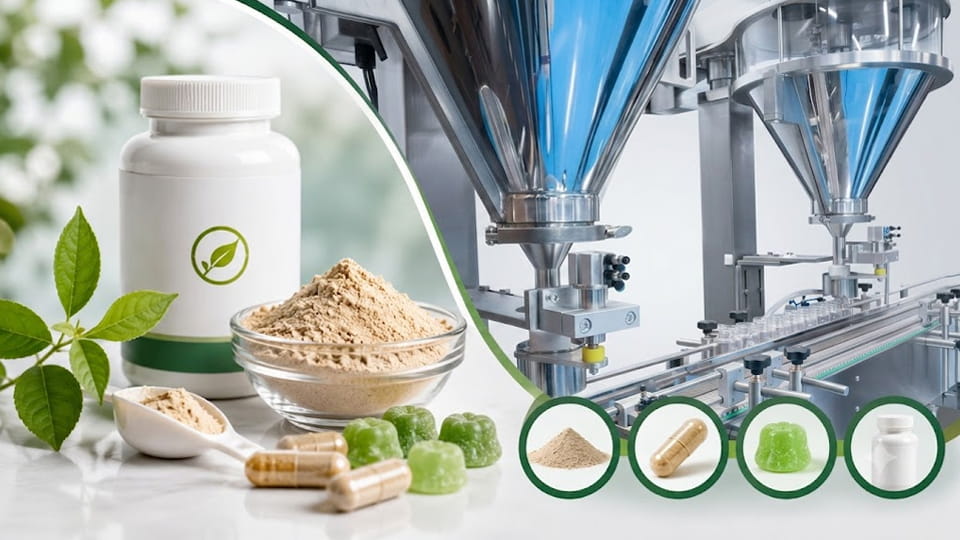
Bitkisel takviyeler birçok dozaj formunda yapılır. Her formun avantajları vardır, üreticiler ürüne ve pazara göre seçim yapar. Yaygın formatlar şunları içerir::


Bitkisel takviyeler birçok biçimde gelir: sert kapsüller, softgels, tabletler ve tozların tümü bitkisel bileşenler kullanır. Doğru formu seçmek bitkisel ekstrakta bağlıdır, dozaj ihtiyaçları, ve tüketici tercihleri.
| Ek Formu | Tipik Bitkisel İçerikler | Temel Avantajlar | Ortak Ambalaj | Önerilen Üretim Ekipmanları |
|---|---|---|---|---|
| Kapsüller | Ashwagandha, Zerdeçal, Ginseng | Yutması kolay, doğru dozaj, hassas tozları korur | Şişe, Blister paketleri | Kapsül Dolum Makinası, Şişe Dolum Hattı, Blister Ambalaj Makinesi |
| Tabletler | Spirulina, Sarımsak, Devedikeni | Uygun maliyetli, uzun raf ömrü, yüksek hacimli üretime uygun | Şişe, Blister paketleri | Tablet Pres Makinası, Tablet kaplama makinesi, Şişe Paketleme Hattı |
| Tozlar | Matcha, Moringa, Buğday çimi | Esnek porsiyon boyutları, içecek karışımları ve protein karışımları için ideal | Ayakta duran torbalar, sopa paketleri, kavanoz | Toz Karıştırıcı, Burgu Dolum Makinası, Önceden yapılmış torba paketleme makinesi |
| Yumuşak jeller | Sarımsak Yağı, Keten Tohumu Yağı, Çuha çiçeği Yağı | Yağ bazlı ekstraktlar için uygundur, tüketimi kolay | Şişe, Blister paketleri | Softjel Üretim Hattı, Şişe Dolum Makinası |
| Sakızlar | Mürver, Elma Sirkesi, Zerdeçal | Hoş tat, çocuklar ve yetişkinler arasında popüler | Şişe, poşetler | Sakızlı Sayma Makinesi, Şişe Dolum Hattı, Önceden yapılmış torba paketleme makinesi |
| Sıvı Ekstraktlar | Ekinezya, Ginkgo Biloba, Kediotu Kökü | Hızlı emilim, özelleştirilmiş dozajlama için uygun | Cam şişeler, damlalıklı şişeler | Sıvı Dolum Makinası, Kapatma Makinası, Etiketleme makinesi |
| Bitkisel Çay Poşetleri | Papatya, Nane, Ebegümeci | Geleneksel tüketim yöntemi, basit hazırlık | Poşet, kartonlar | Çay Poşeti Paketleme Makinası, Kartonlama Makinası |
Üreticiler biyoyararlanım veya tüketicinin ilgisini çekmek için belirli bir formatı hedefleyebilir. Örneğin, Kapsül bazlı bitkisel takviyeler önemli bir pazar payına sahiptir (etrafında 39%) çünkü aktif maddeleri koruyorlar ve vücutta hızla çözünüyorlar. Tozlar (kavanozlarda veya çubuk paketlerinde) protein veya yeşil süper gıda karışımları popülerlik kazanıyor, tabletler vitaminler ve standart bitkisel özler için temel malzeme olmayı sürdürürken. Nihayetinde, . üretim ekipmanları (kapsül dolgu maddeleri, tablet presleri, torbacılar, vesaire.) seçilen form ve üretim hacmiyle eşleşmelidir.
Üreticiler, güçlü tüketici talebi ve bilimsel desteği olan şifalı bitkilere odaklanıyor. Takviyelerdeki önemli botanikler şunları içerir::
Aşağıdaki karşılaştırma günümüzün nutrasötik endüstrisinde en yaygın kullanılan bitkisel takviyelerden bazılarına hızlı bir genel bakış sunmaktadır.:
| Bitkisel Takviye | Ortak Sağlık Amacı* | Ortak Dozaj Formları | Tipik Ambalaj | Üretim Notları |
|---|---|---|---|---|
| Zerdeçal (Kurkumin) | Eklem ve inflamatuar destek | Kapsüller, tabletler, toz | HDPE şişeler, Blister paketleri, ayağa kalkma | Genellikle akış ajanları ile standartlaştırılmış kurkumin özütü |
| Ashwagandha | Stres ve uyku desteği | Kapsüller, sakız, toz | Plastik şişeler, sopa paketleri | Yaygın olarak standartlaştırılmış kök ekstraktı olarak üretilir |
| Ginseng | Enerji ve bilişsel destek | Kapsüller, softgels, sıvı özler | Kehribar şişeleri, Blister paketleri | Doldurma sırasında nem kontrolü önemlidir |
| Ekinezya | Bağışıklık sağlığı desteği | Tabletler, kapsüller, tentürler | Şişe, cam damlalıklı şişeler | Sıklıkla kuru ekstrakt veya sıvı ekstrakt olarak üretilir |
| Devedikeni | Karaciğer sağlığı desteği | Kapsüller, softgels | HDPE şişeler, Blister paketleri | Standartlaştırılmış silimarin içeriği genellikle gereklidir |
| Sarımsak | Kalp sağlığı desteği | Yumuşak jeller, tabletler | Blister paketleri, şişeler | Koku kontrolü ve kaplama sıklıkla dikkate alınır |
| Zencefil | Sindirim desteği | Kapsüller, tozlar, çay poşetleri | Poşet, poşetler, şişeler | Tozun akışkanlığı dolum doğruluğunu etkiler |
| Ginkgo Biloba | Bellek ve dolaşım desteği | Tabletler, kapsüller | Şişe, Blister paketleri | Genellikle flavonoid içeriğine göre standardize edilmiştir |
| Yeşil Çay Ekstraktı | Antioksidan desteği | Kapsüller, tabletler | Şişe, Blister paketleri | Isı ve nem koruması stabiliteyi artırır |
| Mürver | Bağışıklık desteği | Sakızlar, şuruplar, kapsüller | PET şişeler, cam şişe | Sakızlar özel sayma ve şişeleme ekipmanı gerektirir |
Trendler 2025 Bağışıklık sağlığı için formüle edilmiş takviyeleri vurgulayın (mürver, ekinezya, çinko), kadın sağlığı, ve bilişsel sağlık. Örneğin, Birleşik Krallık'taki tüketiciler giderek daha fazla zerdeçal kullanıyor, ashwagandha, bağışıklık ve stres için moringa ve mürver. İçerik kaynağı ve formülasyonu kalite kontrolü gerektirir: Her bitki aktif etki ve kirletici madde yokluğu açısından test edilmelidir (pestisitler, ağır metaller) GMP standartlarına göre.

Bitkisel takviyelerin üretimi çok adımlı bir süreci takip eder, standart farmasötik teknikleri botanik içeriklere yönelik özel bakımla birleştirmek. Genel akış şu şekildedir:: ham otların tedarik edilmesi → temizleme → kurutma/öğütme → harmanlama → dozaj oluşturma (kapsüller/tabletler) → ambalajlama. Anahtar adımlar şunları içerir::
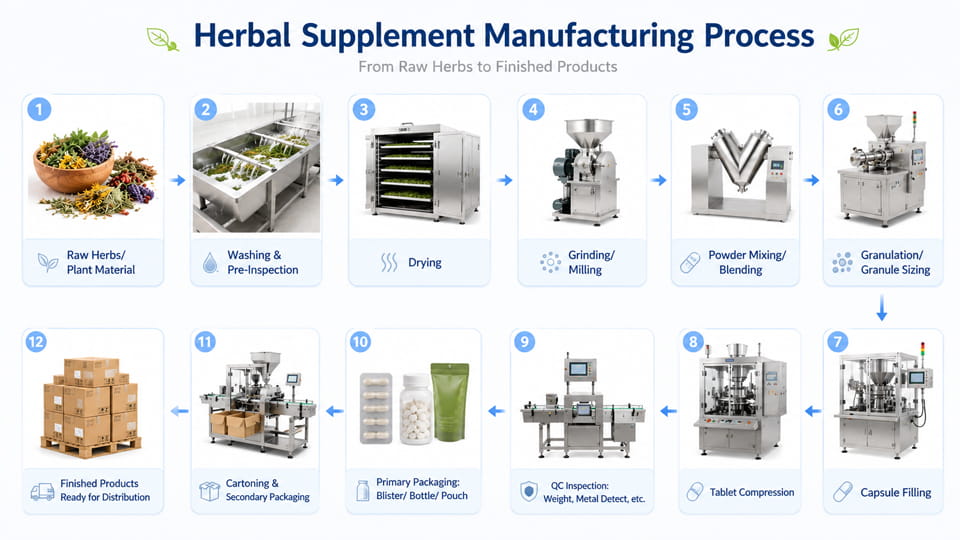
Üretim boyunca, koşullar (sıcaklık, nem) yakından kontrol ediliyor. Birçok bitki neme duyarlıdır, böylece hattın tamamı nem kontrollü bir temiz odada çalışabilir. Yüksek bariyerli ambalaj (alüminyum folyo kabarcıkları, Kurutuculu HDPE) raf ömrünü korumak için seçilir.
Başarılı takviye üretimi güvenilirliğe bağlıdır işleme ve paketleme makineleri. Burada önemli ekipmanlara (özellikle Jinlu tarafından sunulanlara) ve rollerine genel bir bakış yer alıyor:

Figür: Jinlu'nun yüksek hızlı kapsül dolum makinesi (modeli NJP-1500D, 90K cps/saat). Bu tür otomatik doldurucular boş kapsülleri yönlendirir, metre bitkisel toz, dolguyu sıkıştır, ve doldurulmuş her kapsülü ±%3 doğrulukla birleştirin.
 Figür: HZP-26D-40D Döner Tablet Pres Makinesi. Tablet presleri bitkisel granülleri tam ağırlık ve sertlikte tabletler halinde sıkıştırır. Jinlu'nun baskı makineleri çıktı alabiliyor 260,000 tekdüzelik sağlarken tablet/saat.
Figür:Hazır Kese Paketleme Makinesi. Bu tür makineler (Jinlu'nun GD serisi gibi) otomatik olarak açılabilir, doldurmak, ve dik veya fermuarlı torbaları tozlarla kapatın, granüller veya tabletler, çok hassas dolum ağırlıklarına ulaşmak.
Diğer temel ekipmanlar arasında şişe yıkayıcılar bulunur (boş şişeleri başlatmak için), etiketleyiciler, Ve metal dedektörleri. Jinlu'nun makineleri küresel sertifikaları karşılayacak şekilde tasarlandı (CE, CGMP, FDA) ve özelleştirilebilir (örneğin. zor tozlar için vakum besleyicili, karışımlar için kombinasyon tartıları).
Doğru birincil ambalajın seçilmesi stabiliteyi etkiler, kullanıcı deneyimi, ve uyumluluk. Aşağıda takviyeler için yaygın ambalaj formatlarını karşılaştırıyoruz:
| Biçim | Şunun için en iyisi: | Avantajları | Zorluklar/Düşünceler |
| Şişe (HDPE, PET) | Kapsüller, Tabletler, Yumuşak jeller, Sakızlar | Güçlü nem/oksijen bariyeri; etiketlemesi kolay; çocuklara dayanıklı kapaklar mevcut; tanıdık format | Nakliye için hantal; genellikle opak (daha az geri dönüştürülebilir); karışık malzemelerle CR kapaklar gerektirir |
| Blister paketleri (Alüminyum/PVC) | Tabletler, Kapsüller, Caplets | Birim doz koruması (her hap mühürlendi); mükemmel bariyer (folyo); kurcalanmaya açık; uygun dozaj | Birim başına daha pahalı; sınırlı şekiller/boyutlar; folyo/PVC geri dönüşümü zordur |
| Çubuk Paketleri | Tozlar (tek servislik), Çaylar | Önceden ölçülmüş taşınabilir doz; minimum kalan; ince profil | Tek kullanımlık atık; laminat gerektirir (geri dönüşüm zorlukları); paket başına küçük hacim |
| Poşet | Granüller, Efervesan tabletler, Tozlar | Tek porsiyonlu paketler, genellikle suda çözünür; düşük maliyetli | Sınırlı nem bariyeri; delinmeye eğilimli; tek kullanımlık atık |
| Ayakta Duran Torbalar (yeniden kapatılabilir) | Tozlar, Granüller, Sakızlar, Çoklu Paketler | Hafif, yerden tasarruf sağlayan; yüksek bariyerli laminatlar; yeniden kapatılabilir fermuarlar; özelleştirilebilir şekiller | Çoğunlukla şeffaf (hafif risk); neme duyarlı içerik için kurutucuya ihtiyaç vardır; fermuar maliyeti artırır |
| Kavanoz / Tenekeler (Cam/Alüminyum) | Sakızlar, Tozlar, Premium ürünler | Üstün geri dönüştürülebilirlik (cam/alüminyum); yüksek bariyer; yeniden kullanılabilir; birinci sınıf görünüm | Daha ağır (nakliye maliyeti); kırılabilir (bardak); Kapak mekanizmaları eklenmedikçe varsayılan olarak çocuklara dayanıklı değildir |
| İkincil Kartonlar | Şişelerde veya kabarcıklarda Kapsüller/Tabletler | Toplu paketlemeyi etkinleştirir; birden fazla ürün için bariyer ekler; etiketleme alanı sağlar | Maliyet ve malzeme ekler; Plastikten daha düşük karton bariyer (nem için astarlara ihtiyaç duyabilir) |
Bitkisel takviyeler için, nem ve oksijen kontrolü kritik paketleme fonksiyonlarıdır. Örneğin, yüksek bariyerli kabarcıklı folyo veya çok katmanlı torbalar higroskopik bitkileri koruyabilir. Çocuklara dayanıklı (CR) kapatmalar genellikle yasal olarak gereklidir (özellikle vitaminler için). Sürdürülebilir seçenekler (PCR plastikleri, geri dönüştürülebilir malzemeler, kompostlaştırılabilir torbalar) büyüyen trendler, ancak yine de güvenlik ve raf ömrü gereksinimlerini karşılamalıdır.
Paketleme makineleri (şişe doldurucular, kabarcık hatları, kese paketleyiciler) seçilen format ve çıktıyla eşleştirilmelidir. Otomatik sistemler (Jinlu'nun modeli GD poşet paketleyici veya PJ serisi kabarcıklı makineler gibi) Tutarlı sızdırmazlık ile yüksek hızların üstesinden gelin, farmasötik için gerekli olan GMP uyumluluğu.
İyi ekipmanlarla bile, Takviye üretimi engellere çarpabilir. İşte sık karşılaşılan sorunlar ve çözümleri:
Her durumda, önleyici bakım ve deneyimli operatörler çok önemlidir. Otomatik hata kurtarma (istasyonları reddetmek, alarmlar) sorunları erken yakalamaya yardımcı olur. Örneğin, Jinlu'nun makineleri yanlış doldurulmuş poşetleri atmak için "akıllı reddetme" özelliğine sahip.
Paketleme ekipmanının seçilmesi stratejik bir karardır. Dikkate alınması gereken faktörler şunları içerir::
Özetle, istediğiniz çıktı ve uyumluluk gereksinimlerine göre derecelendirilmiş makineleri seçin. . doğru ekipman tutarlı dolumlar/mühürler sağlar, verimi maksimuma çıkarır, ve maliyetli geri çağırmaları önler.
Doğal sağlığa yönelik küresel değişim, bitkisel takviyeleri büyük bir endüstri haline getirdi, ancak aynı zamanda farmasötik düzeyde sıkı bir üretim gerektirir. Ham botaniklerin dikkatlice test edilmesinden otomatik kapsül dolumuna ve kurcalamaya dayanıklı paketlemeye kadar, tutarlılık için her adım optimize edilmelidir, uygunluk, ve kalite. Ekipmandaki gelişmeler (yüksek hızlı kapsül doldurucular gibi, hassas kabarcık hatları, ve esnek poşet makineleri) Nutrasötik şirketlerinin sıkı toleransları korurken verimli bir şekilde ölçek büyütmelerine olanak tanır.
Özetle, bitkisel takviye üretimi geleneksel botanik bilgisi ile modern mühendisliğin karmaşık bir dansıdır. GMP yönergelerini takip ederek, doğru makineleri kullanmak, ve trendlerin önünde kalmak (beğenmek sürdürülebilir ambalaj ve kişiselleştirilmiş formülasyonlar), üreticiler güvenli teslimat yapabilir, etkili bitki bazlı ürünler. Hatlarını genişletmek veya yükseltmek isteyen şirketler için, Jinlu Paketleme entegre bir kapsül dolgu serisi sunar, tablet presleri, Blister Makineler, Kese paketleyiciler ve daha fazlası – hepsi nutrasötik üretimi için tasarlandı. Bize Ulaşın Ekipmanlarımızın bitkisel takviyenizi bitki bahçesinden mağaza raflarına kalite ve verimlilikle taşımanıza nasıl yardımcı olabileceğini öğrenmek için.
Bitkisel Takviye bitkilerden yapılan bir besin takviyesidir, botanik özler, veya diğer bitki kaynaklı bileşenler. Bu ürünler yaygın olarak kapsüller halinde mevcuttur., tabletler, tozlar, sakız, çaylar, veya sıvı ekstraktlar olup, geleneksel gıdaların yerini almak yerine diyeti desteklemek üzere tasarlanmıştır.. Piyasaya bağlı olarak, bitkisel takviyeler, farmasötik ilaçlardan ziyade diyet takviyeleri olarak düzenlenir.
ABD'de, diyet takviyeleri (bitkisel dahil) FDA'nın DSHEA yasası kapsamına girmek. Üreticiler FDA cGMP kurallarına uymalıdır (21 CFR 111) kimliğini sağlamak, saflık, ve kirlenmeyi önlemek için. Bu, ham bitkilerin kapsamlı test edilmesi ve süreç içi kontroller anlamına gelir. Avrupa'da ve başka yerlerde, benzer iyi üretim standartları (AB GMP, DSÖ yönergeleri) Nutrasötikler için geçerli.
Birçok biçimde gelirler: kapsüller, tabletler, tozlar, sıvılar/tentürler, sakız, sopa paketleri, çaylar, vesaire. Seçim botanik özelliklere ve tüketici tercihine bağlıdır.. Örneğin, küçük acı otlar kapsüllere konabilir, rahatlatıcı bir çay poşet çay olarak satılırken.
Üretim süreci genellikle birkaç önemli adım içerir:
• Ham bitki seçimi
• Temizleme ve kurutma
• Taşlama veya frezeleme
• Toz karıştırma
• Granülasyon (gerekirse)
• Kapsül doldurma veya tablet sıkıştırma
• Kalite denetimi
• Birincil paketleme
• Kartonlama ve ikincil paketleme
Modern üreticiler tutarlılığı artırmak için genellikle bu süreçleri otomatikleştirir, üretkenlik, ve ürün kalitesi.
En azından, üreticilerin karıştırma ekipmanına ihtiyacı var, bir kapsül dolgusu veya tablet presi (doza bağlı olarak), ve bir paketleme hattı. Anahtar makineler şunları içerir:: kapsül dolum makinesi, Döner Tablet Pres, kabarcıklı paketleme makinesi, şişe sayma/doldurma hattı, poşet/çubuk paketleme makinesi, ve kese paketleme makinesi. Örneğin, Jinlu Packaging, nutrasötikler için özel olarak tasarlanmış kapsül doldurucular ve poşet paketleyiciler sunar.
Çoğu üretici, kabarcıklı paketler gibi neme dayanıklı ambalaj malzemeleri kullanır, İndüksiyon contalı HDPE şişeler, alüminyum folyo laminatlar, veya yüksek bariyerli torbalar. Kontrollü üretim ortamları, kurutucular, uygun sızdırmazlık sistemleri, ve rutin kalite denetimleri aynı zamanda bitkisel takviyelerin depolama ve taşıma boyunca korunmasına da yardımcı olur.
En iyi ambalaj, ürünün türüne ve neme karşı duyarlılığına bağlıdır., oksijen, ve ışık.
Yaygın paketleme seçenekleri şunları içerir::
• Kapsül ve tablet şişeleri
• Birim doz koruması için kabarcıklı paketler
• Tozlar için dik duran torbalar
• Tek porsiyonluk stick paketler ve poşetler
• Sıvı ekstraktlar için cam şişeler
Uygun bariyer ambalajının seçilmesi, ürün kalitesinin korunmasına ve raf ömrünün uzatılmasına yardımcı olur.
Bitkisel takviyeler besin takviyesi olarak sınıflandırılır ve reçetesiz satılabilir., beslenme desteğine odaklanmak. Bitkisel ilaçlar (Ayurveda veya geleneksel Çin ilaçları gibi) genellikle ilaç veya tıbbi ürün olarak düzenlenir, hastalıkları tedavi ettiği iddiasıyla. Takviyeler genel sağlığı geliştirebilir (örneğin. “bağışıklığı destekliyor”) ancak hastalıkları iyileştirdiğini iddia edemez.
Referanslar:
1.Besin Takviyeleri Rehber Dokümanları & Düzenleyici Bilgiler—— BİZ. Gıda ve İlaç İdaresi
2.Diyet Takviyeleri —— BİZ. Gıda ve İlaç İdaresi
3.Bitkisel Takviyeler —— BİZ. Tarım Bakanlığı
4.Güvenli ve Etkili Bitkisel Besin Takviyelerinin Geliştirilmesi —— Ulusal Tıp Kütüphanesi
5.Bitkisel besin takviyelerinin kalite güvencesi ve güvenliği —— Ulusal Tıp Kütüphanesi
6.Diyet ve Bitkisel Takviyeler —— NCCIH