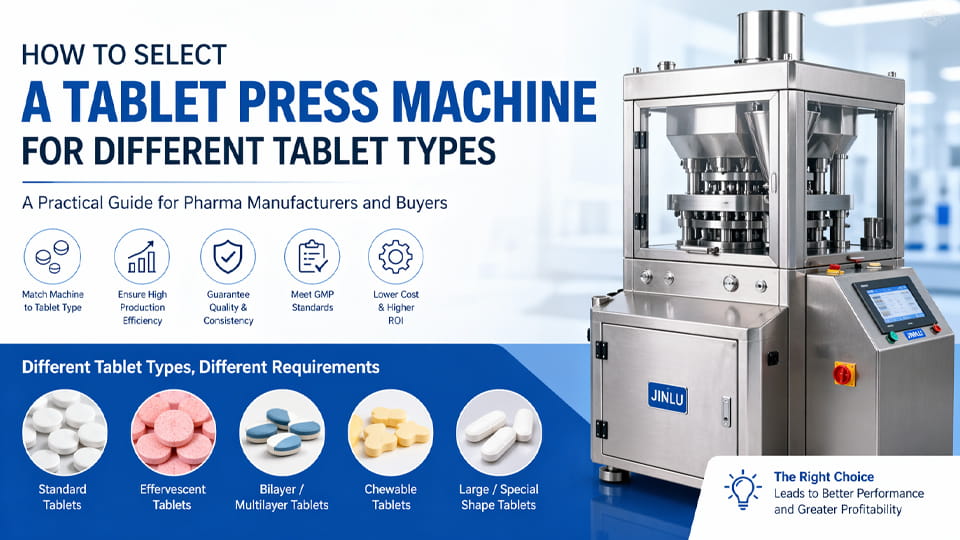
การเลือกสิ่งที่ถูกต้อง เครื่องกดแท็บเล็ต เป็นสิ่งสำคัญสำหรับผู้ผลิตยาหรือโภชนเภสัช. เครื่องอัดแท็บเล็ตมีหลายประเภท (หมัดเดียว, หมุน, สองชั้น, ฯลฯ) และความเร็ว, แต่ละสูตรเหมาะสมกับสูตรยาเม็ดและปริมาณการผลิตบางสูตร. เม็ดยามีความแตกต่างกันอย่างมาก ตั้งแต่ยาเม็ดกลมธรรมดาไปจนถึงยาเม็ดฟู่หรือยาเม็ดสองชั้น และแต่ละประเภทก็มีข้อกำหนดเฉพาะเกี่ยวกับเครื่องมือ, แรงอัด, การให้อาหาร, และการควบคุมสิ่งแวดล้อม.
คู่มือนี้ช่วยให้ผู้ซื้อในอุตสาหกรรมจับคู่ประเภทแท็บเล็ตของตนกับเครื่องในอุดมคติ. เราครอบคลุมหมวดหมู่แท็บเล็ต (มาตรฐาน, ฟู่, สองชั้น, เคี้ยวได้, ใหญ่/ผิดปกติ), หมวดหมู่เครื่อง (หมัดเดียว, หมุน, ความเร็วสูง, กดสอง / หลายชั้น), และปัจจัยการเลือกที่สำคัญ เช่น กำลังการผลิต, ขนาดแท็บเล็ต, ความเข้ากันได้ของเครื่องมือ, การออกแบบเครื่องป้อน, แรงอัด, และการปฏิบัติตามมาตรฐาน GMP. เรารวมประเภทแท็บเล็ตการจับคู่ตารางเปรียบเทียบเข้ากับเครื่องและคุณสมบัติที่แนะนำ, ข้อผิดพลาดทั่วไปที่ควรหลีกเลี่ยง, และเคล็ดลับเกี่ยวกับ การเลือกซัพพลายเออร์ที่เชื่อถือได้. โดยในตอนท้าย, คุณจะรู้วิธีรักษาสมดุลของความเร็ว, ความยืดหยุ่นและคุณภาพ – และค้นหาเครื่องพิมพ์ที่เหมาะกับแท็บเล็ตและความต้องการปริมาณงานของคุณ.
ทำความเข้าใจเกี่ยวกับประเภทแท็บเล็ตและข้อกำหนด
ผลิตภัณฑ์แท็บเล็ตที่แตกต่างกันต้องการคุณสมบัติการกดที่แตกต่างกัน. ด้านล่างนี้เป็นเรื่องธรรมดา หมวดหมู่แท็บเล็ต และสิ่งที่พวกเขาหมายถึงอุปกรณ์:
- แท็บเล็ตมาตรฐาน (ชั้นเดียว, กลม, แคปเล็ต, ฯลฯ): เหล่านี้เป็นยาหรือยาเสริมทั่วไป. พวกเขาใช้ เครื่องมือ B (19 มม. หมัด, แท็บเล็ตสูงถึง ~13 มม) บนเครื่องโรตารี่ส่วนใหญ่. แรงอัดปานกลาง (ประมาณ 60–100kN) มักจำเป็นสำหรับความแข็งสม่ำเสมอ. เครื่องจักรมาตรฐานสามารถรองรับได้หลายรูปทรง (กลม, วงรี, เป็นรูปสี่เหลี่ยมผืนผ้า) โดยไม่มีฮาร์ดแวร์พิเศษ. ตัวอย่างเช่น, เครื่องกด Jinlu ZP-17D (รุ่นเอนกประสงค์) ผลิตได้ถึง 37,800 เม็ด/ชม ด้วย 25 เส้นผ่านศูนย์กลางสูงสุด มม และ 100 แรงกิโลนิวตัน, ครอบคลุมแท็บเล็ตมาตรฐานส่วนใหญ่.
- ยาเม็ด (ซ่า, ซึ่งมีชีวิตชีวา): แท็บเล็ตเหล่านี้ (ใช้ในยา, เครื่องดื่มผสม, น้ำยาทำความสะอาด) มีสารที่เป็นกรด-เบส (กรดซิตริก + โซเดียมไบคาร์บอเนต) ที่ทำปฏิกิริยากับความชื้น. พวกเขาต้องการ การบีบอัดสูง (เพื่อให้แท็บเล็ตไม่เสียหาย) และบ่อยครั้ง ใหญ่กว่าตาย. เครื่องโรตารี่สำหรับงานหนัก (บ่อยครั้งด้วย เครื่องมือ D) ขอแนะนำ. อย่างมีวิจารณญาณ, ผงฟู่ดูดซับความชื้นได้อย่างรวดเร็ว, ดังนั้นการควบคุมสิ่งแวดล้อมจึงเป็นสิ่งสำคัญ. เครื่องอัดฟู่แบบพิเศษมีคุณสมบัติเช่นเครื่องลดความชื้นในสายการผลิต, ห้องอัดที่ปิดสนิท, และส่วนประกอบที่ทนต่อการกัดกร่อนเพื่อป้องกันปฏิกิริยาก่อนเวลาอันควร. ตัวอย่างเช่น, เครื่องพิมพ์ขนาดใหญ่ของ Jinlu (ขึ้นไป 400 กิโลนิวตัน บังคับ, 60 เส้นผ่านศูนย์กลางมม) ได้รับการออกแบบมาโดยเฉพาะเพื่อจัดการกับเม็ดฟู่และผงซักฟอก.
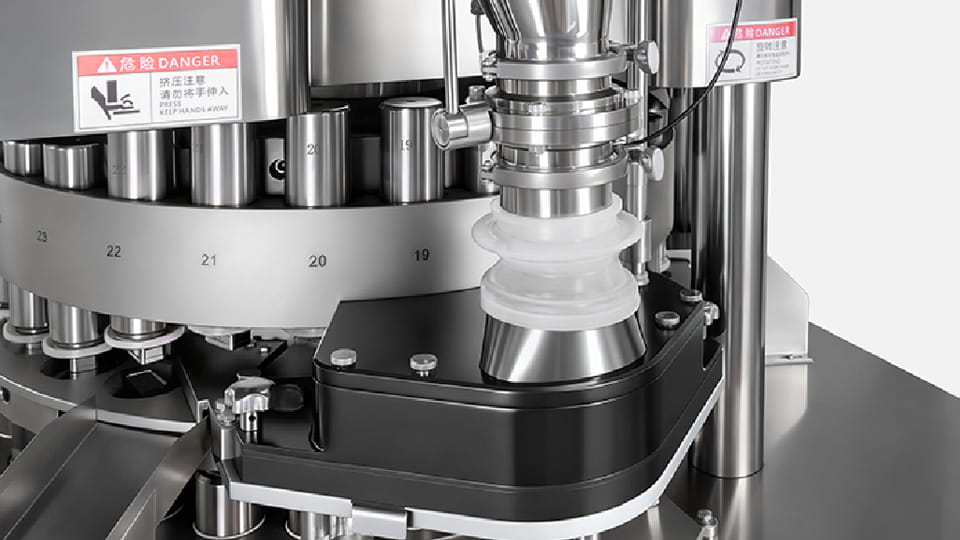
- ไบเลเยอร์ / แท็บเล็ตหลายชั้น: เมื่อแท็บเล็ตมีสองชั้นขึ้นไป (ยาที่แตกต่างกัน, สี, หรือปล่อยโปรไฟล์), คุณต้องการ กดสองชั้นหรือหลายชั้น. เครื่องจักรเหล่านี้มีกรวยและตัวป้อนตั้งแต่สองตัวขึ้นไปที่ป้อนตามลำดับในป้อมปืนเดียว. พวกเขาบีบอัดชั้นแรก, จากนั้นเพิ่มอันที่สอง (และประการที่สาม, ถ้าจำเป็น). คุณสมบัติที่สำคัญ ได้แก่ เครื่องป้อนแบบแรงคู่ (เพื่อป้องกันการผสมชั้น), สถานีบีบอัดอิสระ, และพอร์ตการสุ่มตัวอย่างในกระบวนการ. เช่น, เครื่องกดสามชั้น JL ZP-27/73D ส่งออกได้สูงสุด 395,000 เม็ด/ชม (กับ 50 มม เส้นผ่าศูนย์กลาง) และแรงดัน 150kN. กรวยที่ซิงโครไนซ์สามอันอนุญาตให้มีได้ถึงสามชั้นต่อแท็บเล็ต (สูตรรหัสสีหรือหลากหลาย). รูปร่างของการกดหลายชั้น (ดูด้านล่าง) แสดงให้เห็นป้อมปืนและกรวย.

รูป: เครื่องอัดยาเม็ดแบบหมุนหลายชั้น (E.G. เจแอล ZP-27/73D) สามารถกดได้ 2-3 ชั้นต่อแท็บเล็ตด้วยความเร็วสูงมาก (ขึ้นไป 395,000 เม็ด/ชม). เครื่องป้อนแบบพิเศษและช่องปิดช่วยเติมแต่ละชั้นให้เท่ากัน.
- เคี้ยวได้ / เม็ดอ่อน: เม็ดเคี้ยว (วิตามิน, ยาลดกรด) ต้องการ เนื้อนุ่มและรสชาติดีขึ้น. โดยทั่วไปแล้วจะบีบอัดภายใต้แรงกดดันที่ต่ำกว่าเพื่อหลีกเลี่ยงความแข็ง, และมักจะใช้ เครื่องมือ BB (การเจาะที่สั้นกว่า 19 มม. สำหรับแท็บเล็ตขนาดเล็ก). สูตรแป้ง (E.G. แมนนิทอล, สารให้ความหวาน, น้ำมันหล่อลื่น) มีแนวโน้มที่จะเหนียวหรืออ่อน. ข้อกำหนดของเครื่องรวมถึงการบีบอัดอย่างนุ่มนวล (กิโลนิวตันต่ำกว่า), ความเร็วป้อมปืนช้า (เวลาอยู่อาศัยที่สูงขึ้น), และสารเคลือบเครื่องมือป้องกันการเกาะติด. ในทางปฏิบัติ, เครื่องโรตารี่มาตรฐานพร้อมเครื่องมือที่เหมาะสม (หรือ “เครื่องกดแท็บเล็ตแบบเคี้ยว” โดยเฉพาะ) ถูกนำมาใช้. การเจาะมักมีรูปร่างพิเศษ (หัวใจ, ฯลฯ) เพื่อการตลาด.
- เม็ดใหญ่หรือผิดปกติ: สินค้าบางชนิด (เม็ดทำความสะอาดฟู่, ยาเม็ดสัตวแพทย์ขนาดใหญ่) มีขนาดใหญ่ - เส้นผ่านศูนย์กลางไม่เกิน 60 มม. หรือมีรูปร่างแปลก ๆ. สิ่งเหล่านี้ต้องการ เครื่องมือ D (25.4 เจาะสูงสุด มม) และแท่นพิมพ์ที่แข็งแรงมาก (แรงบิดสูง, มากถึง 400kN). ความเร็วจะต้องต่ำกว่า; ช่วงเอาท์พุทจะเจียมเนื้อเจียมตัว (E.G. 20,000–45,000 แท็บ/ชม) เพื่อให้มั่นใจในคุณภาพ. เครื่องอัด "แท็บเล็ตขนาดใหญ่" เหล่านี้มักจะมีป้อมปืนขนาดพิเศษและลูกเบี้ยวสำหรับงานหนัก. พวกเขายังสามารถจัดการหลายสีหรือหลายชั้นเป็นโบนัสได้. เครื่องรีดขนาดใหญ่ของ Jinlu ออกมาเพื่อใช้แบบฟู่/ผงซักฟอก. การแลกเปลี่ยนคือความสามารถ: แท็บเล็ตขนาด 60 มม. ที่ 400kN อาจผลิตได้เพียง ~30k/ชม, แต่มันเป็นวิธีเดียวที่จะสร้างยาเม็ดดังกล่าวโดยไม่แตกร้าว.
โดยสรุป, กำหนดผลิตภัณฑ์ของคุณก่อน: เส้นผ่านศูนย์กลางของแท็บเล็ต, ความหนา, ชั้น, และการกำหนด (ความสามารถในการไหล, ความไวต่อความชื้น, ความกร่อน). แต่ละมิติและคุณสมบัติจะทำให้ตัวเลือกเครื่องจักรแคบลง. กฎทั่วไป: ขนาดและขนาดเครื่องขับเคลื่อนความแข็ง, ไม่ใช่แค่ผลลัพธ์เป้าหมายเท่านั้น. อย่าซื้อด้วยแบนเนอร์ “100,000 แท็บ/ชั่วโมง”; เริ่มต้นด้วยการจับคู่ข้อมูลจำเพาะของแท็บเล็ตกับป้อมปืนและเครื่องมือ.
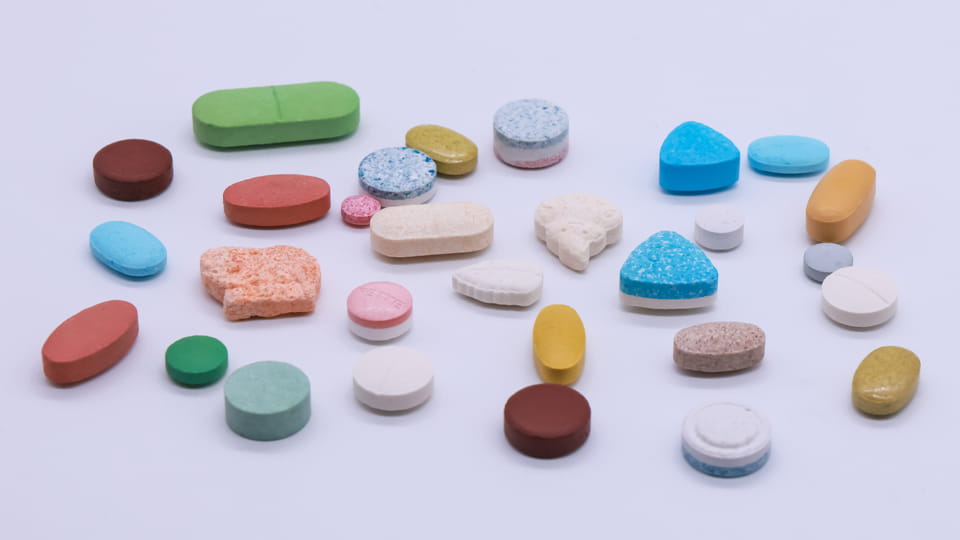
ประเภทของเครื่องกดแท็บเล็ต
เครื่องอัดแท็บเล็ตแบ่งออกเป็นสองประเภทหลักๆ: หมัดเดียว (แหกคอก) และ หมุน (หลายสถานี), ด้วยรูปแบบพิเศษ.
- หมัดเดียว (แหกคอก) กด: เครื่องจักรธรรมดาๆ เหล่านี้มีเพียงหมัดเดียวก็ตายได้, ด้วยตนเองหรือขับเคลื่อนด้วยมอเตอร์. เหมาะสำหรับ ร&ดี, ชุดนักบิน, และการผลิตขนาดเล็ก. การกดแบบสถานีเดียวต้องใช้การป้อนผงด้วยตนเอง (ผ่านถังหรือไดฟิล) และเจาะแท็บเล็ตทีละเม็ด. ประโยชน์: ต้นทุนต่ำมาก, บำรุงรักษาง่าย, และไม่จำเป็นต้องมีระบบควบคุมที่ซับซ้อน. ข้อเสีย: ปริมาณงานต่ำมาก (ไม่กี่ร้อยเม็ด/ชม) และจำกัดอยู่เพียงสูตรง่ายๆ. เรารวมประเภทนี้เพื่อความสมบูรณ์, แต่ผู้ซื้อในภาคอุตสาหกรรมส่วนใหญ่จะหันไปใช้เครื่องโรตารี เว้นแต่ความต้องการผลผลิตจะมีน้อยมาก.
- เครื่องอัดยาเม็ดโรตารี: สิ่งเหล่านี้คือปัจจัยสำคัญสำหรับการผลิตขนาดกลางถึงขนาดใหญ่. เครื่องโรตารี่มีป้อมปืนหมุนได้ที่รองรับหมัด/ดายจำนวนมาก (ขนาดป้อมปืนทั่วไปคือ 8, 16, 20, 37, 45, 62, 80 สถานี). ผงจะถูกป้อนจากถังพักผ่านโครงป้อนแบบหมุน. การหมุนหนึ่งครั้งสามารถบีบอัดแท็บเล็ตได้หลายสิบเม็ด. เครื่องโรตารีทางอุตสาหกรรมบรรลุผลได้ตั้งแต่ประมาณ 20,000 ถึงหลายแสนเม็ดต่อชั่วโมง. โรตารีมาตรฐานสามารถรองรับแท็บเล็ตทั่วไปได้: โดยให้ปริมาณงานสูงอย่างต่อเนื่องและควบคุมน้ำหนัก/ความแข็งได้อย่างแม่นยำ. มี 2 ชนิดย่อยคือ:
-
- เครื่องโรตารี่มาตรฐาน: ให้ผลลัพธ์ที่มีประสิทธิภาพสูงและสม่ำเสมอสำหรับปริมาณปานกลาง. มักประกอบด้วย การบีบอัดล่วงหน้า ลูกกลิ้ง (เพื่อทำให้ผงมีความหนาแน่นก่อนการบีบอัดขั้นสุดท้าย), และสามารถวิ่งด้วยความเร็วปานกลางได้ (E.G. 60–120 รอบต่อนาทีบนป้อมปืน 45 สถานีให้ผล ~162k–243k แท็บ/ชม.).
- เครื่องโรตารี่ความเร็วสูงหรือหลายชั้น: เหมาะสำหรับการผลิตในปริมาณมาก. สิ่งเหล่านี้มักจะมีเซอร์โวมอเตอร์, ป้อมปืนคู่ (หนึ่งนิ่ง, หนึ่งหมุนเพื่อเพิ่มความจุเป็นสองเท่า), และคุณสมบัติขั้นสูงเช่น ระบบป้อนแรง (เพื่อดันผงเหนียวให้เป็นแม่พิมพ์). นอกจากนี้ยังอาจกำหนดค่าให้เป็นแบบสองชั้น/หลายชั้นได้ในคราวเดียว. ตัวอย่างเช่น, RichPacking เน้นย้ำถึงการอัดความเร็วสูง รวมถึงการบีบอัดหลายชั้นและการควบคุมความเร็วที่แม่นยำเพื่อเพิ่มผลผลิตสูงสุด. ซีรีส์ “ZP-26-40D” ของ Jinlu เป็นตัวอย่างของโรตารีความเร็วสูง.
- สองชั้น / เครื่องรีดหลายชั้น: เหล่านี้เป็นโรตารีเฉพาะทางที่ออกแบบด้วย กรวยสองตัวขึ้นไป และสถานีอัดแบบซิงโครไนซ์. การกำหนดค่าทั่วไปคือสถานีกดคู่ที่ตำแหน่งป้อมปืนแต่ละตำแหน่ง โดยสถานีหนึ่งจะบีบอัดเลเยอร์แรก, อีกอันหนึ่งเพิ่มชั้นที่สอง, จากนั้นจึงดีดออก. พวกเขามักจะมีลูกเบี้ยวและอุปกรณ์ป้อนแรงเพิ่มเติม. ใช้สิ่งเหล่านี้เมื่อคุณต้องรวมสองสูตรไว้ในแท็บเล็ตเดียว (E.G. ชั้นที่มีการปลดปล่อยทันทีเหนือชั้นที่มีการปลดปล่อยอย่างต่อเนื่อง). คุณสมบัติหลัก ได้แก่ การควบคุมน้ำหนักของชั้นที่เป็นอิสระและการสุ่มตัวอย่างอัตโนมัติของแต่ละชั้น. ZP-27/73D ของ Jinlu และรุ่นที่คล้ายกันสามารถส่งออกได้ ไตรชั้น แท็บเล็ต (แม้กระทั่งการออกแบบสามสี) ในเครื่องเดียว. หากผลิตภัณฑ์ของคุณมีการออกแบบหลายชั้น, จำเป็นต้องกดหลายชั้น.
- สองด้าน (กดแท็บเล็ต) / ป้อมปืนแบบแบ่งส่วน: ตัวแปรขั้นสูงที่ใช้กันทั่วไปน้อยกว่า. เครื่องจักรเหล่านี้มีจุดเจาะทั้งสองด้านของป้อมปืน, อนุญาตให้สองเม็ดต่อการหมุน (ความจุเพิ่มขึ้นเป็นสองเท่าอย่างมีประสิทธิภาพ). เป็นเครื่องจักรความเร็วสูงซึ่งส่วนใหญ่พบในโรงงานยาขนาดใหญ่มาก. โดยมักจะมีกรวยแยกสำหรับป้อมปืนแต่ละด้าน, แต่อย่างอื่นจะมีลักษณะเหมือนการกดแบบหมุนสองครั้งติดกัน.
- เครื่องอัดแท็บเล็ตแบบเคี้ยวได้: โดยปกติแล้วจะเป็นเพียงเครื่องโรตารี่มาตรฐานที่ติดตั้งอุปกรณ์พิเศษ เครื่องมือแท็บเล็ตเคี้ยวได้. JinLuPacking จดบันทึกว่าเครื่องอัดแบบเคี้ยวใช้เครื่องมือพิเศษเพื่อสร้างแท็บเล็ตที่มีเนื้อสัมผัสที่นุ่มกว่าและมีรสชาติที่น่าพึงพอใจ. ในทางปฏิบัติ, คุณสามารถปรับสูตรและใช้การเคลือบยางได้, แต่ตัวเครื่องอาจมีการตั้งค่าแรงอัดที่ต่ำกว่าและมีฝาปิดกันฝุ่นเพิ่มเติมเพื่อรองรับผงที่มีน้ำตาลเป็นส่วนประกอบ.
ในทุกกรณี, มองหาความทันสมัย ระบบอัตโนมัติและการควบคุม คุณสมบัติ: หน้าจอสัมผัส PLC/HMI, เซ็นเซอร์ความดัน/น้ำหนัก, การจัดเก็บสูตร, และการปฏิเสธน้ำหนักอัตโนมัติ, โดยเฉพาะอย่างยิ่งหากคุณต้องการการปฏิบัติตามกฎระเบียบ. เครื่องจักรที่ดีก็มีระบบล็อคเพื่อความปลอดภัยเช่นกัน, การสกัดฝุ่น, และประตูทางเข้าออกสะดวก (เราครอบคลุมสิ่งเหล่านี้ภายใต้ปัจจัยการคัดเลือกด้านล่าง).
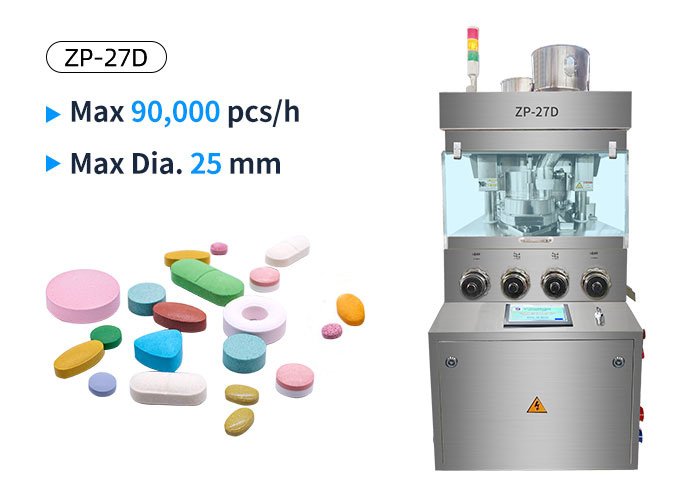 เครื่องบีบอัดแท็บเล็ตโรตารี่ ZP-27D
ปัจจัยการคัดเลือกที่สำคัญ
เมื่อคุณรู้จักแท็บเล็ตของคุณแล้ว, ต่อไปจะมีการประเมินสเป็คเครื่องเฉพาะ. ปัจจัยสำคัญได้แก่:
- กำลังการผลิต (ปริมาณงาน): คุณต้องการกี่เม็ดต่อชั่วโมง? อัตราการหมุนของแท่นพิมพ์อยู่ที่เม็ดยา/ชม. หรือรอบต่อนาทีของป้อมปืน. สถานีเจาะมากขึ้น = ปริมาณงานที่สูงขึ้น. ตัวอย่างเช่น, อัน 45-สถานีกดที่ 60 รอบต่อนาที µ 162,000 แท็บ/ชม. แต่ระวังการแลกเปลี่ยน: ความเร็วในการดันสูงเกินไปอาจทำให้การเติม/น้ำหนักเปลี่ยนแปลงได้. ปรับสมดุลความเร็วป้อมปืนกับเวลาพัก (เม็ดยาที่หนากว่าต้องใช้ความเร็วที่ช้าลงเพื่อความแข็ง). สำหรับปลาย: หากคุณต้องการ >50k/hr หรือชุดงานหลาย SKU, แนะนำให้ใช้เครื่องโรตารี่ที่มี ≥45 สถานีเพื่อประสิทธิภาพที่มั่นคง. หน่วยเจาะเดียวหรือโรตารีขนาดเล็กเท่านั้นที่สมเหตุสมผล <10k/hr หรือ R&ดี.
- ขนาดและรูปร่างของแท็บเล็ต: แท็บเล็ต เส้นผ่านศูนย์กลางและความหนา กำหนดคลาสเครื่องเป็นหลัก. แต่ละรุ่นมีรูเจาะและความลึกในการเติมสูงสุด. ตัวอย่างเช่น, เครื่องรีดแบบตั้งโต๊ะขนาดเล็ก (E.G. “ZP-7”) ปิดฝาแท็บเล็ตประมาณ 6–12 มม, ในขณะที่ป้อมปืนขนาดใหญ่รองรับได้ถึง 60 มม (ด้วยเครื่องมือ D). ควรจับคู่ขนาดแม่พิมพ์และความเข้ากันได้ของป้อมปืนก่อนเสมอ: “การเลือกสื่อที่ไม่มีขนาดแท็บเล็ตก็เหมือนกับการซื้อรถยนต์โดยไม่ทราบจำนวนผู้โดยสาร”. อีกด้วย, เม็ดยาที่หนามากต้องใช้แรงมากขึ้นและมักใช้เวลาอยู่นานกว่า; การกดขนาดเล็กอาจไม่สามารถบีบอัดแคปเล็ตหนา 8 มม. ได้อย่างเหมาะสม แม้ว่าเส้นผ่านศูนย์กลางจะพอดีก็ตาม.
- ความเข้ากันได้ของเครื่องมือ: พันช์และดายกำหนดรูปทรงของแท็บเล็ต. ตรวจสอบอะไร เครื่องมือ มาตรฐานที่สื่อใช้ (มาตรฐานทั่วไปคือ บี, ดี, และเครื่องมือบีบี). เช่น, หากคุณต้องการสร้างวิตามินแบบเคี้ยว (เล็ก, 6–8 มม), เครื่องมือ BB เหมาะอย่างยิ่ง; หากคุณมียาเม็ดขนาดมาตรฐาน 12–13 มม, เครื่องมือ B ก็เพียงพอแล้ว. ผงซักฟอกสัตวแพทย์หรือขนาดใหญ่ (25 มม.+ แท็บเล็ต) ต้องใช้เครื่องมือ D. พิจารณาวัสดุ/การเคลือบเครื่องมือด้วย: เหล็กชุบแข็ง (E.G. GCR-15) ใช้สำหรับส่วนใหญ่, แต่ส่วนผสมแบบเปียกหรือที่เป็นกรดอาจต้องใช้เครื่องมือสเตนเลสหรือเคลือบ TiN. ใช้เครื่องพิมพ์ ZP-17D ของ Jinlu เครื่องมือเหล็ก GCR-15 สามารถทนต่อ 100kN. เราขอแนะนำการเคลือบป้องกันการติด (ดีบุก/ซีอาร์เอ็น) และเครื่องป้อนแบบบังคับ โดยเฉพาะอย่างยิ่งหากคุณผลิตสูตรที่มีลักษณะฟูหรือเหนียว.
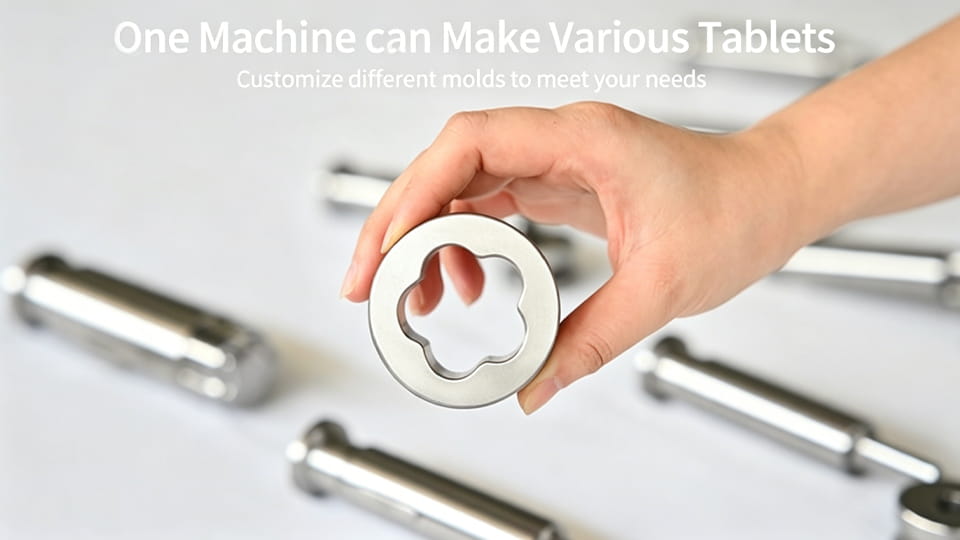
รูป: ต่อยแล้วตาย (เครื่องมือแท็บเล็ต) มาในขนาด/วัสดุที่แตกต่างกัน. ตัวอย่างเช่น, แท่นพิมพ์มาตรฐานของ Jinlu ใช้เครื่องเจาะเหล็ก GCR-15 ที่มีแรงดันสูงสุด 100kN. เครื่องมือต้องตรงกับขนาดแท็บเล็ต: E.G. เครื่องมือ BB สำหรับเม็ดเคี้ยวขนาด 6-8 มม, เครื่องมือ B สำหรับยาเม็ดขนาด ~12 มม, D-tooling สำหรับแท็บเล็ตขนาดใหญ่ 25+มม.
- การไหลของผงและการให้อาหาร: ผงที่ท้าทาย (ดีมาก, เหนียว, หรือความหนาแน่นต่ำ) อาจไหลได้ไม่ดีตามแรงโน้มถ่วง. ตรวจสอบว่าเครื่องมี เครื่องป้อนแรง (เครื่องกวนหรือไม้พายที่ดันผงเข้าไปในแม่พิมพ์). การป้อนแรงจะช่วยป้องกันการเปลี่ยนแปลงของน้ำหนักเมื่อป้อมปืนเคลื่อนที่อย่างรวดเร็ว. แป้งเหนียวหรือชื้น (E.G. สารสกัดสมุนไพร) ได้รับประโยชน์เป็นพิเศษจากตัวป้อนแบบบังคับและการออกแบบฮอปเปอร์ที่เรียบลื่น. พิจารณาการบีบอัดล่วงหน้าด้วย: ลูกกลิ้งอัดก่อนขนาดเล็กสามารถไล่อากาศหรืออัดวัสดุล่วงหน้าเพื่อลดการยึดเกาะ/การเคลือบ. โดยสรุป, ตรวจสอบให้แน่ใจว่าถังบรรจุและเฟรมฟีดของแท่นพิมพ์เหมาะสมกับการไหลของผงของคุณ; ถามว่าพวกเขาเคยใช้สูตรของคุณมาก่อนหรือไม่.
- แรงอัด: ความแข็งของเม็ดยาและความหนาแน่นของสูตรกำหนดแรงที่ต้องการ. ยาเม็ดมาตรฐานจำเป็นต้องมีอยู่รอบๆ 60–100kN. เม็ดแข็งมากหรือใหญ่ (เหมือนฟองฟู่ 60 มม) อาจต้องการ หลายร้อย ของกิโลนิวตัน (เครื่องจักรขนาดใหญ่ของ JL มีน้ำหนักมากถึง 400kN). แรงที่ระบุเกินย่อมดีกว่าต่ำกว่า; ใช้แรงน้อยเกินไปก็ให้ความนุ่มนวล, เม็ดแตกง่าย. RichPacking Notes 60–100kN เป็นเรื่องปกติ, และ “แรงที่สูงกว่าจะช่วยเพิ่มความแข็งและความสม่ำเสมอ” ตรวจสอบด้วยว่าเครื่องมีทรานสดิวเซอร์แรงดันเพื่อตรวจสอบการบีบอัดแบบเรียลไทม์หรือไม่. หากคุณต้องการทั้งแบบเคี้ยวอ่อนและแบบเม็ดแข็งในเครื่องเดียว, ตรวจสอบให้แน่ใจว่าช่วงแรงสามารถหมุนลงต่ำและสูงได้.
- ระบบอัตโนมัติ & ควบคุม (บมจ./HMI): ในสิ่งอำนวยความสะดวกอันทันสมัย, แป้นหมุนแบบแมนนวลล้าสมัย. สื่อที่ดีจะมี PLC และ HMI หน้าจอสัมผัสสำหรับสูตรอาหารและการบันทึกข้อมูล. มองหาคุณสมบัติต่างๆ เช่น การปฏิเสธน้ำหนักเกิน/ต่ำกว่าอัตโนมัติ, เซ็นเซอร์ความดัน, และการอ่านตำแหน่งหมัดแบบดิจิตอล. การติดตามข้อมูล (ไฟล์แบตช์, CMS21 CFR พาร์ท 11 การปฏิบัติตาม) เป็นสิ่งสำคัญสำหรับระบบคุณภาพยา. การเข้าถึงระยะไกลหรือโมดูล IoT ช่วยให้ได้รับการสนับสนุนด้านเทคนิคและการแจ้งเตือนการบำรุงรักษาเชิงคาดการณ์. เครื่องกด Jinlu ZP-27/73D, ตัวอย่างเช่น, มาพร้อมกับ HMI หน้าจอสัมผัสของ Siemens เพื่อจัดเก็บสูตรการบีบอัดและทำให้การควบคุมทำได้ง่าย.
- การปฏิบัติตามมาตรฐาน GMP & วัสดุ: โดยเฉพาะอย่างยิ่งสำหรับยา, การออกแบบสื่อต้องเป็นไปตาม cGMP. นั่นหมายถึง พื้นผิวสัมผัส ควรจะเป็น สแตนเลส (มักจะ 316L) และขัดเงาได้, มีมุมตายน้อยที่สุดในการทำความสะอาด. ปิดผนึก, โซนการบีบอัดที่ปิดล้อมป้องกันการหลบหนีของผง. ฮอปเปอร์และป้อมปืนแบบปลดเร็วช่วยเร่งความเร็วในการทำความสะอาดและลดความเสี่ยงในการปนเปื้อนข้าม. ตรวจสอบความพร้อม เอกสาร IQ/OQ/PQ จากซัพพลายเออร์. เครื่องจักรมักมาพร้อมกับ CE, CGMP, หรือใบรับรองการออกแบบของ อย. สำหรับผลิตภัณฑ์ที่ละเอียดอ่อน (เหมือนฟองฟู่), มองหาวัสดุที่ทนต่อการกัดกร่อน (ชุบโครเมียมหรือสแตนเลส) ในสื่อภายใน.
- การเปลี่ยนแปลง & การซ่อมบำรุง: การหยุดทำงานมีค่าใช้จ่ายสูงมาก. มาดูกันว่าการเปลี่ยนเครื่องมือหรือทำความสะอาดเครื่องจักรนั้นง่ายแค่ไหน. คุณสมบัติที่ต้องตรวจสอบ: การออกแบบแบบแยกส่วน, ถอดชิ้นส่วนโดยไม่ต้องใช้เครื่องมือ, และระบบหล่อลื่น. RichPacking ชี้ให้เห็นว่า ป้อมปืนที่ถอดออกได้, ถัง, และเครื่องให้อาหาร, บวก การหล่อลื่นอัตโนมัติตามกำหนดเวลา, สามารถลดเวลาการบำรุงรักษาได้อย่างมาก. ระบบเปลี่ยนแม่พิมพ์แบบรวดเร็วควรอนุญาตให้สลับการเจาะด้านล่างได้ 20 นาที. ประตูนิรภัยแบบโปร่งใสและรูปแบบตามหลักสรีรศาสตร์ช่วยให้ผู้ปฏิบัติงาน. ตัวอย่าง: แท่นพิมพ์สมัยใหม่บางรุ่นใช้แท่งสุญญากาศภายในป้อมปืนเพื่อดูดผงที่ตกค้างระหว่างการวิ่ง. ถามว่าซัพพลายเออร์มีสัญญาการบริการหรือไม่, การฝึกอบรม, และความพร้อมของอะไหล่.
- ต้นทุนการเป็นเจ้าของทั้งหมด (TCO): เกินราคาสติ๊กเกอร์, คำนวณต้นทุนตลอดอายุการใช้งาน. เครื่องจักรราคาถูกอาจสึกหรอเร็วขึ้นหรือต้องใช้แรงงานมากขึ้น. ปัจจัยในการใช้พลังงาน, ความต้องการอะไหล่, และอายุขัยที่คาดหวัง. เช่น, แท่นพิมพ์ที่สร้างมาอย่างดีพร้อมชิ้นส่วนที่พร้อมใช้งานสามารถช่วยประหยัดได้ ขึ้นไป 20% ต่อปี ในต้นทุนการหยุดทำงาน. สอบถามเกี่ยวกับระยะเวลาการรับประกันและสิ่งที่ครอบคลุม.
- ความเชี่ยวชาญของซัพพลายเออร์ & บริการ: การซื้อเครื่องอัดแท็บเล็ตถือเป็นความร่วมมือระยะยาว. ตรวจสอบประวัติของซัพพลายเออร์ (10+ ประสบการณ์หลายปีในด้านอุปกรณ์ยาถือว่าเหมาะสมอย่างยิ่ง). พวกเขามีข้อมูลอ้างอิงในตลาดเป้าหมายของคุณหรือไม่ (ยุโรป, เรา, ฯลฯ)? พวกเขาสามารถช่วยเค้าโครงโรงงานได้หรือไม่, ทดลองสูตร, และการตรวจสอบ? การสนับสนุนหลังการขาย (การติดตั้ง, การว่าจ้าง, การฝึกอบรม, 24/7 ความช่วยเหลือระยะไกล) เป็นสิ่งสำคัญ. ตัวอย่างเช่น, Jinlu Packing เสนอการทดสอบสูตรฟรีและมีการรับประกัน 3 ปีสำหรับเครื่องจักรหลายเครื่อง. ซื้อจากซัพพลายเออร์เต็มรูปแบบ (ฟิลเลอร์แคปซูล, เคาน์เตอร์, เครื่องพุพอง) สามารถลดความซับซ้อนในการรวมและการตรวจสอบ - เป็นบันทึกย่อของ RichPacking, การมีผู้จำหน่ายรายเดียวทำให้การจัดการการบำรุงรักษาง่ายขึ้น. เว็บไซต์ของ Jinlu แสดงให้เห็นว่าพวกเขาจัดหาสินค้าด้วย เครื่องเติมแคปซูล, เครื่องนับ, เครื่องบรรจุตุ่ม, ฯลฯ, ซึ่งจะมีประโยชน์หากคุณวางแผนสายการผลิตทั้งหมด.
- เสียงรบกวน, ฝุ่นและความปลอดภัย: การกดแท็บเล็ตอาจมีเสียงดังและมีฝุ่นมาก. ตรวจสอบระดับเสียง (ควรจะเป็น <80 เดซิเบล) และหากแท่นพิมพ์มีตัวกรองฝุ่น HEPA และรางปิดผนึก. ลูกโซ่ความปลอดภัย (ประตูหยุดการเคลื่อนไหว, E-หยุด) และเซ็นเซอร์โอเวอร์โหลดช่วยปกป้องผู้ปฏิบัติงานและอุปกรณ์. การสั่นสะเทือนที่มากเกินไปหรือฝุ่นที่หกออกมาอาจเป็นอันตรายต่อสถานะ GMP.
- การพิสูจน์อักษรแห่งอนาคต: มองหาเส้นทางการอัพเกรด. อุตสาหกรรมกำลังเคลื่อนตัวไปทางฟาร์มา 4.0: ความแม่นยำที่ขับเคลื่อนด้วยเซอร์โว, การเชื่อมต่อ Ethernet/IP สำหรับ MES, การบำรุงรักษาเชิงคาดการณ์, และส่วนเสริมแบบโมดูลาร์. การซื้อแท่นพิมพ์ที่มีสถาปัตยกรรมแบบเปิดจะทำให้สามารถติดตั้งเซ็นเซอร์หรือซอฟต์แวร์ใหม่ได้ในภายหลัง, ประหยัดค่าใช้จ่ายในการติดตั้งเพิ่มเติม. ตัวอย่างเช่น, ปัจจุบันแท่นพิมพ์บางแห่งมีการตรวจสอบด้วยกล้องหรือโมดูลสุ่มตัวอย่างอัตโนมัติ. รับรองพื้นฐานอย่างน้อยที่สุด: ความสามารถในการรวมเข้ากับ SCADA หรือ MES.
การจับคู่ประเภทแท็บเล็ตกับเครื่องที่แนะนำ
ตารางด้านล่างสรุปประเภทการกดและคุณสมบัติที่เหมาะกับแท็บเล็ตแต่ละประเภท:
| ประเภทแท็บเล็ต |
เครื่องแนะนำ |
คุณสมบัติหลักของเครื่อง |
| แท็บเล็ตมาตรฐาน |
กดโรตารี (เครื่องมือ B) หรือกดความเร็วสูง |
19 มม (บี) เครื่องมือ, 60–100kN แรง, 30k–250k แท็บ/ชม, การบีบอัดล่วงหน้า, การควบคุม PLC. กระจกเงา, การออกแบบ GMP. เหมาะสำหรับเม็ดกลม/วงรีธรรมดา. |
| ซึ่งมีชีวิตชีวา / ผงซักฟอก |
เครื่องโรตารี่ D-tool สำหรับงานหนักหรือเครื่องอัด D-tool ขนาดใหญ่ |
25 มม (ดี) เครื่องมือ, กำลังสูงมาก (มากถึง 150–400kN), ห้องปิดผนึก, เครื่องป้อนแรง, ตัวเลือกการลดความชื้น. ชิ้นส่วนสแตนเลสหรือเคลือบ (ทนกรด). ความเร็วต่ำลง, เครื่องป้อนพิเศษ. |
| ไบเลเยอร์ / หลายชั้น |
กดสองชั้นหรือสามชั้น (โรตารีพิเศษ) |
2+ กรวย & เครื่องให้อาหาร, กล้องบีบอัดคู่, การสุ่มตัวอย่างน้ำหนักแบบอินไลน์. บีบอัดล่วงหน้าสำหรับแต่ละชั้น, การควบคุมวีเอฟดี, ป้อมปืนที่ซิงโครไนซ์. สามารถจับชั้นกลางที่บางได้. ใช้รูปทรงพั้นช์มาตรฐานหรือแบบกำหนดเอง. |
| เคี้ยวได้ / อ่อนนุ่ม |
โรตารีมาตรฐาน (เครื่องมือ B หรือ BB) |
เครื่องมือ BB (หมัดสั้น, ~6–8มม), แรงอัดต่ำ (~30–60kN), โปรไฟล์การบีบอัดที่อ่อนโยน, เคลือบป้องกันการติด. อาจมีเวลาพักนานกว่านี้ (รอบต่อนาทีช้า). ฟีดเรียบและฝาปิดกันฝุ่น (ฝุ่นน้ำตาล). |
| ใหญ่/ไม่สม่ำเสมอ |
เครื่องโรตารี่แบบแม่พิมพ์ขนาดใหญ่ (เครื่องมือ D) |
25+ มม. เจาะ (เครื่องมือ D), กำลังสูงมาก (100–400kN), กรอบที่แข็งแกร่ง, ความเร็วป้อมปืนต่ำ (~10–60 รอบต่อนาที), กล้องพิเศษ. มักจะมีป้อมปืนลูกเบี้ยวหนักเพื่อรองรับการเคลื่อนที่ของแม่พิมพ์ขนาดใหญ่. รองรับรูปทรงที่ซับซ้อน. |
โดยจับคู่ขนาดและประเภทของแท็บเล็ตของคุณกับที่กล่าวมาข้างต้น, คุณสามารถเลือกรุ่นต่างๆ ได้. ตรวจสอบอยู่เสมอ: E.G. แท็บเล็ตฟู่ขนาด 40 มม. ไปที่ เครื่องกด D-tool ขนาดใหญ่ แถว, ไม่ใช่สื่อมาตรฐาน.
ข้อผิดพลาดทั่วไปที่ควรหลีกเลี่ยง
แม้แต่ผู้ซื้อที่มีประสบการณ์ก็ยังพลาด. นี่คือข้อผิดพลาดที่ต้องระวัง:
- เลือกตามผลผลิต/ราคาก่อน: อย่าเลือกเครื่องเพียงเพราะมี “200,000 แท็บ/ชม” หรือราคาต่ำ. หากแท็บเล็ตของคุณมีขนาดใหญ่หรือหนาเกินไป, เครื่องที่เร็วจะไม่รับแม่พิมพ์หรือจะทำให้ระบบโอเวอร์โหลด. จดจำ: ขนาดแท็บเล็ตกำหนดเครื่อง, ไม่ใช่ในทางกลับกัน. เริ่มต้นด้วยเส้นผ่านศูนย์กลางและความหนาของเม็ดยาเสมอ.
- ละเว้นขนาดแท็บเล็ต: ที่เกี่ยวข้อง, อย่าละเลยคุณสมบัติที่สำคัญ. การไม่แจ้งเส้นผ่านศูนย์กลางและความหนาของแท็บเล็ตแก่ซัพพลายเออร์ของคุณ อาจส่งผลให้พวกเขาแนะนำเครื่องพิมพ์ที่มีขนาดเล็กกว่าปกติได้. ตรวจสอบรูดายสูงสุดของแท่นพิมพ์และความลึกการเติมสูงสุดด้วยตัวเอง.
- ความจุเกินขนาด: ผู้ซื้อบางคนคิดว่า "ใส่ตัวใหญ่ดีกว่าใส่ตัวเล็ก" แต่การพิมพ์ขนาดใหญ่อาจมีราคาสูงกว่า 2–3 เท่า, ใช้พื้นที่มากขึ้น, และทำงานไม่มีประสิทธิภาพที่ 10% โหลด. แย่ลง, มันอาจมีช่องว่างอีกต่อไป (เวลาพักสั้นลง) ทำให้เม็ดบางนิ่มเกินไป. ซัพพลายเออร์คู่แข่งควรแนะนำ เล็กที่สุดเพียงพอ แบบอย่าง, หรือไม่เกินหนึ่งขนาดสำหรับการเติบโตในอนาคต.
- ละเว้นการใช้เครื่องมือ & สูตร: ตรวจสอบว่าแท่นพิมพ์สามารถใช้เครื่องมือที่คุณต้องการได้. ข้อผิดพลาดในการออกแบบเครื่องมือทำให้เกิดการเปลี่ยนแปลงของน้ำหนักหรือการเกาะติด. ประเมินแป้งของคุณด้วย: ถ้ามันเหนียว (สมุนไพร, ที่ใช้น้ำตาล), ตรวจสอบให้แน่ใจว่าได้ระบุการเจาะแบบเคลือบและเครื่องป้อนแรง.
- ประเมินการบำรุงรักษาและอะไหล่ต่ำเกินไป: แท่นพิมพ์ใหม่จำเป็นต้องมีการหล่อลื่นและการตกแต่งใหม่เป็นครั้งคราว. ตรวจสอบให้แน่ใจว่าคุณมีงบประมาณสำหรับการเจาะสำรอง, ลูกกลิ้ง, เข็มขัด, ฯลฯ. ตามที่ RichPacking เตือน, การไม่วางแผนเรื่องอะไหล่ถือเป็นข้อผิดพลาดทั่วไป. นอกจากนี้ ให้พิจารณาด้วยว่าการรับชิ้นส่วนอะไหล่ในภูมิภาคของคุณนั้นง่ายเพียงใด.
- ละเลยการปฏิบัติตาม & การติดตั้ง: อย่าลืมเอกสารการตรวจสอบ (IR/WH/PQ) หากคุณเป็นผู้ปฏิบัติงานด้านเภสัชกรรม. ตรวจสอบให้แน่ใจว่าคุณมีแผนสำหรับการติดตั้ง, การฝึกอบรม, และการทดสอบการตรวจสอบ. การใช้การสนับสนุนจากซัพพลายเออร์ที่นี่จะปลอดภัยกว่า.
- ไม่ทดสอบก่อน: ตามหลักการแล้ว, ทำการทดสอบหรือนำสูตรจริงของคุณไปใช้กับรุ่นเครื่องจักร. ซัพพลายเออร์ที่ดีมากมาย (รวมถึงการบรรจุ Jinlu) เสนอการทดสอบหรือทดลองใช้สูตรฟรี. หากคุณข้ามการทดสอบ, คุณอาจพบปัญหาหลังจากจัดส่งแล้วเท่านั้น, เสียเวลาหลายเดือน.
ในระยะสั้น, มุ่งเน้นที่โปรไฟล์แท็บเล็ตและเป้าหมายผลิตภัณฑ์ของคุณ, ไม่ใช่แค่สเปคมันเงา. ข้อผิดพลาดเช่น “ฉันแค่อยากได้เครื่องจักรที่เร็วที่สุด” มักจะส่งผลย้อนกลับ.
วิธีการเลือกซัพพลายเออร์ที่เหมาะสม (และทำไมต้องบรรจุ Jinlu)
หลังจากปรับสเปคเครื่องให้แคบลง, ประเมินซัพพลายเออร์ อย่างระมัดระวัง. เกณฑ์ที่สำคัญ:
- ประสบการณ์ & อ้างอิง: ทางที่ดีควรเลือกซัพพลายเออร์ที่มีอุปกรณ์แท็บเล็ตและลูกค้าในอุตสาหกรรม/ภูมิภาคของคุณมากกว่า 5-10 ปี. ขอกรณีศึกษาหรือข้อมูลอ้างอิง (โดยเฉพาะชื่อยารายใหญ่ระดับโลก). จินลู่บรรจุ, ตัวอย่างเช่น, เป็นซัพพลายเออร์ Fortune-500 ด้วย 30+ ประสบการณ์เครื่องจักรหลายปี (ดูโลโก้ลูกค้าของพวกเขา).
- การสนับสนุนด้านเทคนิค: พวกเขาจะช่วยกำหนดรุ่นที่ถูกต้องหรือไม่? ซัพพลายเออร์ที่ดีจะขอข้อมูลจำเพาะของแท็บเล็ต (เส้นผ่าศูนย์กลาง, ความหนา, รายละเอียดการกำหนด) ก่อนที่จะอ้างอิง – ตามที่ LinCi เน้นย้ำ, ผู้ผลิต ไม่ควรคาดเดา. ตรวจสอบว่าพวกเขามีการทดสอบการยอมรับจากโรงงานหรือไม่ (อ้วน) และยินดีจัดส่งเครื่องมือตัวอย่างเพื่อยืนยันความเหมาะสม.
- บริการหลังการขาย: การว่าจ้างในสถานที่, การฝึกอบรม, และการขนส่งอะไหล่ให้ตรงเวลาถือเป็นสิ่งสำคัญ. ซัพพลายเออร์บางรายสัญญาว่าจะทำระยะไกล 24/7 สนับสนุน. ต้องการผู้ขายที่มีตัวแทนในพื้นที่หรือเครือข่ายศูนย์บริการ. ชี้แจงเงื่อนไขการรับประกัน (อย่างน้อย 1 ปีทั้งเครื่อง, 3 ปีในส่วนที่สำคัญเป็นสิ่งที่ดี).
- ความสามารถในการบูรณาการ: หากคุณกำลังสร้างเส้น, ดูว่าแท่นพิมพ์สามารถทำงานร่วมกับอุปกรณ์ต้นทาง/ปลายน้ำได้หรือไม่. เช่น, สามารถเชื่อมโยงกับเคาน์เตอร์แท็บเล็ตหรือสายตุ่มได้หรือไม่? หมายเหตุ RichPacking แท่นพิมพ์ของ Rich เชื่อมต่อกับเครื่องนับและตุ่ม. Jinlu มีห้องชุดเต็มรูปแบบในทำนองเดียวกัน (เคาน์เตอร์, กล่องกระดาษ, เครื่องบรรจุตุ่ม), เพื่อให้พวกเขาสามารถให้คำแนะนำเกี่ยวกับสายงานแบบครบวงจร.
- ความน่าเชื่อถือของบริษัท: ตรวจสอบใบรับรอง (CE, ไอเอสโอ). ยืนยันความมั่นคงทางการเงินด้วย.
- ตัวอย่างและการอ้างอิง: เว็บไซต์ของ Jinlu มี กรณีศึกษา (E.G. แท่นพิมพ์ในปากีสถาน) และการรับรอง (CGMP, CE, rohs, แสดงโลโก้ UL). ใช้สิ่งเหล่านี้เพื่อวัดความสามารถ. ตรวจสอบข้อเสนอแนะของฟอรัมการค้าหรือถามเพื่อนร่วมงาน.
- ใบเสนอราคาทดลอง/ติดต่อ: ในที่สุด, เมื่อติดต่อกับซัพพลายเออร์, จัดทำแผ่นข้อมูลจำเพาะที่กระชับ: รูปร่าง/ขนาดแท็บเล็ต, ผลผลิตที่คาดหวัง, น้ำหนักต่อหน่วย, ส่วนผสมหลัก (สำหรับการสึกหรอ/การกัดกร่อน), และส่วนเติมเนื้อยาที่ผ่านกระบวนการร่วมใดๆ. ขอให้พวกเขายืนยันขนาดรูดายและป้อมปืนที่จำเป็นสำหรับผลิตภัณฑ์ของคุณ. ธงแดงคือผู้จำหน่ายที่เสนอราคารุ่นตามราคาทันทีโดยไม่ต้องถามข้อมูลจำเพาะของคุณ.
เมื่อใดก็ตามที่เป็นไปได้, เลือกซัพพลายเออร์ที่มีการดำเนินงานในท้องถิ่นหรือผู้จัดจำหน่ายที่รู้จัก ซึ่งช่วยลดความยุ่งยากในการให้บริการการรับประกัน. ซัพพลายเออร์ยาระดับ 1 หลายรายใช้ซัพพลายเออร์เช่น Fette, บ๊อช (มิลสไตน์), หรือ Cadmach สำหรับการกด; ในหมู่ผู้ผลิตจีน, จินลู่บรรจุ, RichPacking, และอื่นๆ แข่งขันกันในระดับโลก. สิ่งสำคัญคือการตรวจสอบการเรียกร้อง: ตัวอย่างเช่น, Jinlu โฆษณาช่วงเอาท์พุตและแรงกดดัน, แต่คุณควรตรวจสอบสิ่งเหล่านี้กับความต้องการของคุณ.
บทสรุปและขั้นตอนต่อไป
การเลือกเครื่องกดแท็บเล็ตที่เหมาะสมนั้นเป็นเรื่องเกี่ยวกับการปรับเทคโนโลยีให้เข้ากับกลยุทธ์การผลิตของคุณ. เพื่อความน่าเชื่อถือ, การผลิตแท็บเล็ตที่ได้มาตรฐาน, มุ่งเน้นไปที่ ประสิทธิภาพโดยรวม – ความแม่นยำ, ความทน, และการสนับสนุน – ไม่ใช่แค่ป้ายราคา. Jinlu Packing นำเสนอเครื่องโรตารี่ที่ได้มาตรฐาน GMP หลายประเภท (เดี่ยว, หลายชั้น, ความเร็วสูง) และอุปกรณ์สนับสนุน. ติดต่อเราเกี่ยวกับข้อกำหนดแท็บเล็ตของคุณ (เส้นผ่าศูนย์กลาง, ความหนา, ชั้น, เอาท์พุท) เพื่อรับคำแนะนำและใบเสนอราคาที่กำหนดเอง. ให้ผู้เชี่ยวชาญของเราแนะนำคุณเกี่ยวกับเครื่องจักรและเครื่องมือที่เหมาะสม, และช่วยคุณหลีกเลี่ยงข้อผิดพลาดทั่วไป. เรายังทำการทดสอบตัวอย่างด้วยสูตรของคุณได้. สำหรับใบเสนอราคาโดยละเอียดหรือคำปรึกษาโครงการ, ขอใบเสนอราคาหรือ พูดคุยกับทีมขายของเรา วันนี้.
เรียนรู้เพิ่มเติมเกี่ยวกับกลุ่มผลิตภัณฑ์ของ Jinlu: เครื่องบรรจุแคปซูล, เครื่องบรรจุตุ่ม, และ เครื่องนับแท็บเล็ต ทั้งหมดสามารถรวมเข้ากับการกดแท็บเล็ตของคุณได้. ตรวจสอบของเรา เครื่องบรรจุแคปซูล หน้าหรือ เครื่องนับแท็บเล็ต เพื่อดูรายละเอียด.
คำถามที่พบบ่อยเกี่ยวกับวิธีการเลือกเครื่องกดแท็บเล็ต
เครื่องกดแท็บเล็ตคืออะไรและทำงานอย่างไร?
เครื่องอัดยาเม็ดเป็นอุปกรณ์ทางเภสัชกรรมที่ใช้ในการอัดผงหรือเม็ดให้เป็นยาเม็ดที่มีรูปร่างตามที่กำหนด, น้ำหนัก, และความแข็ง. มันทำงานโดยการเติมวัสดุลงในโพรงแม่พิมพ์และใช้แรงอัดโดยใช้การเจาะบนและล่างเพื่อสร้างเม็ดยาแข็ง.
เครื่องอัดยาเม็ดเดียวสามารถจัดการได้ทั้งยาและโภชนเภสัช (E.G. วิตามิน) สินค้า?
มักจะใช่, หากผงมีการไหลและการหล่อลื่นใกล้เคียงกัน. อย่างไรก็ตาม, ผงสมุนไพรหรือน้ำตาลเหนียวจำเป็นต้องมีการเคลือบพิเศษหรือเครื่องป้อนแบบแรง. ตรวจสอบให้แน่ใจว่าสามารถเปลี่ยนการตั้งค่าเครื่องมือและตัวป้อนสำหรับสูตรอาหารต่างๆ ได้.
ฉันจะเลือกเครื่องกดแท็บเล็ตที่เหมาะสมสำหรับแท็บเล็ตประเภทต่างๆ ได้อย่างไร?
สิ่งสำคัญคือต้องจับคู่เครื่องกับคุณลักษณะแท็บเล็ตของคุณ, รวมถึงขนาด, รูปร่าง, สูตร, และปริมาณการผลิต. ตัวอย่างเช่น, เม็ดฟู่ต้องใช้แรงอัดสูงและเครื่องมือที่ใหญ่กว่า, ในขณะที่เม็ด Bilayer ต้องการระบบการป้อนแบบหลายชั้น. การเลือกตามราคาเท่านั้นมักจะนำไปสู่ปัญหาการผลิตในภายหลัง.
ปัจจัยใดที่ส่งผลต่อคุณภาพของแท็บเล็ตระหว่างการบีบอัด?
มีหลายปัจจัยที่ส่งผลต่อคุณภาพของแท็บเล็ต, รวมทั้ง:
• ความสามารถในการไหลของผง
• แรงอัด
• สภาพเครื่องมือ
• ปริมาณความชื้น
การไหลของผงไม่ดีหรือการป้อนที่ไม่เหมาะสมอาจทำให้น้ำหนักเม็ดยาไม่สม่ำเสมอและข้อบกพร่องได้.
ปัญหาทั่วไปในเครื่องกดแท็บเล็ตคืออะไร?
ปัญหาทั่วไปได้แก่:
• น้ำหนักเม็ดยาไม่สม่ำเสมอ
• ติดหรือหยิบหมัด
• แท็บเล็ตแตกหรือมีความแข็งต่ำ
• ผงรั่วซึม
ปัญหาเหล่านี้มักเกิดจากการไหลของวัสดุไม่ดี, การตั้งค่าความดันไม่ถูกต้อง, หรือเครื่องมือที่สึกหรอ.
ข้อผิดพลาดทั่วไปที่ผู้ซื้อครั้งแรกทำ?
ซื้อสื่อขนาดใหญ่โดยคิดว่า “ยิ่งมากยิ่งดี”; ละเว้นความเข้ากันได้ของเครื่องมือ; ประเมินความต้องการการบำรุงรักษาต่ำไป; และการข้ามการทดสอบหรือการตั้งงบประมาณอะไหล่. หลีกเลี่ยงสิ่งเหล่านี้โดยการจับคู่เครื่องกับข้อมูลจำเพาะของแท็บเล็ตและแผนการผลิตทั้งหมดอย่างระมัดระวัง.
ฉันสามารถรวมการกดแท็บเล็ตเข้ากับบรรทัดเต็มได้หรือไม่?
ใช่. ซัพพลายเออร์ที่ดี (เช่น Jinlu Packing) ออกแบบกดเพื่อเชื่อมต่อกับเคาน์เตอร์แท็บเล็ต, ฟิลเลอร์แคปซูล, แผลพุพอง, และกล่องบรรจุสำหรับการผลิตแบบครบวงจร. หากคุณวางแผนเส้นหลายขั้นตอน, หารือเกี่ยวกับการรวมระบบสายพานลำเลียงและระบบอัตโนมัติกับผู้ขายล่วงหน้า.
ฉันควรทดสอบวัสดุก่อนซื้อเครื่องกดแท็บเล็ตหรือไม่?
อย่างแน่นอน. ขอแนะนำให้ทดลองใช้งานตามสูตรจริงของคุณ. ช่วยให้คุณสามารถประเมินความแข็งของแท็บเล็ตได้, ความสม่ำเสมอของน้ำหนัก, และอัตราของเสียภายใต้เงื่อนไขการผลิตจริงก่อนตัดสินใจลงทุนขั้นสุดท้าย.
อะไรคือความแตกต่างระหว่างเครื่องมือ B และเครื่องมือ D?
เครื่องมือ B มักใช้กับแท็บเล็ตมาตรฐาน (ขนาดที่เล็กกว่า), ในขณะที่ D tooling ได้รับการออกแบบมาสำหรับยาเม็ดขนาดใหญ่ เช่น ผลิตภัณฑ์ฟู่หรือยารักษาสัตว์. การเลือกเครื่องมือที่ถูกต้องเป็นสิ่งสำคัญเนื่องจากจะส่งผลโดยตรงต่อขนาดแท็บเล็ต, รูปร่าง, และความเข้ากันได้ของเครื่อง.
อ้างอิง:
1.แบบฟอร์มการให้ยาที่เป็นของแข็งในช่องปาก ปัญหาการอนุมัติก่อน/หลัง (1/94) --เรา. สำนักงานคณะกรรมการอาหารและยา
2.เทคโนโลยีการผลิตแท็บเล็ตสำหรับการกำหนดสูตรยาที่เป็นของแข็ง ——เมอร์ค
3.การผลิตแท็บเล็ต – คุณสมบัติการบีบอัด & สูตร ——ไซน์ไดเร็กต์
4.กดแท็บเล็ต —— https://www.instrumenthive.com/wiki/tablet-press/
5.กดแท็บเล็ต —— วิกิพีเดีย