ความผันแปรของน้ำหนักเติมแคปซูลอาจเกิดจากหลายแหล่ง - การไหลของผงไม่สม่ำเสมอ, เปลือกแคปซูล ความแตกต่าง, หรือการตั้งค่าอุปกรณ์. เมื่อการตรวจสอบน้ำหนักระหว่างดำเนินการของคุณเริ่มแสดงน้ำหนักเติมแบบสุ่มหรือลอย, อย่าปรับแต่งเครื่องทันที. อันดับแรก ยืนยันสิ่งที่แตกต่างกันจริงๆ (น้ำหนักรวมเทียบกับน้ำหนักสุทธิ, รูปแบบสถานี), จากนั้นทำตามลำดับการแก้ไขปัญหาเชิงตรรกะ. คู่มือนี้แสดงกระบวนการวินิจฉัยทีละขั้นตอน (การวัด → รูปแบบ → ผง vs เปลือก vs กระบวนการ → เครื่องจักร → ยืนยัน) เพื่อระบุสาเหตุที่แท้จริง, พร้อมด้วยเคล็ดลับและรายการตรวจสอบที่นำไปปฏิบัติได้.
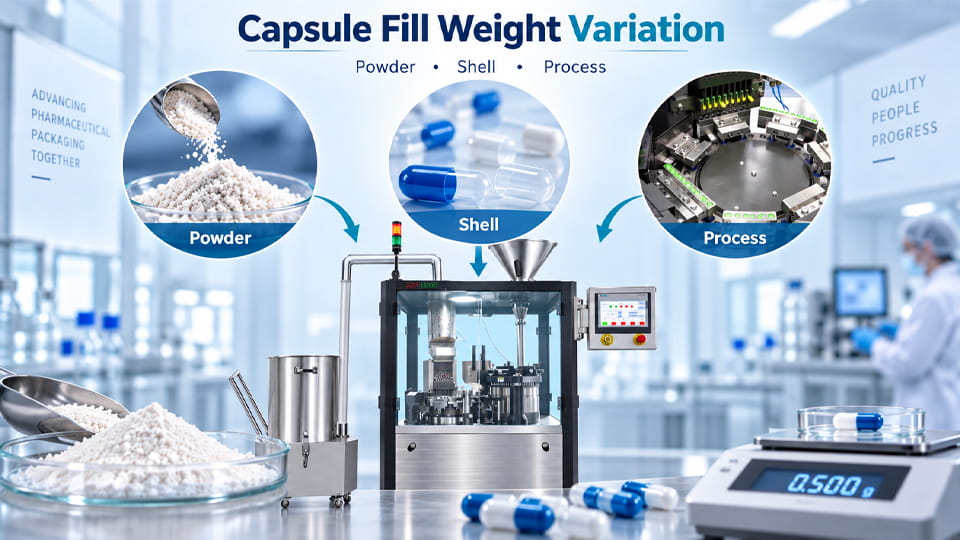
การเปลี่ยนแปลงน้ำหนักการเติมแคปซูล หมายถึงความแตกต่างที่ไม่พึงประสงค์หรือการเบี่ยงเบนของน้ำหนักสุทธิของสูตรที่บรรจุลงในแต่ละแคปซูลภายในชุดเดียวกัน. กล่าวอีกนัยหนึ่ง, แคปซูลบางอันจบลงด้วยการเติมน้อยเกินไปหรือเติมมากเกินไปเมื่อเทียบกับปริมาณเป้าหมาย. เนื่องจากฟิลเลอร์แคปซูลให้ยาโดย ปริมาณ, ไม่ใช่โดยน้ำหนัก, แม้แต่การเปลี่ยนแปลงพฤติกรรมของวัสดุหรือการทำงานของเครื่องจักรเพียงเล็กน้อยก็สามารถเปลี่ยนมวลจริงที่วางในแต่ละแคปซูลได้. คำถามสำคัญไม่ใช่ว่า “ทุกแคปซูลจะมีน้ำหนักเท่ากันทุกประการหรือไม่?-, แต่ “กระบวนการสามารถรักษาความแตกต่างภายในข้อมูลจำเพาะได้หรือไม่”.
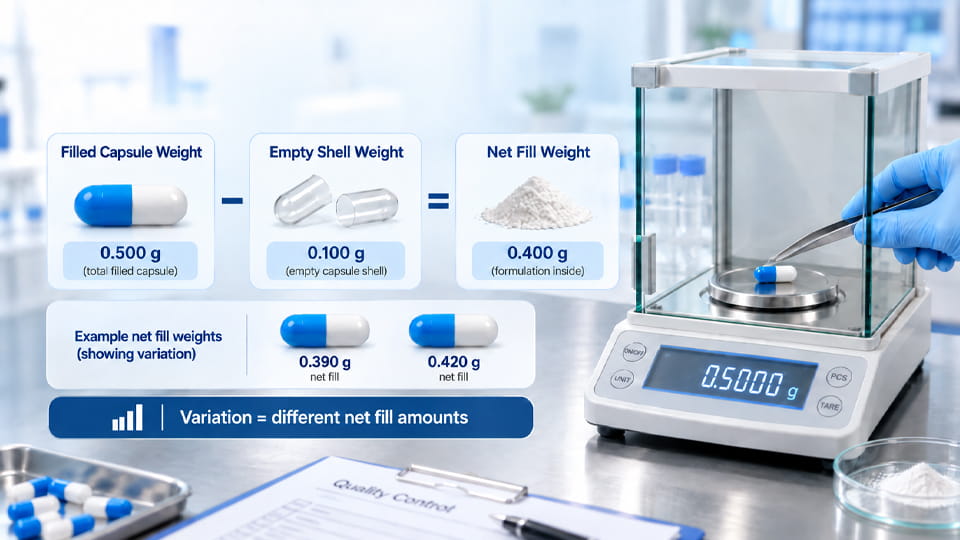
ตามคำนิยาม, การประเมินความแปรผันของน้ำหนักอยู่ที่ น้ำหนักเติมสุทธิ ของแคปซูล (ส่วนผสมที่ใช้งานอยู่ + สารเพิ่มปริมาณ). ผู้ปฏิบัติงานมักจะทำการวัด น้ำหนักแคปซูลรวม (เปลือก + เติม) และลบน้ำหนักเปลือกเปล่ามาตรฐาน (ขับไล่). โปรดทราบว่าเปลือกหอยเปล่าเองก็มีการกระจายน้ำหนัก. หากน้ำหนักเปลือกแตกต่างกัน, การเปลี่ยนแปลงน้ำหนักรวมอาจสะท้อนถึงความแตกต่างของเปลือก, ไม่ใช่การจ่ายยาแบบผง. ในความเป็นจริง, การใช้น้ำหนักเปลือกเฉลี่ยทำให้เกิดอคติ. เพื่อความแม่นยำ, เปรียบเทียบเสมอ น้ำหนักรวมบวกภาชนะ:
น้ำหนักแคปซูลรวม = เปลือก + เติม.
น้ำหนักบรรจุสุทธิ = รวม – น้ำหนักเปลือกเปล่า.
ในทางปฏิบัติ, ตรวจสอบทั้งน้ำหนักรวมและน้ำหนักสุทธิ. การเปลี่ยนแปลงของน้ำหนักตั้งแต่เปลือกถึงเปลือกสามารถ “ปกปิด” การป้อนผงที่มีความเสถียรหรือทำให้เกิดการเบี่ยงเบนที่ชัดเจนเกินจริงได้. กระบวนการที่มีการควบคุมอย่างดีจะคงอยู่ การเติมสุทธิแต่ละรายการ ล้อมรอบเป้าหมายอย่างแน่นหนา, แม้ว่าแคปซูลจะมีน้ำหนักเปลือกต่างกันเล็กน้อยก็ตาม.
การเปลี่ยนแปลงของน้ำหนักแคปซูลเป็นหลัก การควบคุมกระบวนการ ปัญหา. มันแสดงให้เห็นว่าระบบการจ่ายยา (ดิสก์แทมปิ้ง, ผู้ให้ยา, ฯลฯ) กำลังส่งผงในปริมาณที่สามารถทำซ้ำได้. ความสม่ำเสมอของเนื้อหา (ทดสอบ) และความเป็นเนื้อเดียวกันของการผสมผสานเป็นเรื่องแยกจากกัน. กล่าวอีกนัยหนึ่ง, การกระจายน้ำหนักที่แน่นหนาเพียงพิสูจน์ความสม่ำเสมอของปริมาตรเท่านั้น แต่ไม่ได้รับประกันความสม่ำเสมอทางเคมี. อย่างไรก็ตาม, การควบคุมการเปลี่ยนแปลงของน้ำหนัก (และแนวโน้มของมัน) เป็นสิ่งสำคัญอย่างยิ่งที่จะต้องปฏิบัติตามข้อกำหนดปริมาณรังสีที่เสร็จแล้ว.
โปรดทราบว่าการเปลี่ยนแปลงของน้ำหนัก (ตามมวล) และความสม่ำเสมอของเนื้อหา (การทดสอบ API) เป็นการทดสอบคุณภาพที่แตกต่างกัน. USP <905> อนุญาตให้ใช้การเปลี่ยนแปลงน้ำหนักสำหรับแคปซูลแข็งเฉพาะในกรณีที่มียาเป็นอย่างน้อย 25 มก. และ ≥25% ของน้ำหนักแคปซูล. มิฉะนั้น, แคปซูลต้องเป็นไปตามข้อกำหนดความสม่ำเสมอของเนื้อหา (ทดสอบแต่ละหน่วย). การตรวจสอบน้ำหนักการบรรจุในกระบวนการเป็นเครื่องมือควบคุมกระบวนการ, แต่การปฏิบัติตามข้อกำหนดของผลิตภัณฑ์ขั้นสุดท้ายจะขึ้นอยู่กับวิธี USP ที่บังคับใช้.
เป็นวิธีที่ดีในการ หาสาเหตุที่แท้จริง ของการแปรผันของน้ำหนักคือการเปรียบเทียบแนวโน้มน้ำหนักรวมและน้ำหนักสุทธิ. โดยมีสูตรดังนี้:
| ระยะเวลาน้ำหนัก | คำนิยาม | การใช้งานทั่วไป |
|---|---|---|
| น้ำหนักแคปซูลรวม | บรรจุแคปซูล (เปลือก + เนื้อหา) | การตรวจสอบ IPC อย่างรวดเร็ว; รวมถึงมวลเปลือกหอย |
| น้ำหนักเปลือกเปล่า | น้ำหนักของตัวแคปซูล + หมวก | ประเมินซัพพลายเออร์/ข้อมูลจำเพาะของแคปซูล |
| น้ำหนักเติมสุทธิ | ปริมาณผงเท่านั้น (ขั้นต้น – เปลือก) | การปรับตั้งเครื่อง & QC สุดท้ายของความสม่ำเสมอของน้ำหนักเติม |
เปลือกแคปซูลทุกอันย่อมมีความแปรปรวนของน้ำหนักตามธรรมชาติ. หากกระสุนของคุณมีค่า ±5 มก. โดยเฉลี่ย, และปริมาณผงคือ 500 มก., แล้วจึงเปลี่ยนมาใช้เปลือกหอยที่เป็น 10 mg ที่หนักขึ้นจะทำให้ น้ำหนักรวม ดูเหมือน +10 มก., แม้ว่าการเติมจะเหมือนกันก็ตาม. การเปลี่ยนแปลง "เท็จ" นี้เกิดขึ้นเพราะโดยทั่วไปแล้วเราจะลบค่าภาชนะคงที่. ในความเป็นจริง, การแก้ไขน้ำหนักเปลือกหอยแต่ละชิ้นแสดงให้เห็นว่าน้ำหนักเติมจริงไม่มีการเปลี่ยนแปลง.
จุดสำคัญ: หากน้ำหนักรวมลอยไปแต่ น้ำหนักเติมสุทธิ อยู่แบน, การวัดแสงแบบผงทำได้ดี. การเปลี่ยนแปลงน่าจะมาจากการเปลี่ยนแปลงน้ำหนักของเปลือกแคปซูล. ถ้าทั้งสุทธิและสุทธิเคลื่อนไหวพร้อมกัน, สงสัยกระบวนการเติมหรือการกำหนดสูตร. ตรวจสอบชุดตุ้มน้ำหนักเปลือกเปล่าแยกกันเสมอ. ตัวอย่างเช่น, หากน้ำหนักแคปซูลโดยรวมเพิ่มขึ้นหรือลดลงอย่างกะทันหันเมื่อมีการนำชุดเปลือกใหม่มาใช้, ผู้กระทำผิดน่าจะเป็นเปลือก, ไม่ใช่อุปกรณ์บรรจุแคปซูล.
สูตร:
น้ำหนักเติมสุทธิ (มก.) µ ปริมาณการจ่าย (มล) × (ความหนาแน่นของผง, กรัม/มิลลิลิตร) × 1000 – สารยึดเกาะ/น้ำหนักตัวดูดซับ.
เพราะฟิลเลอร์มักจะวัด ปริมาณ, แม้แต่ความหนาแน่นก็เปลี่ยนแปลงไปเล็กน้อย (เนื่องจากชุดแป้งหรือความชื้น) เปลี่ยนแปลงมวล.
เมื่อตรวจพบความแปรผัน, ปฏิบัติตาม กระบวนการทำงานที่เป็นระบบ แทนที่จะเร่งรีบในการปรับเปลี่ยน. ขั้นตอนก็คือ:
แบบง่าย แผนภาพต้นไม้ตัดสินใจ แสดงให้เห็นถึงแนวทางนี้:
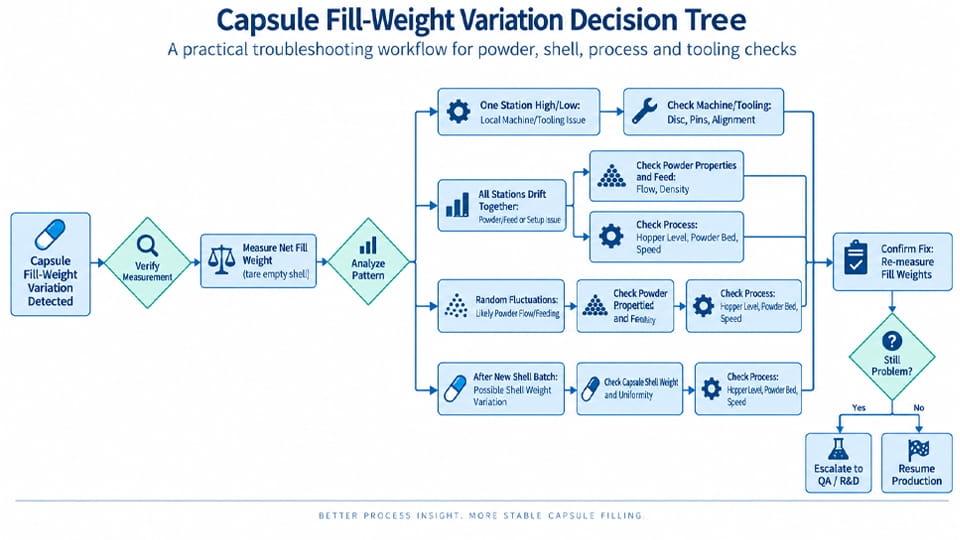
แต่ละโหนดแสดงถึงเบาะแส. ตัวอย่างเช่น, ถ้า การเปลี่ยนแปลงน้ำหนักรวมแต่การเติมสุทธิมีเสถียรภาพ, ตรวจสอบความแปรผันของน้ำหนักเปลือกทันที. ถ้า ความแปรผันจะเพิ่มขึ้นด้วยความเร็วที่เร็วขึ้น, สงสัยว่ามีปัญหาเรื่องการให้อาหารหรือเวลาอยู่อาศัย. เป้าหมายคือการจำกัดหมวดหมู่สาเหตุที่เป็นไปได้ให้แคบลง (แบบแป้ง vs เปลือก vs เครื่อง) ก่อนจะลงลึกในรายละเอียด.
สำหรับกระบวนการแคปซูลที่เติมผงส่วนใหญ่, ที่ สูตรผง เป็นแหล่งที่มาของความแปรผันของน้ำหนักเติมที่พบบ่อยที่สุด. แก้ไขปัญหาผงโดยการตรวจสอบ:
ในทางปฏิบัติ, เริ่มต้นด้วย การกรอง ผสมผสานเพื่อขจัดจับกลุ่มขนาดใหญ่, ตรวจสอบว่าการไหลดีขึ้นหรือไม่. การเขย่าเบา ๆ หรือใช้รีโอมิเตอร์แบบผงแบบพกพาสามารถเผยให้เห็นว่าวัสดุมีแนวโน้มที่จะเชื่อมติดกันหรือไม่. จำการเปลี่ยนแปลงเล็กๆ น้อยๆ นั้นไว้ (±5% ในความหนาแน่นรวม) สามารถสร้างการเปลี่ยนแปลงน้ำหนักเติมได้ตั้งแต่ ±5% ขึ้นไป. แก้ไขปัญหาการไหล (โดยการเพิ่มเครื่องร่อน, ลดความชื้น, หรือสลับประเภทตัวป้อน) อาจขจัดความผันแปรโดยสิ้นเชิง.
ถ้าแป้งดูสม่ำเสมอ, ตรวจสอบแคปซูลด้วยตนเอง:
หากความแปรปรวนของน้ำหนักเปลือกเปล่าเป็นสาเหตุ, วิธีแก้ไขคือปรับข้อมูลจำเพาะของเปลือกให้แน่นขึ้น หรือใช้การวัดน้ำหนักทดน้ำหนักแต่ละรายการ. ในระยะสั้น, มุ่งเน้นไปที่ตุ้มน้ำหนักสุทธิ (ลบน้ำหนักของเปลือกแต่ละเปลือก) เพื่อดูว่าการเติมแป้งแตกต่างกันจริงหรือไม่. สถานการณ์ที่น่าจับตามอง: น้ำหนักรวมลอยไปแต่สุทธิคงที่ หมายถึงเปลือกหอยต้องสงสัย.
หลังจากขจัดปัญหาเรื่องแป้งหรือเปลือกที่สำคัญออกไปแล้ว, ดูขั้นตอนการบรรจุแคปซูลนั่นเอง. จุดตรวจสำคัญ ได้แก่:
การปรับแต่งเล็กๆ น้อยๆ เพียงอย่างเดียว (เช่นการบีบหมุดให้มากขึ้นเล็กน้อย, หรือทำให้การหมุนช้าลง) มักจะไม่สามารถแก้ปัญหาเรื่องผงแป้งได้. มุ่งเน้นไปที่ปัจจัยที่เปลี่ยนแปลงก่อน มวลเข้าสู่โพรง, เช่น รูปทรงการป้อน และความสูงของเตียง. โซลูชั่นที่นี่ (เมื่อคุณยืนยันสาเหตุของกระบวนการแล้ว) มักจะเกี่ยวข้องกับการปรับแต่งหรือเปลี่ยนชิ้นส่วนเครื่องจักร.

บ่อยครั้ง, รูปแบบของน้ำหนักที่แตกต่างกันจะบอกคุณว่าต้องดูที่ใดก่อน. ต่อไปนี้เป็นสถานการณ์ทั่วไปบางส่วน (“รูปแบบ”) และแนะนำการตรวจสอบ:
โต๊ะ: รูปแบบการเปลี่ยนแปลงเทียบกับสาเหตุที่น่าจะเป็นไปได้ (ตัวอย่างทั่วไป):
| การสังเกต | ปัญหาเกี่ยวกับผง/วัสดุที่อาจเกิดขึ้น | ปัญหาเกี่ยวกับเครื่องจักร/กระบวนการที่อาจเกิดขึ้น |
| ทุกสถานีติดตามสูงหรือต่ำพร้อมกัน | การไหลไม่ดี (การเชื่อมโยง), การเปลี่ยนแปลงความหนาแน่นรวม, การเติมถังไม่สม่ำเสมอ | การตั้งค่าทั่วไป (E.G. เป้าหมายปริมาณรังสีสูง/ต่ำเกินไป), การเปลี่ยนเครื่องมือสม่ำเสมอ |
| สถานีหนึ่งมีปริมาณน้อยเกินไป/เกินอย่างต่อเนื่อง | ไม่น่าเป็นไปได้ | หมุดสูบจ่าย/จานสึกหรอ, ประทับตราติดอยู่, ส่วนที่เปลี่ยนผิดในสถานีนั้น |
| น้ำหนักจะค่อยๆ ลอยไป (ขึ้น/ลง) | การแยกตัวเป็นผง, การเปลี่ยนแปลงระดับถัง, ผลกระทบของความชื้น | อัตราการป้อนแปรผัน, การกวนถังไม่เพียงพอ |
| ขั้นตอนการเปลี่ยนแปลงหลังจากรีสตาร์ท | ลำดับการตกตะกอนของผงหรือการเติม | ปัญหาการเริ่มต้นอย่างร้อนแรง, ลำดับวาล์ว, ระดับใหม่ไม่สมบูรณ์ |
| การเปลี่ยนแปลงเฉพาะหลังจากล็อตแป้งใหม่เท่านั้น | ความแปรปรวนของผงแบบแบตช์ต่อแบทช์ (ความหนาแน่น, ไหล) | |
| การเปลี่ยนแปลงเฉพาะหลังจากล็อตแคปซูลใหม่เท่านั้น | น้ำหนักเปลือก/ความแตกต่างของขนาด | |
| การเปลี่ยนแปลงมีขนาดใหญ่ขึ้นด้วยความเร็วสูง (แต่มั่นคงช้า) | การป้อนหรือการไหลเกินขีดจำกัดที่ความเร็ว | ระยะเวลาในการจ่ายยา, เติมความเร็วไม่ครบ |
| สะพานแป้งหรือรูหนูในถัง | เรื่องแป้ง (การไหลไม่ดี) |
ใช้เบาะแสเหล่านี้เป็น "การพิจารณาคดี" เพื่อจัดลำดับความสำคัญของเช็ค. ตัวอย่างเช่น, หากรูปแบบปรากฏขึ้นหลังจากที่ผสมผงใหม่แล้วเท่านั้น, ความแตกต่างของผง ถูกระบุ. ถ้ามันเพิ่มขึ้นด้วยความเร็ว, สงสัย การให้อาหารทางกล. หากวงแหวนฉีดยาปิดอยู่เพียงวงเดียว, สงสัย การสึกหรอ/การจัดตำแหน่งเครื่องมือ. การตรวจสอบแผนภูมิน้ำหนักอย่างรวดเร็ว (แคปซูล # เทียบกับน้ำหนัก) มักชี้ว่าปัญหาคือแป้งหรือเครื่อง.
ด้านล่างเป็นแบบย่อ รายการตรวจสอบ เพื่อไม่ให้มองข้ามปัจจัยใดๆ. ทำเครื่องหมายในช่องตามที่คุณไป:
เพื่อชี้แจง จะต้องสงสัยอะไรก่อน, พิจารณาตารางข้อสังเกตทั่วไปโดยย่อนี้:
| การสังเกต | ผง/เปลือกมีแนวโน้ม? | เครื่องจักร/กระบวนการน่าจะเป็นไปได้? |
| การเปลี่ยนแปลงเริ่มต้นทันทีหลังจากล็อตแป้งใหม่ | ✔แป้ง (ความหนาแน่นของล็อต/การเปลี่ยนแปลงการไหล) | |
| การเปลี่ยนแปลงเริ่มต้นขึ้นหลังจากล็อตเปลือกใหม่ | ✔เชลล์ (การเปลี่ยนแปลงน้ำหนักที่ว่างเปล่า) | |
| สถานีหนึ่ง (หรือกระเป๋าเสื้อ) ปิดอยู่อย่างสม่ำเสมอ | ✔ เครื่องจักร/เครื่องมือ (ปัญหาเกี่ยวกับพิน/ดิสก์) | |
| ทุกสถานีสุ่มกระจายสูง/ต่ำ | ✔แป้ง (การไหล/ฟีด) | |
| รูปแบบจะปรากฏที่ความเร็วในการผลิตเท่านั้น (มั่นคงช้า) | ✔กระบวนการ (อัตราการให้อาหาร, เวลา) | |
| รูปแบบเพิ่มขึ้นเมื่อถังว่างเปล่า | ✔แป้ง (การเชื่อมโยง) | ✔ระบบฟีด (ถ่วงเวลา) |
| การสลับจาน/พินการจ่ายสารช่วยแก้ไขปัญหา | ✔ เครื่องจักร/เครื่องมือ (แผ่นดิสก์ผิด, สวมใส่) | |
| ผงไหลได้ไม่ดีในเครื่องหนึ่งแต่ไหลได้ดีในอีกเครื่องหนึ่ง | ✔ | ✔อาจจะเป็นเครื่อง (เครื่องกวน, ขับ) |
| เครื่องเดียวกันใช้ผงละเอียดต่างกัน | ✔แป้ง (เฉพาะวัสดุ) |
การตรวจสอบแบบมีโครงสร้างให้เสร็จสิ้นก่อนเรียกใช้บริการจะช่วยประหยัดเวลาได้หลายชั่วโมง. หากปัญหายังคงอยู่ข้างต้น, จากนั้นอย่างระมัดระวัง ปรับการตั้งค่าเครื่อง: ตัวอย่างเช่น, เพิ่มความลึกของหมุดตอกหรือแรงอัด หลังจากตรวจสอบความคงตัวของผง/เปลือกแล้วเท่านั้น. จดจำ, การซ่อนแป้งที่ไม่เสถียรด้วยแรงที่มากขึ้นสามารถปกปิดปัญหาได้ แต่ไม่สามารถแก้ไขปัญหาได้ในระยะยาว.
การแก้ไขระยะยาวมักเกี่ยวข้องกับ การควบคุมต้นน้ำ:
ด้วยการรวมการควบคุมวัสดุที่ดีขึ้นและการเลือกใช้อุปกรณ์อัจฉริยะเข้าด้วยกัน, ผู้ผลิตหลายรายมีความผันแปรของน้ำหนัก ±2–3% หรือดีกว่า.
ข้อผิดพลาดทั่วไปก็คือ โทษเครื่องก่อน. ต่อไปนี้เป็นกฎทั่วไปบางประการ:
ในระยะสั้น: อย่ารีบเร่งที่จะเปลี่ยนความลึกของหมุดตวง, จังหวะ, หรือความเร็ว จนกว่าคุณจะแน่ใจว่าแป้งไม่ใช่ปัญหาที่แท้จริง. หากปัญหาที่เกิดจากแป้งไม่ได้รับการแก้ไข, เครื่อง "คงที่" จะซ่อนอาการไว้ภายใต้สภาวะต่างๆ. เช่น, หากความหนาแน่นรวมของส่วนผสมต่ำกว่าที่คาดไว้, การบังคับเครื่องจะไม่ทำให้การเติมคงที่ในชุดถัดไป. แก้ไขปัญหาด้านวัตถุก่อนเสมอ, แล้วปรับแต่งเครื่อง.
หากคุณกำลังซื้อเครื่องใหม่หรืออัพเกรด, โปรดจำไว้ว่าไม่มีเครื่องจักรใดที่เป็น "สากล" อย่างแท้จริง ที่ เครื่องที่ดีที่สุด เป็นสิ่งที่พิสูจน์แล้วว่าใช้งานได้ สูตรของคุณ. ปัจจัยสำคัญที่ต้องพิจารณา:

จดจำ: ฟิลเลอร์ใหม่ที่เป็นมันเงาจะไม่แก้ไขการเปลี่ยนแปลงของน้ำหนักโดยอัตโนมัติ หากสูตรไม่ได้รับการแก้ไข. ROI ที่ดีที่สุดมาจากการผสมผสานที่ลงตัวระหว่างผงและอุปกรณ์.
การเปลี่ยนแปลงน้ำหนักบรรจุแคปซูลเป็นปัญหาที่ซับซ้อนซึ่งมีสาเหตุที่เป็นไปได้หลายประการ. แนวทางที่มีประสิทธิผลเป็นแบบมีโครงสร้าง ลำดับการแก้ไขปัญหา: ยืนยันการเปลี่ยนแปลง, ตีความรูปแบบ, จากนั้นตรวจดูแป้ง, เปลือก, และเครื่องจักรอย่างเป็นระบบ. ตามที่ผู้เชี่ยวชาญทราบ, ความสม่ำเสมอต้องใช้ทั้งสูตรที่มีความเสถียรและเครื่องจักรที่ได้รับการปรับแต่งอย่างดี.
โดยสรุป:
หากคุณยังคงเห็นการเปลี่ยนแปลงที่ไม่สามารถควบคุมได้หลังจากการตรวจสอบทั้งหมดนี้, อาจถึงเวลาที่ต้องปรึกษาผู้จำหน่ายเครื่องจักรยาของคุณ. ผู้ผลิตชอบ จินลู่บรรจุ เสนอการทดลองบรรจุแคปซูลเพื่อตรวจสอบว่าเครื่องที่กำหนดสามารถรองรับความต้องการผงและน้ำหนักบรรจุที่แน่นอนของคุณ. โดยเน้นที่ต้นเหตุก่อนปรับแต่งเครื่อง, คุณจะประหยัดเวลาและมั่นใจได้ถึงความแข็งแกร่ง, กระบวนการเติมที่สามารถทำซ้ำได้.
ขั้นตอนต่อไป: ใช้รายการตรวจสอบและแผนผังการตัดสินใจด้านบนเพื่อวินิจฉัยปัญหาของคุณ. หากคุณต้องการคำแนะนำในการเลือกหรือกำหนดค่าเครื่องบรรจุแคปซูล, วิศวกรของ Jinlu Packing สามารถช่วยประเมินสูตรและน้ำหนักบรรจุเป้าหมายของคุณเพื่อแนะนำวิธีแก้ปัญหาที่เหมาะสมที่สุด. น้ำหนักแคปซูลที่มีความเสถียรสามารถทำได้ด้วยการผสมผสานที่ลงตัวของ การควบคุมวัสดุ และ การกำหนดค่าเครื่อง.
เรียนรู้เพิ่มเติมเกี่ยวกับการแก้ไขปัญหาการเติมแคปซูลใน Jinlu's คู่มือข้อบกพร่องในการเติมแคปซูล, หรือสำรวจของเรา เครื่องเติมแคปซูลอัตโนมัติ เพื่อการผลิตที่รวดเร็ว.
การเปลี่ยนแปลงน้ำหนักในการเติมแคปซูลอาจเกิดจากการไหลของผงไม่สอดคล้องกัน, การเปลี่ยนแปลงความหนาแน่นหรือความชื้น, การแยกผง, การให้อาหารผงไม่เสถียร, การตั้งค่าการให้ยาไม่ถูกต้อง, ความเร็วเครื่อง, หรือส่วนประกอบอุดสึกหรอ. จุดเริ่มต้นที่ดีที่สุดคือการระบุรูปแบบการเปลี่ยนแปลงก่อนที่จะเปลี่ยนการตั้งค่าเครื่อง. การวิจัยแสดงให้เห็นความสัมพันธ์ระหว่างคุณสมบัติการไหลของผงและความแปรผันของน้ำหนักบรรจุแคปซูล.
น้ำหนักบรรจุแคปซูลอาจแตกต่างกันไปเมื่อผงไหล, ความหนาแน่นของผงแป้ง, เงื่อนไขการให้อาหาร, หรือพารามิเตอร์การจ่ายยาเปลี่ยนแปลงระหว่างการผลิต. ดริฟท์ไปเรื่อยๆ, รูปแบบสุ่ม, หรือความแตกต่างเฉพาะสถานีอาจชี้ไปที่สาเหตุที่แตกต่างกัน, ดังนั้นการทบทวนแนวโน้มน้ำหนักจึงมีประโยชน์มากกว่าการดูเฉพาะน้ำหนักเฉลี่ย.
แป้งถือเป็นการตรวจสอบครั้งแรกที่สำคัญ, โดยเฉพาะอย่างยิ่งเมื่อสูตรหรือล็อตวัสดุมีการเปลี่ยนแปลง. ตรวจสอบความลื่นไหล, ความหนาแน่นรวม, ความชื้น, ลักษณะของอนุภาค, การแบ่งแยก, และพฤติกรรมของแป้งเบดก่อนทำการปรับเปลี่ยนเครื่องจักรครั้งใหญ่. อย่างไรก็ตาม, รูปแบบการเปลี่ยนแปลงควรกำหนดลำดับการแก้ไขปัญหาจริง.
การไหลของผงที่ไม่ดีหรือไม่สม่ำเสมออาจทำให้การป้อนและการก่อตัวของผงเบดมีความสม่ำเสมอน้อยลง, ซึ่งอาจเพิ่มความผันแปรของน้ำหนักบรรจุแคปซูล. การศึกษาพบความสัมพันธ์ระหว่างคุณสมบัติการไหลของผง, ความหนาแน่นของผงเบดและประสิทธิภาพการเติมแคปซูล.
ใช่. ความหนาแน่นรวมส่งผลต่อปริมาณผงที่ใช้ตามปริมาตรการจ่ายหรือปริมาตรแคปซูลที่กำหนด. หากความหนาแน่นของผงเปลี่ยนแปลงระหว่างแบทช์หรือระหว่างการประมวลผล, เงื่อนไขการจ่ายสารเดียวกันอาจทำให้น้ำหนักการเติมต่างกัน. ความหนาแน่นรวมจึงเป็นคุณลักษณะของวัสดุที่สำคัญในการตรวจสอบเมื่อตรวจสอบความแปรผันของน้ำหนักเติม.
เปรียบเทียบน้ำหนักรวมของแคปซูลที่เติมแล้วกับน้ำหนักบรรจุสุทธิหลังจากพิจารณาน้ำหนักเปลือกเปล่าแล้ว. หากน้ำหนักรวมของแคปซูลเปลี่ยนแปลงในขณะที่น้ำหนักบรรจุสุทธิยังคงค่อนข้างคงที่, น้ำหนักเปลือกแคปซูลหรือความแปรปรวนของเปลือกอาจส่งผลต่อผลลัพธ์. ขั้นตอนของ USP สำหรับแคปซูลแบบเปลือกแข็งจะใช้น้ำหนักของแคปซูลเปล่าแต่ละรายการโดยเฉพาะในการคำนวณปริมาณสุทธิของแคปซูลเมื่อจำเป็น.
น้ำหนักแคปซูลรวมคือน้ำหนักของแคปซูลที่เติมจนเต็ม, รวมทั้งเปลือกและเนื้อหาด้วย. น้ำหนักบรรจุสุทธิคือน้ำหนักของสิ่งของที่บรรจุเท่านั้น:
น้ำหนักบรรจุสุทธิ = น้ำหนักแคปซูลรวม − น้ำหนักเปลือกแคปซูลเปล่า.
ความแตกต่างนี้มีความสำคัญเนื่องจากการเปลี่ยนแปลงของน้ำหนักเปลือกอาจส่งผลต่อน้ำหนักรวมโดยไม่บ่งชี้ถึงปัญหากับกระบวนการเติมผง.
ใช่. การตั้งค่าการให้ยา, สภาพเตียงผง, เรขาคณิตของเครื่องมือ, ส่วนประกอบ tamping หรือ dosator, ความมั่นคงในการให้อาหาร, การจัดตำแหน่งและการสึกหรอทางกลล้วนส่งผลต่อความสม่ำเสมอในการเติม. อย่างไรก็ตาม, การตั้งค่าเครื่องไม่ควรถูกตำหนิโดยอัตโนมัติ; คุณสมบัติของวัสดุและสภาวะของกระบวนการอาจเป็นปัจจัยสำคัญได้เช่นกัน.
มันสามารถ, แต่ผลที่ได้ขึ้นอยู่กับสูตรและระบบการบรรจุ. การเปลี่ยนแปลงความเร็วอาจทำให้การป้อนผงเปลี่ยนแปลงได้, เงื่อนไขการตกตะกอนหรือการจ่ายยา, แต่ความเร็วไม่ใช่สาเหตุหลักเสมอไป. ด้วยเหตุนี้, เปรียบเทียบความแปรผันของน้ำหนักในสภาวะการทำงานที่ได้รับการควบคุม แทนที่จะคิดว่าความเร็วที่สูงกว่าโดยอัตโนมัติจะทำให้ความแม่นยำลดลง.
เริ่มต้นด้วยการรักษาคุณสมบัติของผงและคุณภาพเปลือกแคปซูลให้คงที่, จากนั้นจึงปรับกระบวนการเติมและพารามิเตอร์การจ่ายให้เหมาะสม. ติดตามการไหลของผง, ความหนาแน่นรวม, ความชื้น, สภาพเตียงผง, การตั้งค่าเครื่องมือและเครื่องจักร. สำหรับเครื่องบรรจุแคปซูลแบบใหม่, การทดสอบสูตรจริงภายใต้เงื่อนไขการผลิตที่เป็นตัวแทนสามารถช่วยยืนยันได้ว่าอุปกรณ์สามารถบรรลุความสอดคล้องของน้ำหนักบรรจุที่ต้องการได้หรือไม่.
อ้างอิง:
1.ความสม่ำเสมอของหน่วยการให้ยา —— USP <905>
2.ผลของคุณสมบัติการไหลของผงต่อความสม่ำเสมอของน้ำหนักบรรจุแคปซูล —— ผับเมด
3.ความสามารถในการไหลของผงเป็นตัวบ่งชี้ประสิทธิภาพการบรรจุแคปซูล —— วิทยาศาสตร์โดยตรง
4.การศึกษาการไหลของผง III: แรงดึง, อัตราส่วนการรวม, อัตราการไหล, และความสัมพันธ์ของการแปรผันของน้ำหนักบรรจุแคปซูล —— ผับเมด
5.ผลกระทบของคุณลักษณะของวัสดุต่อน้ำหนักบรรจุแคปซูลและความแปรปรวนของน้ำหนักในเครื่องหัวฉีดโดเอเตอร์ —— ผับเมด
6.อิทธิพลขององค์ประกอบของเปลือกแคปซูลต่อตัวบ่งชี้ประสิทธิภาพของแคปซูลไฮโปรเมลโลสเมื่อเปรียบเทียบกับแคปซูลเจลาตินชนิดแข็ง —— ผับเมด