Blister Pinholes and Microleaks: 5 Root Causes and How to Prevent Them
Blister Pinholes and Microleaks: 5 Root Causes and How to Prevent Them
ตุลาคม 28, 2026
ไม่มีความคิดเห็น
Blister packs should protect your tablets or capsules from moisture and oxygen – yet sometimes tiny holes or leaks appear despite a “perfect” run. The root causes can be surprising: faulty materials, overstressed forming, sharp or dusty products, heat-seal faults or even rough handling. This article pinpoints5 hidden causesof blister pinholes and microleaks and shows how to stop them. We’ll focus on practical signs and fixes, not fluff – so you can quickly diagnose the real culprit and take action.
ใน บรรจุภัณฑ์พุพอง, pinholeusually means a microscopic perforation in the foil or film layer, ในขณะที่ก microleakis any tiny path that lets air or water vapor through. ที่สำคัญ., a small foil pinhole isn’t always a full leak. If it doesn’t penetrate all layers of the laminate, the package may still hold barrier. A “microleak,” by contrast, implies the barrier is compromised – for example a pinhole that goes through to the inside, a crack near the seal, or a micro-channel at the seal interface. ในทุกกรณี, even the tiniest breach can let moisture or oxygen attack the drug. ดังที่แหล่งอุตสาหกรรมแห่งหนึ่งบันทึกไว้, even tiny pinholes can allow these elements to penetrate, leading to product degradation. That’s why quality teams test blister integrity so rigorously.
What Are Blister Pinholes and Microleaks?
ก pinholeis a minuscule hole (often 10–50 μm) in one layer of theblister material– typically the aluminum foil or coated layer. ก microleakis a tiny leak path through the package that compromises integrity (E.G. water-vapor or air can get through). Pinholes and microleaks often co-exist but aren’t identical:
Pinholes:These usually occur in the aluminum foil or foil-based laminate. They often arise from manufacturing variations (especially in thin foil). By themselves, isolated foil pinholesอาจhave negligible effect on moisture/O₂ barrier. อย่างไรก็ตาม, if a pinhole (or crack) goesthrough all layersof the laminate, it becomes a true leak. กล่าวอีกนัยหนึ่ง, a pinhole in the foil layer isnot the sameas a through-hole leak in the composite.
Microleaks:These are any tiny pathways that let air or moisture in. ตัวอย่างเช่น, a stress fracture at a cavity corner, a gap in the seal, or a channel caused by dust can all create microleaks. Even an unseen micro-channel in the heat-seal interface counts as a microleak.
For pharmaceutical packs, even microscopic leaks matter – moisture-sensitive or oxygen-sensitive drugs can degrade, shortening shelf life and risking stability. ในความเป็นจริง, experts stress thatany loss of blister integrity must be caughtto avoid batch loss. ในระยะสั้น, pinholes are potential problems; microleaks are proven problems that can compromise product protection.
Now that we know what we’re looking for, let’s examine the five main failure points. ในแต่ละกรณี, we’ll explain what goes wrong and how to prevent it.
1. Material-Related Issues (ฟิล์ม & Foil Defects)
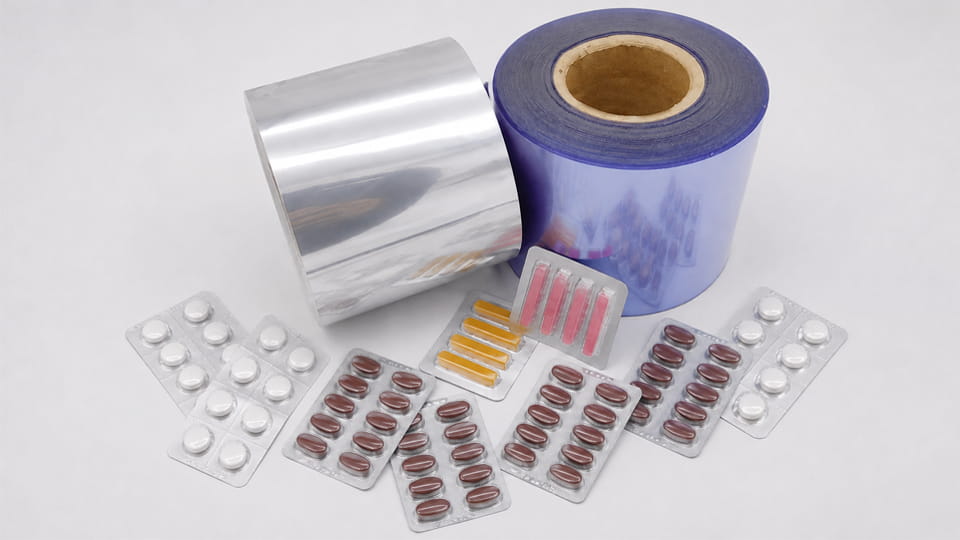
The first place to look is the raw packaging material. Blister packs rely on two primary materials: a thermoformed plastic film (โดยปกติ PVC or PVC/PVDC) และก lidding foil (often aluminum foil with a heat-seal lacquer). Defects in either can become pinholes or weak spots.
Foil Pinholes and Microporosities:Aluminum foil can contain microscopic pores or pinholes from its manufacturing process. If foil is stretched too thin in production, or if a coating is uneven, tiny holes can form. อีกด้วย, scuffs or scratches on the foil during handling will become leak sites once sealed. A little dust or contamination trapped in the foil can also create an imperfect seal area. Since blister foil is often only 20–40 μm thick, it doesn’t take much defect to go all the way through. As one blister guide notes, when foil is used (in anตุ่มอลูอลู), the moisture barrier is nearly perfect –unlessit contains even the smallest hole.
Film Thinning or Delamination:The plastic forming film can suffer its own issues. If the film web has inconsistencies (thickness variations, weak lamination, or impurities), the cavity walls may thin excessively when formed. Any embedment of a contaminant between film layers (for multi-layer PVC/PVDC films) could peel open. Even the edge seal of a laminated film may begin to delaminate, providing a path for leaks. นอกจากนี้, dust or particles on the film surface can act as a wedge during forming, creating a tiny hole or channel.
Incorrect Material Choice:Using a film or foil with insufficient barrier properties can make a pack more susceptible to leaks. ตัวอย่างเช่น, plain PVC film is easy to form but has relatively poor moisture resistance. ในทางตรงกันข้าม, a PVC/PVDC laminate dramatically reduces vapor transmission. If a product is moisture-sensitive, designers often use higher-barrier options: E.G. a PVC/PCTFE film or even a fullycold-formed aluminum-alloy blister. ในความเป็นจริง, experts point out that “aluminum foil offers the least moisture penetrance” – full aluminum/aluminum (อลู-อลู) blisters can provide a near-complete barrier. ในระยะสั้น, picking the right film/foil combo is critical: a mismatch (like using a foil that needs higher seal temp than your process) can itself cause poor adhesion and micro-channels.
▶การป้องกัน:Always inspect incoming film and foil before running a batch. Check supplier certificates for thickness, ความสม่ำเสมอ, and pinhole count (some suppliers test foil for pinholes). Run a small vacuum-test on each new roll to catch gross leaks. เมื่อเป็นไปได้, test the materials on a pilot line to ensure they form and seal correctly at your intended production speed. Use foil and film from reputable suppliers and handle rolls carefully (avoid dragging a cutter through them, ฯลฯ). ในที่สุด, store materials in a clean, dry environment to prevent corrosion or particulate contamination.
รูป: A roll of aluminum lidding foil and PVC blister film. These materials form the barrier for each blister. A foil too thin or a PVC film scratched during handling will easily develop microholes when heat-sealed.
2. Forming Process Issues (Cavity Stress)
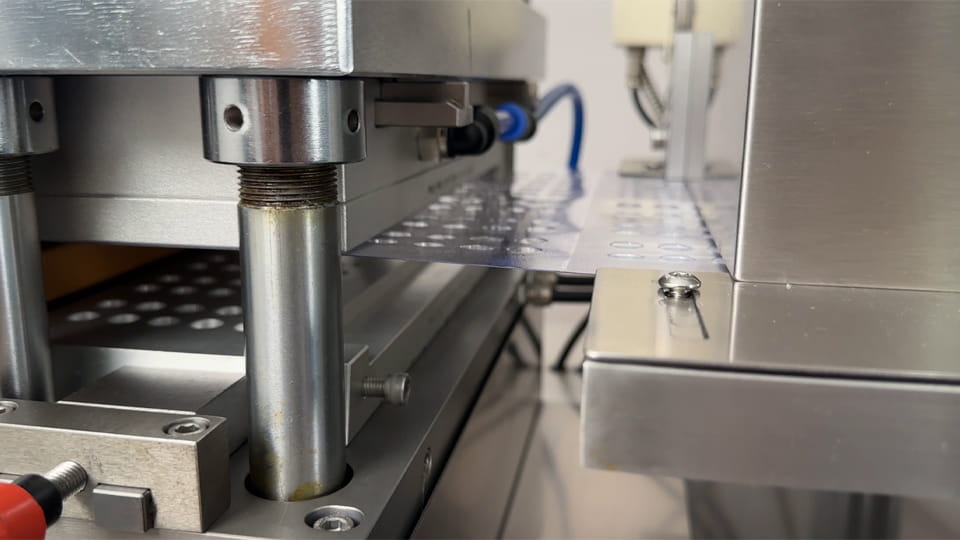
Once materials are chosen, they must be formed into cavities correctly. Errors in the forming step – eitherการทำเทอร์โมฟอร์ม (พีวีซี) หรือการขึ้นรูปเย็น (อลู)– can introduce stress cracks or thin spots that become leaks.
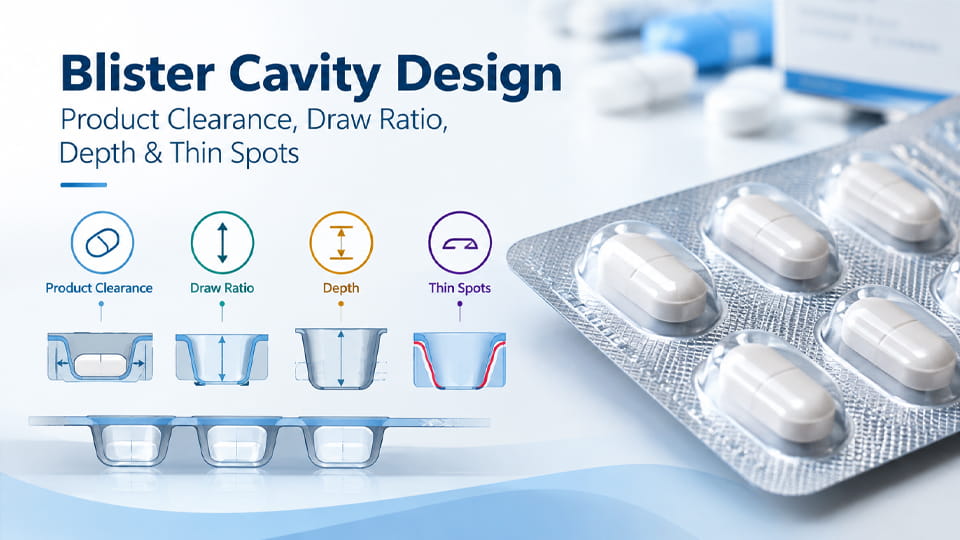
Excessive Stretching (Deep Draw):If a cavity is designed too deep or narrow relative to its base, the film can be overstretched at the corners and wall. ตามกฎทั่วไป, pharmaceutical blisters are generally kept under about a 2:1 depth-to-width ratio to avoid excessive thinning. Anything beyond that can thin the plastic wall too much or even create pinholes in the corners. Sharp corners in the mold are also trouble: a pointed corner will punch the film during forming. ดี การออกแบบช่องuses smooth radii and adequate space (typically ~10–20% clearance beyond the product dimensions) so that tablets sit comfortably without binding.
Uneven Heating:For thermoformed films (พีวีซี, พีวีซี/พีวีดีซี), heating zones must be uniform across the web width. Uneven heat leads to some areas being softer and stretching more. A 3°C difference across a forming plate can noticeably change cavity depth and wall thickness. If one side of a blister is over-heated, it may sag or thin out while the other side remains stiff. ในทางกลับกัน, under-heated film might not form completely, causing creases or wrinkles. A chilling effect or cold spot in the heater will prevent full forming, leaving micro-cracks.
Vacuum and Air Pressure:Blister forming usually uses vacuum (and sometimes plug-assist air). Excessive vacuum can overdraw the film, while too weak a vacuum will leave walls too thick or incomplete. If vacuum sinks are dirty or leaking, forming becomes inconsistent. The Jinlublister packaging scale-up guidewarns that if “the film is too hot/soft or vacuum is high, it can sag” and wrinkle. Those wrinkles introduce stress lines that can crack open later.
Poor Tooling Maintenance:The forming die itself can cause problems. Worn or scored molds lead to uneven walls. If a mold channel is clogged with plastic remnants or dust, the film will tear or not fully seat. Even slight misalignment between a multi-zone forming station can shear the film. Before high-speed runs, tooling should be inspected and cleaned so that each cavity forms cleanly and uniformly.
▶การป้องกัน:Validate your forming process carefully. Use design-of-experiments (DOE) to find the optimal forming temperature, ระดับสุญญากาศ, and plug-assist timing for your material. During trials, watch for thinnest spots on the cavity walls – these are the first to tear. Ensure the PLC or controller is calibrated so that target temperatures actually reach the heater plates uniformly. Maintain plug pins and vacuum filters to avoid leaks. Double-check that cavity depth and draw ratios match your product size. ในระยะสั้น, treat forming as an engineering process – even small parameter shifts can cause fractures later.
3. Product-Related Damage (Items and Debris)
บ่อยครั้ง, the product itself or its residues can introduce leaks. Think of eachแท็บเล็ตหรือแคปซูลas a “protrusion” inside the pack; any irregularity in the product can puncture the plastic or foil. อีกด้วย, powder or debris can foul the seal area.
Sharp Edges or Extreme Clearance:If the cavity doesn’t properly accommodate the pill geometry, a corner of the tablet can push against or even scrape the film during insertion. ตัวอย่างเช่น, an oblong tablet in a barely-wide pocket will ride on an angle and abrade the film. This is why the earlier guidance on cavity size matters – allowing 10–20% extra space prevents the product from wedging. Without that clearance, even normal filling motions (or a vibration from feeding) could cause the pill to nick the plastic wall or foil.
Foreign Particles:Tablet dust, ink dots, loose coating powder or tablet fragments can end up at the seal interface. If even a tiny speck sits between the plastic and foil, it will prevent a full seal right around that spot. The result is a microscopic tunnel where humidity can enter. ใน blister press troubleshooting, engineers often find thatcontamination on the sealing die– like tablet dust or film residue – is a common culprit for weak seals. กล่าวอีกนัยหนึ่ง, one fleck of powder causes a micro-channel.
Product Settling:หลังจากขึ้นรูปแล้ว, when tablets are dropped in, unexpected movements can cause damage. เช่น, on high-speed lines, if a stack of blisters enters a horizontal punch to cut them apart, a pill can bounce and impact the freshly-formed plastic, cracking it. Vibrations in downstream conveyors can also shake tablets against cavity walls.
▶การป้องกัน:Handle products carefully around the blister machine. Sort and destack tablets so they feed cleanly; sharpen or align punches and feeders to minimize tablet jostling. Inspect and clean the filling area regularly – even a thin layer of dust on the heat-seal platens will block the seal. If necessary, use vacuum or blow-off devices to remove loose powder before sealing. Ensure cavity dimensions provide adequate clearance; if a leak recurs on a particular SKU, re-check that the mold matches the tablet dimensions precisely.
รูป: Tablet shape and cavity clearance should be considered when designing blister packaging to reduce the risk of product-related damage.
4. Sealing Process Errors (Heat-Seal Failures)
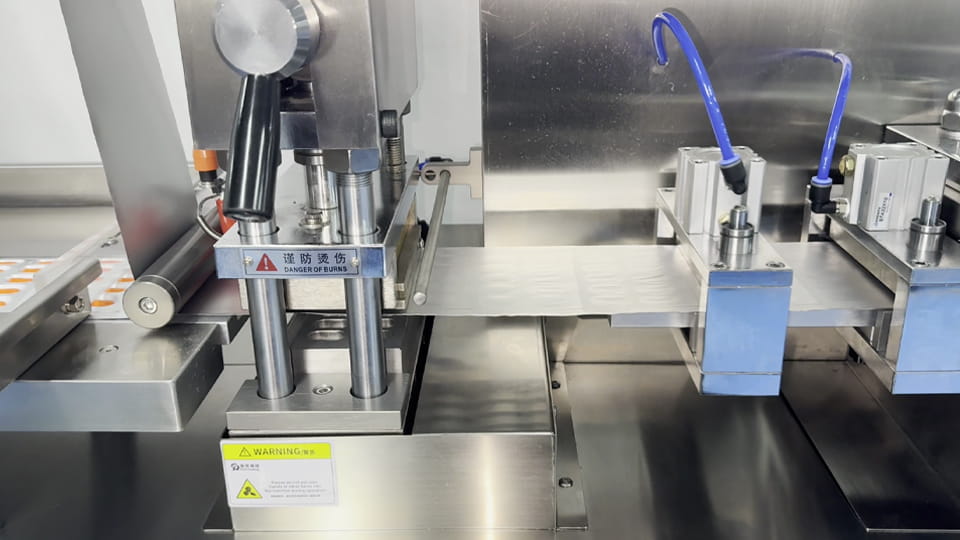
A good heat seal is perhaps the most critical element in a blister pack. Even perfect film and a perfect cavity are useless if the foil won’t bond. ที่สุด blister leakshappen right at the seal, and almost always boil down to one of three T’s: อุณหภูมิ, เวลา, or Tension.
Improper Seal Temperature:Each film/foil combination has an optimal seal temperature range. If the sealing jaws are too cool, the foil’s heat-activated lacquer won’t melt and bond the layers, leaving gaps. If the jaws are too hot, they can burn the plastic film or create overly brittle seals. A mis-set temperature (even off by a few degrees) often shows up as pinholes. As Jinlupacking‘sblister machine guide บันทึกย่อ, even a ±3°C error on a PVC/Alu line“can halve seal strength.”.
Incorrect Pressure or Dwell Time:The foil and plastic must be pressed together long enough and hard enough to fuse. If pressure is too low (due to weak springs or uneven platens), the bond is spotty. If dwell time is too short, the layers don’t fully adhere across the entire seal area. ในด้านพลิก, excessive pressure can squeeze out too much plastic or oil from the film and cause wrinkling or “seal rail” failures at the edge. The Jinlu scale-up checklist suggests that weak seals or pinholes often fix by slightly increasing dwell time or temperature, and checking for cold spots on the seal bar.
Seal Wrinkles and Alignment:Wrinkles in the foil or misalignment of the seal bars can create partial channels. If the film or foil is not perfectly flat when pressed, wrinkles form. These wrinkles are effectively unsealed lines. เช่นเดียวกัน, a misaligned foil web (skewed slightly) will pull under tension and bunch at the edge. Any wrinkle or film shift in the sealing area will leave an open path. Routine maintenance is important – the seal bars must be parallel and the foil path tensioned correctly.
Contamination at the Seal:ตามที่ระบุไว้ข้างต้น, any debris or adhesive build-up on the seal plates can block bonding. Even residue from previous run (น้ำมัน, tablet fragments, film scraps) can create micro-channels.
▶การป้องกัน:Fine-tune your sealing parameters and lock them down. Use a contact thermometer or IR camera to verify the actual plate temperature matches the setpoint. Perform a small design-of-experiments around temperature, ความดัน, and time to find a robust window where seals stay 100% แข็งแกร่ง. Clean seal bars between changeovers and inspect for wear; regrind or replace platens if gouges appear. Also ensure the foil has appropriate heat-seal lacquer for your film – check supplier specs (some foils need 170–200 °C, others 150–160 °C). Implement regular peel-strength testing: if average peel drops, investigate immediately.
5. Handling and Transportation Damage
The last root cause happensหลังจากpackaging – during handling, shipping or storage. Even a well-sealed blister can develop a microleak if it’s stressed or abraded.
Mechanical Stress:Blisters experience bending and vibration through distribution. Every time the pack flexes, the foil and film layer stretch a tiny amount. Over many cycles, small cracks or wrinkles can initiate. ตัวอย่างเช่น, loose blister cards rattling in a box can abrade against each other or the packaging. Dropping a carton or heavy stacking pressure can dent a blister or shear at the edges. These mechanical stresses usually show up as micro-cracks or foil ruptures that weren’t there on the line.
Temperature and Humidity Swings:Extreme swings can stress the materials differently. เช่น, a blister sealed in a warm, humid factory might move to a cold warehouse. Thermal contraction can shrink the plastic or foil at different rates, causing tiny gaps at the seal. ในทำนองเดียวกัน, moisture could get under the foil edge if packs sit in very humid air and later tested.
▶การป้องกัน:Use strongบรรจุภัณฑ์รอง. Pack blister cards in rigid boxes with cushioning to minimize movement and flexing. Seal boxes with tape and avoid over-stacking in warehouses. If freezing or heating is possible, consider using materials rated for the temperature range (E.G. plastic films remain flexible at low temp). ในระยะสั้น, reduce physical shocks: label cartons “Fragile” or “This Side Up” if needed, and keep blister packs in pallet loads that won’t crush them. อีกด้วย, monitor warehouse humidity – storing blisters under very humid conditions can hide leaks that test good in dry conditions.
Finding the Root Cause
When a blister leak is detected, it’s helpful to traceเมื่อไรthe defect first appeared:
Before Sealing:If you peel back the foil and find the hole already in the film, the problem was material or forming. Inspect the raw film/foil roll for damage. Trial runs forming empty blisters (no tablets) can reveal if cavities are cracked.
At Sealing:If an empty formed cavity seals fine but leaks after a tablet is added, suspect contamination or product damage. Check the sealing plates for debris, and verify the tablet isn’t pinching the film.
After Packaging:If sealed packs test good at line but fail after transport, it points to handling. Consider packaging improvements or handling errors.
A simple troubleshooting list:
Check raw roll (holes = material).
Check formed cavities before seal (cracks = forming).
Check sealed empty packs (gaps = seal).
Check packs after shipping (stress = handling).
Systematically isolating the stage will point you to the right solution.
โดยสรุป, preventing pinholes and microleaks means controlling quality at every step:
Material Control:Buy high-quality films and foils with certified pinhole specs. Inspect each new roll for damage. Store and handle rolls properly (clean cutters, no rough edges). Choose materials (พีวีซี/พีวีดีซี, พีซีทีเอฟอี, or cold-form alum foil) that meet your drug’s barrier needs.
Optimized Forming:Use properly designed tooling (smooth corners, correct depth ratio). Dial in forming heat, ว่างเปล่า, and airflow so that all cavities form uniformly. Run pilot-scale tests to tune parameters, and validate that film thickness after forming is adequate.
Clean Product Feed:Keep the fill area free of dust and debris. Gentle handling of products into cavities prevents crashes. Match cavity size to product to avoid binding.
Robust Sealing:Lock in an optimal temperature/pressure/time recipe and verify it regularly. Clean seal bars frequently to remove any buildup. Perform routine in-process checks (seal peel tests, leak-dye checks) to catch any drift. Use proven quality control tests – for example, vacuum decay or dye-intrusion tests – to verify hermetic seals. ในทางปฏิบัติ, manufacturers often submerge blister samples in ink under vacuum to find pinholes.
Careful Handling:Package blisters in sturdy cartons, avoid crushing or bending forces, and maintain moderate storage conditions. Provide training to handling staff to treat blister packs gently.
By combining these measures, you build multiple defenses against leaks. As one pharmaceutical packaging expert observes, modern blister machines and processes can “fill and seal thousands of doses per hour with exacting consistency” – but only if each step is tuned for integrity. กล่าวอีกนัยหนึ่ง, achieving leak-free blister packs is a systems effort, not luck.
Testing for Leaks
To ensure blister pinholes and microleaks are truly eliminated, use at least one reliableblister package integrity test:
Vacuum Decay / Pressure Decay:Place blister packs in a sealed test chamber and pull vacuum or apply pressure. A pressure rise (or loss of vacuum) indicates a leak path. This method is quick and non-destructive, suitable for high-volume inspection.
Dye Penetration (Vacuum/Dye):Immerse packs in colored liquid after vacuuming them internally. Any dye that seeps into the cavity (staining the film or tablet) pinpoints a leak. This is a classic method to locate specific pinholes or seal channels. A correlation study found vacuum-dye tests detect leaks as small as ~15 µm.
High-Voltage Leak Detection:For foil-based blisters, an electrical potential can reveal pinholes (the foil is conductive, the plastic isn’t). A micro-amp current will flow through a perforation. This is a sophisticated, non-destructive test often used for Aluminum blisters.
Bubble Leak Test:Submerge the pack in water and apply air pressure; bubbles will form at leak sites. This is more for open tray inspection than sealed packs, but it can confirm larger leaks in a batch.
Choosing the right test depends on pack design and tolerance. ในด้านเภสัชกรรม, a common approach is to combine a non-destructive test (vacuum or HVLD) in-line, and use dye or microbial challenge for periodic audit, as recommended by USP/ASTM guidelines.
บทสรุป
Pinholes and microleaks in blister packs often look like a mysterious fault, but they almost always trace back to one (หรือมากกว่านั้น) of these five areas: วัสดุ, การขึ้นรูป, ผลิตภัณฑ์, Heat-Sealing, and Transport. By carefully examining each factor – from incoming foil quality to carton design – you can root out the cause and prevent it. Remember that a “pass” on the line doesn’t guarantee a leak-free distribution; testing after packaging and during transport is crucial.
Preventing leaks is a team effort:materials engineers must ensure high-quality foil/film; process engineers must optimize forming and sealing; operators must keep tabs on product cleanliness; packaging must protect the pack; and quality control must validate every batch. When these elements work together, blister packs will maintain their barrier and keep your drug stable.
If you’re facing stubborn blister-pack leaks, review your process step by step. And for machine-specific solutions, consider expert help. Jinlu Packing’s team has deep experience inเครื่องจักรตุ่มand can advise on optimal equipment setups (การจัดการวัสดุ, สร้างความลึก, seal control) to minimize these issues. รู้สึกอิสระที่จะ ติดต่อทีมงานของเราfor customized advice or to explore ourเครื่องบรรจุหีบห่อwith best-in-class accuracy. ด้วยกัน, we can keep your blister packs airtight and your products protected.
FAQs on Blister Pinholes and Microleaks
What causes pinholes in blister packaging?
Pinholes usually come from the material or processing. Thin aluminum foil often has microscopic holes from manufacturing. Overstretching the material in forming or damaging it in handling can also make pinholes. ในระยะสั้น, pinholes arise from foil defects or physical stress during production.
Can aluminum foil pinholes cause leaks in blister packs?
ไม่เสมอไป. Small pinholes in the foil layer alone often have negligible effect on barrier. They only become leaks if they traverse the entire laminate or occur at a weak seal. กล่าวอีกนัยหนึ่ง, a foil pinhole by itself might not let moisture through unless it creates a path across all layers or sits under the seal.
What is the difference between a pinhole and a microleak?
A pinhole is a tiny hole (usually in the foil or film). A microleak is any tiny path that actually lets gas or moisture through the package. ตัวอย่างเช่น, a pinhole in just the foil layer (with plastic underneath) is not a full leak, whereas a microleak means the package’s barrier is compromised (E.G. a hole through the whole laminate or a channel in the seal).
Why do blister packs sometimes leak only after shipping?
Handling and transport can introduce new damage. Rough shipping or repeated bending flexes the foil, creating new pinholes. การสั่นสะเทือน, impacts or compression can also open up tiny cracks. So even a pack that passed QC can develop leaks in transit if the secondary packaging or handling is inadequate.
Can thermoforming create pinholes or thin spots in blister packs?
ใช่. If the thermoforming process overstretches the plastic (or aluminum film), it can create pinholes or ultrathin spots that break. Factors include too-deep cavities, wrong temperature, or too-fast forming. A misadjusted plug-assist or vacuum can cause localized tearing of the material.
Can tablet dust cause leaks in blister packaging?
อย่างแน่นอน. Dust or small tablet fragments in the sealing area will prevent a complete seal. Even a tiny piece of powder can create a micro-channel along the seal line. During sealing, the adhesive can’t bond properly over dust, so moisture can sneak in at that spot.
How can manufacturers detect microleaks in blister packs?
Commonly by vacuum decay or pressure decay. These non-destructive tests pressurize the blister and watch for a drop in pressure, บ่งบอกถึงการรั่วไหล. Dye ingress tests (using a colored liquid under vacuum) can also reveal leaks – especially true through-holes. High-voltage leak detection is another method for some blisters (though less common).
Does using thicker foil prevent blister pinholes?
Thicker foil usually has far fewer pinholes, so it helps. อย่างไรก็ตาม, no foil is 100% perfect. อีกด้วย, thicker foil is less stretchable – if forming is too aggressive, thick foil can crack instead. So while choosing a suitable foil gauge is smart, it must match your forming method and seal process.