

Капсулы с жидкостью (также называемые твердыми капсулами с жидким наполнением или LFHC.) по существу капсулы с твердой оболочкой, состоящие из двух частей (желатин или ГПМЦ) которые были заполнены масляным или жидким составом. После заполнения, крышка и корпус герметично закрыты (часто тонкой желатиновой лентой) для предотвращения утечек.. Другими словами, LFHCs представляют собой гибридную форму: твердая оболочка капсулы, содержащая внутри жидкую дозу. Напротив, мягкие капсулы производятся за один шаг, как одинокий, гибкая цельная оболочка который уже заполнен жидкостью или полутвердым. В мягких капсулах используется пластифицированный желатин. (с глицерином или сорбитом) сделать мягкий, герметичная мембрана. Обычно они используются для очень маслянистых или растворимых ингредиентов, например, рыбий жир или жирорастворимые витамины (Д, Эн, K) почти всегда выпускаются в мягких капсулах.
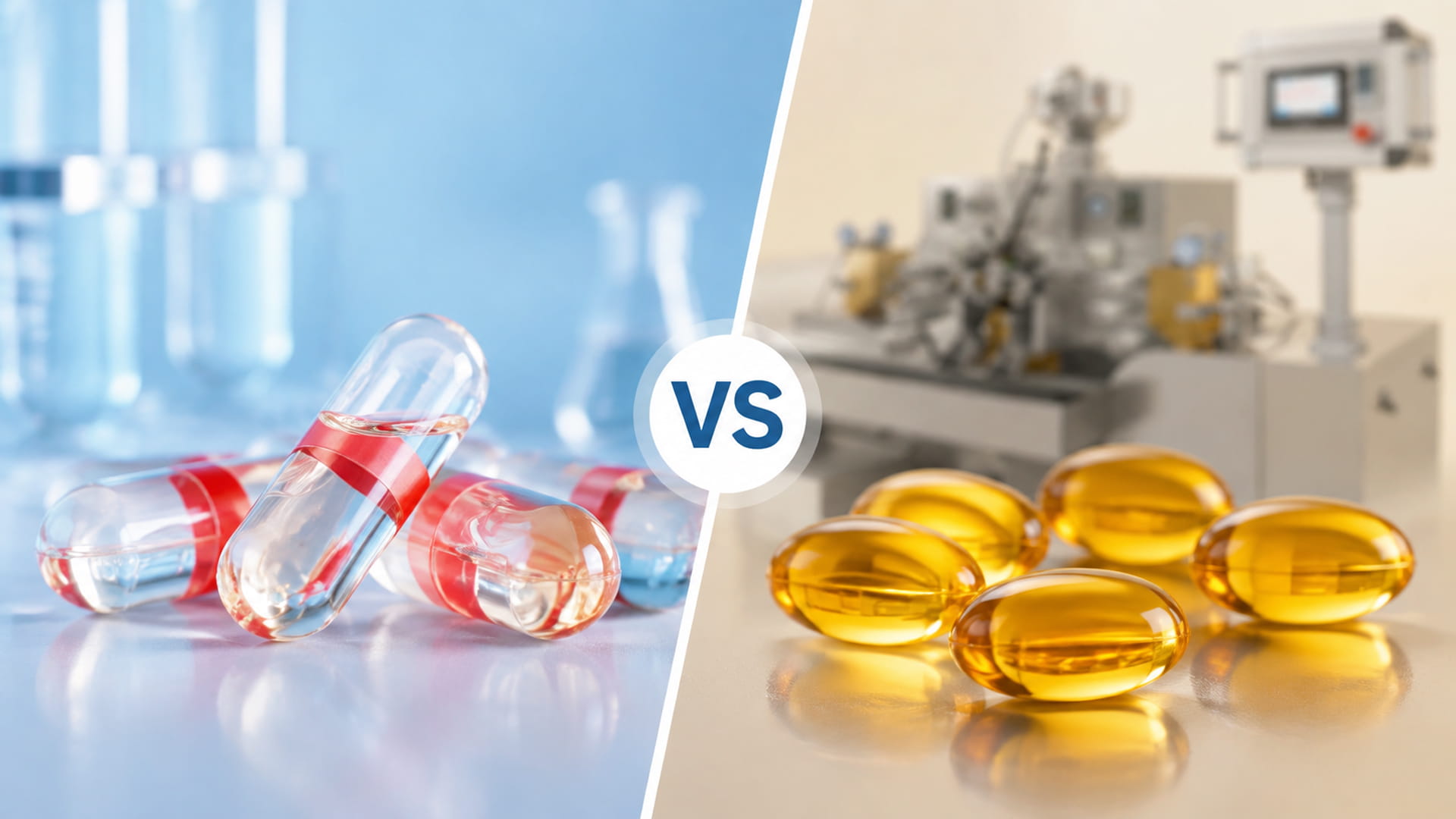
В практическом плане, оба формата могут доставлять жидкие лекарства или добавки., но их дизайн и производство значительно различаются. Ключевые отличия включают структуру капсулы., материалы оболочки, совместимые заливки, и этапы изготовления. Понимание этого помогает фармацевтическим производителям выбрать правильную форму для своего продукта.. Ниже мы рассмотрим основные различия и преимущества каждого из них..
Твердые капсулы, наполненные жидкостью. (ЛФХК) являются стандартными двухсекционные капсульные оболочки (крышка и корпус) заполняется жидким или маслянистым составом после изготовления оболочек. Оболочки могут быть изготовлены из желатина или ГПМЦ растительного происхождения. (для вегетарианских капсул). В производстве, точная доза жидкости (часто масляный раствор, суспензия или самоэмульгирующаяся смесь) вводится в открытый корпус капсулы, затем крышка закрывается сверху и герметизируется. Специальные методы герметизации гарантируют отсутствие утечек. (например, наложение тонкой желатиновой ленты вокруг сустава, называется «ленточное уплотнение»).
Этот двухкомпонентный подход позволяет LFHC сочетать преимущества жидкостей и капсул.. Вы получаете быстрое высвобождение и высокую биодоступность растворенной жидкости., благодаря легкому проглатыванию и маскировке вкуса, обеспечиваемым капсулами. Снаряды LFHC изготавливаются заранее., поэтому во время заливки не требуется дорогостоящего плавления листов желатина.. Например, Жидкостный наполнитель капсул NJY-300C компании JinLuPacking автоматически наполняет жидкости в твердые оболочки размером № 00– № 4 и запечатывает их в одну быструю линию..
Фигура: Твердые капсулы, наполненные жидкостью. (каждый имеет цветную ленту, герметизирующую соединение крышки с корпусом.). Эти состоящие из двух частей капсулы содержат масло или жидкость внутри твердой желатиновой оболочки/оболочки из HPMC..
Мягкие капсулы (часто просто звонил мягкие капсулы) являются один кусочек, капсулы с гелевым покрытием, содержащие жидкий или полутвердый наполнитель. Они изготавливаются на машине для капсулирования с вращающейся головкой, которая формирует, заполняет, и запечатывает каждую капсулу за один этап. В машине, две ленты пластифицированного желатина (желатин, смешанный с глицерином или сорбитом) отлиты и спрессованы между собой, при этом между ними впрыскивается дозированная струя жидкости.. Каждая капсула одновременно разрезается и запечатывается нагретыми штампами.. Результат – гладкая, овальный, герметичная капсула, широко используемая для добавок на масляной основе. (подумайте о таблетках витамина Е или омега-3).
Мягкие капсулы идеально подходят для масел и чувствительных жидкостей.. Потому что вся капсула герметично запечатана при ее формировании., отдельный этап герметизации не требуется. Это делает их очень защищенными от кислорода и влаги.. Много рыбьего жира, витамин Д/К, и растительные нефтепродукты используют мягкие капсулы из-за их удобства и стабильности при хранении.. Фактически, Исследования показывают, что добавки с омега-3 и жирорастворимыми витаминами чаще всего поставляются в виде мягких таблеток..
Фигура: Янтарные капсулы на чайной ложке рядом с бутылочкой с таблетками (общий для рыбьего жира или витамина D).
| Особенность | Капсулы с жидкостью (ЛФХК) | Мягкие капсулы |
| Структура | Двухсекционный (капля & тело) | Цельная герметичная капсула |
| Материал корпуса | Желатин или ГПМЦ (вегетарианский вариант) | Пластифицированный желатин (желатин + пластификатор) |
| Метод изготовления | Заполните, затем запечатайте (на наполнителе капсул + банды) | Герметизация вращающейся матрицы (форма-заполнение-печать) |
| Стоимость оборудования | Ниже (стандартные капсульные наполнители) | Выше (специальная линия мягких капсул) |
| Шкала (минимальный заказ) | Низкие минимумы (подходит для небольших партий) | Обычно требуется больший объем |
| Вегетарианский вариант | Да (Доступны корпуса HPMC) | Ограничен (теперь несколько вариантов крахмала/овощей) |
| Запечатывание | Механическое уплотнение (полосатость/сплавление) | Встроенное уплотнение (герметично закрыт штампом) |
| Риск утечки | Низкий (после того, как запечатано должным образом) | Очень низкий (нет шва, который бы протекал) |
| Гибкость производства | Высокий (можно смешивать порошки или гранулы с жидкостью) | Середина (заполняет только жидкость/паста) |
| Масштабирование | Легкий (использует стандартные капсульные машины) | Более сложный (специализированная сушка, и т. д.) |
Обе формы доставляют активные вещества на жидкой или масляной основе и могут обеспечивать высокую биодоступность, поскольку лекарство растворено в липидной среде.. Однако, LFHC используют более простые линии (ракушки уже готовы) тогда как мягкие капсулы требуют приготовления и сушки желатиновых лент..
Ключевой вывод: Машины для мягких капсул форма, наполнять, и разрезать за один шаг (требующие сушки), в то время как линии LFHC заполняют готовые оболочки и запечатывают их (пропуск длительного этапа отверждения). Как отмечает один из отраслевых справочников, «Мягкие таблетки затвердевают через 2–4 дня после заполнения.. У LFHC нет этапа отверждения… потери партии из-за неудачного наполнения выше для мягких гелей»..
Капсулы, наполненные жидкостью, имеют ряд преимуществ в производстве и продукте.:
Эти преимущества делают LFHC привлекательными как на фармацевтическом, так и на рынке нутрицевтиков..
Мягкие капсулы также обладают сильными преимуществами, которые делают их популярными во многих добавках.:
Отрасли, использующие мягкие таблетки, включают фармацевтика (препараты на основе масел), нутрицевтики (пищевые добавки), косметика (нутрицевтические косметические масла), и даже ветеринарные товары. Например, Веганские или халяльные мягкие таблетки, изготовленные из крахмала/геллана, находятся на подъеме..
| Ингредиент / Наполнять | Заполненная жидкостью капсула | Мягкая капсула |
| Рыбий жир / Омега-3 | ✓ Подходит | ✓ Подходит |
| КБД или масло каннабиса | ✓ Подходит | ✓ Подходит |
| Куркумин (Экстракт куркумы) | ✓ Подходит | ✓ Подходит |
| Витамин Д (масло) | ✓ Подходит | ✓ Подходит |
| Жидкие экстракты трав | ✓ Подходит | ✓ Подходит |
| Пробиотики | ✓ (если суспендировать в масле) | Нет (влага убивает бактерии) |
| Чувствительные к влаге API | ✓ (особенно в капсулах HPMC) | ✗ (скорлупа высокая влажность) |
Оба типа капсул хорошо справляются с жирорастворимыми активными веществами.. Распространенные нутрицевтические масла (рыбий жир, витамин Д, травяные выдержки, КБР, и т. д.) эффективно доставляются либо LFHC, либо мягкими гелями..
Примечательно, сухие или чувствительные к влаге ингредиенты лучше использовать в твердых капсулах с жидким наполнением. Например, пробиотики или чувствительные к воде API непрактичны в мягких капсулах. В отличие, Твердые капсулы HPMC могут содержать неводные суспензии пробиотиков или очень сухие составы., поскольку ГПМЦ имеет низкую влаго- и газопроницаемость. Оболочки мягких капсул содержат около 30% вода и повышенная кислородопроницаемость, которые могут испортить такие ингредиенты.
Суммируя, используйте LFHC, когда важны гибкость и малые объемы производства; выбирайте мягкие капсулы для увеличения масштаба и привлекательности на полках премиум-класса.
С точки зрения производителя, решение часто зависит от масштаба, инвестиции, и стратегические цели:
В таблице ниже обобщен выбор по сценарию.:
| Тип компании / Ситуация | Рекомендуемый формат |
| Маленький стартап или R&проект Д | Капсулы с жидкостью (низкий минимальный заказ, гибкий) |
| Нишевая линия пищевых добавок, <10k units | Капсулы с жидкостью |
| Контрактный производитель (гибкость) | Капсулы с жидкостью |
| Крупный фармацевтический производитель | Мягкие капсулы (высокая пропускная способность, последовательный) |
| Большое количество омега-3 или витаминов | Мягкие капсулы |
| Продукту нужна веганская капсула | Капсулы с жидкостью (снаряды HPMC) |
Фигура: Крупный план машины для наполнения жидких капсул, дозирующей жидкость в капсулы.
JinLuPacking производит полный спектр капсульного оборудования.. Например, наш НДЖИ-300С жидкий наполнитель капсул линия обрабатывает заливки жидкостью, и мы также предоставляем машины для изготовления мягких гелевых капсул для одноэтапного производства. Эти машины соответствуют стандартам cGMP для фармацевтического и нутрицевтического применения..
В конце концов, оба заполнены жидкостью твердые капсулы и мягкие капсулы хорошо зарекомендовали себя, эффективные лекарственные формы. Мягкие капсулы превосходно доставляют масла и жирорастворимые активные вещества благодаря быстро растворяющимся свойствам., пакет с защитой от несанкционированного доступа. Твердые капсулы, наполненные жидкостью, обеспечивают гибкость, быстрее R&D-масштабирование, и простота изготовления. Понимая их различия, преимущества и производственные требования, производители могут выбрать тип капсул, который лучше всего соответствует химическому составу их продукта и потребностям бизнеса..
Если вы разрабатываете новую рецептуру или модернизируете свою производственную линию, внимательно рассмотрите оба варианта. Готовы оптимизировать производство капсул? Jinlu Packing предлагает лучшее в отрасли оборудование для обоих форматов. (например, наш NJP-1000C может заполниться до 60,000 твердых капсул в час) и можем посоветовать лучшее решение для вашего продукта. Связаться с нами обсудить ваш проект, запросить цену, или узнайте больше о наших жидких капсулах и мягких гелях упаковочные линии.
Да. Специализированные капсульные наполнители (как машины для наполнения жидких капсул JinLuPacking) можно вводить масла или жидкости в пустые твердые капсулы, которые затем запечатываются (например. путем связывания) поэтому они надежно удерживают жидкость. Это создает «наполненную жидкостью твердую капсулу».
Ни один из них не является универсальным «лучшим» — они служат разным потребностям.. LFHC выигрывают по стоимости, скорость, и гибкость (особенно для небольших партий), в то время как мягкие капсулы обеспечивают бесшовное уплотнение и знакомый формат масляных добавок.. Лучший выбор зависит от материала наполнителя., объем производства, и рынок.
Правильно запечатанные LFHC не протекают.. После заполнения, соединение крышки с корпусом герметично герметизируется с помощью желатиновой ленты или ленты из ГПМЦ. (или с помощью сварки). Когда все сделано правильно, капсулы плотно удерживают жидкость во время высыхания, хранилище, и использовать. Линии качества проверяют и полируют каждую партию, чтобы гарантировать целостность..
Оба могут обеспечить превосходную биодоступность активных веществ на масляной основе.. Формула заливки (тип масла, эмульгаторы) обычно требует поглощения, не тип оболочки. Мягкие капсулы быстро растворяются (~10–20 мин.), в то время как капсулы с твердой оболочкой (ЛФХК) растворяться немного медленнее (30–60 мин.). На практике, хорошо продуманные наполнители в любой форме могут достичь одинаковой эффективности.
Да. Оболочки из ГПМЦ растительного происхождения широко используются для изготовления капсул, наполненных жидкостью.. Низкая влажность и прочная структура HPMC позволяют маслянистым жидкостям проникать внутрь.. Фактически, использование оболочек HPMC — один из способов предложить вегетарианские капсулы в жидкой форме., которые не могут обеспечить стандартные желатиновые капсулы.
Компании ссылаются на такие причины, как более низкие производственные затраты., более короткие сроки выполнения, и гибкость формулировок. Например, Р&Команда D может быстро корректировать дозы или комбинировать ингредиенты в LFHC без переоснащения.. Также, VFHC позволяют легко расширять продуктовую линейку (поскольку одни и те же капсулы могут быть наполнены разными жидкостями).
В целом, да. Производство мягких капсул требует дорогостоящего оборудования. (желатиновые плиты, ротационные штампы, сушилки) и больше труда в течение нескольких дней. LFHC используют более простые наполнители и требуют меньше энергии.. В отраслевых отчетах отмечается, что производство LFHC обходится на 15–35% дешевле, чем мягкие капсулы.. Однако, при очень больших объемах мягкие таблетки по-прежнему могут быть экономически эффективными..
Жидкие ингредиенты заполняются с помощью машины для наполнения жидких капсул. (часто это насадка или вариант стандартного наполнителя капсул.). Например, В машинах серии NJY компании JinLuPacking используются прецизионные насосы. (керамический поршень или микронасос) дозировать масло в капсулы. Эти машины могут достигать высоких скоростей. (несколько тысяч крышек в час) с точностью лучше ±1%.
Преимущественно неводный, наполнители на масляной основе или на основе растворителей. Общие примеры: рыбий жир, масло с витамином Е, жидкие витамины, масляные экстракты трав, эмульсии, и некоторые самоэмульгирующиеся системы доставки лекарств.. Наполнитель должен быть перекачиваемым и, как правило, не вызывающим коррозии.. Избегайте жидкостей на водной основе. (они могут ослабить пломбы). Вязкость заливки следует контролировать, чтобы предотвратить разбрызгивание или капание во время заливки..
Да. Многие капсульные машины трансформируются.: путем замены системы дозирования, они могут наполнять порошки/гранулы или жидкости. На практике, стандартная пластина дозирования порошка капсулонаполнителя заменена на головку для наполнения жидкостью и насосную систему. Такая универсальность означает, что одна линия может переключаться между производством порошка и LFHC..
Ссылки:
1.Заполненные жидкостью и запечатанные твердые желатиновые капсулы —— Тейлор & Фрэнсис Онлайн
2.Мягкие желатиновые капсулы (Мягкие капсулы) —— ScienceDirect
3.Влияние температуры на характеристики ленты при производстве мягких желатиновых капсул —— Национальная библиотека медицины
4.Комплексный обзор мягких желатиновых капсул: Промышленное производство, Технологические достижения, и нормативные аспекты —— Журнал ДОСТАВКИ ЛЕКАРСТВ & ТЕРАПЕВТИКА
5.Твердые желатиновые капсулы, наполненные жидкостью —— Журнал ДОСТАВКИ ЛЕКАРСТВ & ТЕРАПЕВТИКА
6.Определение оптимального количества воды в жидконаполняющих массах для твердых желатиновых капсул методом текстурного анализа и постановки эксперимента —— Национальная библиотека медицины