Por que embalagens sustentáveis são importantes na indústria farmacêutica
A indústria farmacêutica depende fortemente de plásticos descartáveis e embalagens complexas. Isso causa um desperdício enorme: uma nota de análise “a indústria farmacêutica responsável por 300 milhões de toneladas de resíduos plásticos por ano, metade dos quais são plásticos descartáveis”. Muito disso acaba em aterros sanitários ou no meio ambiente. Além da poluição, a pressão está aumentando por parte de reguladores e clientes. Governos em todo o mundo (UE, Reino Unido, etc.) estão apertando as regras: por exemplo, o novo Regulamento de Embalagens e Resíduos de Embalagens da UE (PPWR) exigirá taxas de reciclagem mais altas e materiais recicláveis por 2030. Responsabilidade Estendida do Produtor (RPE) estão chegando leis que forçam os fabricantes farmacêuticos a rastrear e pagar pelo descarte de embalagens. Ao mesmo tempo, clientes – de varejistas a pacientes – esperam cada vez mais práticas ecologicamente conscientes. Resumidamente, embalagens sustentáveis (usando reciclado, reciclável, ou materiais e designs biodegradáveis) não é mais opcional. É uma prioridade ESG que também reduz custos de materiais e aumenta a reputação da marca.
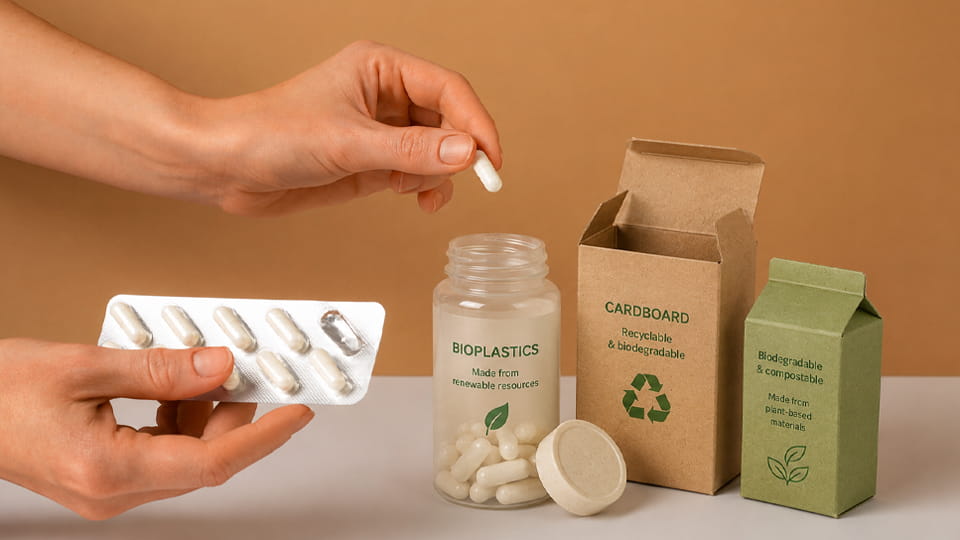
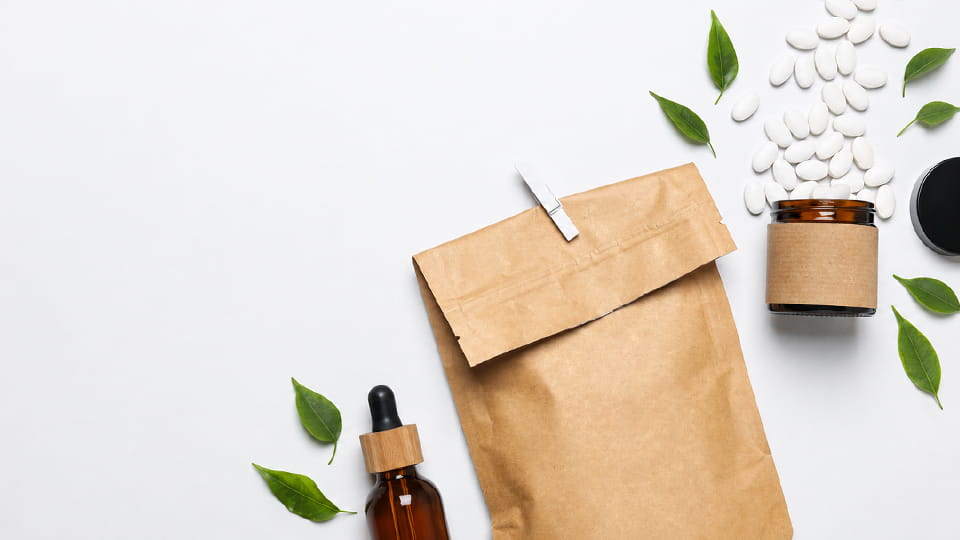
Figura: Escolhendo materiais verdes (E.G.. cartão, bioplásticos) para bolha, garrafas e embalagens cartonadas podem reduzir o desperdício e ao mesmo tempo proteger os produtos.
O que é embalagem farmacêutica sustentável?
“Embalagem sustentável” significa designs e materiais que minimizam o impacto ambiental, mantendo os produtos seguros e em conformidade. Na prática, isso muitas vezes envolve:
- Materiais recicláveis (plásticos monomateriais como PP ou PET, papel e papelão, vidro, alumínio)
- Materiais biodegradáveis/compostáveis (bioplásticos como PLA, bandejas de polpa moldáveis, filmes à base de algas marinhas)
- Leveza e otimização (reduzindo o excesso de embalagem, usando o menor recipiente seguro)
- Projetos reutilizáveis (em casos limitados, garrafas retornáveis ou kits recarregáveis)
Para indústria farmacêutica, segurança é fundamental, embalagens tão sustentáveis deve ainda encontro Padrões de segurança cGMP (resistência infantil, propriedades de barreira, esterilidade). Em outras palavras, a embalagem deve proteger o medicamento primeiro, enquanto os aspectos ecológicos estão integrados. Quando bem feito, embalagens verdes também melhoram a pegada ambiental de uma empresa, posição de conformidade, e imagem de marca. Por exemplo, GSK e Merck estabeleceram metas amplas de neutralidade de carbono (A GSK pretende ser neutra em carbono ao 2050) e estão reduzindo agressivamente as emissões de embalagens.
As principais tendências do setor refletem essa mudança: as empresas estão usando cada vez mais isqueiros, estruturas monomateriais e conteúdo reciclado. Um relatório observa que por 2025 marcas farmacêuticas tratarão as embalagens sustentáveis como “comercialmente essenciais,” priorizando designs mais leves, pacotes de material único, e fibras recicladas para cumprir metas. (Espera-se que o mercado de embalagens sustentáveis cresça cerca de 15% ao ano através de 2034.) No entanto, algumas opções verdes continuam desafiadoras: embalagens farmacêuticas verdadeiramente biodegradáveis ainda são um nicho, como desempenho e atraso na infraestrutura de reciclagem. O movimento geral é em direção a um economia circular abordagem – projetar embalagens para que os materiais retornem à cadeia de suprimentos (reciclar ou reutilizar) em vez de terminar como desperdício.
Materiais de embalagem ecológicos (Tabela de comparação)
Escolher os materiais certos é fundamental. A tabela abaixo compara opções comuns:
| Material / Tipo |
Exemplos de usos |
Reciclável / Biodegradável? |
Notas |
| Papel / Cartão |
Caixas, caixas de transporte, Instruções de uso |
Reciclável (largamente) e compostável |
Renovável, leve, ideal para embalagens secundárias. |
| Vidro |
Frascos, garrafas (E.G.. injetáveis, tinturas) |
Reciclável (infinito) |
Inerte e reutilizável; pesado, mas infinitamente reciclável, sem perda de qualidade. |
| Alumínio |
Camadas de blister, latas de aerossol, inaladores |
Reciclável (taxa alta) |
Excelente barreira; leve; o alumínio reciclado reduz muito o uso de energia vs.. novo. |
| BICHO DE ESTIMAÇÃO / Plásticos HDPE |
Garrafas, bonés, xaropes, géis |
Amplamente reciclável (especialmente PET); PCR (pós-consumo) variantes disponíveis |
Durável e leve; facilmente feito a partir de conteúdo reciclado (E.G.. Garrafas PET PCR). |
| PP / Filmes monomateriais |
Blister pacotes, tubos de plástico |
Reciclável se for monomaterial (PP, Pe) |
Trocar o plástico blister de PVC/folha para filmes de PP ou PE facilita a reciclagem. |
| Plásticos Rígidos |
Bonés, fechamentos, bandejas |
Reciclável em fluxos específicos (se classificado) |
Projetos reutilizáveis (E.G.. garrafas de bomba recarregáveis) pode reduzir ainda mais o desperdício. |
| Bioplásticos Biodegradáveis (PLA) |
Bandejas Eco-IFU, bolsas |
Compostável (industrial) |
Feito de amido de milho ou cana-de-açúcar; evita plásticos de combustíveis fósseis, mas precisa de instalações de compostagem adequadas. |
| Fibra Moldada (Polpa) |
Bandejas protetoras, inserções |
Compostável / reciclável (fibra de papel) |
Feito de papel reciclado; totalmente compostável e frequentemente usado em bandejas especiais e inserções seguras para alimentos. |
| Alu-Alu vs.. Bolhas papelizadas |
Cartões blister |
Alu-Alu não reciclável; Paperizado = reciclável/biodegradável |
Muitas embalagens farmacêuticas eram laminadas. Novos designs usam suportes de blister de papel (ou sistemas PP-Al recicláveis). |
Usar esses materiais com sabedoria pode reduzir drasticamente o desperdício. Por exemplo, substituindo Blisters de PVC com PP monocamada ou mesmo alumínio pode economizar peso e permitir a reciclagem total. Algumas empresas estão experimentando filmes à base de algas marinhas ou amido para embalagens secundárias. Muitas empresas farmacêuticas já usam conteúdo reciclado – por exemplo. PCR PET para garrafas ou papelão reciclado para caixas de transporte – para fechar o ciclo.
Para ilustrar como as embalagens farmacêuticas misturam materiais hoje, considerar uma discriminação global estimada por material:
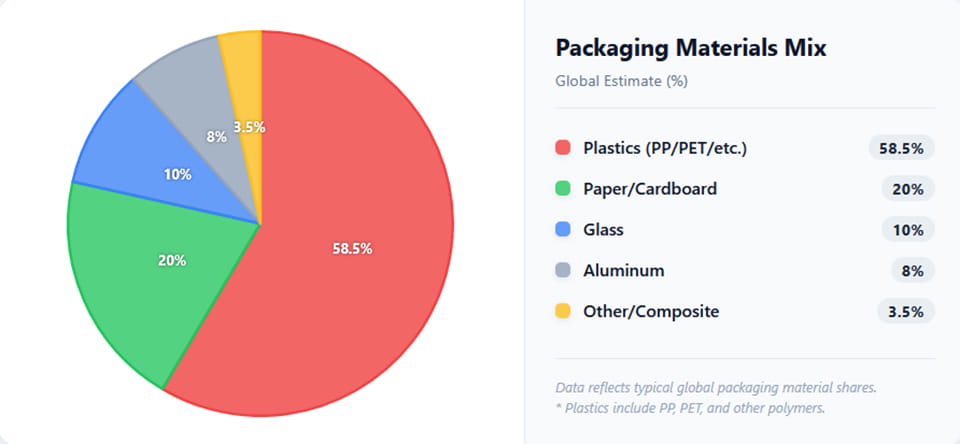
(Figura: Participação global aproximada de materiais de embalagem; os plásticos dominam (~60%), papel ~20%. Isto destaca como a substituição de até mesmo uma fração desse plástico por materiais reutilizáveis/reciclados pode ter um grande impacto.)
Soluções sustentáveis para máquinas de embalagem
Além dos materiais, máquinas de embalagem desempenha um papel fundamental na sustentabilidade. Máquinas avançadas podem lidar com novos materiais ecológicos e minimizar o desperdício através da precisão. Os tipos de chave incluem:
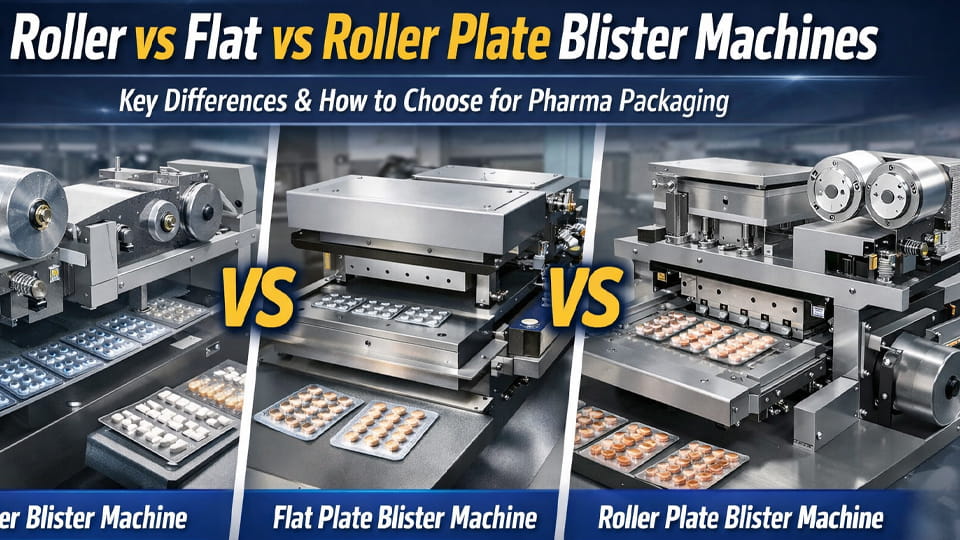
- Máquinas de embalagem de blister: Máquinas de blister modernas (como o de Jinlu Máquina de embalagem em blister) são projetados para usar mais leves, filmes monomateriais. Alguns equipamentos podem funcionar com filmes ecológicos (Laminados PP/PE sem PVC) ou até mesmo bolhas em papel. Máquinas de alta eficiência também reduzem o desperdício por meio de registro preciso. Por exemplo, mudar de blisters mistos de PVC e alumínio para blisters somente de PP não apenas torna as embalagens recicláveis, mas nossas máquinas podem contar e selar com ≤0,1% de desperdício.
- Máquinas de encadernação: Os encartuchadores embalam produtos em caixas dobráveis ou caixas. Usando compacto, caixas do tamanho certo, cartonadores reduzem o uso excessivo de papelão ondulado. Jinlu's Máquina de encadernação pode manusear papelão reciclado e criar caixas bem ajustadas para minimizar o espaço aéreo. A automação garante que apenas a quantidade exata de material seja usada (E.G.. caixas mal grandes o suficiente), reduzindo volume e custo de remessa.
- Sachê / Máquinas de embalagem de palitos: Máquinas de sachês ou stick-pack produzem pequenos pacotes de folha/papel de dose única (E.G.. para pós, OTC remédios). Geralmente usam papel ou laminados de película fina. Ao otimizar o tamanho do sachê e usar filmes ecológicos (como PE reciclável ou PLA biodegradável), o desperdício é cortado. Nosso Máquina de embalagem de sachet pode usar sachês de papel para 100% biodegradabilidade. A dosagem precisa também evita o enchimento excessivo, reduzindo o desperdício de produtos.
- Cápsula & Máquinas de contagem/enchimento de comprimidos: Equipamento preciso de contagem e enchimento (ver Máquina de contagem de comprimidos/cápsulas e Máquina de enchimento de cápsulas) reduzir derramamento e transbordamento. Para produtos em cápsulas, envasadoras de alta velocidade de 12,000 para 468,000 bonés/hora (Série automática Jinlu) garanta o porcionamento exato com o mínimo de desperdício. Menos rejeições significa menos desperdício de material e produto. O design ergonômico também acelera a troca (para limpar máquinas rapidamente ao trocar formulações ou execuções de embalagens, reduzindo o tempo de inatividade).
- Enchimento de garrafas & Captura: Para frascos de líquidos ou comprimidos, linhas automatizadas de enchimento/tampar garantem uma dosagem muito precisa. Por exemplo, recipientes de leite materno sem ar ou xaropes de alta viscosidade podem ser enchidos praticamente sem transbordamento, que economiza o produto e o material da garrafa plástica. Embora nem todas as pílulas usem frascos, máquinas de contagem de cápsulas podem ser conectadas a empacotadores de garrafas para preencher com contagens exatas, minimizando o espaço vazio.
- Embalagem de bolsa pré -fabricada (VFFS/HFFS): Para bolsas pré-fabricadas ou pacotes de palitos (bolsas com fecho ziplock, doypacks), o Máquina de embalagem de bolsas pré-fabricadas lida com papel stand-up- ou sacos de biofilme. Estas máquinas escolhem, preencher, e selar com servo precisão (±0,4% de precisão), permitindo apertado, vedações sem vazamentos em filmes de bolsas recicláveis. Uma balança combinada com enchimento de bolsas pode embalar nutracêuticos ou pós com vários ingredientes sem excesso.

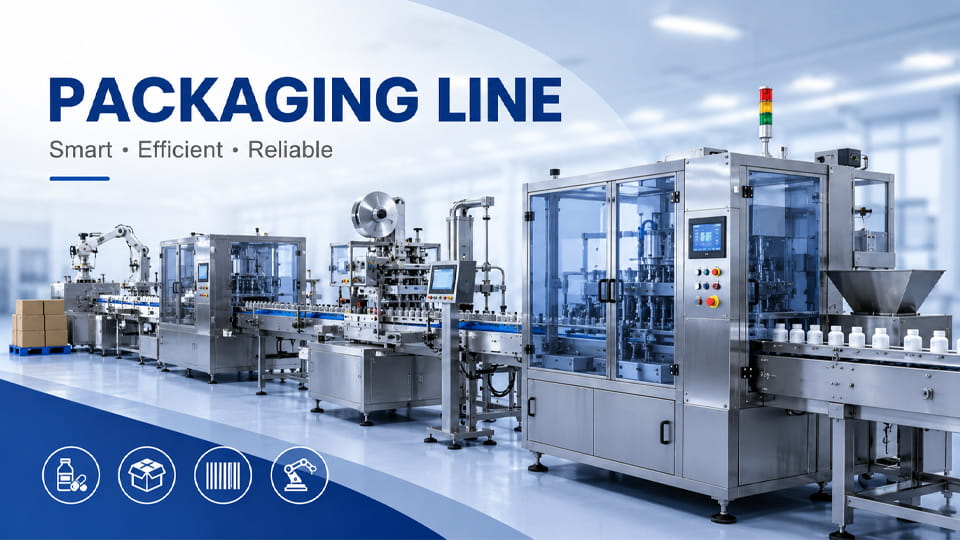
Figura: Máquinas modernas embalam comprimidos e pós de forma eficiente. Cartonadoras ou linhas de blister podem funcionar com papelão reciclado e filmes PP para reduzir o plástico.
Resumidamente, embalagens sustentáveis muitas vezes andam de mãos dadas com a automação moderna. Máquinas eficientes permitem usar materiais ecológicos (papel, monopolímeros, bioplásticos) sem desacelerar a produção. Eles também permitem otimização de embalagens – criação de caixas orientadas por software, minimização de preenchimento de vazios, fabricação de caixas sob demanda – o que reduz o uso de material. (Por exemplo, sistemas de caixa do tamanho certo podem reduzir o uso de papelão ondulado em aproximadamente 20%.) Os fornecedores de equipamentos agora oferecem opções “verdes”, como tinta reciclável de qualidade alimentar e vedação sem cola. Ao comprar máquinas, procure recursos como controles servo, mudanças rápidas de ferramentas, e modos de redução de resíduos. Jinlu Packing's linha completa (bolha, embalagem, sachê, cápsula, contando, etc.) foi projetado para alta velocidade, execuções de alta precisão que se traduzem em menos sucata e resultados mais amigáveis à reciclagem. Por exemplo, Os enchedores de cápsulas da Jinlu usam mecanismos patenteados para minimizar poeira ou transbordamento, reduzindo o desperdício de pó.
Regulatório & Considerações sobre conformidade
As embalagens farmacêuticas devem equilibrar a sustentabilidade com regulamentos rigorosos. Pontos-chave:
- Segurança em primeiro lugar: Qualquer alteração de material ou design ainda deve estar em conformidade com as normas cGMP e farmacopéicas. (Por exemplo, 21 Parte CFR 211 exige que os sistemas de fechamento de recipientes não interajam com o medicamento.) Novos materiais precisam de testes para compatibilidade do produto, estabilidade, e resistência a crianças, se necessário. Órgãos reguladores como FDA ou EMA não proibiram completamente materiais específicos, mas eles exigem prova de segurança. Sempre documente que um material mais ecológico corresponde à barreira e à limpeza do original.
- Leis de EPR e resíduos de embalagens: Muitas regiões estão agora a obrigar os fabricantes a pagar pela gestão de resíduos. No Reino Unido, a comunicação obrigatória de dados de embalagens já está em vigor, e taxas EPR (com base no peso e reciclabilidade de cada embalagem) estão chegando. Na UE, o novo Regulamento de Embalagens e Resíduos de Embalagens (PPWR) forçará todas as embalagens a cumprir metas rigorosas de reciclabilidade e conteúdo reciclado. As empresas devem rastrear todos os componentes (rótulos, bolhas, inserções) e redesenhar progressivamente laminados multicamadas não recicláveis em estruturas monomateriais. Isso significa que as empresas farmacêuticas serão incentivadas a evitar bolhas de PVC/folha metálica, use tintas à base de água, e adicione instruções claras de reciclagem nos rótulos das caixas.
- Metas da Economia Circular: Cada vez mais, Estratégias ESG farmacêuticas exigem design circular. Por exemplo, instruções claras (E.G.. “Retire a tampa, garrafa vazia, limpar & reciclar") poderá em breve ser exigido em embalagens OTC. Alguns países poderão exigir a participação em programas de devolução de medicamentos (para manter os resíduos de drogas fora dos aterros) como parte do EPR. As empresas devem se preparar garantindo que suas embalagens possam ser facilmente classificadas pelos consumidores e recicladores.
- Variabilidade Internacional: Diferentes mercados podem ter regras diferentes (mesmo dentro da UE, cada país trata os resíduos de forma diferente). Os fabricantes multinacionais devem ter como objetivo atender ou exceder os padrões regionais mais rigorosos. Na prática, isso significa projetar todas as novas embalagens para serem totalmente recicláveis (ou reutilizável) do dia 1.
A boa notícia é que muitas medidas de sustentabilidade também se alinham com a conformidade e a segurança do consumidor. Por exemplo, usar materiais recicláveis geralmente significa menos aditivos de polímeros desconhecidos, e designs monomateriais eliminam adesivos ou laminados prejudiciais. Ainda, qualquer troca de material deve ser validada (veja a próxima seção) para garantir que a integridade do produto nunca seja comprometida.
Benefícios, Custo e ROI de se tornar ecológico
A adoção de embalagens sustentáveis traz tanto ambiental e negócios benefícios:
- Menor pegada ambiental: Usando materiais reciclados ou leves, fabricantes reduzem o uso de energia e o consumo de recursos brutos. Embalagens biodegradáveis ou compostáveis reduzem a massa do aterro. Todas essas etapas reduzem sua pegada de carbono.
- Custos mais baixos a longo prazo: Projetos sustentáveis geralmente usam menos material (E.G.. caixas do tamanho certo, filmes mais finos) que economiza nos custos de matéria-prima. Pacotes mais leves reduzem despesas de envio e uso de combustível. As empresas também economizam em taxas de descarte de resíduos. Ao longo do tempo, essas economias podem compensar os investimentos iniciais em novos equipamentos ou materiais. Por exemplo, o software de embalagem do tamanho certo pode reduzir os custos de papelão ondulado e transporte em aproximadamente 20%. Produto menos desperdiçado (graças aos enchimentos/contadores de precisão) também melhora o rendimento.
- Vantagens regulatórias e de marca: Atender ou superar novas regulamentações evita multas e restrições de mercado. Embalagem verde também pode ser um argumento de venda: pesquisas mostram que muitos clientes preferem marcas com embalagens ecológicas (alguns estudos sugerem que cerca de 70% estão dispostos a pagar mais) – especialmente verdadeiro nos segmentos de saúde do consumidor e OTC. Uma abordagem sustentável cria confiança entre varejistas e pacientes.
- Diferenciação Competitiva e Inovação: Tornar-se ecológico muitas vezes impulsiona a inovação. Otimização de embalagens (Software de ACV, design inteligente) e novos materiais podem criar soluções proprietárias. Também prepara sua empresa para regulamentações futuras (UE 2030 metas, etc.) à frente dos concorrentes. Mais, muitas grandes empresas farmacêuticas divulgam as suas iniciativas de sustentabilidade – portanto, estar atrasado pode prejudicar a reputação.
- Conformidade ESG: Para empresas públicas ou fornecedoras de grandes grupos de saúde, embalagens sustentáveis são uma métrica ESG chave. Demonstrar a redução do uso de plástico ou o aumento da reciclabilidade pode aumentar as pontuações ESG e a confiança dos investidores.
Em termos concretos, há muitos exemplos de casos de ROI de embalagens sustentáveis: Pfizer redesenhou seu pacote multivitamínico Centrum, eliminando cloreto de polivinila (PVC) e reduzindo o tamanho da caixa. Isso salvou ~60 toneladas de material no primeiro ano e reduzir custos de transporte. GlaxoSmithKline (GSK) fez alterações semelhantes nos componentes do inalador e nas bandejas de blister, salvando 305 toneladas de materiais e 1550 toneladas de CO₂ por ano. Estas poupanças ilustram que trocas de embalagens relativamente simples podem render grandes lucros.
Como implementar embalagens sustentáveis (Passo a passo)
A transição de uma linha de produção farmacêutica para embalagens sustentáveis é um processo. As etapas importantes incluem:
- Auditar embalagem atual: Catalogue cada pacote primário e secundário: Materiais, pesos, volumes, camadas. Meça seu desperdício atual (E.G.. taxas de sucata) e pegada de carbono das embalagens. Identifique os piores infratores (E.G.. Bolhas de PVC, inserções de espuma).
- Estabeleça metas claras: Defina suas metas de sustentabilidade – por exemplo. “50% das embalagens recicláveis até 2028”, “substituir bolhas de PVC por filme PP”, ou “incorporar 25% PCR em plástico.” Essas metas devem estar alinhadas com os regulamentos (RPE, PPWR) e políticas ESG corporativas.
- Explore alternativas materiais: Com base na auditoria, pesquise materiais ecológicos para cada tipo de embalagem. Por exemplo, use papelão reciclado para caixas, blisters sem alumínio (mono-PP), Bandejas de PLA ou fibra de madeira, garrafas de vidro ou alumínio mais leves, etc.. Considere parcerias com fornecedores (algumas empresas agora oferecem bioplásticos de qualidade farmacêutica ou blisters à base de fibra).
- Design e Prototipagem: Crie maquetes ou protótipos de novas embalagens. Use software de design de embalagens ou ferramentas de “dimensionamento correto” para otimizar as dimensões da caixa e a espessura do material. Verifique se os recursos à prova de crianças e invioláveis ainda funcionam com os novos materiais.
- Teste e valide: Realizar testes de estabilidade e transporte nas novas embalagens. Garanta propriedades de barreira (proteção contra umidade/oxigênio) atender aos padrões farmacêuticos. Conclua todos os testes regulatórios necessários (E.G.. extraíveis ou lixiviáveis se usar materiais novos). Também, testar a reciclabilidade – algumas empresas fazem parceria com laboratórios de reciclagem ou SPC (Coalizão de embalagens sustentáveis) programas para certificar a reciclabilidade.
- Atualize o equipamento, se necessário: Verifique se as máquinas existentes podem lidar com os novos materiais. Mudando de PVC rígido para filme PLA flexível, ou em papelão mais grosso, pode exigir ajuste do servo motor ou sistemas de alimentação diferentes. Você pode precisar de acessórios de modernização (E.G.. transportadores a vácuo para caixas mais pesadas). Máquinas de Jinlu, por exemplo, são modulares – é possível ajustar as ferramentas para diferentes materiais ou tamanhos de blister.
- Corridas e treinamento piloto: Execute uma produção piloto em pequena escala com a nova embalagem. Treine os operadores sobre quaisquer procedimentos alterados (E.G.. cola vs.. selagem térmica em caixas, requisitos de limpeza para bio-resinas pegajosas). Use esta fase para ajustar a velocidade da máquina e reduzir rejeições.
- Implementação em grande escala: Uma vez validado, mudar a linha de produção. Atualizar procedimentos operacionais padrão. Comunique as mudanças a montante (E.G.. para compras e logística) para que os materiais reciclados sejam encomendados e os processos de tratamento de resíduos estejam em vigor.
- Monitore e melhore: Após a implementação, rastreie KPIs como custo de embalagem por unidade, desperdício % em produção, e taxa de reciclagem de produtos devolvidos. Use LCA ou ferramentas de scorecard de embalagem (Cartão de pontuação do Walmart, Do berço ao berço, etc.) para quantificar o impacto. Iterar em designs – por exemplo. se o papelão for subutilizado, aparar ainda mais as dimensões.
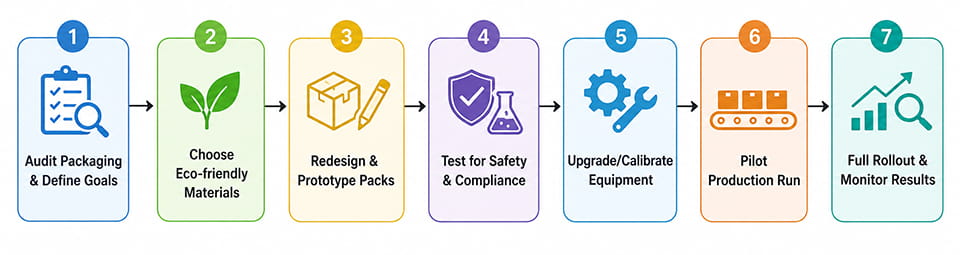
Figura: Passos para a transição para embalagens sustentáveis – da auditoria à produção em grande escala.
Ao longo deste processo, tenha em mente a chave otimização de embalagens estratégias. Por exemplo, usar design auxiliado por computador para dimensionar caixas e bandejas corretamente, e empregar transportadores a vácuo ou guias ajustáveis nas enchedoras para evitar derramamentos de produtos. Avaliação do ciclo de vida (ACV) o software pode ajudar a comparar o impacto ambiental total de alternativas (por exemplo, balanceamento de material vs.. reciclabilidade). Muitas empresas começam focando nas vitórias mais fáceis (mudando para papelão reciclado, rótulos mais leves) e depois enfrentar áreas mais difíceis (blisters complexos ou kits multimateriais).
Exemplos de embalagens sustentáveis na indústria farmacêutica
- Pfizer (Centro): Removendo o PVC e reduzindo o tamanho da caixa, A Pfizer eliminou cerca de 60 toneladas de plástico/embalagens num ano. Eles também enviaram mais unidades por palete, reduzir as emissões dos transportes.
- GSK (Ventolina, Nicoderma): A GSK substituiu muitas bandejas e caixas multicamadas (inaladores, patches) com caixas recicláveis e caixas-palete. Uma reformulação do Ventolin economizou aproximadamente 305 toneladas de material de embalagem e reduziu as emissões de CO₂ em aproximadamente 1.550 toneladas por ano.
- Astellas (Bolhas): Astellas introduziu blisters feitos parcialmente de PP derivado da cana-de-açúcar, reduzindo a entrada de fósseis (embora não seja totalmente biodegradável, é renovável).
- Empacotadores de contrato: Alguns fabricantes contratados agora se especializam em “embalagens verdes” – usando materiais ecológicos e doando plástico PCR. Seus estudos de caso mostram pedidos com 100% garrafas recicladas ou caixas sem bandeja vendem bem para compradores conscientes.
Estes exemplos sublinham que mesmo numa indústria altamente regulamentada, embalagens sustentáveis podem ser feitas de forma eficaz com economia de custos.
Começando: Parceria com Jinlu Packing
A transição para embalagens sustentáveis pode parecer complexa, mas você não precisa seguir sozinho. Embalagem Jinlu oferece um portfólio completo de máquinas de embalagem de nível farmacêutico que apoiam iniciativas ecológicas:
- Máquinas Ecocompatíveis: Muitos modelos Jinlu são construídos para funcionar com materiais reciclados ou biodegradáveis sem sacrificar a velocidade ou a qualidade. Por exemplo, nossas máquinas de blister lidam com estoques mono-PP ou paperblister, e cartonadoras podem acomodar painéis de fibra reciclada.
- Soluções Personalizadas: Precisa modernizar sua linha? Jinlu fornece personalização (alimentadores a vácuo, atualizações de servo) para minimizar o desperdício de material. Nossos engenheiros internos garantem que seu equipamento atenda às suas metas ecológicas.
- Conformidade e Suporte: As máquinas Jinlu atendem aos padrões internacionais (cgmp, CE, FDA, Ema). Também oferecemos treinamento e suporte de mudança para que seus novos pacotes sustentáveis funcionem sem problemas.
- Parceiro único: De envasadoras de cápsulas a unidades stick-pack e máquinas de contagem, Jinlu pode fornecer um linha de embalagens sustentáveis pronta para uso. Isso simplifica o gerenciamento de fornecedores e garante que todos os componentes sejam otimizados juntos.
Pronto para tornar sua linha de embalagens mais ecológica? Contate os especialistas da Jinlu para uma consulta gratuita. Podemos avaliar seu produto e sugerir atualizações de máquinas ou novas linhas que utilizem materiais recicláveis e reduzam o desperdício. Visite nossa máquina embaladora de blister, Máquina de encadernação, Máquina de embalagem de sachet, Máquina de enchimento de cápsulas, Máquina de contagem e máquina de embalagem de bolsas pré-fabricadas para ver como cada uma pode se encaixar em sua estratégia de embalagem sustentável. Junto, podemos ajudar seus produtos farmacêuticos a proteger a saúde e o meio ambiente.
Perguntas frequentes sobre embalagens sustentáveis na indústria farmacêutica
O que são embalagens sustentáveis na indústria farmacêutica?
Embalagens sustentáveis na indústria farmacêutica referem-se a soluções de embalagem projetadas para reduzir o impacto ambiental, ao mesmo tempo que protegem os medicamentos e atendem a requisitos regulatórios rigorosos.. Isso inclui o uso de materiais recicláveis, reduzindo o desperdício de embalagens, reduzindo as emissões de carbono, e melhorar a eficiência das embalagens em toda a cadeia de abastecimento.
Por que as embalagens sustentáveis estão se tornando importantes para as empresas farmacêuticas?
Os fabricantes farmacêuticos enfrentam pressão crescente dos governos, Provedores de saúde, e consumidores para reduzir o desperdício de embalagens e melhorar o desempenho ESG. Embalagens sustentáveis também ajudam as empresas a reduzir o uso de materiais, melhorar a eficiência logística, e preparar-se para futuras regulamentações ambientais.
Quais materiais são comumente usados em embalagens farmacêuticas sustentáveis?
Os materiais de embalagem sustentáveis comuns incluem:
• Plásticos recicláveis como PET, PP, e PEAD
• Embalagens de papelão e fibra
• Materiais de base biológica ou biodegradáveis
• Alumínio e vidro reciclados
• Embalagem flexível monomaterial
A seleção do material ainda depende muito da estabilidade do medicamento, Proteção de barreira, e requisitos de conformidade.
As embalagens farmacêuticas podem ser sustentáveis e compatíveis com GMP??
Sim. Soluções modernas de embalagens farmacêuticas sustentáveis são projetadas para manter a segurança do produto, Proteção de umidade, evidência de adulteração, e conformidade de serialização enquanto reduz o impacto ambiental. A chave é equilibrar a sustentabilidade com os requisitos regulamentares e de proteção dos produtos.
Quais são os maiores desafios das embalagens farmacêuticas sustentáveis?
Alguns desafios importantes incluem:
• Regulamentações farmacêuticas rigorosas
• Requisitos de proteção de barreira
• Teste de compatibilidade de medicamentos
• Custos iniciais de material mais elevados
• Infraestrutura de reciclagem limitada
• Dificuldade em reciclar materiais multicamadas
Muitas empresas estão agora investindo em designs monomateriais e embalagens leves para resolver esses problemas.
Como as empresas farmacêuticas podem reduzir o desperdício de embalagens?
Os fabricantes farmacêuticos podem reduzir o desperdício de embalagens:
• Otimizando tamanhos de pacotes
• Redução de embalagens secundárias desnecessárias
• Usando materiais leves
• Substituição de inserções de papel por folhetos digitais
• Melhorar a eficiência da linha de embalagem
• Atualização para máquinas de embalagem com eficiência energética
Essas estratégias ajudam a reduzir o consumo de materiais e os custos operacionais.
Os materiais biodegradáveis são adequados para embalagens farmacêuticas??
Materiais biodegradáveis podem funcionar bem para algumas aplicações de embalagens farmacêuticas secundárias e terciárias, como caixas, bandejas, e camadas protetoras. No entanto, a embalagem primária ainda exige um forte desempenho de barreira e testes de compatibilidade para proteger medicamentos sensíveis.
Como as máquinas de embalagem apoiam as metas de embalagens sustentáveis?
As modernas máquinas de embalagem farmacêutica ajudam a reduzir o desperdício através de:
• Sistemas precisos de alimentação de material
• Automação servoacionada
• Redução do consumo de filme
• Tecnologias de economia de energia
• Tempos de troca mais rápidos
• Maior eficiência de produção
Máquinas avançadas de embalagem em blister, máquinas de embalagem, e máquinas stick pack podem melhorar significativamente o desempenho de sustentabilidade em fábricas farmacêuticas.
Referências:
1.Embalagem sustentável —— Wikipédia
2.Abordagem de ecodesign para embalagens farmacêuticas baseada na Avaliação do Ciclo de Vida —— Ciência Direta
3.Resíduos de embalagens —— Comissão Europeia
4.TRS 902 – Anexo 9: Diretrizes sobre embalagens de produtos farmacêuticos -- QUEM
5.Inovações globais em embalagens farmacêuticas sustentáveis no último 25 Anos: Uma revisão do escopo —— MDPI


Uma resposta
Este é um ponto importante. A indústria farmacêutica produz muitos resíduos plásticos, portanto, avançar em direção a embalagens sustentáveis é um passo inteligente e responsável. Usando reciclável, reciclado, ou materiais biodegradáveis podem ajudar a reduzir a poluição, atender novos regulamentos, e mostrar aos clientes que a empresa se preocupa com o meio ambiente.