Wprowadzenie na rynek nowego produktu farmaceutycznego wymaga znacznie więcej niż tylko opracowania skutecznej receptury. Jedną z najważniejszych decyzji, przed którą stają producenci, jest wybór odpowiedniego opakowania. Opakowanie wybrane dla produktu farmaceutycznego może bezpośrednio wpływać na jego stabilność, trwałość, Zgodność regulacyjna, bezpieczeństwo transportu, i doświadczenie pacjenta. Opakowanie, które nie chroni przed wilgocią, tlen, światło, lub zanieczyszczenia mogą obniżyć jakość produktu na długo przed dotarciem do użytkownika końcowego. Opakowanie to zatem nie tylko pojemnik – to istotna część systemu ochrony produktu.
Dla producentów farmaceutycznych, kierownicy produkcji, i zespoły zakupowe, wybór odpowiedniego opakowania wymaga zrównoważenia wielu czynników, w tym postać dawkowania, Kompatybilność materialna, wydajność bariery, bezpieczeństwo pacjenta, Wydajność produkcji, i przyszłą skalowalność. Czy produkt jest tabletem, kapsułka, proszek, płyn, lub do wstrzykiwania, właściwe rozwiązanie opakowaniowe może pomóc zapewnić integralność produktu, jednocześnie wspierając wydajną produkcję komercyjną. W tym przewodniku, przeanalizujemy kluczowe czynniki, które każdy producent powinien wziąć pod uwagę przy wyborze opakowania nowego produktu farmaceutycznego.
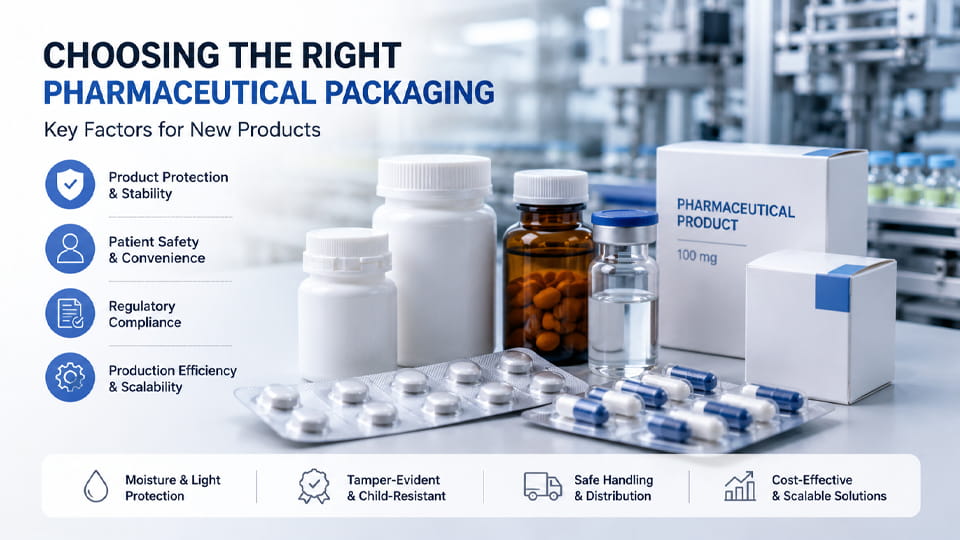
Dlaczego wybór opakowania ma znaczenie w branży farmaceutycznej
Opakowanie farmaceutyczne Jest niezbędny, nie opcjonalne. W przeciwieństwie do zwykłych opakowań konsumenckich, opakowanie farmaceutyczne musi chronić integralność leku przez cały okres jego ważności. WHO i wytyczne regulacyjne podkreślają, że opakowanie musi chronić leki przed wilgoć, światło, tlen i inne zagrożenia zewnętrzne. Innymi słowy, „zachowuje stabilność i jakość produktów leczniczych” oraz zapobiega psuciu się lub manipulacji.
Kluczowe funkcje opakowania obejmują:
- Ochrona produktu: Chronić przed wilgocią, tlen, światło, ciepło i zanieczyszczenia. Na przykład, wytyczne USP zauważają, że tabletki stałe „należy chronić przed parą wodną” ponieważ wilgoć może zmienić moc lub rozpuszczanie leku. Materiały o wysokiej barierowości (folia aluminiowa, folie powlekane, szkło bursztynowe) są często stosowane tam, gdzie czułość jest wysoka.
- Zgodność z przepisami: Opakowanie musi spełniać wymogi FDA, EMA i WHO Wymagania GMP. Obejmuje to właściwe integralność zamknięcia pojemnika (CCI), sprawdzone materiały, i funkcje takie jak widoczne w przypadku manipulacji uszczelki. Opakowanie zabezpieczone przed dziećmi jest wymagany w przypadku wielu leków, aby zapobiec przypadkowemu spożyciu. Serializacja i identyfikowalność (unikalne kody kreskowe na każdym opakowaniu) są obecnie obowiązkowe na głównych rynkach (FDA DSCSA, FMD UE).
- Bezpieczeństwo pacjenta i zgodność z przepisami: Konstrukcja opakowania powinna zapobiegać błędom w dozowaniu i niewłaściwemu użyciu. Etykiety zabezpieczające przed manipulacją i zakrętki zabezpieczające przed dziećmi „chronić przed przypadkowym zatruciem”. Przyjazne dla użytkownika funkcje (łatwootwierane, pomoce dozujące, pęcherze kalendarzowe) pomóc pacjentom w prawidłowym przyjmowaniu leków.
- Marka i komunikacja: Opakowanie wtórne (kartony, etykiety) dostarcza instrukcje, ostrzeżenia, i branding. Według ekspertów, etykiety muszą być trwałe i przejrzyste, aby uniknąć pomyłek. Rzeczywiście, jedna analiza wykazała prawie 50% wycofań leków są powiązane z problemami związanymi z pakowaniem/etykietowaniem.
Krótko mówiąc, opakowanie stanowi aktywne zabezpieczenie. Niewybranie odpowiedniego pakietu może prowadzić do pogorszenia jakości interfejsów API, krzywda pacjenta, i regulacyjne bóle głowy. Właściwe opakowanie „chroni jakość leku” i w ten sposób stanowi podstawę skuteczności i reputacji produktu.

Krok 1: Poznaj charakterystykę nowego produktu farmaceutycznego
Pierwszym krokiem jest dokładny audyt produktu. Zapytać: Jaka jest postać dawkowania (tabletka, kapsułka, proszek, płyn, wstrzykiwalny, itp.)? Jakie wrażliwości ma lek (wilgoć, tlen, światło, ciepło)? Czy wymaga specjalnej kontroli dawkowania (inhalator z odmierzoną dawką, zakraplacz, fabrycznie napełniona strzykawka)?
- Forma dawkowania: Zazwyczaj są to tabletki i kapsułki dawka stała i często pakowane blistry lub butelki. Dostają się płyny/zawiesiny butelki lub fiolki. Zastrzyki wymagają sterylne fiolki, ampułki lub ampułko-strzykawki. Gazy/inhalatory korzystają ze specjalistycznych kanistrów. Można pakować proszki lub granulki saszetki, saszetki lub butelki.
- Wrażliwość chemiczna/fizyczna: Czy lek jest higroskopijny lub podatny na utlenianie? Leki bardzo wrażliwe na wilgoć (np. tabletki musujące) potrzebować opakowania wysokobarierowe jak blistry Alu-Alu lub butelki wyłożone środkiem osuszającym. Potrzebne są związki wrażliwe na światło nieprzezroczyste lub zabarwione pojemniki. Leki reaktywne wymagają materiałów obojętnych (np. szkło, niektóre polimery).
- Trwałość i stabilność: Rozważ dowolną wymaganą kontrolę temperatury (chłodzenie) lub w warunkach próżniowych/sterylnych. Niektóre szczepionki lub leki biologiczne mogą wymagać pakowania w łańcuchu chłodniczym lub specjalistycznych fiolek.
Kluczowy punkt: Opakowanie podstawowe musi być obojętne i ochronne. Nie powinien wydzielać ani wchłaniać leku, i musi utrzymywać szczelne środowisko. Na przykład, FDA zauważa, że stałe pojemniki doustne powinny mieć: „niski współczynnik przenikania pary wodnej, a system zamknięcia powinien ustanawiać pieczęć”. Przeprowadzenie testów kompatybilności i ekstrakcji z potencjalnymi składnikami opakowań ma kluczowe znaczenie.
Lista kontrolna do audytu produktu:
- Postać/rodzaj dawkowania (tabletka, kapsułka, płyn, itp.)
- Warunki przechowywania/stabilności (temperatura, wilgotność, światło)
- Wymagania dotyczące dawkowania/podawania (zakraplacz, pompa, dawka jednostkowa)
- Uwagi dotyczące stosowania przez pacjenta (medycyna dziecięca kontra medycyna dorosłych, ruchliwość, przyjazny seniorom)
- Ograniczenia regulacyjne (np. jest częścią pakietu podstawowego, zawierającą informacje o pacjencie?)
To zrozumienie wpłynie na wybór opakowania podstawowego (opakowanie mające bezpośredni kontakt z lekiem). Następny, omawiamy te opcje.
Krok 2: Wybierz odpowiednie opakowanie podstawowe
Opakowanie podstawowe to bezpośredni pojemnik, w którym znajduje się lek. Bezpośrednio wpływa na lek. Typowe typy opakowań podstawowych obejmują Pakiety pęcherzy, butelki (plastik/szkło), fiolki/ampułki, torebki, rurki, itp. Każdy ma zalety/wady:
- Pakiety pęcherzy (Alu-Alu lub Alu-PVC): Idealny do postaci stałych w dawkach jednostkowych (tabletki, kapsułki). Zapewniają doskonała bariera dla wilgoci i światła, zwłaszcza Alu-Alu (folia formowana na zimno) typ. Blistry zapewniają szczelne zamknięcie każdej dawki do czasu użycia, poprawa zgodności i ograniczenie zanieczyszczeń krzyżowych. Nowoczesne pęcherze mogą być zabezpieczone przed dziećmi. Sprzęt: Duża prędkość Maszyny pakowania pęcherzy formowanie uchwytu, karmienie, zgrzewanie i cięcie (np. Maszyny blistrowe Alu-Alu firmy JinluPacking).
- Butelki (Plastik lub szkło): Typowe dla opakowań wielojednostkowych (syropy, kapsułki, tabletki). Butelki są opłacalne w przypadku dużych objętości. Butelki szklane (Borokrzemian typu I) zapewniają doskonałą obojętność chemiczną i mogą być zabarwione na bursztynowo w celu ochrony przed światłem. Plastikowe butelki (HDPE, PP) są lekkie i nietłukące, ale zazwyczaj mają większą przepuszczalność wilgoci. Butelki często używane czapki zabezpieczające przed dziećmi. Sprzęt: Maszyny liczące/napełniające napełniają i zamykają butelki, i może włóż środki osuszające lub uszczelki foliowe (zobacz na liniach liczenia). Linie do napełniania butelek i automatyczne maszyny do zamykania butelek Jinlu integrują te kroki.
- Saszetki & Pakiety sztyftów: Używane do proszków, granulki, lub jednodawkowe płyny (np. antybiotyki, ORS). Są to elastyczne woreczki foliowe lub laminowane zgrzewane ze wszystkich stron. Saszetki stanowią doskonałą barierę (często folią aluminiową) i wygoda. Sprzęt: Tworzą się maszyny pakujące w saszetki, wypełnić, i zamknij te torebki za jednym razem.
- Fiolki & Ampułki: Standard dla sterylnych wstrzykiwaczy (rozwiązania, liofilizowane proszki). Fiolki (szkło lub plastik) z gumowymi zatyczkami zachowują sterylność. Ampułki (szkło) są hermetycznie zamknięte do czasu użycia. Obydwa zapewniają wysoką czystość i nadają się do igieł/strzykawek. Sprzęt: Linie do napełniania fiolek, stosowane są maszyny do zamykania i zaciskania (często z obszarami przepływu laminarnego zapewniającymi sterylność).
- Inni: Rury (metal lub plastik) są powszechne w przypadku maści/kremów. Ampułko-strzykawki lub inhalatory (MDI/DPI) obejmować niestandardowe opakowanie urządzenia. Często wymagają one specjalistycznego sprzętu do napełniania i montażu.
Przydatność każdej opcji zależy od produktu:
- Koszt vs. Ochrona: Tabela poniżej porównuje typy opakowań podstawowych:
| Typ |
Najlepsze dla |
Poziom ochrony |
Koszt |
Sprzęt |
| Pakiet blister |
Tabletki, Kapsułki |
Bardzo wysoki (Wilgoć/Światło) |
Średni |
Maszyna do pakowania w blistry |
| Butelka |
Tabletki, Syropy, Pigułki |
Średni (dobry z wkładkami) |
Niski |
Linia do napełniania/zakręcania butelek |
| Saszetka/sztyft |
Proszki, Granulki |
Wysoki (Bariera foliowa) |
Średni |
Maszyna do pakowania saszetki |
| Fiolka/ampułka |
Zastrzyki, Sera |
Bardzo wysoki (Sterylne szkło) |
Wysoki |
Napełnianie fiolki & Linia uszczelniająca |
Wybierz opakowanie podstawowe, które odpowiada postaci dawkowania i wymaganiom barierowym. Na przykład, tablet wrażliwy na wilgoć może wymagać Blister Alu-Alu lub butelka ze szkła oranżowego ze środkiem suszącym. Bardziej zwykłe tabletki OTC można umieścić w plastikowej butelce z szczelną nakrętką (plus funkcja zabezpieczenia przed dziećmi).
Wskazówka: Jeśli ważne jest przestrzeganie dawki jednostkowej (NP., dystrybucja szpitalna lub pakiety podróżne), Często preferowane są blistry lub opakowania typu stick. Dla elastyczności (dawki można zmieniać), butelki są lepsze.
Krok 3: Rozważ wymagania dotyczące stabilności i okresu przydatności do spożycia
Decyzje dotyczące pakowania są nierozerwalnie związane ze stabilnością. Niewłaściwy pojemnik może spowodować degradację lub uszkodzenie etykiety. Kluczowe rozważania:
- Właściwości barierowe: Używaj materiałów blokujących czynniki krytyczne. Dla leki wrażliwe na wilgoć, potrzebne są folie wysokobarierowe lub szkło. Na przykład, Blistry aluminiowe formowane na zimno zapewniają zasadniczo zerowy dostęp wilgoci. Wytyczne dotyczące stabilności FDA/ICH stwierdzają, że produkty znajdują się w naprawdę nieprzepuszczalnych pojemnikach (NP., blistry foliowe lub uszczelnione szkło) można testować w normalnych warunkach bez specjalnych badań wilgotności. Odwrotnie, opakowania półprzepuszczalne (jak niektóre plastiki) wymagają dokładnej oceny wilgotności.
- Ochrona światła: Światłoczułe interfejsy API wymagają nieprzezroczystego lub bursztynowego opakowania. Na przykład, Butelki ze szkła oranżowego lub woreczki metalizowane chronią przed promieniowaniem UV. Powszechną praktyką jest owijanie przezroczystych fiolek w folię aluminiową, jeśli to konieczne.
- Zgodność: Upewnij się, że materiały opakowaniowe nie wchodzą w reakcję z lekiem. Szkło jest obojętne, ale niektóre tworzywa sztuczne mogą wydzielać lub wchłaniać związki. Wykonaj badania substancji ulegających ekstrakcji/wymywaniu na składnikach głównych. Wytyczne regulacyjne (FDA, EMA) oczekiwać integralność zamknięcia pojemnika (CCI) testowanie przez cały okres przydatności do spożycia.
- Określenie okresu przydatności do spożycia: Badania stabilności (I Q1A/R2) musi skorzystać z proponowany system zamykania pojemników. Jeśli badania trwałości wykażą degradację, może być konieczne dostosowanie opakowania (np. zmień barierę na lepszą) lub instrukcje obsługi/przechowywania etykiet.
- Zaawansowane funkcje: Niektóre opakowania zawierają środki suszące lub pochłaniacze tlenu. Laminaty wielowarstwowe (PET/aluminium/PE) są często wykorzystywane do dystrybucji globalnej. Dla bardzo precyzyjnej ochrony, opakowanie aktywne (wbudowane pochłaniacze wilgoci) można używać.
Lista kontrolna zgodności stabilności:
- W razie potrzeby wybierz materiał podstawowy o wysokiej barierowości (Alu-Alu, szkło, laminaty).
- Sprawdź metodę uszczelniania (uszczelnienie termiczne, czapki) zapewnia niską przepuszczalność pary wodnej (MVTR).
- Przeprowadź przyspieszoną stabilność (40°C/75% wilgotności względnej) zgodnie z ICH, aby zapewnić brak wnikania wilgoci i zmian chemicznych.
- Zaplanuj integralność zamknięcia pojemnika (badanie próżniowe lub wnikanie barwnika) szczególnie w przypadku produktów płynnych/sterylnych.
- Upewnij się, że opakowanie wytrzyma wstrząsy dystrybucyjne (badanie upadku/wibracji na opakowaniu wtórnym/trzeciorzędnym).
Wybierając opakowanie spełniające z góry wymagania dotyczące stabilności, unikasz kosztownych zmian w składzie lub późniejszego przepakowywania.
Krok 4: Oceń wygodę i zgodność pacjenta
Poza ochroną, nowoczesne opakowania powinny pomóc pacjentom w prawidłowym stosowaniu leku. Projekt opakowania bezpośrednio wpływa na przyczepność i bezpieczeństwo. Rozważać:
- Otwieranie/Łatwość użycia: Starsi pacjenci mogą mieć problemy z ciasnymi czepkami. Ofiara czapki przyjazne seniorom lub łatwe do oderwania uszczelki mogą być korzystne. W przypadku leków jednodawkowych, pęcherze kalendarzowe (oznaczone dni lub godziny) może przypominać pacjentom o przyjęciu właściwej pigułki.
- Pomoce dozujące: Jeśli ma to zastosowanie, zawierać miarki/łyżki do płynów, kroplomierze do oczu, lub pompy odmierzające dawkę. Wyraźne oznaczenia na pojemniku (ukończenie szkoły, kolorowe paski) poprawić dokładność.
- Ruchliwość: Jeśli pacjenci podróżują lub noszą leki, przydatne są kompaktowe saszetki lub małe butelki. Elementy zabezpieczające przed manipulacją zapewniają bezpieczeństwo.
- Funkcje zgodności: Niektóre opakowania podstawowe zaprojektowano pod kątem zgodności: NP., dozowniki tabletek z wbudowanymi alarmami, lub inteligentne karty blistrowe śledzące użycie. Jeśli wysoka przyczepność jest krytyczna, rozważ takie innowacje.
- Etykiety i wkładki: Upewnij się, że jest jasne, wielojęzyczne instrukcje na pudełku lub ulotce. Dobre opakowanie pomaga farmaceutom i pacjentom uzyskać czytelne etykiety, wykresy dawkowania, i ikony przechowywania.
Esencjonalnie, zapytać: Czy pacjent uzna ten pakiet za łatwy i bezpieczny w użyciu?? W przeciwnym razie, mogą niewłaściwie wykorzystać lub porzucić produkt. Zawiera funkcje zorientowane na pacjenta (blokady dla dzieci, łatwootwierane, jasne oznakowanie) satysfakcjonuje również organy regulacyjne, które kładą nacisk na bezpieczeństwo pacjenta.
Krok 5: Zapewnij zgodność z przepisami
Opakowania farmaceutyczne podlegają ścisłym regulacjom. Kluczowe kwestie związane ze zgodnością:
- Odporny na dzieci (CR) wymagania: Wiele krajów (NAS, UE, UA) nakaz stosowania opakowań CR w przypadku leków doustnych wysokiego ryzyka. WHO to zauważa „opracowano zamknięcia zabezpieczające przed dziećmi” chronić dzieci. Upewnij się, że doustne leki na receptę w postaci stałej i płynnej mają certyfikowane nakrętki CR lub mechanizmy typu push-turn, jeśli jest to wymagane przez prawo. (Np. NAS 16 CFR 1700 złote standardy UE EN 14375).
- Plomby zabezpieczające przed manipulacją: FDA i inne wymagają dowodu, że opakowanie nie zostało otwarte. Opaski sabotażowe, okłady termokurczliwe, lub zrywalne uszczelki są powszechne na butelkach; Folie uszczelniające są powszechne na słoikach. Nawet opakowania blistrowe powinny być trudne do otwarcia bez widocznych uszkodzeń.
- Etykietowanie: Opakowania pierwotne i wtórne muszą zawierać wszystkie wymagane informacje (nazwa leku, wytrzymałość, postać dawkowania, numer partii/partii, wygaśnięcie, Warunki przechowywania, producent). Czcionki muszą być czytelne i zgodne z wytycznymi farmakopei. Na przykład, FDA 21 CFR 201.15 obejmuje trwałość etykiety.
- Serializacja i identyfikowalność: Przepisy takie jak DSCSA FDA (NAS) i dyrektywa UE dotycząca leków sfałszowanych wymagają unikalnych kodów (np. 2Kody kreskowe D) na każdym sprzedawanym egzemplarzu. Projekt opakowania musi uwzględniać nadruk lub wytrawienie numerów seryjnych i kodów datamatrix na blistrach lub etykietach butelek. Twoja linia pakująca może potrzebować drukarki kodującej i systemu wizyjnego, oraz integrację z bazą danych umożliwiającą śledzenie przesyłek.
- Dobre Praktyki Produkcyjne (GMP): Linie pakujące musi spełniać wymagania GMP (możliwość czyszczenia, identyfikowalność materiału, itp.). Wszystkie stosowane opakowania podstawowe muszą posiadać certyfikat GMP (np. ISO 15378 do materiałów opakowaniowych). Maszyny powinny być IR/WH/PQ wykwalifikowany. (Poniżej znajdziesz sprzęt do pakowania Jinlu).
Kluczowa wskazówka dotycząca przepisów: Nie traktuj przestrzegania zasad po namyśle. Na przykład, brak zabezpieczenia umożliwiającego stwierdzenie manipulacji może uniemożliwić rejestrację produktu. Wcześnie przejrzyj przepisy obowiązujące w danym kraju – np. USP <661> do pojemników plastikowych, CFR 211 do kontroli opakowań. Zawsze sprawdzaj, czy wybrane opakowanie i sprzęt do pakowania spełniają te standardy.
Krok 6: Zrównoważ koszty pakowania i wydajność produkcji
Na tym etapie, oceniać całkowity koszt posiadania (Tco) dla opcji pakowania. Rozważać:
- Koszt materiału: Elastyczne torebki i blistry mogą kosztować więcej za sztukę niż zwykłe butelki. Folia blistrowa Alu-Alu jest droższa od folii PVC. Butelki szklane kosztują więcej niż plastikowe.
- Przepustowość sprzętu: Formaty o wysokiej barierowości, takie jak blistry, mogą działać wolniej niż linie butelek, wpływając na liczbę potrzebnego sprzętu. Odwrotnie, napełniacze butelek mogą osiągać bardzo duże prędkości (kilka tysięcy butelek/godzinę) ale potrzebuję unscramblerów, czapki, i etykiety w linii.
- Złożoność linii: Bardziej złożone opakowanie (np. blistry jednodawkowe) wymaga specjalistycznych maszyn. Sprawdź, czy inwestycje kapitałowe i utrzymanie mieszczą się w Twoim budżecie.
- Praca: W pełni zautomatyzowane linie zmniejszają siłę roboczą, ale zwiększają kapitał. Maszyny półautomatyczne kosztują mniej, ale wymagają większej liczby operatorów.
- Logistyka: Opakowanie wtórne/trzeciorzędne również kosztuje. Duże szklane butelki są cięższe w transporcie. Puste kartony zwiększają koszty transportu.
- Odpady i plon: Więcej przetwarzania (np. dziurkowanie pęcherzy) może generować złom. Oceń zmarnowane materiały (odciąć od pęcherzy, rozbite butelki, itp.).
Wykonaj szorstkie porównanie kosztów: np. koszt końcowego opakowania, w tym materiały i przetwarzanie. Weź także pod uwagę prędkość (jednostek na godzinę) i wymaganą wielkość partii.
A Lista kontrolna całkowitego kosztu posiadania:
- Porównaj jednostkowy koszt materiału opakowaniowego.
- Oceń potrzebną przepustowość maszyny w porównaniu z zapotrzebowaniem.
- Oblicz koszty pracy i energii dla każdej linii.
- Uwzględnij koszty utylizacji/recyklingu odpadów.
- Czynnik ryzyka przeróbek (np. jeśli opakowanie się nie powiedzie, koszt ponownego oznakowania lub przepakowania).
- Przyszłe zwiększanie skali: jeśli wolumen się podwoi, czy to rozwiązanie ma skalę?
Często Najtańszy materiał nie jest najlepszy jeśli prowadzi to do wycofania lub odrzucenia. Znalezienie równowagi jest kluczowe: czasami płacenie więcej za lepszą barierę lub automatyzację opłaca się w postaci wyższej wydajności i zgodności.
Krok 7: Upewnij się, że opakowanie można skalować zgodnie z przyszłym popytem
Weź pod uwagę nie tylko natychmiastowe uruchomienie, ale długoterminowy cykl życia produktu:
- Pilot vs. Handlowy: Do pierwszych partii klinicznych lub przeznaczonych na mały rynek, możesz używać linii ręcznych lub półautomatycznych. Do produkcji na dużą skalę, potrzebna będzie w pełni zautomatyzowana linia. Upewnij się, że twój wybór (lub propozycja dostawcy) umożliwia modułową rozbudowę.
- Modułowość sprzętu: Czy możesz dodać pasy lub jednostki, aby zwiększyć prędkość?? Na przykład, niektóre maszyny blistrowe mogą dodać więcej kieszeni obrotowych. Linie rozlewnicze mogą dodawać równoległe napełniacze.
- Integracja: Myśl od końca do końca: liczenie/napełnianie → zamykanie → kartonowanie → pakowanie w pudełka → paletowanie. Jeśli współpracujesz z Jinlu Packing lub podobnym, mogą zaprojektować Linia pakowania pod klucz obejmuje to serializację, kartonowanie, pakowanie walizek, itp.
- Skalowanie regulacyjne: Wszelkie zmiany w elementach opakowania (np. nowy dostawca butelek) wymaga ponownego zatwierdzenia przez organy regulacyjne, jeżeli ma to wpływ na stabilność lub zgodność. Planuj kontrolę jakości dostawców opakowań i dostawców zapasowych.
- Produkty przyszłości: Jeśli Twoja firma może produkować inne postacie dawkowania (np. w przyszłości żel), wybierz elastyczny sprzęt. Modułowe napełniacze kapsułek lub maszyny blistrowe, które obsługują różne formaty, mogą być dobrą inwestycją.
Wczesne zaangażowanie inżynierów zajmujących się pakowaniem lub konsultanta może później zapobiec wąskim gardłom. Jak zauważa jeden z ekspertów branżowych, „Opakowanie należy rozważać równolegle z opracowywaniem receptury, nie jako refleksja.” Właściwe decyzje podjęte na wczesnym etapie sprawią, że skalowanie i rozszerzanie linii będzie płynniejsze.
Typowe błędy przy wyborze opakowań, których należy unikać
- Zbyt późne pozostawienie wyboru opakowania: Nie decyduj o opakowaniu dopiero po zablokowaniu receptury. Wczesne badania stabilności powinny wykorzystywać opakowanie końcowe, a nie fikcyjne słoiki.
- Pomijam testy stabilności: Nigdy nie zakładaj, że pojemnik będzie działać; zawsze testuj swój lek w rzeczywistym pojemniku/zamknięciu zgodnie z warunkami ICH. W przeciwnym razie stabilna formuła może ulec degradacji, jeśli opakowanie jest złe.
- Koncentrując się wyłącznie na kosztach: Tanie materiały mogą zaoszczędzić pieniądze na początku, ale kosztują więcej w przypadku wycofania lub krótszego okresu przydatności do spożycia. Zrównoważ koszty z ochroną.
- Ignorowanie czynników pacjenta: Standardowa butelka może odpowiadać docelowym kosztom, ale jeśli pacjenci nie mogą go otworzyć lub przykleić, produkt będzie osiągał słabsze wyniki na rynku.
- Niedocenianie potrzeb regulacyjnych: Brak plomby zabezpieczającej przed manipulacją lub zamknięcia zabezpieczającego przed dziećmi, jeśli jest to wymagane, może uniemożliwić zatwierdzenie. Zawsze zapoznaj się z wytycznymi.
- Zaniedbanie łańcucha dostaw: Weź pod uwagę czas realizacji dostaw opakowań i okres przydatności do spożycia. Niektóre materiały specjalne (jak wkładki pochłaniające tlen) może mieć długi czas realizacji.
Unikając tych błędów i przeglądu międzyfunkcyjnego (R&D, Kontrola jakości, Produkcja, Regulacyjne), masz pewność, że wybrane przez Ciebie opakowanie jest wykonalne, uległy, i skuteczne.
Zalecane opakowanie według nowego rodzaju produktu farmaceutycznego
| Typ produktu |
Zalecane opakowanie podstawowe |
| Tabletki/kapsułki |
Dawka jednostkowa Pakiety pęcherzy (Alu-Alu lub PVC/Alu) Lub cielsko butelki. Zakrętki zabezpieczające przed dziećmi do butelek. Idealny sprzęt: maszyna pakująca w blistry lub licząca tabletki/kapsułki & linia rozlewnicza. |
| Proszki/granulki doustne |
Saszetki Lub Pakiety kijowe (dla pojedynczej dawki); Lub butelki (dla masowych). Maszyny pakujące w saszetki jednodawkowe, napełniacze ślimakowe do butelek. |
| Płyny/Syropy |
Butelki plastikowe lub szklane z zakrętkami (często z foliową uszczelką i zakrętką zabezpieczoną przed dziećmi). Dla wysokiej czystości, Szkło typu I. Sprzęt: Linia do napełniania płynem (lakierki, ograniczanie liniowe). |
| Zastrzyki |
Szklane fiolki lub ampułki (jałowy) lub ampułko-strzykawki. Używaj sterylnych maszyn do napełniania i zaciskania fiolek w pomieszczeniu czystym. |
| Kremy/maści (Półstałe) |
Rurki lub słoiki (rurki aluminiowe/plastikowe, szklane/plastikowe słoiki). Rury z uszczelkami zabezpieczającymi przed manipulacją. Półautomatyczne lub automatyczne maszyny do napełniania tub. |
| Tabletki musujące |
Rurki lub butelki aluminiowe (aby zachować suchość); często ze środkiem osuszającym. Powszechne są również blistry z folii aluminiowej. Maszyny do rur (dla tabletów) lub maszyny typu blister. |
| Czopki |
Tace blistrowe (zazwyczaj Alu/PVC lub Alu/Alu) lub pudełka z pojedynczo zapakowanymi jednostkami. Pakowarki blistrowe lub termoformierki. |
| Inhalatory/spraye do nosa |
Puszki MDI lub wkłady DPI (specyficzne dla urządzenia). Współpraca z producentem urządzenia; niestandardowy sprzęt do napełniania/napełniania puszek. |
To mapowanie pomaga zapewnić, że każda postać leku otrzyma odpowiednią ochronę. Na przykład, opakowania blistrowe doskonale nadają się do stałych dawek doustnych, podczas gdy szklane fiolki są koniecznością w przypadku sterylnych zastrzyków. Tabela sugeruje również wyposażenie: np. Maszyny pakowania pęcherzy, linie do napełniania i zamykania butelek, maszyny pakujące w saszetki, wypełniacze do fiolek, i tak dalej.
Jak Jinlu Packing pomaga firmom farmaceutycznym
Jinlu Packing jest liderem producent maszyn do pakowania farmaceutyków. Oferujemy rozwiązania „pod klucz” dla nowych linii pakowania leków. Kluczowe oferty:
- Blister Packaging Machine: Wysokoobrotowe maszyny blistrowe do opakowań PVC/Alu lub Alu-Alu. Niestandardowe projekty dopasowane do formatu tabletu/kapsuły i wymagań dotyczących prędkości.
- Napełnianie butelek & Linie ograniczające: Automatyczne napełnianie butelek, zakrywanie, i systemy etykietowania. Nasze linie zliczające i napełniające mogą integrować urządzenia rozszyfrowujące, wkłady osuszające, uszczelniacze foliowe, i zakrętki do butelek na tabletki/żelki.
- Maszyny kartonowe: Kartoniarki poziome i pionowe do składania kartonów wokół blistrów, butelki, lub saszetki. Funkcje takie jak 100% skanowanie kodów w celu serializacji i szybkich zmian.
- Systemy serializacji/kodowania: Możemy wyposażyć linie w kodery atramentowe/laserowe i kontrolę wizyjną w celu drukowania i weryfikacji partii, wygaśnięcie, i unikalne kody.
- Kompletne linie pakujące: Od podawania produktu po pakowanie skrzynek, możemy zaprojektować w pełni zintegrowaną linię spełniającą wymagania cGMP i serializacji. Nasze maszyny są zbudowane z myślą o łatwym czyszczeniu (Stal nierdzewna SUS316L) i dołącz dokumentację IQ/OQ.
- Wsparcie & Zgodność: Pomagamy w kwalifikacji maszyn (IR/WH/PQ) i oferują instalację na miejscu oraz szkolenia na całym świecie.
Współpracując z nami, otrzymujesz nie tylko sprzęt, ale doświadczenie w pakowaniu. Zapewniamy wybraną metodę pakowania (linia pęcherzy, linia butelek, itp.) jest zoptymalizowany pod kątem Twoich potrzeb produktowych i prawnych, dzięki czemu wprowadzenie produktu na rynek będzie płynniejsze.
Wniosek
Wybór odpowiedniego opakowania dla nowego produktu farmaceutycznego to: wieloaspektowa decyzja. Wymaga zrównoważenia stabilności leku, bezpieczeństwo pacjenta, zgodność, koszt, i skalowalność. Pamiętać: najlepsze opakowanie to takie, które zapewnia bezpieczeństwo i skuteczność produktu, dopóki nie dotrze do pacjenta. Nie chodzi tylko o to, żeby był atrakcyjny i tani – chodzi o jakość. Poprzez dokładną analizę właściwości produktu, testowanie opcji pakowania, i następujący regulamin, producenci mogą uniknąć kosztownych wycofań i mieć pewność, że ich lek pozostanie skuteczny, czysty, i bezpieczne. Dzięki dobrze dobranej strategii pakowania (i odpowiednie maszyny), chronisz zarówno swoich klientów, jak i reputację swojej marki.
Często zadawane pytania dotyczące wyboru opakowania nowego produktu farmaceutycznego
Dlaczego opakowanie jest ważne dla nowego produktu farmaceutycznego??
Opakowanie kryje w sobie znacznie więcej niż tylko lek. Chroni produkt farmaceutyczny przed wilgocią, tlen, światło, zanieczyszczenie, i uszkodzenia fizyczne. Właściwe opakowanie pomaga również zapewnić zgodność z przepisami, bezpieczeństwo pacjenta, stabilność produktu, i trwałość podczas dystrybucji i przechowywania.
Jakie czynniki należy wziąć pod uwagę przy wyborze opakowania farmaceutycznego??
Producenci powinni ocenić kilka czynników, w tym:
• Postać dawkowania (tabletka, kapsułka, płyn, proszek, wstrzykiwalny)
• Wrażliwość na wilgoć i tlen
• Wymagania dotyczące ochrony przed światłem
• Docelowy okres trwałości
• Wymagania regulacyjne
• Wygoda pacjenta
• Koszty opakowania
• Wydajność produkcji
• Przyszła skalowalność
Idealne rozwiązanie opakowaniowe powinno równoważyć ochronę produktu, zgodność, i efektywność operacyjną.
Jakie jest najlepsze opakowanie tabletek i kapsułek?
Najbardziej powszechnymi opcjami są blistry i butelki.
• Opakowanie blistrowe zapewnia doskonałą ochronę przed wilgocią i zanieczyszczeniami, zapewniając jednocześnie wygodę podawania dawki jednostkowej.
• Butelki są opłacalne w przypadku produkcji na dużą skalę i są powszechnie stosowane w tabletkach, kapsułki, i suplementy diety.
Najlepszy wybór zależy od wymagań dotyczących stabilności produktu i rynku docelowego.
Jak opakowanie wpływa na stabilność leku?
Materiały opakowaniowe bezpośrednio wpływają na narażenie leku na czynniki środowiskowe, takie jak wilgoć, tlen, i światło. Złe opakowanie może przyspieszyć degradację, zmniejszyć potencję, i skrócić okres przydatności do spożycia. Dlatego też testy stabilności przeprowadza się zwykle przy użyciu ostatecznej konfiguracji opakowania przeznaczonej do dystrybucji komercyjnej.
W jaki sposób firmy farmaceutyczne mogą zapewnić zgodność opakowań?
Producenci powinni sprawdzić materiały opakowaniowe, etykiety, zamknięcia, i sprzęt do pakowania są zgodne z obowiązującymi przepisami, takimi jak FDA, GMP UE, serializacja, i wymagania dotyczące opakowań zabezpieczonych przed dziećmi. Współpraca z doświadczonymi dostawcami sprzętu do pakowania produktów farmaceutycznych może pomóc w uproszczeniu procesów walidacji i zapewniania zgodności.
Kiedy należy uwzględnić opakowanie podczas opracowywania produktu farmaceutycznego??
Opakowanie należy ocenić możliwie najwcześniej na etapie opracowywania produktu. Oczekiwanie na komercjalizację może powodować problemy ze stabilnością, opóźnienia regulacyjne, koszty przeprojektowania opakowania, i wyzwania produkcyjne. Wczesny wybór opakowania umożliwia producentom przeprowadzenie dokładnych badań stabilności i opracowanie bardziej wydajnej strategii pakowania komercyjnego.
Jak wybrać odpowiednią maszynę pakującą farmaceutyczną dla nowego produktu?
Zacznij od oceny:
• Rodzaj produktu i postać dawkowania
• Format opakowania (pęcherz, butelka, saszetka, fiolka)
• Wymagana zdolność produkcyjna
• Poziom automatyzacji
• Wymagania regulacyjne
• Plany przyszłej ekspansji
Wybór skalowalnego sprzętu do pakowania produktów farmaceutycznych może pomóc w obniżeniu przyszłych kosztów inwestycji i wesprzeć długoterminowy rozwój firmy.
Referencje:
1.Systemy zamykania pojemników do pakowania leków dla ludzi i produktów biologicznych -- NAS. Administracja Żywności i Leków
2.Rozwój farmaceutyczny ICH Q8 —— Baza danych ICH
3.Dobre Praktyki Produkcyjne dla Produktów Farmaceutycznych -- KTO
4.USP Q&A: Normy dotyczące systemów opakowań z tworzyw sztucznych dla produktów leczniczych —— usp.org
5.Testowanie integralności zamknięcia kontenera — praktyczne aspekty i podejścia w przemyśle farmaceutycznym —— pda.org
