

Wybór ideału maszyna do pakowania tabletek musujących ma kluczowe znaczenie dla producentów farmaceutyków i nutraceutyków. Tabletki musujące (jak witamina C lub tabletki zobojętniające kwas) są wyjątkowo wrażliwe na wilgoć, dlatego opakowanie musi zapewniać niezawodną barierę dla wilgoci. W tym przewodniku wyjaśniono, dlaczego produkty musujące wymagają specjalistycznych opakowań, porównuje popularne formaty opakowań (rurki, Pakiety pęcherzy, saszetki/paski), i przedstawia 7 kluczowych czynników, które należy wziąć pod uwagę przy zakupie maszyny. Znajdziesz także pomocne tabele porównujące typy maszyn i łatwy schemat blokowy, który pomoże Ci podjąć decyzję. Wreszcie, zapoznaj się z naszymi często zadawanymi pytaniami i bezstresowym wprowadzeniem wyjaśniającym, dlaczego sprzęt i usługi Jinlu Packing mogą być właściwym wyborem dla Twoich potrzeb produkcyjnych.
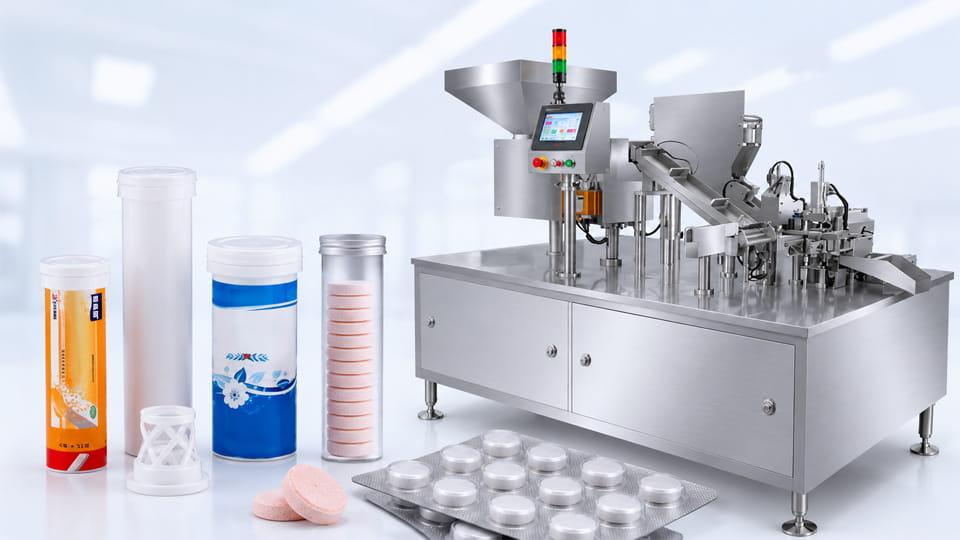
Tabletki musujące zawierają reaktywną chemię kwasowo-zasadową, która uwalnia CO₂ po rozpuszczeniu w wodzie, umożliwiające szybkie dostarczanie składników odżywczych lub leków. To właśnie tworzy mus, ale oznacza to również, że są wyjątkowo wrażliwy na wilgoć. W rzeczywistości, nawet śladową wilgotność może przedwcześnie wywołać reakcję, zmiękczyć tabletki, lub zmniejszyć potencję. Aby temu zapobiec, produkty musujące są wytwarzane i pakowane w warunkach bardzo niskiej wilgotności (często <20–25% wilgotności względnej).
Ponadto, musujące są zwykle niepowlekany (szybko się rozpuścić), więc nie ma folii ochronnej, która blokowałaby wilgoć. Ich stabilność zależy całkowicie od opakowania. Jak zauważa jeden z ekspertów, jeśli przed użyciem dostanie się wilgoć, „reakcja może rozpocząć się zbyt wcześnie” i zrujnować produkt. Krótko mówiąc, Tabletki musujące różnią się od zwykłych tabletek tym Projekt opakowania musi przede wszystkim uwzględniać bariery dla wilgoci i tlenu. Podstawowym celem jest utrzymanie tabletek całkowicie suchych i zamkniętych – zachowanie zarówno integralności, jak i okresu przydatności do spożycia.
Unikalna chemia tabletek musujących sprawia, że jakość opakowania jest kwestią jakości produktu. Do głównych powodów, dla których dobre opakowanie jest tak istotne, należą::
Podsumowując, wybierając prawą opakowanie tabletek musujących nie chodzi tylko o wygodę czy budowanie marki – tu przede wszystkim chodzi Ochrona nad wilgocią, moc, i zgodność. Solidne opakowanie sprawia, że tabletki musujące są stabilne i skuteczne aż do końca okresu przydatności do spożycia.
Tabletki musujące są zazwyczaj sprzedawane w jednym z trzech podstawowych formatów opakowań: rurki (z czapkami), pęcherze (często folia Alu-Alu), lub jednorazowe paski/saszetki. Każdy z nich ma zalety i wady w zakresie bariery dla wilgoci, wygoda, i koszt.
Wiele produktów musujących wykorzystuje sztywne tubki lub butelki (wykonane z tworzywa sztucznego, szkło, lub metalu) za pomocą nakrętki lub zatrzasku. Plastikowe rurki (PP lub PE) są najczęściej spotykane w przypadku witamin i suplementów. Pojemniki te często zawierają zakręcane zakrętki które są albo odporne na wilgoć, albo zawierają wewnętrzną wkładkę ze środkiem osuszającym w postaci żelu krzemionkowego. Zapewnia to połączenie polimerowej rurki i nasadki ze środkiem osuszającym doskonała ochrona przed wilgocią (Środek osuszający aktywnie pochłania wilgoć znajdującą się w środku). Rurki zazwyczaj zapewniają silną ochronę przed wilgocią, co jest krytyczne w przypadku tych higroskopijnych tabletek.
Pojemność i wypełnienie: Rurki są zwykle wypełnione dowolnym materiałem 10 do ~20 tabletek każda (w zależności od rozmiaru tabletki i wysokości tubki). Automatyczne maszyny do napełniania tub liczą i ładują tyle tabletek na tubę.
Wygoda i marka: Tubki są przenośne i przyjazne dla konsumenta – można je łatwo otworzyć jedną ręką – i oferują dużo miejsca na etykietę. Zalety obejmują przenośność, możliwość ponownego zamknięcia, oraz dużo miejsca na branding i instrukcje. Wadą jest to, że mogą być większe (większe opakowania i kartony) i zwykle zawiera mniej tabletek w opakowaniu niż pełny blister.
Wysokiej klasy tabletki musujące (zwłaszcza na rynkach farmaceutycznych lub eksportowych) często używam Blistry formowane na zimno Alu-Alu. W blistrze Alu-Alu, Zarówno wnęka, jak i pokrywa są wykonane z folii aluminiowej (czasami laminowane z tworzywem sztucznym). To tworzy niemal całkowita bariera: brak światła, praktycznie żadna wilgoć ani tlen nie mogą przedostać się do środka. Jinlupacking opisuje Alu-Alu jako „złoty standard” leków higroskopijnych, osiągnięcie bliskiej zera przepuszczalności pary wodnej. W rzeczywistości, Blistry Alu-Alu mogą przedłużyć okres przydatności do spożycia wiele lat nawet w upale, wilgotny klimat.
Kiedy jest używany: Alu-Alu jest powszechne w Europie lub regionach, gdzie długi okres przydatności do spożycia ma kluczowe znaczenie. Jest idealny do formuł o dużej mocy lub wrażliwych na wilgoć.
Kompromisy: Wadą jest cena i rozmiar. Folia Alu-Alu jest droga, a formowanie na zimno wymaga wolniejszych procesów mechanicznych. Powstałe blistry są często o 30–50% większe niż standardowe blistry plastikowe, co oznacza większe kartony i większą objętość wysyłki. Koszt dawki może być 2–3 razy większy niż w przypadku pęcherzy plastikowych. Dlatego Alu-Alu jest zwykle zarezerwowane dla przypadków, w których zalety barierowe uzasadniają wydatek.
Pakiety pasków (saszetki foliowe) są inną opcją. Są to ciągłe wstęgi folii zgrzewane ze wszystkich stron w woreczki. Przegląd najważniejszych wydarzeń:
Postać: Tabletki musujące są często pakowane w plastikowe tuby z wieczkami zawierającymi środek osuszający, zapewniającymi silną ochronę przed wilgocią.
Podstawowe maszyny do pakowania tabletek musujących odpowiadają wybranemu formatowi. Istnieją dwa główne typy maszyn pakujących Maszyny do napełniania tub (do tub/butelek) I Maszyny pakujące w blistry (do blistrów foliowych). Rozważamy również wersję w pełni zintegrowaną Linia do pakowania które łączy liczenie, pożywny, zakrywanie, etykietowanie, i kartonowanie.
A maszyna do napełniania tub (czasami nazywana maszyną do napełniania butelek tabletek) automatyzuje proces napełniania sztywnej tuby tabletkami, w razie potrzeby dodając nakładkę ze środkiem osuszającym, i uszczelnienie go. Kluczowe funkcje obejmują:
[jl_youtube src=”https://www.youtube.com/embed/uNKQtVIApls”]
Przykład – Jinlu JL-ZGJ-80Pro: Ta w pełni automatyczna maszyna do napełniania tub musujących obsługuje tabletki o dużej średnicy. Wykonuje sortowanie, rachunkowość, załadunek, i ograniczanie prędkości do 80 rurek na minutę (≈4800 probówek/godz), z >99.98% dokładność napełniania. Spełnia standardy cGMP i jest wykonany ze stali nierdzewnej, co ułatwia czyszczenie. Maszyny tego typu reprezentują wyższą klasę automatycznych napełniaczy tub.
Nowoczesne wypełniacze tubowe podkreślają dokładność i niezawodność. Często zawierają projekty zgodne z GMP (Konstrukcja SUS316L, systemy zamknięte) oraz narzędzia do szybkiej zmiany formatów. Podczas oceny maszyny, szukaj sprawdzonej dokładności liczenia (≥99,9%), serwonapędy zapewniające precyzyjny ruch, i łatwe czyszczenie/dostęp.
Zamiast samodzielnego wypełniacza, wielu producentów wdraża całość linia pakująca który integruje urządzenia poprzedzające i końcowe. Typowa linia do pakowania tabletek musujących może obejmować:
Jinlu zauważa, że nasz wypełniacz do tub można „kombinować”. Maszyny prasowe tabletu, odpylacze, I maszyny kartonowe” dla w pełni zintegrowanej linii. Na przykład, napełniacz tub automatycznie odbierze tabletki z poprzedzającej prasy i przekaże gotowe tuby do dalszej kartoniarki, minimalizując obsługę ręczną.
Automatyzując każdy krok – liczenie, pożywny, zakrywanie, etykietowanie, kartonowanie – linia pakująca zwiększa produktywność i identyfikowalność. Czujniki na każdym etapie wcześnie wykrywają błędy, upewniając się, że każdy karton opuszcza linię w pełni zgodny z wymaganiami.
Do opakowań blistrowych Alu-Alu, A maszyna pakująca w blistry jest używany. Maszyny te termoformują lub formują na zimno wgłębienia i zamykają tabletki w blistrach. Kluczowe punkty:
Jeśli wybierzesz linię do pakowania blistrowego tabletek musujących, należy upewnić się, że jest on przystosowany do materiałów o wysokiej barierowości. Kluczowym punktem sprzedaży jest działanie bariery dla wilgoci, nie prędkość. Formowana na zimno maszyna aluminiowa zapewnia maksymalną ochronę (wnikanie prawie zerowe) kosztem przepustowości.
Wybór pomiędzy rurami (z nasadkami ze środkiem osuszającym) i blistry Alu-Alu w zależności od potrzeb produktu. Poniższa tabela porównuje te formaty pod kątem kluczowych czynników:
| Czynnik | Rura (z nasadką pochłaniającą wilgoć) | Blister Alu-Alu |
| Bariera dla wilgoci | Doskonały (środek osuszający + plastikowa ściana) | Doskonały (bliski zera MVTR) |
| Bariera światło/tlen | Nieprzezroczysta tuba (dobra blokada światła) | Całkowicie nieprzezroczysty (100% bariera świetlna) |
| Widoczność na tablecie | Niewidoczne (rurki są zwykle nieprzezroczyste) | Niewidoczne (folia) |
| Wygoda pacjenta | Możliwość ponownego zamknięcia, przenośna butelka | Jednorazowe na każdą jamę (raz złamany, stracony) |
| Typowa prędkość | Wysoki (np. 60–80 probówek/min) | Umiarkowany (formowany na zimno wolniej niż PVC) |
| Koszt na jednostkę | Średni (rura + czapka, umiarkowane koszty materiałów) | Wysoki (droga folia, 2–3× koszt materiału) |
| Okres przydatności | Długi (ze środkiem osuszającym, często 2+ lata) | Bardzo długi (3+ lat nawet w trudnych warunkach klimatycznych) |
| Typowe zastosowanie | Codzienne witaminy, suplementy musujące | Wrażliwe farmaceutyki, produkty eksportowe |
Tabela: Porównanie musujących opakowanie tubowe (z nasadką pochłaniającą wilgoć) vs.. Opakowanie blistrowe Alu-Alu. Notatka: Blistry Alu-Alu zapewniają niemal hermetyczne uszczelnienie, podczas gdy w rurach do utrzymania suchości wykorzystuje się środek osuszający.
Krótko mówiąc, rurki (lub butelki) mają format przyjazny dla konsumenta i doskonale sprawdzają się w połączeniu ze środkiem osuszającym. Pakowanie jest szybsze i tańsze. Blistry Alu-Alu są wybierane, gdy wymagana jest maksymalna bariera pomimo kosztów – na przykład, w przypadku środków musujących na receptę lub na rynki wymagające 3-letniego okresu przydatności do spożycia.
Podczas oceny maszyn pakujących tabletki musujące, skoncentruj się na tych kluczowych cechach – to one również są najczęściej odwiedzane przez klientów:
Poniżej znajduje się tabela porównawcza podsumowująca wybór materiałów i opakowań pod kątem skuteczności bariery wilgoci:
| Materiał/format opakowania | Bariera dla wilgoci (MVTR) | Typowe użycie |
| Plastikowa rurka (PP/PE) + Środek osuszający | Bardzo niski (z czapką + środek osuszający) | Witaminy OTC, suplementy (codziennego użytku) |
| Blister Alu-Alu formowany na zimno | Blisko zera (ostateczna bariera) | Wysokiej klasy musujące, rynki eksportowe |
| Blister PVC-PVDC | Umiarkowany (0.5–1,0 g/m²·dzień) | Tabletki generyczne (stosowane, jeśli koszt aluminium jest zbyt wysoki) |
| Blister PCV (bez PCV) | Niski (3–6 g/m²·dzień) | Niezalecane dla związków higroskopijnych |
| Pasek/saszetka (Folia/folia) | Zmienny (0.5–2,0 g/m²·dzień) | Opakowania jednodawkowe lub podróżne (jakąś barierę, mniej niż opcje sztywne) |
Tabela: Typowa bariera dla wilgoci różnych opakowań musujących. Nawet rury PP/PE wymagają nasadki ze środkiem osuszającym w temperaturze bliskiej zeru bariera, natomiast folia Alu-Alu jest praktycznie nieprzepuszczalna.
Nawet przy odpowiednim sprzęcie, W przypadku opakowań musujących mogą pojawić się problemy. Oto typowe problemy i sposoby ich rozwiązania:
Kluczowa jest proaktywna konserwacja: zachować wszystkie zbiorniki na paszę (tabletki, rurki, czapki) czyste i suche, wymienić zużyte części (np. skrobaki do patelni, koła gwiazdowe) zgodnie z harmonogramem, i uruchamiaj partie próbne podczas zmiany formatów.
Dla niezawodnego linia do pakowania musującego, Jinlu Packing oferuje kompleksowe rozwiązanie. Kluczowe elementy obejmują:
Każda z tych maszyn jest zbudowana zgodnie ze standardami farmaceutycznymi (Zgodny z FDA/CE, Części kontaktowe SUS316L) i posiada dokumentację. Wybierając skoordynowany system, masz pewność, że każdy etap od tabletki do opakowania kartonowego jest zoptymalizowany pod kątem produktów musujących.
Wybór prawicy maszyna do pakowania tabletek musujących to coś więcej niż prędkość. Chodzi o ochronę tabletów przed wilgocią, zapewnienie stabilności produktu, i spełnianie standardów regulacyjnych. Jak już omawialiśmy, Formuły musujące są bardzo wrażliwe, więc każdy aspekt opakowania – materiał, maszyna, i proces – musi minimalizować wilgotność i utrzymywać szczelność.
W praktyce, oznacza to wybór maszyny (lub linia) który zapewnia solidną obsługę barier (nakładki ze środkiem osuszającym lub folia), precyzyjne operacje (dokładne liczenie i zamykanie), i pełną zgodność (Projekt i dokumentacja GMP). Zautomatyzowane linie do napełniania tub (z liczeniem, etykietowanie, kartonowanie) są na ogół końmi pociągowymi dzisiejszego przemysłu musującego.
Szukasz niezawodnego rozwiązania w zakresie pakowania tabletek musujących? Skontaktuj się z Jinlu Packing już dziś aby uzyskać fachowe porady i indywidualną wycenę. Nasz zespół może pomóc Ci wybrać odpowiednią maszynę i upewnić się, że spełnia ona globalne standardy zgodności – a wszystko to poparte pełnymi gwarancjami i wsparciem technicznym.
Bo ich chemia (kwas + opierać) reaguje nawet z niewielką ilością wody, musujące są wyjątkowo higroskopijne. Wilgoć może wywołać je przedwcześnie, zmiękczyć tabletki, lub spowodować degradację składników aktywnych. Specjalne opakowanie ze środkami pochłaniającymi wilgoć i szczelne zamknięcia zapobiegają przedostawaniu się wilgoci do tabletek, utrzymując ich skuteczność aż do użycia.
To zależy od potrzeb produktu. Rury (z nasadką pochłaniającą wilgoć) są popularne wśród konsumentów witamin i suplementów, ponieważ są wygodne, możliwość ponownego zamknięcia, i zapewniają doskonałą ochronę przed wilgocią. Blistry Alu-Alu zapewniają jeszcze silniejszą barierę (prawie zerowy wnikanie wilgoci) i przedłużyć trwałość, co jest idealne w przypadku wrażliwych produktów farmaceutycznych lub eksportu o dużej wartości. Saszetki są również używane dla wygody w przypadku pojedynczej dawki, ale zapewniają mniejszą barierę niż tuby lub blistry foliowe.
Same standardowe blistry z PVC zwykle nie zapewniają wystarczającej ochrony przed wilgocią w przypadku tabletek musujących. Mają umiarkowaną przepuszczalność. Jeśli używasz pęcherzy, lepiej zastosować folię laminowaną PVC+PVDC lub pełną folię Alu-Alu, aby zablokować wilgoć. W przeciwnym razie, wnikanie wilgoci może drastycznie skrócić okres przydatności do spożycia.
Potrzebujesz maszyny do napełniania tubek tabletkami musującymi, co automatycznie się liczy, wypełnia rurki, wkłada zatyczki pochłaniające wilgoć, i zakrywa je. Poszukaj maszyn, które obsługują Twój rozmiar rurki, mieć żądaną prędkość (np. 60–80 probówek/min), i wysoką dokładność zliczeń (>99.9%). Na przykład, JL-ZGJ-80Pro firmy Jinlu napełnia się do 80 butelki/min 99.98% dokładność.
„Najlepsza” maszyna zależy od skali i formatu. Do pakowania w tuby, w pełni automatyczna maszyna do napełniania tubek tabletkami musującymi (ze zintegrowanym zliczaniem i zamykaniem) jest idealny do średnich i dużych ilości. Do opakowań blistrowych, potrzebna jest maszyna do formowania na zimno blistrów Alu-Alu. Zazwyczaj, traktuj priorytetowo maszyny zaprojektowane specjalnie do produktów higroskopijnych – oferujące takie funkcje, jak delikatna obsługa, precyzyjna kontrola zliczania, i projekty nadające się do dezynfekcji. Sprawdź, czy dostawca zapewnia zgodność z GMP i wsparcie w zakresie walidacji.
Używaj precyzyjnego sprzętu z kontrolą sprzężenia zwrotnego. Nowoczesne maszyny wykorzystują serwonapędy i czujniki do potwierdzania każdego działania. Na przykład, kamery lub czujniki zbliżeniowe mogą zweryfikować prawidłową liczbę tabletek i obecność każdej nakrętki. Testery integralności uszczelnienia (zanik próżni, na przykład) może być częścią kontroli jakości w procesie. Spójne wypełnienie wynika również z dobrego przepływu materiału (środki antystatyczne, nawet karmienie tabletkami). Jeśli widzisz różnicę, może to wskazywać na zużyte części lub źle ustawione czujniki wymagające konserwacji.
Niektóre maszyny są zaprojektowane do szybkiej zmiany. Na przykład, Wypełniacz rur Jinlu obsługuje rury o średnicy 23–29 mm (różne długości) z modułowymi formami, które wymieniają się w ciągu ~5 minut. Zawsze potwierdzaj zmianę części modelu i zakres regulacji. Prawdziwa elastyczność to cecha premium; maszyny budżetowe mogą obsługiwać tylko jeden rozmiar rurki.
Minimalnie, Wymagana jest zgodność z GMP (dla farmacji). Poszukaj oznakowania CE (dla Europy), UL lub CSA (bezpieczeństwa elektrycznego w Ameryce Północnej), i ISO 9001 produkcja. Jeśli lokalny organ regulacyjny (np. FDA w USA) wymaga określonych kryteriów (takie jak część 11 do zapisów elektronicznych), upewnij się, że maszyna to obsługuje. W rzeczywistości, wybierając sprzęt renomowanego producenta (Wzrastać, Novapak, Jest, itp.) reklamująca standardy farmaceutyczne jest najbezpieczniejsza. Wyposażenie Jinlu posiada certyfikat CE, Ul, Rohs, i zgodność z cGMP.
Referencje:
1.Wpływ wilgotności i temperatury otoczenia na stabilność fizyczną tabletek musujących w opakowaniach z laminatu foliowego zawierających drobne niedoskonałości —— tandfonline.com
2.Opakowania tabletek musujących —— pharmapproach.com
3.Wysokobarierowa folia aluminiowa do pakowania tabletek musujących —— folie aluminiowe
4.Wpływ opakowania na stabilność związku wrażliwego na wilgoć —— ScienceDirect
5.Węglan potasu jako środek suszący w tabletkach musujących —— ScienceDirect
6.Tabletki musujące unoszą się w powietrzu’ w rurkach —— świat pakowania
7.Najnowsze osiągnięcia w technologii tabletek musujących: wyciągnięte wnioski i perspektywy na przyszłość —— ScienceDirect