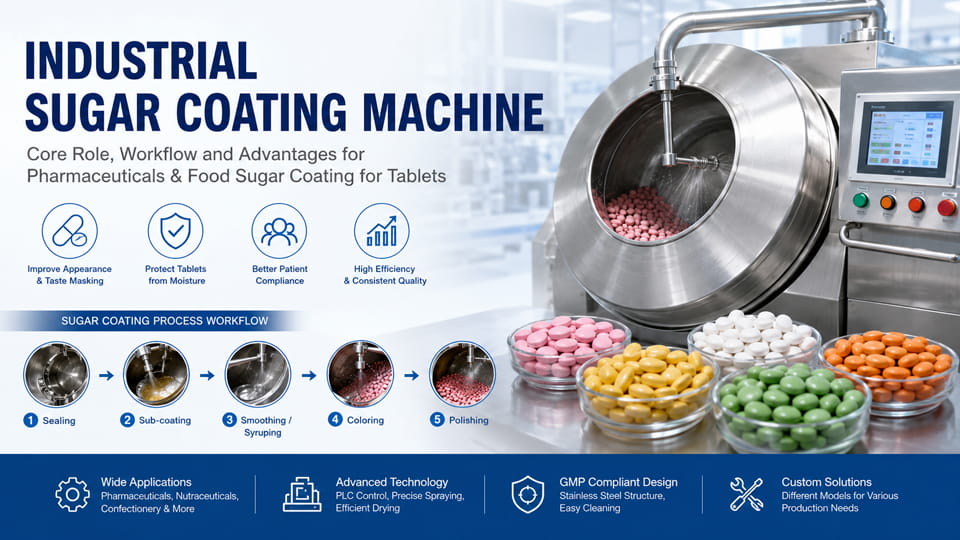

Enterische capsules zien eruit als gewone pillen, maar hebben een speciale coating om maagzuur te weerstaan en de inhoud ervan in de darm af te geven. Enterisch (of maag-resistent) capsules zijn speciaal ontworpen om veilig door de maag te reizen en op te lossen in de dunne darm. De term ‘enterisch’ komt van het Grieks voor darm. In de praktijk, maagsapresistente capsules zijn voorzien van een pH-gevoelige coating of zijn gemaakt van pH-gevoelige materialen zodat ze intact blijven in de zure maag (pH ~1,5–3,5) maar lossen snel op wanneer ze de hogere pH van de dunne darm bereiken. In duidelijke bewoordingen, enterische capsules beschermen het geneesmiddel of de supplementen erin tegen maagzuur, ervoor te zorgen dat de actieve ingrediënten pas vrijkomen zodra de capsule in de darmen is terechtgekomen. Deze eenvoudige verandering in de plaats van afgifte kan een groot verschil maken in de effectiviteit en tolerantie van veel medicijnen en supplementen.
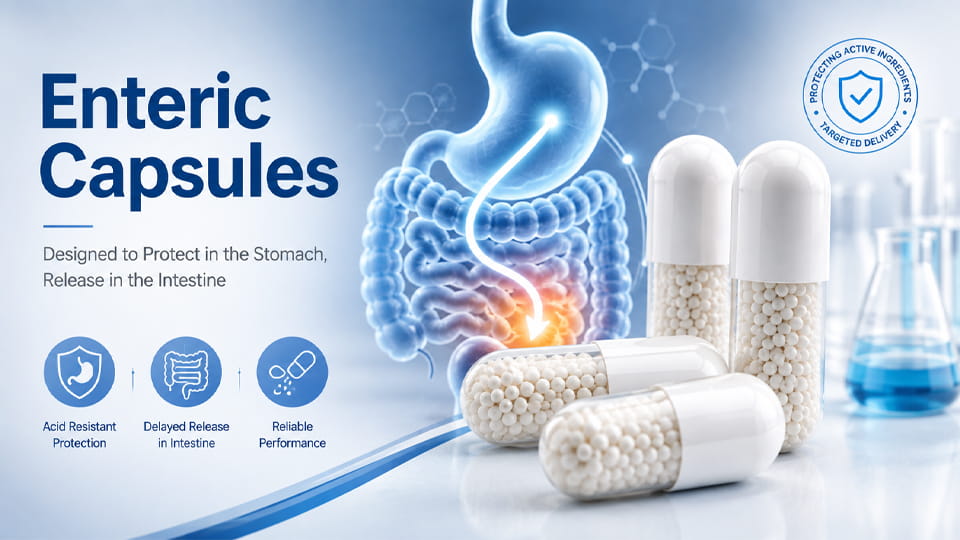
Enterisch (zuurbestendig, maag-resistent) capsules zijn orale doseringsvormen ontworpen om maagzuur te weerstaan en op te lossen in de dunne darm. Afhankelijk van het productontwerp, de maagsapresistente functie kan afkomstig zijn van de capsulehuls zelf, een enterische coating, of maagsapresistente inhoud zoals pellets of korrels. Deze aanpak wordt vaak gebruikt wanneer een API gevoelig is voor maagzuur, wanneer vrijkomen in de maag ongewenst is, of wanneer de formulering bedoeld is om het actieve ingrediënt verder langs het maagdarmkanaal af te geven. In de praktijk, ze transporteren medicijnen intact door de maag en geven ze af bij een hogere pH (meestal boven pH 5,5–6,0). Dit pH-getriggerde afgifte dient twee hoofddoelen:
Deze voordelen verklaren waarom formuleringen variëren van geneesmiddelen op recept tot supplementen en nutraceuticals. Bijvoorbeeld, het afleveren van levende probiotica in een enterische capsule zorgt ervoor dat de organismen maagzuur overleven. Op dezelfde manier, het uitstellen van de afgifte van pijnstillers voorkomt maagklachten. Kortom, enterische capsules mogelijk maken levering met vertraagde afgifte: de capsule passeert de maag (intact blijven) En opent alleen wanneer het de darmen met een hogere pH bereikt.
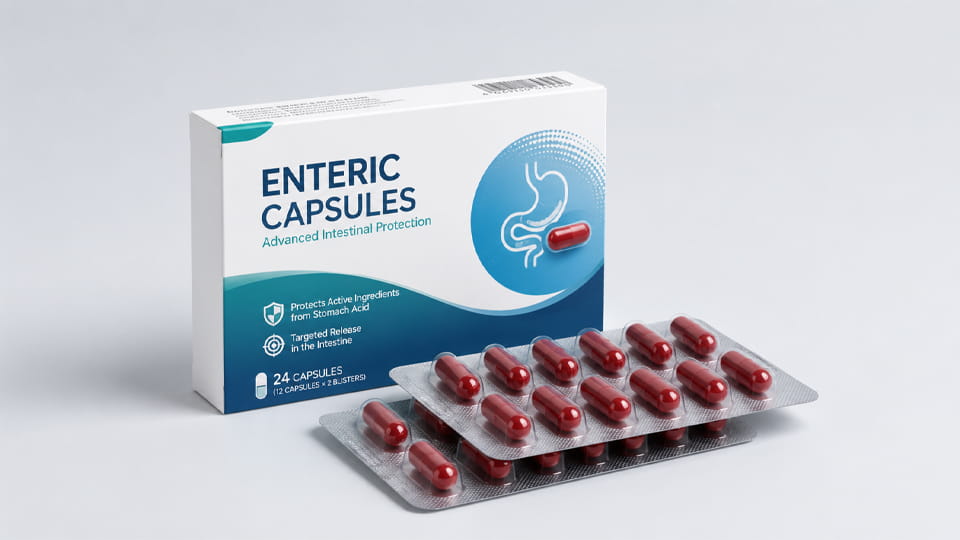
Hoewel maagsapresistente capsules er vaak uitzien als normale gelatine- of vegetarische capsules, ze bevatten speciale polymeren die ze bij elkaar houden in maagzuur. Het geheim van enterische capsules is de pH. In de zure omgeving van de maag, hun speciale coating of schaal blijft stevig (lost niet op). Zodra de capsule in de dunne darm terechtkomt (typisch pH 5,5-7,5), de hogere pH zorgt ervoor dat de coating afbreekt. Bijvoorbeeld, een veelgebruikt polymeer genaamd HPMCP (hydroxypropylmethylcelluloseftalaat) wordt gekozen voor maagsapresistente capsules omdat het onoplosbaar blijft beneden ongeveer pH 5,5. In de praktijk, een capsule met HPMCP blijft 1 tot 3 uur veilig in de maag en begint pas op te lossen wanneer deze de darm bereikt. Deze door de pH geactiveerde afgifte zorgt ervoor dat de capsule gevuld blijft (of poeder, vloeibare of andere vormen) wordt op de juiste locatie vrijgegeven.
Regelgevende tests bevestigen deze actie. Door ontwerp, een enterische doseringsvorm moet niet uit elkaar vallen of de inhoud ervan lekken in gesimuleerd maagsap (pH 1.2) gedurende maximaal 1 à 2 uur, En moeten volledig desintegreren en de inhoud vrijgeven in darmomstandigheden (pH ~6,8). In eenvoudige bewoordingen, farmacopeeregels vereisen dat niet meer dan 10% van de inhoud van de capsule kan vrijkomen in maagachtig zuur, terwijl tenminste 80% moet worden vrijgegeven in een hogere pH (darm) buffer. Dit zorgt ervoor dat maagsapresistente capsules de afgifte echt “vertragen” tot in de dunne darm.
Het selecteren van de juiste materialen is cruciaal voor een effectieve enterische capsule. Belangrijke componenten zijn onder meer de polymeer(S) voor de coating (of schil) En hulpstoffen. Gebruikelijke enterische polymeren en materialen zijn dat wel:
In aanvulling, materialen van de capsulehuls zelf kunnen bijdragen aan enterisch gedrag. Bijvoorbeeld, sommige producten gebruiken kant-en-klare zuurbestendige capsules om een coatingstap te voorkomen. Voorbeelden hiervan zijn Capsugel's EnTRinsic® (een omhulsel van celluloseacetaatftalaat) en CapsCanada's AR-kappen® (een mengsel van HPMC en hypromellose ftalaat). Deze speciale schalen zijn ontworpen om stabiel te blijven in de maag-pH (bijv. AR Caps zijn stabiel voor 60 min. in maagachtige omstandigheden) en vervolgens desintegreren bij de pH in de darm. Het gebruik van dergelijke enterische capsuleomhulsels kan de productie vereenvoudigen (geen coatingstap nodig), maar vereist dat de gepatenteerde capsules zelf worden aangeschaft.
Materialen samenvatten: de meeste enterische capsules gebruiken a polymeer coating toegepaste navulling, of een capsulehuls van enterische kwaliteit; gebruikelijke polymeren zijn methacrylaten (Eudragit L/S), CAP/HPMCP, of natuurlijke harsen. Formuleerders passen ook weekmaker- en oplosmiddelsystemen aan om een uniformiteit te garanderen, defectvrije folie.
Darmcapsules bieden verschillende duidelijke voordelen als u een gerichte of gevoelige toediening nodig heeft:
Algemeen, enterische capsules laten u in wezen controle houden waar En wanneer uw product geeft zijn lading vrij. Dit is enorm voor formuleringen met gevoelige enzymen of zuurlabiele voedingsstoffen, voor dosering met vertraagde afgifte, en voor het comfort van de patiënt. Zoals een capsule-expert het zegt, de zuurbestendige aard van enterische omhulsels “maakt ze geschikt voor meer gespecialiseerde medicijnafgiftefuncties dan gewone gelatine of plantaardige capsule”.
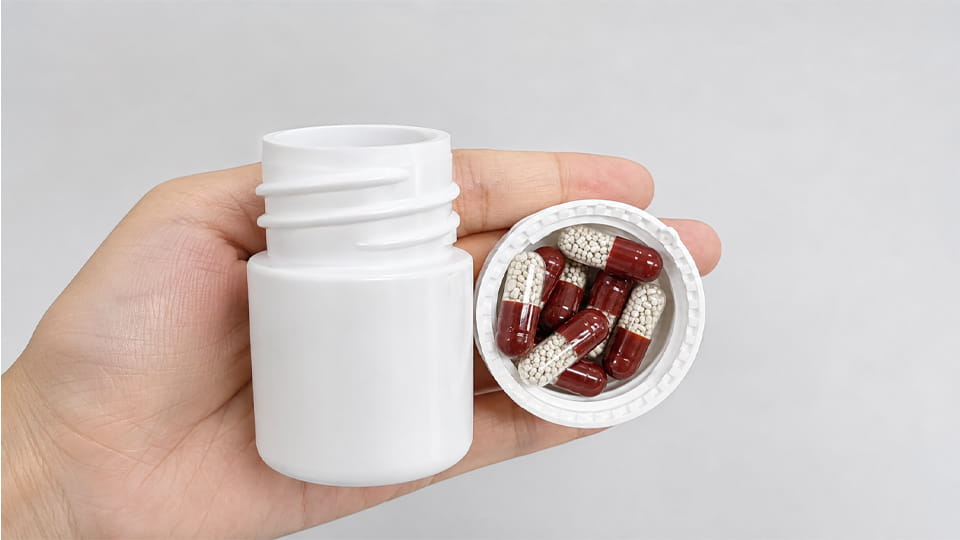
Kiezen tussen maagdarmcapsules, standaard gelatinecapsules, en HPMC-capsules is niet alleen een kwestie van schaalmateriaal. Hun gedrag in zure omstandigheden, vocht reactie, bedoeld vrijgaveprofiel, en de verwerkingsvereisten kunnen behoorlijk verschillend zijn. De volgende vergelijking geeft farmaceutische fabrikanten en productieteams een snel overzicht van de belangrijkste verschillen.
| Vergelijkingsdimensie | Enterisch / Zuurbestendige capsules | Standaard gelatinecapsules | Standaard HPMC-capsules |
|---|---|---|---|
| Desintegratie gedrag | Ontworpen om desintegratie in maagomstandigheden te weerstaan en de inhoud later vrij te geven onder darmomstandigheden | Over het algemeen ontworpen voor relatief snelle desintegratie | Over het algemeen ontworpen voor snelle desintegratie; De prestaties zijn afhankelijk van de formulering |
| pH-drempel | Afhankelijk van het enterische polymeer en de formulering; ontworpen om weerstand te bieden aan een lage maag-pH en vrij te komen bij een hogere pH | Geen inherente pH-getriggerde enterische bescherming | Standaard HPMC is niet inherent maagsapresistent, tenzij speciaal geformuleerd of gecoat |
| Vochtgehalte | Afhankelijk van de samenstelling van de schaal en het productieproces; omgevingscontrole kan belangrijk zijn | Bevat relatief veel vocht en kan worden beïnvloed door veranderingen in de luchtvochtigheid | Heeft over het algemeen een lagere vochtbehoefte dan gelatine en is geschikt voor sommige vochtgevoelige formuleringen |
| Ideale toepassingen | Zuurgevoelige API's, formuleringen met vertraagde afgifte, en darmgerichte toediening | Conventionele farmaceutische en nutraceutische producten met onmiddellijke afgifte | Producten waarvoor HPMC-shells nodig zijn, inclusief veel vegetarische of vochtgevoelige formuleringen |
| Overwegingen bij het hanteren | Vereist zorgvuldige controle bij het hanteren van de schaal, vulparameters, en mechanische spanning | Goed ingeburgerd en over het algemeen compatibel met conventionele capsulevulprocessen | Mechanisch en vochtgedrag verschilt van gelatine en moet worden gevalideerd op de geselecteerde vulapparatuur |
De productie van maagsapresistente capsules volgt vergelijkbare kernstappen als gewone capsules, maar met enkele aanpassingen in de materialen en coating. In een capsulefabriek, de typische fasen zijn:
Samengevat, het maken van maagsapresistente capsules maakt gebruik van bekende capsuletechnologie, maar vereist extra zorg bij materialen en testen. Algemene stappen zoals pin-dipping of lintvulling zijn nog steeds van toepassing, maar met enterische polymeren in de mix. Veel fabrikanten kiezen voor geavanceerde productielijnen voor capsules die meerdere capsulematerialen ondersteunen. Zoals een verpakkingsgids adviseert, Controleer nogmaals of uw apparatuur “enterische capsules” aankan, net zoals gelatine of vegetarische omhulsels. Goed apparatuurontwerp (gladde metalen oppervlakken, geschikt gereedschap voor HPMC, enz.) helpt schade aan die gespecialiseerde schelpen tijdens het vullen te voorkomen.
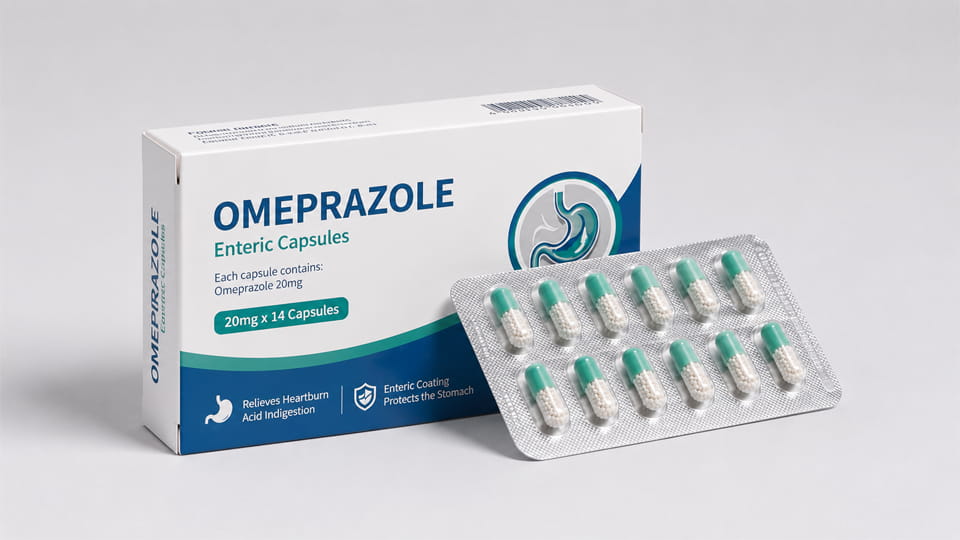
Robuuste kwaliteitsborging is essentieel voor zorgen voor een darmfunctie. Belangrijke kwaliteitsstatistieken zijn onder meer:
Toezichthoudende instanties eisen dat formulieren met vertraagde afgifte voldoen aan strenge ontbindingscriteria. Volgens farmacopeeën, acceptatiecriteria zouden kunnen vermelden, Bijvoorbeeld, “in de zuurfase niet meer dan X% afgifte; in de bufferfase minimaal Y% vrijgave binnen Z minuten.” De specifieke limieten zijn afhankelijk van de medicijnmonografie. In de praktijk, Fabrikanten valideren hun batches maagsapresistente capsules aan de hand van deze farmacopeiële normen met behulp van de bovenstaande tests. Er worden ook stabiliteitstesten uitgevoerd om ervoor te zorgen dat de enterische eigenschappen gedurende de houdbaarheidsperiode behouden blijven.
Darmcapsules bieden een krachtige manier om de medicijnafgifte en het comfort van de patiënt te verbeteren door ervoor te zorgen dat medicijnen door de maag gaan zonder vrij te geven en te activeren in de dunne darm. Enterische capsules maken veiliger, effectievere medicijnafgifte door slimme formulering en nauwkeurige productie te combineren. Hun succes hangt af van strenge coating- en testprocessen, evenals hoogwaardige inkapselingsapparatuur. Of u nu klinische proefbatches of miljoenen capsules per jaar produceert, de juiste machines zijn van cruciaal belang. Voor elk farmaceutisch product, nutraceutisch, of een aanvulling op een bedrijf dat enterische formuleringen overweegt, Het begrijpen van deze punten is essentieel voor productsucces.
Als u een operations- of inkoopmanager bent en maagsapresistente capsules wilt produceren, JinLu Packing kan u helpen aan het juiste machinepark. Wij bieden geavanceerde oplossingen voor het vullen en verpakken van capsules die compatibel zijn met maagsapresistente en andere speciale capsules. Onze machines zijn ontworpen voor precisie, gemak van schoonmaken, en naleving van farmaceutische normen. Klaar om uw darmcapsuleproductie te optimaliseren? Neem vandaag nog contact op met JinLu Packing voor een oplossing op maat of een offerte op maat van uw capsulebehoeften.
Enterische capsules zijn capsules met vertraagde afgifte, ontworpen om maagsap tegen te gaan en voortijdige afgifte van geneesmiddelen in de maag te voorkomen. Ze zijn ontworpen om hun inhoud vrij te geven nadat ze een geschikt darmmilieu hebben bereikt. Afhankelijk van de formulering, de enterische functie kan afkomstig zijn van de capsulewand, een externe coating, of maagsapresistente pellets of korrels gevuld in de capsule.
Enterische capsules worden gebruikt wanneer een formulering bescherming tegen maagzuur nodig heeft, wanneer vrijkomen in de maag ongewenst is, of wanneer het de bedoeling is dat het actieve ingrediënt verder langs het maagdarmkanaal wordt afgegeven. Ze kunnen zuurgevoelige API’s helpen beschermen en ongewenste blootstelling van bepaalde formuleringen aan de maag verminderen.
Darmcapsules hebben een maagsapresistent ontwerp dat intact blijft onder zure maagomstandigheden en vervolgens de afgifte van het geneesmiddel mogelijk maakt wanneer de doseringsvorm een geschikt darmmilieu bereikt. Veel enterische systemen zijn afhankelijk van pH-responsieve polymeren, hoewel het exacte afgiftemechanisme afhangt van de gebruikte formulering en het polymeer.
Enterische capsules zijn over het algemeen een soort capsule met vertraagde afgifte. “Vertraagde release” beschrijft het releaseprofiel, terwijl ‘enterisch’ of ‘maagsapresistent’ een algemeen mechanisme beschrijft dat wordt gebruikt om de afgifte te vertragen door de doseringsvorm te beschermen tegen maagaandoeningen. Echter, niet elk systeem met vertraagde afgifte hoeft een enterisch mechanisme te gebruiken.
Standaard gelatinecapsules zijn over het algemeen ontworpen voor relatief snelle oplossing en afgifte na blootstelling aan maag-darmvloeistoffen, terwijl Enterische Capsules specifiek zijn ontworpen om maagaandoeningen te weerstaan en de afgifte te vertragen. Enterische prestaties kunnen worden bereikt door middel van gespecialiseerde schaalmaterialen, coatings, of enterisch gecoate inhoud, dus de twee capsuletypen kunnen een verschillende formulering vereisen, afhandeling, en productieoverwegingen.
Ja, maar een standaard HPMC-capsule is niet automatisch een enterische capsule. HPMC kan worden gebruikt als capsuleomhulselmateriaal in een enterisch toedieningssysteem, maar de vereiste maagsapresistente prestaties zijn afhankelijk van de specifieke formulering, polymeer systeem, coating, of capsule-shell-technologie. Het eindproduct moet worden beoordeeld aan de hand van de beoogde vereisten voor ontbinding en vrijgave.
Darmsystemen kunnen pH-responsieve polymeren gebruiken, zoals cellulosederivaten, waaronder hydroxypropylmethylcelluloseftalaat (HPMCP), celluloseacetaatftalaat (GLB), en methacrylzuurcopolymeren. De keuze is afhankelijk van het gewenste vrijgaveprofiel, Compatibiliteit van formuleringen, verwerkingsmethode, en wettelijke specificaties.
Er zijn verschillende productiebenaderingen. Een fabrikant kan als latere verwerkingsstap een enterische coating op de capsule aanbrengen, bedek de capsulehuls voordat u deze vult, gebruik een capsulewand gemaakt van maagsapresistente polymeren, of vul conventionele capsuleomhulsels met maagsapresistente pellets of korrels. De juiste route hangt af van de formulering en de vereiste afgifte-eigenschappen.
Ja. Maagsapresistente pellets of korrels kunnen in harde capsules worden afgevuld als een manier om een vertraagde darmafgifte te bereiken. Tijdens de productie, Fabrikanten moeten rekening houden met de vloeibaarheid van pellets, nauwkeurigheid bij het vullen van capsules, mechanische spanning, en de mogelijkheid om de coating tijdens het hanteren te beschadigen. Apparatuurinstellingen moeten worden gevalideerd met de specifieke formulering en het capsuletype.
Darmcapsules worden doorgaans beoordeeld op hun resistentie tegen zure omstandigheden en hun daaropvolgende afgiftegedrag in een geschikt buffer- of darmstadiummedium. Farmacopeetests met vertraagde afgifte kunnen een zuurfase omvatten, gevolgd door een bufferfase, met acceptatiecriteria gedefinieerd door de toepasselijke monografie of productspecificatie.
Referenties:
1.De Internationale Farmacopee: Capsules met vertraagde afgifte (enterische capsules)—— WHO
2.Orale doseringsformulieren met verlengde afgifte: Ontwikkeling, Evaluatie, en toepassing van in vitro/in vivo-correlaties —— ONS. Voedsel- en Geneesmiddelenadministratie
3.In de handel verkrijgbare enterische lege harde capsules, Productietechnologie en toepassing —— Nationale Bibliotheek voor Geneeskunde
4.In vitro evaluatie van maagsapresistente HPMC-capsules: effect van formuleringsfactoren op de productprestaties —— Nationale Bibliotheek voor Geneeskunde
5.Enterisch gecoate HPMC-capsules: Vergelijking van enterische coatings en onderzoek naar de relatie tussen in vitro desintegratie en oplostijden —— Johannes Gutenberg Universiteit Mainz
6.Farmaceutische coating en zijn verschillende benaderingen, een recensie —— Nationale Bibliotheek voor Geneeskunde