×
온라인 서비스
✉️이메일: 💬WhatsApp: +86 18011793320
💡
  • 블로그
  • HPMC vs Pullulan vs Starch Capsules: How to Choose the Right Plant-Based Capsule

HPMC vs Pullulan vs Starch Capsules: How to Choose the Right Plant-Based Capsule

Choosing a plant-based capsule is not just a label decision. 조달용, it affects supplier qualification and cost. For formulation teams, it changes the moisture and oxygen environment around the fill. 생산용, it can influence capsule separation, 잠금, 거부율, and filling speed.

So the HPMC vs Pullulan vs Starch Capsules question should start with the product, not the shell. HPMC is often the practical first candidate for hygroscopic or moisture-sensitive fills. Pullulan deserves serious attention when oxidation is the main risk. Starch-based capsules can work well when a specific plant-starch system or clean-label position is required, but “starch capsule” is a broad category rather than one standardized chemistry. Peer-reviewed work on starch-based capsule materials shows that polymer composition and starch source can materially affect film and mechanical behavior.

The safest route is simple: define the formulation risk, verify the documents, test the exact shell on the actual 캡슐 충전 기계, and confirm finished-product 유통기한 in the intended 포장.

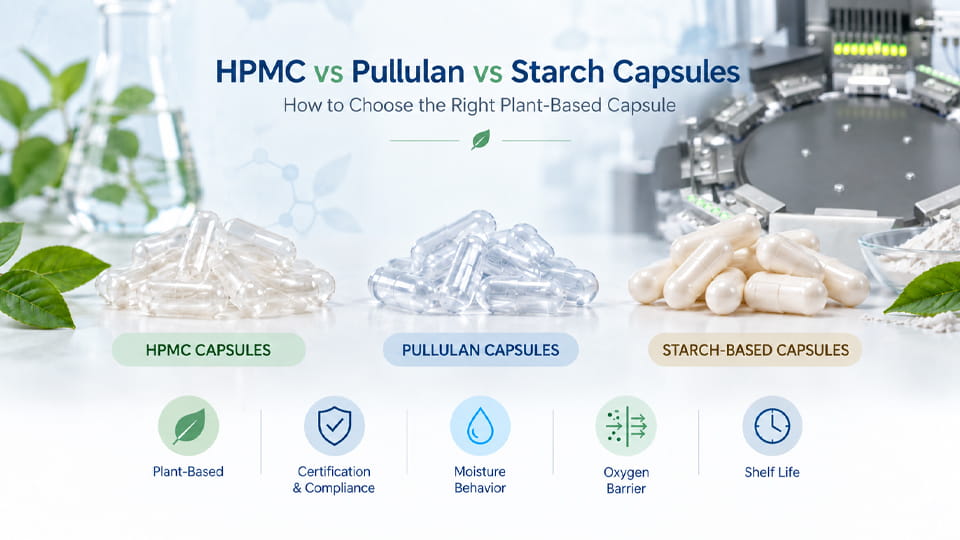
HPMC vs Pullulan vs Starch Capsules comparison guide for choosing the right plant-based capsule based on formulation, 인증, 유통기한, and filling compatibility


What Are HPMC, Pullulan and Starch-Based Capsules?

HPMC 캡슐. HPMC means hydroxypropyl methylcellulose, also called hypromellose. It is used as the film-forming polymer in the capsule cap and body. Commercial HPMC capsule systems are not necessarily identical. Depending on the technology and supplier, the shell may contain different processing aids or gelling systems, so procurement teams should always review the exact capsule specification rather than assuming that all HPMC shells behave the same.

HPMC is therefore a logical first candidate when you need capsules for hygroscopic powder or moisture-sensitive ingredients. A published comparison of gelatin, HPMC, and pullulan hard capsules found that HPMC had the weakest moisture sorption and moisture-retention behavior of the three materials tested.

풀루란 캡슐. Pullulan is a polysaccharide produced by fermentation. Commercial Capsugel Plantcaps, 예를 들어, use tapioca-derived feedstock fermented with Aureobasidium pullulans. Pullulan is often considered when oxygen exposure is a major stability concern because of its favorable oxygen-barrier characteristics.

Pullulan is not simply another name for starch. Starch can be the fermentation feedstock, but pullulan is the polymer produced through fermentation. That distinction matters when comparing supplier specifications.

Starch capsules. This label needs more care. “Starch-based” can refer to modified starch systems, 히드록시프로필 전분, or blends containing other film-formers. Research on HPMC/hydroxypropyl-starch capsule systems has shown that polymer composition can affect film formation and mechanical properties, which is why “starch capsule” should not be treated as a single standardized material category: polymer ratio and starch source can change film, 힘, 경도, and other mechanical characteristics.

When a supplier offers “tapioca capsules,” “starch capsules,” or “modified starch capsules,” ask for the full shell composition and specification before treating them as equivalent to HPMC or pullulan.

For readers who need more background, JinluPacking already has dedicated articles on 식물성 캡슐, pullulan capsules, 그리고 빈 캡슐.

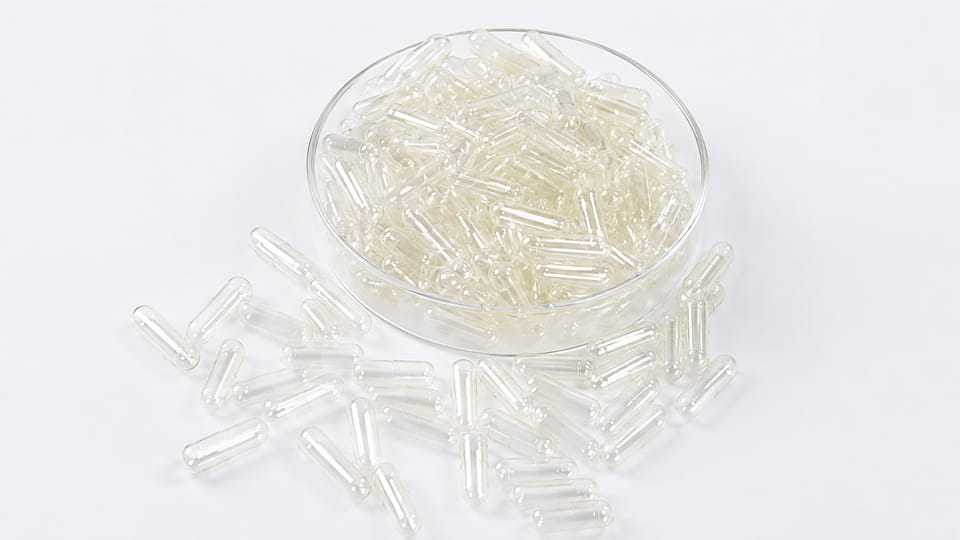
HPMC hard-shell plant-based capsules made from hypromellose


HPMC vs Pullulan vs Starch Capsules: 차이점은 무엇입니까?

The table is a starting point, not a final material ranking. Capsule performance depends on the exact shell formulation, fill material, packaging system, 저장 조건, and manufacturing process. For commercial products, the final choice should be confirmed through formulation compatibility and stability testing.

요인 HPMC 캡슐 Pullulan 캡슐 Starch-Based Capsules
Main polymer 하이프로멜로스 (HPMC), a cellulose derivative 풀루란, a fermentation-derived polysaccharide Starch or modified-starch system; composition varies
Plant-based positioning 강한 강한 강한, depending on exact ingredients
Moisture behavior Generally low shell moisture; a strong option to evaluate for moisture-sensitive fills Lower moisture sorption than gelatin in comparative research, but generally higher than HPMC in that study Highly formulation- and supplier-dependent
Oxygen barrier Useful, but not usually its primary advantage A key reason to consider pullulan for oxygen-sensitive formulations 공급자- and formulation-dependent
일반적인 애플리케이션 Hygroscopic powders, moisture-sensitive APIs, broad pharma and nutraceutical use Oxygen-sensitive, premium nutraceutical and selected probiotic formulations Specific starch-based or clean-label platforms
비건 / 할랄 / 적법한 Certification may be available; verify the exact product and supplier Certification may be available; verify the exact product and supplier Verify exact composition and certification
USP–NF status Hard Hypromellose Capsule Shells monograph Hard Pullulan Capsule Shells monograph Verify the exact material and applicable standard
Filling performance Widely used in commercial capsule filling; validate the qualified shell Commercial options are available; validate the specific shell and machine setup Validate the exact shell with the intended filling equipment
Relative cost Usually moderate Often higher 변하기 쉬운
Best starting point when… Moisture sensitivity and broad formulation compatibility are priorities Oxygen sensitivity is a major concern A specific starch-based formulation or sourcing requirement makes it suitable

USP separately defines Hard Hypromellose Capsule Shells 그리고 Hard Pullulan Capsule Shells as two-piece shells, and both monographs allow certain additives or processing aids. That is a useful procurement reminder: buy to an approved specification for the exact capsule, not just the polymer name.


How Your Formulation Should Drive Capsule Selection

Start with the dominant degradation pathway. That usually gives a clearer answer than starting with vegan claims, price, 또는 외모.

For hygroscopic powders

If the fill actively attracts water, HPMC is usually the first candidate worth screening. Commercial HPMC capsules can have relatively low shell water, and peer-reviewed work shows lower moisture sorption for HPMC than pullulan or gelatin under the conditions studied.

That does ~ 아니다 make an HPMC shell a moisture-proof package. Research on capsule-shell permeability shows that water movement depends on relative humidity and the material’s sorption, diffusion, and permeability behavior. Moisture can still move between the package, 껍데기, headspace, and fill.

A useful pilot test is to fill representative capsules, condition them at the expected production humidity, then monitor shell condition, fill water activity, 시험, degradation products, and dissolution during stability.

For moisture-sensitive APIs, 효소, 그리고 비타민

HPMC again often makes sense as the first trial because lower shell moisture removes one possible source of water. Capsugel specifically positions Vcaps Plus for hygroscopic and moisture-sensitive 아피스.

But do not stop at the capsule. 가난한 포장 can easily erase the benefit of a low-moisture shell.

For oxygen-sensitive ingredients

Pullulan is the more logical starting point when oxidation is the main failure mode. This can include antioxidants, certain botanical actives, oil powders, and other capsules for oxygen sensitive ingredients. Pullulan is widely considered when low oxygen permeability is an important formulation requirement.

Do not turn that into “pullulan always gives the longest shelf life.” Oxygen can also come from headspace, package permeability, repeated opening of the container, and oxygen already present in the formulation. For a high-risk product, nitrogen flushing, oxygen absorbers, or higher-barrier packs may still be appropriate as part of the complete system.

For a probiotic

에이 probiotic is a good example of why one-dimensional selection does not work. Some strains are especially moisture-sensitive; others are strongly oxygen-sensitive. HPMC may make sense when moisture is the dominant risk, while pullulan may be more attractive when oxygen exposure is the bigger concern. The correct answer should come from strain-specific CFU stability data, not a generic “best probiotic capsule” claim.

For herbal extracts

Check hygroscopicity, water activity, 잔류용매, reactive components, and volatile content. HPMC is a practical baseline. Pullulan becomes more interesting when oxidation or premium clean-label positioning matters. Starch-based shells may also work, but exact-shell testing is particularly important because the category is less uniform.

핵심 내용:The right plant-based capsule is not determined by the word “plant-based” alone. Match the shell to the dominant stability risk, then confirm the choice through formulation-specific stability and filling trials.

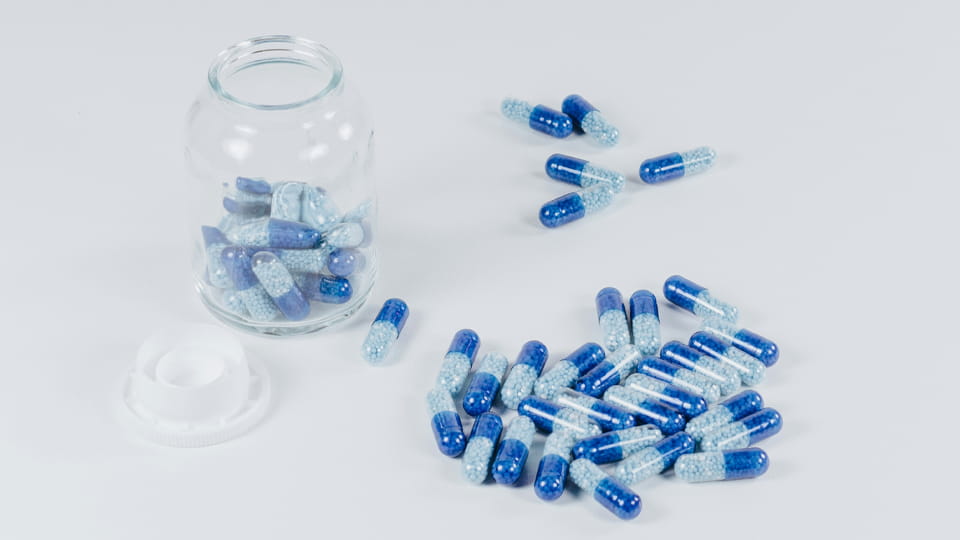
Plant-based capsules illustrating HPMC, pullulan and starch-based capsule shell options for pharmaceutical and nutraceutical formulations.


Which Capsule Gives Better Stability and Shelf Life?

Shelf life belongs to the whole system:

fill formulation + 캡슐 껍질 + 프로세스 + 1차 포장 + 저장 조건.

That is the key rule.

수분을 위해, HPMC has strong evidence as a low-moisture option. Comparative research found lower moisture sorption and retention for HPMC than pullulan and gelatin. Separate work comparing HPMC and gelatin also showed that sorption and permeability change with relative humidity, so “low shell moisture” should not be confused with “zero moisture transmission.”

For oxygen, pullulan has the stronger case when the shell itself is an important part of the oxygen-control strategy.

Then look at the package.

USP General Chapter <671> Containers—Performance Testing addresses moisture-vapor transmission for packaging systems used with 고체 경구 투여 형태, ~하는 동안 <670> Auxiliary Packaging Components covers components such as 건조제. These standards reinforce a practical point: a desiccant is one part of a packaging strategy, not a substitute for qualifying the bottle, closure, or blister itself.

For moisture-sensitive capsule products, compare the proposed bottle, closure liner, 건조제 구성, 또는 blister structure under relevant stability conditions. For highly oxygen-sensitive products, evaluate oxygen-barrier packaging and headspace control together with the capsule material.

The shelf life of an empty capsule shell should not be used as the expiration date of the finished product. FDA stability expectations treat the commercial container-closure configuration as part of the stability program, so the final formulation should be tested in the proposed market pack.

What About Starch-Based Capsules?

Starch-based capsules require more product-specific evaluation. Unlike HPMC and pullulan, “starch-based” can describe different modified-starch systems or blends, so their moisture and mechanical behavior cannot be assumed from the word starch alone. For a stability-sensitive product, ask the supplier for the exact shell composition, moisture specification, permeability data where available, and supporting stability information before treating a starch-based shell as equivalent to HPMC or pullulan.

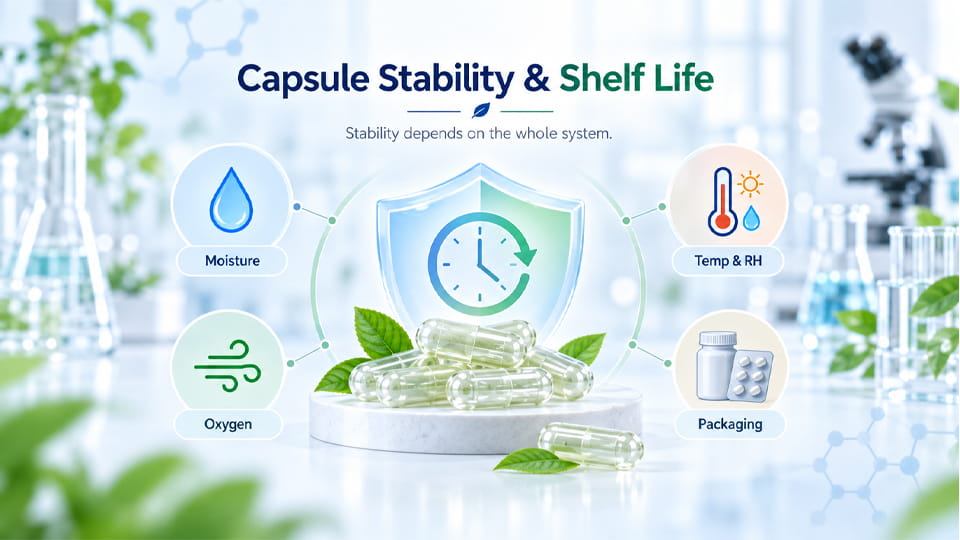
Infographic showing capsule stability and shelf life factors, 수분을 포함한, 산소, 온도와 습도, 그리고 포장.


Certifications and Documents to Check Before You Buy

A plant-derived polymer does not automatically give your finished product a 완전 채식주의자, 할랄, 또는 적법한 주장하다.

Commercial capsule suppliers demonstrate why certification should be checked at the product and manufacturing-site level. Specific commercial products can carry vegetarian, 완전 채식주의자, 할랄, 적법한, and non-GMO certifications, but certifications can vary by manufacturing site. For vegan claims, even colorants and printing systems can affect certification status.

조달용, request a current:

COA, finished capsule specification, full material composition, manufacturing site, GMP/quality certification, microbiological limits, 저장 조건, allergen statement, GMO statement, and relevant impurity documentation.

Where marketing claims matter, obtain the actual current 완전 채식주의자, 할랄, and kosher certificates rather than relying on a sales email or a statement that the polymer is “plant based.”

제약용, also check the applicable compendial and regulatory position. USP–NF has specific monographs for Hard Hypromellose Capsule Shells 그리고 Hard Pullulan Capsule Shells.

미국에서는, FDA’s Inactive Ingredient Database can help formulators understand 부형제 previously used in approved drug products. FDA describes the database as a development aid tied to factors including route, 제형, and prior use; it should therefore not be treated as blanket “FDA approval” for every HPMC, 풀루란, or starch capsule grade.

For Europe, verify the current European Pharmacopoeia text and target-market requirements rather than assuming a USP statement is enough. EDQM’s Knowledge Database is the official source for checking current Ph. 유로. texts and revision status.

A useful qualification rule is:

Verify the exact supplier + manufacturing site + grade + 색상 + printing system + 목표 시장.

That one habit prevents many certification surprises later.


Can HPMC, Pullulan and Starch Capsules Run on the Same Capsule Filling Machine?

자주, yes—but “same machine” does not mean “same settings.”

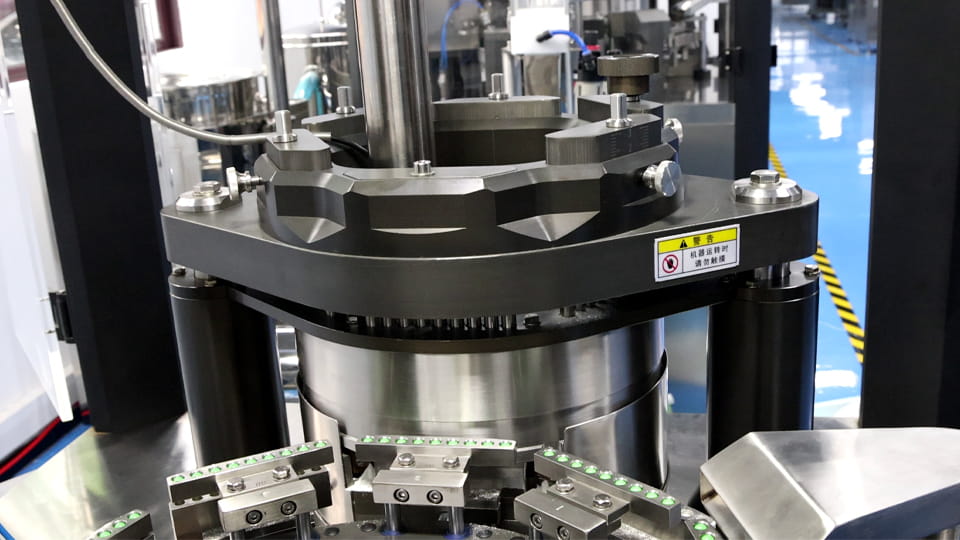
장비 측면에서, 진루패킹의 NJP-2600D automatic capsule filling machine is designed for hard capsules from size #000 ~을 통해 #5 그리고 분말용, 과립, 펠릿, 및 마이크로 테이블, with a rated output of up to 156,000 시간당 캡슐. The machine performs capsule feeding, cap-body separation, 충전재, 잠금, 배제, 그리고 퇴원.

NJP 2600D 캡슐 충전 기계
NJP 2600D 캡슐 충전 기계

Before commercial scale-up, challenge six points.

Capsule feeding and orientation: Does the shell enter the rectification system consistently?

Cap-body separation: Does vacuum separation remain reliable at the intended line speed?

Shell mechanical behavior: Watch for splits, 덴트, brittleness, 연화, or static.

잠금: Confirm the closed length and lock integrity. A shell that looks fine at low speed can behave differently at full output.

Fill performance: Track fill-weight variation, leakage, pellet damage, and reject rate. Capsule material cannot compensate for poor powder flow.

Production environment: Stay within the capsule supplier’s specified temperature and relative-humidity window and record those conditions during trials.

For serious machine procurement, send representative capsule-shell lots and fill material for a factory test. This is especially useful when changing from HPMC capsules to pullulan capsules or introducing a less familiar starch-based shell.

Close-up of an automatic capsule filling machine in operation, used to test filling compatibility with HPMC, pullulan and starch-based capsules.


Decision Matrix and a Five-Step Selection Framework

Use this matrix as a starting point—not as a substitute for development and stability testing.

Main Requirement Recommended Starting Point What to Verify
Hygroscopic powder HPMC Shell/fill moisture transfer, brittleness, package MVTR
Moisture-sensitive API HPMC Assay, 하락, 용해, desiccant system
Oxygen-sensitive ingredients 풀루란 OTR data, headspace oxygen, package oxygen barrier
Probiotic HPMC or Pullulan Strain-specific moisture/oxygen sensitivity and CFU stability
Herbal/botanical blend HPMC first; Pullulan if oxidation is critical Water activity, volatiles, 안정
Premium clean-label supplement Pullulan or qualified starch-based shell 인증, 비용, supply continuity
Specific starch/tapioca positioning Qualified starch-based capsule 구성, mechanical data, 분해, machinability
고속 생산 Qualified HPMC, 풀루란, or tested starch shell 분리, 잠금, 거부하다, full-speed run
Unclear dominant risk Compare at least two shells Stability in final packaging

This matrix synthesizes comparative moisture data, commercial HPMC/pullulan performance information, and published evidence showing that starch-based performance depends strongly on the exact formulation.

The five-step framework is straightforward:

단계 1: Characterize the formulation –> 단계 2: Identify the dominant risk –> 단계 3: Define market claims and documents –> 단계 4: Run shell and filling-machine trials –> 단계 5: Confirm stability in final packaging –> Approve supplier, specification and process

단계 1 measures what matters: 흡습성, water activity, oxygen sensitivity, fill density, 그리고 흐름.

단계 2 turns those data into a shell shortlist.

단계 3 checks USP, Ph. 유로., 완전 채식주의자, 할랄, 적법한, and other market requirements.

단계 4 proves that the exact capsule can run on your production process—not just on a lab capsule filler.

단계 5 proves that the finished capsule in its final package can actually meet the intended shelf-life target.

That sequence is much safer than choosing the “best plant based capsules” from a marketing table.


피해야 할 일반적인 실수

Mistake: choosing only by “vegan.” Vegan status tells you almost nothing about moisture protection, oxygen barrier, shell mechanics, or production performance.

Mistake: treating every starch capsule as equivalent. Ask whether the shell uses native starch, modified starch, 히드록시프로필 전분, or a blend. Published starch-capsule research shows that composition and botanical source can materially change performance.

Mistake: assuming the shell determines shelf life. The bottle, 수포, closure, 건조제, and storage environment can be just as important.

Mistake: assuming halal or kosher from plant origin. Verify the current certificate for the actual capsule product and manufacturing site.

Mistake: skipping a full-speed shell trial. Commercial suppliers themselves emphasize machinability, while capsule-filling-machine performance depends on reliable separation, 정위, 잠금, and shell dimensional consistency.


결론

There is no single winner in HPMC vs Pullulan vs Starch Capsules. HPMC is usually the versatile starting point for moisture-sensitive and hygroscopic fills. Pullulan becomes especially compelling for capsules for oxygen sensitive ingredients. Starch-based capsules can fit products that need a specific plant-starch platform—but only after you verify what “starch-based” actually means. The evidence supports choosing according to formulation risk rather than declaring one polymer universally superior.

The commercial decision should follow formulation risk → documentation → machine performance → final-pack stability. Before locking a capsule supplier or buying equipment, test the exact shell and fill together. Jinlupacking can support capsule-filling trials across standard hard-capsule sizes and help match the process with an appropriate automatic capsule filling machine and downstream packaging solution.

캡슐 생산을 최적화할 준비가 되었습니다.? Jinlu 포장에 문의 for expert help and a quote on a suitable capsule filling equipment. Our team can support your formulation trials and ensure a smooth transition to the ideal plant-based capsule.


FAQs on HPMC vs Pullulan vs Starch Capsules

What is the difference between HPMC, 풀루란, and starch capsules?

HPMC capsules are made primarily from hydroxypropyl methylcellulose, a cellulose-derived polymer. Pullulan capsules use pullulan, a polysaccharide produced through fermentation. Starch-based capsules use starch or modified starch systems. Their moisture behavior, oxygen barrier properties, mechanical characteristics, 제제 호환성, and filling performance can differ, so the best choice depends on the product rather than one material being universally better.

어느 것이 더 낫습니까?, HPMC or pullulan capsules?

Neither is universally better. HPMC is often a practical choice for a broad range of pharmaceutical and nutraceutical formulations, while pullulan can be attractive when oxygen protection is a major consideration. The decision should also account for formulation stability, certification requirements, 비용, 포장, and capsule-filling performance.

Are HPMC capsules suitable for moisture-sensitive formulations?

HPMC capsules can be a suitable option for many moisture-sensitive formulations, particularly when the formulation and capsule specification are properly matched. 하지만, capsule selection alone does not determine product stability. The fill material, packaging barrier, storage humidity, 온도, and stability data should also be evaluated.

Are pullulan capsules better for oxygen-sensitive ingredients?

Pullulan capsules can be a strong option when oxygen exposure is an important stability concern because pullulan-based capsule systems can provide low oxygen permeability. This can be relevant for oxygen-sensitive nutraceutical and pharmaceutical formulations, but actual product stability should be confirmed through formulation-specific stability testing rather than assumed from capsule material alone.

Which capsule material is best for probiotics?

There is no single best capsule material for every probiotic formulation. Pullulan may be worth evaluating when oxygen protection is important, while HPMC can offer a practical alternative for formulations where moisture behavior and broad filling compatibility are priorities. The final choice should be based on the probiotic strain, 부형제, moisture and oxygen sensitivity, 포장, 안정성 데이터.

Do plant-based capsules have a longer shelf life than gelatin capsules?

꼭 그런 것은 아니다. Shelf life depends on the complete product system, including the active ingredient, 캡슐 껍질, 공식화, 포장, 온도, 습기, 산소 노출, and storage conditions. A plant-based capsule may offer advantages for a particular formulation, but longer shelf life must be demonstrated through appropriate stability testing.

Do HPMC and pullulan capsules dissolve differently?

They can have different disintegration and dissolution behavior because capsule-shell composition and formulation affect how the shell interacts with the test medium. HPMC capsules are widely used for pharmaceutical and nutraceutical applications, while different HPMC and pullulan formulations can be engineered for specific performance requirements. Actual dissolution should therefore be evaluated using the relevant product and specification rather than assumed from the material name alone.

What certifications should I check when buying plant-based capsules?

Depending on the target market and product, manufacturers may need to check vegan or vegetarian status, 할랄, 적법한, GMO-related documentation, allergen statements, certificate of analysis (COA), and applicable pharmaceutical or food-grade specifications. The exact requirements depend on the destination market and intended application, so procurement teams should request current supplier documentation rather than relying only on a “plant-based” claim.

Can HPMC and pullulan capsules run on automatic capsule filling machines?

예, both HPMC and pullulan hard capsules can be used with automatic capsule filling equipment, but actual filling performance depends on the capsule dimensions, shell mechanical properties, 제형 특성, 기계 설계, 압형, and operating settings. Before full-scale production, manufacturers should verify capsule separation, 채우는 정확도, 잠금, capsule integrity, and rejection rate on the intended equipment.

How should I choose between HPMC, pullulan and starch capsules for production?

Start by identifying your formulation’s main risk. Check moisture sensitivity first, then oxygen sensitivity, target shelf life, required vegan/halal/kosher or other certifications, and the intended packaging system. After creating a shortlist, test the exact capsule shell with the real formulation on your capsule filling machine and complete appropriate stability studies before commercial production.


참고자료:
1.젤라틴의 수분 흡착 및 탈착 특성, HPMC 및 풀루란 경질캡슐 —— 사이언스다이렉트
2.HPMC 캡슐: 현재 상태와 미래 전망 —— 국립 의학 도서관
3.Moisture diffusion and permeability characteristics of hydroxypropylmethylcellulose and hard gelatin capsules —— 국립 의학 도서관
4.Film and pharmaceutical hard capsule formation properties of mungbean, waterchestnut, and sweet potato starches —— 사이언스다이렉트
5.Starch capsules: an alternative system for oral drug delivery —— 사이언스다이렉트

이 기사를 공유하세요:
사진 사소한 푸
사소한 푸

사소한 푸, 진루패킹 창업자, 가져오다 20 제약 기계 부문에 대한 다년간의 전문 지식. 그의 리더십 아래, Jinlu는 디자인을 통합하는 신뢰할 수 있는 공급업체로 성장했습니다., 생산, 그리고 판매. Petty는 고객이 제약 포장의 복잡성을 헤쳐나갈 수 있도록 깊은 산업 지식을 공유하는 데 열정을 갖고 있습니다., 장비뿐만 아니라 제품도 받을 수 있도록 보장, 생산 목표에 맞춘 진정한 원스톱 서비스 파트너십.

목차

문의 보내기

답장을 남겨주세요

귀하의 이메일 주소는 공개되지 않습니다. 필수 입력란이 표시되어 있습니다 *

무료 견적 받기

*우리는 귀하의 기밀성을 존중하며 모든 데이터는 보호됩니다. 귀하의 개인정보는 JL 솔루션을 위해서만 사용 및 처리됩니다..