×
온라인 서비스
✉️이메일: 💬WhatsApp: +86 18011793320
💡
  • 블로그
  • How to Know if a Capsule Filling Machine Can Handle Your Powder Formulation

How to Know if a Capsule Filling Machine Can Handle Your Powder Formulation

Introduction and Quick Answer

구매 캡슐 충전물 기계 is not just a speed-and-price decision. A machine may be designed to fill powder, but your actual formulation can still bridge in the hopper, stick to dosing parts, produce unstable capsule fill weight, generate too much dust, or behave differently when the line moves from trial speed to full production. Pharmaceutical powder behavior is multi-dimensional, and USP specifically cautions that no single simple flow test can fully characterize it.

The better question is:

Can this machine repeatedly fill my formulation at the required capsule size, 채우기 무게, accuracy and production speed?

Quick answer: Many powder formulations can be encapsulated, but compatibility depends on the interaction between 분말 유동성, bulk density, 탭 밀도, 입자 크기 분포, 수분, cohesiveness, compactibility, 목표 충전 중량, capsule size and the machine’s dosing mechanism. The most reliable way to confirm compatibility is to test the actual formulation on the proposed 캡슐 충전 장비 under realistic operating conditions. Research comparing capsule-filling systems shows that different dosing principles can require different formulation characteristics.

구매자를 위한, production managers and formulation teams, that approach is much safer than asking only, “Does this capsule filler handle powder?”

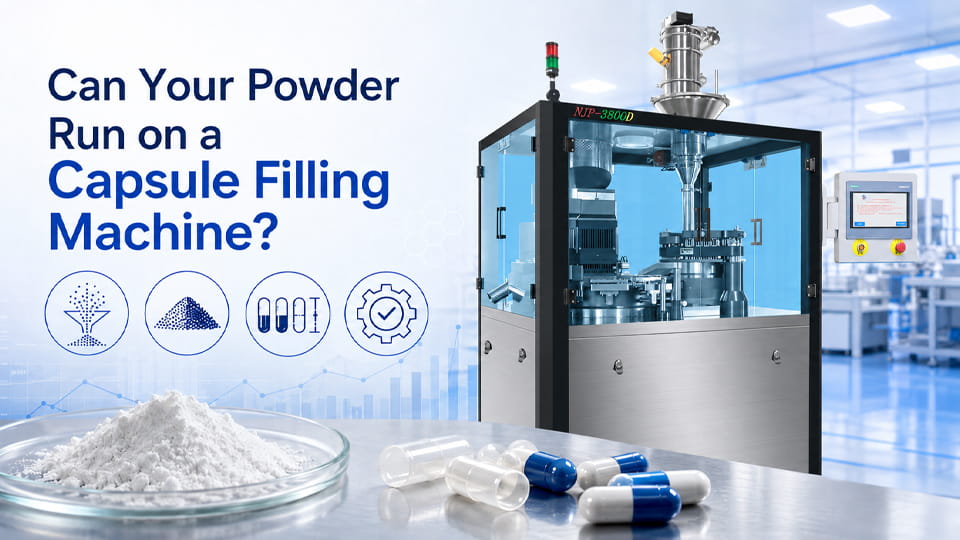
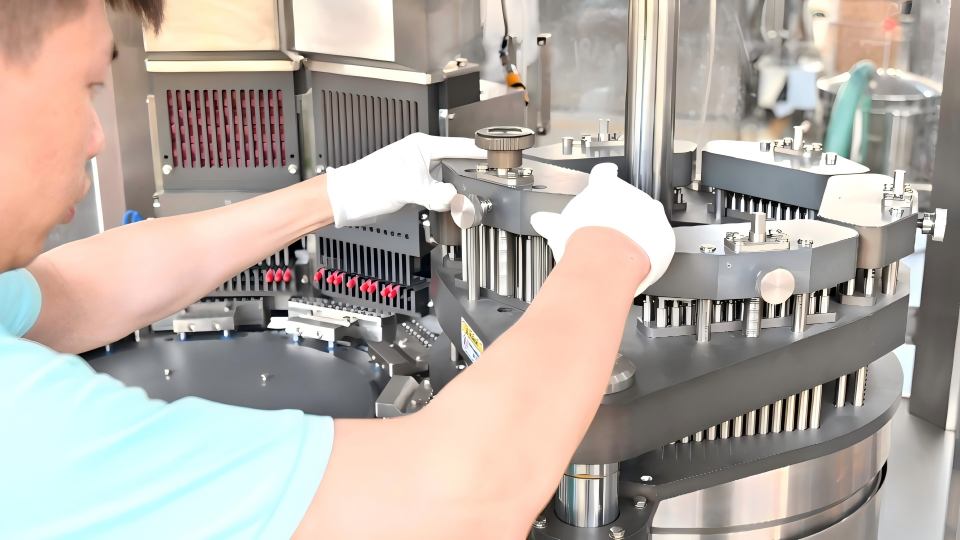
Capsule filling machine testing powder formulation compatibility for pharmaceutical capsule production


How to Evaluate Formulation Compatibility

Before arranging a powder trial or sample test, build a basic formulation profile. You do not need to turn every machine purchase into a research project, but you do need enough material data to understand where the risk is. USP treats powder flow as a combination of properties rather than a single number, while capsule-filling studies show that density, 응집력, compressibility and flow can interact differently with different filling mechanisms.

요인 Why It Matters in Capsule Filling Possible Problem
분말 유동성 Controls how consistently material reaches the dosing zone Bridging, rat-holing, intermittent feeding
대부분 / 탭 밀도 Affects volume, packing behavior and achievable fill weight Underfilling, weight drift, wrong capsule size
Particle size distribution Influences flow, dust and segregation 가루 살포, demixing, inconsistent dosing
수분 / 흡습성 Can alter cohesion and adhesion 뭉침, 고집, difficult cleaning
Cohesiveness / compactibility Affects formation and release of the powder dose Weak plugs, 고집, poor ejection
Dosing mechanism Different systems interact differently with the same formulation A formulation may need re-optimization when transferred

USP <616> defines bulk density in terms of powder mass relative to its bulk volume and packing arrangement, ~하는 동안 USP <1063> notes that controlled powder flow during transfer and feeding can affect attributes such as weight and content uniformity.

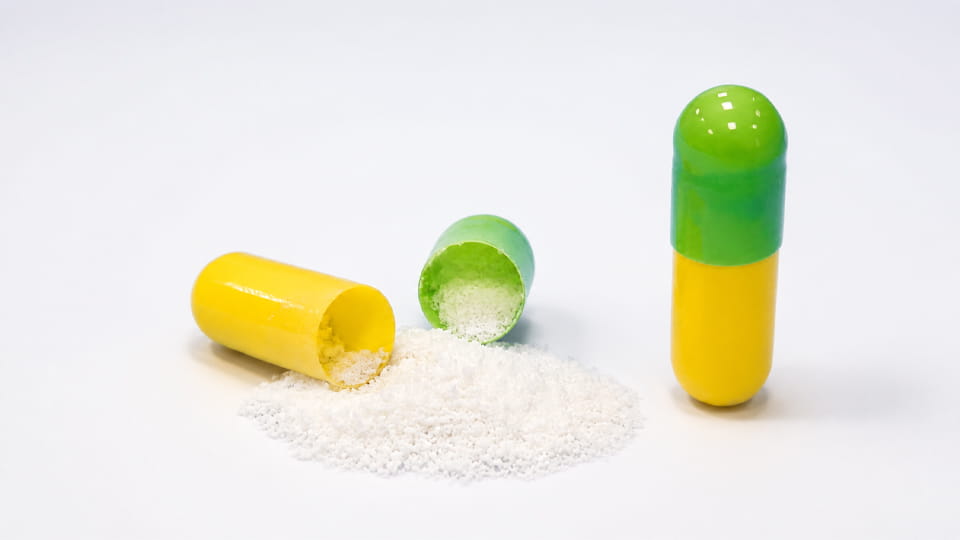
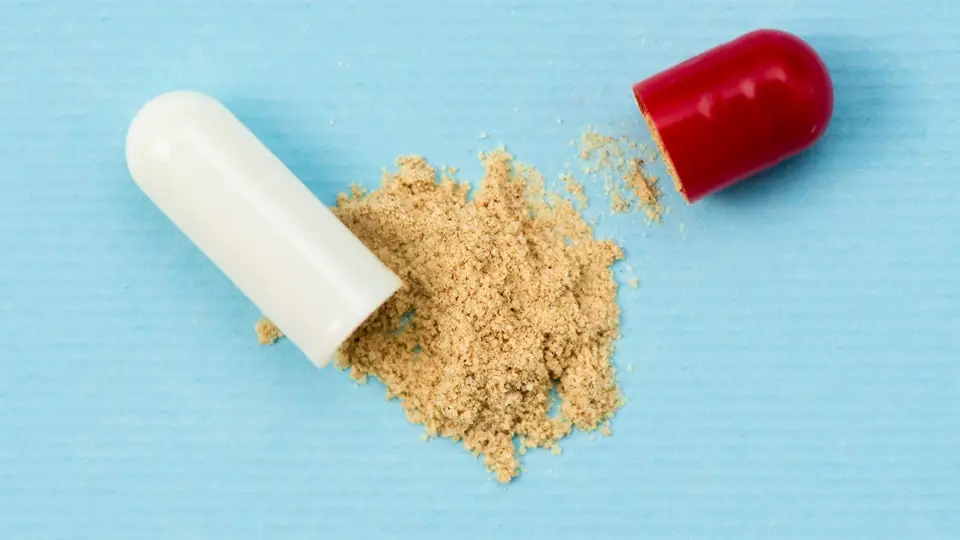
Powder formulation profile for capsule filling showing capsules and pharmaceutical powder before machine testing

단계 1 — Check powder flowability, but do not rely on one number.

Two useful screening indicators are Carr’s Index 그리고 Hausner Ratio, both derived from bulk and tapped density:

Carr’s Index = × 100

Hausner Ratio = Tapped Density ÷ Bulk Density

You can also use angle of repose as a simple indicator, while shear-cell testing or more detailed powder rheology may be valuable for difficult formulations. The key point is not to turn any one result into a universal pass/fail rule. USP <1174> explicitly describes pharmaceutical powder behavior as multifaceted and says a single simple test is not enough to characterize powder flow adequately.

That matters because the relationship between flow and capsule filling accuracy changes with the filling principle. In a dosator-nozzle study, powder flow properties were strongly related to capsule weight and weight variability. Another study using tamping-type filling equipment found that flow alone was not a reliable predictor of capsule weight uniformity. 실용적인 측면에서: use Carr’s Index, Hausner Ratio and related tests to identify risk, then confirm performance on the actual dosing system.

단계 2 — Check bulk density, capsule size and fill volume together.

Bulk density tells you roughly how much physical space your loose powder occupies. That is especially important when a customer specifies something like “500 mg in a Size 0 capsule.” Milligrams describe mass, not volume. 둘 500 mg formulations with very different densities can require very different capsule volumes. USP <616> likewise emphasizes that bulk density depends on both material density and the way particles are packed in the powder bed.

A useful first-pass calculation is:

Required loose powder volume ≈ Target fill weight ÷ Bulk density

Take a 크기 0 캡슐 as a simple example. Capsule manufacturer Suheung lists a nominal volume of about 0.68 밀리리터 for Size 0. If your formulation has a bulk density of 0.60 g/mL, the loose material corresponding to that volume is approximately:

0.68 mL × 0.60 g/mL = 0.408 g = 408 Mg.

그래서, if the target capsule fill weight is 500 Mg, 크기 0 looks tight when judged by loose bulk volume alone.

That does ~ 아니다 mean 500 mg is automatically impossible. Tamping or dosator filling can consolidate powder beyond its loose bulk state. But the calculation tells your engineer something useful immediately: 캡슐 크기, dosing volume, powder compactibility and the required degree of densification need to be verified rather than assumed.

For more detail on shell dimensions, learn more from Jinlu’s 캡슐 크기에 대한 종합 가이드, which covers sizes from 000 ~을 통해 5 and discusses capacity in relation to formulation density.

단계 3 — Look beyond density: 입자 크기, moisture and cohesion matter.

Very fine powders may be cohesive, dusty or difficult to move consistently. USP <786> notes that for small particles, surface forces of cohesion and adhesion become increasingly important, which is one reason very fine powders can behave differently from coarse granules. Particle size distribution also matters when components in a blend have very different particle characteristics, because handling and vibration can contribute to segregation risk.

Moisture adds another variable. A hygroscopic or sticky powder may gradually adhere to the hopper, 도징 디스크, tamping pins or dosator surfaces. That can make a formulation that runs well initially become less stable later in the batch.

This is why a capsule filler filling machine for sticky powder, fluffy material or poor-flow powder should be evaluated as a process rather than chosen only from a specification sheet. Major pharmaceutical-equipment OEMs offer configurations specifically aimed at difficult products.

단계 4 — Match the formulation to the dosing mechanism.

Two important industrial powder-dosing principles are 탬핑 핀 / 도징 디스크 그리고 복사기 충전재.

With a dosing-disc system, powder enters cavities in a dosing disc and is progressively consolidated by 탬핑 핀 before the dose is transferred into the capsule body. With a dosator system, a hollow dosing tube enters a powder bed, retains a measured powder plug, moves to the capsule body and ejects the dose.

Neither system is universally “better.” A direct experimental comparison found different requirements for formulation fluidity, lubricity and compactibility. 그 연구에서는, the dosator machine required a higher degree of formulation compactibility, while relatively less lubricant could be sufficient on the dosing-disc machine. The researchers also concluded that transferring a formulation between the two machine subclasses could be challenging.

Formulation Behavior 탬핑 핀 / Dosing Disc 약제사
Free-flowing powder Usually workable with normal setup optimization Usually workable if a stable dose can be retained
Cohesive / poor-flow powder May respond to powder-bed and tamping adjustments; trial required Can work, but plug formation and release must be verified
Highly compactible powder Often manageable through disc and tamp settings May support plug formation; ejection must still be checked
어려운 / hygroscopic powder Trial strongly recommended Trial strongly recommended
Low-dose / special formulation Depends on tooling and process design Specialized dosator systems are widely used for low-dose applications
Transfer from another dosing principle Re-optimization may be necessary Re-optimization may be necessary

단계 5 — Watch for warning signs before you scale up.

Seven practical warning signs deserve attention: powder bridges above the hopper outlet; material sticks heavily to stainless-steel surfaces; the blend generates excessive fines or dust; bulk density changes noticeably between lots or during handling; ingredients show segregation after transfer; 채우기 무게 drifts during the run; or the process cannot repeatedly form, transfer and eject a stable powder dose.

None of those symptoms proves that your formulation cannot be encapsulated. Research with tamp-filling machines has shown that even poor-flow powders can sometimes be managed by optimizing powder-bed height and machine settings. They simply tell you that a proper capsule filler sample test is worth doing before equipment configuration is finalized.


Run an Actual Powder Trial Before You Buy

For an unfamiliar formulation, the strongest evidence is an actual powder trial using equipment that reproduces the proposed production process. Use the real production blend where practical, not an easier substitute. Use the intended gelatin, HPMC or other capsule shell, 제안된 캡슐 크기, and the actual target capsule fill weight.

Start by recording the formulation batch, bulk density, 탭 밀도, 캡슐 껍질, 크기, dosing parts, powder-bed level and initial machine settings.

Then run the filling machine of capsule at more than one condition. Begin at a conservative speed to confirm feeding, 캡슐 분리, 투약, transfer and locking. 다음, move to the planned normal operating speed. 마지막으로, test the target upper production speed when that speed forms part of your purchase specification.

This matters because speed is not always just a throughput number. A dosator study found that increasing machine speed increased machine vibration, which densified the powder bed and significantly changed the collected fill weight in the test system. So a clean five-minute demonstration at low speed cannot, by itself, prove that the same formulation will behave identically at production speed.

Sample capsules at the beginning, middle and end of the test. Record the agreed gross or net fill-weight data, calculate the required variability statistics and document rejects. Watch for powder bridging, starvation, 먼지, residue buildup, 고집, weak dose transfer, capsule locking problems, leakage and excessive cleaning demand. These are also useful connections to Jinlu’s 캡슐 충전 결함: 일반적인 문제, 원인 & 문제 해결 가이드, which covers fill-weight variation, leakage, locking and feeding issues.

하다 ~ 아니다 apply a made-up universal rule such as “FDA requires ±3%.” Your acceptance criteria should come from the product specification, 우르스, development or validation strategy and applicable quality requirements. For an equipment FAT or formulation sample test, you might agree in advance on target fill weight and variability, sustained production speed, reject rate, capsule closure quality, powder loss and stable running time. The exact values should be product- and project-specific.

Ask for the test data, not just a video showing capsules coming off the machine. A useful supplier report should state the machine model and dosing configuration, 캡슐 크기, powder batch, target and actual speed, fill-weight sample results, 거부하다, adjustments made during testing, final recommended parameters and any limitations observed.

을 위한 machine retrofitters, use the same logic. Improved feeding, agitation, dust extraction or weight control may improve a stable process, but a retrofit cannot be assumed to eliminate a fundamental mismatch between powder behavior and the dosing principle. Reproduce the existing problem first, then compare the modification using the same powder and the same acceptance criteria. This is an engineering recommendation based on the documented sensitivity of capsule filling to material attributes, machine settings and dosing principle.

Also consider normal raw-material variability. A trial made with one unusually easy-to-flow batch may not represent future commercial production. Where possible, record the tested batch’s density, moisture and particle-size profile so later batches can be compared with the material used during the qualification exercise. USP’s powder chapters support treating these material properties as meaningful process-development inputs.

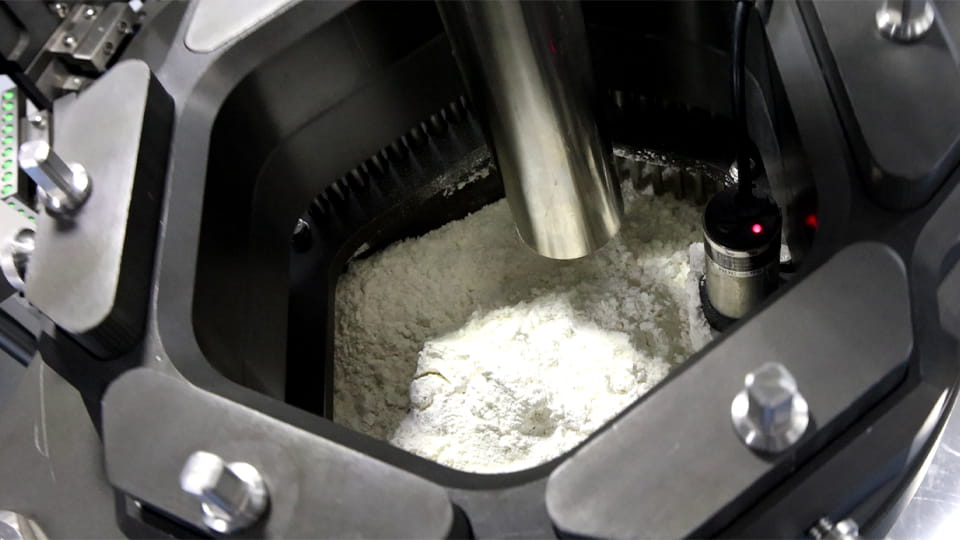
Actual powder trial inside a capsule filling machine to evaluate formulation compatibility and filling performance


What to Send the Supplier and What Can Be Adjusted

에이 캡슐 충전 기계 제조업체 can give you a more useful recommendation when your inquiry includes formulation data.

최소한, send the 제품 유형, 목표 충전 중량, capsule size and required production capacity. 이상적으로는, also provide bulk density, 탭 밀도, Carr’s Index, Hausner Ratio, 입자 크기 분포, moisture or hygroscopicity information, whether the powder is free-flowing, cohesive or sticky, capsule shell material, containment requirements where relevant and your product-specific fill-weight criteria.

That information helps the equipment supplier decide whether a standard automatic 캡슐 충전물 기계 is suitable or whether the application calls for a different feeding, 투약, dust-control or containment setup. Jinlu’s current capsule-filling range includes automatic, semi-automatic and liquid-filling equipment.

When a trial shows problems, 분리된 machine-side optimization ~에서 formulation-side optimization.

Machine-side changes can include powder-bed height, dosing-disc dimensions, tamping-pin depth or sequence, dosator settings, feeder or agitation behavior, 생산 속도, 비어 있는, dust extraction and cleaning frequency. Experimental tamp-filling work has shown that powder-bed height and tamping settings can affect capsule fill performance, especially with difficult powders.

Formulation-side changes may involve particle-size control, 육아, moisture management or changes to glidants, lubricants or excipients. Those decisions can affect more than machinability, so they belong with the customer’s formulation, quality and regulatory teams. Research on lubricated capsule formulations shows why this caution matters: lubricant concentration can affect powder bulk behavior, filling variability and machine function in different ways.

A machine supplier should tell you what the equipment observed. It should not casually turn a machine trial into an uncontrolled formulation-development exercise.


A Practical Decision Framework and Final Checklist

When you are comparing capsule fillers, keep the decision path simple:

Characterize the powder → confirm fill volume → match the dosing principle → test the actual formulation → compare the results with predefined acceptance criteria.

That five-step sequence brings formulation, engineering and procurement into the same decision instead of letting each team evaluate the machine from a different angle. The scientific literature supports this combined material-and-process view: capsule filling behavior depends on both formulation attributes and the filling mechanism.

The most reliable answer to “Can this Capsule Filling Machine handle my powder?” is therefore not a brochure statement.

그것은:

Repeatable test data from your actual formulation, on the proposed dosing system, at your required capsule size, fill weight and production speed.

Final pre-purchase checklist

☐ Target fill weight and capsule size confirmed
☐ Bulk density and tapped density measured
☐ Carr’s Index / Hausner Ratio reviewed as screening indicators
☐ Particle size, moisture and stickiness assessed
☐ Dosing principle and feeding method confirmed
☐ Actual powder sample test completed
☐ Normal and target production speeds tested
☐ Fill-weight data, rejects and process observations recorded
☐ Acceptance criteria agreed before the trial
☐ Final settings and known limitations documented


Can One Machine Handle Multiple Formulations?

Modern capsule fillers are built to be flexible. The same machine can often run different powders – but not necessarily with the same setup.

예를 들어, JinLu’s automatic fillers (좋다 NJP-1200C 그리고 NJP-1500D) can handle powders, 과립, pellets and even micro-tablets. They support capsule sizes #000–#5 with quick-change parts. 하지만, if you switch from one powder to another, be prepared to adjust: different powders may need different dosing discs or tamping pins, and you’ll need a complete cleaning.

NJP-1500D 캡슐 충전 기계
NJP-1500D 캡슐 충전 기계

앞서 언급했듯이, transferring a formula between dosing-disc and dosator machines should be done carefully. If you have diverse products (말하다, both a fine vitamin blend and a coarser granule), you may need to change dosing mechanisms. 또한, powder vs. liquid fills require different machines or modules.

실제로, many customers reserve a machine per product line or flush the system thoroughly. But a versatile filler does mean you can potentially fill your line of capsules on one platform with just change parts.


결론: Test the Formulation, Not Just the Machine

에이 캡슐 충전물 기계 can look perfect on paper and still be the wrong configuration for a difficult powder. That does not necessarily mean the machine is poor or the formulation is bad. It usually means the machine and material need to be evaluated together.

Start with the basics: 분말 유동성, bulk density, 탭 밀도, 입자 크기 분포, 수분, target capsule fill weight and capsule size. Then look closely at the dosing mechanism—especially when comparing 도징 디스크 / tamping pin vs. 복사기 시스템. 마지막으로, test the real formulation under conditions that resemble production. Research and commercial R&D equipment both support this processability-first approach.

That sequence gives procurement a stronger basis for comparing suppliers, gives production a more realistic view of achievable output, and gives formulation engineers useful information before the machine configuration is frozen.

~에 진루 포장, the best starting information is your formulation behavior, bulk and tapped density if available, target dose, capsule size and required output. For unfamiliar, 어려운, fluffy or poor-flow powders, a sample test can help evaluate the proposed feeding and dosing configuration before purchase.

Request a Powder Trial 또는 Send Your Formulation Data to Jinlu Packing to review the application and identify a suitable capsule-filling configuration.


FAQs About How to Choose a Capsule Filling Machine for Your Powder Formulation

Can a capsule filling machine handle any powder formulation?

꼭 그런 것은 아니다. A Capsule Filling Machine may be designed for powders, but actual performance depends on powder flowability, bulk density, 입자 크기, 수분, cohesiveness, 압축성, 목표 충전 중량, and the dosing system. The safest way to confirm compatibility is to test the actual formulation under realistic production conditions.

What powder properties affect capsule filling machine performance?

The main properties include powder flowability, bulk and tapped density, 입자 크기 분포, 수분, cohesiveness, lubricity, 및 압축성. These properties influence how consistently powder reaches the dosing area, forms a dose, transfers into the capsule, and maintains stable fill weight.

How do I know if my powder has good enough flowability for capsule filling?

Start with screening tests such as Carr’s Index, Hausner Ratio, angle of repose, bulk density, and tapped density. These tests help identify flow risks, but no single value proves that a formulation will run successfully. Final confirmation should come from a trial on the intended capsule filling machine.

How does bulk density affect capsule size and fill weight?

Bulk density determines how much volume a given powder mass occupies. 예를 들어, 500 mg of a low-density powder requires more capsule volume than 500 mg of a dense powder. Capsule size should therefore be selected using both the target fill weight and formulation density, then confirmed by an actual filling trial.

Can a capsule filling machine handle sticky or poorly flowing powder?

종종 그렇습니다, but difficult powders usually require more careful machine configuration and testing. Adjustments may involve powder feeding, agitation, powder-bed height, tamping settings, dosing parts, or operating speed. For sticky, 결합력 있는, fluffy, or hygroscopic powders, an actual sample test is strongly recommended before final machine selection.

What causes capsule fill weight variation?

Common causes include inconsistent powder flow, changes in bulk density, uneven powder-bed conditions, moisture changes, segregation, incorrect dosing settings, machine-speed effects, and mechanical wear. Because capsule filling is often volumetric, even a small change in powder density or feeding behavior can change the actual fill weight.

What is the difference between a tamping pin and a dosator capsule filling system?

A tamping pin or dosing-disc system gradually compacts powder inside dosing-disc cavities before transferring the dose into the capsule. A dosator system collects and compresses powder inside a hollow dosing tube before ejecting the dose. The two systems interact differently with powder flow, compactibility, and lubricity.

Is a tamping pin or dosator system better for my powder formulation?

Neither system is universally better. The best choice depends on your formulation’s flowability, compactibility, lubricity, target dose, 캡슐 크기, 생산 요구 사항. Research comparing the two systems shows that they can have different formulation requirements, so comparative testing is preferable for difficult products.

Should I test my powder before buying a capsule filling machine?

예, especially for unfamiliar, 어려운, 결합력 있는, 흡습성, low-density, or high-value formulations. A useful trial should use the intended capsule size and fill weight and should evaluate fill-weight consistency, feeding stability, powder sticking, leakage, 캡슐 잠금, 거부하다, and performance at realistic machine speeds.

What information should I send to a capsule filling machine manufacturer?

최소한, provide the product type, 캡슐 크기, 목표 충전 중량, and required production capacity. If available, also send bulk density, 탭 밀도, 입자 크기, 수분, powder flow behavior, capsule shell type, required fill-weight criteria, and information about whether the formulation is sticky, 결합력 있는, or hygroscopic.


참고자료:
1.Bulk Density of Powders —— 미국 약전
2.Comparison of the formulation requirements of dosator and dosing disc automatic capsule filling machines —— 국립 의학 도서관
3.캡슐 충전 중량 균일성에 대한 분말 흐름 특성의 영향 —— 국립 의학 도서관
4.Pharmaceutical Development —— ICH Q8(R2)
5.Powder flowability as an indication of capsule filling performance —— 사이언스다이렉트
6.도세이터 노즐 기계의 캡슐 충진 중량 및 중량 가변성에 대한 재료 특성의 영향 —— 사이언스다이렉트

이 기사를 공유하세요:
사진 사소한 푸
사소한 푸

사소한 푸, 진루패킹 창업자, 가져오다 20 제약 기계 부문에 대한 다년간의 전문 지식. 그의 리더십 아래, Jinlu는 디자인을 통합하는 신뢰할 수 있는 공급업체로 성장했습니다., 생산, 그리고 판매. Petty는 고객이 제약 포장의 복잡성을 헤쳐나갈 수 있도록 깊은 산업 지식을 공유하는 데 열정을 갖고 있습니다., 장비뿐만 아니라 제품도 받을 수 있도록 보장, 생산 목표에 맞춘 진정한 원스톱 서비스 파트너십.

목차

문의 보내기

답장을 남겨주세요

귀하의 이메일 주소는 공개되지 않습니다. 필수 입력란이 표시되어 있습니다 *

무료 견적 받기

*우리는 귀하의 기밀성을 존중하며 모든 데이터는 보호됩니다. 귀하의 개인정보는 JL 솔루션을 위해서만 사용 및 처리됩니다..