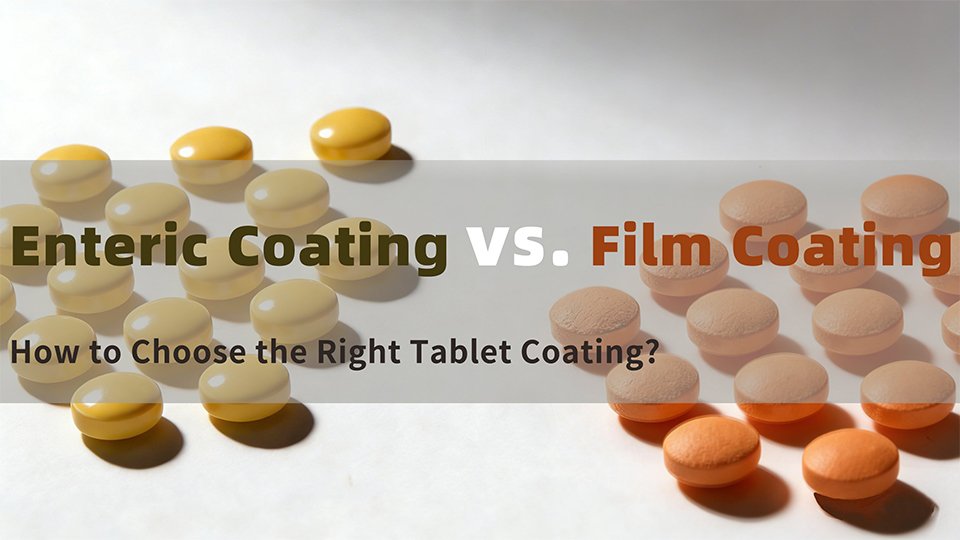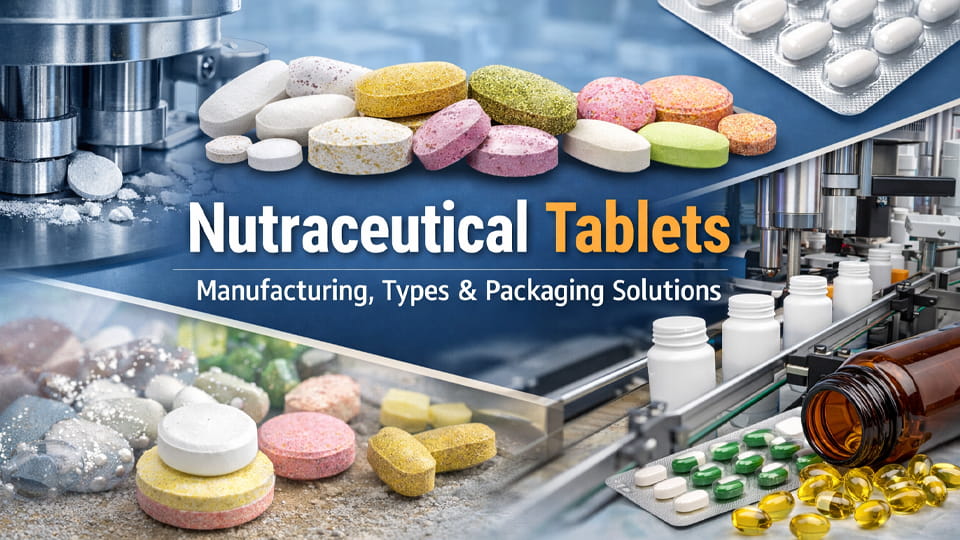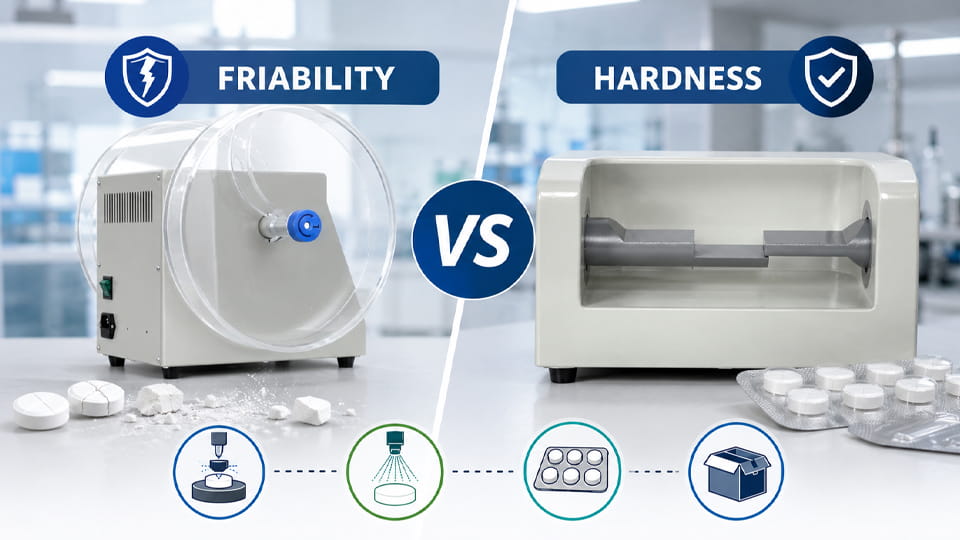

錠剤の剤形 基本的なタイプは 2 つあります: コーティングされた そして コーティングされていない. アン 素錠 追加の殻を持たず、圧縮された成分のみを含むシンプルな圧縮錠剤です。 (有効な薬剤 プラス 賦形剤). a コーティングされたタブレット, 対照的に, 圧縮後に薄い外層またはシェルが適用される. このコーティングはポリマーフィルムであってもよい (フィルムコーティングされた), 砂糖ベースの殻 (シュガーコーティング), 腸溶層, またはその他の機能性フィルム. コーティングは見た目を超えた機能を果たし、薬剤を保護します, マスクの味, コントロールリリース, または飲み込みやすさを改善する.
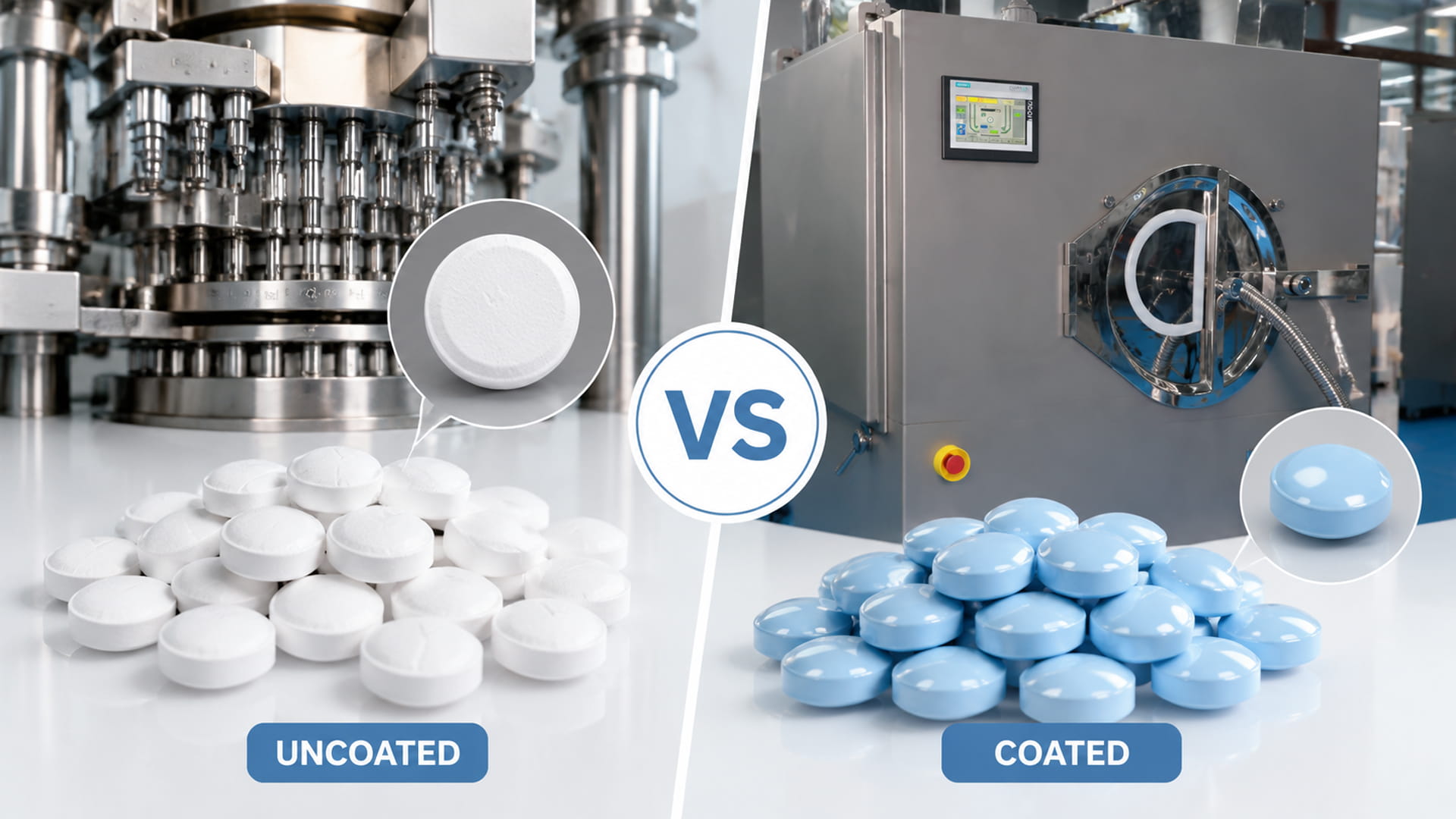
例えば, 形 1 フィルムコーティング機が錠剤に均一なポリマーフィルムを塗布する様子を示しています, スムーズな作成, 光沢のある錠剤. このコーティングにより、飲み込みやすくなり、錠剤の芯を湿気や空気から保護できます。. 対照的に, コーティングされていない普通の錠剤はマットです, しばしば白亜質の, そして環境に対してさらに脆弱になる.
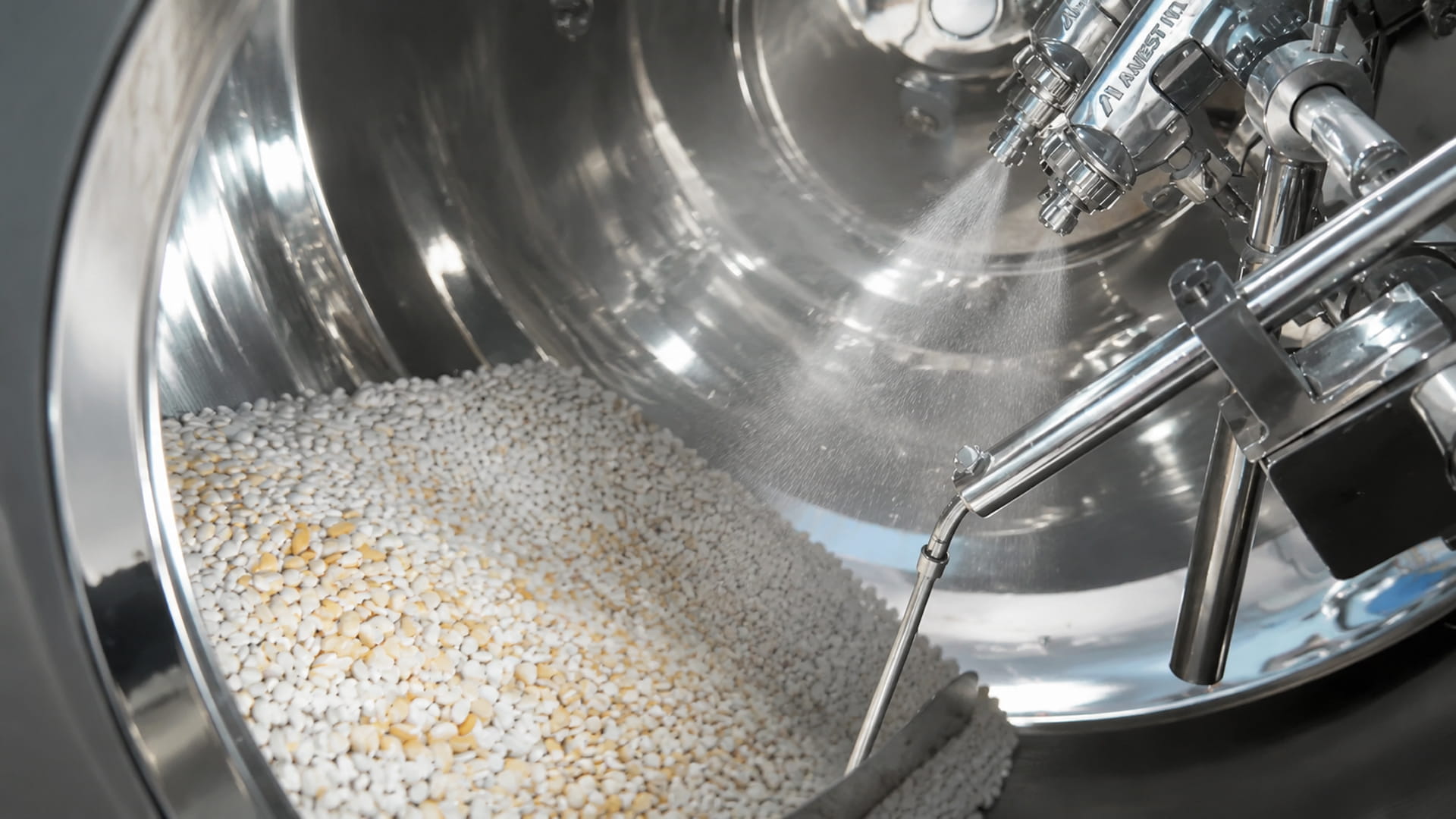
形 1. フィルムコーティングを施す高速錠剤コーティング機. コーティングにより保護力が加わります, 各錠剤への平滑層, 外観と安定性の向上.
例えば, ある フィルムコーティング錠 薄いポリマーフィルムを持っています (通常、ヒドロキシプロピルメチルセルロースまたは類似のもの) 錠剤がかさばらない. a 糖衣錠 厚いです, 甘いシロップの殻 – 作るのに手間がかかり、はるかに重い. アン 腸溶錠 pH感受性ポリマーを使用しているため、胃を通過して腸で溶解します。. 各コーティングの種類には独自の長所と短所があります (下の表を参照してください).
| コーティングタイプ | 説明 | 主な用途 |
| コーティングされていない | コーティングなし; タブレットコアが露出 | 高速リリース, コスト重視の, 安定した薬 |
| フィルムコート | 薄いポリマーフィルム (例えば. HPMC) | 味のマスキング, 湿気/光からの保護, 飲み込みやすい, ブランディング |
| シュガーコート | 厚いシュガーシロップの層 | 濃い味のマスキング, 滑らかな光沢のある仕上がり, 小児科でよくある |
| 腸溶性コート | pH感受性ポリマー (オイドラギット) | 胃や薬を守る; 腸内放出の遅延 |
| その他 | 特殊/制御放出 | 徐放性, ターゲットを絞った配信, 等. |
テーブル 1. 素錠とコーティング錠の比較と一般的なコーティングの種類.
コーティングは見た目だけではなく、 機能ステップ 錠剤製造において. 製薬エンジニアが尋ねる, 「タブレットはコーティングなしでも機能しますか?「はいの場合」, コーティングされていない錠剤はより簡単で安価です. ただし、技術的な利点がある場合は常にコーティングが追加されます. 錠剤をコーティングする主な理由は次のとおりです。:
要するに, コーティングで機能性をプラス. 恣意的に行われているわけではありません, でもいつでも味わう, 安定性, または管理事項をリリースする. ある業界ガイドによると, 「コーティングは、明らかな機能上の利点を提供する場合にのみ導入されます。」.
耐久性と使いやすさを兼ね備えたコーティング錠剤. 重要な利点は含まれます:
形 2 コーティングされていない錠剤とフィルムコーティングされた錠剤を比較します. コーティングされた錠剤 (右) 明らかに滑らかです, 光沢のある外観により、コアの痕跡や粗さを隠します。.
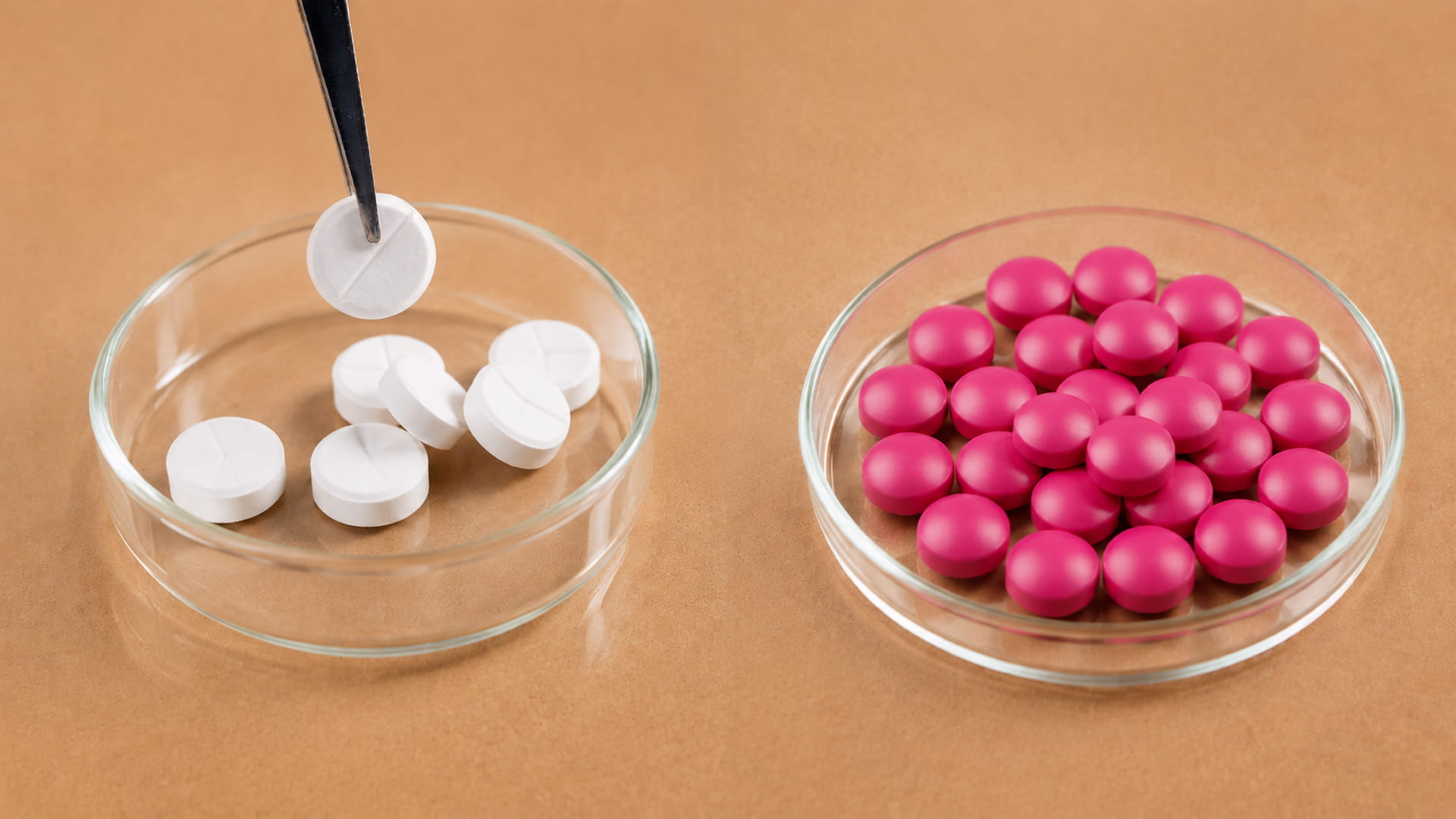
形 2. コーティングされていない (左) vs フィルムコーティング (右) 錠剤. フィルムコーティング錠なので滑らかな感触です。, コアの色と質感を隠す均一な仕上げ. このようなコーティングは飲みやすさを改善し、内部の薬剤を保護します.
コーティングのメリットをわかりやすく説明: コーティングされた錠剤は多くの場合「見た目が良くなります」, 長持ちする, そして、より簡単に下ることができます」 普通の錠剤よりも. これらの利点は、たとえコーティングによって工程とコストが追加されたとしても、, 後で問題が軽減される可能性があります (ダメージ, 苦情, 早期期限切れ). 食品サプリメントの CMO は、「コーティングされた錠剤には追加の材料が含まれているが、, 労力と時間, コーティングにより不合格バッチが減る可能性がある, 顧客からの苦情, そして市販後の品質問題」. 長期的には, コーティング錠は製品ライフサイクル全体でコストを節約できることが多い.
もちろん, 普通のタブレットもまだその地位を保っています. コーティングされていない錠剤はシンプルさとコスト効率を提供します:
簡単に言えば, コーティングされていない錠剤は 「簡単で安く作れる」. 実現可能性調査のベースラインの開始点として最適です. 薬剤師のブログでは、コーティングされていない錠剤のほうが安価で、製造にかかる時間が短いとも述べています。, より速く溶解し、より早く薬を放出します.
しかし, これらの利益にはトレードオフが伴います: コーティングされていない錠剤は環境ダメージに対して「薬物の核を脆弱なままにする」, 患者には受け入れられにくいかもしれない. したがって、メーカーはこれらの要素を考慮します: コーティングが必要ない場合, 彼らはおそらくスキップするだろう.
コーティングは万能ではありません. 業界ではいくつかの主要なコーティングタイプが使用されています, それぞれに具体的な 用途とメリット:
フィルムコーティング錠 vs 糖衣錠: 要するに, フィルムコーティングが薄い, 耐久性のある, 高速生産に適しています. かさばらず、素早く塗布できるため、砂糖コーティングに大きく取って代わりました。. しかし, 糖衣は依然として優れた味マスキングとクラシックな外観を提供します, そのため、味が重要なチュアブルビタミンなどの製品に使用されています。.
フィルムコーティング錠 vs 腸溶コーティング錠: 主な違いはリリース場所です. 即放性フィルムコーティングは胃の中で溶解し、多くの場合飲みやすさや安定性を向上させるだけです。. 腸溶性コーティング 遅れ 腸内pHまで溶解. 例えば, 胸やけの治療薬では、胃の炎症を避けるために腸溶性コーティングが使用される場合があります。, 一方、毎日のビタミンには通常のフィルムコートが使用される場合があります。.
メーカーは実際に錠剤をどのようにコーティングしているのか? 慎重に管理されたスプレーアンドドライ作業です. 基本的な手順は次のとおりです:
最新のタブレット製造では、次のような設備が使用されます。 ロータリータブレットプレス (コア形成用) そして 高速塗装機 (フィルムやシュガーシェルの貼り付けに). 打錠機は 1 時間あたり数十万個の均一なコアを生産できます. 次に、特殊なコーティング機 (基本的にはスプレー ノズルと正確な空気流を備えたステンレス製ドラム) が、移動する錠剤にコーティング ソリューションを塗布します。.
これらの各ステップは厳密に制御する必要があります. スプレーの量が多すぎたり、空気が熱すぎたりする可能性があります。 「オレンジピール」テクスチャーや剥離フィルムなどの欠陥. だからこそ先進的なコーターマシンが (JinluPackingのもののように) 自動PLC制御がある, 精密なスプレーノズル, さらにリアルタイムモニタリングによるパラメータ調整も可能. 最後に, 精度が鍵です: 安定した性能を得るには、すべての錠剤に適切なコーティングの厚さが必要です.
[jl_youtube ソース=”https://www.youtube.com/embed/LFJJ-cEpfCk”]
研究室での開発から商用タブレットの生産に移行する場合, 適切な錠剤コーティング機を選択することが重要な決定となります. 生産管理者は通常、コーティングの均一性に基づいて装置を評価します。, 容量, 自動化レベル, 清掃要件, とメンテナンス費用. 最も一般的な錠剤コーティング装置には次のものがあります。:

形 3. Jinluの工業用高速錠剤コーティング機. コーティング溶液を噴霧して乾燥させると、錠剤が内部で転がる. バッフル型撹拌機や材料循環システムなどの機能により、均一な被覆と効率的なコーティングが保証されます。.
コーターに求められる主な機能は次のとおりです。:
高品質の機器への投資が成果を生む: 優れたコーターは高いコーティング均一性を実現します, 最小限の欠陥, そしてより高速で走ることができる. これにより、生産時間と労力が削減されます. あるブログのメモとして, 最新のフィルムコーティングは「これまでよりも速く、より安定しています」,」 自動制御と改良された機械のおかげで.
要約すると, コーティング錠とコーティングされていない錠剤の主な対比は次のとおりです。:
テーブル 2 (下に) これらの違いを強調する. コーティングされた方が全体的に「優れている」わけではなく、むしろ優れていることに注意してください。 コーティングが必要な場合. よくある質問の回答としては: 「コーティングされた錠剤は常にコーティングされていない錠剤よりも優れています? いいえ – コーティング錠は機能的な理由がある場合に使用されます。, 味のマスキングや保護など. 製剤が安定していて美味しい場合, コーティングのない錠剤は、簡単さとコストの点から好まれる場合が多いです。」.
| 特徴 | 素錠 | コーティングされた錠剤 |
| 表面 | マット, 目に見える粉末/顆粒 | スムーズ, 光沢フィルムまたは着色フィルム |
| 味・匂い | 苦いものや不快なものが目立つことがある | コーティングで不快な味・匂いをマスク |
| 飲み込みやすさ | 多くの場合、より困難です, 特に大きいものは | 表面が滑らかなので簡単 |
| 保護 (湿気・光) | 強力な梱包が必要 | フィルムでバリアを強化, 安定性が向上します |
| 薬物の安定性 | 湿気に弱い, 熱 | 安定性と保存期間の向上 |
| 処理の複雑さ | よりシンプルなプロセス, 手順が少なくなる | 追加のコーティング手順が必要 |
| 時間/コスト | 製造コストの削減 | 初期費用は高いが、ライフサイクルコストは低くなる可能性がある |
| 解放制御 | 即時リリースのみ | 遅延リリースまたは制御リリースを有効にすることができます (腸溶性, 持続した) |
| ブランディング/外観 | 限定 (無地) | カラフルになれる, ブランド化のために印刷された |
テーブル 2. コーティング錠とコーティングなし錠剤の比較: 主な機能の比較.
実際に, 配合者とメーカーは製品のニーズに基づいて決定します. いくつかの一般的なガイドライン:
場合によっては、パッケージングが決定につながることもあります: コーティングされた錠剤は通常、ほこりの飛散が少ないため、ボトルや瓶に入れても保存が良好です。. で ブリスターパック, どちらの形式でも機能します, ただし、コーティングにより包装が簡素化される可能性があります. 受託製造業者 (CMO) よく尋ねます: 「この錠剤をノンコーティングにできますか?」?」を選択し、必要な場合にのみコーティングステップを追加します.
よくある質問は、コーティング錠を半分に割ったり、粉砕したりできるかどうかです。. 一般的に, いいえ: コーティングされた錠剤を割ったり、砕いたりすると、殻の目的が損なわれます。. ポリマーコーティングは、薬物の放出を制御したり保護したりすることを目的としています。. 潰すと一気に薬物が暴露される, 吸収を変化させたり刺激を引き起こす可能性があります. コーティングされた錠剤 (特に腸溶性または徐放性のもの) 無傷のままであるべきです. より少ない用量が必要な場合, タブレットにスコアラインがあるかどうかを確認します (一部の即時放出錠剤では、) または薬剤師に尋ねてください. ある専門家のメモによれば、: 「通常はそうではありません。粉砕すると保護層が破壊され、薬物の放出が変化する可能性があります」. まずは必ず薬剤師に相談してください」.
最後に, コーティング錠とコーティングなし錠剤 シンプルさと機能性のトレードオフです. コーティングされていない錠剤は安価で迅速に製造できます, ただし、薬物コアは露出したままにしておきます. コーティングされた錠剤は複雑さとコストを増加させます, しかし、明らかなメリットを提供します: より良い安定性, 味のマスキング, 飲み込みやすさ, そしてブランドの差別化. 現代の医薬品生産において, 最も日常的に使用される錠剤 (ビタミン, OTC Meds, 栄養補助食品) フィルムコーティングが施されているのは、保護と効率のバランスが適切であるためです。.
しかし, 定式化が許す限りいつでも, 企業はコスト上の理由からコーティングされていない錠剤を好む場合があります. 鍵となるのは、 錠剤の種類を薬のニーズに合わせる. 製品に味のマスキングや放出制御が必要な場合, 多くの場合、コーティングが不可欠です. そうでない場合, 普通のタブレットで十分かもしれません.
錠剤のコーティングに関するご質問や、機器のオプションについてのお問い合わせは, 手を差し伸べる! JinLuPacking の私たちのチームは打錠機を専門としています。, コーティングマシン, および完全なタブレット生産ライン. フィルムの高速コーティングシステムが必要かどうか, 砂糖, または腸溶性アプリケーション, または錠剤配合の最適化に関するアドバイス, 私たちは助けにここにいます. 見積もりや詳細についてはお問い合わせください, あなたのタブレットが適切な仕上げとパフォーマンスを確実に得られるようにしましょう.
コーティング錠には追加の層があります (膜, 糖類または機能性ポリマー) 圧縮されたコアの上に適用されます, 一方、コーティングされていない錠剤は、外層のない単純な圧縮錠剤です。. コーティングは機能的な目的を果たします: 味を隠すことができる, APIを湿気/光から保護します, そしてコントロールリリース. コーティングされていない錠剤はすぐに溶けるので、製造コストが安くなります。, しかし、それらは薬物を環境にさらすため、苦い味がすることがよくあります。.
錠剤は安定性を高めるためにコーティングされています, 患者の受容性, そしてパフォーマンス. コーティングが湿気を守る- または光に敏感な API, 不快な味をマスクする, 錠剤を飲み込みやすくします. 特殊コーティング (腸溶性映画のような) 腸まで放出を遅らせることができる, 胃の炎症を防ぐ. 要するに, コーティングにより錠剤の外観と保存期間が向上します, 制御された薬物送達と患者のコンプライアンスの向上が可能になります.
どちらが一般的に「優れている」というわけではなく、アプリケーションによって異なります. コーティング錠には保護と患者へのアピールという利点がある, ただし、コストが高く、追加の処理が必要です. 素錠の方がシンプル, もっと早く, そしてより安価に生産できる, そして彼らはすぐに薬を放出します. 安定した, コスト優先の速放性薬剤, コーティングされていないものが理想的かもしれません. 味のマスキングと安定性が優先される、苦い薬剤または水分に敏感な薬剤の場合, コーティングされた方が良い選択です.
錠剤の主なコーティング方法は以下の3つです。:
・フィルムコーティング: 薄いポリマー層 (通常は水ベースの) スプレーで塗布する; 今日最も一般的な. 重量増加を最小限に抑えながら湿気保護とブランド化を実現.
• シュガーコーティング: 複数のシロップ層で作られた厚いシュガーシェル; 光沢のある仕上がりになり、マスクの味も良くなります, ただし、量が多くなり、処理に時間がかかります.
• 腸溶コーティング: 胃酸に負けず腸内で溶けるpH感受性フィルム. これは技術的には特殊なポリマーを使用したフィルムコーティングの一種です, 酸に不安定な薬剤や胃の炎症を避けるために使用されます。.
フィルムコーティング錠は、より薄いシェルでコーティングの重要な利点のほとんどを得ることができます。. 優れた水性フィルムコートが薬剤を保護します (湿気/光バリア), 味と匂いをマスクする, タブレットのサイズを大幅に大きくすることなく美観を向上させます. 最新のコーターではフィルムコーティングが素早く乾燥します, 高いスループットを実現する. 特定のリリースプロファイルに合わせて配合することもできます (腸溶性または持続性) ポリマーの選択による.
一般的に, はい. コーティングされていない錠剤は通常、バリア層がないため、より速く崩壊し、溶解します。. API はすぐに胃液にさらされます。, より早い発症につながる. 対照的に, 即効性のフィルムコートでもわずかな遅延が発生します (コートが最初に溶ける必要があるため、). しかし, コーティングの組成と厚さによっては差異が小さい場合があります.
一般的な塗装設備には次のものがあります。:
• 穴あきパンコーター (高速コーター): 回転穴あきドラムを備えた業界標準の機械. 加熱された空気がドラム内を流れる, 高い乾燥効率と均一な塗布が可能.
• 流動層コーター: 錠剤を空気の流れに乗せて浮遊させ、下または上からスプレーします。. 非常に均一な薄層を持つペレットまたは小さな錠剤に適しています.
• 従来のコーティングパン: 主に糖衣用に使用される大型のオープンパン (労働集約的で、現代の製薬ではほとんど時代遅れ).
各マシンタイプはバッチサイズに基づいて選択されます, タブレットのサイズ/形状, そしてコーティング材. 大型フィルムコーティング用, 穴あき鍋 (Jinluの錠剤コーティング機のような) 最も一般的です.
コーティングは薬物放出を遅らせたり、変更したりする可能性があります. 腸溶性コーティングが胃酸の放出を防ぎます, したがって、薬は腸内でのみ放出されます. その他の特殊コーティング (徐放性フィルム) 液体の浸透を遅らせるポリマーが含まれています, リリースを何時間にもわたって延長する. 機能しないフィルムコートでも (即時釈放のために) コーティングされていないコアと比較して、リリースがわずかに遅くなる可能性があります, まずバリアを溶かす必要があるため、. したがって, コーティングは、API がどこに、どのくらい早く配信されるかを正確に調整するツールを提供します。.
フィルムコーティングは多用途かつ効率的です. 薬剤を保護し、最小限の処理時間で味や外観を改善します。. 最新の水性フィルムコートはすぐに乾燥します, これは高スループット製造に不可欠です. 色や識別子の追加も可能です, ブランドの差別化を支援. さまざまなリリースプロファイルに合わせて設計できるため, フィルムコーティングは、錠剤の品質と性能の両方を実現したい製薬会社にとって主力製品です.
企業は複数の要素を評価します. 薬が不安定な場合, 苦い, または胃の保護が必要です (腸溶性放出), 彼らはコーティングされた錠剤を選択します. 配合がすでに安定している場合, 味は許容範囲内です, コストを最小限に抑えることが最優先事項です, 彼らはコーティングされていない状態で使用できます. ある業界ガイドが要約すると、: 「味をマスキングする必要がある」場合は、コーティング錠を使用してください。,「湿気から守る」, 光か酸化か,」または「制御/遅延放出」; フォーミュラが安定していて追加の保護が必要ない場合は、非コーティングを選択してください. 本質的には, 決定は製品要件によって決まります (API 化学, ターゲットリリース, マーケティングのニーズ) 実稼働環境との比較 (料金, 機器の可用性).
参考文献:
1.錠剤フィルムコーティングの医薬応用 —— 国立医学図書館
2.錠剤コーティング —— ミシガン化学工学大学
3.錠剤コーティング: 医薬品製造のためのプロセスシステムエンジニアリング —— サイエンスダイレクト
4.医薬品コーティングとそのさまざまなアプローチ, レビュー —— 国立医学図書館
5.医薬品フィルムコーティングに関する包括的なレビュー: 過去, 現在, そして未来 —— 国立医学図書館
6.錠剤フィルムコーティングの医薬応用 —— MDPI
7.錠剤製造技術の進歩: 章 10 – コーティング錠の技術 —— サイエンスダイレクト