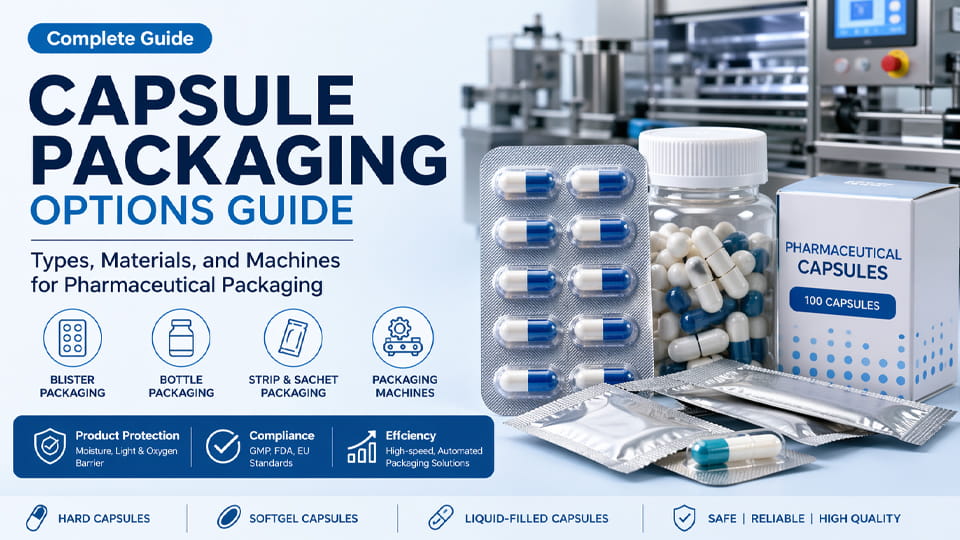
カプセル包装とは、医薬品のカプセルの包装方法を指します。 (ハードシェルまたはソフトジェル) 配布および使用のために同封されています. それには以下が含まれます 一次包装 (カプセルと直接接触する容器, 例えば. ブリスターキャビティまたはボトル) そして 二次包装 (外箱, ボックス, 製品をさらに保護し識別するためのラベル). 適切なカプセル包装は薬剤を湿気から保護する必要があります, ライト, および汚染, 保存期間を通じて安定性を確保する, 規制要件を満たす. 例えば, WHOは次のように指摘しています 「製造から使用まで製品を囲むパッケージコンポーネント,」 保護などの機能を満たさなければなりません, 安定性, と識別. FDAのGMP規制 (21 CFR 211) 梱包材の受領時に検査およびテストするための書面による手順を要求する, 安全なラベル付けと改ざん管理を義務付けます. 実際に, 一致しなければなりません カプセル製品 (剤形, 感度, 投与量, 等) 適切な包装形式と材料に合わせて.
医薬品カプセルの一次包装は、医薬品にとって非常に重要です。 製品の保護, コンプライアンス, そして患者の安全: カプセルを乾燥した状態に保ちます, 汚染されていない, そして明確にラベルが貼られている. 例えば, ブリスターパックと琥珀色のボトルは、湿気に敏感な医薬品に最適であることが知られています. 適切な包装は患者のコンプライアンスもサポートします (単位用量ブリスター投与, 小児用安全ボトル, 明確なラベル) サプライチェーンのニーズ (連載化, ロジスティクス). 以下で各オプションを詳しくレビューします.
カプセル包装の種類
カプセルのブリスター包装
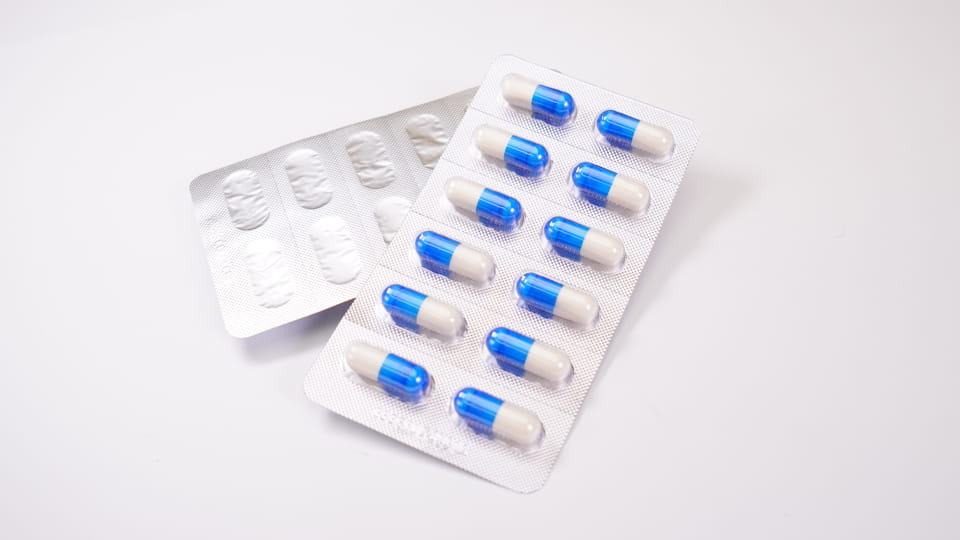
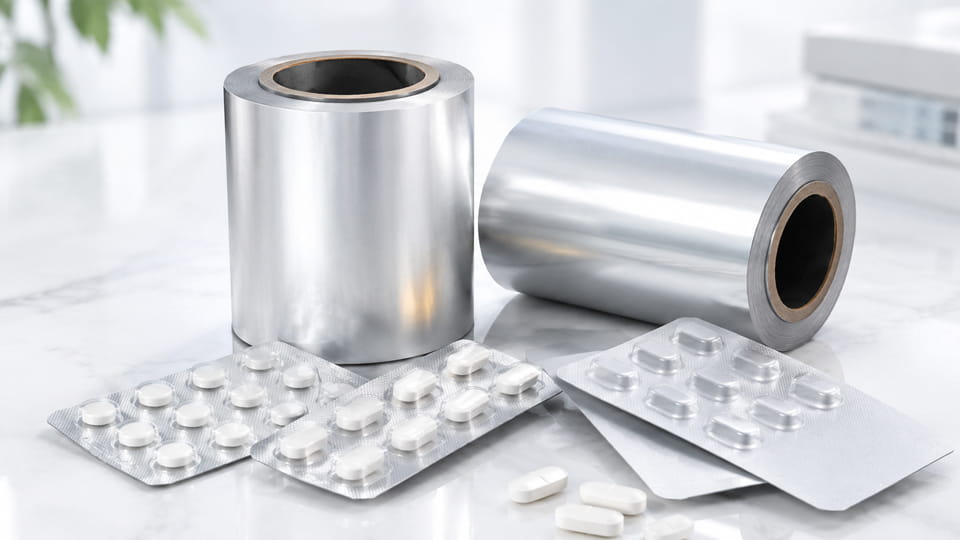
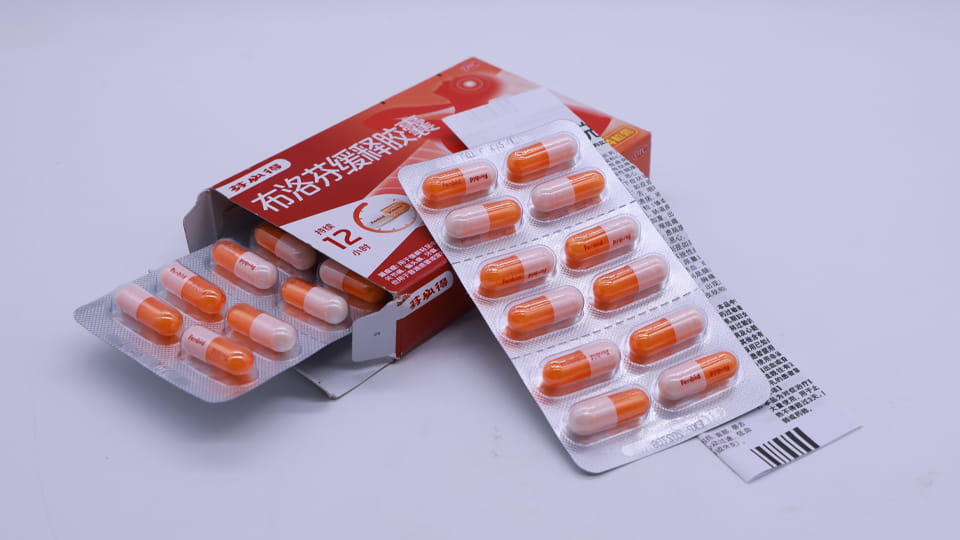
ブリスターパック あらかじめ形成されたプラスチックのキャビティで構成されています (「水疱」) 個々のカプセルを保持する, 裏紙で密封されている (ホイルまたはプラスチック). これ 一次包装 オファー 単位線量の保護. 水疱がもたらす 優れたバリア プロパティ: それらはで作ることができます PVC/PVDC またはフォイルなどの材料 (アルミPVC, アルアル) 湿気をブロックする, 酸素と光. 例えば, Jinlu の DPP-180Pro ブリスター マシンは、最大で 4,800 1時間あたりのカプセル水疱数 Alu-PVC または Alu-Alu ラミネート. カプセルブリスター包装の主な特徴は次のとおりです。:
- 保護: 各キャビティは密閉されています, カプセルを湿気から守る, 酸素と光. 一つの勉強メモとして, 水ぶくれ 「湿気や光に対する優れた保護を提供します」 (ボトルよりも優れています). ハイバリア箔 (例えば. アルアル) 吸湿性または酸素に敏感なカプセルの保存期間を延長します。.
- 証拠を改ざんします: ブリスターは、用量が取り除かれたか、シールが壊れたかを明確に示します。. これにより、製品の完全性と患者の安全が確保されます.
- 利便性: 単位用量ブリスターにより、患者は一度に 1 つのカプセルを服用できます, 投与ミスと無駄を削減. これらは、短い投与スケジュールまたは小児用製剤の場合に特に役立ちます。.
- カスタマイズ: ブリスターパックは、さまざまなカプセルの寸法に合わせて、さまざまなキャビティの形状やサイズで作成できます。. 現代の機械 (熱成形やプラグアシストマシンなど) カプセルのサイズに簡単に適応します.
- スペース効率: ブリスターはコンパクトで積み重ね可能. ボトルと比較して空きスペースを最小限に抑えます, 配送と棚スペースの節約.

形:Jinlu JL-180Pro ブリスター包装機カプセルブリスターを形成します。 (アルミPVC), 4,800 虫歯/時間.
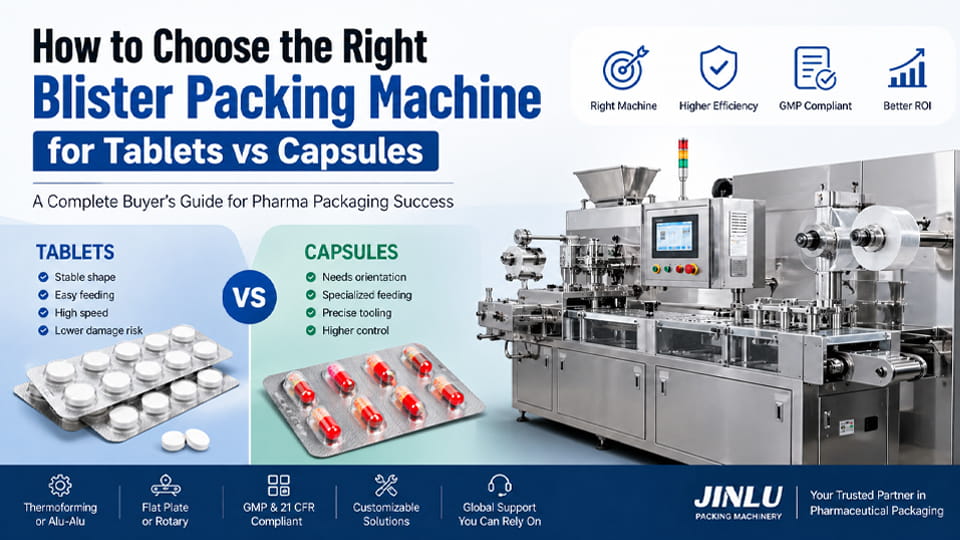
Jinluのブリスターマシン (例えば. DPP-180Pro) 自動的に空洞を形成できる, フィードカプセル, シール, カットプレート, ロットコードも印刷できます. 通常は中高速で動作します (1時間あたり数千個の空洞), 量産に最適. さまざまなブリスター形式 (Alu-PVC vs Alu-Alu) 商品ごとに選ばれています: アルアル (ホイルホイル) 最も高いバリアを提供します (湿気に非常に敏感な薬剤に最適), 標準的なカプセルでは PVC/PVDC が一般的ですが、. ブリスター包装により計数と検査も簡素化されます: ほとんどのラインでは、カプセルの充填を確認するためにカメラ検査機や錠剤計数機を簡単に統合できます。.
ボトル (ボトル/カプセルジャー) 包装
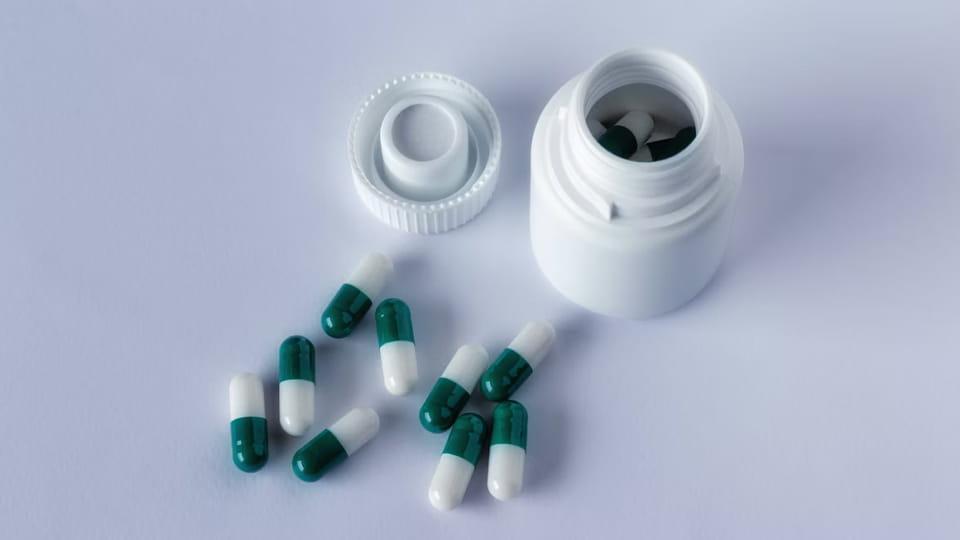
ボトルは古典的な複数回投与用の容器です. カプセルをボトルに詰める (プラスチックまたはガラス) その後、上限が設定されます. この形式はビタミンでよく知られています, サプリメント, そして多くの処方薬. 主な特徴:
- 多用途性: ボトルは大量に収納できる (50–1000+カプセル) とさまざまな製品 (錠剤, カプセル, 粉末, 液体でも). 通常、HDPE または PET プラスチックで作られています。, またはガラス (強力な化学的不活性のため).
- バルク包装: 繰り返し服用するカプセルの場合 (毎日のビタミン, 長期治療), ボトルは便利です. 患者は一度に複数回分の投与が可能.
- コスト効率: ボトル充填ラインは比較的シンプル. 機械は投与量をより迅速にカウントまたは計量します (例えば. Jinlu の JL-16H は最大まで充填できます。 100 ボトル/分). 単位あたりの材料コストはブリスターよりも低い場合が多い, 特に大規模な場合.
- 取り扱いが簡単: 消費者はボトルの開け方を知っている. 高齢の患者にとってボトルを開けるのは簡単かもしれません (特に簡単に開けられるキャップや子供が安全に使用できるキャップの場合) 水ぶくれの皮をむくよりも.
- 二次包装: ボトルには、次のような補助アイテムを含めることができます。 乾燥剤のパケット (湿気対策用) または コットン. ボトル本体の周りの完全な製品ラベルにも対応します。, カートンに詰めることができます.

形: Jinlu JL-16H カプセル/錠剤瓶詰めライン (100 ボトル/分) アンスクランブラー付き, ロッド, キャッパー, そしてラベラー.
複数の機械を統合したカプセル瓶詰めライン: ある ボトルアンスクランブラー (またはフィードホッパー), ある 計数充填機 (各ボトルに X 個のカプセルを落とします), ある キャッピング・シール機 (キャップを付けて締めます), そして ラベル貼付機. 例えば, Jinlu の JL-16H ラインは 3 ~ 40 mm のカプセルを処理できます, ~100本/分を達成 >99.8% 精度をカウントします. ボトルは大量に非常に迅速に充填できます. 規制を満たすために, 多くの場合、ボトルラインには乾燥剤を挿入するためのステーションが含まれています (例えば. シリカパック) 不正開封防止シールステーション. 小児用の安全キャップも小児用医薬品の一般的な機能です。.
ボトルのパッケージを選ぶとき, 製品の量と安定性を考慮する: 大量生産品 (例えば. 毎日のビタミン) スーツボトル, 一方、少量のカプセルや高感度のカプセルでは水疱が発生する可能性があります。. ノートボトルは一般的に提供されています 高バリアブリスターに比べて固有の水分/酸素保護が劣ります. 琥珀色のガラスまたは不透明な容器は遮光性を高めることができます, そしてインナーシールも (アルミホイルライナー) バリアを改善できる.
サシェ & スティックパック (1回用量パウチ)
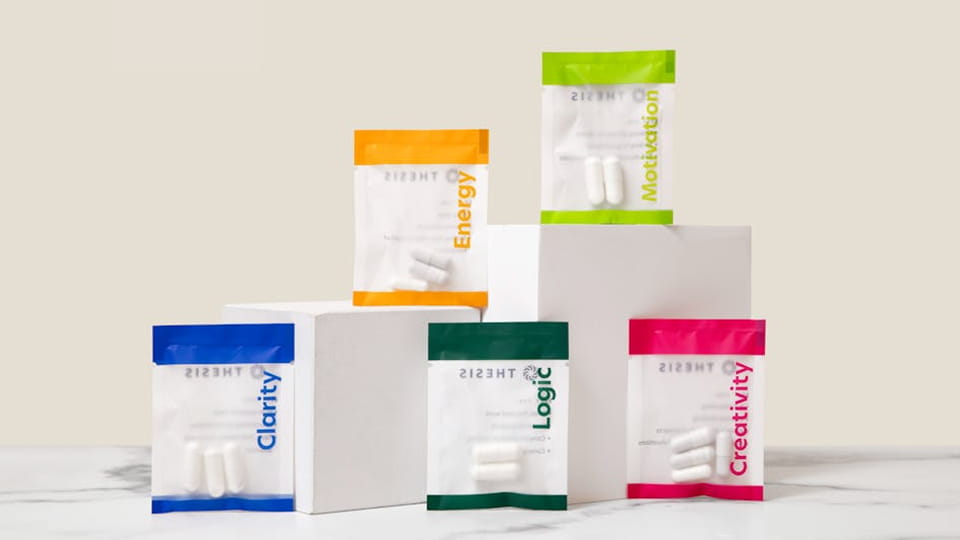
サシェ (そしてスティックパック) は フレキシブルパケット 1回分の粉末が入ったもの, 顆粒または液体. カプセルほど一般的ではありませんが、, それらは関連する剤形に関連します (例えば. 栄養補助食品のカプセルを粉末に砕いたもの, または粉末フィラーそのもの). それにもかかわらず、, 小袋とスティックパック カプセルの包装ガイドで言及する価値がある:
- サシェ 通常、平らまたは枕状のパケットが密封されています。 3 または 4 側面. 単回投与量の粉末によく使用されます。 (例えば. 発泡性顆粒) または非常に小さなカプセル (一部の薬局では、小児用にカプセルを小袋に入れて調剤しています。). 最新の製袋充填シール機は、正確に少量の袋を充填できます. 利点としては携帯性が挙げられる (ポケットに収まります), 利便性, 正確な投与量 (部分的な無駄がない). サシェは密封性にも優れています: 密閉シールにより保存寿命が延長され、汚染が防止されます。. 多くの医薬品 (粉末, ゲル, 軟膏, 単回用量の丸薬) 小袋を使用する; 例えば, 緊急注射用補水液または単回使用の抗生物質粉末.
- スティックパック 長いです, 狭い袋 (多くの場合、1 つの長い縫い目と端の縫い目に沿ってシールされます。). 粉末サプリメントとして人気です (例えば. インスタントドリンクミックス) カプセル粉末にも使用可能. スティックパックは通常、小袋よりも使用する材料が少なく、機械のスループットが高くなります。 (30–50% 高速化). 細長い開口部により、自由に流れるパウダーに最適です。.

小袋とスティックパックの両方を製造しています。 縦型フォーム充填シール (VFFS) または横型FFSマシン. JinluのJL-VPシリーズ, 例えば, マルチレーンスティック/サシェFFSマシンです (40 バッグ/分/レーン, ±0.02gの精度) 粉体用, 顆粒, 液体またはジェル. カプセル自体を小袋に包装した場合, 用量を取り出すために小袋を開けることもありますが、より一般的には, カプセルはブリスターまたはボトルにそのまま包装されています, 小袋/スティックパックは粉末内容物を扱いますが、.
規制上の注意: 固体および半固体の医薬品については、小袋およびスティックパックが許可されています (WHOの定義によると). 製品が直接含まれている場合は、一次包装とみなされます。. 水ぶくれのように, 小袋は子供が安全にデザインしたり、切り込みを入れたりすることができます.
ストリップ包装
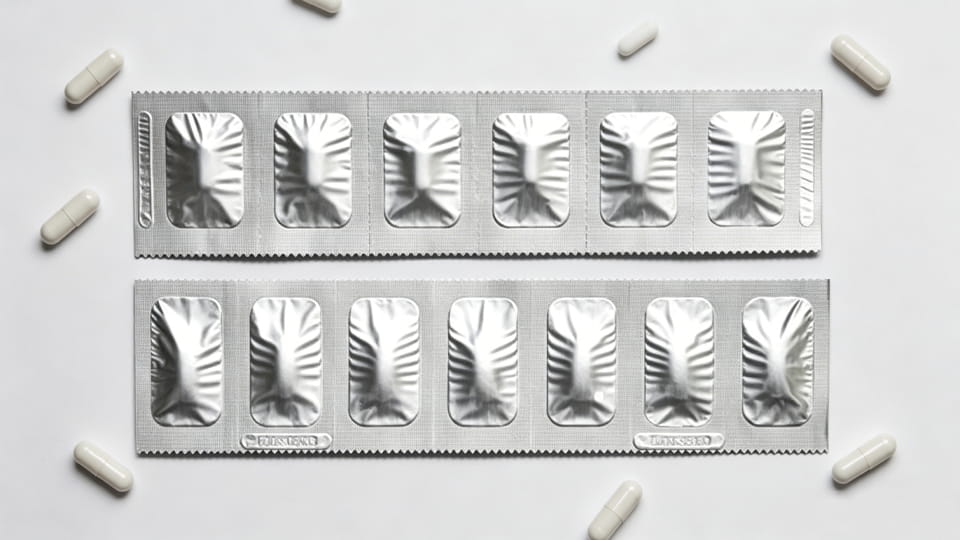
ストリップパック (ホイルストリップまたは「線量バンド」とも呼ばれます) 単位用量のプライマリパックの別の形式です. ストリップは通常、材料の細いウェブです (多くの場合、アルミニウムまたは多層ラミネート) 折り畳んで密封した, 投与間に穿孔あり. 水ぶくれとは異なります, ストリップパックは深い空洞を形成しません。, カプセルは2層のフィルムの間に挟まれています. ストリップパックはアジアで広く使用されており、高度な湿気保護が必要だがブリスターが大きすぎる製品に使用されています。. 重要なポイント:
- 優れたバリア: ストリップパックには、湿気や酸素を通さないアルミホイルがよく使用されます。. そのため、湿気に敏感なカプセルや長い保存期間が必要な小児用薬に最適です。. WHOはストリップパックを「固体または半固体製剤の単回投与」に適しているとさえ定義しています。.
- コンパクト & 単位用量: 水ぶくれのように, ストリップパックにより、一度に 1 回分の使用が可能になります. 水疱よりも軽くて平らです, スペースを節約する.
- 装置: ストリップ包装機は、各カプセルの周りにホイルを形成してシールします。. Jinlu はストリップ包装機も提供しています. 例えば, 豊富な包装メモのストリップパックはアルミニウムまたはプラスチックのラミネートを使用しており、多くの用量の長さを実現できます.
 形:ストリップパッキングマシン
選考という観点から見ると, ストリップパックはボトルとボトルの中間点を占めます (バルク) そして水ぶくれ (剛性). 以下の場合によく選ばれます。 非常に高い防湿層 必要だが薄い, 軽量フォルム. (注記: ストリップパックは、追加のシールが使用されない限り、ブリスターほど明確な改ざん証拠を提供しない可能性があります。)
二次包装 & ラベリング
プライマリーパックを選択した後, カプセルは通常、 二次包装 ダンボール箱など、 シュリンク包装された ケース. カートンは配送中に特別な保護を提供します, 追加のラベル付けを許可する (薬物情報, ブランディング, 不正開封防止シール), マルチパック製品の整理に役立ちます. 二次包装に関する主な考慮事項:
- カートン & インサート: 医療用段ボールには製品添付文書を含める必要があります (投与量の説明が記載されたリーフレット, バッチ番号, 有効期限, メーカー情報, 等). これらは多くの場合、箱に差し込まれた紙のチラシです.
- タンパーシール: 二次包装には通常、不正開封防止シールが貼られています (例えば. セキュリティテープ, シュリンクバンド) 箱が開封されたかどうかを表示する.
- 連載/トラック & トレース: 多くの市場で (米国 DSCSA, EU 口蹄疫), 個々のパッケージには固有のシリアルコードが必要です (バーコード/QR) 偽造防止のため. 堅牢なパッケージング ソリューションには、ロット/バッチ番号と 2D コードをカートンに印刷するためのラベル プリンターまたはインクジェット コーダーが含まれます。.
- 幼児向けの安全機能: 特定の薬については, 規則 (例えば. 21 CFR 211) 子供が安全な包装を義務付ける. これには、子供にとって開けるのが難しいブリスターフィルムが含まれる場合があります, またはボトルの特別なキャップ. 二次ボックスにもロックが付いているか、必要に応じて 2 段階の開閉が必要な場合があります。.
- 安定性とコンプライアンス: プライマリとセカンダリを組み合わせたシステムは、ラベルに記載された保管条件下で製品を安定に保つ必要があります。. 例えば, ICH の安定性研究では、最終包装剤形の試験が明確に必要です.
要約すれば, 二次包装は最終流通に向けて製品を包み、すべてのラベル付けとコンプライアンス機能が確実に整っていることを保証します。. ここでの優れたデザインはブランドイメージとユーザーの利便性を高めます (開けやすいカートン, 明確なラベル).
カプセル包装材
カプセルを保護するには、適切な包装材料を選択することが重要です. 材料は薬剤と適合する必要があります, バリアのニーズを満たす, 規制を遵守します (ISO 15378 包装材のGMP, 等). 一般的な材料としては、:
- ブリスターフィルム:
- PVC (ポリ塩化ビニル): 低コスト, 水疱によく使用される透明なプラスチック. PVCは透湿性があります (それほど保護的ではありません) コーティングされていない限り.
- PVC/PVDC: PVDC でコーティングされた PVC (ポリ塩化ビニリデン) 湿気の侵入を大幅に軽減 (一般的な Alu-PVC ブリスターは PVDC バリアを使用しています).
- Alu-PVC または Alu-Alu: アルミ箔をPVCまたはPETにラミネート. Alu-PVC は湿気/酸素に対する優れたバリアを提供します (一般), アルアルしながら (ホイルホイル) を提供します 最高 バリア (非常に吸湿性の高い、または光に敏感なカプセルに使用されます。).
- ポリプロピレン (PP): 持続可能な代替手段として登場. PPブリスター (モノマテリアル) 完全にリサイクルできる, Südpack の PharmaGuard ライナーと同様, 自動化ラインでも優れたパフォーマンスを発揮します.
- ボトルの材質:
- HDPE (高密度ポリエチレン): 医薬品ボトルによく使われるプラスチック; 比較的不活性で費用対効果が高い.
- ペット (ポリエチレンテレフタレート): より優れた透明性と剛性を提供します; ガスに対する良好なバリア. 栄養補助食品/サプリメントによく使用されます.
- ガラス (I型ホウケイ酸塩): 湿気に非常に敏感な製品または非経口製品に使用されます; ガラスは湿気や化学的不活性に対する優れたバリアを提供します. 琥珀色のガラスも紫外線を遮断します.
- その他の映画: 小袋・スティックパック用, 多層ラミネートフィルム (例えば. ペット/ゴー/PE) 湿気の制御と密閉に使用されます.
一般的に, カプセルに適した最も高いバリアを選択してください. 例えば, 湿気に弱いゼラチンカプセルの場合は、Alu-Alu ブリスターまたは乾燥剤の入った琥珀色のガラスボトルが必要になる場合があります。. 対照的に, 非感受性カプセルには標準の PVC ブリスターまたは HDPE ボトルが使用される場合があります. 保存期間も考慮する: 長期間使用できる製品には、より堅牢なバリアが必要です.
安全性/リサイクルに関する注意事項: 持続可能なトレンドによりモノマテリアルのパックが支持される (例えば. PPブリスター, リサイクル可能なペットボトル). 材料の抽出物の検査, 互換性, FDA/EU の制限を満たしている (例えば. 米国薬局 <661> 可塑剤用) 包装コンプライアンスの一部です.
カプセルの種類とパッケージの影響
カプセルにはさまざまな種類があり、その配合によって包装のニーズが決まります。:
- ハードゼラチンカプセル: 最も一般的なツーピースシェル. 乾燥粉末/顆粒が含まれています. ゼラチンの殻は多少の水分を含みますが、乾燥しすぎると脆くなります。, または濡れすぎた場合は柔らかくなります. 一般的に, ハードゼラチンカプセル 必要とする 適度 湿気のコントロール. 広く引用されている保管条件は次のとおりです。 15–25°C、相対湿度 35 ~ 65%. 梱包はこの環境を維持する必要があります: 例えば, PVDC または Alu-Alu ライナー付きブリスターパック, または乾燥剤の入ったボトル, カプセルの安定化を助ける.
- HPMC (ベジタリアン) カプセル: 植物セルロースから作られています, これらの殻は通常、ゼラチンよりも固有水分が低く、最大約 70% の相対湿度に耐えます。. 湿気に敏感な API によく使用されます。. しかし, 平 HPMCカプセル 吸湿性が高いまたは感光性の高い充填物にはバリア包装が必要. 実際に, HPMCカプセル + 多くの場合、PVC ブリスターで十分です, しかし、高いバリアは依然として安全性を高めます.
- ソフトジェルカプセル (液体充填): ソフトジェル ゼラチンを持っています (または変性ゼラチン) 油または他の液体で満たされた殻. かなりの量の水分が含まれています (多くの場合、約 5 ~ 10%) 殻の中で水分が失われたり、酸化したりする可能性があります。. ソフトジェルは湿気に非常に敏感です: 通常、琥珀色のガラス瓶が必要です (乾燥剤付き) または高バリアのブリスターパックで水分の損失を防ぎ、効力を維持します。. ソフトジェルシェルは製造中の温度/湿度の影響を受けやすいため, コールドチェーンと特殊な梱包が必要な場合がある.
- 腸溶性/放出調節カプセル: これらには、消化管内での放出を遅らせるための特別なコーティングが施されています. コーティングによりさらなる感度の層が追加されます (pHに敏感であるか、より壊れやすい可能性があります). このようなカプセルは乾燥した状態に保つ必要があり、通常は他のカプセルと同様にブリスターまたはボトルに梱包されます。. コーティングには一貫した条件が必要です; したがって、流通時の温度/相対湿度管理を保証する梱包が重要です。.
要するに, の カプセルシェルの材質と充填タイプ パッケージの選択に影響します. 湿気に非常に敏感な処方は、常に最も厳しいバリアを優先します。 (アルアルブリスター, ホイル袋, または乾燥剤を入れた密封ボトル). 感度の低い製剤にはより多くの選択肢がある. 常に安定性をテストしてください 最終的に包装されたカプセル (ICH Q1A では、提案されたコンテナーでの安定性が必要です).
適切なパッケージの選択 (意思決定のフローチャート)
最適なカプセル包装を選択するには、複数の要素を評価する必要があります: 剤形, 患者のコンプライアンス, 製品の感度, 貯蔵寿命, 規制要件, そしてコスト. 以下は簡略化された意思決定の枠組みです:
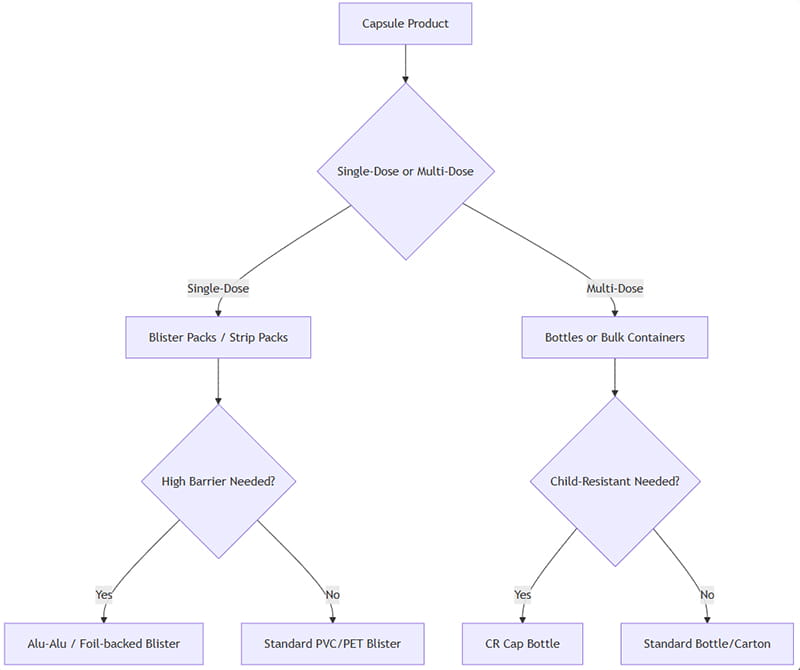
これを適用する方法: カプセルを単体で使用する場合 (例えば. 厳重な投与量または小売用ブリスターカード), ブリスター/ストリップが好ましい. 複数回投与用 (例えば. サプリメントや頻繁に使用される医薬品), ボトルの方が効率が良い. 湿気や光からの保護が重要な場合, バリアの高いオプションを選択する (アルアル, 琥珀色のボトル). 小児の安全が必要な場合, 子供が安全に使用できるボトルの蓋または不正開封防止ブリスターのデザインを使用する.
業界のその他の基準には次のものがあります。:
- 剤形: 錠剤・カプセル→水疱, ボトル, またはストリップ; 粉末→小袋・スティックパック.
- 製品の感度: 湿気に敏感な薬剤用, Alu-Alu ブリスターまたはホイルパウチを使用する. 光に敏感な方向け, 琥珀色のボトルまたは不透明なフィルムを使用する.
- 患者のコンプライアンス: 単位用量フォーマット (ブリスター/ストリップ) 遵守を助ける. 開けやすいボトルで高齢者をサポート.
- 規制: 改ざん証拠を含め、FDA/EMA の梱包ガイドラインに準拠する.
- 貯蔵寿命: 保存期間を長くするには、より高いバリア性の材料が必要です (アルアル, 多層フィルム).
- 生産規模: ブリスターマシンは高速です (中程度の音量), ボトルラインは大規模なバッチに優れています, サシェマシンは柔軟なラインレートに対応します.
- 料金: 材料費と機械費のバランスを取る. 例えば, ボトルの場合、単位当たりの労働力は低いが、プラスチックのコストが高くなる可能性がある; スティックパックは1回分あたりのフィルム使用量が非常に少ない.
最終的に, パイロットテスト (安定性の研究, 消費者研究) 総コスト分析が最終決定の指針となります. 上記のフローチャートは、一般的なシナリオの開始点です。.
カプセル包装装置
カプセルの包装には特殊な機械が必要. カプセル充填後 (カプセル充填剤による), これらは包装ラインに移送されます:
- ブリスターマシン: ジンルーについてはすでに言及しました DPP-180Pro, 高速熱成形ブリスターマシン. 空洞が形成される (PVCまたはPETフィルム), フィードカプセル (またはタブレット), そしてホイルでシールします, すべて自動的に. Jinlu は機械を提供しています (例えば. DPP-180, DPP-270マックス) 最大 4,800 ~ 11,200 個のキャビティ/時間. ブリスターマシンは計数フィーダーと組み合わされており、ポケットごとに正確に 1 つのカプセルをドロップします。, ブリスターをカードに分割するためのパンチカッターが付いていることもよくあります。. 追加モジュール (印刷・検査) 各ブリスターが読みやすく、正しいことを確認してください.
- 数える & 充填ライン (ボトルライン): 緩んだカプセルをボトルに変える. 典型的なラインには、: ボトルアンスクランブラー (空き瓶を整理します), タブレット/カプセルカウンター (振動ボウルまたは光学システムをカウントし、設定された数を各ボトルに滴下します。), キャッピング/シール機, そしてラベル付けステーション. ジンル JL-16H ライン, 例えば, ボトルをスクランブルする, 3~40mmのカプセルをカウントします, キャップを適用します, までのラベルを付けます 100 ボトル/分あり 99.98% 正確さ. 大音量用 (バルク梱包) オペレーション, 複数の計数ヘッドまたはオーガフィラーを備えたモジュラーラインは、より高速に達することができます. ホイル蓋に誘導シーラーまたはシュリンクシーラーを追加することもできます.
- 分包機・スティックパック機: これらは フォーム-充填-シール (FFS) 機械. ジンル JL-VP シリーズは、レーンごとに 1 分あたり 30 ~ 40 個の小袋またはスティックパックを生産できるマルチレーン VFFS システムです。. 粉末または液体を正確に投与します (粉体用オーガースクリュー, 液体用ポンプ) そしてシール 3- または4方小袋または3方スティックパック. 機械には袋の長さを制御する PLC 制御が含まれています, 精度を高めるサーボフィーダー (±0.02g), ハーメチックヒートシール. このような機械は単回投与製品に最適です, ただし、カプセル自体がそのままの状態で「袋詰め」されることはほとんどありません。.
- ストリップ包装機: ストリップパックは、重なったホイルまたはフィルムをヒートシールする専用の機械で製造されます。. これらは多くの場合ブリスターマシンに似ていますが、フラットフィルムを使用します。. (Jinlu がストリップパッカーを提供している場合, サシェマシンと同様の統合。)
- 二次包装機: 箱詰め機 カートンを組み立てることができます, ブリスターまたはボトルとリーフレットを挿入します, そしてボックスを閉じます. 医薬品の箱詰め業者は、ホイルのブリスターボードやカプセルの袋を扱うことがよくあります。. ケースパッカー (アウターケース用) そしてパレタイザーにより量産ラインが完成します.
機器のコンプライアンス: 医薬品用のすべての包装機械は GMP 設計に準拠する必要があります (ステンレス鋼, 掃除可能な表面, 検証済みのパフォーマンス). Jinlu の機械は CE/cGMP 認定を受けています, 多くの場合、構成可能な保護機能と規格外の錠剤の拒否システムが備えられています. 統合が鍵: 例えば, ブリスター マシンは、箱を組み立てて各ブリスター カードを梱包するカートナーに直接供給できます。. 総合的なシステム (充填から最終ボックスまで) カプセル包装のエンドツーエンドの自動化を可能にする.
規制およびコンプライアンスの考慮事項
医薬品のカプセル包装は厳格な規制に従う必要があります. 重要なポイントは次のとおりです。:
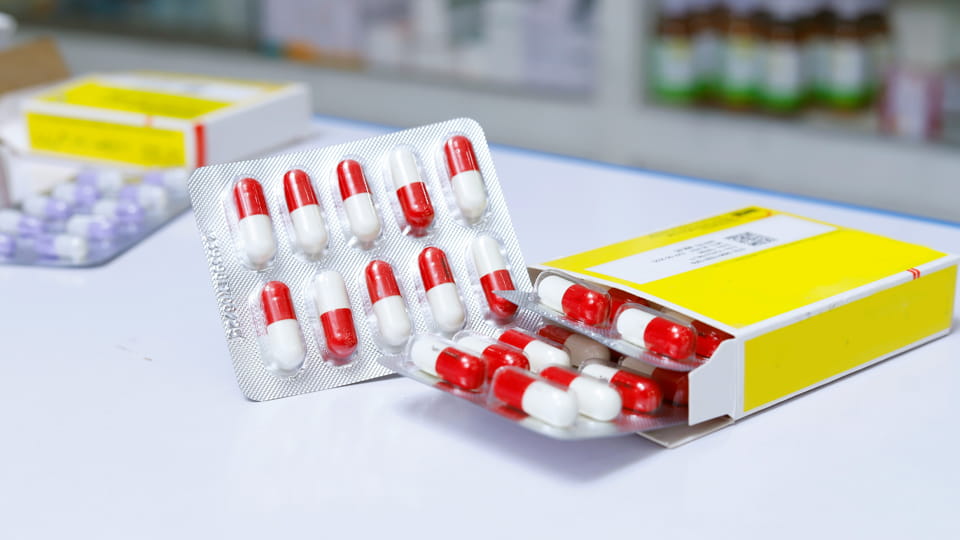
- GMP要件: FDAの 21 CFR 211 サブパート G の受領とテストには書面による手順が必要です。 全て 使用前の梱包材. これは水疱を意味します, ボトル, ラベル, カートンなど. 仕様を満たさなければなりません (欠陥なし). 取り違えを防ぐため、梱包材を製品ごとに分けて保管することが義務付けられています. WHOのGMP附属書 9 同様に梱包管理についても詳しく説明します. 適正製造基準にはトレーサビリティが求められます (パッケージに記載されているロット番号) そしてクリーンな取り扱い.
- 安定性とICHガイドライン: 質問1A(R2) 製品の最終段階で安定性研究を行うことを規定しています。 コンテナクロージャシステム. 実際に, これは、カプセルのテストバッチを計画通りに正確にパッケージ化する必要があることを意味します (同じブリスターフォイル, 同じボトルタイプ) そしてそれらをリアルタイムの安定性条件にさらします. パッケージングに変更があった場合は、新たな安定性テストが必要になる場合があります.
- 連載 & トレーサビリティ: 多くの市場で, 一意の識別子 (バーコード/2次元コード) 二次包装について (場合によっては一次水疱が発生することもあります) サプライチェーンを通じて薬物を追跡する必要がある. ラインには、これらのコード用のプリンターまたはアプリケーターが含まれている必要があります. パッケージデザインには改ざんの証拠も含まれることがよくあります (米国/EU法による).
- お子様やお年寄りに優しいパッケージ: 規制物質または特定の医薬品には小児用安全機能が必要です. これは多くの場合、ボトルの特別なキャップを意味します (例えば. 押して回す) または剥がしにくい水疱. しかし, 患者のアクセシビリティも考慮する必要がある (高齢者でも開けやすい). 毒物防止包装法に関する相談 (私たち) または同様の地域ルールが必要です.
- ISO規格: 一次包装サプライヤーは ISO に従う必要があります 15378 (一次包装材のGMP) 品質を確保するために. ここでは直接引用していませんが、, これは包装メーカーにとって一般的に認識されている標準です. 機械自体は製薬機械の規格に準拠する必要があります (ce, ul, 等) そして 21 CFRパート 11 データ記録があれば.
- 表示規制: カプセルには製品名を記載する必要があります, 投与量, 有効期限, メーカー, 等. これはカートンやブリスターにも適用されます (場合によっては、ブリスターの各セグメントに何らかの情報が印刷されている場合があります。). FDA と EMA には、一次ラベルと二次ラベルにどのような情報を表示する必要があるかについて、特定の要件があります。.
全体, FDAとの会合, EMA と WHO のガイドラインは不可欠です. 多くの包装業者は規制対象のサプライヤーと協力しています (ジンルのように) 検証済みのマシンとドキュメントを提供できる人 (IR/WH/PQ).
結論
適切なカプセルパッケージを選択するには、保護のバランスが必要です, 使いやすさ, そしてコスト. ブリスターパック, ボトル, 小袋, そしてストリップにはそれぞれの場所があります 医薬品の包装. 湿気への敏感性などの要因, 用量形態, 患者のニーズが意思決定の指針となる. 一緒に, 厳しい規制およびGMP要件を満たす必要がある.
で ジンルパッキング, 当社はエンドツーエンドの医薬品包装ソリューションを専門としています。. 当社の機器 – から 高速ブリスターマシン に 完全に自動化されたカウント & 瓶詰めライン – カプセルを効率的かつ準拠して包装するのに役立ちます. 持続可能な選択もサポートします (例えば. 新しいリサイクル可能なフィルムを使用する機械) ワンストップサービスを提供します (カスタマイズ, 検証). 私たちのチームは、お客様の製品に最適なカプセル包装システムの評価をお手伝いします。.
カプセル包装を最適化する準備ができました? 今すぐJinlu Packingにご連絡ください 専門家の指導と見積もりが必要な場合. 当社のソリューションは世界的な品質基準以上に裏付けられています 3,000 世界中の顧客が満足. 成功のためにカプセルを梱包しましょう!
カプセル包装に関するよくある質問
カプセル包装とは?
カプセル包装とは、医薬品のカプセルを安定性を維持するために保護材料で包み込むプロセスを指します。, 安全性, とコンプライアンス. 一般的な形式にはブリスターパックが含まれます, ボトル, そしてストリップパッケージ.
薬事実務において, 包装は単なる封じ込めではなく、カプセルを湿気から守ります, 酸素, および汚染, 医薬品の品質と有効期限に直接影響します.
医薬品カプセルに最適な包装は何ですか??
単一の「最適な」オプションはありません。それは製品と市場によって異なります。.
• ブリスター包装 → 湿気に敏感な医薬品や高価な医薬品に最適
• ボトル包装 → 大量保存やサプリメントに最適
• ストリップパッケージ → コスト重視の市場で一般的
ブリスター包装は、単位用量の保護とより優れた環境隔離を提供するため、多くの場合好まれます。.
カプセル製品を保護するにはどのような素材を使用すればよいですか?
主要な脅威をブロックする素材を使用する (水分, 酸素, ライト). 例えば, Alu-Alu フォイル ブリスターまたは琥珀色のガラス ボトルは、湿気に敏感なカプセルに優れたバリアを提供します。. PVDC コーティングを施した PVC または PET ブリスターが一般的で、安定した製品の場合は安価です. HDPE ボトルが標準ですが、カプセルが傷つきやすい場合は乾燥剤ポーチが必要になる場合があります. 水蒸気透過率の評価 (WVTR) 映画の. 持続可能性を意識した生産活動で, リサイクル可能なモノマテリアルを考慮する (例えば. PPブリスター). 安定性研究を通じてパッケージの互換性を常にテストしてください.
カプセル包装はどのようにして薬物の安定性を保護するのか?
カプセルは湿度などの環境要因に敏感です, 酸素, そして光.
適切な梱包:
• 吸湿を防ぎます。
• 酸化を軽減します
• 化学的安定性を維持します。
ブリスターパッケージ, 特に, 各カプセルに密閉された微小環境を作成します, 保存期間を大幅に延長.
カプセルにはどの包装機が必要ですか?
フォーマットにより異なります. 水ぶくれ用, ブリスター形成/シール機が必要です (カプセルにフィットするキャビティ型付き) プラスおそらく箱詰め業者. ボトル用, ボトル充填/キャッピングラインが必要です (アンスクランブラー, カウンターフィラー, キャッパー, ラベラー). スティックパック用, 縦型製袋包装機を使用する. Jinlu はこれらすべてを提供します: 例えば. 当社のDPPシリーズブリスター, JL-16H カウンティングライン, およびJL-VPサシェパッカー. 適切なマシンの選択には容量が関係します, カプセルサイズ, 必要な統合 (ビジョンシステム, 拒否局, 等).
カプセルのブリスターパックとボトルのどちらを選択すればよいですか?
投与量などの要素を考慮する (シングル vs. 複数), 安定のニーズ, そして患者の使用. 単回投与の利便性と高い保護性を実現 (特に湿気や光に敏感なカプセルの場合), 水疱が好まれることが多い. 大量または経済的な理由のため, 通常ボトルが選ばれます. また, 子供に安全または高齢者に優しい機能が必要な場合, ボトルにはさらに多くのオプションがあるかもしれません. 原則として, カプセルの特性をパッケージに合わせてください: 例えば. 吸湿性の高いカプセル → Alu-Alu ブリスター; 需要の高いサプリメント → ボトル.
参考文献:
1.別館 9 医薬品の包装に関するガイドライン - 誰が
2.医薬品および健康製品の技術的要件 - 世界保健機関
3.医薬品包装材料と医薬品の安全性: ミニレビュー —— MDPI
4.薬局のパッケージと添付文書 —— 国立医学図書館
5.医薬品ブリスターの特性評価とリサイクル可能性に関するレビュー —— サイエンスダイレクト