

- Macchine
- Competenza
- Risorse
- Certificati
- Di
- Contatto
- Macchine
- Competenza
- Risorse
- Certificati
- Di
- Contatto
Nella produzione farmaceutica, una pulizia efficace delle attrezzature è essenziale per mantenere la qualità del prodotto e prevenire la contaminazione incrociata tra i lotti. Un ben progettato Convalida della pulizia Il processo aiuta i produttori a dimostrare che le loro procedure di pulizia possono rimuovere costantemente i residui di prodotto e soddisfare i requisiti Requisiti GMP. Per i team di produzione e gli acquirenti di attrezzature, scegliendo macchinari farmaceutici con design facili da pulire può anche semplificare la convalida, ridurre i tempi di inattività, e migliorare l’efficienza complessiva della produzione.
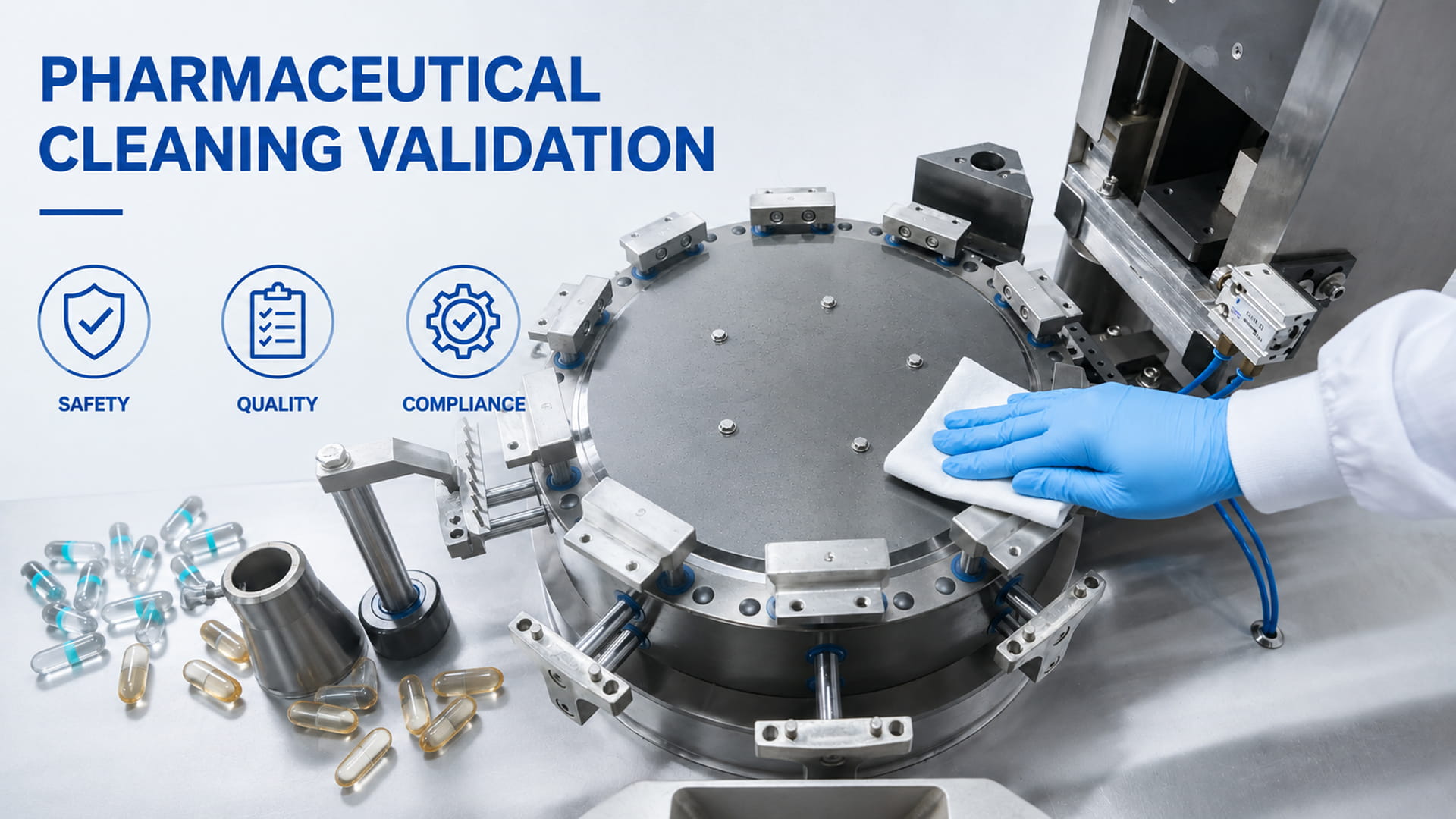
In termini semplici, Convalida della pulizia fornisce prove oggettive che una procedura di pulizia soddisfa costantemente gli standard predefiniti. Come afferma una fonte del settore, la convalida della pulizia è a “garanzia documentata” che la pulizia può essere eseguita in modo affidabile e ripetuto per ottenere un livello di pulizia predeterminato. In pratica, questo significa mostrare che i residui dei prodotti precedenti, detergenti, e i microbi vengono rimossi a livelli accettabili su tutte le superfici a contatto con il prodotto.
I regolatori sono d’accordo. Per esempio, della FDA 21 CFR 211.67(UN) richiede ogni attrezzatura (dedicato o multiuso) essere “puliti… per prevenire… contaminazioni che potrebbero alterare la sicurezza, identità, forza, qualità, o purezza del prodotto farmaceutico”. Allo stesso modo, l’OMS spiega che l’obiettivo della convalida della pulizia è dimostrare che l’attrezzatura viene costantemente pulita dal prodotto, detergente, e residui microbici a un livello accettabile per prevenire la contaminazione e la contaminazione incrociata. In altre parole, la convalida della pulizia riguarda la sicurezza del paziente: garantire che un lotto di prodotto non possa “trasferirsi” e contaminare quello successivo.
Un programma approfondito di convalida della pulizia dà fiducia ai produttori (e la garanzia dei regolatori) Quello contaminazione incrociata è controllato. Senza di esso, residui di un potente API oppure l'allergene di un lotto potrebbe finire nel prodotto successivo, potenzialmente danneggiare i pazienti o causare a richiamo. La FDA afferma esplicitamente che le aziende “deve convalidare che le procedure di pulizia siano adeguate per garantire che non si verifichi contaminazione incrociata”. Ciò è particolarmente critico in strutture multiprodotto (comune dentro CDMO e produttori di integratori). Le linee guida dell’OMS sottolineano che la validazione della pulizia è particolarmente importante negli impianti multiprodotto, e dovrebbero essere applicati a tutte le attrezzature di produzione e alle procedure igienico-sanitarie.
Oltre la contaminazione, la convalida della pulizia riguarda la garanzia qualità del prodotto. Se l'attrezzatura non viene pulita adeguatamente, residui chimici o crescita microbica potrebbero compromettere il identità, forza, e purezza dei lotti successivi. Insomma, la convalida della pulizia salvaguarda la qualità del prodotto e la salute del paziente. È anche un must normativo. Se sei sotto la giurisdizione della FDA (21 CFR parte 211) o GMP UE (EMA/I), le autorità richiedono una convalida documentata della pulizia come parte di un programma GMP completo. La mancata convalida della pulizia può portare a lettere di avvertimento, il prodotto tiene, e persino ricorda.
Requisiti normativi: FDA, Ema, CHI, PIC/S. Tutte le principali linee guida richiedono la convalida della pulizia, ma con un'enfasi leggermente diversa. Nel NOI, CGMP della FDA (Titolo 21 CFR 211.67) stabilisce il requisito fondamentale: le attrezzature devono essere pulite per prevenire la contaminazione incrociata. Le linee guida della FDA raccomandano l’utilizzo di metodi di campionamento e analisi efficaci per dimostrare la pulizia. In particolare, la FDA lo chiarisce “i soli risciacqui… non sarebbero accettabili” per la convalida; le aziende dovrebbero tamponare direttamente le superfici quando possibile. In pratica ciò significa che solitamente si combinano il campionamento con tampone e il risciacquo per coprire tutte le aree.
Nel Unione Europea, gli EMA Allegato GMP dell'UE 15 (2015) e le linee guida dell'EMA richiedono la convalida della pulizia come parte della convalida del processo. Allegato 15 afferma esplicitamente "La convalida della pulizia dovrebbe essere eseguita per confermare l'efficacia di qualsiasi procedura di pulizia per tutte le apparecchiature a contatto con il prodotto.". Si afferma inoltre che i limiti di carry-over devono essere giustificati da criteri tossicologici (basato sulla salute) valutazione. In altre parole, definire scientificamente i criteri di accettazione (vedere sotto) e documentarne le motivazioni. L’approccio dell’UE sottolinea a basato sul rischio, basato sulla salute strategia: calcolare il riporto massimo consentito (Carino) o Esposizione giornaliera consentita (PDE) valori per i residui attivi.
OMS e PIC/S offrono anche una guida. IL OMS GMP TRS 1019 (2019) Allegato sulla convalida specifica la convalida della pulizia “fornisce prove documentate che una procedura di pulizia approvata fornirà attrezzature pulite, idoneo all'uso previsto”. Questo documento dell'OMS (un riferimento comune in tutto il mondo) evidenzia che la convalida della pulizia non è necessaria per la pulizia banale (pavimenti, muri) Ma È necessari per apparecchiature critiche a contatto con il prodotto in impianti multiprodotto. Il comitato PIC/S (un consorzio di regolatori) allo stesso modo definisce la convalida della pulizia come prova che i residui verranno rimossi “al di sotto del livello di riporto massimo consentito stabilito scientificamente”.
Insieme, queste fonti stabiliscono il elementi essenziali: definire limiti accettabili di residui, sviluppare robuste procedure di pulizia, campione utilizzando metodi validati, analizzare con saggi idonei, e dimostrare che ogni pezzo di attrezzatura può essere pulito in modo coerente entro tali limiti.
La convalida della pulizia è essenzialmente un progetto. Ecco uno schema passo passo del processo tipico:
La guida della FDA è chiara “i soli risciacqui non sarebbero accettabili” come unico metodo di verifica. In pratica, viene utilizzata una combinazione di campioni con tampone e risciacquo. Scegliere siti di campionamento rappresentativi su ciascuna attrezzatura (solitamente i punti più difficili da pulire). Prima del test, verificare che i metodi di campionamento recuperino una quantità sufficiente di residui target (noti come studi di recupero).
La convalida della pulizia spesso incontra ostacoli. Le sfide principali includono:
Complessivamente, la migliore difesa è a approccio basato sul rischio (come incoraggiato da ICH Q9 e dalle linee guida del settore). Concentrare gli sforzi di convalida su aree/prodotti ad alto rischio (API potenti, attrezzature condivise) e documentare tale obiettivo.
È un enorme fattore abilitante per una validazione della pulizia di successo progettazione delle apparecchiature. La FDA richiede esplicitamente che le attrezzature siano progettate per facilitare la pulizia. In pratica, cercare:
Specificando queste caratteristiche di progettazione, riduci drasticamente i tempi di pulizia e gli sforzi di convalida. Per esempio, Le riempitrici per capsule di Jinlu sono costruiti con tramogge facilmente smontabili, scivoli inossidabili, e protezioni antipolvere chiuse, il tutto per ridurre al minimo l'accumulo di residui. Allo stesso modo, vescica E macchine confezionatrici per buste con pannelli di accesso senza attrezzi aiutano gli operatori a raggiungere tutte le superfici per la pulizia. Scegliere in anticipo l'attrezzatura giusta rappresenta metà dell'opera nella convalida della pulizia.
I riempitivi per capsule meritano una menzione speciale. Queste macchine trattano polveri e capsule, quindi una pulizia approfondita è d'obbligo. I punti chiave per la pulizia di una linea di riempimento di capsule includono:
Le macchine a capsule nel servizio GMP vengono spesso eseguite in ambienti difficili (polvere polverosa). I riempitivi per capsule di Jinlu risolvono questo problema utilizzando rivestimenti antistatici e tramogge chiuse per limitare la fuoriuscita di polvere, rendendo la pulizia più sicura e la convalida più semplice.
Per legare il tutto, ecco alcune best practice generali:
Immagine: Un ambiente di laboratorio analitico pulito (imballaggio in blister o laboratorio di controllo qualità). Una buona convalida della pulizia richiede sia procedure di pulizia adeguate che test accurati (per esempio. HPLC, SOMMARIO) per confermare che non rimangano residui. Lista di controllo per la convalida della pulizia: Una rapida tabella riassuntiva degli elementi chiave.
| Articolo | Requisito |
| Attrezzatura identificata | Elenca tutte le macchine a contatto con il prodotto |
| Procedura di pulizia | Scritto, approvato, e seguito (SOP) |
| Piano di campionamento | Metodi (tampone/risciacquo), posizioni, frequenza |
| Criteri di accettazione | Definito (Limiti MACO/PDE) |
| Metodi analitici | Test convalidati (HPLC, SOMMARIO, ecc.) |
| Rapporto di convalida | Protocollo completato, risultati approvati dal QA |
Una corretta convalida della pulizia è essenziale per la produzione farmaceutica GMP. Protegge la qualità del prodotto e la sicurezza del paziente prevenendo la contaminazione incrociata. Un'attrezzatura ben progettata riduce notevolmente i problemi di convalida: parti di contatto lisce in acciaio inossidabile, zone morte minime, e lo smontaggio rapido significa che la pulizia è più rapida e coerente. E la raccolta di Jeinlu, progettiamo riempitivi per capsule, confezionatrici in blister, e linee di riempimento tenendo presenti questi principi per aiutare i produttori a conformarsi agli standard GMP globali.
In sintesi, validazione della pulizia farmaceutica si tratta di dimostrare "pulito" con dati e documentazione. Seguendo un processo strutturato, selezionando i prodotti nel caso peggiore, fissazione dei limiti (come MACO), scrivere SOP chiare per la pulizia, campionare in modo intelligente, e test con HPLC/TOC: puoi dimostrare la conformità sia agli enti regolatori che ai team di qualità. Ricordare: investire in Attrezzatura compatibile con GMP Ora (inossidabile, design ergonomico) per risparmiare tempo convalidando in seguito. Se stai cercando macchine per il riempimento o il confezionamento di capsule costruite per una facile pulizia e conformità, considera la formazione di Jinlu Packing macchine per il riempimento di capsule, confezionatrici in blister, E linee di riempimento farmaceutico. Le nostre apparecchiature sono progettate per un cambio rapido e una pulizia accurata, contribuendo a garantire che la convalida proceda senza intoppi.
Pronto per semplificare la convalida della pulizia? Contatta Jinlu Imballaggio per scoprire come le nostre macchine per il riempimento e il confezionamento di capsule conformi alle norme GMP possono soddisfare le vostre esigenze di produzione farmaceutica.
La convalida della pulizia è un processo documentato utilizzato per dimostrare che le procedure di pulizia delle apparecchiature farmaceutiche possono rimuovere costantemente i residui di prodotto, principi attivi farmaceutici (API), detergenti, e potenziali contaminanti a un livello accettabile.
Nella produzione farmaceutica, la convalida della pulizia fornisce la prova che l'attrezzatura è idonea alla produzione del lotto successivo senza causare contaminazione incrociata o influenzare la qualità del prodotto.
La convalida della pulizia è importante perché le apparecchiature farmaceutiche vengono spesso utilizzate per fabbricare prodotti o lotti diversi. Senza validazione effettiva, i residui rimanenti potrebbero contaminare il prodotto successivo e comprometterne la sicurezza, identità, forza, o purezza.
Un processo di convalida della pulizia eseguito correttamente aiuta i produttori:
• Prevenire la contaminazione incrociata
• Soddisfare i requisiti di conformità GMP
• Migliorare la sicurezza della produzione
• Ridurre i rischi legati alla qualità durante i cambi di prodotto
Il processo di convalida della pulizia solitamente include la valutazione delle apparecchiature, sviluppo della procedura di pulizia, definizione dei criteri di accettazione, campionamento, test analitici, e documentazione di convalida.
I criteri di accettazione della convalida della pulizia definiscono i livelli massimi di residui consentiti dopo la pulizia, compresi i residui API, detergenti, e potenziali contaminanti.
La maggior parte delle apparecchiature di produzione farmaceutica che entrano in contatto con i prodotti richiedono la convalida della pulizia, comprese le macchine per il riempimento di capsule, comprimitrici, miscelatori, e attrezzature per la movimentazione delle polveri.
I due metodi di campionamento comuni sono il campionamento con tampone e il campionamento con risciacquo. I produttori spesso scelgono metodi basati sulla progettazione delle apparecchiature, accessibilità, e caratteristiche dei residui.
La progettazione delle apparecchiature influisce direttamente sull'efficienza della pulizia. Macchine con superfici lisce, meno zone morte, e le parti facili da rimuovere sono più facili da pulire e convalidare.
La frequenza di convalida della pulizia dipende dall'utilizzo dell'apparecchiatura, modifiche al prodotto, rischi di processo, e requisiti normativi. La riconvalida potrebbe essere necessaria dopo importanti modifiche alle apparecchiature o alle procedure di pulizia.
La verifica della pulizia conferma che una specifica operazione di pulizia soddisfa i requisiti, mentre la validazione della pulizia dimostra che il processo di pulizia è affidabile e ripetibile nel tempo.
I produttori di apparecchiature possono supportare la convalida della pulizia fornendo progetti di macchine conformi alle GMP, strutture facili da pulire, specifiche dei materiali, e la documentazione necessaria per la qualificazione e la validazione.
Riferimenti:
1.Validazione dei processi di pulizia —— NOI. Amministrazione degli alimenti e dei farmaci
2.Domande e risposte sugli attuali requisiti delle buone pratiche di produzione | Attrezzatura —— NOI. Amministrazione degli alimenti e dei farmaci
3.Guida: Ciclo di vita della convalida della pulizia – Applicazioni, Metodi, & Controlli —— ISPE
4.Guida alla convalida della pulizia (GUI-0028) —— Salute canadese
5.EudraLex – Volume 4 – Buona pratica di produzione (GMP) linee guida —— Commissione europea
6.Convalida della pulizia: Guida completa per la salute – Approccio basato sulla chimica trasversale – Valutazione del rischio di contaminazione —— PDAJPST