

- Macchine
- Competenza
- Risorse
- Certificati
- Di
- Contatto
- Macchine
- Competenza
- Risorse
- Certificati
- Di
- Contatto
Capsule riempite di liquido (chiamate anche capsule rigide riempite di liquido o LFHC) sono essenzialmente capsule a guscio rigido in due pezzi (gelatina o HPMC) che sono stati riempiti con una formulazione a base di olio o liquida. Dopo il riempimento, il tappo e il corpo sono sigillati, spesso con una sottile fascia di gelatina, per evitare perdite. In altre parole, Gli LFHC sono una forma ibrida: un guscio solido della capsula contenente una dose liquida all'interno. Al contrario, capsule di softgel sono realizzati in un unico passaggio come a separare, guscio monopezzo flessibile che è già riempito con un liquido o semisolido. I softgel utilizzano gelatina plastificata (con glicerina o sorbitolo) per fare un morbido, membrana sigillabile. Solitamente vengono utilizzati per ingredienti molto oleosi o solubili, ad esempio, olio di pesce o vitamine liposolubili (D, E, K) quasi sempre vengono in softgel.
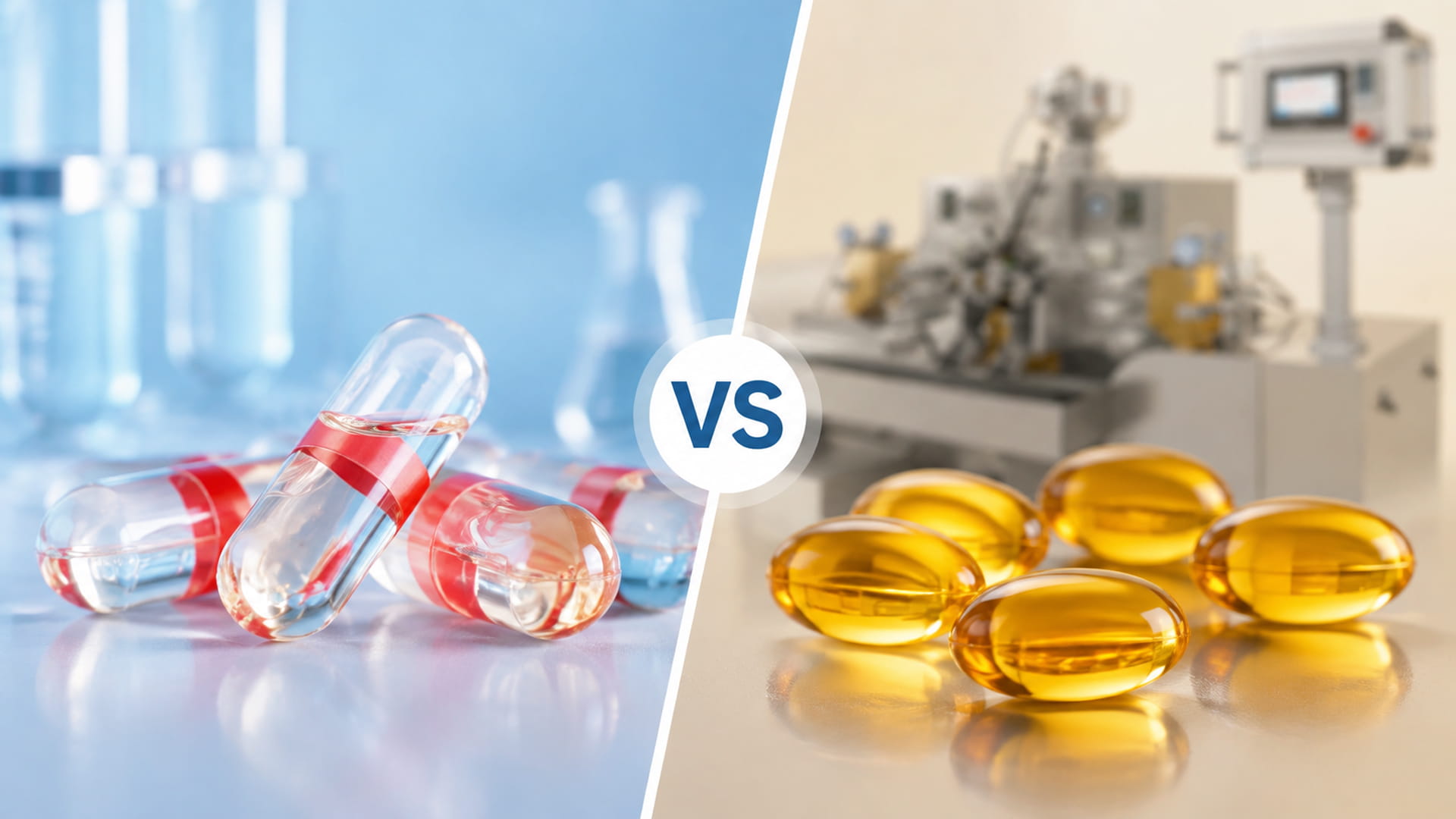
In termini pratici, entrambi i formati possono fornire farmaci liquidi o integratori, ma loro progettazione e produzione differire in modo significativo. Le differenze principali includono la struttura della capsula, materiali del guscio, riempimenti compatibili, e fasi di produzione. Comprenderli aiuta i produttori farmaceutici a scegliere la forma giusta per il loro prodotto. Di seguito analizziamo le principali distinzioni e vantaggi di ciascuno.
Capsule rigide riempite di liquido (LFHC) sono standard involucri della capsula in due pezzi (cappuccio e corpo) riempito con una formulazione liquida o a base di olio dopo la realizzazione dei gusci. I gusci possono essere realizzati in gelatina o HPMC a base vegetale (per capsule vegetariane). In produzione, una dose precisa di liquido (spesso una soluzione oleosa, sospensione o miscela autoemulsionante) viene iniettato nel corpo della capsula aperta, quindi il tappo viene richiuso e sigillato. Speciali metodi di sigillatura garantiscono che non vi siano perdite (Per esempio, applicando una sottile fascia di gelatina attorno all'articolazione, denominata “sigillatura a fascia”).
Questo approccio in due parti consente agli LFHC di combinare i vantaggi dei liquidi e delle capsule. Ottieni il rilascio rapido e l'elevata biodisponibilità di un liquido disciolto, con la facilità di deglutizione e il mascheramento del gusto offerti dalle capsule. I gusci LFHC sono prefabbricati, quindi non è necessaria la costosa fusione dei fogli di gelatina durante il riempimento. Per esempio, Il riempitivo per capsule liquide NJY-300C di JinLuPacking riempie automaticamente i liquidi nei gusci rigidi di dimensioni #00–#4 e li sigilla a nastro in un'unica linea veloce.
Figura: Capsule rigide riempite di liquido (ciascuno ha una fascia colorata che sigilla la giunzione cappuccio-corpo). Queste capsule in due pezzi contengono olio o liquido all'interno di un guscio solido di gelatina/HPMC.
Capsule morbide (spesso semplicemente chiamavano softgel) Sono pezzo unico, capsule rivestite di gel contenenti un riempimento liquido o semisolido. Sono realizzati su una macchina di incapsulamento a stampo rotante che forma, riempie, e sigilla ogni capsula in un unico passaggio. Nella macchina, due nastri di gelatina plastificata (gelatina mescolata con glicerina o sorbitolo) vengono colati e pressati insieme mentre un flusso dosato di liquido viene iniettato tra di loro. Ogni capsula viene contemporaneamente tagliata e sigillata da stampi riscaldati. Il risultato è un liscio, ovale, capsula ermetica comunemente utilizzata per integratori a base di olio (pensa alle pillole di vitamina E o omega-3).
I softgel sono ideali per oli e liquidi delicati. Perché l’intera capsula viene sigillata ermeticamente quando si forma, non è necessaria alcuna fase di sigillatura separata. Questo li rende molto protettivi contro l'ossigeno e l'umidità. Molti olio di pesce, vitamina D/K, e i prodotti a base di olio vegetale utilizzano softgel per la loro comodità e stabilità sullo scaffale. Infatti, i sondaggi mostrano che gli integratori di Omega-3 e vitamine liposolubili vengono spesso forniti sotto forma di softgel.
Figura: Capsule softgel ambrate su un cucchiaino accanto a un flacone di pillole (comune per l’olio di pesce o la vitamina D).
| Caratteristica | Capsule riempite di liquido (LFHC) | Capsule molli |
| Struttura | Due pezzi (cappuccio & corpo) | Capsula sigillata monopezzo |
| Materiale della calotta | Gelatina o HPMC (opzione vegetariana) | Gelatina plastificata (gelatina + plastificante) |
| Metodo di produzione | Riempire e poi sigillare (sul riempitivo della capsula + bande) | Incapsulamento della matrice rotante (modulo-riempi-sigillo) |
| Costo dell'attrezzatura | Inferiore (riempitivi di capsule standard) | Più alto (linea softgel dedicata) |
| Scala (MOQ) | Minimi bassi (adatto a piccoli lotti) | Di solito è richiesto un volume maggiore |
| Opzione vegetariana | SÌ (Disponibili shell HPMC) | Limitato (ora alcune opzioni di amido / verdura) |
| Sigillatura | Sigillatura meccanica (fasciatura/fusione) | Guarnizione incorporata (sigillato ermeticamente dallo stampo) |
| Rischio di perdite | Basso (una volta sigillato correttamente) | Molto basso (nessuna cucitura che perde) |
| Flessibilità produttiva | Alto (può mescolare polveri o pellet con liquidi) | Medio (si riempie solo con liquido/pasta) |
| Aumentare la scalabilità | Facile (utilizza macchine a capsule standard) | Più complesso (essiccazione specializzata, ecc.) |
Entrambe le forme forniscono principi attivi liquidi o a base oleosa e possono offrire un'elevata biodisponibilità presentando il farmaco disciolto in un lipide. Tuttavia, Gli LFHC utilizzano linee più semplici (le conchiglie sono prefabbricate) mentre le softgel richiedono fasi di cottura e asciugatura per i nastri di gelatina.
Chiave da asporto: Macchine per softgel modulo, riempire, e tagliare in un unico passaggio (necessitando di asciugatura), mentre le linee LFHC riempiono gusci prefabbricati e li sigillano (saltando una lunga fase di stagionatura). Come osserva una guida del settore, “I softgel polimerizzano 2–4 giorni dopo il riempimento. Gli LFHC non hanno fasi di polimerizzazione… le perdite di lotti dovute a errori di riempimento sono maggiori per i softgel”.
Le capsule riempite di liquido offrono numerosi vantaggi di produzione e di prodotto:
Questi vantaggi rendono gli LFHC attraenti sia nei mercati farmaceutici che nutraceutici.
I softgel hanno anche forti vantaggi che li rendono popolari per molti integratori:
Le industrie che utilizzano softgel includono prodotti farmaceutici (farmaci a base di olio), nutraceutici (integratori alimentari), cosmetici (oli nutraceutici di bellezza), e anche prodotti veterinari. Ad esempio, le softgel vegane o halal a base di amido/gellano sono in aumento.
| Ingrediente / Riempire | Capsula riempita di liquido | Capsula morbida |
| Olio di pesce / Omega-3 | ✓ Adatto | ✓ Adatto |
| CBD o olio di cannabis | ✓ Adatto | ✓ Adatto |
| Curcumina (Estratto di curcuma) | ✓ Adatto | ✓ Adatto |
| Vitamina D (olio) | ✓ Adatto | ✓ Adatto |
| Estratti liquidi di erbe | ✓ Adatto | ✓ Adatto |
| Probiotici | ✓ (se sospeso nell'olio) | NO (l'umidità uccide i batteri) |
| API sensibili all'umidità | ✓ (soprattutto nelle capsule HPMC) | ✗ (guscio ad alta umidità) |
Entrambi i tipi di capsule gestiscono bene gli attivi solubili in olio. Oli nutraceutici comuni (olio di pesce, vitamina D, estratti di erbe, CBD, ecc.) sono effettivamente forniti da LFHC o softgel.
In particolare, ingredienti secchi o sensibili all'umidità sono migliori nelle capsule rigide riempite di liquido. Per esempio, i probiotici o gli API sensibili all'acqua non sono pratici nei softgel. Al contrario, Le capsule rigide HPMC possono contenere sospensioni non acquose di probiotici o formulazioni molto secche, poiché HPMC ha bassa umidità e permeabilità ai gas. I gusci di Softgel contengono circa 30% acqua e maggiore permeabilità all’ossigeno, che possono degradare tali ingredienti.
Insomma, utilizzare LFHC quando la flessibilità e la produzione a basso volume sono importanti; scegli le softgel per la scala e l'attrattiva premium sullo scaffale.
Dal punto di vista del produttore, la decisione spesso dipende dalla scala, investimento, e obiettivi strategici:
La tabella seguente riassume la scelta per scenario:
| Tipo di azienda / Situazione | Formato consigliato |
| Piccola startup o R&Progetto D | Capsule riempite di liquido (MOQ basso, flessibile) |
| Linea di integratori di nicchia, <10k unità | Capsule riempite di liquido |
| Produttore a contratto (flessibilità) | Capsule riempite di liquido |
| Grande produttore farmaceutico | Capsule molli (rendimento elevato, coerente) |
| Omega-3 o vitamine ad alto volume | Capsule molli |
| Prodotto che necessita di capsule vegane | Capsule riempite di liquido (Gusci HPMC) |
Figura: Primo piano di una macchina riempitrice per capsule liquide che eroga liquido nelle capsule.
JinLuPacking produce una gamma completa di apparecchiature per capsule. Per esempio, Nostro NJY-300C riempitivo di capsule liquide la linea gestisce i riempimenti di liquidi, e forniamo anche macchine per capsule di gel morbido per la produzione in un unico passaggio. Queste macchine soddisfano gli standard cGMP per uso farmaceutico e nutraceutico.
Alla fine, entrambi pieni di liquido capsule dure E softgel sono ben consolidati, forme farmaceutiche efficaci. I softgel eccellono nel fornire oli e principi attivi solubili in olio a rapida dissoluzione, pacchetto a prova di manomissione. Le capsule rigide riempite di liquido offrono flessibilità, più veloce R&scala D, e semplicità costruttiva. Comprendendo le loro differenze, vantaggi e requisiti di produzione, i produttori possono scegliere il tipo di capsula che meglio si adatta alle esigenze chimiche e aziendali del loro prodotto.
Se stai progettando una nuova formulazione o aggiornando la tua linea di produzione, considera attentamente entrambe le opzioni. Pronti per ottimizzare la produzione delle vostre capsule? Jinlu Packing offre attrezzature leader del settore per entrambi i formati (Per esempio, il nostro NJP-1000C può riempirsi fino a 60,000 capsule rigide all'ora) e potrà consigliarti la soluzione migliore per il tuo prodotto. Contattaci per discutere del tuo progetto, richiedere un preventivo, o scopri di più sulle nostre capsule liquide e softgel linee di confezionamento.
SÌ. Riempitori di capsule specializzati (come le riempitrici per capsule liquide di JinLuPacking) può iniettare oli o liquidi in capsule rigide vuote, che vengono poi sigillati (per esempio. mediante fasciatura) quindi trattengono saldamente il liquido. Questo crea una "capsula rigida piena di liquido".
Nessuno dei due è universalmente “migliore”: soddisfano esigenze diverse. Gli LFHC vincono in termini di costi, velocità, e flessibilità (soprattutto per piccoli lotti), mentre i softgel offrono una chiusura perfetta e un formato familiare per gli integratori di olio. La scelta migliore dipende dal materiale di riempimento, volume di produzione, e mercato.
Gli LFHC adeguatamente sigillati non perdono. Dopo il riempimento, la giunzione cappuccio-corpo viene sigillata ermeticamente mediante l'applicazione di una fascetta in gelatina o HPMC (o utilizzando la sigillatura per fusione). Se fatto correttamente, le capsule trattengono ermeticamente il liquido durante l'asciugatura, magazzinaggio, e utilizzare. Le linee di qualità testano e lucidano ogni lotto per garantirne l'integrità.
Entrambi possono offrire un'eccellente biodisponibilità per i principi attivi a base di olio. La formulazione di riempimento (tipo di olio, emulsionanti) di solito determina l'assorbimento, non il tipo di shell. I softgel si dissolvono rapidamente (~10–20 minuti), mentre le capsule a guscio duro (LFHC) dissolversi leggermente più lentamente (30–60 minuti). In pratica, riempimenti ben progettati in entrambe le forme possono ottenere un'efficacia simile.
SÌ. I gusci HPMC a base vegetale sono ampiamente utilizzati per capsule riempite di liquido. La bassa umidità e la struttura resistente dell'HPMC consentono l'ingresso di liquidi oleosi. Infatti, l'uso dei gusci HPMC è un modo per offrire una capsula vegetariana in forma liquida, che le capsule molli di gelatina standard non possono fornire.
Le aziende citano ragioni come i minori costi di produzione, tempi di realizzazione più brevi, e flessibilità di formulazione. Per esempio, un R&Il team D può regolare rapidamente le dosi o combinare gli ingredienti negli LFHC senza riorganizzare. Anche, I VFHC consentono di estendere facilmente le linee di prodotti (poiché le stesse capsule possono essere riempite con liquidi diversi).
Generalmente, SÌ. La produzione di softgel richiede attrezzature costose (cuocitori di gelatina, stampi rotanti, essiccatori) e più travaglio per più giorni. Gli LFHC utilizzano riempitivi più semplici e meno energia. I rapporti del settore rilevano che gli LFHC costano il 15-35% in meno per unità rispetto ai softgel. Tuttavia, a volumi molto elevati i softgel possono comunque essere convenienti.
Gli ingredienti liquidi vengono riempiti utilizzando una macchina riempitrice per capsule liquide (spesso un accessorio o una variante di un riempitivo per capsule standard). Per esempio, Le macchine della serie NJY di JinLuPacking utilizzano pompe di precisione (pistone ceramico o micropompa) per dosare l'olio nelle capsule. Queste macchine possono raggiungere velocità elevate (diverse migliaia di tappi all'ora) con precisione migliore di ±1%.
Per lo più non acquoso, riempitivi a base di olio o solvente. Esempi comuni: olio di pesce, olio di vitamina E, vitamine liquide, estratti di oli vegetali, emulsioni, e alcuni sistemi di somministrazione di farmaci autoemulsionanti. Il materiale di riempimento deve essere pompabile e generalmente non corrosivo. Si evitano i liquidi a base d'acqua (possono indebolire le guarnizioni). La viscosità del riempimento deve essere controllata per evitare schizzi o gocciolamenti durante il riempimento.
SÌ. Molte macchine a capsule sono convertibili: sostituendo il sistema di dosaggio, possono riempire polveri/granuli o liquidi. In pratica, la piastra di dosaggio della polvere di un riempitivo per capsule standard viene sostituita con una testa di riempimento del liquido e un sistema di pompa. Questa versatilità significa che una singola linea può passare dalla produzione di polveri a quella di LFHC.
Riferimenti:
1.Capsule di gelatina dura riempite e sigillate con liquido —— Taylor & Francesco in linea
2.Capsule di gelatina morbida (Capsule molli) —— ScienceDirect
3.Effetti della temperatura sulle caratteristiche del nastro nella produzione di capsule di gelatina morbida —— Biblioteca nazionale di medicina
4.Revisione completa sulle capsule di gelatina molle: Produzione industriale, Progressi tecnologici, e prospettive normative —— Giornale della CONSEGNA DELLA FARMACIA & TERAPEUTICA
5.Capsula di gelatina dura riempita di liquido —— Giornale della CONSEGNA DELLA FARMACIA & TERAPEUTICA
6.Determinazione della quantità ottimale di acqua nelle masse di riempimento liquido per capsule di gelatina dura mediante analisi della struttura e disegno sperimentale —— Biblioteca nazionale di medicina