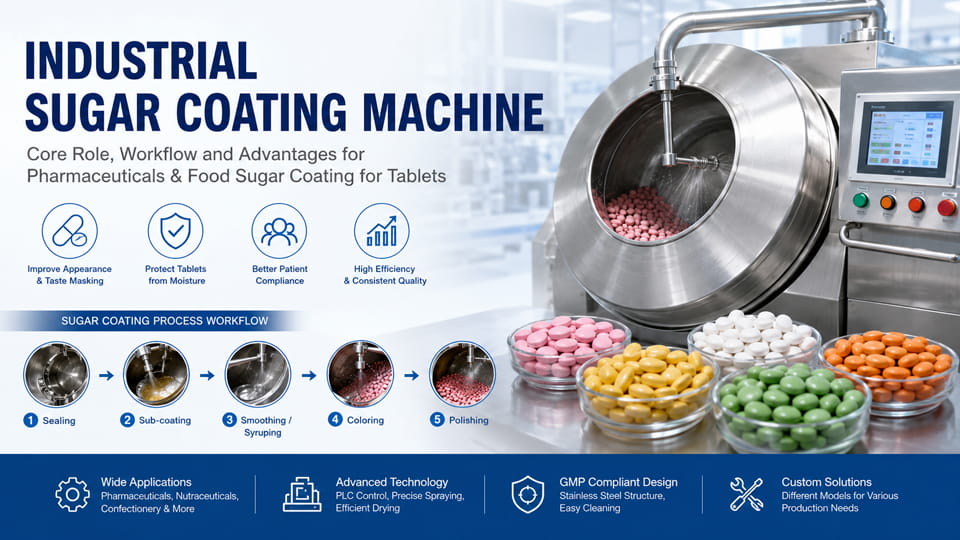

Pelapis tablet (berair atau film pelarut, lapisan enterik atau gula) melindungi obat-obatan dan meningkatkan penampilan. Lapisan film yang seragam membuat tablet lebih mudah ditelan dan mengontrol pelepasan obat. Namun kegagalan pelapisan – cacat yang tampak kecil – dapat menyebabkan masalah besar: pelepasan obat yang tidak stabil, penolakan batch, biaya tambahan. Misalnya, sebuah berlapis enterik pil yang retak bisa melepaskan sensitif terhadap asam API terlalu dini, sementara miskin lapisan film ketebalan dapat mengubah profil pelepasan. Cacat pelapisan tablet yang umum adalah yang pertama kosmetik (penampilan permukaan) tetapi ada pula yang berfungsi (misalnya. lubang kecil pada lapisan pelepas termodifikasi).
Cacat muncul ketika tetesan tidak menyebar dan mengering dengan baik, atau ketika adhesi film gagal. Umumnya, masalah pelapisan tablet berasal tiga sumber: formulasi filmnya (jenis polimer yang salah atau bahan pemlastisnya rendah), pengaturan proses (kecepatan semprotan, suhu udara, Kecepatan Pan), Dan inti tablet (berpori, tablet lunak atau tidak beraturan). Misalnya, sebuah film dengan retakan plasticizer yang terlalu sedikit, sementara terlalu banyak menyebabkan lengket. Kabar baiknya: sebagian besar cacat dapat dicegah dengan menyesuaikan parameter dan formulasi peralatan.
Otomatis masa kini mesin pelapis tablet (pelapis panci berlubang) gunakan aliran udara laminar dan pistol semprot yang presisi untuk memastikan pengeringan yang seragam dan penggulingan yang lembut. Pelapis berkecepatan tinggi JinLu, Misalnya, dilengkapi sistem udara panas aliran laminar yang mendistribusikan panas secara merata melalui dinding drum, meminimalkan gradien suhu (lapisan kering yang tidak rata menyebabkan lengket, pemetikan, kulit jeruk atau melepuh).
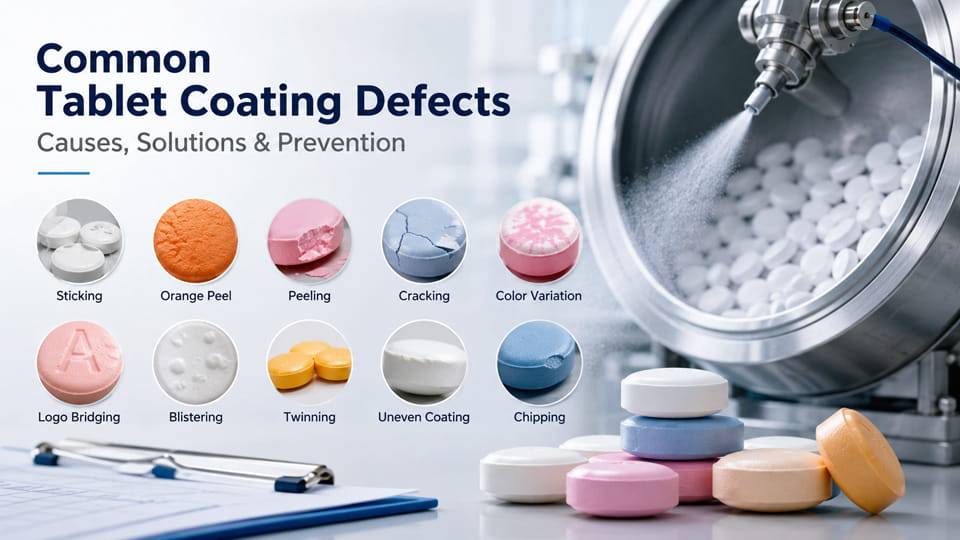
Cacat pada lapisan tablet apa saja ketidaksempurnaan yang tidak diinginkan di lapisan film luar setelah pelapisan. Ini termasuk cacat mekanis (retak, keripik, kulitnya) dan cacat penglihatan (tekstur kulit jeruk, bintik-bintik, variasi warna, logo kabur). Kelemahan ini membahayakan kualitas: padahal kandungan obatnya baik-baik saja, tablet yang bernoda atau rusak terlihat tidak profesional dan mungkin ditolak oleh pemeriksa. Tidak semua cacat murni kosmetik – cacat fungsional (misalnya. lubang kecil, penghalang kelembaban yang buruk, atau rusaknya lapisan enterik) dapat mengubah pelepasan atau stabilitas obat.
Para ahli mengklasifikasikan cacat lapisan ke dalam beberapa kategori: Jinlupacking membaginya menjadi mekanis (misalnya. retak, terkelupas karena film rapuh), visual (kulit jeruk, melesat dari masalah formulasi), disebabkan oleh proses (pelekatan, kembaran yang disebabkan oleh film norak), Dan fungsional (lubang atau lapisan tidak lengkap yang mempengaruhi pelepasan obat). Secara sederhana, kapan saja lapisan tidak menutupi alas tablet secara penuh dan seragam dalam kondisi yang dipilih, cacat dapat terjadi.
Cacat pelapisan muncul ketika variabel kunci di luar spesifikasi. Empat faktor utama tersebut adalah:
Dalam praktiknya, suatu cacat seringkali memiliki banyak penyebab. Misalnya, kulit jeruk terjadi ketika tetesan di permukaan tablet mengering terlalu cepat – yang mungkin berasal dari udara masuk yang terlalu panas dan/atau tingkat penyemprotan yang terlalu tinggi dan/atau formula terlalu kental. Oleh karena itu, tindakan pencegahan harus memeriksa proses secara keseluruhan, serta formulasinya.
Bahkan dengan proses pelapisan tablet yang dirancang dengan baik dan canggih peralatan pelapis farmasi, masalah pelapisan masih bisa terjadi selama produksi. Dalam kebanyakan kasus, permasalahan ini tidak disebabkan oleh satu faktor saja. Kualitas lapisan akhir bergantung pada banyak variabel, termasuk sifat inti tablet, bahan pelapis tablet, parameter semprotan, kondisi pengeringan, dan kinerja mesin pelapis tablet.
Memahami akar penyebab setiap cacat adalah kunci untuk meningkatkan konsistensi lapisan dan mengurangi batch yang ditolak.
Di bawah ini adalah beberapa cacat lapisan tablet yang paling umum ditemukan dalam produksi farmasi dan cara praktis untuk mengatasinya.
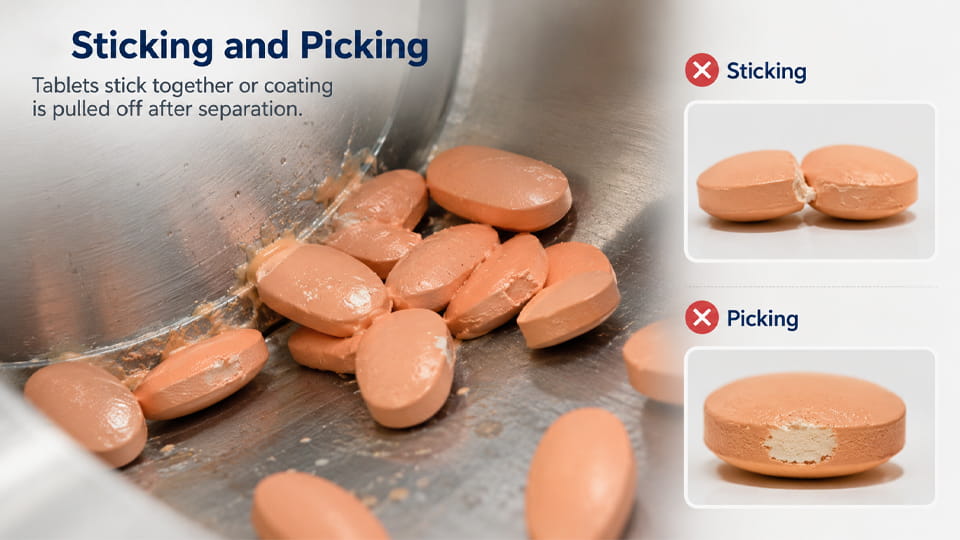
Lengket dan terkelupas adalah salah satu masalah pelapisan tablet yang paling sering dilaporkan, terutama selama proses pelapisan film.
Pelekatan terjadi ketika tablet menempel satu sama lain, panci pelapis, atau permukaan mesin lainnya selama proses pelapisan. Pemetikan terjadi ketika bagian film penyalut tablet ditarik keluar dari permukaan tablet setelah pemisahan.
Cacat ini dapat berdampak serius pada tampilan tablet dan dapat menyebabkan kualitas produk tidak konsisten.
Penyebab umum:
Solusi praktis:
Untuk mengatasi masalah menempel dan memetik, produsen harus terlebih dahulu memeriksa keseimbangan antara penyemprotan dan pengeringan.
Perbaikan yang mungkin dilakukan antara lain:
Mesin pelapis tablet yang dioptimalkan dengan benar harus menjaga hubungan yang stabil antara aplikasi semprotan dan efisiensi pengeringan.
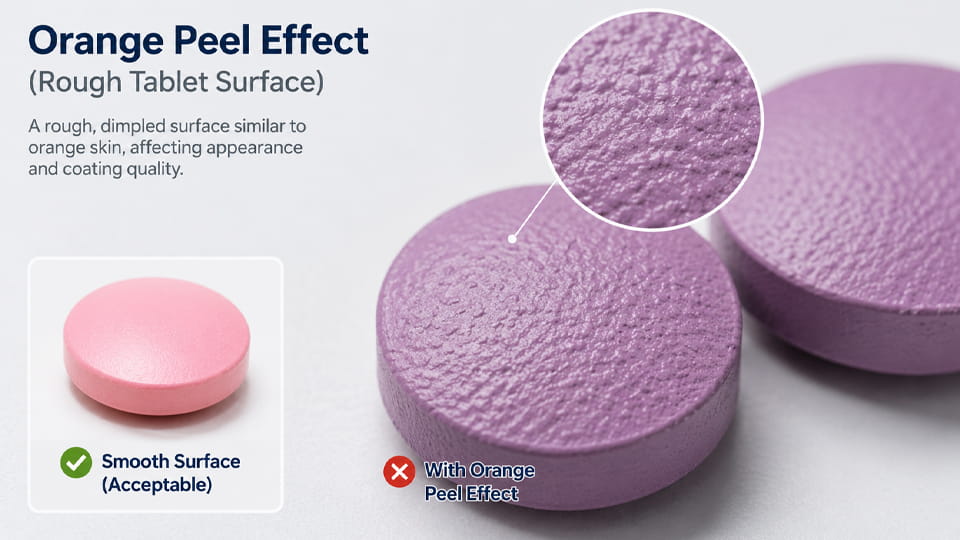
Efek kulit jeruk adalah cacat lapisan film yang umum terjadi dimana tablet menjadi kasar, permukaan yang tidak rata, bukan tampilan yang halus dan mengkilap.
Namanya berasal dari tekstur permukaannya, yang bentuknya mirip dengan kulit jeruk.
Cacat ini terutama disebabkan oleh buruknya penyebaran larutan pelapis sebelum tetesan benar-benar kering.
Penyebab umum:
Solusi praktis:
Produsen dapat meningkatkan kualitas permukaan dengan:
Untuk produk yang membutuhkan tampilan berkualitas tinggi, seperti obat bermerek atau premium tablet nutraceutical, mencegah kerusakan kulit jeruk sangatlah penting.
Pengupasan terjadi ketika lapisan film pelapis terpisah dari inti tablet. Dalam kasus yang parah, potongan lapisan mungkin terlepas dari permukaan.
Masalah ini tidak hanya mempengaruhi penampilan tetapi juga fungsi pelindung lapisan.
Misalnya, tablet salut enterik mengandalkan lapisan penyalut yang berkesinambungan dan stabil untuk melindungi bahan aktif dari asam lambung. Kerusakan apa pun pada lapisan film dapat mempengaruhi kinerja produk.
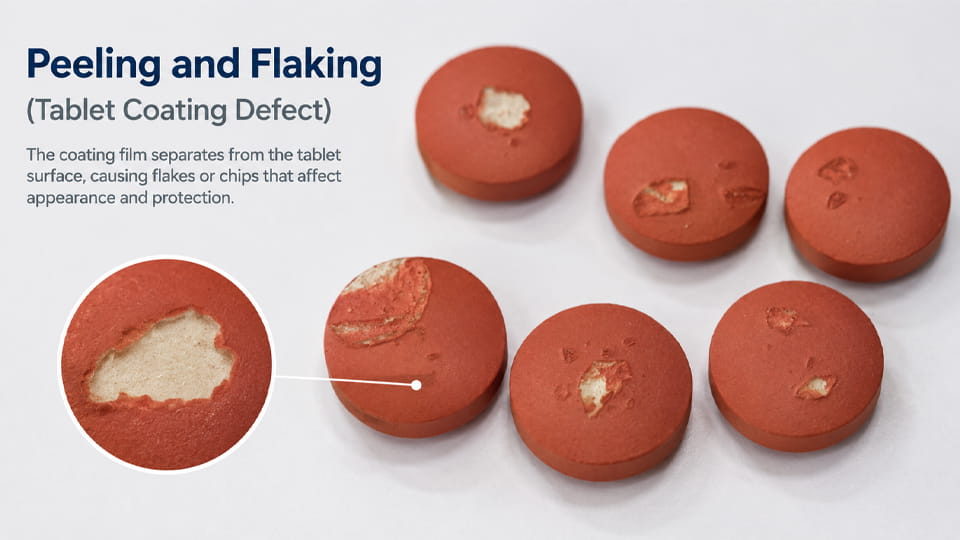
Penyebab umum:
Solusi praktis:
Untuk mengurangi masalah pengelupasan:
Formulasi pelapisan yang stabil dikombinasikan dengan kontrol proses yang akurat dapat meningkatkan daya rekat film secara signifikan.
Retak terjadi ketika tekanan di dalam film pelapis menjadi lebih tinggi dari kekuatan film tersebut.
Biasanya muncul berupa retakan yang terlihat pada permukaan tablet, terutama di sekitar tepi atau logo tablet.
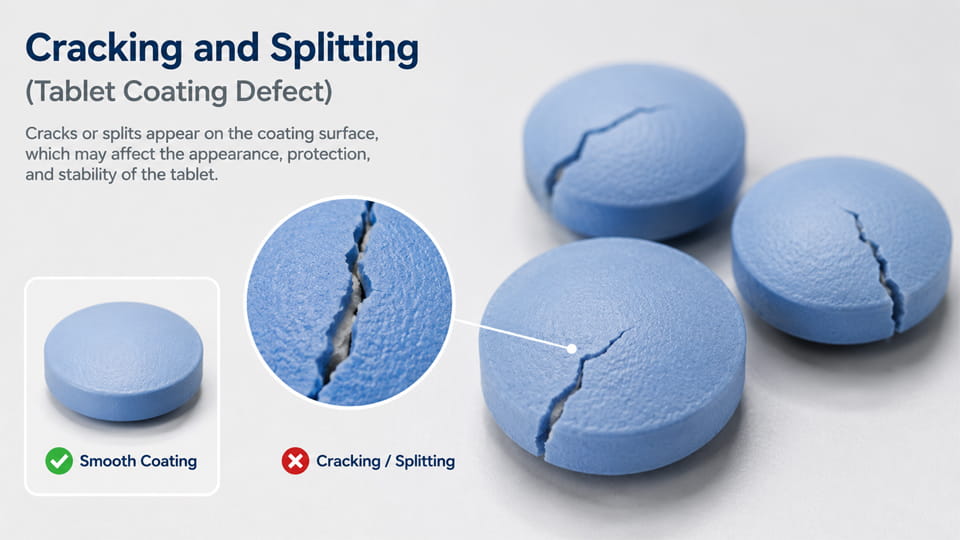
Penyebab umum:
Solusi praktis:
Produsen dapat mengurangi keretakan dengan:
Untuk produksi volume tinggi, menjaga fleksibilitas pelapisan yang konsisten sangat penting untuk menghindari variasi batch.
Variasi warna merupakan masalah umum pada tablet salut film berwarna dan tablet salut gula produk.
Tampaknya tablet dari batch yang sama menunjukkan intensitas warna yang tidak konsisten atau distribusi lapisan yang tidak merata.
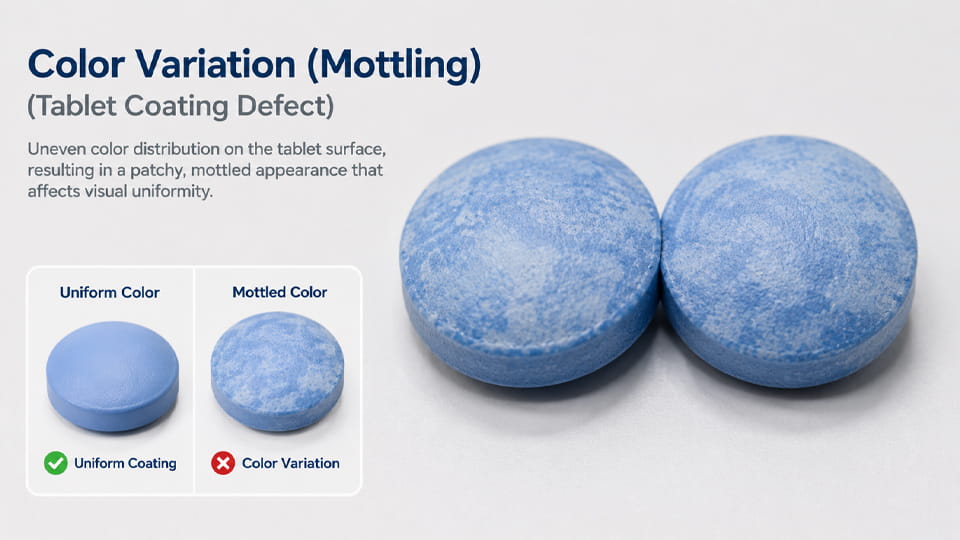
Penyebab umum:
Solusi praktis:
Untuk meningkatkan konsistensi warna:
Untuk produsen yang memproduksi obat-obatan yang dapat diidentifikasi secara visual, warna yang konsisten merupakan persyaratan kualitas yang penting.
Banyak tablet farmasi mengandung logo, surat, atau garis skor. Selama pelapisan, detail ini menjadi tidak jelas karena penumpukan lapisan yang berlebihan.
Masalah ini dikenal dengan istilah bridging atau pengisian logo.
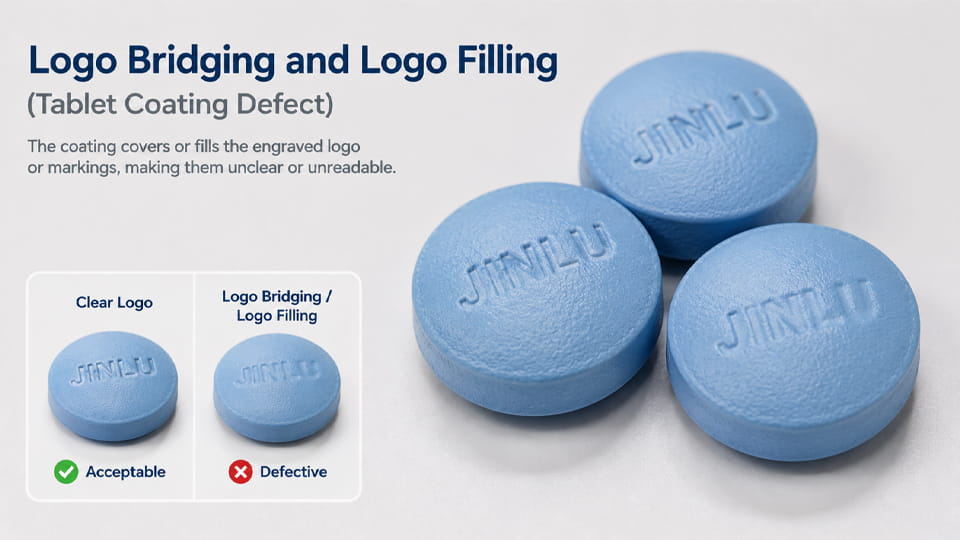
Penyebab umum:
Solusi praktis:
Produsen dapat mencegah logo bridging:
Hal ini sangat penting terutama untuk tablet bermerek yang tanda pengenalnya harus tetap jelas.
Lepuh terjadi ketika lapisan film penyalut terpisah dari permukaan tablet dan membentuk gelembung-gelembung kecil atau area yang menonjol.
Hal ini biasanya terjadi karena kelembapan atau udara terperangkap di bawah lapisan pelapis.
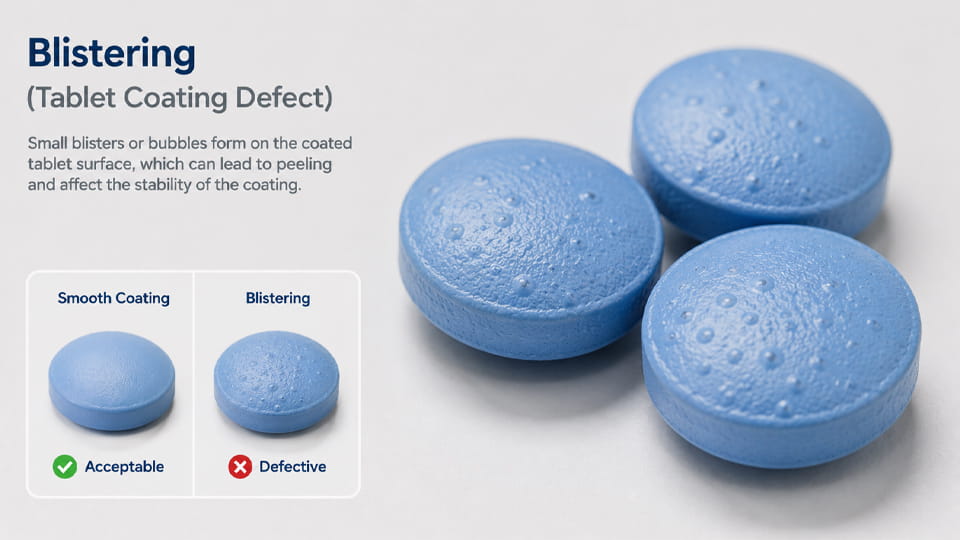
Penyebab umum:
Solusi praktis:
Perbaikan yang mungkin dilakukan antara lain:
Pengendalian yang cermat terhadap proses pengeringan sangat penting untuk menghasilkan tablet salut selaput yang stabil.
Kembaran mengacu pada dua atau lebih tablet yang saling menempel selama proses pelapisan.
Cacat ini meningkatkan limbah produksi dan dapat mengurangi efisiensi pengemasan.
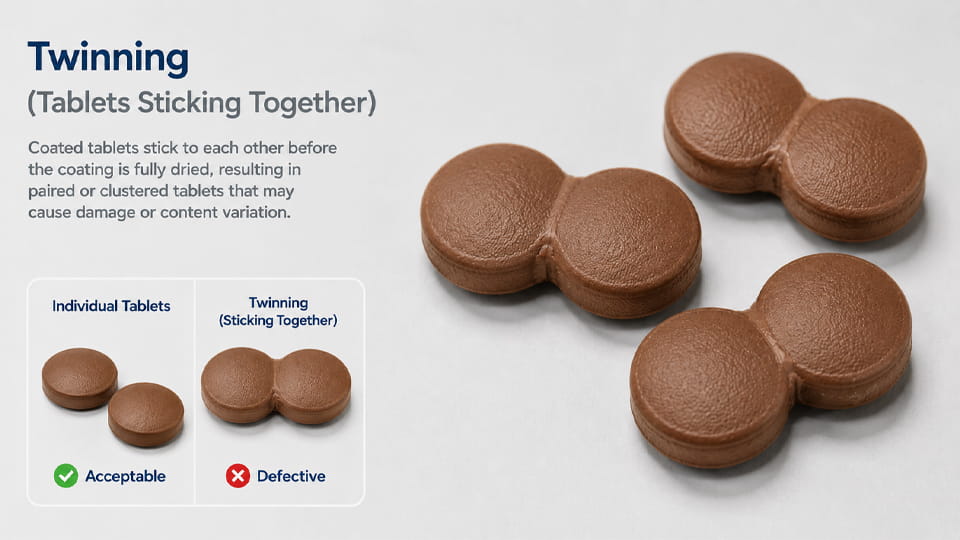
Penyebab umum:
Solusi praktis:
Untuk mencegah kembaran:
Pergerakan tablet yang tepat adalah salah satu faktor terpenting dalam mencegah tablet saling bersentuhan terlalu lama.
Ketebalan lapisan yang seragam sangat penting untuk kinerja farmasi, terutama untuk tablet salut enterik dan produk pelepasan terkontrol.
Lapisan yang tidak rata dapat menyebabkan perbedaan tampilan, stabilitas, atau kinerja pelepasan obat.
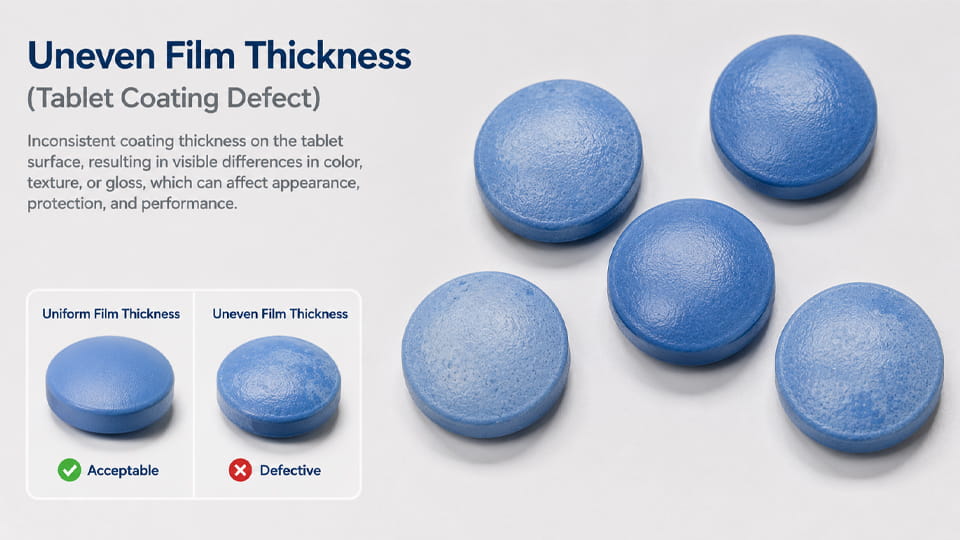
Penyebab umum:
Solusi praktis:
Produsen harus:
Desain peralatan pelapis farmasi yang andal membantu menjaga ketebalan lapisan yang konsisten di seluruh batch.
Chipping terjadi ketika lapisan film pelapis terlepas dari tepi tablet selama pemrosesan.
Hal ini biasanya terjadi karena tablet mengalami benturan mekanis yang berlebihan atau lapisan film pelapisnya kurang kuat.
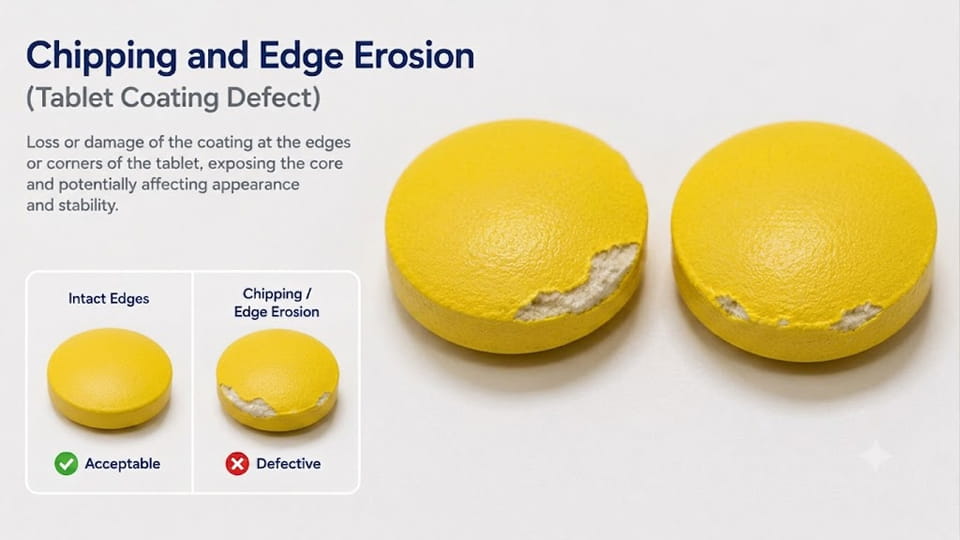
Penyebab umum:
Solusi praktis:
Untuk mengurangi kerusakan tepi:
Koordinasi yang tepat antara formulasi tablet dan pengaturan peralatan pelapisan sangat penting untuk mencegah masalah ini.
Kebanyakan cacat lapisan tablet tidak disebabkan oleh satu masalah saja. Biasanya merupakan hasil interaksi antar formulasi, pengaturan peralatan, dan kondisi pengoperasian.
Proses pelapisan yang berhasil memerlukan pengendalian yang cermat:
Dengan memahami hubungan antara faktor-faktor tersebut, produsen farmasi dapat meningkatkan kualitas pelapisan, mengurangi limbah produksi, dan mencapai batch yang lebih konsisten.
Mencegah lebih mudah daripada mengobati. Berikut adalah praktik terbaik:
Dengan meminimalkan variasi, cacat menjadi jarang terjadi. Seperti yang dinyatakan dalam pedoman industri, “Semakin konsisten Anda melakukan pengoperasian dan tablet, semakin sedikit Anda harus mengandalkan keterampilan operator”.
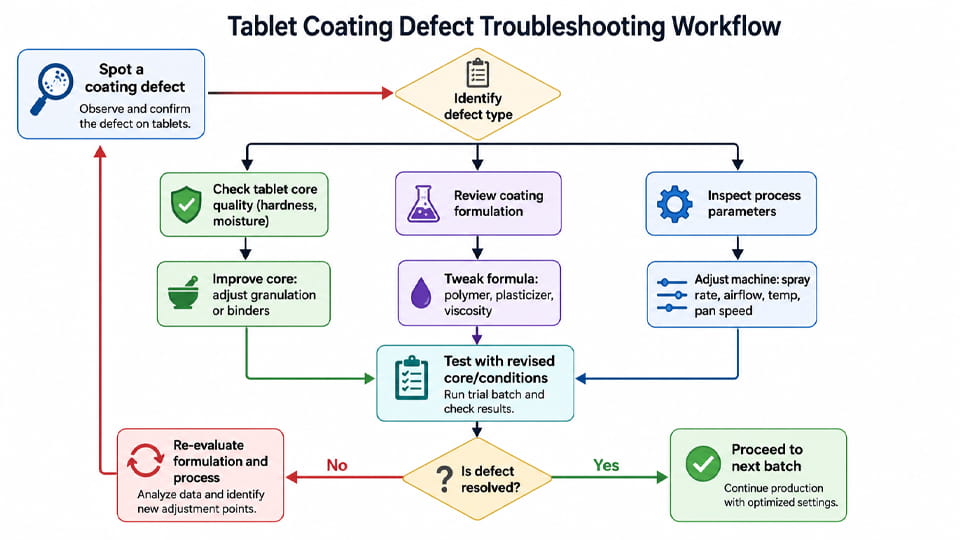
Diagram alur di atas menguraikan langkah-langkah pemecahan masalah: mengidentifikasi jenis cacat, lalu periksa parameter yang relevan (semprot, pengeringan, rumus) dan sesuaikan, kemudian tes ulang sampai teratasi.
Desain peralatan yang tepat sangat penting. Canggih mesin pelapis tablet menawarkan fitur yang secara langsung memerangi cacat:

Dengan berinvestasi pada a sistem pelapisan farmasi berkualitas tinggi (seperti mesin JinLuPacking), pengguna mendapatkan peralatan yang secara inheren mengurangi risiko cacat. Misalnya, Mesin JinLu “…memastikan obat tersebut memiliki tampilan yang lebih baik, sifat yang lebih stabil dan pelepasan yang lebih terkontrol”. Sistem sirkulasi material dan penyekatnya semakin meningkatkan keseragaman lapisan. Ini berarti lebih sedikit penyesuaian manusia yang diperlukan selama berlari, menerjemahkan ke dalam batch yang lebih baik dan lebih sedikit limbah.
Cacat pada lapisan tablet biasanya berasal dari ketidakseimbangan material atau proses. Pendekatan pemecahan masalah yang holistik diperlukan: sesuaikan parameter semprotan/pengeringan, menyempurnakan formulasi, dan memastikan inti tablet yang baik. Peralatan modern sangat bermanfaat – pelapis berkualitas tinggi dengan kontrol yang presisi akan mengurangi masalah ini secara signifikan. Dalam praktiknya, pemeliharaan rutin, prosedur yang konsisten (standar GMP) dan pemantauan real-time adalah kunci untuk mencegah terjadinya cacat.
Jika Anda menghadapi masalah pelapisan yang terus-menerus atau merencanakan produk baru, mempertimbangkan meningkatkan mesin pelapis Anda. JinLuPacking's mesin pelapis tablet otomatis dirancang untuk menghasilkan lapisan yang seragam dan didukung oleh layanan teknis ahli. Misalnya, pelanggan yang beralih ke pelapis berkecepatan tinggi JinLu melaporkan banyak hal hasil akhir yang lebih halus, konsistensi warna yang tepat, dan throughput yang lebih tinggi.
Mencari yang dapat diandalkan mesin pelapis tablet farmasi atau dukungan teknis? Hubungi JinLuPacking untuk solusi peralatan pelapisan profesional. Tim kami dapat membantu mengoptimalkan parameter proses Anda dan menyediakan peralatan (pelapis panci, pelapis gula, dll.) untuk mencegah cacat lapisan.
Cacat lapisan tablet yang paling umum adalah lengket dan terkelupas, efek kulit jeruk, mengelupas, retak, variasi warna, penghubung logo, melepuh, kelahiran kembar, ketebalan lapisan tidak merata, dan erosi tepi.
Masalah ini biasanya terjadi karena parameter penyemprotan yang tidak tepat, kondisi pengeringan yang salah, bahan pelapis tablet yang tidak sesuai, sifat inti tablet yang buruk, atau pengaturan mesin pelapis tablet yang tidak stabil.
Mengidentifikasi penyebab utama adalah langkah pertama menuju peningkatan kualitas lapisan dan mengurangi kerugian produksi.
Lapisan atau warna yang tidak merata biasanya berarti distribusi semprotan atau pencampuran tablet tidak konsisten. Kemungkinan penyebabnya adalah pencampuran suspensi yang buruk (pigmen menggumpal), penempatan pistol semprot tidak menutupi seluruh alas tablet, atau kecepatan drum yang salah. Seperti yang dinyatakan oleh salah satu pemandu industri, masalah seperti bintik-bintik dapat disebabkan oleh kurangnya semprotan yang tumpang tindih dan pergerakan tablet. Memperbaikinya mungkin memerlukan kalibrasi ulang senjata semprot, menambahkan nosel semprot lainnya, atau memperlambat drum sehingga semua tablet mendapat lapisan yang seragam.
Lengket dapat dihindari dengan mencegah pembasahan berlebih dan memastikan pengeringan cepat. Praktis, ini berarti mengurangi laju semprotan atau padatan pelarut, meningkatkan suhu/aliran udara masuk, dan meningkatkan kecepatan drum jika memungkinkan. Juga, tablet dengan permukaan kasar atau berdebu lebih mudah menempel – gunakan langkah menghilangkan debu dan pertimbangkan eksipien anti-lengket dalam formulanya. Penyembuhan cepat (aliran udara yang lebih tinggi) membantu mengatur film sebelum tablet bertabrakan dan menempel.
Cacat kulit jeruk (kasar, permukaan kasar) disebabkan oleh tetesan yang mengering terlalu cepat untuk menyatu. Hal ini sering terjadi ketika tekanan udara atomisasi terlalu rendah (tetesan besar) atau bila larutan pelapis sangat kental atau mempunyai kandungan padatan tinggi. Dengan kata lain, film ini terbentuk di pulau-pulau terpisah, bukan dalam lapisan halus. Untuk menyembuhkan ini, menaikkan tekanan atomisasi (semprotan yang lebih halus), encerkan larutan (viskositas lebih rendah/padat), atau memperlambat pengeringan (suhu masuk yang lebih rendah) jadi tetesan punya waktu untuk bergabung.
Warna yang tidak merata sering kali disebabkan oleh pencampuran pigmen yang buruk atau penyerapan yang berbeda. Jika inti tablet lembap karena semprotan, pewarna dapat bermigrasi dan menyatu. Solusinya termasuk menggunakan pigmen danau yang telah disebarkan sebelumnya atau campuran warna sebelumnya, pencampuran warna yang lebih baik dalam cairan pelapis, dan menyesuaikan profil pengeringan untuk mengunci pigmen secara seragam. Formulasi tablet yang bagus (menghindari semburan kelembapan) juga membantu.
Periksa dengan cermat: Jika setiap tablet dalam batch menunjukkan cacat serupa (misalnya. semuanya retak atau semuanya tergores), sering kali itu adalah mesin/proses (pengaturan semprotan, aliran udara) menyebabkannya. Jika hanya beberapa tablet yang terpengaruh atau muncul patch acak, itu mungkin formulasi (gumpalan dalam larutan, padatan yang tidak larut) atau kualitas tablet. Pertimbangkan juga waktunya: cacat yang muncul segera setelah pemuatan biasanya mengarah ke masalah inti tablet, sedangkan masalah selama pelapisan berhubungan dengan proses.
Tablet salut film menggunakan lapisan pelapis tipis berbasis polimer yang meningkatkan penampilan, melindungi tablet, dan dapat memberikan manfaat fungsional seperti perlindungan kelembaban.
Tablet salut gula menggunakan lapisan berlapis gula berlapis-lapis dan biasanya memiliki tampilan lapisan yang lebih tebal.
Dibandingkan dengan lapisan gula, pelapisan film umumnya lebih cepat, lebih hemat, dan lebih mudah dikendalikan dalam manufaktur farmasi modern karena memerlukan lebih sedikit bahan pelapis dan waktu pemrosesan yang lebih singkat.
Tablet salut enterik memerlukan kontrol pelapisan yang tepat karena lapisan pelapis harus melindungi bahan aktif dari asam lambung dan memungkinkan pelepasan di usus.
Cacat seperti retak, mengelupas, atau ketebalan lapisan yang tidak merata dapat mempengaruhi fungsi pelindung lapisan enterik.
Produsen membutuhkan kontrol yang akurat:
• Ketebalan lapisan
• Kondisi pengeringan
• Sifat bahan penyalut tablet
• Penyemprotan yang seragam
Proses pelapisan yang stabil sangat penting untuk mempertahankan kinerja yang diharapkan dari produk berlapis enterik.
Pendekatan pemecahan masalah yang sistematis adalah cara terbaik untuk memecahkan masalah pelapisan tablet.
Produsen harus memeriksanya:
1.Kualitas inti tablet, termasuk kekerasan dan kerapuhan
2.Sifat larutan pelapis
3.Kecepatan semprotan dan tekanan atomisasi
4.Suhu pengeringan dan aliran udara
5.Parameter operasi mesin pelapis tablet
Daripada hanya menyesuaikan satu parameter saja, tim produksi harus mengevaluasi seluruh proses pelapisan untuk mengidentifikasi penyebab sebenarnya.
Pelapis otomatis modern memberikan kontrol presisi terhadap semua parameter penting. Misalnya, Mesin pelapis tablet otomatis berkecepatan tinggi JinLu menggunakan sistem aliran laminar untuk mengalirkan udara pengeringan yang seragam ke seluruh alas tablet. Ia juga memiliki sistem semprotan terkontrol dan desain penyekat yang menjatuhkan tablet dengan lembut agar paparan merata. Kontrol yang ketat (sistem PLC) memastikan kecepatan semprotan yang diprogram, suhu dan kecepatan drum tetap stabil, mengurangi kesalahan manusia. Semua fitur ini mengarah pada konsistensi, pelapis bebas cacat dan lebih sedikit kegagalan batch.
Referensi:
1.Pelapisan Farmasi dan Pendekatannya yang Berbeda, sebuah Tinjauan —— Perpustakaan Kedokteran Nasional
2.Menempel dan Memetik dalam Kompresi Tablet Farmasi: Tinjauan Konsorsium IQ —— Sains Langsung
3.Prediksi awal cacat tablet pada saat pelapisan pan —— Perpustakaan Kedokteran Nasional
4.Cara Mencegah Masalah Lapisan Tablet —— Teknologi Farmasi
5.Tinjauan Komprehensif tentang Masalah Pelapisan Tablet dan Solusinya —— Gerbang Penelitian
6.Teknik untuk menilai pelapisan film dan mengevaluasi produk berlapis film —— Perpustakaan Kedokteran Nasional