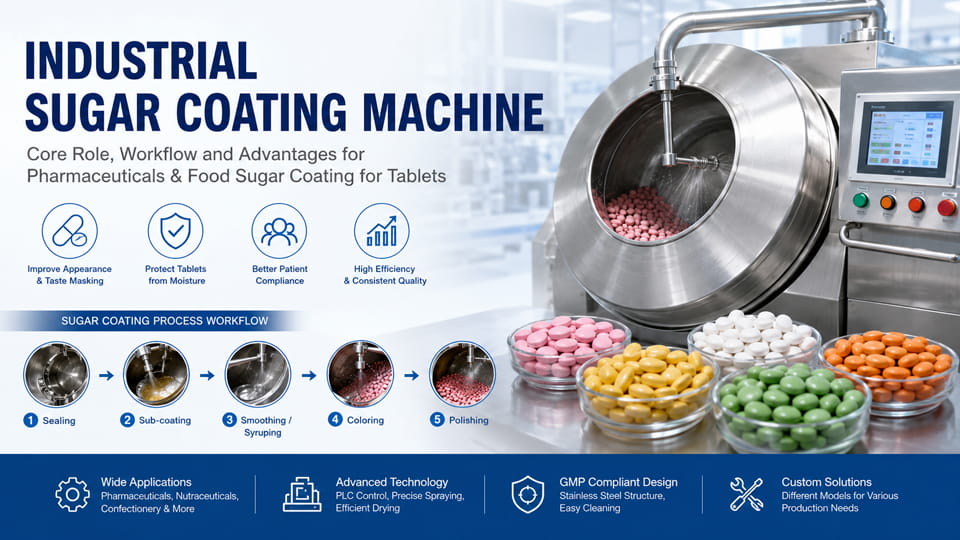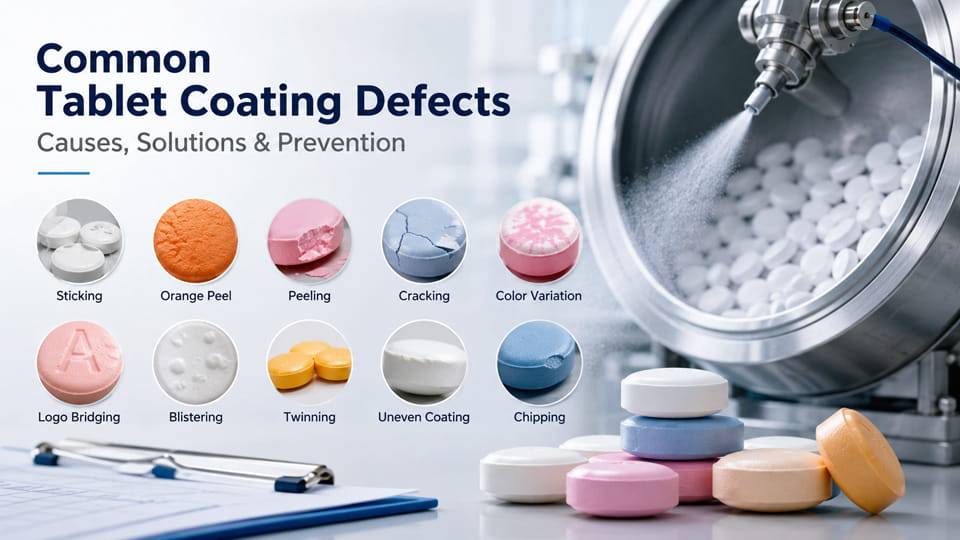

Bentuk sediaan tablet datang dalam dua tipe dasar: dilapisi Dan tidak dilapisi. Sebuah tablet yang tidak dilapisi adalah pil terkompresi sederhana tanpa cangkang tambahan – hanya bahan terkompresi (obat aktif plus eksipien). A tablet yang dilapisi, sebaliknya, memiliki lapisan luar atau cangkang tipis yang diterapkan setelah kompresi. Lapisan ini bisa berupa film polimer (berlapis film), cangkang berbahan dasar gula (dilapisi gula), lapisan enterik, atau film fungsional lainnya. Lapisan ini mempunyai fungsi lebih dari sekedar tampilan – dapat melindungi obat, rasa masker, pelepasan kontrol, atau meningkatkan kemampuan menelan.
Misalnya, Angka 1 menunjukkan bagaimana mesin pelapis film mengaplikasikan film polimer seragam pada tablet, menciptakan halus, pil mengkilap. Lapisan ini dapat memudahkan menelan dan melindungi inti tablet dari kelembapan dan udara. Sebaliknya, tablet biasa yang tidak dilapisi memiliki warna matte, sering kali berkapur, dan lebih rentan terhadap lingkungan.
Angka 1. Mesin pelapis tablet berkecepatan tinggi yang mengaplikasikan lapisan film. Lapisan ini menambah perlindungan, lapisan halus untuk setiap tablet, meningkatkan penampilan dan stabilitas.
Misalnya, A tablet berlapis film memiliki film polimer tipis (biasanya hidroksipropil metilselulosa atau sejenisnya) itu tidak membuat pil menjadi banyak. A tablet berlapis gula memiliki tebal, cangkang sirup manis – lebih sulit dibuat dan lebih berat. Sebuah tablet salut enterik menggunakan polimer yang sensitif terhadap pH sehingga melewati lambung dan larut di usus. Setiap jenis pelapis memiliki kelebihan dan kekurangannya masing-masing (lihat tabel di bawah ini).
| Jenis pelapis | Keterangan | Kegunaan Utama |
| Tidak dilapisi | Tidak ada lapisan; inti tablet terbuka | Rilis cepat, sensitif terhadap biaya, obat yang stabil |
| Mantel film | Film polimer tipis (misalnya. HPMC) | Penutup rasa, perlindungan kelembaban/cahaya, mudah ditelan, branding |
| Mantel gula | Lapisan sirup gula kental | Penyembunyian rasa yang kuat, hasil akhir mengkilap halus, sering di bidang pediatri |
| Mantel enterik | polimer yang sensitif terhadap pH (Eudragit) | Lindungi perut atau obat; pelepasan usus yang tertunda |
| Yang lain | Pelepasan khusus/terkendali | Pelepasan berkelanjutan, pengiriman yang ditargetkan, dll.. |
Meja 1. Perbandingan tablet tidak dilapisi vs dilapisi dan jenis pelapis umum.
Pelapisan bukan hanya untuk penampilan – ini adalah langkah fungsional dalam pembuatan tablet. Insinyur farmasi bertanya, “Bisakah tablet tampil tanpa lapisan?” Jika ya, tablet yang tidak dilapisi lebih sederhana dan lebih murah. Namun pelapis ditambahkan setiap kali ada manfaat teknis. Alasan utama untuk melapisi tablet antara lain:
Pendeknya, pelapisan menambah fungsionalitas. Hal ini tidak dilakukan secara sembarangan, tapi kapan pun rasanya, stabilitas, atau masalah pengendalian pelepasan. Seperti yang dicatat oleh salah satu panduan industri, “pelapisan diterapkan hanya jika memberikan manfaat fungsional yang jelas”.
Tablet berlapis memadukan daya tahan dan kemudahan penggunaan. Manfaat utama termasuk:
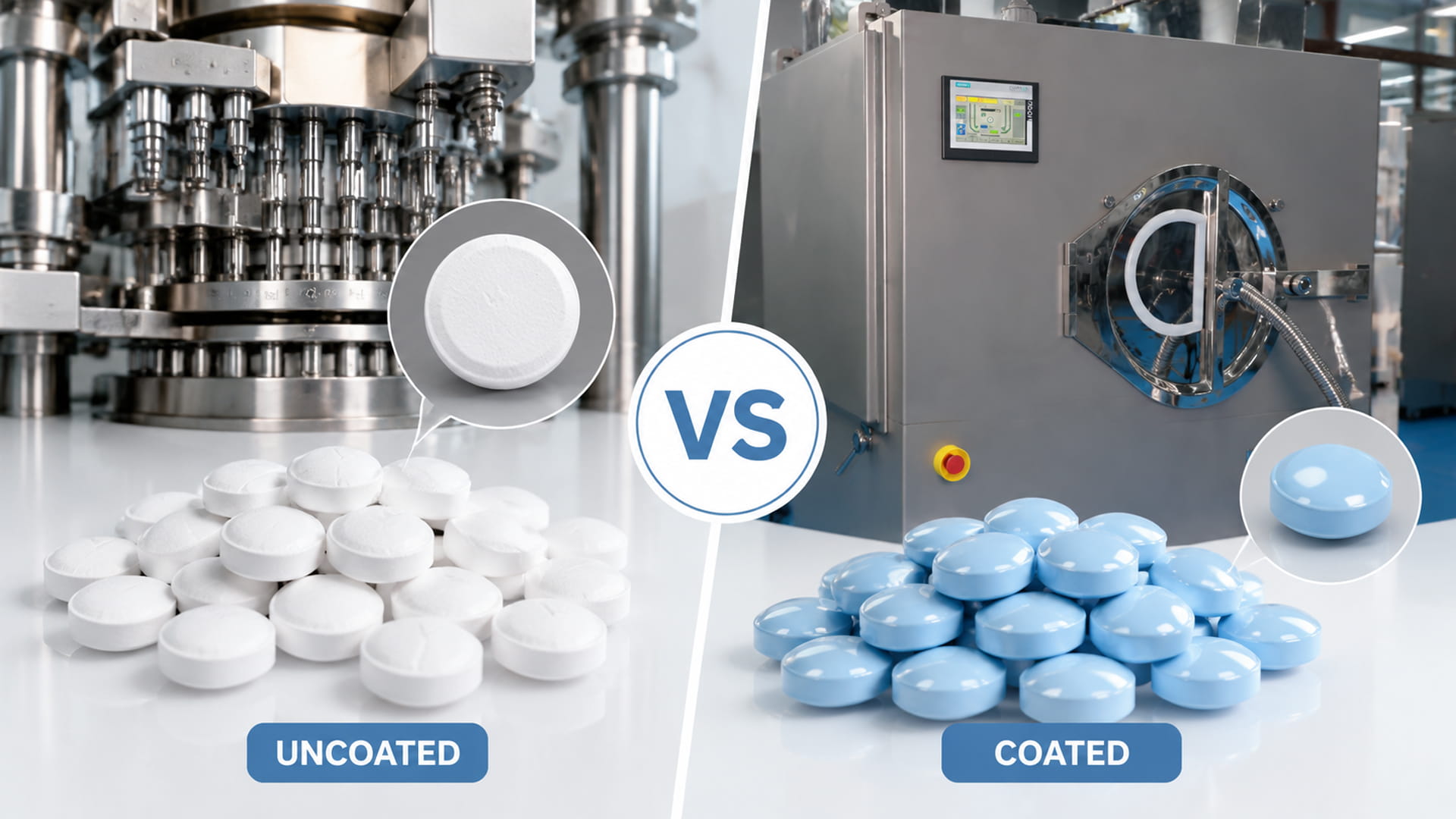
Angka 2 membandingkan tablet yang tidak dilapisi dengan tablet yang dilapisi film. Tablet yang dilapisi (Kanan) jelas memiliki kelancaran, eksterior mengkilap yang menutupi segala bekas atau kekasaran pada inti.
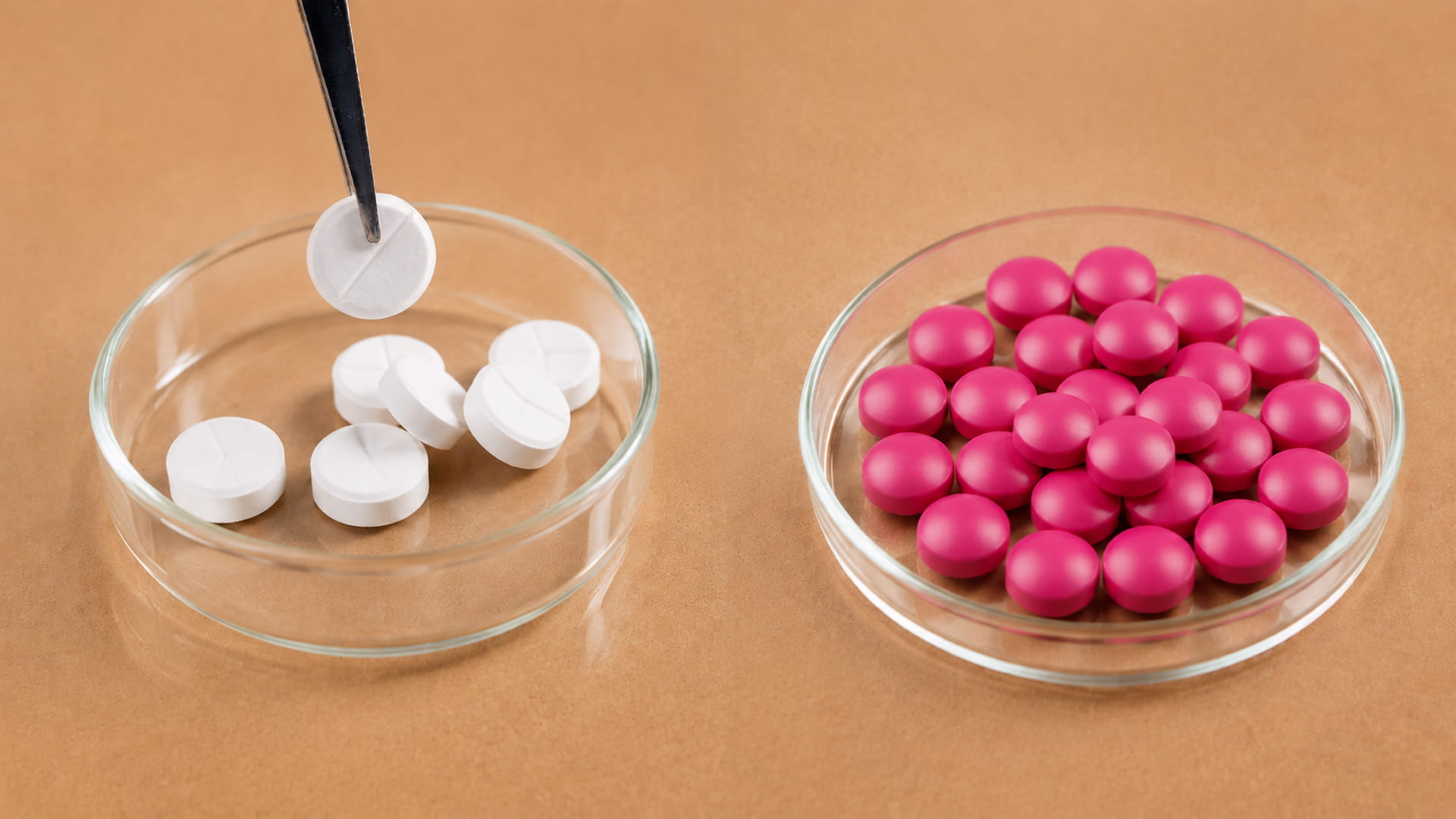
Angka 2. Tidak dilapisi (kiri) vs dilapisi film (Kanan) tablet. Tablet berlapis film ini memiliki tekstur yang halus, hasil akhir seragam yang menutupi warna dan tekstur inti. Pelapis seperti ini meningkatkan kemampuan menelan dan melindungi obat di dalamnya.
Manfaat pelapisan mudah dijelaskan: tablet bersalut sering kali “terlihat lebih baik, bertahan lebih lama, dan turun dengan lebih mudah” daripada pil biasa. Keuntungan ini berarti meskipun pelapisan menambah langkah dan biaya, itu bisa mengurangi masalah nantinya (kerusakan, keluhan, kadaluarsa awal). CMO suplemen makanan mencatat bahwa “tablet bersalut melibatkan bahan tambahan, tenaga kerja dan waktu, pelapisan dapat mengurangi batch yang ditolak, keluhan pelanggan, dan masalah kualitas pasca-pasar”. Dalam jangka panjang, tablet berlapis sering kali menghemat uang sepanjang siklus hidup produk.
Tentu saja, tablet biasa masih ada tempatnya. Tablet yang tidak dilapisi menawarkan kesederhanaan dan efektivitas biaya:
Sederhananya, tablet yang tidak dilapisi adalah “mudah dan murah untuk dibuat”. Ini adalah titik awal yang baik dalam studi kelayakan. Blog apoteker juga mencatat bahwa tablet yang tidak dilapisi lebih murah dan memakan waktu lebih sedikit untuk diproduksi, dan mereka larut lebih cepat, melepaskan obat lebih cepat.
Namun, keuntungan ini disertai dengan trade-off: tablet yang tidak dilapisi “membuat inti obat rentan” terhadap kerusakan lingkungan, dan mungkin kurang dapat diterima oleh pasien. Jadi produsen mempertimbangkan faktor-faktor ini: jika pelapisan tidak diperlukan, mereka kemungkinan besar akan melewatkannya.
Pelapisan bukanlah satu solusi untuk semua hal. Industri ini menggunakan beberapa jenis pelapis utama, masing-masing dengan spesifik kegunaan dan manfaat:
Tablet Salut Film vs Tablet Salut Gula: Pendeknya, lapisan filmnya tipis, tahan lama, dan cocok untuk produksi berkecepatan tinggi. Lapisan ini sebagian besar telah menggantikan lapisan gula karena lapisannya hanya menambahkan sedikit lapisan gula dan dapat diaplikasikan dengan cepat. Namun, lapisan gula tetap memberikan penyembunyian rasa yang unggul dan tampilan klasik, jadi mereka muncul dalam produk seperti vitamin kunyah yang mengutamakan rasa.
Tablet salut selaput vs Tablet salut enterik: Perbedaan utamanya adalah lokasi rilis. Lapisan film yang segera dilepaskan larut di dalam perut dan seringkali hanya meningkatkan kemampuan menelan atau stabilitas. Lapisan enterik penundaan pembubaran sampai pH usus. Misalnya, obat sakit maag mungkin menggunakan lapisan enterik untuk menghindari lambung, sedangkan vitamin harian mungkin menggunakan lapisan film biasa..
Bagaimana sebenarnya produsen melapisi tablet? Ini adalah operasi penyemprotan dan pengeringan yang dikontrol dengan cermat. Langkah dasarnya adalah:
Produksi tablet modern menggunakan peralatan seperti mesin press tablet berputar (untuk membentuk inti) Dan mesin pelapis berkecepatan tinggi (untuk mengaplikasikan film atau cangkang gula). Mesin press tablet dapat menghasilkan ratusan ribu inti seragam per jam. Kemudian mesin pelapis khusus – pada dasarnya adalah drum baja tahan karat dengan nozel semprot dan aliran udara yang presisi – menerapkan larutan pelapis pada tablet yang bergerak..
Setiap langkah ini harus dikontrol dengan ketat. Terlalu banyak semprotan atau udara yang terlalu panas dapat menyebabkannya cacat seperti tekstur “kulit jeruk” atau lapisan film yang mengelupas. Itu sebabnya mesin pelapis canggih (seperti yang dari JinluPacking) memiliki kontrol PLC otomatis, nozel semprot yang tepat, dan bahkan pemantauan waktu nyata untuk menyesuaikan parameter. Pada akhirnya, presisi adalah kuncinya: setiap tablet harus memiliki ketebalan lapisan yang tepat untuk kinerja yang konsisten.
[jl_youtube src=”https://www.youtube.com/embed/LFJJ-cEpfCk”]
Saat beralih dari pengembangan laboratorium ke produksi tablet komersial, memilih mesin pelapis tablet yang tepat menjadi keputusan penting. Manajer produksi biasanya mengevaluasi peralatan berdasarkan keseragaman lapisan, kapasitas, tingkat otomatisasi, persyaratan pembersihan, dan biaya pemeliharaan. Peralatan pelapis tablet yang paling umum meliputi:

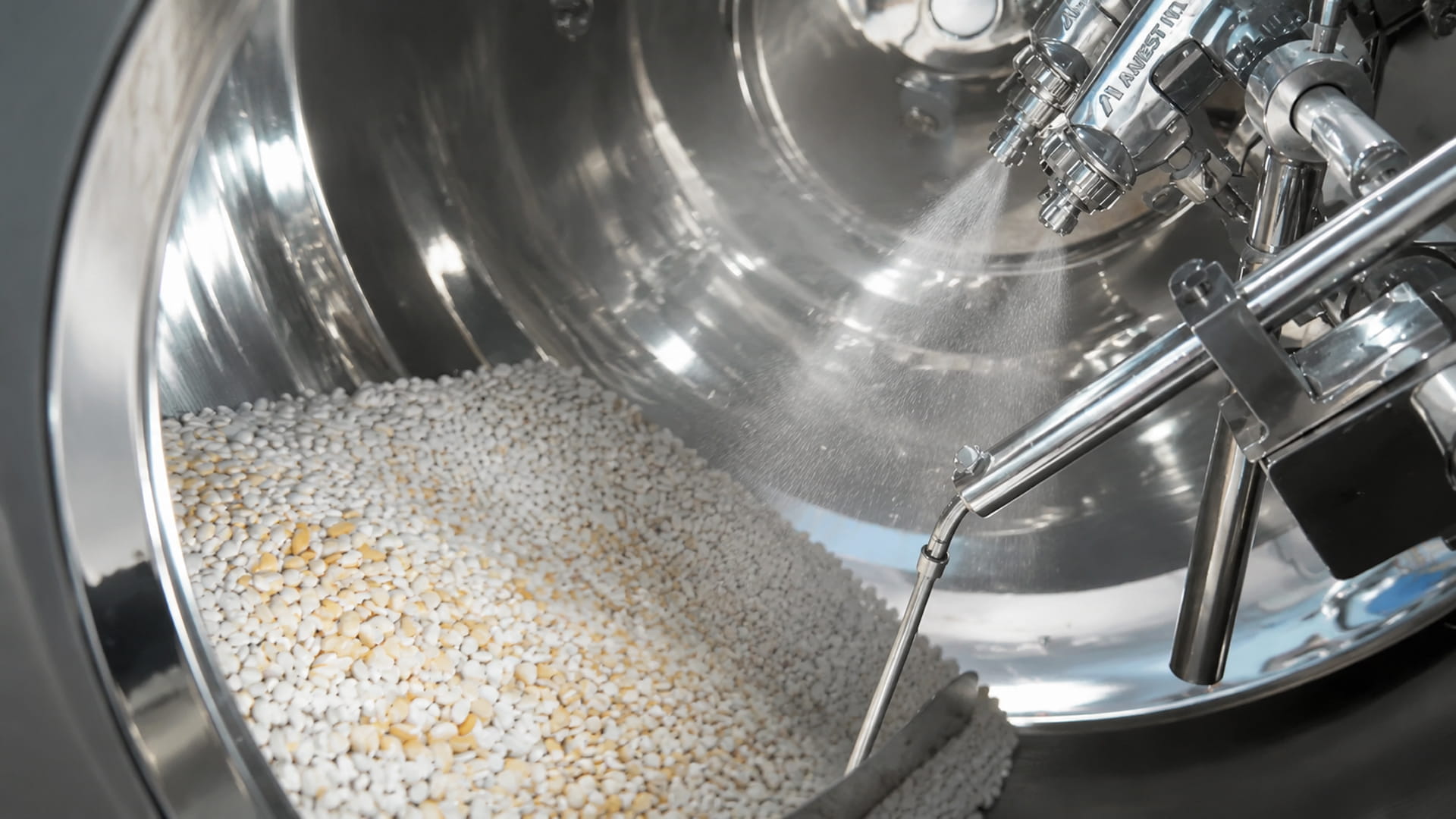
Angka 3. Mesin pelapis tablet industri berkecepatan tinggi milik Jinlu. Tablet jatuh ke dalam saat larutan pelapis disemprotkan dan dikeringkan. Fitur seperti agitator tipe penyekat dan sistem sirkulasi material memastikan cakupan yang seragam dan pelapisan yang efisien.
Fitur utama yang harus dicari dalam pelapis meliputi:
Berinvestasi pada peralatan berkualitas membuahkan hasil: pelapis yang baik menghasilkan keseragaman pelapisan yang tinggi, cacat minimal, dan dapat berlari dengan kecepatan lebih tinggi. Hal ini mengurangi waktu produksi dan tenaga kerja. Sebagai catatan salah satu blog, pelapisan film modern “lebih cepat dan lebih konsisten dibandingkan sebelumnya,” berkat kontrol otomatis dan mesin yang ditingkatkan.
Untuk meringkas, berikut adalah perbedaan utama antara tablet bersalut dan tidak bersalut:
Meja 2 (di bawah) menyoroti perbedaan-perbedaan ini. Perhatikan bahwa dilapisi tidak “lebih baik” secara keseluruhan – itu lebih baik kapan pelapisan diperlukan. Sebagai salah satu jawaban FAQ: “Apakah tablet yang dilapisi selalu lebih baik daripada yang tidak dilapisi? Tidak – tablet salut digunakan jika ada alasan fungsional, seperti penutup rasa atau perlindungan. Ketika suatu formulasi stabil dan enak, tablet yang tidak dilapisi sering kali lebih disukai karena kesederhanaan dan biayanya”.
| Fitur | Tablet Tidak Dilapisi | Tablet yang dilapisi |
| Permukaan | Matte, bubuk/butiran yang terlihat | Mulus, film mengkilap atau berwarna |
| Rasa/Bau | Pahit atau tidak menyenangkan mungkin terlihat | Lapisan menutupi rasa/bau yang tidak sedap |
| Menelan kemudahan | Seringkali lebih sulit, terutama yang berukuran besar | Lebih mudah karena permukaan licin |
| Perlindungan (Kelembapan/Cahaya) | Membutuhkan kemasan yang kuat | Film menambah penghalang, meningkatkan stabilitas |
| Stabilitas obat | Lebih rentan terhadap kelembapan, panas | Stabilitas dan umur simpan yang lebih baik |
| Kompleksitas Pemrosesan | Proses yang lebih sederhana, langkah yang lebih sedikit | Diperlukan langkah pelapisan tambahan |
| Waktu/Biaya | Biaya produksi lebih rendah | Biaya di muka lebih tinggi namun berpotensi menurunkan biaya siklus hidup |
| Kontrol Lepaskan | Rilis langsung saja | Dapat mengaktifkan rilis tertunda atau terkontrol (enterik, berkelanjutan) |
| Pencitraan Merek/Penampilan | Terbatas (warna polos) | Bisa berwarna-warni, dicetak untuk pencitraan merek |
Meja 2. Tablet Dilapisi vs Tidak Dilapisi: perbandingan fitur-fitur utama.
Dalam praktiknya, perumus dan produsen memutuskan berdasarkan kebutuhan produk. Beberapa pedoman umum:
Terkadang keputusan tergantung pada pengemasan: Tablet bersalut umumnya lebih baik disimpan dalam botol atau stoples karena lebih sedikit debunya. Di dalam Paket blister, salah satu bentuk berfungsi, namun pelapisan memungkinkan pengemasan yang lebih sederhana. Produsen kontrak (CMO) sering bertanya: “Bisakah kita membuat tablet ini tidak dilapisi?” dan tambahkan langkah pelapisan hanya jika diperlukan.
Pertanyaan umum adalah apakah tablet salut dapat dipecah menjadi dua atau digiling. Umumnya, TIDAK: membelah atau menghancurkan tablet yang dilapisi akan menggagalkan tujuan dari cangkangnya. Lapisan polimer dimaksudkan untuk mengontrol pelepasan atau melindungi obat. Menghancurkannya akan mengekspos obat sekaligus, yang dapat mengubah penyerapan atau menyebabkan iritasi. Tablet yang dilapisi (terutama yang enterik atau pelepasan yang diperpanjang) harus tetap utuh. Jika diperlukan dosis yang lebih kecil, periksa apakah tablet memiliki garis skor (beberapa tablet yang segera dirilis dapat melakukannya) atau tanyakan pada apoteker. Seperti yang dikatakan oleh salah satu catatan ahli: “Biasanya tidak—penghancuran dapat merusak lapisan pelindung dan mengubah pelepasan obat. Selalu periksa ke apoteker terlebih dahulu”.
Pada akhirnya, tablet bersalut vs tidak bersalut adalah tradeoff antara kesederhanaan dan fungsionalitas. Tablet yang tidak dilapisi lebih murah dan lebih cepat dibuat, tapi biarkan inti obatnya terbuka. Tablet berlapis menambah kerumitan dan biaya, namun memberikan manfaat yang jelas: stabilitas yang lebih baik, penutup rasa, kemampuan menelan, dan diferensiasi merek. Dalam produksi farmasi modern, sebagian besar pil yang digunakan sehari-hari (vitamin, OTC Meds, nutraceutical) dilapisi film karena memberikan keseimbangan yang tepat antara perlindungan dan efisiensi.
Namun, kapanpun formulasinya memungkinkan, perusahaan mungkin lebih memilih tablet yang tidak dilapisi karena alasan biaya. Kuncinya adalah sesuaikan jenis tablet dengan kebutuhan obat. Jika produk Anda memerlukan penyembunyian rasa atau pelepasan terkontrol, pelapisan seringkali penting. Jika tidak, tablet biasa mungkin sudah cukup.
Untuk pertanyaan apa pun tentang pelapisan tablet atau untuk menjelajahi opsi peralatan, menjangkau! Tim kami di JinLuPacking berspesialisasi dalam mesin cetak tablet, mesin pelapis, dan menyelesaikan lini produksi tablet. Apakah Anda memerlukan sistem pelapisan berkecepatan tinggi untuk film, gula, atau aplikasi enterik, atau saran untuk mengoptimalkan formulasi tablet Anda, Kami di sini untuk membantu. Hubungi kami untuk penawaran atau informasi lebih lanjut, dan pastikan tablet Anda mendapatkan hasil akhir dan kinerja yang tepat.
Tablet salut mempunyai lapisan tambahan (film, gula atau polimer fungsional) diterapkan di atas inti terkompresi, sedangkan tablet yang tidak dilapisi adalah pil yang dikompres biasa tanpa lapisan luar. Lapisan ini memiliki tujuan fungsional: itu bisa menutupi rasa, melindungi API dari kelembapan/cahaya, dan pelepasan kontrol. Tablet yang tidak dilapisi langsung larut dan lebih murah untuk dibuat, tetapi obat tersebut terpapar ke lingkungan dan sering kali terasa pahit.
Tablet dilapisi untuk meningkatkan stabilitas, penerimaan pasien, dan kinerja. Lapisan melindungi kelembapan- atau API peka cahaya, menutupi rasa yang tidak enak, dan membuat tablet lebih mudah ditelan. Pelapis khusus (seperti film enterik) dapat menunda pelepasan sampai ke usus, mencegah iritasi lambung. Pendeknya, pelapisan meningkatkan penampilan dan umur simpan tablet, dan dapat memungkinkan pemberian obat terkontrol dan kepatuhan pasien yang lebih baik.
Tidak ada satu pun yang “lebih baik” secara universal – hal ini bergantung pada penerapannya. Tablet salut memiliki keunggulan dalam hal perlindungan dan daya tarik bagi pasien, tetapi harganya lebih mahal dan memerlukan pemrosesan ekstra. Tablet yang tidak dilapisi lebih sederhana, lebih cepat, dan lebih murah untuk diproduksi, dan mereka melepaskan obatnya dengan cepat. Untuk kandang, obat pelepasan segera yang mengutamakan biaya, tidak dilapisi mungkin ideal. Untuk obat yang pahit atau sensitif terhadap kelembapan yang mengutamakan penyembunyian rasa dan stabilitas, dilapisi adalah pilihan yang lebih baik.
Tiga metode pelapisan tablet utama adalah:
• Lapisan Film: Lapisan polimer tipis (biasanya berbahan dasar air) diaplikasikan dengan cara disemprotkan; paling umum saat ini. Menawarkan perlindungan kelembaban dan branding dengan penambahan berat minimal.
• Lapisan Gula: Cangkang gula tebal dibuat dari beberapa lapisan sirup; memberikan hasil akhir mengkilap dan masker terasa enak, tetapi menambah jumlah besar dan membutuhkan pemrosesan yang lama.
• Lapisan Enterik: Lapisan film sensitif pH yang menahan asam lambung dan larut di usus. Secara teknis ini adalah jenis pelapisan film dengan polimer khusus, digunakan untuk obat yang tidak tahan asam atau untuk menghindari iritasi lambung.
Tablet berlapis film mendapatkan sebagian besar manfaat pelapisan utama dengan cangkang yang lebih tipis. Lapisan film berair yang baik akan melindungi obat (penghalang kelembaban/cahaya), menutupi rasa dan bau, dan meningkatkan estetika tanpa meningkatkan ukuran tablet secara signifikan. Pelapis film cepat kering pada pelapis modern, memberikan throughput yang tinggi. Mereka juga dapat diformulasikan untuk profil rilis tertentu (enterik atau berkelanjutan) berdasarkan pilihan polimer.
Umumnya, Ya. Tablet yang tidak dilapisi biasanya hancur dan larut lebih cepat karena tidak ada lapisan penghalang. API tersebut langsung terkena cairan lambung, menyebabkan permulaan yang lebih cepat. Sebaliknya, bahkan lapisan film yang segera dirilis menambah sedikit penundaan (karena lapisannya harus larut terlebih dahulu). Namun, perbedaannya mungkin kecil tergantung pada komposisi dan ketebalan lapisan.
Peralatan pelapisan umum meliputi:
• Pelapis Pan Berlubang (Pelapis Berkecepatan Tinggi): Mesin standar industri dengan drum berlubang yang berputar. Udara panas mengalir melalui drum, memungkinkan efisiensi pengeringan yang tinggi dan pelapisan yang seragam.
• Pelapis Lapisan Cairan: Tablet digantung pada aliran udara dan disemprotkan dari bawah atau atas. Baik untuk pelet atau tablet kecil dengan lapisan tipis yang sangat seragam.
• Panci Pelapis Tradisional: Panci terbuka besar digunakan terutama untuk pelapisan gula (padat karya dan sebagian besar ketinggalan jaman dalam farmasi modern).
Setiap jenis mesin dipilih berdasarkan ukuran batch, ukuran/bentuk tablet, dan bahan pelapis. Untuk pelapisan film skala besar, panci berlubang (seperti mesin pelapis tablet Jinlu) paling umum.
Pelapisan dapat menunda atau mengubah pelepasan obat. Lapisan enterik mencegah pelepasan asam lambung, jadi obat hanya dikeluarkan di usus. Lapisan khusus lainnya (film rilis berkelanjutan) mengandung polimer yang memperlambat penetrasi cairan, meregangkan rilis selama berjam-jam. Bahkan lapisan film yang tidak berfungsi (untuk segera dirilis) mungkin memperlambat pelepasan sedikit dibandingkan dengan inti yang tidak dilapisi, karena penghalang itu harus dibubarkan terlebih dahulu. Dengan demikian, pelapis menyediakan alat untuk secara tepat menyesuaikan di mana dan seberapa cepat API dikirimkan.
Pelapis film serbaguna dan efisien. Mereka melindungi obat dan meningkatkan rasa/penampilan dengan waktu pemrosesan minimal. Lapisan film berair modern cepat kering, yang penting untuk manufaktur dengan throughput tinggi. Mereka juga mengizinkan penambahan warna dan pengidentifikasi, membantu diferensiasi merek. Karena mereka dapat dirancang untuk profil rilis yang berbeda, pelapis film adalah pekerja keras bagi perusahaan farmasi yang ingin memberikan kualitas dan kinerja pada tablet mereka.
Perusahaan mengevaluasi banyak faktor. Jika obatnya tidak stabil, pahit, atau membutuhkan perlindungan perut (pelepasan enterik), mereka memilih tablet bersalut. Jika formulasinya sudah stabil, rasanya bisa diterima, dan meminimalkan biaya adalah prioritas, mereka pergi dengan tidak dilapisi. Seperti yang dirangkum oleh salah satu panduan industri: gunakan tablet bersalut jika “Anda membutuhkan penutup rasa,” “perlindungan dari kelembapan, cahaya atau oksidasi,” atau “pelepasan terkontrol/tertunda”; pilih non-coated jika formula Anda stabil dan tidak diperlukan perlindungan ekstra. Intinya, keputusan didorong oleh persyaratan produk (Kimia API, rilis target, kebutuhan pemasaran) versus pertimbangan produksi (biaya, ketersediaan peralatan).
Referensi:
1.Aplikasi Farmasi Pelapis Film Tablet —— Perpustakaan Kedokteran Nasional
2.Lapisan Tablet —— Universitas Teknik Kimia Michigan
3.Lapisan Tablet: Rekayasa Sistem Proses untuk Manufaktur Farmasi —— Sains Langsung
4.Pelapisan Farmasi dan Pendekatannya yang Berbeda, sebuah Tinjauan —— Perpustakaan Kedokteran Nasional
5.Tinjauan Komprehensif tentang Lapisan Film Farmasi: Masa lalu, Hadiah, dan Masa Depan —— Perpustakaan Kedokteran Nasional
6.Aplikasi Farmasi Pelapis Film Tablet —— MDPI
7.Kemajuan dalam Teknologi Manufaktur Tablet: Bab 10 – Teknologi tablet berlapis —— Sains Langsung