
Mengemas gula melibatkan lebih dari sekedar mengisi kantong. Artinya melindungi produk dari kelembapan dan kontaminasi, mengendalikan porsi, dan memastikan penanganan dan daya tarik yang mudah di rak. Kemasan gula bisa dalam berbagai bentuk – sachet, Paket tongkat, kantong, kotak, stoples, atau tas curah – tergantung pada bentuk produk (berbutir, cokelat, bubuk, potong dadu, dll.) dan penggunaan akhir (pengecer, layanan makanan, industri). Dalam panduan ini, kita akan membahas kuncinya jenis dan bahan kemasan gula, jelaskan cara memilih format yang tepat untuk kebutuhan Anda, dan jelaskan mesin yang umum digunakan. Apakah Anda seorang insinyur pengadaan, manajer operasi, atau desainer kemasan, wawasan ini akan membantu Anda merencanakan solusi pengemasan gula yang menyeimbangkan biaya, pertunjukan, dan daya tarik pelanggan.
Pengemasan harus mengatasi tantangan khusus gula. Paket gula yang baik membutuhkan penghalang kelembaban yang sangat baik dan kekuatan fisik, sehingga tidak akan sobek atau lembab selama pengiriman dan penyimpanan. Hal ini juga harus mencegah kebocoran dan kontaminasi produk (Misalnya, semut terkenal tertarik pada gula). Pada saat yang sama, gaya kemasan harus sesuai dengan ukuran porsi dan pasar: dari paket gula kopi satu porsi hingga 50 kg karung curah untuk pabrik makanan. Pendeknya, “kemasan gula” mencakup wadah atau kantong apa pun yang digunakan untuk menampung gula meja, gula kue, gula merah, gula merah (gula tebu yang tidak dimurnikan), gula jawa, atau pemanis serupa.
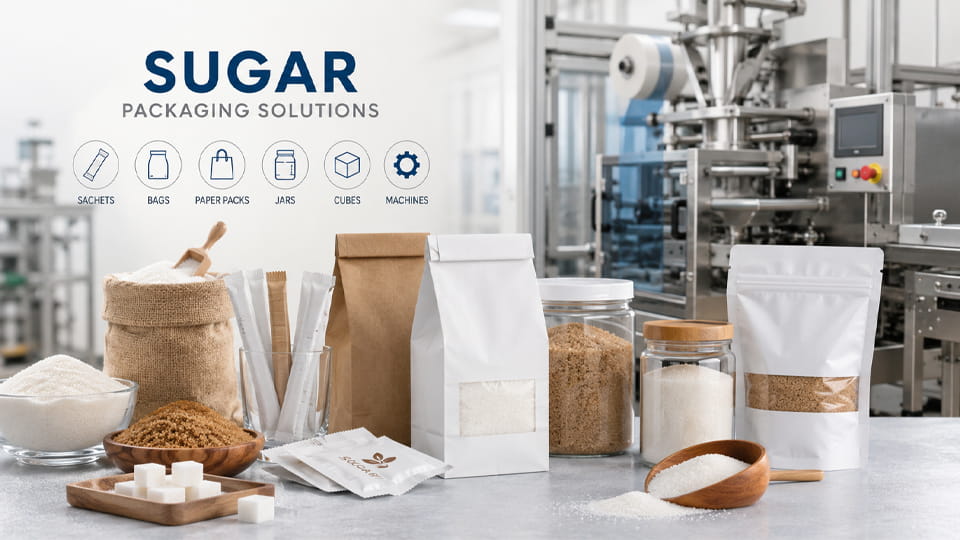
Pengemasan gula mengacu pada cara gula dibungkus atau dikantongi untuk dijual dan digunakan – mulai dari kemasan kecil sekali pakai hingga kantong curah besar. Ini mencakup semua format kemasan untuk produk seperti gula pasir putih, gula merah, bubuk (lapisan gula) gula, gula kastor, gula batu, dan bahkan pemanis khusus seperti bubuk jaggery. Tujuannya adalah hal yang sama: jaga agar gula tetap kering dan mengalir bebas, mengontrol ukuran porsi, dan melindunginya selama transportasi. Misalnya, porsi gula sachet yang digunakan di kafe atau maskapai penerbangan dirancang untuk kebersihan dan kenyamanan (satu paket per cangkir), sedangkan kantong gula eceran (0.5–5kg) harus mendukung pengisian berkecepatan tinggi dan menarik konsumen di rak supermarket.
Dalam layanan makanan dan pengaturan industri, gula sering kali tersedia dalam kemasan yang lebih besar (5–50 kg karung), dimana fokusnya adalah pada efisiensi penumpukan dan mencegah pembusukan. Dalam semua kasus, kemasan harus melindungi gula dari kelembapan (untuk mencegah penggumpalan), dari hama, dan dari kerusakan. Seperti yang dicatat oleh salah satu sumber industri, kemasan gula yang baik memiliki sifat penghalang dan perlindungan fisik yang sangat baik sehingga tidak akan rusak selama pengangkutan atau membiarkan produk bocor.
Berikut ini ikhtisar singkat mengapa pengemasan gula itu penting:
Di bagian selanjutnya, kami akan menguraikan perbedaannya bentuk produk gula, dan memetakannya ke gaya pengemasan yang sesuai, bahan, dan mesin.
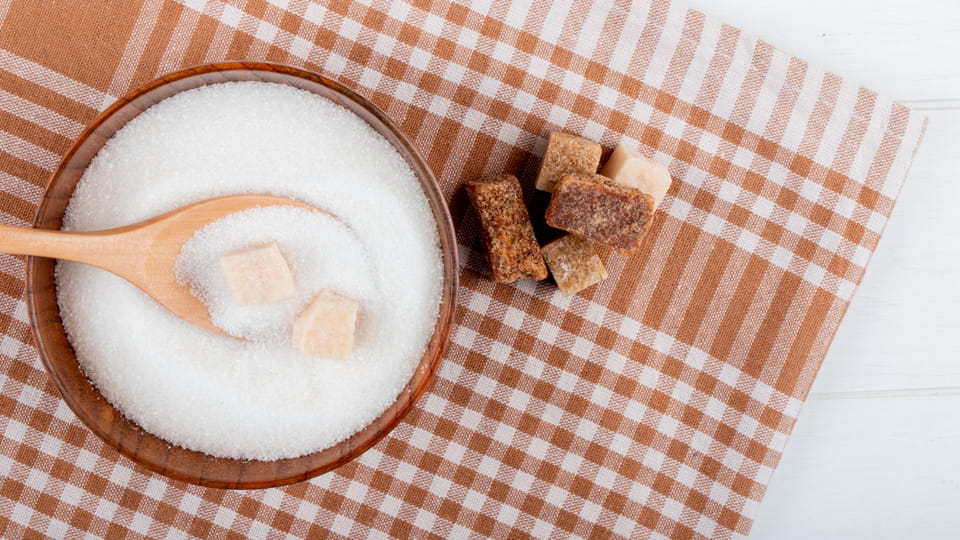
Gula hadir dalam beberapa bentuk fisik, masing-masing dengan pertimbangan kemasannya sendiri:
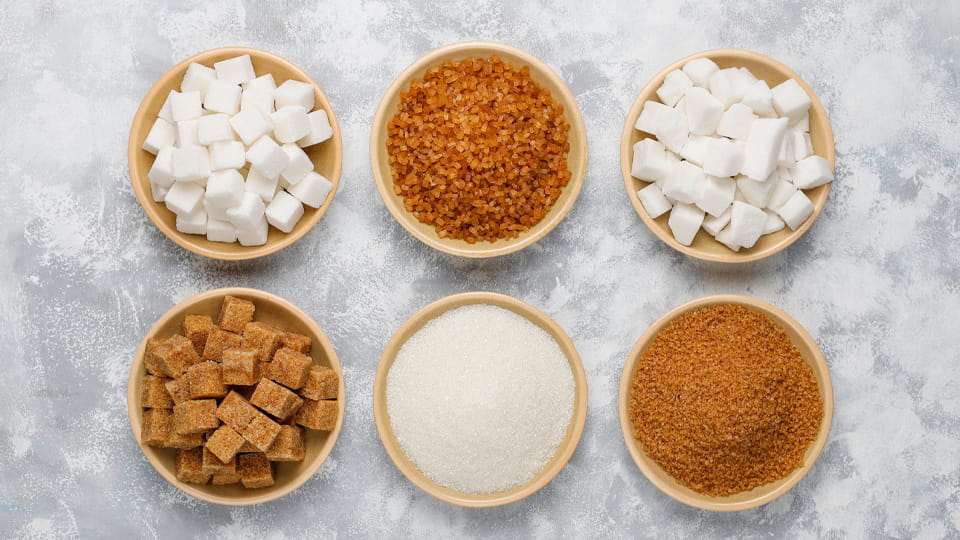
Dalam ringkasan, jenis gula yang berbeda memerlukan fitur pengemasan yang berbeda: gula bubuk dan gula merah khususnya membutuhkan bahan penghalang yang tinggi, gula pasir membutuhkan pengendalian berat badan yang tepat, dan kubus harus ditangani dengan hati-hati dan tahan hancur.
Bagaimana Anda bisa mengemas gula? Berikut adalah format utama yang akan Anda temui:
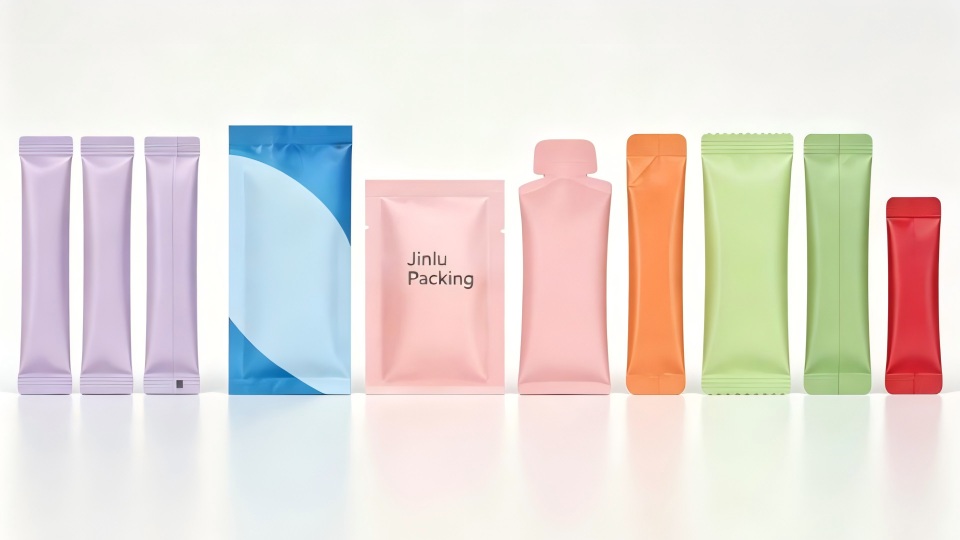
“Paket gula” dan “tongkat kopi” ada di sini. Ini kecil, paket dosis individu (biasanya 3–10 gram). Mereka sangat populer di bidang jasa makanan, restoran, kafe, dan maskapai penerbangan. Ada dua variasi:
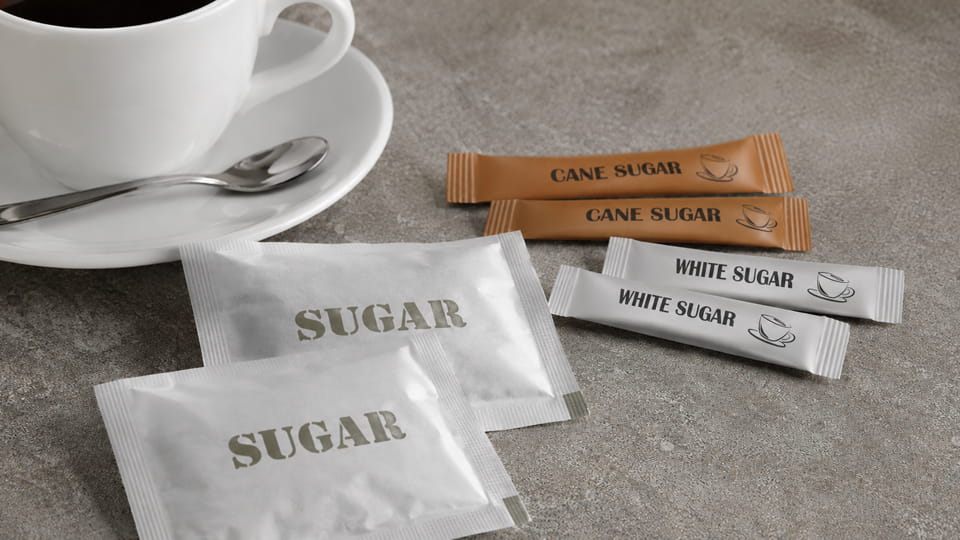 Angka: Sachet gula dan kantong stik satu porsi
Baik kemasan sachet maupun stick ideal untuk mengontrol porsi dan kebersihan. Perbedaan: Sachet menggunakan lebih banyak bahan tetapi menawarkan lebih banyak area cetak, sedangkan kemasan stick lebih ramping dan lebih hemat bahan. Mesin pengepakan stik multi jalur dapat menghasilkan ratusan atau bahkan lebih dari seribu bungkus gula per menit, menjadikannya sangat efisien untuk volume tinggi.
“Kantong gula konsumen” ada di sini. Saat menjual gula di supermarket atau toko online, Anda sering melihat kantong yang lebih besar:
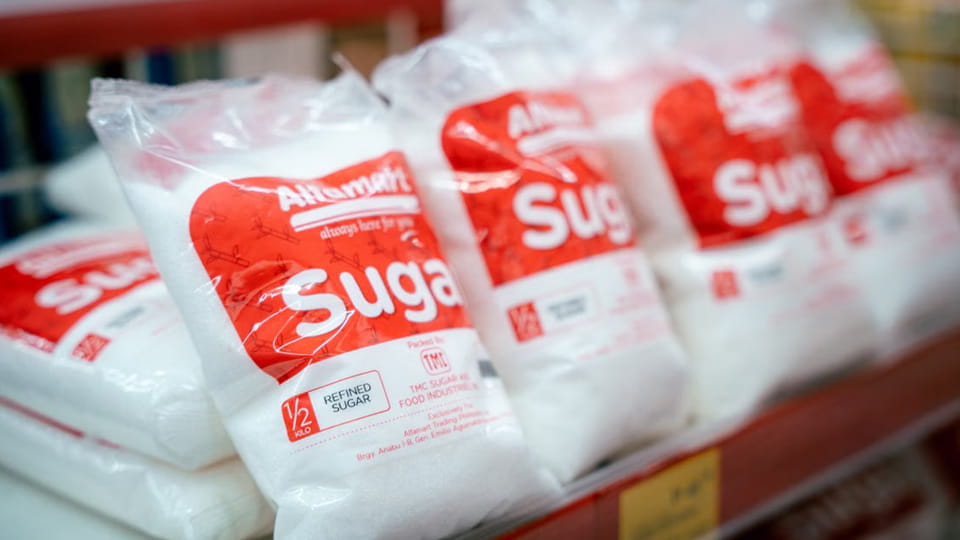
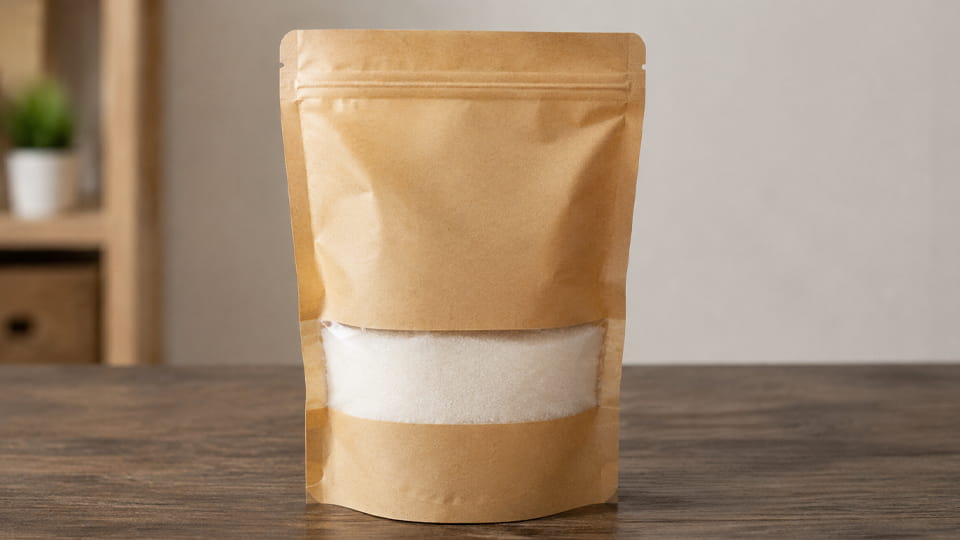
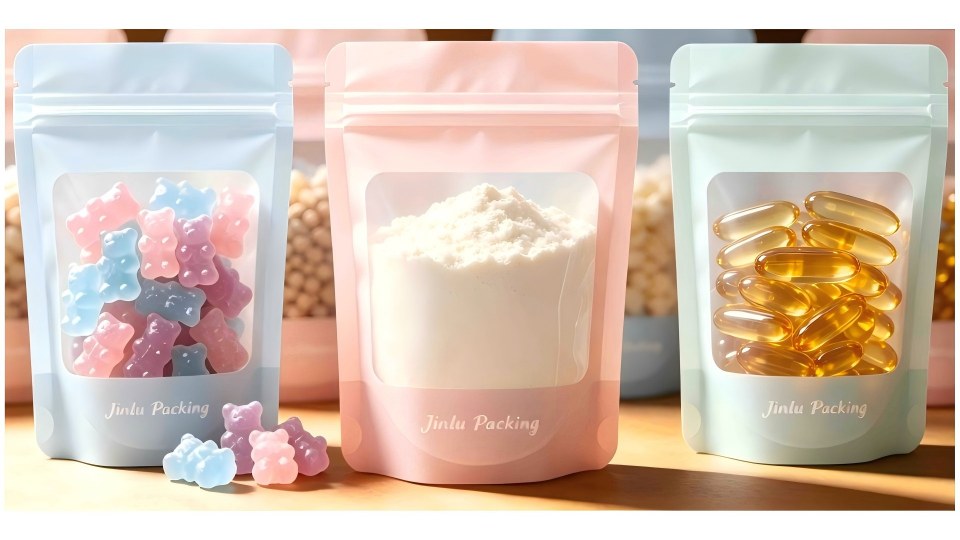
Kantong stand-up (terutama dengan ritsleting yang dapat ditutup kembali) memberikan kenyamanan dan sifat penghalang yang baik. Menurut panduan industri, paket doypack menawarkan kualitas cetak dan opsi tampilan yang tinggi (jendela, warna cerah) yang dapat meningkatkan daya tarik visual produk gula. Tas bantal dan gusset lebih fokus pada efisiensi – tas ini mudah diisi dan disegel dengan kecepatan tinggi.
Kertas masih menjadi pilihan umum untuk gula, terutama curah dan karton:
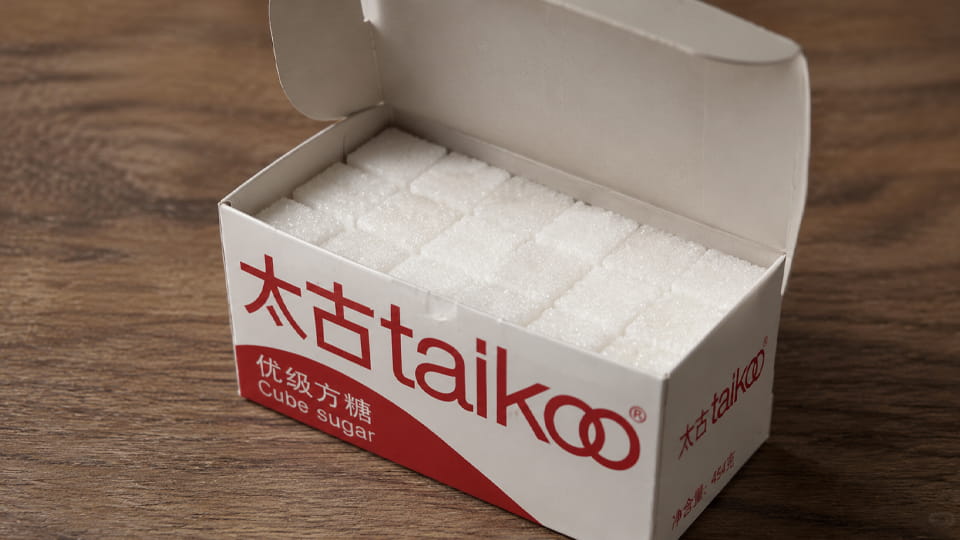
Kertas (kraft atau dilaminasi) bersifat biodegradable dan berbiaya rendah. Ini sering digunakan ketika merek menginginkan citra ramah lingkungan. Pertukarannya: kertas biasa memiliki ketahanan kelembaban yang lebih rendah dibandingkan plastik, jadi gula kelas atas (terutama gula yang lembab atau rawan menggumpal) dapat menggunakan komposit kertas laminasi.
Untuk beberapa produk gula, wadah kaku digunakan:
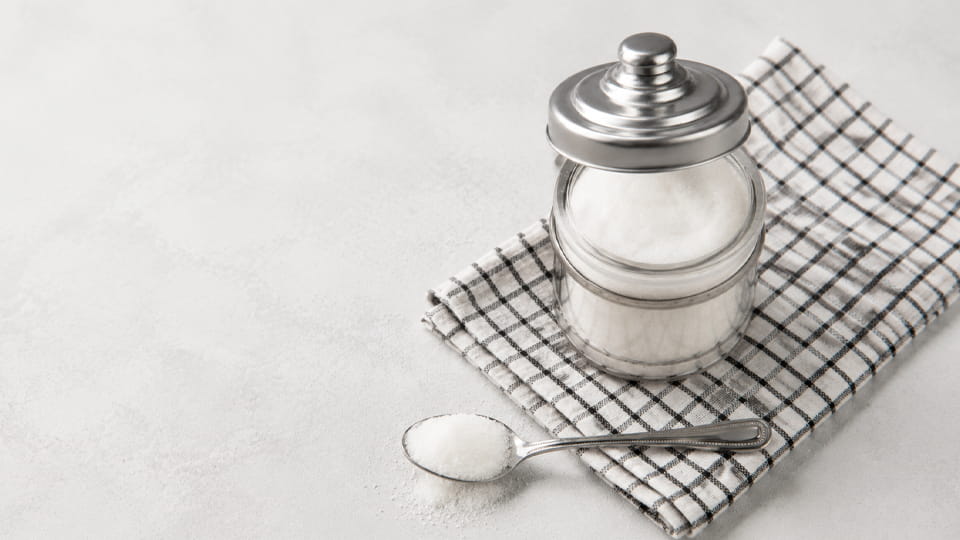
Menggunakan toples atau tabung itu seperti memberi nilai tambah (tampilan produk yang jelas, wadah yang dapat digunakan kembali) dengan biaya lebih tinggi. Mesin pengisi stoples biasanya mencakup pengisi cangkir dan stasiun penutup.
Untuk pabrik, rantai kopi, atau produsen makanan, gula ditangani dalam volume besar:
Pengemasan massal mengutamakan hasil dan kekuatan. Bahannya tugas berat (kertas laminasi polietilen, dll.), dan jalur pengisian formulir atau timbangan tugas berat digunakan.
Memilih bahan yang tepat sama pentingnya dengan gaya kemasannya. Gula khususnya menuntut ketahanan terhadap kelembapan agar tetap mengalir bebas. Bahan umum meliputi:
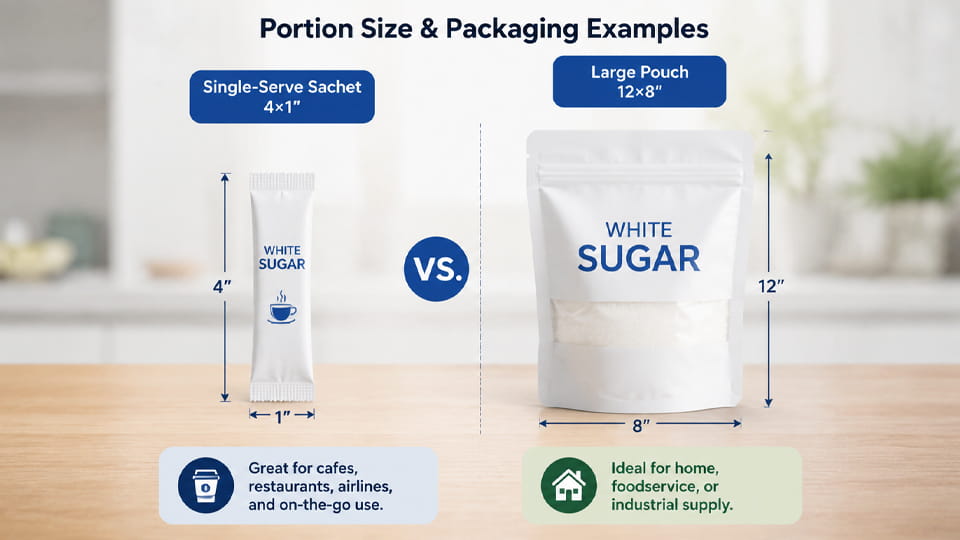
Angka: Contoh ukuran porsi dan kemasan. Sachet gula untuk satu porsi (4×1″, kiri) versus kantong 12×8″ yang lebih besar (Kanan) mengilustrasikan bagaimana format paket berskala dengan kasus penggunaan. Sachet tunggal cocok untuk kafe dan maskapai penerbangan, sementara kantong yang lebih besar cocok untuk keperluan rumah atau industri.
Untuk pilihan yang berkelanjutan, produsen sedang menjajaki film atau kertas karton biodegradable dengan lapisan lembab. Misalnya, tas yang terbuat dari serat tebu (ampas tebu) atau PLA sedang dalam pengembangan, meskipun mereka tetap harus memenuhi kebutuhan gula dalam penyegelan dan penghalang. (Ampas tebu bahkan dapat dibuat menjadi cetakan nampan atau kotak, namun biasanya gula di rak masih membutuhkan lapisan penahan kelembapan).
Poin penting: Sifat penghalang (laju transmisi uap air, laju transmisi oksigen) sangat penting. Penghalang yang buruk dapat menyebabkan penggumpalan atau pembusukan. Itu sebabnya sebagian besar pembungkus gula mengandung setidaknya satu lapisan plastik atau foil.
Memilih format optimal melibatkan pertimbangan produk, kasus penggunaan, dan faktor produksi. Berikut adalah kriteria utamanya:
Dalam praktiknya, itu “format yang benar” seringkali merupakan kompromi. Misalnya, layanan kopi mungkin menggunakan bungkus stik plastik (untuk kebersihan dan profil langsing) bahkan jika bungkus kertas yang dicetak dapat mengurangi penggunaan film, karena slim stick terlihat lebih modern dan tuangnya lebih baik.
Setelah format dipilih, langkah selanjutnya adalah permesinan. Modern garis pengemasan pembentukan otomatis, isian, dan menyegel. Mesin umum untuk gula termasuk:


[jl_youtube src=”https://www.youtube.com/embed/WmcZoucwAz4″]
Akhirnya, beberapa tips untuk pemilihan mesin:
Seperti yang dicatat oleh salah satu pakar Jinlu, yang dimiliki mesin stick-sachet kami Akurasi ±0,02 g dan kontrol yang dapat diprogram untuk memenuhi kebutuhan dosis yang ketat. Fitur-fitur tersebut membantu memastikan setiap paket gula memiliki berat yang tepat dan tersegel dengan benar.
Dalam ringkasan, kemasan gula melibatkan penyeimbangan kebutuhan produk (jenis gula, ukuran porsi) dengan pertimbangan pemasaran dan produksi. Sachet dan stik sekali pakai melayani restoran dan kedai kopi; tas dan kantong fleksibel melayani pelanggan ritel; toples dan karton menambah daya tarik premium; dan tas curah memberi makan lini industri. Kombinasi yang tepat dari format, bahan, dan mesin akan membuat gula Anda mengalir bebas, aman dari kelembapan, dan sesuai merek.
Jika Anda merencanakan lini pengemasan gula, mulailah dengan menguraikan bentuk produk dan pasar Anda. Kemudian pilih format kemasan (bungkusan, tas, dll.) dan bahan yang melindungi gula dan sesuai dengan citra merek Anda. Akhirnya, pilih mesin yang memenuhi kebutuhan kecepatan dan akurasi Anda. Sistem pengemasan otomatis yang modern – mulai dari mesin pengemas stik multi-jalur hingga mesin pengantong VFFS – dapat menangani apa saja mulai dari stik gula seberat 5 gram hingga karung seberat 50 kg secara efisien.
Butuh bantuan dengan peralatan? Hubungi pakar JinLu yang merancang solusi pengemasan gula. Misalnya, mesin VFFS sachet atau stick-pack multi jalur dapat dengan cepat terbentuk, mengisi, dan menyegel ribuan bungkus gula per jam. Insinyur dapat membantu mengukur garis tersebut (pengisi ditambah bagger ditambah kartoner) dan memastikan bahan dan mesin pengemas bekerja sama dengan baik. Dengan hati-hati memilih format dan peralatan pengemasan, kamu akan melakukannya mempermanis rantai pasokan Anda dengan halus, jalur pengemasan gula yang efisien.
Kemasan gula mengacu pada format kemasan, bahan, dan sistem pengisian yang digunakan untuk mengemas produk gula untuk eceran, layanan makanan, dan keperluan industri. Ini mencakup semuanya, mulai dari sachet gula satu porsi dan kemasan stik hingga kantong gula eceran, paket kertas, stoples, dan tas curah. Kemasan gula yang baik harus melindungi produk dari kelembapan, menjaga bobot isian tetap konsisten, mendukung transportasi dan penyimpanan, dan mencocokkan kecepatan produksi jalur pengemasan.
Produk gula yang berbeda seringkali memerlukan format kemasan yang berbeda karena sifat alirannya, ukuran paket, dan penggunaan pasar tidak sama. Contoh umum termasuk gula pasir, gula merah, gula bubuk, gula halus, gula potong dadu, gula merah, dan bubuk jaggery.
Misalnya, gula pasir umumnya dikemas dalam sachet, Paket tongkat, kantong kertas, atau kantong ritel, sementara gula bubuk mungkin memerlukan pengendalian debu yang lebih baik dan perlindungan kelembapan yang lebih kuat. Gula potong dadu sering kali dikemas dalam karton, kotak, stoples, atau paket kubus yang dibungkus.
Tidak ada satu pilihan terbaik untuk setiap produk. Kemasan gula yang tepat bergantung pada bentuk gulanya, ukuran paket, pasar sasaran, kebutuhan penghalang, dan kecepatan produksi.
• Kemasan sachet dan stick adalah pilihan tepat untuk porsi gula tunggal.
• Kantong kertas dan kantong biasa digunakan untuk kemasan eceran gula.
• Stoples dan kaleng dapat digunakan dengan baik untuk gula khusus atau gula bubuk.
• Kantong curah biasanya digunakan untuk aplikasi industri dan manufaktur makanan.
Dalam praktiknya, format terbaik adalah format yang menyeimbangkan perlindungan produk, kompatibilitas mesin, biaya pengemasan, dan kenyamanan pelanggan.
Keduanya merupakan format kemasan fleksibel satu porsi, tapi keduanya tidak persis sama. Sachet gula biasanya berupa bungkusan datar yang disegel pada tiga atau empat sisinya, sedangkan bungkusan tongkat itu sempit, paket seperti tabung disegel memanjang dan di kedua ujungnya. Sachet sering dipilih untuk kemasan gula tradisional yang digunakan di hotel, restoran, dan kafe. Paket stick populer ketika merek menginginkan bentuk yang lebih ramping, pembersih dituangkan ke dalam cangkir, dan tampilan yang lebih modern. Kedua format tersebut banyak digunakan untuk gula yang dikemas dalam porsi kecil.
Bahan kemasan gula yang umum termasuk kertas, polietilen (PE), polipropilena (hal), film plastik laminasi, dan struktur kertas-laminasi. Pilihan pastinya bergantung pada format kemasan dan sensitivitas kelembapan produk.
Misalnya:
• Kantong kertas atau bungkus kertas biasa digunakan untuk gula eceran
• film laminasi banyak digunakan untuk kemasan sachet dan stick
• stoples plastik atau wadah kaku dapat digunakan untuk gula khusus atau gula bubuk
• film multi-lapis sering kali lebih disukai ketika perlindungan kelembaban yang lebih kuat diperlukan untuk kemasan kecil atau pengisian otomatis berkecepatan tinggi
Gula mudah menyerap kelembapan, dan begitu itu terjadi, itu bisa mulai menggumpal, kue, atau kehilangan kemampuan mengalir. Hal ini menimbulkan masalah tidak hanya bagi konsumen, tetapi juga untuk lini pengemasan itu sendiri. Masalah terkait kelembapan dapat memengaruhi keakuratan pengisian, kualitas segel, umur simpan, dan penampilan produk. Inilah sebabnya mengapa kemasan gula biasanya memerlukan keseimbangan kinerja penghalang yang baik, integritas segel, dan kondisi penyimpanan yang sesuai, khusus untuk gula halus, gula merah, dan kemasan bubuk jaggery.
Ya, kemasan gula kertas banyak digunakan, terutama untuk kemasan gula eceran dan beberapa format layanan makanan. Kertas berfungsi dengan baik jika tujuannya adalah pengendalian biaya, presentasi rak yang familiar, dan pencetakan atau branding yang lebih mudah. Namun, kertas saja tidak selalu cukup untuk setiap produk gula. Jika produk sangat sensitif terhadap kelembapan, atau jika saluran berjalan dengan kecepatan tinggi, produsen mungkin lebih memilih struktur laminasi kertas atau kemasan berbasis film yang menawarkan kinerja penyegelan dan penghalang yang lebih baik.
Gula potong dadu sering kali dikemas berbeda dari gula pasir lepas karena gula kubus harus tetap utuh dan rapi. Format kemasan umum mencakup paket kubus yang dibungkus kertas, karton, kotak lipat, stoples yang kaku, dan kontainer ritel kecil. Pilihan terbaik bergantung pada apakah produk tersebut dimaksudkan untuk layanan meja, ritel premium, keramahan, atau penggunaan jasa makanan massal. Pengemasan gula potong dadu harus melindungi gula kubus dari kerusakan namun tetap memungkinkan pengemasan yang efisien dan kemudahan pengeluaran.
Mesin pengemas gula adalah mesin yang digunakan untuk memberi takaran, mengisi, membentuk, dan segel gula ke dalam format paket yang dipilih. Tergantung pada produk dan ukuran kemasan, bisa digunakan untuk sachet, Paket tongkat, kantong, tas ritel, atau tas curah. Mesin pengemas gula pada umumnya mungkin dilengkapi sistem takaran, bagian pengumpanan film, bagian pembentuk tas, sistem penyegelan, dan konveyor pembuangan. Pengaturan mesin yang tepat bergantung pada jenis gula, keluaran yang dibutuhkan, ukuran paket target, dan bahan kemasan yang digunakan.
Cara terbaik memilih mesin pengemas gula adalah memulai dengan lima pertanyaan praktis:
1.Jenis gula apa yang Anda kemas? Gula pasir, gula bubuk, gula merah, gula potong dadu, gula merah, dan bubuk jaggery tidak berperilaku persis sama.
2.Format paket apa yang Anda butuhkan? Sachet, paket tongkat, kantong, Kantong kertas, stoples, atau tas curah.
3.Berapa ukuran paket yang akan Anda jalankan? Sebuah mesin untuk 5 g gula sachet sangat berbeda dengan yang satu 1 kg tas eceran.
4.Output apa yang Anda perlukan per menit atau per jam?
5.Tingkat otomatisasi dan akurasi apa yang Anda butuhkan?
Setelah poin-poin ini jelas, menjadi lebih mudah untuk mencocokkan proyek dengan mesin pengemas gula yang tepat, mesin pengemas gula sachet, mesin pengepakan tongkat, atau jalur pengisian tas.
Referensi:
1.kembang gula gula — Spesialis Farmasi
2.Penggumpalan kristal sukrosa: Pengaruh kadar air dan ukuran kristal — Gerbang Penelitian
3.Pengaruh kondensasi kapiler pada caking sukrosa curah – Sains Langsung
4.Kelembapan dan umur simpan gula-gula – Perpustakaan Kedokteran Nasional