
Di dalam pembuatan tablet, kekerasan Dan kerapuhan adalah dua ukuran kualitas utama. Kekerasan (kekuatan putus) memberi tahu kita seberapa besar tekanan yang dapat diterima tablet sebelum retak. Kerapuhan mengukur seberapa mudah permukaan tablet terkelupas atau terkikis saat terjatuh atau dipegang. Dengan kata lain, pemeriksaan kekerasan kekuatan batin, sambil memeriksa kerapuhan daya tahan permukaan. Kedua sifat tersebut memengaruhi proses hilir – mulai dari cara tablet dikompres hingga cara tablet dilapisi dan akhirnya dikemas. Artikel ini menguraikan mengapa kerapuhan vs kekerasan itu penting, bagaimana masing-masing diuji, dan bagaimana pengaruhnya terhadap kompresi tablet, lapisan, dan kualitas kemasan di lini produksi nyata.
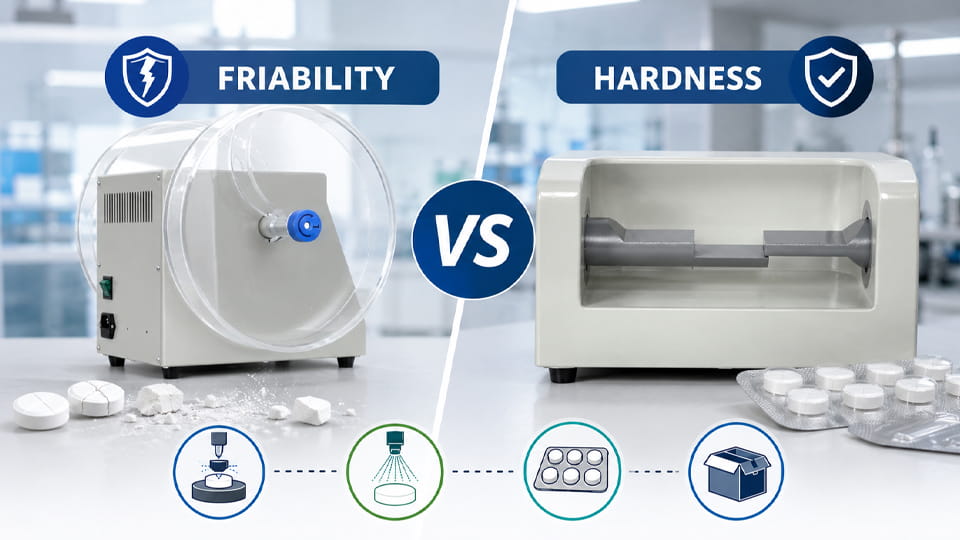
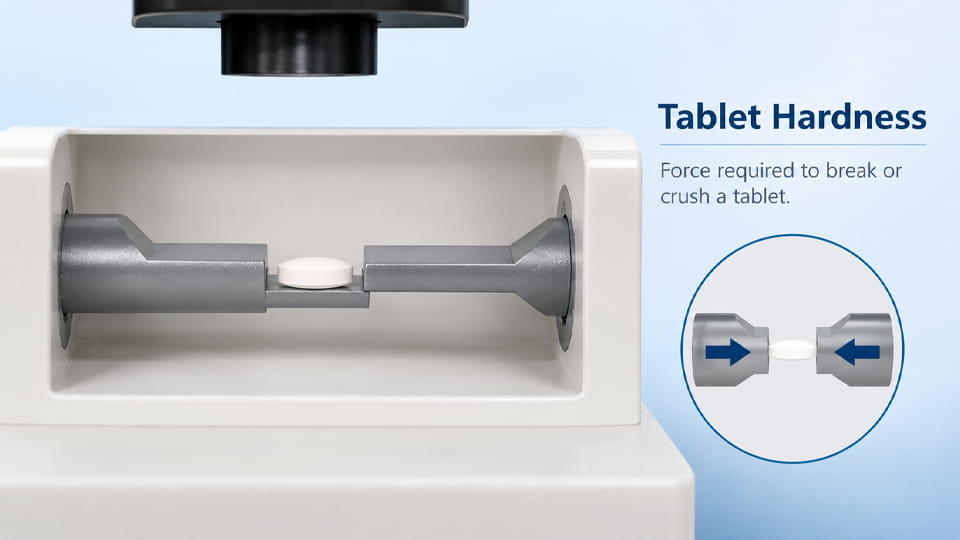
Kekerasan tablet (secara teknis “kekuatan pemecah tablet”) adalah gaya yang diperlukan untuk memecahkan tablet dengan cara kompresi. Dalam praktiknya, Kekerasan diukur dengan menempatkan tablet di antara dua landasan atau pelat dan memberikan tekanan hingga tablet patah. Penguji kekerasan modern (manual atau digital) ukur gaya puncak dalam kilogram atau newton. Kekuatan menghancurkan tablet sangat penting kontrol kualitas: tablet harus cukup kuat untuk menahan penanganan, kemasan, dan pengiriman tanpa putus. AS. dan farmakope Eropa menetapkan metode standar untuk kekerasan (kekuatan putus) pengujian. Beberapa literatur industri lebih menyukai istilah ini “kekuatan pemecah” atas “kekerasan,” karena dalam ilmu material, “kekerasan” biasanya berarti ketahanan terhadap lekukan permukaan, sedangkan pengujian tablet mengukur kekuatan kompresi.
Kekerasan tablet dipengaruhi oleh formulasi dan parameter proses. Lebih tinggi kekuatan kompresi umumnya menghasilkan tablet yang lebih keras, sedangkan faktor formulasi seperti pengikat dan pelumas juga mempengaruhi kekerasan. Misalnya, meningkatkan pengikat (misalnya. PVT atau HPMC) biasanya meningkatkan kekuatan tablet, padahal pelumasnya terlalu banyak (magnesium stearat) dapat melemahkan ikatan antarpartikel. Ukuran tablet, membentuk, dan porositas juga berperan: tablet yang lebih tebal atau lebih padat seringkali membutuhkan lebih banyak tenaga untuk pecah.
Kekerasannya terlalu rendah (di bawah kompresi) menyebabkan tablet retakan, hancur atau terkelupas dengan mudah. Kekerasannya terlalu tinggi, Namun, dapat memiliki kelemahan: tablet yang sangat keras mungkin hancur secara perlahan atau larut terlalu lambat di dalam tubuh. Tablet yang terlalu keras juga bisa demikian sulit bagi pasien untuk menelan. Dengan demikian, desain tablet harus menyeimbangkan kekuatan mekanik dengan kinerja. Dalam praktiknya, produsen menetapkan rentang penerimaan (misalnya. 4–10kg atau lebih) untuk kekuatan putus selama produksi.
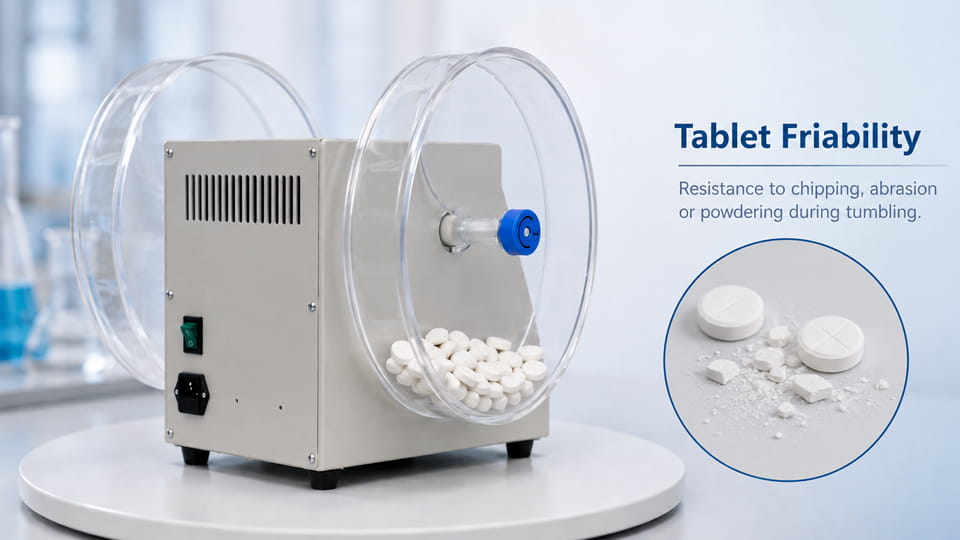
Kerapuhan tablet adalah ukuran seberapa mudah tablet hancur atau kehilangan massa ketika terkena tekanan mekanis, seperti terjatuh atau terbentur. Pengujian kerapuhan melibatkan penempatan tablet yang sudah dihilangkan debunya ke dalam drum yang berputar (Roche rapuh), biasanya pada 25rpm, dan menundukkan mereka 100 revolusi. Setiap putaran menjatuhkan dan menjatuhkan tablet pada ketinggian tertentu untuk menyimulasikan tekanan selama penanganan dan pengangkutan. Setelah tes, tablet dikumpulkan, dan semua debu yang lepas akan hilang. Tablet ditimbang sebelum dan sesudah untuk menentukan persentase penurunan berat badan, yang dilaporkan sebagai kerapuhan. Misalnya, itu USP <1216> dan Ph.Eur. monografi menjelaskan prosedur ini.
Semakin rendah kerapuhannya, semakin tahan tablet tersebut terhadap abrasi atau chipping. Batas kerapuhan yang dapat diterima adalah secara konvensional ≤1,0% penurunan berat badan. Tablet yang kehilangan lebih dari ambang batas ini, atau yang terlihat retak atau pecah selama pengujian, gagal dalam kriteria kerapuhan. Kerapuhan tablet secara khusus ditujukan ketahanan pasca kompresi – ini mensimulasikan tekanan fisik yang dihadapi tablet dalam panci pelapis, konveyor, pengisi botol, garis melepuh, dan pengemasan. Kerapuhan yang tinggi diwujudkan dalam bentuk chip pada bagian tepi tablet, retakan yang terlihat, atau debu berlebih. Kerapuhan dengan demikian merupakan atribut kualitas yang terkait erat dengan ketahanan pengemasan dan penanganan.
Tes-tes ini terdengar serupa tetapi menyelidiki tekanan yang berbeda. Secara sederhana:
Bayangkan dua tablet: satu diuji di 20 kp (kilopond) kekuatan penghancur (sangat keras) dan satu di 5 kp (lembut). Anda mungkin berpikir 20 tablet kP tidak bisa dihancurkan, tetapi jika ujung-ujungnya rapuh, ia masih bisa kehilangan 2–3% massa dalam drum kerapuhan – dua kali lipat dari batas yang dapat diterima. Dalam praktiknya, sebuah tablet bisa “sangat keras—membutuhkan kekuatan besar untuk menghancurkannya—namun ternyata rapuh.”. Ini menunjukkan alasannya keduanya tes diperlukan. Tabel di bawah merangkum perbedaannya:
Pendeknya: kekerasan menolak penumpasan, sementara kerapuhan menolak chipping. Desain tablet yang kokoh menyeimbangkan keduanya: ia harus bertahan dari mesin press dan mesin tanpa berdebu, namun masih larut dengan baik.
| Parameter | Kekerasan Tablet (Kekuatan Pemecah) | Kerapuhan Tablet |
|---|---|---|
| Apa yang Diukurnya | Ketahanan terhadap satu gaya yang diterapkan (kompresi atau ketegangan) menyebabkan patah tulang | Ketahanan terhadap abrasi berulang, dampak, dan chipping (penurunan berat badan saat terjatuh) |
| Tipe Stres Khas | Beban tekan besar satu kali atau beban lentur tiga titik sampai terjadi keruntuhan | Beberapa kali terjatuh/jatuh (biasanya 100 rotasi) simulasi penanganan guncangan |
| Tujuan Utama | Evaluasi kekuatan putus tablet (ketahanan formulasi di bawah kompresi) | Evaluasi daya tahan selama pengangkutan, lapisan, dan pengemasan |
| Hasil Tes | Nilai kekuatan putus (misalnya. dalam Newton atau kp) | Persen penurunan berat badan setelah tes (dan inspeksi visual terhadap kerusakan) |
| Tautan ke Kualitas | Menetapkan parameter kompresi; memastikan tablet tidak retak jika dipaksakan | Menetapkan pengaturan jalur pengemasan; memastikan tablet bertahan dalam pelapisan/pengangkutan |
| Dapat Diganti dengan Tes Lainnya? | TIDAK. Stres yang berbeda; memerlukan pengukurannya sendiri. | TIDAK. Alasan pengujian yang berbeda; tidak dapat menggantikan uji kekerasan. |
Tabel di atas menyoroti hal itu kekerasan dan kerapuhan mengukur aspek yang berbeda. Kekerasan (kekuatan putus) adalah tes stres satu kali, sedangkan uji kerapuhan mengulangi guncangan tingkat rendah. Penting, sebuah tablet bisa keras namun rapuh atau sebaliknya. Misalnya, tablet dengan kekuatan putus yang tinggi mungkin masih gagal dalam uji kerapuhan jika ujung-ujungnya mudah terkelupas atau jika ikatan bagian dalamnya tidak rata. Pendeknya, kekerasan dan kerapuhan saling berkaitan namun tidak dapat dipertukarkan – keduanya harus dievaluasi.
Penguji kekerasan tablet menerapkan gaya terkontrol pada satu tablet hingga tablet tersebut patah. Dalam penguji tipikal, dua landasan datar (piring) pegang tablet – satu stasioner, satu bergerak. Penguji mencatat gaya saat putus. Penguji manual (berbasis musim semi seperti Monsanto) dan penguji digital modern (dengan sel beban dan pembacaan elektronik) adalah hal yang umum. Penguji elektronik memberikan hasil yang tepat, pengukuran berulang dan sering kali mengukur diameter dan ketebalan secara bersamaan. Selama pengujian, faktor seperti orientasi tablet (untuk tablet berwajah datar) atau perlengkapan khusus (untuk bentuk yang tidak biasa) dikontrol dengan hati-hati untuk memastikan hasil yang konsisten. Kekuatan putus yang diukur menginformasikan pengendalian kualitas: batch diterima hanya jika kekerasan berada dalam kisaran yang ditentukan untuk formulasi tersebut.
A rapuh atau penguji kerapuhan memasukkan sampel tablet ke dalam drum transparan untuk mensimulasikan penanganan. Langkah-langkah penting (per USP/Ph.Eur.) adalah: 1. Bersihkan debu dan timbang sampel tablet (misalnya. 6.5 g atau 10 tablet). 2. Tempatkan tablet dalam drum berputar dengan tab pengangkat di dalamnya. 3. Putar pada 25rpm untuk 100 revolusi (4 menit). 4. Hapus tablet, menghilangkan debu lepas, menimbang kembali. 5. Menghitung % penurunan berat badan: .
Jika tablet apa pun retak atau pecah setelah terjatuh, batch segera gagal. Jika tidak, jika penurunan berat badan total >1%, tes diulangi dalam rangkap tiga dan rata-rata digunakan. Dalam praktiknya, tablet yang lewat menunjukkan sedikit serpihan atau debu. Hasil kerapuhan memandu keputusan sebelum pelapisan dan pengemasan: kerugian yang tinggi mendorong reformulasi atau perubahan proses.
Metode pengujian mengasumsikan tablet tidak dilapisi. Tablet bersalut juga dapat diuji, tetapi seringkali kerapuhannya lebih rendah karena cangkangnya. Sebaliknya, tablet effervescent atau tablet berpori tinggi mungkin memerlukan kontrol kelembapan khusus selama pengujian. Bentuk dan ukuran tablet mempengaruhi perilaku jatuh; untuk bentuk tidak beraturan, dasar drum dapat dimiringkan ~10° untuk memastikan gerakan acak. Dalam semua kasus, standar kompendial (USP, Ph.Eur.) menentukan peralatan dan prosedur. Praktek laboratorium modern juga memeriksa kalibrasi alat uji kekerasan dan kerapuhan dan menjalankan QC dengan tablet referensi standar secara teratur.
Kedua sifat tersebut bergantung pada formulasi dan pemrosesan. Faktor kuncinya meliputi jenis/konsentrasi pengikat, kekuatan kompresi, dan bentuk tablet. Misalnya:
Karena begitu banyak variabel yang penting, produsen menetapkan rentang target, bukan nilai tunggal. Ada tidak ada kekerasan “sempurna” yang universal; itu tergantung pada produknya bentuk sediaan, penggunaan yang dimaksudkan, dan pengemasan. Vitamin kunyah dan a berlapis film obat penghilang rasa sakit mungkin memiliki tingkat kekerasan optimal yang sangat berbeda, meskipun beratnya sama.
Tahap kompresi pada mesin press tablet sangat menentukan kekerasan. Dalam praktiknya:

Pendeknya, mengoptimalkan parameter dan formulasi kompresi sangat penting. Seperti yang dicatat dalam panduan pemecahan masalah JinluPacking, “jika tablet terlalu lunak, mereka mungkin terkelupas, merusak, atau menunjukkan kerapuhan yang tinggi. Jika terlalu keras, mereka mungkin menolak pelapisan atau larut secara perlahan.”. Dengan menyetel gaya kompresi dan konten pengikat, produsen dapat menargetkan tablet yang tahan terhadap tekanan proses tanpa melampaui batas kekerasan.
Lapisan tablet (film atau lapisan gula) sangat sensitif terhadap kekuatan tablet inti. Selama pelapisan, tablet jatuh ke dalam panci berputar dan menyemprotkan larutan ke atasnya. Penggulingan ini menimbulkan tekanan mekanis dan kelembapan. Inilah bagaimana kekerasan dan kerapuhan berperan:
Setelah tablet ditekan dan dilapisi, mereka pindah ke garis pengemasan – mesin melepuh, kartoner, atau jalur pengisian botol. Kekuatan tablet juga penting di sini:

Untuk mencapai tablet berkualitas tinggi yang memenuhi tuntutan pelapisan dan pengemasan, ingatlah poin-poin ini:
Dalam praktiknya, tujuannya adalah tablet itu “cukup keras untuk bertahan dalam penanganan tetapi tidak terlalu keras sehingga gagal dalam uji disolusi.”. Banyak produsen memetakan kekuatan kompresi, kekerasan, dan kerapuhan secara real time untuk melihat tren sejak dini (Misalnya, penyimpangan kekerasan yang tiba-tiba mungkin menandakan perubahan umpan bubuk atau kelembapan).
Dalam ringkasan, kekerasan dan kerapuhan adalah dua sisi mata uang yang sama untuk kualitas tablet. Kekerasan memastikan kekuatan inti tablet saat dikompresi, sedangkan kerapuhan mengukur ketahanan permukaan terhadap abrasi. Seimbang dengan benar, mereka menjamin bahwa tablet dapat melewati wadah pelapis dan mesin pengemas tanpa terkelupas atau pecah. Tablet yang terlalu lunak akan menimbulkan debu dan cacat lapisan, sedangkan tablet yang terlalu keras dapat menolak larutan pelapis atau memberikan pengalaman buruk bagi pasien.
Untuk produsen farmasi dan insinyur pengemasan, memperhatikan kedua tes itu sangat penting. Pastikan untuk mengintegrasikan pengujian kerapuhan dan kekerasan ke dalam pos pemeriksaan kualitas Anda, dan sesuaikan formulasi/kompresi sesuai kebutuhan. Dengan melakukannya, Anda akan meminimalkan penolakan yang mahal dan memastikan kelancaran pengoperasian Anda garis pengepakan melepuh, mesin karton, atau jalur pembotolan.
Siap mengoptimalkan lini produksi dan pengemasan tablet Anda? Tim JinluPacking memiliki pengalaman puluhan tahun dalam kompresi dan pengemasan farmasi. Apakah Anda memerlukan a pers tablet berkecepatan tinggi, deduster, atau solusi kemasan blister khusus, kami dapat membantu memastikan tablet Anda tetap utuh dari mesin cetak hingga pasien. Hubungi kami untuk mendiskusikan bagaimana mesin dan keahlian kami dapat mendukung tujuan produksi Anda.
TIDAK. Kekerasan (kekuatan putus) mengukur gaya yang dibutuhkan untuk mematahkan tablet di bawah beban tunggal. Kerapuhan mengukur ketahanan tablet terhadap abrasi berulang, dinyatakan sebagai % penurunan berat badan dalam tes drum. Mereka menilai properti yang berbeda.
Ya. Sebuah tablet mungkin memiliki kekuatan putus yang tinggi (keras) namun masih terkelupas pada bagian tepinya jika ikatan partikelnya buruk. Tablet seperti itu mudah pecah jika terjatuh, menghasilkan kerapuhan yang tinggi. Sebaliknya, tablet dengan kekerasan sedang dapat melewati kerapuhan jika bentuknya kuat. Oleh karena itu kedua tes tersebut diperlukan.
Standar industri yang umum adalah penurunan berat ≤1,0% setelah pengujian kerapuhan. Banyak produsen menetapkan 0,5–1% sebagai spesifikasi tablet biasa. Beberapa produk (misalnya. tablet yang sangat besar atau tidak biasa) mungkin mempunyai kriteria khusus, Tetapi 1% adalah pedoman yang khas.
Kekerasan dapat mempengaruhi pembubaran secara signifikan. Tablet yang terlalu keras mungkin akan hancur secara perlahan, menunda pelepasan obat. Uji regulasi menunjukkan tablet itu sangat keras (dikompresi dengan kekuatan tinggi) dapat berada di luar spesifikasi pelarutan karena matriks tablet terlalu rapat. Sebaliknya, tablet yang sangat lunak mungkin cepat hancur tetapi bisa pecah sebelum waktunya. Kekerasan optimal memastikan disintegrasi tepat waktu tanpa kerusakan.
Penyebab umum termasuk kurangnya bahan pengikat, kelembaban granulasi yang tidak tepat, kompresi yang tidak memadai, pelumas berlebih, dan eksipien rapuh. Misalnya, tablet dengan bahan pengikat yang terlalu sedikit atau butiran yang terlalu kering cenderung lebih gembur. Solusi tipikal adalah menyesuaikan formulasinya (misalnya. pengikat yang lebih efektif) atau mengoptimalkan proses granulasi dan pengeringan basah.
Tidak selalu. Kompresi yang lebih tinggi umumnya meningkatkan kekerasan dan pada awalnya dapat mengurangi kerapuhan, tapi itu ada batasnya. Kekuatan yang berlebihan dapat menyebabkan pembatasan, laminasi atau perubahan disolusi. Juga, jika formulasinya salah (misalnya. pengikatan yang buruk), menaikkan tekanan saja tidak akan menyelesaikan masalah kerapuhan. Yang terbaik adalah mengoptimalkan formulasi dan kekuatan secara bersamaan.
Karena mereka mengatasi tekanan mekanis yang berbeda. Kekerasan memastikan tablet dapat bertahan terhadap satu kekuatan penghancuran (penting untuk kompresi dan pemotongan), sementara kerapuhan memastikannya dapat bertahan dari benturan berulang kali (penting untuk pelapisan, penanganan, dan pengemasan). Hanya dengan mengevaluasi keduanya, produsen dapat yakin bahwa tablet akan menjaga integritas di seluruh rantai produksi dan pengiriman.
Desain peralatan sangat penting. Misalnya, pembuat karton berkecepatan tinggi menggunakan sensor dan saluran empuk untuk memperlambat tablet dengan lembut (mencegah kerusakan akibat benturan). Konveyor vakum dengan tikungan halus mengurangi guncangan. Jalur pembotolan sering kali memiliki tabung fleksibel dan transisi yang lambat. Sistem penanganan tablet yang dirancang dengan baik mengurangi getaran, tetes, dan gesekan, secara langsung menurunkan kerusakan dan pembentukan debu.
Referensi:
1.Pengujian kekerasan tablet ——Wikipedia
2.SAYA 4 Lampiran QB 9 Kerapuhan tablet – Pedoman ilmiah —— Badan Obat Eropa
3.Lampiran Q4B 9: Bab Umum Kerapuhan Tablet -- KITA. Badan Pengawas Obat dan Makanan
4.Ketergantungan Kerapuhan pada Sifat Mekanik Tablet dan Pendekatan Prediktif untuk Campuran Biner —— Pakar@Minnesota
5.Pengaruh kelembaban dan kekuatan penghancuran pada kerapuhan tablet dan disolusi in vitro —— Perpustakaan Daring Wiley