
پوشش های قرص (آبی یا فیلم حلال, لایه های روده ای یا قندی) محافظت از داروها و بهبود ظاهر. یک لایه یکنواخت باعث می شود قرص ها راحت تر بلع شوند و انتشار دارو را کنترل می کنند. اما خرابی پوشش - عیوب ظاهری جزئی - می تواند مشکلات بزرگی ایجاد کند: انتشار ناپایدار دارو, رد دسته ای, هزینه اضافی. به عنوان مثال, یک دارای پوشش روده ای قرص با ترک می تواند حساس به اسید را آزاد کند API خیلی زود, در حالی که فقیر پوشش فیلم ضخامت می تواند پروفایل های رهاسازی را تغییر دهد. عیوب رایج پوشش قرص در درجه اول است لوازم آرایشی (ظاهر سطحی) اما برخی از آنها کاربردی هستند (به عنوان مثال. سوراخ های پین در پوشش های با رهش اصلاح شده).
نقص زمانی بوجود می آید که قطرات پخش نمی شوند و به درستی خشک می شوند, یا زمانی که چسبندگی فیلم از بین می رود. به طور کلی, مشکلات پوشش تبلت ناشی از سه منبع: فرمولاسیون فیلم (نوع پلیمر اشتباه یا نرم کننده کم), تنظیمات فرآیند (میزان اسپری, دمای هوا, سرعت تابه), و هسته های تبلت (متخلخل, قرص های نرم یا نامنظم). به عنوان مثال, یک فیلم با نرم کننده بسیار کمی ترک می خورد, در حالی که زیاده روی باعث چسبندگی می شود. خبر خوب: اکثر عیوب با تنظیم پارامترهای تجهیزات و فرمولاسیون قابل پیشگیری هستند.
اتوماتیک مدرن دستگاه های پوشش تبلت (روکش های تابه ای سوراخ دار) برای اطمینان از خشک شدن یکنواخت و چرخش ملایم از جریان هوای آرام و تفنگ های اسپری دقیق استفاده کنید. روکش پرسرعت JinLu, برای مثال, دارای یک سیستم هوای گرم با جریان آرام است که گرما را یکنواخت از طریق دیواره درام توزیع می کند, به حداقل رساندن گرادیان دما (یک پوشش خشک ناهموار باعث چسبندگی می شود, چیدن, پوست پرتقال یا تاول).
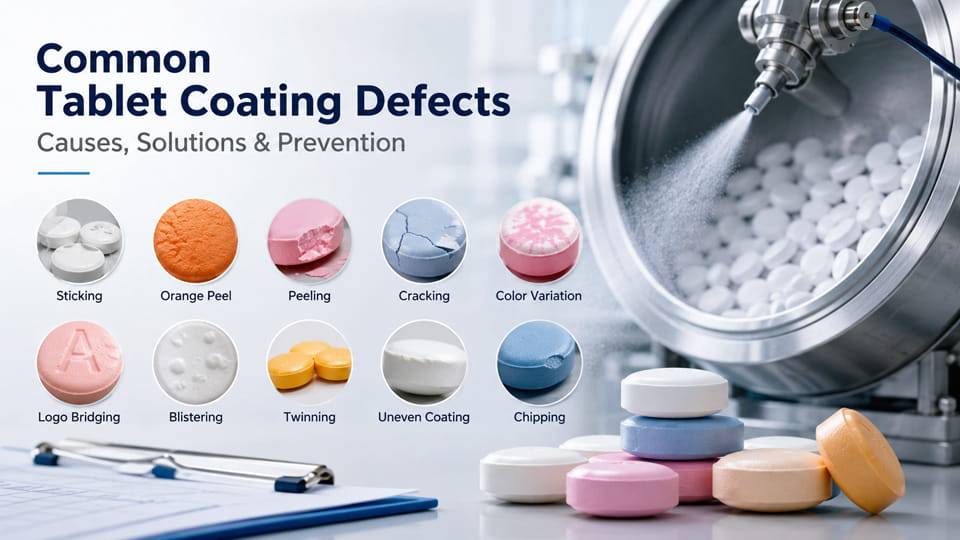
ایرادات پوشش تبلت وجود دارد نقص های نامطلوب در لایه بیرونی فیلم پس از پوشش. آنها شامل نقص های مکانیکی هستند (ترک ها, چیپس, پوست می کند) و نقص بصری (بافت پوست پرتقال, خال خال, تنوع رنگ, لوگوهای تار). این نقص ها کیفیت را به خطر می اندازد: حتی اگر محتوای دارو خوب باشد, یک قرص لکه دار یا آسیب دیده غیرحرفه ای به نظر می رسد و ممکن است توسط بازرسان رد شود. همه عیوب صرفاً نقص های زیبایی - عملکردی نیستند (به عنوان مثال. سوراخ های سوزنی, مانع رطوبت ضعیف, یا پوشش روده شکسته) می تواند انتشار یا ثبات دارو را تغییر دهد.
کارشناسان عیوب پوشش را در دسته بندی طبقه بندی می کنند: Jinlupacking آنها را به تقسیم می کند مکانیکی (به عنوان مثال. ترک خوردن, بریدگی به دلیل شکننده بودن فیلم), بصری (پوست پرتقال, برگرفته از مسائل فرمولاسیون), ناشی از فرآیند (چسبیدن, دوقلو شدن ناشی از فیلم چسبناک), و کاربردی (سوراخها یا پوششهای ناقصی که بر ترشح دارو تأثیر میگذارند). به زبان ساده, هر زمانی که پوشش به طور کامل و یکنواخت بستر قرص را تحت شرایط انتخاب شده پوشش ندهد, یک نقص می تواند منجر شود.
عیوب پوشش زمانی ایجاد می شود که متغیرهای کلیدی از مشخصات خارج شده باشند. چهار عامل اصلی هستند:
در عمل, یک نقص اغلب دلایل متعددی دارد. به عنوان مثال, پوست پرتقال زمانی اتفاق میافتد که قطرات خیلی سریع روی سطح تبلت خشک میشوند - که میتواند از هوای ورودی خیلی داغ باشد و/یا سرعت پاشش خیلی بالا و/یا فرمول خیلی چسبناک. بنابراین اقدامات پیشگیرانه باید روند را به طور کلی بررسی کند, و همچنین فرمولاسیون.
حتی با یک فرآیند پوشش تبلت به خوبی طراحی شده و پیشرفته تجهیزات پوشش دارویی, مشکلات پوشش هنوز می تواند در طول تولید رخ دهد. در اکثر موارد, این مسائل ناشی از یک عامل واحد نیست. کیفیت پوشش نهایی به چندین متغیر بستگی دارد, از جمله ویژگی های هسته تبلت, مواد پوشش قرص, پارامترهای اسپری, شرایط خشک شدن, و عملکرد دستگاه پوشش تبلت.
درک علت اصلی هر نقص، کلید بهبود قوام پوشش و کاهش دسته های رد شده است..
در زیر برخی از رایج ترین عیوب پوشش قرص در تولید دارو و راه های عملی برای رفع آنها آورده شده است..
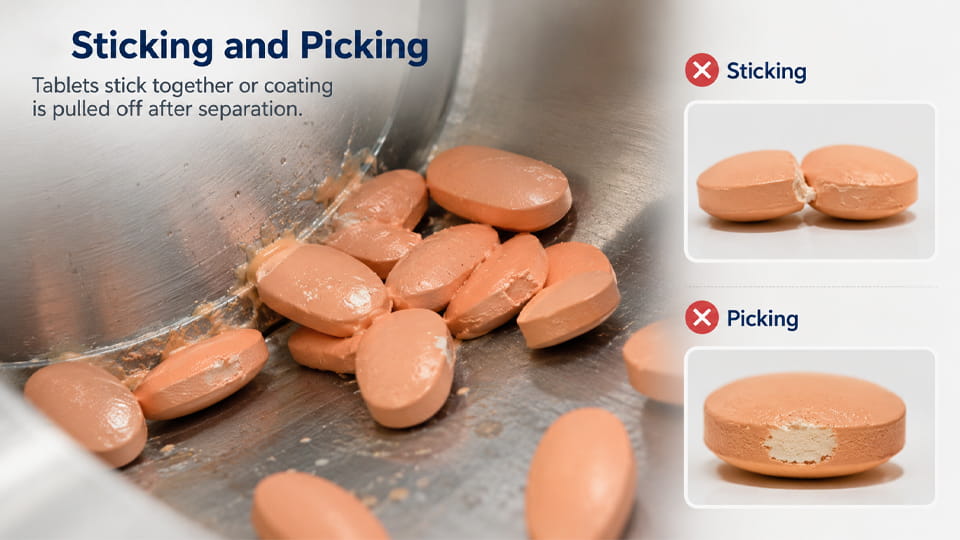
چسباندن و چیدن یکی از شایع ترین مشکلات پوشش قرص است, به ویژه در طول فرآیندهای پوشش فیلم.
چسبیدن زمانی اتفاق می افتد که تبلت ها به یکدیگر متصل شوند, تابه پوشش, یا سایر سطوح ماشین در طول فرآیند پوشش. چیدن زمانی رخ می دهد که بخشی از لایه پوشش قرص پس از جدا شدن از سطح قرص جدا شود.
این نقص می تواند به طور جدی ظاهر تبلت را تحت تأثیر قرار دهد و ممکن است منجر به کیفیت محصول ناسازگار شود.
علل رایج:
راه حل های عملی:
برای حل مشکلات چسبیدن و چیدن, تولیدکنندگان ابتدا باید تعادل بین سمپاشی و خشک کردن را بررسی کنند.
بهبودهای احتمالی شامل:
یک دستگاه روکش قرص که به درستی بهینه شده است باید یک رابطه پایدار بین کاربرد اسپری و راندمان خشک کردن حفظ کند.
اثر پوست پرتقال یک نقص رایج پوشش فیلم است که در آن قرص ها زبری ایجاد می کنند, سطح ناهموار به جای ظاهر صاف و براق.
این نام از بافت سطح می آید, که شبیه پوست پرتقال است.
این نقص عمدتاً مربوط به پخش ضعیف محلول پوشش قبل از خشک شدن کامل قطرات است.
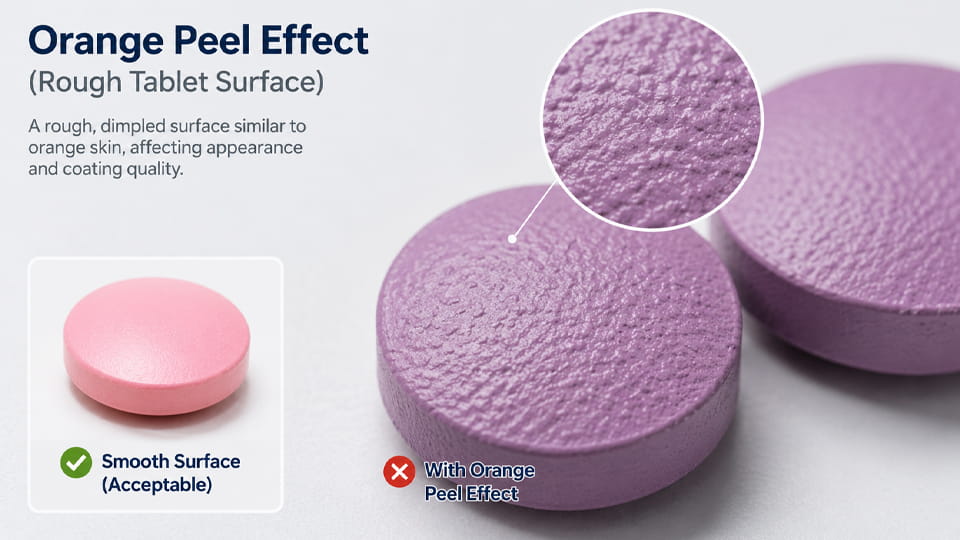
علل رایج:
راه حل های عملی:
تولید کنندگان می توانند کیفیت سطح را با:
برای محصولاتی که به ظاهر باکیفیت نیاز دارند, مانند داروهای مارک دار یا ممتاز قرص های مغذی, جلوگیری از نقص پوست پرتقال بسیار مهم است.
لایه برداری زمانی رخ می دهد که لایه پوششی از هسته قرص جدا شود. در موارد شدید, تکه های پوشش ممکن است از سطح جدا شوند.
این مشکل می تواند نه تنها ظاهر، بلکه عملکرد محافظتی پوشش را نیز تحت تأثیر قرار دهد.
به عنوان مثال, قرصهای روکشدار رودهای متکی به یک لایه پوششی مداوم و پایدار برای محافظت از ماده فعال در برابر اسید معده هستند.. هر گونه آسیب به فیلم پوشش ممکن است بر عملکرد محصول تأثیر بگذارد.
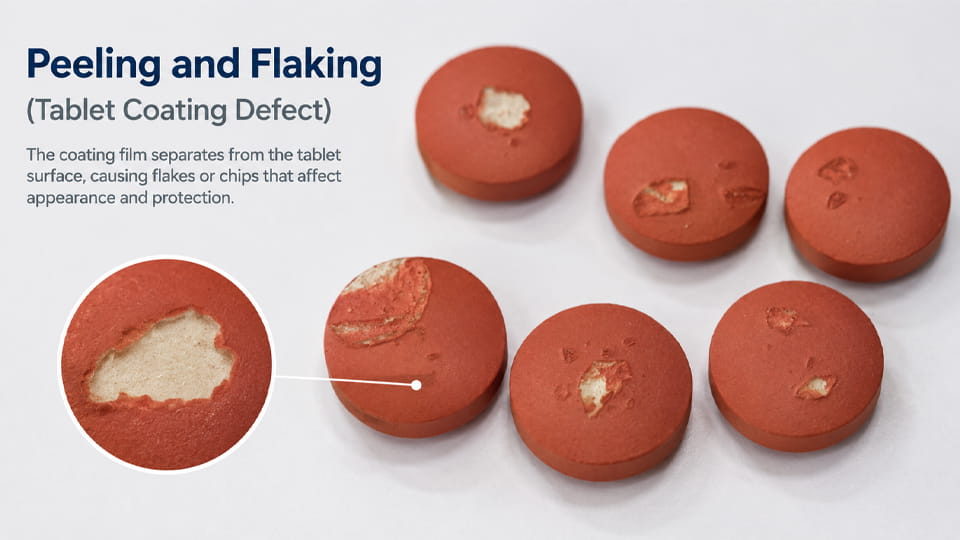
علل رایج:
راه حل های عملی:
برای کاهش مشکلات لایه برداری:
یک فرمول پوشش پایدار همراه با کنترل دقیق فرآیند می تواند به طور قابل توجهی چسبندگی فیلم را بهبود بخشد.
ترک خوردگی زمانی اتفاق می افتد که تنش داخل لایه پوششی از استحکام فیلم بیشتر شود.
معمولاً به صورت ترک های قابل مشاهده روی سطح تبلت ظاهر می شود, به خصوص در اطراف لبه های تبلت یا آرم.
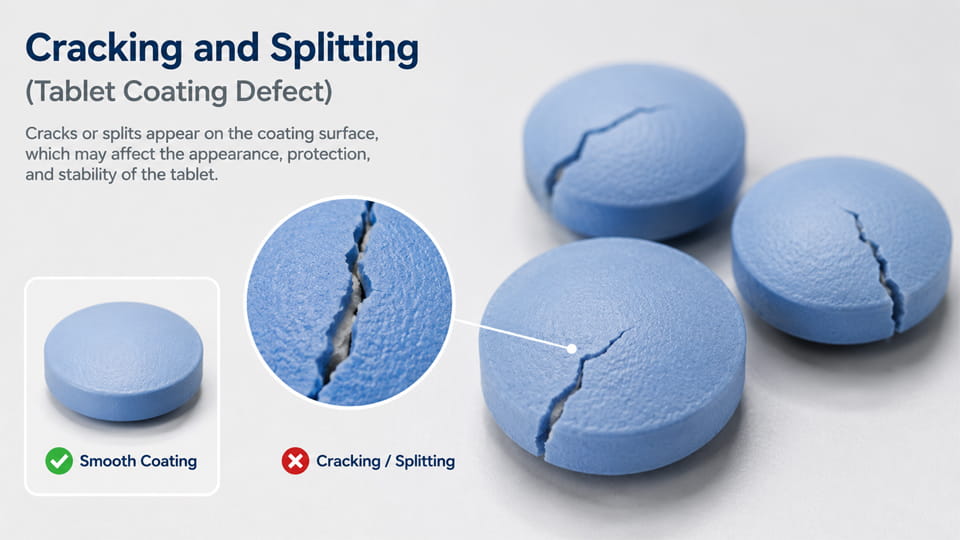
علل رایج:
راه حل های عملی:
تولید کنندگان می توانند ترک خوردگی را کاهش دهند:
برای تولید در حجم بالا, حفظ انعطاف پذیری پوشش برای جلوگیری از تغییرات دسته ای ضروری است.
تنوع رنگ یک مشکل رایج برای قرص های پوشش داده شده با فیلم رنگی است قرص روکش قندی محصولات.
زمانی ظاهر میشود که قرصهایی از همان دسته، شدت رنگ ناسازگار یا توزیع پوشش ناهموار را نشان میدهند..
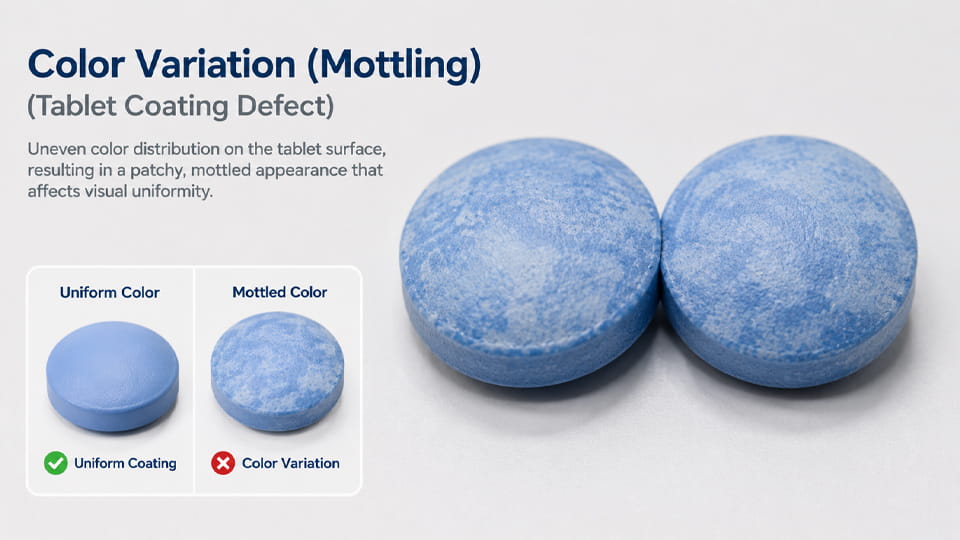
علل رایج:
راه حل های عملی:
برای بهبود قوام رنگ:
برای تولیدکنندگانی که داروهای قابل شناسایی بصری تولید می کنند, رنگ ثابت یک نیاز کیفیت مهم است.
بسیاری از قرص های دارویی حاوی آرم هستند, نامه ها, یا خطوط امتیاز. در طول پوشش, این جزئیات ممکن است به دلیل تجمع بیش از حد پوشش نامشخص شود.
این مشکل به عنوان پل زدن یا پر کردن لوگو شناخته می شود.
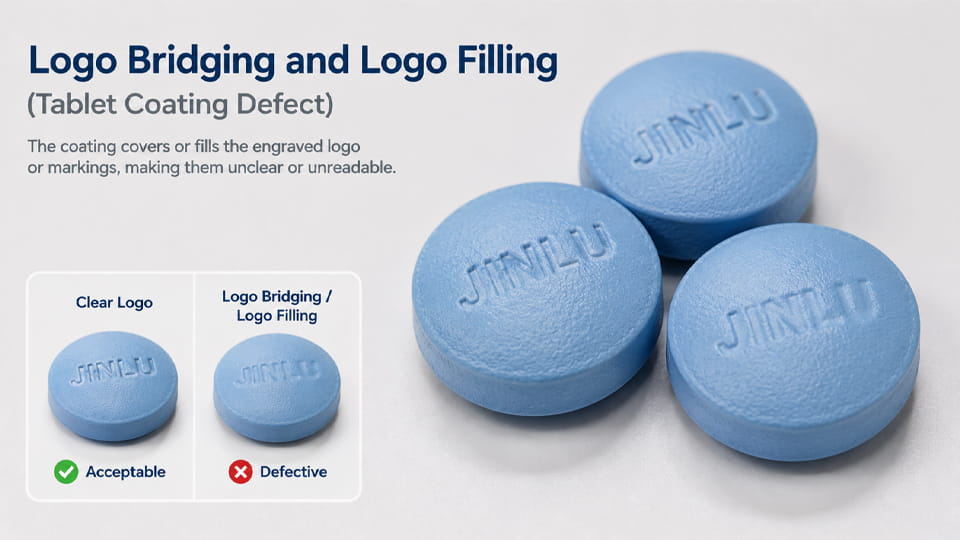
علل رایج:
راه حل های عملی:
تولیدکنندگان میتوانند از پل زدن لوگو جلوگیری کنند:
این امر به ویژه برای تبلت های مارک دار که علائم شناسایی باید واضح باقی بمانند، بسیار مهم است.
تاول زمانی اتفاق میافتد که لایه پوششی از سطح قرص جدا شده و حبابهای کوچک یا نواحی برجسته ایجاد کند..
این معمولاً به این دلیل اتفاق می افتد که رطوبت یا هوا در زیر لایه پوشش محبوس می شود.
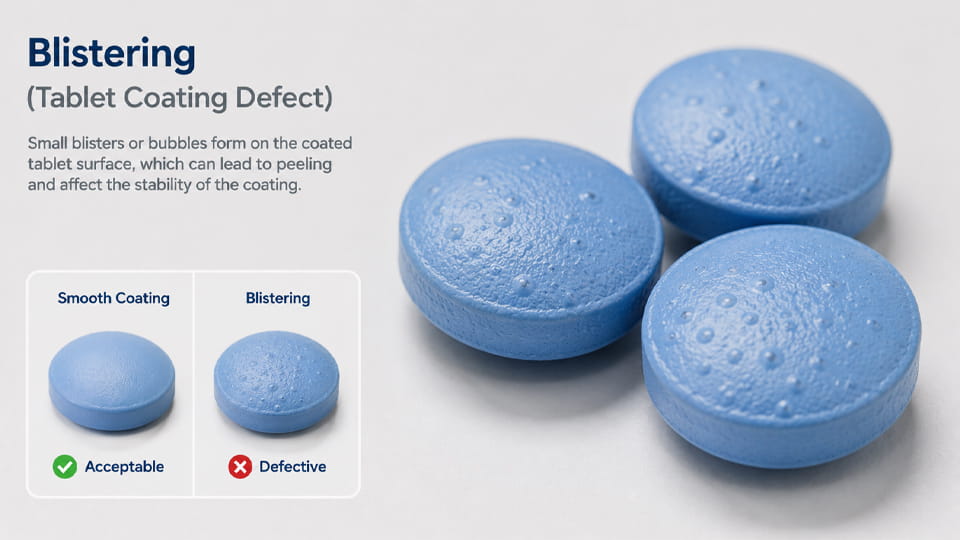
علل رایج:
راه حل های عملی:
بهبودهای احتمالی شامل:
کنترل دقیق فرآیند خشک کردن برای تولید قرصهای پوششدار پایدار ضروری است.
دوقلوسازی به چسبیدن دو یا چند قرص در طول فرآیند پوشش اشاره دارد.
این نقص باعث افزایش ضایعات تولید شده و می تواند کارایی بسته بندی را کاهش دهد.
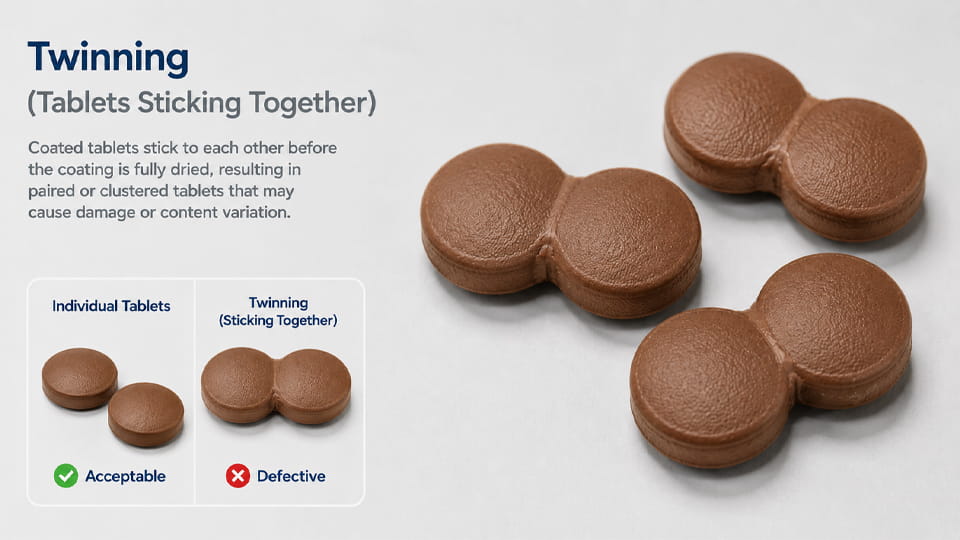
علل رایج:
راه حل های عملی:
برای جلوگیری از دوقلوزایی:
جابجایی صحیح تبلت یکی از مهم ترین عوامل جلوگیری از تماس طولانی مدت تبلت ها با یکدیگر است.
ضخامت پوشش یکنواخت برای عملکرد دارویی بسیار مهم است, به ویژه برای قرص های دارای پوشش روده و محصولات با رهش کنترل شده.
پوشش ناهموار ممکن است باعث ایجاد تفاوت در ظاهر شود, ثبات, یا عملکرد رهاسازی دارو.
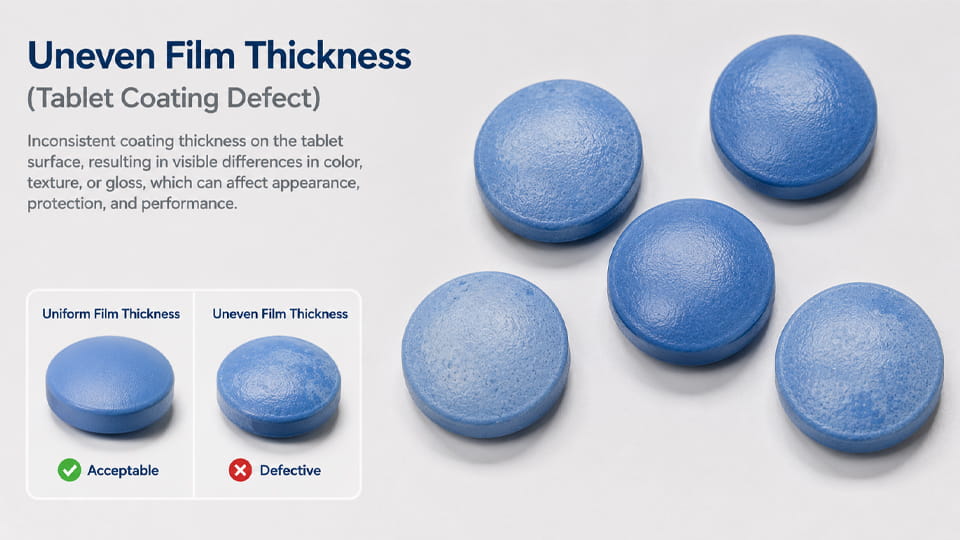
علل رایج:
راه حل های عملی:
تولیدکنندگان باید:
طراحی تجهیزات پوشش دارویی قابل اعتماد به حفظ ضخامت پوشش ثابت در سراسر دسته کمک می کند.
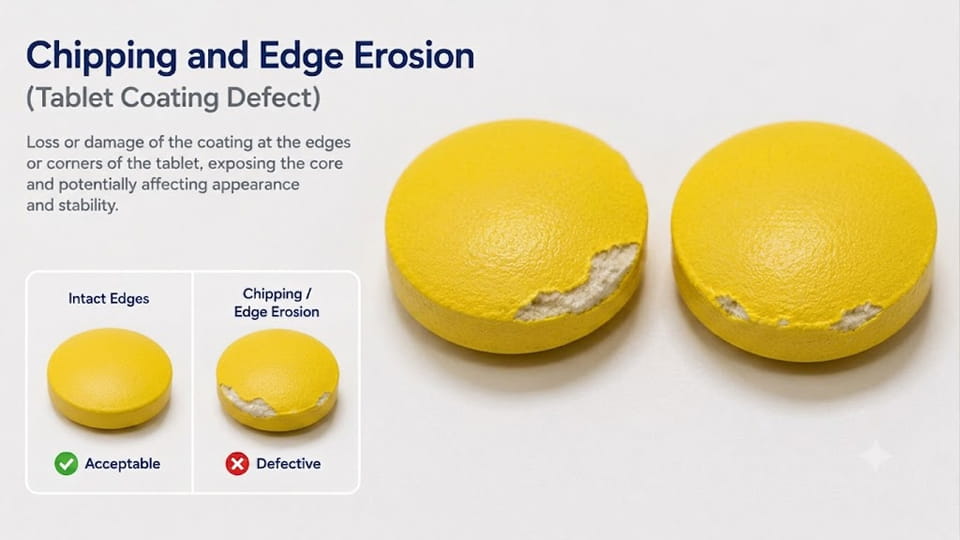
تراشه زمانی اتفاق می افتد که لایه پوششی در حین پردازش از لبه های قرص جدا شود.
این معمولاً به این دلیل اتفاق می افتد که قرص ها ضربه مکانیکی بیش از حد را تجربه می کنند یا لایه پوششی فاقد استحکام کافی است.
علل رایج:
راه حل های عملی:
برای کاهش آسیب لبه:
هماهنگی مناسب بین فرمولاسیون قرص و تنظیمات تجهیزات پوشش برای جلوگیری از این موضوع ضروری است.
اکثر عیوب پوشش تبلت تنها به دلیل یک مشکل ایجاد نمی شود. آنها معمولاً از تعامل بین فرمولاسیون حاصل می شوند, تنظیمات تجهیزات, و شرایط عملیاتی.
یک فرآیند پوشش موفق نیاز به کنترل دقیق دارد:
با درک رابطه بین این عوامل, تولید کنندگان دارو می توانند کیفیت پوشش را بهبود بخشند, کاهش ضایعات تولید, و دستیابی به دسته های سازگارتر.
پیشگیری آسان تر از درمان است. در اینجا بهترین شیوه ها وجود دارد:
با به حداقل رساندن تنوع, نقص ها نادر می شوند. همانطور که یک دستورالعمل صنعتی می گوید, «هر چه عملیات و تبلت را هماهنگتر کنید, کمتر باید به مهارت اپراتور اعتماد کنید..
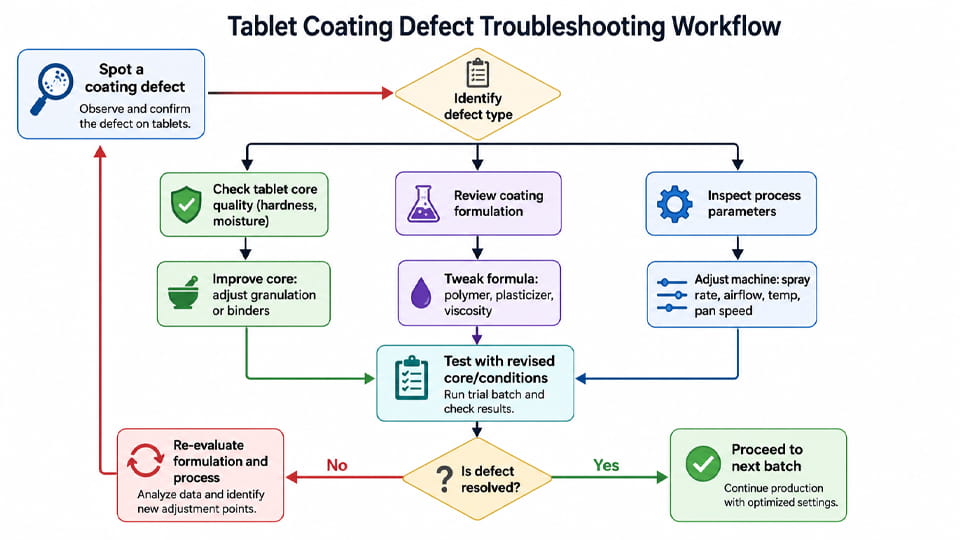
فلوچارت بالا مراحل عیب یابی را تشریح می کند: تشخیص نوع نقص, سپس پارامترهای مربوطه را بررسی کنید (اسپری, خشک شدن, فرمول) و بر این اساس تنظیم کنید, سپس دوباره تست کنید تا حل شود.
طراحی صحیح تجهیزات بسیار مهم است. پیشرفته دستگاه های پوشش تبلت ویژگی هایی را ارائه می دهد که مستقیماً با نقص ها مقابله می کند:

با سرمایه گذاری در الف سیستم پوشش دارویی با کیفیت بالا (مانند ماشین های JinLuPacking), کاربران تجهیزاتی را دریافت می کنند که ذاتاً خطر نقص را کاهش می دهد. به عنوان مثال, دستگاه JinLu "... تضمین می کند که دارو ظاهر بهتری دارد, خواص پایدارتر و رهاسازی کنترل شده تر. سیستم گردش مواد و بافل های آن یکنواختی پوشش را بیشتر بهبود می بخشد. این بدان معنی است که تنظیمات انسانی کمتری در طول دویدن مورد نیاز است, ترجمه به دسته های خوب بیشتر و ضایعات کمتر.
عیوب در پوشش قرص معمولاً ناشی از عدم تعادل مواد یا فرآیند. یک رویکرد عیب یابی کل نگر مورد نیاز است: تنظیم پارامترهای اسپری/خشک کردن, فرمولاسیون را اصلاح کنید, و از هسته های تبلت خوب اطمینان حاصل کنید. تجهیزات مدرن بسیار پیشرفت می کنند - روکش های سطح بالا با کنترل دقیق به طور چشمگیری این مشکلات را کاهش می دهند. در عمل, نگهداری منظم, رویه های سازگار (استانداردهای GMP) و نظارت زمان واقعی کلیدی برای جلوگیری از نقص است.
اگر با مشکلات مداوم پوشش مواجه هستید یا در حال برنامه ریزی یک خط جدید هستید, در نظر گرفتن دستگاه پوشش خود را ارتقا دهید. JinLuPacking دستگاه های روکش اتوماتیک تبلت برای ارائه پوشش های یکنواخت طراحی شده اند و توسط خدمات فنی متخصص پشتیبانی می شوند. به عنوان مثال, مشتریانی که به روکش پرسرعت JinLu روی آوردهاند، گزارش زیادی دارند پرداخت های صاف تر, ثبات رنگ دقیق, و توان عملیاتی بالاتر.
به دنبال یک قابل اعتماد دستگاه پوشش قرص دارویی یا پشتیبانی فنی? با JinLuPacking تماس بگیرید برای راه حل های تجهیزات پوشش حرفه ای. تیم ما می تواند به بهینه سازی پارامترهای فرآیند شما و ارائه تجهیزات کمک کند (تابه ای, روکش های قندی, و غیره) برای جلوگیری از نقص پوشش.
رایج ترین عیوب پوشش قرص شامل چسبیدن و چیدن است, اثر پوست پرتقال, لایه برداری, ترک خوردن, تنوع رنگ, پل زدن لوگو, تاول زدن, دوقلو زایی, ضخامت پوشش ناهموار, و فرسایش لبه.
این مشکلات معمولاً به دلیل پارامترهای نامناسب اسپری رخ می دهد, شرایط خشک کردن نادرست, مواد پوشش قرص نامناسب, ویژگی های ضعیف هسته تبلت, یا تنظیمات دستگاه پوشش تبلت ناپایدار.
شناسایی علت اصلی اولین گام در جهت بهبود کیفیت پوشش و کاهش تلفات تولید است.
پوشش یا رنگ ناهموار معمولاً به این معنی است که توزیع اسپری یا مخلوط قرص ناسازگار بوده است. دلایل احتمالی اختلاط ضعیف سوسپانسیون است (جمع شدن رنگدانه ها), محل قرارگیری تفنگ اسپری کل تخت تبلت را نمی پوشاند, یا سرعت درام نادرست. همانطور که یکی از راهنمای صنعت بیان می کند, مسائلی مانند لکهریزی را میتوان در همپوشانی ناکافی اسپری و حرکت قرص ردیابی کرد. رفع این مشکل ممکن است شامل کالیبراسیون مجدد تفنگ های اسپری باشد, اضافه کردن یک نازل اسپری دیگر, یا کند کردن درام به طوری که همه قرص ها یک پوشش یکنواخت دریافت کنند.
با جلوگیری از خیس شدن بیش از حد و اطمینان از خشک شدن سریع می توان از چسبندگی جلوگیری کرد. عملا, این به معنای کاهش سرعت اسپری یا جامدات حلال است, افزایش دما/جریان هوای ورودی, و در صورت امکان سرعت درام را بالا ببرید. همچنین, قرصهایی با سطوح ناهموار یا پر از گرد و غبار راحتتر میچسبند - از مرحله گردگیری استفاده کنید و مواد جانبی ضد چسبندگی را در فرمول در نظر بگیرید.. درمان سریع (جریان هوای بالاتر) به تنظیم فیلم قبل از برخورد و چسبیدن قرص ها کمک می کند.
نقص پوست پرتقال (خشن, سطح دانه ای) ناشی از خشک شدن سریع قطرات برای ادغام شدن است. این اغلب زمانی اتفاق می افتد که فشار هوای اتمیزه کردن خیلی کم است (قطرات بزرگ) یا زمانی که محلول پوششی بسیار چسبناک یا دارای محتوای جامد بالا است. به عبارت دیگر, فیلم به جای یک لایه صاف در جزایر مجزا تشکیل می شود. برای درمان این, فشار اتمیزاسیون را افزایش دهید (اسپری ریزتر), محلول را رقیق کنید (ویسکوزیته کمتر/جامد), یا سرعت خشک شدن را کند کنید (دمای ورودی پایین تر) بنابراین قطرات زمان برای ادغام دارند.
رنگ ناهموار اغلب از ترکیب ضعیف رنگدانه یا جذب متفاوت ناشی می شود. اگر هسته قرص در اثر اسپری مرطوب شده باشد, رنگ ها می توانند مهاجرت کرده و جمع شوند. راه حل ها شامل استفاده از رنگدانه های دریاچه ای از پیش پراکنده یا مخلوط های اولیه رنگ است, ترکیب بهتر رنگ در مایع پوشش, و تنظیم مشخصات خشک کردن برای قفل شدن رنگدانه ها به طور یکنواخت. فرمول قرص خوب (جلوگیری از ترکیدن رطوبت) نیز کمک می کند.
با دقت بررسی کنید: اگر هر تبلت موجود در دسته دارای نقص های مشابه باشد (به عنوان مثال. همه ترک خورده یا همه خراش دارند), اغلب ماشین/فرایند است (تنظیم اسپری, جریان هوا) باعث آن می شود. اگر فقط برخی از قرص ها تحت تأثیر قرار گیرند یا تکه های تصادفی ظاهر شوند, ممکن است فرمولاسیون باشد (توده در محلول, جامدات حل نشده) یا کیفیت تبلت. زمان بندی را نیز در نظر بگیرید: نقص هایی که بلافاصله پس از بارگیری ظاهر می شوند معمولاً به مشکلات اصلی رایانه لوحی اشاره می کنند, در حالی که مشکلات در طول پوشش مربوط به فرآیند است.
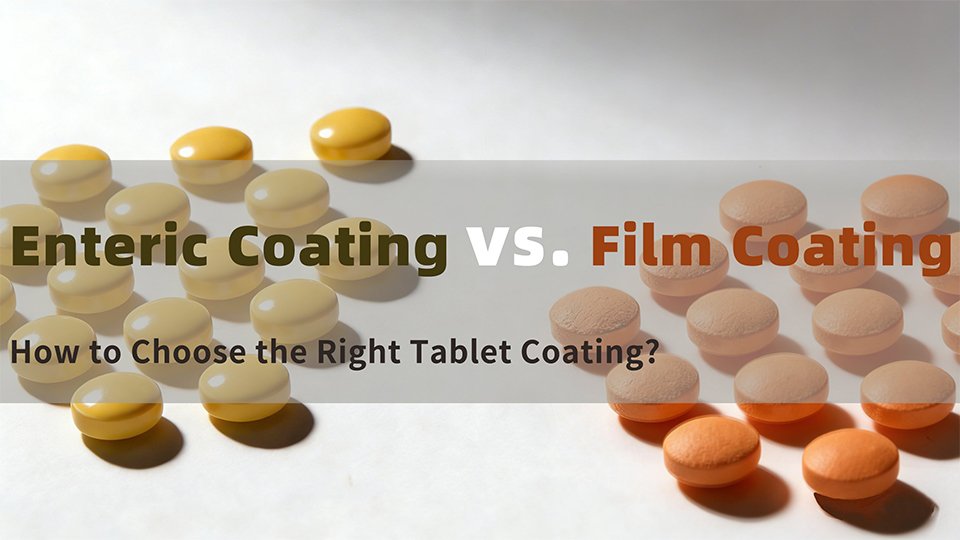
قرص های پوشش داده شده با فیلم از یک لایه پوشش نازک مبتنی بر پلیمر استفاده می کنند که ظاهر را بهبود می بخشد, از تبلت محافظت می کند, و می تواند مزایای عملکردی مانند محافظت در برابر رطوبت را ارائه دهد.
قرص های با روکش شکر از لایه های متعددی از پوشش مبتنی بر شکر استفاده می کنند و معمولاً ظاهر پوشش ضخیم تری دارند.
در مقایسه با روکش شکری, پوشش فیلم به طور کلی سریعتر است, کارآمدتر, و کنترل آن در تولید داروسازی مدرن آسانتر است زیرا به مواد پوشش کمتر و زمان پردازش کوتاهتر نیاز دارد..
قرص های پوشش دار روده ای نیاز به کنترل پوشش دقیق دارند زیرا لایه پوششی باید از ماده فعال در برابر اسید معده محافظت کند و اجازه آزاد شدن در روده را بدهد..
عیوب مانند ترک, لایه برداری, یا ضخامت پوشش ناهموار ممکن است بر عملکرد محافظتی پوشش روده تأثیر بگذارد.
تولیدکنندگان به کنترل دقیق نیاز دارند:
• ضخامت پوشش
• شرایط خشک شدن
• خواص مواد پوشش قرص
• یکنواختی اسپری
یک فرآیند پوشش پایدار برای حفظ عملکرد مورد انتظار محصولات با پوشش روده ضروری است.
یک رویکرد عیب یابی سیستماتیک بهترین راه برای حل مشکلات پوشش تبلت است.
تولیدکنندگان باید بررسی کنند:
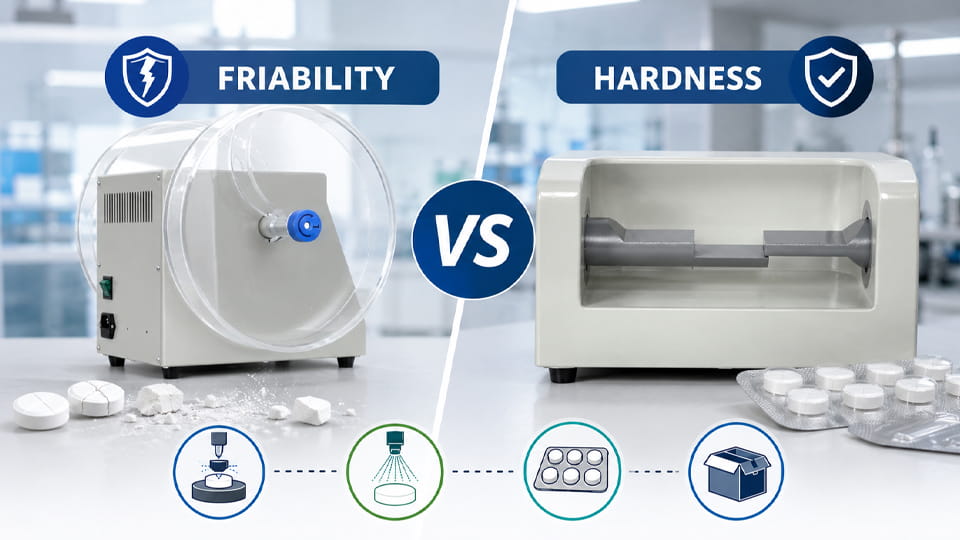
1.کیفیت هسته تبلت, از جمله سختی و شکنندگی
2.خواص محلول پوششی
3.سرعت اسپری و فشار اتمیزه شدن
4.دمای خشک شدن و جریان هوا
5.پارامترهای عملکرد دستگاه پوشش تبلت
به جای اینکه فقط یک پارامتر را تنظیم کنید, تیم های تولید باید کل فرآیند پوشش را برای شناسایی علت واقعی ارزیابی کنند.
یک روکش اتوماتیک مدرن کنترل دقیقی بر روی تمام پارامترهای حیاتی فراهم می کند. به عنوان مثال, دستگاه پوشش خودکار تبلت با سرعت بالا JinLu از یک سیستم جریان آرام برای ارائه هوای خشک شدن یکنواخت در سراسر بستر تبلت استفاده می کند.. همچنین دارای سیستم اسپری کنترل شده و طراحی بافل است که به آرامی قرص ها را برای قرار گرفتن در معرض قرار می دهد.. کنترل های محکم (سیستم PLC) از میزان اسپری برنامه ریزی شده اطمینان حاصل کنید, دما و سرعت درام ثابت نگه داشته می شوند, کاهش خطای انسانی. همه این ویژگی ها منجر به سازگاری می شود, پوشش های بدون نقص و خرابی های دسته ای کمتر.
مراجع:
1.پوشش دارویی و رویکردهای مختلف آن, یک بررسی —— کتابخانه ملی پزشکی
2.چسباندن و چیدن در فشرده سازی قرص دارویی: بررسی کنسرسیوم IQ —— ScienceDirect
3.پیش بینی اولیه عیوب قرص در طول پوشش پان —— کتابخانه ملی پزشکی
4.چگونه از مشکلات پوشش تبلت جلوگیری کنیم —— فارم تک
5.بررسی جامع مشکلات و راه حل های پوشش تبلت —— ResearchGate
6.تکنیک های ارزیابی پوشش های فیلم و ارزیابی محصولات پوشش داده شده با فیلم —— کتابخانه ملی پزشکی