
A development lab rarely starts with a full production line. It starts with a few grams of powder and a practical question. How will this medication behave inside its final blister pack medication? That question demands a lab-scale small blister machine. It is a purpose-built unit for research work, not a downsized copy of a production plant.
Stabilitätsstudien, formulation screening and regulatory samples all depend on packaging. Many research labs still seal samples by hand or borrow time on factory equipment. Both routes produce inconsistent samples and weak traceability. Pharmaverpackung deserves the same discipline in the lab as it gets on the shop floor.
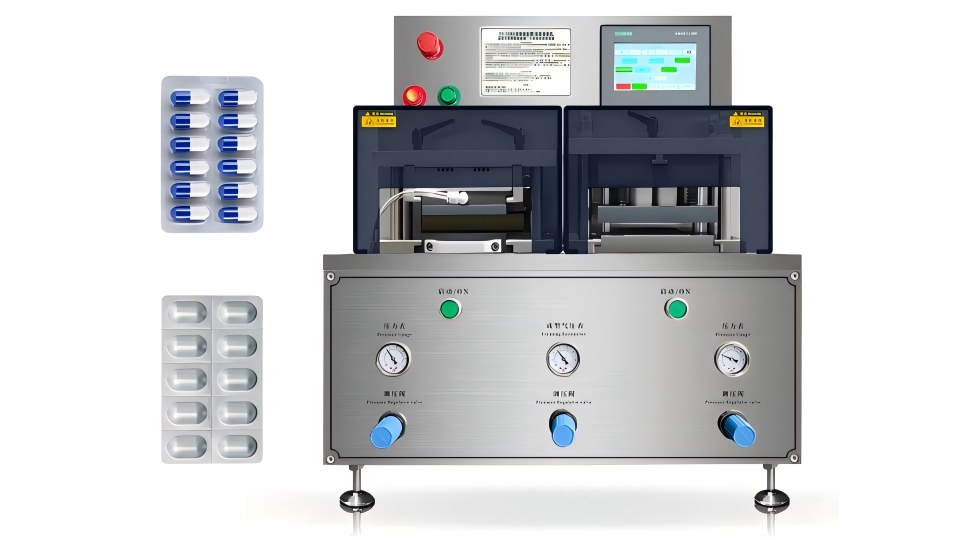
Packaging is part of the formulation, kein nachträglicher Einfall. Regulators treat the package as a component of the medication product. Its barrier, seal quality and printing all come under review. That is why packaging for pharmaceutical products gets checked as carefully as the Darreichungsform selbst. Medicine packaging affects compliance, shelf life and patient adherence.
Long-term stability and stress tests need samples that represent the final product. Manual sealing cannot deliver that. Every hand-sealed pocket differs in temperature, pressure and dwell time. Small differences like these distort data and complicate later investigations.
A dedicated pharma packaging machine produces uniform seals on every pocket. It repeats the same parameters run after run. That repeatability matters when a reviewer asks how a sample was made. Equipment logs and batch records answer the question. Hand sealing does not.
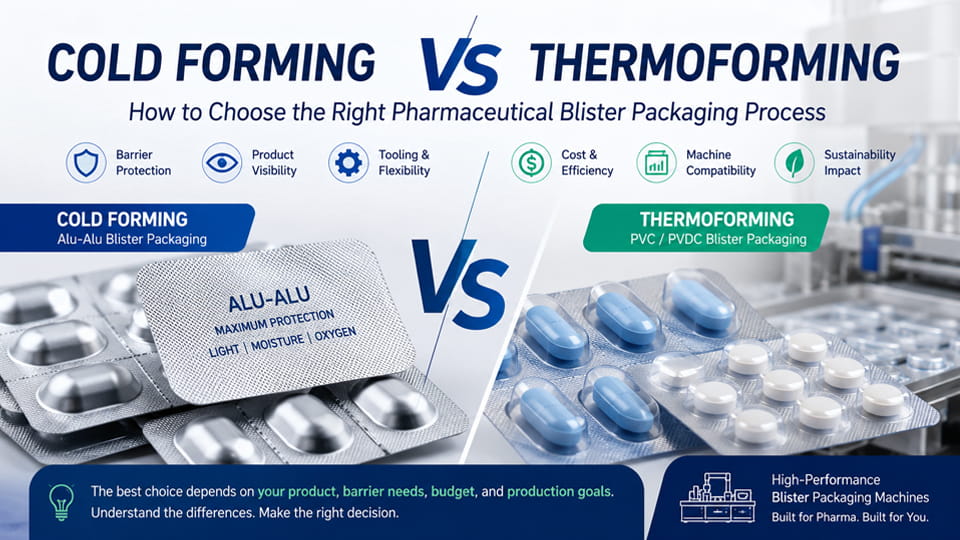
Two material families dominate blister packs. Alu-PVC gives transparent pockets, so operators can check the content by eye. Alu-Alu provides a strong moisture and oxygen barrier for sensitive medications. Neither can be approved on paper. Both need real runs on a machine.
Samples must be formed, sealed and cut exactly like commercial med packs. Only then do stability results reflect production reality. A lab-friendly blister packaging machine lets formulators test both families on site, without waiting for factory time.
Production equipment solves a different problem. It runs long shifts on one product. A lab runs many products in short bursts. The mismatch shows up in three concrete ways.
Research areas hold instruments, balances, hoods and storage. Ein großes Blisterverpackungsmaschine needs a dedicated bay, conveyors and staging space. Many labs simply do not have that footprint. A production unit squeezed into a lab forces the team to give up bench space or move other equipment.
A pilot run may need a few dozen pieces. A full line can output that in seconds, then sit idle during cleaning and re-validation. Startup, Umstellung, cleaning and qualification costs do not shrink with batch size. Packaging work in R&D is small, irregular and varied. Equipment built for that reality avoids the waste.
R&D tests many dose forms at once. Kapseln, shaped tablets and different barrier films all rotate through the schedule. Every switch on a production machine means removing tooling, resetting parameters and re-qualifying. When a changeover takes hours, a week of iteration can stretch into a month. Research speed depends on how fast a team can move between products.
A lab machine exists to answer packaging questions quickly. Four features separate a research tool from a production tool. They are footprint, Anpassungsfähigkeit, simplicity and material flexibility.
A desktop unit fits where a production line cannot. Laboratory equipment competes for limited counter space. A machine that sits on a bench and starts right away removes the need to reorganize the room.
A blister machine for the lab should accept several product formats. Runde Tabletten, ovale Tabletten, shaped tablets and capsule sizes 000 Zu 5 cover most pipelines. Medical device packaging for small devices can run on the same unit. The wider the range, the fewer machines a lab needs.
Researchers are not dedicated machine operators. Controls should be direct, cleaning easy and maintenance obvious. A scientist who sets up a run in minutes runs more experiments. Overly complex blister machine interfaces get ignored or misused.
Material compatibility decides how many machines a lab must buy. A unit that handles Alu-PVC und Alu-Alu covers transparent and high-barrier packs with one investment. That flexibility matters for pharmaceutical packaging solutions that serve many products at once.
One machine built around this logic is the LDPP-140H Blisterpackmaschine für Labor Aus Jinlu Packing. It combines a compact desktop body, multi-format tooling and modular mold design. The goal is flexible lab research and small-batch packaging.
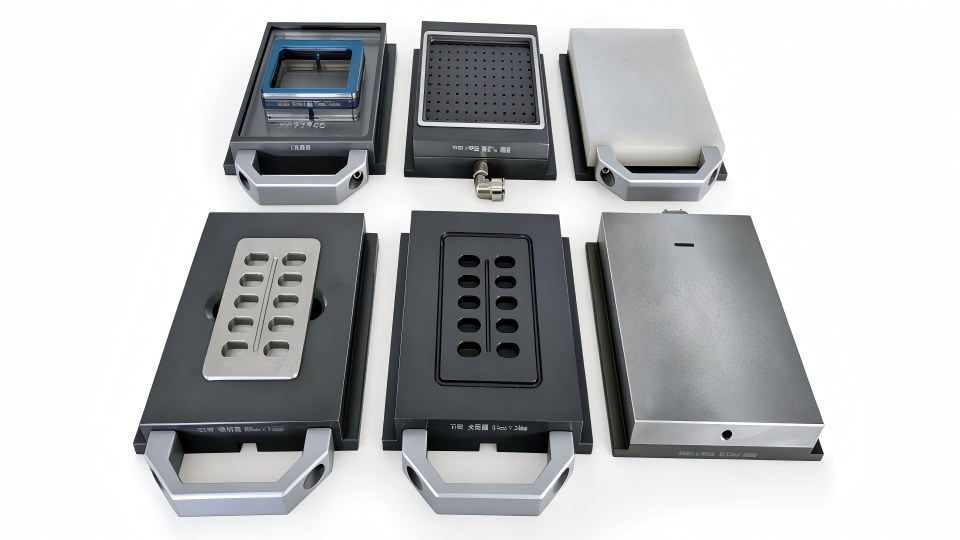
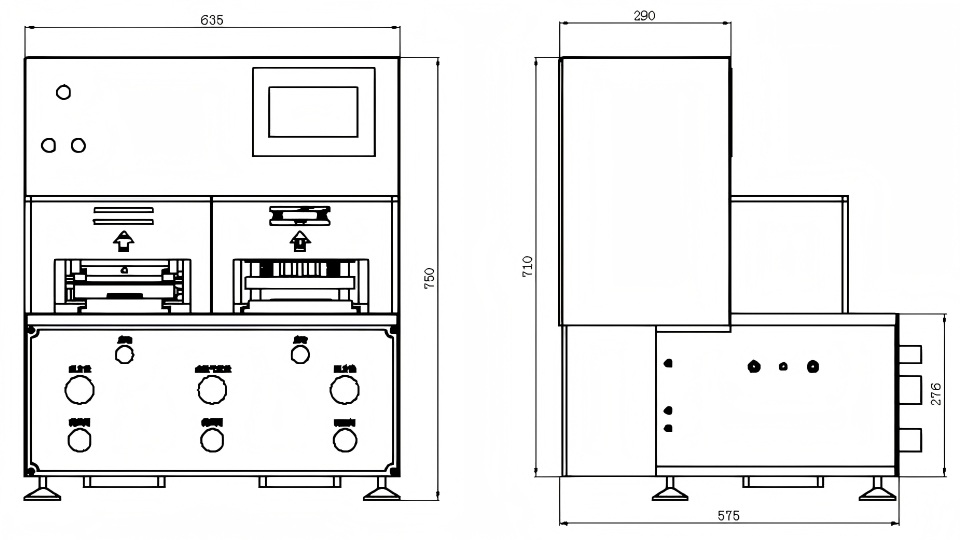
Most full-size thermoforming packaging machines occupy a production hall. The LDPP-140H takes a different approach. It measures 640 × 580 × 700mm and weighs 118 kg. It stands on a standard lab bench without foundations or dedicated bays. High integration keeps the footprint small. That suits crowded research labs, hospital pharmacies and QC rooms. (Data Source: Jinlu Packing LDPP-140H Technical Parameters)
One unit runs both Alu-PVC and Alu-Alu. Material and mold configuration switch the process between the two. Bildung, sealing and cutting stations work as one integrated blister sealing machine. Companies no longer need separate blister packaging machinery for each pack type. The same host covers transparent packs and high-barrier packs.
The machine handles capsule sizes 000 Zu 5, Runde Tabletten, ovale Tabletten, shaped tablets and suitable small medical devices. Bildung, heat sealing and cutting happen in one pass. That single-pass workflow also answers medical device blister packaging requests in the lab. It suits the small, varied orders typical of medical packaging in development. The cutting station accepts a custom blister cutter when a project needs unusual pocket geometry.
A multi-format machine is only useful when switching formats is quick. Traditional mold changes mean loosening parts, repositioning and reaching for tools. Every extra minute steals time from experiments.
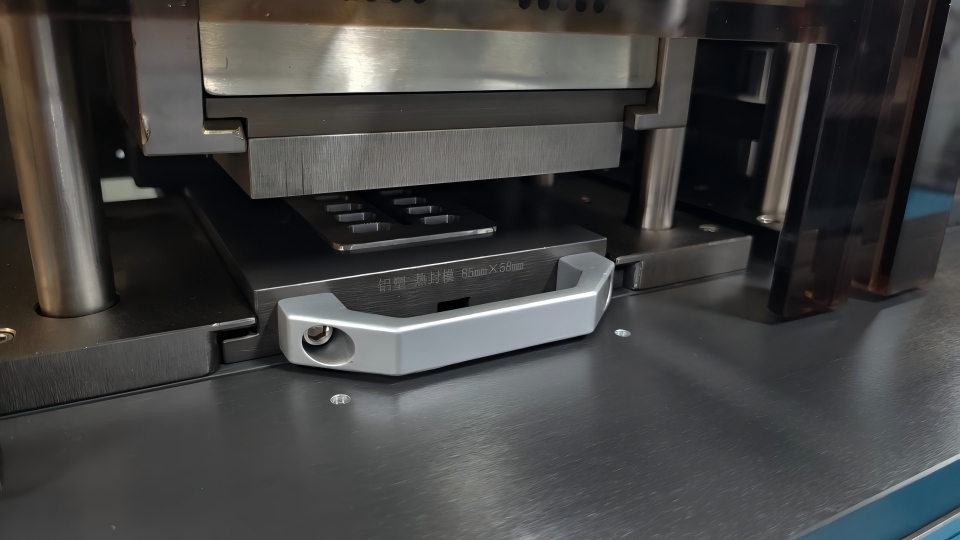
The LDPP-140H uses a modular slide-in cassette. The mold pulls out as one piece. A locking mechanism fixes the new mold in place. No tools are required, and a standard changeover takes about two minutes. Teams testing different capsules, tablets and pack structures keep the machine busy and the research moving.
One point needs clarity. The two-minute figure covers mold replacement only. Full product changeover, parameter setup and process verification take longer. The claim is about tooling time, not end-to-end validation.
Large blister packing machines serve production volumes. Research needs flexibility. Small footprint, wide format range, simple operation and fast changeover all matter. A lab-scale small blister machine such as the LDPP-140H delivers those in one desktop unit. It supports pharmaceutical packaging for capsules, tablets and small devices, with Alu-PVC and Alu-Alu in a single pharma packaging machine. Add a medicine packaging machine that fits on a bench, and the whole trial loop stays inside the lab. The same logic runs from pharma R&D labs to lab medicine units and hospital pharmacies. Validate the pack before you scale the line.
Do you need a blister packaging machine for the pharmaceutical industry for lab-scale development and small-batch runs? Kontaktieren Sie Jinlu Packing for LDPP-140H specifications and technical support.
Ja. The LDPP-140H is a dual-mode blister machine. The same host runs Alu-PVC and Alu-Alu with the correct material and mold configuration. That covers transparent and high-barrier samples for stability studies and submission batches. Buyers who want a single blister pack machine for multiple products value this dual-mode design.
NEIN. The mold cassette slides out as a whole and locks in with a simple mechanism. No hand tools are needed. A standard changeover takes about two minutes, which suits multi-spec trial work. The tooling is hard-anodized high-density aluminum alloy, made to survive frequent swaps.
Ja. The frame uses 7-series aviation aluminum and 316L stainless steel, materials accepted in EU GMP environments. The operating area is fully enclosed and isolated. The heat-seal station offers ring-embossed sealing and batch number printing for traceability. These features suit clean medical laboratory and hospital pharmacy settings.
Ja. Operation is straightforward, energy use is low and maintenance is simple. Safety guards prevent pinch and burn injuries. After short training, researchers can produce trial batches independently. That self-service design suits hospital pharmacies, medical lab units and startup formulation teams.