Kaltumformen vs. Thermoformen: Welche medizinische Blisterverpackung ist die richtige für die Pharmaindustrie??
Kaltumformen vs. Thermoformen: Welche medizinische Blisterverpackung ist die richtige für die Pharmaindustrie??
August 26, 2026
Keine Kommentare
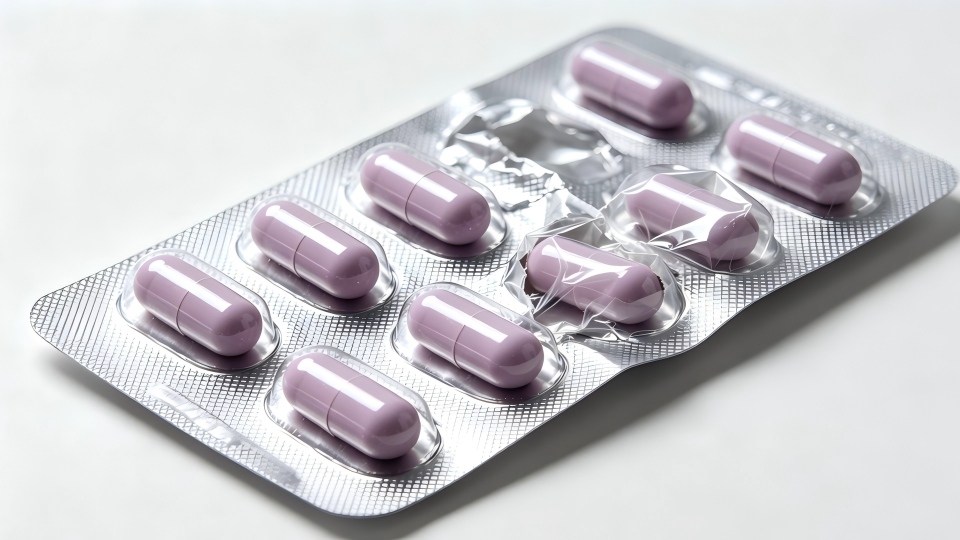
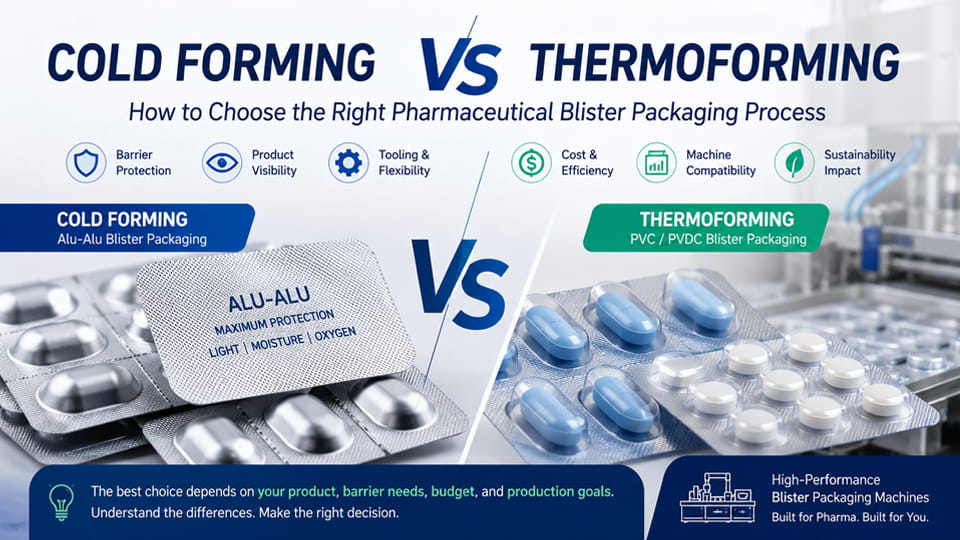
Pharmazeutische Produkte werden häufig in Blisterverpackungen versiegelt für Einheitsdosisschutz und Regalattraktivität. In Blisterverpackung, Die beiden wichtigsten Umformmethoden sind Thermoformierung Und Kaltform. Beim Thermoformen wird eine Kunststoffbahn erhitzt (wie PVC oder PET) bis es biegsam ist und dann abgesaugt oder in Formen gepresst wird. Kaltform, im Gegensatz dazu, nutzt Hochdruckprägung auf einem mehrschichtigen Laminat auf Aluminiumbasis bei Raumtemperatur. Jede Methode verwendet unterschiedliche Materialien und liefert sehr unterschiedliche Ergebnisse: Thermogeformte Blister sind transparent und kostengünstiger, während kaltgeformt (Allzeit) Blister sind undurchsichtig, bieten aber einen viel höheren Barriereschutz. In diesem Leitfaden wird erläutert, wie sie funktionieren, wesentliche Unterschiede (Barriere, kosten, Geschwindigkeit, usw.), und wie Sie die richtige Methode und Maschine für Ihr Produkt auswählen.
Was ist Thermoformen??
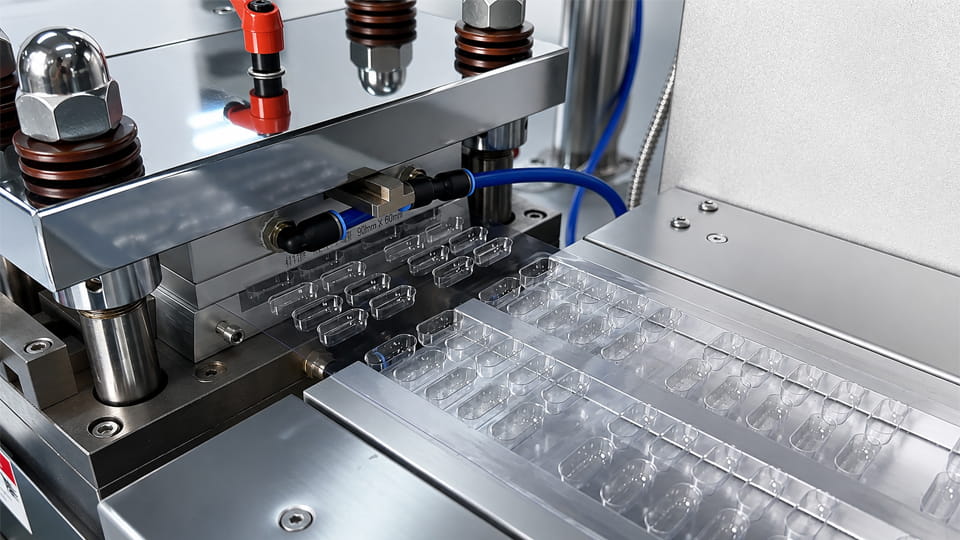
Thermoformierung Blisterverpackungen erhitzen eine Kunststofffolie, bis sie weich wird, und formen sie dann durch Vakuum oder Druck zu Hohlräumen. Eine temperaturgesteuerte Einheit (oft 150–180°C) erhitzt PVC oder eine andere thermoplastische Folie, das dann über einer Form geformt wird. Sobald der Film abgekühlt ist, Die gebildeten Hohlräume werden mit Produkt gefüllt und mit einem Folien- oder Papierdeckel verschlossen.
Dieser Prozess ist sehr anpassungsfähig: Zu den gängigen Formfolien gehört PVC, HAUSTIER, PP, oder Copolymere, manchmal mit Barrierebeschichtungen (PVDC, COC, PCTFE, usw.). Thermoformen bietet eine hohe Designflexibilität – Blisterformen können tief oder komplex sein (mit Steckhilfen) ohne die Grundmaterialien zu verändern. Es ist auch für große Auflagen kostengünstig: Thermoplastische Folien sind kostengünstig und die Maschinen laufen mit hohen Geschwindigkeiten. Der Hauptvorteil ist Erschwinglichkeit und Durchsatz – wie eine Quelle feststellt, „Die Hauptvorteile von PVC sind niedrige Kosten und die einfache Thermoformung.“.
Vorteile des Thermoformens
Geringere Materialkosten: Kunststofffolien (auch mit Barrierebeschichtungen) sind wesentlich günstiger als mehrschichtige Metallfolien. Dadurch werden die Stückkosten bei Großproduktionen gesenkt.
Höhere Geschwindigkeit: Thermoformmaschinen arbeiten normalerweise schneller. Zum Beispiel, Eine moderne Tiefzieh-Blisterlinie kann durchaus überlaufen 150 Packs/min, höher als typische Kaltformgeschwindigkeiten.
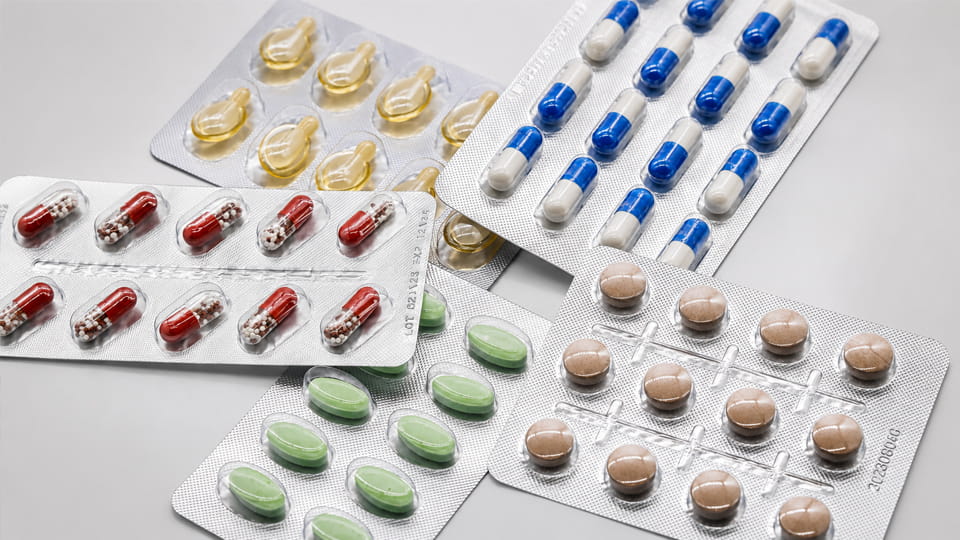
Produktsichtbarkeit: Durchsichtige PVC/PET-Verpackungen ermöglichen dem Benutzer, die darin enthaltenen Pillen oder Tabletten zu sehen. Diese Transparenz ist gut für die Verbraucherattraktivität (z.B. Vitamine im Einzelhandel) und zur Sichtkontrolle.
Designflexibilität: Mit beheizter Folie können komplexe Hohlraumformen oder Tiefzüge erreicht werden (oft unterstützt durch Vakuum oder Plug-Assist). Es lässt sich auch problemlos in Schnellfüll- und Hochgeschwindigkeitsversiegelungsprozesse integrieren.
Einschränkungen beim Thermoformen
Barriereschutz: Eine einfache PVC-Folie bietet nur eine mäßig Feuchtigkeits- und Sauerstoffbarriere. Unbeschichtetes PVC hat eine hohe Wasserdampfdurchlässigkeit (z.B. ~3g/m²·Tag bei 90 % relativer Luftfeuchtigkeit). Zur Verbesserung der Haltbarkeit, Bei Thermopacks müssen aufwändige Mehrschichtfolien zum Einsatz kommen (z.B. PVC/PVDC oder PVC/PCTFE-Laminate) oder dickere Filme. Selbst dann, Die Barriere bleibt normalerweise unter dem, was Aluminiumfolie erreicht.
Lichtempfindlichkeit: Klare Folien lassen UV- und sichtbares Licht durch. Das bedeutet, dass es sich um thermogeformte Blisterverpackungen handelt nicht Ideal für lichtempfindliche Arzneimittel – sie bieten praktisch keinen UV-Schutz, sofern Sie keine UV-blockierenden Zusätze hinzufügen.
Begrenzte Haltbarkeit: Für stark feuchtigkeitsempfindliche oder reaktive Wirkstoffe, Thermogeformte Packungen (auch mit Beschichtungen) ergeben oft eine kürzere Stabilität. Wikipedia-Notizen: „Die Nachteile [aus PVC] sind die schlechte Barriere gegen das Eindringen von Feuchtigkeit und Sauerstoff.“.
Starre Werkzeugkosten: Während Maschinen im Allgemeinen billiger sind, Für das Tiefzieh-Thermoformen sind möglicherweise Präzisionsformen und Plug-Assist-Matrizen erforderlich, Erhöhung der Werkzeugkosten.
Was ist Kaltumformung??
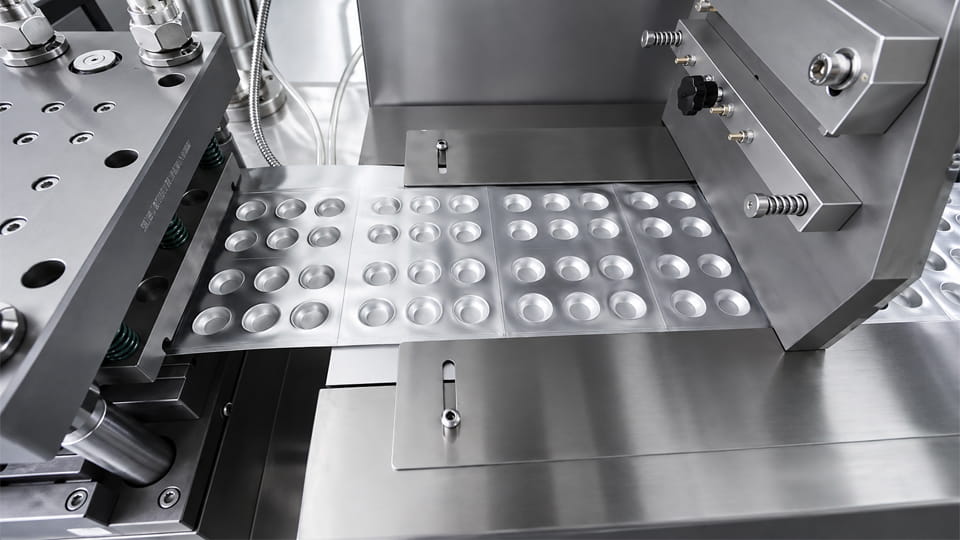
Kaltform (oft genannt Allzeit Blisterverpackung) Als Formbahn wird eine mehrschichtige Folie auf Aluminiumbasis verwendet. Ein typisches Kaltformlaminat ist PVC/Aluminium/Polyamid, mit der Aluminiumschicht auf der Außenseite. In diesem Prozess, der Film ist nicht erhitzt. Stattdessen, Ein robuster Hochdruckstempel stanzt die Folie bei Raumtemperatur in Hohlräume. Das Aluminium dehnt sich, verformt sich aber plastisch, und es behält die Hohlraumform bei, sobald der Stempel entfernt wird. Anschließend wird jeder gefüllte Hohlraum versiegelt (oft mit einem Deckel aus Aluminium oder folienkaschiertem Papier).
Denn bei der Kaltumformung wird das Material nicht erhitzt, es vermeidet jegliche thermische Belastung empfindlicher Medikamente. Das Ergebnis ist eine vollständig undurchsichtige Blase (Keine Sicht auf den Inhalt) bietet aber eine exzellent Barriere. Die Aluminiumfolie stoppt nahezu jede Feuchtigkeit, Sauerstoff, und Licht das Medikament nicht erreicht, was die Haltbarkeit erheblich verlängern kann.
Vorteile der Kaltumformung
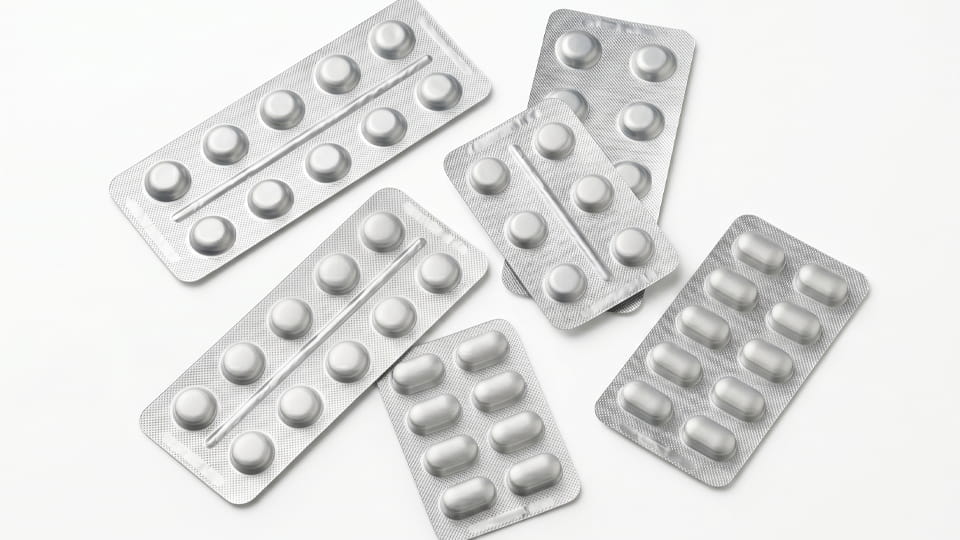
Überlegene Barriere: Die Aluminiumschichten machen den Blister nahezu undurchlässig. Wie Wikipedia feststellt: „Der Hauptvorteil von Kaltformfolienblistern besteht darin, dass die Verwendung von Aluminium eine nahezu vollständige Barriere für Wasser und Sauerstoff bietet, Erlauben eines verlängerten Produktablaufdatums“. Aus diesem Grund werden Alu-Alu-Blister zur Hygroskopizität verwendet, sauerstoffempfindlich, oder lichtempfindliche Arzneimittel.
Feuchtigkeits- und Lichtschutz: Kaltgeformte Blasen halten die Feuchtigkeit, Sauerstoff Und Licht aus. Zum Beispiel, Mehrschichtfolien blockieren UV-/sichtbares Licht vollständig und bilden einen luftdichten Verschluss um jede Dosis. Dadurch wird die Wirksamkeit von Arzneimitteln gesichert, die in feuchter Luft oder hellem Licht schnell abgebaut werden.
Materialflexibilität: Das sich bildende Netz (PVC/Alu/PA) Hat immer noch eine PVC-Seite, Dadurch bleibt die Taschenform erhalten und es gibt etwas Elastizität, während das Aluminium Schutz bietet. Dadurch wird der Hohlraum stark und flach, was für die meisten Tabletten und Kapseln oft ausreicht.
Einschränkungen bei der Kaltumformung
Höhere Materialkosten: Aluminiumlaminate sind deutlich teurer als Kunststofffolien. Die Folie besteht aus mehreren Schichten (z.B. 9–15 μm Al plus 80–100 μm anderer Schichten) und spezielle Kompositionen, Daher sind die Rohstoffkosten pro Packung hoch. Eine Quelle weist ausdrücklich darauf hin „Die Kosten für die Kaltformung von Blisterpackungen sind tendenziell höher als für die Thermoformung“.
Langsamere Geschwindigkeit: Aufgrund des Prägeprozesses und der Notwendigkeit, mit Folie umgehen zu müssen (das nicht dehnbar ist wie Plastik), Kaltumformmaschinen laufen mit geringeren Geschwindigkeiten. Wie eine Zusammenfassung zeigt, Kaltgeformte Folienblister leiden unter einer „langsameren Produktionsgeschwindigkeit im Vergleich zum Thermoformen“.
Keine Sicht: Beide Seiten des Blisters bestehen aus Aluminium (oder die Oberseite ist aus Aluminium), sodass Benutzer das Produkt überhaupt nicht sehen können. Dies beschränkt die Verwendung auf Produkte, die keiner visuellen Bestätigung im Regal bedürfen. (Das bedeutet auch, dass Compliance-Packs über eine gut gedruckte Beschriftung verfügen müssen, da man den Inhalt nicht visuell überprüfen kann.)
Maschinenverschleiß: Werkzeuge und Matrizen für die Kaltumformung sind einer hohen Belastung ausgesetzt, Daher müssen Maschinen sehr robust sein. Stempel und Gegenmatrize müssen präzise gefertigt sein und benötigen oft dickeren Stahl, Wartung hinzufügen.
Größeres Packmaß: Denn Aluminium lässt sich nicht so stark dehnen wie Kunststoff, Kaltgeformte Hohlräume sind normalerweise flacher oder haben größere umgebende Ränder. Wikipedia stellt fest, dass am Ende typischerweise ein Alu-Alu-Paket landet „Größere Größe der Blisterkarte“ und weniger steile Taschenwände.
Kaltumformen vs. Thermoformen: Schlüsselunterschiede
Die folgende Tabelle zeigt die Hauptunterschiede zwischen Thermoform- und Kaltform-Blisterverpackungen:
Faktor
Thermoformierung
Kaltform (Allzeit)
Umformprozess
Kunststofffolie erhitzen, bis sie weich ist, dann Vakuum/Druck in Hohlräume formen.
Undurchsichtig – das Produkt ist im Inneren verborgen.
Produktionsgeschwindigkeit
Generell höher (Hochleistungslinien).
Generell langsamer (Durch mechanisches Stempeln wird die Geschwindigkeit begrenzt).
Material & Maschinenkosten
Niedriger – Kunststofffolie ist günstiger, Maschinen sind einfacher.
Höher – Aluminiumlaminate kosten mehr, und Maschinen erfordern robuste Pressen.
Typische Anwendungsfälle
OTC-Medikamente mit hohem Volumen, Vitamine, Standardtabletten; wenn Sichtbarkeit & Kosten sind wichtig.
Feuchtigkeit- oder lichtempfindliche Medikamente (Antibiotika, Biologika), lange Haltbarkeit erforderlich.
Jeder der oben genannten Faktoren spiegelt die Kompromisse zwischen den beiden Methoden wider. Beim Thermoformen werden tendenziell billigere Materialien verwendet und die Verarbeitung erfolgt schneller, Beim Kaltumformen werden teure Metallfolien für einen erstklassigen Schutz verwendet.
Detaillierter Vergleich: 8 Schlüsselfaktoren
Zusammenfassend, Hier sind acht Hauptfaktoren, die Thermoformen und Kaltformen unterscheiden:
Forming -Methode:
Thermoformierung: Plastikfolie ist erhitzt, dann über einer Form vakuum-/druckgeformt.
Kaltform: Metalllaminat ist kalt gestempelt mit hohem Druck; Aluminium behält die Form.
Materialien:
Thermoformierung: Verwendet Filme wie PVC, HAUSTIER, PP (oft mit Barrierebeschichtungen PVDC/COC/COP). Zum Beispiel, Viele Blisterlinien verwenden weichmacherfreies PVC (RPVC) als Formbahn.
Kaltform: Verwendet eine Laminat auf Aluminiumbasis (typischerweise PVC/Aluminium/Nylon). Diese „Kaltformfolie“ ist speziell für die Hochbarriereumformung konzipiert.
Feuchtigkeit & Gasbarriere:
Thermoformierung: Eine blanke PVC-Folie hat eine schlechte Barrierewirkung (WVTR ~3g/m²·Tag, OTR ~20 ml/m²·Tag). Mehrschichtige PVC-Folien (beschichtet mit PVDC oder coextrudiert mit PCTFE/COC) kann das verbessern, Aber niemals auf das Niveau einer Metallfolie. Wikipedia weist darauf hin, dass der Nachteil von PVC darin besteht „schlechte Barriere gegen Feuchtigkeit und Sauerstoff“.
Kaltform:Exzellent. Aluminiumfolie bildet eine nahezu undurchlässige Barriere. Wie bereits erwähnt, Kaltgeformte Blasen geben a „nahezu vollständige Barriere für Wasser und Sauerstoff“, Ablaufdatum erheblich verlängern.
Lichtschutz:
Thermoformierung: Klare Folien lassen alles Licht durch (es sei denn, Sie verwenden spezielle pigmentierte Folien oder fügen UV-Blocker hinzu). Aus diesem Grund gibt es klare PVC-Blisterpackungen nicht Empfohlen für lichtempfindliche Medikamente.
Kaltform: Vollständig. Undurchsichtige Folienblöcke 100% aus Licht, Schutz lichtempfindlicher APIs.
Produktionsgeschwindigkeit:
Thermoformierung: Normalerweise höher. Weil Kunststofffolien schnell zugeführt werden und die Formungszyklen schnell sind, Diese Linien übersteigen oft 150–200 Packungen/Minute (auf High-End-Rotationsmaschinen).
Kaltform: Generell langsamer. Die Prägung und Handhabung der Folie schränkt den Durchsatz ein. Selbst Top-Kaltformmaschinen sind in der Regel unterbewertet 100 Packungen/min für tiefe Alu-Alu-Designs.
Kosten (Material & Ausrüstung):
Thermoformierung: Kunststoff-Rohfolien kosten pro Laufmeter deutlich weniger als 3-Schicht-Folien. Maschinen sind einfacher (nur Heizplatten und Vakuumstationen), Daher sind die anfänglichen Maschinenkosten im Allgemeinen niedriger. Eine Quelle fasst zusammen, Die „Hauptvorteile“ von PVC sind seine geringen Kosten und die einfache Formbarkeit.
Kaltform: Höher. Die Spezialfolie ist teuer, und Maschinen müssen leistungsfähiger sein. Studienhinweis „Kaltform-Blisterverpackungsanlagen … eignen sich besonders für feuchtigkeitsempfindliche Produkte,” aber zu einem Premiumpreis.
Produktsichtbarkeit:
Thermoformierung: Ja – das Produkt ist durch durchsichtigen Kunststoff sichtbar. Gut für die Präsentation im Einzelhandel oder zur einfachen Dosiskontrolle.
Kaltform: Nein – völlig undurchsichtig.
Typische Anwendungen:
Thermoformierung: Standard-OTC- und verschreibungspflichtige Tabletten/Kapseln, bei denen eine hohe Barriere nicht entscheidend ist (z.B. Schmerzmittel, Vitamine). Pharmazeutika in großen Mengen, Ergänzungen, oder jedes Produkt, das eine schnelle Hochgeschwindigkeitslinie benötigt. Wird auch verwendet für medizinische Blisterverpackung von unsterilen Geräten.
Kaltform: Premium- oder kritische Medikamente (z.B. Antibiotika, sensible APIs, vakuumverpackte Enzyme) und jedes Produkt, das maximalen Feuchtigkeits-/Lichtschutz und eine lange Haltbarkeit erfordert. Kommt häufig bei PTP vor (Durchstecken) Packungen für eine sehr stabile Dosierung, oder für weltweit vertriebene Produkte mit unterschiedlichem Klima.
Das zeigen diese Unterschiede Thermoformierung zeichnet sich durch Geschwindigkeit aus, Kosten und Sichtbarkeit, während Kaltform zeichnet sich durch Schutz und Stabilität aus. In der Praxis, Designer wägen diese Faktoren gegen die Produktanforderungen ab.
Die richtige Methode wählen: Leitfaden für Käufer von Pharmamaschinen
Bei der Wahl zwischen Kaltumformen und Thermoformen (und das entsprechende Blasenverpackungsmaschine), fragen:
Anforderungen an die Produktstabilität: Ist dein API oder eine Formulierung, die sehr feuchtigkeitsempfindlich ist, Sauerstoff oder Licht? Wenn Ja, kaltgeformt (Allzeit) Normalerweise sind Blasen erforderlich. Wenn Ihr Produkt relativ stabil ist (z.B. Standard-Tablet), Thermoformen ist wahrscheinlich ausreichend.
Gewünschte Haltbarkeit: Benötigt das Produkt eine verlängerte Haltbarkeitsdauer? (18+ Monate)? Kaltformverpackungen können aufgrund ihrer überlegenen Barriere die Haltbarkeit erheblich verlängern. Für kurze Haltbarkeit (<1 Jahr) Produkte, PVC-Verpackungen sind oft akzeptabel.
Produktionsvolumen und -geschwindigkeit: Benötigen Sie einen sehr hohen Durchsatz?? Thermoformanlagen laufen im Allgemeinen schneller, Sie eignen sich daher für die Großserienproduktion. Für kleinere Mengen sehr wertvoller Medikamente, Die langsamere Kaltformmethode kann akzeptabel sein.
Kostenbeschränkungen: Wenn das Budget knapp ist und die Barriereanforderungen moderat sind, Thermoformen ist wirtschaftlicher. Zum Beispiel, Jinlupacking stellt fest, dass „die Kosten für die Kaltformung von Blisterpackungen tendenziell höher sind als für die Thermoformung“.. Berücksichtigen Sie bei Ihrer TCO-Analyse sowohl die Material- als auch die Gerätekosten.
Regulatorisch / Marktbedürfnisse: Auf einigen Märkten oder Formulierungen kann dies der Fall sein erfordern bestimmte Verpackungen. Zum Beispiel, Eine behördliche Spezifikation könnte Alu-Alu-Folie für ein bestimmtes Antibiotikum vorschreiben, oder das Marketing könnte eine durchsichtige Verpackung für ein Markenvitamin bevorzugen.
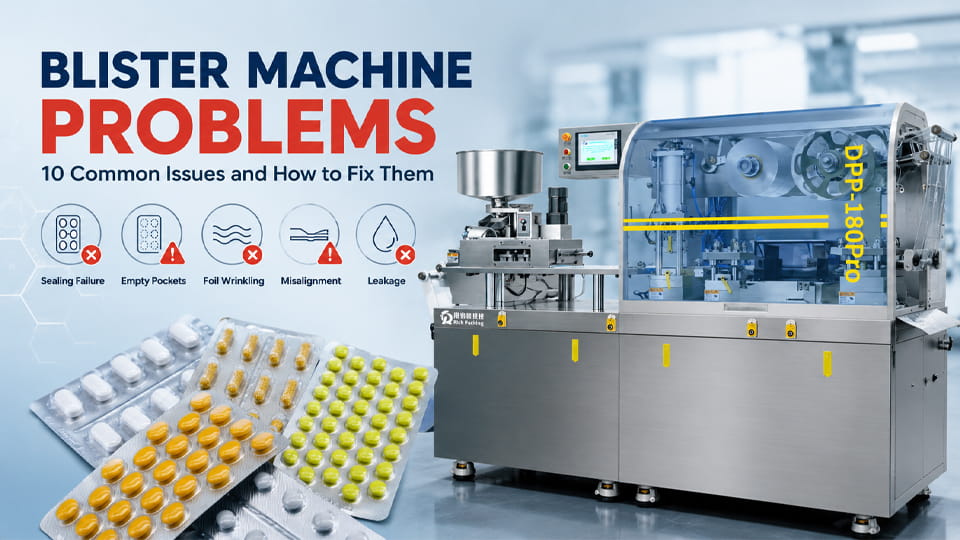
Maschinenkompatibilität: Überlegen Sie, ob Sie eine Maschine für beide Methoden oder separate Linien wünschen. Einige moderne Maschinen (wie Jinlus Blistermaschine DPP-180PRO) kann für beide Thermo konfiguriert werden- oder Kaltumformung, Viele Unternehmen nutzen jedoch dedizierte Leitungen, um jeden Prozess zu optimieren.
DPP-180pro Blistermaschine für Kapseltabletten
Eine kurze Faustregel: Nutzen Sie Thermoformen für Standardmedikamente, bei denen die Kundensichtbarkeit und die Kosten entscheidend sind; Verwenden Sie die Kaltumformung für Hochbarriereanforderungen, bei denen der Schutz von größter Bedeutung ist.
Wann sollte man sich für Thermoformen entscheiden?
Ihr Produkt ist es nicht äußerst Feuchtigkeit- oder lichtempfindlich (einfache OTC-Tabletten, Vitamine).
Hohe Produktionsgeschwindigkeit und niedrige Kosten stehen im Vordergrund.
Sie möchten eine transparente Verpackung, damit das Produkt sichtbar ist.
Die erwartete Haltbarkeit ist relativ kurz oder mäßig.
Sie planen, handelsübliche Kunststofffolien zu verwenden (PVC, PVDC/PVDC-beschichtet, COC, usw.).
Ihre Blisterverpackungsmaschine ist für beheizte Formstationen eingerichtet.
Wann sollte man sich für Kaltumformung entscheiden?
Ihr Produkt ist hoch feuchtigkeits-/sauerstoffempfindlich oder lichtempfindlich (z.B. hygroskopische Tabletten, Sterole, bestimmte Biologika).
Sie benötigen die absolut beste Barriere und längste Haltbarkeit.
Sie haben einen kleineren Lauf oder sind bereit, Geschwindigkeit gegen Schutz einzutauschen.
Sie können undurchsichtige Verpackungen akzeptieren (oder verwenden Sie eine starke Kennzeichnung zur Unterscheidung).
Das Budget lässt höhere Materialkosten zu (Alufolienlaminate).
Ihre Maschinen (oder Lieferant) unterstützt den Kaltumformprozess mit stabilen Metallstempeln.
Zum Beispiel, Viele pharmazeutische Kaltformblister tragen die Aufschrift „Allzeit“ auf der Folie. Diese werden genau dann ausgewählt Maximierung der Arzneimittelstabilität ist das Ziel.
Kostenvergleich
Die Kosten sind ein wichtiger Aspekt. Materialkosten: PVC-Folie (sogar mit einer PVDC-Beschichtung) ist weitaus günstiger als ein 3-lagiges Aluminiumlaminat. Pro Einheit, Das Material einer thermogeformten Packung kostet vielleicht nur ein paar Cent, während ein gleichwertiges Alu-Alu-Folienpaket ein Vielfaches davon ausmachen kann. Eine Branchenquelle bestätigt dies „Die Kosten für die Kaltformung von Blisterpackungen sind tendenziell höher als für die Thermoformung“.
Maschinenkosten und OEE: Thermoformmaschinen sind im Allgemeinen einfacher (Heizeinheiten und Vakuumkammern) und oft günstiger im Unterhalt. Kaltumformmaschinen benötigen schwere Stempel und manchmal einen Doppelvorschub (für Innen- und Außenfolien), was die Kapitalkosten erhöhen kann. Jedoch, wenn die Kaltumformung Produktverluste verhindert (z.B. vor Verderb), Die höheren Vorabkosten könnten gerechtfertigt sein. Denken Sie immer darüber nach Gesamtbetriebskosten, inklusive Ausfallzeiten, Wartung, und Materialverschwendung, nicht nur die Liniengeschwindigkeit.
Maschinenauswahl und Verpackungslinien
Ihre Wahl bestimmt auch die Verpackungslinie. Blisterverpackungsmaschinen sind für den einen oder anderen Prozess konzipiert. A Tiefzieh-Blistermaschine wird über Heiz- und Vakuumstationen verfügen; A Kaltform-Blistermaschine wird über eine große Presse und Folienzuführungen verfügen. Einige Hybridmaschinen (oft in der Forschung oder im kleinen Maßstab) kann den Modus wechseln, aber eine bestimmte Zeile ist normalerweise für eine Methode optimiert.
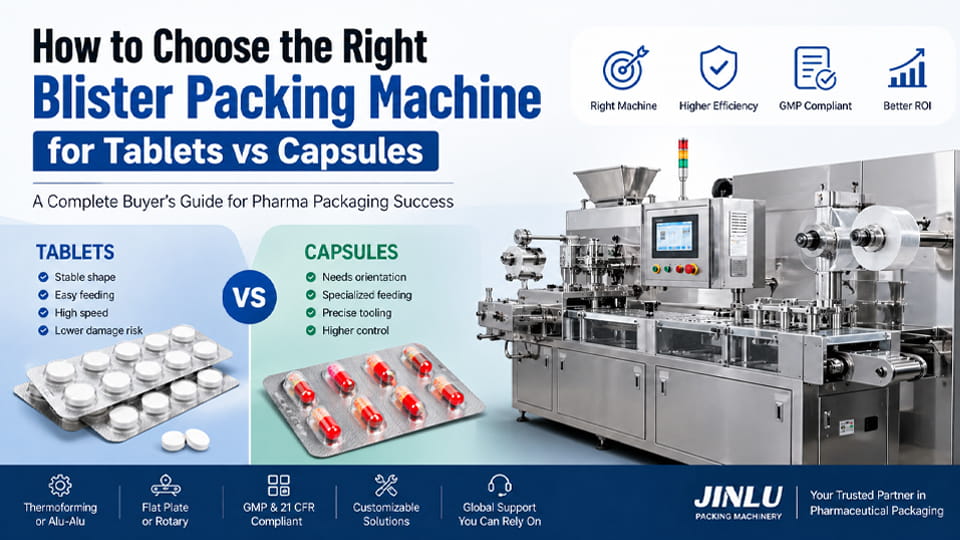
Zum Beispiel, der Jinlu DPH-270max Roller Blistermaschine ist zu beiden Methoden fähig, aber die meisten Produktionslinien werden dediziert sein. Wenn Sie sich für Thermoformen entscheiden, Stellen Sie sicher, dass Sie Blisterverpackungsanlagen unterstützt Ihren gewählten Film (PVC-Dicke, Beschichtungsart) und verfügt über eine ausreichende Temperaturkontrolle. Wenn Sie sich für Kaltumformung entscheiden, Stellen Sie sicher, dass Ihre Maschine Alu-Alu-Folienrollen verarbeiten kann und über die erforderliche Prägekraft verfügt.
Bei Gesprächen mit Lieferanten, Erwähnen Sie Ihre Produktanforderungen: Sagen Sie, ob Sie „eine Blisterverpackungsmaschine für Alu-Alu-Blisterverpackungen“ oder „eine Tiefzieh-Blisterverpackungsmaschine für PVC/PVDC-Folien“ benötigen.
So entscheiden Sie: Eine kurze Checkliste
Bewerten Sie die Produktempfindlichkeit: Prüfen Sie, ob Ihr Medikament vor Feuchtigkeit geschützt werden muss, Sauerstoff, oder Licht. Wenn beliebig davon sind kritisch, Kaltumformung ist wahrscheinlich erforderlich.
Haltbarkeitsziele: Ist ein verlängerter Ablauf erforderlich?? Für 2+ Jahr Haltbarkeit, Die Alu-Alu-Barriere ist die sicherste Wahl.
Visuelle Anforderungen: Möchten Sie, dass Kunden das Produkt sehen?? Wenn ja, Bevorzugen Sie das Thermoformen (transparent).
Produktionsvolumen & Kosten: Für höchste Stückzahlen und Kostensensibilität, Thermoformen gewinnt normalerweise. Wenn das Volumen geringer und die Produktkosten hoch sind, Die langsamere Geschwindigkeit der Kaltumformung kann akzeptabel sein.
Maschinenfunktionen: Bestätigen Sie, dass Ihr Blistermaschine mit dem gewählten Material umgehen kann. Viele Hersteller können beide Typen liefern, Sie benötigen jedoch die richtigen Werkzeuge und die richtige Linieneinrichtung.
Im Zweifelsfall, Konsultieren Sie einen Experten: Verpackungsingenieure modellieren häufig die Stabilität des spezifischen Arzneimittels in verschiedenen Materialien. Aber eine gute Heuristik ist das Kaltform (Willkommen) bietet den besten Schutz zu höheren Kosten, und Thermoformen (Plastik) Bietet die beste Sichtbarkeit und den besten Durchsatz bei geringeren Kosten.
Abschluss
Kaltumformen und Thermoformen haben jeweils klare Vor- und Nachteile. Thermoformierung (Auf PVC-Basis) ist schnell, transparent, und kostengünstig, Damit eignet es sich ideal für viele routinemäßige Arzneimittel. Kaltform (Willkommen) ist langsamer und teurer, aber es liefert unschlagbare Feuchtigkeit, Sauerstoff- und Lichtschutz für höchste Ansprüche, empfindliche Medikamente. In der Praxis, Für Standardtabletten werden Tiefziehverpackungen verwendet, Vitamine und OTC-Produkte, Bei feuchtigkeitsempfindlichen Medikamenten oder Medikamenten mit langem Verfallsdatum werden Kühlverpackungen eingesetzt.
Letztlich, Ihre Entscheidung sollte von geleitet werden Produktanforderungen. Wenn eine ultimative Barriere unerlässlich ist, Sie werden sich wahrscheinlich für eine Alu-Alu-Blisterverpackung auf einer Kaltform-Blisterverpackungsmaschine entscheiden. Wenn Sie Geschwindigkeit brauchen, Transparenz und Kosteneinsparungen, Eine PVC-Tiefziehverpackung auf einer Tiefzieh-Blistermaschine ist wahrscheinlich ausreichend.
Fühlen Sie sich frei Kontaktieren Sie unsere Verpackungsspezialisten zur Orientierung. Wir können das Richtige empfehlen Automatische Blasenverpackungsmaschine und Prozess für Ihr Produkt – egal, ob Sie eine Hochgeschwindigkeits-Blisterlinie zum Tiefziehen oder eine Kaltformung benötigen (Willkommen) Blistermaschine.
Bleiben Sie konform und kosteneffizient mit der richtigen Wahl der Blisterverpackung!
FAQs zu Kaltform- und Thermoform-Blisterpackungen
Was ist der Unterschied zwischen Kaltumformen und Thermoformen??
Beim Thermoformen wird Kunststofffolie mithilfe von Hitze in Blisterhohlräume geformt, Beim Kaltumformen wird ein Laminat auf Aluminiumbasis ohne Hitze mechanisch in Form gepresst. Thermoformen ist in der Regel schneller und kostengünstiger, während die Kaltumformung einen stärkeren Barriereschutz bietet.
Ist Kaltformen besser als Thermoformen??
Nicht unbedingt. Die Kaltumformung eignet sich besser für Produkte, die einen starken Schutz vor Feuchtigkeit erfordern, Sauerstoff, oder Licht, Bei stabilen und kostengünstigen Produkten wird das Thermoformen häufig bevorzugt, Geschwindigkeit, und Produktsichtbarkeit haben Priorität.
Was billiger ist, Kaltumformen oder Thermoformen?
Thermoformen ist im Allgemeinen kostengünstiger. Kunststoffformmaterialien kosten in der Regel weniger als die auf Aluminium basierenden Laminate, die für kaltgeformte Alu-Alu-Blisterverpackungen verwendet werden, Allerdings hängen die Gesamtkosten auch von der Maschinengeschwindigkeit ab, Werkzeuge, und Produktionsanforderungen.
Das sorgt für einen besseren Feuchtigkeitsschutz?
Kaltumformung bietet im Allgemeinen einen besseren Feuchtigkeitsschutz. Sein Laminat auf Aluminiumbasis bietet eine sehr starke Barriere, Dadurch ist es für feuchtigkeitsempfindliche pharmazeutische Produkte geeignet. Der tatsächliche Bedarf sollte durch Produktstabilitäts- und Verpackungsstudien bestätigt werden.
Was schneller ist, Kaltumformen oder Thermoformen?
Thermoformen ist im Allgemeinen schneller als Kaltformen. Sein Umformverfahren eignet sich gut für die Massenproduktion, während die Kaltumformung normalerweise mit niedrigeren Geschwindigkeiten erfolgt, da das Aluminiumlaminat eine mechanische Umformung erfordert.
Warum werden Alu-Alu-Blisterverpackungen für empfindliche Medikamente verwendet??
Die Alu-Alu-Blisterverpackung bietet einen hervorragenden Schutz vor Feuchtigkeit, Sauerstoff, und Licht. Daher wird es häufig für pharmazeutische Produkte in Betracht gezogen, die sehr empfindlich gegenüber Umwelteinflüssen sind oder hohe Anforderungen an die Haltbarkeit stellen.
Ist das Thermoformen für pharmazeutische Blisterverpackungen geeignet??
Ja. Thermoformen wird häufig für Tabletten und Kapseln eingesetzt, wenn das Produkt nicht den höchsten Grad an Barriereschutz erfordert. Materialien wie PVC und PVC/PVDC können je nach Rezeptur und Verpackungsspezifikation einen unterschiedlichen Feuchtigkeitsschutz bieten.
Was ist der Unterschied zwischen einer Alu-Alu-Blisterpackung und einem Thermoform-Blister??
Eine Alu-Alu-Blisterpackung besteht aus einem formgebenden Laminat auf Aluminiumbasis und ist undurchsichtig, Während bei einem Thermoform-Blister normalerweise eine Kunststofffolie verwendet wird und diese transparent sein kann. Alu-Alu bietet einen stärkeren Barriereschutz, während das Thermoformen im Allgemeinen eine bessere Sichtbarkeit und geringere Kosten bietet.
Kann eine Blisterverpackungsmaschine sowohl Kaltformung als auch Thermoformung bewältigen??
Normalerweise nicht ohne spezifische Maschinenkonstruktion oder -konfiguration. Die beiden Prozesse erfordern unterschiedliche Umformsysteme, Werkzeuge, und Materialtransport. Wenn beide Formate benötigt werden, Der Maschinenhersteller sollte vor dem Kauf die Kompatibilität bestätigen.
Wie wähle ich zwischen einer Kaltform- und einer Tiefzieh-Blistermaschine??
Beginnen Sie mit der Empfindlichkeit des Produkts, erforderliche Haltbarkeitsdauer, Verpackungsmaterial, Produktionsvolumen, und Zielkosten. Wählen Sie die Kaltumformung, wenn ein hoher Barriereschutz entscheidend ist; Wählen Sie Thermoformen, wenn es um Geschwindigkeit geht, Sichtweite, und Kosteneffizienz sind wichtiger.
Kleines Fu, Gründer von Jinlupacking, bringt vorbei 20 langjährige Erfahrung im pharmazeutischen Maschinenbau. Unter seiner Führung, Jinlu hat sich zu einem vertrauenswürdigen Lieferanten für integriertes Design entwickelt, Produktion, und Verkäufe. Petty teilt mit Leidenschaft sein umfassendes Branchenwissen, um Kunden bei der Bewältigung der Komplexität von Pharmaverpackungen zu unterstützen, Sicherstellen, dass sie nicht nur Ausrüstung erhalten, sondern eine echte, auf ihre Produktionsziele zugeschnittene Servicepartnerschaft aus einer Hand.