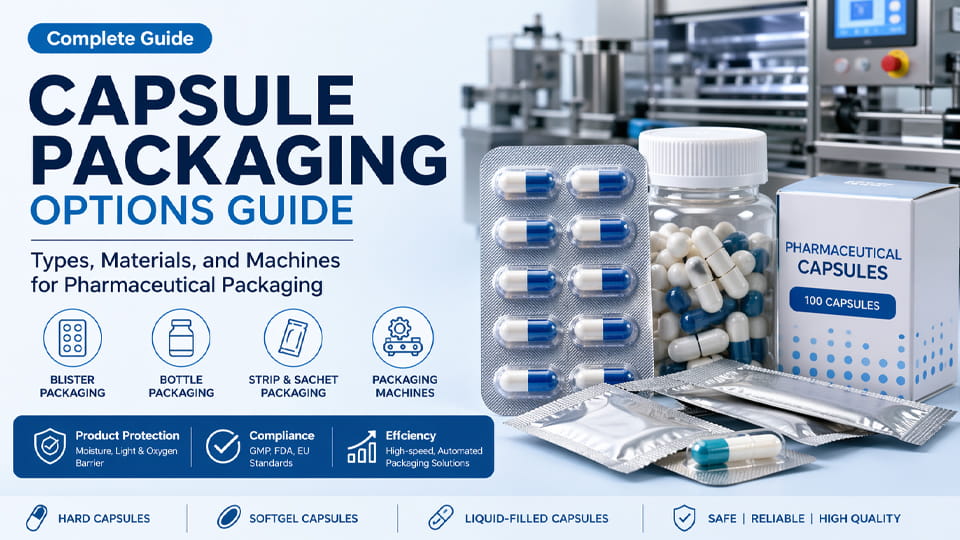
Vollständiger Leitfaden zu Kapselverpackungsoptionen: Typen, Materialien, und Maschinen für die pharmazeutische Verpackung
Vollständiger Leitfaden zu Kapselverpackungsoptionen: Typen, Materialien, und Maschinen für die pharmazeutische Verpackung
April 25, 2026
Keine Kommentare
Als Kapselverpackung bezeichnet man pharmazeutische Kapseln (Hartschale oder Softgel) liegen zur Weitergabe und Nutzung bei. Es beinhaltet Primärverpackung (der unmittelbare Behälter, der mit den Kapseln in Kontakt kommt, z.B. Blisterhohlräume oder Flaschen) Und Sekundärverpackung (Umkartons, Kisten, und Etiketten, die das Produkt zusätzlich schützen und identifizieren). Eine gute Kapselverpackung muss das Medikament vor Feuchtigkeit schützen, Licht, und Kontamination, sorgen für Stabilität durch Haltbarkeit, und regulatorische Anforderungen erfüllen. Zum Beispiel, Die WHO stellt das fest „Verpackungskomponenten umgeben das Produkt von der Herstellung bis zur Verwendung,” und muss Funktionen wie Schutz erfüllen, Stabilität, und Identifikation. GMP-Vorschriften der FDA (21 CFR 211) erfordern schriftliche Verfahren zur Inspektion und Prüfung von Verpackungsmaterialien nach Erhalt, und fordern sichere Etikettierung und Manipulationskontrollen. In der Praxis, wir müssen mit dem übereinstimmen Kapselprodukt (Darreichungsform, Empfindlichkeit, Dosierung, usw.) auf das entsprechende Verpackungsformat und -material abgestimmt.
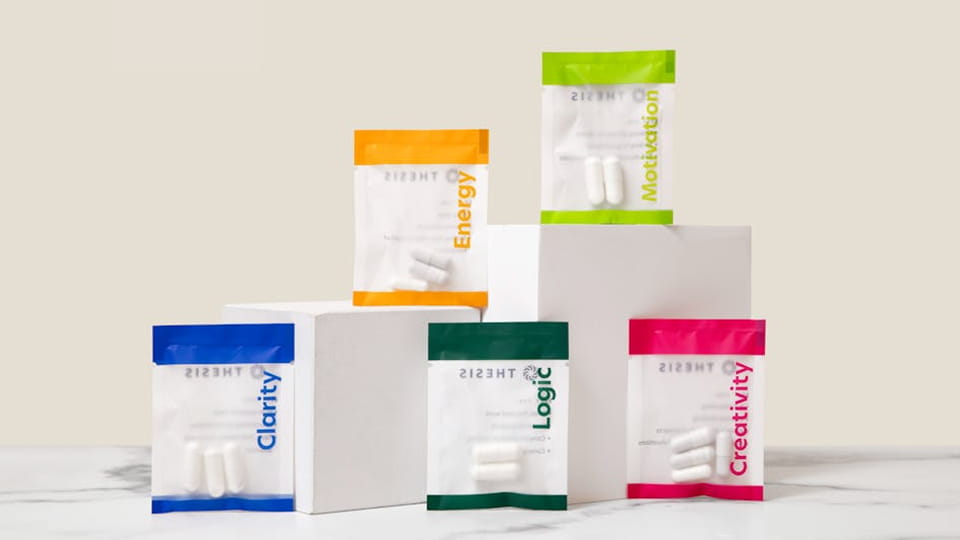
Die Primärverpackung von Arzneimittelkapseln ist von entscheidender Bedeutung für Produktschutz, Einhaltung, und Patientensicherheit: Es hält die Kapseln trocken, unkontaminiert, und deutlich beschriftet. Zum Beispiel, Blisterpackungen und Bernsteinflaschen sind bekanntermaßen ideal für feuchtigkeitsempfindliche Medikamente. Auch die richtige Verpackung unterstützt die Patientencompliance (Einheitsdosis-Blisterdosierung, kindersichere Flaschen, klare Beschriftung) und Lieferkettenanforderungen (Serialisierung, Logistik). Im Folgenden gehen wir jede Option im Detail durch.
Arten der Kapselverpackung
Blisterverpackung für Kapseln
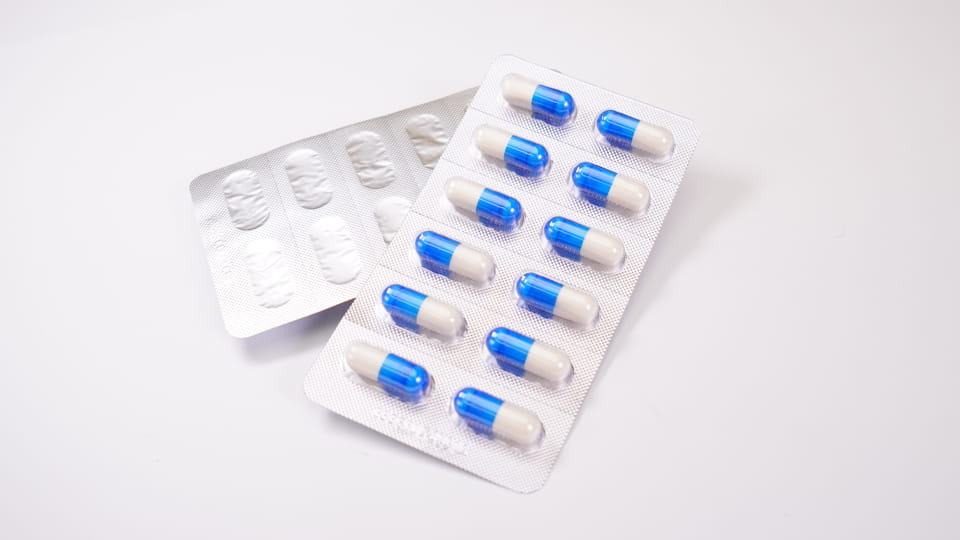
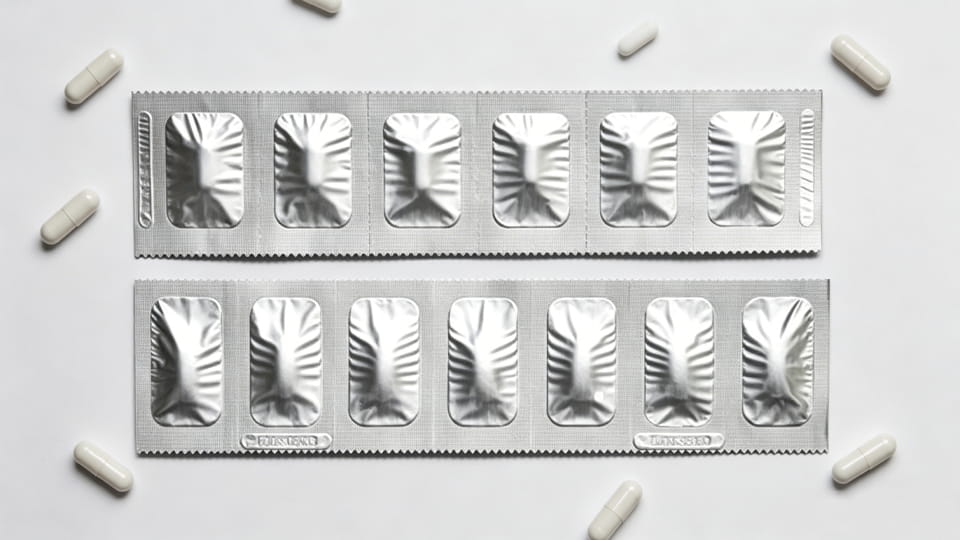
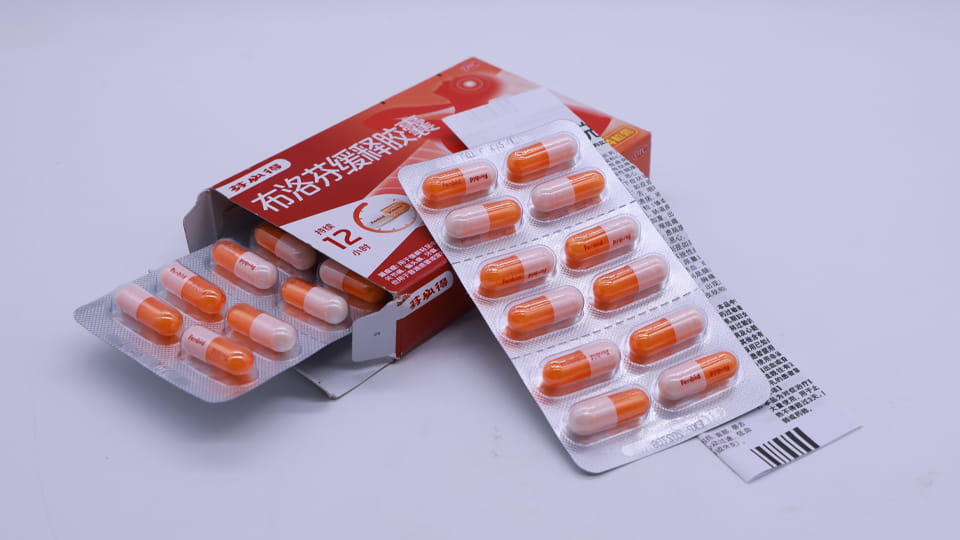
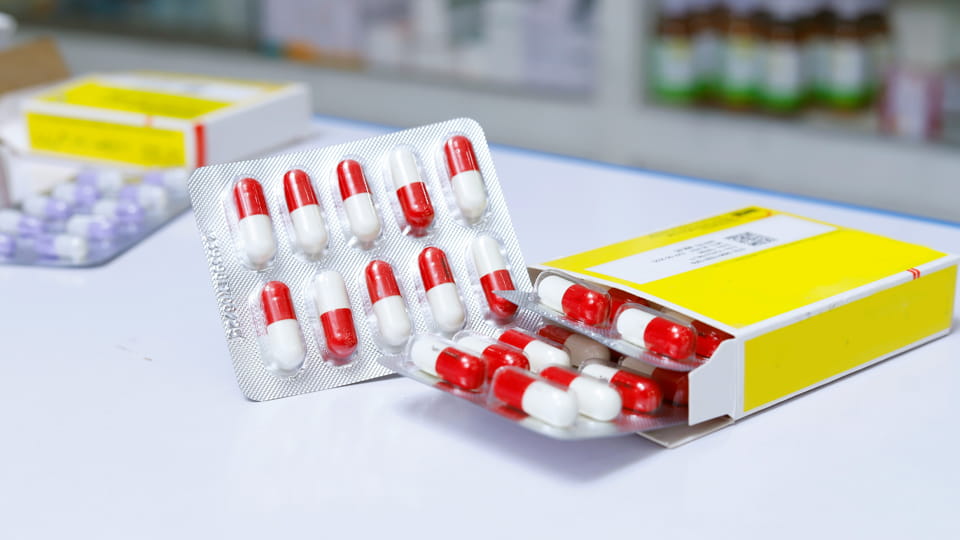
Blasenpackungen bestehen aus vorgeformten Kunststoffhohlräumen („Blasen“) die einzelne Kapseln halten, mit einer Unterlage versiegelt (Folie oder Kunststoff). Das Primärverpackung Angebote Einheitsdosisschutz. Blasen sorgen ausgezeichnete Barriere Eigenschaften: Sie können damit hergestellt werden Materialien wie PVC/PVDC oder Folie (Alu-PVC, Allzeit) um Feuchtigkeit zu blockieren, Sauerstoff und Licht. Zum Beispiel, Die Blistermaschine DPP-180Pro von Jinlu kann bis zu 1000 Stück formen und verschließen 4,800 Kapselblasen pro Stunde aus Alu-PVC- oder Alu-Alu-Laminaten. Zu den Hauptmerkmalen der Blisterverpackung für Kapseln gehören::
Schutz: Jeder Hohlraum ist hermetisch verschlossen, Schützt die Kapsel vor Feuchtigkeit, Sauerstoff und Licht. Wie eine Studie feststellt, Blasen „bieten hervorragenden Schutz vor Feuchtigkeit und Licht“ (besser als Flaschen). Hochbarrierefolien (z.B. Allzeit) Verlängern Sie die Haltbarkeit von hygroskopischen oder sauerstoffempfindlichen Kapseln.
Manipulationsbeweise: Eine Blisterpackung zeigt deutlich an, ob eine Dosis entnommen oder das Siegel gebrochen wurde. Dadurch werden Produktintegrität und Patientensicherheit gewährleistet.
Bequemlichkeit: Mit Einzeldosis-Blisterpackungen können Patienten jeweils eine Kapsel einnehmen, Reduzierung von Dosierfehlern und Abfall. Sie sind besonders hilfreich bei kurzen Dosierungsplänen oder pädiatrischen Formulierungen.
Anpassung: Blisterpackungen können in verschiedenen Hohlraumformen und -größen hergestellt werden, um für unterschiedliche Kapselgrößen geeignet zu sein. Moderner Maschinenpark (wie Thermoform- oder Plug-Assist-Maschinen) Passt sich problemlos an die Kapselgröße an.
Raumeffizienz: Blister sind kompakt und stapelbar. Sie minimieren den Leerraum im Vergleich zu Flaschen, Einsparung von Versand- und Regalplatz.
Figur:Jinlu JL-180Pro Blisterverpackungsmaschine zum Formen von Kapselblistern (Alu-PVC), 4,800 Kavitäten/Stunde.
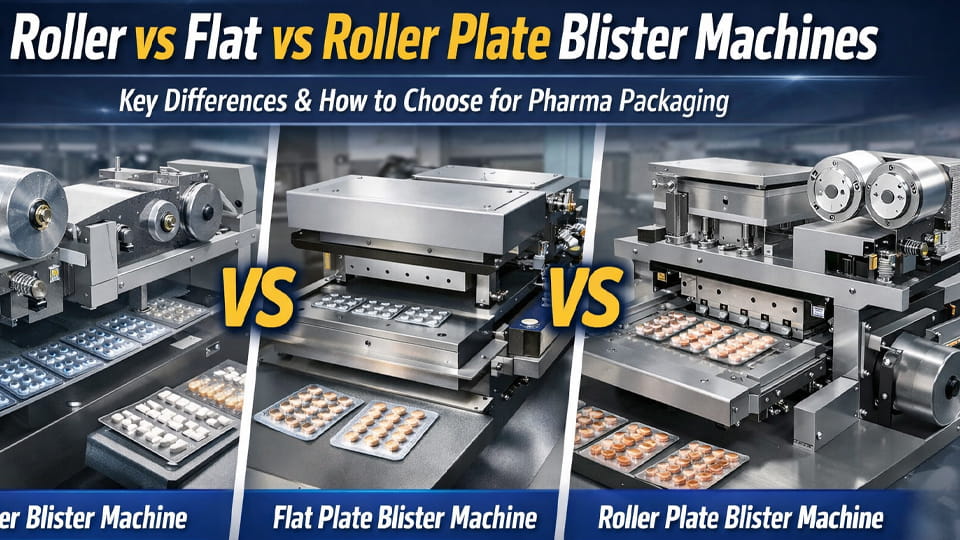
Jinlus Blistermaschinen (z.B. der DPP-180Pro) kann automatisch Hohlräume bilden, Futterkapseln, Siegel, Platten schneiden, und sogar Chargencodes drucken. Sie laufen normalerweise mit mittlerer bis hoher Geschwindigkeit (Tausende Kavitäten pro Stunde), Ideal für die Massenproduktion. Verschiedene Blisterformate (Alu-PVC vs. Alu-Alu) werden nach Produkt ausgewählt: Allzeit (Folie-Folie) bietet die höchste Hürde (am besten für sehr feuchtigkeitsempfindliche Arzneimittel geeignet), wohingegen PVC/PVDC für Standardkapseln üblich ist. Die Blisterverpackung vereinfacht zudem das Zählen und Prüfen: Die meisten Linien integrieren problemlos Kamerainspektions- oder Tablettenzählmaschinen, um die Kapselfüllung zu überprüfen.
Flasche (Flaschen-/Kapselglas) Verpackung
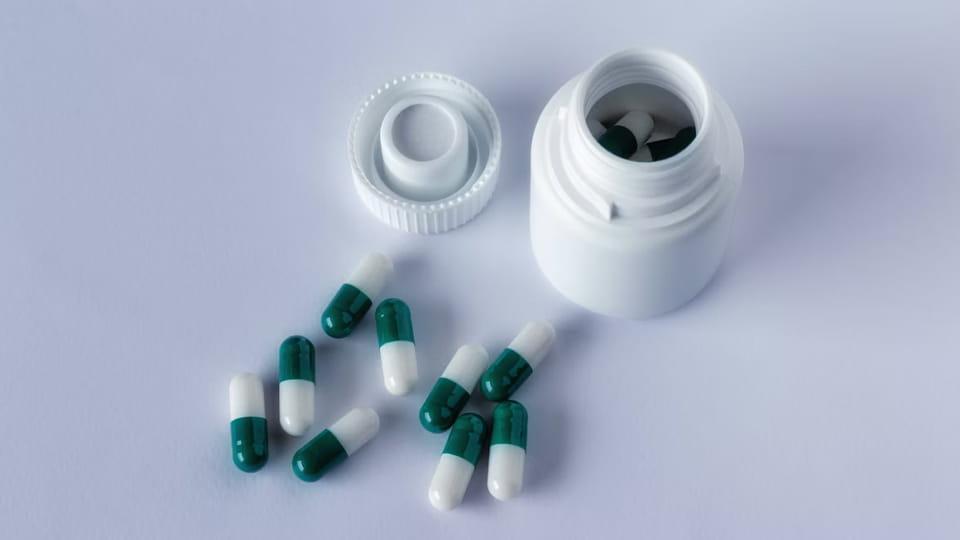
Flaschen sind die klassischen Mehrdosenbehälter. Kapseln werden in Flaschen abgefüllt (Kunststoff oder Glas) die dann gedeckelt werden. Dieses Format ist für Vitamine bekannt, Ergänzungen, und viele verschreibungspflichtige Pillen. Hauptmerkmale:
Vielseitigkeit: Flaschen können große Mengen aufnehmen (50–1000+ Kapseln) und eine Vielzahl von Produkten (Tabletten, Kapseln, Pulver, sogar Flüssigkeiten). Sie bestehen in der Regel aus HDPE- oder PET-Kunststoff, oder Glas (für starke chemische Inertheit).
Großverpackung: Für Kapseln, die zur wiederholten Einnahme bestimmt sind (tägliche Vitamine, Langzeittherapien), Flaschen sind praktisch. Patienten können mehrere Dosen gleichzeitig verabreichen.
Kosteneffizienz: Flaschenabfülllinien sind relativ einfach. Maschinen zählen oder wiegen Dosen schneller ab (z.B. Jinlus JL-16H kann bis zu füllen 100 Flaschen/Minute). Die Materialkosten pro Einheit sind oft niedriger als bei Blister, vor allem im Maßstab.
Einfache Handhabung: Verbraucher wissen, wie man Flaschen öffnet. Für ältere Patienten kann es einfacher sein, eine Flasche zu öffnen (insbesondere bei leicht zu öffnenden oder kindersicheren Verschlüssen) als Blasen zu schälen.
Sekundärverpackung: Flaschen ermöglichen die Aufnahme von Hilfsartikeln wie z Trockenmittelpakete (zur Feuchtigkeitsregulierung) oder Baumwolle. Sie bieten auch Platz für vollständige Produktetiketten rund um den Flaschenkörper, und kann in Kartons verpackt werden.
Figur: Jinlu JL-16H Kapsel-/Tablettenabfülllinie (100 Flaschen/Min) mit Entschlüsseler, Stange, Verschließer, und Etikettierer.
Kapselabfülllinien integrieren mehrere Maschinen: A Flaschen -Unkrambler (oder Futtertrichter), A Zähl- und Füllmaschine (das gibt X Kapseln in jede Flasche), A Verschließ-/Verschließmaschine (Kappen aufsetzen und festziehen), und a Etikettierungsmaschine. Zum Beispiel, Die JL-16H-Linie von Jinlu kann 3–40-mm-Kapseln verarbeiten, Erreichen von ~100 Flaschen/Min >99.8% Zählgenauigkeit. Flaschen können sehr schnell in großen Mengen abgefüllt werden. Um Vorschriften zu erfüllen, Flaschenlinien verfügen häufig über eine Station zum Einfüllen von Trockenmitteln (z.B. Silica-Packungen) und eine manipulationssichere Versiegelungsstation. Kindersichere Kappen sind ein weiteres häufiges Merkmal von Kinderarzneimitteln.
Bei der Auswahl der Flaschenverpackung, Berücksichtigen Sie Produktvolumen und Stabilität: Großserienprodukte (z.B. tägliche Vitamine) Anzugflaschen, wohingegen Kapseln mit geringem Volumen oder hochempfindlichen Kapseln möglicherweise Blisterpackungen bevorzugen. Beachten Sie, dass Flaschen im Allgemeinen angeboten werden geringerer inhärenter Feuchtigkeits-/Sauerstoffschutz als Blister mit hoher Barriere. Braunglas oder undurchsichtige Behälter können zusätzlichen Lichtschutz bieten, und innere Dichtungen (Aluminiumfolieneinlagen) kann die Barriere verbessern.
Beutel & Stick-Packs (Einzeldosisbeutel)
Beutel (und Stickpacks) Sind flexible Paketedie eine Dosis Pulver enthalten, Granulat oder Flüssigkeit. Bei Kapseln ist dies jedoch nicht so häufig der Fall, sie sind für verwandte Darreichungsformen relevant (z.B. Nutrazeutische Kapseln, zerbrochen in Pulverform, oder Pulverfüller selbst). Dennoch, Beutel und Stickpacks verdienen Erwähnung in einem Leitfaden zur Kapselverpackung:
Beutel sind in der Regel flache oder kissenförmige, aufgesiegelte Päckchen 3 oder 4 Seiten. Sie werden häufig für Einzeldosis-Pulver verwendet (z.B. Brausegranulat) oder sehr kleine Kapseln (Einige Apotheken geben Kapseln zur pädiatrischen Dosierung in Beuteln ab). Moderne Form-, Füll- und Verschließmaschinen können Beutel mit exakt kleinen Volumina füllen. Zu den Vorteilen gehört die Portabilität (passt in die Tasche), Bequemlichkeit, und präzise Dosierung (kein Teilabfall). Sachets sorgen außerdem für eine gute Abdichtung: Die hermetische Versiegelung verlängert die Haltbarkeit und verhindert Kontaminationen. Viele Arzneimittel (Pulver, Gele, Salben, Einzeldosis-Pillen) Verwenden Sie Beutel; Zum Beispiel, für den Notfall injizierbare Rehydrierungslösungen oder Einweg-Antibiotikapulver.
Stick-Packs sind lang, schmale Beutel (oft entlang einer langen Naht plus einer Endnaht versiegelt). Sie sind beliebt für Nahrungsergänzungsmittel in Pulverform (z.B. Instant-Getränkemischungen) und kann für Kapselpulver verwendet werden. Stick Packs verbrauchen im Allgemeinen weniger Material als Sachets und der Maschinendurchsatz ist höher (30–50 % schneller). Aufgrund der schmalen Öffnung sind sie ideal für frei fließende Pulver.
Sowohl Sachets als auch Stick Packs werden von hergestellt vertikale Form-Füll-Versiegelung (Vffs) oder horizontale FFS-Maschinen. Jinlus JL-VP-Serie, zum Beispiel, ist eine mehrspurige Stick-/Beutel-FFS-Maschine (40 Taschen/min/spur, ±0,02 g Genauigkeit) für Pulver, Granulat, Flüssigkeiten oder Gele. Wenn die Kapseln selbst in Beuteln verpackt würden, man würde den Beutel öffnen, um die Dosis zu entnehmen – aber häufiger, Die Kapseln sind unversehrt im Blister oder in der Flasche verpackt, während Beutel/Stickpacks pulverförmigen Inhalt verarbeiten.
Regulatorischer Hinweis: Für feste und halbfeste Arzneimittel sind Beutel und Stickpacks zulässig (gemäß WHO-Definitionen). Sie gelten als Primärverpackung, wenn sie das Produkt direkt enthalten. Wie Blasen, Beutel können kindersicher oder mit Aufreißkerben gestaltet werden.
Streifenverpackung
Streifenpackungen (auch Folienstreifen oder „Dosisbänder“ genannt) sind eine weitere Form der Einzeldosis-Primärpackung. Ein Streifen ist typischerweise eine schmale Materialbahn (oft Aluminium oder Mehrschichtlaminat) zusammengefaltet und versiegelt, mit Perforationen zwischen den Dosen. Im Gegensatz zu Blasen, Streifenpackungen bilden keine tiefen Hohlräume – stattdessen, Die Kapsel ist zwischen zwei Folienschichten eingebettet. Streifenverpackungen werden häufig in Asien und für Produkte verwendet, bei denen ein hoher Feuchtigkeitsschutz erforderlich ist, Blister jedoch zu sperrig sind. Wichtige Punkte:
Ausgezeichnete Barriere: Streifenpackungen verwenden häufig Aluminiumfolie, die für Feuchtigkeit und Sauerstoff undurchlässig ist. Dadurch sind sie ideal für feuchtigkeitsempfindliche Kapseln oder Kindermedikamente, bei denen eine lange Haltbarkeit erforderlich ist. Die WHO definiert Streifenpackungen sogar als geeignet für „Einzeldosen … fester oder halbfester Zubereitungen“..
Kompakt & Einheitsdosis: Wie Blasen, Streifenpackungen ermöglichen die Verwendung einer Dosis nach der anderen. Sie sind leichter und flacher als Blasen, platzsparend.
Ausrüstung: Streifenverpackungsmaschinen formen und versiegeln die Folie um jede Kapsel herum. Jinlu bietet auch Streifenverpackungsmaschinen an. Zum Beispiel, Umfangreiche Verpackungshinweise: Streifenpackungen verwenden eine Aluminium- oder Kunststofflaminierung und können Längen von vielen Dosen erreichen.
Figur:Streifenverpackungsmaschine
Aus Sicht der Auswahl, Streifenpackungen nehmen einen Mittelweg zwischen Flaschenpackungen ein (Schüttgut) und Blase (Steifigkeit). Sie werden oft ausgewählt, wenn sehr hohe Feuchtigkeitsbarriere wird benötigt, aber in einem dünnen, leichte Form. (Notiz: Streifenpackungen bieten möglicherweise keinen so eindeutigen Manipulationsnachweis wie Blisterpackungen, es sei denn, es werden zusätzliche Siegel verwendet.)
Sekundärverpackung & Beschriftung
Nach Auswahl eines Primärpakets, Normalerweise werden Kapseln hineingelegt Sekundärverpackung wie Kartons oder eingeschweißt Fälle. Kartons bieten zusätzlichen Schutz beim Versand, ermöglichen eine zusätzliche Beschriftung (Informationen zu Medikamenten, Branding, manipulationssichere Siegel), und helfen bei der Organisation von Multipack-Produkten. Wichtige Überlegungen zur Sekundärverpackung:
Kartons & Einlagen: Medizinische Kartons müssen Produktbeilagen enthalten (Beipackzettel mit Dosierungshinweisen, Chargennummer, Ablauf, Herstellerinfo, usw.). Hierbei handelt es sich häufig um Papierbroschüren, die in die Schachtel eingelegt werden.
Manipulationssiegel: Sekundärverpackungen verfügen üblicherweise über manipulationssichere Siegel (z.B. Sicherheitsbänder, Schrumpfbänder) um anzuzeigen, ob die Box geöffnet wurde.
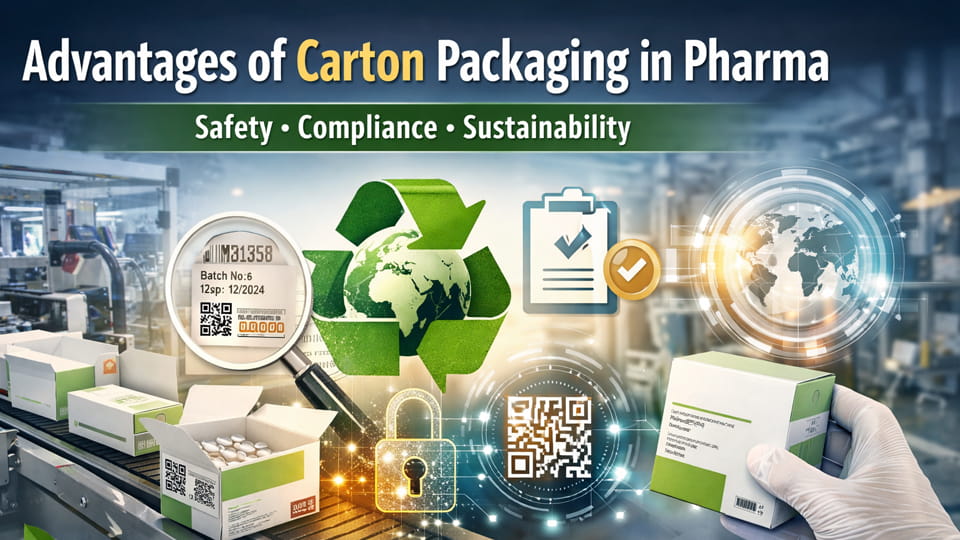
Serialisierung/Track & Verfolgen: In vielen Märkten (US-DSCSA, EU FMD), Einzelne Pakete müssen eindeutige Seriencodes tragen (Barcodes/QR) zur Fälschungsbekämpfung. Zu einer robusten Verpackungslösung gehören Etikettendrucker oder Tintenstrahlcodierer zum Drucken von Los-/Chargennummern und 2D-Codes auf Kartons.
Kindersicherung und Sicherheitsfunktionen: Für bestimmte Medikamente, Vorschriften (z.B. 21 CFR 211) Kindersichere Verpackungen vorschreiben. Dazu können Blisterfolien gehören, die für Kinder schwer zu öffnen sind, oder spezielle Verschlüsse auf Flaschen. Sekundärboxen können ebenfalls mit Schlössern ausgestattet sein oder bei Bedarf eine zweistufige Öffnung erfordern.
Stabilität und Compliance: Das kombinierte Primär- und Sekundärsystem muss das Produkt unter den angegebenen Lagerbedingungen stabil halten. Zum Beispiel, ICH-Stabilitätsstudien erfordern ausdrücklich die Prüfung der endgültigen verpackten Darreichungsform.
Zusammenfassend, Die Sekundärverpackung verpackt das Produkt für den endgültigen Vertrieb und stellt sicher, dass alle Kennzeichnungs- und Compliance-Funktionen vorhanden sind. Gutes Design steigert hier das Markenimage und den Benutzerkomfort (leicht zu öffnende Kartons, klare Beschriftung).
Materialien für Kapselverpackungen
Für den Schutz von Kapseln ist die Wahl des richtigen Verpackungsmaterials von entscheidender Bedeutung. Die Materialien müssen mit dem Medikament kompatibel sein, Barrierebedürfnisse erfüllen, und die Vorschriften einzuhalten (ISO 15378 GMP für Verpackungsmaterialien, usw.). Zu den gängigen Materialien gehören::
Blisterfolien:
PVC (Polyvinylchlorid): Niedrige Kosten, Durchsichtiger Kunststoff, der häufig für Blisterpackungen verwendet wird. PVC ist feuchtigkeitsdurchlässig (nicht so schützend) sofern nicht beschichtet.
PVC/PVDC: PVC mit PVDC beschichtet (Polyvinylidenchlorid) reduziert das Eindringen von Feuchtigkeit drastisch (Übliche Alu-PVC-Blister verwenden eine PVDC-Barriere).
Alu-PVC oder Alu-Alu: Auf PVC oder PET laminierte Aluminiumfolie. Alu-PVC bietet eine gute Barriere gegen Feuchtigkeit/Sauerstoff (gemeinsam), während Alu-Alu (Folie-Folie) bietet die höchste Barriere (Wird für sehr hygroskopische oder lichtempfindliche Kapseln verwendet).
Polypropylen (PP): Auf dem Weg zu einer nachhaltigen Alternative. PP-Blisterpackungen (Monomaterial) kann vollständig recycelt werden, wie beim PharmaGuard-Liner von Südpack, und funktionieren in automatisierten Linien immer noch gut.
Flaschenmaterialien:
HDPE (Polyethylen hoher Dichte): Gängiger Kunststoff für Pharmaflaschen; relativ inert und kostengünstig.
HAUSTIER (Polyethylenterephthalat): Bietet bessere Klarheit und Steifigkeit; gute Barriere gegen Gase. Wird oft für Nutrazeutika/Nahrungsergänzungsmittel verwendet.
Glas (Borosilikat Typ I): Wird für sehr feuchtigkeitsempfindliche oder parenterale Produkte verwendet; Glas bietet eine hervorragende Barriere gegen Feuchtigkeit und chemische Inertheit. Braunglas blockiert auch UV-Licht.
Andere Filme: Für Sachets und Stickpacks, mehrschichtige laminierte Folien (z.B. PET/Go/PE) dienen der Feuchtigkeitskontrolle und Versiegelung.
Allgemein, Wählen Sie die höchste Barriere, die für Ihre Kapsel sinnvoll ist. Zum Beispiel, Bei feuchtigkeitsempfindlichen Gelatinekapseln kann eine Alu-Alu-Blisterpackung oder eine Braunglasflasche mit Trockenmittel erforderlich sein. Im Gegensatz, Für unempfindliche Kapseln können Standard-PVC-Blister oder HDPE-Flaschen verwendet werden. Berücksichtigen Sie auch die Haltbarkeit: Längerfristige Produkte benötigen eine robustere Barriere.
Sicherheits-/Recyclinghinweise: Nachhaltige Trends tendieren zu Monomaterial-Rucksäcken (z.B. PP-Blisterpackungen, recycelbare PET-Flaschen). Prüfung von Materialien auf extrahierbare Stoffe, Kompatibilität, und Einhaltung der FDA/EU-Grenzwerte (z.B. USP <661> für Weichmacher) ist Teil der Verpackungskonformität.
Kapseltypen und Auswirkungen auf die Verpackung
Kapseln gibt es in verschiedenen Ausführungen und ihre Formulierung bestimmt die Verpackungsanforderungen:
Hartgelatinekapseln: Die gebräuchlichsten zweiteiligen Muscheln. Sie enthalten trockene Pulver/Granulat. Gelatineschalen speichern etwas Feuchtigkeit und werden spröde, wenn sie zu trocken sind, oder weich, wenn zu nass. Allgemein, Hartgelatinekapseln erfordern mäßig Feuchtigkeitskontrolle. Eine häufig genannte Lagerbedingung ist 15–25 °C und 35–65 % relative Luftfeuchtigkeit. Die Verpackung sollte dieses Umfeld aufrechterhalten: Zum Beispiel, Blisterverpackungen mit PVDC- oder Alu-Alu-Einlage, oder Flaschen mit Trockenmitteln, helfen, die Kapseln zu stabilisieren.
HPMC (Vegetarier) Kapseln: Hergestellt aus pflanzlicher Zellulose, Diese Schalen haben normalerweise eine geringere Eigenfeuchtigkeit als Gelatine und vertragen eine relative Luftfeuchtigkeit von bis zu ~70 %. Sie werden häufig für feuchtigkeitsempfindliche Wirkstoffe eingesetzt. Jedoch, sogar HPMC-Kapseln erfordern eine Barriereverpackung für sehr hygroskopische oder lichtempfindliche Füllgüter. In der Praxis, HPMC-Kapseln + Oft reichen PVC-Blister aus, aber eine hohe Barriere erhöht trotzdem die Sicherheit.
Softgel-Kapseln (Mit Flüssigkeit gefüllt):Kapseln Habe eine Gelatine (oder modifizierte Gelatine) mit Öl oder anderen Flüssigkeiten gefüllte Schale. Sie enthalten viel Wasser (oft ~5–10 %) in der Schale und kann Feuchtigkeit verlieren oder oxidieren. Softgels sind sehr feuchtigkeitsempfindlich: Sie benötigen normalerweise Braunglasflaschen (mit Trockenmittel) oder Blisterpackungen mit hoher Barriere, um Wasserverlust zu verhindern und die Wirksamkeit aufrechtzuerhalten. Weil Softgel-Schalen während der Herstellung temperatur-/feuchtigkeitsempfindlich sind, Manchmal sind Kühlkette und Spezialverpackungen erforderlich.
Enterische/modifizierte Wirkstofffreisetzungskapseln: Diese verfügen über spezielle Beschichtungen, um die Freisetzung im Magen-Darm-Trakt zu verzögern. Die Beschichtung sorgt für eine weitere Empfindlichkeitsschicht (es kann pH-empfindlich oder empfindlicher sein). Solche Kapseln sollten dennoch trocken gehalten und wie jede andere Kapsel typischerweise in Blisterpackungen oder Flaschen verpackt werden. Die Beschichtung erfordert konstante Bedingungen; Daher ist eine Verpackung wichtig, die die Temperatur-/RH-Kontrolle während der Verteilung gewährleistet.
Zusamenfassend, Die Kapselhüllenmaterial und Fülltyp wirkt sich auf die Wahl der Verpackung aus. Hoch feuchtigkeitsempfindliche Formulierungen bevorzugen immer die dichteste Barriere (Alu-Alu-Blister, Folienbeutel, oder verschlossene Flasche mit Trockenmittel). Weniger empfindliche Formulierungen bieten mehr Optionen. Testen Sie immer die Stabilität des fertig verpackte Kapsel (ICH Q1A erfordert Stabilität im vorgeschlagenen Behälter).
Die richtige Verpackung wählen (Entscheidungsflussdiagramm)
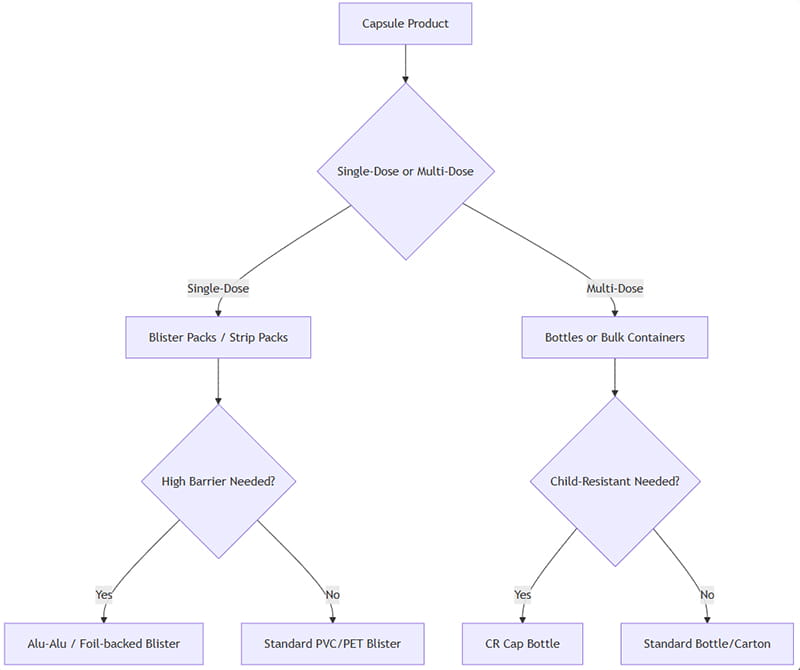
Die Auswahl einer optimalen Kapselverpackung erfordert die Bewertung mehrerer Faktoren: Darreichungsform, Einhaltung von Patienten, Produktempfindlichkeit, Haltbarkeit, regulatorische Anforderungen, und Kosten. Nachfolgend finden Sie einen vereinfachten Entscheidungsrahmen:
So wenden Sie dies an: Wenn die Kapseln als Einzeleinheiten gedacht sind (z.B. enge Dosierung oder Einzelhandels-Blisterkarten), Blasen/Streifen werden bevorzugt. Für Mehrfachdosierung (z.B. Nahrungsergänzungsmittel oder häufig konsumierte Medikamente), Flaschen sind effizienter. Wenn Feuchtigkeits-/Lichtschutz von entscheidender Bedeutung ist, Wählen Sie Optionen mit hoher Barriere (Allzeit, Bernsteinflasche). Wenn pädiatrische Sicherheit erforderlich ist, Verwenden Sie kindergesicherte Flaschenverschlüsse oder manipulationssichere Blister-Designs.
Weitere Kriterien aus der Branche sind u.a:
Darreichungsform: Tabletten/Kapseln → Blister, Flasche, oder ausziehen; Pulver → Beutel/Stickpack.
Produktempfindlichkeit: Für feuchtigkeitsempfindliche Medikamente, Verwenden Sie Alu-Alu-Blister oder Folienbeutel. Für lichtempfindliche, Verwenden Sie bernsteinfarbene Flaschen oder undurchsichtige Folien.
Patientencompliance: Einheitsdosisformate (Blister/Streifen) unterstützen die Einhaltung. Leicht zu öffnende Flaschen helfen Senioren.
Regulatorisch: Fügen Sie einen Originalitätsnachweis bei und erfüllen Sie die Verpackungsrichtlinien der FDA/EMA.
Haltbarkeit: Eine längere Haltbarkeit erfordert Materialien mit höherer Barriere (Allzeit, Mehrschichtfolien).
Produktionsmaßstab: Blistermaschinen sind Hochgeschwindigkeitsmaschinen (mittlere Lautstärke), Flaschenlinien zeichnen sich durch große Chargen aus, Beutelmaschinen verarbeiten flexible Linienraten.
Kosten: Material- und Maschinenkosten ausgleichen. Zum Beispiel, Für Flaschen ist möglicherweise ein geringerer Arbeitsaufwand pro Einheit, aber höhere Kunststoffkosten erforderlich; Stickpacks verbrauchen nur sehr wenig Folie pro Dosis.
Letztlich, Pilotversuche (Stabilitätsstudien, Verbraucherstudien) und die Gesamtkostenanalyse wird die endgültige Entscheidung leiten. Das obige Flussdiagramm ist ein Ausgangspunkt für typische Szenarien.
Kapselverpackungsausrüstung
Das Verpacken von Kapseln erfordert spezielle Maschinen. Nachdem die Kapseln gefüllt sind (durch Kapselfüller), Diese werden an Verpackungslinien übergeben:
Blistermaschinen: Jinlus haben wir bereits bemerkt DPP-180Pro, eine Hochgeschwindigkeits-Blistermaschine zum Tiefziehen. Es bilden sich Hohlräume (PVC- oder PET-Folie), füttert Kapseln (oder Tabletten), und mit Folie versiegelt, alles automatisch. Jinlu bietet Maschinen an (z.B. DPP-180, DPP-270Max) bis zu 4.800–11.200 Kavitäten/Stunde. Blistermaschinen werden mit Zählförderern kombiniert, um genau eine Kapsel pro Tasche abzugeben, und verfügen oft über Stanzmesser, um Blister in Karten zu trennen. Zusatzmodule (Druck/Kontrolle) Stellen Sie sicher, dass jede Blisterpackung lesbar und korrekt ist.
Zählen & Fülllinien (Flaschenlinien): Diese verwandeln lose Kapseln in Flaschen. Eine typische Linie hat: ein Flaschenentschlüsseler (organisiert leere Flaschen), ein Tabletten-/Kapselzähler (Vibrationsschüssel oder optisches System, das zählt und eine bestimmte Anzahl in jede Flasche fallen lässt), eine Verschließ-/Verschließmaschine, und eine Etikettierstation. Jinlu JL-16H Linie, Zum Beispiel, Rührt Flaschen, zählt 3–40 mm große Kapseln hinein, wendet Obergrenzen an, und Etiketten bis zu 100 Flaschen/min mit 99.98% Genauigkeit. Für hohe Lautstärke (Massenverpackung) Operationen, Modulare Linien mit mehreren Zählköpfen oder Schneckenfüllern können höhere Geschwindigkeiten erreichen. Zur Folienversiegelung können auch Induktions- oder Schrumpfgeräte eingesetzt werden.
Sachet-/Stick-Pack-Maschinen: Diese sind Form-Füll-Siegel (FFS) Maschinen. Jinlu JL-VP Serie ist ein mehrspuriges VFFS-System, das 30–40 Beutel oder Stickpacks pro Minute und Spur produzieren kann. Es dosiert Pulver oder Flüssigkeit präzise (Schneckenschnecken für Pulver, Pumpen für Flüssigkeiten) und Robben 3- oder 4-seitige Beutel oder 3-seitige Stickpacks. Die Maschinen verfügen über eine SPS-Steuerung für die Beutellänge, Servozuführungen für Genauigkeit (±0,02g), und hermetische Heißsiegelung. Solche Maschinen sind ideal für Einzeldosisprodukte, obwohl die Kapseln selbst selten intakt in „Beuteln“ verpackt sind.
Streifenverpackungsmaschinen: Streifenverpackungen werden auf speziellen Maschinen hergestellt, die überlappende Folien oder Filme heißversiegeln. Diese ähneln oft Blistermaschinen, verwenden jedoch Flachfolie. (Wenn Jinlu Strippacker anbietet, ähnliche Integration wie Beutelmaschinen.)
Sekundärverpackungsmaschinen:Kartoniermaschinen kann Kartons aufrichten, Blister oder Flaschen und Beipackzettel einlegen, und Kisten schließen. Pharmazeutische Kartonierer verarbeiten häufig Blisterkartons aus Folie oder Beutel mit Kapseln. Kartonpacker (für Außenhüllen) und Palettierer vervollständigen die Linie für die Massenproduktion.
Gerätekonformität: Alle Verpackungsmaschinen für Arzneimittel müssen dem GMP-Design entsprechen (Edelstahl, reinigbare Oberflächen, validierte Leistung). Die Maschinen von Jinlu sind CE/cGMP-zertifiziert, oft mit konfigurierbaren Schutzvorrichtungen und Auswurfsystemen für Pillen, die nicht den Spezifikationen entsprechen. Integration ist der Schlüssel: Zum Beispiel, Eine Blistermaschine kann direkt in einen Kartonierer einfahren, der Kartons aufrichtet und jede Blisterkarte verpackt. Umfassende Systeme (Von der Befüllung bis zur endgültigen Schachtel) ermöglichen eine durchgängige Automatisierung der Kapselverpackung.
Überlegungen zu Vorschriften und Compliance
Für die Kapselverpackung von Arzneimitteln gelten strenge Vorschriften. Zu den wichtigsten Punkten gehören::
GMP-Anforderungen: FDAs 21 CFR 211 Unterabschnitt G erfordert schriftliche Verfahren für den Empfang und die Prüfung von alle Verpackungsmaterialien vor Gebrauch. Das bedeutet Blasen, Flaschen, Etiketten, Kartons usw. müssen den Spezifikationen entsprechen (Keine Mängel). Um Verwechslungen vorzubeugen, ist eine getrennte Lagerung der Verpackungsmaterialien nach Produkten vorgeschrieben. GMP-Anhang der WHO 9 Ebenso werden die Verpackungskontrollen detailliert beschrieben. Eine gute Herstellungspraxis erfordert Rückverfolgbarkeit (Chargennummern auf der Verpackung) und saubere Handhabung.
Stabilitäts- und ICH-Richtlinien: ICH Q1A(R2) schreibt vor, dass Stabilitätsstudien für das fertige Produkt durchgeführt werden müssen Behälterverschlusssystem. In der Praxis, Das bedeutet, dass Sie Testchargen von Kapseln genau wie geplant verpacken müssen (gleiche Blisterfolie, gleicher Flaschentyp) und sie Echtzeit-Stabilitätsbedingungen aussetzen. Jede Änderung der Verpackung erfordert möglicherweise eine neue Stabilitätsprüfung.
Serialisierung & Rückverfolgbarkeit: In vielen Märkten, eindeutige Identifikatoren (Barcodes/2D-Codes) auf Sekundärverpackungen (und manchmal primäre Blasen) sind verpflichtet, Medikamente entlang der Lieferkette zu verfolgen. Die Leitungen müssen über Drucker oder Applikatoren für diese Codes verfügen. Beim Verpackungsdesign kommt es häufig auch auf die Manipulationssicherheit an (gemäß US-/EU-Recht).
Kindersichere und seniorengerechte Verpackung: Für kontrollierte Substanzen oder bestimmte Medikamente ist eine Kindersicherung erforderlich. Dabei handelt es sich häufig um spezielle Verschlüsse auf Flaschen (z.B. Drücken und Drehen) oder schwer abziehbare Blasen. Jedoch, Auch die Zugänglichkeit für den Patienten muss berücksichtigt werden (leicht zu öffnen für Senioren). Konsultation des Vergiftungsschutzverpackungsgesetzes (UNS) oder vergleichbare regionale Regelungen erforderlich.
ISO-Standards: Primärverpackungslieferanten sollten sich an die ISO halten 15378 (GMP für Primärverpackungsmaterialien) Qualität zu gewährleisten. Obwohl hier nicht direkt zitiert, Hierbei handelt es sich um einen allgemein anerkannten Standard für Verpackungshersteller. Die Maschinen selbst sollten den pharmazeutischen Maschinenstandards entsprechen (Ce, Ul, usw.) Und 21 CFR Teil 11 wenn eine Datenaufzeichnung erfolgt.
Kennzeichnungsvorschriften: Kapseln müssen mit dem Produktnamen gekennzeichnet sein, Dosierung, Verfallsdatum, Hersteller, usw. Dies gilt auch für Kartons und Blister (Manchmal trägt jedes Blistersegment einige aufgedruckte Informationen). FDA und EMA haben spezifische Anforderungen an die Informationen, die auf Primär- und Sekundäretiketten erscheinen müssen.
Gesamt, Treffen mit der FDA, Die Einhaltung der Richtlinien der EMA und der WHO ist von wesentlicher Bedeutung. Viele Paketierer arbeiten mit regulierten Lieferanten zusammen (wie Jinlu) der validierte Maschinen und Dokumentation bereitstellen kann (IR/WH/PQ).
Abschluss
Die Wahl der richtigen Kapselverpackung erfordert einen ausgewogenen Schutz, Benutzerfreundlichkeit, und Kosten. Blasenpackungen, Flaschen, Beutel, und Streifen haben jeweils ihren Platz Pharmazeutische Verpackung. Faktoren wie Feuchtigkeitsempfindlichkeit, Darreichungsform, und die Bedürfnisse des Patienten leiten die Entscheidung. Neben, Es müssen strenge regulatorische und GMP-Anforderungen erfüllt werden.
Bei Jinlu Packing, Wir sind auf ganzheitliche pharmazeutische Verpackungslösungen spezialisiert. Unsere Ausrüstung – von Hochgeschwindigkeits-Blistermaschinen Zu vollautomatische Zählung & Abfülllinien – hilft Ihnen, Kapseln effizient und konform zu verpacken. Wir unterstützen auch nachhaltige Entscheidungen (z.B. Maschinen, die neue recycelbare Folien verarbeiten) und bieten Service aus einer Hand (Anpassung, Validierung). Unser Team kann Ihnen bei der Bewertung des besten Kapselverpackungssystems für Ihr Produkt helfen.
Bereit zur Optimierung Ihrer Kapselverpackung?Kontaktieren Sie Jinlu Packing noch heute für fachkundige Beratung und Angebote. Unsere Lösungen basieren auf weltweiten Qualitätsstandards und höher 3,000 zufriedene Kunden weltweit. Lassen Sie uns Ihre Kapseln für den Erfolg verpacken!
FAQs zur Kapselverpackung
Was ist eine Kapselverpackung??
Unter Kapselverpackung versteht man den Prozess, bei dem pharmazeutische Kapseln in Schutzmaterialien eingeschlossen werden, um die Stabilität aufrechtzuerhalten, Sicherheit, und Compliance. Zu den gängigen Formaten gehören Blisterverpackungen, Flaschen, und Streifenverpackung. In der pharmazeutischen Praxis, Die Verpackung dient nicht nur der Eindämmung – sie schützt die Kapseln vor Feuchtigkeit, Sauerstoff, und Kontamination, was sich direkt auf die Qualität und Haltbarkeit des Arzneimittels auswirkt.
Was ist die beste Verpackung für pharmazeutische Kapseln??
Es gibt keine einzelne „beste“ Option – sie hängt von Ihrem Produkt und Ihrem Markt ab. • Blisterverpackung → am besten für feuchtigkeitsempfindliche oder hochwertige Medikamente • Flaschenverpackung → am besten für die Lagerung großer Mengen und Nahrungsergänzungsmittel geeignet • Streifenverpackung → in kostensensiblen Märkten üblich Blisterverpackungen werden häufig bevorzugt, da sie Schutz vor Einzeldosen und eine bessere Isolierung gegenüber der Umgebung bieten.
Welche Materialien sollte ich zum Schutz meines Kapselprodukts verwenden??
Verwenden Sie Materialien, die die wichtigsten Bedrohungen blockieren (Feuchtigkeit, Sauerstoff, Licht). Zum Beispiel, Alu-Alu-Folienblister oder Braunglasflaschen bieten eine hervorragende Barriere für feuchtigkeitsempfindliche Kapseln. Für stabile Produkte sind PVC- oder PET-Blister mit PVDC-Beschichtung üblich und günstiger. HDPE-Flaschen sind Standard, benötigen jedoch möglicherweise einen Trockenmittelbeutel, wenn die Kapseln empfindlich sind. Bewerten Sie die Wasserdampfdurchlässigkeitsraten (WVTR) von Filmen. In nachhaltigkeitsbewusster Produktion, Erwägen Sie recycelbare Monomaterialien (z.B. PP-Blisterpackungen). Testen Sie die Verpackungskompatibilität stets anhand von Stabilitätsstudien.
Wie schützt die Kapselverpackung die Arzneimittelstabilität??
Kapseln reagieren empfindlich auf Umweltfaktoren wie Feuchtigkeit, Sauerstoff, und Licht. Richtige Verpackung: • Verhindert die Feuchtigkeitsaufnahme • Reduziert Oxidation • Behält die chemische Stabilität bei Blasenverpackung, insbesondere, schafft versiegelte Mikroumgebungen für jede Kapsel, die Haltbarkeit deutlich verlängern.
Welche Verpackungsmaschinen benötige ich für Kapseln??
Es kommt auf das Format an. Gegen Blasen, Sie benötigen eine Blisterform-/Verschließmaschine (mit Hohlraumformen passend zu Ihrer Kapsel) plus möglicherweise ein Kartonierer. Für Flaschen, Sie benötigen eine Flaschenfüll-/Verschließlinie (Entschlüsseler, Gegenfüller, Verschließer, Label). Für Stickpacks, Verwenden Sie eine vertikale Form-, Füll- und Verschließmaschine für Beutel. Jinlu bietet all dies: z.B. unsere Blister der DPP-Serie, JL-16H Zähllinie, und JL-VP Beutelverpacker. Bei der Auswahl der richtigen Maschine kommt es auf die Kapazität an, Kapselgröße, und erforderliche Integrationen (Vision-Systeme, Stationen ablehnen, usw.).
Wie entscheide ich mich zwischen Blisterpackungen und Flaschen für eine Kapsel??
Berücksichtigen Sie Faktoren wie die Dosierung (Single vs. mehrere), Stabilitätsbedürfnisse, und Patientengebrauch. Für eine bequeme Einzeldosis und hohen Schutz (speziell für feuchtigkeits-/lichtempfindliche Kapseln), Blasen werden oft bevorzugt. Aus großvolumigen oder wirtschaftlichen Gründen, Normalerweise werden Flaschen gewählt. Auch, wenn kindersichere oder seniorenfreundliche Funktionen benötigt werden, Flaschen bieten möglicherweise mehr Optionen. In der Regel, Passen Sie die Eigenschaften Ihrer Kapsel an die Verpackung an: z.B. sehr hygroskopische Kapseln → Alu-Alu-Blister; stark nachgefragte Nahrungsergänzungsmittel → Flaschen.
Kleines Fu, Gründer von Jinlupacking, bringt vorbei 20 langjährige Erfahrung im pharmazeutischen Maschinenbau. Unter seiner Führung, Jinlu hat sich zu einem vertrauenswürdigen Lieferanten für integriertes Design entwickelt, Produktion, und Verkäufe. Petty teilt mit Leidenschaft sein umfassendes Branchenwissen, um Kunden bei der Bewältigung der Komplexität von Pharmaverpackungen zu unterstützen, Sicherstellen, dass sie nicht nur Ausrüstung erhalten, sondern eine echte, auf ihre Produktionsziele zugeschnittene Servicepartnerschaft aus einer Hand.