Defekte Kapselfüllung kann auf verschiedene Arten auftreten: Inkonsistentes Füllgewicht, Pulveraustritt, Kapseltrennung fehlgeschlagen, schlechte Verriegelung, gesprungene Muscheln, klemmen, oder Kapseln, die leer oder nur teilweise gefüllt sind. Die Ursache ist nicht immer die Kapselfüllmaschine selbst. Fließeigenschaften des Pulvers, Qualität der Kapselhülle, leer, Dosiereinstellungen, Werkzeugausrichtung, Maschinengeschwindigkeit, und Betriebsbedingungen können sich alle auf die Füllleistung auswirken.
In diesem Ratgeber werden die häufigsten Fehler bei der Kapselfüllung erläutert, was sie typischerweise verursacht, und wie man sie Schritt für Schritt behebt. Außerdem erfahren Sie, wie Sie feststellen können, ob ein Problem eher mit dem Pulver zusammenhängt, Kapselhüllen, oder Abfüllanlagen, und welche Prüfungen Sie durchführen müssen, bevor Sie Maschineneinstellungen ändern oder einen Servicetechniker rufen. Ob Sie eine automatische Kapselfüllmaschine betreiben, die pharmazeutische Produktion leiten, oder evaluieren Kapselfüllanlagen für eine neue Linie, Dieser Leitfaden bietet Ihnen eine praktische Möglichkeit, die Grundursache zu identifizieren und wiederkehrende Füllprobleme zu reduzieren.

Die folgende Tabelle fasst einige häufige Probleme beim Befüllen von Kapseln zusammen, ihre Symptome, und typische Ursachen. Jedes wird in den folgenden Abschnitten im Detail untersucht.
| Fehlertyp | Symptom | Häufige Ursache(S) |
| Trennungsfehler | Kapselkappen und Kapselkörper verkleben oder fallen zusammen, obwohl dies nicht der Fall sein sollte. | Schlechte Kapselqualität, Vakuumverlust, falsch ausgerichtete Werkzeuge. |
| Bruch/Risse der Kapsel | Gebrochen, vorher verbeulte oder geplatzte Kapseln, während, oder nach dem Befüllen. | Schwache/brüchige Schalen, übermäßiger Druck, Überfüllung. |
| Füllgewichtsvariation | Kapseln unterfüllt oder überfüllt (Gewicht außerhalb der Spezifikation). | Fehlerhafter Dosiermechanismus, schlechter Pulverfluss, Probleme beim Entleeren des Trichters. |
| Pulverrückstände (Staubige Kappen) | Pulver haftet an der Außenseite der Kapsel oder läuft aus. | Schlechte Schneckenbildung, hohe Pulverfeuchtigkeit, unzureichende Staubkontrolle. |
| Schließungsfehler / Teleskopierbar | Kappen nicht richtig verriegelt oder falsch ausgerichtet (teleskopiert). | Falsch ausgerichtete Schließsegmente, falsche Pin-Einstellungen, Verschmutzung an der Schleuse. |
| Leere Kapseln | Kapseln verlassen die Linie ohne Füllung. | Trennfehler oder fehlender Leerkapsel-Eliminator; verklemmtes Futter. |
| Fehler bei der Zuführung/Indizierung | Mehrere Kapseln gefüttert, Kapseln ausgelassen, oder Marmelade. | Fehlausrichtung des Magazins, verschlissene Vorschubmechanismen, Störungen des Doppeleinzugsmechanismus. |
| Beschädigtes Siegel/Band | Flüssigkeitskapseln verlieren ihre Versiegelung, oder das Originalitätsband ist defekt. | Falsche Banding-Einstellungen, falsche Banddicke, Leckage auffüllen. |
Jeder Defekt hat ein einzigartiges Muster und eine einzigartige Lösung. In den folgenden Abschnitten, Wir decken diese acht Kategorien einzeln ab: Symptome erkennen, Ursachenermittlung, und versuchen, Lösungen zu finden.
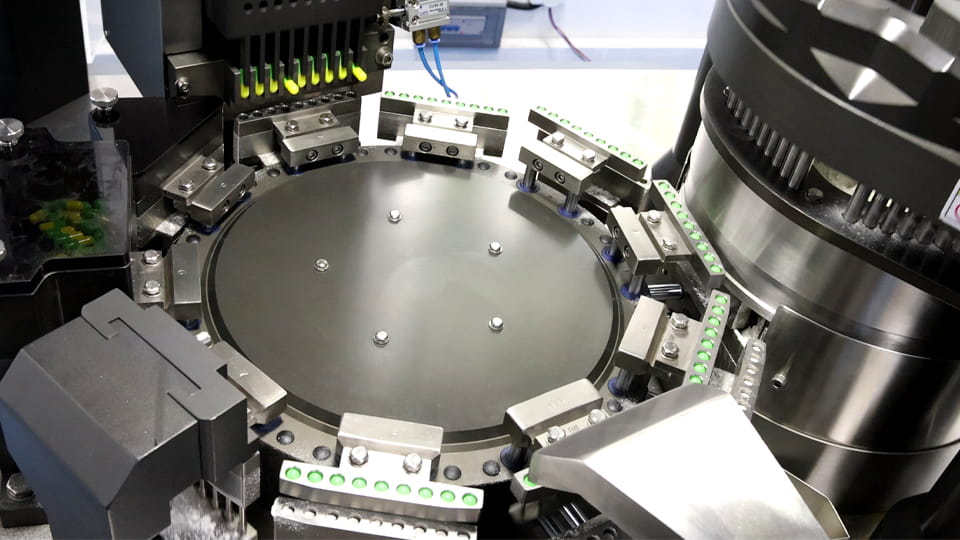
In den meisten Kapselfüllern, leere Kapselhüllen Sie gelangen auf einen rotierenden Teller und werden durch einen Vakuumsauger in zwei Teile getrennt: Kappen (obere Hälften) und Körper (unteren Hälften). Wenn die Trennung scheitert(mehr lesen: Warum sich Kapselkappen und -körper nicht trennen lassen?), beide Hälften bleiben verbunden oder fallen falsch, die Linie stoppen.
Symptom: Jeder Zyklus, Die Kapselkappe bleibt am Körper hängen oder die Kappe fällt falsch in den Zuführring. Das Gerät blockiert häufig oder gibt einen Alarm aus.
Mögliche Ursachen: Schlechte Kapselqualität oder falsches Vakuum sind die Hauptursachen. Verzogene oder brüchige Kapseln lösen sich möglicherweise nicht. Verschmutzte oder undichte Vakuumleitungen, eine schwache Vakuumpumpe, oder verstopfte Filter können die Saugkraft beeinträchtigen. Falsch ausgerichtete Platten oder Tabletts führen dazu, dass die Kapsel unter der Saugwirkung nicht richtig sitzt. Auch übermäßige statische Aufladung oder falsche Luftfeuchtigkeit können zum Anhaften der Kappen führen. Auch wenn Ihr Vakuumsystem neu ist, Oft schleichen sich Undichtigkeiten oder Fehleinstellungen ein, die ein sauberes Abziehen der Kappe vom Gehäuse verhindern.
Fehlerbehebung: Erste, Überprüfen Sie die Kapseln. Verwenden Sie eine Gut/Schlecht-Lehre, um Längen und Durchmesser zu überprüfen. Ersetzen Sie alle nicht den Spezifikationen entsprechenden oder beschädigten Kapseln. Überprüfen Sie das Vakuum: Stellen Sie sicher, dass die Pumpe für die Maschine und die Schläuche geeignet ist, Ventile, und Filter sind intakt. Überwachen Sie den Vakuumdruckmesser an der Füllstation – er sollte den OEM-Spezifikationen entsprechen und stabil sein. Reinigen oder ersetzen Sie verstopfte Filter und reparieren Sie Lecks. Passen Sie die Vakuumstärke schrittweise an: zu stark kann Muscheln platzen lassen, zu schwach wird sie nicht auseinanderreißen. Nächste, Überprüfen Sie die mechanische Ausrichtung. Die Kapselzuführplatte, oberes Segment, und die Körperausrichtungsplatte müssen präzise positioniert sein, sodass jede Hälfte gerade unter der Ansaugung sitzt. Passen Sie bei Bedarf den Abstand der Trennplatte oder die Sicherungsstifte an, Befolgen Sie dabei die Bedienungsanleitung der Maschine. Senkung der statischen Aufladung (Verwendung von Ionisatoren oder Anpassen der Luftfeuchtigkeit) kann auch die Freisetzung zerbrechlicher Kapseln unterstützen. Wenn die Maschine über einen Leerkapsel-Entferner verfügt, Stellen Sie sicher, dass es funktioniert, sodass alle Teile nicht getrennt sind (doppelt) Kapseln werden vor dem Befüllen entnommen.
Die Kapseltrennung ist der entscheidende erste Schritt bei der automatisierten Abfüllung. Eine Vakuumpumpe zieht den Körper nach unten in die Ausrichtplatte, Trennen Sie es von seiner Kappe. Ein stabiles Vakuum und eine präzise Ausrichtung sind der Schlüssel zur Vermeidung festsitzender Kapseln.
Wenn Anpassungen das Problem nicht lösen, Beachten Sie diese Tipps: Probieren Sie frische Kapseln einer anderen Charge oder eines anderen Lieferanten („Kapselmacher“) bekannt für enge Toleranzen. Stellen Sie sicher, dass Temperatur und Luftfeuchtigkeit bei der Lagerung die Kapseln nicht zu weich oder spröde machen. Endlich, Überprüfen Sie, ob mechanische Entriegelungshilfen vorhanden sind (wie Trennstifte) funktionieren, sofern Ihre Maschine über solche verfügt. Mit sauber, hochwertige Schalen und ein richtig abgestimmtes Vakuumsystem, Trennungsfehler sind selten.
Symptom: Sie sehen zerbrochene Kapseln im Futternapf, rissige Muscheln am Ausgang, oder Kapseln platzen beim Befüllen/Verschließen. Diese Mängel zerstören das Produkt und können die Maschine verschmutzen.
Mögliche Ursachen: Kapseln können zerbrechen, wenn sie zu spröde sind oder wenn die Maschine zu viel Kraft ausübt. Schalen, die unsachgemäß gealtert sind (zu trocken) oder zur falschen Zeit aufgenommene Feuchtigkeit kann leicht reißen. Überfütterung von Pulver (Überdosierung) Beim Schließen der Kappe entsteht zu viel Innendruck, Dies kann zu Rissen oder Dellen am Kappenende führen. Auch korrekte Kapseln können brechen, wenn die Verschlussstifte zu tief eingestellt sind oder die Verriegelung nicht funktioniert (Versiegelung) Kraft ist zu hoch. Temperaturschwankungen (heiße Geräte oder Umgebungen) und statische Aufladung können die Schalen während der Verarbeitung zerbrechlicher machen.
Fehlerbehebung: Erste, Kapselqualität bestätigen: Stellen Sie sicher, dass Sie frische Muscheln von einem guten Hersteller verwenden Kapsellieferant. Überprüfen Sie die Luftfeuchtigkeit im Lager; ideale RH für Gelatine oder HPMC Muscheln geht es darum 40-60%. Wenn zu trocken oder zu feucht, Kapseln können spröde werden oder zusammenkleben. Verwenden Sie ein Messgerät für den Kapseldurchmesser – übergroße oder unförmige Kapseln neigen eher zu Rissen. Reduzieren Sie die Schließtiefe und die Druckeinstellung der Maschine. Für schnelllaufende Maschinen, Selbst eine kleine Anpassung der Kompressionsstifte kann Spannungen beseitigen, die zum Reißen der Kapselenden führen.
Wenn der Bruch weiterhin besteht, Füllgewicht prüfen: Erzwingen Sie die Füllung zu sehr?? Überfüllte Kapseln (sogar von 5-10% oben spez) wird beim Schließen knacken. Stellen Sie sicher, dass die Dosierscheibe oder die Stopfstifte richtig dosieren; Kalibrieren oder ersetzen Sie sie bei Bedarf. Endlich, Glätten Sie alle Kanten der Maschinenteile, die mit den Schalen in Berührung kommen – Grate oder falsch ausgerichtete Platten können die Kapseln einklemmen. Nach Änderungen, Führen Sie die Geschwindigkeit langsamer aus, um die Auflösung zu überprüfen, bevor Sie sie wieder hochfahren.
Bruch verhindern: Verwenden Sie hochwertige HPMC-Kapseln, wenn Ihre Formel sehr hygroskopisch ist; Sie vertragen Feuchtigkeit besser als Gelatine. Vermeiden Sie übermäßiges Vakuum oder statische Aufladung, die die Schalen austrocknen könnten. Verschärfen Sie die Umgebungskontrollen – Temperaturspitzen über 25 °C oder plötzliche Feuchtigkeitsschwankungen können Risse verursachen. In der Regel, Optimieren Sie das Füllgewicht und die Verschlusseinstellungen auf das für eine ordnungsgemäße Versiegelung erforderliche Minimum. Dies verhindert „Beulen“ oder Nadellöcher an den Kapselenden, die durch zu aggressive Verschlüsse entstehen.
Symptom: Kapseln scheinen zufällig unterfüllt zu sein (zu hell) oder überfüllt (zu schwer), Gewichtskontrollen nicht bestanden. Diese Inkonsistenz verstößt gegen die Einheitlichkeit der Dosis und kann zur Ablehnung durch die Qualitätskontrolle führen.
Mögliche Ursachen: Fehler beim Füllgewicht sind häufig auf das Dosiersystem oder die Pulvereigenschaften zurückzuführen. Eine falsch ausgerichtete oder abgenutzte Dosierscheibe, Stopfstifte, oder Schnecke liefert unterschiedliche Pulvermengen. Die Probleme mit dem Pulverfluss sind enorm: wenn die Mischung Feuchtigkeitsklumpen aufweist, schlechte Granulierung, oder Trennung, Einige Kapseln enthalten mehr Pulver, andere weniger. Ein leerer Trichter oder eine langsame Zufuhrgeschwindigkeit können dazu führen, dass die Kapseln zeitweise verhungern. Sogar die Rotationsgeschwindigkeit des Füllrings vs. Eine nicht übereinstimmende Schneckengeschwindigkeit kann zu Über-/Unterfüllung der Taschen führen.
Fehlerbehebung: Beginnen Sie mit der Kalibrierung des Dosiermechanismus an Ihrem Gerät Kapselfüllgerät. Auf einem automatischen Füller, Dabei muss der Spalt und das Spiel der Dosierscheibe überprüft werden(S) und Stopfstifte. Stellen Sie sicher, dass die Schneckengeschwindigkeit und die Scheibengeschwindigkeit aufeinander abgestimmt sind, damit die Pulverzufuhr gleichmäßig erfolgt. Wenn das Problem nur sporadisch auftritt, Überprüfen Sie den Pulverbehälter: Füllen Sie es nach, bevor ein Alarm bei niedrigem Füllstand auftritt, und stellen Sie das Fütterungssystem sicher (Vibratoren, Rührwerke) läuft reibungslos. Verbessern Sie den Pulverfluss, indem Sie die Mischung trocknen, Hinzufügen von Gleitmitteln (z.B. Magnesiumstearat), oder Granulieren auf eine engere Partikelgröße.
Die richtige Bildung und Fließfähigkeit des Pulvers ist für die Dosierungsgenauigkeit von entscheidender Bedeutung. Eine inkonsistente Füllung ist häufig auf falsch kalibrierte Dosierer oder Pulver mit unterschiedlicher Granulatgröße zurückzuführen. Das Bild zeigt einen Bediener, der eine Pulverdosierscheibe feinjustiert, um sicherzustellen, dass jede Kapsel die richtige Menge erhält.
Überwachen Sie auch Umweltfaktoren: Hohe Luftfeuchtigkeit kann zur Verklumpung des Pulvers führen, während statische Aufladung zu Flusen führt. Verwenden Sie Feuchtigkeitskontrollen oder fügen Sie bei Bedarf Trockenmittel hinzu. Nach Anpassungen, Führen Sie eine Probencharge durch und überprüfen Sie in regelmäßigen Abständen das Kapselgewicht. Bei Unter-/Überfütterung auch bei gutem Pulver und sauberer Mechanik weitermachen, das Dosiersystem selbst (Stifte oder Scheibe) Möglicherweise muss aufgrund von Verschleiß ausgetauscht werden.
Symptom: Kapseln erscheinen mit sichtbarem Pulver auf der Außenseite, oder Sie sehen, dass sich am Automaten Bußgelder ansammeln. Beim Befüllen oder Verschließen kann etwas Pulver aus der Kapsel austreten, Feinstaub bilden(mehr lesen: So beheben Sie Pulverlecks im Kapselfüller?). Dies wird oft als „staubige“ Kapseln bezeichnet.
Mögliche Ursachen: Beim Füllvorgang kann ein „Pfropfen“ Pulver zurückbleiben, der nicht vollständig in die Kapsel gelangt. Wenn der Butzen nicht sauber geformt ist, überschüssiges Pulver wird ausgespuckt. Gründe hierfür sind unter anderem die falsche Tiefe der Dosierscheibe, abgenutzte Klingen, oder zu hohe Füllgeschwindigkeiten. Pulver mit hoher Luftfeuchtigkeit kann auch kleben bleiben und verschütten. Wenn nein Kapselpolierer oder das Vakuum der Poliermaschine ist ausgeschaltet, Loses Pulver auf den Kapseln wird nicht entfernt. Selbst statische Elektrizität kann dazu führen, dass Pulver an Oberflächen haften bleibt. Zusammenfassend, schlechte Schneckenbildung, hohe Luftfeuchtigkeit, und unzureichende Staubabsaugung sind übliche Verdächtige.
Fehlerbehebung: Überprüfen Sie die Dosier- und Stopfstifte: Sie sollten das Pulver vor dem Einfüllen gut verdichten. Passen Sie die Stampfreihenfolge oder die Dosierscheibe an, um eine dichtere Schnecke zu bilden. Manchmal hilft die Verwendung einer kleineren Dosieröffnung oder einer langsameren Füllgeschwindigkeit. Überprüfen Sie den Trichter- und Zufuhrzustand: wenn sich Ihr Rezept geändert hat (neuer Hilfsstoff) oder die Charge hat viele Bußgelder, Sieben Sie die Mischung oder trocknen Sie sie weiter.
Stellen Sie sicher, dass der Kapselpolierer vorhanden ist (falls ausgestattet) läuft mit der richtigen Geschwindigkeit und dem richtigen Vakuum. Durch das Polieren wird nicht nur die Kapsel gereinigt, Es schiebt auch loses Pulver zurück in den Trichter. Wenn Ihrer Linie ein Polierer fehlt, Erwägen Sie den Einbau einer Hochleistungssauganlage am Auswurfkanal. Füllmaschine und Zuführwege regelmäßig reinigen; Selbst kleine Klumpen in Spalten können abbrechen und an den Kapseln haften bleiben.
Symptom: Entweder lassen sich die Kapseln nicht richtig verriegeln oder sie werden schief zusammengefügt (teleskopierbar). Möglicherweise sehen Sie auch, dass Inhalt aus der Verbindung oder der Streifenbildung austritt (auf flüssigen Kapseln, Das Dichtungsband ist beschädigt). Die Produkte scheinen falsch ausgerichtet oder nicht vollständig versiegelt zu sein.
Mögliche Ursachen: Fehlausrichtungen in der Schließstation sind häufige Ursachen. Wenn die oberen und unteren Segmente des Schließwerkzeugs nicht perfekt ausgerichtet sind, Die Kappe kann zur Seite verschoben werden (teleskopiert) anstatt voll zu sitzen. Eine falsche Länge oder ein falscher Druck des Verschlussstifts kann auch dazu führen, dass die Kapseln nur teilweise verschlossen sind. Eine Überfüllung kann dazu führen, dass der Deckel oben ungleichmäßig verklemmt. Kontamination (Pulver oder Fett) in der Kappe-Körper-Schnittstelle kann eine dichte Abdichtung verhindern. Für flüssige Kapseln, Es wird ein „Band“ aus Dichtungsmaterial aufgetragen; wenn die Höhe oder Temperatur des Bandierrads ausgeschaltet ist, Das Band ist unvollständig oder weist Falten auf.
Fehlerbehebung: Erste, Überprüfen Sie die mechanische Ausrichtung. Verwenden Sie Fühlerlehren oder ein Teststück, um die Nocken- und Sicherungsringtiefen auszurichten. Stellen Sie den Schließhub so ein, dass jeder Kappenboden bündig mit der Gehäusenut abschließt. Überprüfen und reinigen Sie die Kappe und den Gehäusedurchgang; Selbst ein kleiner Fleck zwischen Kappe und Gehäuse stoppt den Verschluss. Für Teleskopkoffer, Stellen Sie sicher, dass jede Kapselkammer auf den Scheiben kein seitliches Spiel hat und dass die Timing-Nocken korrekt sind. Abgenutzte Zahnräder oder Lager können zu geringfügigen Fehlindizierungen führen.
Bei Verwendung von Kapseln unterschiedlicher Größe (Länge, Durchmesser), Stellen Sie den Trichter und das Magazin so ein, dass nur eine Größe zugeführt wird, da Variationen zu Sperrkonflikten führen können. Wenn Kapseln in den Zuführbahnen „klappern“., sie können ungleichmäßig in der Verbindung ankommen. Schließkraft verringern und erneut testen: Manchmal löst eine Verkürzung der Stiftlänge um Zehntelmillimeter ein Verriegelungsproblem.
Für mit Flüssigkeit gefüllte Kapseln: Überprüfen Sie die Banding-Einstellungen. Führen Sie einen Test ohne Inhalt durch, um zu sehen, ob die Bänder richtig angewendet werden; Passen Sie die Bandradgeschwindigkeit an, Heizung, und Banddicke. Ein schöner Tipp von JinLu: wenn Banddefekte auftreten, Überprüfen Sie, ob das Gelatinebandmaterial die richtige Zugfestigkeit aufweist und nicht vorzeitig schrumpft. Wenn alles andere fehlschlägt, Entfernen Sie den Verschlussstift und setzen Sie ihn wieder ein bzw. ersetzen Sie ihn.
Symptom: Das fertige Produkt besteht aus Kapseln ohne Pulver oder Inhalt – praktisch leere Hüllen. Dies kann einer Sichtprüfung oder Gewichtskontrolle standhalten, was nachgelagerte Qualitätsprobleme verursacht.
Mögliche Ursachen: Der Hauptverursacher ist ein Fehler beim oder vor dem Füllschritt. Wenn die Trennung fehlgeschlagen ist und eine leere Kapsel vorhanden ist (Zum Beispiel, eine freie Kappe oder ein freier Körper) Die Kapsel wurde nicht gefüllt, wurde aber nicht vom Leerkapsel-Eliminator ausgeworfen, es wird leer herauskommen. Ein weiterer Fall ist, dass die Pulverzufuhr unterbrochen wurde: Ein Stau in der Schnecke oder ein verstopfter Einfüllstutzen könnte dazu führen, dass das Pulver an einer Station nicht in die Kapsel gelangt. Auch defekte Spender oder Sensoren können eine Leermeldung auslösen (wenn die Maschine glaubt, sie sei gefüllt, aber tatsächlich kein Pulver erhalten hat).
Fehlerbehebung: Beobachten Sie den Ausstoß und verfolgen Sie jede leere Kapsel bis zu ihrem Ursprungsort in der Maschine zurück. Überprüfen Sie den Auswerfer für leere Kapseln: Ist es zu locker eingestellt oder ausgeschaltet?? Der Auswerfer soll alle Kapselhälften herausschlagen, die sich nie getrennt oder richtig bewegt haben. Aktivieren oder passen Sie es an, falls verfügbar. Überprüfen Sie die Pulverzufuhr: Ist der Trichterfüllstand zu diesem Zeitpunkt niedrig?? Achten Sie auf teilweise Verstopfungen an der Schnecke oder Dosierscheibe. Führen Sie eine Leine langsam aus und achten Sie genau darauf, ob Sie eine ausgehungerte Füllung fangen. Reinigen Sie alle statischen Attraktoren, an denen Pulver haften bleiben und nicht hineinfließen könnte.
Wenn das Problem nur sporadisch auftritt, Überprüfen Sie den Zeitpunkt: Überprüfen Sie, ob im gleichen Abstand leere Hüllen auftauchen, deutet auf einen mechanischen Steuerfehler hin. Wenn regelmäßig ein Leerzeichen herauskommt, sagen, jede 20. Stelle, Möglicherweise springt eine Rolle oder ein Servo über die Zähne. Spannen Sie die Riemen und überprüfen Sie die Rückmeldungssignale des Encoders.
Symptom: Kapseln werden doppelt in dieselbe Kammer eingezogen (zwei Kappen oder zwei Körper) oder in keine Kapsel überspringen. Alternativ, Kapseln können im Magazin oder in den Zuführschienen stecken bleiben. Dies führt zu Maschinenstopps oder unregelmäßiger Ausgabe.
Mögliche Ursachen: Fehler bei der Kapselfütterung sind häufig mechanischer Natur. In halbautomatischen Kapselfüllmaschinen oder manuellen Maschinen, Es könnte sich um den Kapselsäblock oder ein zu großes Einfülltor handeln. In vollautomatischen Systemen, verschlissene Vorschubräder, Magnete, oder falsch ausgerichtete Führungen führen zu Fehleinzügen. Zu viel Vakuum während des Vorschubs kann auch dazu führen, dass eine Kapsel vorzeitig aus dem Magazin „springt“., was zum Doppel führt. Umgekehrt, Ein verstopftes Magazin oder Fach führt dazu, dass der Füllring nicht mehr funktioniert.
Fehlerbehebung: Für halbautomatische Kapselherstellungsmaschinen, Befolgen Sie diese Schritte: Stellen Sie sicher, dass der Kapselbehälter nicht überfüllt ist – manchmal verhindert eine Reduzierung des Kapselfüllstands, dass zwei Kapseln gleichzeitig vorhanden sind. Stellen Sie den Schieber so ein, dass die Kapseln eine nach der anderen fallen; Eine zu frühe Eröffnung führt zu Doppeln. Überprüfen Sie, ob das Scheibenritzel und die Kapselausrichtung korrekt in ihrer Position eingerastet sind. Reinigen Sie die Einzugsschienen und Magazine: Klebriges Pulver oder Öle können die Kapseln verstopfen. Wenn Ihre Maschine eine Vakuumzufuhr verwendet, Reduzieren Sie die Saugkraft oder fügen Sie Luftdüsen hinzu, um festsitzende Kapseln zu trennen. Ersetzen Sie alle abgenutzten Federn oder Gummiteile im Futterautomaten.
Bei Maschinen mit Kapseln in vorverschlossenen Wannen oder Vorfüllmagazinen, Stellen Sie sicher, dass die Wannen den richtigen Stil haben und in gutem Zustand sind. Überprüfen Sie Sensoren oder Nocken, die die Kapselposition erkennen; wenn ein Sensor verschmutzt oder falsch ausgerichtet ist, Das Gerät geht möglicherweise davon aus, dass eine Kapsel vorhanden ist, obwohl dies nicht der Fall ist, Dies führt zu Indexierungsfehlern.
Symptom: In mit Flüssigkeit gefüllte Hartkapseln (die oft ein Gelatine-„Band“ haben, um die Kappe am Körper abzudichten), Das Dichtungsband ist unvollständig, geneigt, oder Peeling. Möglicherweise sehen Sie an der Stelle, an der sich das Band befinden sollte, einen Fleck oder eine Lücke.
Mögliche Ursachen: Eine schlechte Banderolierung ist normalerweise ein Problem an der Banderolierungsstation des Flüssigkapselfüllers. Wenn die Höhe oder der Winkel des Banderolierrads falsch ist, Das Band lässt sich nicht gleichmäßig auftragen. Eine im Verhältnis zur Flaschengeschwindigkeit falsche Radgeschwindigkeit führt ebenfalls zu dünnen oder klumpigen Bändern. Wenn die Dichtungslösung (typischerweise eine Gelatine- oder Polymermischung) ist zu heiß oder zu kalt, es wird nicht richtig haften. Ein verschlissenes Bandrad oder eine unterschiedliche Banddicke können zu Defekten führen. Auch, Wenn die Kapseln falsch ausgerichtet sind, kommt es zu einer Streifenbildung (aufgrund der oben genannten Schließungs- oder Fütterungsprobleme), Die Bänder werden verzerrt herauskommen.
Fehlerbehebung: Erste, Isolieren Sie den Banding-Schritt. Ohne Flüssigkeitsfüllung, Führen Sie leere Kapseln durch die Banderole und beobachten Sie sie genau. Stellen Sie die Höhe und Spannung des Banderolierrads so ein, dass es die Kappe-Körper-Verbindung gerade berührt. Stellen Sie die Radgeschwindigkeit so ein, dass die Bandbreite ohne Dehnung dem Kapselumfang entspricht. Temperatur kalibrieren: Die meisten Bandierer benötigen das Gel bei etwa 40–45 °C. Wenn die Bänder zu dünn sind, Kühlen Sie es etwas ab oder verlangsamen Sie die Walze; wenn klumpig, Untersuchen Sie die Bandlösung auf Rückstände. Überprüfen Sie die Seitenrollen, die die Kapsel halten: Sie sollten die Kapsel einfach mit der richtigen Geschwindigkeit rollen. Endlich, Stellen Sie sicher, dass vor dem Banderolieren keine flüssige Füllung ausläuft – wenn die Kapseln bereits nass austreten, Die Band bleibt nicht hängen. Beseitigen Sie zunächst eventuell verschüttetes Füllgut.
Wenn nach den Anpassungen immer noch Bänder auf den Kapseln „tanzen“., Die Wurzel hat möglicherweise eine inkonsistente Kapselgröße oder einen inkonsistenten Verschluss aus früheren Schritten. Besuchen Sie diese auch noch einmal. In schweren Fällen, Das Material des Banderolierrads muss möglicherweise ausgetauscht werden (wenn getragen). Betreiben Sie zur Überprüfung der Einstellungen immer ein Banddickenmessgerät, sofern verfügbar.
Wenn ein Problem auftritt, Ein systematischer Ansatz spart Zeit. Hier ist eine empfohlene Reihenfolge:
Eine Schlüsselkompetenz besteht darin, zu unterscheiden, ob ein Defekt darauf zurückzuführen ist Maschine oder die Materialien. Hier sind einige Richtlinien:
Im Allgemeinen, Beginnen Sie möglichst mit den Materialien: Versuchen Sie einen Kontrolllauf mit einem bekanntermaßen guten Standardpulver und -kapseln. Wenn der Defekt weiterhin besteht, es ist mit ziemlicher Sicherheit mechanisch. Umgekehrt, wenn eine andere Kapselcharge das Problem sofort behebt, Dann war die Maschine in Ordnung.
Der beste Weg, Fehler zu reduzieren, besteht darin, sie zu verhindern. Erwägen Sie diese Maßnahmen:
Durch die Kombination geplanter vorbeugender Wartung mit Echtzeitüberwachung, Viele Mängel können behoben werden, bevor sie die Produktion stoppen.

Manchmal, Mängel entstehen durch Probleme, die nur der Maschinenhersteller lösen kann. Wenden Sie sich an den Support Ihres Herstellers, wenn:
Halten Sie die Details Ihres Supportvertrags bereit. Wenn Sie ein Problem melden, mit Angabe des Maschinenmodells und der Seriennummer vorbereitet sein, eine klare Beschreibung des Mangels, und etwaige Fehlercodes. Fotos oder kurze Videos des Defekts in Aktion können von unschätzbarem Wert sein. Ein kurzer Anruf zu Beginn kann später stundenlanges Rätselraten ersparen.
Defekte bei der Kapselfüllung können frustrierend sein, Aber mit einem strukturierten Ansatz können Sie Ausfallzeiten und Ausschuss minimieren. Die Schlüssel sind gute vorbeugende Wartung, hochwertige Materialien, Und sorgfältige Maschinenkalibrierung. Indem Sie die oben beschriebenen Symptome und Ursachen kennen lernen, Produktionsingenieure und Bediener können Probleme schnell diagnostizieren. Wenn Probleme auftreten, Gehen Sie zunächst die Materialprüfungen durch, dann Geräteeinstellungen. Wenn ein Mangel weiterhin besteht, Zögern Sie nicht, die Expertise Ihres Herstellers zu nutzen – schließlich, Sie haben alles gesehen!
Bereit für eine reibungslosere Kapselproduktion? Kontaktieren Sie JinLu Packing für die neueste zuverlässige Kapselfüllausrüstung und fachkundige Unterstützung. Unsere Techniker können Ihnen bei der Behebung hartnäckiger Probleme behilflich sein und Ihnen das Richtige empfehlen automatische Kapselfüllmaschine oder Upgrades zur endgültigen Beseitigung von Mängeln.
Risse an der Spitze weisen häufig darauf hin, dass die Schale brüchig geworden ist oder die Füllkraft zu hoch ist. Überprüfen Sie die Kapselfeuchtigkeit (sollte bei Gelatine etwa 12–15 % betragen). Wenn es sich um eine neue Charge oder wärmeres Wetter handelt, Befeuchten Sie den Raum. Auch, Überprüfen Sie die Schließstifte – eine kleine Anpassung kann übermäßige Kraft abbauen.
Ein plötzlicher Abfall des Füllgewichts weist normalerweise auf ein Futterproblem hin. Suchen Sie nach einem Stau im Pulverbehälter oder einem niedrigen Füllstand im Pulverbehälter. Überprüfen Sie außerdem, ob das Trichterrührwerk läuft. Kalibrieren Sie die Dosierscheiben neu, falls eine verschoben ist. Wenn Pulver aufgrund von Feuchtigkeit verklumpen, sieben und trocknen Sie sie.
Eine Doppelfütterung wird üblicherweise durch Einstellen des Kapselzufuhrschiebers oder der Zeitsteuerung des Sämechanismus behoben. In unserem Semi-Auto-Guide, Die Lösung bestand darin, das Särad zu verlangsamen und den Sortierblock so auszurichten, dass jede Kapsel einzeln zentriert wurde. Stellen Sie außerdem sicher, dass der Trichter nicht überfüllt ist, und das Vakuum ist am Einzug nicht zu stark (der zwei gleichzeitig ziehen kann).
Normalerweise nicht ohne eine vollständige Umstellung. Unterschiedliche Kapsellängen/-durchmesser erfordern oft den Austausch kompletter Werkzeuge (Teile wie Segmentplatten, Füllringe, Nocken). Der Einsatz gemischter Größen ohne Umrüsten führt zu Fehlzuführungen und Verschlussfehlern. Planen Sie für jedes Kapselformat immer separate Läufe ein.
Ein fortschreitendes Blockieren kann auf Überhitzung oder Maschinendrift hinweisen. Überprüfen Sie, ob Schmiermittel nachgefüllt werden muss oder ob sich ein Motor erwärmt und an Leistung verliert. Auch, Überprüfen Sie die Kapselspuren auf Rückstandsansammlungen. Durch die Wärmeausdehnung können sich Teile festziehen; Ein längerer Abkühltest könnte Probleme aufdecken.
Referenzen:
1.PubMed —— Untersuchung verschiedener Faktoren, die die Verkapselung auf der automatischen Kapselfüllmaschine im Deckel beeinflussen
2.PubMed —— Die Auswirkungen von Materialeigenschaften auf das Kapselfüllgewicht und die Gewichtsvariabilität in Dosierdüsenmaschinen
3.ScienceDirect—— Die Auswirkung von Materialattributen und Prozessparametern auf die Gleichmäßigkeit des Pulverbetts während eines Füllvorgangs einer Niedrigdosis-Dosatorkapsel
4.ResearchGate —— Kapseldefekte und Abhilfemaßnahmen für die Pharmaindustrie
5.PDA Journal of Pharmaceutical Science and Technology —— Entwicklung eines Prozesskontrollschemas zur Reduzierung der Gewichtsschwankung von Kapseln
6.ScienceDirect—— Pulverabfüllung in Hartgelatinekapseln auf einer Tamponfüllmaschine