
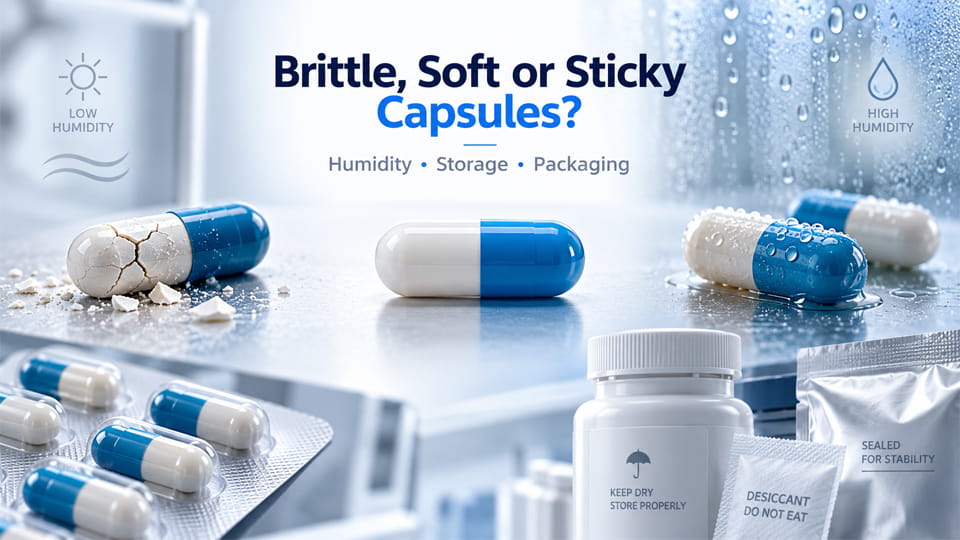
يمكن لمجموعة من الكبسولات أن تبدو مثالية عند دخولها المستودع وتظل تسبب مشاكل بعد بضعة أسابيع. على خط تعبئة الكبسولة, قد تتشقق القذائف أثناء الانفصال. دفعة أخرى قد تبدو ناعمة, تشوه في القادوس, أو التمسك ببعضها البعض. قد يلوم الإنتاج حشو الكبسولة, قد تشك ضمان الجودة في مورد الصدفة, وقد يتساءل المشتري عما إذا كانت مواد التعبئة والتغليف غير كافية.
في كثير من الأحيان, القضية الحقيقية هي توازن الرطوبة.
تقوم قذائف الكبسولات الصلبة بتبادل الماء مع الهواء المحيط, ال صياغة ملء, ومساحة الرأس داخل الحزمة الخاصة بهم. لقشور الجيلاتين على وجه الخصوص, فقدان الكثير من الرطوبة يقلل من المرونة ويزيد هشاشة الكبسولة; اكتساب الكثير من الرطوبة يمكن أن يسبب التليين, تورم, و كبسولات لزجة. HPMC و بولولان تتصرف بشكل مختلف, لكنها ليست مستقلة تمامًا عن الرطوبة أيضًا. يتعرف USP على الجيلاتين, هايبروميلوز, والأصداف الصلبة بولولان كأنظمة بوليمر تحتوي على الماء, بينما تعالج إرشادات USP محتوى الماء بشكل منفصل, النشاط المائي, والتعبئة والتغليف ونقل الرطوبة أمر مهم الجودة الصيدلانية المفاهيم.
تركز هذه المقالة على كبسولات صلبة مكونة من قطعتين تصبح ناعمة, ليس شكل الجرعة المنفصل الذي يسمى عادةً أ كبسولة هلامية.
متى الكبسولات تصبح هشة, ابدأ بالبحث عن فقدان الرطوبة. تحتوي كبسولات الجيلاتين الصلبة عادةً على حوالي 13– 16% ماء في ظل ظروف مناسبة. تشير الأبحاث إلى أنه عندما ينخفض محتوى الماء فيها عن نطاق التشغيل الطبيعي، وذلك بسبب انخفاض الرطوبة النسبية, حشوات جافة جدًا أو استرطابية, أو هجرة الرطوبة - تفقد القشرة مرونتها تدريجيًا ويمكن أن تنكسر بسهولة أكبر. على العكس, امتصاص الماء المفرط يمكن أن يلدن الجيلاتين, جعل القذائف أكثر ليونة وربما لزجة.
لفرق الإنتاج وضمان الجودة, أربع نقاط هي الأكثر أهمية:
فيما يلي ملخص سريع للعوامل البيئية الشائعة وتأثيراتها على الكبسولات:
| حالة | تأثير قذيفة الكبسولة | ملء/تأثير المسحوق | العمل الوقائي |
| جاف جدًا (انخفاض الرطوبة النسبية) | الكبسولات تفقد الماء وتصبح هش; قد تتشقق أو تتحطم | قد تكون المساحيق الدقيقة تلتصق بالقذيفة بسبب ساكنة; يمكن للحشوة الاسترطابية سحب الرطوبة من القشرة | رفع الرطوبة (استخدام المرطبات); غرف التوريد الختم; استخدم كبسولة أقل امتصاصًا (HPMC) |
| رطب جدًا (رطوبة نسبية عالية) | كبسولات تمتص الرطوبة, تليين أو تنتفخ; قد تصبح مترهلة أو لزجة | مساحيق تتكتل; الزيوت قد تنتفخ الكبسولات | استخدم مزيلات الرطوبة; استخدام التعبئة والتغليف عالية الحاجز; إضافة المجففات |
| هجرة الرطوبة | يتحرك الماء بين القشرة والمحتوى حتى التوازن; يستطيع تجف قذيفة أو مبتل ذلك اعتمادا على التعبئة | يمكن أن تتحلل المكونات النشطة أو تتكتل | تطابق القشرة وملء الرطوبة; موازنة الكبسولات في الرطوبة النسبية الخاضعة للرقابة قبل التعبئة |
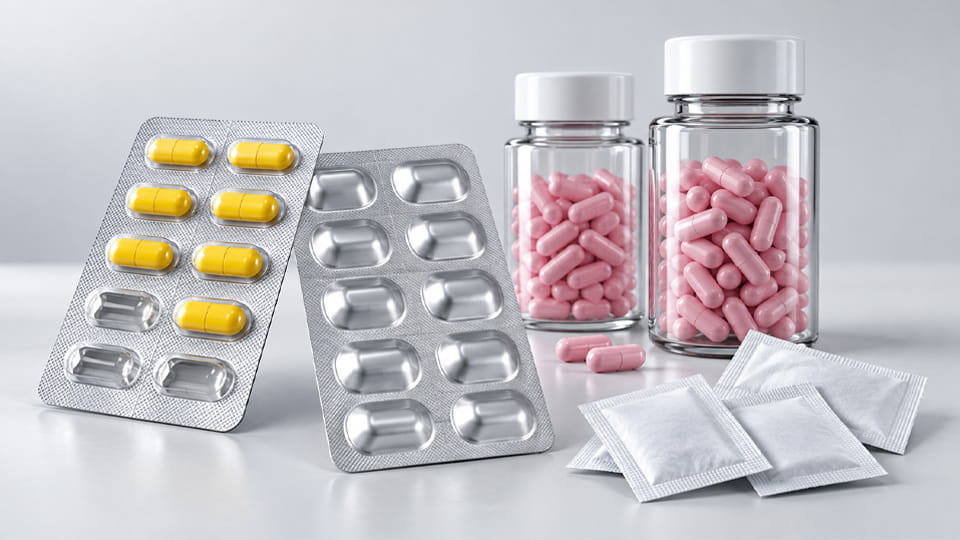
| قضايا التعبئة والتغليف | التسريبات أو الأختام السيئة تسمح بدخول/خروج الرطوبة, مما تسبب في رطوبة القشرة بشكل غير متوقع | التلوث أو دخول الرطوبة من البيئة | استخدم التغليف المحكم (بثور ألو ألو, أكياس احباط); ضمان الأختام المناسبة; تشمل المجففات |
| درجات الحرارة القصوى | الحرارة العالية تخفف الجيلاتين (∼30-32 درجة مئوية نقطة الانصهار), يعزز الارتباط المتبادل; يمكن أن تؤدي درجة الحرارة المنخفضة جدًا إلى تكثيف الرطوبة | يمكن أن تؤدي الحرارة إلى تسريع تدهور التعبئة; يمكن أن يؤدي التجميد إلى إتلاف بعض واجهات برمجة التطبيقات | يخزن في درجة حرارة موصى بها 15-25 درجة مئوية (الجيلاتين); تجنب النقاط الساخنة وأشعة الشمس |
وبالتالي فإن الهدف العملي ليس "الحفاظ على الكبسولات جافة". هو الحفاظ على التوازن المثبت بين محتوى الرطوبة في الكبسولة, الرطوبة النسبية, النشاط المائي, صياغة, التعبئة والتغليف, وظروف التخزين.
غلاف الكبسولة الصلب ليس حاوية بلاستيكية خاملة. الجيلاتين, HPMC, والبولولان عبارة عن أنظمة بوليمر محبة للماء, ويتفاعل الماء مع بنيتها. تتضمن دراسات USP لجميع أنواع القشرة الصلبة الثلاثة الماء بشكل واضح كجزء من تكوين القشرة.
للجيلاتين, يساهم الماء أيضًا في المرونة. في ظل الظروف المذكورة عادة تقريبًا 15-25 درجة مئوية و30-65% رطوبة نسبية, تحتوي قشور الجيلاتين الصلبة عادة على حوالي 13– 16% ماء. تشير الأبحاث التي تراجع أداء الكبسولة إلى أن الانخفاض تحت هذا النطاق الطبيعي يؤدي إلى فقدان تدريجي للمرونة, في حين أن الماء الزائد يجعل القشرة أكثر ليونة وأكثر لزوجة.
هذا هو السبب رطوبة الكبسولة لا يمكن الحكم عليها من الغرفة RH وحدها. يتحرك النظام باستمرار نحو التوازن الذي يشمل الهواء المحيط, قذيفة كبسولة, صياغة, ومساحة رأس الحزمة.
يميز USP أيضًا محتوى الماء من النشاط المائي (فصيل عبد الواحد). يخبرك إجمالي الرطوبة بكمية الماء الموجودة, بينما يساعد النشاط المائي في وصف مقدار المياه المتاحة للمشاركة في الأنشطة البدنية, كيميائية, أو العمليات الميكروبيولوجية. للحصول على مسحوق استرطابي داخل كبسولة, يعد هذا التمييز مفيدًا لأن مادتين لهما رطوبة إجمالية مماثلة قد يكون لهما ميول مختلفة لتبادل الماء.
يبدو نموذج هجرة الرطوبة المبسط هكذا:
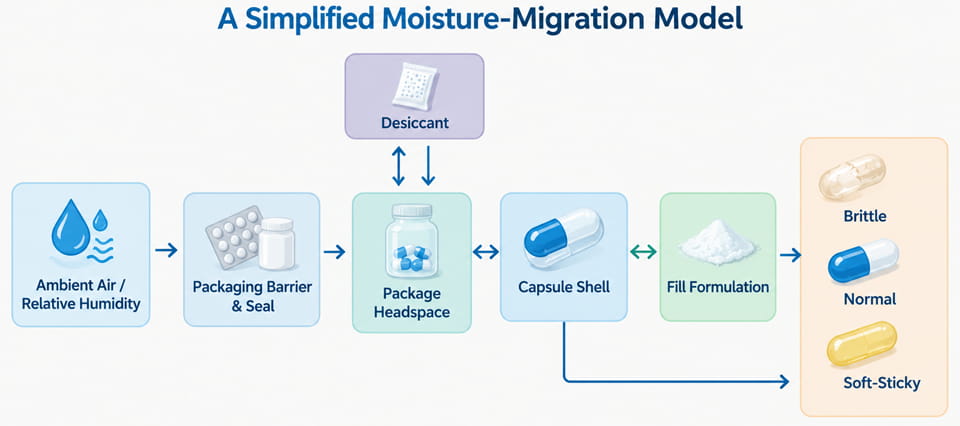
النقطة الأساسية هي أن الماء يمكن أن يتحرك في كلا الاتجاهين. قد تؤدي العبوة إلى إبطاء دخول الرطوبة من الخارج, بينما لا يزال الماء يعاد توزيعه بين القشرة والحشوة داخل العبوة المغلقة. دراسات كبسولات الجيلاتين الصلبة لقد أثبتوا بالضبط عملية نقل الرطوبة من القشرة إلى الملء.
الآلية الأكثر شيوعًا هي فقدان الرطوبة المفرط من القشرة.
قليل الرطوبة النسبية يخلق تدرجًا رطبًا بين القشرة والمناطق المحيطة بها. كما يفقد الجيلاتين الماء, يصبح أقل مرونة وأقل قدرة على امتصاص الضغط الميكانيكي. وجدت الأبحاث الكلاسيكية وجود علاقة قوية بين هشاشة كبسولة الجيلاتين والرطوبة النسبية, بينما أكدت الدراسات اللاحقة مرارًا وتكرارًا أن السلوك الميكانيكي يتغير مع انخفاض رطوبة القشرة.
في الممارسة العملية, قد تظهر قذائف هشة كما:
السؤال التشخيصي المهم هو حيث تنكسر الكبسولة. إذا تشققت الكبسولات الفارغة قبل دخول المسحوق إلى الجسم, التحقيق في حالة القشرة, تخزين, عمر الكبسولة, الصحة الإنجابية البيئية, الاتصال بالأدوات, والفراغ أولا. إذا حدث التشقق بشكل رئيسي أثناء الإغلاق, فائض, عمق الإغلاق, تنسيق, وتصبح القوة الميكانيكية المفرطة من المساهمين الأكثر احتمالا. يميز تحليل عيوب ملء الكبسولة في Jinlu بين ضعف القشرة وأسباب المعدات/العملية.
عادة ما يتحرك تدرج الرطوبة في الاتجاه المعاكس.
عند الرطوبة العالية, الجيلاتين يمتص الماء. الماء يلدن البوليمر, تقليل الصلابة والتصلب. أ 2025 دراسة مضبوطة تعريض الجيلاتين وقذائف HPMC ل 25درجة مئوية/75% رطوبة نسبية وجدت تليينًا كبيرًا مرتبطًا بالرطوبة في الجيلاتين وانخفاضًا ملحوظًا في قوته الميكانيكية; احتفظ HPMC بالسلامة الميكانيكية بشكل أفضل في ظل نفس الاختبار.
على أرضية الإنتاج, يمكن أن تظهر الرطوبة الزائدة على شكل أجسام ناعمة, تغييرات الأبعاد, ضعف حركة الغطاء / الجسم, كبسولات تلتصق ببعضها البعض, عدم استقرار التغذية, أو تشوه. وجدت الدراسات الميكانيكية السابقة أيضًا أن تليين الكبسولة أصبح ملحوظًا بشكل خاص مع تحرك RH إلى أعلى تقريبًا 60%, على الرغم من أن الاستجابة الدقيقة تعتمد على صياغة القشرة.
درجة الحرارة مهمة لأنها تغير سلوك المادة وديناميكيات نقل الرطوبة. يمكن أن تؤدي الحركة المفاجئة بين البيئات الباردة والدافئة أيضًا إلى خلق خطر التكثيف المحلي. لهذا السبب, تجنب التعامل مع الرطوبة النسبية ودرجة الحرارة كعناصر تحكم غير ذات صلة; يختبر المنتج كلاهما في وقت واحد.
نعم، وهذا هو أحد الأسباب التي يتم التغاضي عنها بشكل متكرر هشاشة كبسولة الجيلاتين.
لنفترض أن المستودع الخاص بك يتم التحكم فيه بشكل صحيح, لقد اجتازت الكبسولات غير المفتوحة الفحص الوارد, وتعمل الأصداف الفارغة بشكل جيد على الجهاز. بعد التعبئة وبعد عدة أسابيع من التخزين, لكن, الكبسولات النهائية تتشقق بسهولة.
قد يكون الحشو يسحب الماء من القشرة.
بحثت دراسة معروفة في مجلة العلوم الصيدلانية في مادة دوائية شديدة الاسترطابية مملوءة في كبسولات جيلاتينية صلبة. تنتقل الرطوبة من القشرة إلى المسحوق, خفض محتوى الماء في القشرة بدرجة كافية لخلق مشكلة هشاشة. استخدم الباحثون علاقات امتصاص/امتصاص الرطوبة للتنبؤ بالتوازن وإعادة تصميم توازن الرطوبة.
ولهذا السبب يجب على فرق الصياغة تقييم ما هو أكثر من فقدان المسحوق الأولي عند التجفيف.
أ مسحوق استرطابي لديه انجذاب للمياه في الغلاف الجوي. إذا كان نشاطها المائي وخصائص الرطوبة المتوازنة تختلف بشدة عن تلك الموجودة في غلاف الكبسولة, يمكن أن تستمر هجرة الرطوبة حتى بعد إغلاق الكبسولة. يعد إطار النشاط المائي الخاص بـ USP مفيدًا هنا لأن aw يتناول التوافر الديناميكي الحراري للمياه بدلاً من مجرد قياس النسبة المئوية الإجمالية للمياه.
من الناحية العملية, ينبغي لفرق ضمان الجودة والصياغة أن تسأل:
هل الحشوة جافة جدًا؟? هل هو استرطابي بقوة? ما هو ايزوثيرم الامتصاص? ما هو نشاطها المائي? ماذا يحدث بعد وصول القشرة والتركيبة إلى التوازن?
لا تفترض أن تحديد رطوبة القشرة ورطوبة المسحوق بشكل مستقل يكفي. يعتمد استقرار المنتج النهائي على نظام مشترك.
لكبسولات الجيلاتين الصلبة الفارغة, عادة ما تستشهد الأدبيات الصيدلانية تقريبًا 15-25 درجة مئوية و30-65% رطوبة نسبية كنافذة عمل/تخزين مناسبة مرتبطة بنطاق مياه الصدفة الطبيعي الذي يتراوح بين 13-16%. تستخدم بعض الإرشادات التجارية والصناعية نطاق رطوبة أضيق قليلاً مثل 35-65% رطوبة نسبية. وينبغي التعامل مع هذه القيم باعتبارها إرشادات فنية عامة، وليس باعتبارها مواصفات عالمية. يجب أن تحظى تعليمات التخزين والشهادة/المواصفات المعتمدة من مورد الكبسولة لديك بالأولوية.
ل تخزين كبسولات الجيلاتين, تجنب التعرض لفترات طويلة للهواء الجاف جدا, رطوبة عالية, الحرارة المفرطة, ضوء الشمس المباشر, وتكرار فتح الحزمة. احتفظ بالكبسولات الفارغة في عبوتها الواقية الأصلية لحين الحاجة إليها, والسماح للحاويات المغلقة بالتوازن في غرفة المعالجة قبل فتحها عندما يكون هناك اختلاف كبير في درجة الحرارة. تتبع هذه الممارسات مبدأ USP الأوسع المتمثل في أن تخزين الأدوية يجب أن يحمي المواد من الرطوبة والتعرض البيئي المفرط ويحافظ على ظروف التخزين المميزة.
ل منتج دوائي مملوء, لا تقم ببساطة بنسخ نطاق التخزين الفارغ على ملصق المنتج الخاص بك. يجب أن تكون ظروف العمر الافتراضي مدعومة ببيانات الثبات الناتجة عن التركيبة الموجودة في نظام إغلاق الحاوية المقصود. أنا س1أ(R2), كما اعتمدتها ادارة الاغذية والعقاقير, ينشئ أطر اختبار الاستقرار التي تشمل ظروف درجة الحرارة / الرطوبة النسبية التي يتم التحكم فيها; تلك هي شروط الدراسة الاستقرار, لا يتم تلقائيًا مواصفات التشغيل لكل غرفة كبسولة فارغة.
الجيلاتين مقابل. HPMC مقابل. بولولان
تلخص المقارنة أدناه أبحاث امتصاص الرطوبة التي راجعها النظراء, تعريفات قذيفة USP, المواصفات الفنية لـ ACG/Qualicaps, ودراسات الرطوبة الحديثة. يتمتع HPMC بشكل عام برطوبة أولية أقل ومرونة ميكانيكية أكبر للرطوبة النسبية المنخفضة; يمتص البولولان رطوبة أقل من الجيلاتين ولكنه يتغير ميكانيكيًا مع اختلاف الرطوبة.
| قذيفة كبسولة | سلوك الرطوبة النموذجي | خطر هشاشة الرطوبة المنخفضة | سلوك الرطوبة العالية | ملاءمة عملية |
| الجيلاتين | رطوبة القشرة الشائعة حوالي 13-16% | أعلى حساسية بين الثلاثة | يمكن أن تخفف, تنتفخ وتصبح لزجة | الأدوية والمكملات الغذائية التقليدية حيث يتم التحكم في الرطوبة بشكل جيد |
| HPMC | رطوبة القشرة السفلية, عادة حوالي 3-8٪ حسب المنتج | عموما أكثر مقاومة | لا يزال يتبادل الرطوبة, ولكن غالبًا ما يحتفظ بالسلامة الميكانيكية بشكل أفضل من الجيلاتين | حشوات استرطابية أو حساسة للرطوبة; المنتجات النباتية |
| بولولان | امتصاص الرطوبة أقل من الجيلاتين; يختلف الاحتفاظ بالرطوبة عن HPMC | لا يزال من الممكن أن يصبح هشًا إذا تم تجفيفه بدرجة كافية | اختلاف الرطوبة يمكن أن يغير الخواص الميكانيكية | المنتجات النباتية, خاصة عندما تكون خصائص الحاجز الأخرى مهمة أيضًا |
لمقارنة المواد أعمق, انظر جينلو دليل كبسولة الجيلاتين مقابل كبسولة HPMC, دليل كبسولة بولولان, و دليل الكبسولات الفارغة. يساعد محتوى Jinlu الحالي أيضًا على تجنب تحميل هذه المقالة بشكل زائد بموضوعات المواد الكبسولة التي تستحق هدف البحث الخاص بها.
جيد تغليف الكبسولة لا "يجمد" محتوى الرطوبة في الكبسولة. وتتمثل مهمتها في التحكم في المعدل الذي تغير به البيئة الخارجية النظام الداخلي.
جامعة جنوب المحيط الهادئ <671> يقيم أداء الحاوية باستخدام نقل بخار الرطوبة, وتظهر أبحاث التعبئة والتغليف الصيدلانية سبب أهمية ذلك: يمكن أن تنتج هياكل العبوات المختلفة معدلات مختلفة جدًا لدخول الرطوبة وبالتالي استقرارًا مختلفًا للمنتج.
| خيار التعبئة والتغليف | حماية الرطوبة النسبية | التوجيه العملي |
| نفطة PVC | منخفضة إلى معتدلة | اقتصادية للتركيبات التي تظهر بيانات استقرارها أن هذا الحاجز كافٍ |
| نفطة PVC/PVDC | أعلى من PVC العادي | مفيد عندما تكون هناك حاجة إلى مزيد من الحماية من الرطوبة دون الانتقال مباشرة إلى الألومنيوم البارد |
| نفطة Alu-Alu ذات الشكل البارد | عالية جدا | مرشح قوي للمنتجات شديدة الحساسية للرطوبة أو بيئات التوزيع الصعبة |
| زجاجة HDPE + إغلاق فعال/ختم التعريفي | يحتمل أن تكون عالية على مستوى النظام | الأداء يعتمد على الزجاجة, بطانة, إنهاء, مساحة الرأس, سلامة الختم ونمط الفتح |
| زجاجة + المجففة | التحكم النشط في الرطوبة | ينبغي اختيار نوع المادة المجففة وكميتها من بيانات الاستقرار/توازن الرطوبة, ليس بافتراض أن "الأكثر هو الأفضل" |
في إحدى الدراسات المعجلة المنشورة لمنتج فموي حساس للرطوبة, كان أداء التغليف الفقاعي PVC العادي أسوأ بكثير من هياكل الفقاعة ذات الحاجز الأعلى, في حين أن الألومنيوم البارد وزجاجة HDPE محكمة الغلق توفر حماية أقوى بشكل ملحوظ. الأرقام الدقيقة هي المنتج- وهندسة محددة, لذا فإن الدرس المستفاد ليس نسخ حزمة منتج آخر، بل هو التحقق من صحة الحاجز الذي يعترض تركيبتك الخاصة.
وينطبق نفس المبدأ على المجففة. تعمل المجففات على خفض نسبة الرطوبة في مساحة الرأس ويمكن أن تكون مفيدة للغاية لعمليات التعبئة الحساسة للرطوبة. ولكن لأن مرونة قشرة الجيلاتين نفسها تعتمد على الماء, يمكن لتجفيف مساحة الرأس بقوة أن يؤدي نظريًا إلى تحويل الماء المتوازن بعيدًا عن القشرة. هذا هو الاستدلال الهندسي من نماذج نقل الرطوبة والتعبئة وتوازن المجففة: الهدف الصحيح هو توازن الرطوبة المعتمد, ليس أدنى مستوى يمكن تحقيقه من الصحة الإنجابية.
لمزيد من تفاصيل التعبئة والتغليف, Jinlu لديها بالفعل مخصصة الدليل الكامل لخيارات تغليف الكبسولة, لذلك يجب أن تظل هذه المقالة تركز على فشل الرطوبة بدلاً من تكرار الدليل الكامل لمواد البثرة.
ال آلة تعبئة الكبسولة غالبًا ما تصبح مشكلة الرطوبة في المنبع مرئية.
قد تنجو القشرة الهشة من التخزين والتغذية ولكنها تنكسر عندما يتم سحب جسم الكبسولة من الغطاء, عندما يدخل الجسم الجزء, أو عند تطبيق قوة الإغلاق. يمكن أن تخلق القشرة المخففة مشكلة معاكسة: قد تتداخل التغييرات في الأبعاد وارتفاع سطح السطح مع التغذية السلسة, توجيه, فصل الغطاء/الجسم, والقفل. يمكن أن تؤدي الظروف الجافة أيضًا إلى زيادة مشاكل المعالجة المتعلقة بالكهرباء الساكنة, في حين أن المسحوق الرطب أو المتماسك يمكن أن يخلق صعوبات في التغذية والجرعات.
ولهذا السبب يجب على فرق الإنتاج مقاومة غريزة التعويض الفوري المزيد من الفراغ, المزيد من ضغط الإغلاق, أو سرعة أبطأ. قم أولاً بفحص الكبسولات غير المستخدمة من نفس الكمية. قارن حالتهم البدنية بالكبسولات التي قضت وقتًا في غرفة التعبئة. مراجعة سجلات الصحة النسبية للمستودعات والغرفة, وقت الحقيبة المفتوحة, سلوك صياغة الرطوبة, وقشر الرطوبة إذا قام برنامج مراقبة الجودة الخاص بك بقياسها. ثم فحص الفراغ, محاذاة الأدوات, حجم التعبئة, إعدادات الجرعات, وعمق الإغلاق.
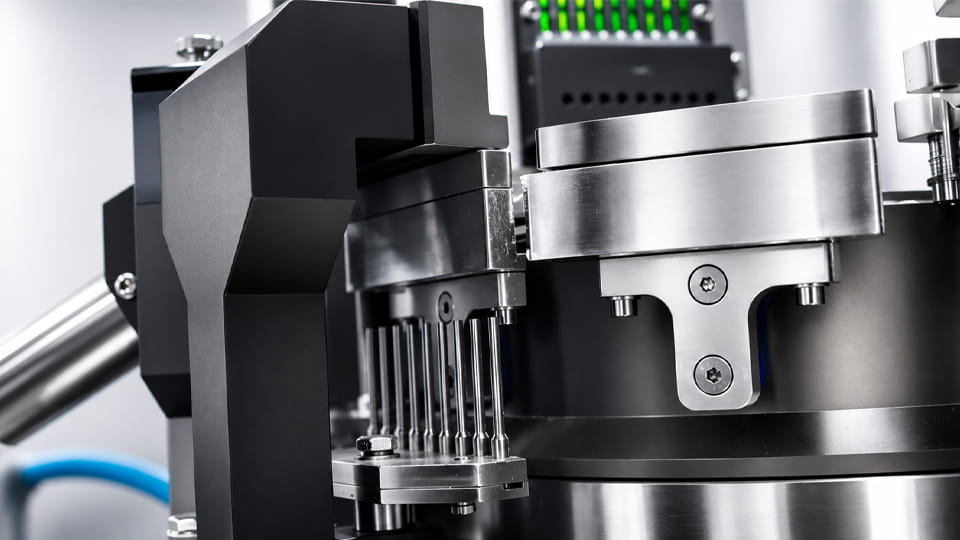
على سبيل المثال, إذا كانت الكبسولات الفارغة تتشقق بالفعل أثناء التعامل اليدوي اللطيف, زيادة فراغ الآلة لن يصحح المشكلة الأساسية. إذا كانت الكبسولات سليمة قبل التعبئة ولكنها تنقسم فقط بعد وصول الجسم الممتلئ إلى محطة الإغلاق, تستحق الآلة أو عملية الجرعات المزيد من الاهتمام.
جينلو عيوب تعبئة الكبسولة: المشاكل الشائعة, أسباب & دليل استكشاف الأخطاء وإصلاحها يغطي الجانب الميكانيكي - بما في ذلك فشل الانفصال, الكسر, الإفراط في الملء, فارغ, تنسيق, وإعدادات الإغلاق — بمزيد من التفصيل.
عندما تصبح الكبسولات هشة فجأة, ناعم, أو لزجة, استخدم نفس التسلسل في كل مرة:
جدول استكشاف أخطاء رطوبة الكبسولة وإصلاحها
| أعراض | السبب المحتمل | ما يجب التحقق منه أولا | الاتجاه التصحيحي السريع |
| تتشقق القشرة بسهولة | فقدان الرطوبة / انخفاض ر.س | غرفة ر, رطوبة القشرة, التعرض المفتوح | استعادة الظروف الخاضعة للرقابة; فصل القذائف المشبوهة |
| تنكسر الكبسولات أثناء الانفصال | قشرة هشة أو فراغ مفرط/ضغط ميكانيكي | حالة قذيفة غير مملوءة + فراغ / الأدوات | إصلاح المشكلة البيئية قبل زيادة الفراغ |
| تصبح الكبسولات ناعمة | امتصاص الرطوبة الزائدة | ر.س, تاريخ التخزين, حاجز الحزمة | تقليل التعرض ومراجعة حماية الحاجز |
| الكبسولات تلتصق ببعضها البعض | رطوبة عالية, حرارة, تشوه | ر.س, درجة حرارة, ختم الحزمة | بيئة التحكم; تقييم الكمية المتضررة |
| الكبسولات فارغة بشكل طبيعي ولكنها هشة بعد ملئها | حشو استرطابي/جاف جدًا | ملء فصيل عبد الواحد, بيانات الامتصاص, نقل الرطوبة من القشرة إلى الملء | إعادة تقييم توافق الصياغة مع الغلاف |
| يصبح المسحوق لزجًا أو يزداد التدفق سوءًا | امتصاص الرطوبة من المسحوق | مسحوق فصيل عبد الواحد, ر.س, التعبئة والتغليف | التحكم في التعرض وتقييم التركيبة/الحزمة |
| تظهر المشاكل فقط بعد أشهر في العبوة | توازن الحزمة أو دخول الرطوبة | بيانات الاستقرار, MVTR, إنهاء, المجففة | إعادة تقييم النظام النهائي لإغلاق الحاويات |
يتم دعم هذه العلاقات بين الأعراض والسبب من خلال دراسات نقل الرطوبة بالجيلاتين, الأبحاث الحديثة حول رطوبة الكبسولة, مبادئ التعبئة والتغليف USP, وأدلة استكشاف أخطاء آلة التعبئة وإصلاحها.
للوقاية الروتينية, احتفظ بالكبسولات الفارغة محكمة الغلق لحين الاستخدام; مراقبة بيئة الإنتاج الفعلية; تقليل التعرض المفتوح غير الضروري; وصف التركيبات الاسترطابية بدلاً من الحكم عليها من خلال المظهر; حدد مادة القشرة حول التركيبة; اختر التغليف من بيانات حاجز الرطوبة والاستقرار; حجم المجففة علميا; وتأكيد المنتج النهائي في حزمة السوق النهائية من خلال برنامج الاستقرار المناسب.
في ملخص, غالبًا ما تكون هشاشة الكبسولة أو لزوجتها مشكلة تتعلق بالرطوبة. من خلال التحكم بالرطوبة, اختيار مادة الكبسولة المناسبة, واستخدام التغليف المناسب, يمكن للمصنعين الحفاظ على جودة الكبسولة وتجنب مشاكل الإنتاج. على سبيل المثال, تتضمن حلول Jinlu Packing ضوابط بيئية دقيقة وآلات تعبئة عالية الحاجز للحفاظ على الكبسولات في المواصفات.
الحفاظ على نسبة رطوبة نسبية تتراوح بين 40-60%, تخزين في 15-25 درجة مئوية (الجيلاتين), باستخدام بثور رقائق أو زجاجات مجففة, ويعد اختيار أنواع الكبسولات المقاومة للرطوبة أمرًا أساسيًا لمنع الهشاشة أو الالتصاق. عندما تنشأ القضايا, راجع قائمة التحقق من استكشاف الأخطاء وإصلاحها والمخطط الانسيابي أعلاه: تحديد ما إذا كانت المشكلة بسبب انخفاض أو ارتفاع الرطوبة, ثم قم بتصحيح البيئة أو المعدات وفقًا لذلك. مع أفضل الممارسات المعمول بها, سيتم ملء الكبسولات وشحنها بنجاح, الحفاظ على فعالية المنتج وثقة العملاء.
على استعداد لتحسين إنتاج الكبسولة الخاصة بك? تقدم Jinlu Packing معدات التغليف والتعبئة المتقدمة المصممة للأدوية الحساسة للرطوبة. اتصل بالمتخصصين لدينا للحصول على إرشادات بشأن التحكم في الرطوبة, حلول التعبئة والتغليف, وخطوط تعبئة عالية السرعة لحفظ الكبسولات مستقرة تماما من المستودع إلى المريض.
كبسولات (وخاصة الجيلاتين) تجف عندما تكون الرطوبة النسبية المحيطة منخفضة. تحتوي قشور الجيلاتين عادة على 13-16% من الماء; إذا انخفض RH (على سبيل المثال. مستودع ساخن), تفقد القذائف الرطوبة وتصبح هشة. لمنع هذا, قم بتخزينها في درجة حرارة تتراوح بين 40-50% رطوبة نسبية و15-25 درجة مئوية. كما أن استخدام الأكياس أو البثور ذات الحاجز العالي يحافظ على رطوبتها.
عندما يكون RH مرتفعاً, كبسولات تمتص الرطوبة وتنعيم. عند ارتفاع نسبة الرطوبة أو درجة الحرارة, يصبح الجيلاتين هلاميًا ويمكن أن يلتصق ببعضه البعض. ولهذا السبب يتم استخدام العبوات الفقاعية أو المجففات: أنها تبقي الرطوبة خارجا. إذا رأيت كبسولات لزجة, تأكد من أن العبوة كانت محكمة الغلق ومن تخزين أقل RH.
نعم. يمكن لمسحوق جاف جدًا بالداخل أن يسحب الرطوبة من قشرة الجيلاتين الرطبة, مما يجعلها هشة. على نفس المنوال, قد تؤدي الحشوة الرطبة أو الزيتية جدًا إلى إضافة الرطوبة إلى القشرة الأكثر جفافًا. استخدم الكبسولات المصنفة لنوع التعبئة الخاص بك (على سبيل المثال. HPMC للمساحيق الاسترطابية) وموازنة القشرة وملء الرطوبة لتقليل الهجرة.
مراقبة الرطوبة النسبية لمنطقة الإنتاج الخاصة بك. إذا كان خارج نطاق 35-65% الموصى به, من المحتمل أن تكون الرطوبة هي الجاني. تحقق أيضًا من محتوى رطوبة الكبسولة الفارغة إن أمكن. فشل متكرر في مواسم معينة (الشتاء مقابل. صيف) تشير في كثير من الأحيان إلى قضايا الصحة الإنجابية البيئية.
توفر كبسولات HPMC أفضل مقاومة للرطوبة; لديهم رطوبة أساسية منخفضة جدًا ونفاذية رطوبة أقل بكثير. بولولان أفضل من الجيلاتين ولكنه ليس بجودة HPMC. الجيلاتين هو الأقل مقاومة للرطوبة.
يمكن أن تساعد المجففات في الزجاجات أو الأكياس, ولكن استخدامها بحكمة. إذا قمت بتجفيف الكبسولات بشكل مفرط باستخدام الكثير من المواد المجففة, قد تصبح هشة. عادة, عبوة واحدة من السيليكا لكل زجاجة (الحجم المناسب) يكفي. اختبر الدفعات باستخدام المجفف وبدونه للعثور على التوازن الصحيح.
التغليف الفقاعي يغلق كل كبسولة في تجويفها الخاص, توفير رطوبة ممتازة وحاجز الضوء (وخاصة رقائق Alu-Alu). دراسات (ودليل التغليف الخاص بـ Jinlu) توفر بثور العرض "حماية فائقة ضد الرطوبة والضوء" مقارنة بالزجاجات السائبة. تعتبر الزجاجات أكثر اقتصادا للكميات الكبيرة ولكنها تعتمد على أختام الغطاء والمجفف.
لا. يقيس محتوى الرطوبة كمية الماء الموجودة. يصف النشاط المائي التوفر الديناميكي الحراري للمياه وهو مفيد بشكل خاص عند تقييم نقل الرطوبة, الاستقرار الكيميائي, وسلوك الصياغة.
غالباً, نعم. تحتوي أغلفة HPMC التجارية عمومًا على كمية أقل من الماء من الجيلاتين وتحتفظ بالخصائص الميكانيكية بشكل أفضل عند الرطوبة النسبية المنخفضة. تعمل شركة Qualicaps على وضع كبسولات HPMC خصيصًا للتركيبات المسترطبة, وتشير الأبحاث المقارنة إلى أن امتصاص HPMC للرطوبة أضعف من الجيلاتين أو البولولان. ولا يزال الاختيار النهائي يتطلب اختبار توافق الصياغة واستقرارها.
لا يوجد فائز عالمي. توفر البثور ذات الحاجز العالي مثل الألومنيوم البارد حماية قوية جدًا, في حين أن زجاجة HDPE مصممة بشكل صحيح, ختم التعريفي, ويمكن لنظام المجفف أيضًا أن يعمل بشكل جيد. اختر وفقًا لحساسية رطوبة التركيبة, الأسواق المستهدفة, نمط الاستخدام, MVTR, سلامة الختم, ونتائج الاستقرار.
مراجع:
1.دراسة عن هشاشة كبسولة الجيلاتين: انتقال الرطوبة بين غلاف الكبسولة ومحتواها —— مجلات
2.هشاشة كبسولة الجيلاتين كدالة للرطوبة النسبية في درجة حرارة الغرفة —— ساينس دايركت
3.امتصاص الرطوبة وخصائص الامتزاز للجيلاتين, HPMC وكبسولات بولولان الصلبة —— مجلات
4.نشاط الماء —— جامعة جنوب المحيط الهادئ <922>
5.التقييم المقارن لقذائف كبسولة الاستنشاق الجيلاتينية وHPMC المعرضة لظروف الرطوبة المحاكاة —— مجلات
6.اختيار الحزمة لحماية الرطوبة للصلبة, المنتجات الدوائية عن طريق الفم —— مكتبة وايلي على الانترنت