إن طرح منتج صيدلاني جديد في السوق ينطوي على ما هو أكثر بكثير من مجرد تطوير تركيبة فعالة. أحد أهم القرارات التي يواجهها المصنعون هو اختيار العبوة المناسبة. يمكن أن تؤثر العبوة المختارة لمنتج صيدلاني بشكل مباشر على ثباته, مدة الصلاحية, الامتثال التنظيمي, سلامة النقل, وتجربة المريض. حزمة تفشل في الحماية من الرطوبة, الأكسجين, ضوء, أو يمكن أن يؤدي التلوث إلى الإضرار بجودة المنتج قبل وقت طويل من وصوله إلى المستخدم النهائي. وبالتالي فإن التغليف ليس مجرد حاوية، بل هو جزء أساسي من نظام حماية المنتج.
لمصنعي الأدوية, مديري الإنتاج, وفرق المشتريات, يتطلب اختيار العبوة المناسبة تحقيق التوازن بين عوامل متعددة, بما في ذلك شكل الجرعة, التوافق المادي, أداء الحاجز, سلامة المرضى, كفاءة الإنتاج, وقابلية التوسع في المستقبل. ما إذا كان المنتج عبارة عن جهاز لوحي, كبسولة, مسحوق, سائل, أو عن طريق الحقن, يمكن أن يساعد حل التغليف المناسب في ضمان سلامة المنتج مع دعم الإنتاج التجاري الفعال. في هذا الدليل, سنستكشف العوامل الأساسية التي يجب على كل مصنع مراعاتها عند اختيار التغليف لمنتج صيدلاني جديد.
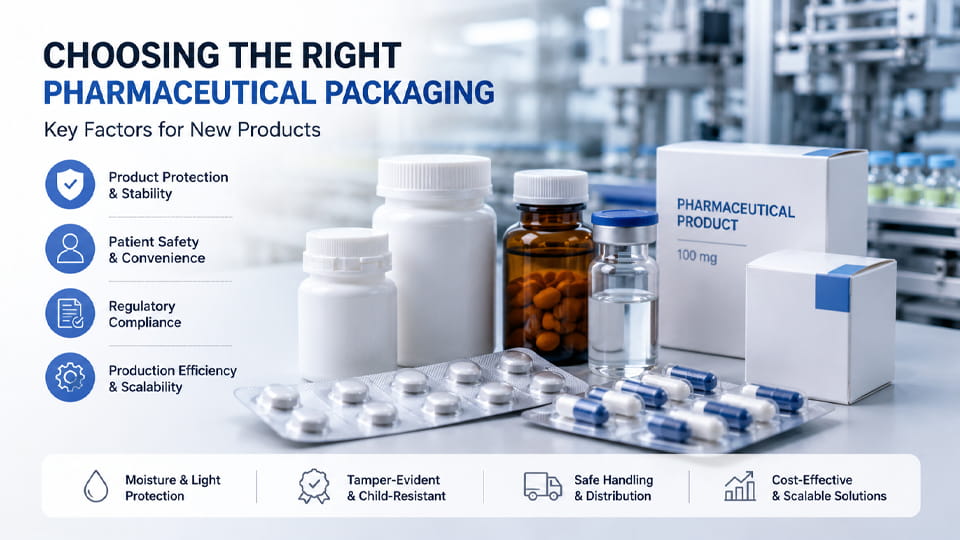
لماذا يهم اختيار التعبئة والتغليف في المستحضرات الصيدلانية
التعبئة والتغليف الصيدلانية يكون حيوي, ليس اختياريا. على عكس التغليف الاستهلاكي العادي, يجب أن تكون عبوات الأدوية حماية سلامة الدواء طوال مدة صلاحيته. تؤكد منظمة الصحة العالمية والمبادئ التوجيهية التنظيمية على أن التغليف يجب أن يحمي الأدوية من العدوى رُطُوبَة, ضوء, الأكسجين والتهديدات الخارجية الأخرى. بعبارة أخرى, "يحافظ على استقرار وجودة المنتجات الطبية" و يمنع التلف أو العبث.
تشمل الوظائف الرئيسية للتغليف:
- حماية المنتج: احفظه بعيدًا عن الرطوبة, الأكسجين, ضوء, الحرارة والملوثات. على سبيل المثال, يشير توجيه USP إلى ذلك الحبوب الصلبة "تحتاج إلى الحماية من بخار الماء" لأن الرطوبة يمكن أن تغير فاعلية الدواء أو انحلاله. مواد عالية الحاجز (رقائق الألومنيوم, الأفلام المغلفة, زجاج العنبر) غالبا ما تستخدم عندما تكون الحساسية عالية.
- الامتثال التنظيمي: يجب أن تتوافق العبوة مع إدارة الغذاء والدواء, EMA ومنظمة الصحة العالمية متطلبات برنامج الرصد العالمي. وهذا يشمل السليم سلامة إغلاق الحاوية (CCI), المواد المعتمدة, ومميزات مثل العبث واضح الأختام. عبوة مقاومة للأطفال مطلوب للعديد من الأدوية لمنع الابتلاع العرضي. التسلسل والتتبع (رموز شريطية فريدة على كل علبة) أصبحت الآن إلزامية في الأسواق الرئيسية (ادارة الاغذية والعقاقير DSCSA, مرض الحمى القلاعية في الاتحاد الأوروبي).
- سلامة المرضى والامتثال: يجب أن يمنع تصميم العبوة أخطاء الجرعات وسوء الاستخدام. ملصقات واضحة للتلاعب وأغطية مقاومة للأطفال "الحماية من التسمم العرضي". ميزات سهلة الاستخدام (سهل الفتح, مساعدات الجرعات, بثور التقويم) مساعدة المرضى على تناول الأدوية بشكل صحيح.
- العلامة التجارية والاتصالات: التغليف الثانوي (كرتون, التسميات) يسلم التعليمات, تحذيرات, والعلامة التجارية. وفقا للخبراء, يجب أن تكون الملصقات متينة وواضحة لتجنب الخلط. بالفعل, وجد تحليل واحد تقريبًا 50% من تذكر المخدرات ترتبط بمشاكل التعبئة والتغليف/وضع العلامات.
باختصار, التعبئة والتغليف هي ضمانة نشطة. يمكن أن يؤدي الفشل في اختيار الحزمة المناسبة إلى تدهور واجهات برمجة التطبيقات, ضرر المريض, والصداع التنظيمي. العبوة الصحيحة "يحمي جودة الدواء" وبالتالي يدعم فعالية المنتج وسمعته.

خطوة 1: افهم خصائص منتجك الصيدلاني الجديد
الخطوة الأولى هي أ تدقيق شامل للمنتج. بسأل: ما هو الشكل الصيدلاني (قرص, كبسولة, مسحوق, سائل, قابل للحقن, إلخ.)? ما هي الحساسيات التي يمتلكها الدواء (رُطُوبَة, الأكسجين, ضوء, حرارة)? هل تحتاج إلى مراقبة الجرعات الخاصة (جهاز الاستنشاق بالجرعات المقننة, قطارة, حقنة محملة مسبقا)?
- شكل الجرعة: عادة ما تكون الأقراص والكبسولات جرعة صلبة وتعبئتها في كثير من الأحيان عبوات نفطة أو زجاجات. السوائل / المعلقات تدخل في زجاجات أو قوارير. تتطلب الحقن قوارير معقمة, أمبولات أو محاقن مملوءة مسبقًا. تستخدم الغازات/أجهزة الاستنشاق عبوات خاصة. يمكن تعبئة المساحيق أو الحبيبات أكياس, حزم العصا أو الزجاجات.
- الحساسيات الكيميائية/الفيزيائية: هل الدواء استرطابي أو معرض للأكسدة? الأدوية شديدة الحساسية للرطوبة (على سبيل المثال. أقراص فوارة) يحتاج التعبئة والتغليف ذات الحاجز العالي مثل نفطة Alu-Alu أو الزجاجات المبطنة بالمجففة. تحتاج المركبات الحساسة للضوء حاويات غير شفافة أو ملونة. تتطلب الأدوية التفاعلية مواد خاملة (على سبيل المثال. زجاج, بوليمرات معينة).
- العمر الافتراضي والاستقرار: النظر في أي التحكم المطلوب في درجة الحرارة (تبريد) أو ظروف فراغ/معقمة. قد تتطلب بعض اللقاحات أو المواد البيولوجية عبوات سلسلة تبريد أو قوارير متخصصة.
النقطة الرئيسية: يجب أن تكون العبوة الأولية خاملة وواقية. لا ينبغي أن ترشح أو تمتص الدواء, ويجب أن تحافظ على بيئة مغلقة. على سبيل المثال, تشير إدارة الغذاء والدواء الأمريكية إلى أن الحاويات الفموية الصلبة يجب أن تحتوي على "انخفاض معدل نفاذ بخار الماء, ويجب أن ينشئ نظام الإغلاق ختمًا ". يعد إجراء اختبار التوافق والمواد القابلة للاستخراج مع مكونات التعبئة والتغليف المرشحة أمرًا بالغ الأهمية.
قائمة مرجعية لتدقيق المنتج:
- شكل/نوع الجرعة (قرص, كبسولة, سائل, إلخ.)
- ظروف التخزين/الاستقرار (درجة حرارة, رطوبة, ضوء)
- متطلبات الجرعات/الإدارة (قطارة, مضخة, جرعة الوحدة)
- اعتبارات استخدام المريض (طب الأطفال مقابل طب الكبار, التنقل, صديقة لكبار السن)
- القيود التنظيمية (على سبيل المثال. تعتبر معلومات المريض جزءًا من الحزمة الأساسية?)
سيقود هذا الفهم اختيارك للتغليف الأساسي (الحزمة في اتصال مباشر مع الدواء). التالي, نناقش تلك الخيارات.
خطوة 2: اختر التغليف الأساسي المناسب
التعبئة الأولية هي الحاوية المباشرة التي تحتوي على الدواء. يلامس الدواء مباشرة. تشمل أنواع التغليف الأولية الشائعة حزم نفطة, زجاجات (البلاستيك / الزجاج), قوارير / أمبولات, الحقائب, أنابيب, إلخ. لكل منها إيجابيات/سلبيات:
- حزم نفطة (ألو ألو أو ألو بي في سي): مثالية للأشكال الصلبة ذات جرعة الوحدة (أقراص, كبسولات). أنها توفر حاجز رطوبة/ضوء ممتاز, وخاصة على الإطلاق (احباط على شكل بارد) يكتب. تضمن البثور إغلاق كل جرعة حتى الاستخدام, تحسين الامتثال والحد من التلوث المتبادل. يمكن جعل البثور الحديثة مقاومة للأطفال. معدات: عالية السرعة آلات التعبئة نفطة تشكيل المقبض, تغذية, الختم الحراري والقطع (على سبيل المثال. آلات نفطة Alu-Alu من JinluPacking).
- زجاجات (البلاستيك أو الزجاج): شائع للتغليف متعدد الوحدات (شراب, كبسولات, أقراص). الزجاجات فعالة من حيث التكلفة للكميات الكبيرة. قوارير زجاجية (النوع الأول البورسليكات) توفر خمولًا كيميائيًا ممتازًا ويمكن تلوينها باللون الكهرماني للحماية من الضوء. الزجاجات البلاستيكية (البولي إثيلين عالي الكثافة, ص) تتميز بأنها خفيفة الوزن ومقاومة للكسر ولكنها عادةً ما تتمتع بنفاذية أعلى للرطوبة. غالبا ما تستخدم الزجاجات قبعات مقاومة للطفل. معدات: آلات العد/التعبئة تملأ وتغطي الزجاجات, ويمكن أدخل المجففات أو احباط الأختام (انظر على خطوط العد). تدمج خطوط تعبئة الزجاجات وآلات السد الأوتوماتيكية من Jinlu هذه الخطوات.
- أكياس & حزم العصا: تستخدم للمساحيق, حبيبات, أو جرعة واحدة من السوائل (على سبيل المثال. المضادات الحيوية, أملاح الإماهة الفموية). هذه عبارة عن أكياس مرنة أو أكياس صفائحية محكمة الغلق من جميع الجوانب. توفر الأكياس حاجزًا ممتازًا (في كثير من الأحيان مع رقائق الألومنيوم) والراحة. معدات: شكل ماكينات تعبئة الاكياس, يملأ, وختم هذه الأكياس دفعة واحدة.
- قوارير & أمبولات: المواصفة القياسية للحقن المعقمة (الحلول, مساحيق مجففة بالتجميد). قوارير (الزجاج أو البلاستيك) مع سدادات مطاطية تحافظ على العقم. أمبولات (زجاج) محكمة الغلق لحين الاستخدام. كلاهما يوفر درجة نقاء عالية ومناسب للإبر/الحقن. معدات: خطوط تعبئة القارورة, يتم استخدام آلات السد والعقص (في كثير من الأحيان مع مناطق التدفق الصفحي للعقم).
- آحرون: أنابيب (المعدن أو البلاستيك) شائعة بالنسبة للمراهم/الكريمات. المحاقن أو أجهزة الاستنشاق المعبأة مسبقًا (أجهزة الاستنشاق بالجرعات المقننة/أجهزة DPI) تنطوي على تغليف الجهاز المخصص. غالبًا ما تتطلب هذه المعدات معدات تعبئة وتجميع متخصصة.
تعتمد ملاءمة كل خيار على منتجك:
- التكلفة مقابل. حماية: يقارن الجدول أدناه أنواع الحزم الأساسية:
| يكتب |
أفضل ل |
مستوى الحماية |
يكلف |
معدات |
| حزمة نفطة |
أقراص, كبسولات |
عالية جدا (الرطوبة / الضوء) |
واسطة |
ماكينة تعبئة الفقاعات |
| زجاجة |
أقراص, شراب, حبوب |
واسطة (جيدة مع إدراجات) |
قليل |
خط تعبئة/تغطية الزجاجة |
| الكيس / العصا |
مساحيق, حبيبات |
عالي (حاجز احباط) |
واسطة |
آلة تعبئة كيس |
| قارورة / أمبولة |
الحقن, الأمصال |
عالية جدا (زجاج معقم) |
عالي |
تعبئة القارورة & خط الختم |
اختر الحزمة الأساسية التي تتوافق مع شكل الجرعة واحتياجات الحاجز. على سبيل المثال, قد يتطلب الجهاز اللوحي الحساس للرطوبة ألو ألو نفطة أو زجاجة من الزجاج الكهرماني تحتوي على مادة مجففة. يمكن وضع المزيد من الأقراص العادية التي لا تحتاج إلى وصفة طبية في زجاجة بلاستيكية ذات غطاء محكم من الألياف (بالإضافة إلى خاصية مقاومة الأطفال).
نصيحة: إذا كان الامتثال لجرعة الوحدة مهمًا (على سبيل المثال, توزيع المستشفيات أو حزم السفر), غالبًا ما يتم تفضيل أوراق الفقاعة أو العبوات اللاصقة. للمرونة (يمكن تغيير الجرعات), الزجاجات أفضل.
خطوة 3: ضع في اعتبارك متطلبات الاستقرار ومدة الصلاحية
قرارات التعبئة والتغليف لا يمكن فصلها عن الاستقرار. يمكن أن تتسبب الحاوية الخاطئة في تدهور التسمية أو فشلها. الاعتبارات الرئيسية:
- خصائص الحاجز: استخدم المواد التي تمنع العوامل الحاسمة. ل الأدوية الحساسة للرطوبة, هناك حاجة إلى رقائق أو زجاج عالي الحاجز. على سبيل المثال, بثور الألومنيوم الباردة الشكل توفير دخول الرطوبة صفر أساسا. تشير إرشادات الاستقرار الصادرة عن إدارة الغذاء والدواء الأمريكية/الهيئة الدولية للأدوية إلى أن المنتجات توضع في حاويات غير منفذة حقًا (على سبيل المثال, بثور احباط أو زجاج مختوم) يمكن اختباره في الظروف العادية دون إجراء دراسات رطوبة خاصة. على العكس, العبوات شبه النفاذة (مثل بعض المواد البلاستيكية) تتطلب تقييمًا دقيقًا للرطوبة.
- حماية الضوء: تحتاج واجهات برمجة التطبيقات الحساسة للضوء إلى عبوات غير شفافة أو كهرمانية. على سبيل المثال, الزجاجات الكهرمانية أو الأكياس المعدنية تحمي من الأشعة فوق البنفسجية. من الممارسات الشائعة تغليف قوارير شفافة بغلاف من الألومنيوم إذا لزم الأمر.
- التوافق: التأكد من عدم تفاعل مواد التغليف مع الدواء. الزجاج خامل, لكن بعض المواد البلاستيكية يمكن أن تتسرب أو تمتص المركبات. إجراء دراسات المواد القابلة للاستخراج/القابلة للترشيح على المكونات الأولية. التوجيهات التنظيمية (ادارة الاغذية والعقاقير, ema) يتوقع سلامة إغلاق الحاوية (CCI) اختبار طوال مدة الصلاحية.
- تحديد مدة الصلاحية: دراسات الاستقرار (أنا Q1A/R2) يجب استخدام نظام إغلاق الحاويات المقترح. إذا أظهرت تجارب العمر الافتراضي التدهور, قد تحتاج إلى ضبط العبوة (على سبيل المثال. التحول إلى حاجز أفضل) أو تعليمات التعامل مع الملصقات/التخزين.
- ميزات متقدمة: تحتوي بعض العبوات على مواد مجففة أو كاسحات الأكسجين. شرائح متعددة الطبقات (PET/الألومنيوم/PE) غالبا ما تستخدم للتوزيع العالمي. لحماية عالية الدقة للغاية, التعبئة والتغليف النشطة (ممتصات الرطوبة المدمجة) يمكن استخدامها.
قائمة مرجعية لتوافق الاستقرار:
- اختر مادة أولية عالية الحاجز إذا لزم الأمر (على الإطلاق, زجاج, شرائح).
- التحقق من طريقة الختم (ختم الحرارة, قبعات) يحقق انتقال بخار منخفض للرطوبة (MVTR).
- إجراء الاستقرار المتسارع (40درجة مئوية/75% رطوبة نسبية) وفقًا لـ ICH لضمان عدم دخول الرطوبة أو التغيرات الكيميائية.
- خطة سلامة إغلاق الحاوية (اختبار دخول الفراغ أو الصبغة) خاصة بالنسبة للمنتجات السائلة/المعقمة.
- تأكد من أن التغليف يمكن أن يتحمل صدمات التوزيع (اختبار السقوط/الاهتزاز مع التغليف الثانوي/الثالث).
من خلال اختيار العبوة التي تلبي متطلبات الاستقرار مقدمًا, يمكنك تجنب إعادة الصياغة أو إعادة التغليف المكلفة لاحقًا.
خطوة 4: تقييم راحة المريض وامتثاله
أبعد من الحماية, يجب أن تساعد العبوات الحديثة المرضى على استخدام أدويتهم بشكل صحيح. تصميم التغليف يؤثر بشكل مباشر على الالتزام والسلامة. يعتبر:
- فتح/سهولة الاستخدام: قد يعاني المرضى المسنون من قبعات ضيقة. عرض قبعات صديقة لكبار السن أو يمكن أن تكون الأختام سهلة التقشير مفيدة. للأدوية ذات الجرعة الواحدة, بثور التقويم (الأيام أو الأوقات المسمى) يمكن أن يذكر المرضى بتناول حبوب منع الحمل الصحيحة.
- مساعدات الجرعات: إن أمكن, تشمل أكواب/ملاعق قياس السوائل, قطرات لطب العيون, أو مضخات الجرعة المقاسة. علامات واضحة على الحاوية (التخرج, عصابات اللون) تحسين الدقة.
- قابلية النقل: إذا كان المرضى يسافرون أو يحملون الأدوية, الأكياس المدمجة أو الزجاجات الصغيرة مفيدة. ميزات واضحة للتلاعب تطمئن السلامة.
- ميزات الامتثال: تم تصميم بعض الحزم الأساسية للامتثال: على سبيل المثال, موزعات حبوب منع الحمل مع أجهزة الإنذار المدمجة, أو بطاقات نفطة ذكية لتتبع الاستخدام. إذا كان الالتزام العالي أمر بالغ الأهمية, النظر في مثل هذه الابتكارات.
- التسميات والإدراج: تأكد واضحا, تعليمات متعددة اللغات على الكرتون أو النشرة. يساعد التغليف الجيد الصيادلة والمرضى على الحصول على ملصقات واضحة, مخططات الجرعة, وأيقونات التخزين.
في الأساس, بسأل: هل سيجد المريض هذه الحزمة سهلة الاستخدام وآمنة؟? إذا لم يكن كذلك, فقد يسيئون استخدام المنتج أو يتخلون عنه. بما في ذلك الميزات التي تتمحور حول المريض (أقفال الطفل, سهل الفتح, وضع العلامات واضحة) كما يرضي المنظمين الذين يؤكدون على سلامة المرضى.
خطوة 5: ضمان الامتثال التنظيمي
يتم تنظيم التعبئة والتغليف الدوائية بشكل كبير. قضايا الامتثال الرئيسية:
- مقاومة للأطفال (سي آر) متطلبات: العديد من البلدان (نحن, الاتحاد الأوروبي, الاتحاد الأفريقي) تفويض التعبئة والتغليف CR للأدوية عن طريق الفم عالية المخاطر. منظمة الصحة العالمية تلاحظ ذلك "تم تطوير عمليات إغلاق مقاومة للأطفال" لحماية الأطفال. تأكد من أن الأدوية الموصوفة عن طريق الفم الصلبة والسائلة تستخدم أغطية CR المعتمدة أو آليات الدفع إذا كان ذلك مطلوبًا بموجب القانون. (على سبيل المثال. نحن 16 CFR 1700 معايير الاتحاد الأوروبي الذهبية EN 14375).
- الأختام الواضحة: تطلب إدارة الغذاء والدواء وغيرها دليلاً على عدم فتح الطرد. العصابات العبث, يتقلص يلتف, أو الأختام الانفصالية شائعة على الزجاجات; أختام الرقائق شائعة في الجرار. حتى العبوات الفقاعية يجب أن يكون من الصعب فتحها دون حدوث ضرر واضح.
- وضع العلامات: يجب أن تحمل الطرود الأولية والثانوية كافة المعلومات المطلوبة (اسم الدواء, قوة, شكل جرعة, رقم الدفعة/الدفعة, انتهاء الصلاحية, ظروف التخزين, الشركة المصنعة). يجب أن تكون الخطوط واضحة ومتوافقة مع إرشادات دستور الأدوية. على سبيل المثال, ادارة الاغذية والعقاقير 21 CFR 201.15 يغطي متانة الملصق.
- التسلسل والتتبع: لوائح مثل DSCSA الخاصة بإدارة الغذاء والدواء (نحن) وتوجيهات الاتحاد الأوروبي بشأن الأدوية المزيفة تتطلب رموزًا فريدة (على سبيل المثال. 2الباركود D) على كل وحدة قابلة للبيع. يجب أن يستوعب تصميم العبوة طباعة أو حفر الأرقام التسلسلية وأكواد مصفوفة البيانات على شرائط البثرة أو ملصقات الزجاجات. قد يحتاج خط التعبئة والتغليف الخاص بك إلى طابعة ترميز ونظام رؤية, والتكامل مع قاعدة بيانات التتبع والتتبع.
- ممارسات التصنيع الجيدة (GMP): خطوط التعبئة والتغليف يجب أن تلبي GMP (قابلية التنظيف, إمكانية تتبع المواد, إلخ.). يجب أن تكون جميع الحزم الأساسية المستخدمة مؤهلة لمعايير GMP (على سبيل المثال. ISO 15378 لمواد التعبئة والتغليف). يجب أن تكون الآلات الأشعة تحت الحمراء/WH/PQ مؤهَل. (انظر أدناه للتعرف على معدات التعبئة Jinlu).
نصيحة تنظيمية رئيسية: لا تعامل الامتثال كفكرة لاحقة. على سبيل المثال, قد يؤدي الفشل في تضمين ميزة واضحة للتلاعب إلى منع تسجيل المنتج. قم بمراجعة القواعد الخاصة بكل بلد مبكرًا - على سبيل المثال. جامعة جنوب المحيط الهادئ <661> للحاويات البلاستيكية, CFR 211 لضوابط التعبئة والتغليف. تأكد دائمًا من أن معدات التعبئة والتغليف المختارة يمكنها تلبية هذه المعايير.
خطوة 6: موازنة تكلفة التغليف وكفاءة الإنتاج
في هذه المرحلة, يقيم التكلفة الإجمالية للملكية (التكلفة الإجمالية للملكية) لخيارات التعبئة والتغليف. يعتبر:
- تكلفة المواد: قد تكلف الأكياس والبثور المرنة لكل وحدة أكثر من الزجاجات البسيطة. رقائق الفقاعة Alu-Alu أغلى من رقائق PVC. الزجاجات الزجاجية تكلف أكثر من البلاستيك.
- إنتاجية المعدات: قد تعمل التنسيقات ذات العوائق العالية مثل البثور بشكل أبطأ من خطوط الزجاجة, التأثير على عدد المعدات المطلوبة. على العكس, يمكن أن تحقق حشوات الزجاجة سرعات عالية جدًا (عدة آلاف من الزجاجات/ساعة) ولكن بحاجة إلى unscramblers, قبعات, والتسميات في الخط.
- تعقيد الخط: التعبئة والتغليف أكثر تعقيدا (على سبيل المثال. بثور جرعة الوحدة) يتطلب آلات متخصصة. تحقق مما إذا كان استثمار رأس المال والصيانة يناسب ميزانيتك.
- تَعَب: الخطوط المؤتمتة بالكامل تقلل من العمل اليدوي ولكنها تزيد من رأس المال. تكلف الآلات شبه الآلية أقل ولكنها تحتاج إلى عدد أكبر من المشغلين.
- اللوجستية: التغليف الثانوي / الثالث يكلف أيضًا. الزجاجات الكبيرة أثقل في الشحن. تزيد العبوات الكرتونية الضخمة من تكاليف الشحن.
- النفايات والعائد: المزيد من المعالجة (على سبيل المثال. اللكم نفطة) قد تولد الخردة. تقييم المواد المهدرة (تقليم من البثور, زجاجات مكسورة, إلخ.).
أداء الخام مقارنة التكلفة: على سبيل المثال. التكلفة لكل حزمة نهائية بما في ذلك المواد والمعالجة. ضع في اعتبارك أيضًا السرعة (وحدات في الساعة) وحجم الدفعة المطلوبة.
أ قائمة التحقق من التكلفة الإجمالية للملكية:
- قارن تكلفة مواد التعبئة والتغليف لكل وحدة.
- تقييم إنتاجية الماكينة المطلوبة مقابل الطلب.
- حساب تكاليف العمالة والطاقة لكل سطر.
- قم بتضمين تكاليف التخلص من النفايات/إعادة التدوير.
- عامل خطر إعادة العمل (على سبيل المثال. إذا فشلت التعبئة والتغليف, تكلفة إعادة التسمية أو إعادة التعبئة).
- التوسع في المستقبل: إذا تضاعفت الكميات, هل هذا الحجم الحل?
في كثير من الأحيان المواد الأقل تكلفة ليست الأفضل إذا أدى ذلك إلى الاستدعاء أو الرفض. تحقيق التوازن أمر بالغ الأهمية: في بعض الأحيان، يؤدي دفع المزيد مقابل حاجز أفضل أو أتمتة أفضل إلى تحقيق عائد أعلى وامتثال.
خطوة 7: تأكد من أن التغليف يمكن أن يتناسب مع الطلب المستقبلي
لا تنظر فقط إلى الإطلاق الفوري, ولكن دورة حياة طويلة الأمد من المنتج:
- الطيار مقابل. تجاري: للدفعات السريرية الأولية أو الدفعات الصغيرة في السوق, يمكنك استخدام الخطوط اليدوية أو شبه التلقائية. للإنتاج على نطاق واسع, ستكون هناك حاجة إلى خط مؤتمت بالكامل. تأكد من اختيارك (أو اقتراح البائع) يسمح بالترقيات المعيارية.
- نمطية المعدات: هل يمكنك إضافة ممرات أو وحدات لزيادة السرعة? على سبيل المثال, يمكن لبعض آلات البثرة إضافة المزيد من الجيوب الدوارة. يمكن لخطوط التعبئة إضافة مواد حشو متوازية.
- اندماج: فكر من النهاية إلى النهاية: العد / التعبئة ← الختم ← التغليف بالكرتون ← تعبئة العلبة ← المنصات النقالة. إذا كنت شريكًا مع Jinlu Packing أو ما شابه ذلك, يمكنهم تصميم أ خط التعبئة والتغليف الجاهزة الذي يتضمن التسلسل, التغليف بالكرتون, التعبئة القضية, إلخ.
- التحجيم التنظيمي: أي تغيير في مكونات التعبئة والتغليف (على سبيل المثال. مورد زجاجة جديدة) يتطلب إعادة الموافقة التنظيمية إذا كان ذلك يؤثر على الاستقرار أو الامتثال. تخطيط مراقبة جودة موردي التعبئة والتغليف والبائعين الاحتياطيين.
- المنتجات المستقبلية: إذا كانت شركتك قد تنتج أشكال جرعات أخرى (على سبيل المثال. هلام في المستقبل), اختر معدات مرنة. يمكن أن تكون حشوات الكبسولات المعيارية أو آلات الفقاعة التي يمكنها التعامل مع تنسيقات مختلفة استثمارًا جيدًا.
إن إشراك مهندسي التعبئة والتغليف أو الاستشاريين في وقت مبكر يمكن أن يمنع الاختناقات لاحقًا. كما يلاحظ أحد خبراء الصناعة, "ينبغي النظر في التعبئة والتغليف بالتوازي مع تطوير الصياغة, وليس كفكرة لاحقة." ستجعل القرارات المبكرة الصحيحة توسيع النطاق وتوسيع الخط أكثر سلاسة.
الأخطاء الشائعة في اختيار التغليف التي يجب تجنبها
- ترك اختيار التعبئة والتغليف في وقت متأخر جدًا: لا تقرر التغليف إلا بعد قفل التركيبة. يجب أن تستخدم دراسات الاستقرار المبكرة التغليف النهائي, ليست الجرار الوهمية.
- تخطي اختبارات الاستقرار: لا تفترض أبدًا أن الحاوية ستعمل; قم دائمًا باختبار الدواء الخاص بك في الحاوية / الإغلاق الفعلي تحت ظروف ICH. يمكن أن تتحلل التركيبة المستقرة إذا كانت التعبئة والتغليف سيئة.
- التركيز فقط على التكلفة: قد توفر المواد الرخيصة المال مقدمًا ولكنها تكلف أكثر عند عمليات السحب أو تقصير مدة الصلاحية. موازنة التكلفة مع الحماية.
- تجاهل العوامل المريضة: قد تناسب الزجاجة القياسية أهداف التكلفة, ولكن إذا لم يتمكن المرضى من فتحه أو الالتزام به, سيكون أداء المنتج ضعيفًا في السوق.
- التقليل من الاحتياجات التنظيمية: قد يؤدي عدم تضمين ختم واضح للتلاعب أو إغلاق مقاوم للطفل عند الحاجة إلى إيقاف الموافقة. استشر دائمًا الإرشادات.
- إهمال سلسلة التوريد: ضع في اعتبارك المهل الزمنية لإمدادات التغليف ومدة الصلاحية. بعض المواد المتخصصة (مثل بطانات امتصاص الأكسجين) قد يكون لها فترات زمنية طويلة.
من خلال تجنب هذه الأخطاء والمراجعة متعددة الوظائف (ص&د, ضمان الجودة, إنتاج, تنظيمية), عليك التأكد من أن العبوة التي اخترتها ممكنة, متوافق, وفعالة.
التغليف الموصى به حسب نوع المنتج الصيدلاني الجديد
| نوع المنتج |
التغليف الأولي الموصى به |
| أقراص / كبسولات |
جرعة الوحدة حزم نفطة (ألو ألو أو PVC/ألو) أو حجم كبير زجاجات. أغطية مقاومة للأطفال للزجاجات. معدات مثالية: آلة تعبئة الفقاعة أو عد الأقراص / الكبسولات & خط تعبئة الزجاجات. |
| المساحيق/الحبيبات عن طريق الفم |
أكياس أو حزم العصا (لجرعة واحدة); أو زجاجات (بكميات كبيرة). ماكينات تعبئة الأكياس بجرعة وحدة, حشو اوجير للزجاجات. |
| السوائل/الشراب |
الزجاجات البلاستيكية أو الزجاجية مع قبعات المسمار (في كثير من الأحيان مع ختم احباط وغطاء مقاوم للطفل). للنقاء العالي, النوع الأول الزجاج. معدات: خط تعبئة السوائل (مضخات, السد في الخط). |
| الحقن |
قوارير زجاجية أو أمبولات (معقمة) أو الحقن المعبأة مسبقا. استخدم آلات تعبئة وتجعيد القنينات المعقمة في غرف الأبحاث. |
| الكريمات / المراهم (المواد شبه الصلبة) |
أنابيب أو الجرار (أنابيب الألومنيوم / البلاستيك, الجرار الزجاجية / البلاستيكية). أنابيب ذات أختام واضحة للعبث. آلات تعبئة الأنابيب نصف الآلية أو الأوتوماتيكية. |
| أقراص الفوارة |
أنابيب أو زجاجات الألومنيوم (للحفاظ على الجفاف); في كثير من الأحيان مع المجففة. عبوات رقائق الألومنيوم شائعة أيضًا. آلات الأنابيب (للأقراص) أو آلات نفطة. |
| التحاميل |
صواني نفطة (عادةً Alu/PVC أو Alu/Alu) أو صناديق من الوحدات المغلفة بشكل فردي. عبوات الفقاعات أو التشكيلات الحرارية. |
| أجهزة الاستنشاق / بخاخات الأنف |
علب MDI أو خراطيش DPI (خاص بالجهاز). التنسيق مع الشركة المصنعة للجهاز; معدات تعبئة/تعبئة العلب المخصصة. |
يساعد هذا التعيين على ضمان حصول كل شكل من أشكال الأدوية على الحماية المناسبة. على سبيل المثال, العبوات الفقاعية ممتازة للجرعات الفموية الصلبة, في حين أن القوارير الزجاجية ضرورية للحقن المعقمة. يقترح الجدول أيضًا المعدات: على سبيل المثال. آلات التعبئة نفطة, خطوط تعبئة وتغطية الزجاجات, ماكينات تعبئة الاكياس, حشو القارورة, وهكذا.
كيف تساعد شركة Jinlu Packing شركات الأدوية
Jinlu Packing هي شركة رائدة تصنيع ماكينات تعبئة الأدوية. نحن نقدم حلول متكاملة لخطوط تعبئة الأدوية الجديدة. العروض الرئيسية:
- آلات التغليف نفطة: آلات نفطة عالية السرعة لحزم PVC / Alu أو Alu-Alu. تصميمات مخصصة لتناسب تنسيق جهازك اللوحي/الكبسولة ومتطلبات السرعة.
- تعبئة الزجاجة & خطوط السد: تعبئة الزجاجة آليًا, السد, وأنظمة وضع العلامات. يمكن لخطوط العد والتعبئة لدينا دمج أجهزة فك التشفير, إدراج المجففة, السدادات احباط, وأغطية للزجاجات اللوحية/الصمغية.
- ماكينات صناعة الكرتون: آلات تعبئة الكرتون الأفقية والرأسية لنصب الكراتين حول البثور, زجاجات, أو أكياس. ميزات مثل 100% مسح الكود من أجل التسلسل والتغييرات السريعة.
- أنظمة التسلسل/الترميز: يمكننا تجهيز الخطوط بأجهزة تشفير نفث الحبر/الليزر وفحص الرؤية لطباعة الدفعة والتحقق منها, انتهاء الصلاحية, ورموز فريدة من نوعها.
- خطوط تعبئة كاملة: من تغذية المنتج إلى تعبئة العلبة, يمكننا تصميم خط متكامل تمامًا يلبي احتياجات cGMP والتسلسل. تم تصميم أجهزتنا لسهولة التنظيف (الفولاذ المقاوم للصدأ SUS316L) وتشمل وثائق IQ/OQ.
- يدعم & امتثال: نحن نساعد في تأهيل الآلة (الأشعة تحت الحمراء/WH/PQ) وتقديم التثبيت والتدريب في الموقع في جميع أنحاء العالم.
من خلال العمل معنا, لا تحصل على المعدات فقط, ولكن خبرة التعبئة والتغليف. نحن نضمن طريقة التغليف التي اخترتها (خط نفطة, خط الزجاجة, إلخ.) تم تحسينه ليناسب منتجك واحتياجاتك التنظيمية, مما يجعل إطلاق منتجك أكثر سلاسة.
خاتمة
يعد اختيار العبوة المناسبة لمنتج صيدلاني جديد أمرًا ضروريًا قرار متعدد الأوجه. يتطلب موازنة استقرار الدواء, سلامة المرضى, امتثال, يكلف, وقابلية التوسع. يتذكر: التغليف الأفضل هو الذي يحافظ على منتجك آمنًا وفعالًا حتى يصل إلى المريض. لا يتعلق الأمر فقط بكونك جذابًا أو رخيصًا، بل يتعلق بالجودة. من خلال تحليل خصائص المنتج بعناية, اختبار خيارات التعبئة والتغليف, واللوائح التالية, يمكن للمصنعين تجنب عمليات السحب المكلفة والتأكد من أن أدويتهم تظل فعالة, نقي, وآمنة. مع استراتيجية التعبئة والتغليف المختارة جيدًا (والآلات المناسبة), أنت تحمي عملائك وسمعة علامتك التجارية.
الأسئلة الشائعة حول اختيار التغليف لمنتج صيدلاني جديد
ما أهمية التعبئة والتغليف لمنتج صيدلاني جديد؟?
التعبئة والتغليف تفعل أكثر بكثير من مجرد احتواء الدواء. يحمي المنتج الصيدلاني من الرطوبة, الأكسجين, ضوء, تلوث, والأضرار الجسدية. يساعد التغليف المناسب أيضًا على ضمان الامتثال التنظيمي, سلامة المرضى, استقرار المنتج, ومدة الصلاحية طوال فترة التوزيع والتخزين.
ما هي العوامل التي يجب مراعاتها عند اختيار عبوات الأدوية؟?
يجب على الشركات المصنعة تقييم عدة عوامل, مشتمل:
• الشكل الصيدلاني (قرص, كبسولة, سائل, مسحوق, قابل للحقن)
• حساسية الرطوبة والأكسجين
• متطلبات الحماية الخفيفة
• أهداف مدة الصلاحية
• المتطلبات التنظيمية
• راحة المريض
• تكاليف التعبئة والتغليف
• كفاءة الإنتاج
• قابلية التوسع في المستقبل
يجب أن يوازن حل التغليف المثالي بين حماية المنتج, امتثال, والكفاءة التشغيلية.
ما هو أفضل تغليف للأقراص والكبسولات?
العبوات والزجاجات الفقاعية هي الخيارات الأكثر شيوعًا.
• توفر التعبئة والتغليف الفقاعي حماية ممتازة ضد الرطوبة والتلوث مع توفير الراحة لجرعة الوحدة.
• تعتبر الزجاجات فعالة من حيث التكلفة بالنسبة للإنتاج بكميات كبيرة وتستخدم بشكل شائع للأقراص, كبسولات, والمكملات الغذائية.
يعتمد الاختيار الأفضل على متطلبات استقرار المنتج والسوق المستهدف.
كيف يؤثر التغليف على استقرار الدواء?
تؤثر مواد التعبئة والتغليف بشكل مباشر على تعرض الدواء للعوامل البيئية مثل الرطوبة, الأكسجين, والضوء. التغليف السيئ يمكن أن يؤدي إلى تسريع عملية التدهور, تقليل رجولية, وتقصير مدة الصلاحية. ولهذا السبب يتم عادةً إجراء اختبار الثبات باستخدام التكوين النهائي للتغليف المخصص للتوزيع التجاري.
كيف يمكن لشركات الأدوية ضمان الامتثال للتغليف؟?
يجب على الشركات المصنعة التحقق من أن مواد التعبئة والتغليف, التسميات, الإغلاق, ومعدات التعبئة والتغليف تتوافق مع اللوائح المعمول بها مثل إدارة الغذاء والدواء, برنامج الرصد العالمي للاتحاد الأوروبي, التسلسل, ومتطلبات التغليف المقاومة للأطفال. يمكن أن يساعد العمل مع موردي معدات تعبئة الأدوية ذوي الخبرة في تبسيط عمليات التحقق والامتثال.
متى يجب أخذ التغليف بعين الاعتبار أثناء تطوير المنتجات الصيدلانية؟?
يجب تقييم التغليف في أقرب وقت ممكن أثناء تطوير المنتج. الانتظار حتى التسويق يمكن أن يخلق مشكلات تتعلق بالاستقرار, التأخير التنظيمي, تكاليف إعادة تصميم التعبئة والتغليف, وتحديات الإنتاج. يسمح اختيار التغليف المبكر للمصنعين بإجراء دراسات استقرار دقيقة وتطوير استراتيجية تعبئة تجارية أكثر كفاءة.
كيف أختار ماكينة التعبئة والتغليف الدوائية المناسبة لمنتج جديد?
ابدأ بالتقييم:
• نوع المنتج وشكل الجرعة
• تنسيق التغليف (بثرة, زجاجة, الكيس, قارورة)
• الطاقة الإنتاجية المطلوبة
• مستوى الأتمتة
• المتطلبات التنظيمية
• خطط التوسع المستقبلية
يمكن أن يساعد اختيار معدات تعبئة الأدوية القابلة للتطوير في تقليل تكاليف الاستثمار المستقبلية ودعم نمو الأعمال على المدى الطويل.
مراجع:
1.أنظمة إغلاق الحاويات لتعبئة الأدوية البشرية والبيولوجية -- نحن. إدارة الغذاء والدواء
2.ICH Q8 التطوير الصيدلاني —— قاعدة بيانات التراث الثقافي غير المادي
3.ممارسات التصنيع الجيدة للمنتجات الصيدلانية -- من
4.جامعة جنوب المحيط الهادئ س&أ: معايير أنظمة التغليف البلاستيكية للمنتجات الدوائية —— usp.org
5.اختبار سلامة إغلاق الحاويات – الجوانب العملية والأساليب في الصناعة الدوائية —— pda.org
