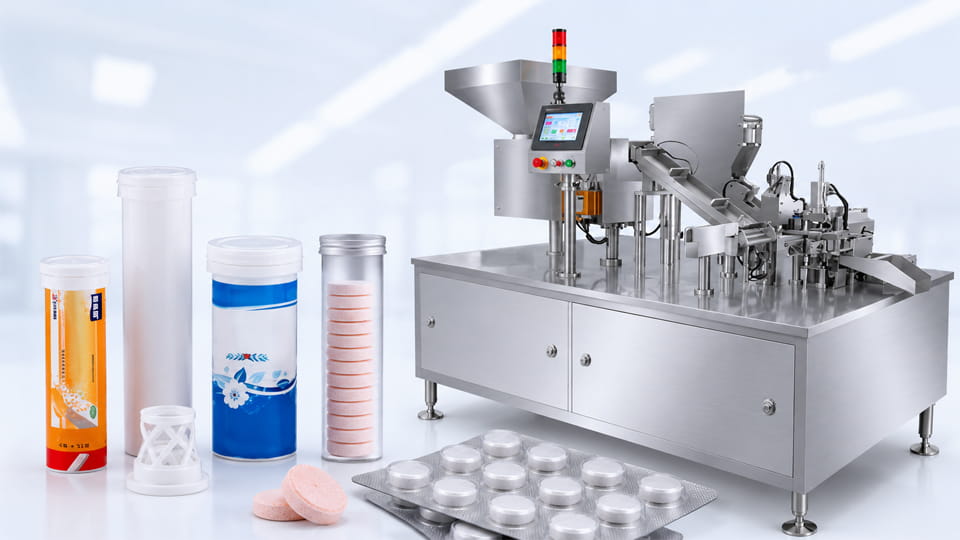

ในการผลิตยา, แพ็คตุ่มปฏิทิน และ wallet packs are specialized บรรจุภัณฑ์พุพอง formats that help patients follow dosing schedules. ก calendar blister pack is essentially a blisters card where each cavity is labeled by day or date (ตัวอย่างเช่น, “Mon–Sun” on a week’s supply). ก wallet pack adds a folding paperboard “wallet” around one or more blister cards, often with printed instructions or patient information. Both formats can deliver หน่วยปริมาณ การป้องกัน (each cavity holds a single dose), but they differ in structure and processing needs. Choosing between them isn’t just a marketing decision—it directly affects the สายการบรรจุ. A calendar card might require extra printing registration to align dates with cavities, while a wallet pack may need a folding or assembly station before cartoning. ในระยะสั้น, packaging format influences machine requirements from the blister former all the way through the cartoner (บรรจุภัณฑ์รอง).
ตัวอย่างเช่น, a calendar blister card might print each day of the week on the foil so patients can track doses, whereas a wallet pack typically binds a blister card within a front cover and fold-out panel. An integrated blister-cartoning line must handle these formats differently: standard blisters can go straight from the blister machine to a cartoner, but wallet packs often need an intermediate folding assembly. Understanding these formats helps buyers and engineers select the right blister machine, เครื่องป้อน, and cartoning equipment.
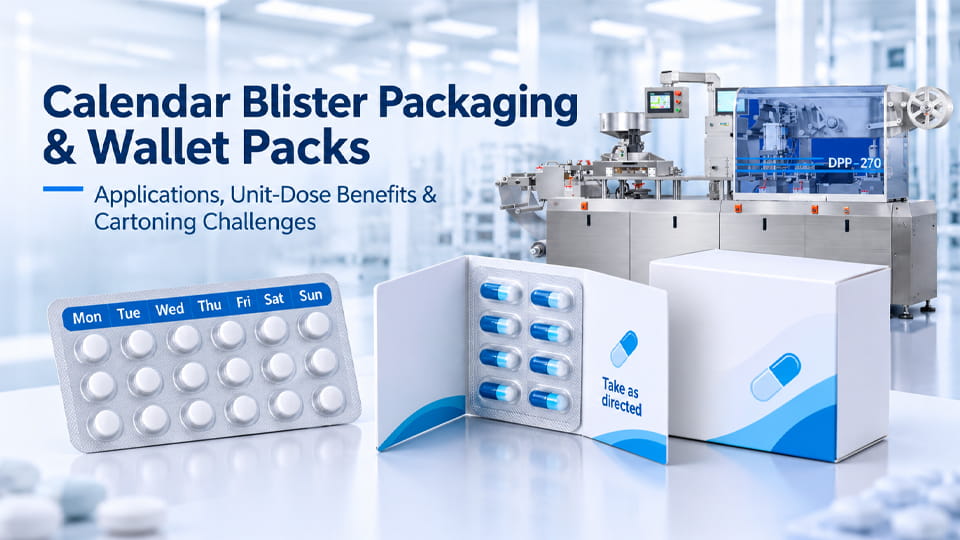
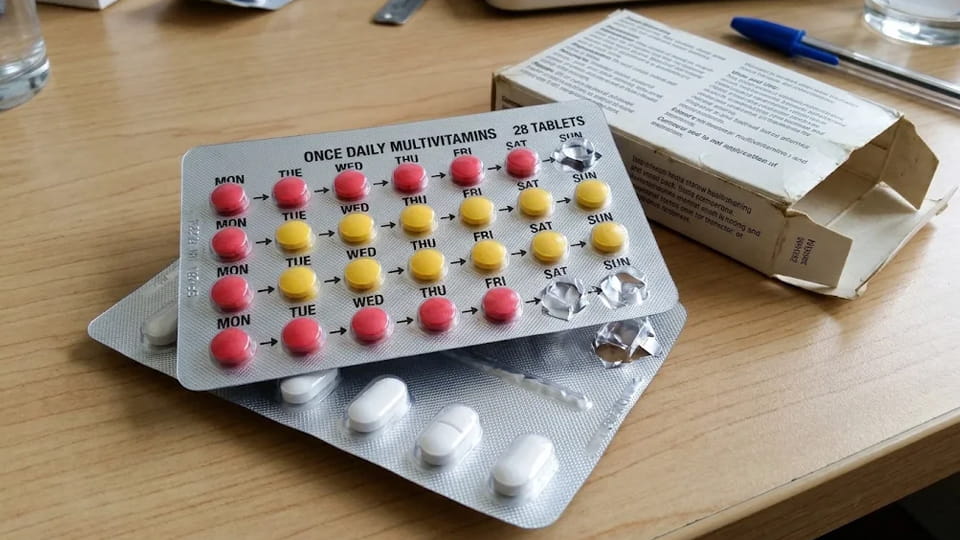
Calendar blister packaging (บางครั้งเรียกว่าก dose calendar) is a type of unit-of-use blister pack where each pill or capsule is arranged and labeled by time period (often days of the week or calendar dates). The blister card itself might be printed with weekdays (Mon, อ, Wed…) or numbers, so the patient knows which dose to take when. Common layouts include daily (7 cavities in a row), รายสัปดาห์ (7 cavities per row, possibly multiple rows for multi-week supply), or monthly (E.G. 28-day packs). This “calendarization” helps organize dosing schedules.
A classic example is a 28-tablet birth control pack marked with the days Sunday through Saturday, repeated over four weeks. Or a chronic medication might come in a 30-day calendar blister with the date stamped on each cavity. จุดสำคัญ: each dose is protected and clearly identified by date. ตามแหล่งอุตสาหกรรม, “a calendarized package may organize cavities around specific days or dosing periods”.
แอปพลิเคชัน: Calendar blisters are commonly used for medications with strict daily schedules, such as oral contraceptives, hypertension drugs, or psychiatric medications. They are also popular for over-the-counter vitamins or supplements that consumers take once daily. By visualizing the schedule, calendar packs can help patients spot missed doses. (อย่างไรก็ตาม, good adherence still depends on education and reminders, not just packaging design.)
ก wallet pack (หรือ blister wallet) is a multi-component blister format that combines one or more blister cards with a folding paperboard wallet or card. The wallet typically has a front cover and a back cover that fold over the blisters, often with printed instructions or child-resistant features. ในทางปฏิบัติ, a wallet pack looks like a small booklet: it might unfold into several panels, each containing blister cavities or information.
Wallet packs can organize multiple doses and information elegantly. เช่น, a 14-day medication supply might use two blister cards and one wallet: the front of the wallet holds a blister, and opening it reveals another blister and a leaflet. Some wallets have pull-out panels or slide-in designs. The benefit is that the pharmacy or manufacturer can include detailed instructions or use child-resistant mechanisms while keeping the blisters in one unit.
Unlike a plain blister card, a wallet pack involves extra assembly steps. Specialized “wallet machines” or assembly stations glue or seal the blister card onto the paperboard, and fold it into shape. These machines must handle varying blister sizes and attachment methods: one design might use adhesive, another uses tabs or clips. A key advantage of wallet packs is that the final carton often contains a single packaged unit (a wallet), ทำให้การใช้งานของผู้ป่วยง่ายขึ้น.
แอปพลิเคชัน: Wallet packs are often used when patient instructions or child safety are important. They may be used for senior-friendly dosing (E.G. senior patients who benefit from clearly printed instructions) or pediatric medications where the carton and wallet help make the pack child-resistant.
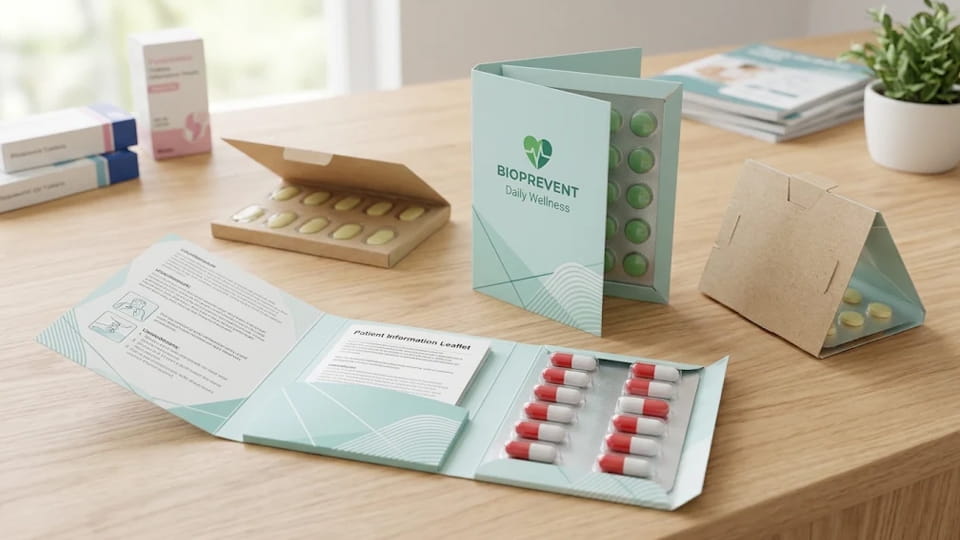
รูป: เภสัชภัณฑ์ wallet pack in opened and folded view – a blister card with front and rear paperboard covers.
-Unit-dose packaging” simply means each package contains a single dose of medication in its own protected unit. This concept can apply to blisters, แพ็คแถบ, ขวด, ฯลฯ. In a blister context, it means one tablet or capsule per cavity.
How it relates: Both calendar blisters and wallet packs are typically unit-dose formats at the cavity level. Each blister cavity holds one dose and is sealed individually. อย่างไรก็ตาม, they differ from “single-unit” packs in that a calendar or wallet typically contains หลายรายการ unit doses in one shipping unit. กล่าวอีกนัยหนึ่ง, a calendar blister with 28 cavities is a collection of 28 ปริมาณหน่วย. เช่นเดียวกัน, a wallet with 7 blister cavities is unit-dose for each pill, but sold as a multi-dose pack.
เพื่อความชัดเจน: Unit-dose packaging emphasizes dose count and protection, whereas “calendar blister” and “wallet” emphasize how doses are arranged and presented. A single blistersheet with 7 cavities can be a standard multi-dose card (if cavities unlabeled) หรือก calendar การ์ด (if cavities labeled by day). ก wallet pack can contain one or more blister cards, but each cavity is still a unit dose. ในทางปฏิบัติ, คิดถึง หน่วยปริมาณ as a broader term. A wallet pack itself is unit-of-use (the whole wallet is one package for patient use), but inside it are unit-dose cavities.
โดยสรุป, the packaging format (calendar or wallet) describes the design and presentation of multiple unit doses, while “unit-dose” stresses that each cavity isolates a single dose. Manufacturers should note that a calendar blister or wallet pack สามารถ be considered a unit-dose system (since each pill is separate), but the packaging line will often treat them differently from simple one-cavity packs.
The table below compares calendar blisters, wallet packs, and “standard” unit-dose blisters (a plain blister card without special labeling or wrap) in terms of structure and purpose:
| คุณสมบัติ | Calendar Blister | Wallet Pack | Standard Blister |
| Key characteristic | Blister cavities labeled by day/date | Blister card + folding paperboard cover | Simple sealed cavities with lidding foil |
| Main purpose | Organize doses by schedule (daily/weekly) | Organize doses + include instructions | Protect and contain medication |
| Packaging components | Plastic/aluminum blister + printed labeling | Blister card + front/back cards (wallet) | ฟิล์ม, ฟอยล์ (พีวีซี/อลู) with optional card |
| Information printed | Days of week or dates on cavities or board | Detailed dosing instructions on cards | Minimal on blister itself (usually info on carton) |
| Patient benefit | Easy dose tracking, reduced missed doses | All-in-one package with instructions | Basic dose protection |
| Production complexity | ปานกลาง (print registration needed) | สูง (requires assembly/folding step) | Low to medium (just form, ผนึก, ตัด) |
| Cartoning impact | Depends on card size and orientation | Often needs folding/assembly before cartoning | Straightforward feeding into carton |
โต๊ะ: Comparison of calendar blister packs, wallet pack formats, and standard blister cards.
As this shows, calendar and wallet formats add layers beyond a simple blister. A calendar blister is still just one flat card, but it requires precise printing on the foil aligned with cavities. A wallet pack adds a paperboard assembly: the blister card may be glued or attached to a folding cover. A standard blister pack could be as simple as one strip of cavities sealed with foil and loaded directly into cartons.
It’s important to note these categories overlap: a calendar pack can also be a wallet if you fold a calendar card into a wallet, and a wallet can serve as a unit-of-use containing multiple doses. These aren’t mutually exclusive “types” in the sense of separate categories, but rather different ways to organize หน่วยปริมาณ แผลพุพอง.
Blister Cavity Layout & การใช้เครื่องมือ: Calendar and wallet packs often have unique layouts. A calendar blister might have 7 cavities in a row (รายสัปดาห์) หรือ 28 in a 4×7 grid (รายเดือน). These layouts must be matched by the forming tooling on the blister machine. If a calendar pack has, พูด, 4 cavities per row and 7 rows, the blister mold must produce exactly that pattern. Wallet packs might use a stack of two blister cards (E.G. one on top of another inside the wallet), or one large card split when folded. The blister machine’s cavity pitch and format must match the planned wallet design.
Print Registration: Calendar blister packs require high accuracy in print registration. If days or dates are printed on the foil (or on the board underneath), the print must align perfectly with each cavity. Misalignment can render the date meaningless (E.G. a “Wed” label on Monday’s pill would confuse the patient). Modern blister machines may use vision sensors or “eye marks” to ensure the printed labels align with the cavities on the continuous strip. สำหรับ Alu-Alu packs, some lines use digital printing on foil after sealing. ตัวอย่างเช่น, A 2D code being printed on the blister foil to identify each pack after sealing. โดยทั่วไปแล้ว, adding day-of-week printing means the machine needs either in-line printing or foil that’s pre-printed and precisely indexed.
การขึ้นรูป, การปิดผนึก, การตัด: The physical process of forming and sealing usually doesn’t change drastically for calendar vs. standard blisters. อย่างไรก็ตาม, wallet packs may require either gluing the blister to a board after sealing or using a special fold. For calendar packs on a standard machine, all cavities are identical, so the cycle is normal. But if a wallet pack uses a thicker backboard or double-thickness area (due to folding), the machine must handle thicker sealing in some zones. Cutting also matters: calendar blister packs are often cut to flat or folded cards in specific shapes. Precise cutting is needed so that when the wallet is folded, the edges align. The operator must configure the die-cut plate to match the wallet outline, which can be complex for multi-fold wallets.
Blister Dimensions & การเปลี่ยนแปลง: Calendar packs often come in fixed sizes (28-up, 14-up, ฯลฯ), but if you have multiple calendar formats (E.G. 7-day vs 30-day), changing tools or molds is needed. Wallet packs frequently involve more changeover steps: changing the folder set or grippers for a new card size, adjusting feed pitches if a different number of blisters per card, ฯลฯ. Jinlupacking advises defining pack format and cavity layout upfront to guide machine selection. ในระยะสั้น, unusual blister shapes or multi-layer cards require careful planning of tooling and changeover procedures.
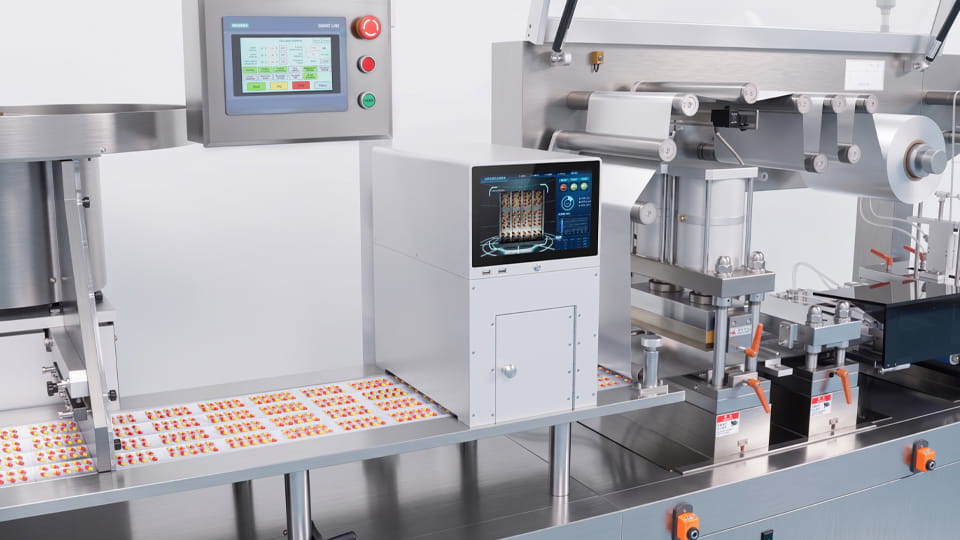
รูป: เครื่องบรรจุภัณฑ์พุพองความเร็วสูง (Jinlupacking DPP-270max) ในการดำเนินการ. It can form and seal hundreds of cavities per minute. Calendar packs simply need correct cavity spacing and registration.
โดยสรุป, special blister formats affect the front end (บรรจุภัณฑ์หลัก) of the line in these ways:
Once the blisters are formed, เต็มไปด้วย, ปิดผนึก, and cut into cards or assembled into wallets, they proceed to the การบรรจุกล่อง (บรรจุภัณฑ์รอง) เวที. Here’s how calendar blisters and wallet packs change the game:
โดยรวม, expect that cartoners handling calendar or wallet packs will use advanced feeding and detection technology. เซนเซอร์ (vision or photocells) ensure the blister is aligned, the right side is up, and that each pack contains the correct blisters. Pushing or pick-and-place mechanisms handle the transfer. Many systems now have servo-driven grippers to handle delicate products without scratching.
Integration Example: A fully automated calendar/wallet line might look like this: The blister machine forms and fills the cards; a hot-stamping printer adds dates; the cards are cut and stacked; a feeder sends them to an assembly station if needed; then a cartoner takes each card or wallet, adds leaflets, and closes the box.
โดยสรุป, cartoning challenges รวม:

รูป: An integrated blister-cartoning line. Multi-step lines coordinate blister forming, wallet assembly, and automatic cartoning of blister packs and leaflets.
Selecting equipment starts with the packaging specs. Define your pack details: วัสดุตุ่ม (พีวีซี, อลู-พีวีซี, อลู-อลู), card dimensions, จำนวนฟันผุ, and whether you need print or foil. อีกด้วย, what output is needed (กล่องต่อนาที)? ตามที่ Jinlupacking แนะนำ: “Before selecting a blister machine, confirm five items: pack format, material range, เค้าโครงช่อง, output target and document scope.”.
Checklist for Blister Machines:
Checklist for cartoning machines:
Equipment Examples: Jinlu Packing offers a range of เครื่องพุพอง และ กล่องกระดาษ. เพื่อผลผลิตที่สูง, ของเรา High-Speed Blister & Cartoning Line integrates an Alu-Alu or PVC blister machine with an automatic cartoner, handling up to several hundred cartons per minute in some configurations. For smaller runs or tighter spaces, a single machine like the JL-260W cartoner (horizontal folder style) อาจจะเพียงพอแล้ว. เมื่อทำการประเมิน, consider not only the machines themselves but also any additional modules (E.G. เครื่องป้อนใบปลิว, RFID readers, merging conveyors) you might need.
ในทางปฏิบัติ, equipment selection often goes hand-in-hand with format definition. Start with your target product: if you’re packaging a calendar pack or wallet pack, communicate that to vendors. The right manufacturer will help tailor the solution (ตัวอย่างเช่น, confirming that a chosen cartoner can insert a folded wallet or handle front/back covers). Always review real sample packs: ask for reference runs or trials to confirm the line works with your specific wallet or calendar design.
การแจ้งเตือนที่สำคัญ: The choice of equipment must match the packaging format. A blister machine with only 180 mm forming width won’t work if your calendar card is 220 mm wide. A cartoner that only feeds flat cards may jam on a 3D wallet. Always list the exact dimensions and thickness of your blister card (and wallet components) when asking for quotations.
แม้จะมีอุปกรณ์ที่ดี, complex packaging can have hiccups. Here are some typical issues and tips:
ก summary table of challenges:
| ท้าทาย | สาเหตุที่เป็นไปได้ | Solution Direction |
| Date mis-printing | Print head registration off | Recalibrate printer, verify film tension, adjust servo timing |
| Card misfeeding | Guides mis-set or vacuum weak | Adjust guides, check vacuum pressure/suction cups |
| Wallet not sealing | Gluer or folding misaligned | Check glue applicator, adjust fold timing, ensure correct blank sizes |
| Missing leaflets | Magazine empty or feeder jam | Reload leaflets, clean feeder, add present sensor |
| Carton jam / splays | Pack too thick/uneven | Confirm maximum pack height, adjust carton pocket, slow conveyor |
ในแต่ละกรณี, working closely with the machine supplier’s support team can help dial in the settings. Preventive maintenance—regular cleaning of sensors and rollers, and routine inspection of cams—goes a long way in avoiding these issues.
Calendar blister packs and wallet packs offer patient-friendly dosing organization, but they also add complexity to the packaging line. The choice between them should balance patient convenience with production efficiency. Calendar blisters mainly add a printing registration step, whereas wallet packs add assembly and folding steps. Both formats still require careful handling by the blister machine and cartoning machine.
โดยสรุป: choose the format that best fits the medication and patient needs, then ensure your equipment matches it. Define the pack dimensions, label requirements, and dose counts upfront, and select blister formers and cartoners designed for those specs. เครื่องตุ่มที่ทันสมัย (like Jinlu’s series) can be equipped with printers for calendar packs, and cartoners can include modules for wallet handling.
For pharmaceutical manufacturers and packagers facing these formats, Jinlu Packing นำเสนอโซลูชั่นแบบครบวงจร. Our lines combine เครื่องตุ่มความเร็วสูง กับ เครื่องบรรจุกล่องอัตโนมัติ, capable of feeding and folding calendar or wallet packs. To explore options for your specific calendar blister or wallet packaging requirements (and to ensure smooth equipment integration), contact Jinlu’s packaging experts. We can help specify the right machinery and line setup for your product.
Ready to discuss your calendar blister or wallet pack line? Contact Jinlu Packing for a customized solution.
Calendar blister packs can be customized with different layouts, including daily, รายสัปดาห์, and monthly arrangements. The number of cavities, printed labels, and dose sequence can be adjusted to match the medication schedule and packaging requirements.
A calendar blister pack may include day-of-week labels, วันที่, คำแนะนำในการใช้ยา, การระบุผลิตภัณฑ์, หมายเลขแบทช์, and expiry dates. The exact information depends on regulatory requirements, ข้อกำหนดผลิตภัณฑ์, and the intended patient-use instructions.
ใช่, different tablets or capsules can be arranged in the same calendar blister when the packaging design and product compatibility allow it. Each product must have an appropriate cavity configuration and suitable protection to maintain its quality throughout the intended shelf life.
วัสดุทั่วไป ได้แก่ พีวีซี, พีวีซี/พีวีดีซี, and cold-form aluminum-based laminates for blister structures, along with aluminum lidding foil. Material selection depends on moisture sensitivity, ป้องกันแสง, ข้อกำหนดสิ่งกีดขวาง, ความเข้ากันได้ของผลิตภัณฑ์, and shelf-life targets.
Manufacturers can reduce printing errors through accurate print registration, controlled web positioning, correct artwork setup, and inspection during production. Print verification should also be included in the packaging quality-control process.
ในหลายกรณี, ใช่. Standard blister packaging machines can produce calendar blister formats if their tooling, printing or labeling arrangements, ระบบปิดผนึก, and cutting configuration are suitable for the required pack design. Special configurations may be necessary for more complex layouts.
ขึ้นอยู่กับการออกแบบ, blister cards may be attached to wallet cards using adhesive, mechanical retention features, or dedicated assembly arrangements. The appropriate method depends on the card structure, required opening method, และข้อกำหนดการผลิต.
Production speed depends on blister dimensions, ความมั่นคงในการให้อาหาร, pack orientation, การใส่ใบปลิว, carton design, ข้อกำหนดการเปลี่ยนแปลง, and the coordination between upstream and downstream machines. The actual line speed is determined by the performance of the complete system, not just the rated speed of an individual machine.
Manufacturers can use product-presence sensors, การตรวจสอบการมองเห็น, ระบบการนับ, or other suitable verification methods depending on the packaging configuration. Inspection points should be selected to detect missing components before the finished cartons leave the packaging line.
Manufacturers should test actual production samples for feeding stability, positioning accuracy, folding or assembly consistency, การใส่ใบปลิว, carton loading, and changeover performance. Trial runs should cover representative pack sizes and production conditions before final equipment approval.
อ้างอิง:
1.บรรจุภัณฑ์และส่วนแทรกร้านขายยา —— กสทช / StatPearls
2.ระบบปิดภาชนะสำหรับบรรจุภัณฑ์ยาและชีววิทยาของมนุษย์ —— อย
3.ทำความเข้าใจคำจำกัดความของบรรจุภัณฑ์สำหรับยา —— TGA
4.Does Packaging with a Calendar Feature Improve Adherence to Self-Administered Medication for Long-Term Use? A Systematic Review —— วิทยาศาสตร์โดยตรง
5.A Pharmacoepidemiologic Analysis of the Impact of Calendar Packaging on Adherence to Self-Administered Medications for Long-Term Use —— ไซแอนซ์ไดเร็ค
6.The Increasing trend of Adherence packaging and the Implications to manufacturing —— ไอเอสพีอี