
As máquinas desempoeiradoras de comprimidos são essenciais nas linhas de produção farmacêutica para remover o excesso de pó e resíduos dos comprimidos imediatamente após a compressão. Agitando mecanicamente e transportando comprimidos através de bandejas perfuradas com extração a vácuo, desempoeiradores removem a poeira da superfície, melhorando a aparência do comprimido e prevenindo a contaminação. Isso garante melhor qualidade do produto, conformidade com os padrões FDA/EMA GMP, e processamento downstream mais suave (E.G.. revestimento ou selagem de bolhas). Despoeiradores modernos (muitas vezes feito de SUS304/316L aço inoxidável) pode integrar detectores de metais para pó duplo- e controle de impurezas. Este guia explica como funcionam os despoeiradores de tablet, seus principais tipos, benefícios, e critérios de seleção, com foco nas soluções de nível farmacêutico da Jinlu Packing.
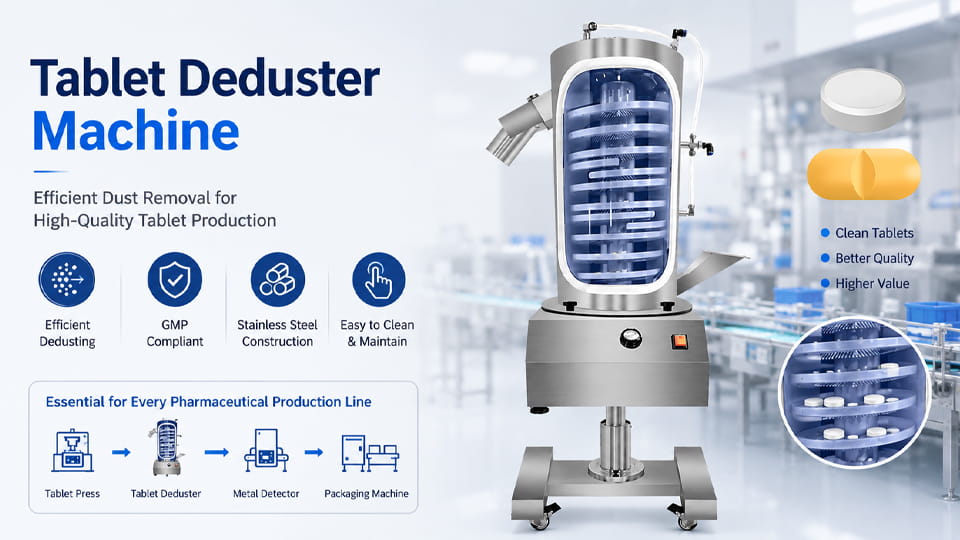
Um despoeirador de comprimidos é um dispositivo de limpeza pós-impressão na fabricação de dosagens sólidas. Geralmente é instalado entre prensa para comprimidos e equipamentos a jusante (máquinas de revestimento ou embalagem). A função do despoeirador é separar qualquer poeira solta, fragmentos, ou comprimidos abaixo do padrão antes da embalagem. Na prática, os comprimidos caem da prensa para o funil de alimentação do desempoeirador. Dentro, eles passam sobre bandejas ou telas perfuradas vibratórias. A vibração (ou um transportador helicoidal suave) agita os comprimidos, sacudindo poeira e pequenas partículas de todas as superfícies. Simultaneamente, um sistema de vácuo ou jato de ar retira o pó desalojado da câmara para coleta. O resultado final é limpo, comprimidos sem poeira que continuam ao longo da linha.
Os despoeiradores de comprimidos são fabricados de acordo com padrões farmacêuticos rigorosos: aço inoxidável de qualidade alimentar (normalmente SUS304 ou SUS316L) a construção garante nenhuma contaminação. Eles geralmente apresentam bandejas e tampas de fácil liberação para limpeza (Projeto CIP/WIP) e controles fáceis de usar. Alguns modelos, como o de Jinlu Deduster de tablet com detector de metais, integrar um scanner de metal no mesmo módulo. Esta máquina combinada não apenas remove a poeira, mas também rejeita qualquer comprimido que contenha detritos metálicos, fornecendo duas camadas de controle de qualidade em uma unidade compacta.
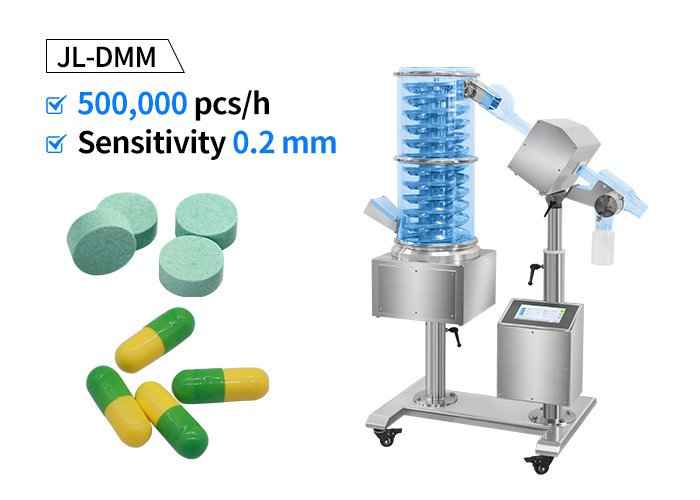
Figura: UM máquina de despoeiramento de tablet (com detector de metais integrado) remove o excesso de pó dos comprimidos após prensagem.
O processo de despoeiramento geralmente envolve quatro etapas:
Junto, essas etapas mantêm a integridade do tablet e, ao mesmo tempo, conseguem uma limpeza completa. Máquinas modernas geralmente registram parâmetros operacionais (velocidade, pressão de vácuo, dados de falha) para atender à Parte FDA 21CFR 11 requisitos para registros eletrônicos.
[jl_youtube src=”https://www.youtube.com/embed/U1KbW9XeHK8″]
Os despoeiradores de comprimidos são comumente classificados com base em sua estrutura de transporte e método de remoção de poeira. Em fabricação farmacêutica, os três tipos principais são desempoeiradores horizontais, desempoeiradores verticais, e despoeiradores tipo escova.
Os despoeiradores horizontais de comprimidos usam uma placa ou tubo vibratório perfurado para mover os comprimidos para frente enquanto separam poeira e partículas finas. O pó solto cai pela superfície perfurada e é removido por um sistema de vácuo.
Estas máquinas têm uma estrutura simples, baixo custo, e fácil operação, tornando-os adequados para produção em pequena escala ou linhas tradicionais de fabricação de comprimidos. No entanto, eles geralmente oferecem menor tempo de residência e menor eficiência de despoeiramento, especialmente em ambientes de produção de alta velocidade. Sua maior necessidade de espaço físico também limita a integração com modernas linhas de embalagem automatizadas.
Os desempoeiradores verticais de comprimidos são o tipo mais amplamente utilizado na produção farmacêutica moderna. Eles usam vibração controlada para mover os comprimidos através de um caminho em espiral enquanto removem continuamente poeira e rebarbas.
Comparado com máquinas horizontais, despoeiradores verticais proporcionam caminhos de transporte mais longos, melhor desempenho de remoção de poeira, pegadas menores, e integração mais fácil com detectores de metais, Máquinas de embalagem de bolha, e linhas de enchimento de garrafas. Os desempoeiradores verticais de comprimidos são geralmente divididos em dois subtipos:

Os despoeiradores tipo escova usam escovas rotativas para limpar e polir comprimidos durante o transporte. Eles são adequados para frágeis, revestido, ou comprimidos delicados que requerem manuseio cuidadoso e melhor acabamento superficial.
Embora os sistemas do tipo pincel possam melhorar a aparência do tablet, eles exigem mais manutenção e limpeza devido ao desgaste das escovas. Por esta razão, eles são usados principalmente em aplicações especializadas, em vez de linhas de produção padrão de alta velocidade.
Hoje, Os desempoeiradores verticais de comprimidos com transporte ascendente continuam sendo a escolha preferida para a maioria dos fabricantes farmacêuticos devido à sua alta eficiência, design compacto, e fácil integração da linha de produção.

Os desempoeiradores de comprimidos são um indispensável para qualquer linha moderna de produção de dosagem sólida porque eles apoiam diretamente a qualidade do produto, segurança e conformidade. A remoção de poeira após a compressão não é negociável para GMP. Como um guia explica, mesmo um vestígio de pó pode arruinar os processos posteriores – a despoeiramento “previne a contaminação nas operações de embalagem, garante a vedação adequada da bolha, e mantém a aparência do produto”. Agências reguladoras (FDA, Ema, cgmp) esperar que equipamentos como desempoeiradores de comprimidos tenham um design higiênico, e essa poeira está contida ou capturada. Por exemplo, desempoeiradores construídos de acordo com os padrões da FDA usam protocolos de limpeza validados (WIP/CIP) e selos seguros para que o pó de drogas potentes ou tóxicas nunca escape.
Além disso, os despoeiradores acompanham as demandas das prensas de alta velocidade. Jinlu observa que os modelos atuais suportam até 100,000 comprimidos por hora para que combinem facilmente até mesmo com a prensa rotativa mais rápida. Isso evita uma desaceleração da produção; o desempoeirador não se tornará um gargalo de rendimento. Na verdade, combinando remoção de poeira e detecção de metais (quando aplicável), essas máquinas economizam espaço na linha e reduzem o risco de contaminação secundária entre dispositivos.
Finalmente, comprimidos limpos melhoram o rendimento e reduzem o desperdício. Se sobrar poeira nos tablets, eles podem ficar juntos, pesar mal, ou desencadear defeitos no revestimento ou formação de bolhas. A despoeiração reduz drasticamente as taxas de rejeição e as reclamações dos clientes. Ao impor uma etapa final de controle de qualidade de “tablet limpo”, os fabricantes mantêm a potência consistente do comprimido e a segurança do paciente.
| Recurso | Desempoeirador de comprimidos | Polidor de comprimidos |
| Função principal | Remova poeira solta e partículas finas dos comprimidos. | Superfícies de comprimidos polidas ou lustrosas para dar brilho (muitas vezes através de escovas rotativas ou pano). |
| Uso típico | Instalado imediatamente após pressionar o tablet, pré-revestimento/embalagem. Garante comprimidos livres de poeira. | Usado após despoeiramento (ou sozinho) como etapa de acabamento para polimento cosmético. |
| Mecanismo | Bandeja vibratória ou tela espiral + extração a vácuo. | Escovas ou cintas abrasivas rotativas esfregam suavemente a superfície da mesa gráfica (com vácuo mínimo). |
| Coleção de poeira | Vácuo ou sucção integral captura o pó removido. | Limitado; empurra principalmente o excesso de poeira para dentro do tambor de polimento. Menos eficaz na captura completa de poeira. |
| Impacto em tablets | Limpa comprimidos sem alterar a forma; rejeita comprimidos quebrados. | Suaviza as bordas e adiciona acabamento brilhante; pode arredondar ligeiramente os cantos. Principalmente melhoria estética. |
| Integração | Em linha com a linha de produção (muitas vezes ajustável em altura para pressionar). Opções CIP/WIP disponíveis. | Muitas vezes, uma unidade autônoma ou downstream; nem sempre pronto para GMP pronto para uso. |
| Benefícios | Atende aos requisitos de limpeza GMP, mantém a precisão do peso. | Melhora o apelo visual; remove pequenas marcas superficiais. |
Mesa: Comparação de despoeiradores e polidores de comprimidos. Os despoeiradores são principalmente para remoção de poeira e controle de qualidade, enquanto polidores concentre-se na aparência. Como resultado, desempoeiradores geralmente incluem sistemas de extração de poeira, enquanto os polidores não.
A seleção de um desempoeirador ideal depende das necessidades do seu processo. Considerar:
Ao pesar esses fatores – rendimento, especificações do tablet, construção, e serviço – você pode escolher um despoeirador que mantenha seus tablets limpos, seguro, e sua linha funcionando de forma eficiente.
Os desempoeiradores de comprimidos são usados em qualquer indústria que produz comprimidos comprimidos:
Em todos os casos, o design do desempoeirador é semelhante. Por exemplo, As máquinas de Jinlu controlam 3–25mm comprimidos de vários formatos, tornando-os versáteis para qualquer dose sólida linha. Quer se trate de um medicamento que salva vidas ou de um complexo vitamínico, um desempoeirador mantém os comprimidos intactos e livres de contaminação.

Jinlu Packing é um fabricante confiável de máquinas para embalagens farmacêuticas, e nossos desempoeiradores de tablet refletem décadas de experiência. Os principais motivos para escolher Jinlu incluem:
Para mais detalhes, veja nosso Produto Deduster de tablet com detector de metais página, ou entre em contato conosco para um orçamento personalizado e layout de linha. Nossos especialistas podem recomendar o sistema de despoeiramento ideal (com ou sem detecção de metais) para atender aos seus requisitos de qualidade e orçamento.
Um desempoeirador de comprimidos é um investimento vital para qualquer fabricante de doses sólidas. Garantindo que os comprimidos deixem a superfície da prensa livre de detritos, os desempoeiradores protegem a qualidade do produto e a segurança do paciente, ao mesmo tempo que aumentam a eficiência da produção. Eles ajudam a atender padrões regulatórios rigorosos e a reduzir rejeições ou recalls dispendiosos. Com um despoeirador adequado (especialmente um integrado com um detector de metais), seus tablets ficarão mais limpos, sua linha ficará mais suave, e seu produto final será de maior qualidade.
Se você deseja atualizar sua linha, Embalagem Jinlu oferece uma gama completa de equipamentos de despoeiramento e manuseio de comprimidos. Entre em contato com a Jinlu Packing hoje mesmo para uma cotação ou consulta – nossos especialistas podem ajudar a configurar o Tablet Deduster ideal (com ou sem detecção de metais) para sua linha farmacêutica. Garanta que sua produção atenda aos mais altos padrões de qualidade e eficiência com as soluções comprovadas de despoeiramento da Jinlu.
Um desempoeirador remove o excesso de pó e partículas finas dos comprimidos imediatamente após a compressão. Esta etapa de limpeza evita que a poeira contamine as próximas etapas (como revestimento ou bolhas) e garante que cada comprimido tenha um acabamento impecável. A remoção da poeira também melhora a vedação dos blisters e evita o enchimento solto de partículas nos frascos.
Sim. Os despoeiradores de comprimidos são projetados para ficarem alinhados com a prensa. Eles normalmente são colocados logo após a calha de descarga da prensa. Muitos modelos possuem bases de altura ajustáveis ou conectores correspondentes para que sejam fixados diretamente. Esta configuração em linha permite que os comprimidos fluam diretamente da prensa para o desempoeirador sem transferência manual, que agiliza a produção.
Um desempoeirador de comprimidos limpa poeira e fragmentos de comprimidos, enquanto um detector de metais procura e rejeita comprimidos contaminados com metal. A máquina combinada de despoeiramento/detector de metais da Jinlu, na verdade, faz as duas coisas em uma unidade. Naquele híbrido, o sistema de peneira do desempoeirador primeiro remove a poeira e rejeita pastilhas quebradas, em seguida, o detector de metais a jusante verifica se há partículas de metal nos comprimidos limpos.
Os despoeiradores devem ser limpos regularmente de acordo com GMP. Tipicamente, a bandeja de coleta de pó ou os filtros são esvaziados diariamente. Partes internas (telas, bandejas, e tremonhas) deve ser limpo ou aspirado pelo menos uma vez por semana. Muitas empresas fazem uma desmontagem completa e lavam (WIP/CIP) mensalmente ou entre grandes trocas de produtos. Os fabricantes geralmente recomendam escovar as perfurações e inspecionar o filtro de vácuo todos os dias. Verificações anuais de manutenção e substituição de peças (E.G.. motores de vibração, selos) ajudar a manter a eficiência alta.
Sim, despoeiradores adequados são projetados para GMP. Eles usam materiais de qualidade farmacêutica (E.G.. SUS316L) e princípios de design higiênico. Um desempoeirador compatível terá uma operação suave, interiores sem solda e peças de desconexão rápida para fácil limpeza. Limpeza automatizada (WIP/CIP) está disponível em modelos de última geração para minimizar a limpeza manual. Todas as etapas operacionais (E.G.. configurações de velocidade, registros de limpeza) pode ser documentado para satisfazer auditorias. Despoeiradores de Jinlu, por exemplo, atender aos regulamentos de qualidade FDA/EMA e apoiar a peça 21CFR 11 registro de dados quando emparelhado com um detector de metais.
A despoeiração dos comprimidos é importante porque os restos de pó podem afetar a qualidade do revestimento, selagem de bolhas, enchimento de garrafas, e aparência do produto. Também ajuda a reduzir os riscos de contaminação e mantém o equipamento de embalagem posterior mais limpo e estável durante a produção.
Sim. As máquinas modernas de despoeiramento de comprimidos geralmente incluem configurações de vibração ajustáveis que permitem aos operadores processar comprimidos revestidos, comprimidos efervescentes, comprimidos mastigáveis, e formas irregulares sem danificar a superfície do produto.
Além da fabricação farmacêutica, desempoeiradores de comprimidos também são amplamente utilizados em nutracêuticos, comida, confeitaria, e indústrias químicas para produtos como comprimidos de vitaminas, pastilhas de doces, pastilhas de detergente, e suplementos de ervas.
Referências:
1.Guia para seleção de desempoeiradores de comprimidos em operações de fabricação farmacêutica —— farmaceuticaonline.com
2.Colagem e colheita na compressão de comprimidos farmacêuticos: Uma análise do Consórcio IQ —— Ciência Direta
3.Lidando com o acúmulo de poeira na fabricação de tablets —— pharmtech.com
4.Tecnologia Farmacêutica Inc.: Desempoeirador à prova de poeira —— Embalagem de saúde