

A produção farmacêutica confiável depende do funcionamento correto de cada componente, incluindo o sistema de lubrificação dentro de seu maquinário. A direita Lubrificante para equipamentos farmacêuticos ajuda a proteger componentes críticos, melhorar o desempenho da máquina, e reduzir problemas de manutenção em equipamentos como máquinas de enchimento de cápsulas, Pressões de tablets, e máquinas de embalagem blister.
Para fabricantes farmacêuticos, a seleção do lubrificante também envolve mais do que o desempenho da máquina. Requisitos de conformidade, controle de higiene, compatibilidade de lubrificantes, e práticas de manutenção afetam a confiabilidade do equipamento e a segurança da produção. Este artigo cobre tudo o que você precisa saber sobre lubrificantes para máquinas farmacêuticas, desde tipos de lubrificantes e critérios de seleção até práticas de manutenção em conformidade com GMP.
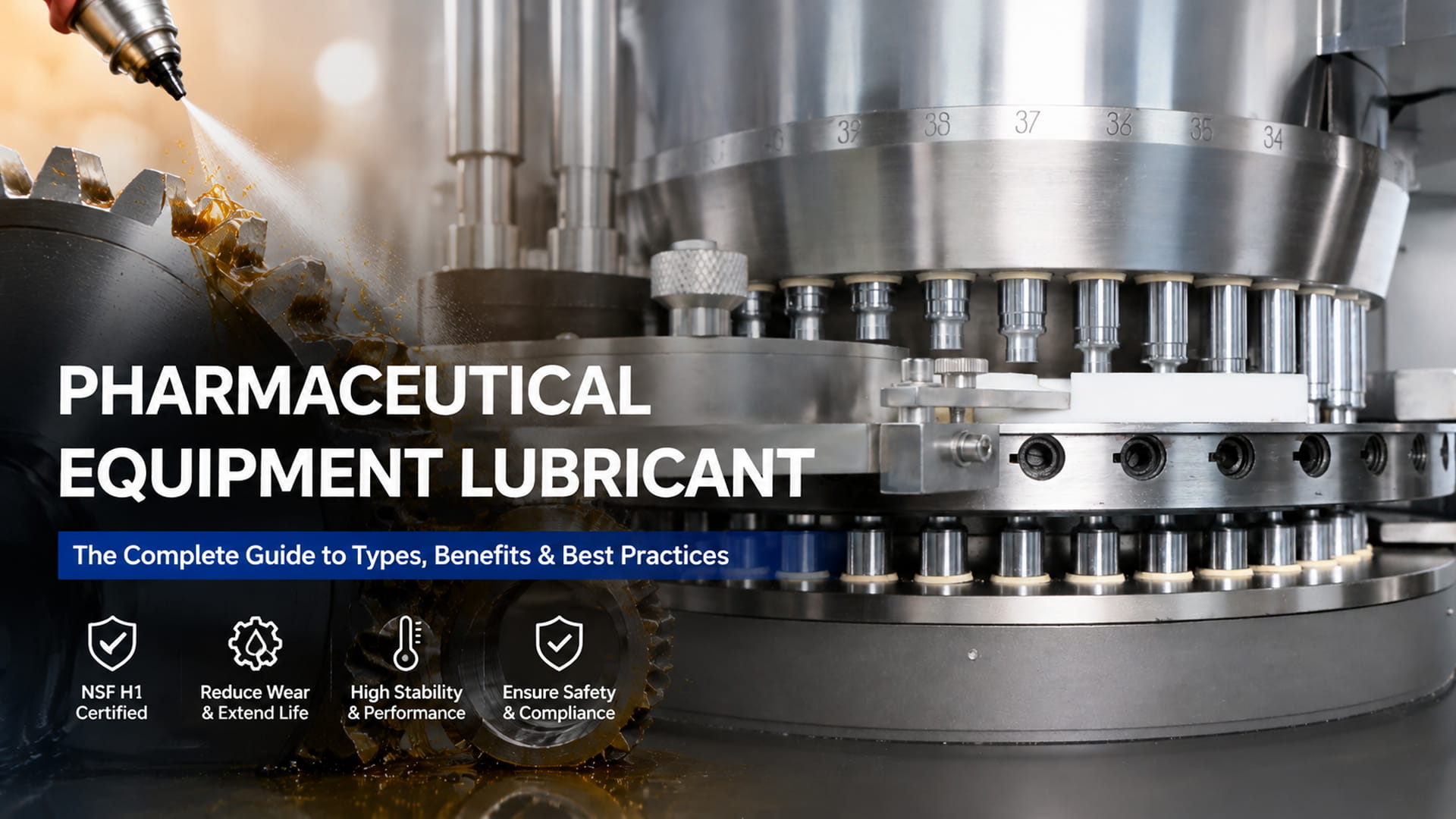
Lubrificantes para equipamentos farmacêuticos são óleos especializados, graxas e fluidos formulados para uso em máquinas de fabricação e embalagem de medicamentos. Ao contrário dos lubrificantes industriais em geral, estes são frequentemente de qualidade alimentar ou farmacêutica para minimizar o risco de contaminação. Eles incluem:
Estes lubrificantes farmacêuticos diferem dos óleos normais porque são mais limpo e seguro para ambientes GMP. Por exemplo, o Guia Laranja (BPF do Reino Unido) recomenda explicitamente “lubrificantes e óleos de qualidade alimentar” em máquinas usadas com APIs. Muitos fabricantes, portanto, escolhem Certificação NSF H1 ou ISO 21469 óleos para garantir a conformidade (veja a próxima seção).
Figura: Uma linha de embalagem farmacêutica automatizada de alta velocidade. Essas máquinas (E.G.. recheio de cápsula, embalagem blister) têm muitas peças móveis que requerem limpeza, lubrificantes certificados para operar de forma confiável e atender aos padrões GMP.
Máquinas farmacêuticas são sistemas complexos de cames, engrenagens, correntes e rolamentos que funcionam continuamente sob alta velocidade e, às vezes, em condições extremas. Lubrificação adequada:
No entanto, nem todos os lubrificantes são aceitáveis na indústria farmacêutica. Como o equipamento geralmente opera em salas limpas ou pode (mesmo acidentalmente) entre em contato com o produto, mandato dos reguladores de qualidade alimentar, NSFH1 ou lubrificantes equivalentes em qualquer área onde a contaminação seja possível. Resumidamente, a direita lubrificantes de qualidade farmacêutica garantir um funcionamento suave e controle de contaminação na fabricação farmacêutica.
A fabricação farmacêutica utiliza diversas categorias de lubrificantes, escolhido por requisitos de aplicação e equipamento:
Estes são óleos claros (mineral ou sintético) usado em sistemas de máquinas. Os exemplos incluem óleos de engrenagem, óleos hidráulicos e óleos de uso geral formulados para ambientes limpos. Eles geralmente têm aditivos para longa vida, prevenção de ferrugem e estabilidade de temperatura.
Todos esses óleos para produtos farmacêuticos devem ser grau farmacêutico – ou seja. formulado para evitar ingredientes tóxicos ou metálicos, e geralmente atendem a padrões NSF H1 ou similares. Por exemplo, óleos sintéticos (PAO, PAG) são comuns porque lidam com alto calor/pressão e ainda se qualificam como NSF H1.
NSFH1 refere-se à certificação da indústria alimentícia dos EUA para lubrificantes seguros para contato acidental. Em produtos farmacêuticos, Lubrificantes NSF H1 são usados em peças onde o produto ou API pode tocar acidentalmente em uma parte móvel. Os ingredientes devem estar na lista segura do FDA (21 CFR 178.3570).
Lubrificantes H1 típicos incluem:
O uso de graxa/óleo H1 ajuda a cumprir as GMP. Como afirma o Guia Orange, para reduzir o risco de contaminação “o uso de lubrificantes e óleos de qualidade alimentar” é recomendado para equipamentos de processamento. E Klüber observa que os padrões GMP “estipular que os produtos lubrificantes certificados…devem ter registro H1, Certificado ISO 21469, e compatível com FDA” para garantir que não contaminem o produto.
Sintéticos de alto desempenho (como PAO, PAG, silicone, PFPE) excel em condições extremas comuns em equipamentos farmacêuticos. Eles oferecem:
Embora alguns produtos sintéticos sejam inerentemente compatíveis com NSF H1, os usuários devem sempre verificar a certificação de qualidade alimentar se houver algum risco de contato.
As graxas são lubrificantes semissólidos (óleo + espessante) para peças de movimento lento ou propensas a respingos. Em fábricas farmacêuticas, você vê graxas: rolamentos, guias lineares, rolamentos de elevador, e eixos. Principais tipos de graxa:
Escolhendo a viscosidade correta da graxa e permanecendo livre de contaminantes (sem sujeira nas pistolas de graxa) é crucial – abordaremos erros comuns mais tarde.
Equipamentos de fabricação farmacêutica possuem vários pontos de lubrificação. Abaixo estão exemplos das principais máquinas da Jinlu Packing:
A tabela abaixo mapeia equipamentos de embalagem comuns para suas peças lubrificadas típicas e as recomendações grau alimentício/H1 lubrificante:
| Equipamento | Peças típicas para lubrificar | Tipo de lubrificante recomendado |
| Máquina de prensagem de comprimidos | Câmeras de perfuração, corrediças, rolamentos | Graxa NSF H1 de alta carga |
| Máquina de enchimento de cápsulas | Engrenagens da plataforma giratória, unidades de câmera, rolamentos | Graxa NSF H1 ou óleo sintético H1 |
| Máquina de embalagem em blister | Correntes transportadoras, trilhos guia, estação de selagem | Óleo de corrente/engrenagem NSF H1, graxa leve |
| Máquina de encadernação | Caixas de câmbio, correias transportadoras, rolos guia | Óleo de engrenagem de qualidade alimentar ou graxa NSF H1 |
| Linha de embalagem de garrafas | Correntes transportadoras, rodas dentadas, rolamentos | Óleo de corrente NSF H1 ou graxa de poliureia |
Mesa: Equipamento típico de embalagem farmacêutica e componentes lubrificados (o uso de lubrificantes de qualidade alimentar ou NSF H1 é recomendado para atender à segurança GMP).
Essas máquinas (cápsula, comprimido, bolha) são exemplos de equipamentos da Jinlu Packing. Para obter detalhes sobre pontos de lubrificação nos produtos da Jinlu, veja nossas páginas de produtos em Máquinas de enchimento de cápsulas, Máquinas de embalagem de blister, e Prensas rotativas para comprimidos.
Selecionar o lubrificante correto envolve balancear necessidades da máquina com Requisitos de GMP/conformidade. Fatores principais:
Resumindo, priorizar segurança e confiabilidade. Como observa a Klüber Lubrication, Os padrões GMP exigem “lubrificantes capazes de passar em auditorias” (Certificação H1/ISO). Uma estratégia de lubrificantes compatível garante que suas máquinas funcionem sem problemas e que seus produtos permaneçam não contaminados.
Mesmo equipes experientes podem cometer erros. Aqui estão os Principal 8 erros de lubrificação e como evitá-los:
Evitar esses erros é vital. Como alerta um especialista do setor, má lubrificação pode “derrubar máquinas” e, em última análise, interromper a produção.
Um programa formal de lubrificação integra manutenção com sistemas de qualidade GMP. Aqui estão 8 etapas para um programa robusto de lubrificação farmacêutica:
Figura: Cronograma de manutenção para tarefas de lubrificação (verificações diárias através de trocas trimestrais de óleo) para garantir a confiabilidade contínua do equipamento.
Use esta lista de verificação para resumir tarefas de rotina. Marcas de verificação (✓) indicar a frequência recomendada para cada atividade de inspeção ou lubrificação:
| Item de inspeção | Diário | Semanalmente | Mensal | Trimestral |
| Verifique se há derramamentos de óleo/vazamento no chão ou ao redor das máquinas | ✓ | |||
| Inspecione os níveis de óleo da correia/caixa de câmbio e os visores | ✓ | ✓ | ||
| Inspecione os rolamentos (ouvir barulho, sinta calor) | ✓ | |||
| Relubrifique as conexões e os pontos de graxa | ✓ | ✓ | ||
| Aperte as conexões/vedações da tampa soltas | ✓ | |||
| Troque o óleo da engrenagem/caixa de câmbio ou fluidos hidráulicos | ✓ | |||
| Revise e atualize registros/diário de lubrificação | ✓ | ✓ | ||
| Verifique a condição das ferramentas de lubrificação (armas, funis) | ✓ |
Uso regular desta lista de verificação, junto com registro digital (CMMS), ajuda a detectar padrões de desgaste e garante prontidão para auditoria. Uma pesquisa com gerentes de manutenção farmacêutica mostra que os cronogramas e registros de lubrificação documentados são métricas essenciais de qualidade.
Figura: Um mecânico adicionando óleo a uma máquina – semelhante à manutenção de equipamentos de embalagem farmacêutica. Sempre use o óleo ou graxa recomendado pelo fabricante (frequentemente NSF H1 de qualidade alimentar) e limpe o excesso para evitar contaminação.
A lubrificação adequada não é apenas manutenção de rotina – é uma parte crítica para garantir confiabilidade de equipamentos farmacêuticos, qualidade, e conformidade. Usando o correto lubrificantes para equipamentos farmacêuticos (Óleos e graxas aprovados pela H1/FDA) com um programa de manutenção disciplinado reduzir o desgaste da máquina, evitar paralisações inesperadas, e proteger a pureza do produto. Evitando erros comuns (veja lista de verificação) e seguindo etapas em conformidade com GMP, as equipes de manutenção podem prolongar significativamente a vida útil do equipamento e apoiar a produção ininterrupta.
Para qualquer equipamento de embalagem Jinlu (E.G.. Máquinas de preenchimento de cápsulas, Máquinas de embalagem de bolha, Pressões de tablets), nossa equipe técnica pode aconselhar sobre lubrificantes adequados e rotinas de manutenção. Se você precisa de máquinas confiáveis para enchimento de cápsulas, linhas de embalagem blister ou uma prensa rotativa de alta velocidade para comprimidos, juntamente com orientações sobre manutenção, entre em contato com Jinlu Packing para soluções especializadas. Oferecemos não apenas máquinas de qualidade, mas suporte total para mantê-los bem lubrificados e em conformidade com GMP.
Um lubrificante para equipamentos farmacêuticos é um lubrificante especialmente selecionado usado para manutenção de máquinas farmacêuticas e equipamentos de produção. Ajuda a reduzir o atrito, minimizar o desgaste dos componentes, melhorar a confiabilidade da máquina, e apoiar operações de fabricação estáveis. Comparado com lubrificantes industriais em geral, lubrificantes de equipamentos farmacêuticos devem considerar fatores como controle de contaminação, compatibilidade de equipamentos, e requisitos de BPF.
Os lubrificantes são essenciais para máquinas farmacêuticas porque protegem os componentes móveis do atrito, superaquecimento, e desgaste prematuro. A lubrificação adequada ajuda a reduzir o tempo de inatividade inesperado, melhorar o desempenho do equipamento, e prolongar a vida útil de peças críticas, como rolamentos, engrenagens, correntes, e conjuntos mecânicos usados em máquinas de enchimento de cápsulas, Pressões de tablets, e máquinas de embalagem blister.
Os tipos comuns de lubrificantes usados em equipamentos farmacêuticos incluem óleos de qualidade farmacêutica, lubrificantes sintéticos, lubrificantes de qualidade alimentar, graxas, e lubrificantes à base de silicone. A escolha correta depende do projeto da máquina, temperatura operacional, condições de carga, pontos de lubrificação, e requisitos regulamentares.
Para equipamentos usados em ambientes de produção sensíveis, os fabricantes geralmente consideram os lubrificantes NSF H1 onde pode existir risco de contato acidental.
O lubrificante NSF H1 é uma categoria registrada de lubrificante de qualidade alimentar, projetada para aplicações onde pode ocorrer contato acidental com produtos. Em ambientes de fabricação farmacêutica e alimentícia, Os lubrificantes NSF H1 são frequentemente selecionados para atender aos requisitos de higiene e reduzir os riscos de contaminação quando aplicados corretamente.
No entanto, A certificação NSF H1 não significa que o lubrificante deva entrar em contato intencionalmente com os produtos. Ainda é importante aplicar a quantidade mínima necessária e seguir os procedimentos de manutenção adequados.
Sim, lubrificantes de qualidade alimentar, especialmente lubrificantes registrados NSF H1, pode ser adequado para determinadas aplicações de máquinas farmacêuticas quando o fabricante do equipamento e os requisitos de produção permitirem seu uso. Eles são comumente considerados para áreas onde o contato acidental com lubrificante pode ser possível.
A seleção final deve sempre considerar as especificações da máquina, compatibilidade de materiais, condições de operação, e requisitos relacionados às BPF.
O melhor lubrificante para uma máquina de enchimento de cápsulas depende da estrutura da máquina e dos pontos de lubrificação. Rolamentos, câmeras, engrenagens, e mecanismos móveis podem exigir diferentes soluções de lubrificação. Em muitos casos, os fabricantes selecionam óleos de qualidade farmacêutica adequados, lubrificantes sintéticos, ou graxas NSF H1 com base nas condições operacionais e recomendações de manutenção.
A lubrificação regular da máquina de enchimento de cápsulas ajuda a manter a precisão, reduzir o desgaste, e melhorar a estabilidade da produção.
A frequência de lubrificação de equipamentos farmacêuticos depende de fatores como horas de operação da máquina, velocidade de produção, ambiente, tipo de lubrificante, e recomendações do fabricante.
Um bom programa de lubrificação geralmente inclui inspeções regulares, tarefas programadas de lubrificação, verificações da condição do lubrificante, e registros de manutenção em vez de depender apenas de intervalos de tempo fixos.
Erros comuns de lubrificação incluem o uso de lubrificantes industriais inadequados, selecionando a viscosidade errada, misturar tipos de lubrificantes incompatíveis, aplicar muito ou pouco lubrificante, usando ferramentas de lubrificação contaminadas, e não manter registros de lubrificação.
Esses erros podem aumentar o desgaste do equipamento, criar riscos de contaminação, e levar a paralisações desnecessárias da produção.
Um programa de lubrificação compatível com GMP deve incluir várias etapas importantes:
• Identifique todos os pontos de lubrificação
• Selecione lubrificantes adequados de grau farmacêutico ou aprovados
• Criar cronogramas de lubrificação
• Treinar operadores de manutenção
• Manter registros detalhados de lubrificação
• Realizar inspeções regulares de equipamentos
• Substitua os lubrificantes com base nas condições operacionais
• Melhorar continuamente os procedimentos de manutenção
Um programa de lubrificação estruturado ajuda a melhorar a confiabilidade do equipamento e apoia a produção farmacêutica consistente.
A graxa sintética utiliza óleos básicos sintéticos que geralmente proporcionam melhor resistência à temperatura, estabilidade à oxidação, e vida útil mais longa em comparação com muitas graxas minerais convencionais.
Para máquinas farmacêuticas, graxas sintéticas com certificações apropriadas, como registro NSF H1 quando necessário, pode ser considerado para aplicações que incluem rolamentos, correntes, e componentes mecânicos que requerem lubrificação duradoura.
Referências:
1.Segurança de máquinas — Lubrificantes com contato acidental com o produto — Requisitos de higiene —— ISO 21469:2006
2.Lubrificantes de qualidade alimentar e ISO 21469 Certificação —— NSF
3.Diretriz EHEDG 23 – Papel 1, 'Uso de H1 & Lubrificantes Registrados HT1’ | Nova diretriz disponível —— Engenharia Higiénica Europeia & Grupo de Projetos
4.Como os registros comprovam que os lubrificantes são de qualidade alimentar —— NSF