How to Set Blister Push-Through Force: Balancing Patient Usability, Product Protection and Lidding Structure
How to Set Blister Push-Through Force: Balancing Patient Usability, Product Protection and Lidding Structure
novembro 23, 2026
Sem comentários
Em embalagem blister farmacêutica, push-through force (also called blister opening force) is the force needed to press a tablet or capsule out of its sealed pocket. Getting this force “just right” is critical. If the foil or seal is too stiff, patients – especially older adults – may struggle or even injure themselves to open the pack; if it’s too loose, the package can pop open accidentally or fail in transit. Neste artigo, we explain what blister push-through force is, por que isso importa, and how manufacturers can measure and set the appropriate force. We’ll cover the key factors(foil and film materials, seal conditions, tablet properties, etc.), testing methods, and how blister machines help ensure consistency. Até o final, you’ll know how to balanceusabilidade do paciente com proteção do produtoto choose the right blister push-through force for your packaging.
What Is Blister Push-Through Force and Why Does It Matter?
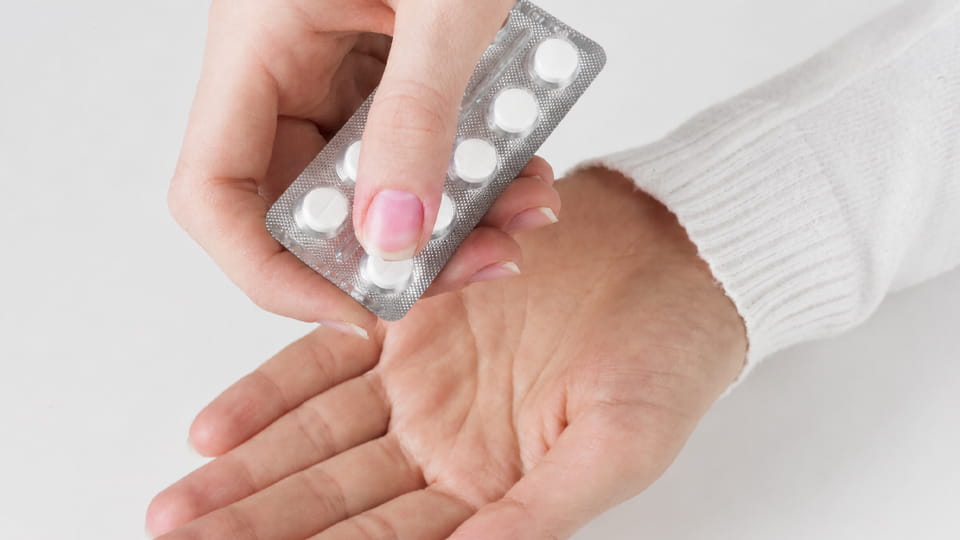
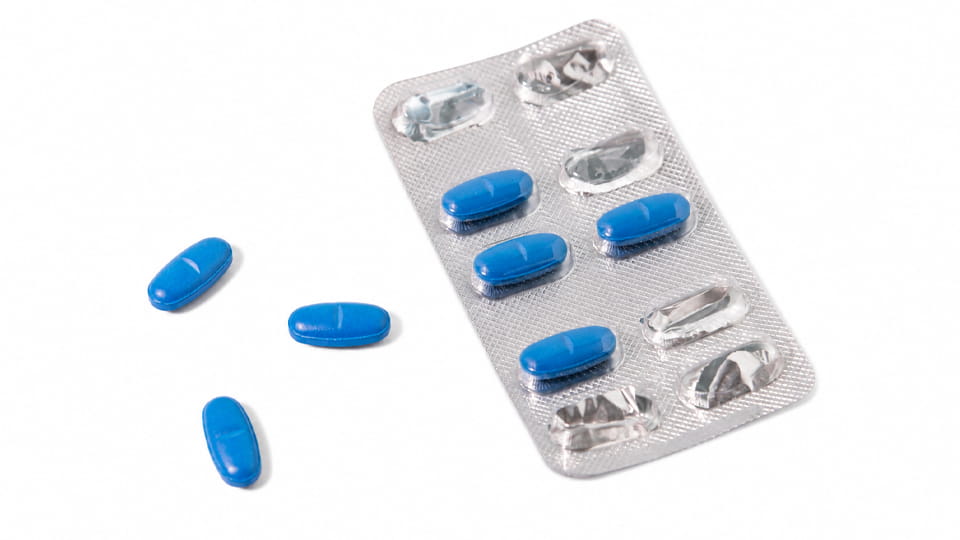
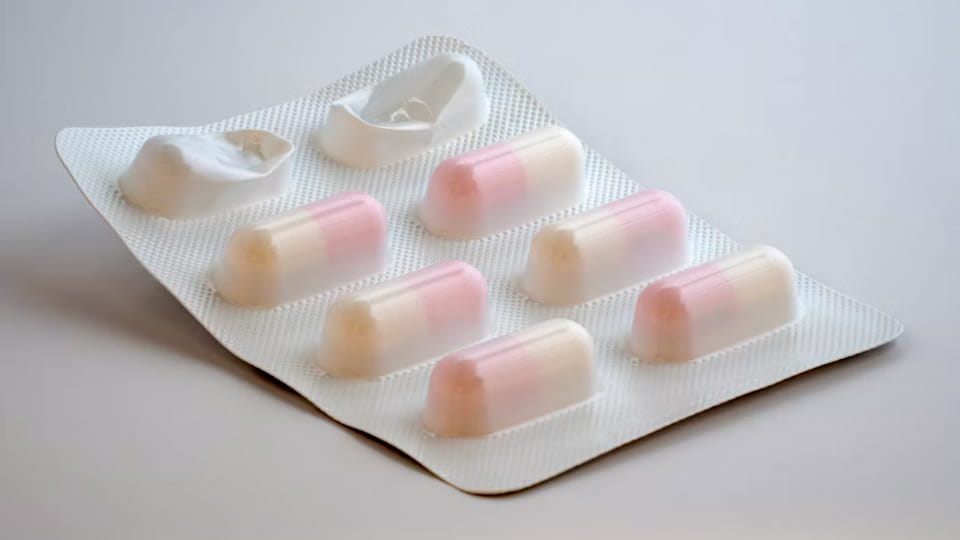
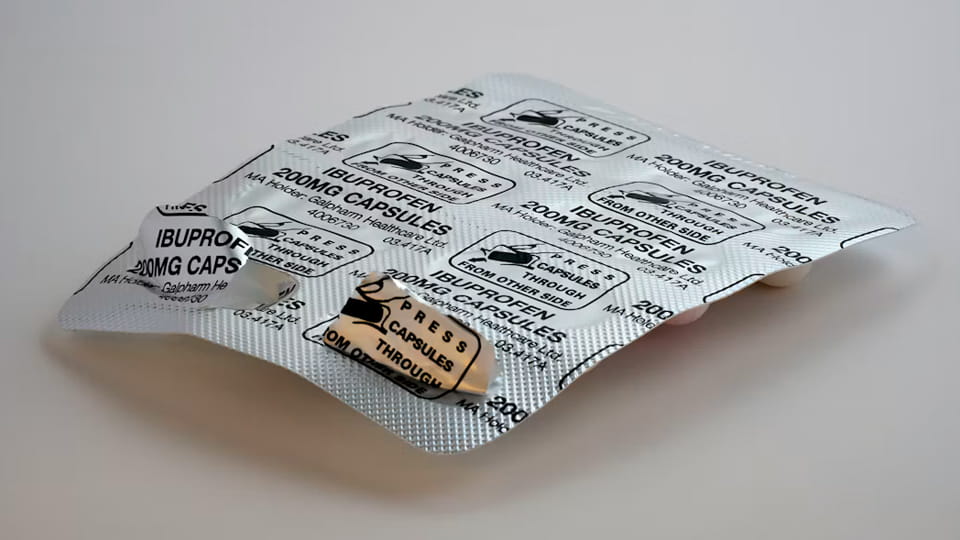
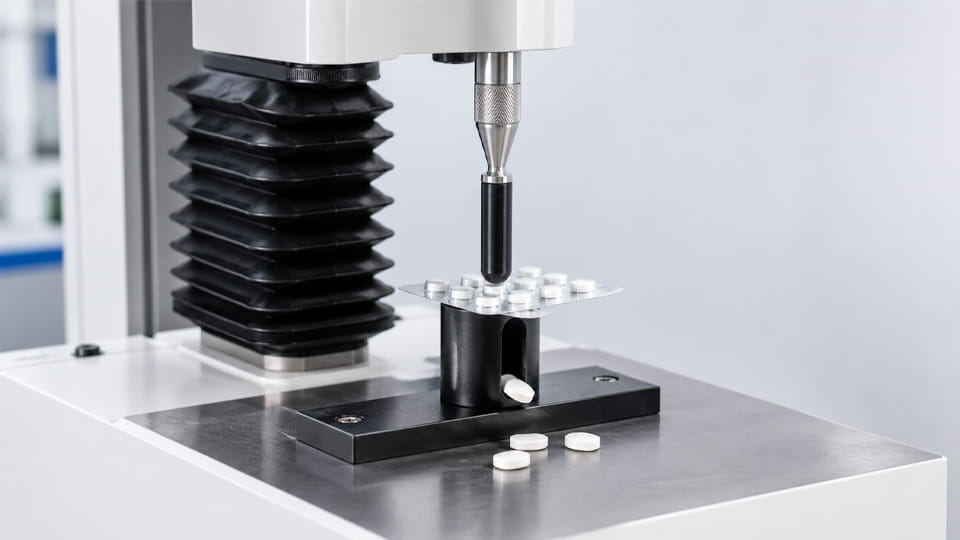
Blister push-through forcerefers to the mechanical force required to break the lidding material and push a tablet out of a blister pack. In testing, a flat probe (about the size of the tablet) is pressed straight down through the aluminum foil lid into the plastic cavity until the tablet is pushed out. This force is measured in Newtons (N) or kilogram-force (kgf). Isso é nãothe same as the package’sforça de vedação (which measures how strongly the foil is bonded around the edges) nor the tablet’s own hardness. Em vez de, push-through force is specifically about piercing and bending the foil. Instron engineers describe a custom fixture that clamps the blister and uses a flat tip to push through the foil, recording themaximum force necessário. IMADA similarly shows this “push-out” test, which quantifies the force to extrude the tablet through the blister.
Why is this important? Blister packs must protect pills from moisture and tampering while still allowingdispensação fácilby the end user. If push-through force ismuito alto, pacientes (especially seniors or those with weak hands) can find it painful or impossible to open. In one study of older adults (average age 80+), blisters withmais grossofoil were rated significantly harder to open. Many elderly users struggled with high forces, whereas most could open standard push-through packs within a few minutes. Por outro lado, if push-through force ismuito baixo, the foil may tear with minimal effort, risking accidental opening, vazamento, or product damage during shipping. Por exemplo, Instron notes that testing can reveal if the lidding material is “too stiff” or if the adhesive bond between foil and film is too strong or too weak. An overly-strong foil or seal may also exceed a tablet’s fracture strength, causing the pill to crumble under pressure.
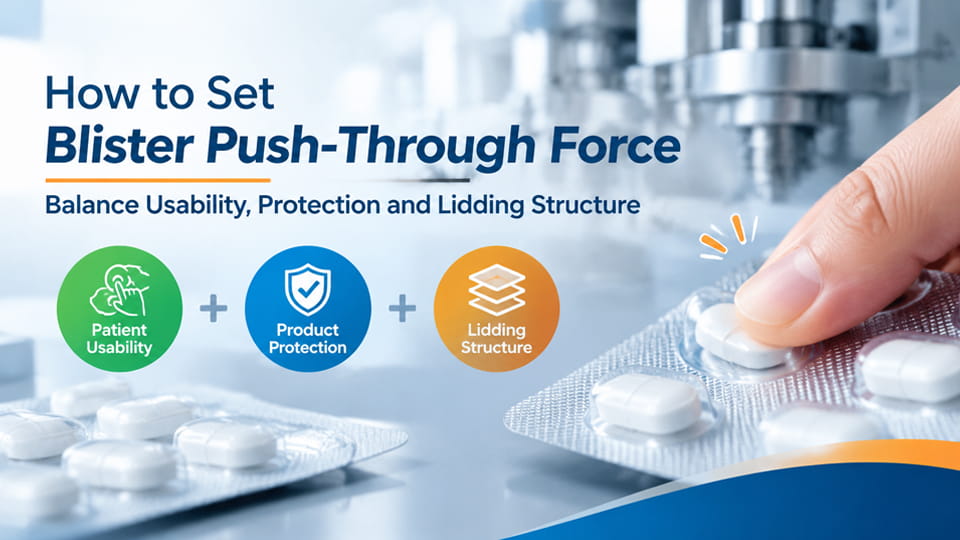
Resumidamente, the push-through force must bebalanced: strong enough to protect the product, yet low enough to be user-friendly. This balance depends on the target user (young adult vs elderly) and any special requirements (child-resistance or senior-friendliness). Child-resistant packs, por exemplo, often use adescascar projeto (a laminated foil with paper or PET) so kids cannot open it easily. Those packs have separate regulations (E.G.. US PPPA 16 CFR §1700.20) and require specific testing on actual people. For normal adult-use blisters, no entanto, we generally focus on measured push-through force and ease of opening for typical patients.
The Balance Between Easy Opening and Product Protection
Finding thecertoopening force is a trade-off. Too much forcemakes the blister frustrating or painful to open. This is a real issue for medication users, especially older adults or those with arthritis. As one clinical study found, blisters with thicker push-through foil were consistently rated harder to open by seniors. Many in the study actually gave up on peelable or child-resistant designs. A conclusão: a pack that’s sealed “like Fort Knox” won’t do much good if patients can’t access their pills.
No entanto, too little forcemeans the lid might tear too easily, undermining protection. A flimsy foil or weak seal could let pills drop out, moisture get in, or leave the product prone to counterfeiting. Por exemplo, if the heat seal temperature or pressure is too low, the foil may not bond fully, creating leaks even though push-through force might be low. Por outro lado, a strong seal can prevent pills from pushing out smoothly, damaging tablets in the process.
Balancing usability and safety also involves choosing theright lidding structure. Standard push-through blisters use a single aluminum foil layer (often hard-temper Alu) laminated with a heat-seal lacquer. This allows the patient to break through the foil with finger pressure. Em contraste, destacávelblisters use a special lacquer so the foil can be peeled off before pushing. Peel-push child-resistantblisters add layers (usually paper/PET) on top of the foil. These extra layers make adults first peel a paper layer, then push the tablet through foil – a two-step process that is much harder for children but also harder for seniors. Importante, using a thicker or extra foil layersozinhodoes not guarantee protection. Real child-resistant packaging must pass formal tests (E.G.. CPSC’s Poison Prevention Packaging Act standards) on finished packs, so one should never assume “thick foil = safe packaging” without proper validation.
Resumindo, easy opening vs secure sealing is a design continuum. User factors (idade, dexterity, instruções) e regulamentos (child-resistant requirements) guide where you land. The goal is to make packages that patients can open without undue struggle while still preventing leaks, accidental openings, or tampering.
Key Factors That Influence Blister Push-Through Force
Several material and design factors determine how much force is needed to push a tablet out. Understanding these helps engineers tune the push-through force in development.
Aluminum Foil Thickness and Temper:Thicker foil generally raises push-through force, because there is more material to pierce. A hard-temper foil (ou seja. fully annealed) is stiffer than a soft temper. No entanto, this isn’t a simple linear rule: foil gauge and temper interact with coatings and cavity pressure. Na verdade, some multilayer or soft-temper foils can feel easier to open than thinner hard-temper foils with different lacquers. The key is that foil properties (grossura, alloy, temper, revestimentos) must be chosen together. Always specify the foil thickness separately from its lacquer and printing, because two foils of the same thickness but different temper or coating can behave very differently. Crucialmente, o final opening force must be measured on the actual finished blister, not guessed from foil specs alone.
Lidding Material Structure:Standard push-through foil is just aluminum with a heat-seal lacquer (often with print on the outside). Em contraste, laminated lidscan change performance. Por exemplo, a paper/PET/foil laminate (peel-push design) will require both peeling and pushing, greatly increasing the force and time needed by the user. Peelable foils have specially formulated lacquer for clean peeling. If you add layers (E.G.. to make child-resistant packaging), you must consider each layer’s stiffness. Geralmente, each additional layeraumentathe maximum force needed, since the tablet must break through multiple materials.
Heat-Seal Lacquer and Sealing Conditions:The lacquer and seal parameters determine how strongly the foil sticks to the plastic. UM good match between lacquer and forming film é vital. Jinlupacking notes that a lacquer chosen for PVC might give a weak seal on PP orPVC/PVDC. If the lacquer/forming-web combo is wrong, the seal can be uneven or weak, which ironically could lower push-out force (making the pack pop open unexpectedly) or cause leaks. Even when materials are compatible, the actual sealing process matters: temperatura, pressão, and dwell time must be controlled. Too low temperature or pressure leads to incomplete bonding (low peel strength), whereas too high can damage the foil or plastic. Por exemplo, on a flat-plate machine, the foil and film are pressed together for a fixed dwell time, whereas a rotary machine has less dwell (since it runs continuously) and often requires higher temperature or pressure to achieve the same bond. Garantindo even pressureacross the entire blister is also key – uneven heating or clamp pressure can create spots that tear too easily or not at all. Resumidamente, optimize your heat-seal settings (temperatura, pressão, tempo) for the chosen foil-film pair.
Blister Forming Film and Cavity Geometry:The plastic cavity shape and material also affect push-through force. Common forming films include PVC, PVC revestido com PVDC, BICHO DE ESTIMAÇÃO, PP, etc.. Each material has different hardness and surface properties for sealing. A harder plastic or deeper pocket might hold the tablet tightly, requiring more force to drive the tablet against the foil. Por outro lado, a shallow or sharply peaked cavity might focus the push force on a smaller area, making it easier to pop out the pill. Perforations or web patterns around the cavity can also guide tearing; some blisters include small tear-start notches to help the foil break at a known spot. When designing the cavity, consider where the tablet sits and how force will transfer: ideally the tablet pushes evenly against the foil without getting jammed.
Tamanho do tablet, Forma, and Hardness:Finalmente, the tablet itself matters. Larger tablets push on more foil surface, which can increase required force. Irregularly shaped orcomprimidos revestidosmight not press evenly. Softer tablets canbreak or deformunder a high force, so if your push-through force exceeds the tablet’s own crushing strength, you risk pill damage. Manufacturers should check tablet integrity during testing. Packaging must protect tablets in transiteallow easy removal. If tablets start cracking inside the blister, the push-through design is too aggressive.
By tuning these factors—foil type and thickness, camadas de folha, seal parameters, projeto de cavidade, and considering tablet properties—you cancontrol push-through force. The next sections explain how to test the force and set it to the right level for your product.
How Lidding Structure Influences Push-Through Force
Standard Aluminum Foil (Push-Through Design):A single aluminum foil (usually 30–80 μm thick) coated with heat-seal lacquer is the classic lid for push-through blisters. This design offers a simple push action: the user presses the tablet and the foil tears at a controlled spot. Hard-temper foil is common here, providing a brittle breaking point. Because the foil is single-layer, the force is moderate. The user breaks the foil at one place and ejects the tablet.
Paper-Aluminum or PET-Aluminum Laminates (Peel-Push):Child-resistant or special easy-open designs often layer other materials. Por exemplo, a paper or PET layer can be laminated on top of the aluminum. In a peel-push system, the user firstpeels offa layer (paper/PET), then pushes through the remaining foil. This structure drastically increases opening force and time (two steps). It’s very hard for children to perform correctly, but it also requires more force (and dexterity) from adults. Such designs must be tested against child-safety standards, not just force metrics.
Peelable Foil:Some packs use a specially lacquered foil that can be entirely peeled off, leaving the tablet exposed. These are often easier for patients to open (no push-through force needed after peeling). No entanto, truepush-through designs rely on the foil tearing under pressure, so peelable designs are a different category.
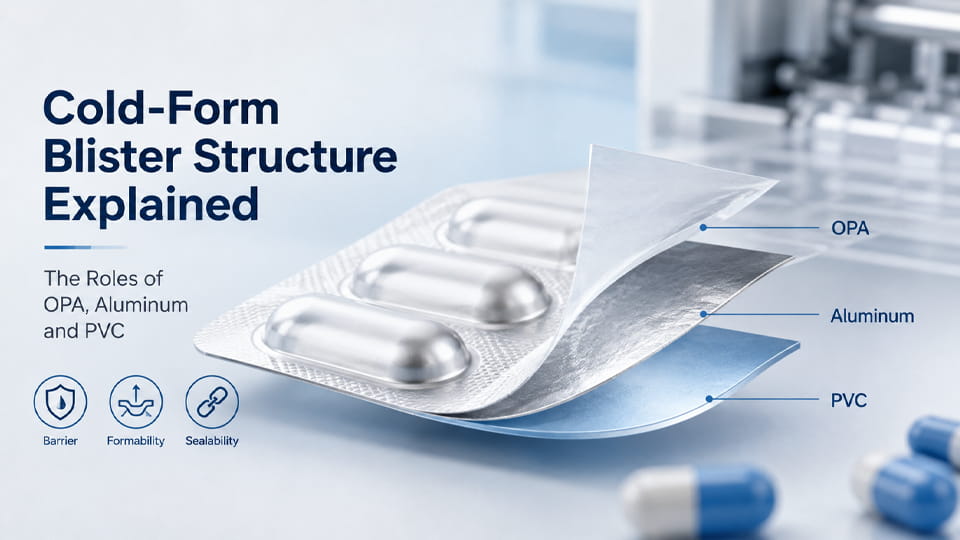
Cold-Form Foil (Bolhas de Alu-Alu):Em formado a frio (Bem-vindo) bolhas, both the lid and cavity are foil laminates (often aluminum/polyamide/PVC). The lid is still a lidding foil, but because the forming web itself is a foil composite, you effectively have two foil layers around the tablet. Pushing through an alu-alu pack means breaking one foil on the lid side (geralmente) and the foil-based cavity. These blister packs typically requiremuch higher push-out force, since two metal layers are pierced. (Often these packs are peeled open, but even if push-through tested, expect the force to be far above typical Alu-PVC values.)
Lamination Details:The exact make-up of a laminate affects stiffness. Por exemplo, peel-push laminates use adhesive layers and are engineered to have a strong heat seal but a weaker paper-foil bond where needed. Jinlupacking advises thateven layer order matters: tipicamente, the outside (impresso) side has a primer or protective coating for printing, while the inside (contacting tablet) side carries the heat-seal lacquer. A wrong lacquer choice (Por exemplo, foil lacquer intended for PVC used on a PP cavity) can make the seal too weak, which indirectly changes how the foil tears.
Ponto-chave:The more layers or the thicker the foil structure, the higher the push-through force—generally.But the relationship isn’t purely linear because peeling layers or special lacquers can change how the force is applied. Na prática, always prototype and test with the intended lid structure. Por exemplo, one new foil manufacturer warns that neither foil gauge nor temper alone determines opening force—materials and process differences mean every foil should be validated in the finished blister.
How to Measure Blister Push-Through Force
To set an appropriate push-through force, you must measure it with a consistent test. Here’s a typical procedure:
Gather sample blisters.Use representative blister packs (unopened, fully sealed) from the materials and process being tested. Label details like foil type, laca, e lote.
Choose equipment and fixtures.A materials testing machine (universal tester) or force gauge with a vertical compression stand is ideal. IMADA and Instron provide fixtures for this. Por exemplo, Instron’s solution clamps the blister card from the top and bottom, and uses a flat cylindrical probe (slightly smaller than the tablet) to push on the pill. Make sure the fixture aligns the probe over the center of the tablet/cavity.
Set the probe and direction.Use um flat-tipped probethat covers the tablet surface without cutting. Align it so it pushes the tablet straight down, perpendicular to the blister. The probe diameter should be just smaller than the cavity, so the tablet bears the force. Avoid sharp probes (they will measure puncture rather than push-through).
Define test speed and conditions.Muitas vezes um constant crosshead speedof 50–200 mm/min is used. Shimadzu notes extrusion tests can run at constant speed, which provides a force-vs.-displacement curve. Choose a speed slow enough to capture the force peak accurately. Test at room temperature, and do enough trials (at least 5–10 blisters) for statistics.
Run the test.The probe pushes down on the tablet through the foil. The force will rise to a peak when the foil first tears, and then may show another peak as the tablet is fully ejected. Record thepeak force (N or kgf) at which the tablet pushes through. Also observe whether the tablet remained intact or cracked. If the machine allows, save the force-displacement curve for analysis.
Analyze results.Calculate the mean and standard deviation of peak forces. Note anysecondpeaks or irregularities (Shimadzu explains that an extrusion test yields two peaks: first to rupture the foil, second to push out the tablet). You can also plot the force curve to see if the foil tore cleanly or if multiple steps occurred (IMADA suggests software can highlight step changes during foil rupture). Check if any samples failed (tablet broken, foil partially unsealed elsewhere, etc.).
Compare measured forces to your target range (veja a próxima seção). If forces are too high or variable, inspect the foil tear pattern and experiment with changes. Instron notes that from this test one can tell “whether the lidding material on a blister pack is too stiff, or if the adhesive strength … is too strong or weak”.
Repeat measurements for any material or process change. Ensure consistency: the same test setup should be used for apples-to-apples comparison (same probe alignment, velocidade, temperatura, etc.).
How to Establish Push-Through Force Acceptance Criteria
Há no universal numberfor push-through force – each product and user group is different. Instead of a single “normal” value, set criteria based on your product requirements and end-user. Veja como:
Define the user population.Will healthy adults take this medicine, or elderly patients with arthritis, or children? If the product is OTC intended for seniors, you might target amais baixopush-through force for easier opening. If it’s a prescription with normal adult users, a moderate range is fine. For pediatric products, stronger seals (with child-resistant features) might be mandated. Always tailor to the actual users.
Baseline material/prototype testing.Start by testing your chosen materials. For each foil/film combination, measure push-through force as above. This gives a “baseline” force before process tweaking. Por exemplo, measure the force on blisters made at zero heat-seal pressure, then at nominal, etc.. These data show your options.
Evaluate force distribution, not just average.Look at the range of results. A narrow standard deviation is ideal (E.G.. ±1–2 N), meaning each pack is consistent. A wide spread indicates process or material variation. Some companies set acceptance as an average ± 3 σ or define a maximum allowable variance. Also plot the force curve – ensure it’s repeatable. If some blisters peak at 25 N and others at 35 N, you may need to tighten control.
Check tablet integrity.During all this, monitor the tablets. If the first-peak force is very high relative to tablet strength, tablets may crack or crumble. Adjust expectations so that tablets remain intact at the worst-case opening force.
Conduct user trials if possible.Especially for senior-friendly claims, a small human factor test with representative users (such as seniors or people with limited hand strength) can confirm that the chosen force is manageable. Some firms do timed-opening tests or rating surveys. While not always formal, this feedback can refine what force range truly “works” in practice.
Set an acceptance range.Based on the above, define an acceptable range for average push-through force (E.G.. 20–30 N) and maximum allowed deviation. Also specify the test method (E.G.. probe size, velocidade, temperatura). Document that range in your quality standards.
Importante: Fazer nãoclaim a one-size-fits-all force threshold. Por exemplo, a heavy 300 mg tablet on thick foil may normally take ~30 N, whereas a small tablet or perforated foil might be ~10 N. Em vez de, your specs should reflect your actual products. Regulatory guidance is sparse here; emphasis is on consistency and user testing. (For child-resistant packs, refer to ISO 8317 / 16 CFR 1700.20 for test protocols rather than aiming for a number of Newtons.)
Practical Ways to Optimize Blister Push-Through Force
If testing shows your opening force is too high or too low, you have several levers to adjust:
Adjust the foil specification.Use a thinner aluminum foil or a softer temper alloy if the force is too high. Por outro lado, if force is too low, consider slightly thicker or harder foil (but be careful not to crack tablets). Sometimes switching the foil alloy (E.G.. 8079 vs. 8021) alters stiffness. Always re-test after a foil change.
Use specialized foils or designs.Some foils are laser-perforated or have micro-scoring to reduce opening force. Others have peel-notches. You can also design the blister card with a slight emboss or score ring around each cavity that encourages tearing at the desired spot with less force.
Optimize film/foil combination.If you have flexibility in the forming film, a softer film (like PVC instead of PP) can reduce friction on the pill, lowering needed force. Check that the lacquer is ideal for that film. Switching film (even different PVC grades) without revalidating the lacquer can cause seal issues.
Tune heat-seal parameters.Sometimes opening force is too high simply because the foil is over-bonded. Reducing heat-seal temperature, pressão, or dwell can lower adhesion. Por exemplo, a slight drop in temperature (still above the lacquer’s melt point) might reduce bonding without creating leaks. Rotational (DPP) vs flat (DPH) machines differ: em um placa plana máquina, longer dwell helps seal but may increase bonding; em um rolo máquina, you might need a higher temperature due to shorter dwell. Work with your equipment engineer: small tweaks in seal time or pressure can change opening force noticeably. No entanto, be very cautious – always re-checkintegridade do selo (testes de vazamento)after such changes.
Improve tooling design.The way the blister cavities are shaped can be refined. Por exemplo, rounding the cavity edges or adjusting depth can change how the tablet contacts the foil. Ensuring the tablet sits centered under the foil helps even force distribution. Proper maintenance of cavity molds (softer spots don’t let foil sag, por exemplo) can make push-through more uniform.
Machine production tuning.On high-speed blister lines, things like film tension, seal bar alignment, and cut precision matter. Por exemplo, a loose forming film might let the tablet rub against the cavity wall, requiring more force to dislodge. Jinlu's máquinas de bolha (DPP and DPH series) use servo drives for precise material feeding, which helps maintain consistent tension. Na prática, run trial batches: collect samples from the actual machine (after cleanup and stabilization) to measure force. Sometimes adjustment of conveyor speed (affecting dwell) or calibration of the sealing bars can make subtle improvements.
Validate changes on the line.Any material or parameter change should be tested on the actual blister machine, not just a bench tester. Factory conditions (longer runs, temperature variations) can differ from lab conditions. Once optimized, do a short production run and measure push-through force on samples from the start and end of the run to confirm stability.
The Role of Blister Packaging Machines in Consistent Push-Through Performance
Por exemplo, the DPH-270Max’s servo-controlled film feed “precisely controls feeding speed to ensure packaging accuracy and stability”. Consistent feed means the foil and film are always presented squarely and under the same tension – reducing variation in how the tablet sits under the foil. De forma similar, the DPP-270Max uses a dual-cylinder heat seal (“Double Cylinder Heat Sealing”) to apply uniform pressure and heat across the blister card. O resultado é suave, wrinkle-free seals that break predictably. Em outras palavras, the machine minimizes variability batch-to-batch.
No entanto, Observe que the machine does not “automatically” make the push-through force correct. It implements whatever settings you choose. If you set the heat-seal too hot, the machine will still seal tightly. If the foil and film are inherently stiff, the machine can’t change that chemistry. What the machine does well isrepetibilidade: it ensures every blister is made under the same conditions (temperatura, pressão, tempo, profundidade de formação, etc.). This means once you dial in the materials and settings, you can trust each blister will have nearly the same push-through force.
Na prática, you should use your blister machine to test changes. Por exemplo, run the machine at different sealing pressures or try a slightly different cavity mold, then measure push-through force. Modern machines like Jinlu’s often have servos and PLC control that allow fine adjustments in heating and speed. O key pointis to view the machine as a highly consistent “bucket brigade” that forms and seals your optimized pack design. The machine ensuresprocess consistency, which is essential for consistent opening force – but it’s the materials and process settings that set the absolute force value.
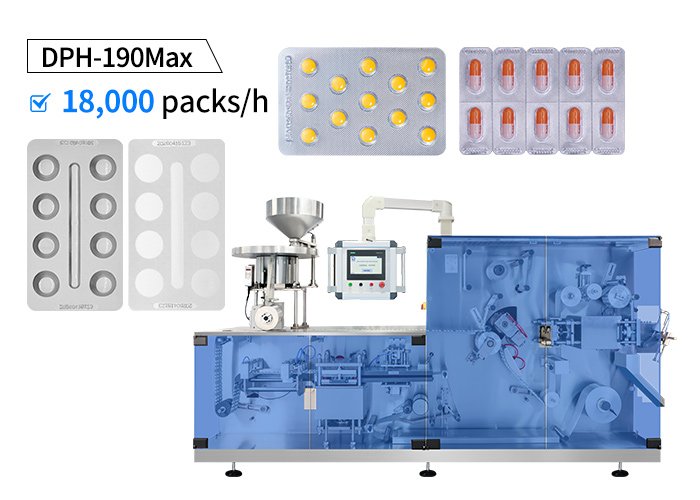
Máquina de embalagem blister de alta velocidade DPH-190Max
Common Problems Caused by Improper Push-Through Force
Manufacturers sometimes run into issues when the push-through force isn’t well controlled:
Excessive Opening Force:If blister lids are too stiff or seals too tight, patients may complain the medicine “won’t come out.” This can lead to poor adherence (doses perdidas) or negative feedback. Technicians might also see cracked or chipped tablets during quality checks. Excessive force can alsoslow downpackaging lines if tablets get stuck.
Insufficient Resistance:If push-through force is too low, sealed blisters might pop open easily. Pills can fall out during packaging or transit. You may also notice little tears or wrinkles in the foil, indicating the seal wasn’t robust. Na pior das hipóteses, barrier integrity is compromised, shortening shelf life.
Inconsistent Performance:Variations (some packs easy, others hard) cause confusion. The product may fail quality audits. This often stems from poor control of material lots (Por exemplo, one roll of foil from a different batch), or machine inconsistencies (a heating element partially failing, etc.). It requires retraining or maintenance to fix.
Misinterpretation of Test Results:Confusingpush-through force com força de vedaçãotests can mislead engineers. Por exemplo, a pack might pass seal peel tests (ou seja. foil won’t peel away easily) but still require low push-through force to pop the tablet. Or vice versa. Always test both aspects separately as needed.
Ao estar ciente dessas armadilhas, you can catch issues early in development. A chave é anticipatethese failure modes: if you see very high force, check tablet integrity and user complaints; if very low, check for spills or leaks; if inconsistent, review material lot control and machine stability.
Conclusão
Setting the right blister push-through force is a crucial step in pharmaceutical packaging design. It requires understanding material properties (foil/film), necessidades do paciente, e capacidades de produção. The goal is to achieve aponto idealwhere the user can access the medicine without struggle, while the package remains robust in the supply chain. By carefully choosing foil type and structure, optimizing heat-seal conditions, and thoroughly testing, manufacturers ensure that each blister consistently meets this balance.
Lembrar, the equipment you use also matters: Avançado da Jinlu Packing máquinas de bolha (DPP-270Max flat plate and DPH-270Max roller type) help maintainconsistenteforming and sealing parameters, but it’s the material choices and process settings that ultimately set the push-through force. Whether you’re launching a new tablet or refining an existing line, follow the steps above to define and validate your opening force. For reliable production of high-quality, easy-open blisters, consider reaching out to Jinlu Packing. Nós oferecemos state-of-the-art blister packaging solutionsand engineering expertise to help you achieve optimal push-through force and packaging performance.
Looking for a blister packaging partner? Jinlu Packing provides automated blister machines and technical support to help you meet your packaging needs. Contate-nosto discuss how ourDPP and DPH blister machinescan deliver precise forming, stable sealing, and consistent push-through force for your pharmaceutical products.
Perguntas frequentes sobre Blister Push-Through Force
What is a typical push-through force for a blister pack?
There is no one “normal” value. The force depends on tablet size, frustrar, and design. Na prática, a standard adult-strength tablet on an Alu-PVC blister might require on the order of 20–30 N (2–3 kgf) to push out, whereas a larger pill or thicker foil could need 40–50 N or more. The key is testing your own product. Manufacturers should establish a target range based on their materials. Avoid quoting a generic number as each blister design is unique.
Does thicker aluminum foil always require more force?
Geralmente, sim, mais grosso (and harder) foil increases push-through force. But it’s not absolute. If the foil is thick but very soft-temper, it may actually bend more easily. Também, the presence of perforations or easy-tear lacquer can reduce force. As Alcoapack notes, foil gauge or temper alone don’t define opening force. Always validate by measurement rather than assumption.
Can push-through force affect tablet integrity?
Pode. If the force needed is close to or exceeds the tablet’s own break strength, the tablet may chip or crumble when opening. That’s why packaging should protect tablets during transit but still allow them to be removed intact. In testing, watch for any tablet damage as you increase force. Tablets intended to be broken out of blisters are typically formulated to withstand the expected forces, but it should be confirmed.
How can manufacturers make blister packs easier to open?
There are several strategies: using thinner or softer aluminum foil, optimizing heat-seal (slightly lower dwell/pressure), or adding easy-open features. Por exemplo, a small notch or scored circle in the foil can guide the tear. Some foils have micro-scores or tear-start lines. You can also use peel-push or peelable lidding designs to eliminate the push-through step entirely. No entanto, any change must still meet packaging integrity requirements. A balance is needed: for consumer-friendly packs, aim for moderate force (por exemplo, under ~30 N) without weakening the seal.
Is push-through force the same as blister seal strength?
Não. Push-through force is the force to break the lid and eject the tablet. Selo (or peel) strength is the force to peel the foil completely off the card. A blister could have a strong peel seal but still require relatively low push-through force (ou vice-versa). They measure different failure modes. For push-through, the foil usually tears locally around the tablet; for seal strength, the foil separates from the entire cavity rim. Don’t confuse the two tests.
How do perforated or peelable designs change push-through force?
Perforations (tiny pre-cuts) in the foil reduce the force dramatically by giving the foil a place to start tearing. Peelable foils eliminate push-through force altogether by requiring the user to peel. Both require different testing: perforated foils are still tested with a push-out method (and will show a lower peak force), while peelable designs are tested by a pull-peel force instead. If ease of opening is the goal, a perforated or peelable lidding might be the solution, but ensure you validate package barrier and durability with those designs.
What about cold-form (Bem-vindo) Blister pacotes?
Forma fria, or alu-alu, packs use foil on both sides. Pushing a tablet out means breaking foil on both lid and base. This usually requires much higher force – often more than an Alu-PVC blister. Cold-form blisters are typically peel-open in practice; if you do measure push-through, expect values multiple times higher. Always consider whether push-through testing is even relevant for a cold-formed pack (sometimes these are tested for puncture with a pointed probe instead).
Which equipment is best for measuring push-through force?
A universal testing machine or a force gauge with a motorized stand is ideal, so you can control speed and record force vs displacement. Instron, Shimadzu, and IMADA all make suitable systems. The key is to use a flat probe and properly clamp the blister. The test should be reproducible: use the same probe, velocidade, and alignment each time. Many teams also use specialized compression jigs (por exemplo, IMADA’s PR-series press fixtures) that align the probe with the tablet. The exact model doesn’t matter as long as it gives you the accurate peak force.
Petty Fu, Fundador da Jinlupacking, traz 20 anos de experiência para o setor de máquinas farmacêuticas. Sob sua liderança, Jinlu tornou-se um fornecedor confiável que integra design, produção, e vendas. Petty é apaixonado por compartilhar seu profundo conhecimento do setor para ajudar os clientes a navegar pelas complexidades das embalagens farmacêuticas, garantindo que eles recebam não apenas equipamentos, mas uma verdadeira parceria de serviços completa, adaptada às suas metas de produção.