
Formas farmacêuticas de comprimidos vêm em dois tipos básicos: revestido e não revestido. Um comprimido não revestido é uma pílula compactada simples, sem qualquer casca adicional – apenas os ingredientes compactados (droga ativa mais excipientes). UM comprimido revestido, em contraste, tem uma fina camada externa ou casca aplicada após a compressão. Este revestimento pode ser um filme de polímero (revestido por película), casca à base de açúcar (com cobertura de açúcar), camada entérica, ou outro filme funcional. O revestimento tem funções que vão além da aparência – pode proteger o medicamento, gosto de máscara, liberação de controle, ou melhorar a capacidade de engolir.
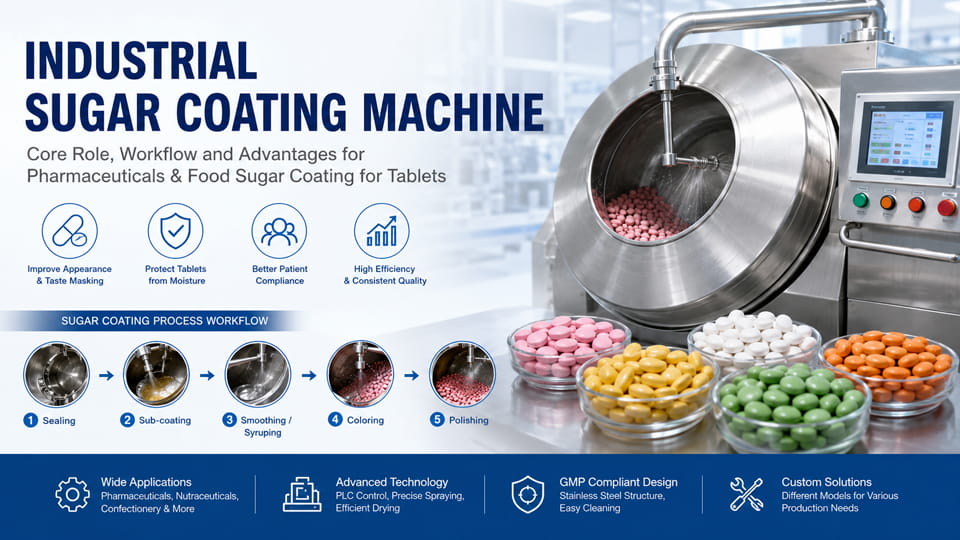
Por exemplo, Figura 1 mostra como uma máquina de revestimento de filme aplica um filme de polímero uniforme em comprimidos, criando suave, pílulas brilhantes. Este revestimento pode facilitar a deglutição e proteger o núcleo do comprimido da umidade e do ar. Em contraste, comprimidos simples não revestidos são foscos, muitas vezes calcário, e mais vulneráveis ao meio ambiente.
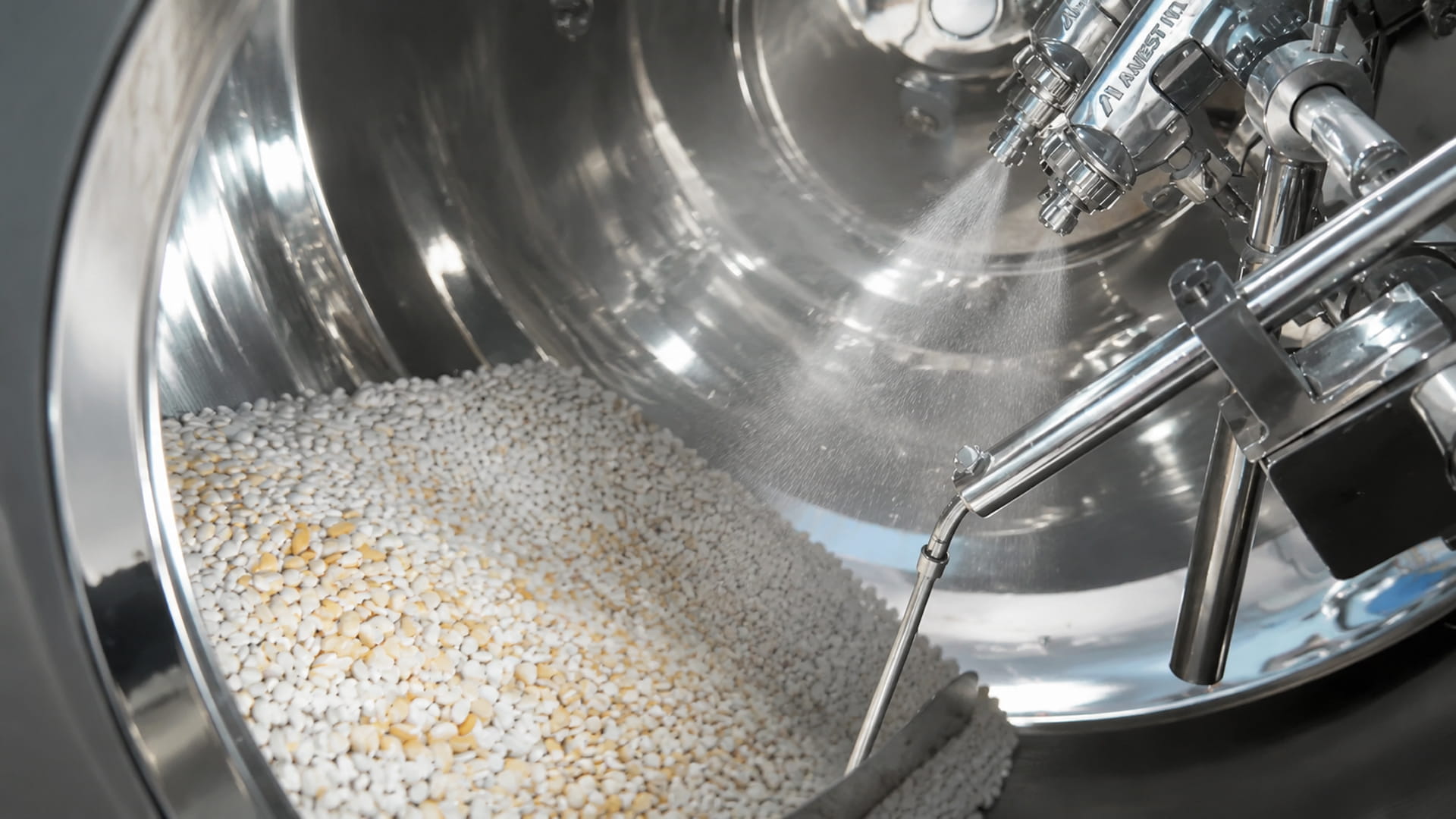
Figura 1. Uma máquina de revestimento de comprimidos de alta velocidade que aplica um revestimento de filme. O revestimento adiciona uma proteção, camada suave para cada comprimido, melhorando a aparência e estabilidade.
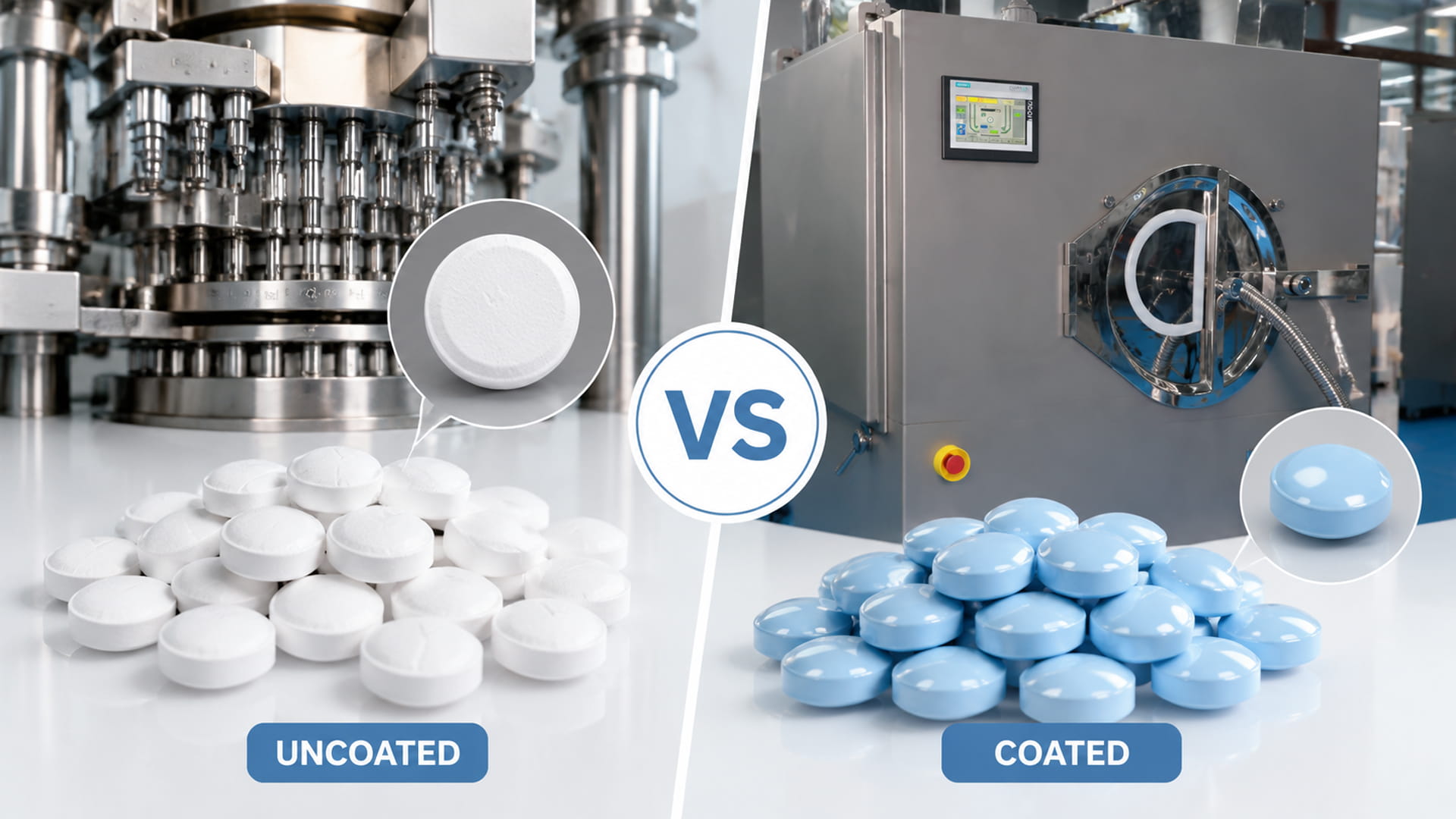
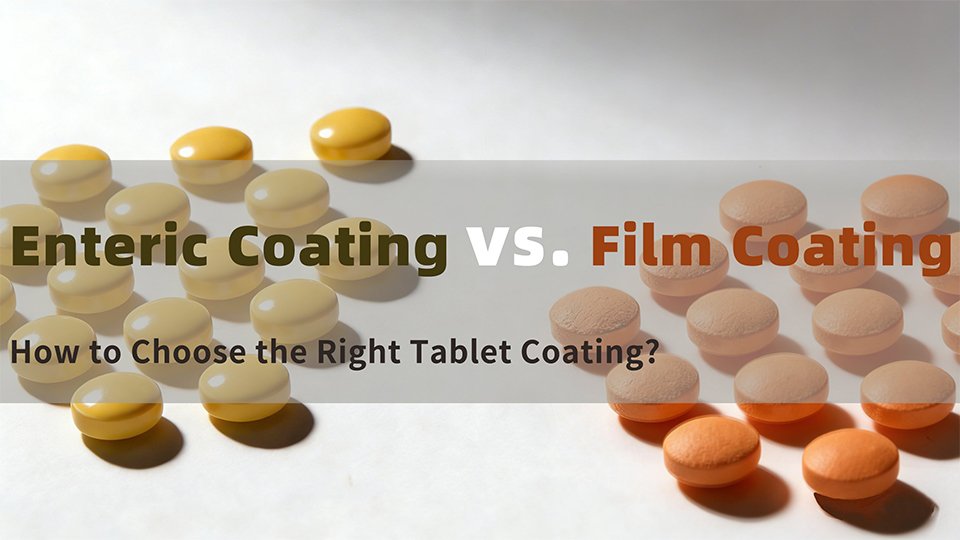
Por exemplo, um comprimido revestido por película tem uma fina película de polímero (geralmente hidroxipropilmetilcelulose ou similar) isso não aumenta a pílula. UM comprimido revestido de açúcar tem uma espessura, casca de xarope doce – mais trabalhoso de fazer e muito mais pesado. Um comprimido com revestimento entérico usa polímeros sensíveis ao pH para que passe pelo estômago e se dissolva no intestino. Cada tipo de revestimento tem seus prós e contras (veja a tabela abaixo).
| Tipo de revestimento | Descrição | Usos primários |
| Não revestido | Sem revestimento; núcleo do tablet exposto | Liberação rápida, sensível ao custo, medicamentos estáveis |
| Revestimento de filme | Filme fino de polímero (E.G.. HPMC) | Mascaramento de sabor, proteção contra umidade/luz, fácil de engolir, marca |
| Casaco de açúcar | Camadas espessas de xarope de açúcar | Mascaramento de sabor forte, acabamento liso e brilhante, muitas vezes em pediatria |
| Revestimento entérico | Polímeros sensíveis ao pH (Eudragit) | Proteja o estômago ou a droga; liberação intestinal retardada |
| Outros | Liberação especializada/controlada | Liberação sustentada, entrega direcionada, etc.. |
Mesa 1. Comparação entre comprimidos não revestidos e revestidos e tipos de revestimento comuns.
O revestimento não é apenas pela aparência – é um etapa funcional na fabricação de tablets. Engenheiros farmacêuticos perguntam, “O tablet pode funcionar sem revestimento?"Se sim, um comprimido não revestido é mais simples e barato. Mas os revestimentos são adicionados sempre que há um benefício técnico. As principais razões para revestir os comprimidos incluem:
Resumidamente, revestimento adiciona funcionalidade. Não é feito arbitrariamente, mas sempre que gosto, estabilidade, ou liberar questões de controle. Como observa um guia da indústria, “O revestimento é introduzido apenas quando proporciona um claro benefício funcional”.
Comprimidos revestidos combinam durabilidade e facilidade de uso. Os principais benefícios incluem:
Figura 2 compara um comprimido não revestido com um comprimido revestido por película. O comprimido revestido (certo) claramente tem uma suavidade, exterior brilhante que mascara qualquer impressão ou rugosidade no núcleo.
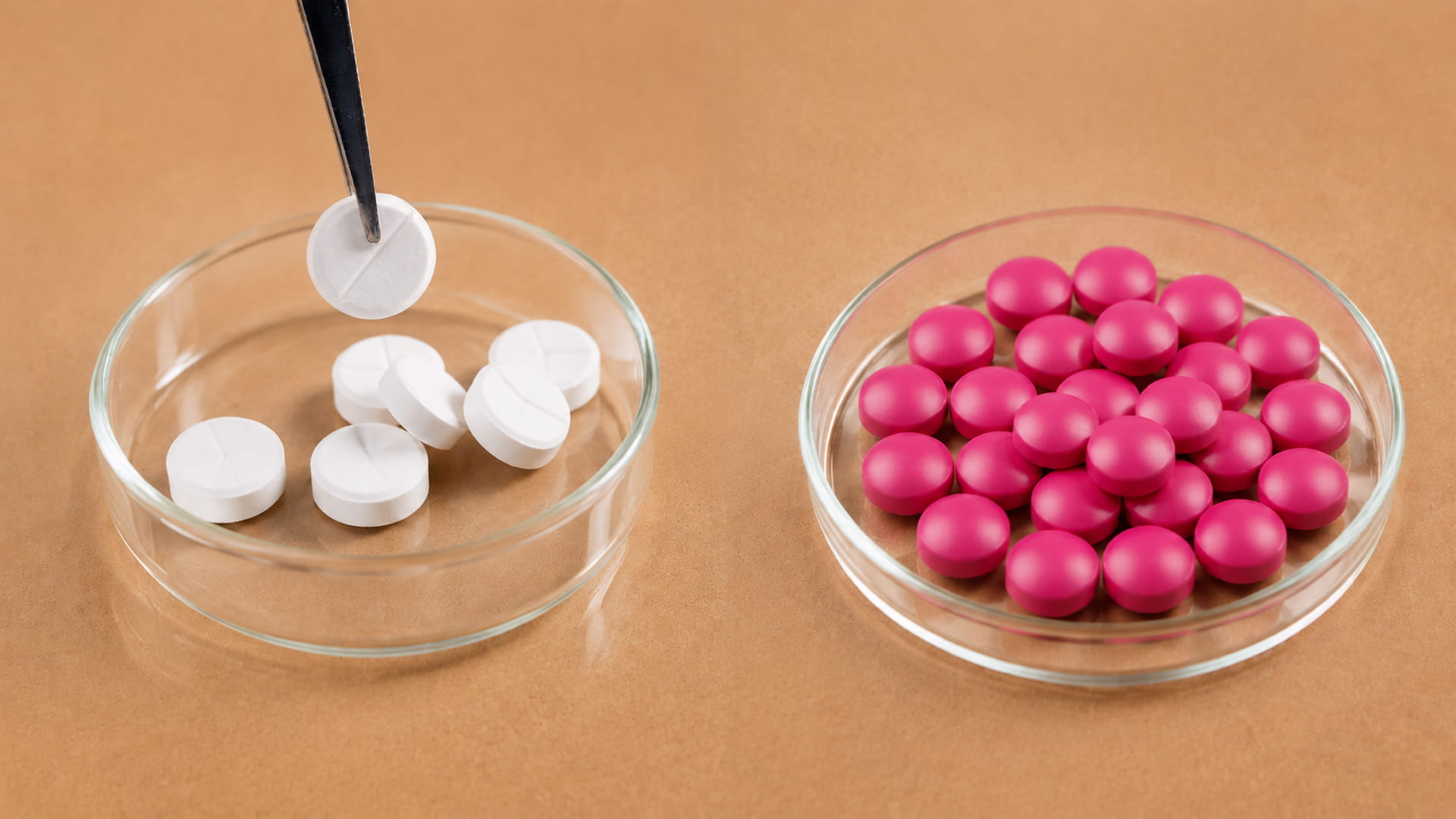
Figura 2. Não revestido (esquerda) vs revestido por película (certo) comprimidos. O comprimido revestido por película tem uma superfície lisa, acabamento uniforme que mascara a cor e textura do núcleo. Revestimentos como este melhoram a capacidade de engolir e protegem o medicamento em seu interior.
Os benefícios dos revestimentos são fáceis de explicar: comprimidos revestidos muitas vezes “têm melhor aparência, durar mais, e descer mais fácil” do que pílulas simples. Estas vantagens significam que, embora o revestimento acrescente etapas e custos, pode reduzir problemas mais tarde (dano, reclamações, vencimento antecipado). Um CMO de suplementos alimentares observa que, embora “os comprimidos revestidos envolvam materiais adicionais, trabalho e tempo, o revestimento pode reduzir lotes rejeitados, reclamações de clientes, e problemas de qualidade pós-comercialização”. A longo prazo, comprimidos revestidos geralmente economizam dinheiro durante todo o ciclo de vida do produto.
Claro, comprimidos simples ainda têm seu lugar. Comprimidos não revestidos oferecem simplicidade e economia:
Simplificando, um comprimido não revestido é “fácil e barato de fazer”. É um bom ponto de partida para estudos de viabilidade. O blog do farmacêutico também observa que os comprimidos não revestidos são mais baratos e demoram menos para serem produzidos, e eles se dissolvem mais rapidamente, liberando o medicamento mais rapidamente.
No entanto, esses ganhos vêm com compensações: um comprimido não revestido “deixa o núcleo do medicamento vulnerável” a danos ambientais, e pode ser menos aceitável para os pacientes. Portanto, os fabricantes avaliam esses fatores: se o revestimento não for necessário, eles provavelmente vão pular.
Os revestimentos não são de tamanho único. A indústria utiliza vários tipos principais de revestimento, cada um com específico usos e benefícios:
Comprimidos revestidos por película versus comprimidos revestidos com açúcar: Resumidamente, os revestimentos de filme são finos, durável, e adequado para produção em alta velocidade. Eles substituíram amplamente os revestimentos de açúcar porque adicionam volume mínimo e são aplicados rapidamente. No entanto, os revestimentos de açúcar ainda proporcionam uma máscara de sabor superior e uma aparência clássica, então eles aparecem em produtos como vitaminas para mastigar, onde o sabor é crucial.
Comprimidos revestidos por película versus comprimidos com revestimento entérico: A principal diferença é o local de lançamento. Um revestimento de filme de liberação imediata se dissolve no estômago e muitas vezes apenas melhora a capacidade de engolir ou a estabilidade. Um revestimento entérico atrasos dissolução até pH intestinal. Por exemplo, um medicamento para azia pode usar um revestimento entérico para evitar o estômago, enquanto uma vitamina diária pode usar uma película normal..
Como os fabricantes realmente revestem os comprimidos? É uma operação de pulverização e secagem cuidadosamente controlada. Os passos básicos são:
A produção moderna de tablets utiliza equipamentos como Pressões rotativas para comprimidos (para formar núcleos) e máquinas de revestimento de alta velocidade (para aplicação de película ou cascas de açúcar). Uma prensa de comprimidos pode produzir centenas de milhares de núcleos uniformes por hora. Em seguida, uma máquina de revestimento especializada – basicamente um tambor de aço inoxidável com bicos de pulverização e fluxo de ar preciso – aplica a solução de revestimento aos comprimidos em movimento..
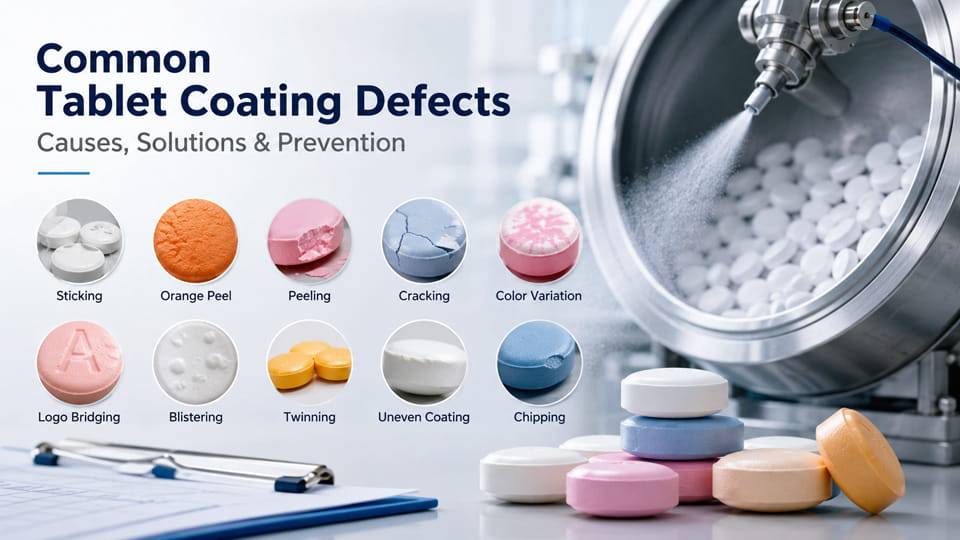
Cada uma dessas etapas deve ser rigorosamente controlada. Muito spray ou ar muito quente pode causar defeitos como textura de “casca de laranja” ou película descascada. É por isso que as máquinas de revestimento avançadas (como os da JinluPacking) possuem controles PLC automáticos, bicos de pulverização precisos, e até monitoramento em tempo real para ajustar parâmetros. No fim, precisão é fundamental: cada comprimido deve ter a espessura de revestimento correta para um desempenho consistente.
[jl_youtube src=”https://www.youtube.com/embed/LFJJ-cEpfCk”]
Ao passar do desenvolvimento em laboratório para a produção comercial de comprimidos, escolher a máquina de revestimento de comprimidos certa torna-se uma decisão crítica. Os gerentes de produção geralmente avaliam os equipamentos com base na uniformidade do revestimento, capacidade, nível de automação, requisitos de limpeza, e custos de manutenção. O equipamento de revestimento de comprimidos mais comum inclui:

Figura 3. Máquina industrial de revestimento de comprimidos de alta velocidade da Jinlu. Os comprimidos caem dentro à medida que a solução de revestimento é pulverizada e seca. Recursos como agitadores tipo defletor e sistemas de circulação de material garantem cobertura uniforme e revestimento eficiente.
Os principais recursos a serem procurados em um revestidor incluem:
Investir em equipamentos de qualidade compensa: um bom revestidor alcança alta uniformidade de revestimento, defeitos mínimos, e pode funcionar em velocidades mais altas. Isso reduz o tempo de produção e o trabalho. Como observa um blog, o revestimento de filme moderno “está mais rápido e consistente do que nunca,”graças a controles automatizados e máquinas aprimoradas.
Para resumir, aqui estão os principais contrastes entre comprimidos revestidos e não revestidos:
Mesa 2 (abaixo) destaca essas diferenças. Observe que revestido não é “melhor” em geral – é melhor quando o revestimento é necessário. Como um FAQ responde: “Os comprimidos revestidos são sempre melhores que os não revestidos? Não – comprimidos revestidos são usados quando há uma razão funcional, como mascaramento ou proteção de sabor. Quando uma formulação é estável e palatável, comprimidos não revestidos são frequentemente preferidos pela simplicidade e custo”.
| Recurso | Comprimidos não revestidos | Comprimidos revestidos |
| Superfície | Fosco, pó/grânulos visíveis | Suave, filme brilhante ou colorido |
| Sabor/Cheiro | Amargo ou desagradável pode ser perceptível | O revestimento mascara sabores/odores desagradáveis |
| Facilidade de engolir | Muitas vezes mais difícil, especialmente os grandes | Mais fácil devido à superfície lisa |
| Proteção (Umidade/Luz) | Requer embalagem forte | Filme adiciona barreira, melhora a estabilidade |
| Estabilidade de Medicamentos | Mais vulnerável à umidade, aquecer | Melhor estabilidade e prazo de validade |
| Complexidade de processamento | Processo mais simples, menos etapas | Etapa de revestimento adicional necessária |
| Tempo/Custo | Menor custo de fabricação | Custo inicial mais alto, mas custo do ciclo de vida potencialmente menor |
| Controle de liberação | Somente liberação imediata | Pode permitir liberação retardada ou controlada (entérico, sustentado) |
| Marca/Aparência | Limitado (cor lisa) | Pode ser colorido, impresso para marca |
Mesa 2. Comprimidos revestidos versus não revestidos: uma comparação dos principais recursos.
Na prática, formuladores e fabricantes decidem com base nas necessidades do produto. Algumas diretrizes gerais:
Às vezes a decisão se resume à embalagem: comprimidos revestidos geralmente ficam melhor em frascos ou potes porque liberam menos poeira. Em Blister pacotes, qualquer forma funciona, mas o revestimento pode permitir uma embalagem mais simples. Fabricantes contratados (Diretores de Marketing) pergunte frequentemente: “Podemos fazer este tablet sem revestimento?”E adicione uma etapa de revestimento somente se necessário.
Uma pergunta comum é se um comprimido revestido pode ser quebrado ao meio ou moído. Geralmente, não: dividir ou esmagar um comprimido revestido anula a finalidade do invólucro. Um revestimento de polímero destina-se a controlar a liberação ou proteger o medicamento. Esmagá-lo expõe a droga de uma só vez, que pode alterar a absorção ou causar irritação. Comprimidos revestidos (especialmente os entéricos ou de liberação prolongada) deve permanecer intacto. Se for necessária uma dose menor, verifique se o tablet tem uma linha de pontuação (alguns comprimidos de liberação imediata fazem) ou pergunte a um farmacêutico. Como diz uma nota de especialista: “Geralmente não – o esmagamento pode destruir a camada protetora e alterar a liberação do medicamento. Sempre verifique primeiro com um farmacêutico ”.
No fim, comprimidos revestidos vs não revestidos é uma troca entre simplicidade e funcionalidade. Comprimidos não revestidos são mais baratos e rápidos de fabricar, mas deixe o núcleo da droga exposto. Comprimidos revestidos acrescentam complexidade e custo, mas entregar benefícios claros: melhor estabilidade, mascaramento de sabor, engolibilidade, e diferenciação da marca. Na produção farmacêutica moderna, a maioria das pílulas de uso diário (vitaminas, OTC remédios, nutracêuticos) são revestidos por película porque atingem o equilíbrio certo entre proteção e eficiência.
No entanto, sempre que a formulação permitir, as empresas podem preferir comprimidos não revestidos por razões de custo. A chave é combinar o tipo de comprimido com as necessidades do medicamento. Se o seu produto requer mascaramento de sabor ou liberação controlada, um revestimento é muitas vezes essencial. Se não, um comprimido simples pode ser suficiente.
Para qualquer dúvida sobre revestimento de comprimidos ou para explorar opções de equipamentos, alcançar! Nossa equipe na JinLuPacking é especializada em prensas para comprimidos, máquinas de revestimento, e linhas completas de produção de tablets. Se você precisa de um sistema de revestimento de alta velocidade para filme, açúcar, ou aplicações entéricas, ou conselhos sobre como otimizar a formulação do seu comprimido, Estamos aqui para ajudar. Contate-nos para um orçamento ou mais informações, e vamos garantir que seus tablets tenham o acabamento e o desempenho corretos.
Os comprimidos revestidos possuem uma camada adicional (filme, açúcar ou polímero funcional) aplicado sobre o núcleo comprimido, Considerando que os comprimidos não revestidos são pílulas simples e compactadas, sem qualquer camada externa. O revestimento serve a propósitos funcionais: pode mascarar o sabor, proteger a API da umidade/luz, e controle de liberação. Os comprimidos não revestidos dissolvem-se imediatamente e são mais baratos de fabricar, mas expõem a droga ao meio ambiente e muitas vezes têm um sabor amargo.
Os comprimidos são revestidos para melhorar a estabilidade, aceitabilidade do paciente, e desempenho. Um revestimento protege a umidade- ou APIs sensíveis à luz, mascara sabores desagradáveis, e torna o comprimido mais fácil de engolir. Revestimentos especializados (como filmes entéricos) pode atrasar a liberação até o intestino, evitando irritação do estômago. Resumidamente, o revestimento melhora a aparência e a vida útil do comprimido, e pode permitir a administração controlada de medicamentos e melhor adesão do paciente.
Nenhum dos dois é universalmente “melhor” – depende da aplicação. Os comprimidos revestidos têm a vantagem de proteção e apelo ao paciente, mas custam mais e exigem processamento extra. Comprimidos não revestidos são mais simples, mais rápido, e mais barato de produzir, e eles liberam a droga rapidamente. Para um estábulo, medicamento de liberação imediata onde o custo é prioridade, sem revestimento pode ser ideal. Para um medicamento amargo ou sensível à umidade, onde o mascaramento do sabor e a estabilidade são prioridades, revestido é a melhor escolha.
Os três principais métodos de revestimento de comprimidos são:
• Revestimento de filme: Camada polimérica fina (geralmente à base de água) aplicado por spray; mais comum hoje. Oferece proteção contra umidade e marca com ganho mínimo de peso.
• Revestimento de Açúcar: Casca grossa de açúcar construída por múltiplas camadas de xarope; dá um acabamento brilhante e as máscaras têm um bom sabor, mas adiciona volume e requer processamento demorado.
• Revestimento Entérico: Um filme sensível ao pH que resiste ao ácido estomacal e se dissolve nos intestinos. Este é tecnicamente um tipo de revestimento de filme com polímeros especiais, usado para medicamentos lábeis a ácidos ou para evitar irritação gástrica.
Os comprimidos revestidos por película obtêm a maioria dos principais benefícios do revestimento com uma casca mais fina. Uma boa película aquosa protegerá o medicamento (barreira de umidade/luz), mascarar gosto e odor, e melhorar a estética sem aumentar significativamente o tamanho do tablet. Os revestimentos de filme secam rapidamente em revestimentos modernos, proporcionando alto rendimento. Eles também podem ser formulados para perfis de liberação específicos (entérica ou sustentada) por escolha de polímero.
Geralmente, sim. Os comprimidos não revestidos normalmente se desintegram e se dissolvem mais rapidamente porque não há camada de barreira. O API é imediatamente exposto a fluidos gástricos, levando a um início mais rápido. Em contraste, mesmo um revestimento de filme de liberação imediata adiciona um ligeiro atraso (pois a pelagem deve dissolver-se primeiro). No entanto, a diferença pode ser pequena dependendo da composição e espessura do revestimento.
Equipamentos de revestimento comuns incluem:
• Revestimentos de panelas perfuradas (Revestidores de alta velocidade): Máquinas padrão da indústria com tambores rotativos perfurados. O ar aquecido flui através do tambor, permitindo alta eficiência de secagem e revestimento uniforme.
• Revestimentos de leito fluidizado: Os comprimidos são suspensos em uma corrente de ar e pulverizados por baixo ou por cima. Bom para pellets ou pequenos comprimidos com camadas finas muito uniformes.
• Panelas de Revestimento Tradicionais: Grandes panelas abertas usadas principalmente para cobertura de açúcar (trabalhoso e principalmente obsoleto na indústria farmacêutica moderna).
Cada tipo de máquina é escolhido com base no tamanho do lote, tamanho/formato do tablet, e material de revestimento. Para revestimento de filme em grande escala, panelas perfuradas (como a máquina de revestimento de comprimidos de Jinlu) são mais comuns.
O revestimento pode atrasar ou modificar a liberação do medicamento. Um revestimento entérico impede a liberação de ácido estomacal, então a droga só é liberada no intestino. Outros revestimentos especiais (filmes de lançamento sustentado) contêm polímeros que retardam a penetração de fluidos, estendendo o lançamento por horas. Mesmo revestimentos de película não funcionais (para liberação imediata) pode retardar ligeiramente a liberação em comparação com um núcleo não revestido, porque a barreira deve se dissolver primeiro. Por isso, Os revestimentos fornecem uma ferramenta para ajustar com precisão onde e com que rapidez a API é entregue.
Os revestimentos de filme são versáteis e eficientes. Eles protegem o medicamento e melhoram o sabor/aparência com tempo mínimo de processamento. As películas aquosas modernas secam rapidamente, o que é essencial para a fabricação de alto rendimento. Eles também permitem adição de cores e identificadores, ajudando na diferenciação da marca. Porque eles podem ser projetados para diferentes perfis de lançamento, os revestimentos de filme são uma força de trabalho para as empresas farmacêuticas que desejam oferecer qualidade e desempenho em seus tablets.
As empresas avaliam vários fatores. Se a droga for instável, amargo, ou precisa de proteção estomacal (liberação entérica), eles escolhem comprimidos revestidos. Se a formulação já estiver estável, o sabor é aceitável, e minimizar custos é uma prioridade, eles vão com sem revestimento. Como um guia do setor resume: use comprimidos revestidos se “você precisar mascarar o sabor,”“proteção contra umidade, luz ou oxidação,”ou “liberação controlada/retardada”; escolha não revestido se sua fórmula for estável e nenhuma proteção extra for necessária. Essencialmente, a decisão é orientada pelos requisitos do produto (Química API, liberação do alvo, necessidades de marketing) versus considerações de produção (custo, disponibilidade de equipamento).
Referências:
1.Aplicação farmacêutica de revestimento de filme para comprimidos —— Biblioteca Nacional de Medicina
2.Revestimento de comprimidos —— Universidade de Engenharia Química de Michigan
3.Revestimento de comprimidos: Engenharia de Sistemas de Processo para Fabricação Farmacêutica —— Ciência Direta
4.Revestimento Farmacêutico e Suas Diferentes Abordagens, uma revisão —— Biblioteca Nacional de Medicina
5.Uma revisão abrangente sobre revestimento de filme farmacêutico: Passado, Presente, e futuro —— Biblioteca Nacional de Medicina
6.Aplicação farmacêutica de revestimento de filme para comprimidos —— MDPI
7.Avanços nas tecnologias de fabricação de tablets: Capítulo 10 – Tecnologias de comprimidos revestidos —— Ciência Direta