Muitos fabricantes de tablets e compradores de equipamentos enfrentam os mesmos quebra-cabeças: “Meus tablets continuam tampando,” ou “A dureza do comprimido não é consistente.” Um palpite natural pode ser “basta aumentar a força de compressão.” Na prática, o verdadeiro culpado é muitas vezes o pré-compressão estágio (o leve aperto antes da compressão final). Muitas prensas de comprimidos incluem uma etapa preliminar de compactação que os operadores às vezes ignoram. Se a pré-compressão estiver muito baixa, o ar preso permanece no pó e causa defeitos; definido muito alto, pode criar fraturas. Neste artigo vamos explicar o que é pré-compressão, por que todos os tablets modernos usam isso, e como a força de pré-compressão correta dramaticamente melhora a qualidade do tablet (melhor dureza, peso uniforme) e evita defeitos como capeamento e laminação. Também abordaremos como ajustar a pré-compressão corretamente em sua impressora.
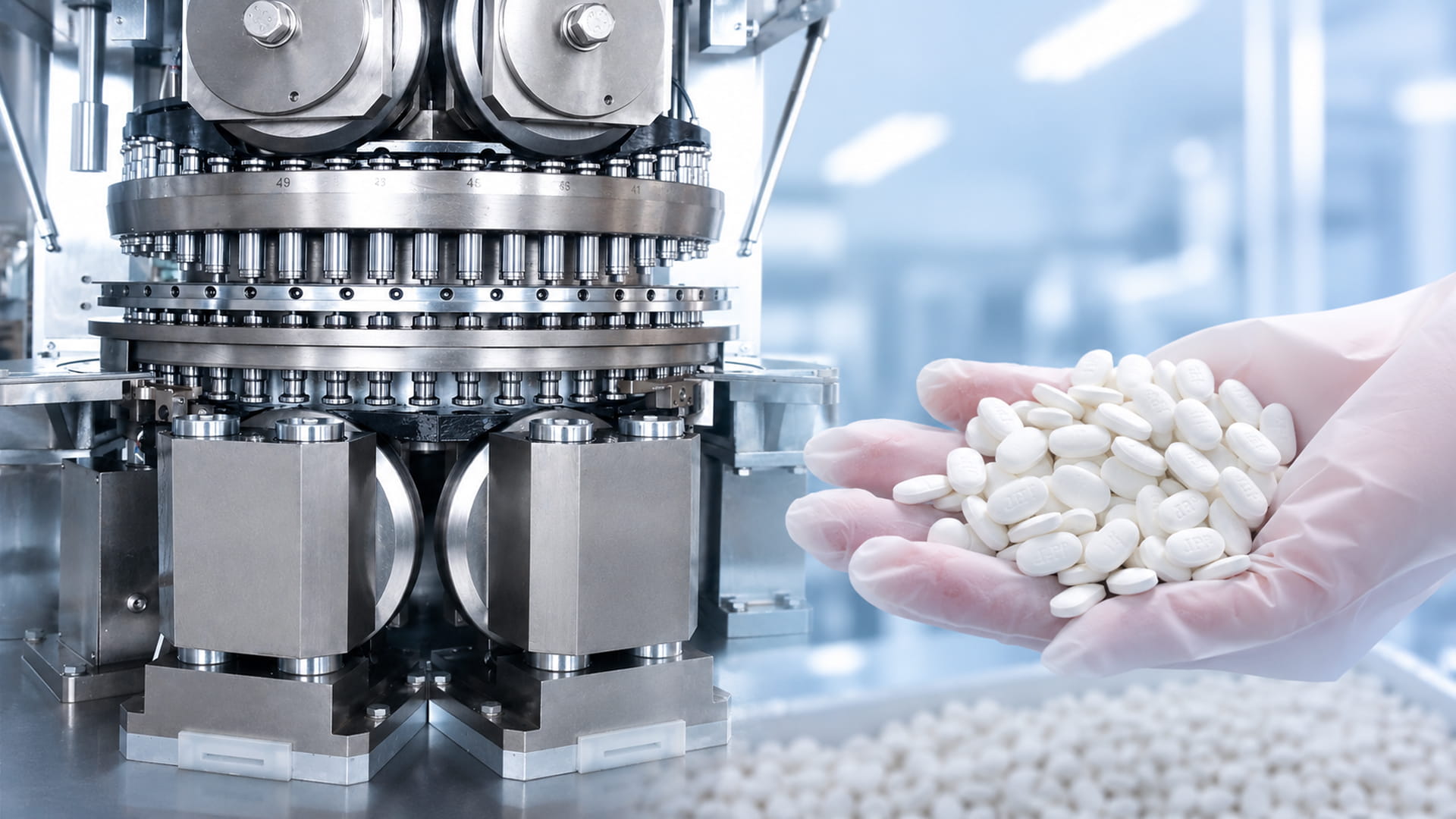
Na fabricação de tablets, o ciclo de compressão tem vários estágios: enchendo o molde com pó, pré-compressão (uma leve batida inicial), compressão principal (o aperto final de alta pressão), e ejeção. Em um prensa rotativa para comprimidos, por exemplo, o soco inferior inicialmente levanta para preencher o dado, e as câmeras da torre juntam os socos. Durante pré-compressão, uma força suave (muitas vezes através de pequenos cames de rolo) é aplicado na cama de pó. O objetivo não é formar o comprimido final, mas simplesmente para consolidar o pó e remova o ar antes da grande compressão. Notas de uma fonte da indústria: “Durante a pré-compressão, uma leve força aplicada pelo punção inferior consolida o pó e minimiza bolsas de ar. No estágio principal de compressão, o punção superior é pressionado com alta força… para fundir os grânulos em um comprimido”. Resumidamente, a pré-compressão é a etapa preliminar de compressão na prensa de comprimidos, enquanto a compressão principal é a compactação total de alta força que dá ao comprimido sua forma final, dureza e densidade.
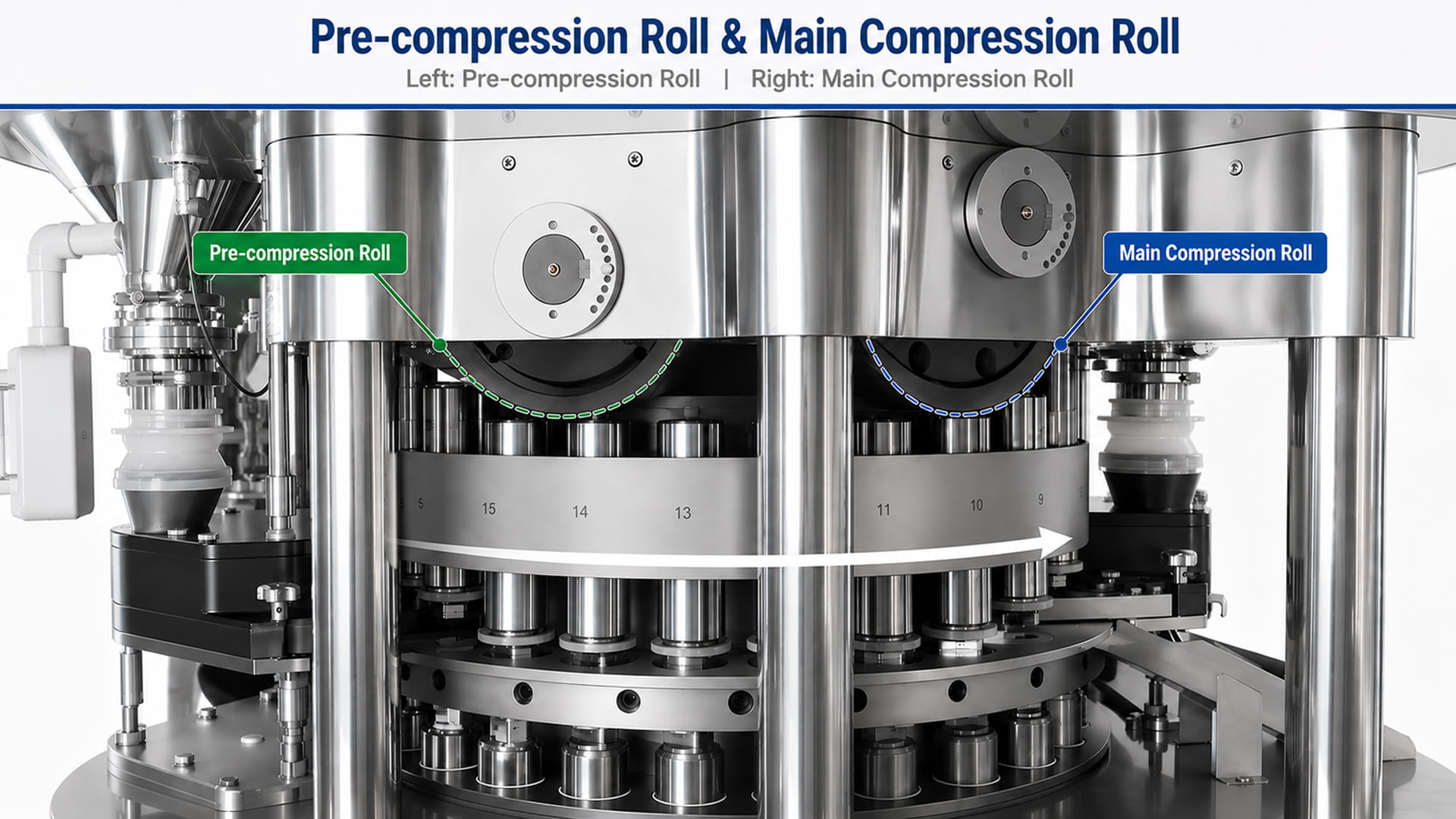
As modernas prensas para comprimidos geralmente têm rolos de pré-compressão ou estações de câmera dedicadas a esta etapa. Esses rolos de pré-compressão “calcam a mistura para remover o ar preso na mistura e, assim, finalmente evitar o nivelamento”. Em outras palavras, a pré-compressão é essencialmente uma desaeração estágio: expele o ar para que a compressão principal possa funcionar em pó sólido, não espuma. Por exemplo, um manual de equipamentos farmacêuticos explica que os rolos de pré-compressão estão incluídos “para densificar o pó antes da compressão final”. Sem pré-compressão, o pó está vagamente preenchido e contém vazios. Com pré-compressão, as partículas de pó são ligeiramente pré-embaladas e grande parte do ar é expelido. A compressão principal subsequente pode então produzir uma compressão robusta, comprimido consistente sem expansão repentina de ar.
Uma maneira prática de visualizar o ciclo é:
Preenchimento de pó → Pré-compressão (tampa leve) → Compressão Principal (alta força) → Ejeção do comprimido
Na etapa de pré-compressão, os socos essencialmente reprimir o pó apenas o suficiente para expelir o ar e nivelar o preenchimento. Apenas uma pequena fração (às vezes ~10-20%) da força final é usada na pré-compressão – o suficiente para estabilizar o leito, não finalizar a dureza. A etapa principal de compressão aplica então toda a alta força (muitas vezes centenas de quilonewtons) para produzir o comprimido final.
A pré-compressão funciona ativando brevemente a prensa em modo de baixa pressão. À medida que a torre gira, o punção inferior sobe aproximadamente até a posição de preenchimento final na matriz. Em seguida, o rolo ou came de pré-compressão faz com que os punções se encontrem sob uma força suave. Esta força leve empurra ligeiramente os punções superiores e inferiores, comprimir o pó apenas o suficiente para permitir que o ar preso escape pelas bordas. Após a pré-compressão, a cama de pó é mais uniforme e menos “fofa”. Os comprimidos que emergem da zona de pré-compressão são muito fracos (eles se desfazem facilmente) mas eles têm menos lacunas de ar.
Próximo, o estágio principal de compressão começa imediatamente (geralmente apenas uma estação depois). Agora os socos se encontram com força total, produzindo o comprimido final. Porque o ar já foi retirado e as partículas já estão parcialmente alinhadas, a compressão principal é mais eficaz. Em termos práticos, os operadores podem ajustar os cames de pré-compressão para que um “teste do polegar” o comprimido está quase formado e apenas pouco coerente. O objetivo é literalmente remover o ar – não produzir ainda um comprimido forte. Se você definir a pré-compressão muito alta, você corre o risco de compactar o pó muito cedo; muito baixo, e o ar fica preso.
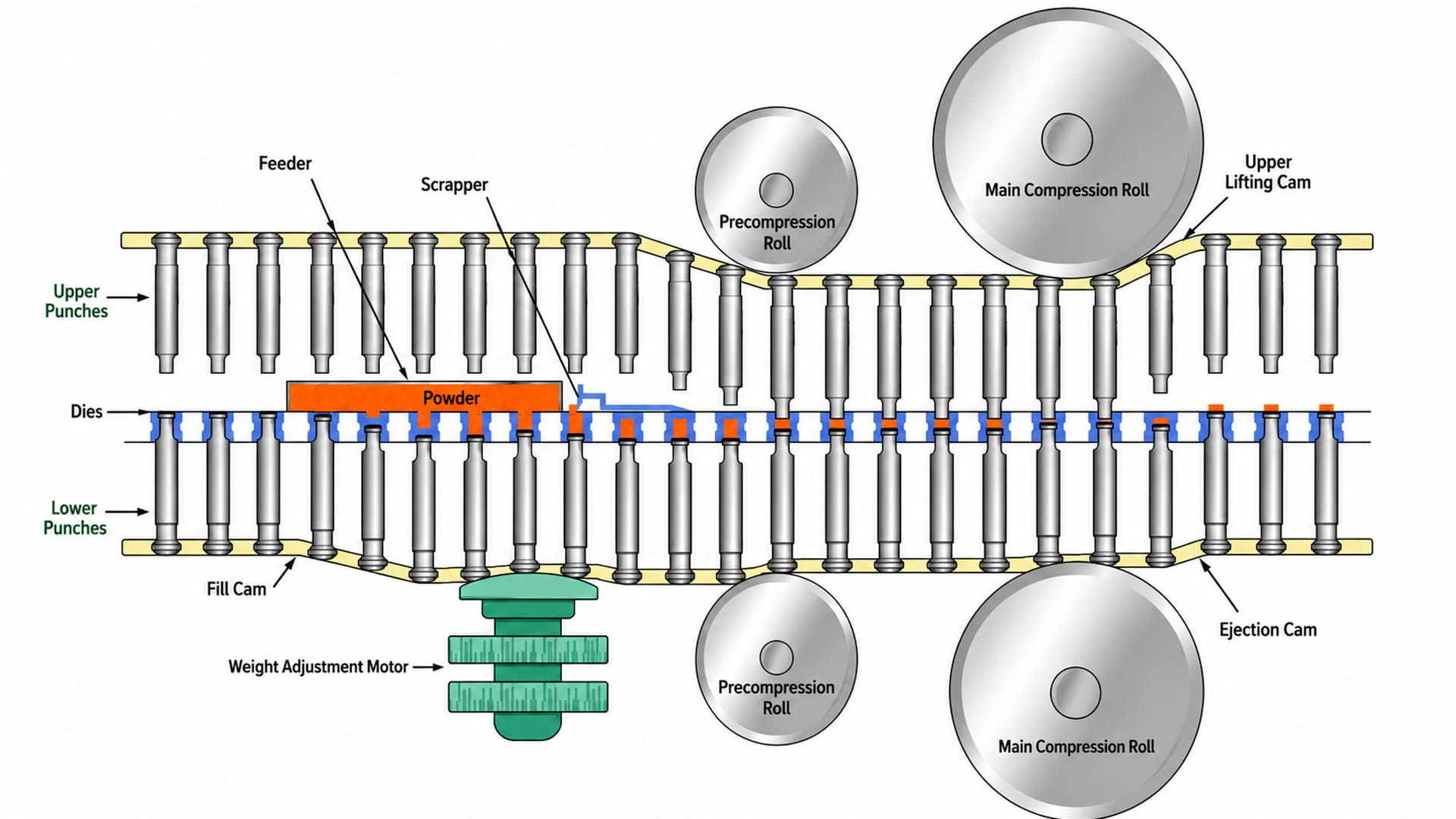
Em operação, você verá que o punção superior mal toca o pó durante a pré-compressão. O percurso do punção é curto, mas o suficiente para espremer bolsas de ar. Em um diagrama: Soco Superior ⇓ (pressão leve) Pó → Escapes de ar → partículas assentam → Compressão Principal ⇓ (alta pressão) Tablet finalizado. Esta compressão em dois estágios (pré- e principal) agora é padrão na maioria das prensas rotativas farmacêuticas, e até mesmo muitas prensas de perfuração única incluem um estágio simples de pré-carga para pré-compactar o pó.
A pré-compressão é absolutamente crucial porque aborda muitas das causas profundas do defeitos do tablet. Por si só, a fase de pré-compressão evita os problemas mais comuns:
As misturas de pó contêm naturalmente bolsas de ar entre as partículas. Se você comprimir diretamente sem remover esse ar, o ar preso se expandirá quando o punção for liberado, ou causar ligação irregular. O objetivo principal da pré-compressão é evacuação aérea. Como explica um engenheiro farmacêutico, “O objetivo da pré-compressão é remover o ar aprisionado na cavidade preenchida da matriz do comprimido. Esta tarefa auxilia na principal etapa de compressão na produção de um tablet robusto.”. Resumidamente, pré-compressão é a etapa de desaeração do pó. Com boa pré-compressão, essas bolhas de ar escapam primeiro e não se expandem dentro do comprimido em formação. Isto leva a um contato mais próximo das partículas durante a compressão principal e a comprimidos mais fortes.
Captura ocorre quando a parte superior do tablet (o “boné”) racha e separa. O ar preso costuma ser a causa: durante a repentina alta força de compressão principal, o ar tenta escapar e pode literalmente atirar na tampa do tablet. Sem pré-compressão, a maior parte desse ar ainda está na matriz. Ao pré-compactar o pó, a pré-compressão permite que o ar escape suavemente, então não tira a tampa. Como observa uma fonte, “Uma baixa quantidade de força de pré-compressão permitirá a remoção de ar entre as partículas, o que diminui o potencial de limitação.”. Na verdade, estudos mostram o efeito dramático: um experimento descobriu que sem pré-compressão, 80% dos comprimidos sofreram capeamento, enquanto com até 20–50% de pré-compressão adicionada, nenhum dos comprimidos tampados antes de atingir a dureza alvo. Em outras palavras, a pré-compressão adequada pode praticamente eliminar o nivelamento acionado por ar. (Em contraste, pré-compressão insuficiente é um problema clássico de capping: o manual da prensa para tablet JinLu alerta que “pré-compressão insuficiente…[pistas] ao aumento do aprisionamento de ar”, fazendo com que a tampa do comprimido se rompa.)
A laminação é semelhante ao capeamento, mas o tablet se divide em camadas em vez de apenas perder a parte superior. É essencialmente um limite avançado: depois de uma camada descascar, mais ar ou estresse podem dividir as camadas. De novo, ar preso e compressão irregular são os principais culpados. Ao liberar o ar mais cedo, a pré-compressão reduz muito a chance de formação de camadas. Se a pré-compressão for muito baixa, um pequeno bolso preso pode primeiro estourar a tampa (limite) e depois dividir mais (laminação). Fontes apontam que a laminação geralmente resulta do mesmo problema que o capeamento: “O ar preso na formulação do comprimido… pode criar áreas localizadas de fraqueza que podem fazer com que o comprimido se separe ou desfoque.”. Uma boa pré-compressão minimiza esses pontos fracos, então a laminação se torna rara.
Pré-prensando o pó, a pré-compressão aumenta a área de contato das partículas antes da compressão final. Isto resulta numa melhor ligação durante a compressão principal e, em última análise, numa maior resistência à tração.. Na prática, comprimidos formados com um estágio de pré-compressão eficaz tendem a atingir mais facilmente a dureza desejada. No estudo da Medelpharm acima, adicionar pré-compressão permitiu que os tablets atingissem o 40 N dureza alvo sem quebrar, enquanto que sem pré-compressão a maioria dos comprimidos é tampada precocemente. Em geral, pré-compressão significa menos espaços de ar e um leito inicial mais denso, então cada unidade adicional de força de compressão principal produz um comprimido mais duro. (Claro, a pré-compressão excessiva pode densificar o pó prematuramente, que discutiremos mais tarde.)
Porque a pré-compressão assenta o pó de maneira mais uniforme em todas as matrizes, a variação de peso é reduzida. Se um dado tiver mais ar preso do que outro, poderia encher com um volume ligeiramente diferente de pó. A pré-compressão uniformiza o preenchimento distribuindo mecanicamente o pó e expulsando o ar para que cada matriz seja embalada de forma semelhante. O resultado final é um controle mais rígido do peso do comprimido de dose a dose. (Por outro lado, pular a pré-compressão geralmente aparece como uma maior variação de peso nas execuções de produção.)
Os comprimidos que foram adequadamente pré-comprimidos geralmente liberam menos poeira fina. Ao ajudar na densificação, a pré-compressão garante que os comprimidos tenham maior densidade geral e menos vazios superficiais, tornando-os mais fortes e menos propensos a lascar ou friabilidade. Na prática, operadores de prensas de comprimidos muitas vezes observam uma queda % friabilidade quando a pré-compressão é otimizada.
Todos os fatores acima contribuem para tablets com aparência mais bonita. A pré-compressão adequada ajuda a produzir comprimidos com faces lisas, bordas afiadas, e sem rachaduras ou lascas. Defeitos como chips, crateras ou bordas quebradas são frequentemente causadas por liberação repentina de ar ou compactação irregular; a pré-compressão ajuda muito a eliminar essas falhas. Resumindo, um estágio de pré-compressão bem ajustado leva a tablets com aparência mais uniforme e profissional.
Para resumir esta seção: sem pré-compressão adequada, você obtém exatamente os problemas que está tentando resolver. A tabela abaixo ilustra defeitos típicos e suas causas (frequentemente ligado à má pré-compressão):
| Problema | Causa provável (frequentemente ligado à pré-compressão insuficiente) |
| Captura | Ar preso no pó que explode durante a compressão |
| Laminação | Camadas internas se separando devido ao ar preso/compressão irregular |
| Baixa Dureza | Ligação de partículas fraca (compressão incompleta) |
| Alta Friabilidade | Má compactação (pó solto) |
| Variação de peso | Preenchimento irregular (bolsas de ar ou dosagem inconsistente) |
| Comprimidos quebrados | Recuperação elástica de material ou tensão (retorno elástico) |
Como você pode ver, o traçado de capeamento e laminação diretamente para o ar preso (quais endereços de pré-compressão). Outros problemas como maciez ou friabilidade também decorrem de “compactação inadequada,”que melhor pré-compressão ajuda a prevenir.

Para reforçar a importância da pré-compressão, considere o que dá errado se você pular. Sem pré-compressão, o ar permanece no dado até o aperto final. Quando o soco bate com força total, esse ar não tem para onde ir senão através da pólvora. O ar preso tenta se expandir, levando a defeitos no tablet. Na prática, isso se manifesta como uma incidência muito maior de capeamento e laminação, os principais sintomas visíveis de aprisionamento de ar. Mesmo que o limite não ocorra imediatamente, a densidade do tablet será irregular: as bordas podem ser mais densas que o núcleo, causando rachaduras internas mais tarde. A tabela acima mostra que a maioria dos problemas de compactação de tablets (limite, laminação, baixo dureza, friabilidade, variações de peso, etc.) pode ser rastreada até a questão central da má compactação ou ar preso.
Na verdade, os operadores sabem por experiência que adicionar apenas um pouco de pré-compressão geralmente corrige o limite. Se os comprimidos estiverem esfarelados ou a laminação persistir, geralmente significa que o pó não foi devidamente desaerado. Na prática, melhorar a força de pré-compressão ou ajustar o tempo elimina muitos desses problemas quase totalmente.
Para esclarecer a diferença entre os dois estágios de compressão, aqui está uma comparação rápida:
| Recurso | Pré-compressão | Compressão principal |
| Força/Pressão | Baixo (uma batida suave, frequentemente 5–20% da força final) | Alto (toda a força de compactação) |
| Propósito | Remova o ar & densificar parcialmente o pó | Forme a forma final do tablet, dureza, e densidade |
| Formato de comprimido | Temporário; cama de pó está solta (nenhum comprimido final) | Final; o comprimido sólido é formado |
| Dureza resultante | Muito baixo (os “comprimidos” se quebram facilmente) | Dureza alvo total |
| Densidade após estágio | Parcial (o pó é ligeiramente compactado) | Completo (tablet com densidade específica) |
| Perfurador/Rolo | Geralmente um pequeno rolo ou came de pré-compressão | Rolos ou cames maiores com maior tempo de permanência |
| Tempo de permanência | Muito curto (tampa rápida) | Mais longo (o punção mantém o pó sob pressão por mais tempo) |
Por exemplo, análises técnicas observam que os rolos de pré-compressão são menores e fornecem uma compactação curta, enquanto os rolos de compressão principais são maiores e mantêm o punção engatado por mais tempo. O principal estágio de compressão é o que define a dureza e as dimensões finais do comprimido. O trabalho da pré-compressão é apenas “preparar o cenário” para o aperto principal.
Não existe um número único para a força de pré-compressão. A configuração ideal depende da formulação (propriedades de fluxo, tamanho do grânulo, teor de umidade, lubrificantes, ligantes, etc.) e o equipamento (velocidade de imprensa, tamanho da torre, ferramentas). Por exemplo, um pó que flui mal ou é muito poroso pode precisar de mais pré-compressão para desgaseificar do que uma mistura granular de bom fluxo. Os principais fatores incluem:
Muitos operadores começam com uma “regra prática” – por exemplo, usando cerca de 10–20% da força de compressão principal como pré-compressão. No entanto, especialistas alertam que mesmo isso 10% regra “nem sempre funciona”. A abordagem mais segura é sintonia empírica. Na prática, você ajusta a força de pré-compressão com base em testes:
Um manual de prensa de comprimidos aconselha uma abordagem engenhosa: primeiro defina a pré-compressão mais alta do que o necessário (então os socos quase param de se mover), em seguida, diminua até que o slug pré-comprimido fique ligeiramente coerente. A chave é: “o objetivo é remover o excesso de ar… e não fazer um comprimido.”. Em outras palavras, ajuste até que o bolo pré-comprimido esteja firme, então recue um pouco. Este método garante que você obtenha desaeração máxima sem compactação excessiva.
Fatores como velocidade e fórmula da torre podem exigir testes iterativos. Resumindo, comece baixo e aumente lentamente a força de pré-compressão enquanto monitora a qualidade do comprimido. Não existe uma “força-alvo” fixa que você possa copiar em todos os produtos – cada formulação terá sua própria configuração ideal.
Se a pré-compressão estiver errada, surgem vários problemas. A tabela abaixo destaca sintomas e remédios comuns:
| Problema | Solução Provável (relacionado à pré-compressão) |
| Captura | Pré-compressão muito baixa – Aumentar a pré-compressão para melhorar a desaeração |
| Laminação | O ar aprisionado permanece – Melhore a pré-compressão (ou aumentar o tempo de permanência) |
| Comprimidos macios | Colagem fraca – certifique-se de que a compressão principal seja suficiente depois pré-compressão adequada |
| Alta Friabilidade | Má compactação – Verifique a pré-compressão e compressão geral; ajustar a formulação, se necessário |
| Variação de peso | Enchimento irregular – use alimentação forçada ou melhore o fluxo de pó; pré-compressão consistente ajuda a estabilizar o peso |
| Escolhendo (furando) | Fricção do punção – geralmente um problema de ferramental/lubrificação, mas revise as câmeras de pré-compressão e decolagem (às vezes, reduzir a pré-compressão pode reduzir a aderência) |
Na prática, “aumentar a pré-compressão” costuma ser o primeiro conselho quando se ouve falar de capeamento ou laminação suave. De fato, adicionar um pouco mais de pré-compactação freqüentemente cura esses defeitos. (Apenas seja cauteloso, como discutiremos abaixo: muita pré-compressão pode causar seus próprios problemas.)
Sim – mais nem sempre é melhor. Exagerar na pré-compressão pode introduzir novos problemas. Se a força de pré-compressão for muito alta, você corre o risco de “pré-ajustar” muito o pó antes da compressão principal. Isso pode levar a:
Resumidamente, você pode ultrapassar. Como regra, a pré-compressão deve ser apenas o suficiente para remover o ar; “A compactação leve é preferível à alta força de pré-compressão”. Muitos engenheiros aconselham começar pelo limite inferior da escala. Se você estiver pressionando a pré-compressão ao máximo e ainda limitando, provavelmente significa outro problema (formulação ou taxa de alimentação) é o culpado, não simplesmente nível de força.
Hoje, praticamente todas as modernas prensas de comprimidos multiestações vêm com um estágio de pré-compressão dedicado. No entanto, alguns estão melhor equipados para um controle preciso. Na JinluPacking oferecemos máquinas de comprimidos projetadas para desempenho ideal de pré-compressão. Por exemplo, nosso Série HZP prensas (como o HZP-26/40D, HZP-15/20D modelos) ter rolos de pré-compressão independentes em cada estação que pode ser ajustada através do painel de controle. Essas máquinas possuem controles de força e sensores baseados em PLC que permitem definir e monitorar a carga exata de pré-compressão. Por aqui, mesmo em altas velocidades, o sistema mantém pré-carga e tempo de permanência consistentes.
Por exemplo, o Prensa rotativa para comprimidos HZP-15/20D (capaz de até 90,000 guias/hora) inclui um alimentador de força atualizado e ajuste de pré-compressão independente. Versões de alta velocidade como o Prensa rotativa HZP-26D-40D (até 160.000–260.000 guias/hora) da mesma forma, suporta controle de pré-compressão (E.G.. sua pré-pressão é ajustável até 20 kN em um modelo). Essas máquinas também oferecem monitoramento de pressão em tempo real e ajuste automatizado, o que ajuda a otimizar a pré-compressão sem suposições do operador.

Resumidamente, se você precisar de pré-compressão confiável, procure uma imprensa com cames de pré-compressão independentes (não apenas uma porcentagem fixa) e controles digitais. Nossas impressoras são exemplos dessa abordagem: eles combinam um design mecânico robusto (ferramentas e rolos de qualidade) com eletrônica moderna. Isso garante que a prensa escolhida possa ser ajustada para as necessidades de pré-compressão de qualquer formulação, levando a tablets mais consistentes.
Use a lista de verificação a seguir ao configurar ou solucionar problemas de pré-compactação em sua máquina:
Ajustando e registrando metodicamente os resultados, você encontrará o ponto ideal onde o ar é removido sem densificar excessivamente o comprimido.
Resumindo, pré-compressão não é opcional – é uma parte vital da operação moderna da prensa de comprimidos. Um estágio de pré-compressão adequadamente ajustado remove o ar preso e pré-tampa o pó, levando a mais forte, comprimidos mais uniformes com muito menos defeitos de cobertura ou laminação. Se os seus comprimidos estiverem tampados ou mostrando inconsistência de peso, verifique novamente suas configurações de pré-compressão antes de culpar a formulação ou a compressão principal. Usar até mesmo uma força de pré-compressão moderada pode melhorar drasticamente a qualidade do comprimido.
Para fabricantes e engenheiros de compras, a conclusão é clara: sempre escolha ou configure uma prensa para comprimidos que ofereça um bom controle de pré-compressão. Todas as prensas rotativas respeitáveis (de R&Modelos D para máquinas de produção completa) inclua esse recurso, mas modelos com independentes, rolos de pré-compressão ajustáveis proporcionam maior flexibilidade.
Se você precisar de mais orientação ou quiser ver prensas projetadas para pré-compressão ideal, nosso Linha de prensas para tablets JinluPacking pode ajudar. Confira nosso [Página de produto da prensa de comprimidos] para obter detalhes sobre modelos como o HZP-45D, e fique à vontade para entre em contato com nossa equipe para obter ajuda para selecionar a prensa correta ou ajustar suas configurações. A pré-compressão adequada é o segredo para tablets melhores – acerte, e você resolverá muitas dores de cabeça de produção antes mesmo de a compactação final começar.
Pronto para eliminar defeitos em comprimidos e melhorar o rendimento? Explore nossas prensas rotativas de comprimidos de alto desempenho ou entre em contato com os especialistas da JinluPacking para obter uma solução personalizada.
A pré-compressão é a fase inicial, estágio de compressão leve no ciclo de prensagem de comprimidos. Aplica uma pequena força (geralmente através de um rolo de pré-compressão) para compactar suavemente o pó antes da compressão principal. Isso ajuda a desgaseificar o pó, removendo o ar preso.
Porque melhora significativamente a integridade do tablet. Ao expelir o ar, a pré-compressão evita defeitos como capeamento e laminação, e leva a um forte, comprimidos mais uniformes. Essencialmente, “prepara” o pó para a compressão final de alta força.
A maioria das prensas rotativas modernas faz. Mesmo as impressoras simples de estação única geralmente possuem um compactador de alimentação manual. A pré-compressão é tão útil que é padrão em quase todas as máquinas farmacêuticas de comprimidos hoje em dia.
A pré-compressão é de baixa força (uma batida suave) e compacta apenas parcialmente o pó para remover o ar. A compressão principal é de alta força e é o que forma o comprimido final (determinação de dureza e espessura). A pré-compressão produz um pré-comprimido muito fraco; compressão principal completa o tablet.
Não vai curar problemas de formulação por si só, mas reduz muito o limite relacionado ao ar. A pré-compressão ajustada corretamente pode remover quase todo o aprisionamento de ar, portanto, o nivelamento devido ao ar é amplamente evitado. No entanto, se o limite for causado por outros fatores (como encadernação ruim ou excesso de velocidade), você deve abordar isso também.
Não há uma resposta – depende do seu material e da imprensa. Uma prática comum é começar com cerca de 10% da força de compressão principal e ajuste a partir daí, mas mesmo essa “regra” pode falhar. A melhor abordagem é começar com uma leve pré-compressão, em seguida, aumente gradualmente durante os testes até que os comprimidos parem de tampar, mas antes que fiquem muito duros ou estressados.
Sim. Muita pré-compressão pode fazer com que o comprimido rache ou lamine em vez de formar de forma limpa. Também pode tornar os comprimidos excessivamente duros ou fazer com que grudem nos punções. Geralmente é melhor errar por ser ligeiramente compactado do que compactado demais. Um estudo observou que “uma leve força de compactação é preferível a uma alta força de pré-compressão”.
Indiretamente, sim. Removendo o ar e embalando o pó, a pré-compressão permite que a compressão principal funcione de forma mais eficaz, então os comprimidos atingem maior dureza com mais facilidade. Em um experimento, os comprimidos precisavam de pré-compressão para atingir a dureza desejada sem limitação. Em geral, comprimidos feitos com pré-compressão adequada terão maior resistência à tração do que aqueles feitos sem ela.
Definitivamente. Prensas de alta velocidade (centenas de rpm) têm tempos de permanência muito curtos, o que piora o aprisionamento de ar. Em tais prensas, um estágio de pré-compressão robusto (frequentemente com alimentadores e cames de desaeração) é essencial para evitar nivelamento em velocidade. Na verdade, muitos modelos de alta velocidade contam com rolos de pré-compressão independentes e alimentadores forçados para manter a qualidade do comprimido com rendimento máximo.
Siga as dicas acima: comece baixo, ajuste lentamente, e monitorar os resultados. Sempre verifique os comprimidos quanto a tampas, problemas de laminação ou peso conforme você altera a pré-compressão. Use seus controles de imprensa (Configurações do CLP, botões de torque, etc.) para ajustar. E certifique-se também de otimizar a compressão principal em conjunto – às vezes é necessário um ligeiro aumento na compressão principal quando você aumenta a pré-compressão. Em última análise, testes com sua formulação real são a melhor maneira de ajustá-la.
Referências:
1.Um projeto de experimentos para compressão de tablets —— PharmTech.com
2.Abordagem QbD: Otimização do processo de compressão de tablets usando planejamento de experimentos —— ResearchGate
3.Influência da taxa de aplicação de força durante a compressão no revestimento do comprimido —— Ciência Direta
4.Papel da pré-compressão na mitigação do limite: Um estudo de caso —— Ciência Direta
5.Tempo de espera na compressão: tempo de permanência de acordo com a força versus tempo de permanência geométrico —— tanfonline.com
6.Ferramentas de compressão de tablet – Impacto da modificação da borda da face do punção —— Biblioteca Nacional de Medicina