

Kapsułki wypełnione płynem (zwane także kapsułkami twardymi wypełnionymi płynem lub LFHC) są zasadniczo dwuczęściowe kapsułki twarde (żelatyna lub HPMC) które zostały wypełnione preparatem na bazie oleju lub płynem. Po napełnieniu, zakrętka i korpus są uszczelnione – często cienką opaską żelatynową – aby zapobiec wyciekom. Innymi słowy, LFHC są formą hybrydową: solidna otoczka kapsułki zawierająca w środku dawkę płynu. Dla kontrastu, kapsułki miękkie żelowe są wykonane w jednym kroku jako a pojedynczy, elastyczna, jednoczęściowa skorupa który jest już wypełniony cieczą lub półstałym. Kapsułki zawierają plastyfikowaną żelatynę (z gliceryną lub sorbitolem) zrobić miękkie, uszczelniana membrana. Zwykle stosuje się je na przykład do bardzo tłustych lub rozpuszczalnych składników, olej rybny lub witaminy rozpuszczalne w tłuszczach (D, mi, K) prawie zawsze są dostępne w kapsułkach żelowych.
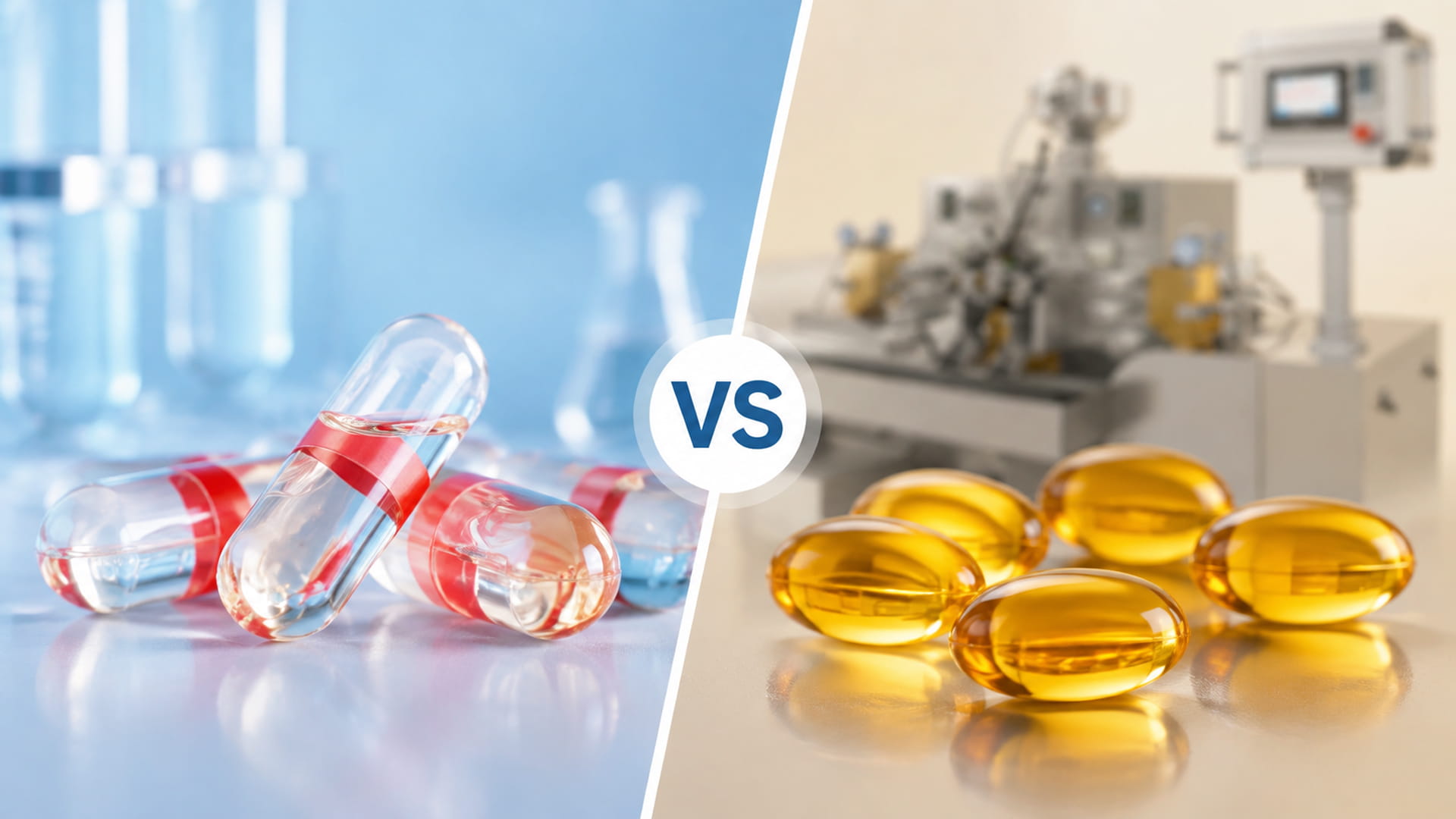
W praktyce, oba formaty mogą dostarczać płynne leki lub suplementy, ale ich projektowanie i produkcja znacznie się różnią. Kluczowe różnice obejmują strukturę kapsułki, materiały powłoki, kompatybilne wypełnienia, i etapy produkcyjne. Zrozumienie ich pomaga producentom produktów farmaceutycznych wybrać odpowiednią formę dla swojego produktu. Poniżej przedstawiamy główne różnice i zalety każdego z nich.
Kapsułki twarde wypełnione płynem (LFHC) są standardowe dwuczęściowe otoczki kapsułek (czapka i korpus) wypełnione płynem lub preparatem na bazie oleju po wykonaniu muszli. Muszle mogą być wykonane z żelatyny lub HPMC na bazie roślin (do kapsułek wegetariańskich). W produkcji, precyzyjna dawka płynu (często roztwór oleju, zawiesina lub mieszanka samoemulgująca) jest wstrzykiwany do otwartego korpusu kapsułki, następnie nasadka jest zamykana od góry i uszczelniana. Specjalne metody uszczelniania zapewniają, że nic nie wycieka (Na przykład, nałożenie cienkiej opaski żelatynowej wokół stawu, zwane „uszczelnieniem taśmowym”).
To dwuczęściowe podejście pozwala LFHC połączyć zalety płynów i kapsułek. Otrzymujesz szybkie uwalnianie i wysoką biodostępność rozpuszczonego płynu, dzięki łatwemu połykaniu i maskowaniu smaku, jakie oferują kapsułki. Muszle LFHC są wstępnie wyprodukowane, dzięki czemu podczas napełniania nie jest potrzebne kosztowne topienie arkuszy żelatyny. Na przykład, Płynny wypełniacz kapsułek NJY-300C firmy JinLuPacking automatycznie napełnia płynami twarde skorupy o rozmiarze #00–#4 i zamyka je taśmą w jednej szybkiej linii.
Postać: Kapsułki twarde wypełnione płynem (każdy posiada kolorową opaskę uszczelniającą połączenie nasadki z korpusem). Te dwuczęściowe kapsułki zawierają olej lub płyn w stałej otoczce żelatynowej/HPMC.
Kapsułki miękkie żelowe (często po prostu dzwonił kapsułki żelowe) Czy jednoczęściowy, kapsułki powlekane żelem zawierające płynne lub półstałe wypełnienie. Są one wytwarzane na maszynie do kapsułkowania z matrycą obrotową, która formuje się, wypełnia, i uszczelnia każdą kapsułkę w jednym kroku. W maszynie, dwie wstążki plastyfikowanej żelatyny (żelatyna zmieszana z gliceryną lub sorbitolem) są odlewane i ściskane razem, podczas gdy między nie wtryskiwany jest odmierzony strumień cieczy. Każda kapsułka jest jednocześnie cięta i zgrzewana za pomocą podgrzewanych matryc. Rezultatem jest gładkość, owalny, hermetyczna kapsułka popularnie stosowana w suplementach na bazie oleju (pomyśl o tabletkach z witaminą E lub omega-3).
Kapsułki żelowe są idealne do olejów i wrażliwych płynów. Ponieważ cała kapsułka jest hermetycznie zamknięta po uformowaniu, nie jest potrzebny żaden oddzielny etap uszczelniania. Dzięki temu doskonale chronią przed tlenem i wilgocią. Wiele oleju rybnego, witamina D/K, i produkty na bazie olejków roślinnych wykorzystują kapsułki żelowe ze względu na wygodę i trwałość podczas przechowywania. W rzeczywistości, Badania pokazują, że suplementy Omega-3 i witamin rozpuszczalnych w tłuszczach są najczęściej dostarczane w postaci kapsułek żelowych.
Postać: Bursztynowe kapsułki softgel na łyżeczce obok butelki z pigułkami (wspólne dla oleju rybnego lub witaminy D).
| Funkcja | Kapsułki wypełnione płynem (LFHC) | Kapsułki |
| Struktura | Dwuczęściowy (czapka & ciało) | Jednoczęściowa zamknięta kapsułka |
| Materiał powłoki | Żelatyna lub HPMC (opcja wegetariańska) | Plastyfikowana żelatyna (Żelatyna + plastyfikator) |
| Metoda produkcji | Napełnij, a następnie zamknij (na wypełniaczu kapsułek + gangi) | Hermetyzacja matrycy obrotowej (forma-wypełnienie-pieczęć) |
| Koszt sprzętu | Niżej (standardowe wypełniacze kapsułek) | Wyższy (dedykowana linia softgelów) |
| Skala (MOQ) | Niskie minimum (pasuje do małych partii) | Zwykle wymagana jest większa głośność |
| Opcja wegetariańska | Tak (Dostępne powłoki HPMC) | Ograniczony (teraz kilka opcji skrobiowych/warzywnych) |
| Opieczętowanie | Uszczelnienie mechaniczne (bandażowanie/fuzja) | Wbudowana uszczelka (hermetycznie uszczelnione za pomocą matrycy) |
| Ryzyko wycieku | Niski (po prawidłowym uszczelnieniu) | Bardzo niski (żaden szew nie przecieka) |
| Elastyczność produkcji | Wysoki (można mieszać proszki lub pelety z płynem) | Średni (wypełniane są tylko płynem/pastą) |
| Skalowanie w górę | Łatwy (korzysta ze standardowych maszyn kapsułkowych) | Bardziej złożone (specjalistyczne suszenie, itp.) |
Obie formy dostarczają substancje czynne na bazie cieczy lub oleju i mogą zapewniać wysoką biodostępność, prezentując lek rozpuszczony w lipidzie. Jednakże, LFHC używają prostszych linii (muszle są gotowe) podczas gdy kapsułki żelowe wymagają etapów gotowania i suszenia wstążek żelatynowych.
Klucz na wynos: Maszyny Softgel formularz, wypełnić, i wyciąć w jednym kroku (wymagające suszenia), podczas gdy linie LFHC wypełniają gotowe muszle i uszczelniają je (pominięcie długiego etapu utwardzania). Jak zauważa jeden z przewodników branżowych, „Softgels utwardzają się 2–4 dni po napełnieniu. LFHC nie mają etapu utwardzania… straty partii spowodowane niepowodzeniem napełniania są większe w przypadku kapsułek żelowych”.
Kapsułki wypełnione płynem oferują szereg zalet produkcyjnych i produktowych:
Te zalety sprawiają, że LFHC są atrakcyjne zarówno na rynku farmaceutycznym, jak i nutraceutycznym.
Kapsułki żelowe mają również silne zalety, które czynią je popularnymi w wielu suplementach:
Branże korzystające z kapsułek obejmują farmaceutyki (leki na bazie oleju), nutraceutyki (suplementy diety), kosmetyki (nutraceutyczne olejki kosmetyczne), a nawet produkty weterynaryjne. Na przykład, Coraz popularniejsze są kapsułki wegańskie lub halal wykonane ze skrobi/gellanu.
| Składnik / Wypełnić | Kapsułka wypełniona płynem | Kapsułka Softgel |
| Olej rybny / Omega-3 | ✓ Odpowiednie | ✓ Odpowiednie |
| CBD lub olej z konopi indyjskich | ✓ Odpowiednie | ✓ Odpowiednie |
| Kurkumina (Ekstrakt z kurkumy) | ✓ Odpowiednie | ✓ Odpowiednie |
| Witamina D (olej) | ✓ Odpowiednie | ✓ Odpowiednie |
| Ziołowe ekstrakty płynne | ✓ Odpowiednie | ✓ Odpowiednie |
| Probiotyki | ✓ (jeśli jest zawieszony w oleju) | NIE (wilgoć zabija bakterie) |
| Interfejsy API wrażliwe na wilgoć | ✓ (szczególnie w kapsułkach HPMC) | ✗ (skorupa o dużej wilgotności) |
Obydwa typy kapsułek dobrze radzą sobie z substancjami czynnymi rozpuszczalnymi w oleju. Popularne olejki nutraceutyczne (olej rybny, witamina D, ekstrakty ziołowe, CBD, itp.) są skutecznie dostarczane przez LFHC lub kapsułki żelowe.
Szczególnie, składników suchych lub wrażliwych na wilgoć są lepsze w twardych kapsułkach wypełnionych płynem. Na przykład, probiotyki lub wrażliwe na wodę API są niepraktyczne w kapsułkach żelowych. W przeciwieństwie do tego, Kapsułki twarde HPMC mogą zawierać niewodne zawiesiny probiotyków lub bardzo suche preparaty, ponieważ HPMC ma niską przepuszczalność wilgoci i gazów. Muszle Softgel zawierają około 30% wodę i wyższą przepuszczalność tlenu, które mogą powodować rozkład takich składników.
Krótko mówiąc, używaj LFHC, gdy liczy się elastyczność i produkcja na małą skalę; wybierz kapsułki żelowe ze względu na skalę i atrakcyjność na półce premium.
Z punktu widzenia producenta, decyzja często zależy od skali, inwestycja, i cele strategiczne:
Poniższa tabela podsumowuje wybór według scenariusza:
| Typ firmy / Sytuacja | Zalecany format |
| Mały startup lub R&Projekt D | Kapsułki wypełnione płynem (niskie MOQ, elastyczny) |
| Niszowa linia suplementów, <10k jednostek | Kapsułki wypełnione płynem |
| Producent kontraktowy (elastyczność) | Kapsułki wypełnione płynem |
| Duży producent farmaceutyczny | Kapsułki (wysoka przepustowość, spójny) |
| Wysoka zawartość kwasów omega-3 lub witamin | Kapsułki |
| Produkt wymagający wegańskiej kapsułki | Kapsułki wypełnione płynem (Powłoki HPMC) |
Postać: Zbliżenie maszyny do napełniania kapsułek z płynem, dozującej płyn do kapsułek.
JinLuPacking produkuje pełną gamę sprzętu do kapsułek. Na przykład, nasz NJY-300C płynny wypełniacz kapsułek linia obsługuje wypełnienia płynne, i my również zapewniamy maszyny do kapsułek z miękkim żelem do produkcji jednoetapowej. Maszyny te spełniają standardy cGMP dotyczące zastosowań farmaceutycznych i nutraceutycznych.
W końcu, oba wypełnione cieczą kapsułki twarde I kapsułki żelowe są dobrze ugruntowane, skuteczne postacie dawkowania. Kapsułki żelowe doskonale dostarczają oleje i rozpuszczalne w olejach substancje aktywne o szybkim rozpuszczaniu, opakowanie zabezpieczające przed manipulacją. Kapsułki twarde wypełnione płynem zapewniają elastyczność, szybciej r&Skalowanie D, i prostota produkcji. Poprzez zrozumienie ich różnic, korzyści i wymagania produkcyjne, producenci mogą wybrać rodzaj kapsułek, który najlepiej odpowiada potrzebom chemicznym i biznesowym ich produktu.
Jeśli projektujesz nową recepturę lub modernizujesz linię produkcyjną, rozważ dokładnie obie opcje. Gotowy do optymalizacji produkcji kapsułek? Jinlu Packing oferuje wiodący w branży sprzęt dla obu formatów (Na przykład, nasz NJP-1000C może napełnić do 60,000 kapsułki twarde na godzinę) i może doradzić najlepsze rozwiązanie dla Twojego produktu. Skontaktuj się z nami aby omówić Twój projekt, poproś o wycenę, lub dowiedz się więcej o naszych płynnych kapsułkach i softgelach Linie pakowania.
Tak. Specjalistyczne wypełniacze kapsułek (jak maszyny do napełniania kapsułek z płynem JinLuPacking) może wstrzykiwać oleje lub płyny do pustych twardych kapsułek, które następnie są zamykane (np. poprzez bandażowanie) dzięki czemu bezpiecznie trzymają płyn. Tworzy to „twardą kapsułkę wypełnioną płynem”.
Żadne z nich nie jest uniwersalnie „lepsze” – służą różnym potrzebom. LFHC wygrywają kosztami, prędkość, i elastyczność (szczególnie w przypadku małych partii), podczas gdy kapsułki żelowe zapewniają płynne uszczelnienie i znajomy format suplementów olejowych. Najlepszy wybór zależy od materiału wypełniającego, wielkość produkcji, i rynek.
Prawidłowo uszczelnione LFHC nie przeciekają. Po napełnieniu, połączenie nakrętka-korpus jest hermetycznie uszczelnione poprzez nałożenie opaski żelatynowej lub HPMC (lub przy użyciu zgrzewania). Kiedy zostało to zrobione poprawnie, kapsułki szczelnie utrzymują płyn podczas suszenia, składowanie, i użyj. Linie jakości testują i polerują każdą partię, aby zapewnić integralność.
Obydwa mogą zapewniać doskonałą biodostępność substancji aktywnych na bazie oleju. Preparat wypełniający (rodzaj oleju, emulgatory) zwykle dyktuje wchłanianie, nie typ powłoki. Kapsułki szybko się rozpuszczają (~10–20 minut), podczas gdy kapsułki twarde (LFHC) rozpuszczać się nieco wolniej (30–60 min). W rzeczywistości, dobrze zaprojektowane wypełnienia w dowolnej formie mogą osiągnąć podobną skuteczność.
Tak. Roślinne otoczki HPMC są szeroko stosowane w kapsułkach wypełnionych płynem. Niska wilgotność i mocna struktura HPMC pozwalają na przenikanie tłustych cieczy do środka. W rzeczywistości, użycie otoczek HPMC to jeden ze sposobów zaoferowania wegetariańskiej kapsułki w postaci płynnej, czego nie są w stanie zapewnić standardowe kapsułki żelatynowe.
Firmy podają takie powody, jak niższe koszty produkcji, krótsze terminy realizacji, i elastyczność formułowania. Na przykład, R&Zespół D może szybko dostosować dawki lub połączyć składniki w LFHC bez konieczności przezbrajania. Również, VFHC umożliwiają łatwe rozszerzanie linii produktów (ponieważ te same kapsułki można napełniać różnymi płynami).
Ogólnie, Tak. Produkcja softgelu wymaga drogiego sprzętu (urządzenia do gotowania żelatyny, matryce obrotowe, suszarki) i więcej pracy przez wiele dni. LFHC wykorzystują prostsze wypełniacze i mniej energii. Raporty branżowe wskazują, że produkcja LFHC kosztuje o 15–35% mniej na jednostkę niż kapsułki żelowe. Jednakże, przy bardzo dużych ilościach kapsułki żelowe mogą być nadal opłacalne.
Płynne składniki napełnia się za pomocą maszyny do napełniania kapsułek z płynem (często dodatek lub wariant standardowego wypełniacza kapsułek). Na przykład, Maszyny serii NJY firmy JinLuPacking wykorzystują pompy precyzyjne (ceramiczny tłok lub mikropompa) do odmierzania oleju w kapsułkach. Maszyny te mogą osiągać duże prędkości (kilka tysięcy kapsli na godzinę) z dokładnością lepszą niż ±1%.
Przeważnie niewodny, wypełnienia na bazie oleju lub rozpuszczalnika. Typowe przykłady: olej rybny, olejek z witaminą E, płynne witaminy, ekstrakty olejków ziołowych, emulsje, oraz niektóre samoemulgujące systemy dostarczania leków. Wypełnienie musi być pompowalne i zasadniczo niekorozyjne. Unika się płynów na bazie wody (mogą osłabić foki). Należy kontrolować lepkość napełnienia, aby zapobiec rozpryskiwaniu lub kapaniu podczas napełniania.
Tak. Wiele maszyn na kapsułki jest konwertowalnych: poprzez wymianę układu dozującego, mogą wypełniać proszki/granulki lub płyny. W rzeczywistości, standardową płytkę dozującą proszek w wypełniaczu kapsułek zastąpiono głowicą do napełniania płynem i systemem pompy. Ta wszechstronność oznacza, że pojedyncza linia może przełączać się między produkcją proszku i LFHC.
Referencje:
1.Wypełnione płynem i uszczelnione twarde kapsułki żelatynowe —— Taylora & Franciszek w Internecie
2.Miękkie kapsułki żelatynowe (Kapsułki) —— ScienceDirect
3.Wpływ temperatury na właściwości wstęgi podczas produkcji miękkich kapsułek żelatynowych —— Narodowa Biblioteka Medyczna
4.Kompleksowy przegląd miękkich kapsułek żelatynowych: Produkcja przemysłowa, Postęp technologiczny, i perspektywy regulacyjne —— Dziennik DOSTAWY LEKÓW & LECZNICTWO
5.Twarda kapsułka żelatynowa wypełniona płynem —— Dziennik DOSTAWY LEKÓW & LECZNICTWO
6.Wyznaczanie optymalnej zawartości wody w masach płynnych do kapsułek żelatynowych twardych metodą analizy tekstury i projektu doświadczenia —— Narodowa Biblioteka Medyczna