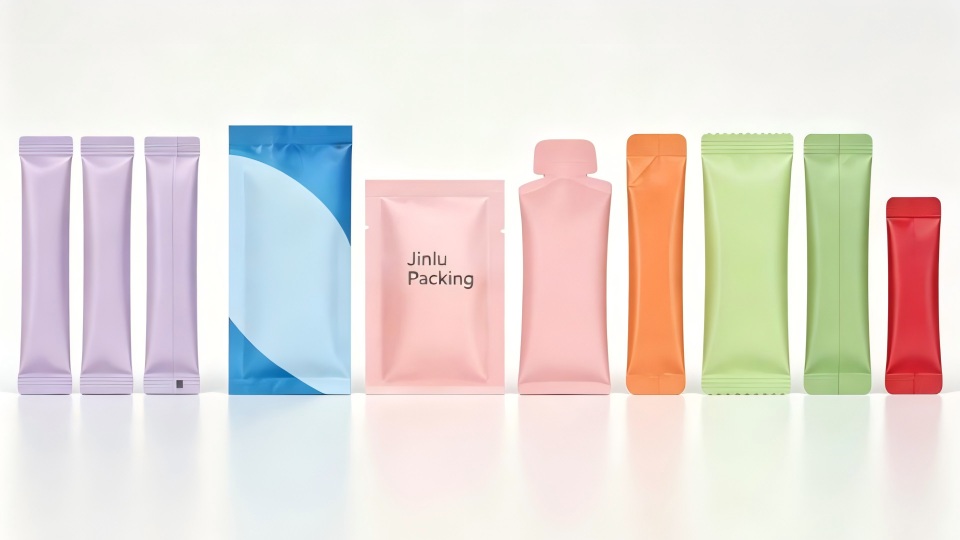

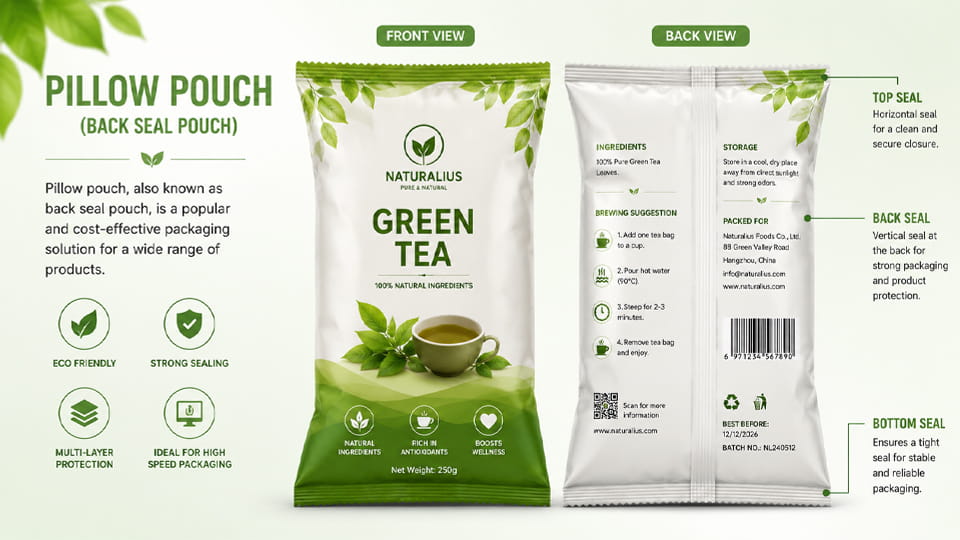
Flexibele verpakking is er in vele vormen: van stazakjes en zakjes met tuit tot eenvoudige kussenzakjes. A kussen zakje is een plat, flexibele zak met drie verzegelingen die plat ligt als hij leeg is en opblaast in de vorm van een kussen als hij gevuld is. Het is aan de bovenkant hitteverzegeld, onderkant en een achternaad (vaak een vinafdichting of lapafdichting genoemd), waardoor de tas eruit ziet als een opgeblazen kussen. Wanneer je in een gevuld kussenzakje knijpt, het midden puilt uit en loopt taps toe naar de afgedichte randen, net als een klein kussentje. Kussenzakjes (ook wel genoemd kussenslopen of zakjes met sluiting aan de achterkant) worden veel gebruikt omdat ze eenvoudig zijn, kosteneffectief, en gemakkelijk te stapelen en te verzenden. Ze zijn heel gebruikelijk voor snacks (chips, snoepjes), poedervormige drankjes, koffie, specerijen, voedsel voor huisdieren, en andere droge goederen.
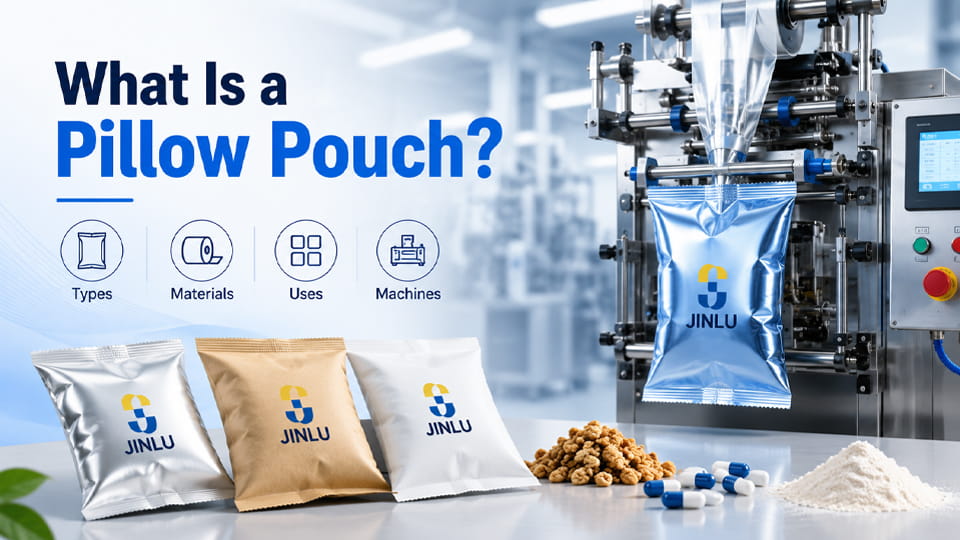
Kussenzakjes zijn een belangrijk onderdeel van voedsel- en consumentenverpakkingen. In werkelijkheid, ze zijn gewend om te verpakken chips, snoep, noten, koffie, specerijen, bevroren voedsel en soortgelijke artikelen. In sommige industrieën worden ze zelfs gebruikt voor non-foodproducten zoals wasmiddelen of medische wegwerpartikelen, waarbij een eenvoudig afgesloten zakje volstaat. De aantrekkingskracht van het kussenzakje zijn de lage materiaalkosten en de compacte transportvoetafdruk: de flat, flexibel ontwerp gebruikt veel minder plastic dan een doos of fles, besparing op materiaal en vracht. Veel kussenzakjes bevatten kenmerken zoals scheurinkepingen, hang gaten op of sluit ritsen opnieuw voor het gemak. Vanwege hun brede gezichten, Kussenhoezen maken ook full-colour bedrukking en branding over een groot oppervlak mogelijk.
Kussenzakjes zijn er in een paar basisvariaties, meestal gedefinieerd door de zegel stijl op de achterrand. De twee meest voorkomende zijn:
In beide gevallen, de boven- en onderkant worden na het vullen over de volle breedte afgedicht, het voltooien van de structuur met drie afdichtingen. Sommige speciale kussenzakjes worden gebruikt zijafdichtingen (één zijde afgedicht in plaats van het midden) maar blaast nog steeds op als een kussen als het gevuld is. Kussenzakjes zijn in wezen 3-zijdelingse verzegelde zakken (bovenkant, onderkant, rug), hoewel sommige "kussenpakket" -stijlen een vierde zijafdichting toevoegen (quad-afdichting) een boxiervorm maken.
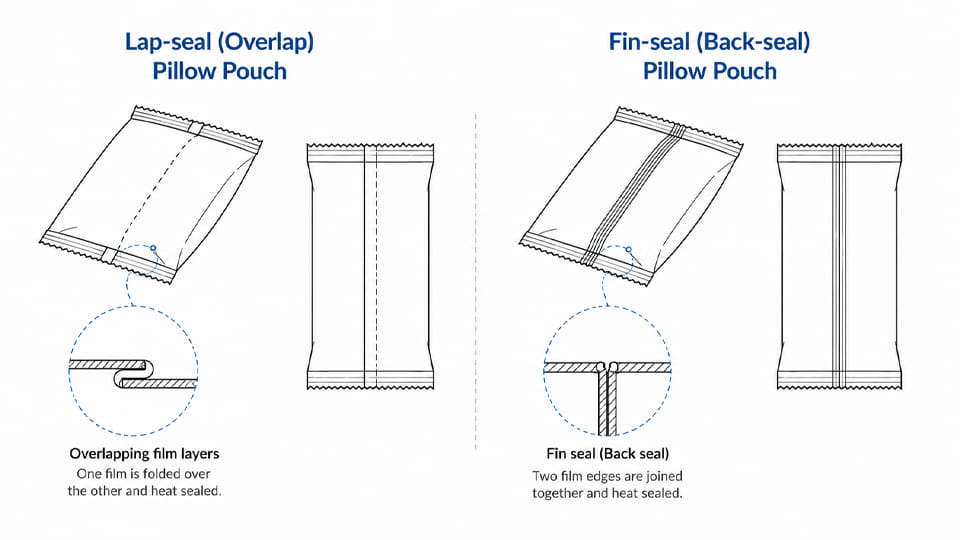
Deze afdichtingsstijlen beïnvloeden de prestaties: Lapafdichtingen liggen plat maar gebruiken minder materiaal, terwijl vinafdichtingen een bredere opening creëren, versterkte naad die betrouwbaarder kan zijn bij hoge snelheden of met dikkere films. Fabrikanten kiezen het type afdichting op basis van de filmdikte, productiesnelheid en apparatuur. Bijvoorbeeld, VFFS-lijnen met zeer hoge snelheid geven vaak de voorkeur aan vinafdichtingen voor sterkere naden. In de praktijk, beide termen – fin seal pouch en lap seal pouch – worden gebruikt voor kussenzakken, en het verschil zit in de back-sealmethode.
Er wordt een kussenzakje van gemaakt flexibele, meerlaagse laminaatfilms. Typische constructie is drie of meer lagen plastic of folie, elk dient een doel:
Veel kussenhoeslaminaten zijn door de FDA goedgekeurd en BPA-vrij voor gebruik in levensmiddelen. Sommige milieuvriendelijke zakjes maken gebruik van biogebaseerde of papieren lagen (zoals PLA of kraftpapier) om de recycleerbaarheid te verbeteren. Het exacte filmrecept is afhankelijk van de behoeften van het product: voor vette of vochtgevoelige goederen, meer barrières (folie of nylon/EVOH) zijn toegevoegd. Samengevat, gemeenschappelijke materialen omvatten polyethyleen, polypropyleen (PP), polyester (HUISDIER) en gemetalliseerde films (folie). Bijvoorbeeld, een typische frietzak kan PET/Al/PE-laminaat gebruiken – sterk en bedrukbaar aan de buitenkant (HUISDIER), een aluminiumfoliebarrière voor versheid, en PE aan de binnenkant voor afdichting.
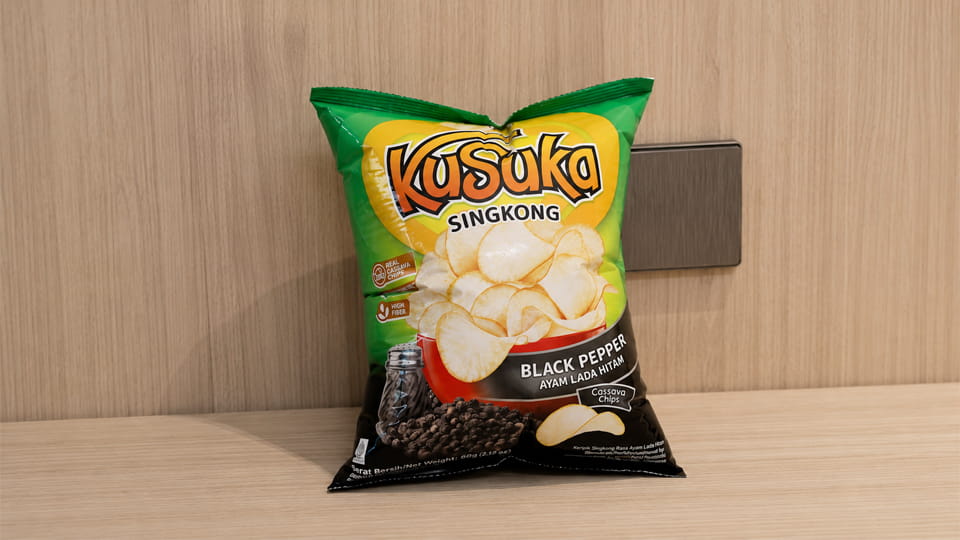
Kussenzakjes zijn uiterst veelzijdig en worden in veel industrieën gebruikt. Ze blinken uit in droge goederen in één portie of in bulk. Typische toepassingen zijn onder meer:
Kortom, als uw product in grote volumes draait en basisbehoeften heeft, goedkope verpakking, een kussenzakje past vaak goed. Zijn flexibel ontwerp herbergt poeders, korrels, snacks, zelfs lichte vloeistoffen. De platte panelen dienen tevens als een groot merkcanvas – bedrijven kunnen levendige afbeeldingen en logo's op kussenhoezen afdrukken voor een sterke aantrekkingskracht op de schappen of e-commerce.
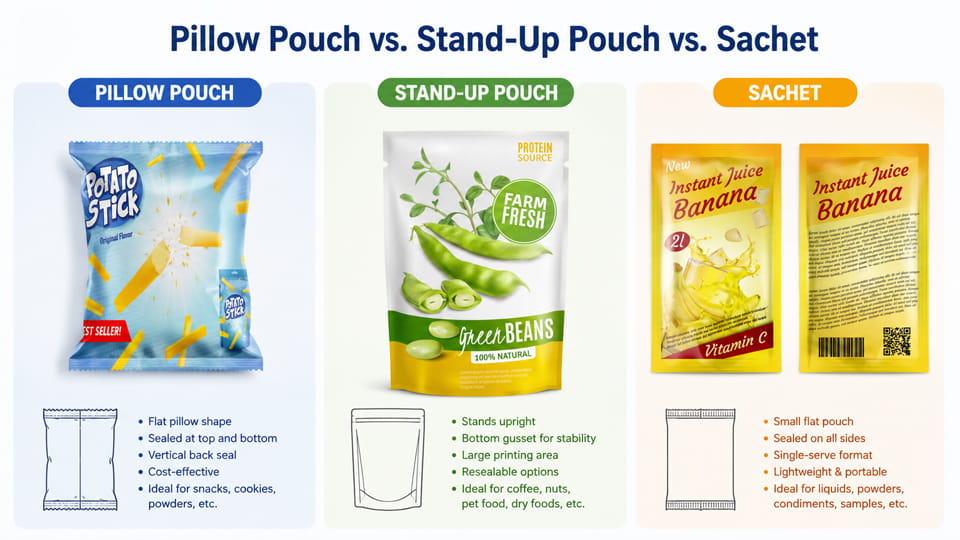
Kussenzakjes zijn onder andere een soort flexibele tas. Het is handig om ze te vergelijken:
Het verpakken van kussenzakjes kan op verschillende manieren, afhankelijk van productieschaal en formaat. De meest voorkomende methoden zijn:


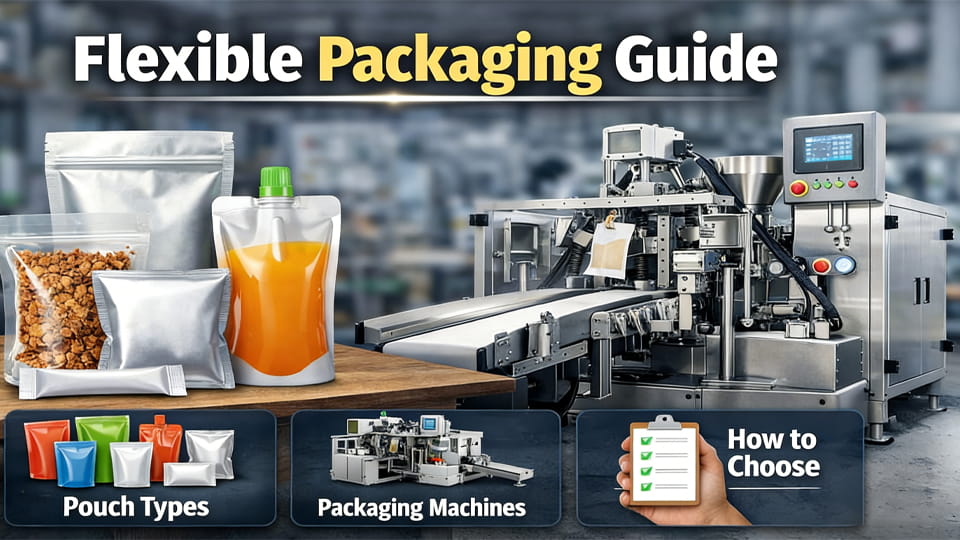
Samengevat, verpakkingsmachines voor kussenzakjes erbij betrekken: verticale vorm-vul-afdichting (Vffs) uitrusting voor kussenhoezen met rolfilm; horizontale flowwrappers voor het individueel verpakken van producten; En kant-en-klare zakvullers voor het vullen van kant-en-klare zakken. Moderne systemen bevatten vaak functies zoals kleurencamera's of oogmerksensoren om gedrukte film uit te lijnen, servobediening voor nauwkeurige afdichting, en gebruiksvriendelijke touchscreens. Jinlupacking, Bijvoorbeeld, biedt VFFS-kussenzakmachines aan van roestvrij staal, PLC-besturing, en snelwisselzaksystemen voor flexibiliteit. Bij horizontale kussenwikkelaars kan gebruik worden gemaakt van filmtoevoer aan de boven- of onderkant (een “film-onder” invoer maakt het eenvoudig laden van lichtgewicht producten mogelijk).
Verticale vorm-, vul- en sluitmachines zijn de beste keuze als u maximale snelheid en minimale filmkosten nodig heeft. Ze vormen elk kussenzakje terwijl de lijn loopt, wat efficiënt is voor snacks, granen, en huisdiervoeding. Horizontale wikkels worden gebruikt bij invoer van artikelen of wanneer een andere machinerichting gewenst is. Machines voor kant-en-klare kussenzakjes zijn het beste als u op maat gemaakte of hersluitbare zakken nodig heeft (ritssluiting, tuiten) of zeer snelle wisselingen tussen stijlen. De juiste machine is afhankelijk van uw product, vereiste uitvoersnelheid, en zakformaat – een verpakkingsingenieur zal de apparatuur dienovereenkomstig selecteren.
Kussenzakjes bieden verschillende duidelijke voordelen voor fabrikanten:
Als gevolg hiervan, kussenzakjes zijn een “bewezen, beproefd formaat voor veel voedingsmiddelen” en andere producten. Ze bieden een geweldige balans van kosten, prestaties en flexibiliteit, Daarom kiezen verpakkingsingenieurs ze voor zoveel artikelen met een groot volume.
| Zakje stijl | Structuur & Functies | Gemeenschappelijk gebruik |
| Kussenzakje | Eenvoudige platte tas met bovenkant, bodem- en achterafdichtingen; ligt plat leeg. Kan scheurinkepingen bevatten, ritsen, kleppen. Laagste materiaalkosten. | Chips, snoep, poeders, specerijen, kleine snackverpakkingen. |
| Opstaande tas | Tas met een geplooide bodem waardoor hij rechtop kan blijven staan; heeft vaak een ritssluiting of tuit. Meer materiaalkosten, betere schapaanwezigheid. | Koffie, voedsel voor huisdieren, sauzen, premium snacks, huisdier behandelt. |
| Zakje (3-/4-kant) | Zeer klein zakje verzegeld 3 of 4 zijkanten; gemaakt voor porties met een enkele dosis. Extreem lage kosten per pakket. | Enkele porties: ketchup, suiker, specerijen, drinkmixzakjes, kleine farmaceutische monsters. |
Kussenzakjes (oftewel “kussenpakketten”) zijn meer utilitair: zij staan niet op zichzelf en leveren doorgaans producten voor eenmalig gebruik of producten met een korte levensduur. Stazakken worden gebruikt wanneer weergave en hersluiting van belang zijn. Sachetverpakkingen zijn bedoeld voor eenmalig microgebruik. Het kiezen van het juiste zakje is afhankelijk van het product, branding en kosten – maar als u bulk nodig heeft, goedkope verpakking die snel werkt, kussenzakjes winnen meestal.
Samengevat, A kussen zakje is een simpel, platte flexibele zak die aan drie zijden is verzegeld (bovenkant, onderkant, rug) die bij het vullen in vorm blaast. Dit kussen pakket stijl is een werkpaard van verpakkingen omdat het licht van gewicht is, kosteneffectief, en zeer geschikt voor geautomatiseerde hogesnelheidslijnen. Meestal gemaakt van meerlaagse films (Pe, HUISDIER, folie, enz.), Kussenzakjes beschermen de inhoud zoals snacks, poeders en meer voor een langere houdbaarheid. Ze kunnen kenmerken bevatten zoals scheurinkepingen, voor het gemak hangen gaten of hersluitbare ritsen.
Verticale vorm-vul-zegel (Vffs) Machines worden doorgaans gebruikt om kussenhoezen on-the-fly te produceren van rolfilm. Andere verpakkingsopties zijn onder meer horizontale flowwrappers en kant-en-klare zakvulsystemen. De juiste aanpak hangt af van uw product- en outputbehoeften. Voor een farmaceutische of voedingsmiddelenfabrikant die zijn producten efficiënt wil verpakken, kussenzakjes bieden een bewezen, economische oplossing.
Klaar om uw product in kussenzakjes te verpakken? JinluPacking biedt ultramoderne verpakkingsmachines voor kussenzakjes en kant-en-klare oplossingen. Onze VFFS- en horizontale kussenzakmachines zijn ontworpen met het oog op duurzaamheid, precisieafdichting en eenvoudig omschakeling. Neem vandaag nog contact op met onze experts voor een oplossing op maat en een offerte – wij helpen u bij het kiezen van het beste kussenhoesontwerp en de beste uitrusting voor uw productielijn. Laat JinluPacking u helpen de efficiëntie en de aantrekkelijkheid van uw product te vergroten met het perfecte verpakkingssysteem voor kussenzakjes.
Een kussenzakje (of kussenzak) is een simpel, buisvormige flexibele tas. Het is gevormd uit platte folie en aan de achterkant en beide uiteinden verzegeld, het creëren van een vorm die er uitziet als een klein kussen als het gevuld is. Meestal wordt er gebruik gemaakt van gelamineerd plastic (en soms folie) film, en wordt gebruikt voor het verpakken van snacks, poeders, en meer.
Vanwege zijn vorm: wanneer gevuld, het midden van de tas waait uit als een kussen. De afgedichte randen definiëren een kussenachtige omtrek. De naam weerspiegelt simpelweg het uiterlijk.
Kussenzakjes worden gebruikt voor veel vaste stoffen en poeders. Veel voorkomende producten zijn onder meer chips, noten, popcorn, snoep, koekjes, oploskoffie, thee, poedervormige drankjes, kruiden, huisdier behandelt, en gezondheidssupplementen in poedervorm. Zelfs bulkgrondstoffen zoals suiker, meel, of wasmiddel kan in grote kussenzakken worden verpakt. In de farmacie, Kussen-/sachetzakjes bevatten medicijnen voor eenmalig gebruik, vitamine poeders, en ingrediënten.
Niet precies. Een sachet verwijst meestal naar een klein, verzegeld pakje dat bedoeld is voor eenmalig gebruik, vaak zonder ritssluiting (bijv. een suikerpakket of een kruidenpakket). Een kussenzakje is over het algemeen groter en kan een ritssluiting of inkeping bevatten voor hergebruik. Met andere woorden, sachets zijn als mini-kussens met een enkele dosis, terwijl kussenzakjes vaak voor meerdere doeleinden kunnen worden gebruikt of voor meerdere porties kunnen worden gebruikt.
Het belangrijkste verschil is de onderkant: een kussenzakje heeft geen bodemvouw en ligt plat, terwijl een stazak een platte of boxed bodem heeft waardoor hij op planken kan staan. Stazakken kosten meestal meer en gebruiken meer materiaal (ze hebben vier zegels), maar ze bieden een betere aanwezigheid in de schappen. Kussenzakjes zijn eenvoudiger en goedkoper (slechts drie zegels) en zijn ideaal als rechtopstaande weergave niet nodig is.
De meest voorkomende zijn Vertical Form-Fill-Seal (Vffs) machines. Hiermee maak je on-the-fly kussenzakken van een filmrol. Horizontale vorm-, vul- en sluitmachines of zakjesstokmachines kunnen voor bepaalde producten ook kussen- of stokvormige zakken produceren. Als u kant-en-klare tassen in kussenformaat heeft (met ritsen of speciale kenmerken), een kant-en-klare zakvuller kan ze vullen. Jinlu biedt dit allemaal: VFFS-lijnen, stokverpakkers, en kant-en-klare zakmachines (die kussenzakstijlen aankan).
Het zijn bijna altijd gelamineerde films. Gemeenschappelijke structuren omvatten: PET/PE (sterk, duidelijk, gematigde barrière), PET/AL/PE (hoge barrière met folie), BOPP/CPP (glanzend, afdrukbaar), Nylon/PE (lekbestendig), en papier-PE-combinaties. De binnenlaag is meestal door hitte afdichtbaar (PE of CPP), buitenste lagen geven sterkte of bedrukking. Gespecialiseerde films kunnen EVOH of vacuümgemetalliseerde PET bevatten voor extra barrière, belangrijk voor gevoelige of houdbare producten.
Traditionele kussenzakjes maken gebruik van gemengde lagen (HUISDIER, Pe, folie, enz.), wat recycling lastig maakt. Echter, ze hebben een lagere ecologische voetafdruk dan stijve verpakkingen: ze gebruiken veel minder plastic en zijn licht van gewicht. Sommige bedrijven gebruiken nu monomateriaalfilms (zoals alleen OPP/PE) voor eenvoudiger recycling. Controleer altijd de filmspecificaties: Sommige kussenzakjes zijn recyclebaar in systemen die flexibele kunststoffen accepteren (indien duidelijk gemarkeerd en monomateriaal). Jinlu vermeldt ook milieuvriendelijke oplossingen en ondersteunt opties voor recyclebare folie (en kan indien nodig composteerbare of op PE gebaseerde films gebruiken).
Ja, Kussenvormige sachets en zakjes worden in de farmaceutische industrie gebruikt voor poeders, pillen, en korrels. Ze moeten voldoen aan de hygiënenormen (CGMP, FDA). Jinlu ontwerpt zijn zakjeslijnen specifiek voor farmaceutisch gebruik (±0,4% doseernauwkeurigheid, sanitaire roestvrijstalen onderdelen). Voor consumentengeneesmiddelen (zoals vitamines voor eenmalig gebruik of bruismiddelen), stand-up doypacks zijn gebruikelijk, maar kussenzakjes worden gebruikt voor grote hoeveelheden poedermedicijnen, Voorbeeldpakketten, of ingrediënten. De sleutel is het gebruik van medisch goedgekeurde laminaten en schone vuloperaties.
Beoordeel uw product (poeder versus vloeistof, vereiste precisie), maat tas, en volumebehoeften. Voor grote hoeveelheden korrel-/poederproducten, een VFFS-machine (eventueel met een meerkopsweger) is het beste. Als je functies nodig hebt zoals een ritssluiting of ventiel, overweeg een kant-en-klare zakmachine. Controleer de afdichtingssterkte (vooral voor farmaceutische poeders) en snelheid. Opstaan, Bijvoorbeeld, biedt farmaceutische zakmachines met certificering. Kortom: match product → zaktype → machinestijl. De experts van Jinlu kunnen u helpen het juiste model aan te bevelen op basis van uw exacte specificaties en budget.
Referenties:
1.2023 State of the Industry rapport over Amerikaanse verpakkingsmachines —— PMMI
2.Flexibele verpakkingsproductie – vorming en afdichting van zakjes —— Onderzoeksinformatie Universiteit Twente
3.Hoe maken verticale vorm-, vul- en sluitmachines kussenzakken?? —— PackagingDigest
4.Soorten flexibele verpakkingen en speciale constructies —— Etiketten&Etikettering
5.Inzicht in de factoren die de integriteit van de afdichting beïnvloeden in hitteverzegelde flexibele voedselverpakkingen: Een recensie —— WILEY onlinebibliotheek